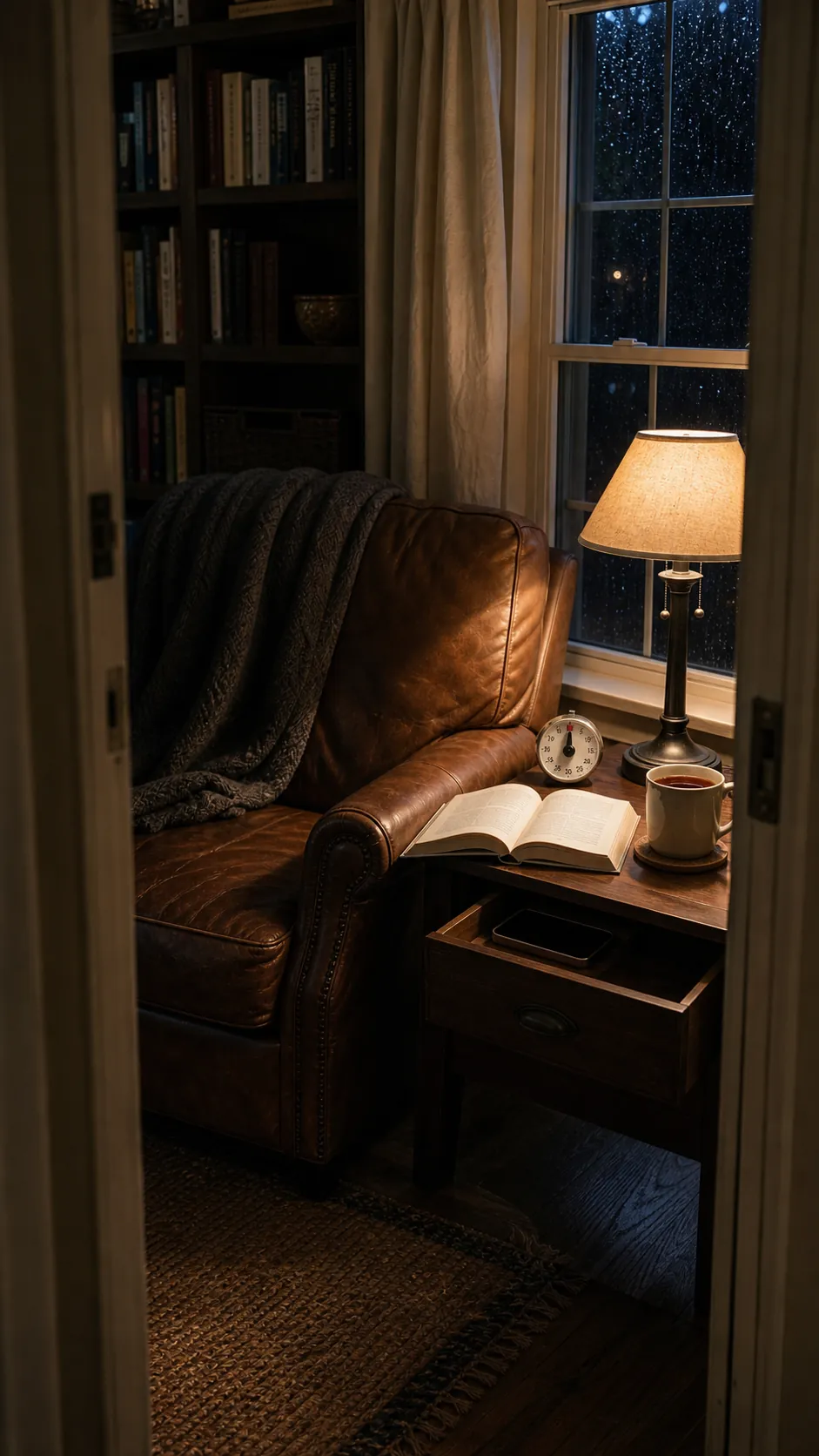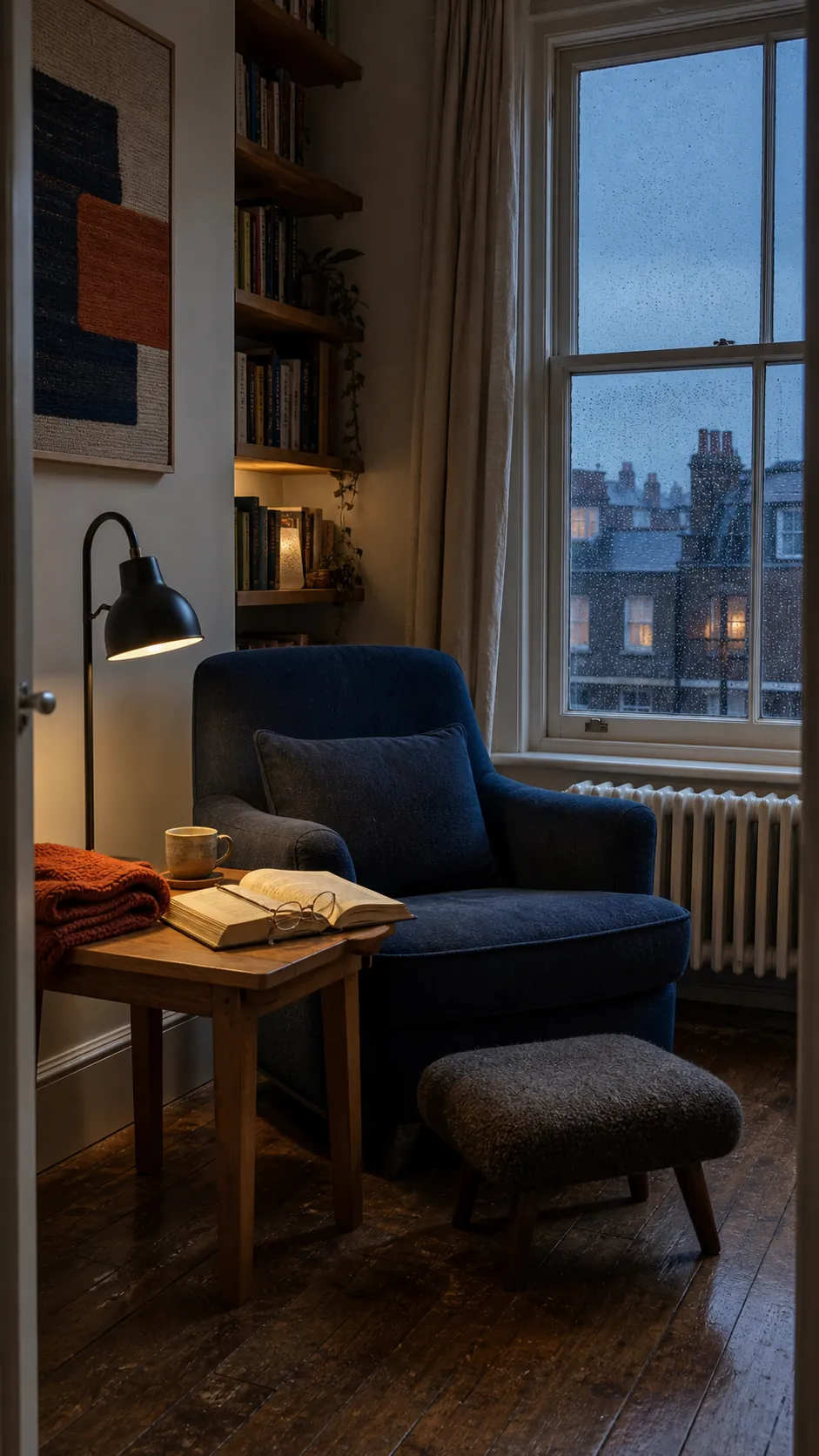
A book nook feels like a retreat when it removes small reasons to leave. The page is easy to see. Your back and feet are supported. A drink has a safe landing place. Books are close, but the chair is not trapped by clutter. Most important, the nook gives you a sense of being sheltered without cutting you off from the room.
That feeling rarely comes from buying more decor. It comes from correcting the physical setup, then using light, texture, sound, and a simple reading ritual to lower the room’s visual volume. Build comfort first; atmosphere works only when the nook is genuinely easy to use.
Start With the Position Your Body Actually Wants
Sit in the nook for twenty minutes with a real book before changing anything. Notice where your head lands, whether your elbows have support, and whether you keep shifting to relieve pressure. A beautiful accent chair that makes you restless will never feel restorative.
Use one firm lumbar cushion instead of a mountain of soft pillows, and add a footstool if your legs feel unsupported. Keep the wall behind your head clear of low frames and shelves. If the chair is too large to face outward without blocking access, it is the wrong chair for that space.
Turn the Chair Toward a View, Not a Wall
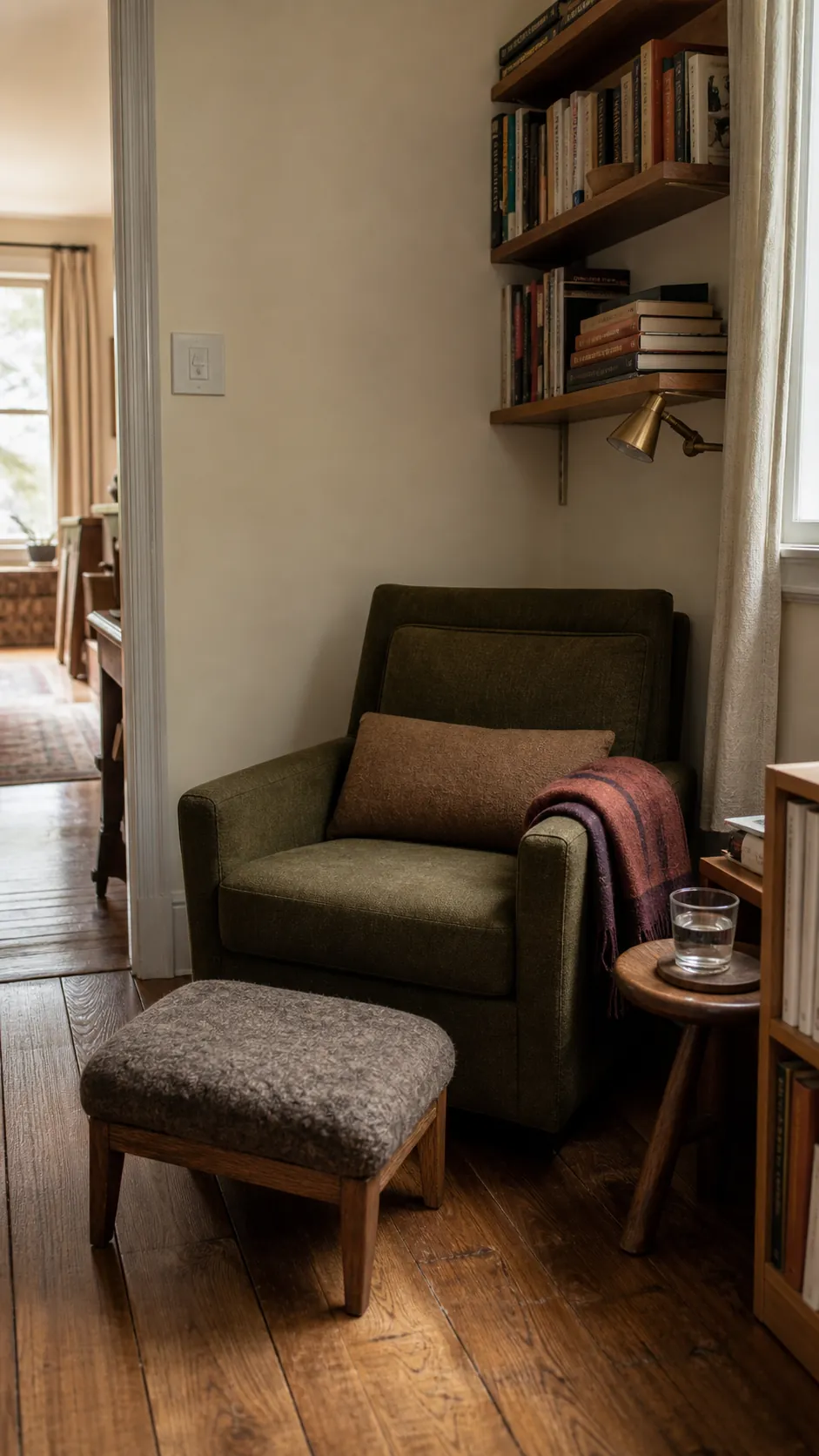
A retreat feels protected at the back and open at the front. Place the chair so a wall, bookcase, or deep curtain sits behind or beside you while your sightline opens toward a window or the calmer part of the room. Facing directly into a blank wall can make even a decorated corner feel punitive.
The view does not need to be dramatic. Tree branches, rain on glass, a doorway into a quiet room, or a familiar shelf can provide enough distance for the eyes to rest. Angle the seat rather than forcing it square to every wall, and preserve an easy way in and out.
Layer Page Light and Background Glow
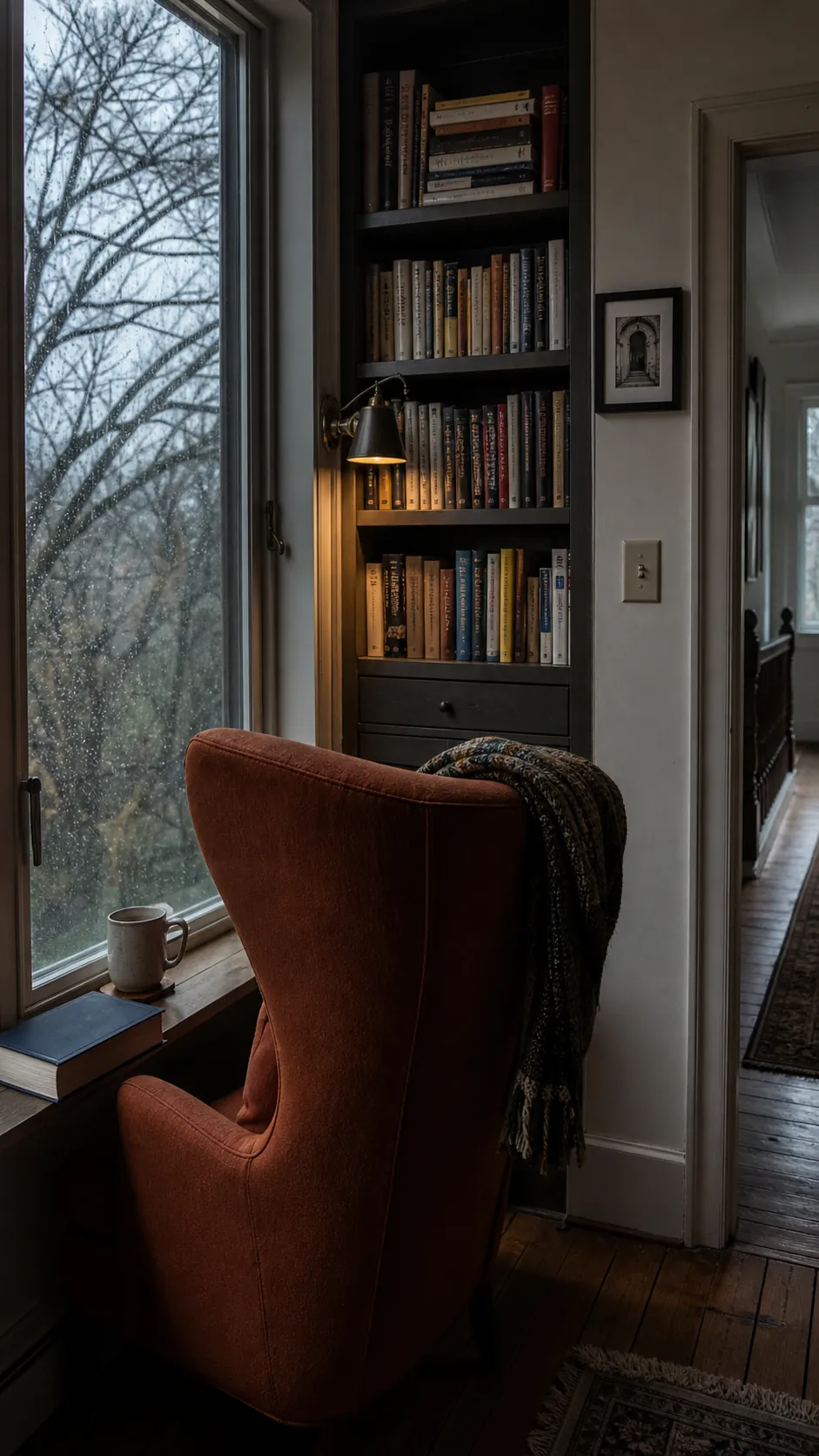
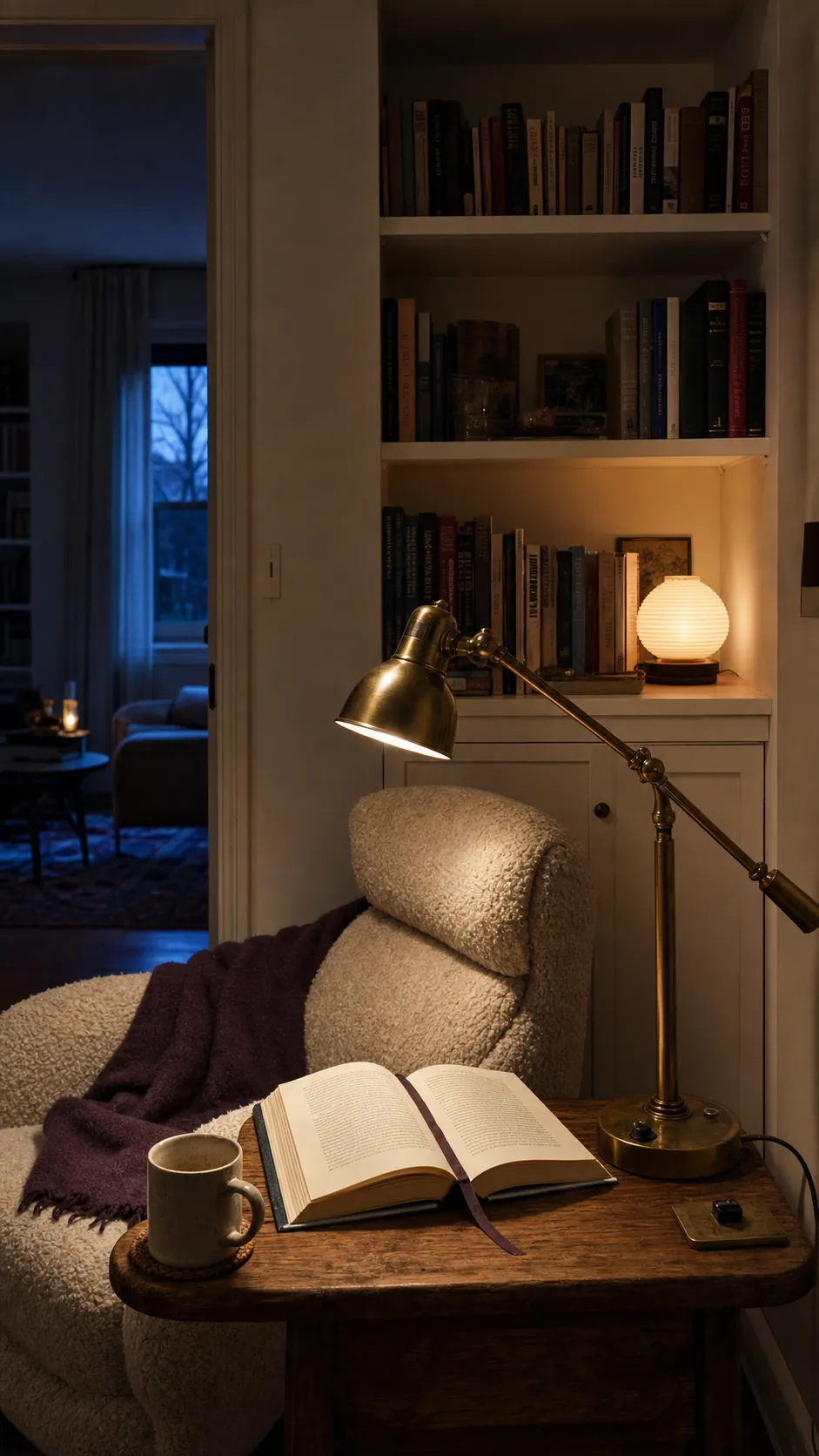
Overhead light makes a nook visible, but it rarely makes reading pleasant. Use a shaded, adjustable lamp that directs light onto the page from over your shoulder. Then add a lower, softer source elsewhere in the nook or adjacent room so the chair does not sit in a bright island surrounded by darkness.
A dimmer or smart bulb can help, but placement matters more than novelty. Keep the bulb out of your direct sightline and avoid a yellow-orange cast that distorts paper and strains the eyes. Route cords neatly along furniture or baseboards so the glow is not undermined by a visible tangle.
Give Every Reading Object a Landing Place
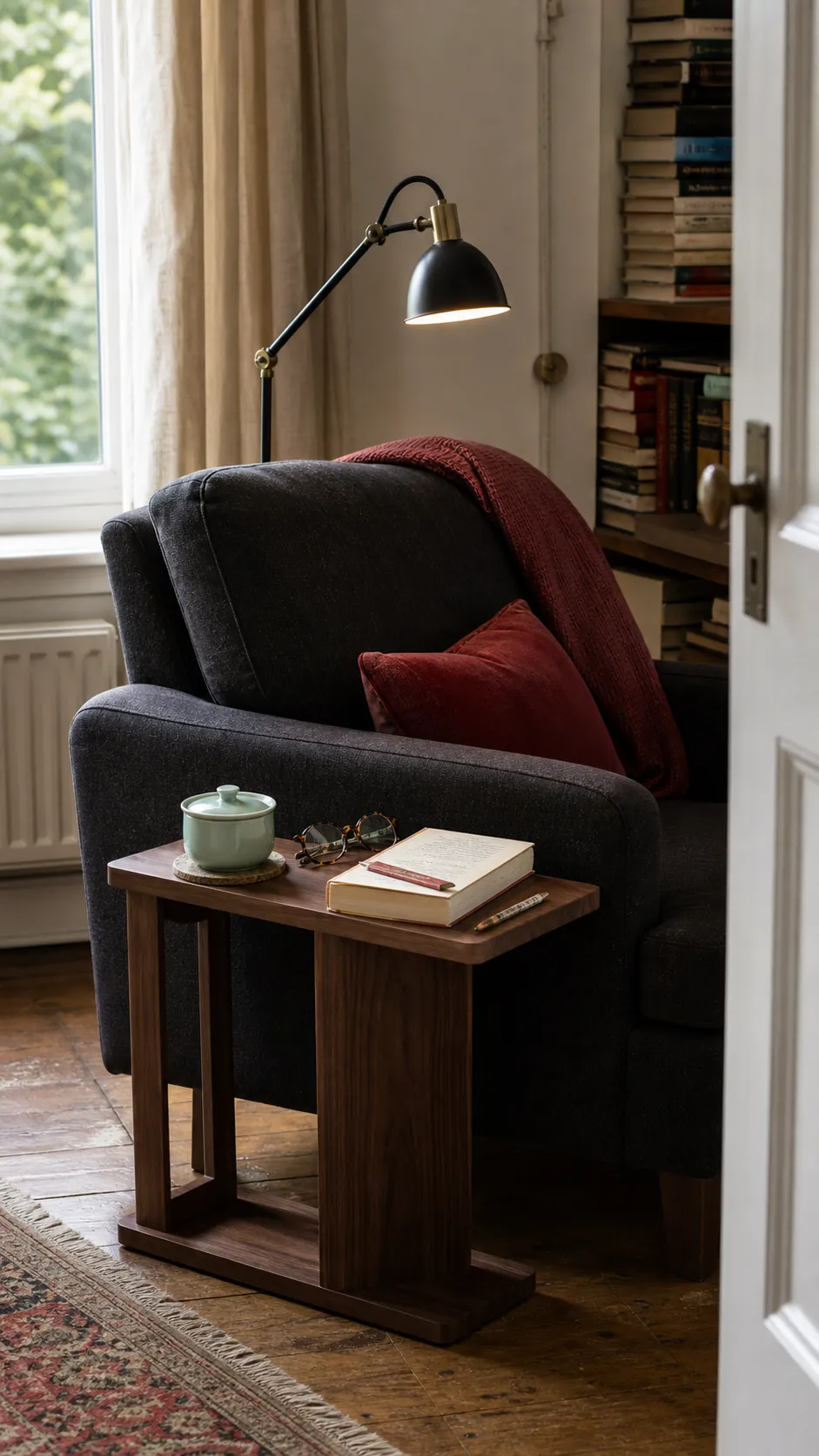
A retreat stops working when you must balance tea on the floor, set glasses on a book, or stand up to find a bookmark. Add one stable surface within comfortable reach. A narrow side table, shelf-topped bookcase, or C-table can hold the current book, a drink, glasses, and a pencil without filling the nook.
Use a coaster and keep hot drinks away from shelves. Add a small tray only if loose objects tend to spread. The surface should reset easily at the end of a session; if it becomes permanent storage, clear it before adding another table.
Use Texture to Quiet the Edges
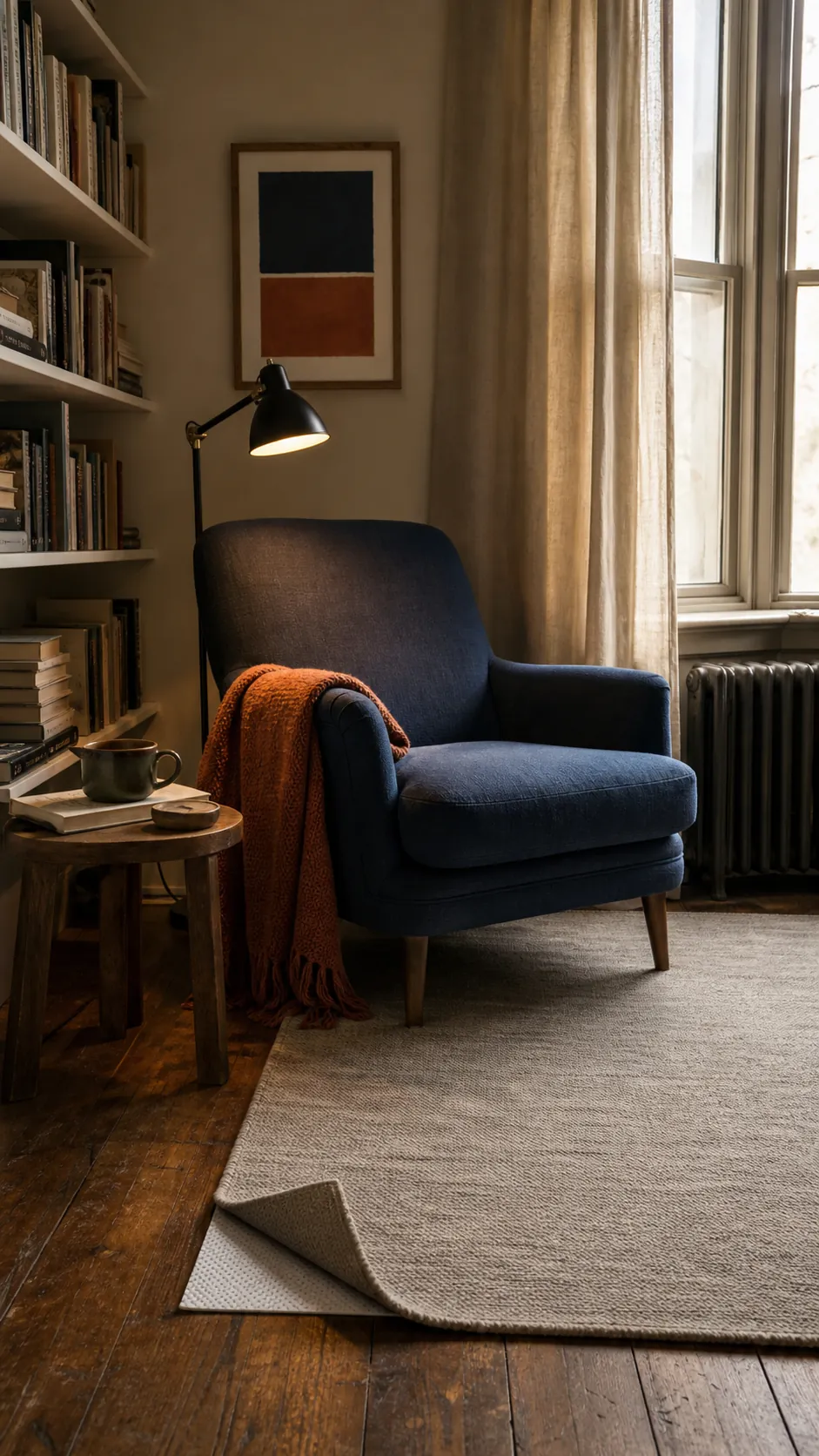
Soft materials absorb both sound and visual harshness. A low-pile rug anchors the chair, lined curtains temper glare, and one wool or cotton throw makes a hard chair edge feel less exposed. Choose textures you enjoy touching rather than stacking fluffy pieces for a photograph.
Keep the palette cohesive, but do not wash everything into beige. A deep blue cushion, rust throw, or green chair can give the reading space a clear identity. Make sure rug edges stay flat and curtains remain clear of heaters and lamps.
Edit the Shelves Until the Chair Can Breathe
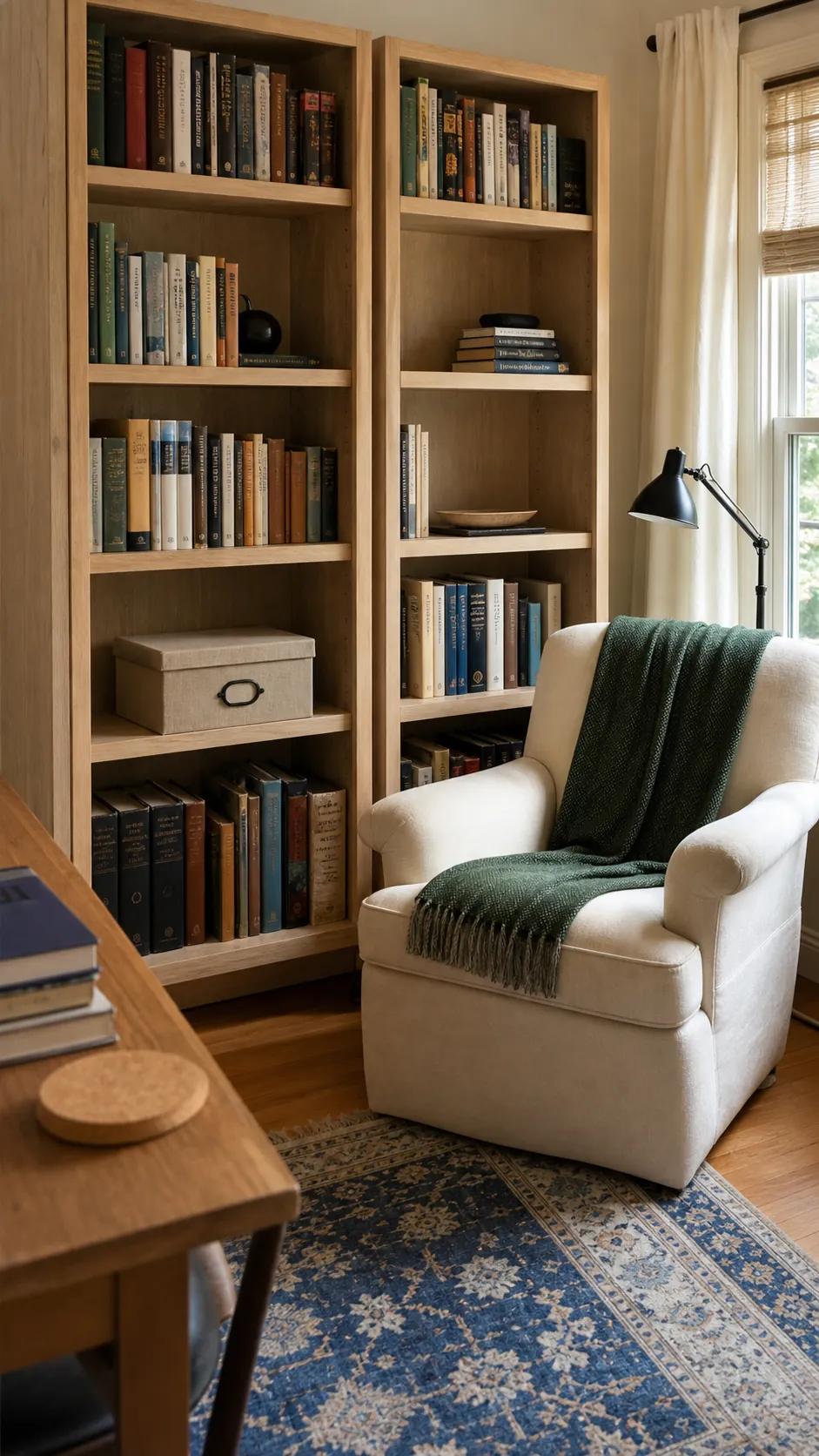
A book nook should contain books, but it does not need to display the entire collection. Keep favorites and current reads close, move old papers and unrelated collections elsewhere, and leave a little open shelf space. Visual breathing room makes the chair feel like a destination rather than an overflow zone.
Store heavy books low and group similar sizes so shelves work efficiently. A lidded basket can hold notebooks or chargers, but avoid filling the nook with containers. Everything beside the chair should support reading, comfort, or the atmosphere you deliberately chose.
Make Returning to the Nook a Ritual
A retreat is partly a place and partly a repeated cue. Leave the next book visible, switch on the same lamp, put the phone out of reach, and bring one drink. A five-minute reset after reading—returning the cup, folding the throw, and marking the page—keeps the nook ready rather than letting it dissolve into household storage.
Protect a realistic pocket of time instead of waiting for a perfect free evening. Ten quiet minutes can establish the habit. When the chair, light, and book are already waiting, the transition becomes easy: you sit down, the rest of the room recedes, and the nook earns its name as a retreat.