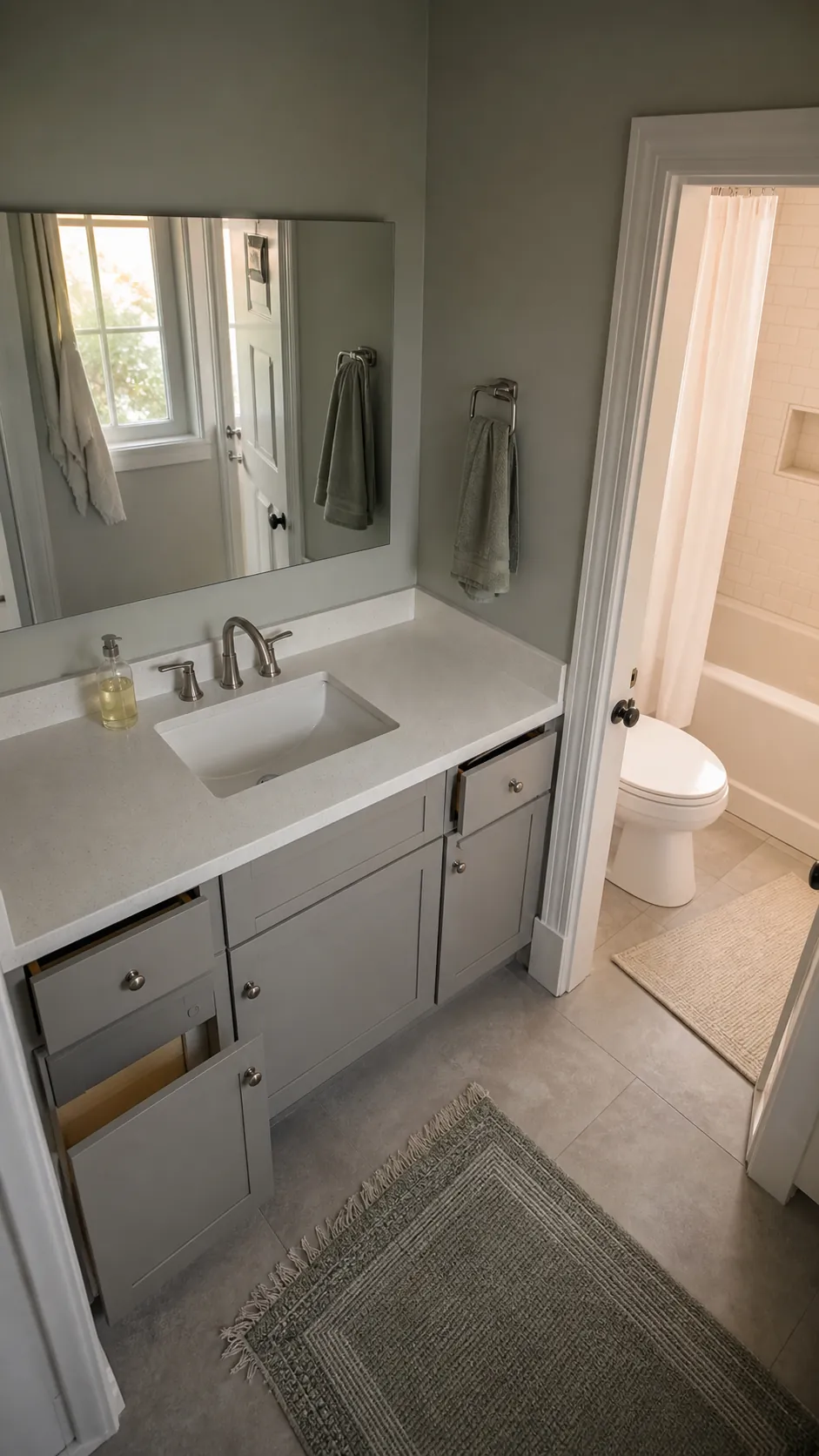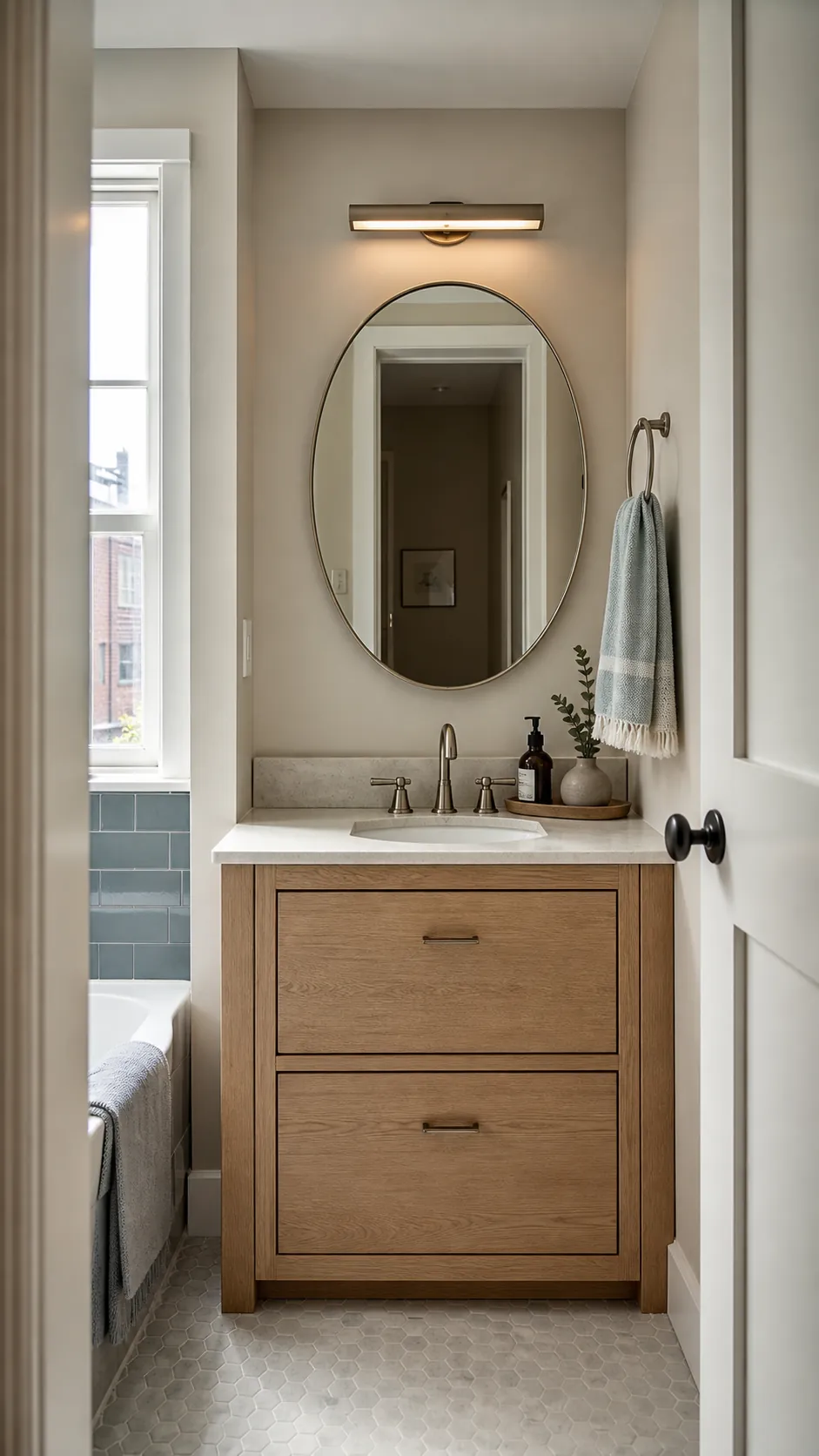
A small bathroom vanity has to work before it decorates. In real small-space discussions, people worry about counters that cannot hold a routine, mirrors and sconces that feel crowded, rental limits, and pretty pedestal sinks that provide nowhere to store essentials. The strongest approach is to keep the basin usable, choose one visual focal point, and let every decorative move perform a practical job.
These ideas scale from free edits to modest upgrades. Measure door swings, faucet clearance, outlets, and mirror height first; then style the limited space with fewer, better-proportioned elements.
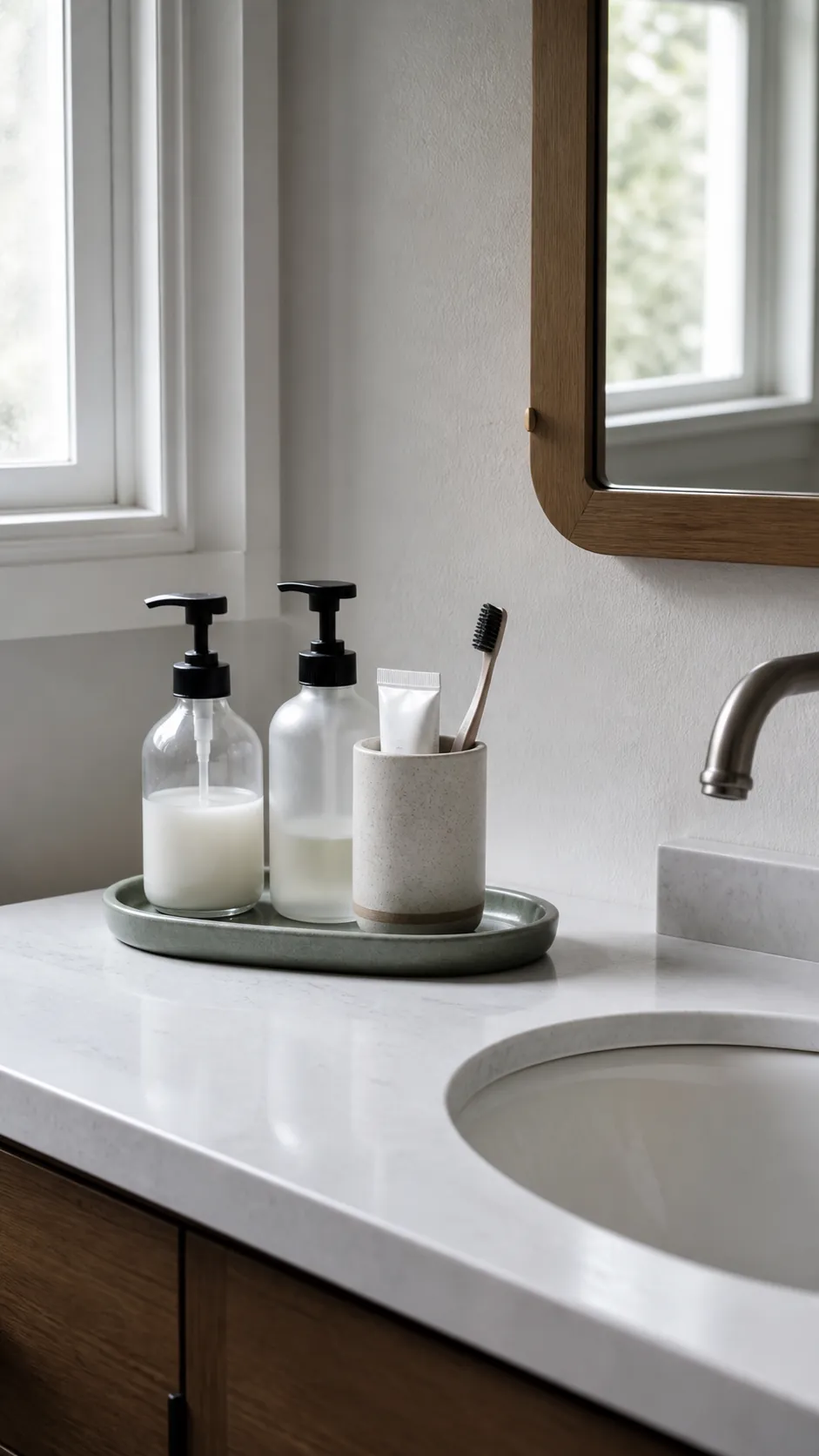
Limit the Counter to One Small Tray
Contain soap and one daily essential on a washable tray that lifts in one motion. The clear counter becomes useful workspace and is far easier to wipe.
Choose an Oval Mirror to Soften Tight Lines
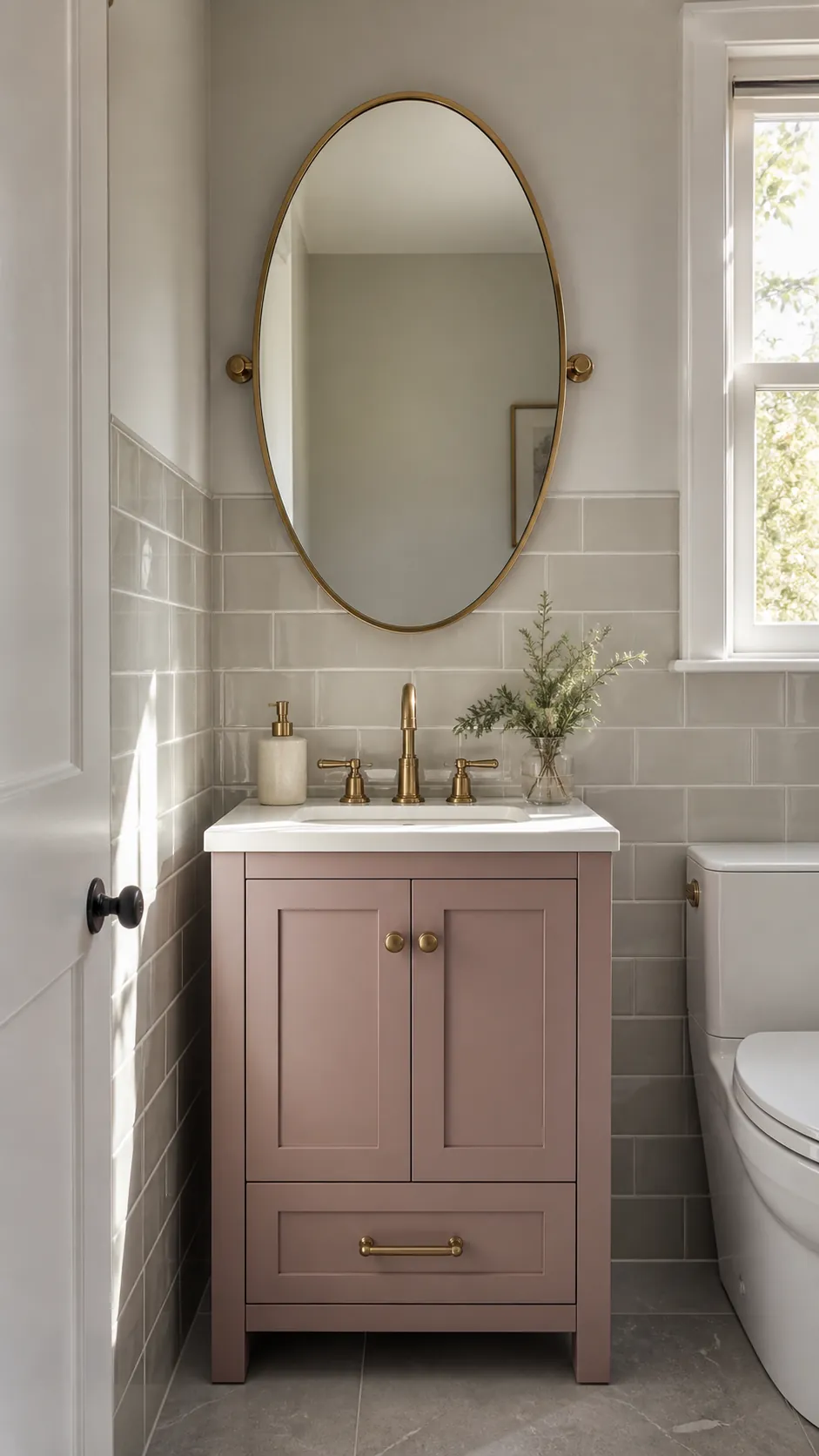
An oval mirror breaks up the rectangles of tile, cabinet, and doorway. Size it in relation to the vanity, not the entire wall, and keep enough room for lighting.
Stretch the Mirror Nearly to Vanity Width
A broad mirror can visually extend the vanity and bounce light through a narrow room. Leave a deliberate margin so it looks fitted rather than squeezed in.
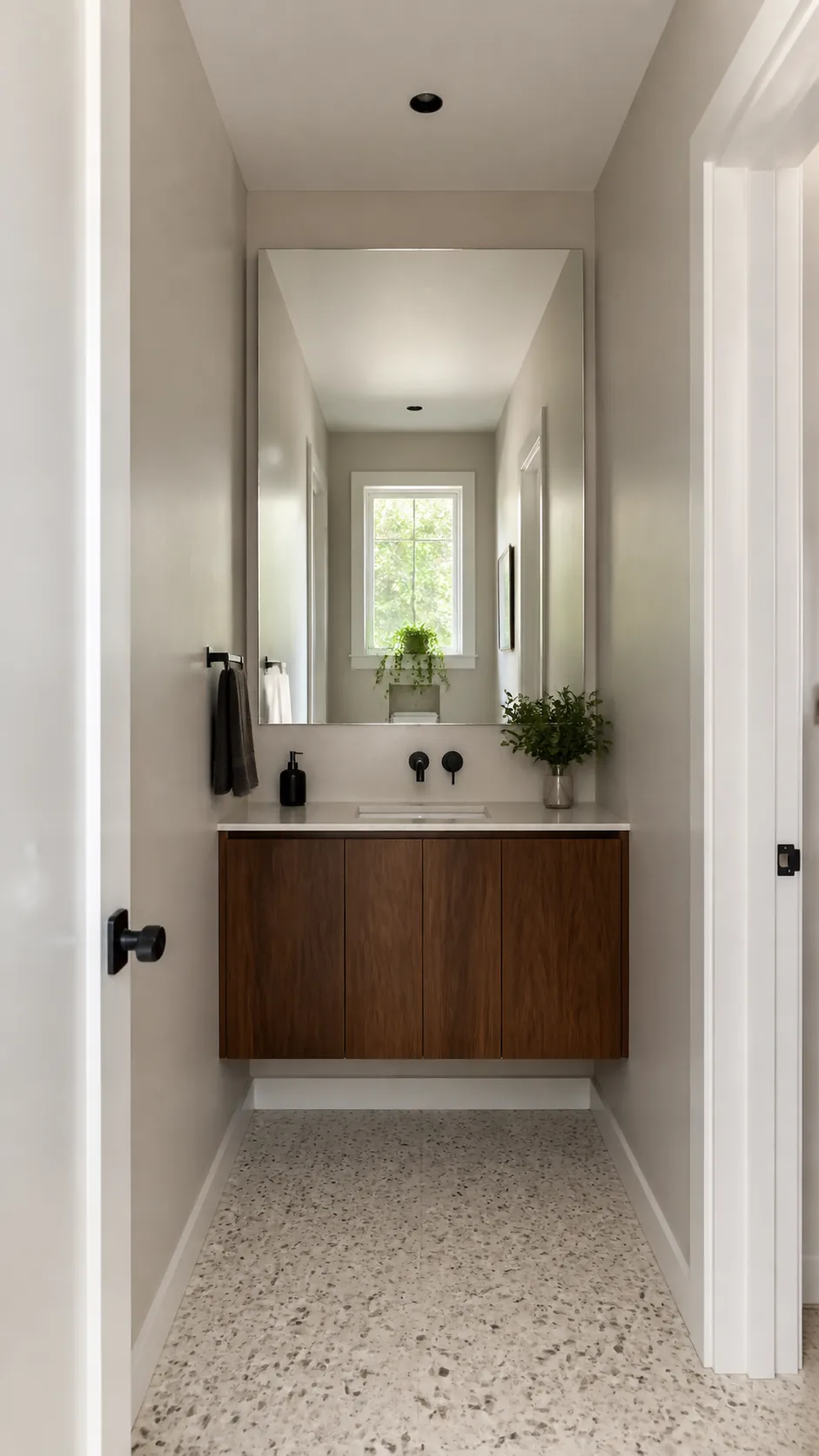
Use a Single Light Above the Mirror
When side sconces crowd the mirror, a slim fixture above it preserves wall space. Choose a damp-rated light with a warm-neutral color temperature that renders faces clearly.
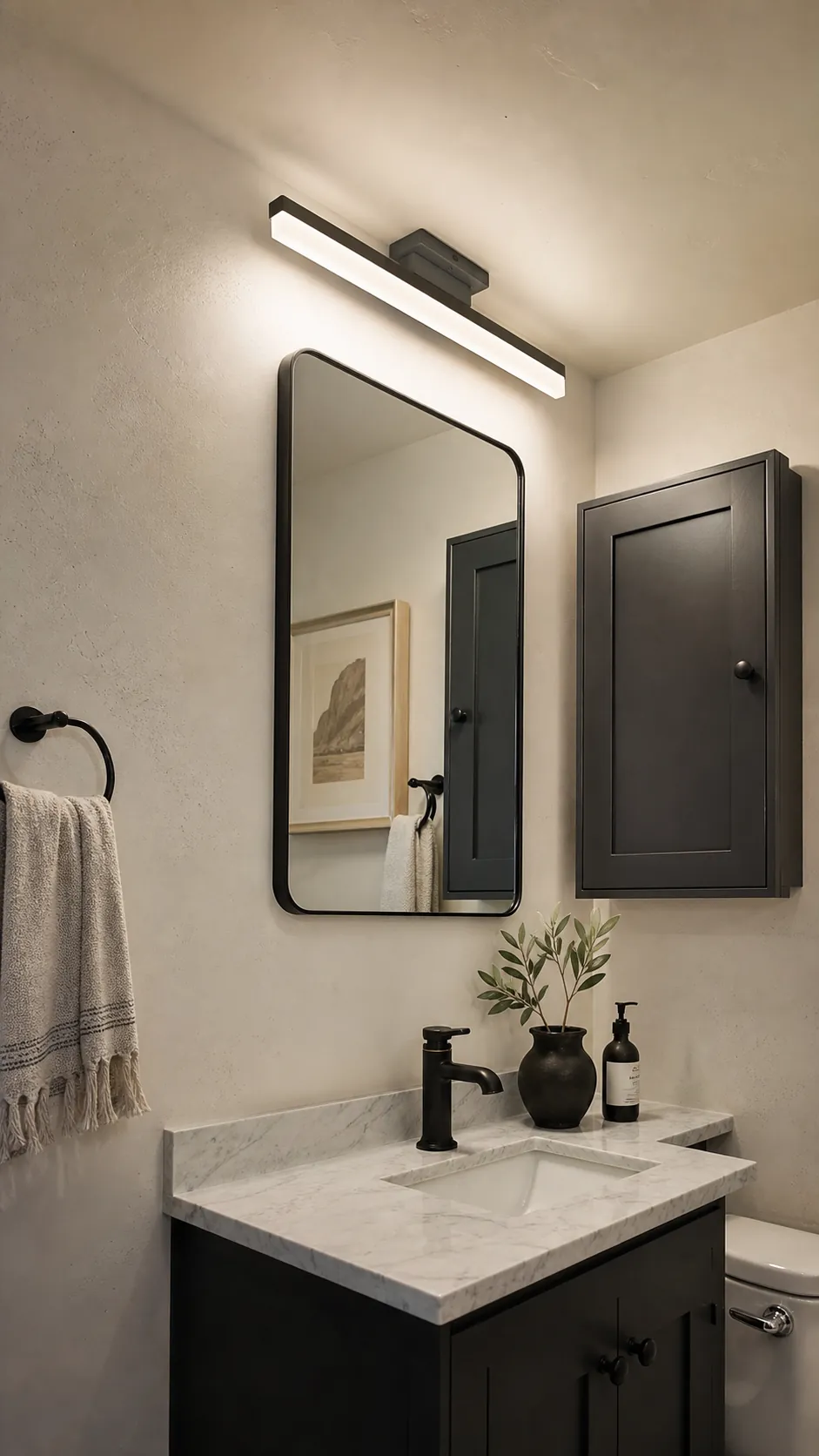
Mount Petite Sconces Beside a Narrow Mirror
If the wall allows it, shallow sconces give even facial light without projecting into the walkway. Test door and cabinet clearances before committing.
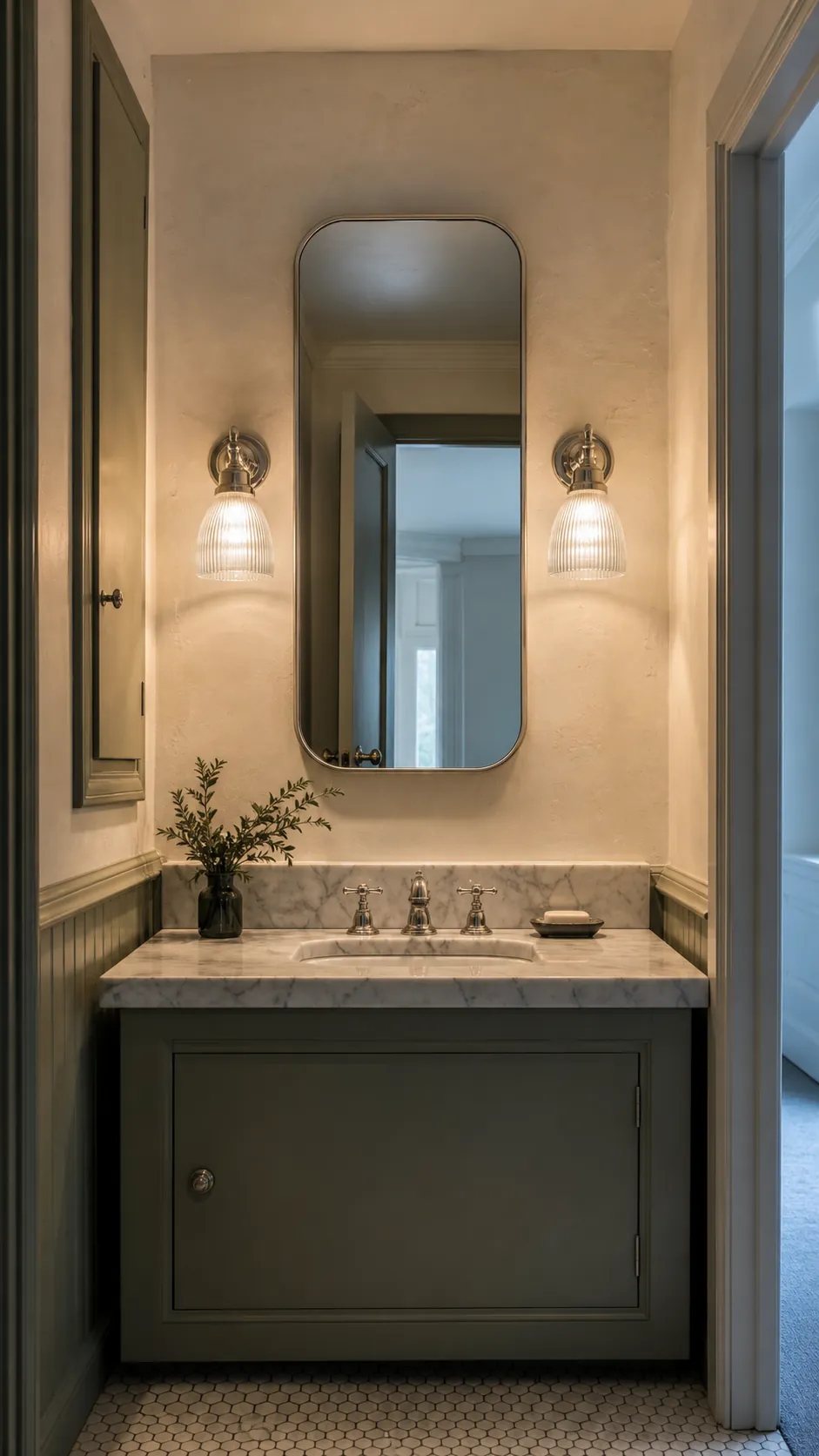
Paint the Vanity as the Color Accent
A compact cabinet is a low-risk place for deeper green, blue, clay, or aubergine. Repeat the hue once in a towel so the choice feels intentional.
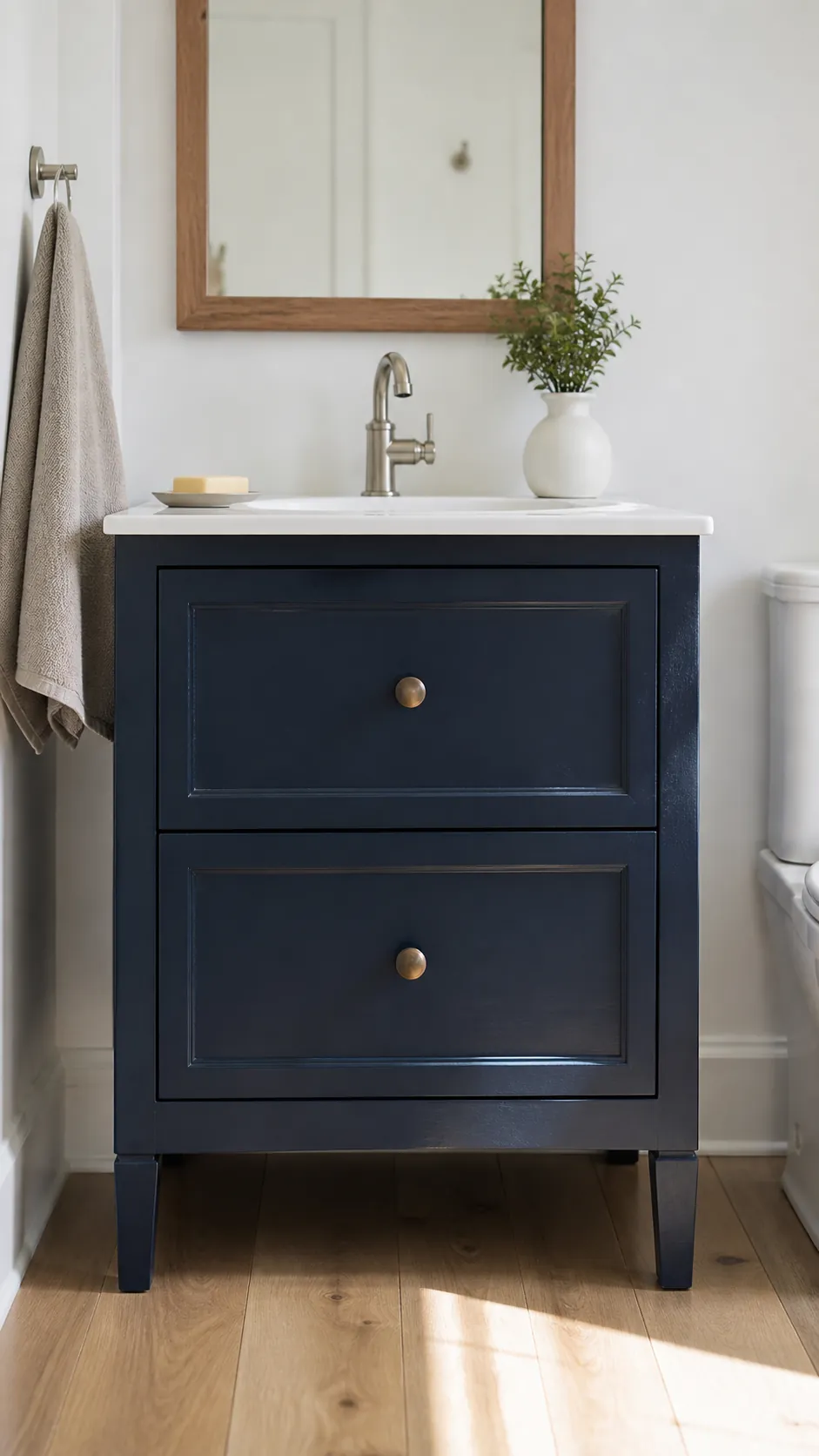
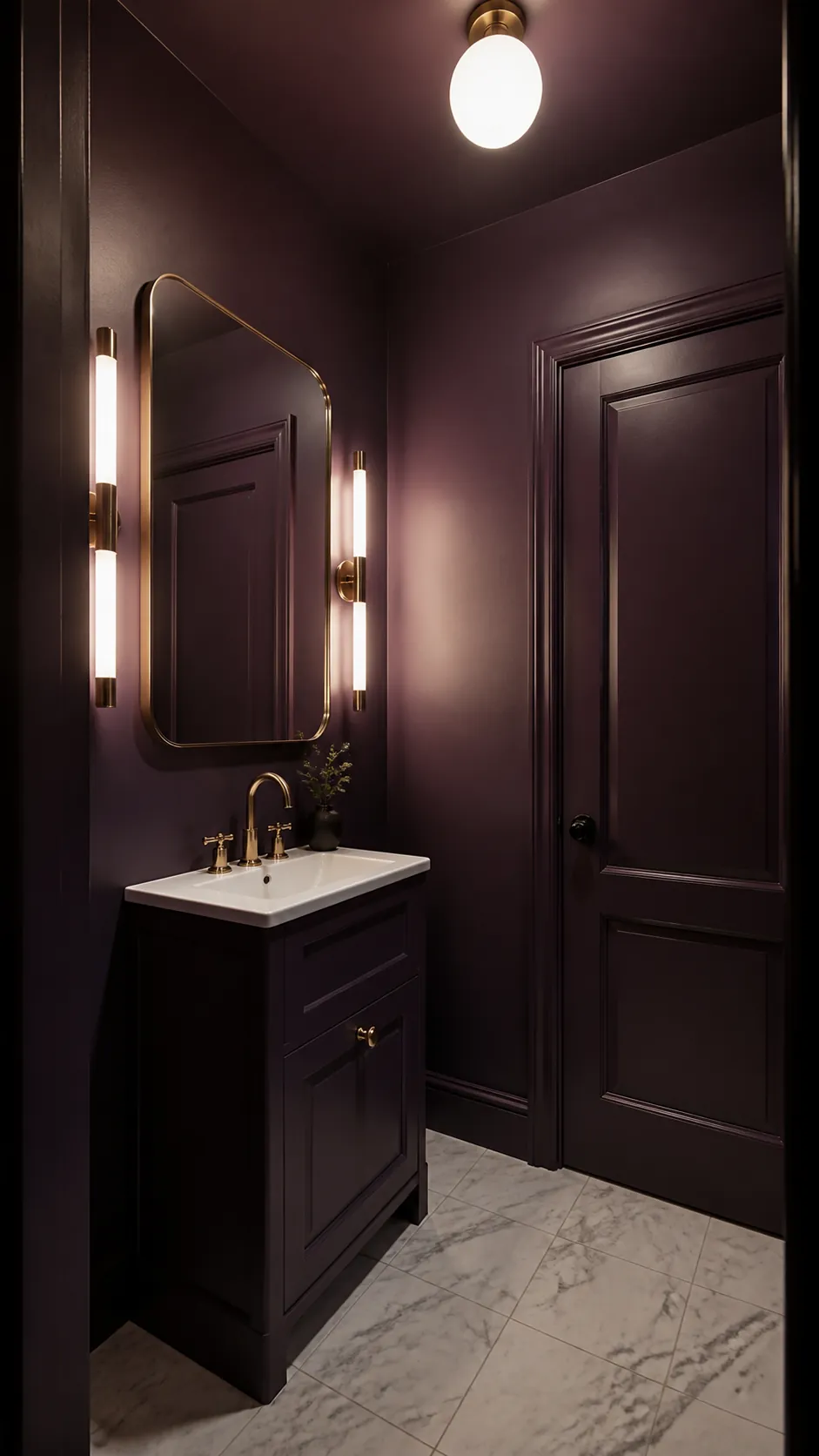
Color-Drench a Tiny Powder Room
In a powder room, using one enveloping color across walls, trim, and vanity can blur boundaries. Keep the counter and mirror simple so the effect stays confident.
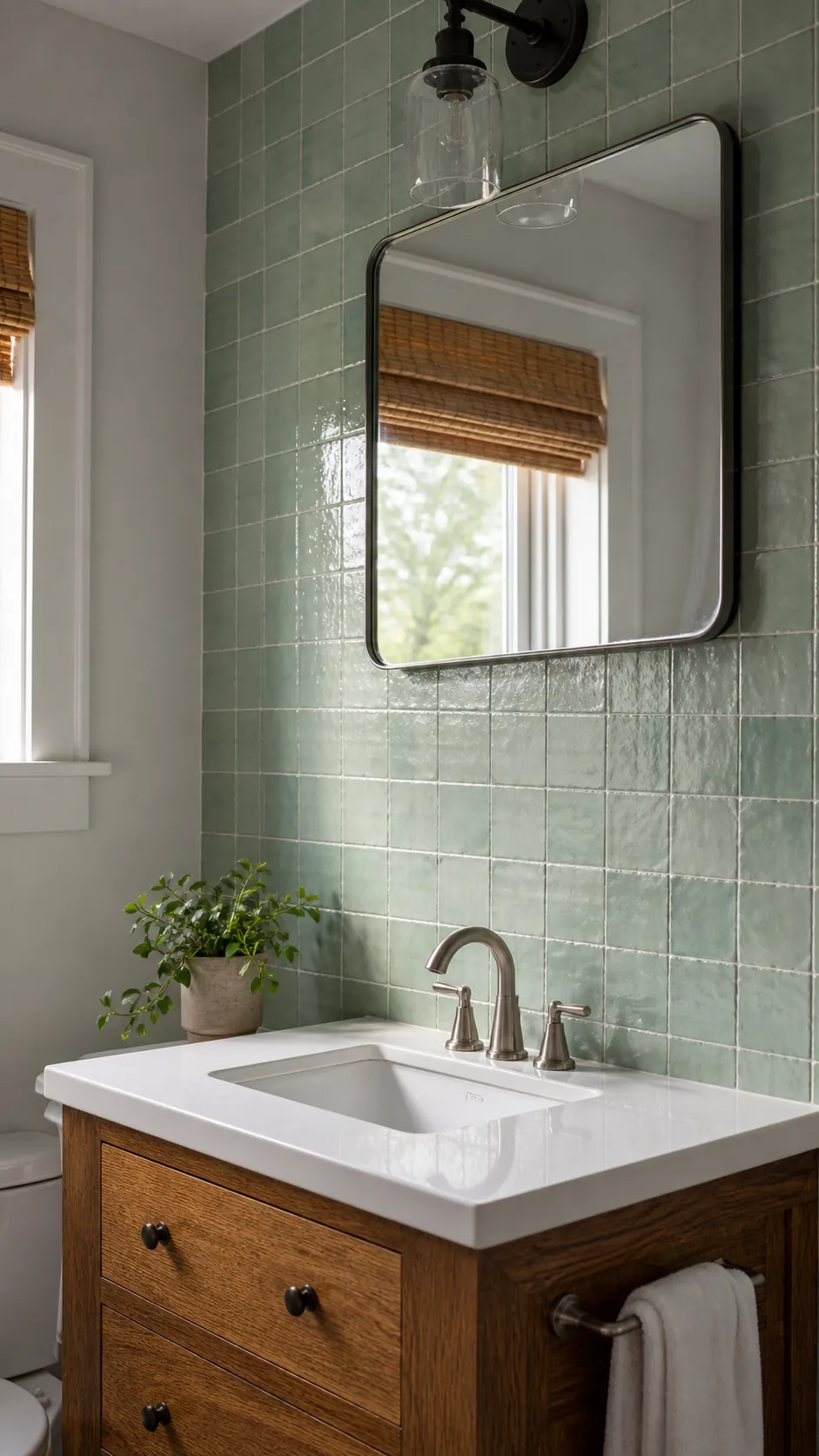
Run Tile or Backsplash to the Mirror
A continuous splash surface reduces visual chopping and protects the hardest-working wall. Small-scale tile or a single slab remnant both suit limited dimensions.
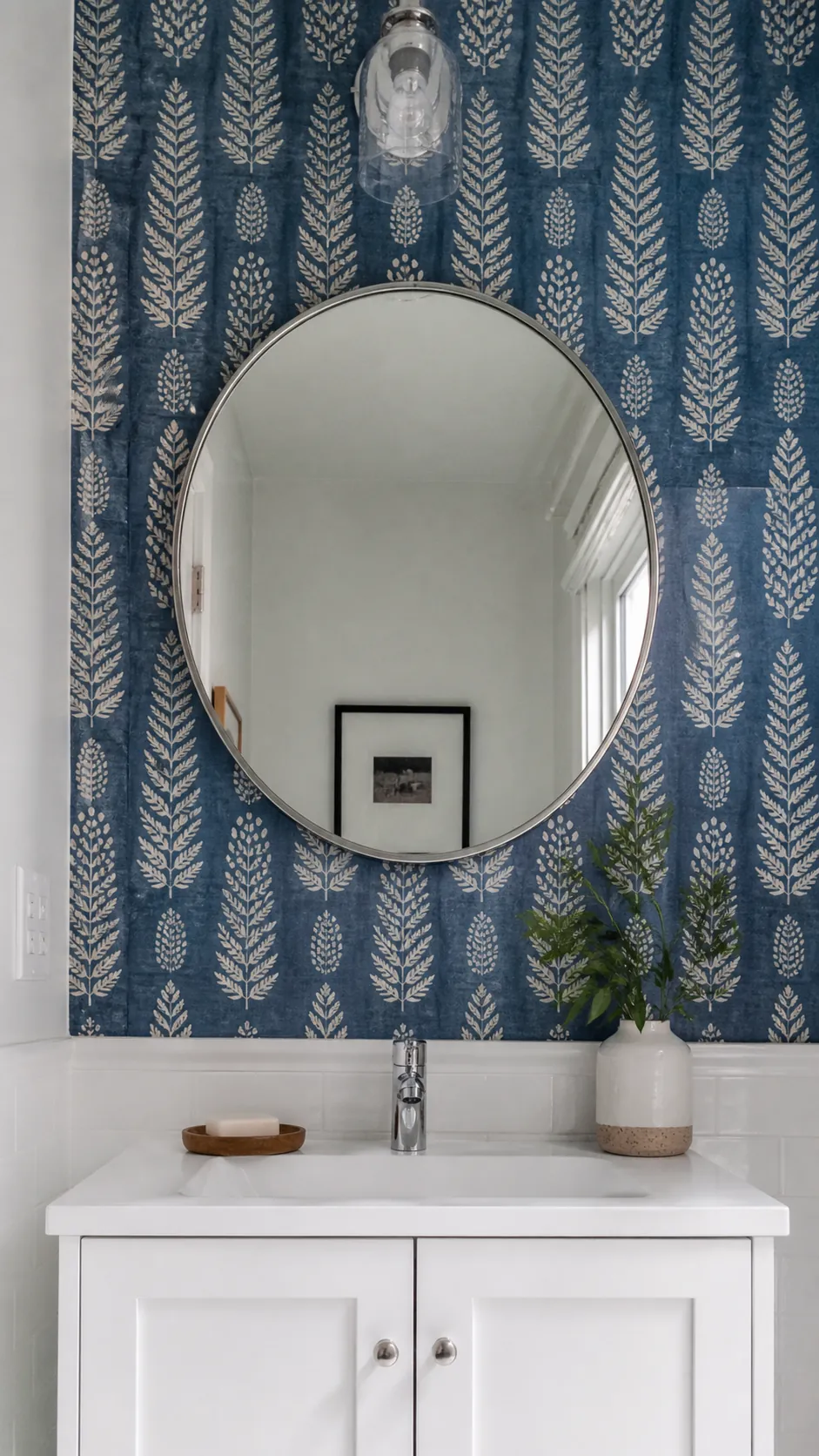
Try Pattern on Only the Vanity Wall
A block-print botanical or geometric paper can give a small bathroom personality without covering every wall. Use a bathroom-suitable product and ventilate well.
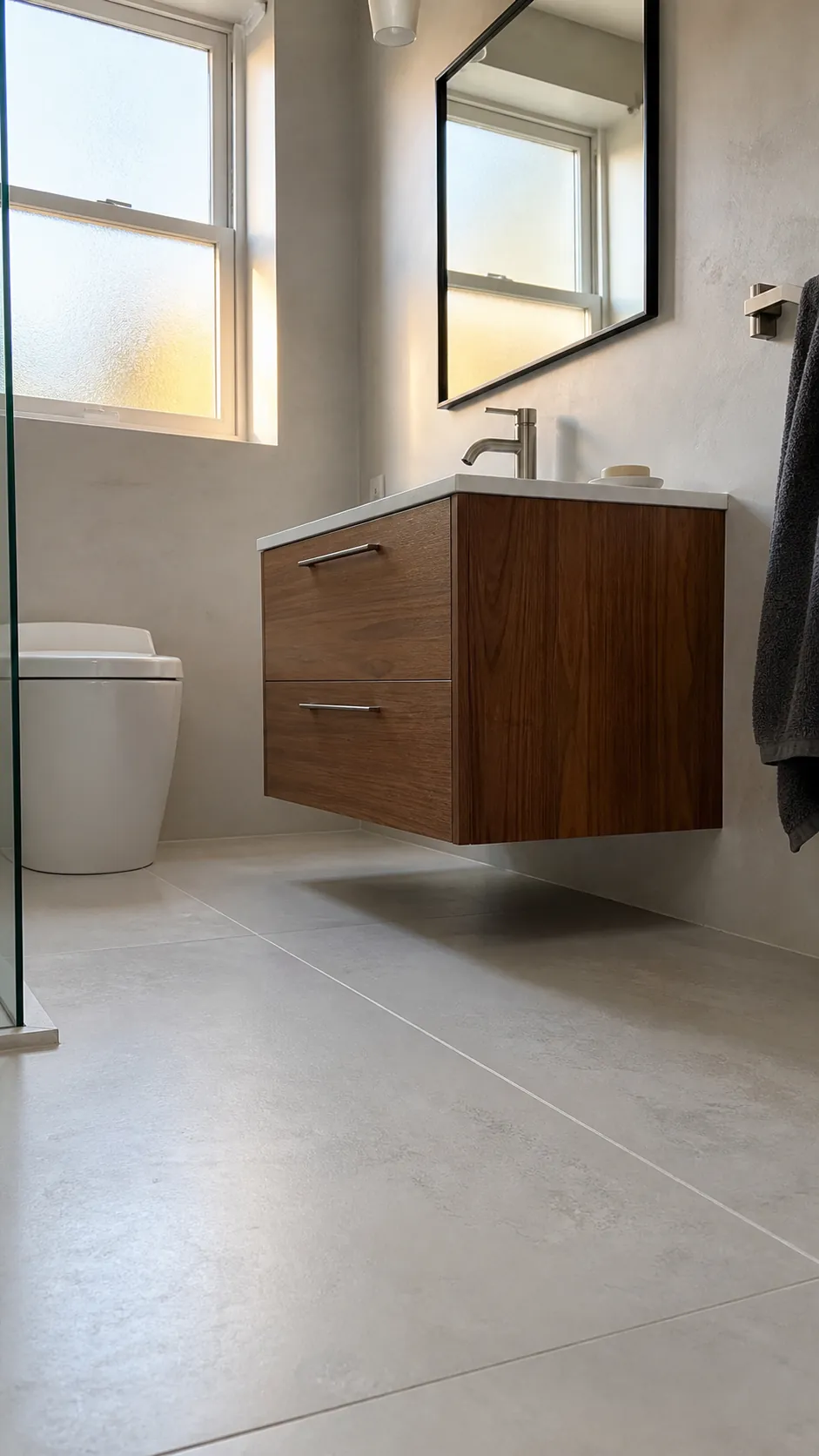
Float the Vanity to Reveal More Floor
A wall-mounted cabinet makes continuous floor visible and can reduce the boxed-in feeling. It needs proper structural support and enough drawer depth to remain practical.
Offset the Basin to Gain Counter Space
An off-center sink can create one genuinely useful prep zone instead of two useless slivers. Align the mirror with the basin and let the cabinet geometry explain the asymmetry.
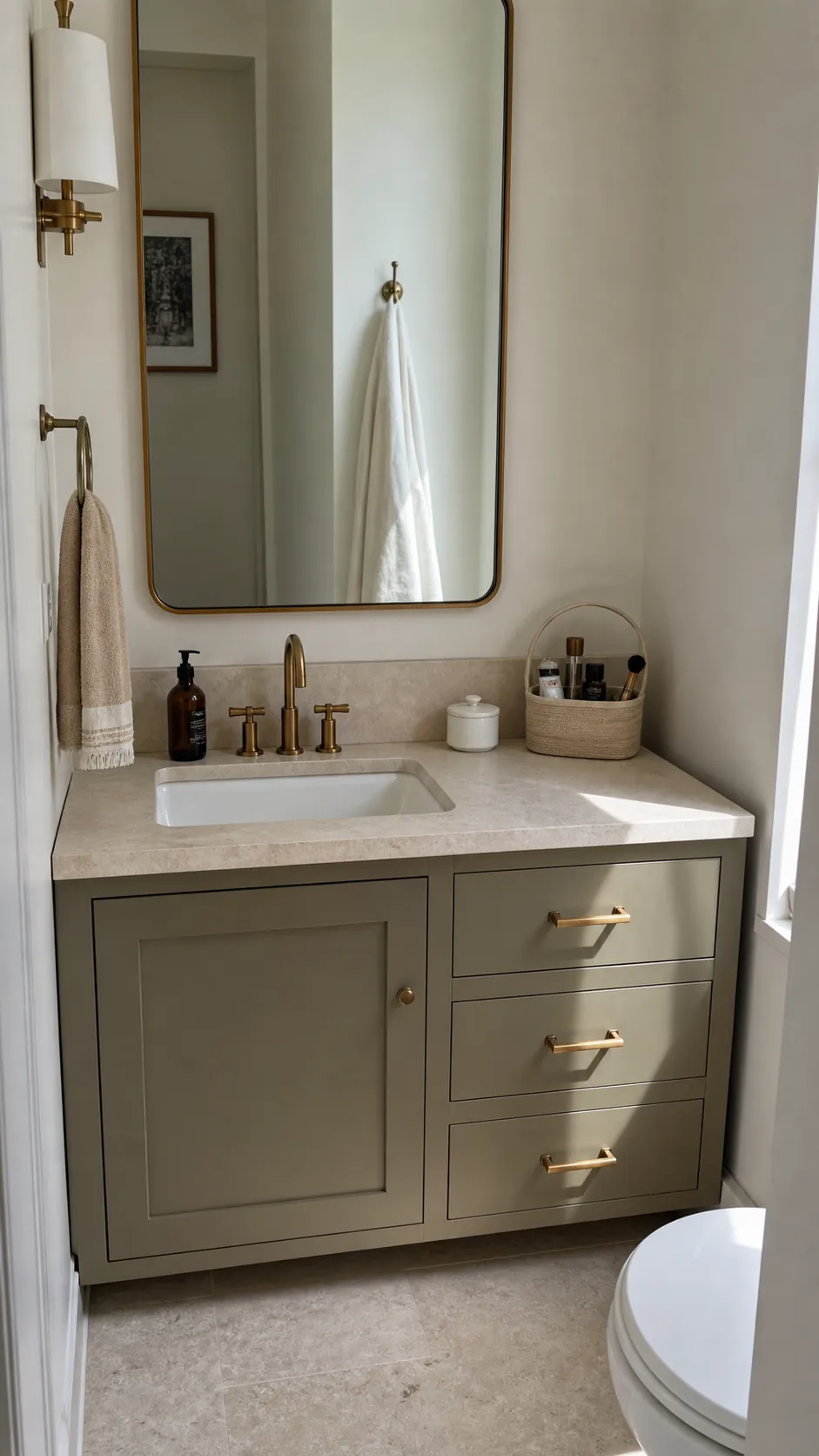
Add a Shallow Ledge Below the Mirror
A two- or three-inch ledge can hold a toothbrush cup or small fragrance without consuming the basin deck. Keep it outside the splash path and easy to clean.
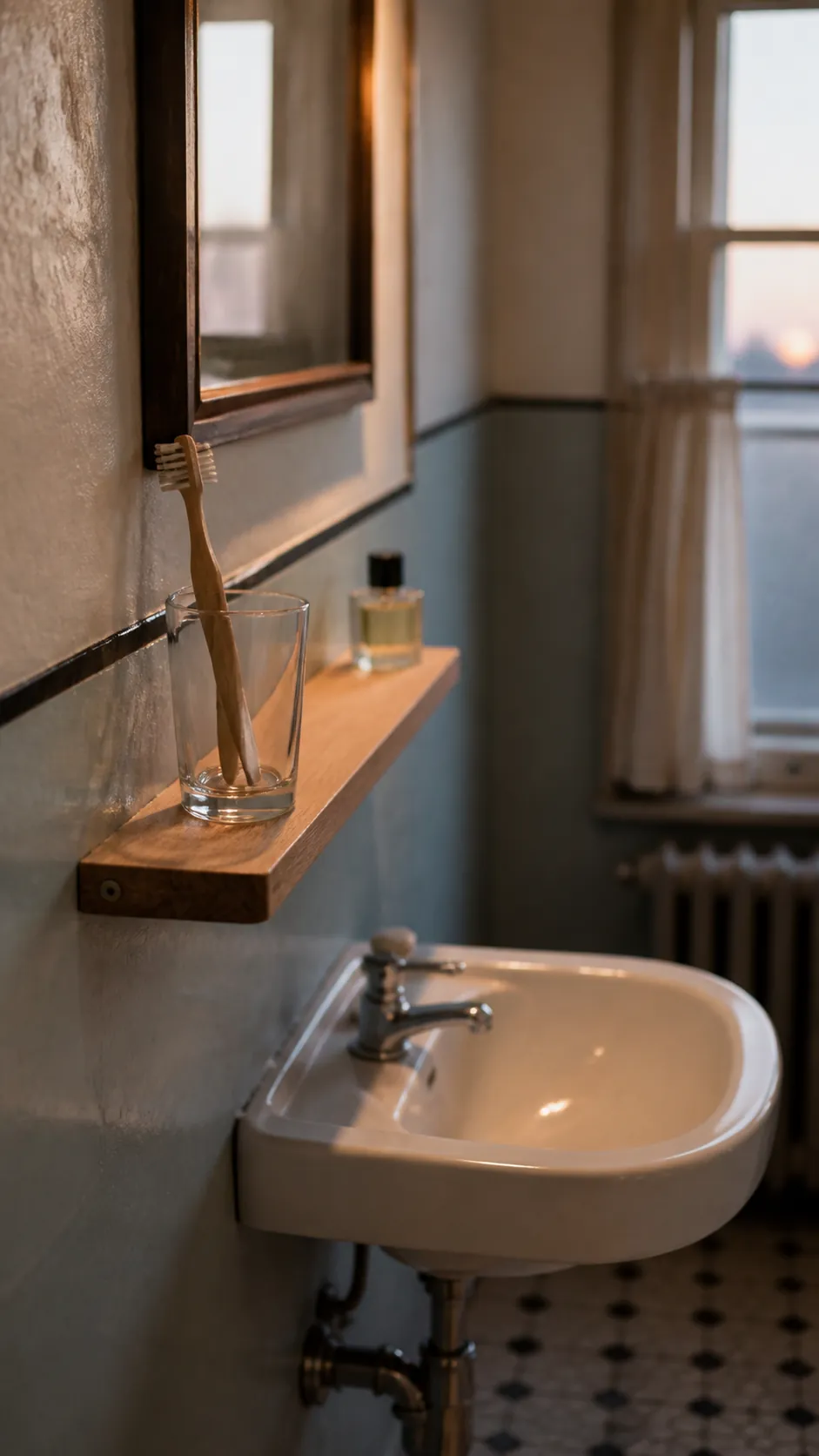
Hang the Hand Towel Beside the Sink
A correctly placed towel ring clears the counter and prevents water trails. Put it where a user can reach without turning across the room.
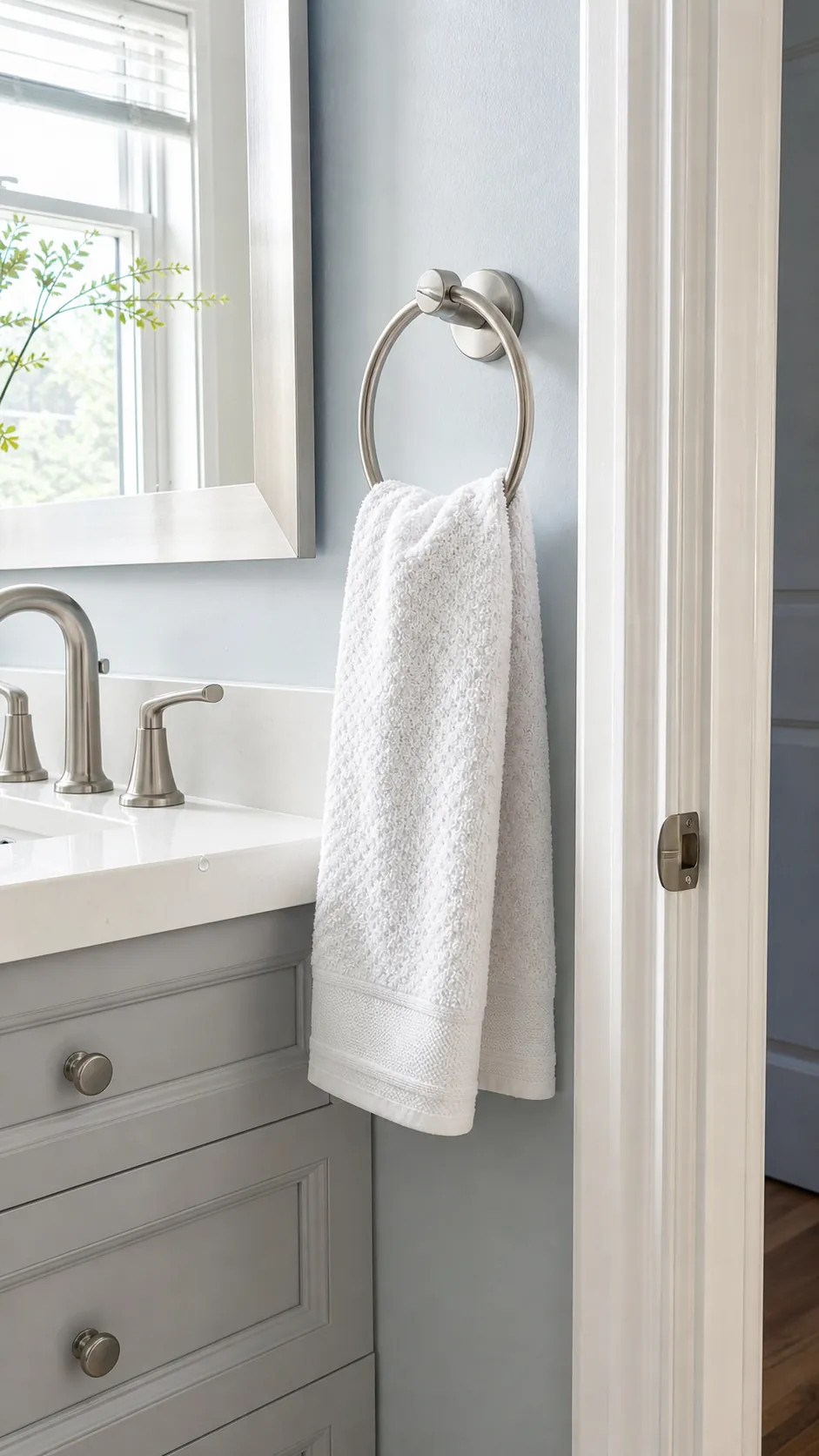
Use One Vertical Decorative Accent
A narrow black-and-white architecture photograph, sculptural relief, or tall botanical branch uses height without spreading clutter. Choose one, not all three.
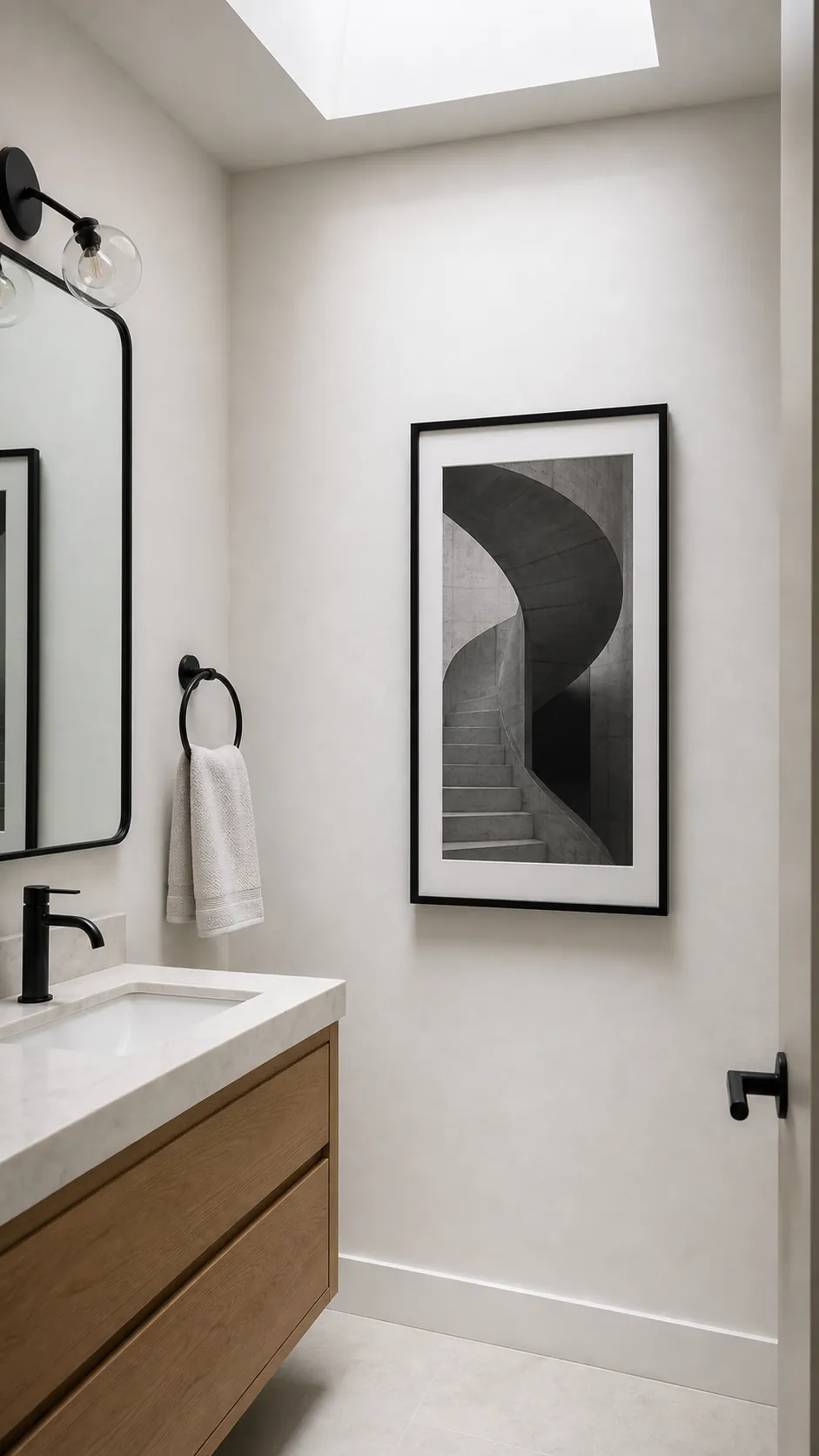
Repeat the Faucet Finish Sparingly
Matching the faucet, light, and towel ring creates order in a busy little room. Avoid adding unrelated finishes through every accessory; contrast should look deliberate.
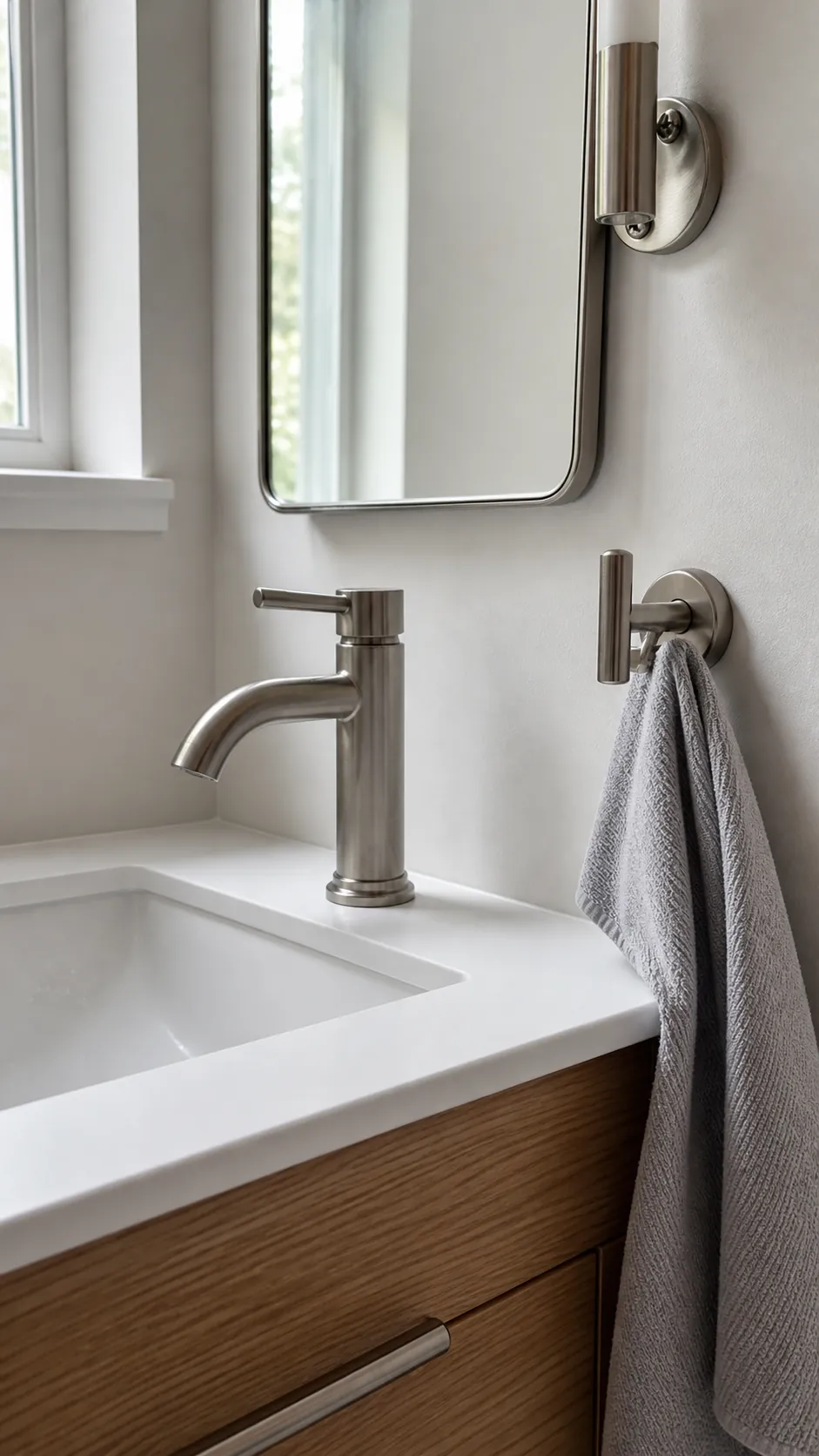
Choose a Low-Profile Faucet
A faucet scaled to the basin prevents splashing and keeps the mirror unobstructed. Check spout reach as carefully as height; water should land near the drain.
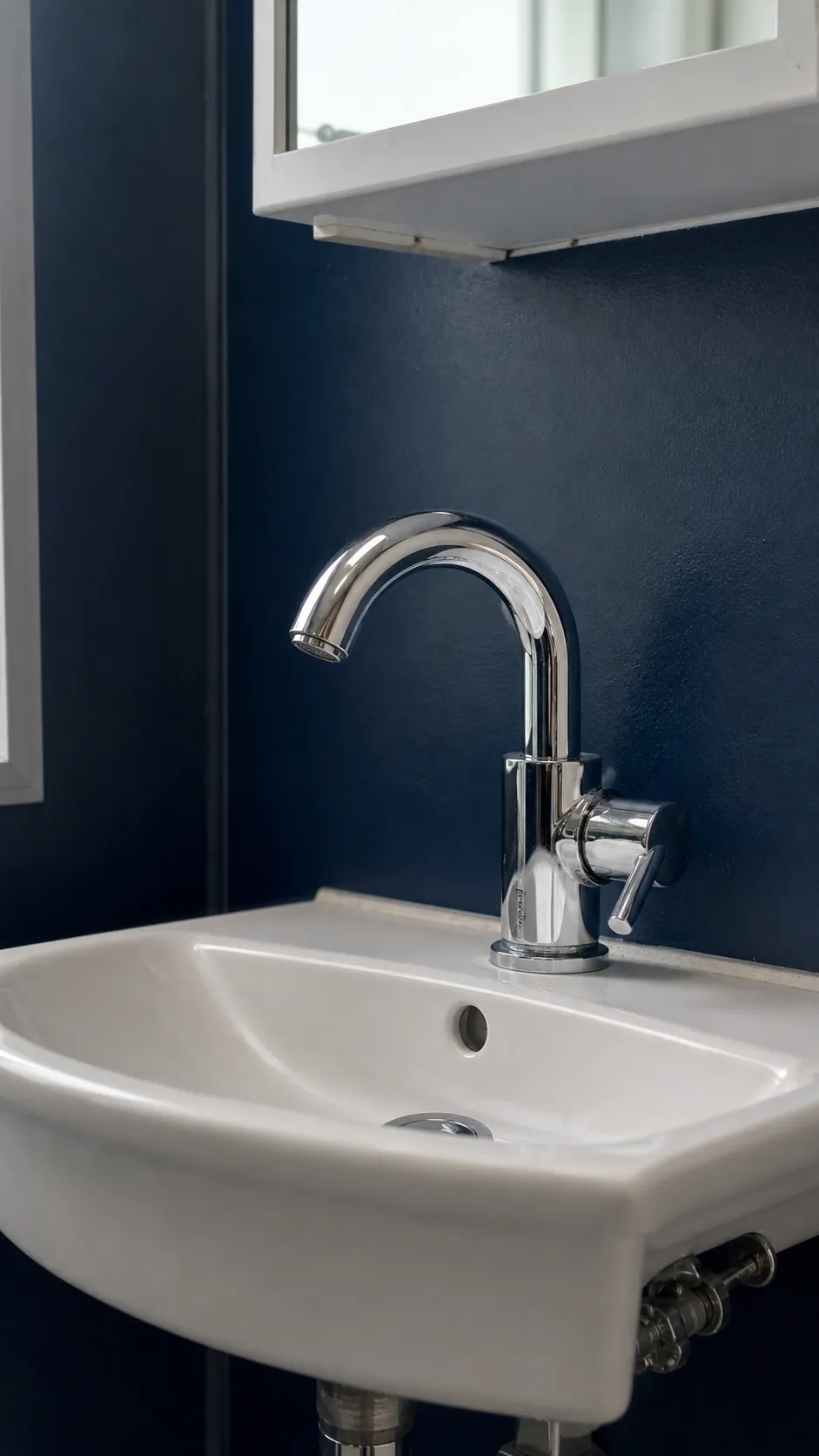
Let Empty Space Finish the Styling
Small bathroom decor becomes convincing when it stops before every surface is filled. Remove duplicate bottles, store backups, and leave visible counter around the tray. The clear area is not wasted—it is what makes the mirror, color, hardware, and one decorative choice readable.
A limited-space vanity should give back time and movement. If styling prevents a drawer from opening, crowds a light, catches splashes, or adds another object to clean, it has exceeded the room’s capacity.