
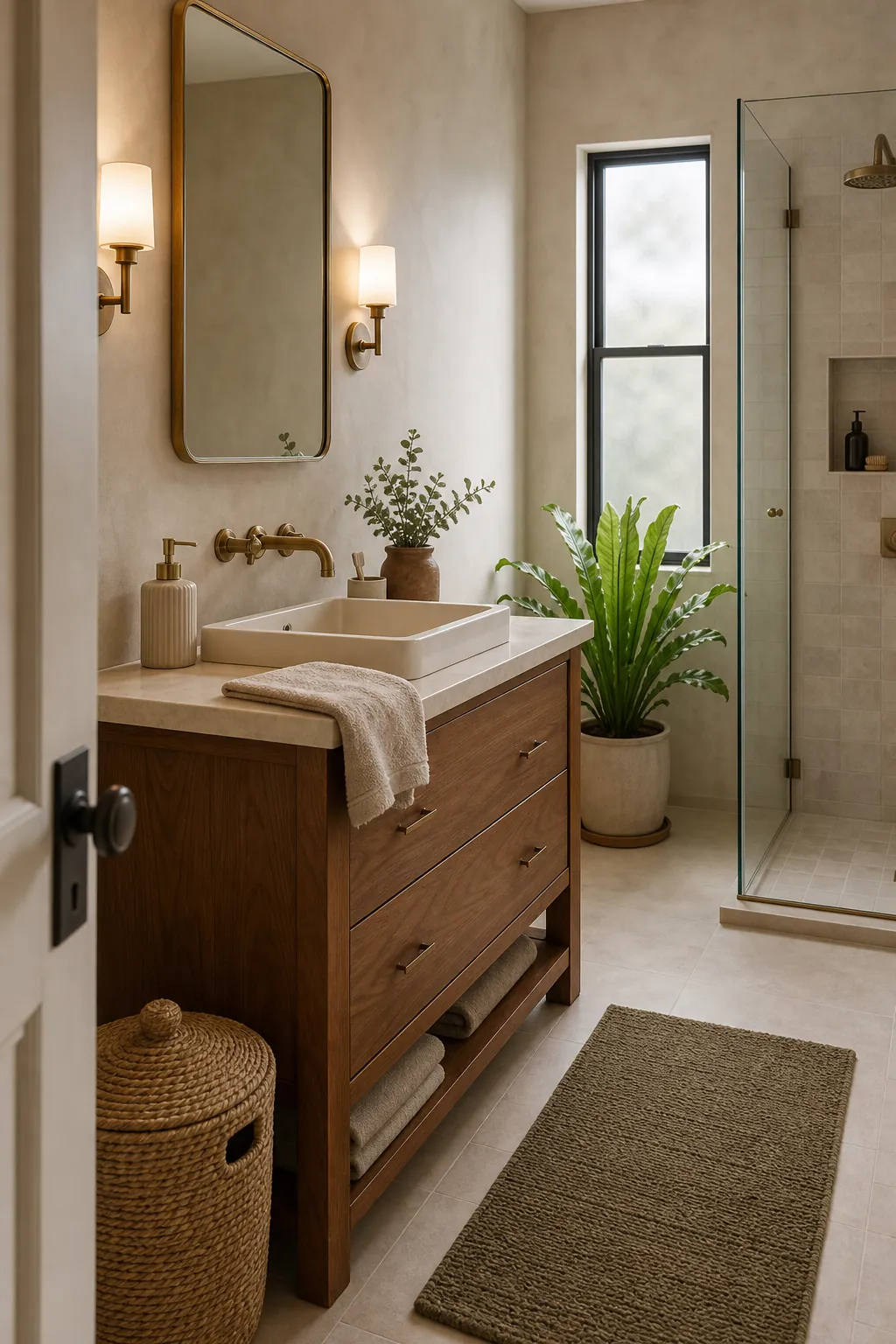
A bathroom can have beautiful tile and still feel cold. That is the frustration behind many “what is missing?” bathroom questions: the room is functional, but bright white surfaces, cool bulbs, chrome finishes, and scattered toiletries make it read as clinical. The fastest route to a warm bathroom is not adding more decor; it is building a small, controlled palette of warm color, honest texture, softer light, and useful objects.
This approach works whether you are planning a full bathroom refresh or trying to soften a rental without replacing tile. Start with what cannot change, then repeat two or three earthy notes around it. The result feels intentional, calm, and lived in rather than themed.
Read the Existing Undertone Before Choosing Color
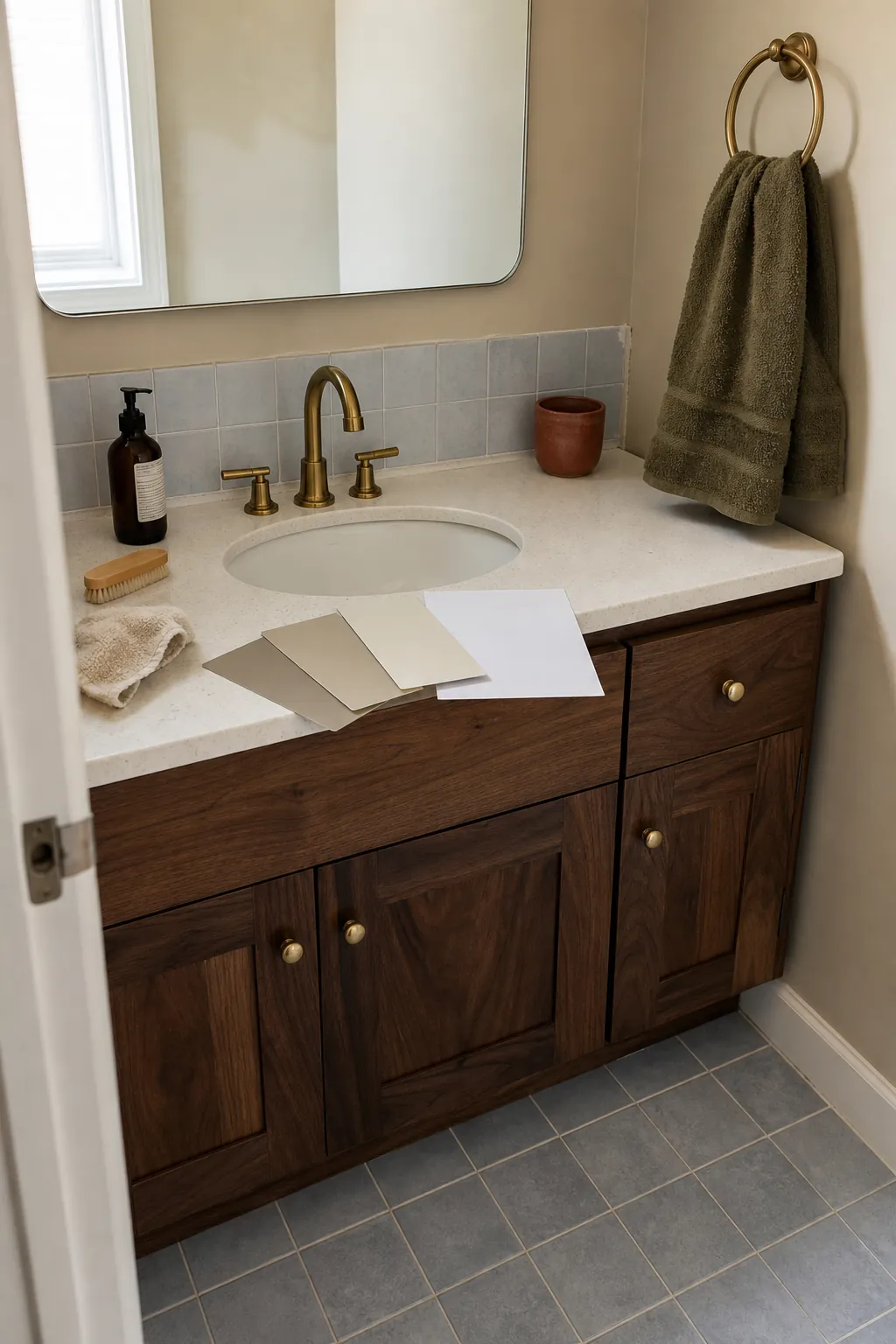
Before buying sage paint or terracotta towels, identify the undertone already present in the room. Hold a sheet of plain white paper next to the floor, wall tile, vanity, and countertop. The comparison makes it easier to see whether a “neutral” surface leans blue-gray, pink-beige, yellow-cream, or green. Your earthy palette should bridge that fixed undertone, not fight it.
Cool gray tile can feel warmer beside mushroom, tobacco brown, muted olive, and aged brass. Cream tile works naturally with clay, walnut, sand, and deep green. If several finishes clash, use one middle color—often a warm greige or soft putty—across the largest changeable surface. It acts as a visual translator between old tile and new decor.
Warm the Light Before You Add More Objects
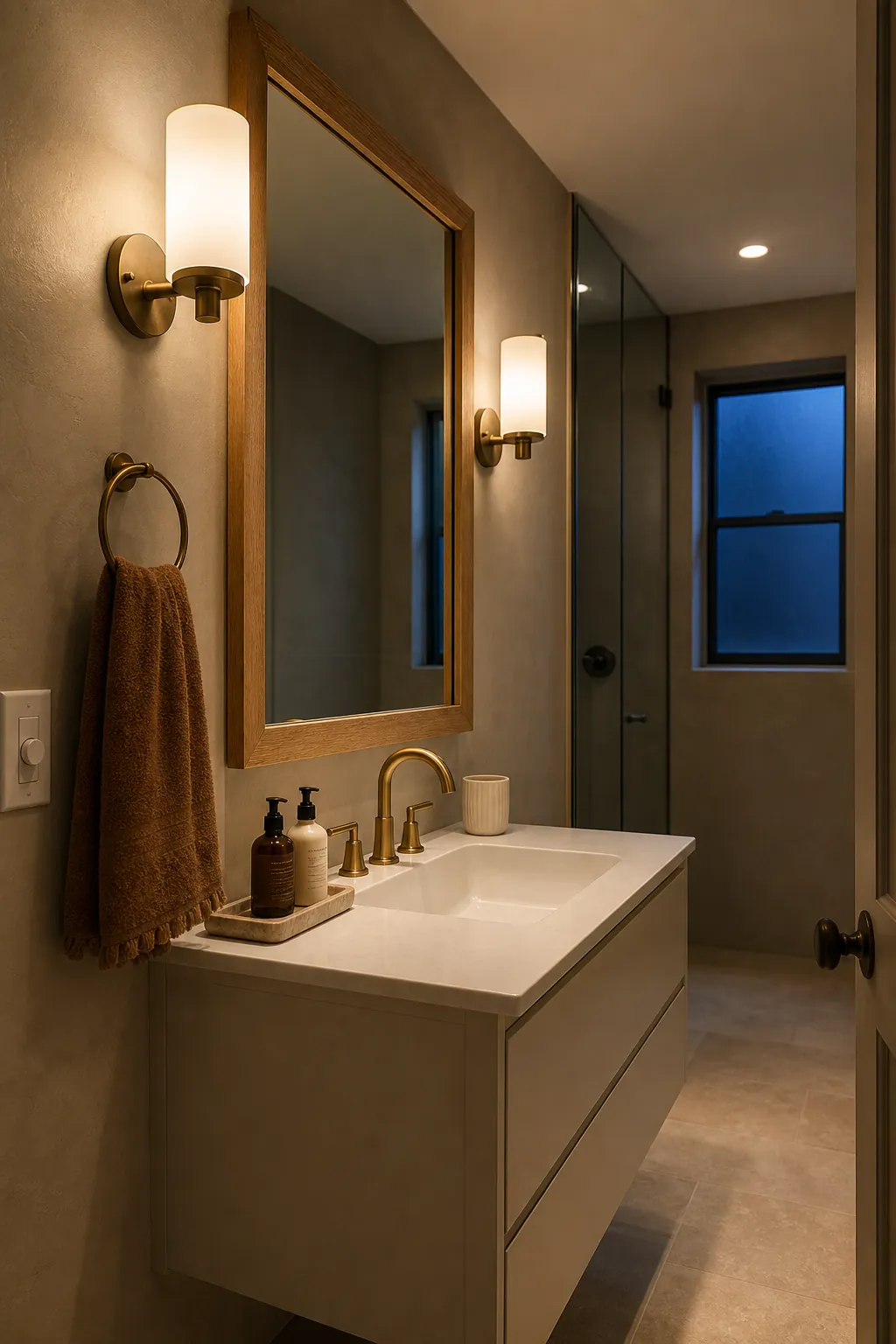
Harsh, cool light is one of the most common reasons a neutral bathroom feels unfinished. Use warm-white lamps around 2700K to 3000K where the fixture allows, while keeping enough brightness and accurate color rendering for grooming. A dimmer gives you practical light in the morning and a softer spa bathroom mood at night.
Layering matters more than a decorative fixture alone. An overhead light fills the room; sconces near the mirror reduce face shadows; a small, damp-rated accent light can soften a dark corner. Match exposed bulb color temperatures so one source does not look icy beside another. Warm light should reveal texture, not turn every cream surface orange.
Use Wood and Woven Texture Where Moisture Allows
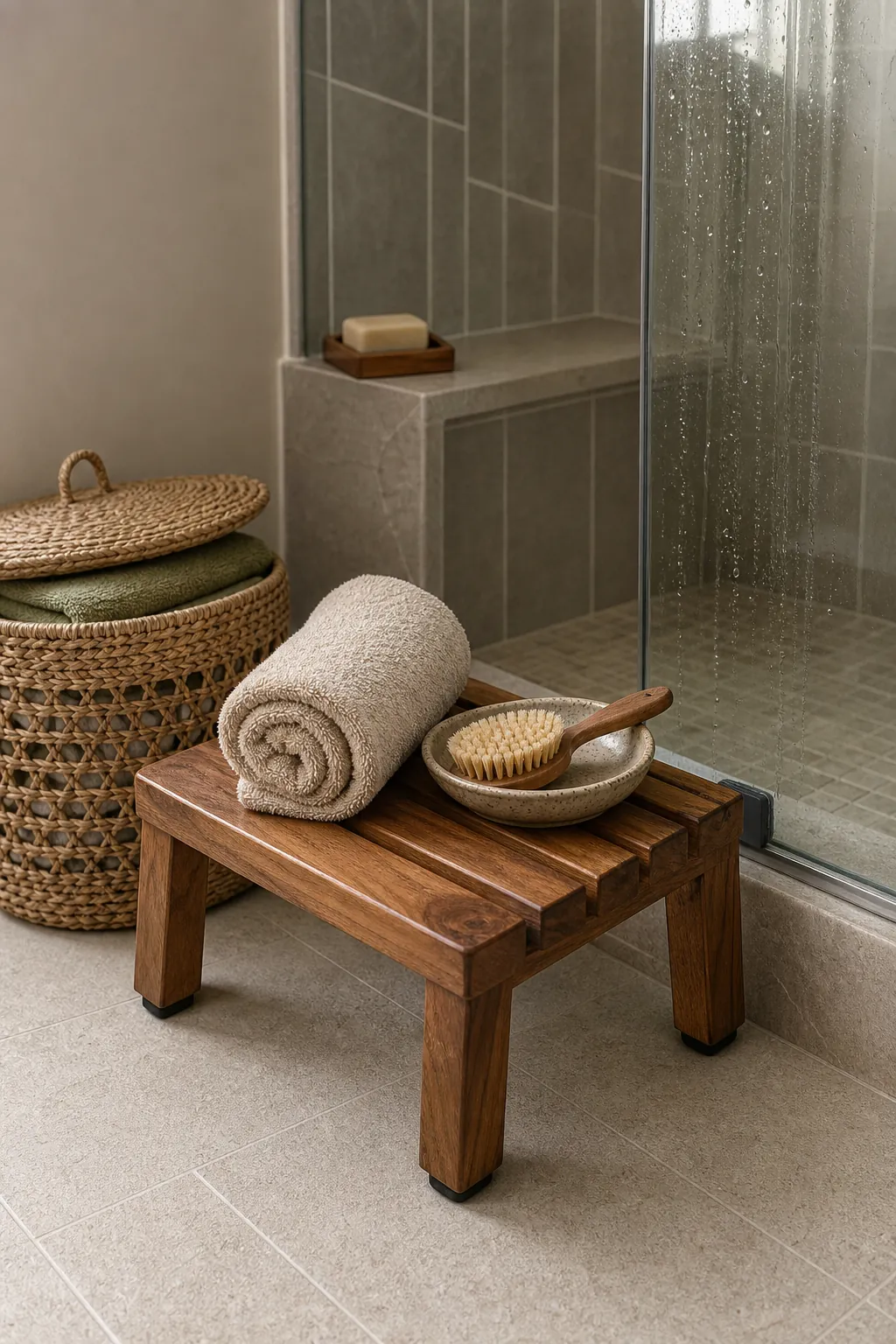
Wood grain and woven fiber supply the visual warmth that stone and porcelain lack, but placement matters. Keep raw baskets, cane, and untreated timber away from direct spray and standing water. Choose sealed wood for a stool or shelf, wipe splashes promptly, and leave air around baskets so damp towels do not stay trapped.
You do not need a matching bamboo set. One walnut-toned stool, a ribbed oak tray, or a lidded seagrass hamper is enough to establish the material story. Repeat the color—not necessarily the exact material—two more times in smaller details such as a mirror frame, brush handle, or storage label. This repetition makes mixed pieces look collected rather than accidental.
Treat Textiles as the Main Color Layer
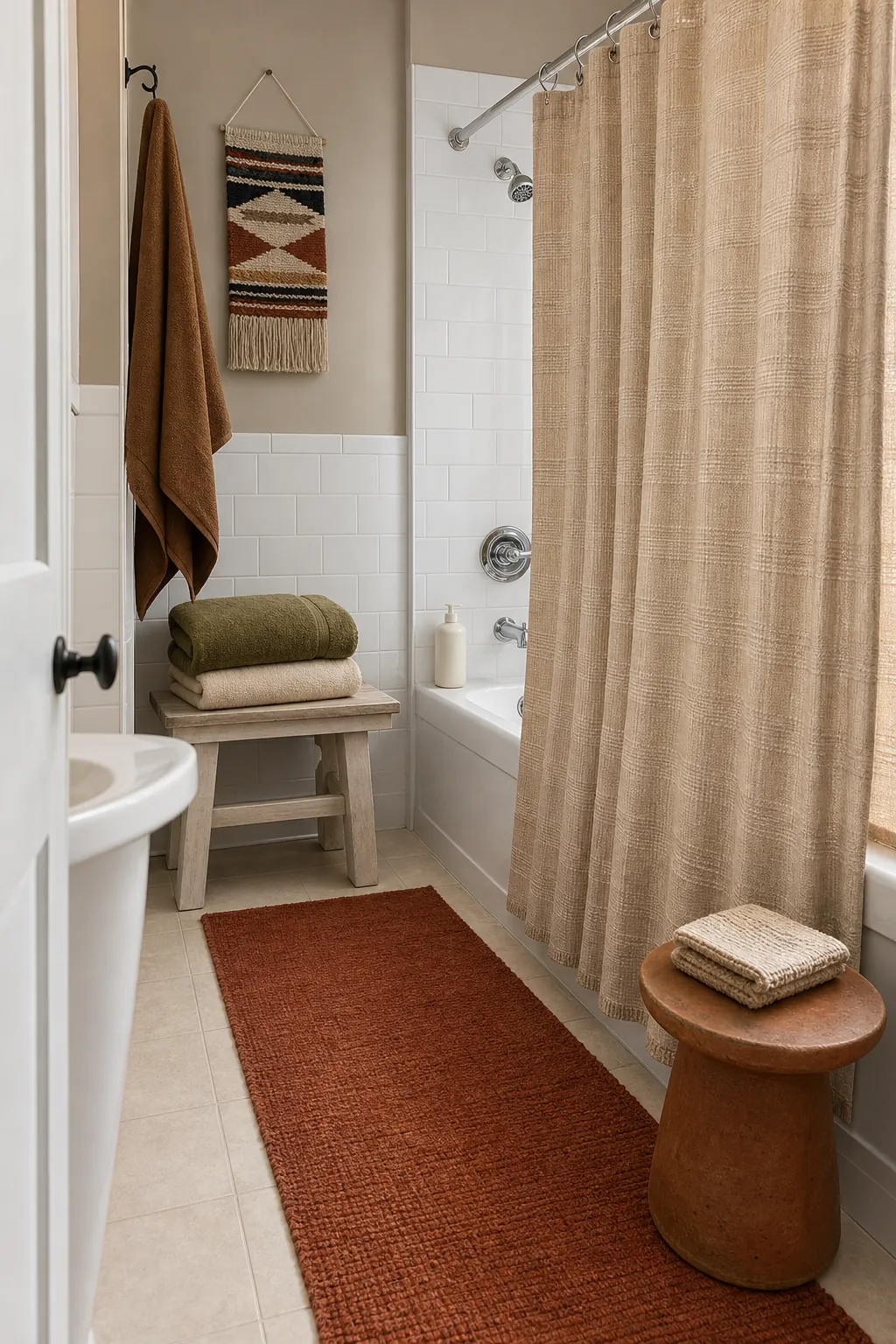
Towels, a shower curtain, and a bath mat cover more visual area than most accessories, so choose them before countertop decor. A restrained combination—such as oatmeal, rust, and olive—creates depth without turning the room into a color chart. Look for visible weave, slub, ribbing, or a narrow border that can be felt as well as seen.
Keep everyday textiles easy to wash and quick to dry. A thick rug that remains damp is neither cozy nor practical. For a small bathroom, use one substantial runner or mat instead of several tiny rugs. Fold only the spare towels; leave the daily towel on a hook where air can circulate. A genuinely cozy bathroom supports the routine instead of staging around it.
Choose Bathroom Plants by Light, Not by Trend
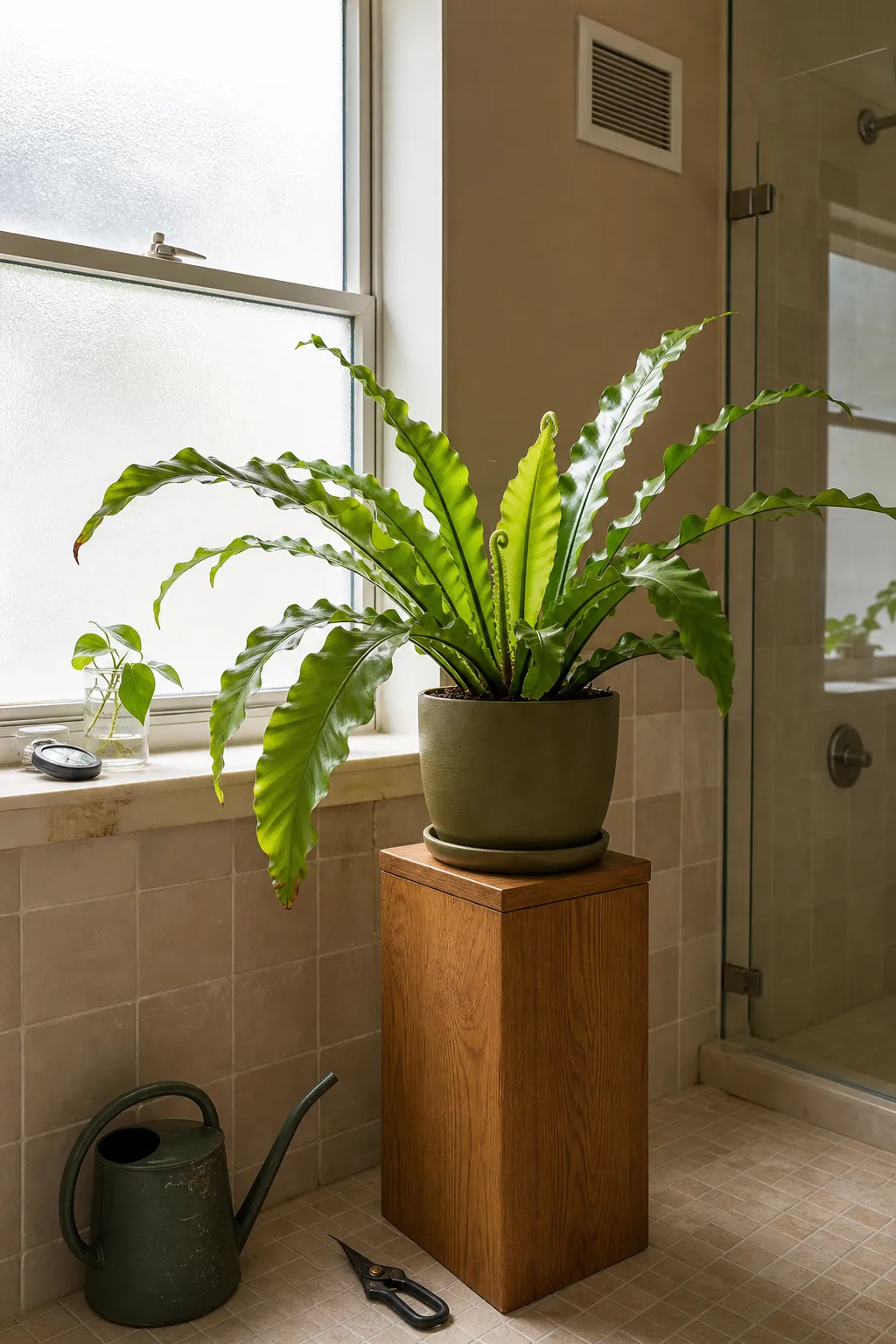
Humidity can help some tropical plants, but it does not replace light. Pennsylvania State University Extension specifically cautions that bathrooms often lack the light houseplants need. Check the window direction and how long the room receives usable indirect light before choosing a plant. In a windowless room, use a real grow light on a timer or choose a convincing botanical branch rather than slowly weakening a live plant.
Keep pots out of the shower stream and use containers with drainage. A bird’s nest fern, pothos, or heartleaf philodendron may suit humid conditions when the light is appropriate, but watering still depends on the plant, potting mix, season, and temperature. Match the plant to the bathroom you have, then let one healthy specimen create the fresh focal point.
Make Storage Part of the Earthy Composition
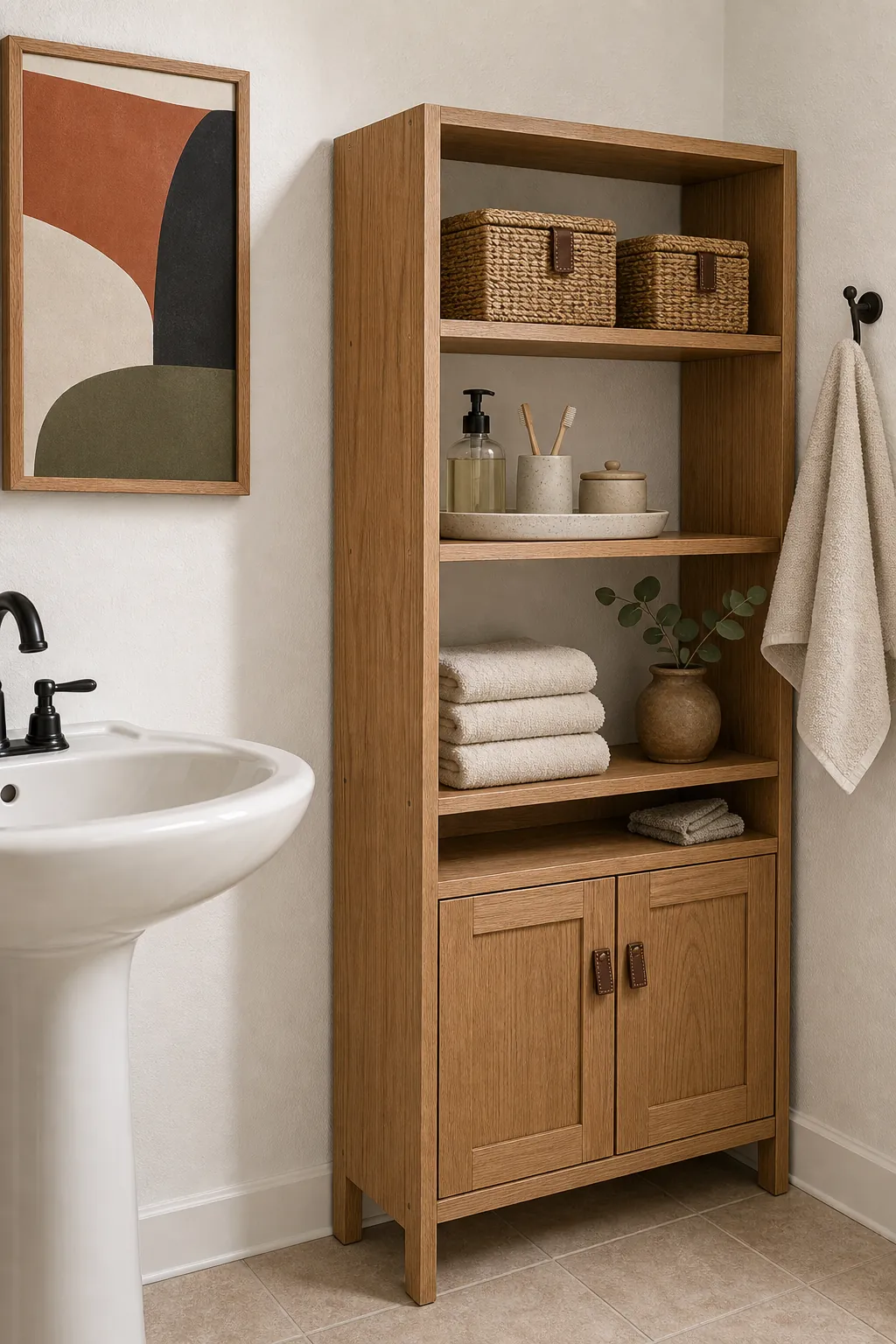
Open shelves look calm only when they hold a limited number of useful things. Hide refills, medicine, cleaning supplies, and visual clutter behind doors or inside labeled bins. On display, keep one tray for daily items, one stack of towels, and perhaps one plant or ceramic vessel. Leave some shelf surface visible so the arrangement can breathe.
For a rental bathroom, add warmth with removable changes: an over-toilet étagère with sealed shelves, adhesive hooks rated for humid rooms, a leaning ladder for dry towels, or a narrow freestanding cabinet. Measure door swings, knee space, and cleaning access before ordering. Storage that blocks movement will make the room feel smaller, no matter how attractive it is.
Edit the Room Until the Warmth Feels Quiet
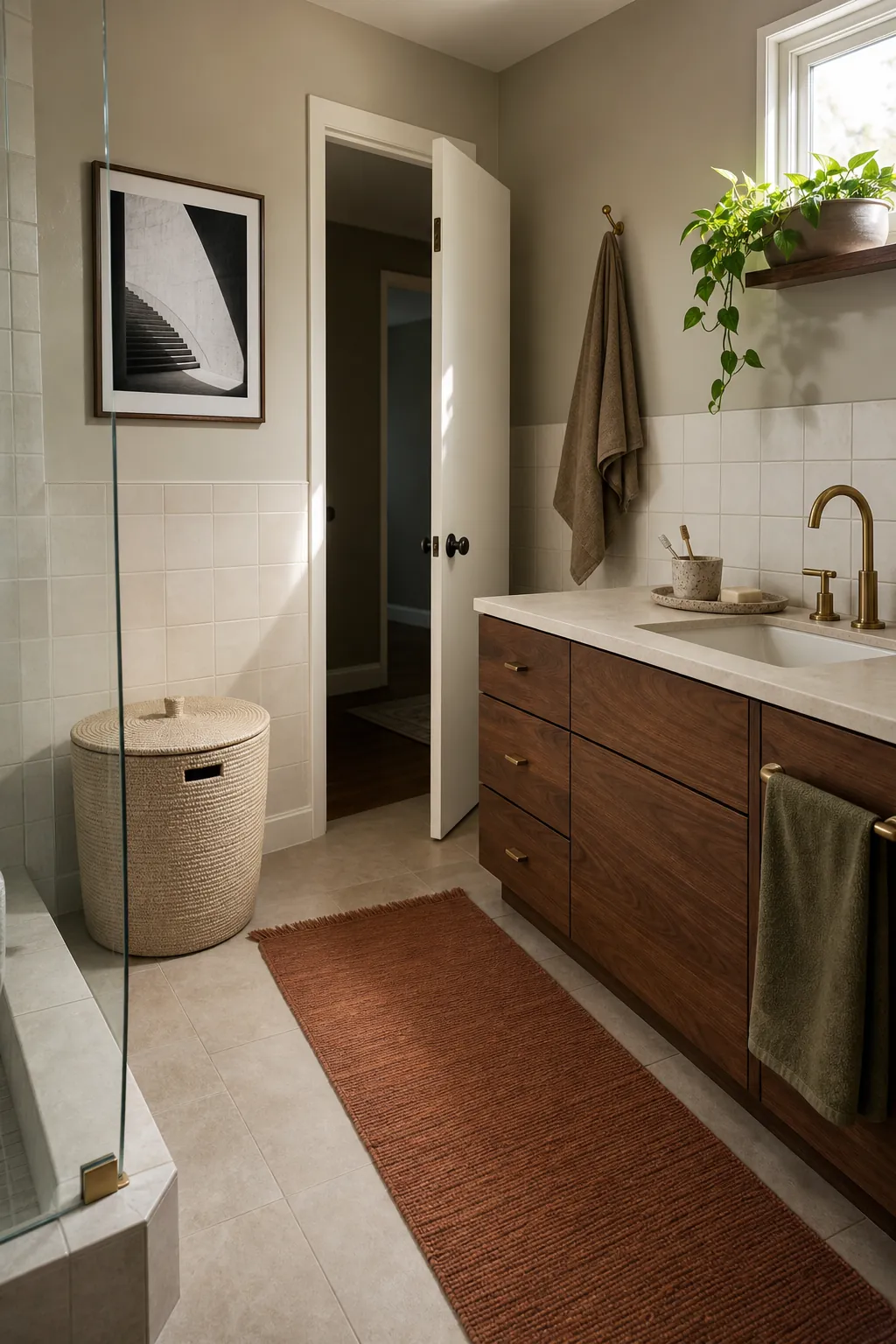
The best earthy bathroom is not the one with the most baskets, plants, or beige accessories. It is the one where every visible object strengthens the same few ideas. Step into the doorway and look for lonely colors, duplicate containers, crowded ledges, and finishes that appear only once. Remove first, then repeat a wood tone, textile color, or metal finish where the room needs connection.
If you change only three things, make them the light, the largest textile, and the countertop clutter. Those shifts alter the whole field of view and usually cost less than replacing fixtures. Once the fixed surfaces, warm light, touchable textiles, natural material, healthy greenery, and practical bathroom storage are working together, the room stops feeling decorated and starts feeling settled.