
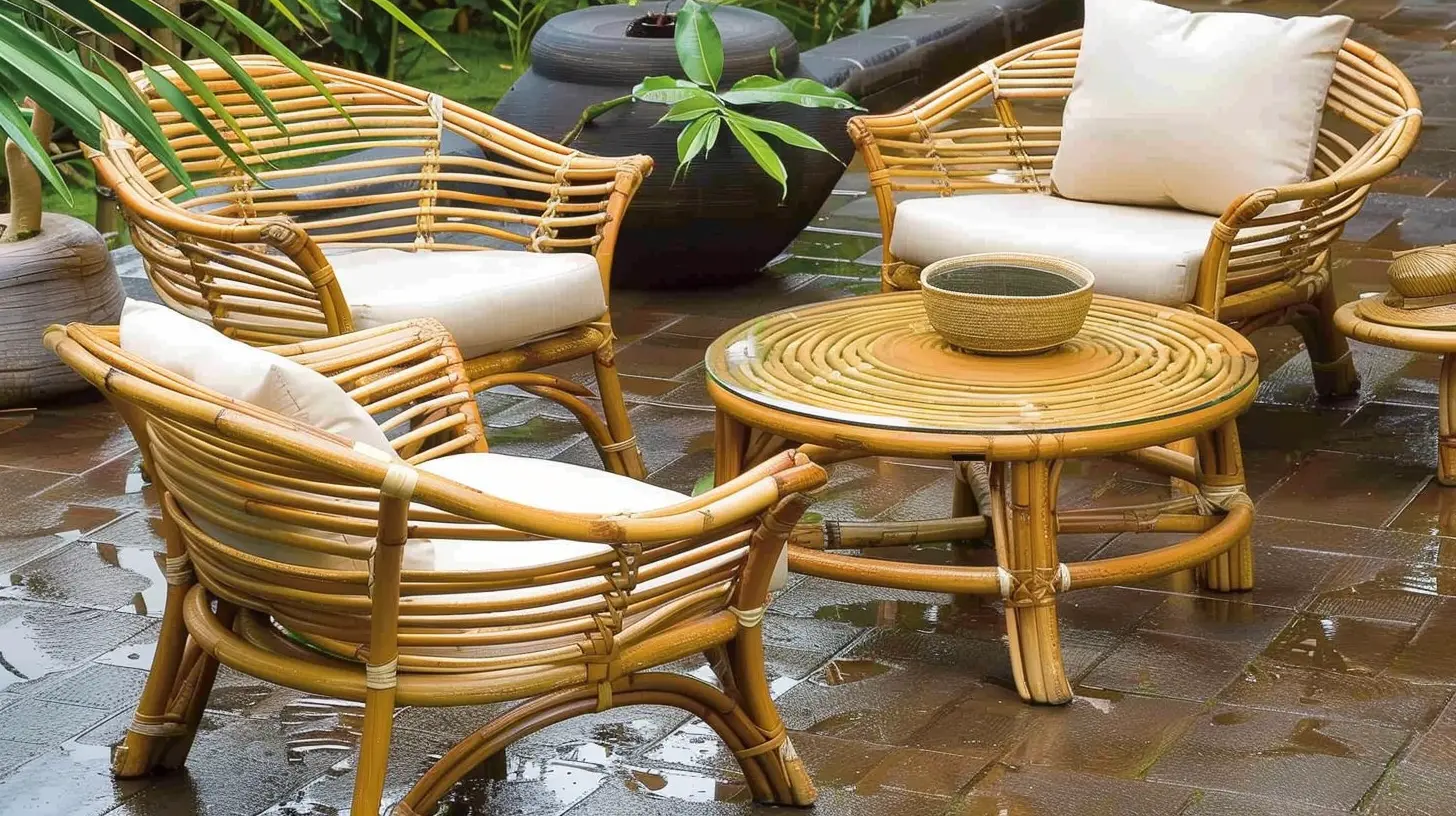
Bamboo is a popular material in many forms, frequently used as timber in construction, to make utensils, and as a decoration. Its characteristics make it strong, durable, and resilient to mold, bacteria, and water. But is bamboo waterproof? Or do you need to constantly replace beams?
Suppose you’re in the market to replace your floors with bamboo or to install new bathroom cupboards but are unsure regarding their suitability in high moisture environments. In that case, this article will help your decision by investigating which products are more waterproof or less and how to improve bamboo’s waterproofing.
Key Takeaways
- Bamboo is not naturally waterproof but is (relatively) water resistant thanks to the fibers’ composition.
- The processing the plant material undergoes influences its water-resistant characteristics.
- Untreated (and sanded) bamboo timber is the least water resistant.
- Bamboo fibers mixed with resin to form biocomposites have the best water-resistant qualities.
- When exposed to water, bamboo may warp, crack, and begin to develop mold.
- Treating bamboo products with a suitable resin/sealer prolongs its waterproofing, and maintenance is essential.
The Waterproof Capabilities Of Bamboo In Its Various Forms
The term “bamboo” refers to more than 1400 species of grass plants (Poaceae) found in the subfamily Bambuiosidae.
While not waterproof, bamboo is naturally water resistant, thanks to the structures found in its stem.
Bamboo fibers are hydrophilic (attracting water/becoming saturated), hygroscopic (absorbing water from the air), and hydrophobic (pushing water away). However, the degree of processing influences how water-resistant these plant-derived products are.
It is imperative for consumers to fully understand what products they are purchasing, how they’re made, and what their tolerances/resistances are. Failure to gain this knowledge often destroys these costly products through misuse.
Why Is Bamboo Waterproof In Some Forms?
Most plants have innate water resistance (i.e., they have mechanisms that prevent water from exiting the plant cells and evaporating).
In the case of these tall grasses, their water resistance comes from the outer culm. The stems (culms) are roughly 50% parenchyma, 40% fibers, and 10% conducting tissue. More fiber is located outside, decreasing as you travel inwards.
These fibers make the plant rigid and protect it from many factors, including transpiration (when water evaporates out of the plant). They contain cellulose (60%) and hemicellulose (32%), integral to a plant’s water resistance.
Certain manufacturing processes alter the plant’s stems, frequently removing the outer culm, exposing the softer inner material, and reducing water resistance. However, when mixed with certain products (including resins, adhesives, and sealants), the water resistance is enhanced.
Thanks to the chemicals introduced in these products, the plant material is protected from water, increasing its longevity.
In What Form Is Bamboo Most Waterproof?
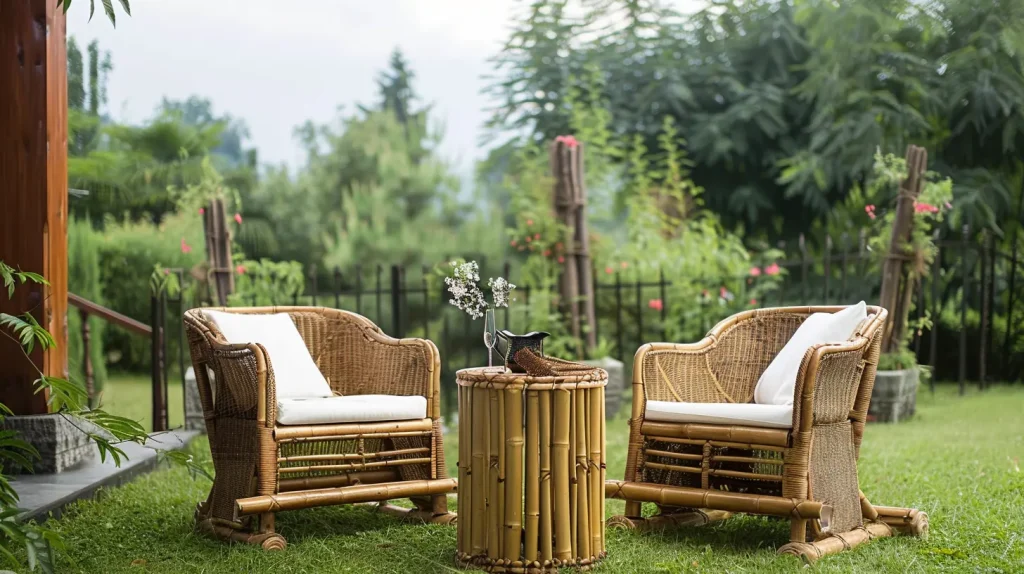
Bamboo, in the form of biocomposites, has the best water resistance. A biocomposite combines organic and synthetic compounds to create a new, hybrid product.
In this example, plant material is fragmented into fibers through various mechanical processes (physically breaking the culms into smaller pieces).
These fibers are mixed with a resin/adhesive compound (often urea- or phenol-formaldehyde) and subjected to intense heat and pressure to “set.”
A study in 2022 determined that the greater the resin content within the composite, the better the water resistance. The study found that at 25% resin content, the biocomposite had sufficient water resistance for high-class outdoor use.
However, at higher resin content, the material’s structural integrity decreased.
An example of the practical application of these biocomposites is in decking made from these plants. If you look at the specifications, the typical composition is:
- Bamboo – 60%
- Plastic (recycled) – 30%
- Other (UV protection, stains, sealer, etc.) – 10%
Why Is Bamboo Not Waterproof In Other Forms?
These tall grasses are not completely waterproof because they contain fibers that are hydrophilic/hygroscopic (absorbing moisture from the air) in nature.
This water-attracting characteristic is highly valued when the fibers are converted into fabrics, as they are “moisture-wicking,” making the fabric breathable and cool. However, the ability to pull moisture from the air is not ideal in timber, so it is treated with a hydrophobic product.
During certain manufacturing processes, the more water-resistant fibers are removed or transformed, exposing the more hydrophilic/hygroscopic fibers below.
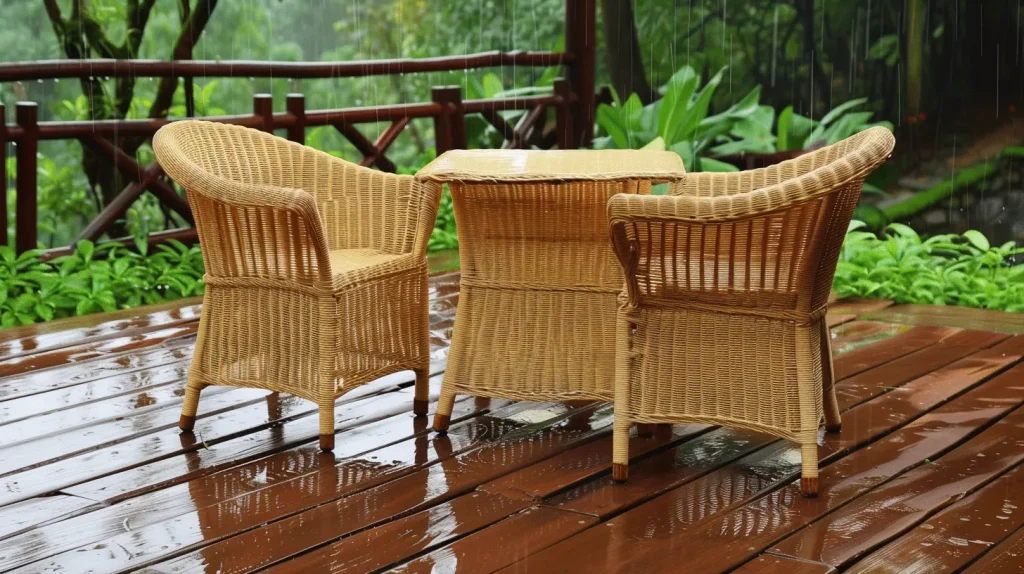
There are many micro-pores (tiny holes) in this wood, and moisture (standing water and that which is in the air) enters through the pores and moves along the material, sufficiently saturating it.
In What Form Is Bamboo Least Waterproof?
The most “vulnerable” products are processed (the outer culm is removed) and not treated with an adequate sealer/resin.
For example, wood panels that are decorative or painted, specifically designed for indoor use, and not flooring (high traffic).
Poorly maintained items made from these tall grasses are also at risk of water damage.
Bamboo Water Resistance: The Best Situations For Bamboo Products
Bamboo products have many uses thanks to their strength, aesthetics, and natural water resistance. Some of the most popular uses for water-resistant bamboo include:
- Paneling and cupboards in bathrooms and other humid areas like kitchens.
- Decking – provided it is treated, the wood holds up relatively well as outdoor decking and very well when undercover.
- Cutting boards and other utensils. This material is popular for utensils thanks to their water-resistant characteristics, provided they are not left in water for too long.
- Floors – bamboo is a commonly used flooring item; however, it is almost always treated with a resin/sealer to prevent water damage and to cope with traffic. Without the coating, the softwood is worn through relatively quickly.
What Happens To Untreated Bamboo When It Gets Wet?
While water-resistant, when exposed to water for an extended time, this wood begins to swell, crack, warp, discolor, “cup,” and eventually break.
Aside from the “immediate” impacts, prolonged exposure to water increases the risk of mold forming (although bamboo is generally mold-resistant, it is an organic material and eventually succumbs to molding).
How To Improve Bamboo’s Water-Resistance
In its untreated form, bamboo has a degree of water resistance; however, this innate resilience is insufficient for most uses.
Fortunately, several interventions will improve the wood’s capacity to resist water.
Applying A Sealer Or Resin To The Wood
The most effective method for increasing a bamboo product’s water resistance is treating it with a hydrophobic compound.
Although organic and synthetic products exist, most people use synthetic compounds. There are a plethora of available products, and selecting a particular type/brand is often challenging. However, the sealer you select should reflect the intended purpose of the wood.
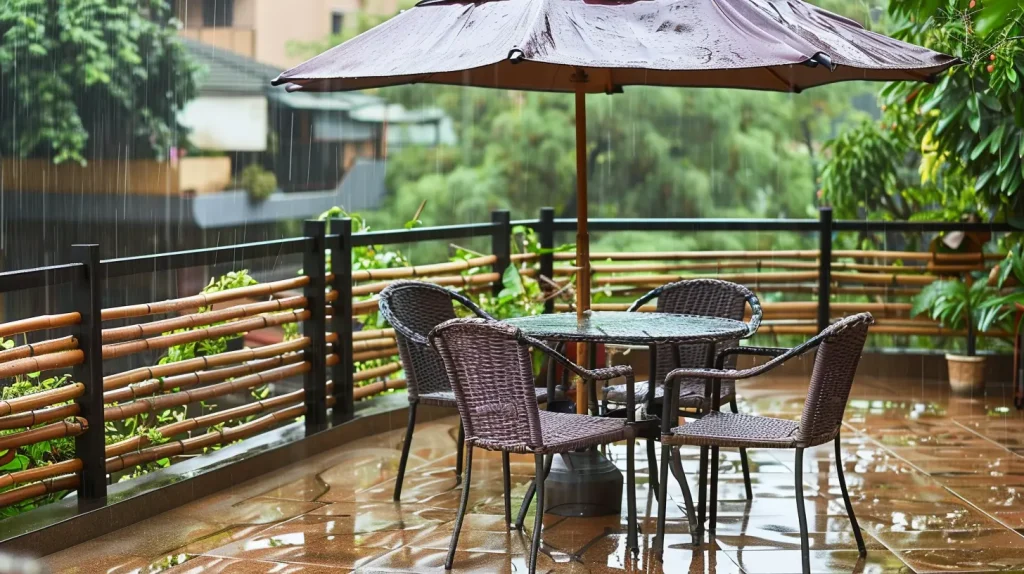
The better option is to purchase pre-treated material, as manufacturers apply the required sealers to suit a specific purpose.
Selecting the correct products for your purposes is an essential first step toward proper management. If the timber is exposed to high amounts of water, ensure that you have UV, insect, and moisture-resistant sealant.
Management Is Essential To Bamboo Longevity
Like any wood product, their longevity improves if you look after your items.
While these grass plants are strong, durable, and resilient, several good maintenance habits are worth implementing, including:
- Sand and reapply sealer in worn areas and replace water-damaged sections.
- Keep bamboo flooring clean. Wipe up spills immediately, and practice regularly sweeping/vacuuming.
- Act immediately if mold begins setting in. The longer you delay an intervention, the more significant the issue.
- Before installing a product made from these plants, give them a week to acclimatize to your local humidity, as they may swell/shrink during the first week (particularly if you’re installing flooring).
- Ensure your subfloor layer is well insulated and moisture does not seep into the floor.
- Use bamboo flooring and other products appropriately. If your bathroom floor is frequently drenched (kids in the bathtub), don’t use bamboo flooring, as the prolonged exposure will eventually result in damage.
Conclusion
Although bamboo is not waterproof, it is water resistant, thanks to the fibers found in the culms. Untreated bamboo is at risk of swelling, warping, and breaking, so if the product is used in a moist area, it’s best to seal it with a suitable chemical compound. Bamboo biocomposite products have the best water resistance and are frequently used for flooring, but maintenance is essential.