
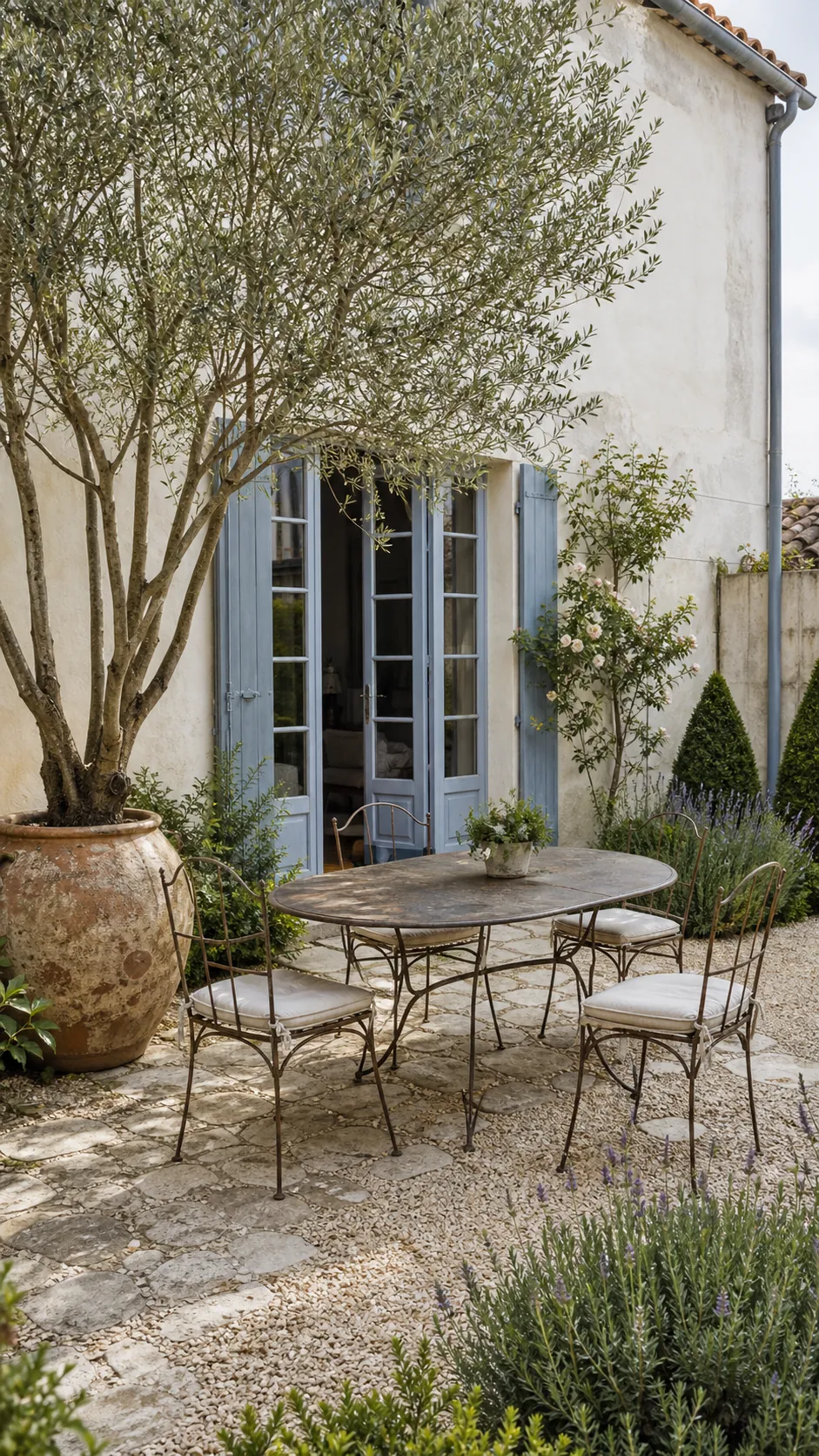
A convincing French patio is not built by scattering lavender pots around a metal table. The spaces that feel genuinely French begin with one clear material language, a disciplined layout, and details that improve with weather. These 27 French patio ideas range from formal courtyard moves to relaxed Provençal corners, with practical notes for small yards, renters, hot climates, and anyone who does not want a garden that becomes a second job.
Pale Gravel Underfoot
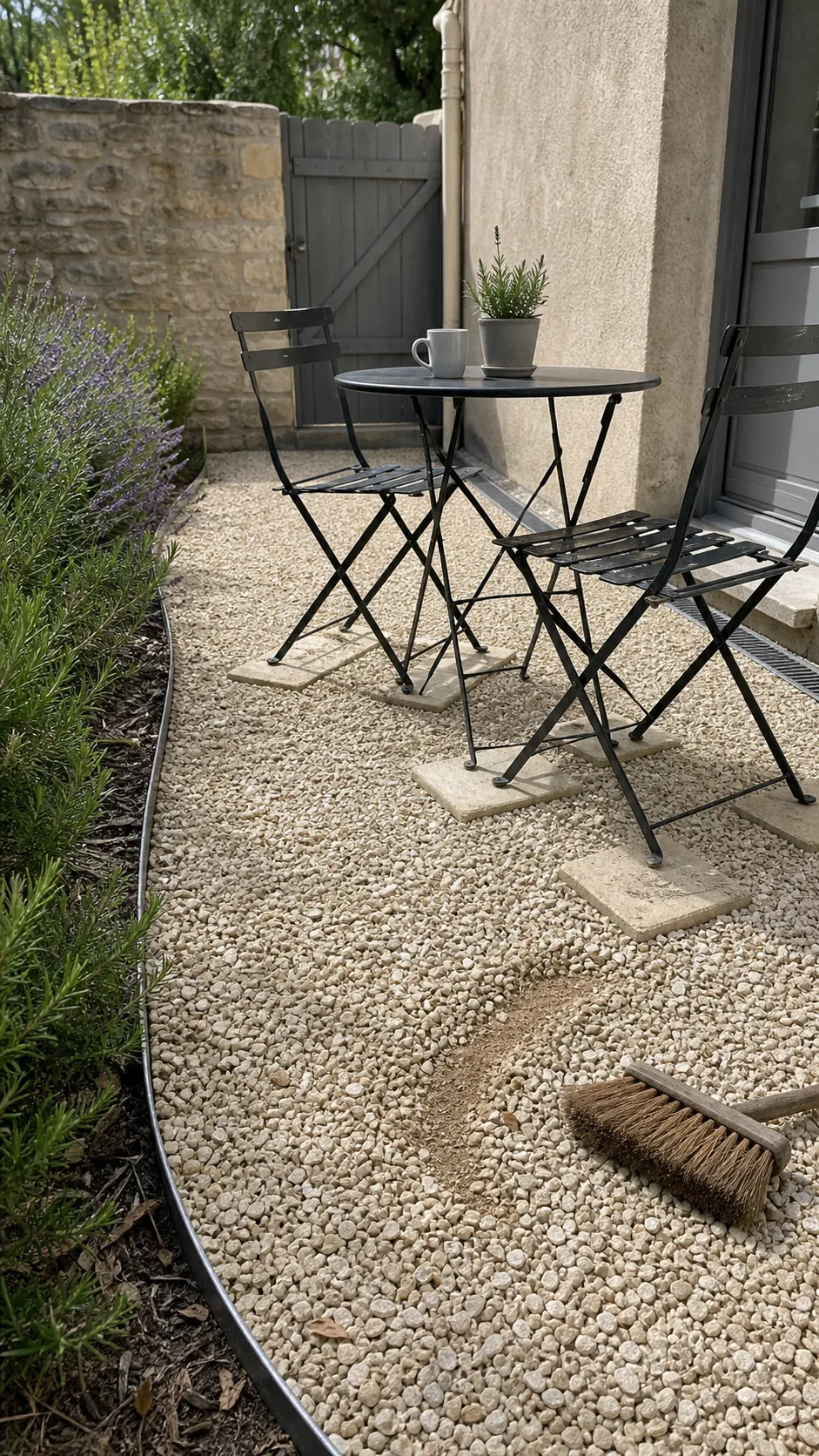
Pale gravel is the fastest way to give a French outdoor patio the quiet texture of a courtyard. The important detail is the base: use compacted aggregate beneath a thin finish layer, add solid edging, and reserve flat pavers for the chair legs. Loose pea gravel poured directly onto soil will migrate, collect weeds, and make furniture wobble.
A Limestone Dining Terrace
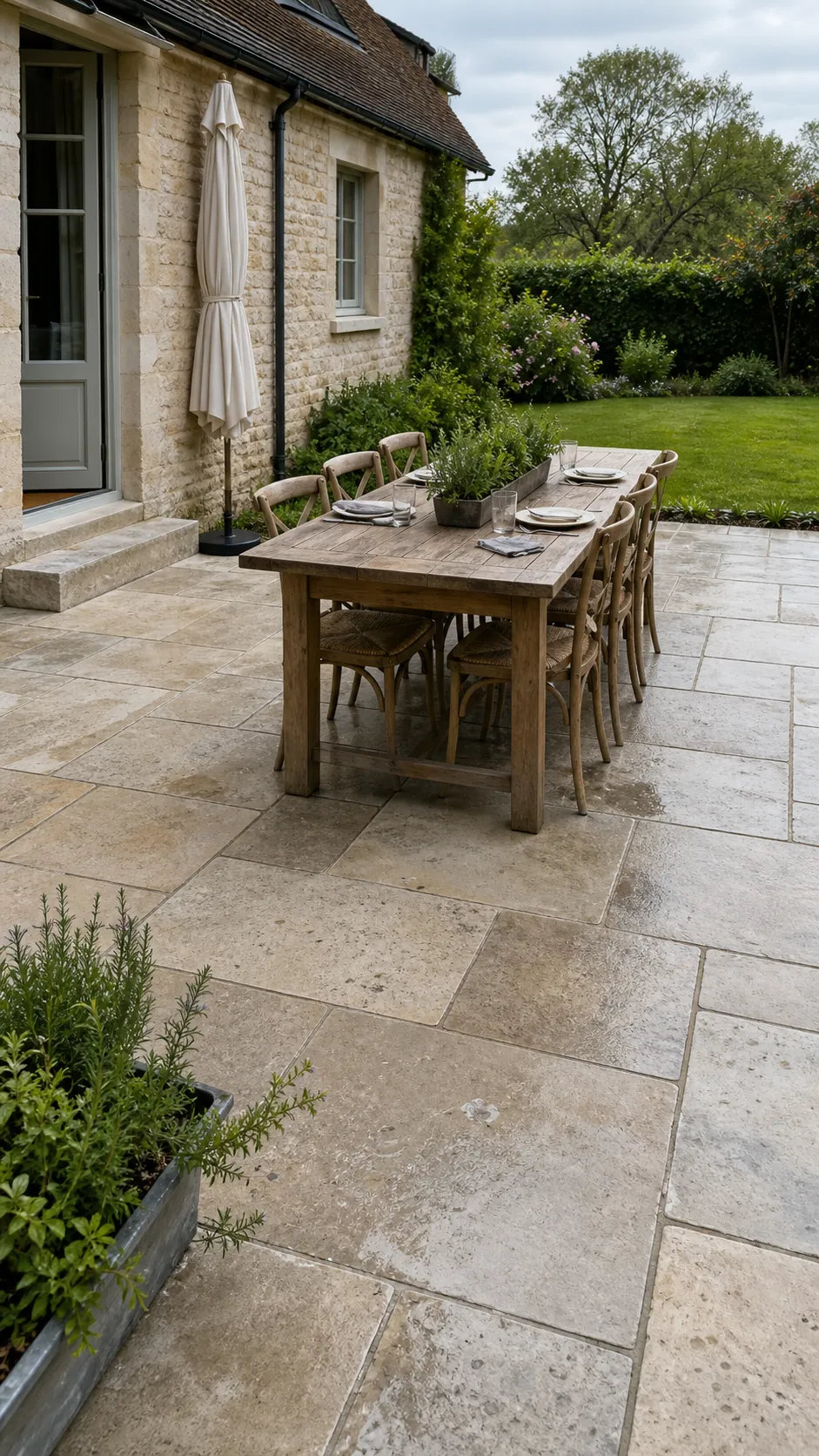
Limestone or a convincing limestone-look paver gives a European patio instant age without adding visual clutter. Choose mixed warm-gray pieces rather than a rigid grid of identical tiles. A matte, lightly textured finish is safer when wet and looks more natural than polished stone. Let the table occupy the center while planting softens only the perimeter.
Weathered Terracotta Pavers
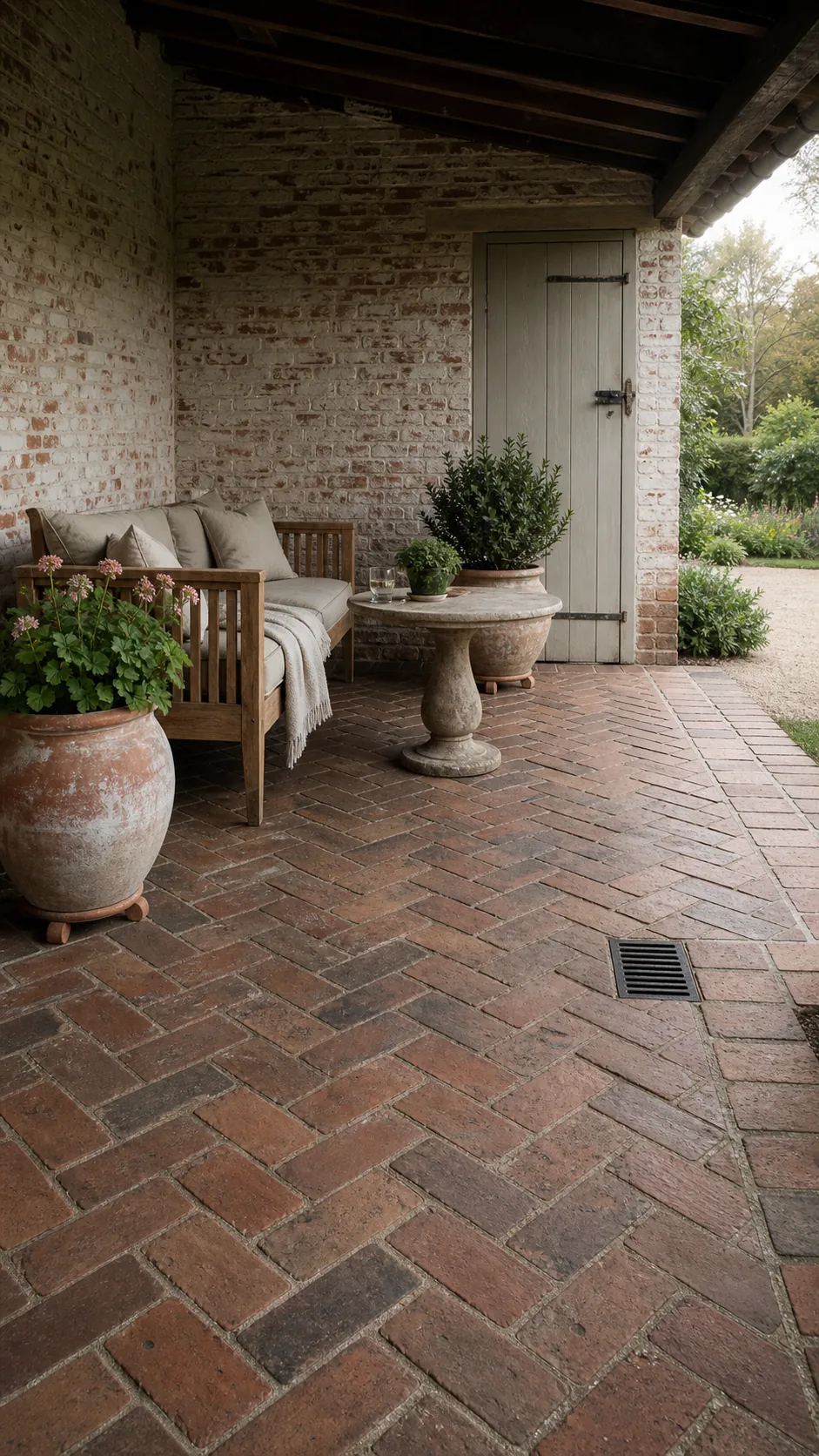
Terracotta makes a French country garden patio feel warmer and less formal. Use reclaimed tiles or a variation-rich modern version, and accept irregular color as part of the character. In freeze-thaw regions, buy frost-rated pavers and seal only if the manufacturer recommends it; the wrong glossy sealer can create a slippery, artificial surface.
A Compact Bistro Corner
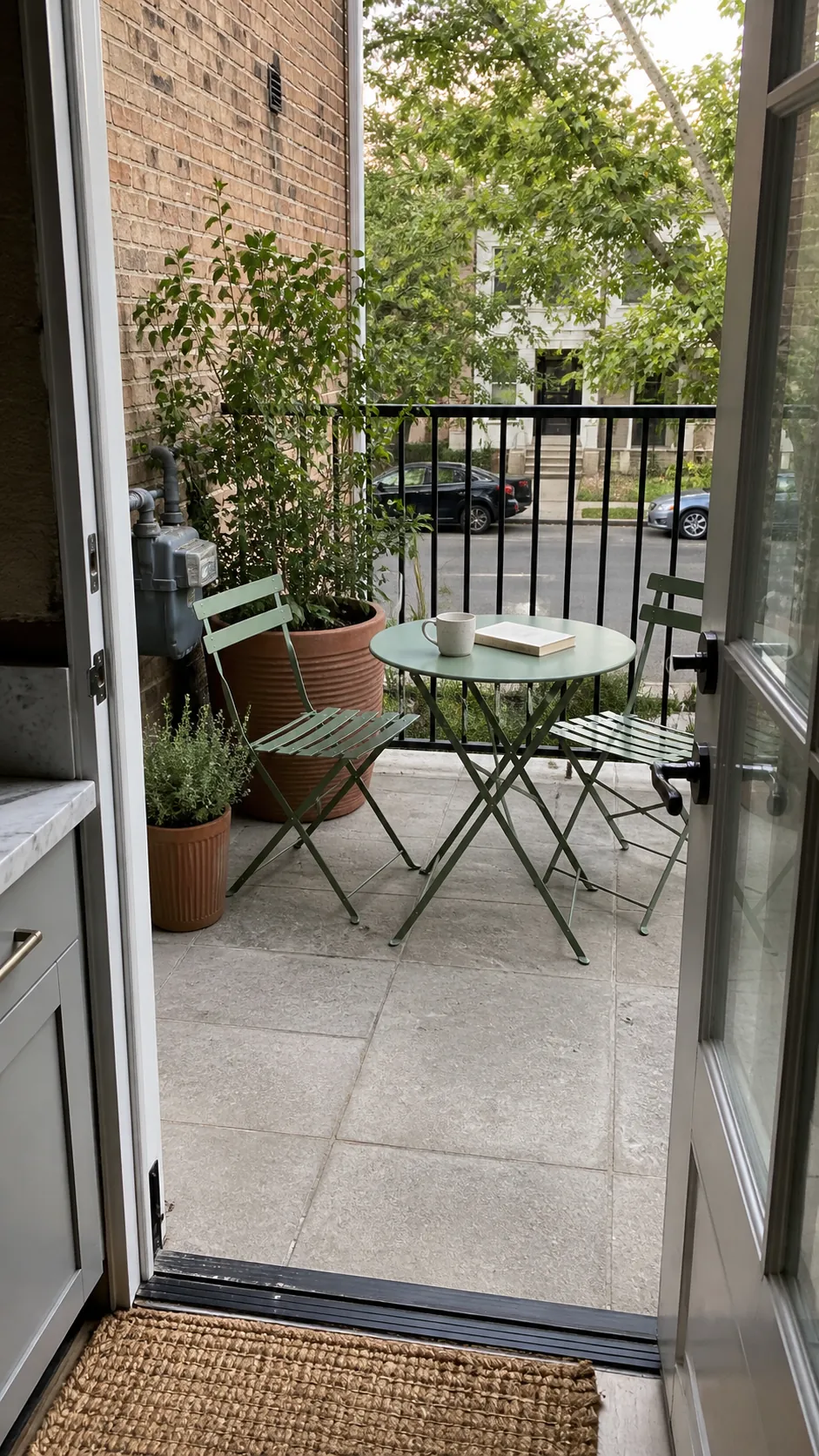
A 24- to 30-inch round table and two folding chairs can turn an unused landing into a cottage patio. Keep at least 30 inches behind each occupied chair where people need to pass. A single large pot beside the table is more effective than six tiny containers that steal legroom and complicate watering.
Clipped Green Structure
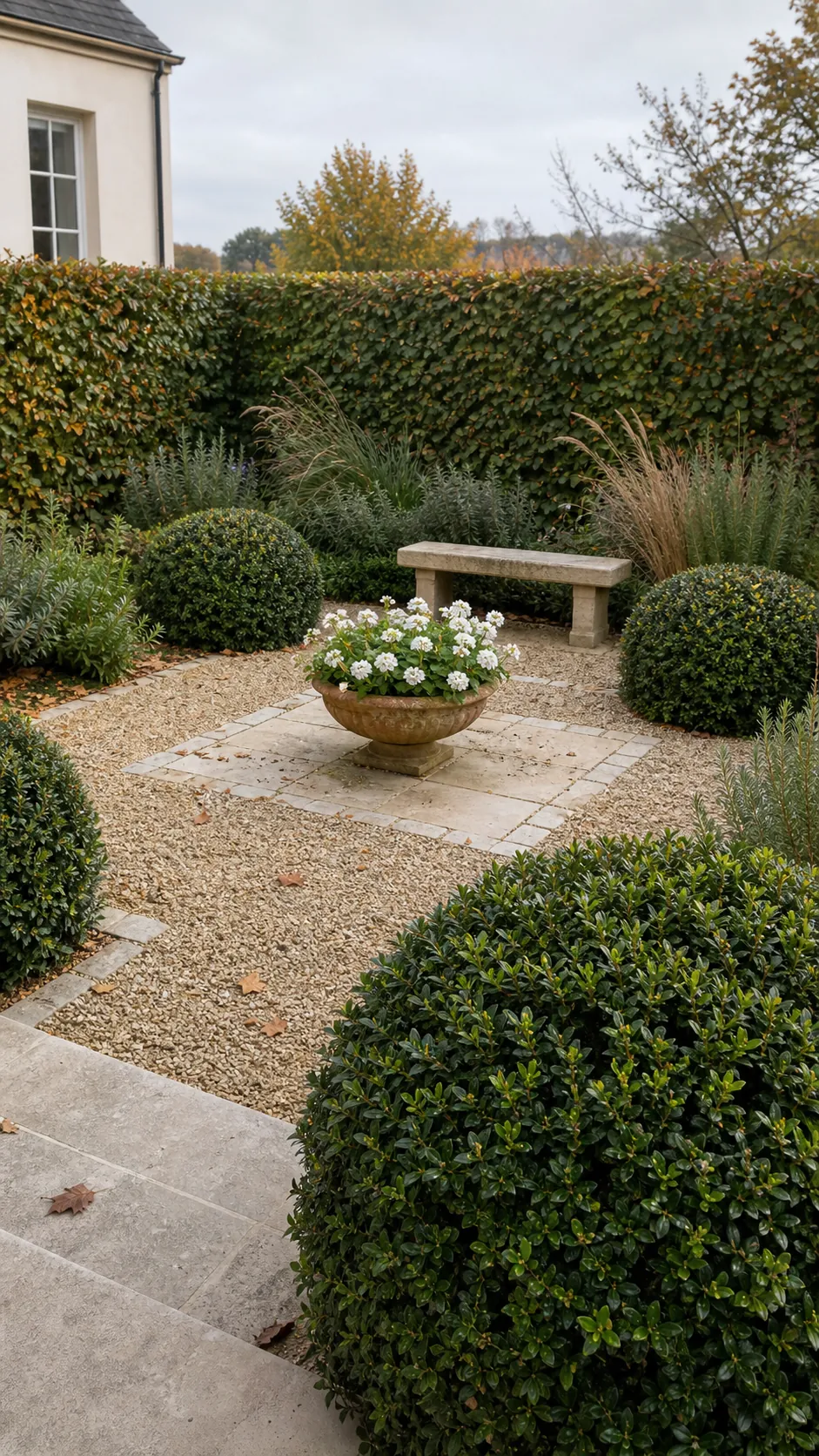
French gardens feel composed because their evergreen structure remains visible after flowers fade. Repeat two or four clipped shapes at corners or along an axis. Boxwood is classic, but disease-resistant alternatives such as compact holly, yew, or rosemary may suit your climate better. Choose the plant for local conditions, then borrow the geometry.
Lavender Along the Sunny Edge
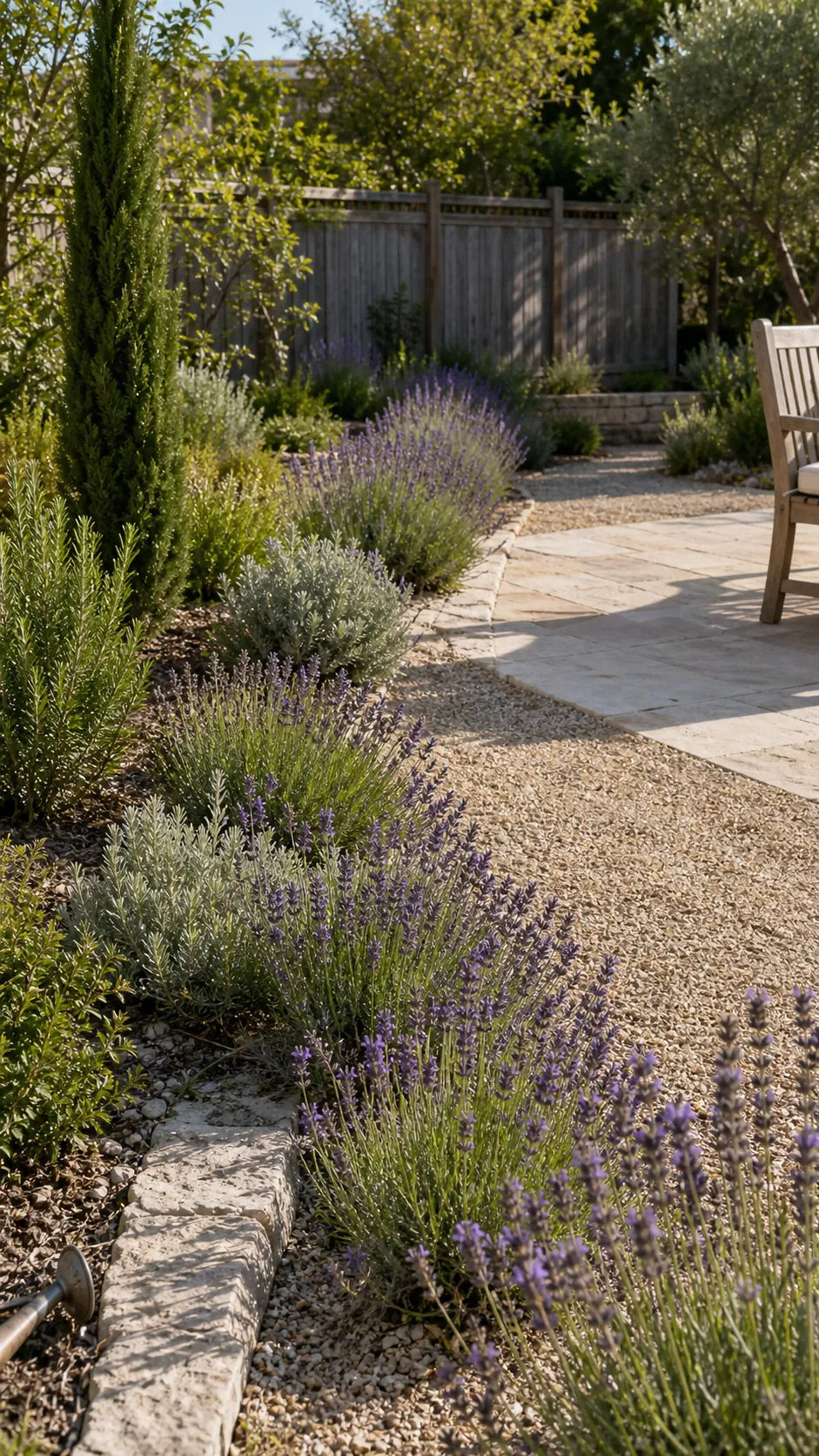
Lavender belongs beside the hottest, driest edge—not automatically in every bed. It needs strong sun, fast drainage, and air around the crown. Where summers are humid or the patio is shaded, use lavender in movable pots or substitute catmint, calamint, or another locally reliable aromatic plant with the same loose purple rhythm.
An Espaliered Fruit Wall
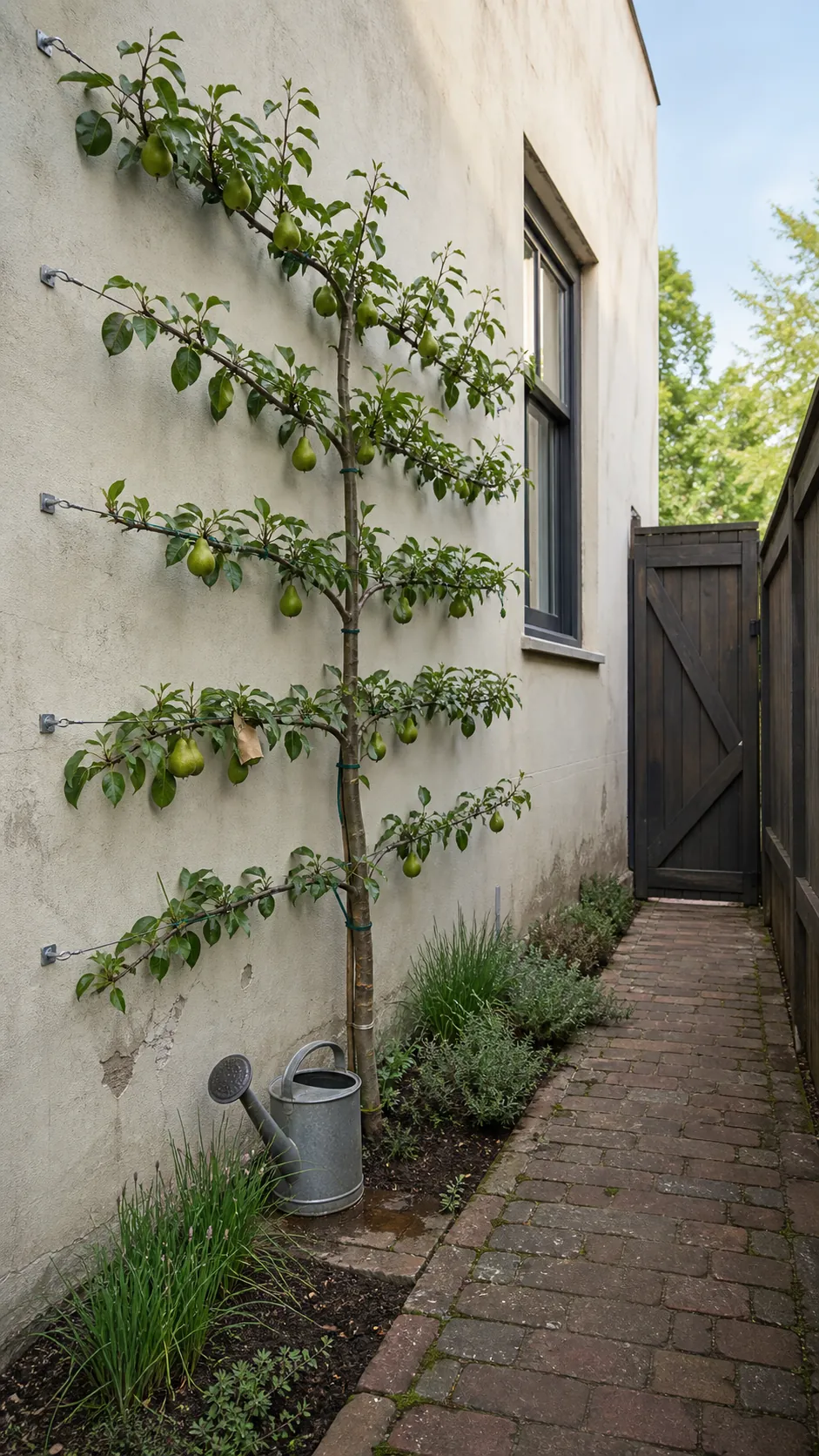
An espalier gives a narrow French courtyard garden ideas-style focal point without consuming the floor. Fix supports with room for air behind the branches, choose a fruit variety suited to your chill hours, and expect seasonal pruning. The payoff is architectural greenery, blossom, and fruit in a strip of soil barely wider than a border.
Blue French Doors as the Anchor
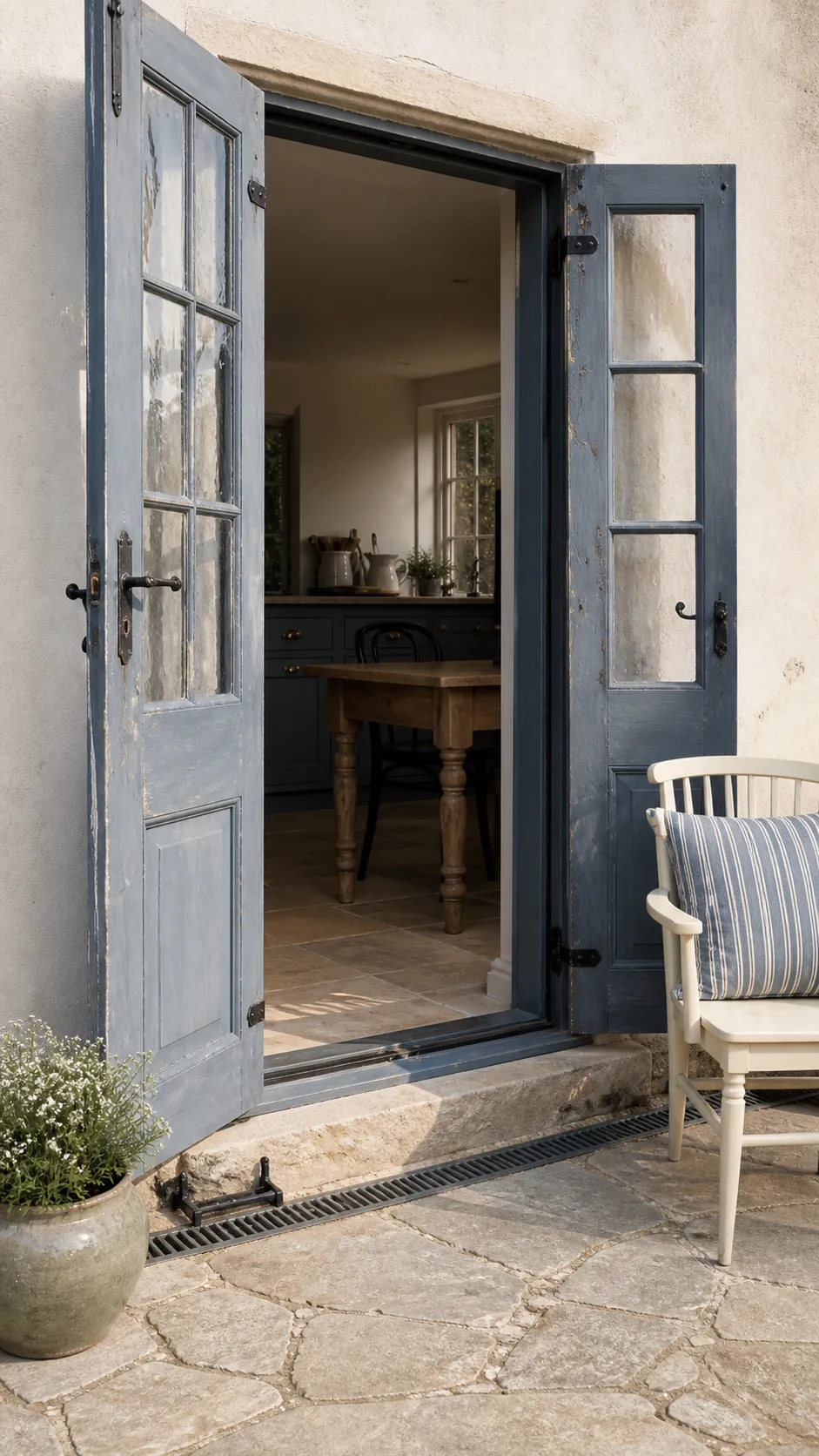
If the patio meets the house, let the doors establish the composition. Muted blue-gray, sage, or warm cream can create a French note without turning the facade into a theme. Repeat the door color once in a cushion stripe or glazed pot, then stop. The restraint makes the architecture look intentional.
A Simple Wall Fountain
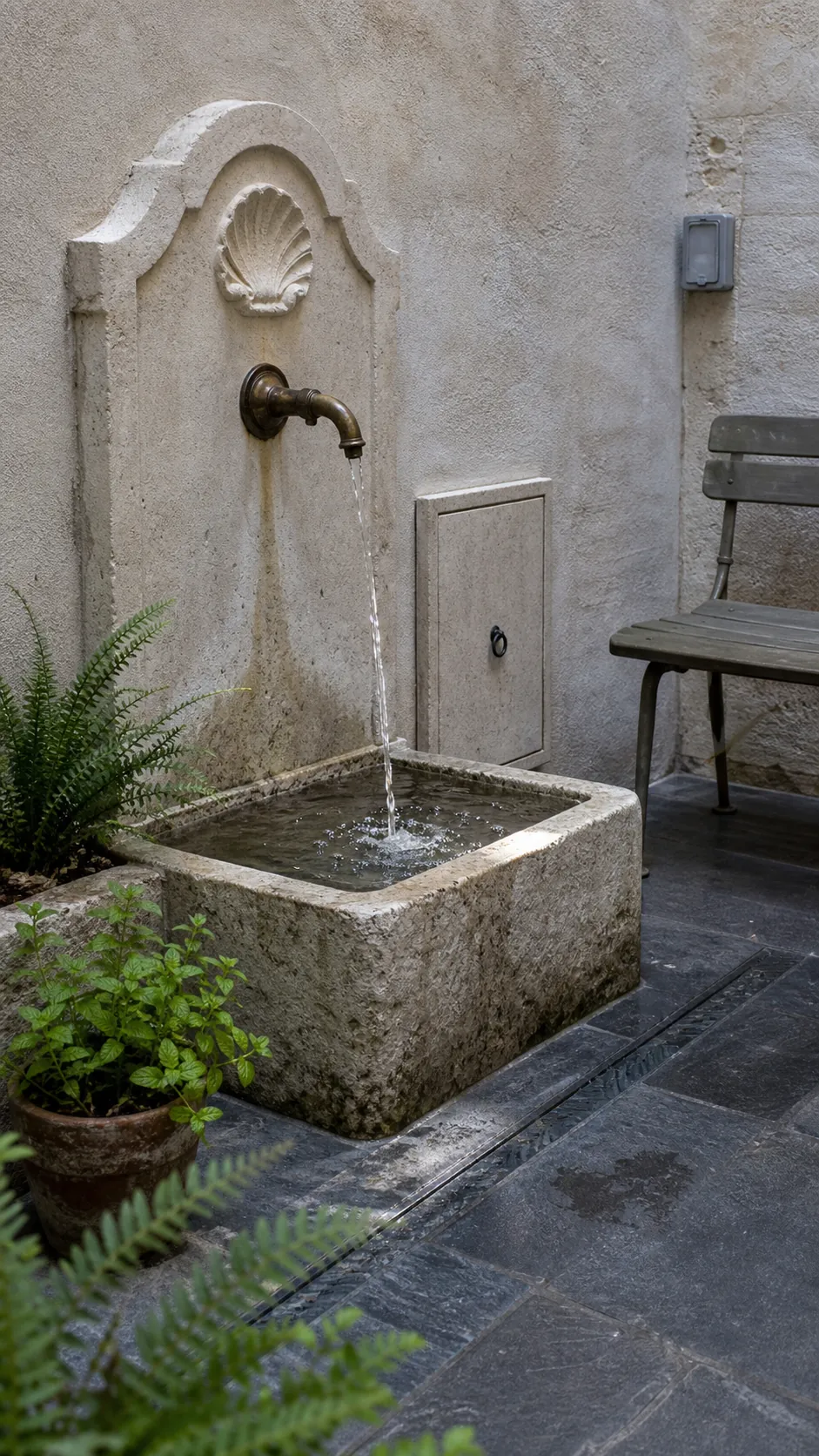
A modest recirculating fountain adds sound and reflection without taking over the space. Place it where the splash cannot wet dining chairs or a doorway, provide a protected outlet, and make the pump accessible for cleaning. In mosquito-prone areas, keep water moving and do not let the basin become a neglected puddle.
Aged Zinc and Terracotta Pots
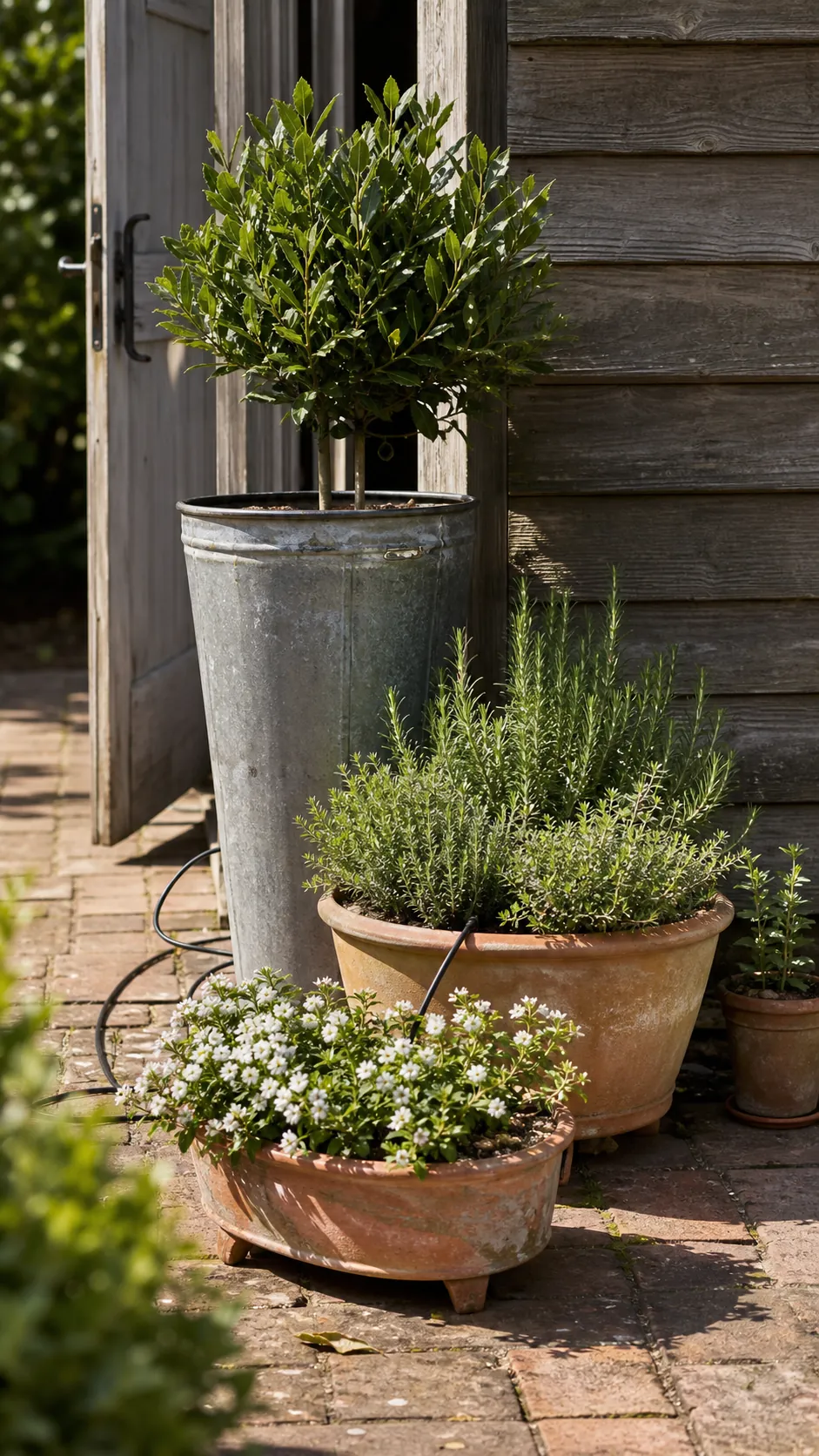
Mixing aged zinc with terracotta creates a collected look, but the grouping still needs order. Use one tall container, one broad middle form, and one low spilling plant. Elevate pots slightly for drainage and cluster plants with similar water needs. That simple rule keeps the display attractive and the maintenance realistic.
A Grape-Covered Pergola
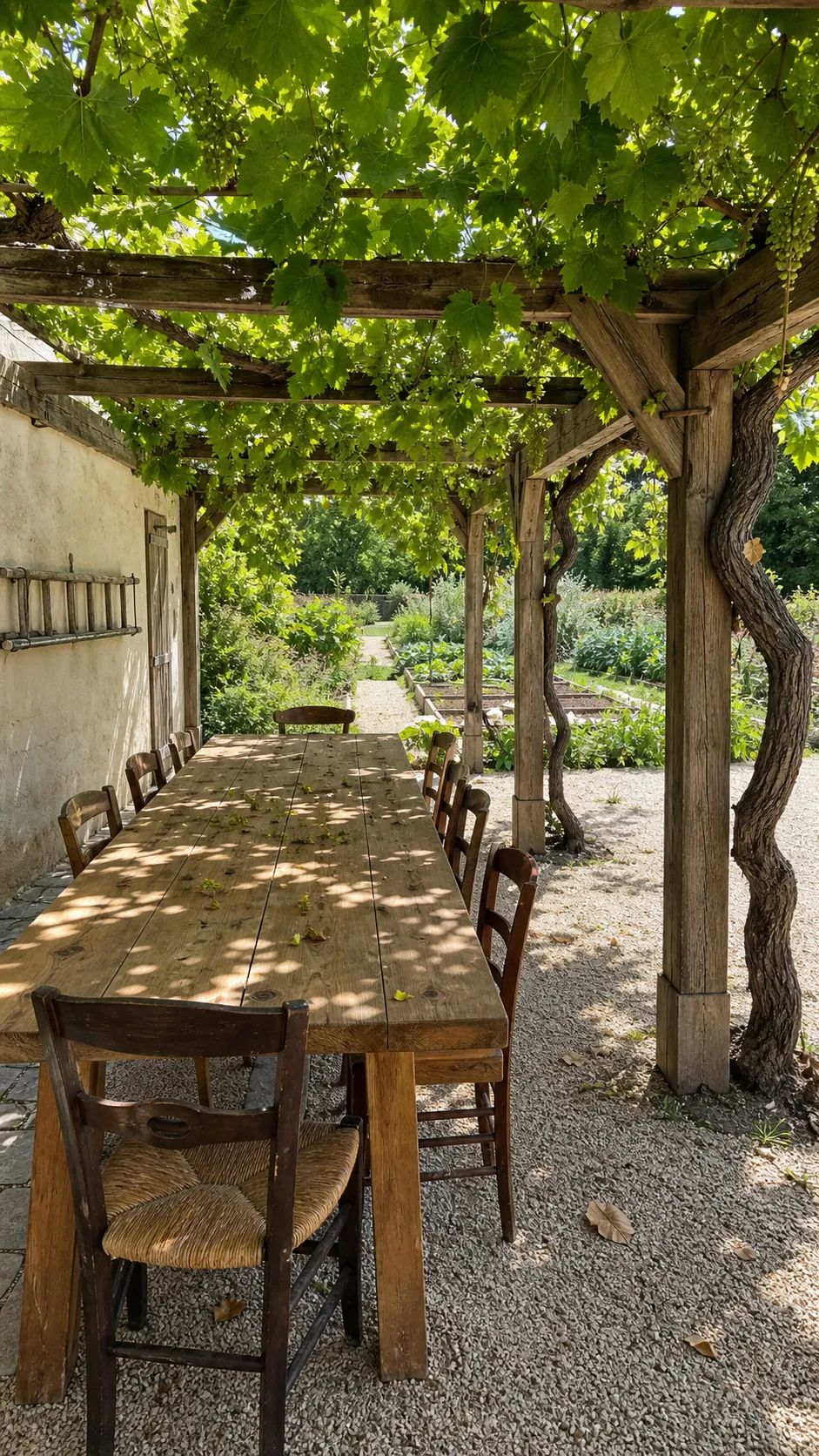
A vine-covered pergola turns a hot patio into an outdoor room. Grapes deliver summer shade and winter sun, though falling fruit and leaves make them better over dining than pale upholstery. Confirm the structure can support mature vines, run the beams in a direction that actually blocks afternoon sun, and plan a reachable pruning route.
Striped Linen Seating
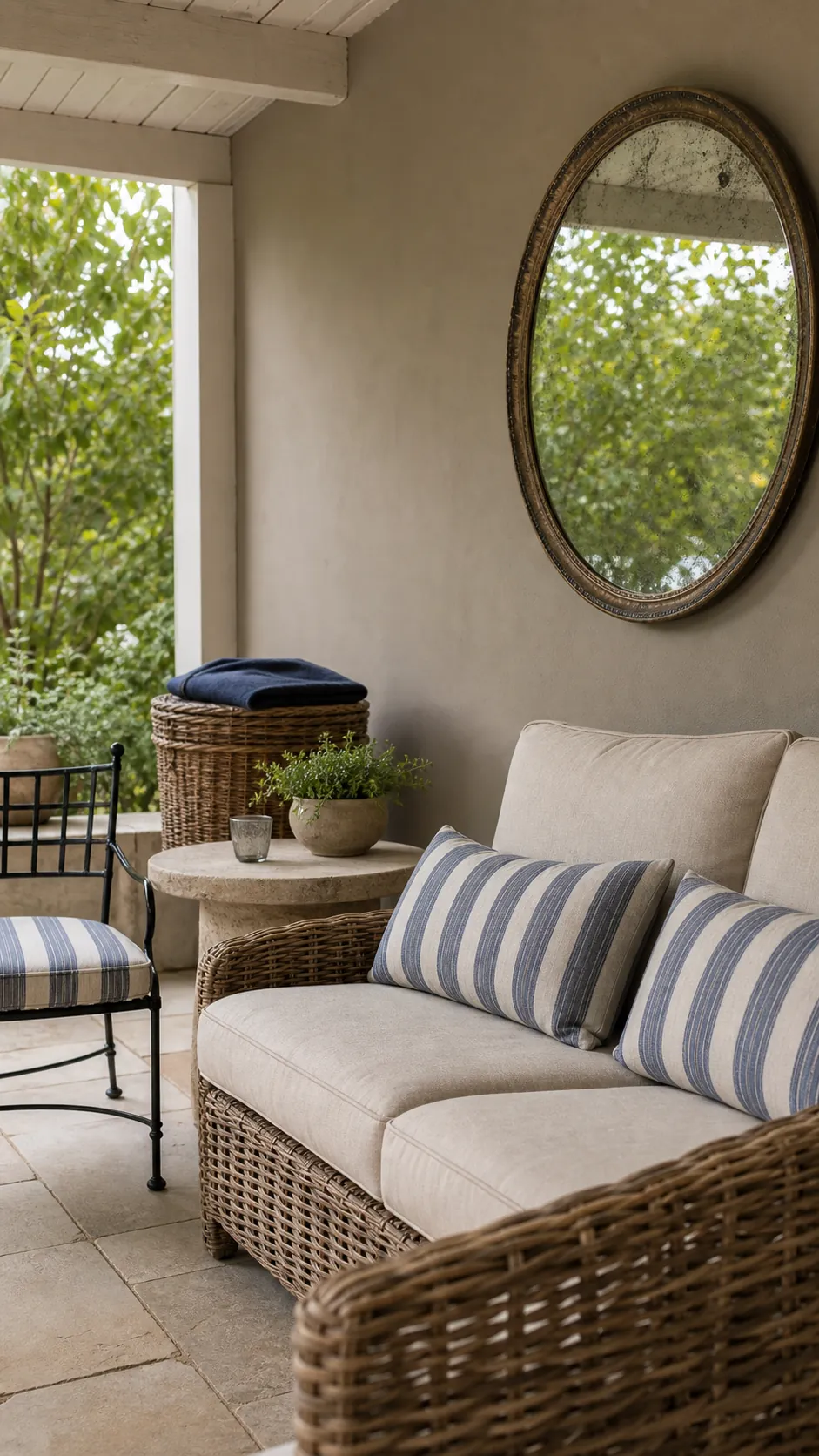
Blue-and-cream or charcoal-and-oatmeal stripes can make plain outdoor cushions feel tailored. Limit the pattern to seat pads or two pillows and use weather-rated fabric with removable covers. The French effect comes from the narrow stripe and faded palette, not from matching every textile on the patio.
A Stone Bench in the Planting
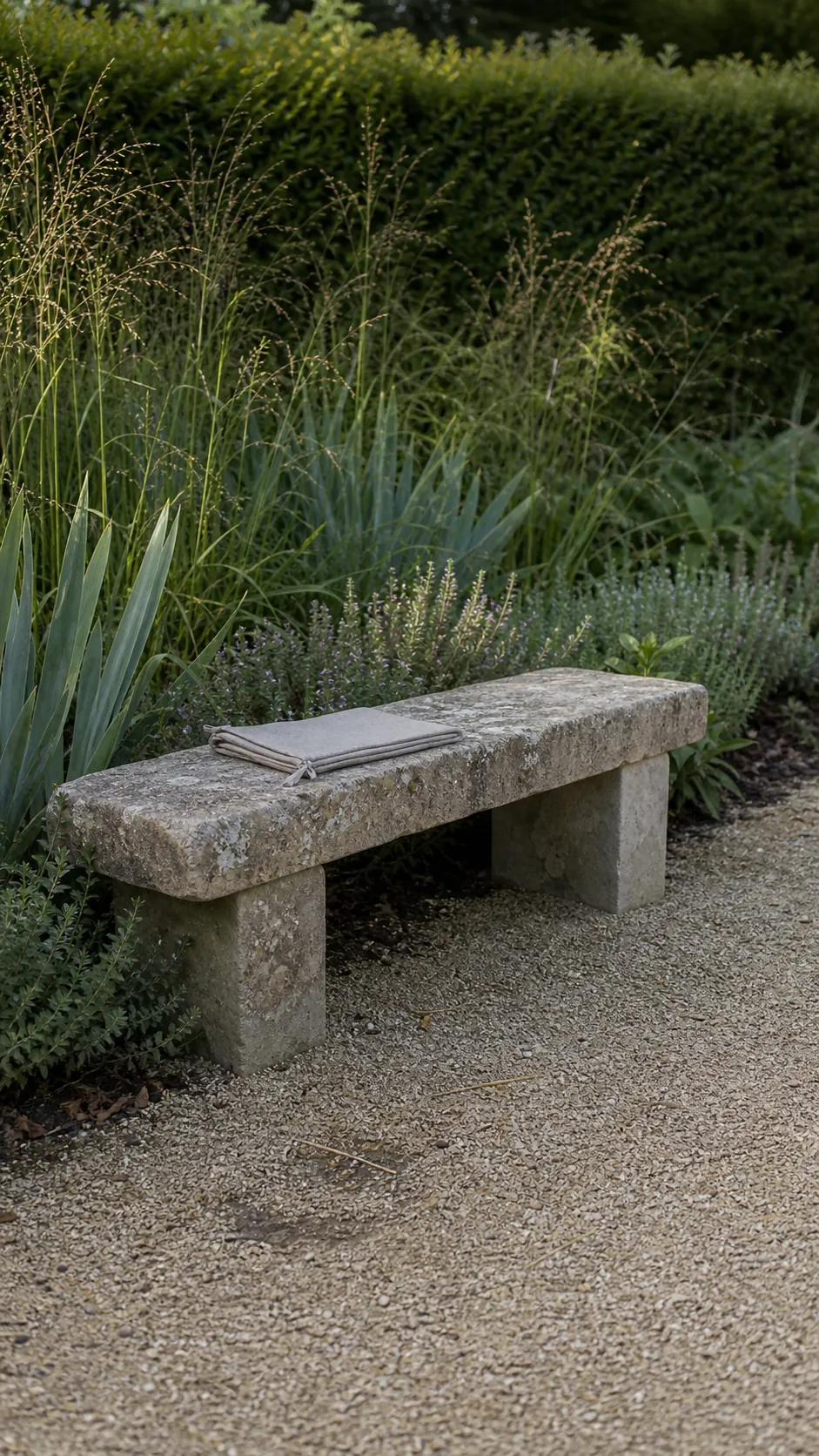
A backless stone bench provides a quiet visual pause and extra seating that does not need cushions stored indoors. Set it on a level base, not loose soil, and leave enough space for knees and feet. Surround it with thyme, iris, or airy grasses rather than thorny roses that make the seat unusable.
Formal Symmetry at the Entrance
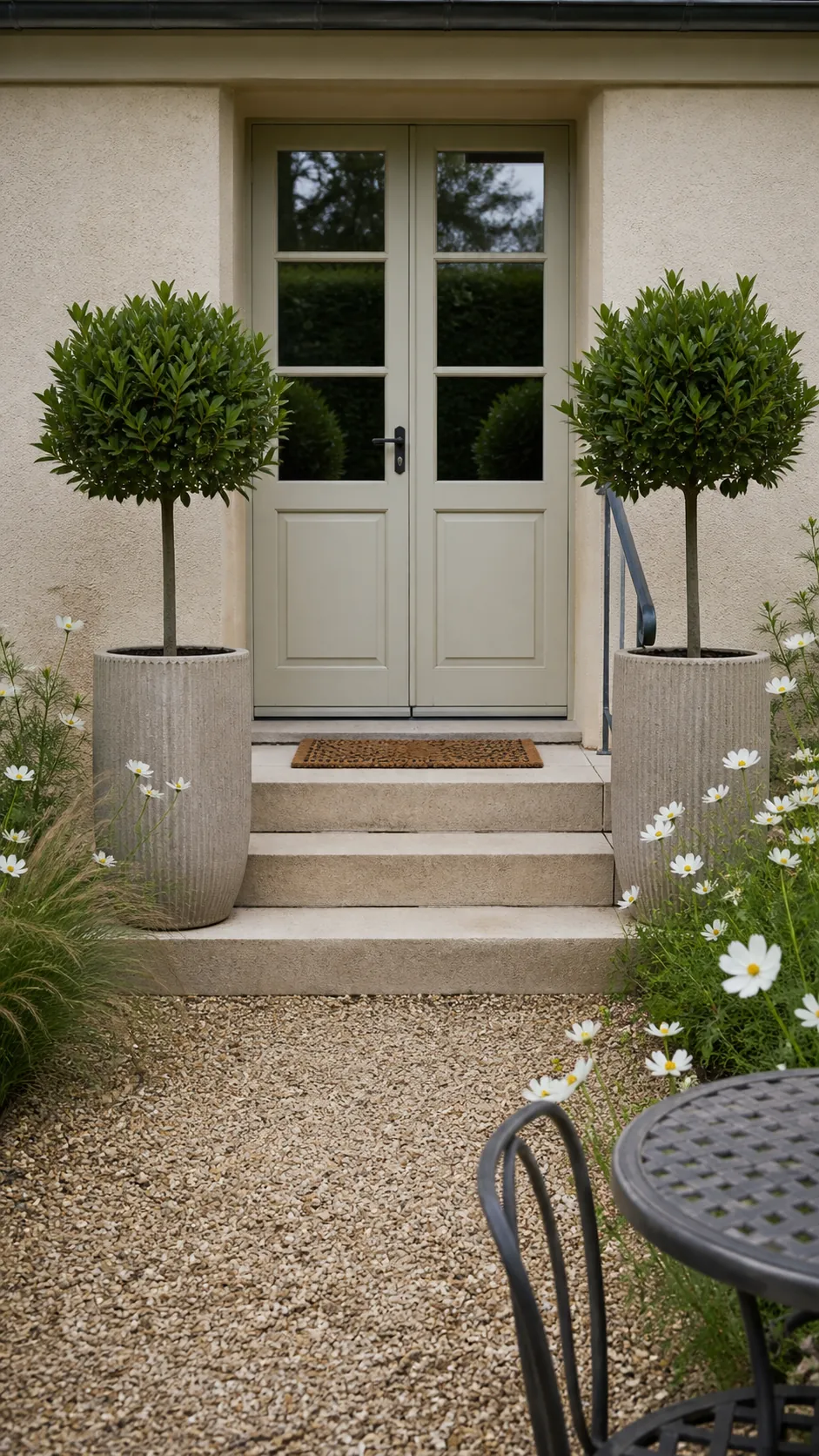
Two matching bay trees or clipped evergreens can frame the transition from house to patio. Symmetry works best at a threshold, where people naturally read an axis. Keep the remainder of the planting looser so the scheme does not feel ceremonial. For renters, identical lightweight-look resin planters make this move reversible.
A Loose Cottage Border
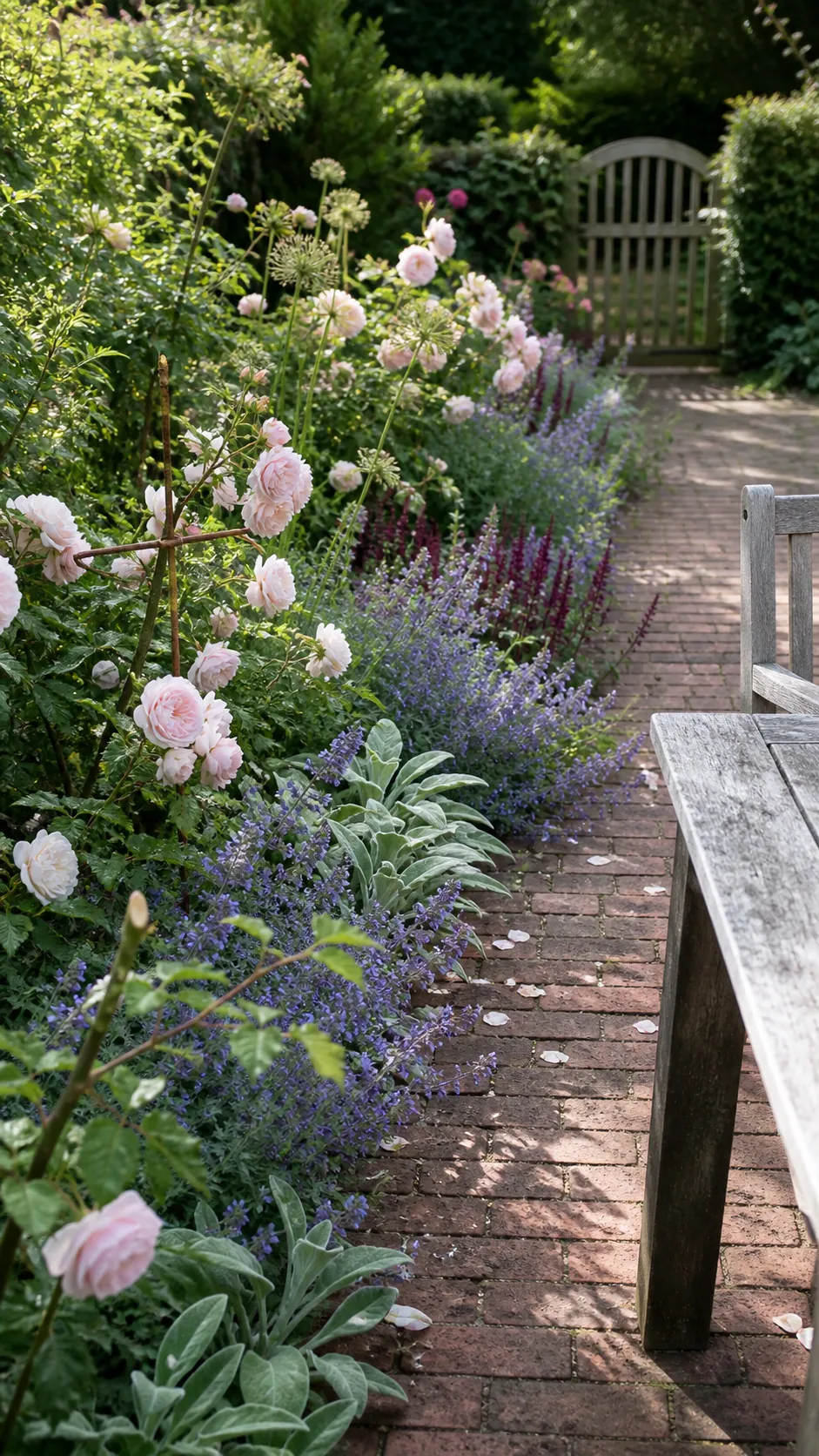
Let a controlled border soften formal paving with roses, nepeta, salvia, herbs, and self-supporting perennials. Plant in repeated groups rather than one of everything. Keep vigorous plants away from the path and preserve an 18-inch clear edge where possible, so the romantic effect does not become wet foliage brushing every ankle.
A Potager Beside the Table
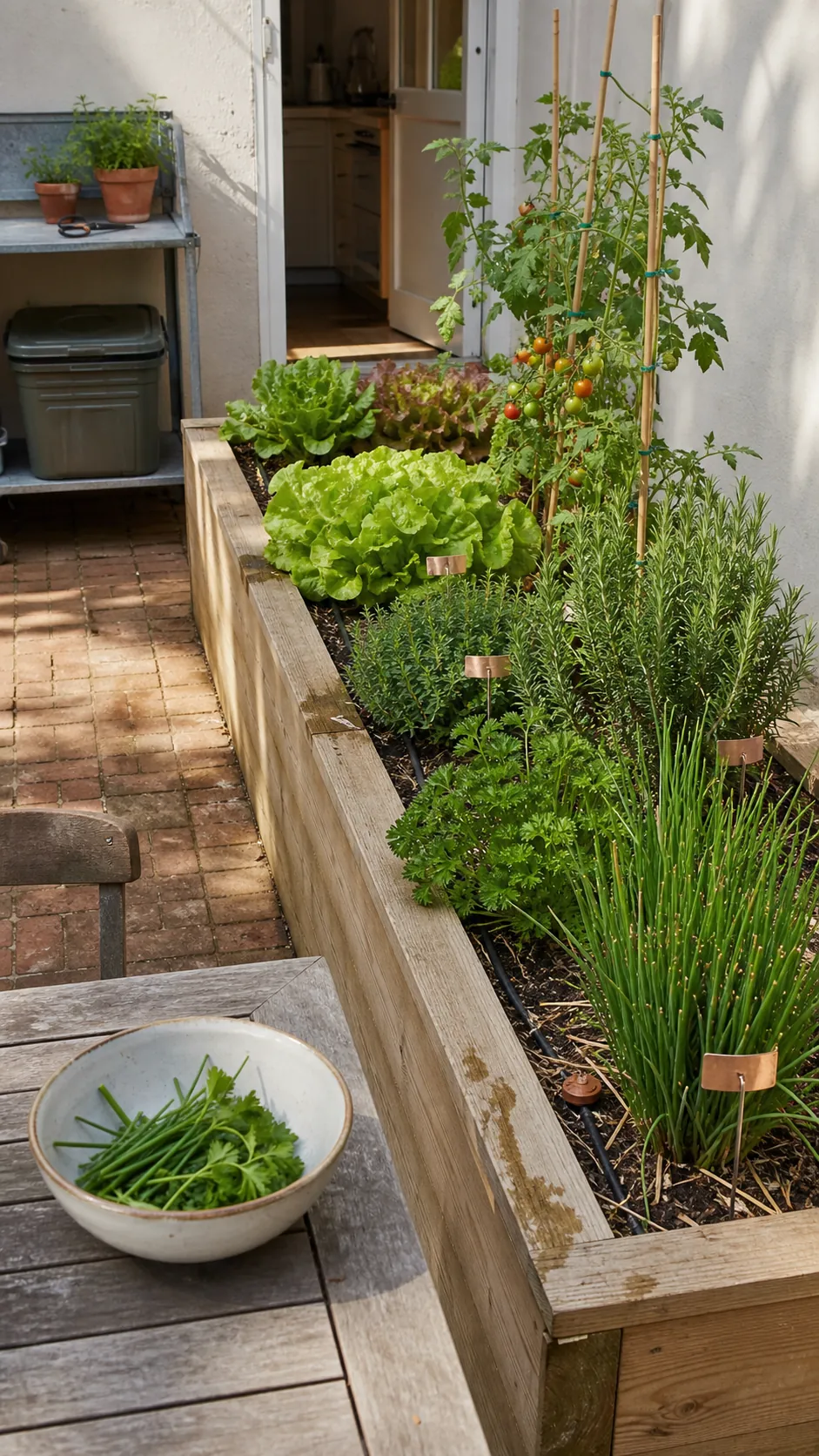
A compact potager connects the patio to daily life. Use a raised bed or a row of large pots for rosemary, thyme, parsley, chives, lettuce, and seasonal tomatoes. Place the most-used herbs closest to the kitchen door. A beautiful edible garden earns its space by being easy to harvest.
Checkerboard Stone and Thyme
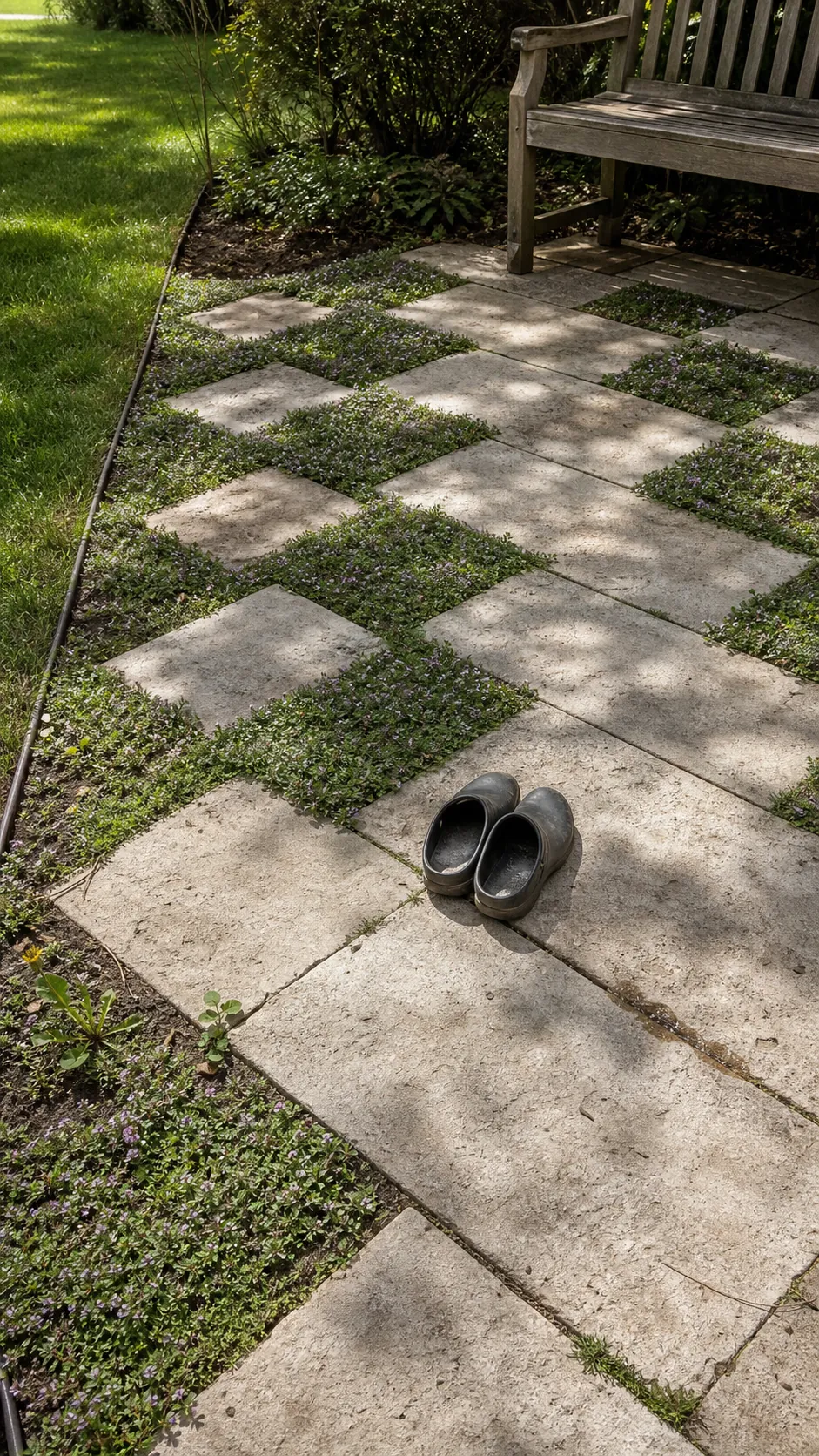
Widely spaced pavers with creeping thyme can soften a small backyard without committing to lawn. Use the pattern only in low-traffic zones; chair legs and constant footfall will damage plants. Check that the chosen groundcover tolerates your sun, rainfall, and winter conditions, and keep the primary walking line on continuous stone.
A Quiet Olive Tree Focal Point
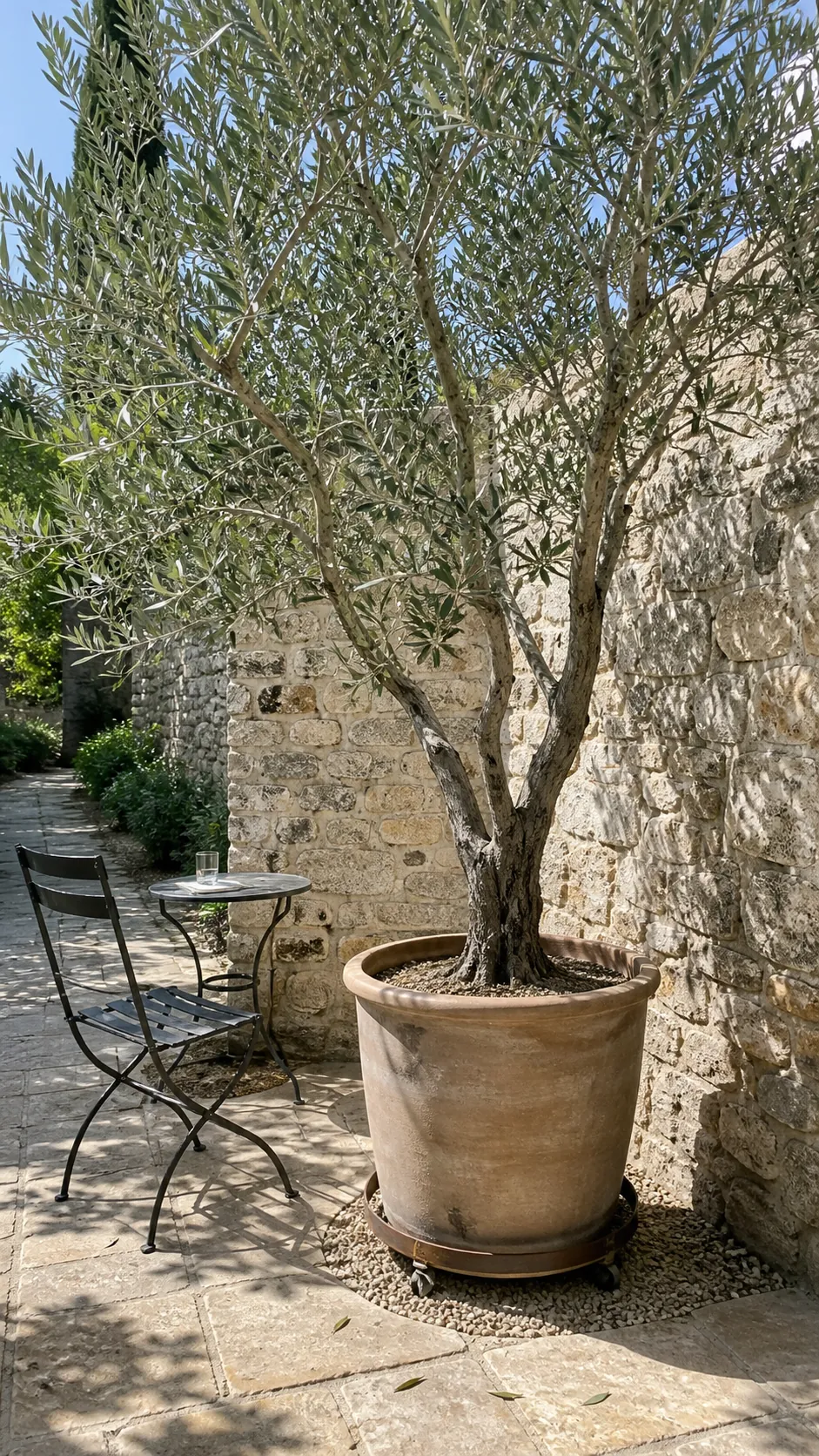
One olive tree in a generous pot can supply more Mediterranean outdoor patio atmosphere than a dozen themed accessories. Give it full sun, excellent drainage, and winter protection where needed. If olives fail in your climate, use a small-leaved local tree with an airy canopy and silvery or gray-green foliage.
Canvas Shade with a Soft Scallop
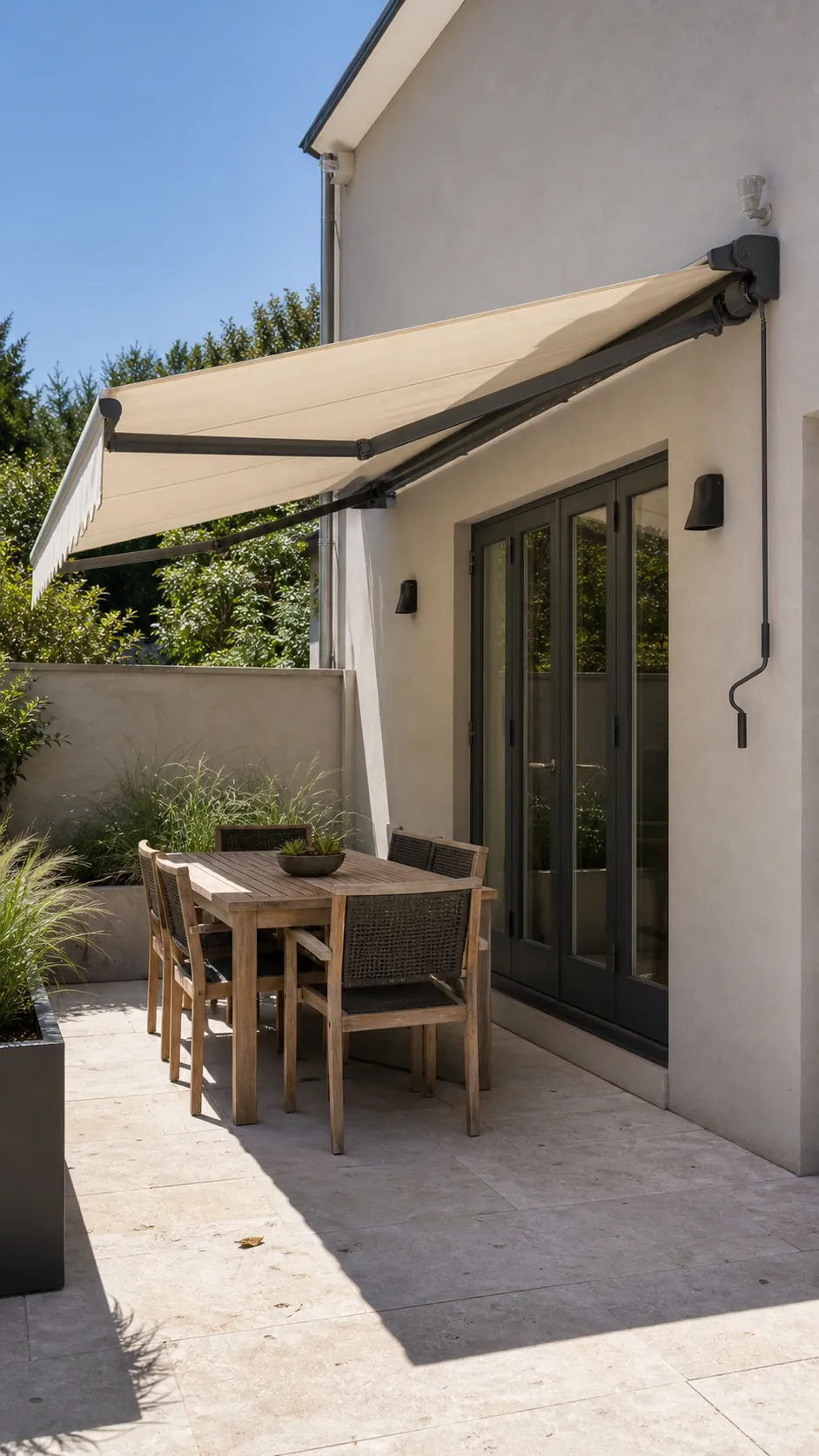
A cream canvas awning adds shade while keeping the architecture light. A narrow scalloped edge feels classic; a deep theatrical valance does not. Measure the sun angle at the hottest hour before choosing projection depth, and use retractable hardware where wind is a concern. Shade should solve heat, not merely decorate the wall.
Warm Pools of Evening Light
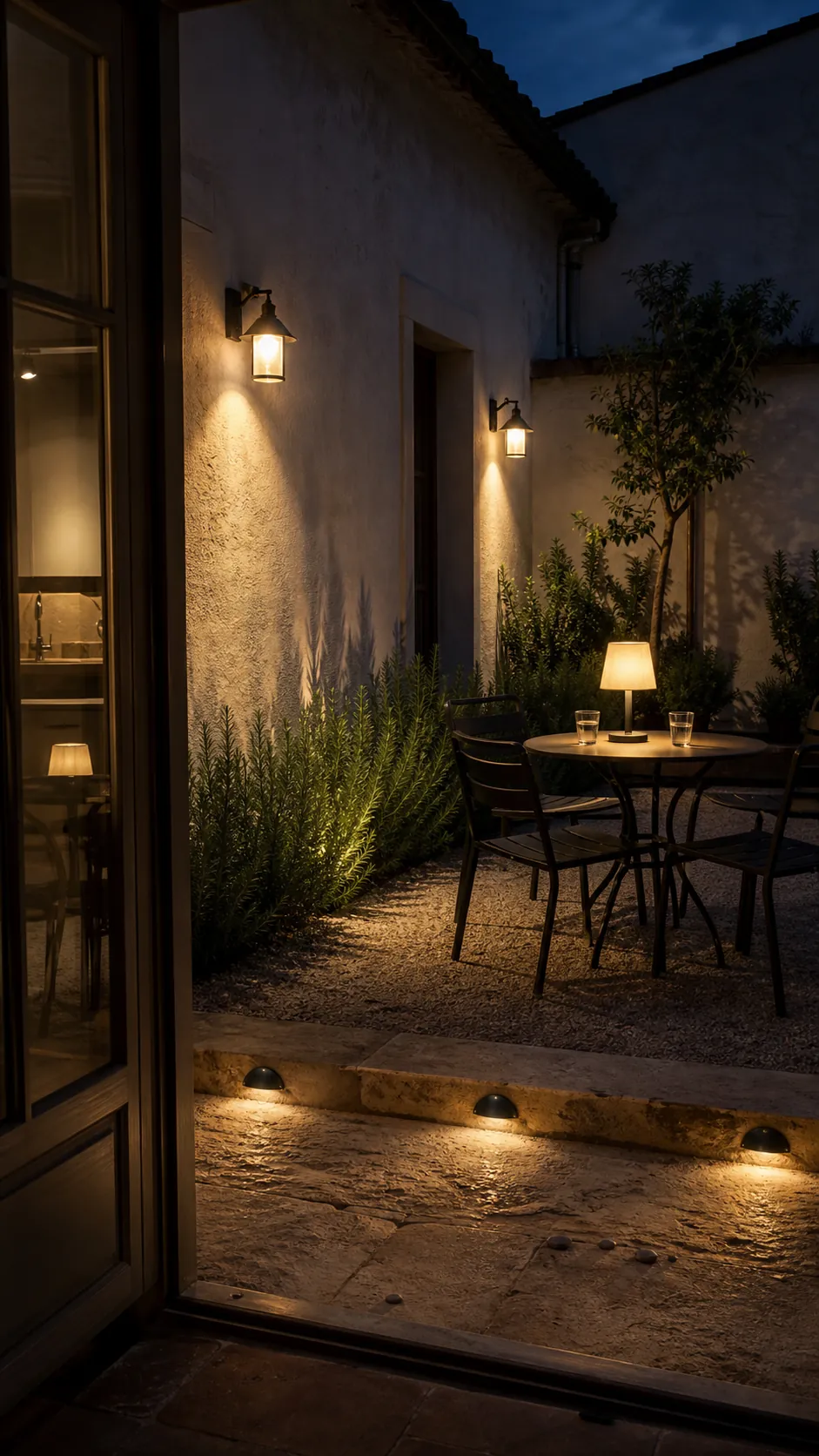
French patios feel intimate at night when light comes from several low, warm sources. Combine shielded wall lanterns, a rechargeable table lamp, and subtle path lighting. Avoid one glaring security fixture over the dining table. Aim lights down, choose a warm color temperature, and keep cables clear of wet routes and chair legs.
A Reclaimed Farm Table
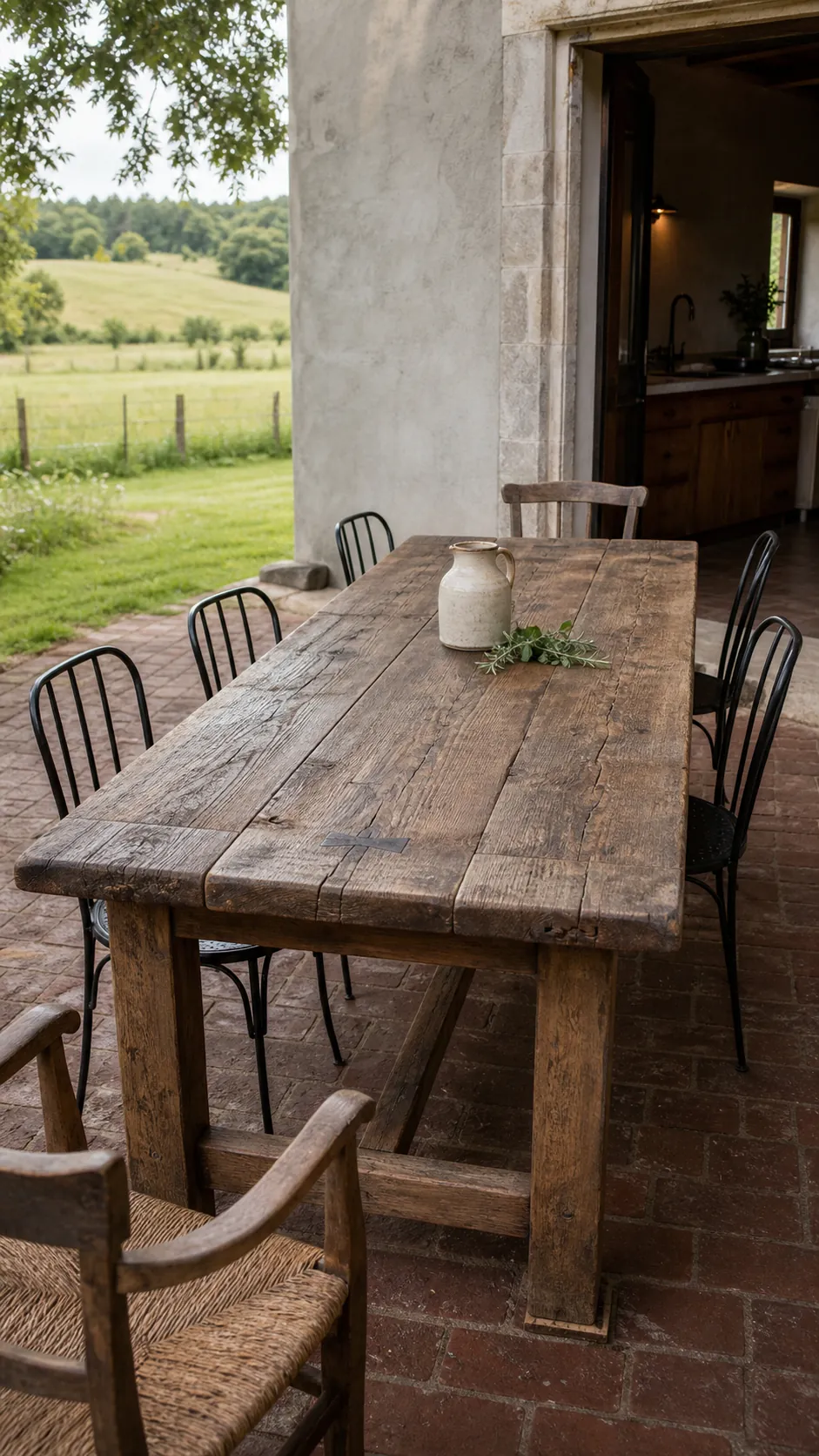
A worn timber table introduces the relaxed side of French country backyard design. Check that reclaimed wood is structurally sound and finish it for exterior use. Pair it with simpler chairs so the surface remains the hero. Leave enough circulation for serving; an oversized table crammed against planting never feels generous.
Woven Seats and Iron Frames
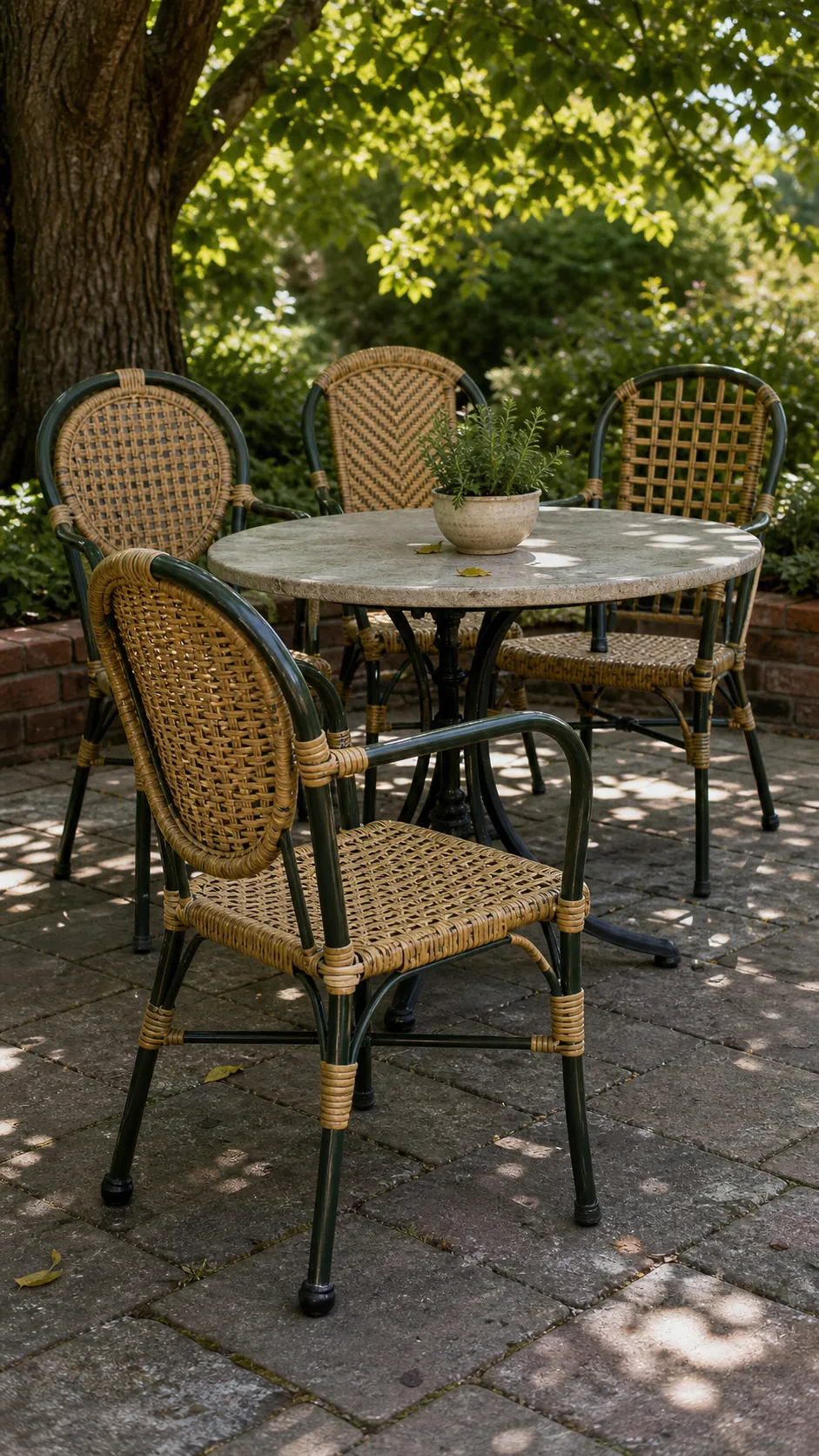
Woven bistro chairs are lighter visually and often more comfortable than solid metal seats. Choose outdoor-rated weave, inspect weight limits, and look for replaceable glides that protect pavers. Mixing chair styles can feel authentic, but keep one common feature—frame color, weave tone, or silhouette—to prevent flea-market chaos.
A Small Parterre View
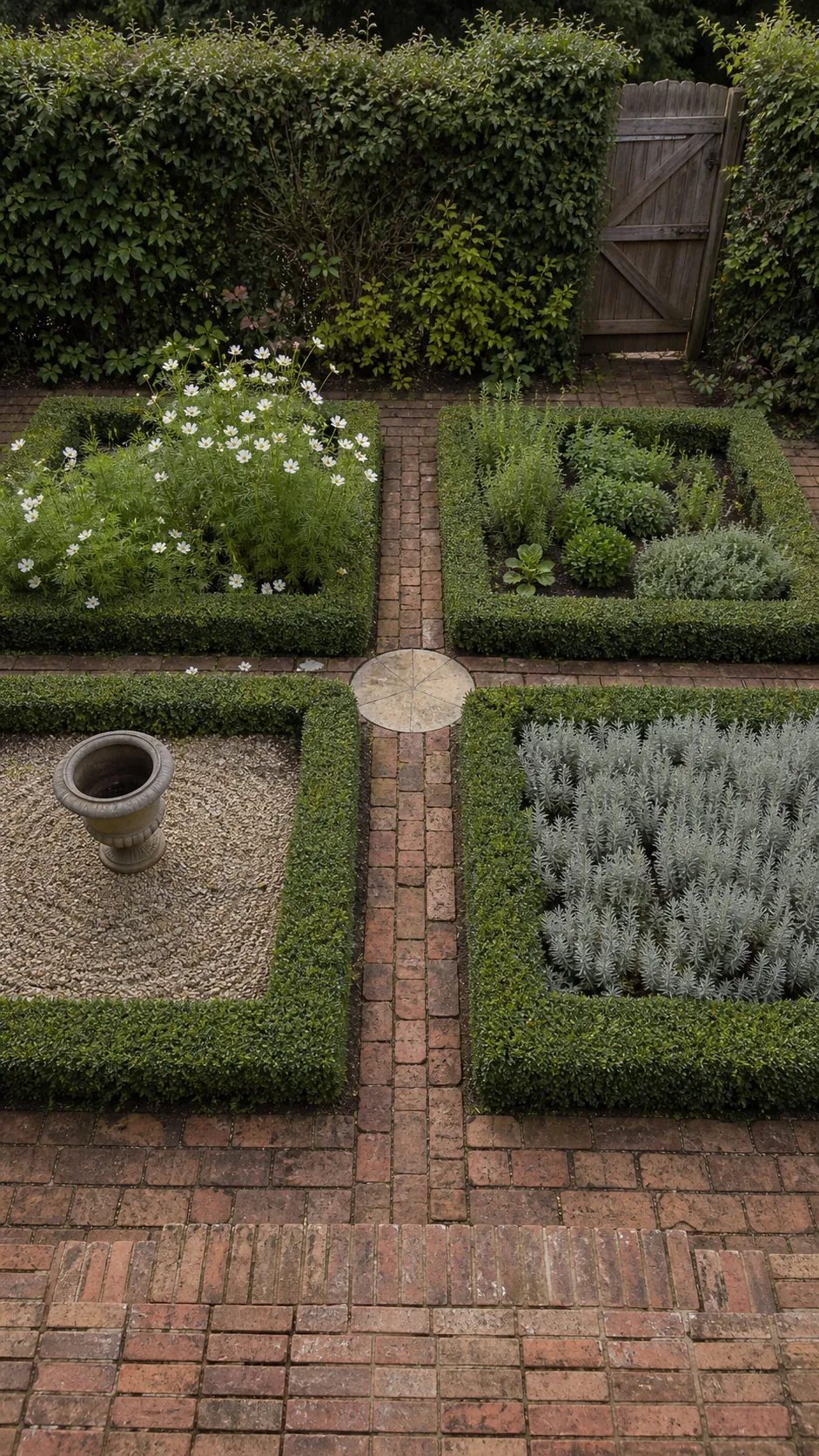
You do not need Versailles-scale hedging to borrow the logic of a parterre. Four low-edged beds divided by a cross path create order in a compact yard. Fill them with herbs, seasonal flowers, or gravel rather than demanding clipped box. The geometry should be legible from the patio or an upstairs window.
Rain-Friendly Paver Joints
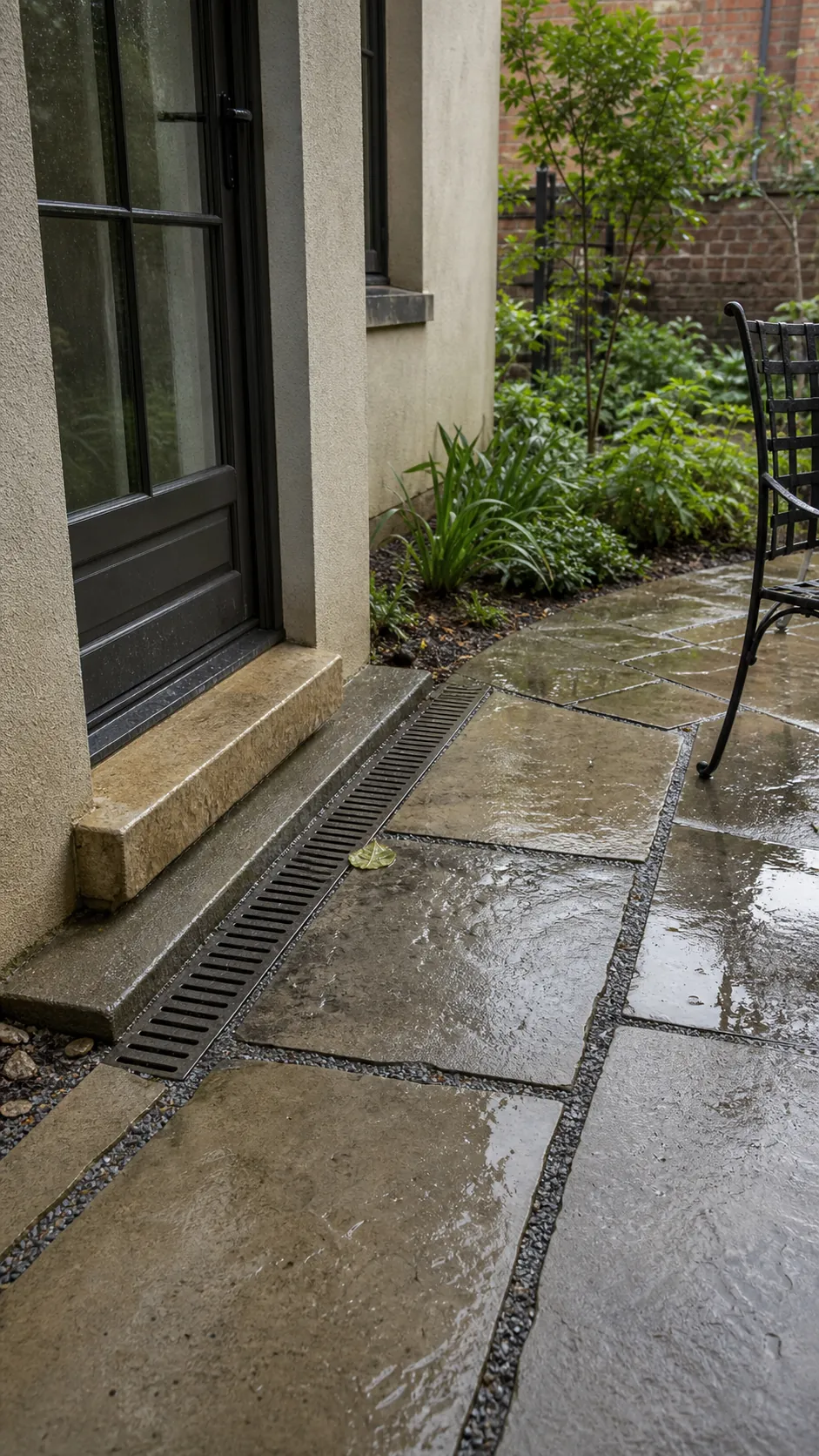
Drainage is part of the design, especially in an enclosed courtyard. Grade hardscape away from the house, keep weep holes open, and use permeable joints only over a properly prepared base. Decorative gravel cannot correct a bad slope. If water already ponds near the foundation, solve that before buying furniture or plants.
A Narrow Courtyard Axis
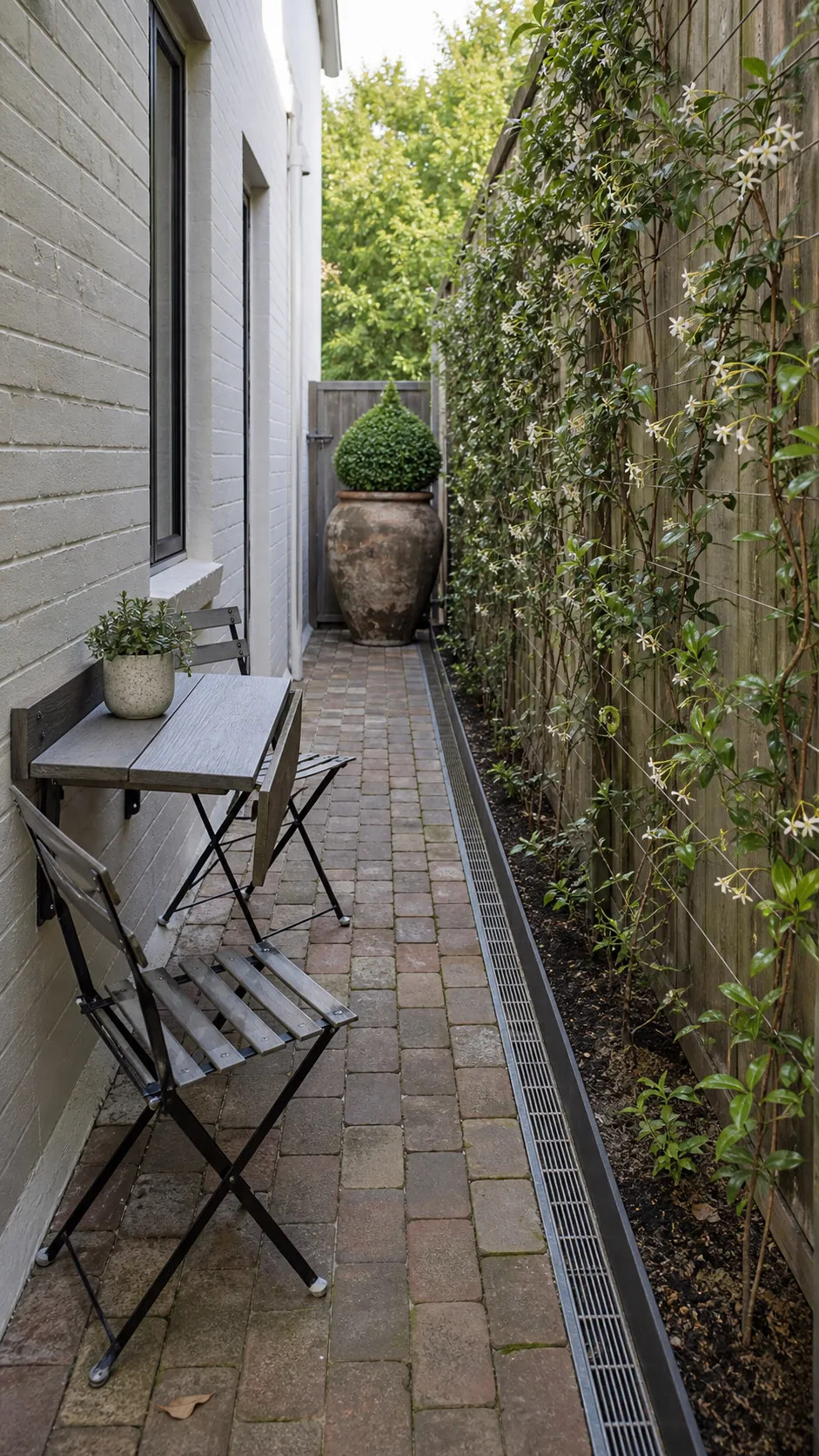
In a long, narrow courtyard, place a focal object—a pot, bench, tree, or fountain—at the far end and keep the central route clear. Plant vertically along one wall and use shallower furniture on the other. This creates depth without pretending the patio is wider than it is.
A Renter-Friendly French Patio
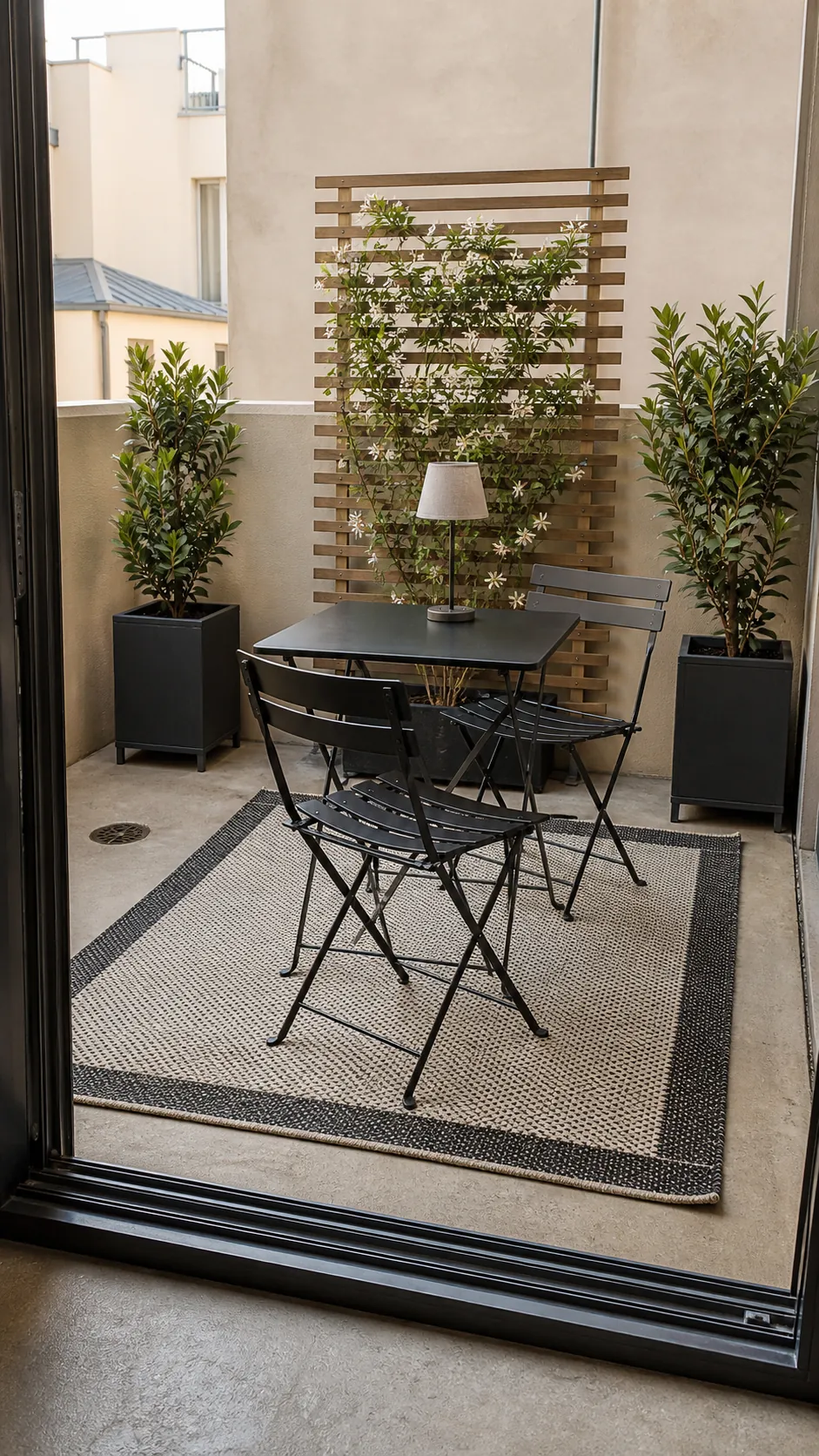
Renters can create the same visual hierarchy with folding furniture, two matching tall pots, a washable outdoor rug, and rechargeable lighting. Use freestanding trellises rather than drilling into walls, protect the paving under planters, and keep every major element movable. Reversibility is not a compromise; it forces useful editing.
One Restrained Provençal Palette
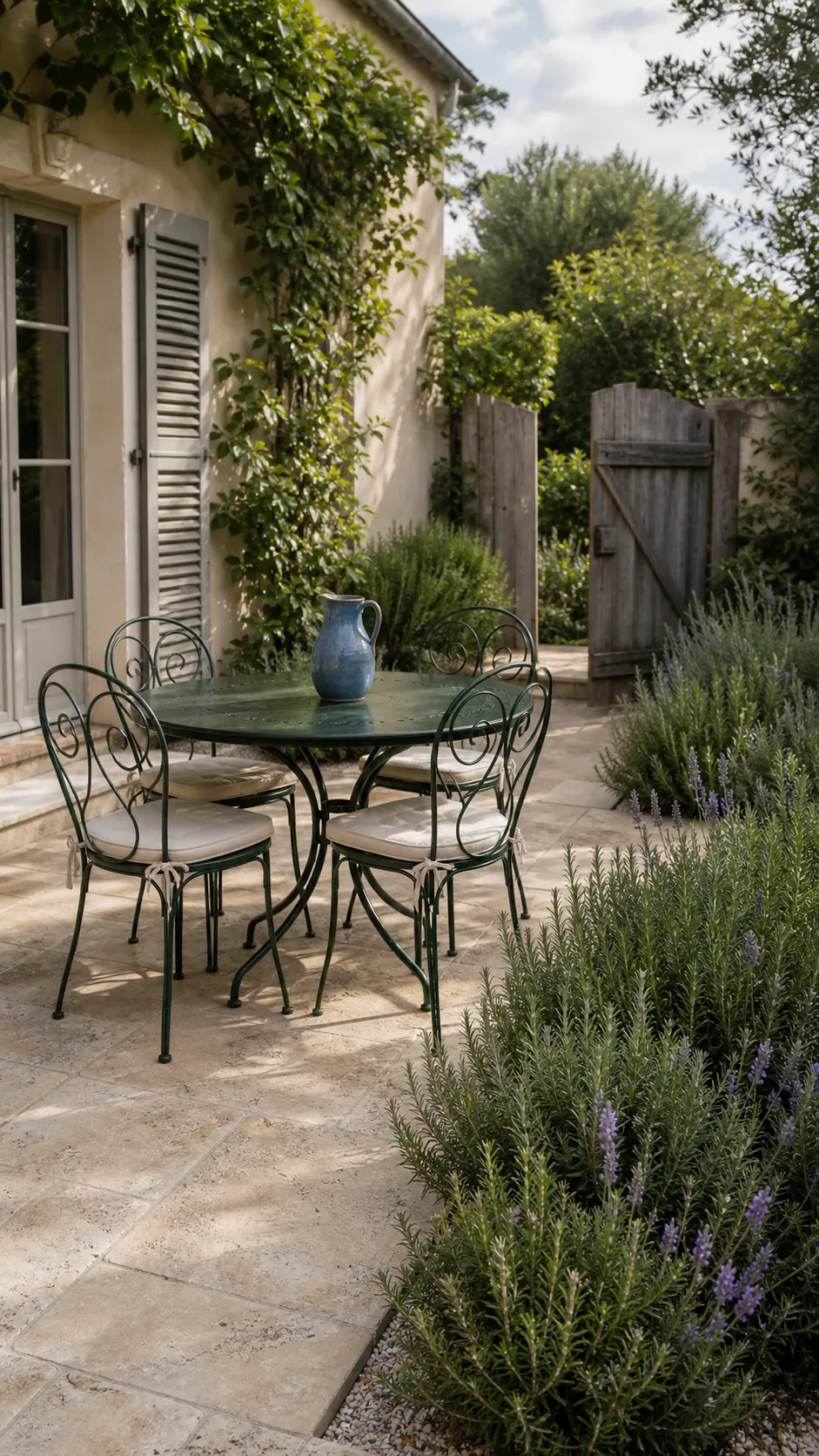
The final decision is the one that holds every other idea together. Limit the patio to one pale mineral surface, one dominant green, one flower color, and one faded accent. Limestone, olive foliage, lavender, and muted blue work; so do gravel, deep green, white roses, and rusted iron. When materials, climate, and maintenance are settled first, the French character feels earned rather than applied.