
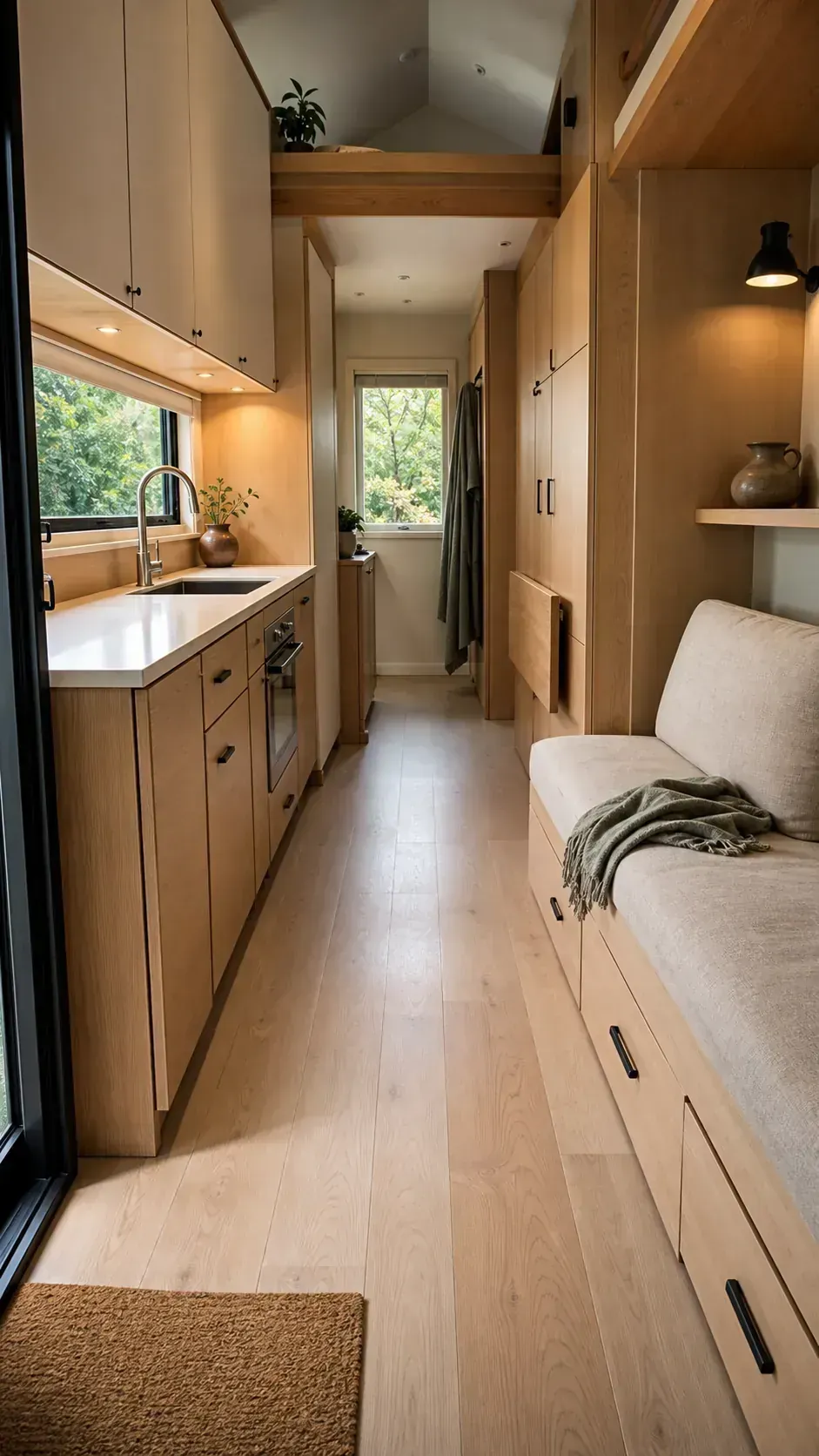
A tiny house rarely becomes cluttered because its owner “failed at minimalism.” More often, the layout asks ordinary objects to travel too far, compete for the same surface, or disappear into storage that is annoying to use. Shoes stop beside the door. Mail lands on the table. Laundry waits on a chair. None of those piles is random; each one is evidence about the floor plan.
The most useful shift is to stop asking, “Where can I fit more storage?” and ask, “Where does this object naturally appear, and what is the easiest possible home for it there?” A clutter-free tiny home is not empty. It simply gives daily life a short, obvious path from use to put-away.
Map Your Clutter Before You Change the Layout
Spend several normal days noticing where things accumulate. Do not tidy first. Photograph the entry at dinner time, the kitchen after breakfast, and the living area before bed. The recurring piles reveal the friction points: bags with no landing place, charging cables far from a socket, recycling without a container, or clothes that are still wearable but not clean enough for the wardrobe.
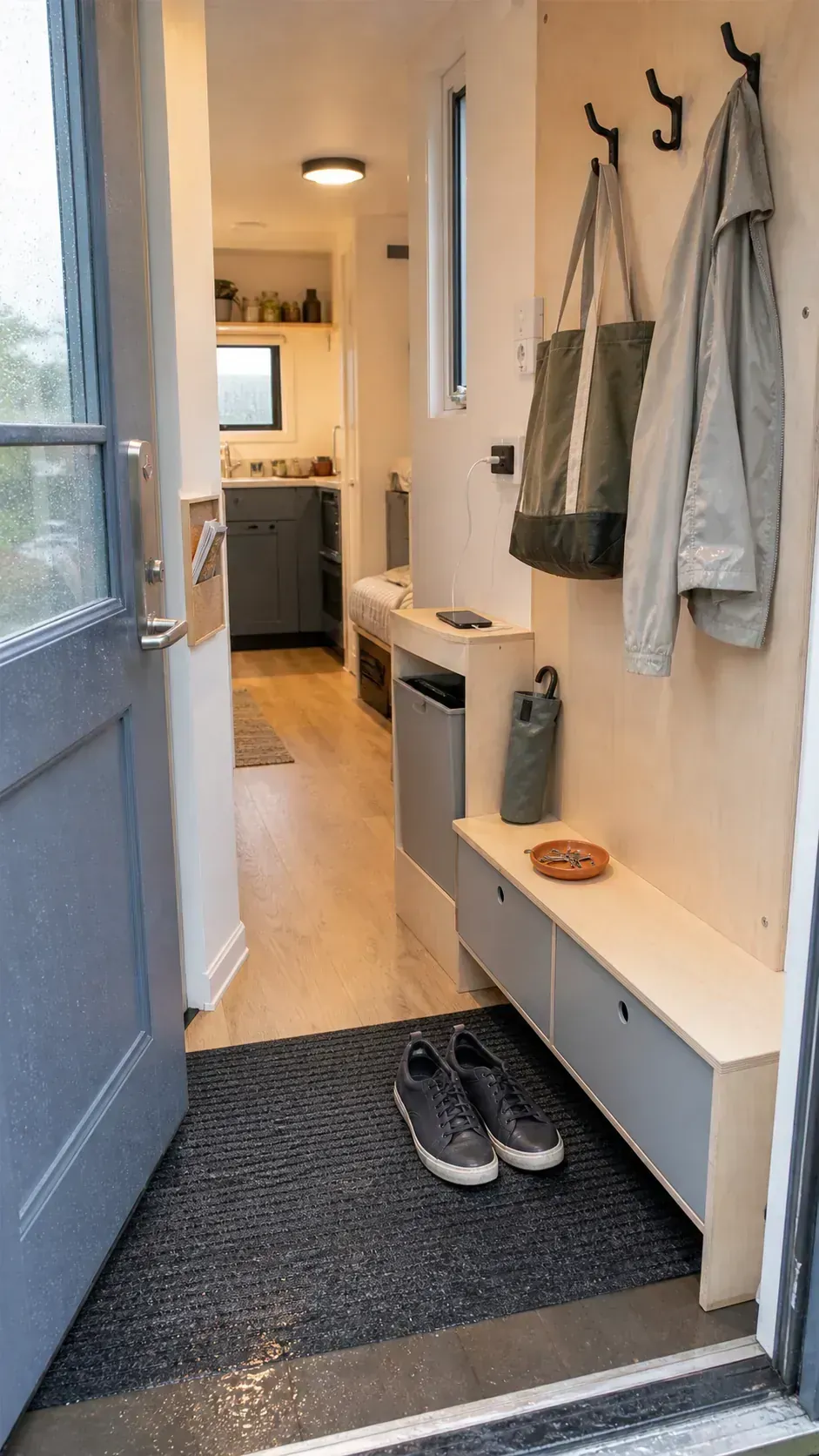
Turn each pile into a layout question. If shoes collect beside the door, the solution is not a basket across the room. It is shallow storage within one step of the threshold. If paperwork covers the dining table, create a slim inbox where the mail enters and schedule a weekly reset. Storage should intercept an item before it becomes clutter.
Protect One Unbroken Circulation Path
In compact living, a clear route through the home matters more than squeezing in one extra cabinet. Trace the path from the front door to the kitchen, bathroom, stairs, and bed. Doors, stools, baskets, and open drawers should not force a sideways shuffle. When circulation is awkward, temporary objects get set down in the very places needed for movement, and the entire tiny house interior begins to feel busy.
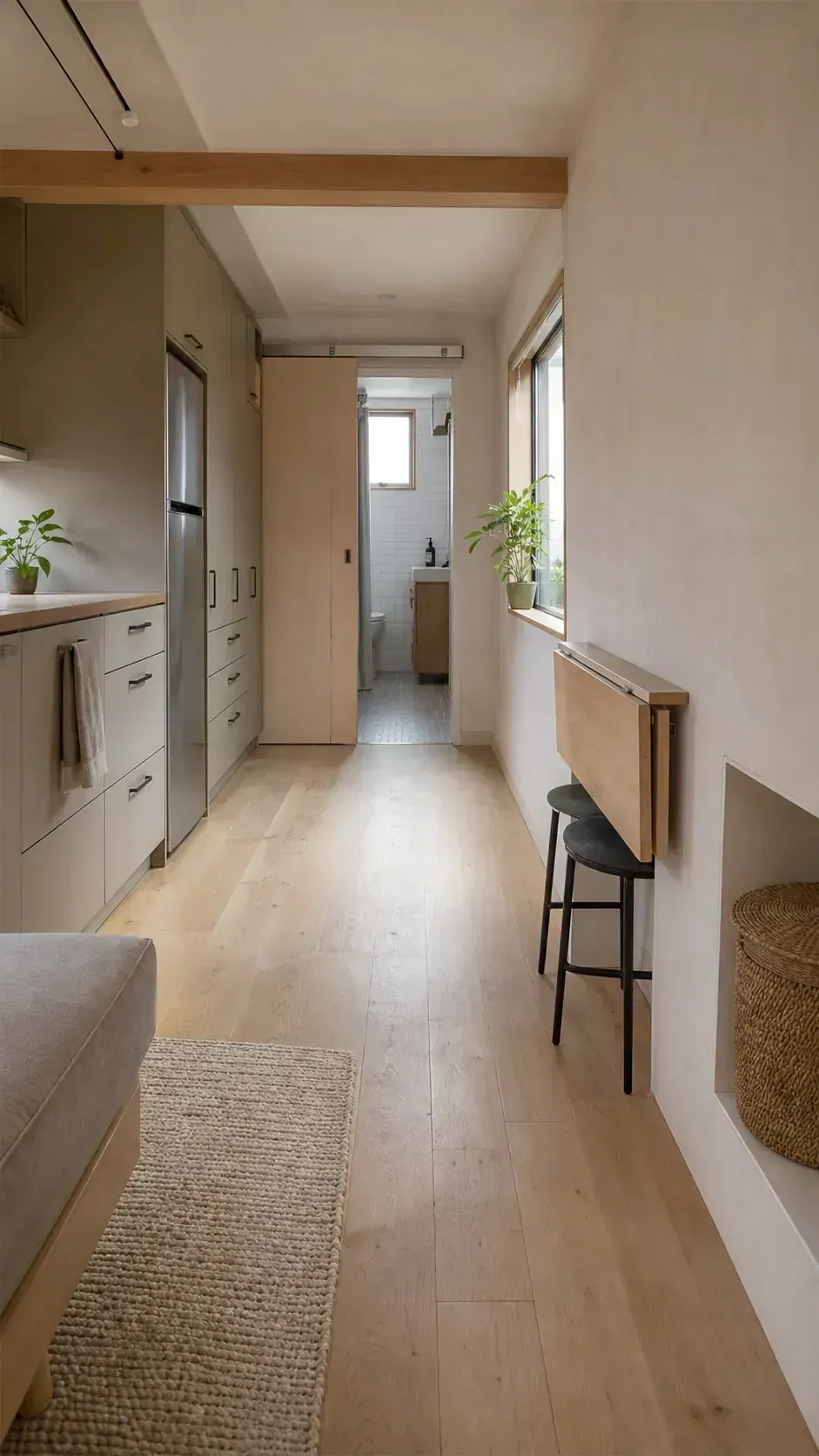
Keep the main route visually legible from one end of the home to the other. Put the deepest storage outside that line, use sliding or pocket doors where a swing would collide with furniture, and choose wall-mounted pieces when exposed legs would narrow the passage. A few inches of breathing room beside furniture can make the layout feel calmer than filling every gap.
Put Daily Storage at the Point of Use
Good tiny house storage follows frequency. Everyday items belong between knee and eye height, close to where they are used. Occasional items can live under the floor, above cabinets, or at the back of a bench. Seasonal gear can occupy the hardest-to-reach compartments. If a coffee mug requires moving three pans, or a vacuum requires clearing the loft ladder, the system will fail on a tired Tuesday.
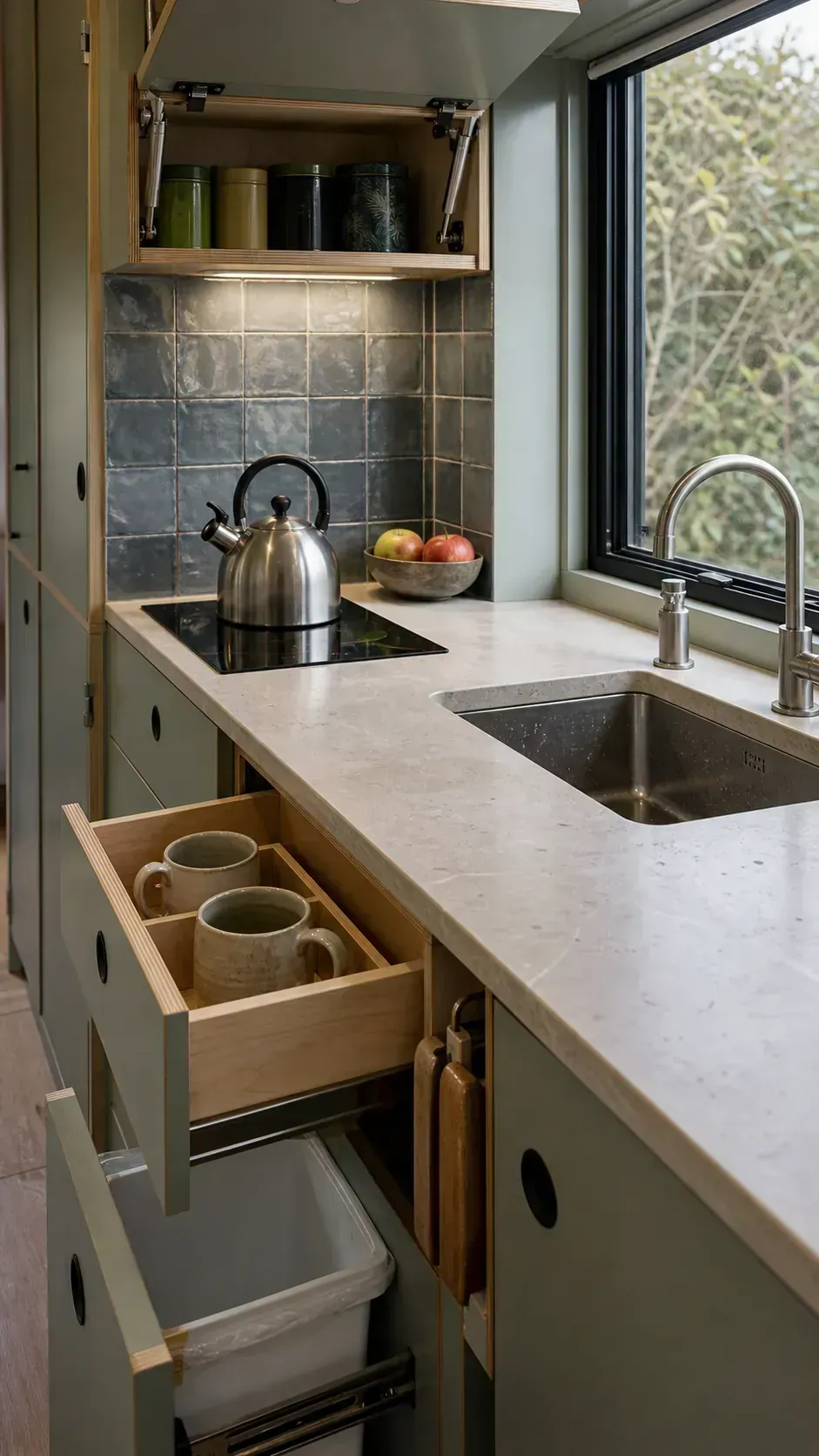
Group objects by task rather than by abstract category. Keep tea, mugs, and the kettle together. Store cleaning cloths beside the sink. Give keys, dog leads, and reusable shopping bags one entry station. This kind of tiny home organization reduces steps and makes putting away almost automatic.
Choose Closed Storage for Visually Noisy Items
Open shelving can be beautiful when it holds a small, controlled collection. It is less successful for food packaging, toiletries, cables, hobby supplies, and mismatched household tools. Those objects create visual noise even when neatly arranged. Use drawers, lift-up benches, cabinet doors, and matching opaque boxes for the busy categories, then reserve open shelves for a few items you use often or genuinely enjoy seeing.
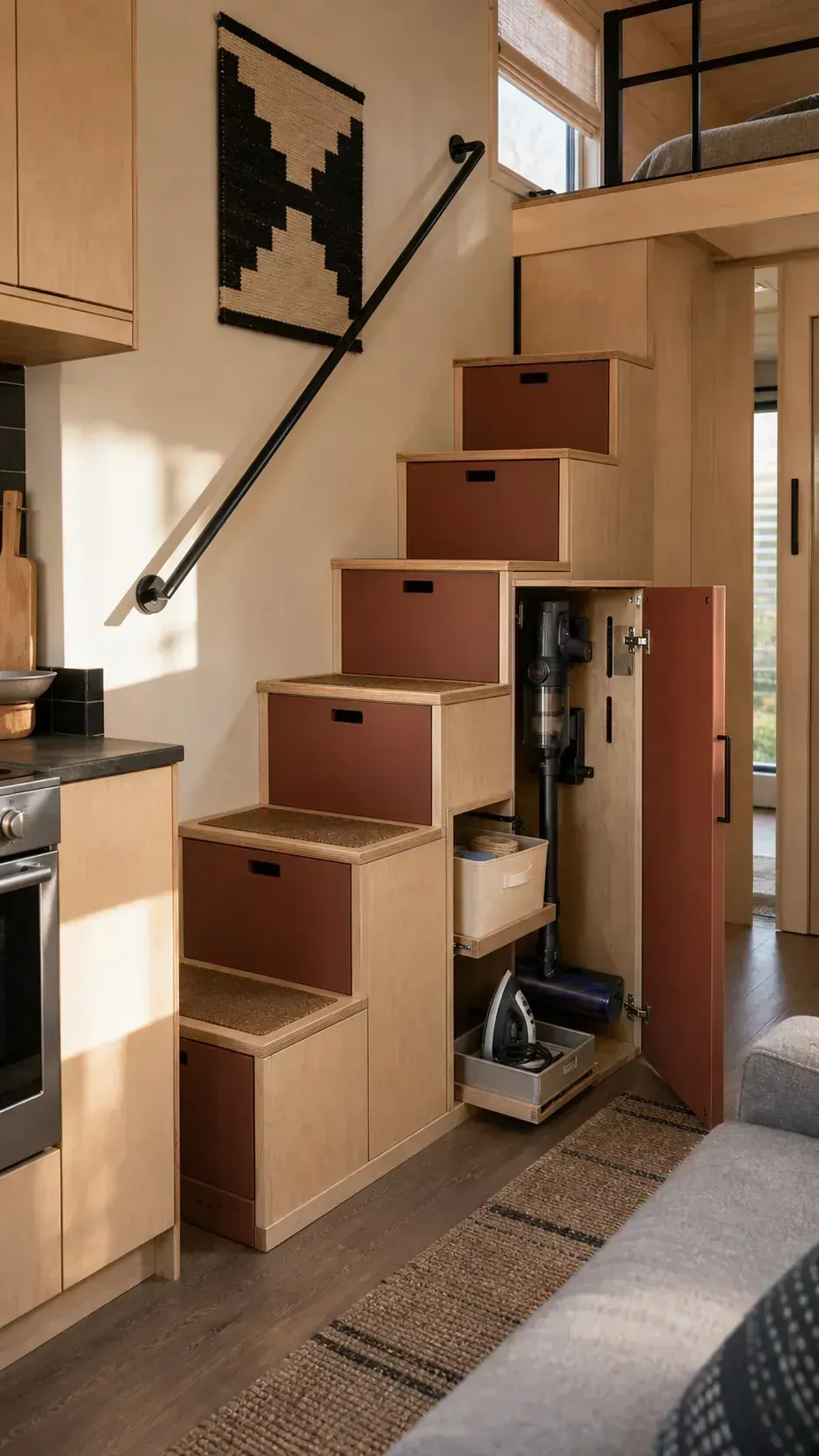
Closed storage works best when its interior is simple. A deep cabinet without divisions becomes a place where useful objects vanish. Add one shelf, a pull-out tray, or a labeled bin only when it solves a real retrieval problem. The goal is not to organize every cubic inch; it is to make the correct action easier than leaving something out.
Use Furniture That Earns Its Footprint
Multifunctional storage furniture is valuable only when each function is genuinely convenient. A storage ottoman that opens easily can hold blankets. A dining table that folds without clearing a dozen objects can release floor space. A platform sofa with drawers can absorb bulky games or guest bedding. By contrast, a complicated convertible piece often stays permanently in one mode and becomes another obstacle.
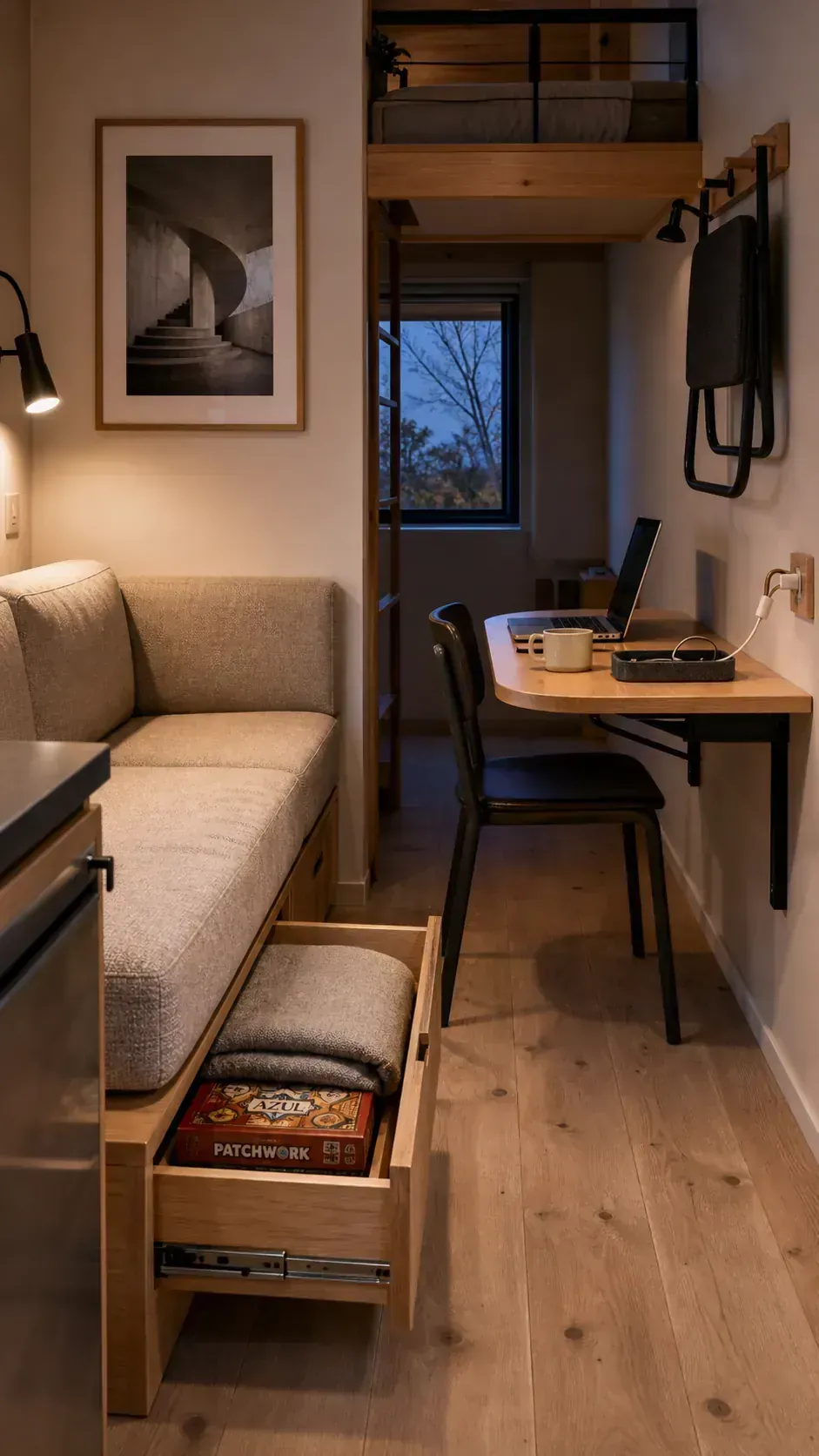
Before buying a dual-purpose piece, act out the transition. Where does the laptop go when the table folds? Can the bench lid open while someone is seated nearby? Is there clearance for the drawer? Measure the furniture in both states and protect the circulation path in each one.
Build in a Reset Zone for Real Life
A perfect storage plan still needs room for objects in transition. Create one intentionally limited reset zone: a shallow tray for incoming paper, a ventilated hook for once-worn clothes, a small basket for items heading upstairs, or a laundry drawer that can remain open during sorting. This prevents every surface from becoming an unofficial holding area.
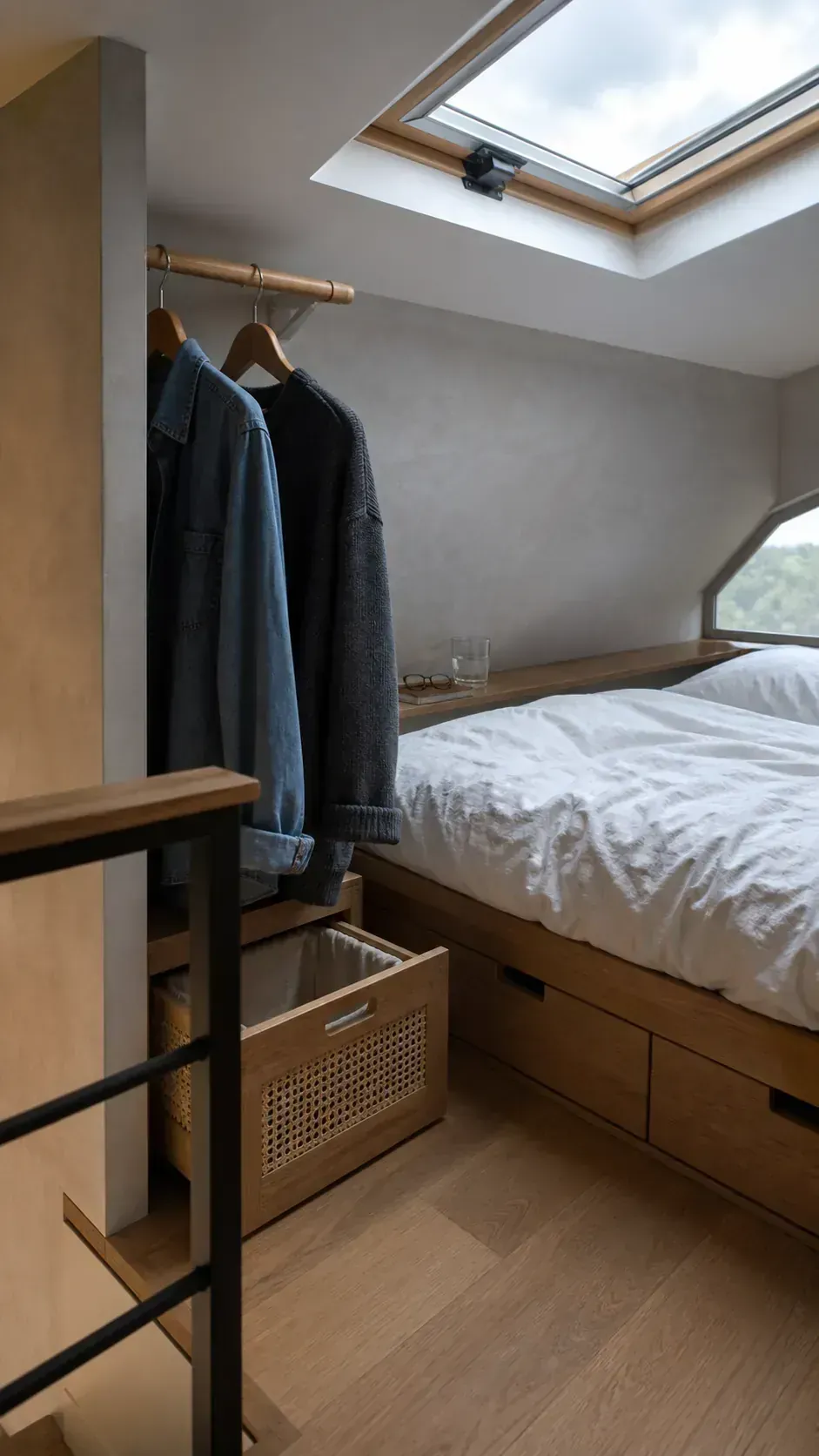
Give the zone a hard capacity. When the tray is full, process it; when the basket is full, carry it; when the rail holds three outfits, return something to the wardrobe or laundry. A container is useful because it sets a visible boundary, not because it allows a pile to grow indefinitely.
Leave Some Space Deliberately Empty
The final defense against tiny house clutter is unused capacity. Do not fill every shelf on installation day. Leave a portion of each everyday cabinet open for groceries, a new hobby, a guest’s bag, or the ordinary fluctuations of the week. Without that margin, every arrival triggers a reshuffle.
Empty floor around a chair, a clear section of counter, and breathing room on a shelf are functional parts of the layout. They make cleaning faster, reveal when a category is overflowing, and let the eye rest. A tiny house feels generous when its routines fit inside it—not when every possible inch has been converted into storage.
Start with the pile that returns fastest. Move its storage closer, shorten the put-away motion, and watch what happens for a week. That small experiment will tell you more about your ideal tiny house layout than another round of decorative bins.