
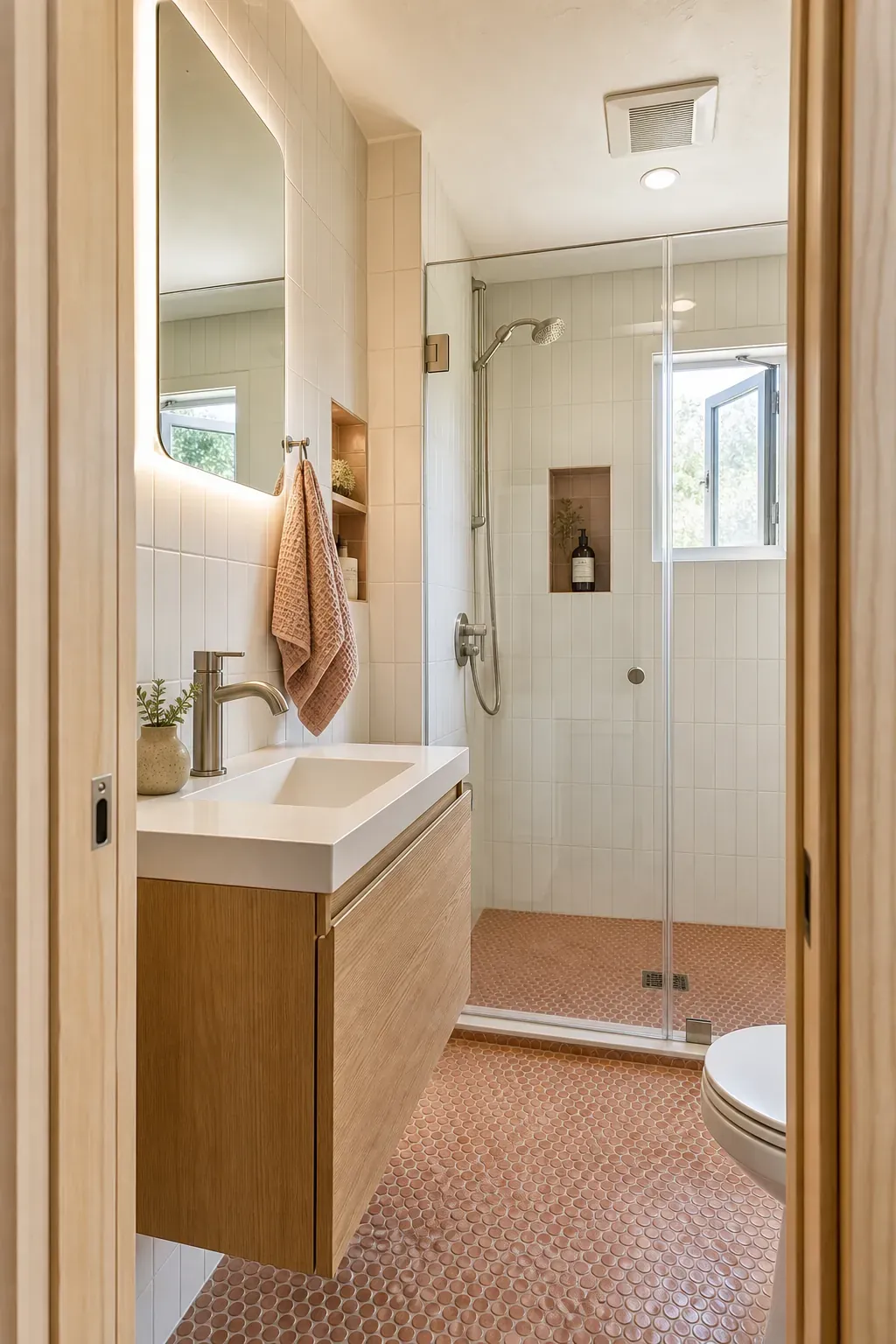
A tiny home bathroom can look spotless and still feel cold, or feel cozy while being frustrating to clean. The sweet spot is more practical: warmth comes from light, texture, and materials, while cleanliness comes from ventilation, clear surfaces, and details that dry quickly. These ideas are designed for real compact bathrooms, where a damp towel or crowded vanity can affect the whole house.
A Warm Oak Vanity With Full-Extension Drawers
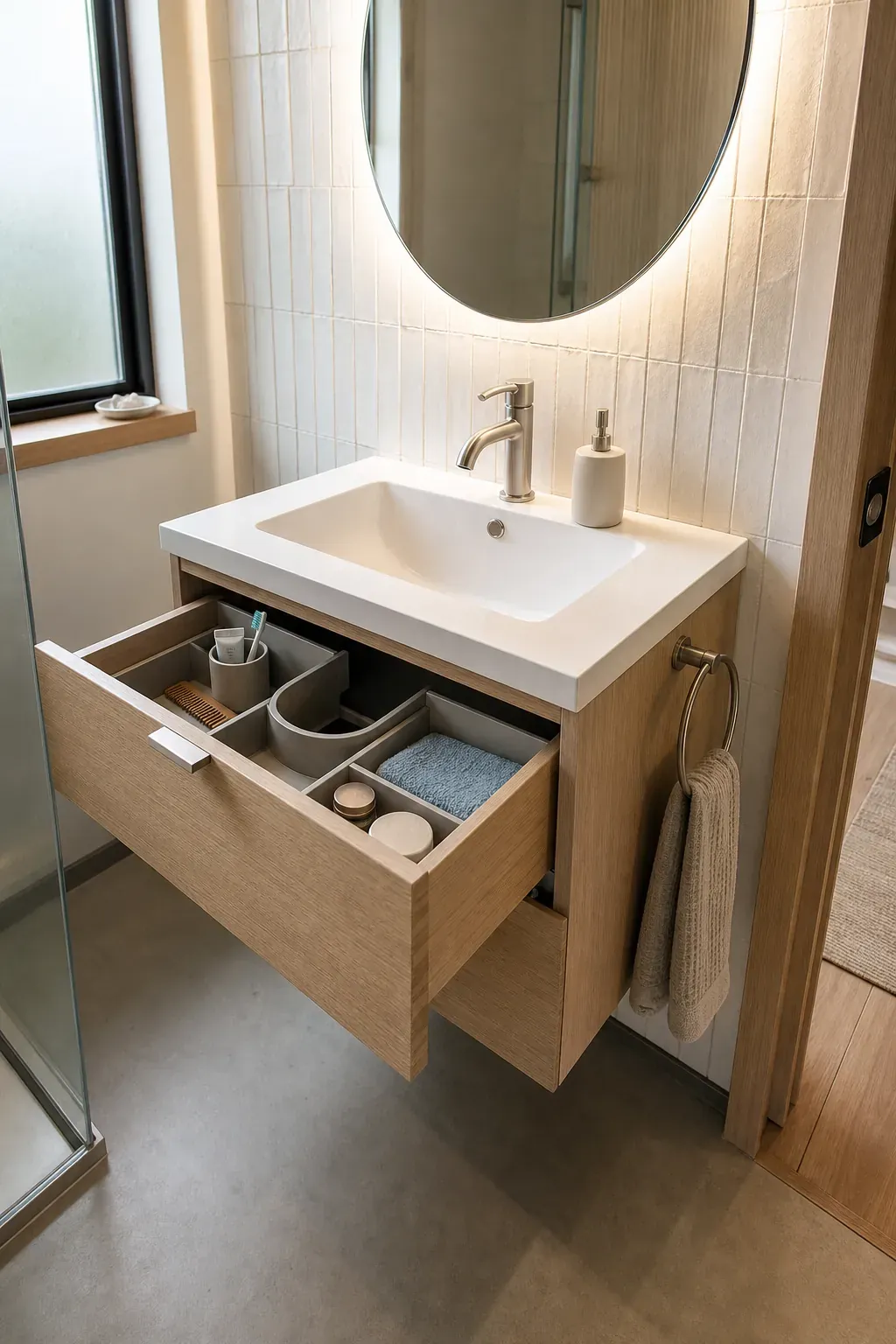
Wood immediately softens hard bathroom surfaces, but deep cupboards often turn into product caves. A shallow oak vanity with full-extension drawers lets you see toiletries from above and keeps the counter clear. Choose a bathroom-rated finish and lift the cabinet slightly from splash zones.
Divide one drawer for daily care and another for refills. The warm grain supplies the visual comfort; the closed fronts do the work of making a tiny bathroom feel clean.
A Properly Waterproofed Wet-Room Corner
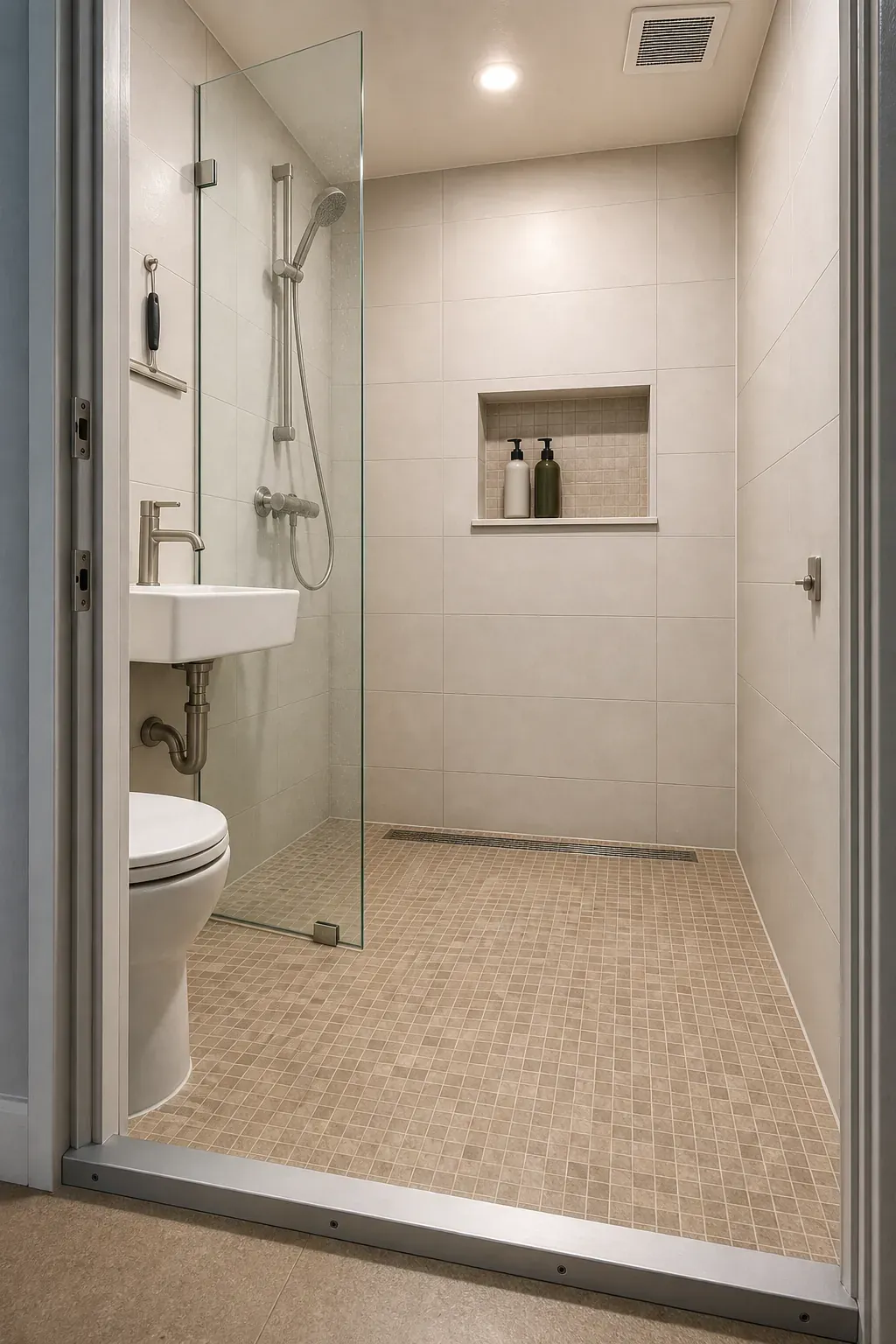
A wet room can remove the bulky visual stop of a shower tray, but only when the membrane, falls, penetrations, threshold, and drain are planned as one system. This is not the place for a cosmetic shortcut. A qualified installer should account for movement if the tiny house travels.
Use one calm tile across the floor and shower walls, then bring warmth through grout color or a timber-toned ceiling outside direct spray. Fewer material changes make the compact bathroom read as one generous volume.
A Heated Towel Rail in the Dry Zone
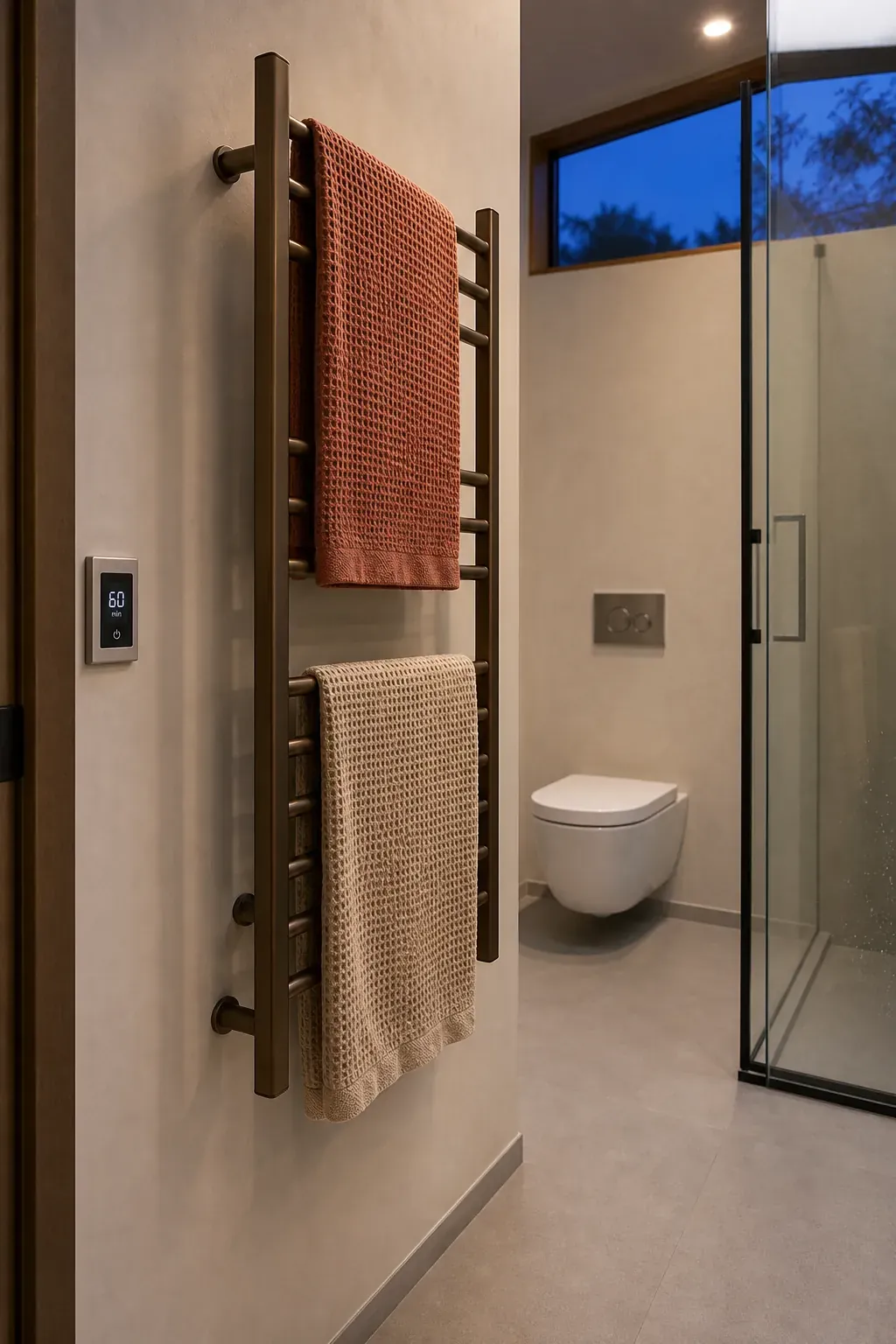
In a tiny home bathroom, a wet towel can keep the entire room feeling clammy. A correctly specified heated rail placed beyond direct shower spray dries textiles faster and gives the room a gentle sense of comfort. Check electrical clearances and installation requirements for your region.
Give each resident one bar rather than layering towels on a hook. Air around the fabric matters as much as heat, and a simple rail creates a cleaner silhouette than a cluster of damp textiles.
Dimmable Side Lighting at the Mirror
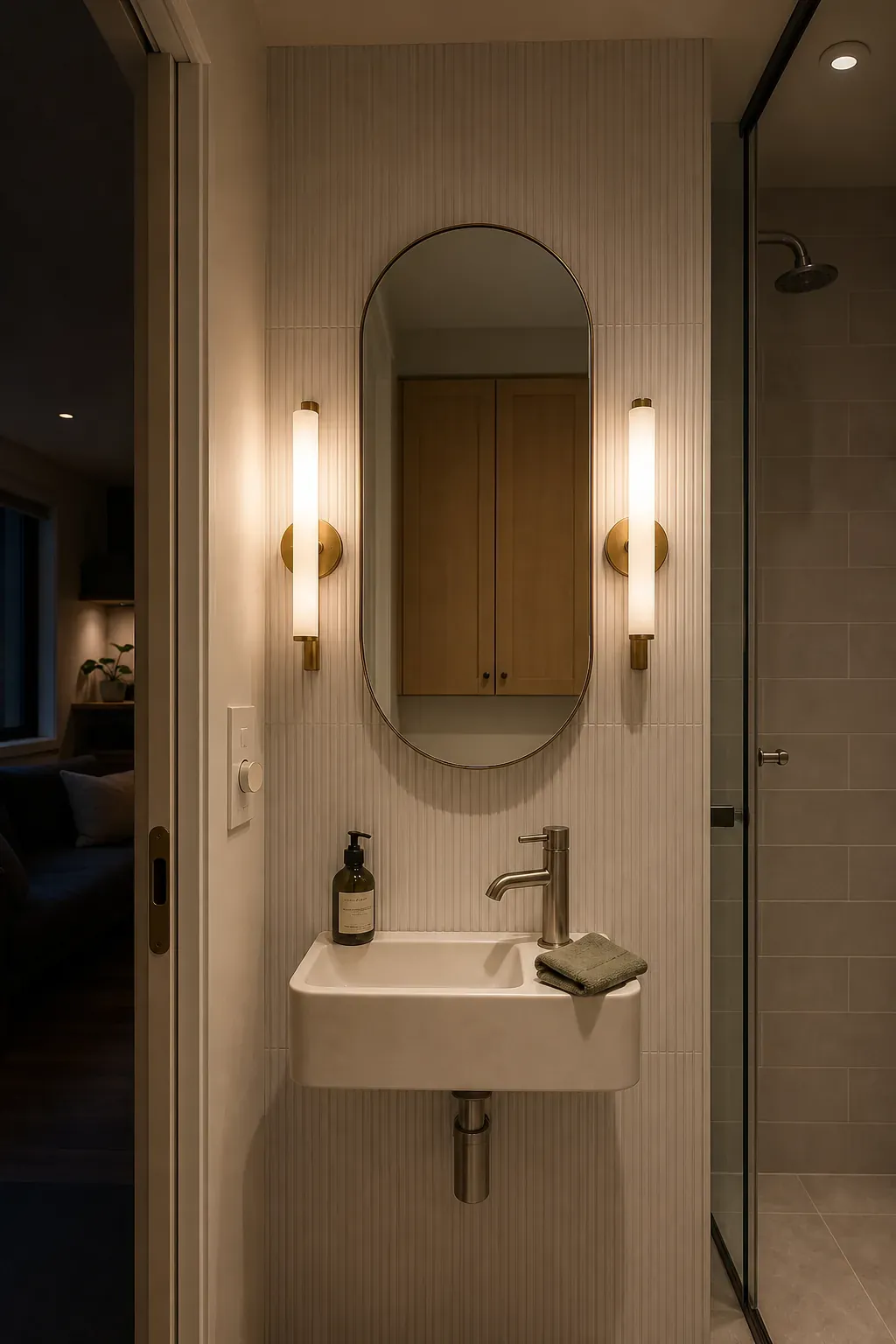
A single cold ceiling light can make a small bathroom feel clinical and cast harsh shadows at the mirror. Put damp-rated, dimmable light on both sides of the face, then add a modest ceiling source for cleaning. The combination is useful in the morning and calmer at night.
A warm-neutral color temperature keeps skin tones and wood natural without turning white tile yellow. Good bathroom lighting should reveal dirt when you need to clean and soften when you want to wind down.
A Recessed Medicine Cabinet Between Studs
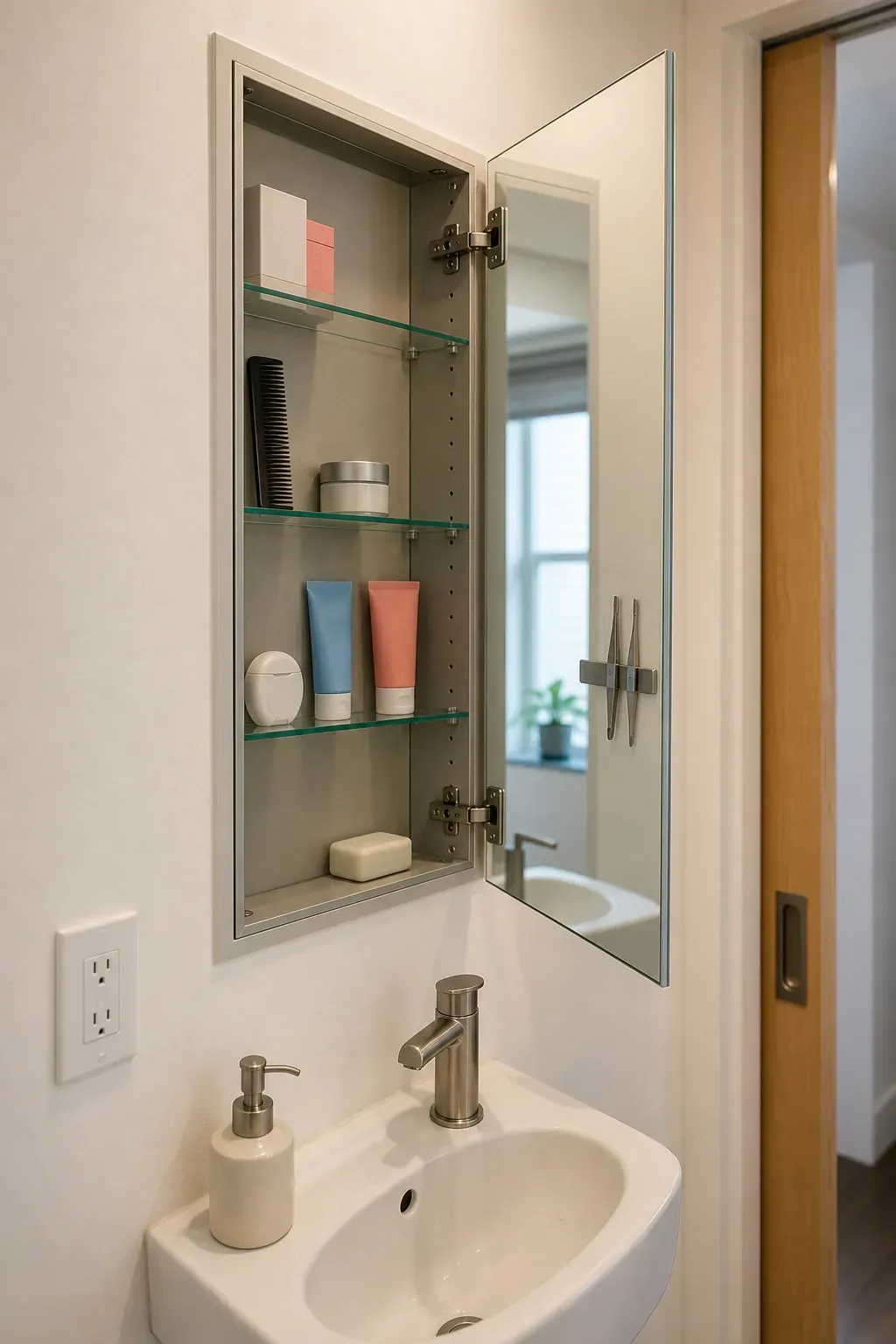
Recessing storage can keep bottles off the basin without stealing shoulder room. First confirm that the wall contains no plumbing, wiring, structural bracing, or required insulation. A mirrored door then combines two functions in almost no visible depth.
Keep the interior shallow and adjustable. Daily products should be visible in one layer; anything stacked two or three items deep is more likely to expire than to be used.
A Wall-Hung Toilet With Clear Floor Below
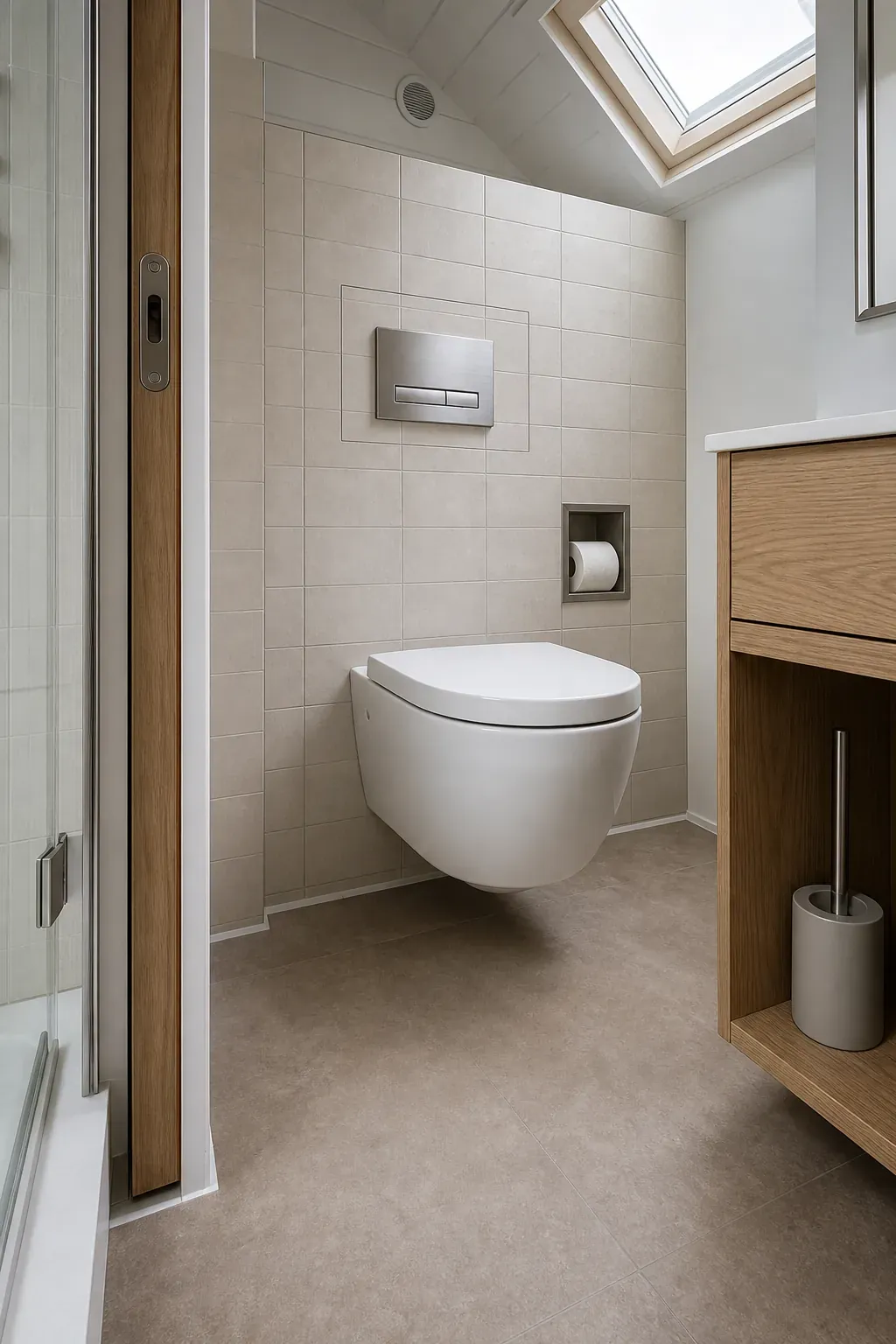
A wall-hung toilet exposes more floor, which can make a compact bathroom easier to mop and visually quieter. The concealed carrier needs adequate structure, service access, and a layout compatible with the tiny home’s waste system, so confirm the technical fit before falling for the look.
Keep the wall above it restrained. One slim ledge for a spare roll is enough; a tower of baskets will undo the spacious effect the clear floor creates.
A Curved Glass Shower Screen
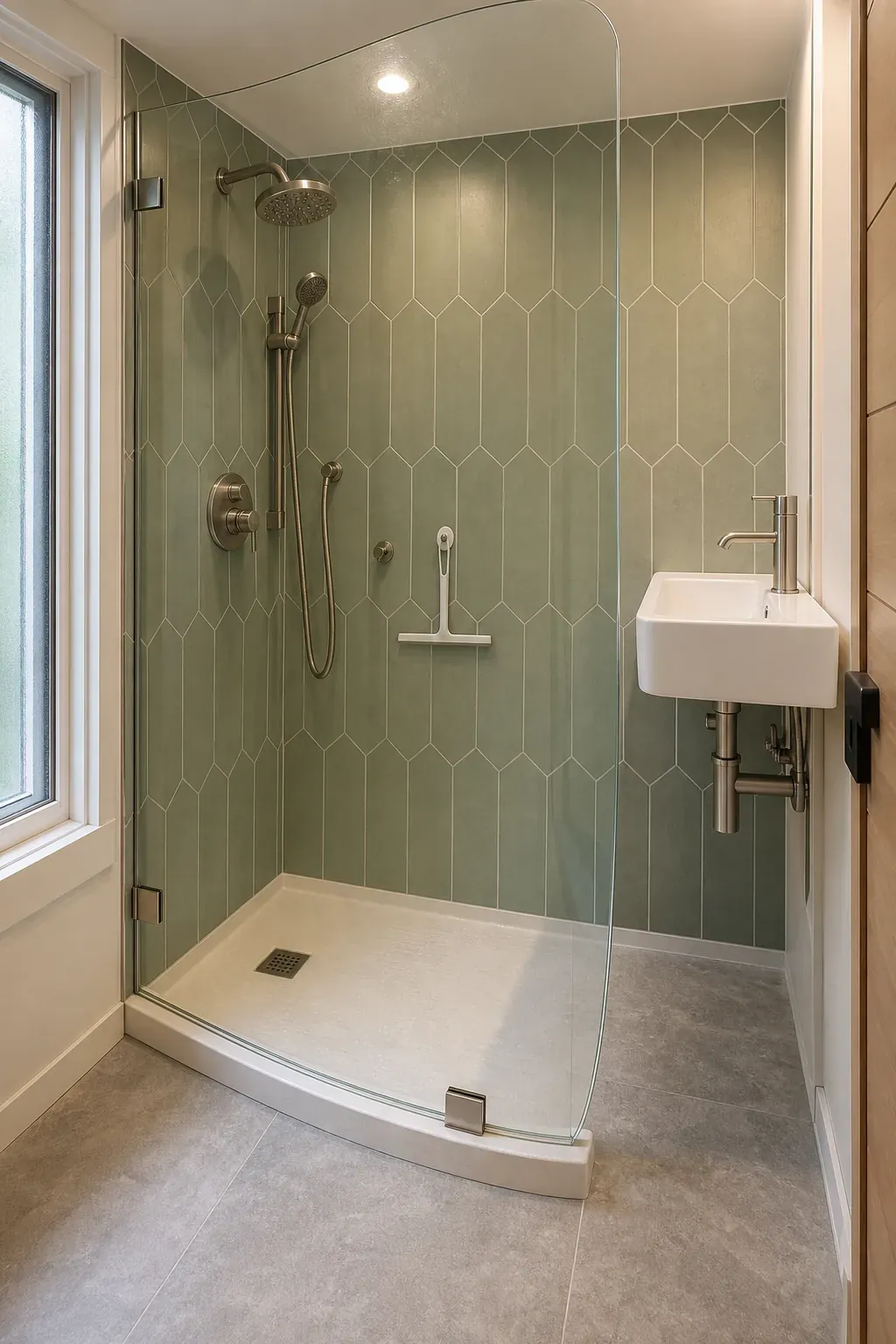
A gently curved fixed screen can contain the main spray while avoiding the collision zone of a swinging door. Clear glass keeps the sightline open, but it still needs enough length and correct showerhead placement to prevent water escaping into the dry zone.
Choose the simplest hardware you can maintain. Fewer channels and overlaps mean fewer places for soap residue to collect, and a handheld squeegee stored within reach makes the finish easier to keep bright.
Small-Format Terracotta-Tone Floor Tile
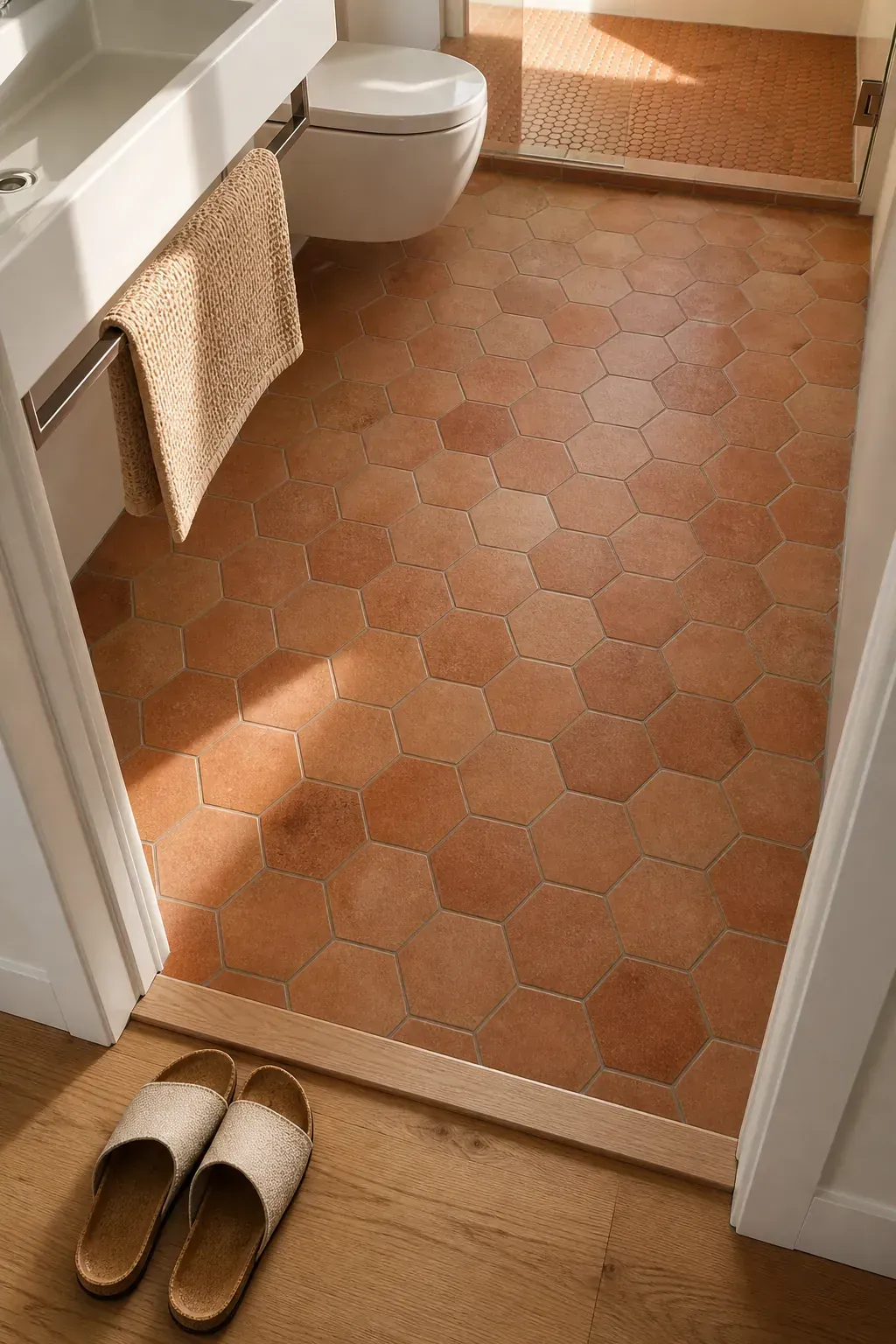
Earthy floor color gives a clean white bathroom warmth from the ground up. In wet areas, prioritize a surface and grout system suited to the location, with enough grip and joints that support the required falls. The exact specification matters more than the trend.
Carry the same tile beneath the vanity and toilet where practical. A continuous field avoids awkward visual fragments and makes it easier to spot dust, drips, and areas that need attention.
An Operable Skylight for Light and Steam
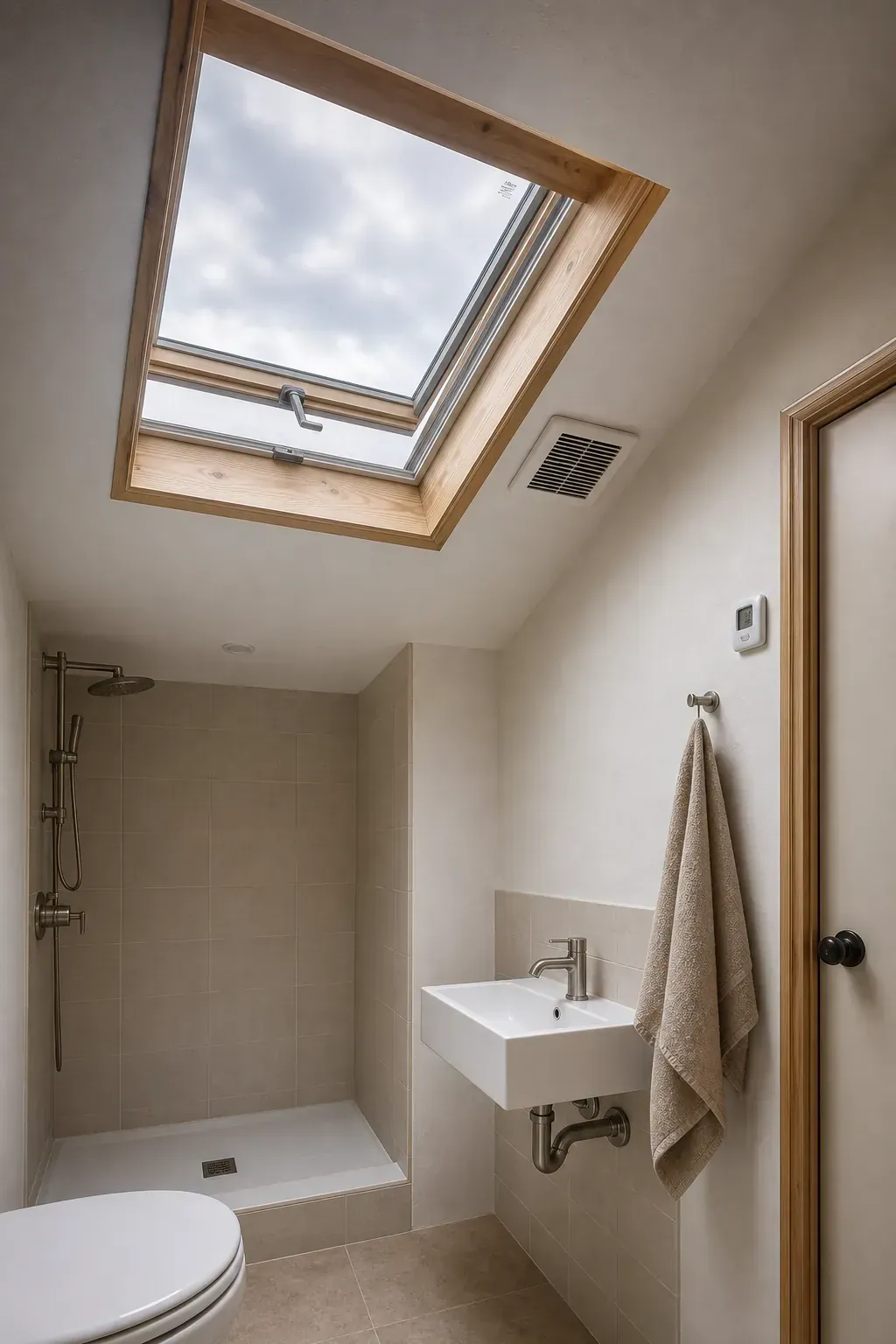
Where privacy limits wall windows, a skylight can bring in generous diffuse light and release rising warm air. It is a supplement to a correctly ducted exhaust fan, not a replacement—especially in cold or humid weather when opening it is impractical.
Frame the opening simply and use moisture-appropriate finishes around the reveal. Daylight makes a small bathroom feel clean, while the moving clouds above add softness without consuming a single shelf.
Warm-Gray Microcement With Minimal Seams
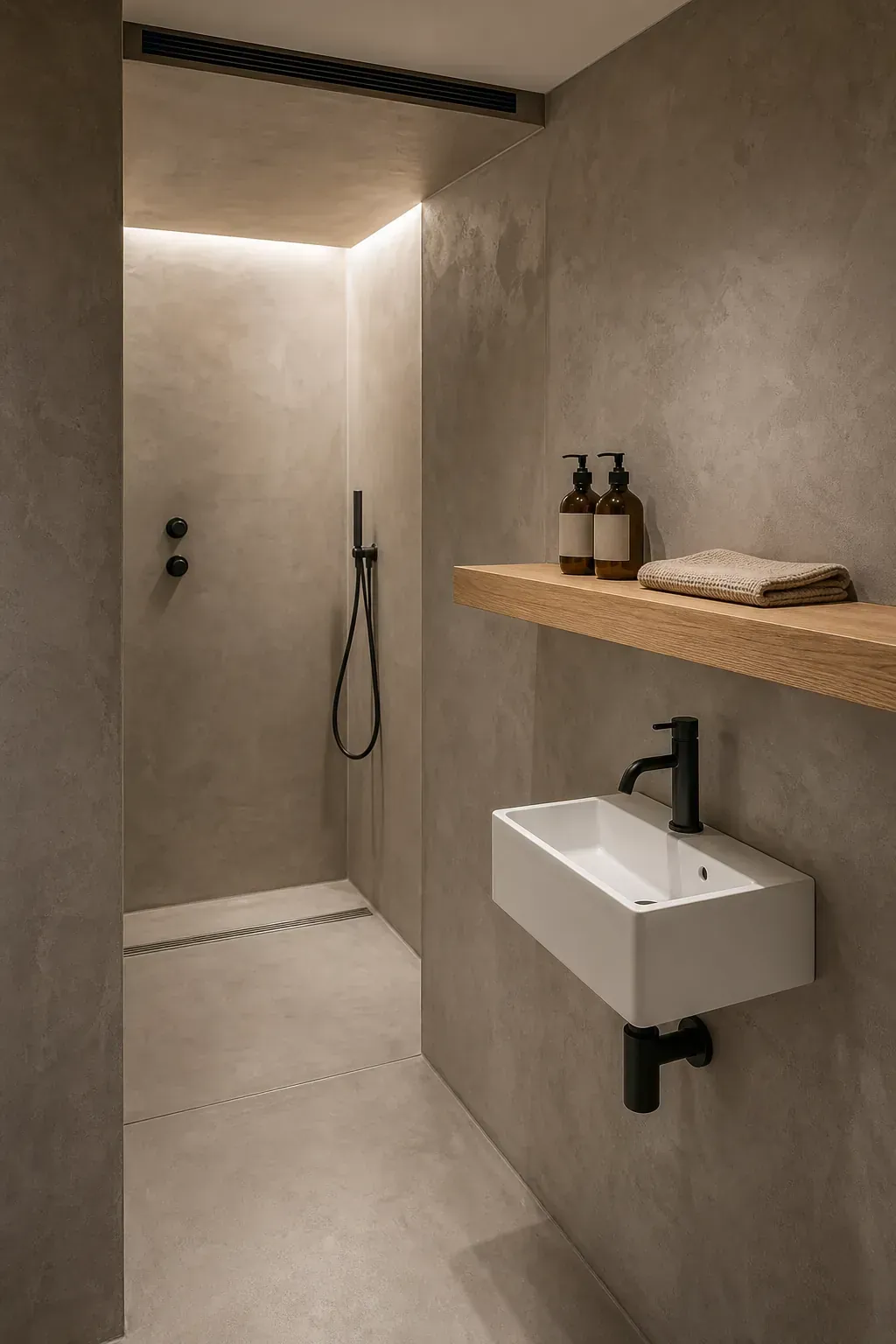
A continuous mineral-look finish can calm a room crowded by fittings, but wet-area performance depends on the complete approved system: substrate preparation, reinforcement, waterproofing, sealer, corners, and maintenance. Hire someone experienced rather than treating microcement like ordinary paint.
Choose a warm gray with subtle hand variation. The surface adds tactile depth, so the room needs less decorative styling and fewer objects competing for attention.
A Shower Niche Sloped to Drain
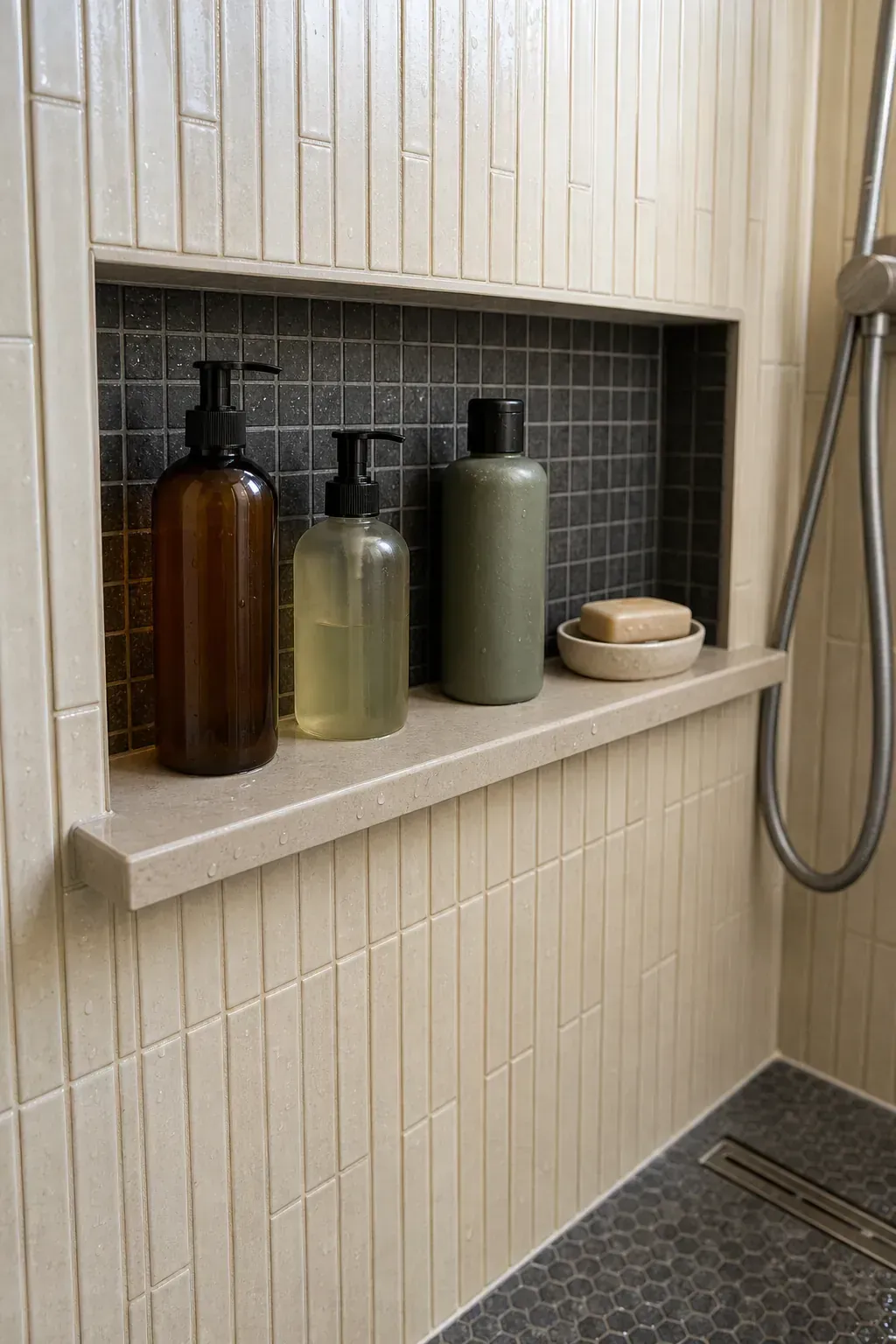
A niche removes bottles from the floor, but it should be planned before waterproofing, kept away from avoidable spray when possible, and built with a slight fall so water does not sit along the back. Use a durable shelf edge and enough height for the products you actually buy.
Limit the niche to one row. Its physical capacity becomes a gentle editing tool, keeping the shower from turning into a display of half-used containers.
A Pocket Door That Releases the Floor Plan
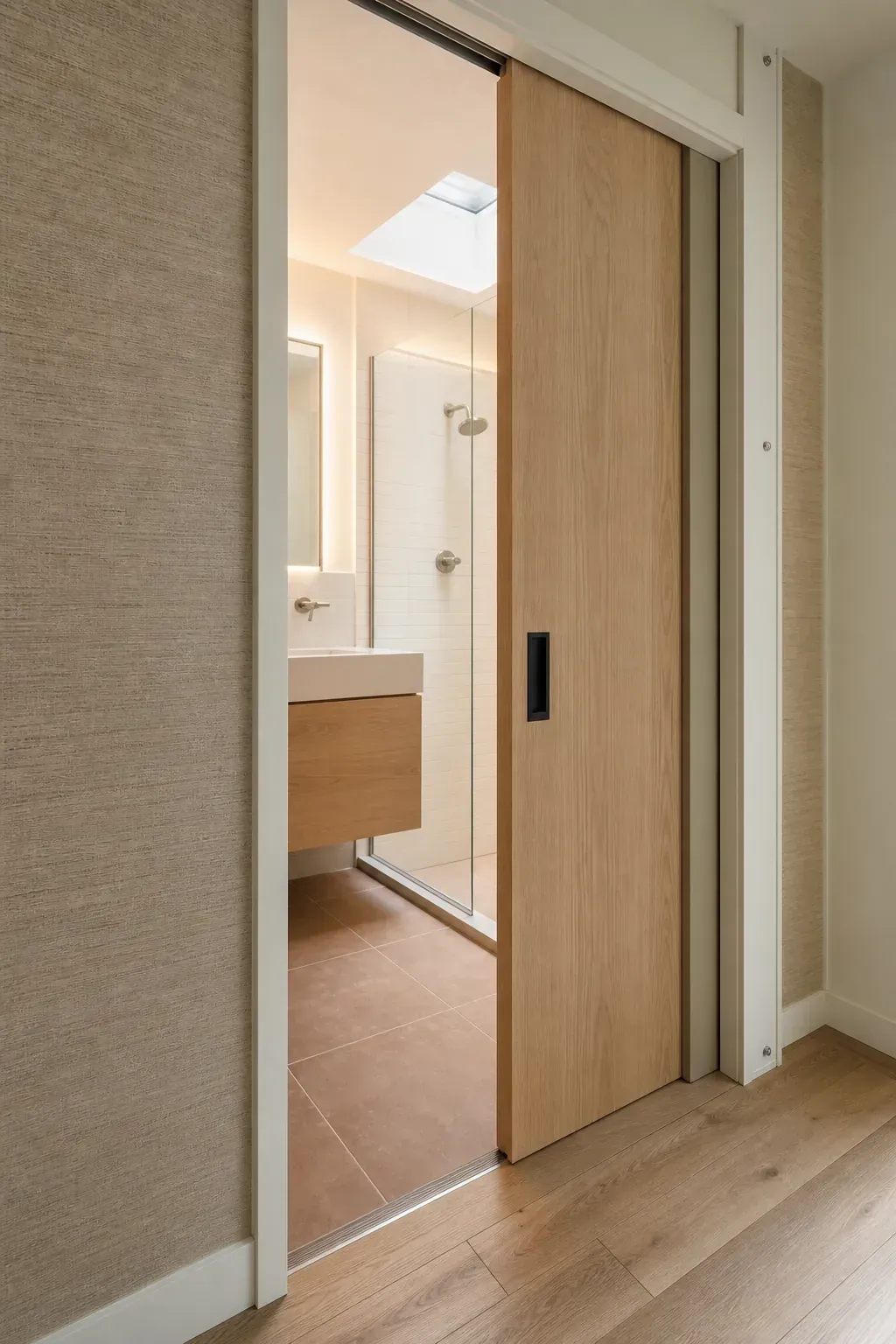
A swinging door can consume the most useful patch of a tiny bathroom. A pocket door releases that area for safer movement or shallow storage, provided the wall cavity is free of pipes, wiring, bracing, and fixtures. Choose hardware with accessible rollers and a comfortable pull.
Paint or veneer the door to continue the adjacent wall. When open, it should disappear from the daily circulation pattern; when closed, it should still provide the privacy and sound control you expect.
U-Shaped Drawers Around the Sink Trap
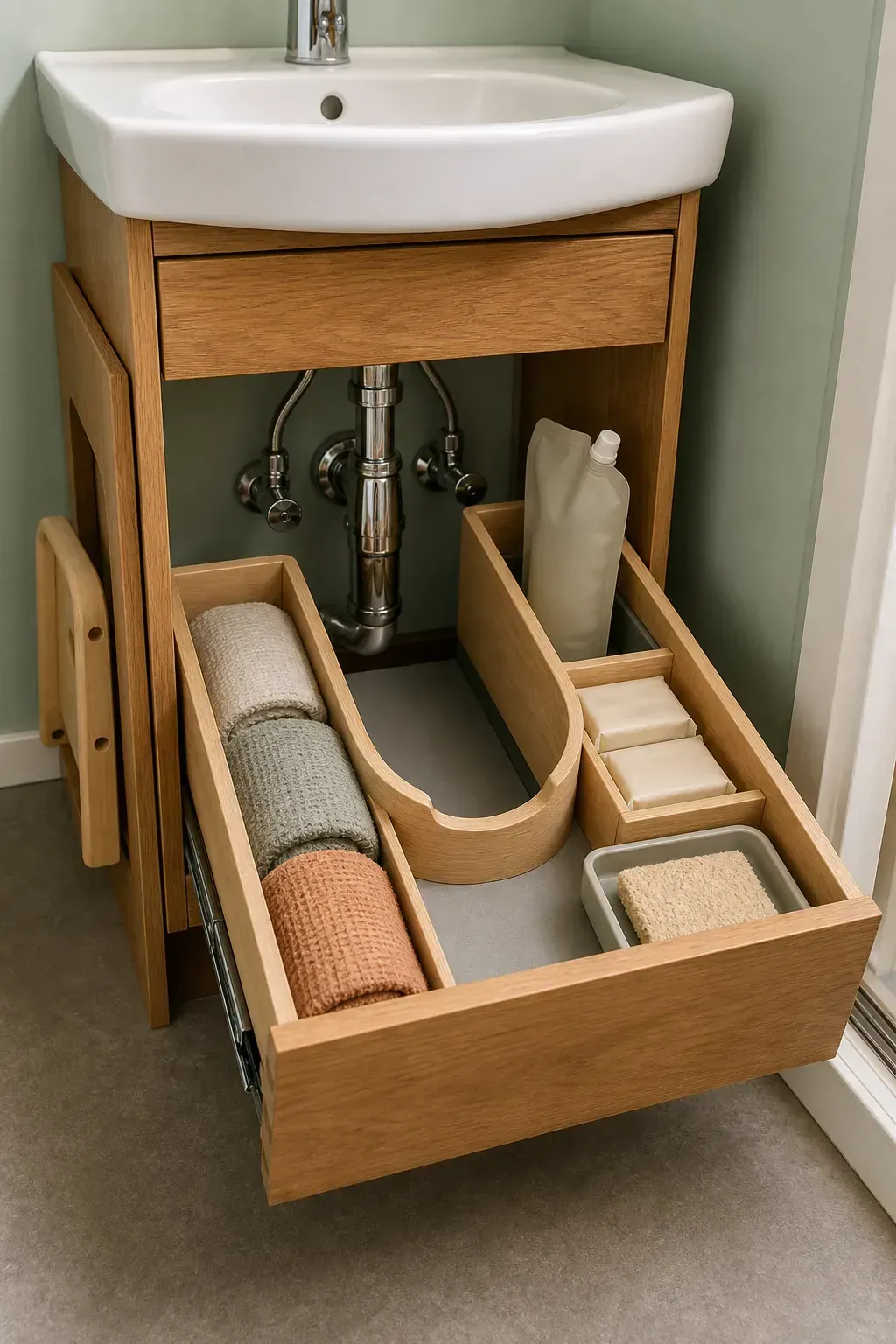
The pipes below a basin often waste an entire cabinet. A fitted U-shaped drawer can reclaim the sides and front while preserving service access around the trap. Use moisture-resistant materials and confirm that nothing rubs or strains the plumbing when the drawer moves.
Store low, stable items here—rolled washcloths, spare soap, or cleaning pads—rather than tall bottles that tip into the cutout. A purpose-built interior is more useful than adding another cabinet to the room.
A Quiet Exhaust Fan on a Timer
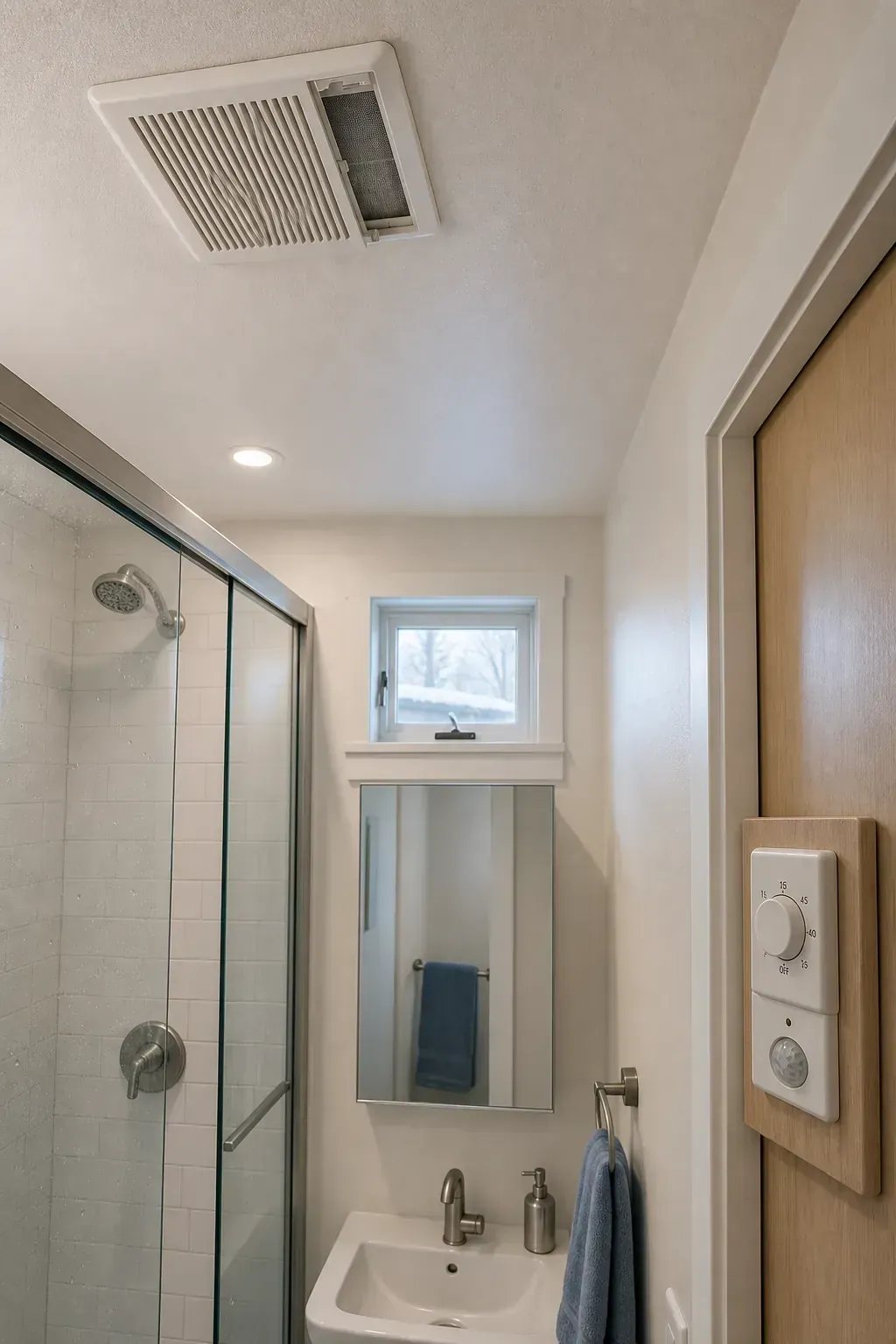
Moisture is not contained by the bathroom door in a tiny home. Specify a quiet fan sized and ducted for the room, vented outdoors rather than into a loft or cavity. A timer or humidity control helps it run after the shower long enough to clear lingering dampness.
Make filter and grille cleaning easy. A fan that is too loud, hard to reach, or clogged with dust will be used less, and no palette can make a bathroom with persistent condensation feel fresh.
Quick-Drying Waffle Towels and a Washable Mat
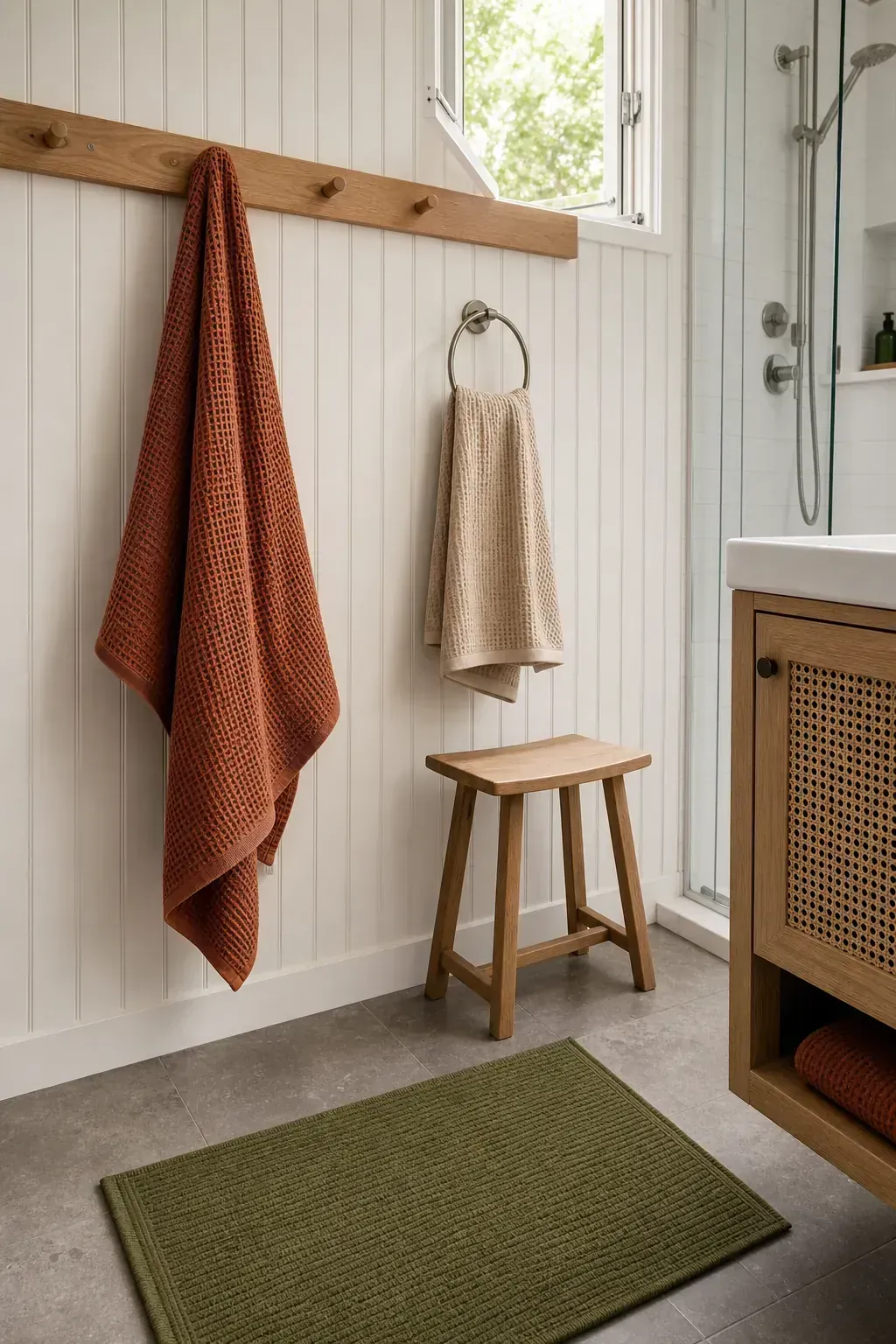
Textiles are the easiest way to warm a clean bathroom, but thick piles can hold moisture. Choose a modest number of quick-drying towels, spread them fully between uses, and use a low-profile mat that can be washed and dried often.
Clay, oat, moss, or rust tones can add depth without covering the room in decor. Keep backups in closed, ventilated storage outside the wettest zone rather than stacking them beside the shower.
A Slim Pull-Out for Cleaning Supplies
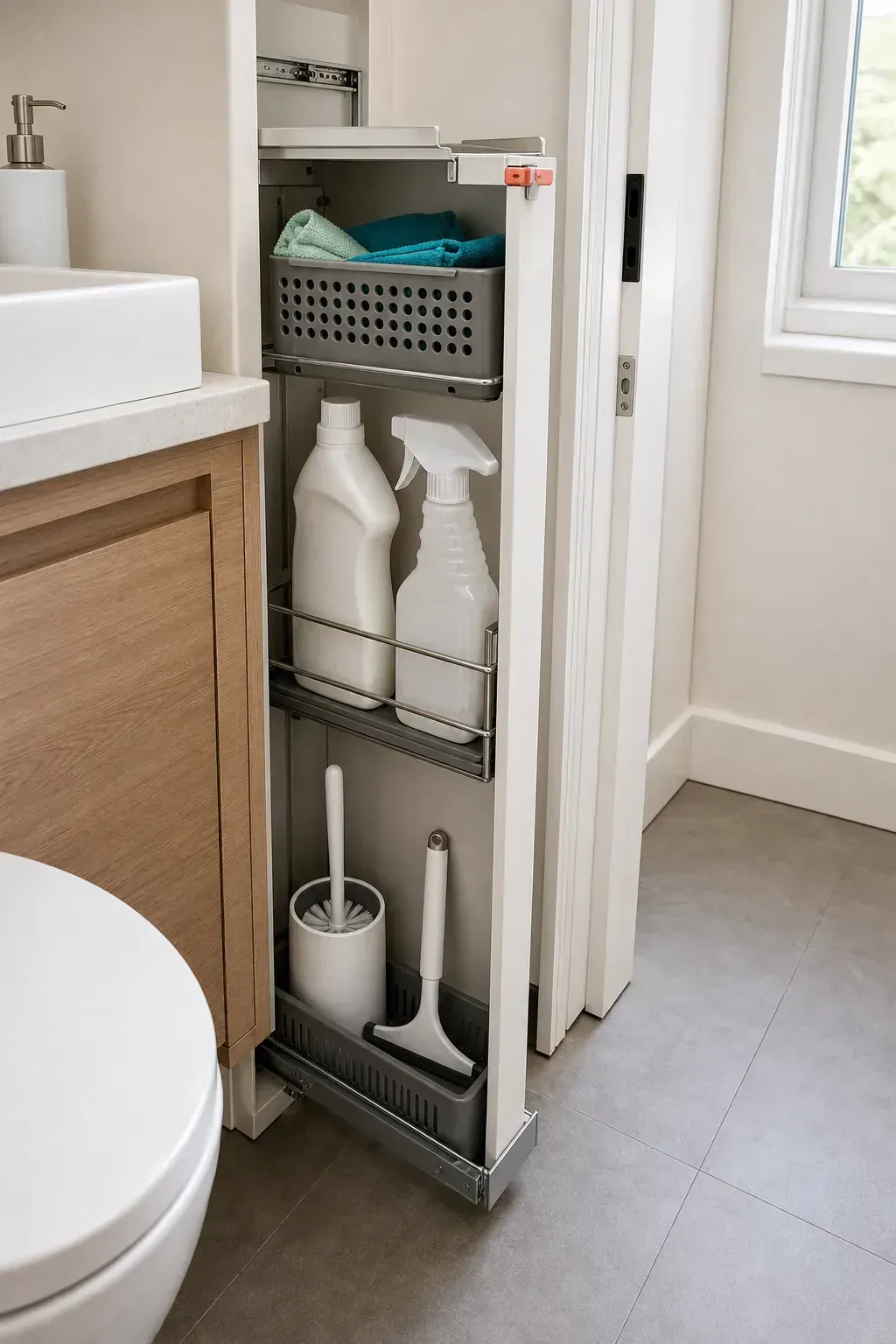
A narrow gap beside the vanity can hold a pull-out caddy for the brush, cloths, and a small set of cleaners. The contents stay concealed but accessible, which matters because the easiest bathroom to keep clean is the one where supplies are within reach.
Include a removable tray to catch drips and enough ventilation for damp cloths. Keep products in original containers and follow their safety directions; compact storage should never mean mixing chemicals or obscuring labels.
One Continuous Warm-Neutral Palette
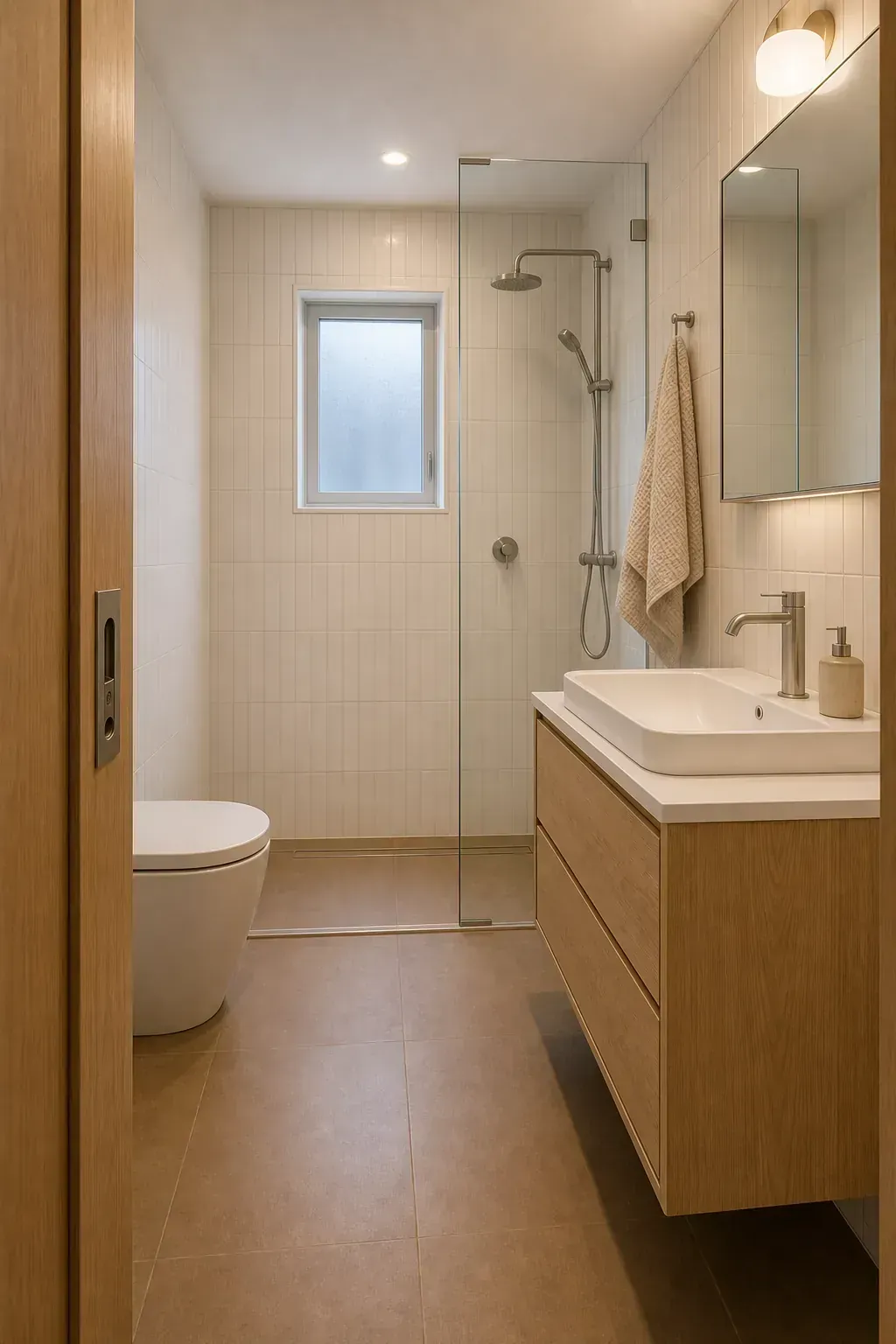
The final layer is restraint. Repeat two or three materials across the tiny home bathroom: perhaps warm white wall tile, pale oak storage, and a soft clay floor. Fewer abrupt changes make corners recede and help the room feel settled rather than busy.
Warm does not require yellow light, dark wood everywhere, or decorative baskets on every surface. It comes from a few tactile choices, a comfortable evening glow, dry towels, and a room that is easy to reset. When the ventilation, waterproofing, storage, and cleaning route work first, bathroom styling can stay beautifully simple.