
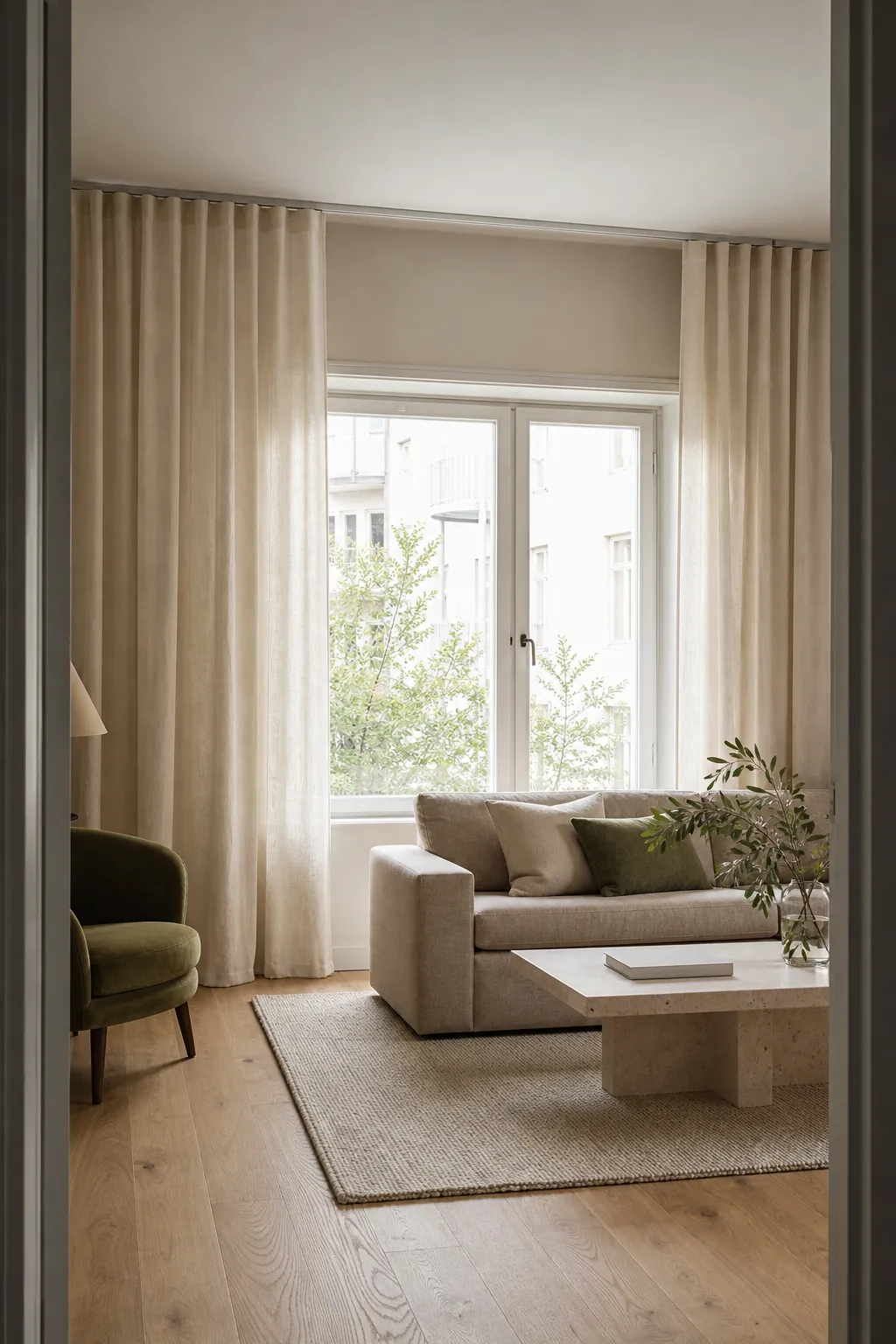
Curtains can make a living room feel taller, but only when the eye reads one clean vertical line from the header to the floor. Hanging a short panel near the window frame does the opposite: it draws a horizontal boundary around the glass and advertises the wall’s real height.
The familiar advice to hang curtains “high and wide” is a starting point, not a complete plan. You still need enough fabric to look full, enough rod width to expose the glass, and a hem that works with floors, radiators, and daily cleaning. These ten curtain ideas use those details to build height without making the room impractical.
Mount a Slim Track Just Below the Ceiling
A ceiling-adjacent track creates the longest uninterrupted fabric drop in a standard-height living room. Choose a track close to the wall color so the hardware recedes, then let the panels finish at the floor. The eye follows the folds upward instead of stopping at the top of the window frame.
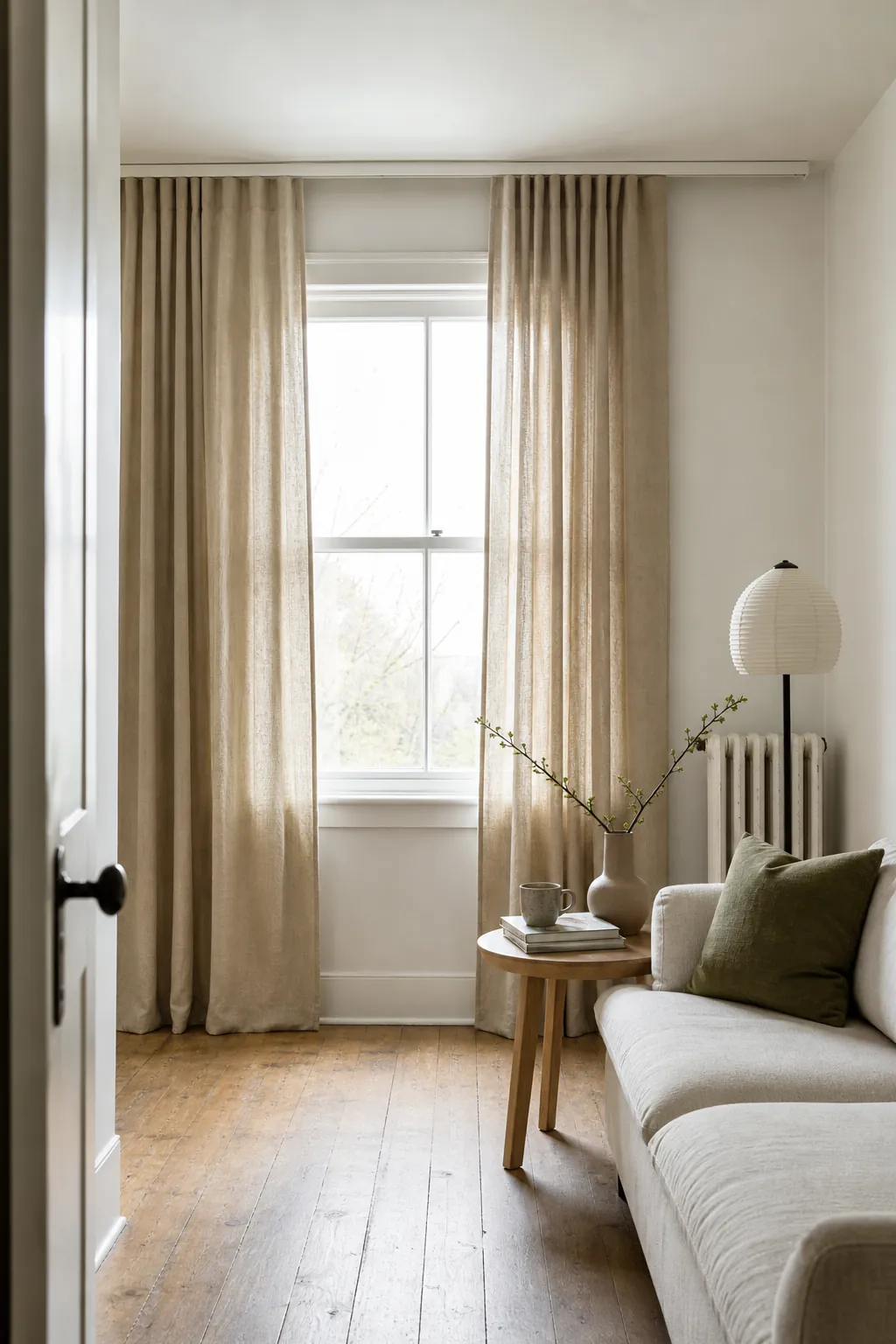
This works best with a plain header and evenly spaced waves. If the ceiling is unusually high, bringing the track down several inches can create better proportions. The goal is not to touch the ceiling at all costs; it is to avoid a cramped strip of fabric sitting directly over the casing.
Extend the Rod Beyond the Window Frame
A wider rod lets open curtains stack mostly over the wall, exposing more glass. The brighter, broader window then feels more generous, while the full-length side panels create two strong vertical lines. Before drilling, mark the proposed rod and stack-back area with painter’s tape to check nearby corners, switches, and artwork.
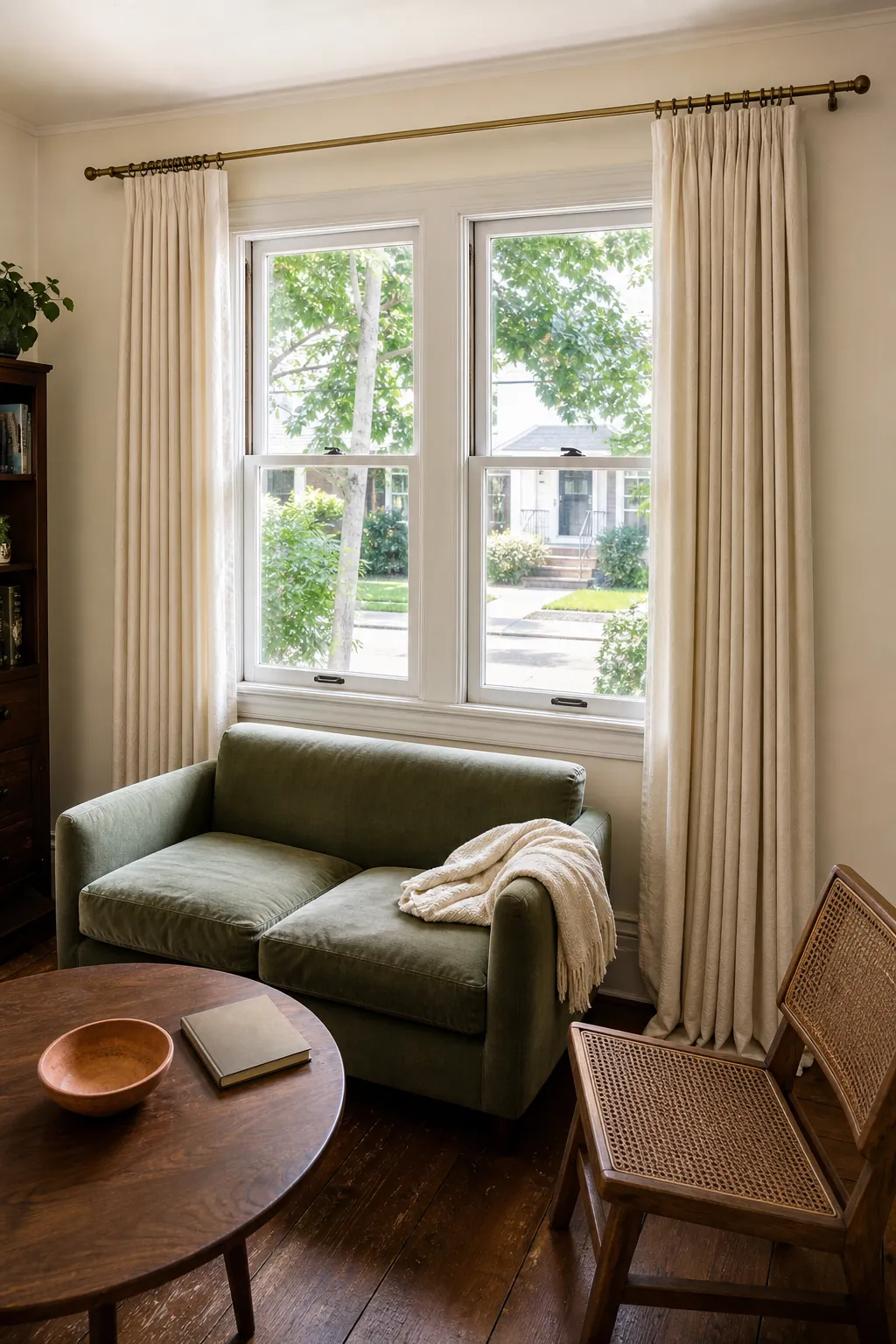
Do not stretch the rod wide while buying the same two narrow panels. The combined flat fabric width should normally be at least about twice the usable rod width for relaxed fullness. Sheers often need still more fabric because thin cloth looks especially skimpy when closed.
Match Curtain Color to the Wall
When curtains sit close to the wall color, the boundary between fabric and plaster softens. That continuity makes the wall appear taller and keeps a small living room from being chopped into vertical stripes. The colors do not need to be identical; a warm ivory wall can take oatmeal, flax, or soft cream panels.
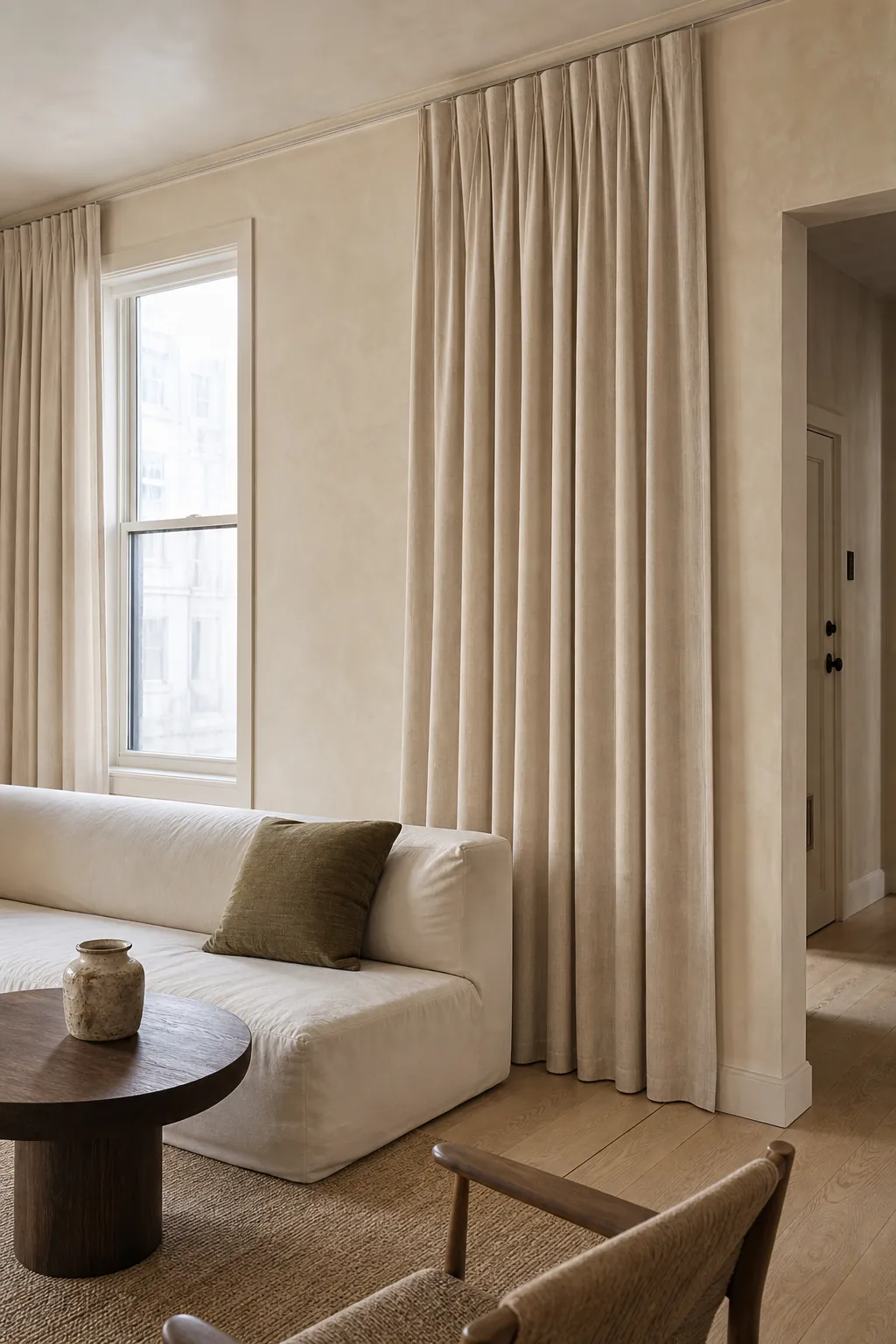
Check undertones in daylight before ordering. Cool gray-beige fabric can look dirty beside yellow-based paint, while bright optical white may turn a creamy wall dull. Bring the sample to both the wall and sofa, then view it morning and evening.
Use Narrow Vertical Stripes
A fine vertical stripe reinforces the floor-to-ceiling direction, particularly on broad windows where solid curtains create a large visual block. Choose a low-contrast stripe woven into the fabric rather than a bold printed line. Oatmeal with a slim olive, charcoal, or tobacco thread is enough.
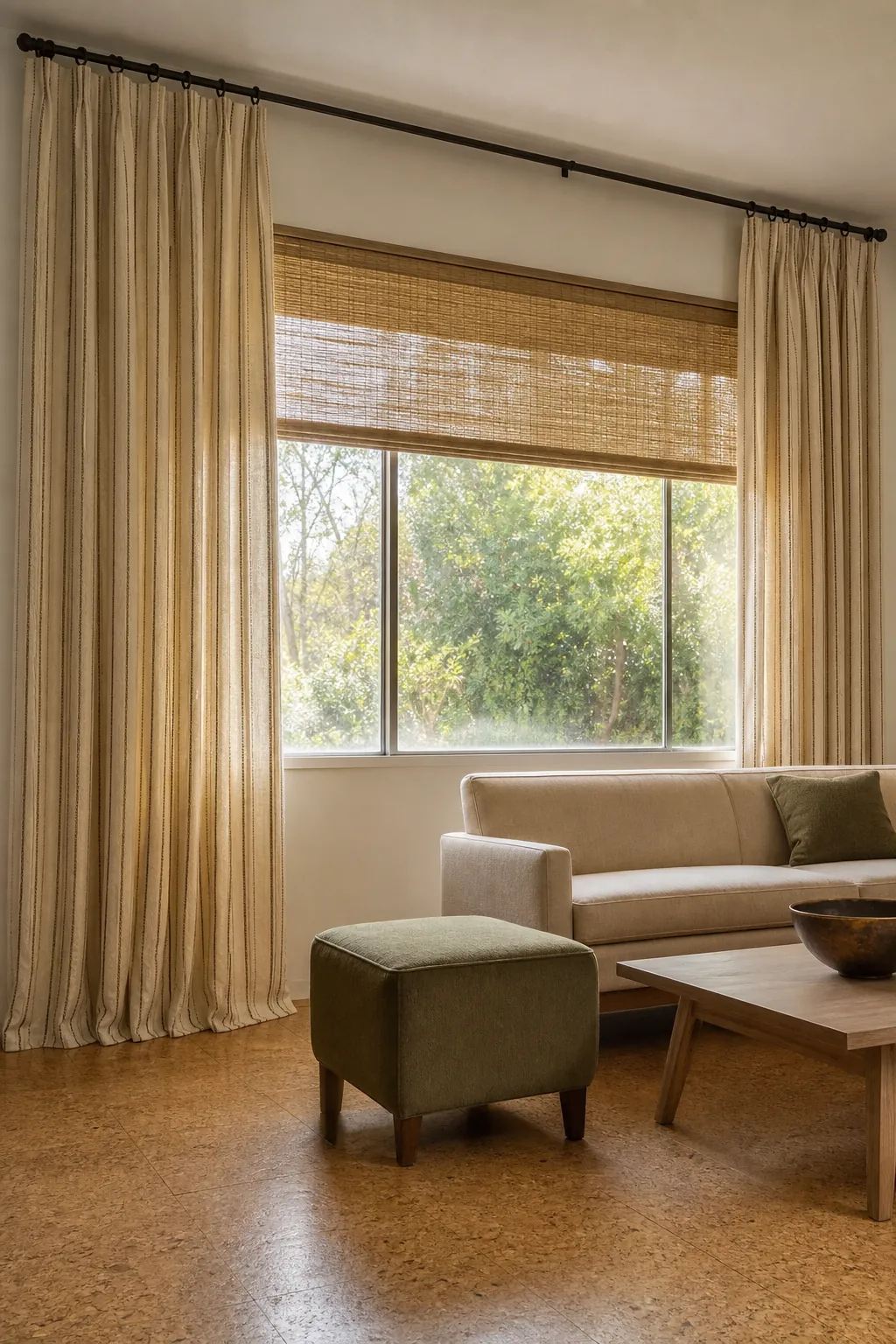
Keep nearby patterns small or organic so they do not compete with the stripe. A plain sofa and a softly patterned rug will support it better than striped cushions. Fullness still matters: without enough fabric, even a good stripe looks like two flat sheets hanging at the sides.
Layer Sheers Behind Pinch-Pleat Drapes
A double track adds height through depth. Continuous sheers soften the window during the day, while pinch-pleat drapes create straighter, more architectural folds at the sides. Keeping both layers the same finished length prevents a choppy line near the floor.
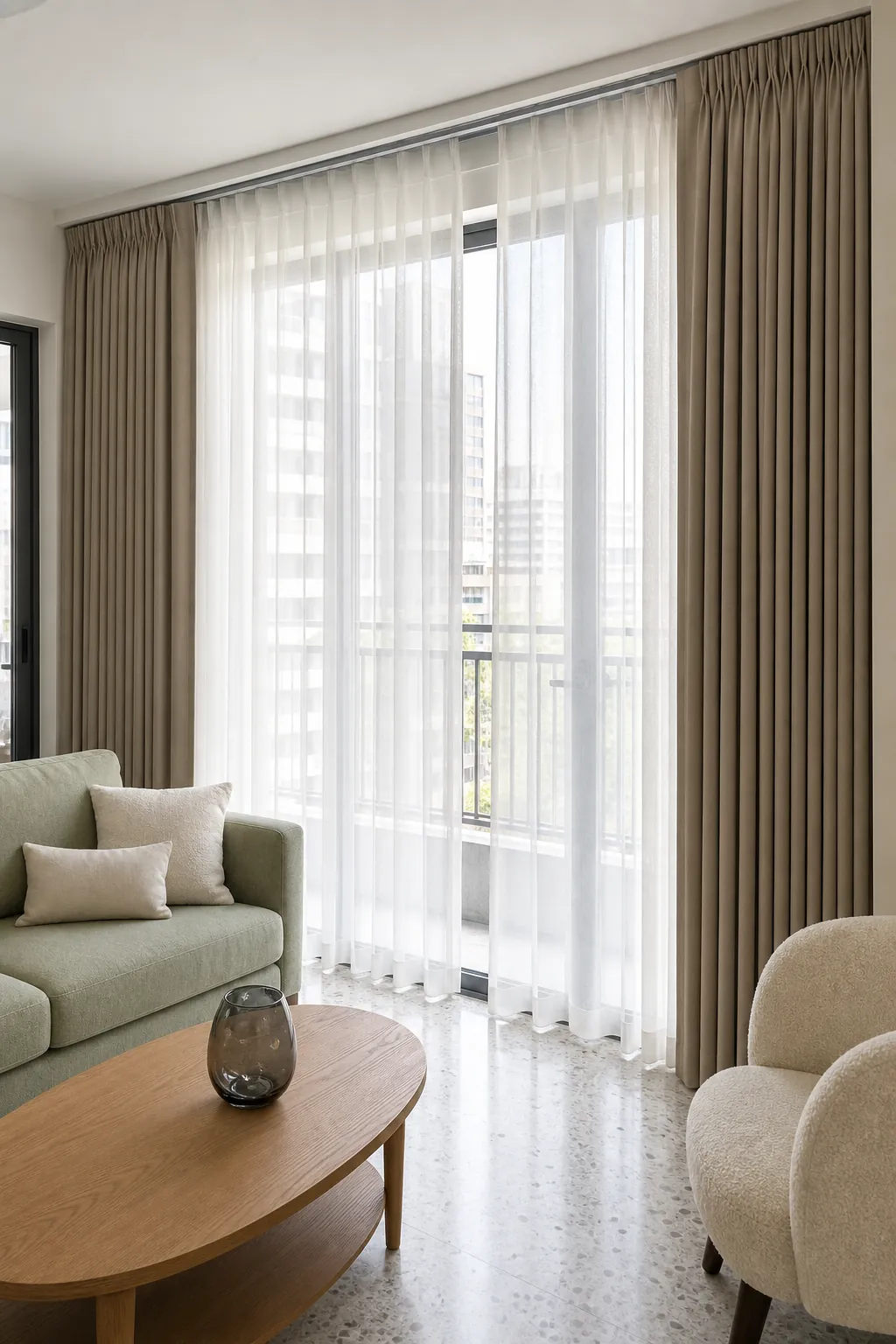
Allow enough track depth so the layers move without catching. This setup is helpful when you want daylight and privacy without using heavy curtains all day. It also makes blackout lining feel less severe, because the room retains a light-filtering layer when the main drapes are open.
Choose a Clean Wave Header
Wave curtains hang in repeated vertical folds from a discreet track, giving a modern room a calm rhythm. Unlike bulky grommets or a ruffled rod pocket, the header does not interrupt the line at the top. The folds remain visible whether the curtain is open or closed.
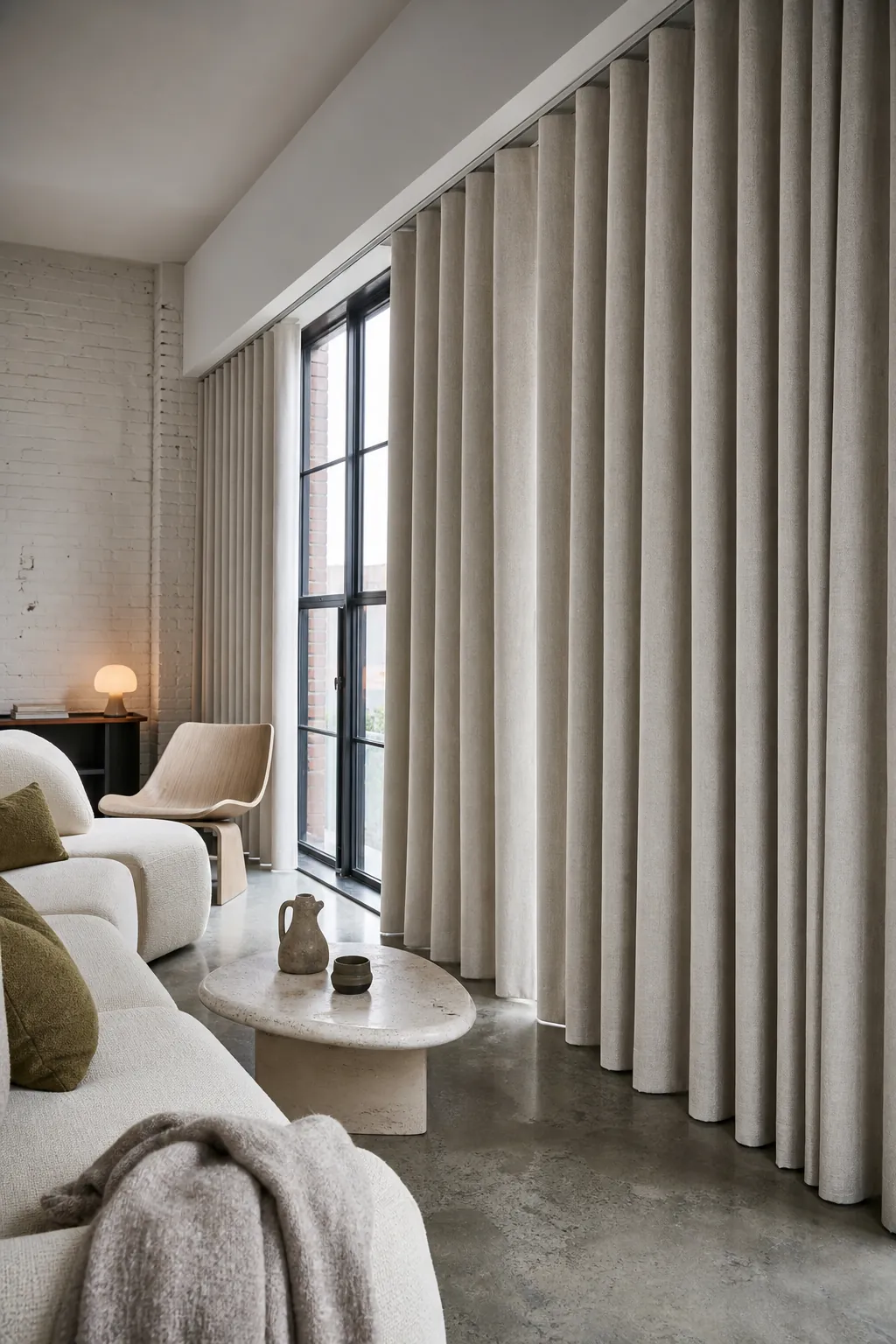
Wave systems require deliberate measuring because the stack occupies real wall space. Confirm track width and fabric fullness together, not as separate purchases. Use medium-weight linen blend or softly draping recycled polyester; fabric that is too stiff will flare instead of falling cleanly.
Frame a Corner Window With One Continuous Run
Separate rods can make corner windows look like unrelated small openings. A continuous ceiling track turns them into one architectural feature, carrying the eye around the corner and upward. Panels can stack at the outside edges or gather at selected points where they do not block the view.
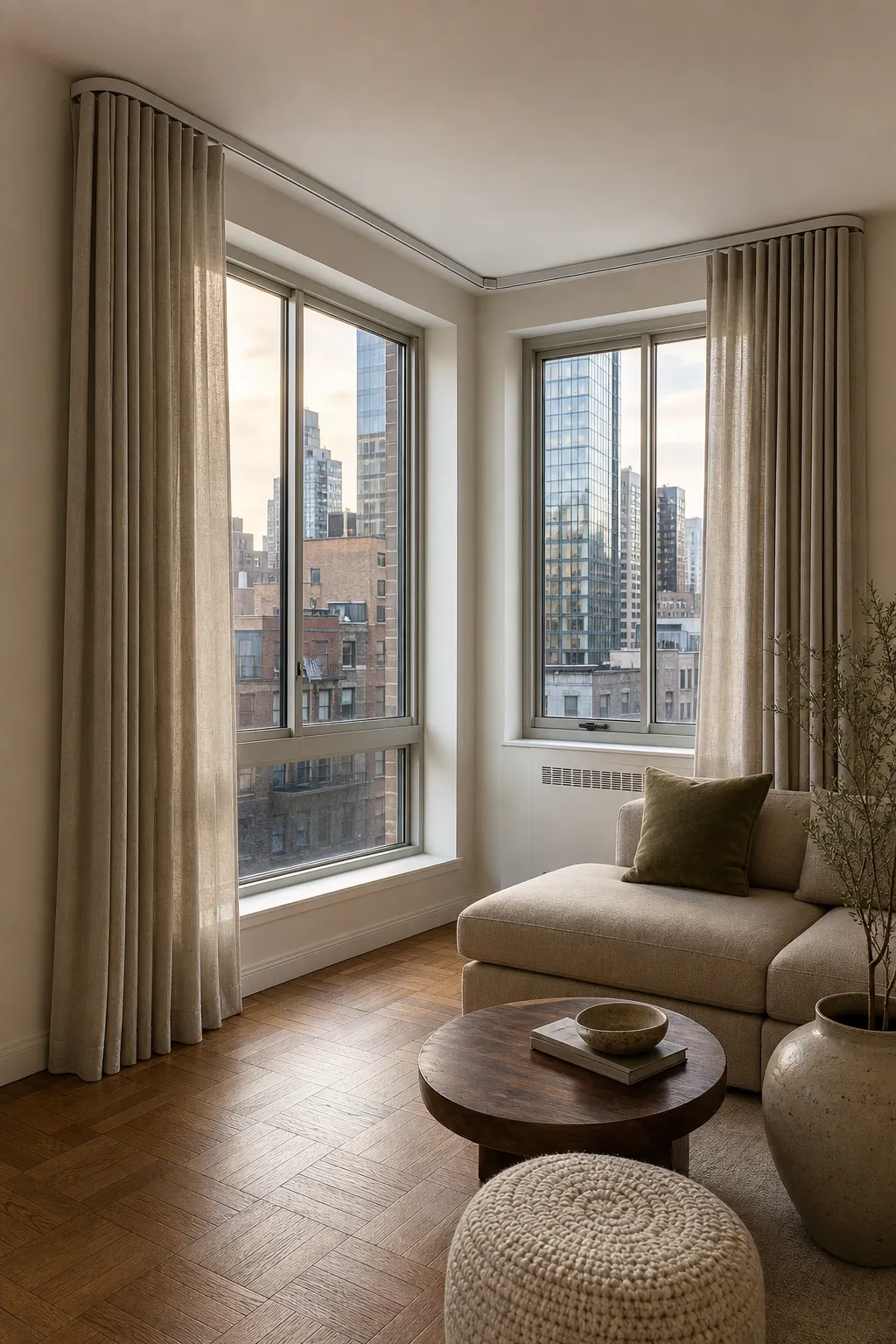
Measure handles, vents, and furniture clearances before choosing stack locations. A specialized bend or corner connector will operate more smoothly than forcing a standard straight rod. Keep the fabric consistent across both walls so the corner reads as a single tall composition.
Add a Dark Leading Edge to Light Panels
A narrow contrasting band along the inner edge of each panel creates a precise vertical accent without turning the whole window dark. On cream curtains, try olive, rust, navy, or cocoa trim. The eye follows that line from header to hem, which strengthens the sense of height.
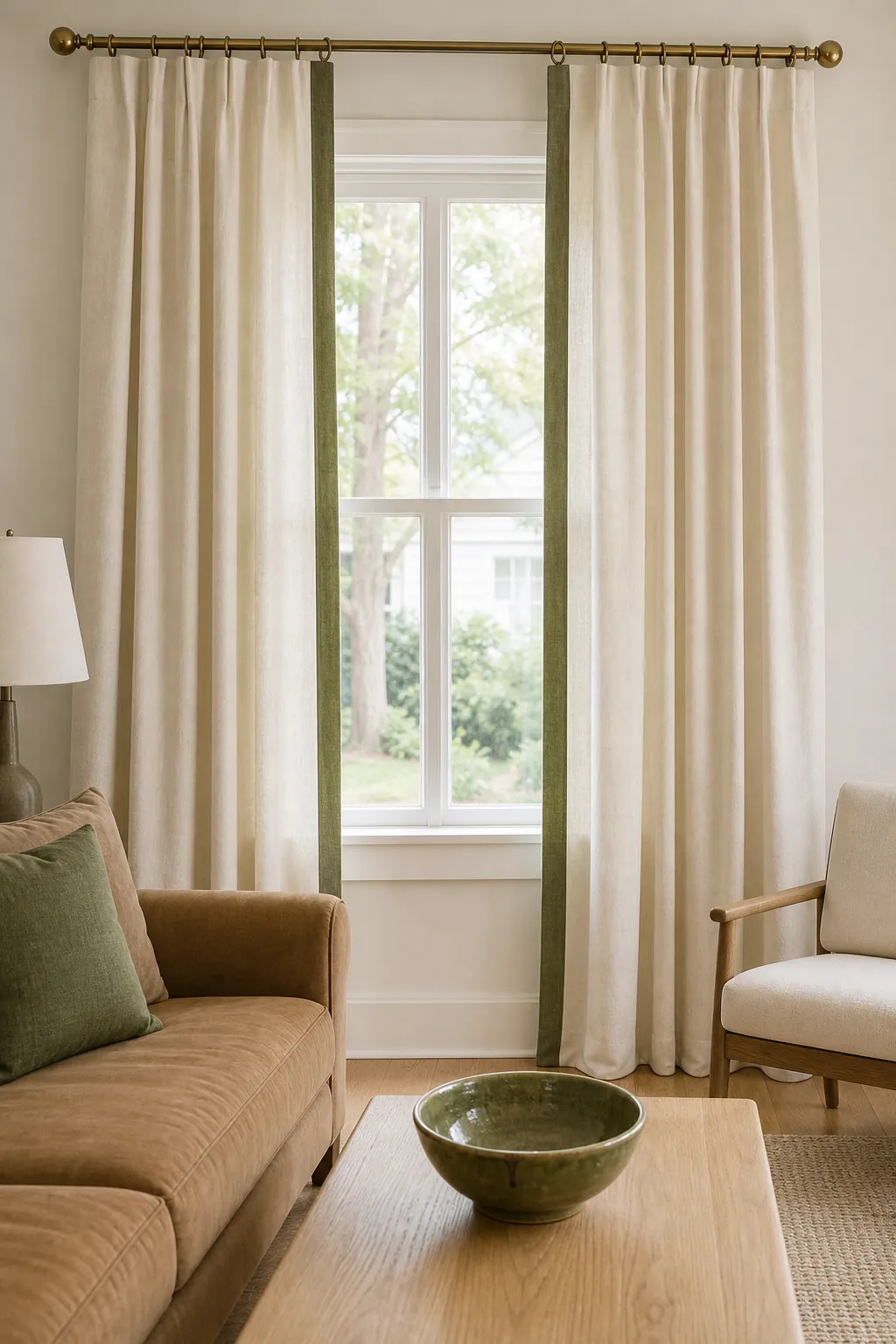
Repeat the trim color once elsewhere, perhaps in a cushion or ceramic piece. Avoid a heavy band at the bottom hem, which introduces the very horizontal line you are trying to minimize. A tailored leading edge also gives affordable ready-made panels a more intentional finish.
Let the Hem Just Kiss the Floor
Panels that stop several inches above the floor make the window look shorter. For a clean, height-enhancing line, aim for a hem that barely touches or clears the floor. This is easier to vacuum around than a puddled curtain and less likely to collect pet hair or dust.
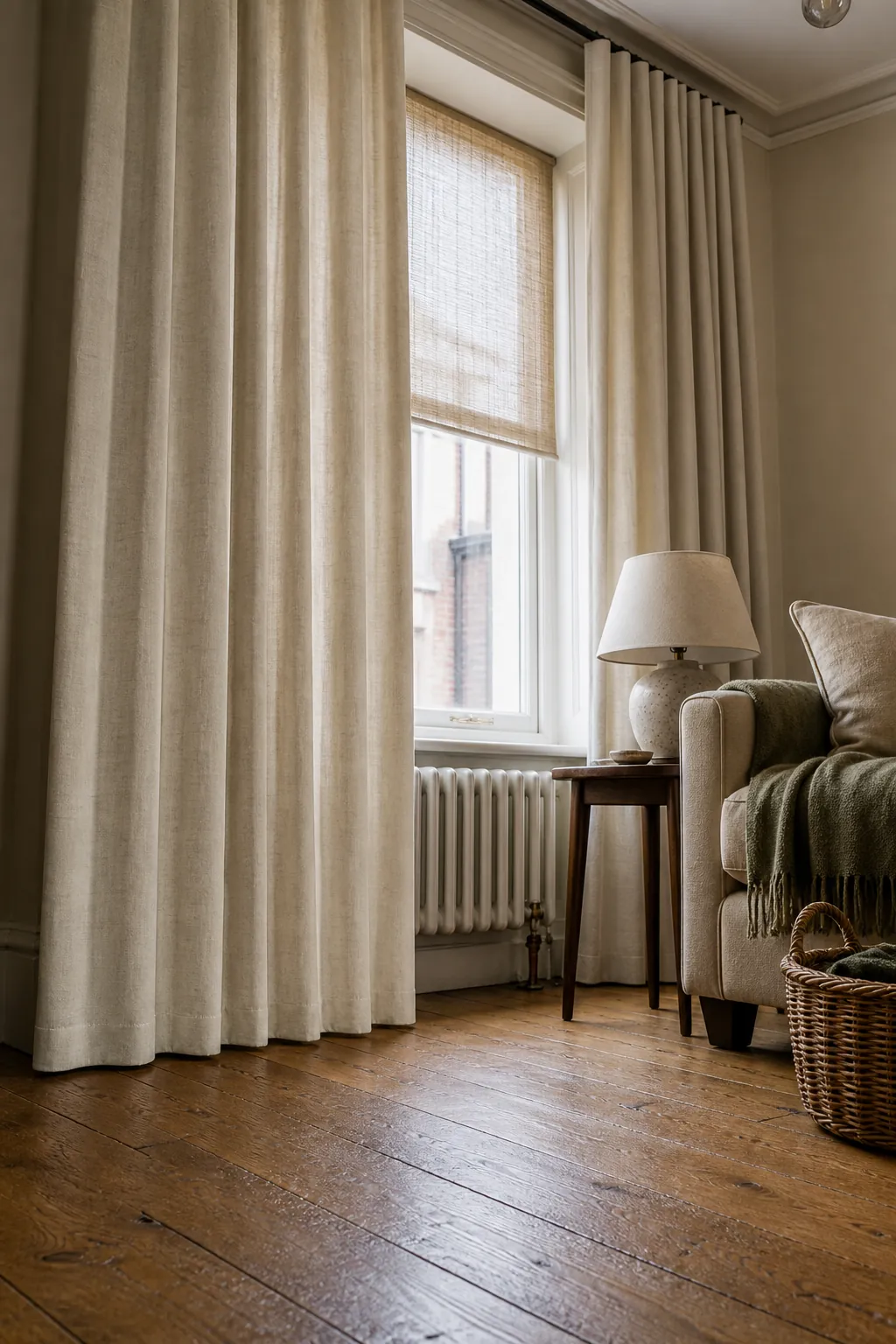
Measure after the rod or track position is fixed, including rings and hooks. Floors are often uneven, so check both ends and the center. If a radiator sits below the window, use a blind for functional privacy and keep decorative full-length panels parked safely outside the heat source.
Carry One Curtain Treatment Across the Wall
When a wall holds several closely spaced windows, one long track and repeated full-height panels can make the entire elevation feel taller and calmer. The treatment conceals awkward gaps between frames, reduces visual clutter, and creates a broad fabric backdrop when closed.
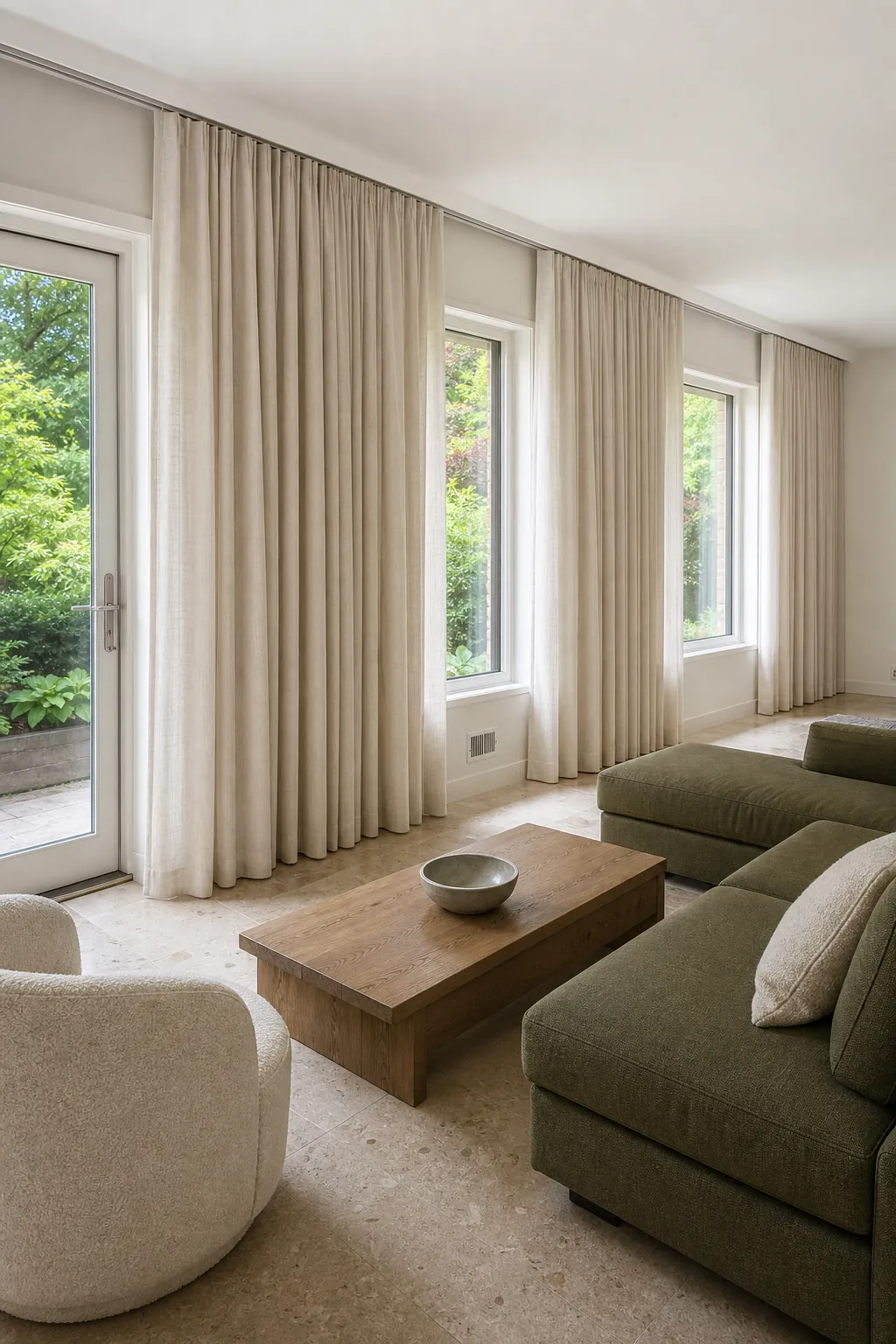
Plan each stack so doors, vents, and the strongest daylight remain usable. Keep panel widths generous enough to form folds across the full run; a wide track with insufficient fabric will expose every shortcut. The finished effect should read as architecture, not as a row of disconnected window accessories.