
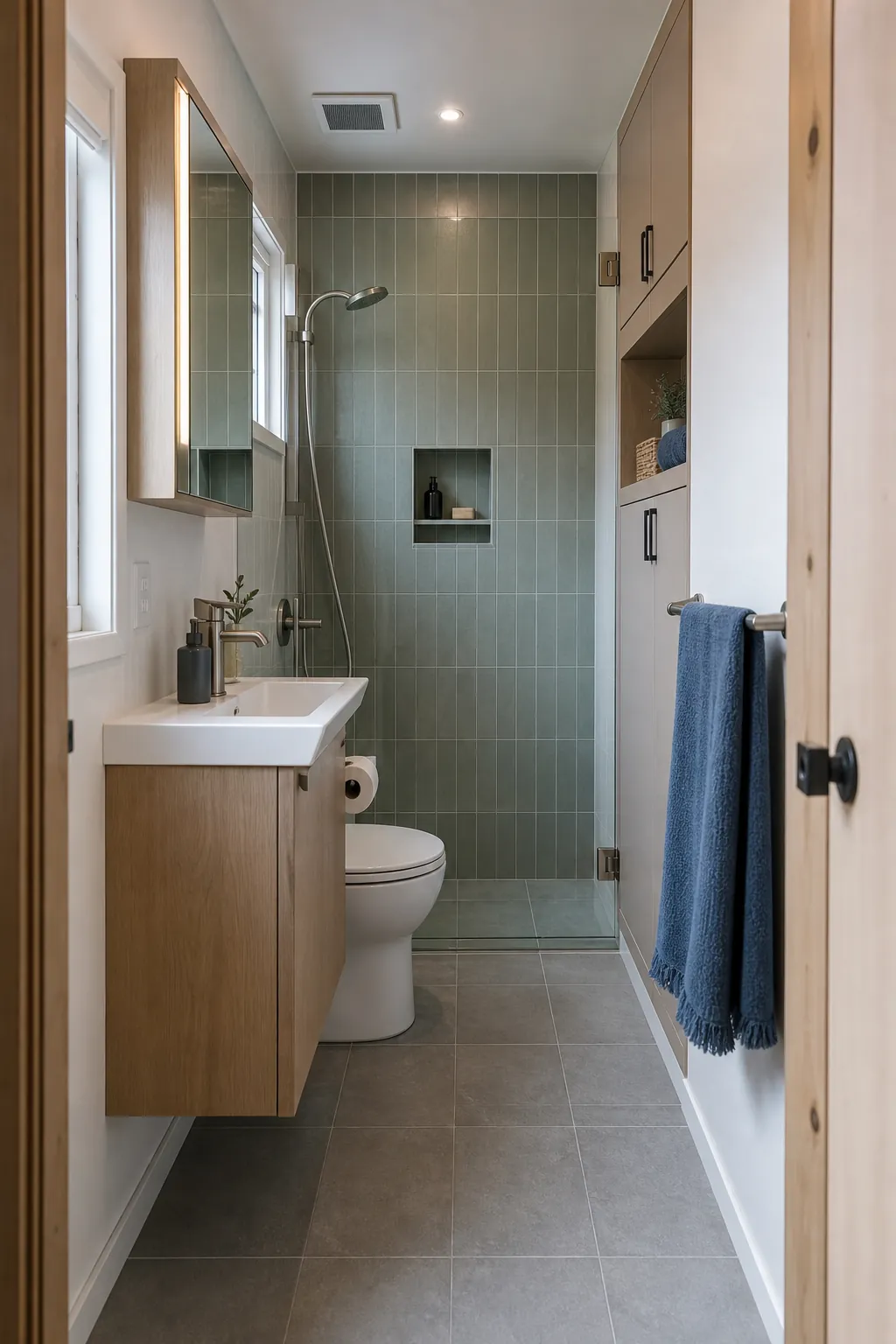
In a tiny home bathroom, the wall is not automatically storage just because it is empty. A shelf in the wrong place catches shoulders, traps shower moisture, or turns every bottle into visual clutter. The better question is: which wall depth can support a daily action without narrowing the room? These 19 tiny home bathroom ideas use recessed space, shallow cabinets, rails, ledges, and carefully placed hooks while protecting ventilation, plumbing access, and the few clear surfaces that make a compact bathroom feel calm.
Replace the flat mirror with a recessed medicine cabinet
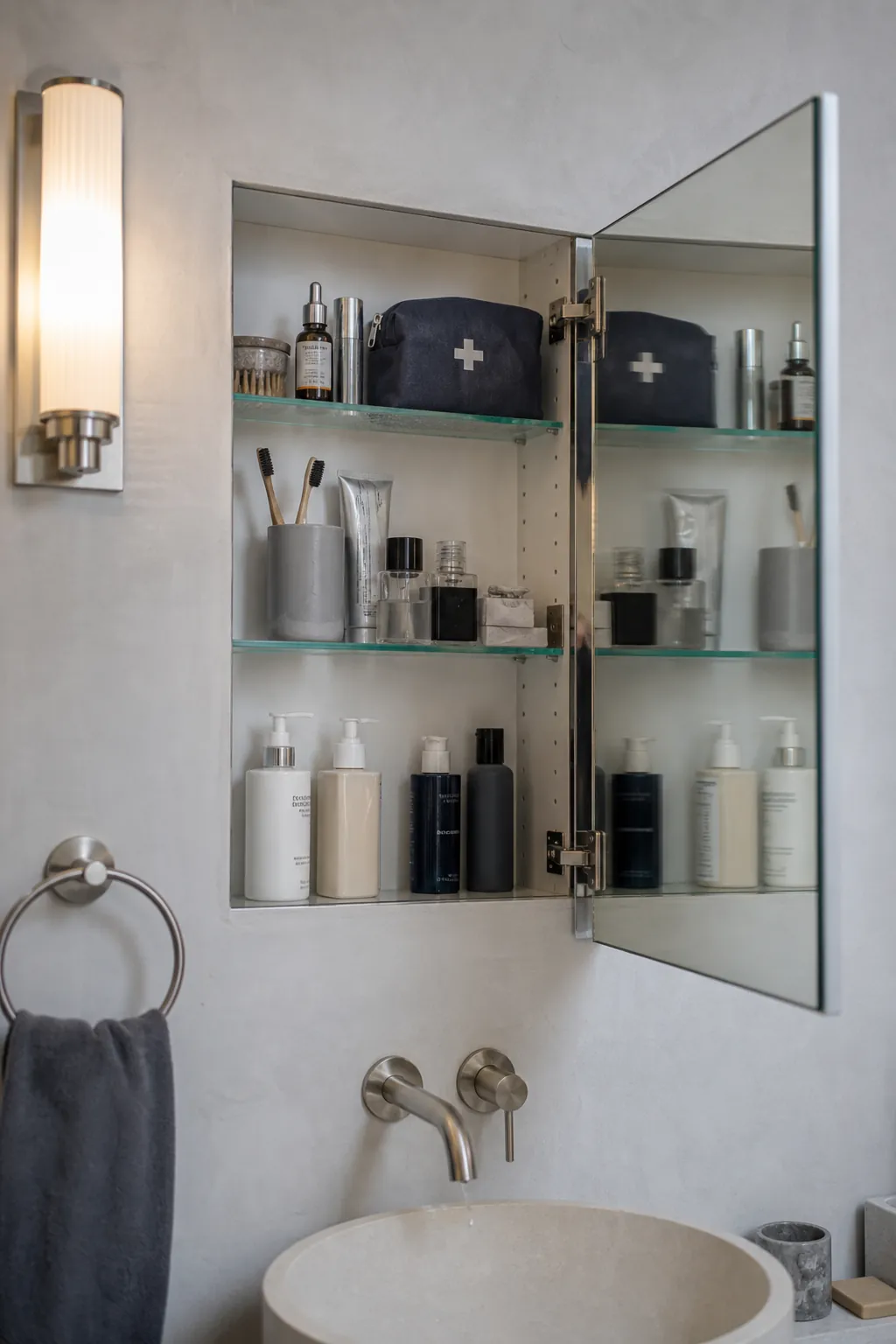
A mirrored cabinet recessed between studs adds useful depth without projecting over the sink. Keep daily skincare, first-aid items, and toothbrush supplies inside, then use adjustable shelves so short containers do not waste vertical inches.
Before cutting, confirm stud direction, wiring, plumbing, and whether the wall is structural or exterior. Surface-mounted models are safer where recessing is impossible, but choose one only a few inches deep. A mirror cabinet should clear the faucet and the user’s forehead.
Fit a closed cabinet over the toilet
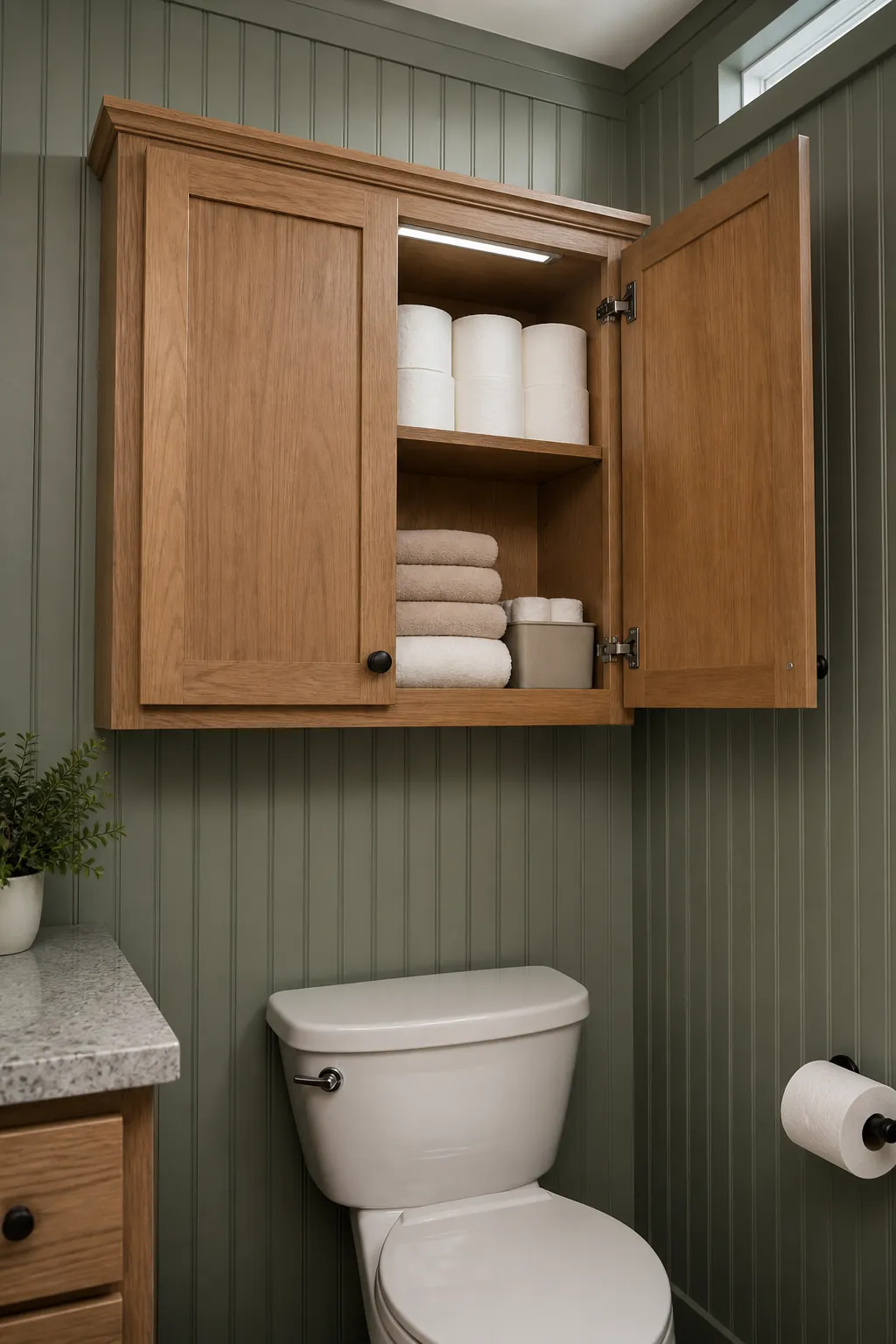
The wall above the toilet can hold spare rolls, cleaning refills, and a small towel reserve, but open shelving often becomes a dusty display. A shallow closed cabinet quiets the view and protects supplies from spray.
Mount it high enough for comfortable use and secure it to framing or rated anchors. Avoid deep doors that swing into a person’s head. Put lightweight backstock above and keep anything needed during an emergency on the lowest shelf.
Run one slim ledge above the backsplash
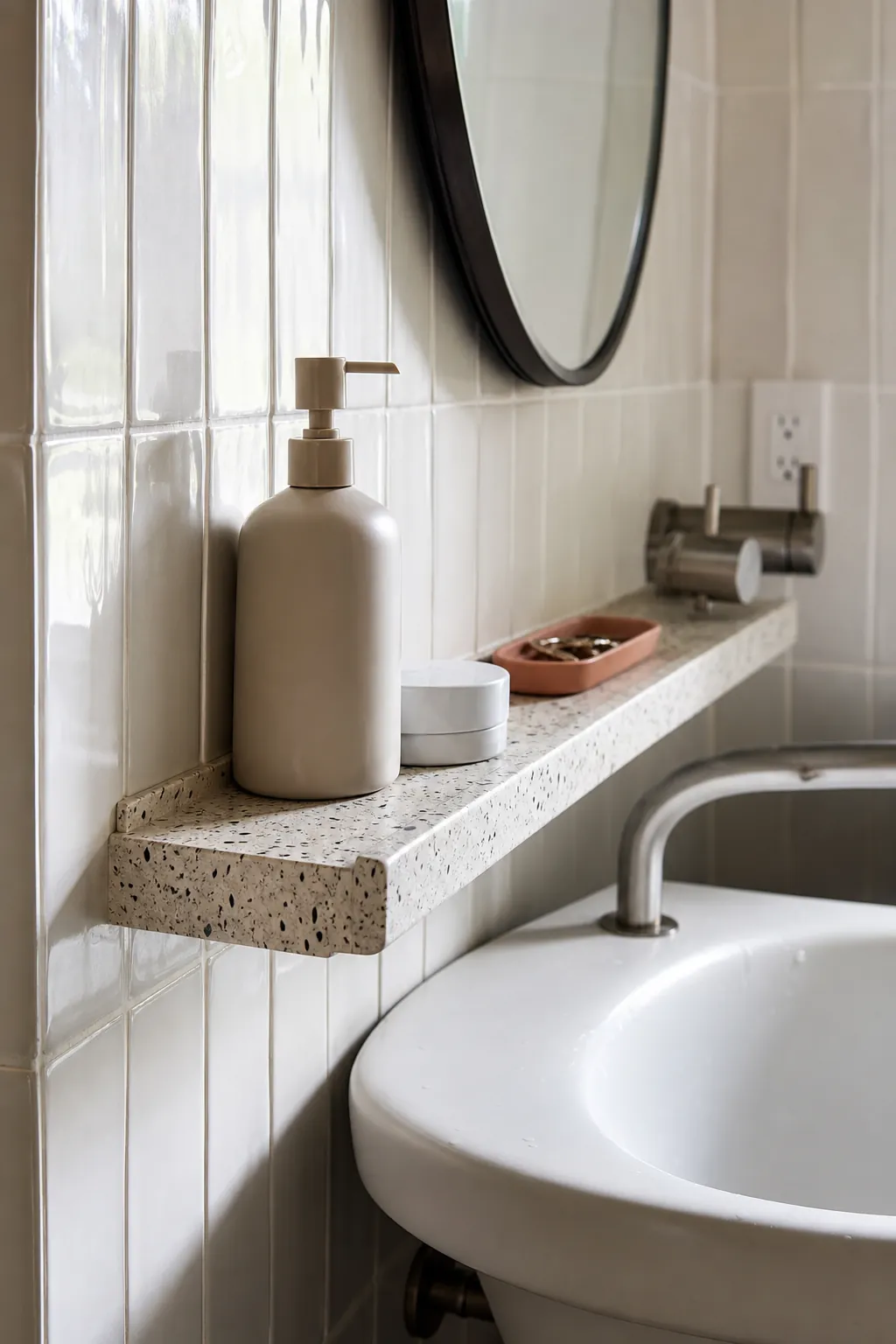
A three- or four-inch ledge above the sink can hold hand soap, one daily moisturizer, and a small tray without consuming the basin rim. A raised front lip keeps objects from sliding in a mobile tiny house.
Limit the ledge to items that tolerate humidity and wipe it weekly. If bottles multiply, the ledge stops being a tool and becomes exposed storage. Leave clear space around outlets and do not bridge a wet zone with electrical grooming devices.
Recess a shower niche between studs
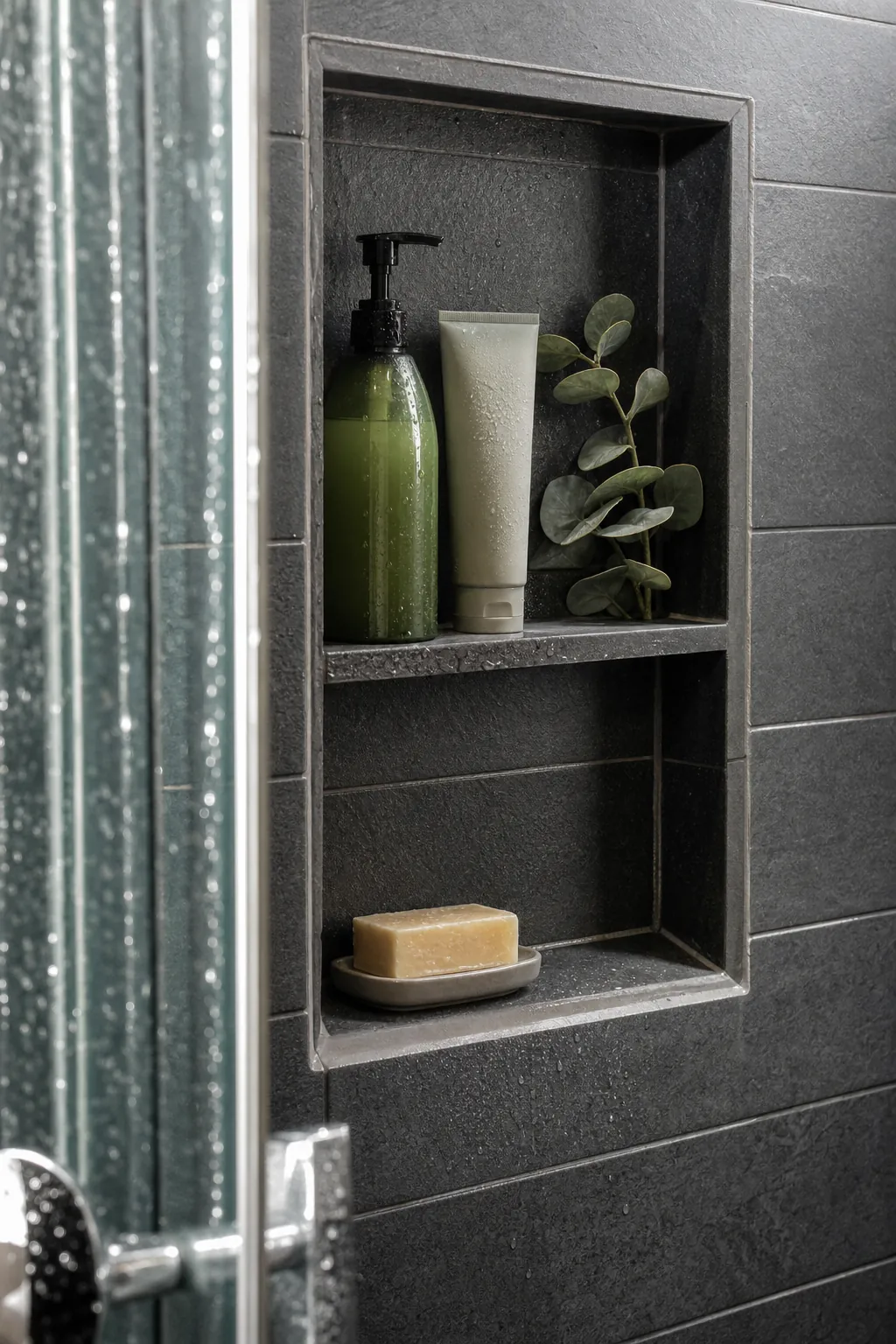
A properly waterproofed niche stores shampoo, cleanser, and soap without a hanging caddy intruding into the shower. Size it around the bottles you really use, and slope the sill slightly toward the shower so water drains.
This is not a casual cutout. Use a continuous waterproofing system, seal penetrations, and avoid exterior walls where recessing compromises insulation. Moisture management matters more than gaining one extra shelf.
Use the wall beside the vanity for narrow shelves
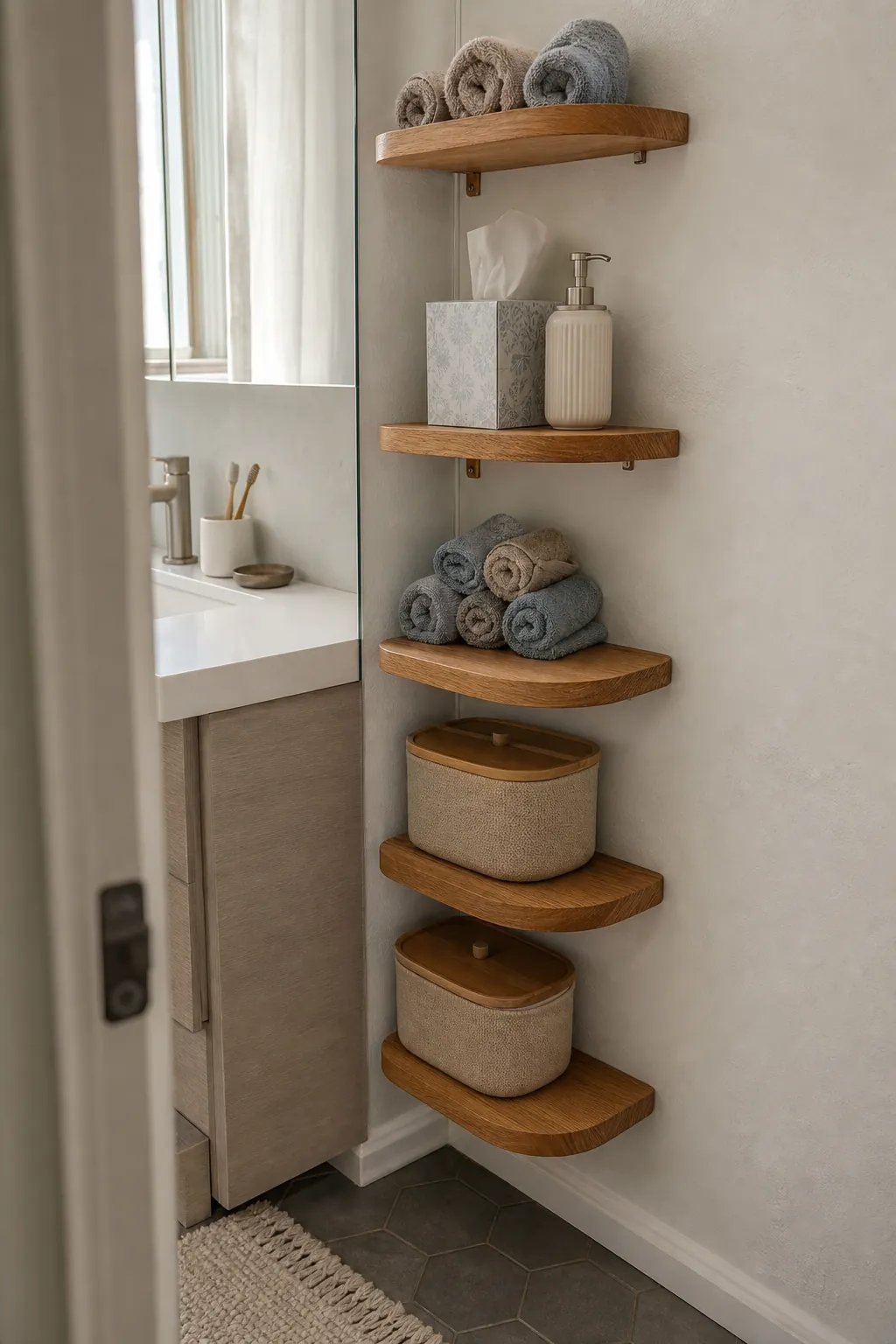
A strip of wall too narrow for a cabinet may still accept shelves sized for rolled washcloths, a tissue box, or small bins. Follow the depth of the vanity so the shelves do not create a new obstacle.
Place frequent items between waist and eye level and reserve the top for light backups. Rounded corners reduce painful bumps. Use closed, wipeable containers for small pieces rather than lining the shelf with loose cosmetics.
Mount a rail that lets towels dry fully
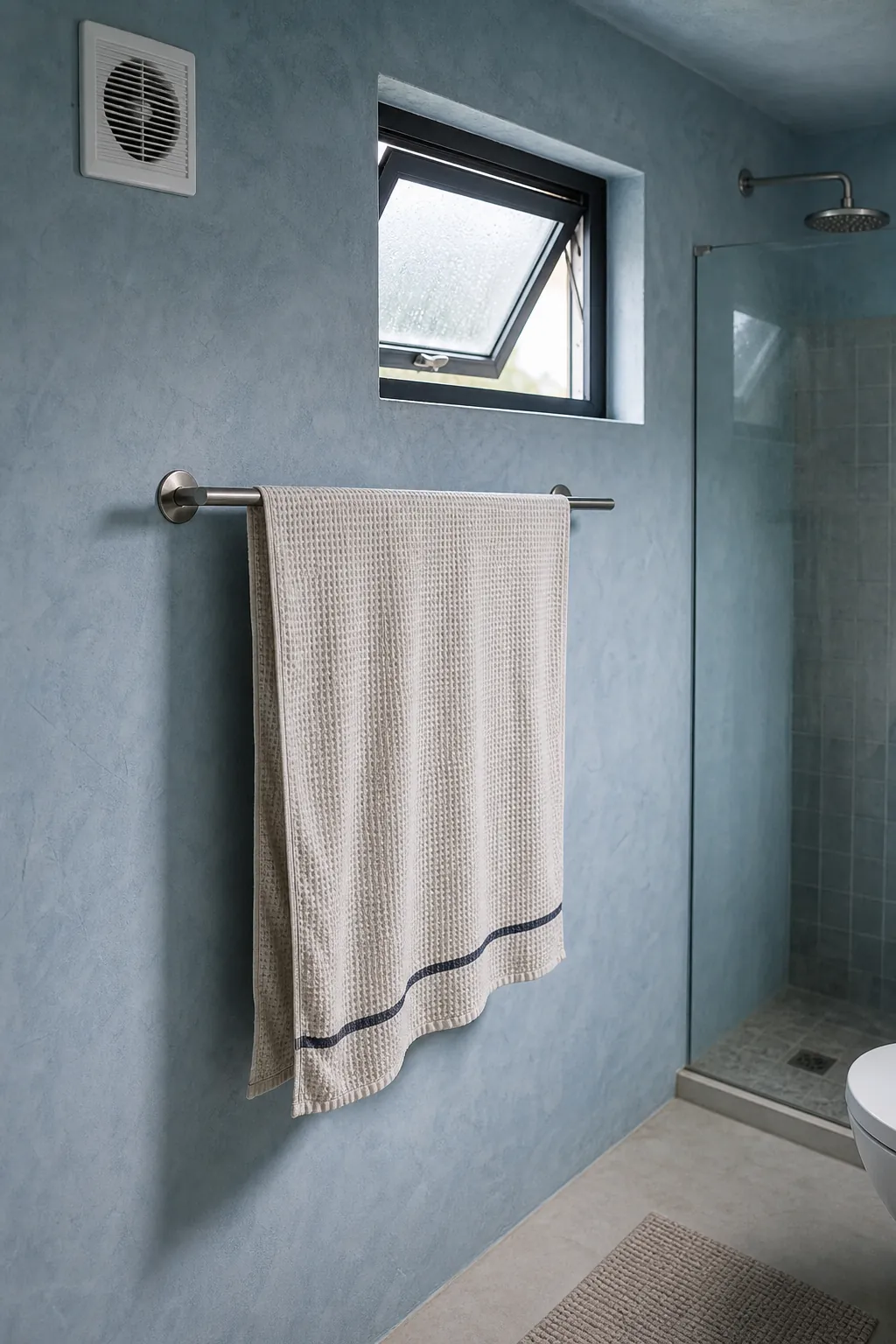
Hooks save width, but a towel folded into a damp bundle can stay wet for hours. Where the wall allows it, install a rail long enough to spread the bath towel in one layer. A double rail works only when air can circulate between fabrics.
Keep the rail outside direct shower spray and near the exhaust path. In a humid climate, own fewer towels and rotate them more often rather than stacking backups in the bathroom. Drying is part of bathroom storage.
Add staggered hooks behind the door
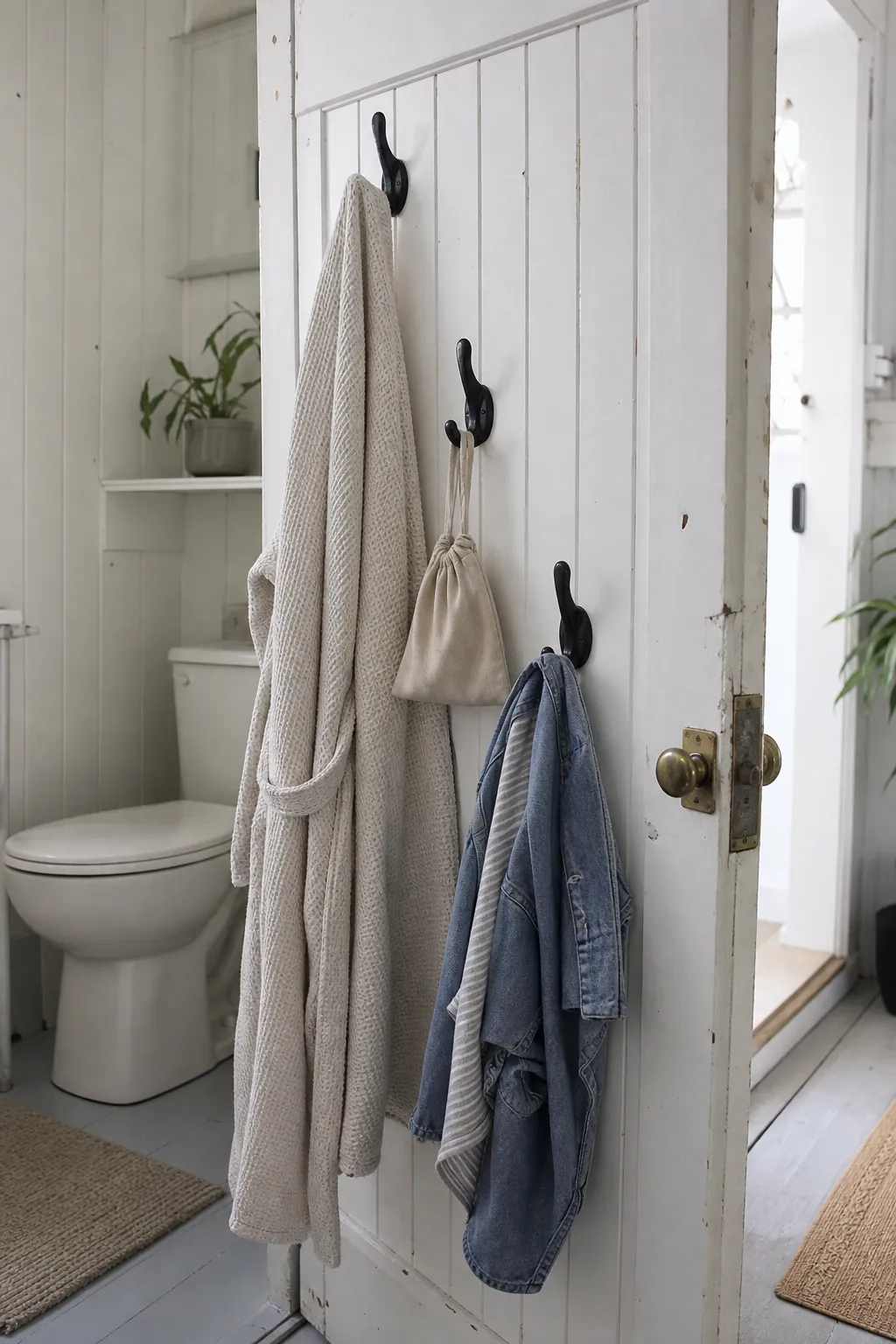
The wall or door back can hold a robe, shower cap, and a fresh outfit if hooks are staggered vertically instead of crowded in one line. Test the full door swing so hanging fabric does not hit a shelf or drag on the floor.
Use screw-mounted hooks for a permanent build and moisture-rated removable hooks for a rental. Give each hook one assignment. When every hook carries three unrelated things, the wall has not solved the clutter.
Build storage into the vanity mirror sides
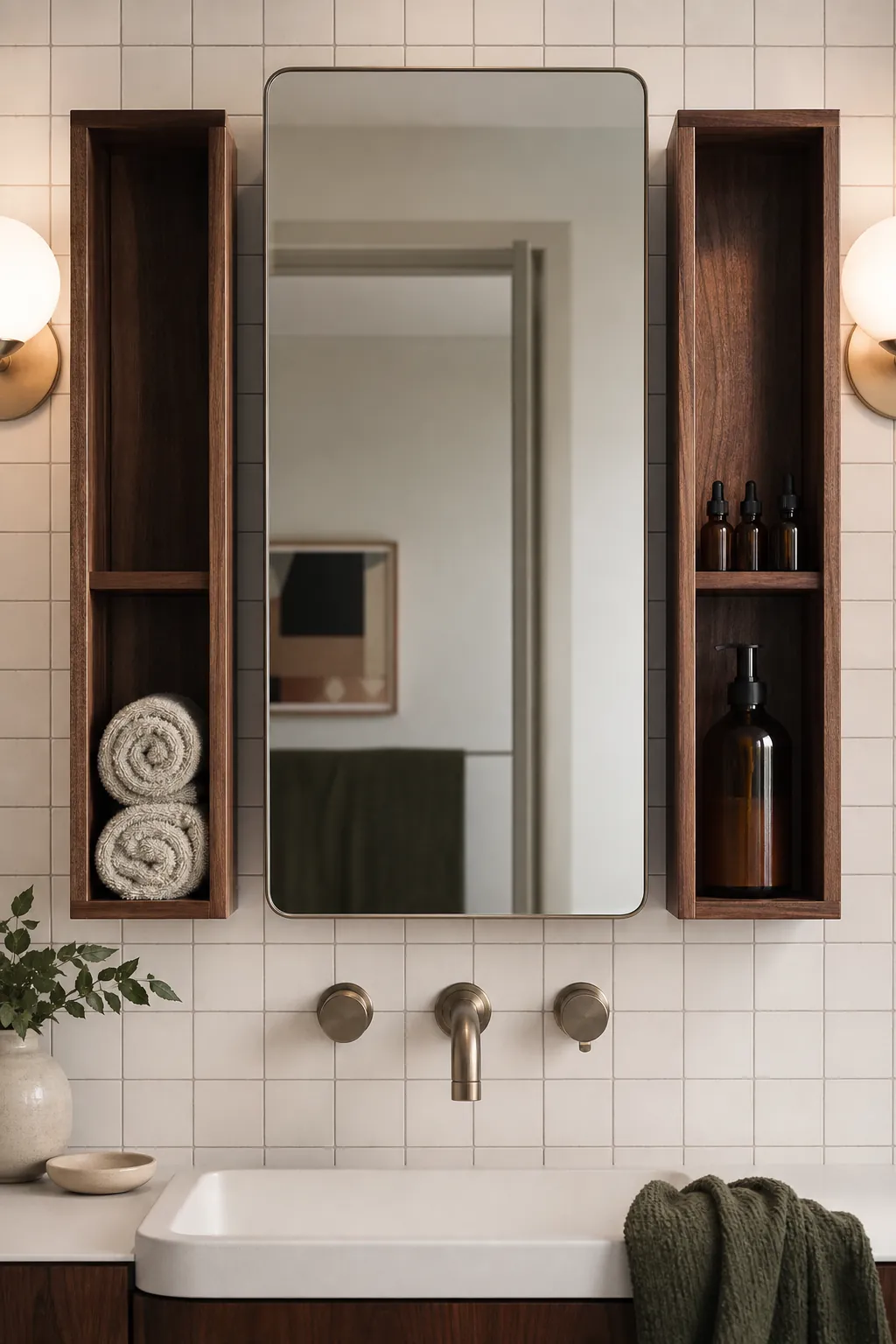
Two shallow cubbies flanking the mirror can hold the few items used morning and night. Because they remain visible, they work best for uniform categories such as rolled face cloths on one side and daily bottles on the other.
Match the cubby depth to the bottles, not to a standard cabinet. Add a discreet retaining lip if the house travels. Keep the mirror wide enough for comfortable use and avoid placing shelves where elbows strike while washing.
Claim the wall above the bathroom door
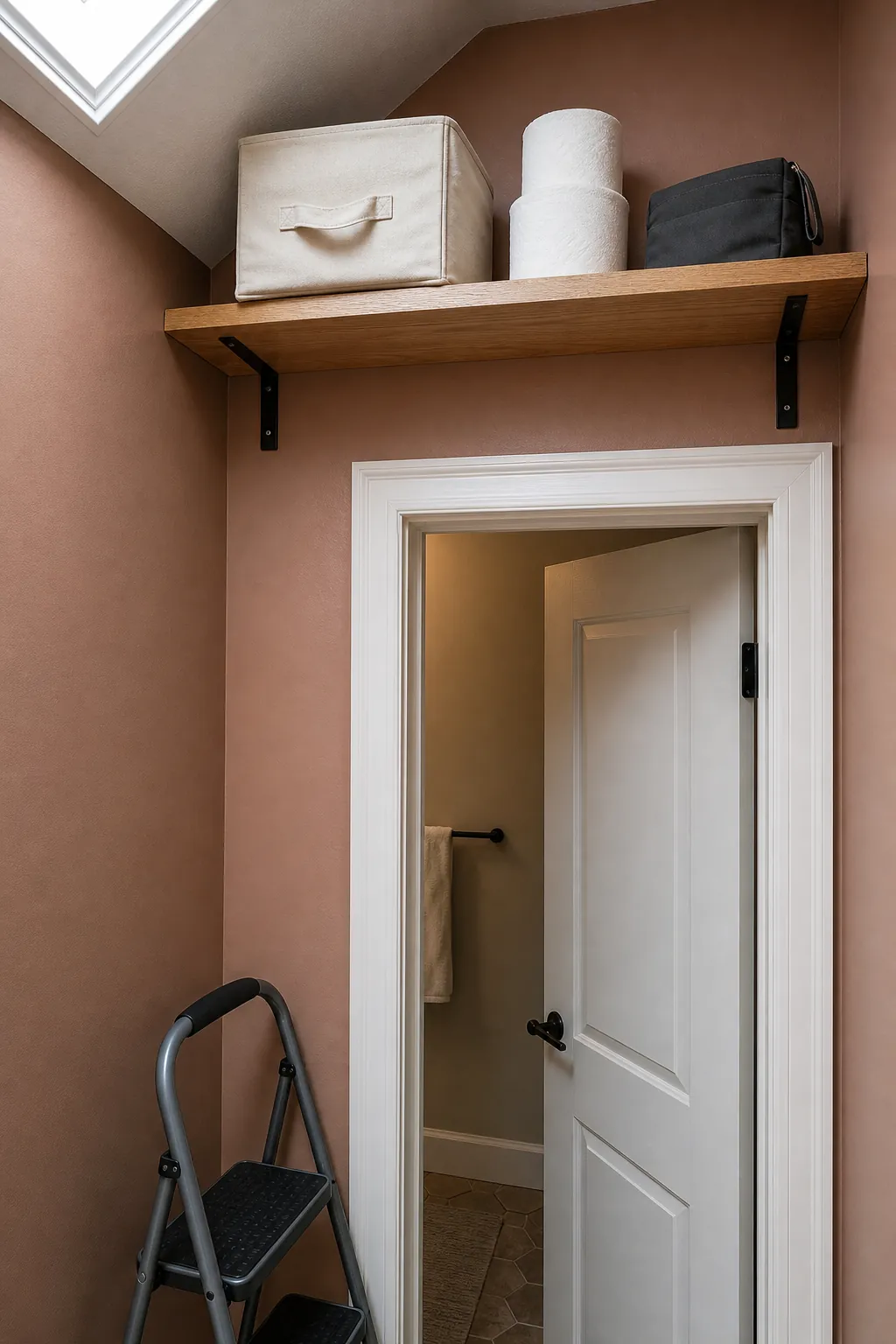
A shelf above the door can store extra toilet paper or an infrequently used travel toiletry bag. Use one handled bin so the category comes down together and loose items cannot fall.
Keep weight low, fasten into solid framing, and confirm the door trim can breathe rather than trapping condensation. If retrieving the bin requires an unsafe climb, the shelf is decorative dead space, not functional small space storage.
Hang a removable shower corner basket
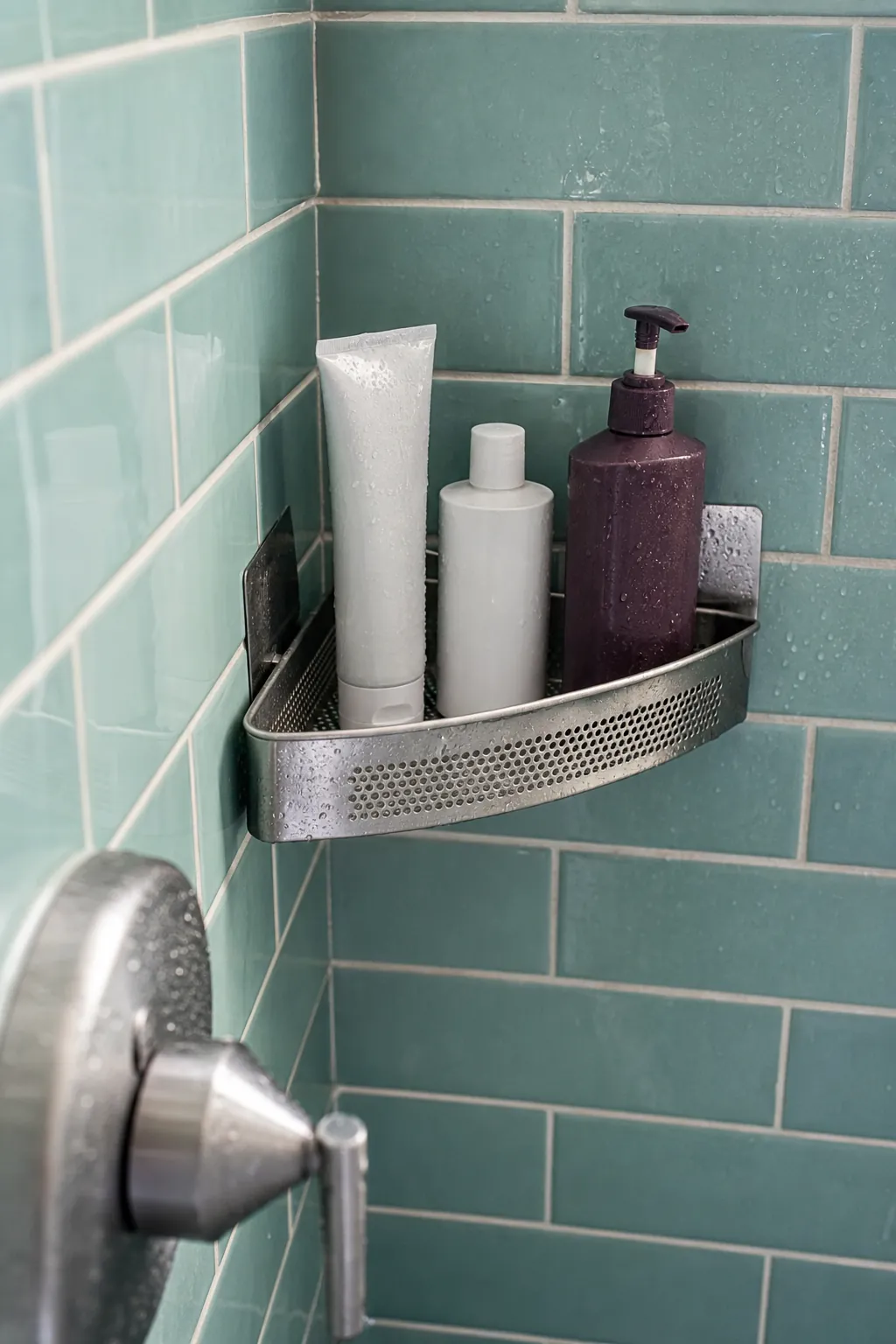
If a recessed niche is not possible, use one rust-resistant basket in a corner outside the strongest spray. Choose open wire or perforated construction so water drains and the wall behind can dry.
Adhesive mounts must be rated for tile, heat, humidity, and the actual product weight. Remove and clean the basket regularly. A compact shower should hold the products currently in use, not every refill owned.
Float the vanity to expose the floor
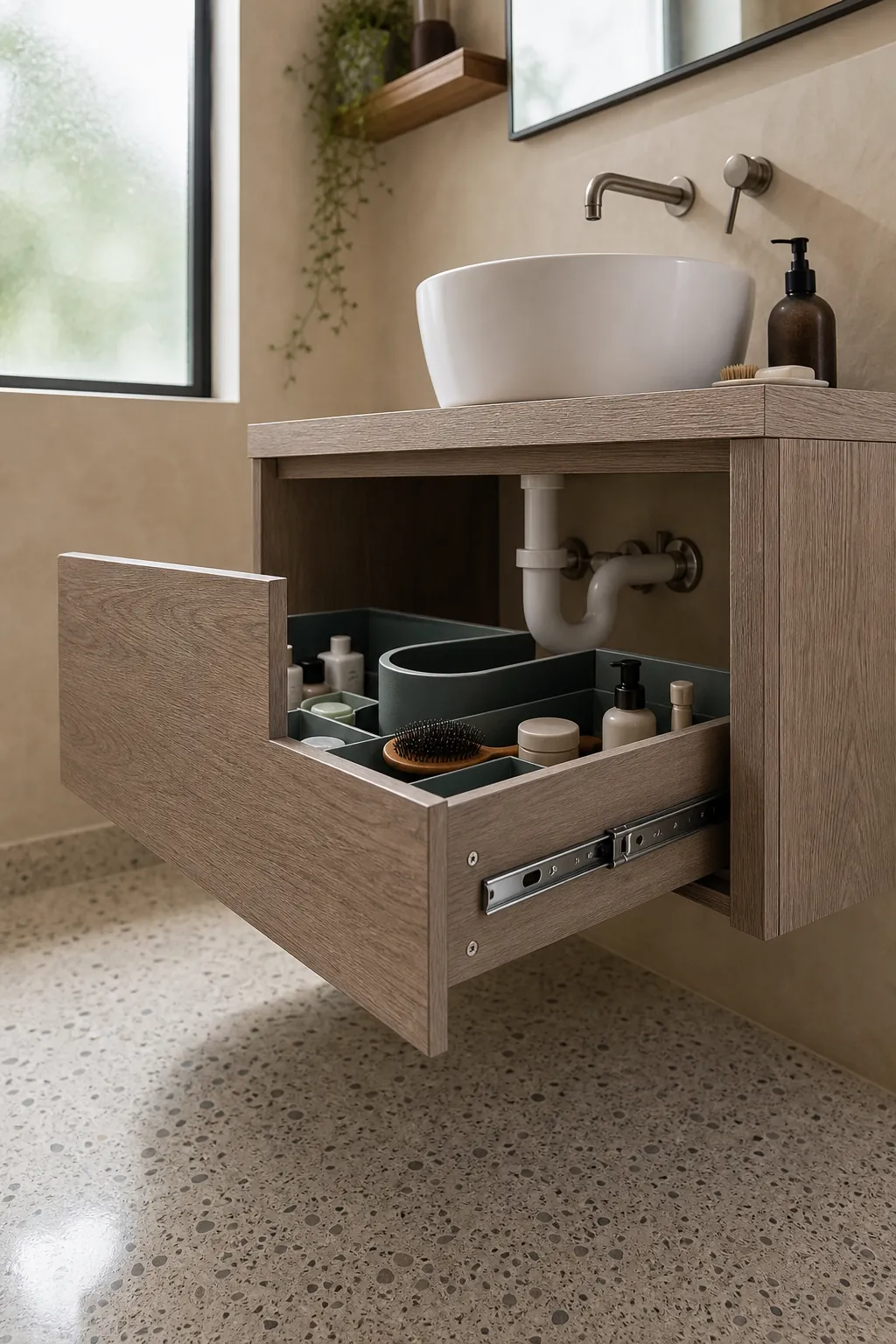
A wall-mounted vanity makes the floor easier to clean and can make a compact bathroom feel less blocked. Choose a full-extension drawer shaped around the plumbing instead of a door cabinet where supplies disappear behind the trap.
Wall structure must support the loaded vanity and a user leaning on it. Keep daily toiletries in shallow dividers and leave pipe connections accessible. The open floor is useful visual space; do not immediately fill it with bins.
Mount toothbrush cups and soap off the counter
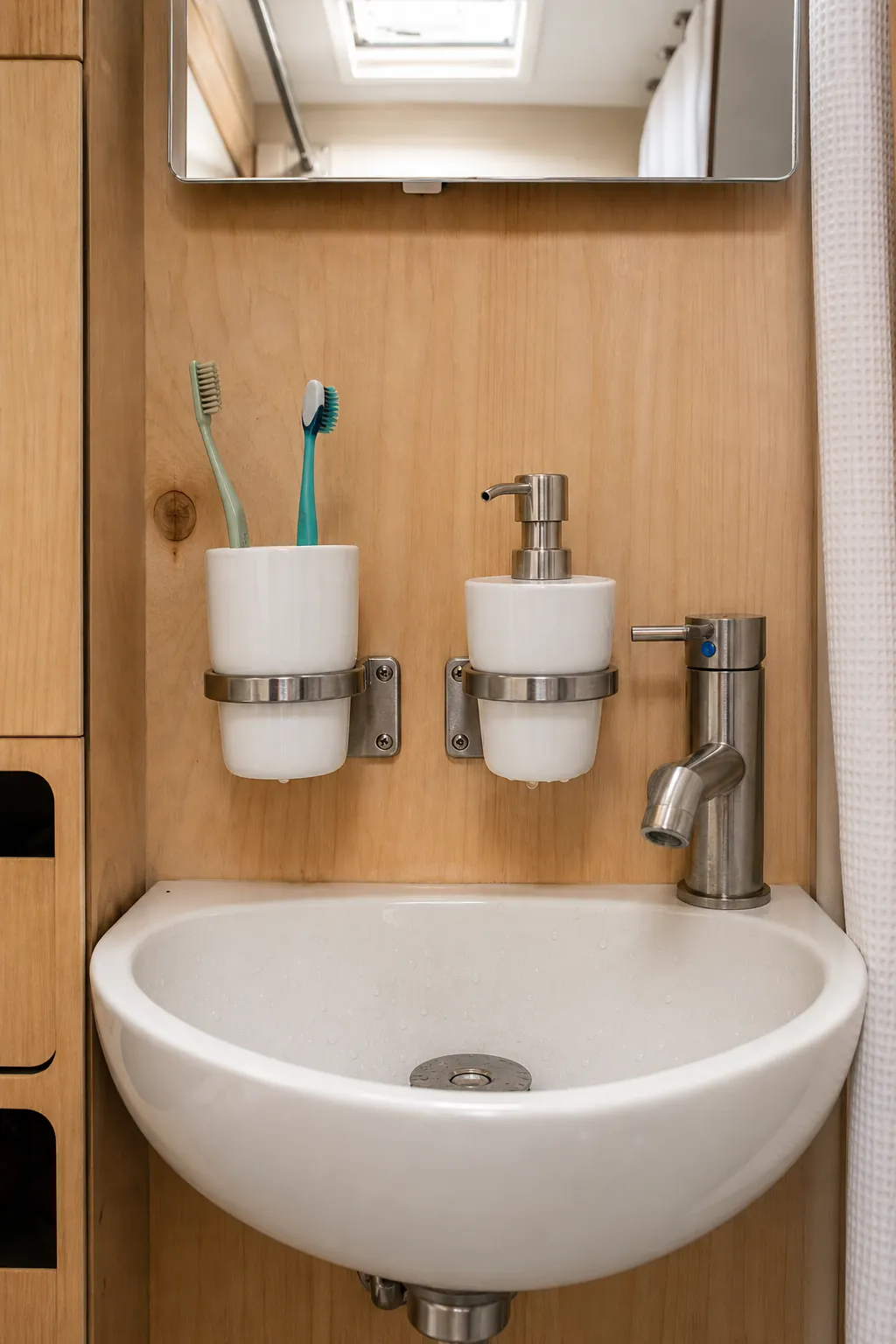
A wall-mounted cup and soap dispenser free the tiny sink rim and make wiping easier. Install them where dripping water lands in the basin rather than tracking down the wall or across an outlet.
Choose parts that lift out for cleaning, because fixed containers collect residue quickly. Keep only the active toothbrushes visible. Refills and dental extras belong in closed bathroom storage, not on a crowded accessory rail.
Use a peg rail for flexible daily storage
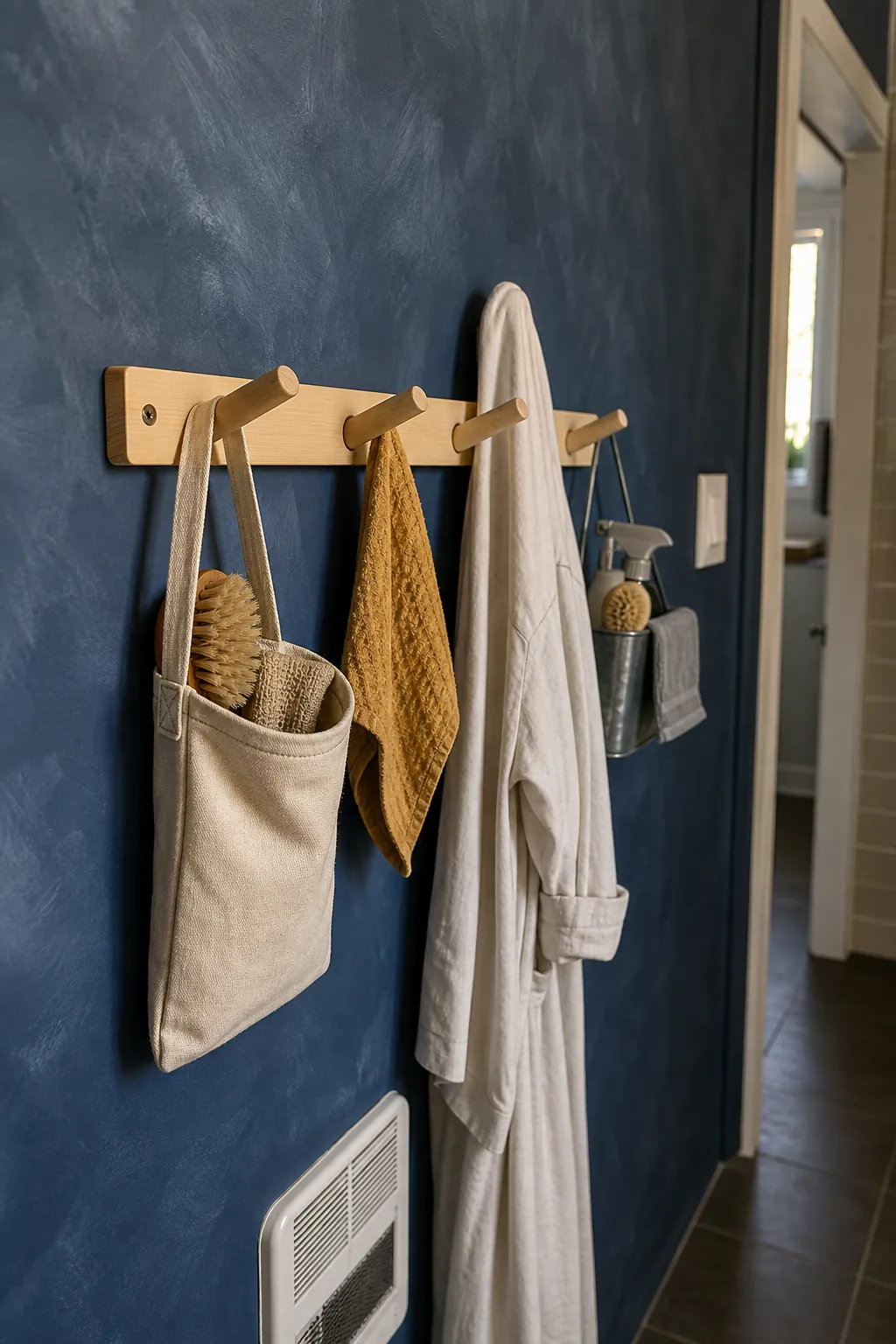
A short peg rail can hold a hairbrush pouch, washcloth, robe, and small cleaning caddy while adapting as routines change. It is calmer than many mismatched hooks because spacing and material stay consistent.
Mount it outside the splash zone and leave gaps so fabrics dry. Use washable pouches rather than open baskets for small objects. Check that hanging items do not cover a heater, ventilation grille, switch, or access panel.
Recess a toilet-paper reserve into an interior wall
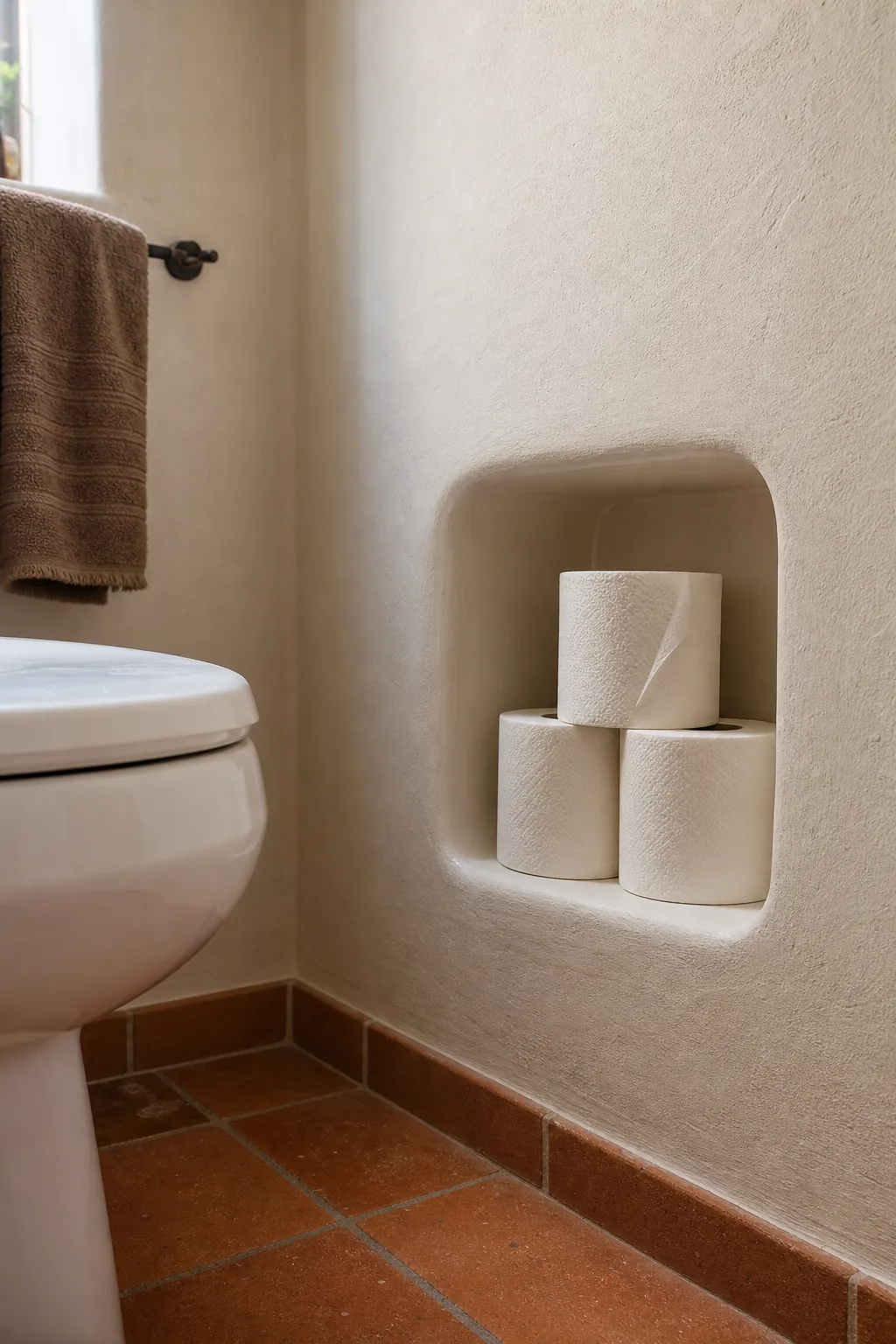
A small dry niche beside the toilet can store two or three rolls without a floor stand. Keep it outside direct splash, line it with a wipeable finish, and size it so fingers can grasp a roll easily.
Do not cut an exterior or plumbing wall merely to hide paper. A surface-mounted shallow box can create the same function with less risk. The right solution respects what is already inside the wall.
Install a fold-flat wall hamper
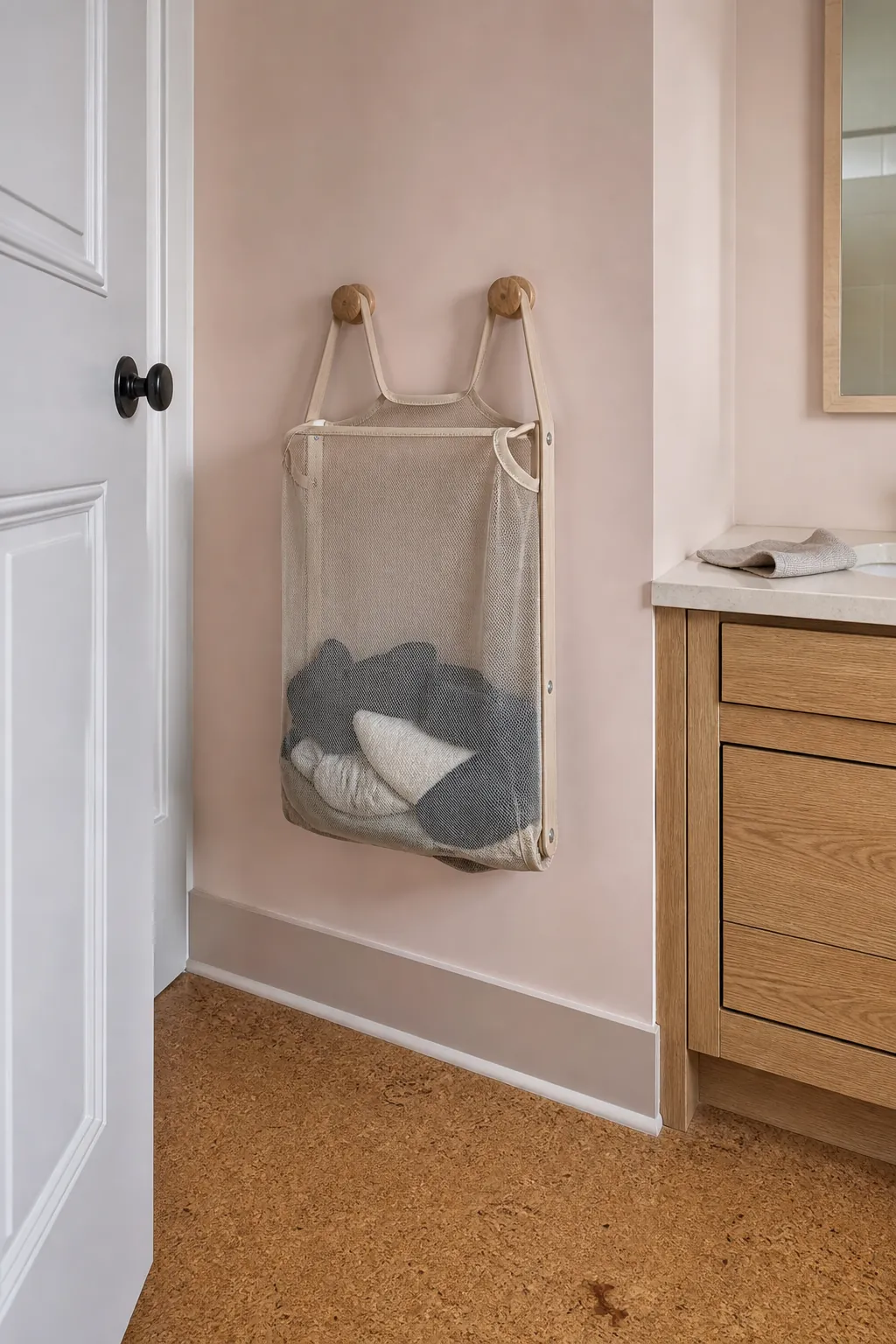
A ventilated fabric hamper that hangs from a rail or folds against the wall can keep a small amount of laundry off the wet floor. It is especially useful when the main hamper lives elsewhere but clothes need a temporary landing place.
Empty it frequently and never trap damp towels inside. Mount it where it cannot touch the toilet, shower spray, or a heating element. If laundry routinely exceeds its capacity, solve the schedule rather than adding a larger bathroom bag.
Stretch a shallow cabinet beside the shower
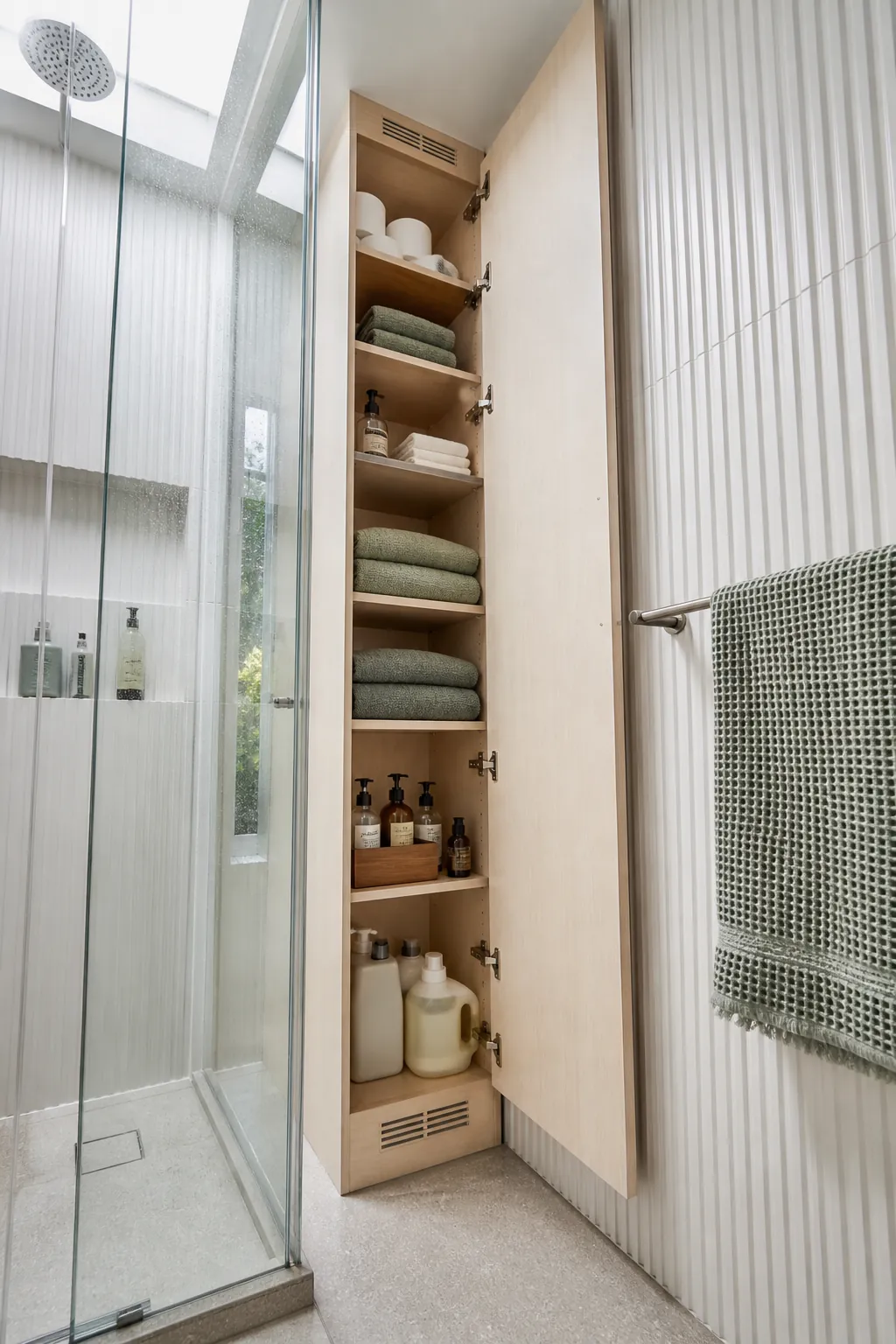
A tall cabinet only six to eight inches deep can store folded towels, toiletries, and cleaning refills in a strip too shallow for standard furniture. Adjustable shelves prevent the upper half from becoming empty air.
Use moisture-resistant construction, anchor the cabinet, and leave a drying gap beside the shower enclosure. A door contains visual noise, but include ventilation where damp objects might be stored. Heavy bottles belong low.
Turn plumbing access into swing-out storage
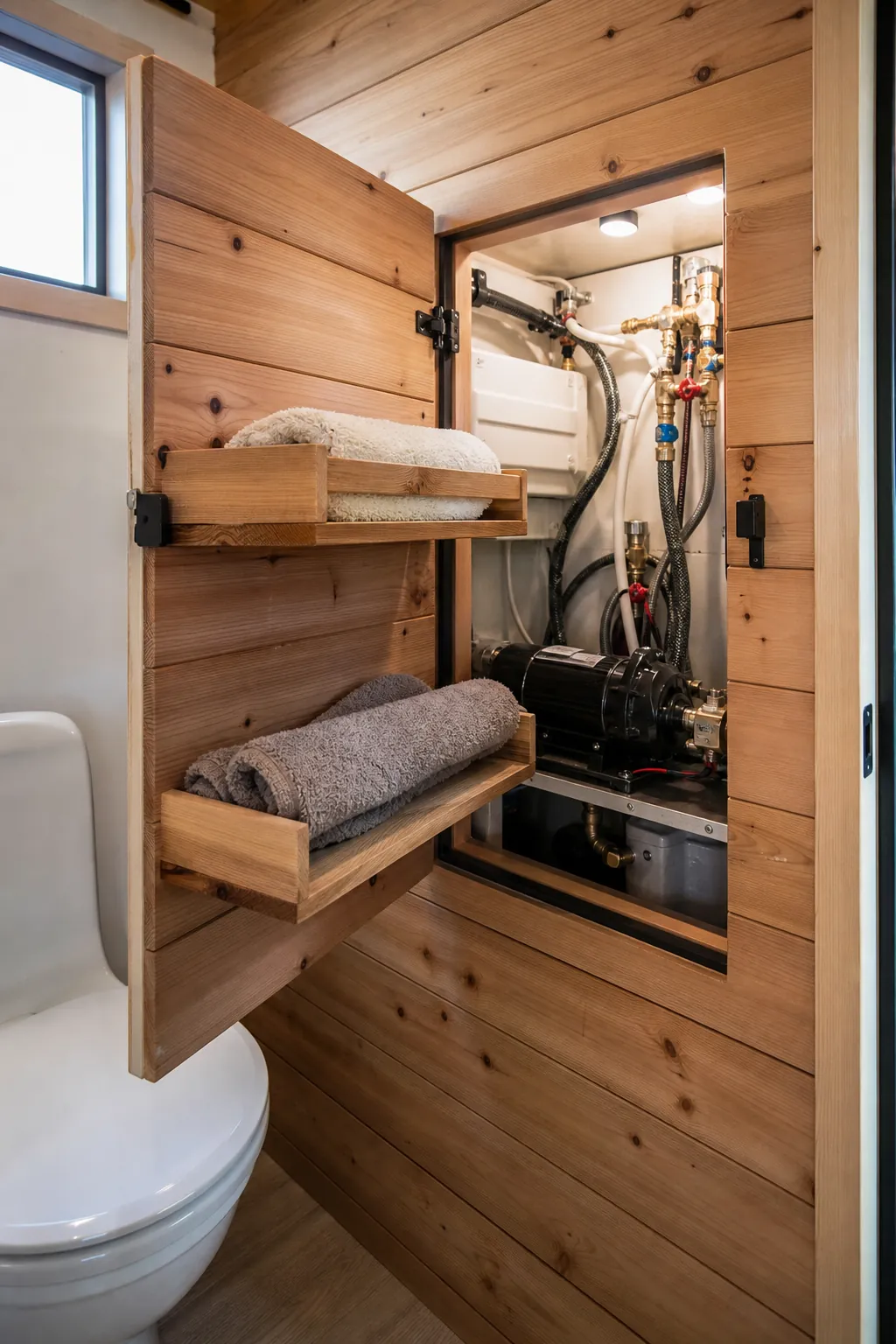
Where a wall panel must remain accessible for pumps, valves, or a water heater, mount shallow shelves to a hinged panel rather than sealing the space. Lightweight towels and paper goods can ride on the front while equipment stays serviceable.
Use positive latches in a mobile home, label shutoffs, and ensure shelves swing clear without unloading. Never cover required ventilation or electrical clearances. Storage is secondary to fast maintenance access.
Add a slim towel ladder only where it can breathe
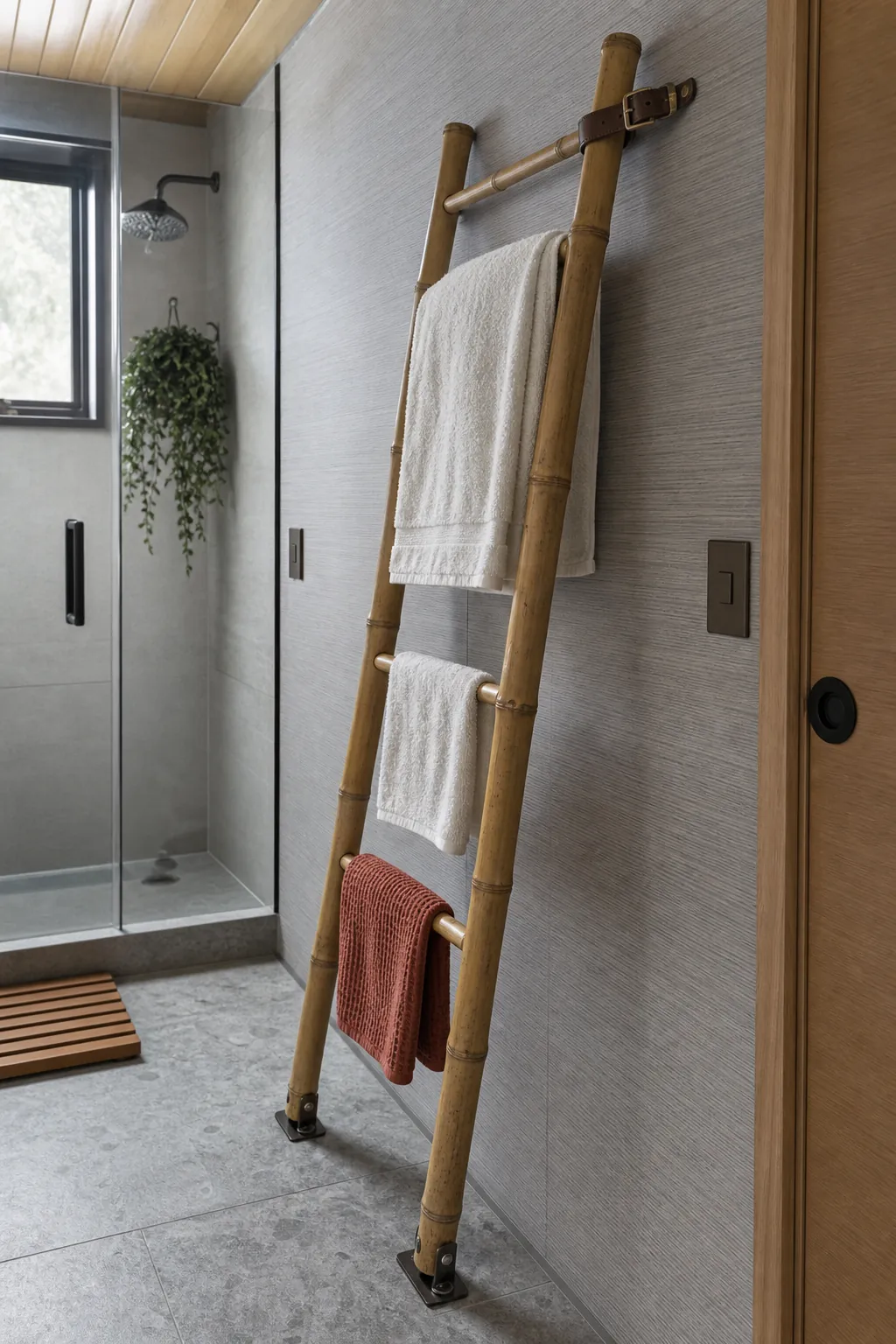
A narrow ladder offers several drying bars without drilling multiple holes, but it needs a secure top restraint and enough wall clearance for air. Hang one item per rung instead of layering damp towels.
Place it outside the door swing and walking line. In a tiny house on wheels, fix both ends so it cannot move during travel. If the ladder makes the room harder to enter, a single rail is the better choice.
Protect the ventilation wall from storage creep
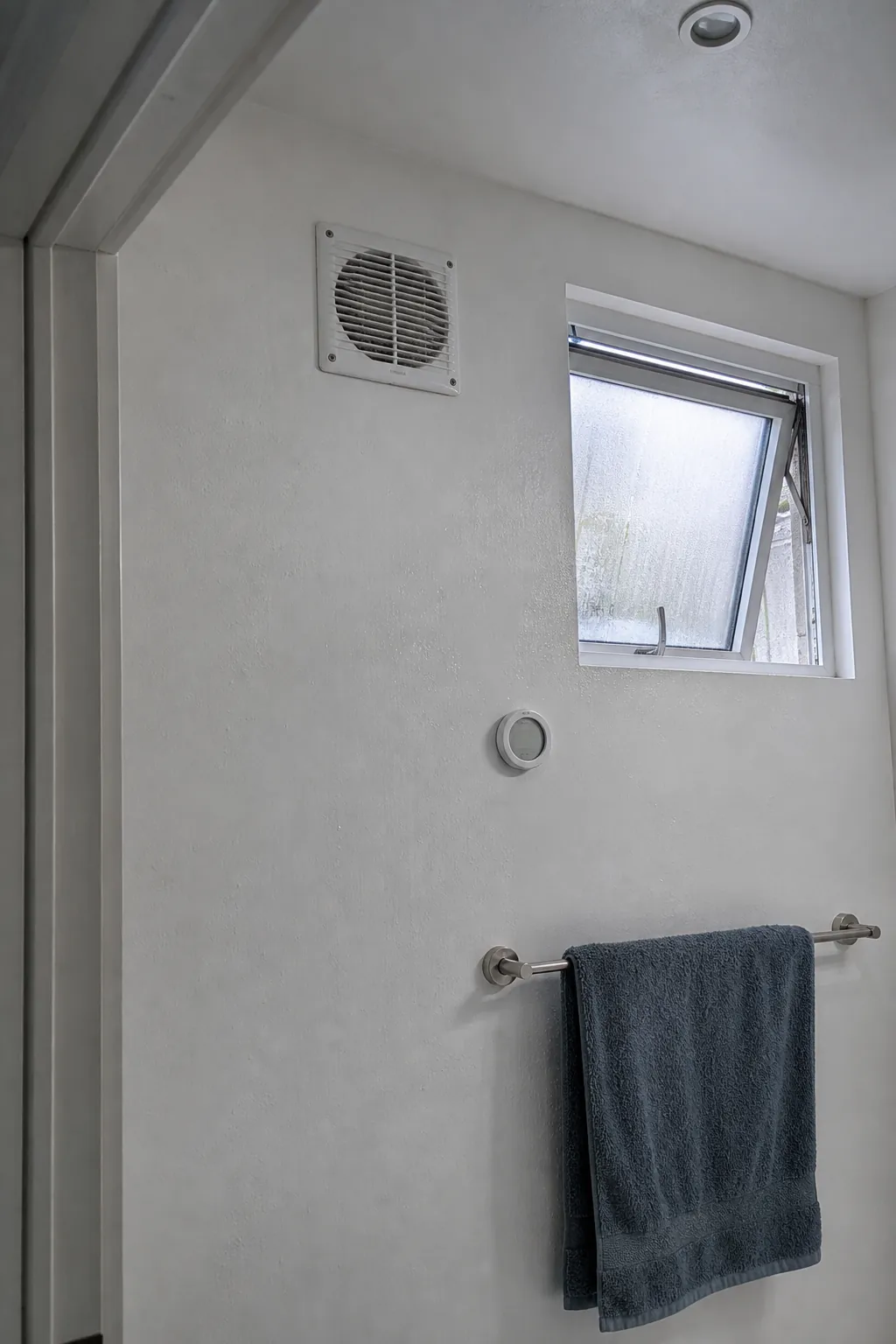
The most valuable bathroom wall space may be the area you leave empty around an exhaust fan, operable window, heater, or air-transfer grille. Tiny homes accumulate shower moisture quickly, and a shelf that interrupts airflow can cost far more than the storage it adds.
Keep the fan intake clear, clean it on schedule, and let towels dry in its airflow rather than covering it. Choose only the wall-mounted storage that supports daily routines, then stop. A compact bathroom feels designed when every object has a dry, reachable home and the room can return to clear in minutes.