The best curtain ideas for French doors start with the door, not the fabric. A beautiful treatment becomes frustrating if it catches on a lever, drags across a busy threshold, blocks a door leaf, or leaves no room for the panels to stack. Before choosing a look, decide whether you need nighttime privacy, glare control, insulation, full blackout, or simply a softer frame around the patio view.
Measure the glass, trim, handle projection, hinge direction, wall space, and how often each leaf opens. Then choose the lightest solution that solves the actual problem. These 15 approaches cover door-mounted panels, full-height drapes, shades, and layered options for kitchens, bedrooms, rentals, pets, and everyday patio traffic.
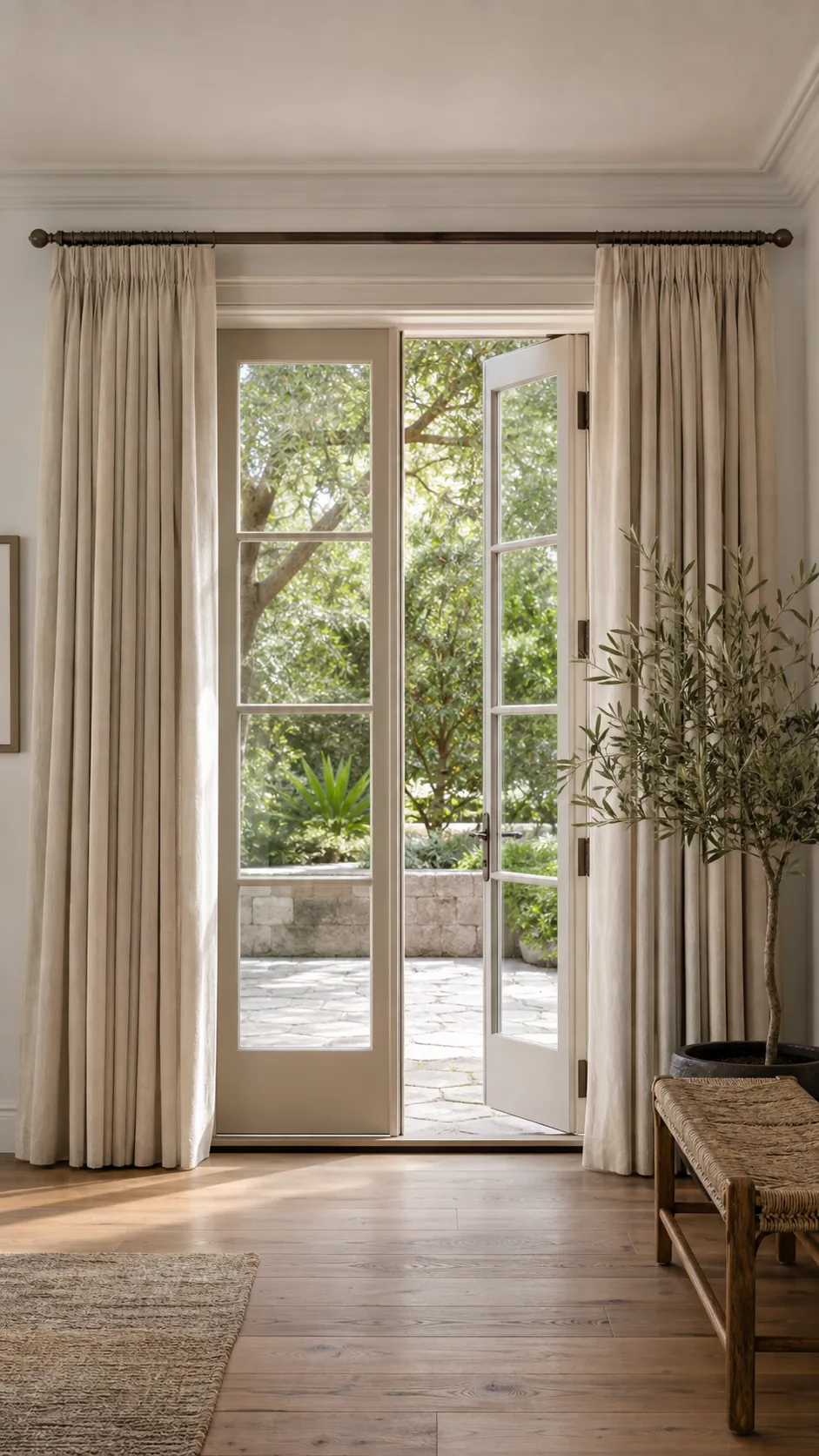
High and Wide Linen Drapes
Mounting a rod above and beyond the outer trim lets linen-look panels stack off the glass during the day. The extra width preserves the view and prevents fabric from bunching in front of the handles. Choose washable, lined fabric when the doors sit beside a kitchen or muddy patio route.
Confirm the wall has enough stack-back before ordering. Full panels need somewhere to go when both doors are active, and the brackets must be secured to suitable framing or anchors.
Door-Mounted Sash Panels
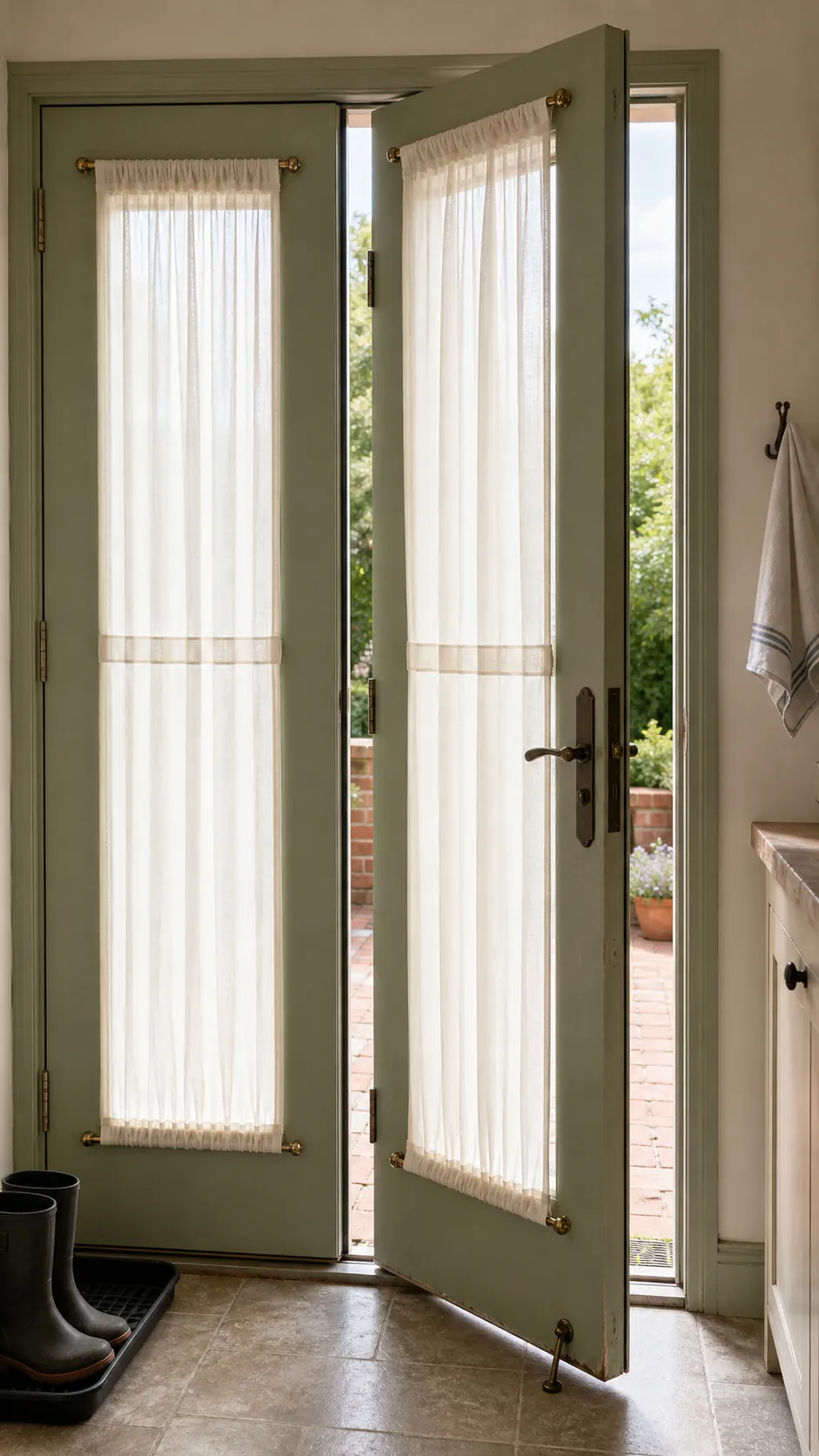
A rod-pocket panel held by slim rods at both the top and bottom stays close to the glass and moves with the door. It is a practical French door curtain panel for a frequently used leaf because loose fabric cannot swing into the jamb.
Use enough fullness for privacy without creating a bulky center gather. Check that the rods, fabric, and holdback clear the lever, lock, and wall when the door opens fully.
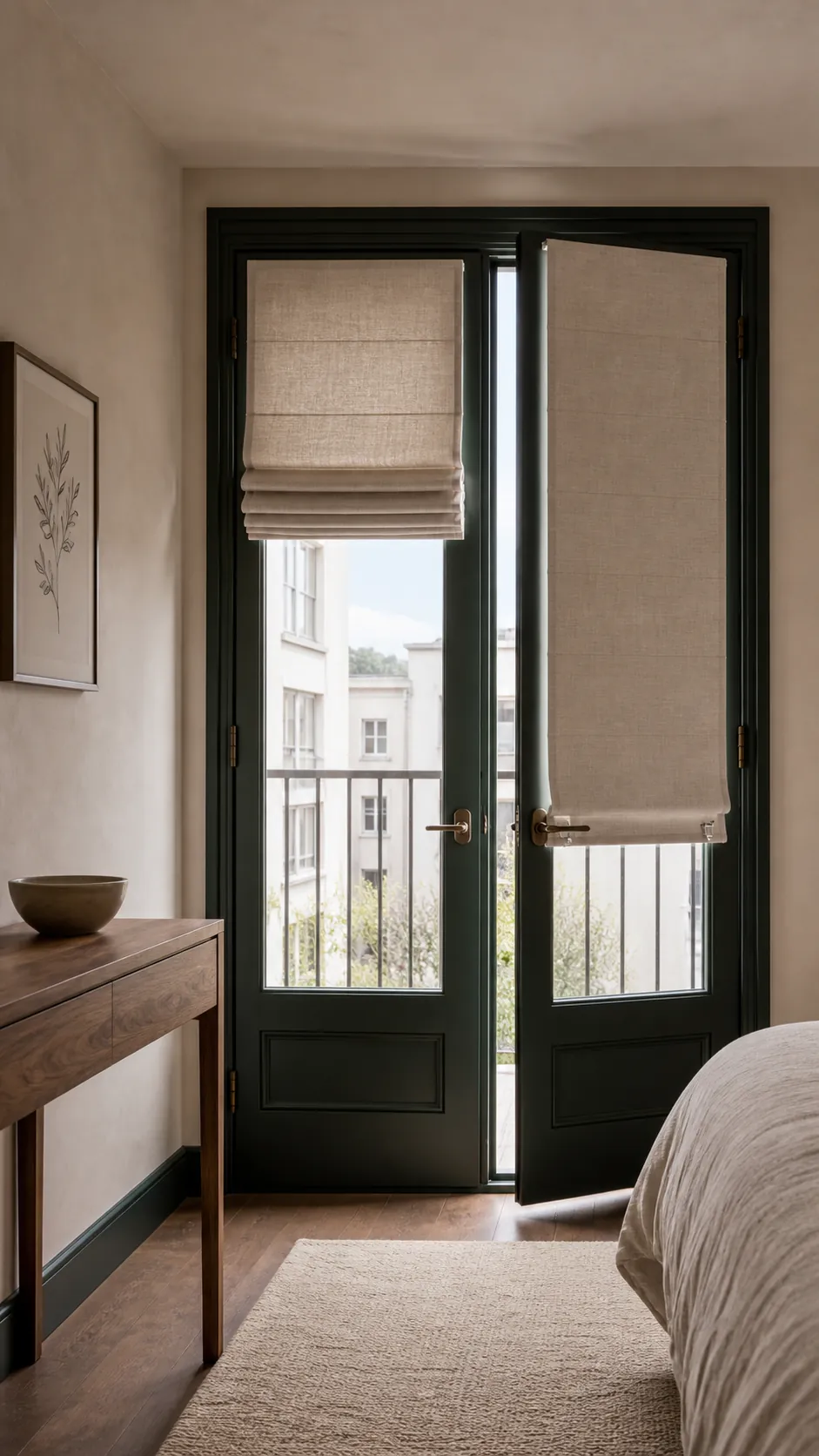
Relaxed Roman Shades
Individual fabric Roman shades give each glazed leaf independent control and a tailored profile. They are especially useful when one door is opened more often than the other. A light-filtering liner softens glare; a room-darkening liner suits a bedroom.
Specify door-rated hardware and a lower restraint so the shade does not slap when the leaf moves. Cordless operation is the safer, cleaner choice around children and pets.
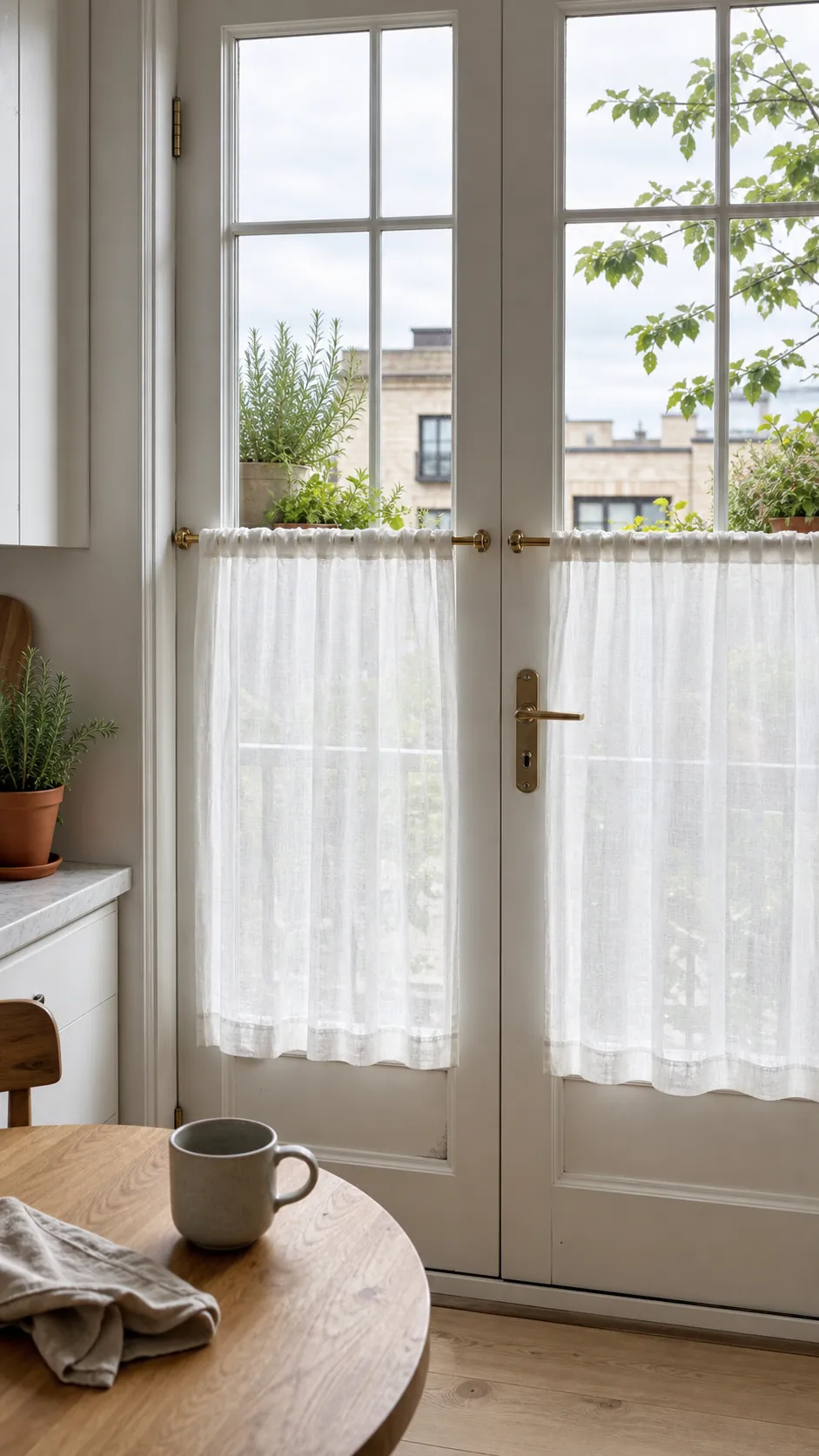
Sheer Café Curtains
Café panels across the lower portion of the glass screen close sightlines while leaving sky and tree views open. They work well for a kitchen patio door that needs daytime privacy more than blackout.
Test the view from outside after dark: sheer fabric becomes far less private when the room is illuminated. Pair it with a second nighttime layer if neighbors overlook the doors.
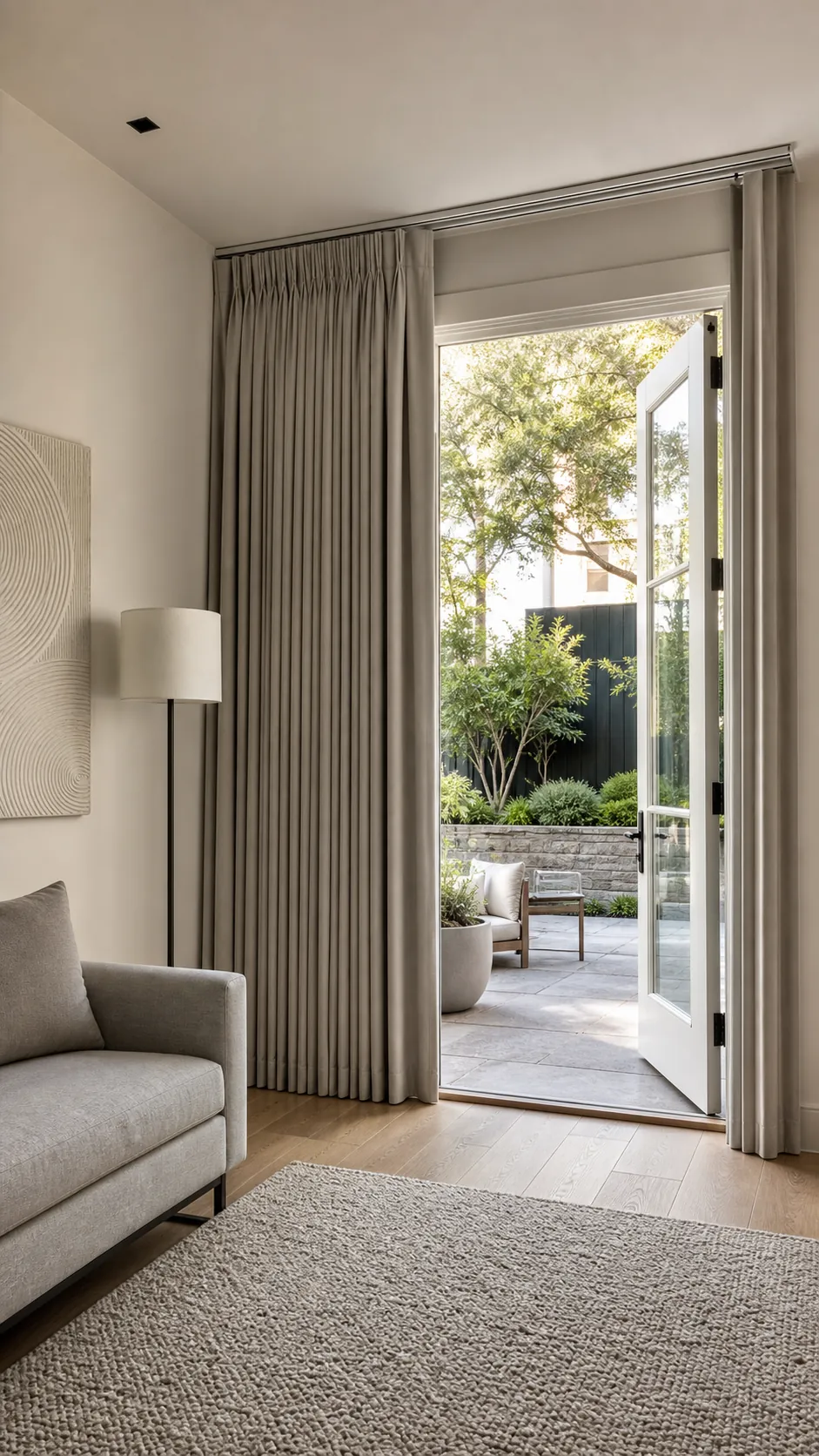
Ceiling-Track Pinch Pleats
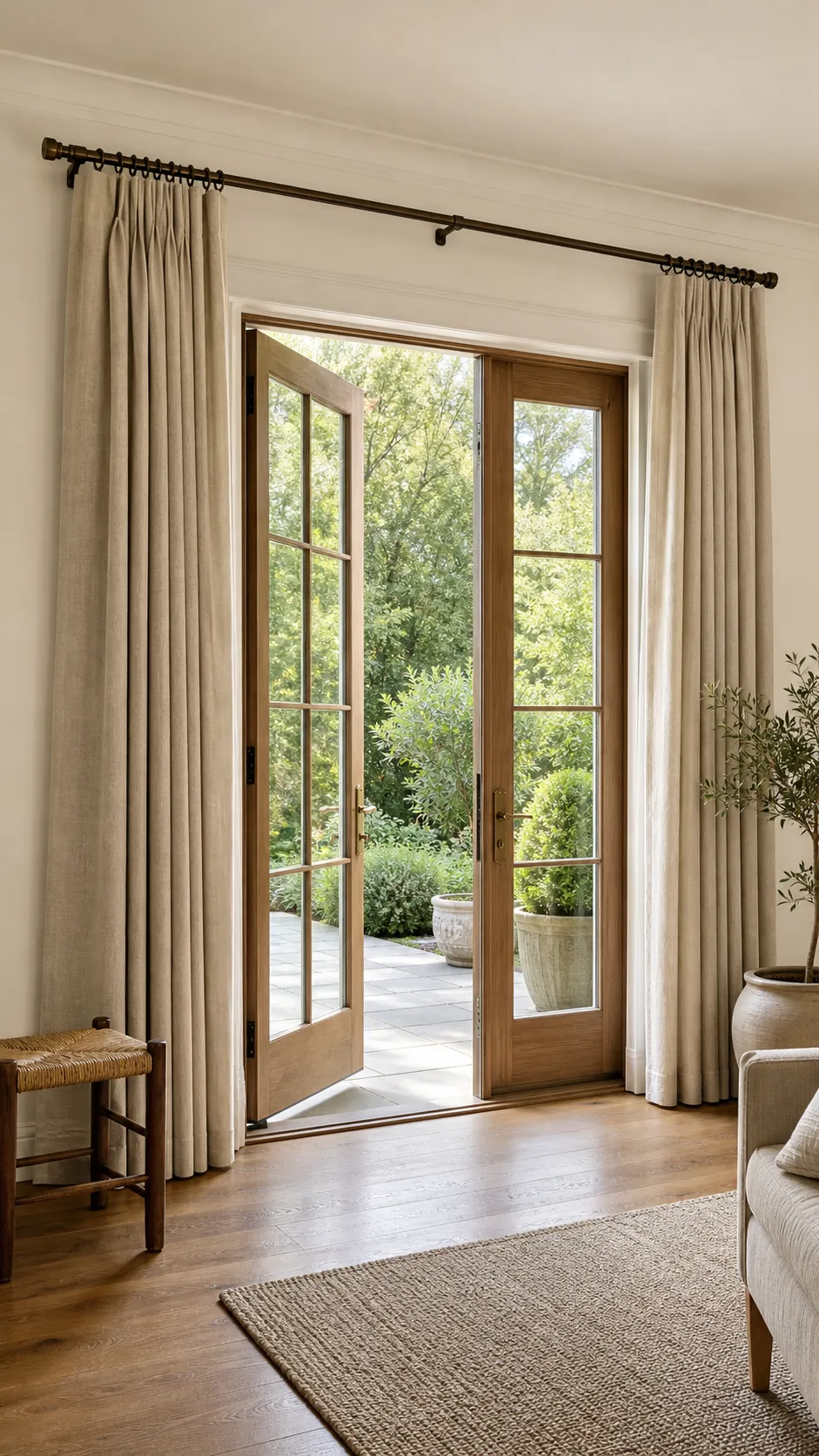
A ceiling track creates a clean wall of pinch-pleated fabric and can bridge awkward trim or shallow wall space above the doors. A return at each end limits side light and gives blackout lining a more complete seal.
Plan the carrier count and stack direction around the active door. A split draw is not always best; one-way stacking may protect the handle and keep the primary exit clearer.
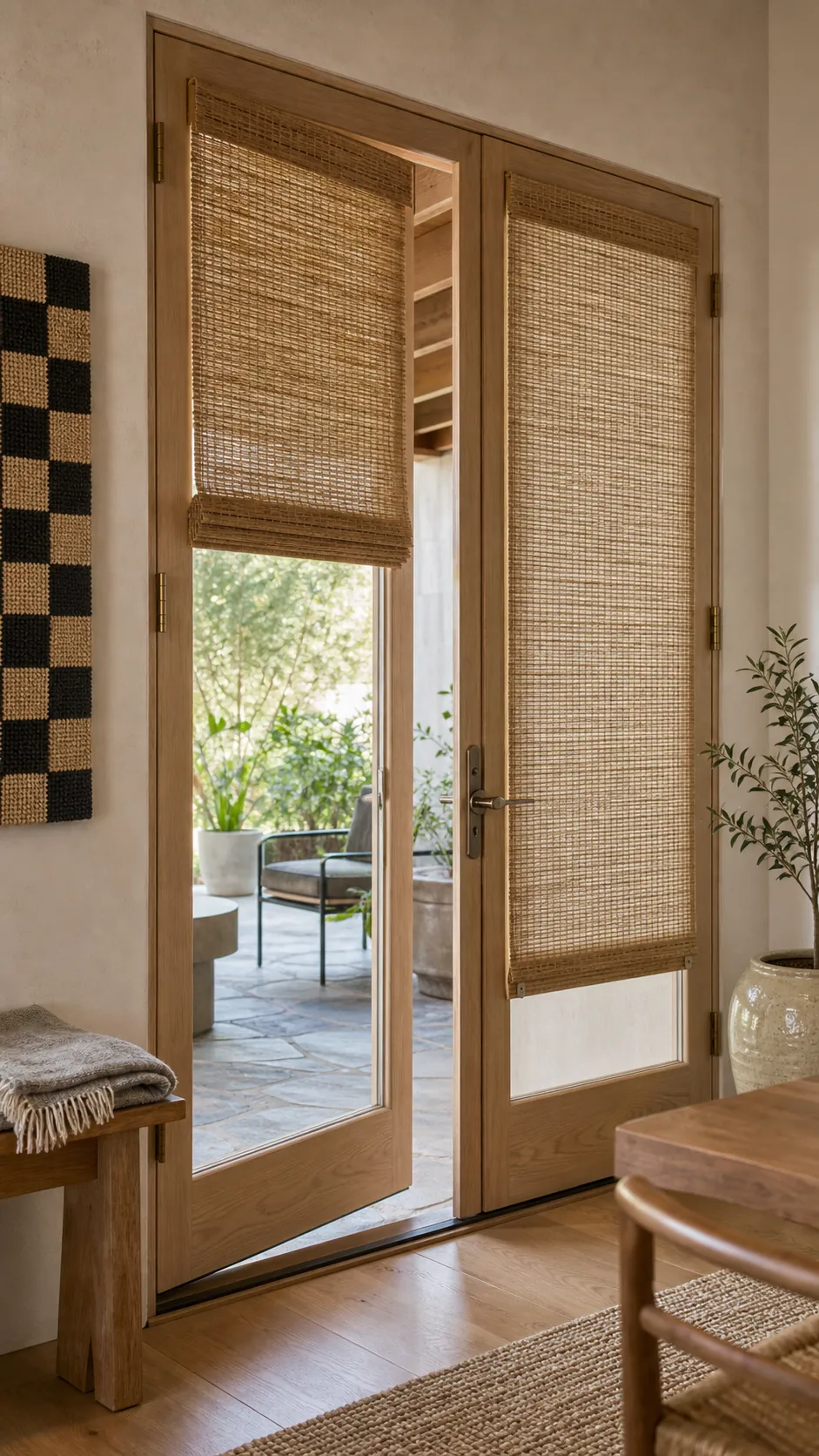
Woven Wood Door Shades
Flat woven shades add warm texture without the floor-level fabric of drapes. An attached privacy liner closes the weave at night, while an independent liner lets you keep the natural texture visible during the day.
Choose a lightweight door-rated construction, cordless lift, and lower hold-down brackets. Heavy natural shades can stress a moving door if the hardware is not designed for that use.
Blackout Drapes With Returns
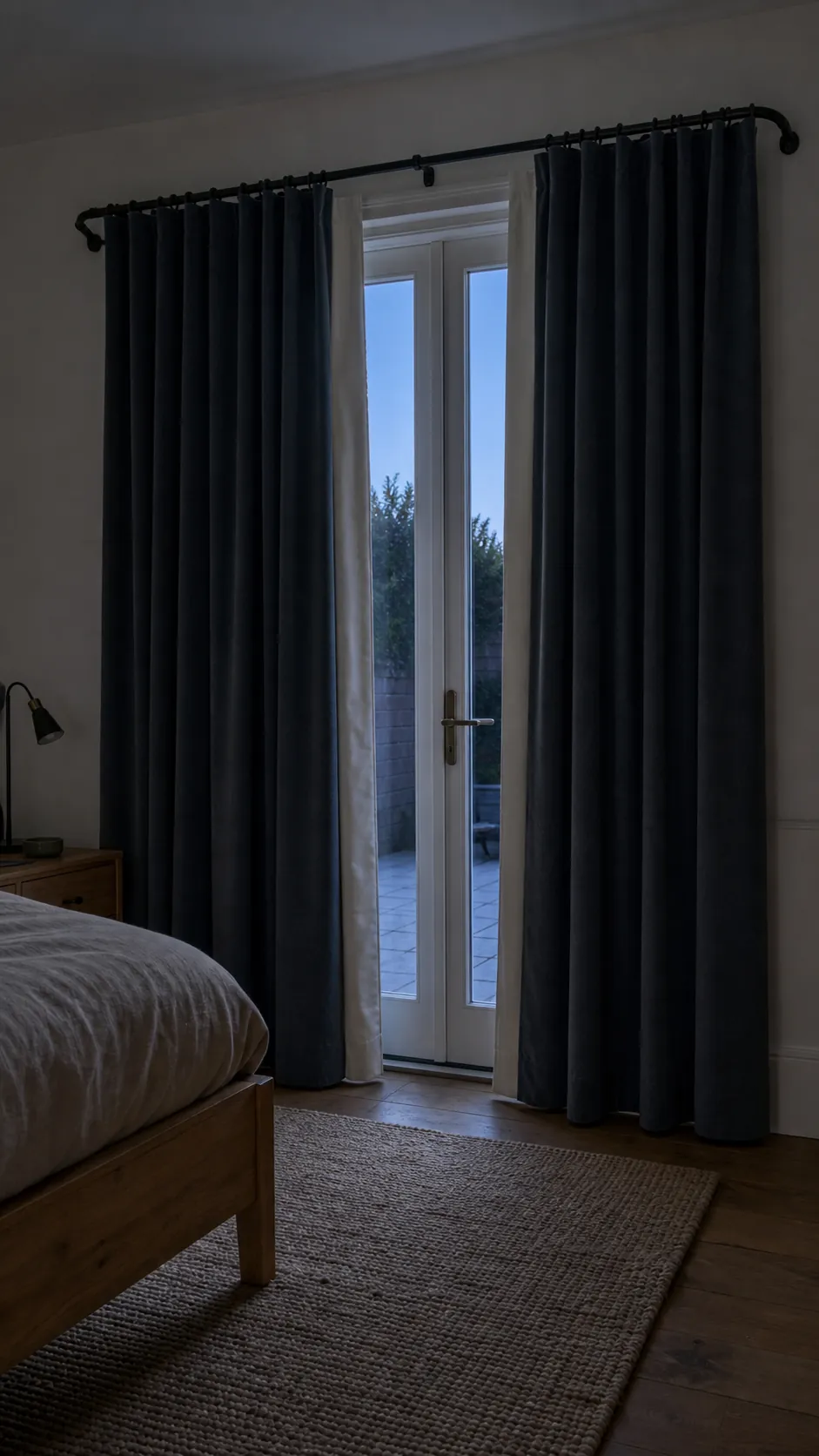
For a bedroom facing the patio, lined drapes on a return rod reduce side gaps and block more dawn light than a straight decorative pole. Floor-grazing panels look intentional while avoiding fabric puddles in a working doorway.
Blackout fabric can trap heat against sunlit glass. Follow the door and glazing manufacturer’s guidance, ventilate the space, and choose a light exterior-facing lining where solar gain is a concern.
Light-Filtering Roller Shades
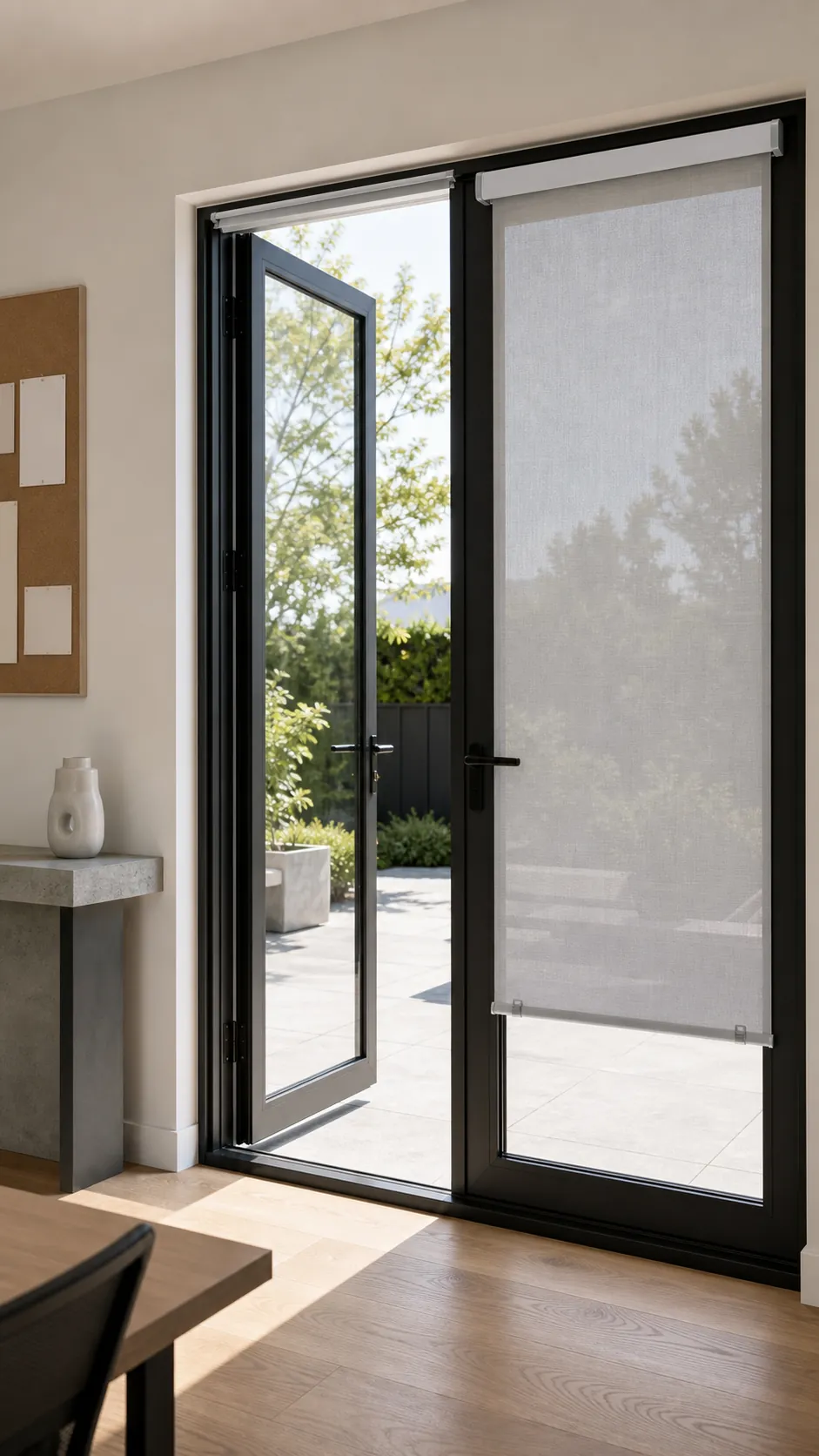
Low-profile roller shades almost disappear when raised, making them useful when the doors and patio view are the focal point. Two separate shades allow one leaf to operate while the other remains covered.
Confirm the cassette clears the trim and wall at the fully open position. Add lower hold-downs so a breeze or quick door movement cannot send the shade into the glass.
Half-Height Privacy Film and Side Panels
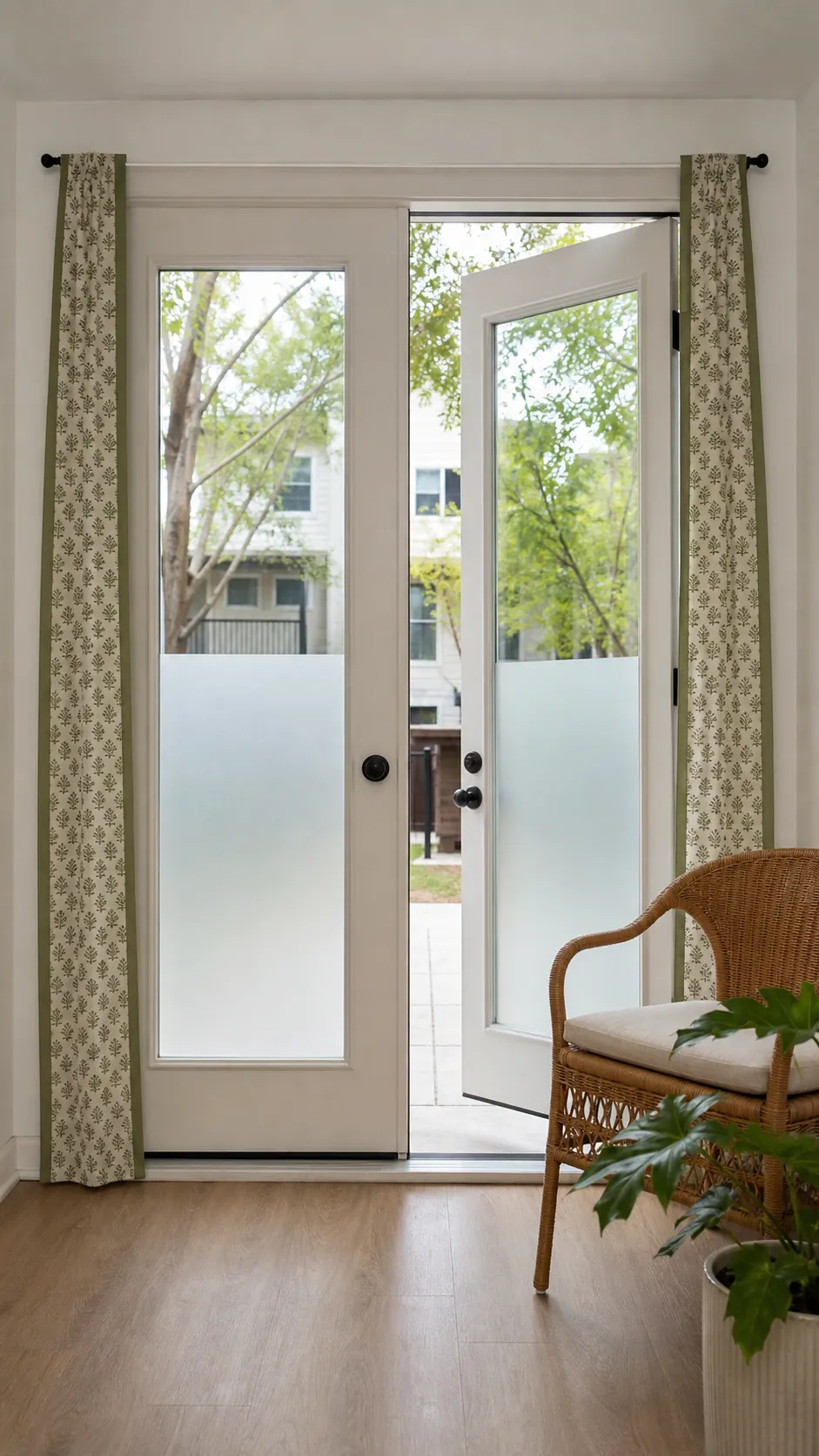
Removable frosted film on the lower panes handles daytime privacy without sacrificing the upper view. Narrow stationary side panels can then soften the frame without needing to close across the doors.
This rental-friendly combination is not nighttime blackout. Install film according to the glazing maker’s rules, and check the exterior appearance before covering every pane.
French Return Rod With One-Way Draw
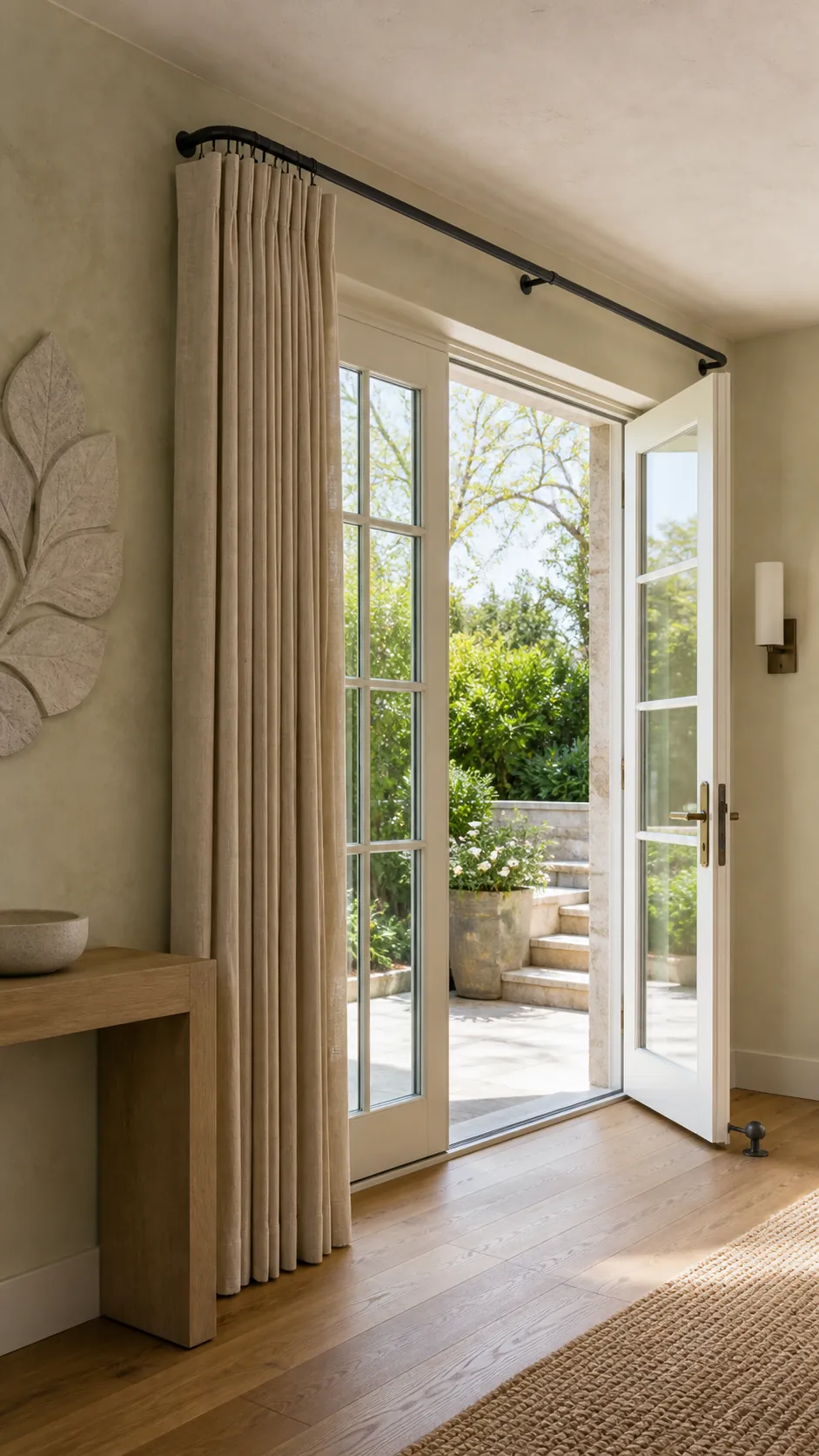
A return rod curves fabric neatly back to the wall, reducing the bright slit at the edge. Drawing all panels toward the inactive side can keep the everyday door leaf completely free.
Mark the open door arc and handle position on the wall before mounting. The return and finial must sit outside that envelope, and the stacked fabric should not cover a switch or sconce.
Washable Cotton Panels for Kitchens
Plain cotton twill or a cotton-linen blend is easier to launder than velvet or delicate open weave near cooking, pets, and patio traffic. A simple pleat and sturdy rings keep the treatment polished without making cleaning complicated.
Prewash yardage before hemming, or order finished panels with a care method you will actually use. Keep the hem just above a floor that may collect moisture or grit.
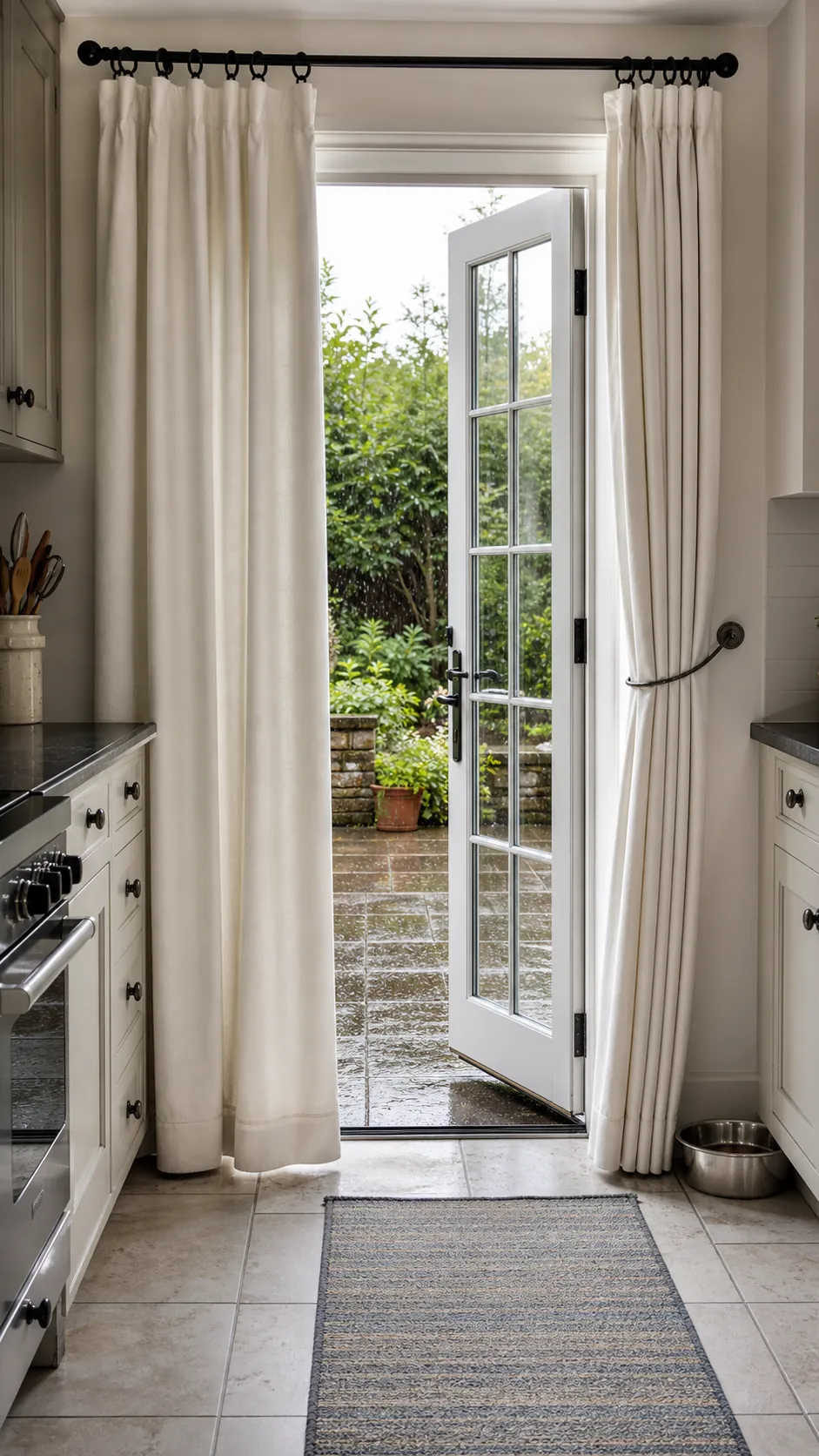
Double Rod With Sheer and Lined Layers
A double rod separates daytime filtering from nighttime privacy. The sheer layer reduces glare while preserving a connection to the patio; lined outer panels close after dark or during extreme heat.
Layering doubles the stack depth, so verify wall width and bracket projection. Use compatible headings so the two sets travel without snagging each other.
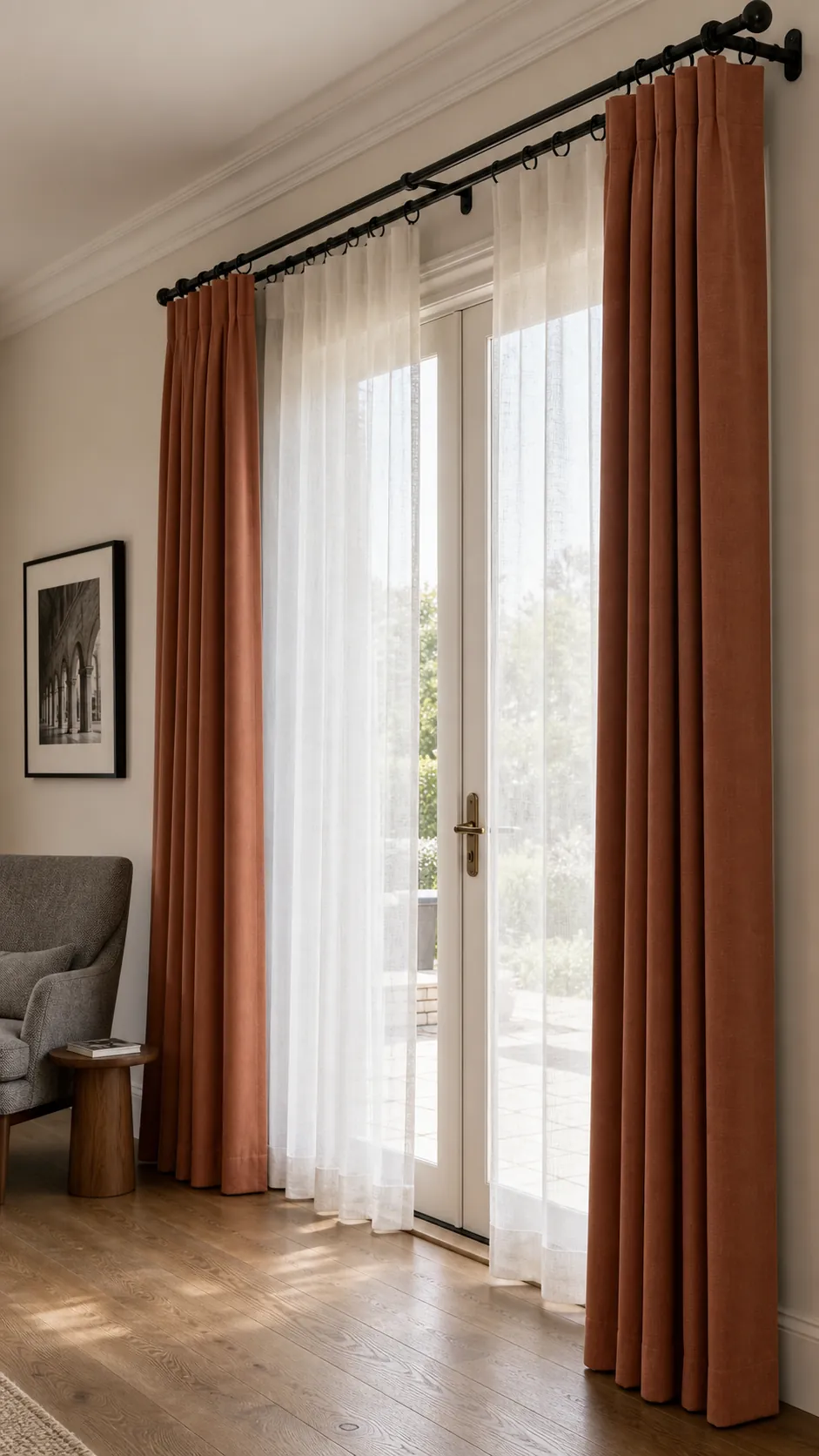
Slim Vertical Cellular Shade
A vertical cellular treatment stacks tightly at the side and can cover a wide pair of patio doors without floor-length cloth. It is a useful alternative when insulation and minimal stack-back matter more than a traditional draped look.
Choose the stack side around the active leaf and verify the bottom track will not create a threshold hazard. A professional measure is valuable where trim, floors, or openings are not square.
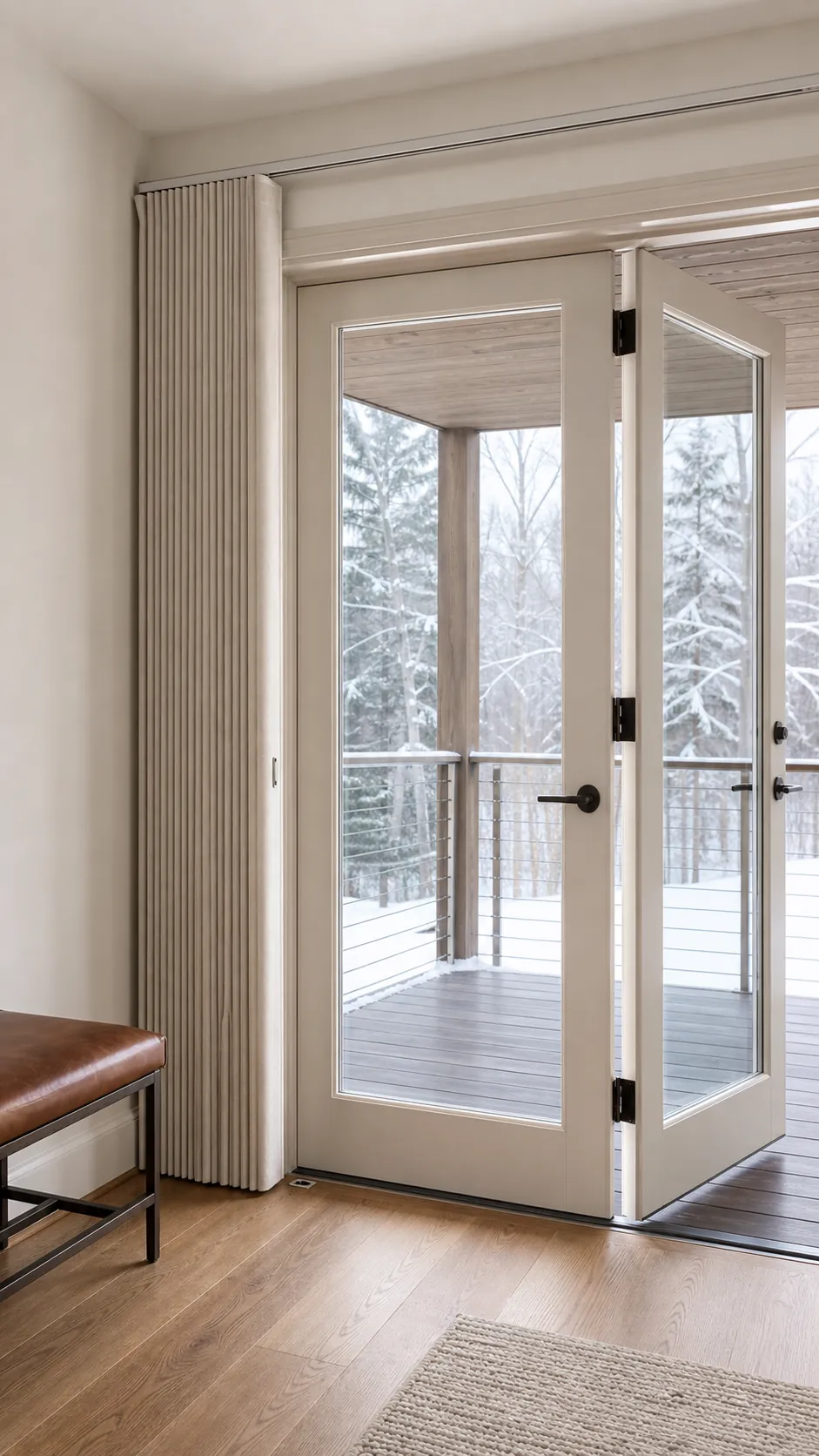
Patterned Panels as a Patio Color Bridge
A small-scale botanical or block print can connect indoor textiles with patio greenery without competing with divided-light doors. Keep the pattern colors limited and let the panels frame the view when open.
View a full repeat beside the actual daylight before committing. Large high-contrast motifs can become visually choppy when folded into a narrow stack.
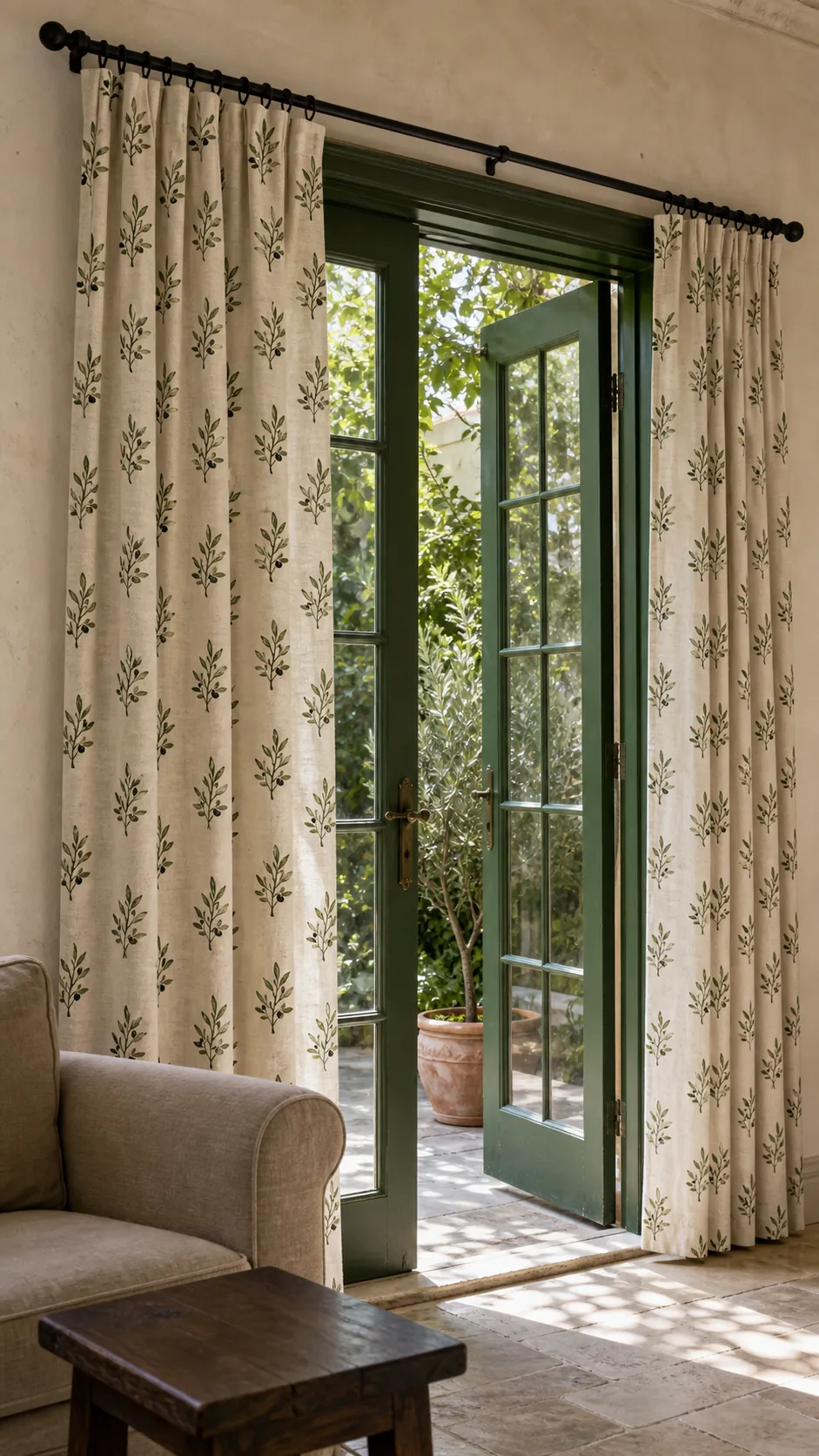
Minimal Holdbacks for Daily Door Use
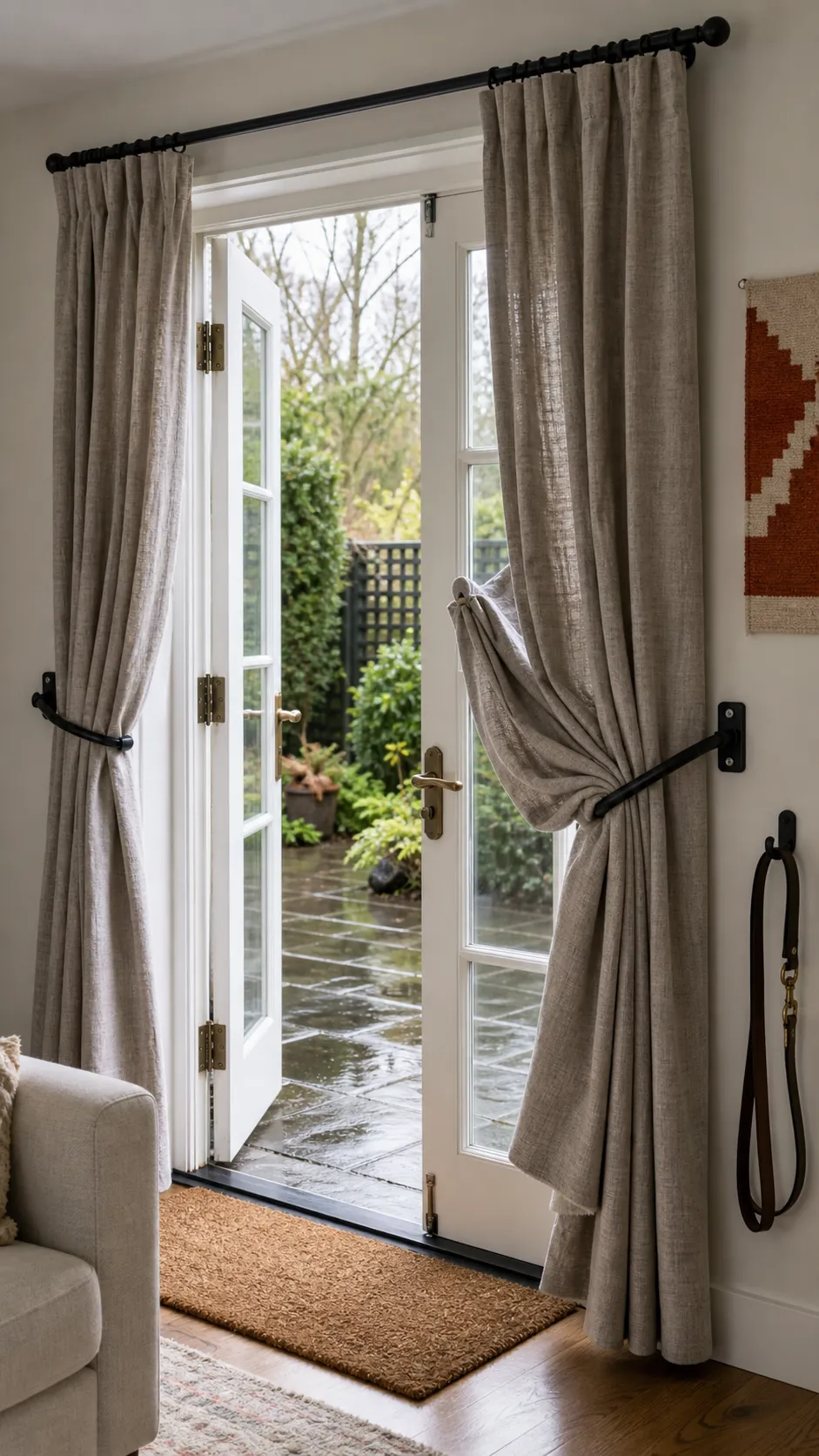
Sometimes the improvement is not a new curtain but a better holdback. Low-profile metal arms can secure existing panels beyond the handle and hinge path, reducing daily friction and keeping fabric away from wet shoes or a dog’s route outside.
Mount each holdback where the gathered fabric clears the open leaf without being stretched. Check the arrangement from both sides of the doorway, and choose a release that every household member can operate easily. A patio-door treatment succeeds when opening the door remains automatic, not a small negotiation with fabric every time.