
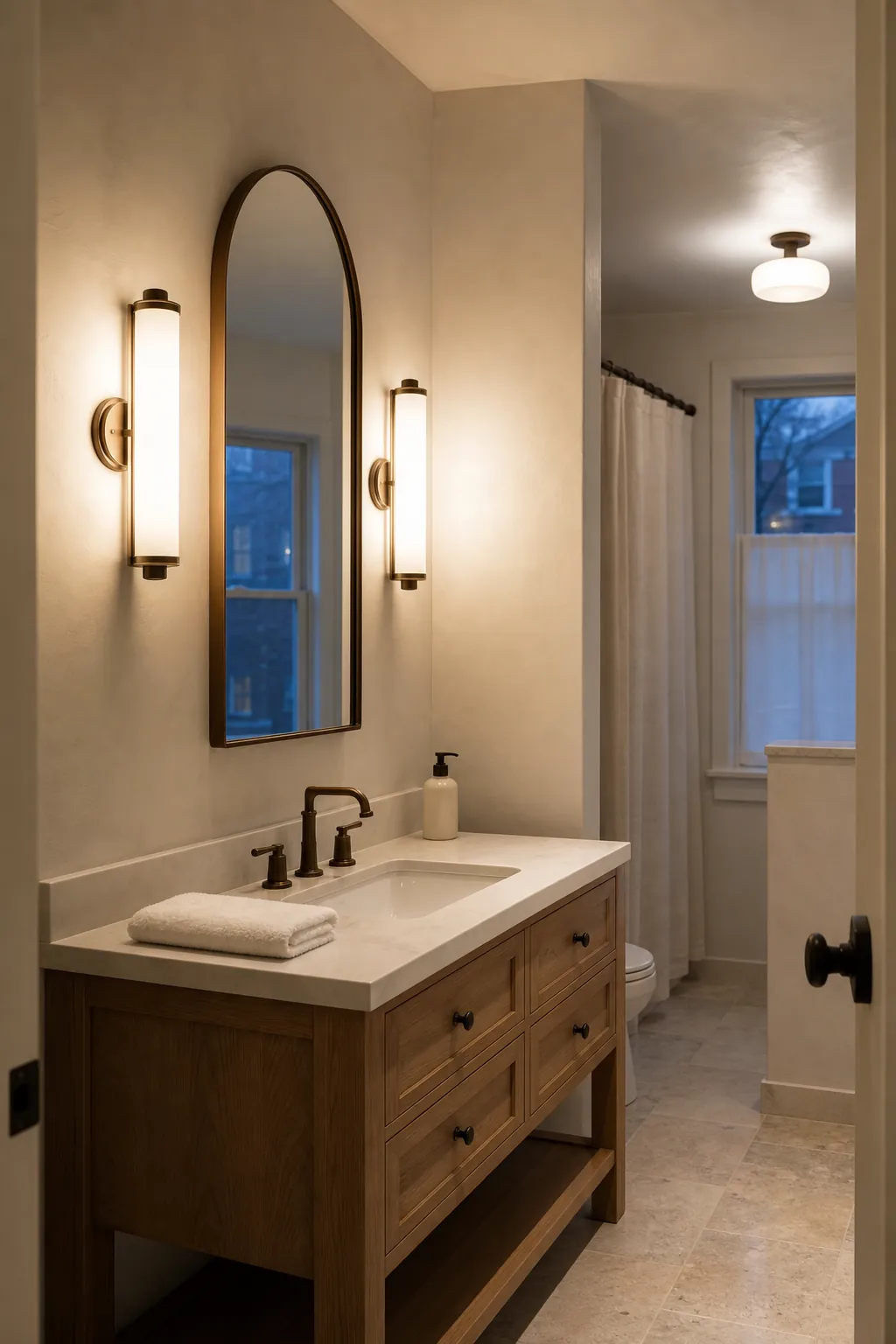
Soft bathroom lighting is not the same as dim bathroom lighting. A vanity still has to reveal skin tone, makeup, shaving edges, and small details; it simply should not make the mirror feel like an interrogation lamp. The most comfortable schemes combine diffused light near face level, accurate color rendering, sensible brightness, and separate controls so the room can shift from morning task light to evening calm.
Before choosing a look, confirm the electrical boxes, mirror dimensions, clearances, local bathroom zones, and required damp or wet rating with a qualified electrician. Then use these bathroom vanity lighting ideas as design directions rather than rigid formulas. A soft mood comes from how light reaches the room—not from one magic fixture.
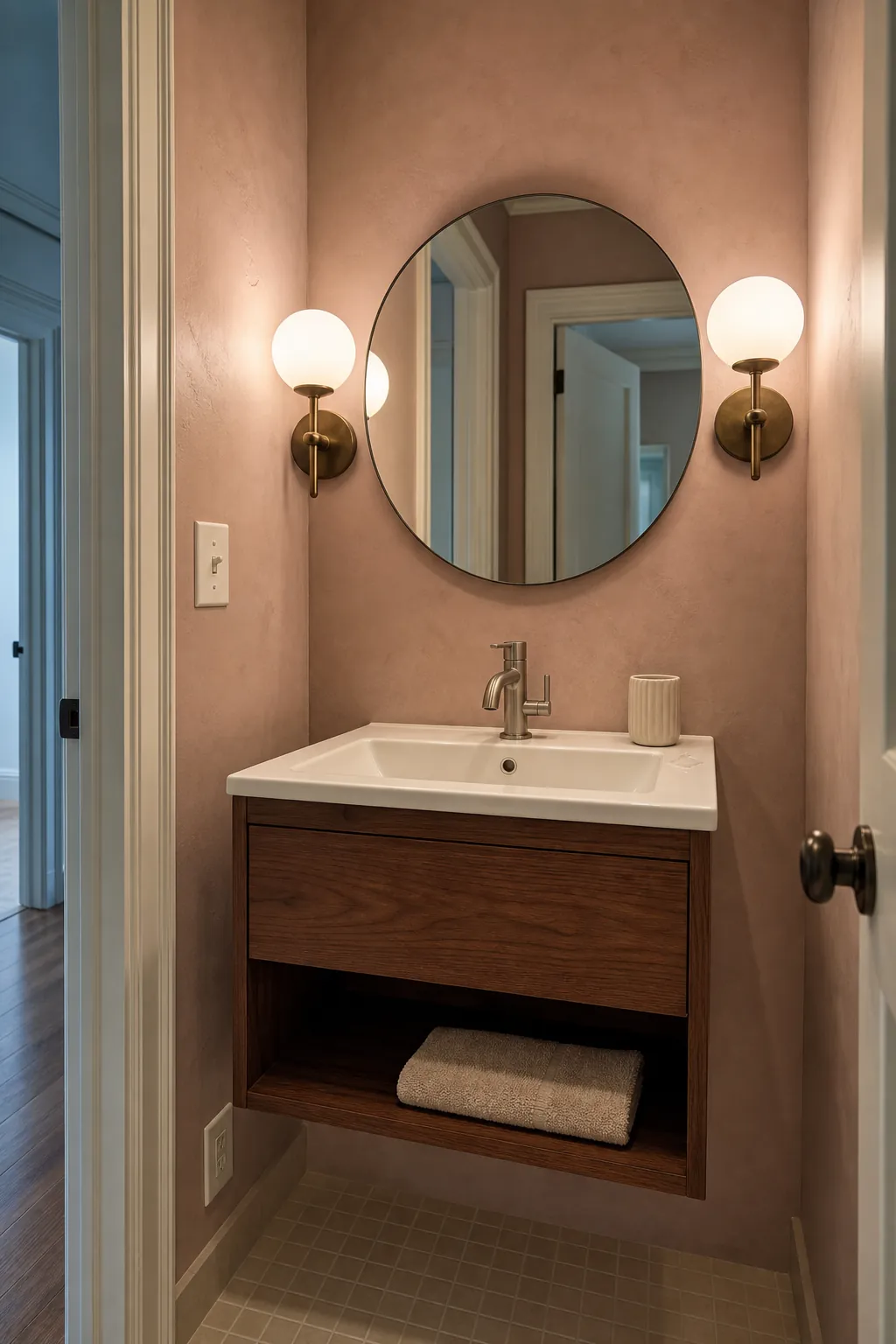
Opal globe sconces beside a round mirror
Milky opal globes turn a visible bulb into an even luminous surface. Flank a round mirror with compact globes at roughly face height, leaving enough clearance to clean the glass and open nearby cabinets. The repeated curves relax a small powder room, while a high-CRI 3000K source keeps the result warm but useful.
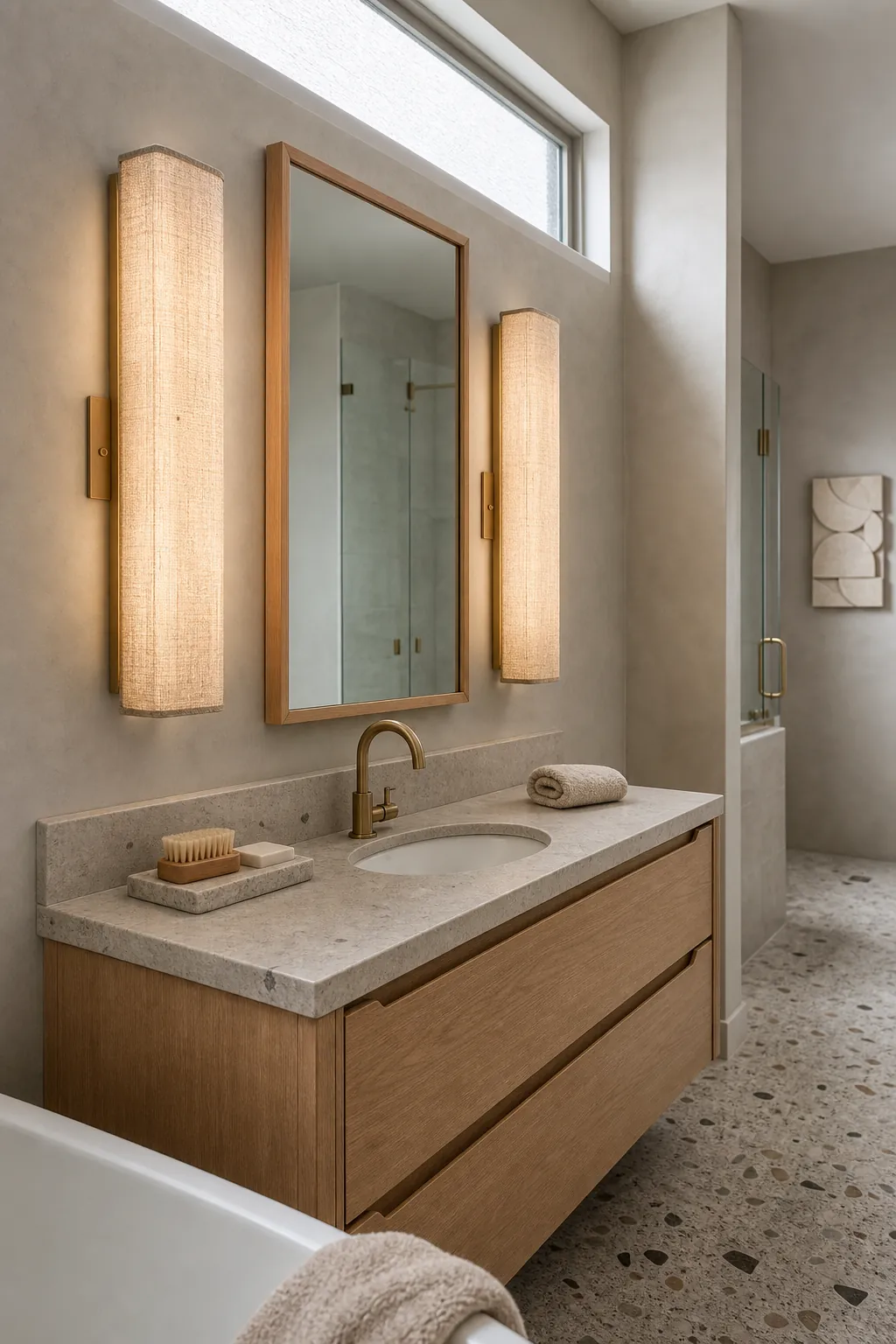
Vertical linen-shade lights for gentle diffusion
Tall fabric-look shades spread light across more of the face than a small point source. Choose shades and fixtures specifically listed for bathroom use rather than adapting ordinary lampshades. A natural linen appearance pairs especially well with oak, travertine, limewash, and quiet warm-white bathroom decor.
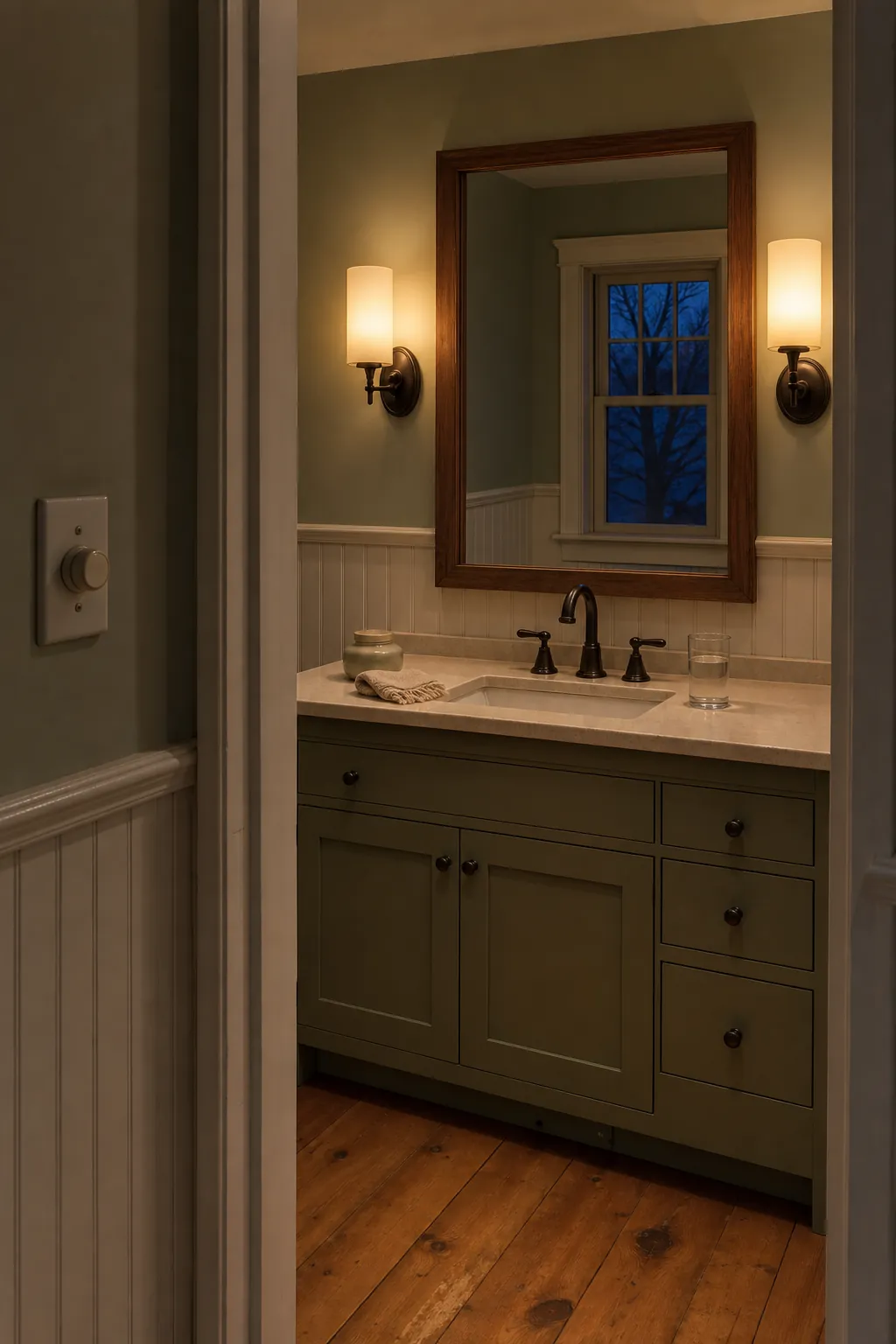
Warm-dim sconces for day-to-night flexibility
A warm-dim LED becomes warmer in appearance as it dims, creating a transition that standard 3000K lamps often cannot. Use full output for grooming and a low amber-leaning level during a late bath. Confirm the lamp, driver, and dimmer are mutually compatible; flicker and poor low-end control will ruin the softer mood.
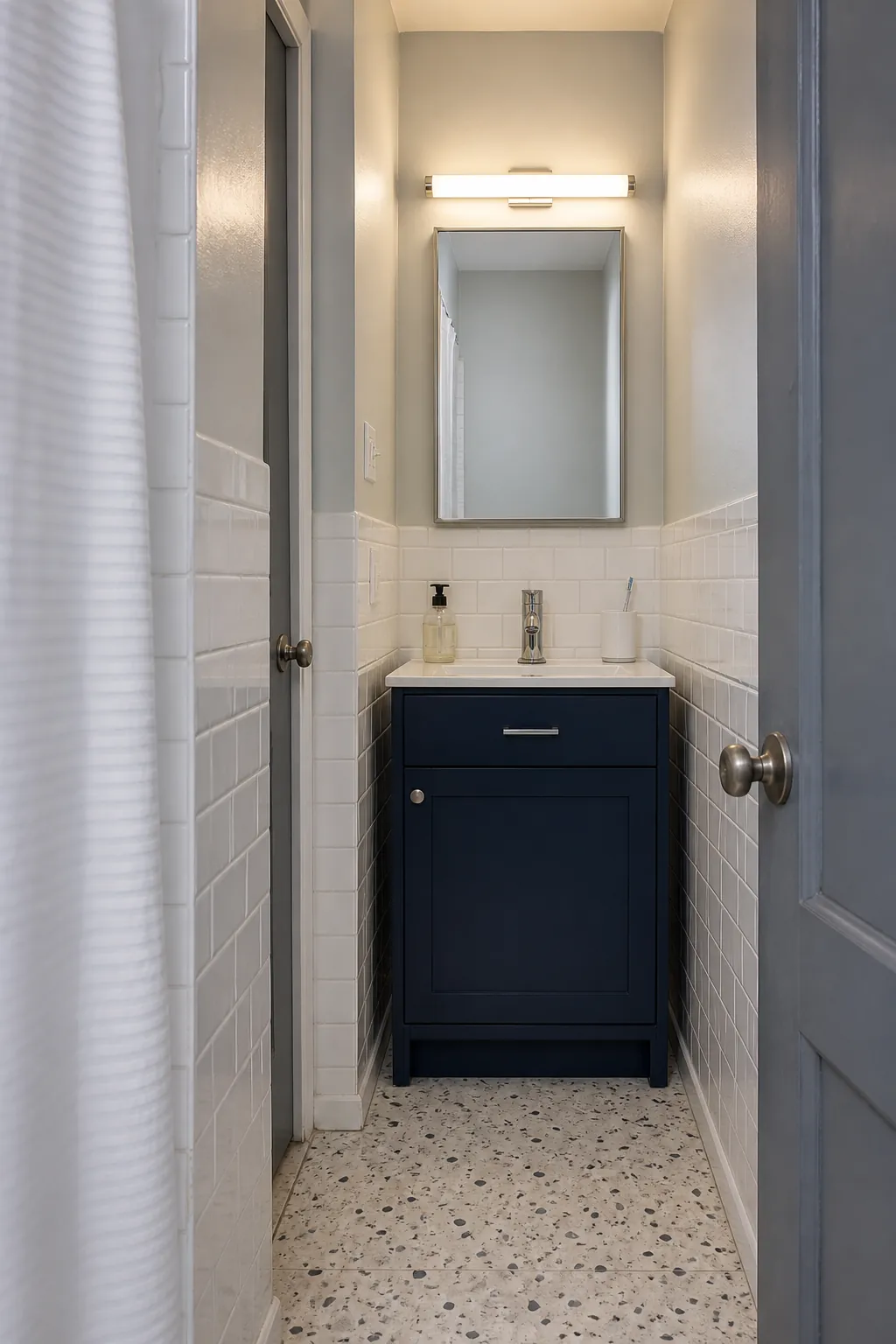
A frosted bar above a narrow vanity
When side sconces will not fit, a wide frosted bar is kinder than a row of exposed bulbs. Size it to the mirror rather than the entire wall, and choose a shade that sends some light forward instead of only washing the ceiling. A clean horizontal line can also make a narrow vanity feel wider and calmer.
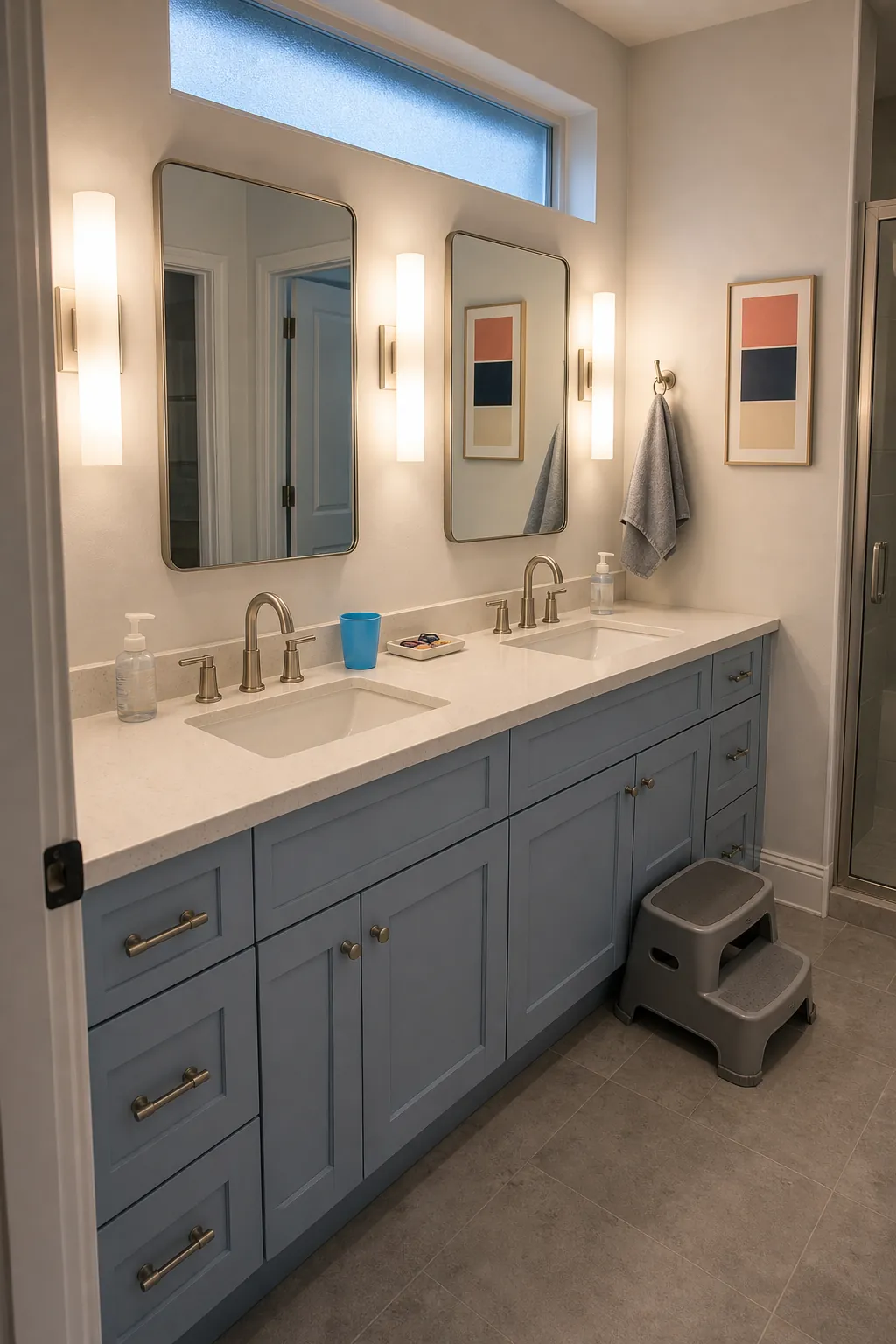
Three sconces across a double vanity
For two mirrors, place one sconce at each outer edge and one between them. That middle source fills the shadow that can form between two isolated pairs while using less wall space than four fixtures. Keep all three at the same height and confirm the central backplate fits the available gap.
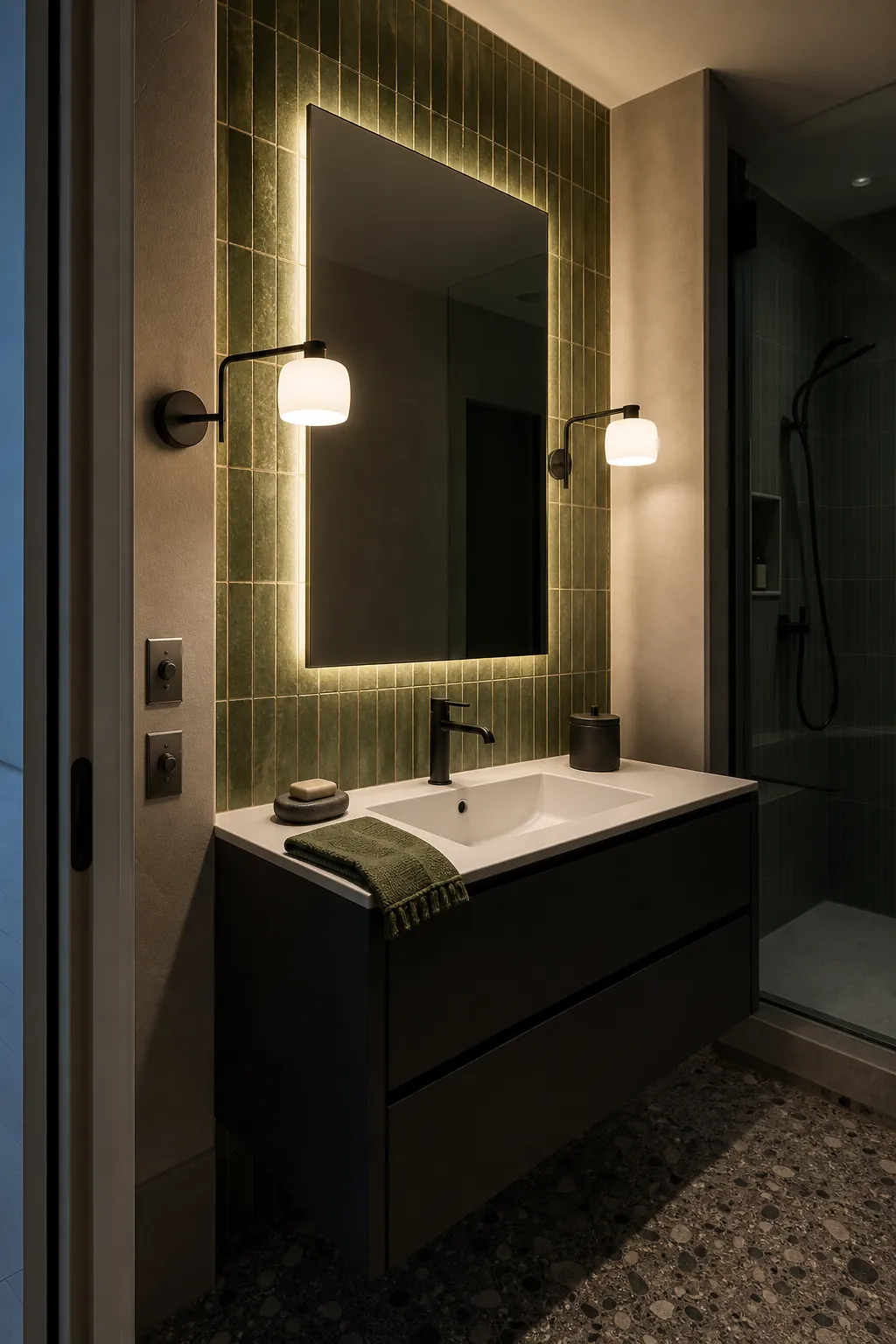
Backlit mirror plus separate face lighting
A backlit mirror makes the wall glow beautifully, but that halo mostly lights the surface behind the glass. Pair it with small forward-facing sconces or integrated front light so the face is not left in silhouette. Put the halo and task lights on separate controls to keep the atmospheric option truly soft.
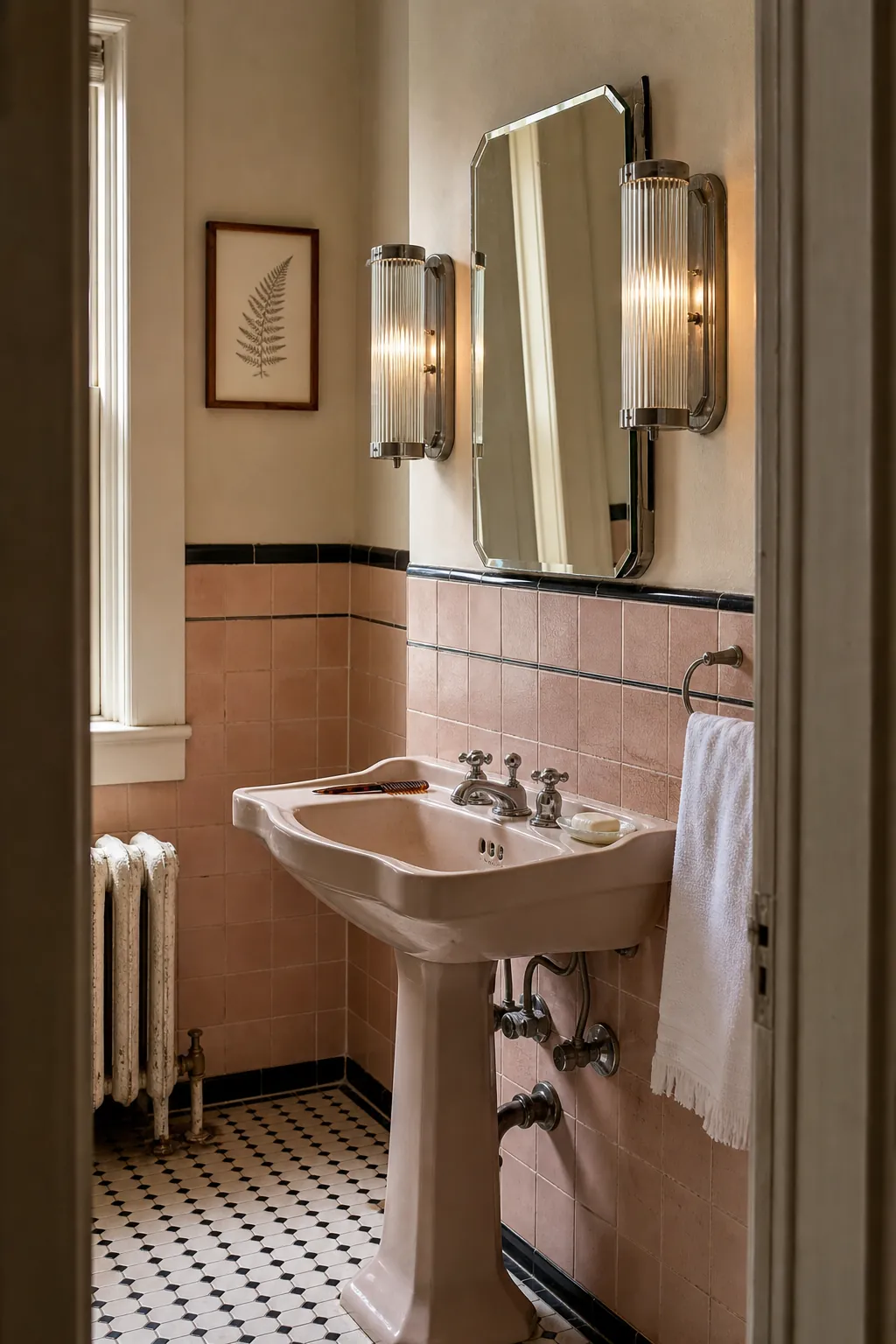
Reeded glass shades that blur the bulb
Ribbed glass bends and scatters light while adding texture to a simple vanity. Look for a design in which the lamp is not painfully visible through the flutes, and use a frosted bulb if the fixture permits replaceable lamps. The combination gives vintage character without the glare of clear seeded glass.
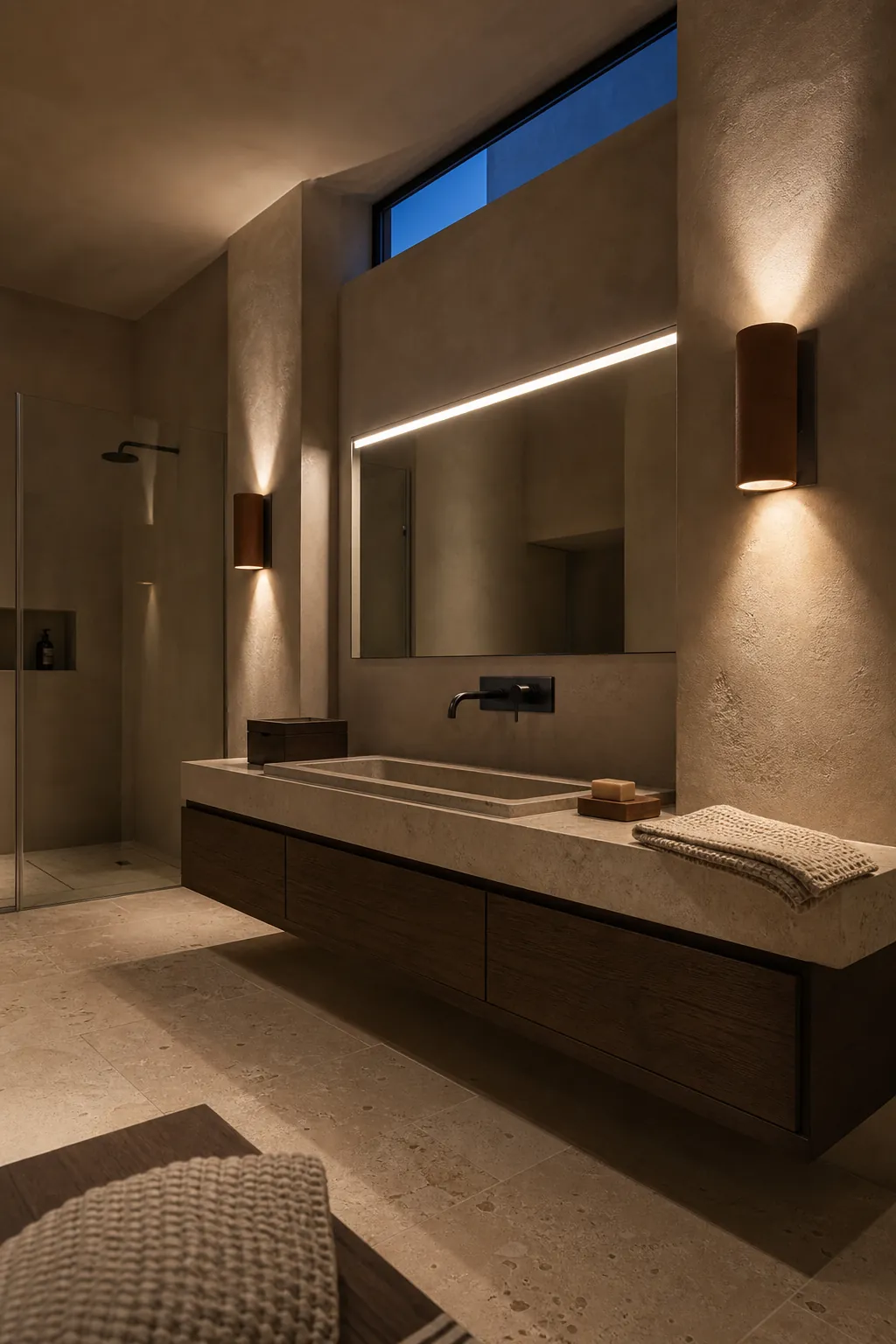
Up-and-down wall lights for layered glow
A shielded fixture that sends light upward and downward can create a peaceful wall wash without a bare source in view. It works best as a mood layer beside adequate mirror lighting, not as the only grooming light. Use it to reveal plaster, tile, or wood grain and to reduce the contrast between a bright vanity and a dark room.
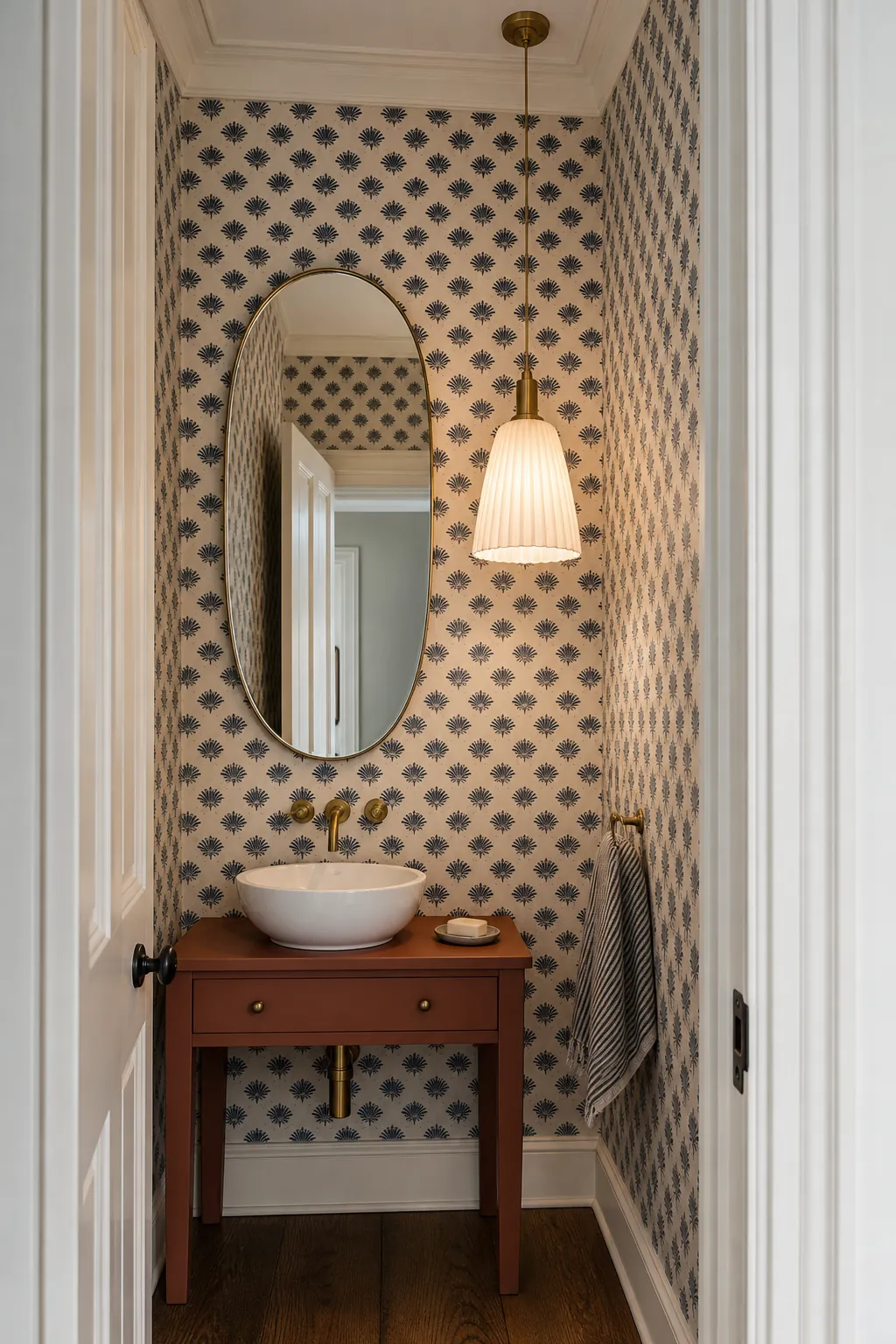
A ceiling pendant beside an offset mirror
In a powder room with a high ceiling, one pendant can fill an awkward side gap and bring light closer to face level. Keep it well outside splash and head-clearance zones, and use a broad diffuser rather than a tiny clear globe. The intentionally asymmetric layout feels relaxed when the mirror, basin, and pendant share a clear visual axis.
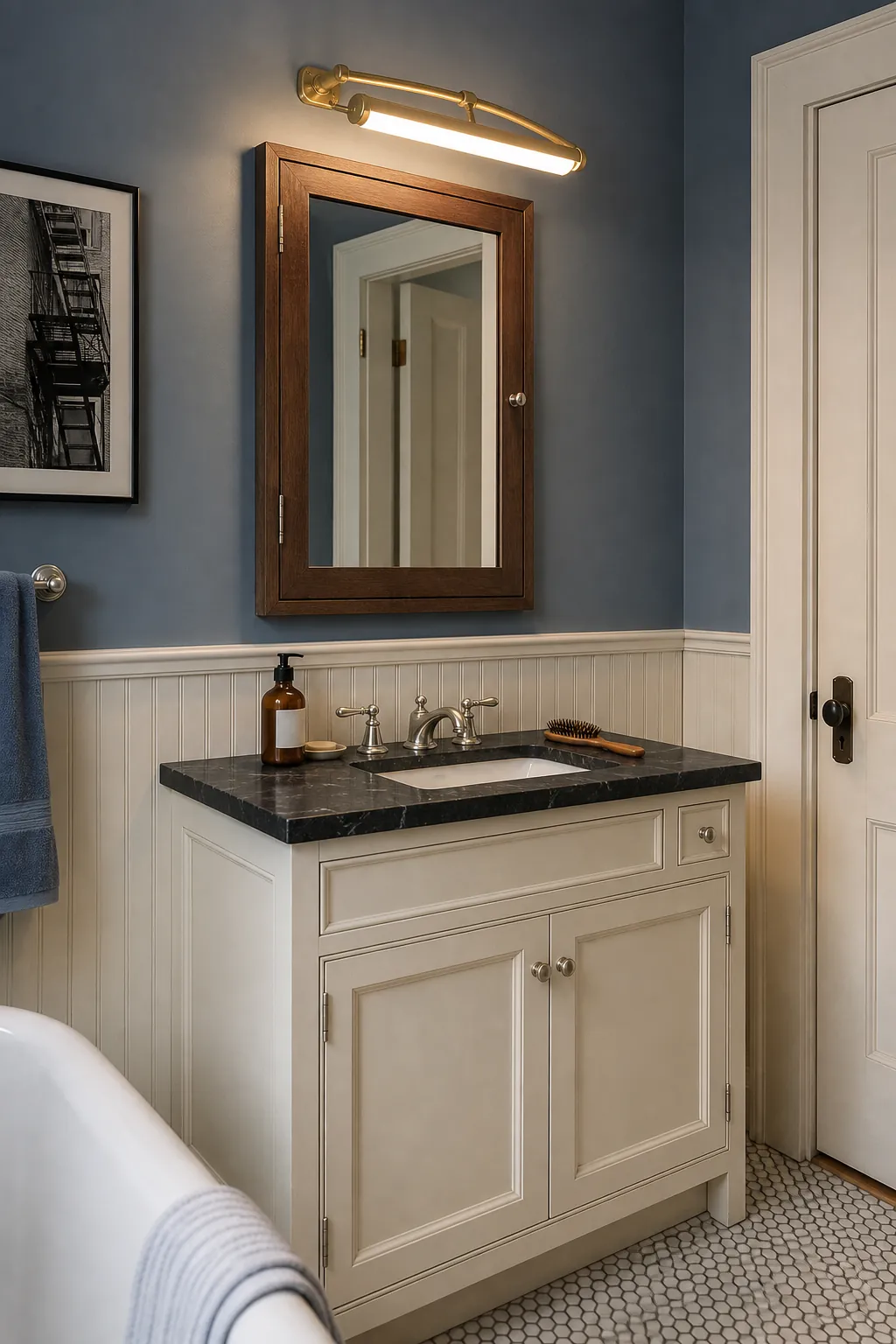
Low-profile picture lights over medicine cabinets
A slim picture-light silhouette can soften a recessed medicine cabinet without consuming side-wall space. Select a fixture designed to project light toward the user, not only down the mirror face, and verify the cabinet door can open. A dimmable frosted lens keeps the traditional shape from becoming harsh.
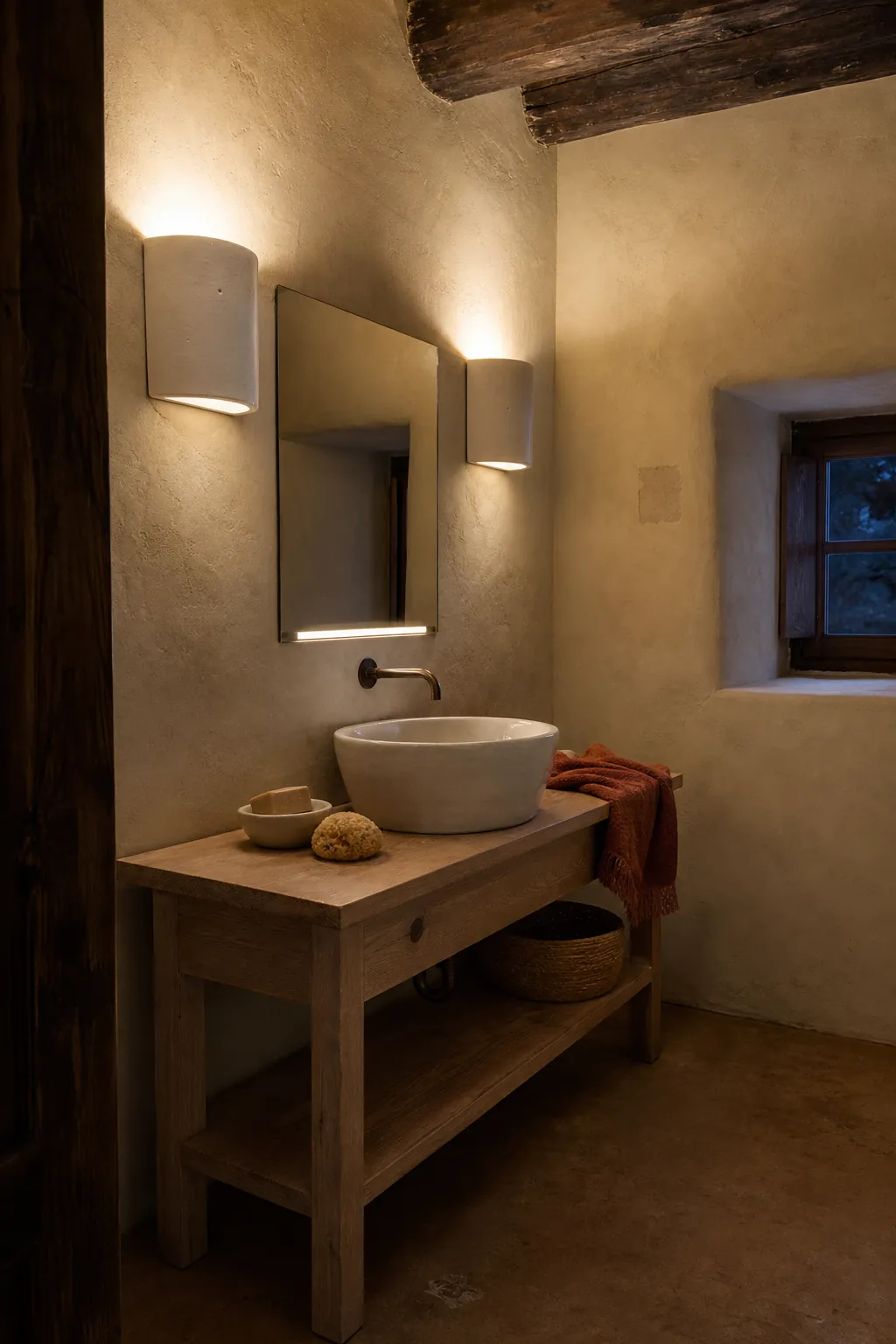
Ceramic sconces that bounce light off the wall
Opaque ceramic sconces hide the lamp and bounce illumination from a pale wall, creating a gentle secondary layer. Their hand-finished surfaces suit bathrooms that need warmth more than shine. Pair them with a separate task source at the mirror so their quiet reflected glow can stay low in the evening.
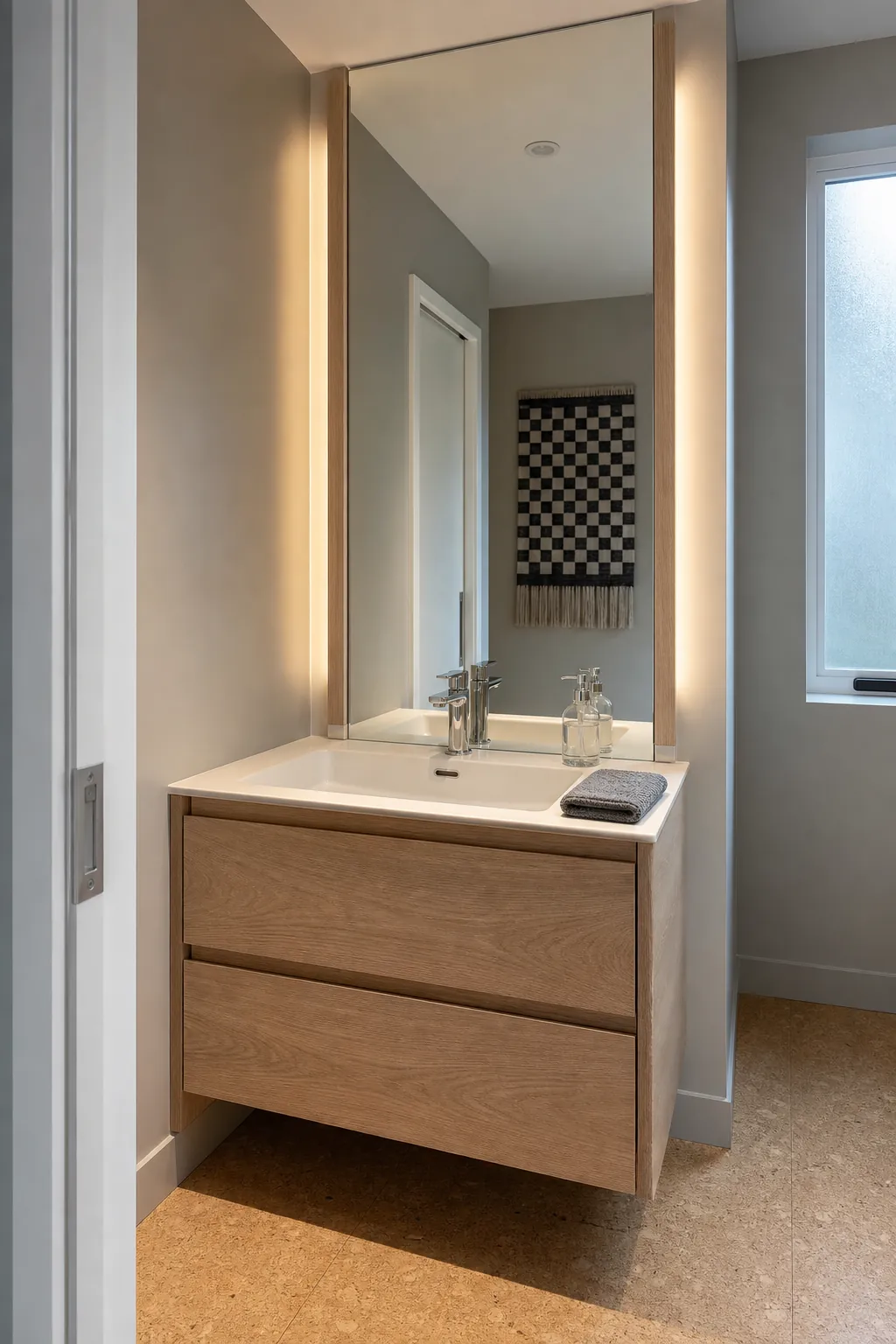
Slim LED strips concealed behind side trim
For a built-in look, hide linear LEDs behind shallow trim at the mirror’s sides so only reflected light is visible. The channel, diffuser, driver access, and heat management need proper planning; an exposed adhesive strip is not a finished bathroom detail. Done correctly, the vertical glow is even and visually quiet.
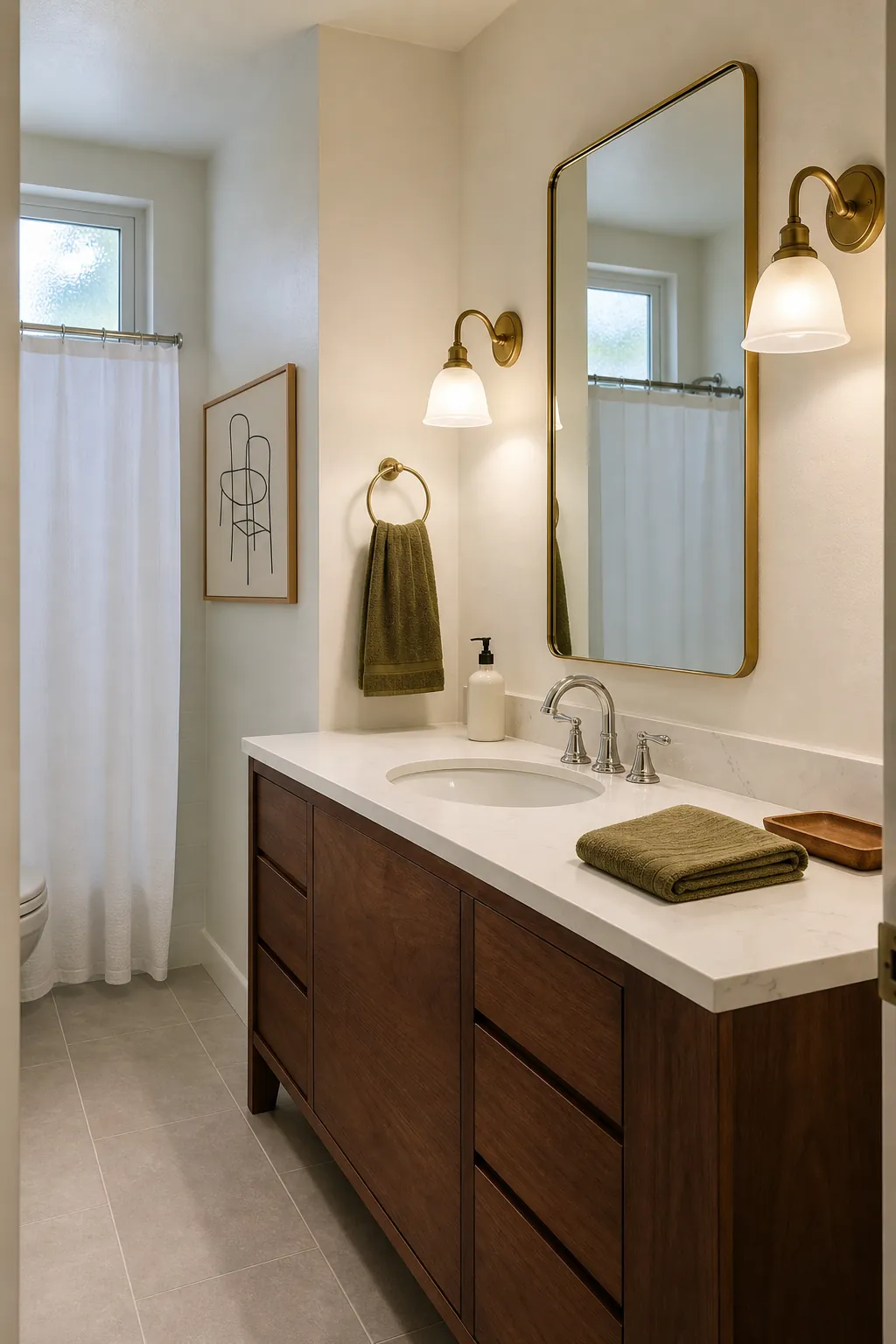
Aged brass with milky glass for warmth
Aged brass adds warmth even when the light itself remains a clean 3000K. Combine it with milky glass and repeat the metal once at a faucet, mirror edge, or cabinet pull. The finish should create small highlights, not turn the whole bathroom yellow; neutral walls and high-CRI lamps keep the palette balanced.
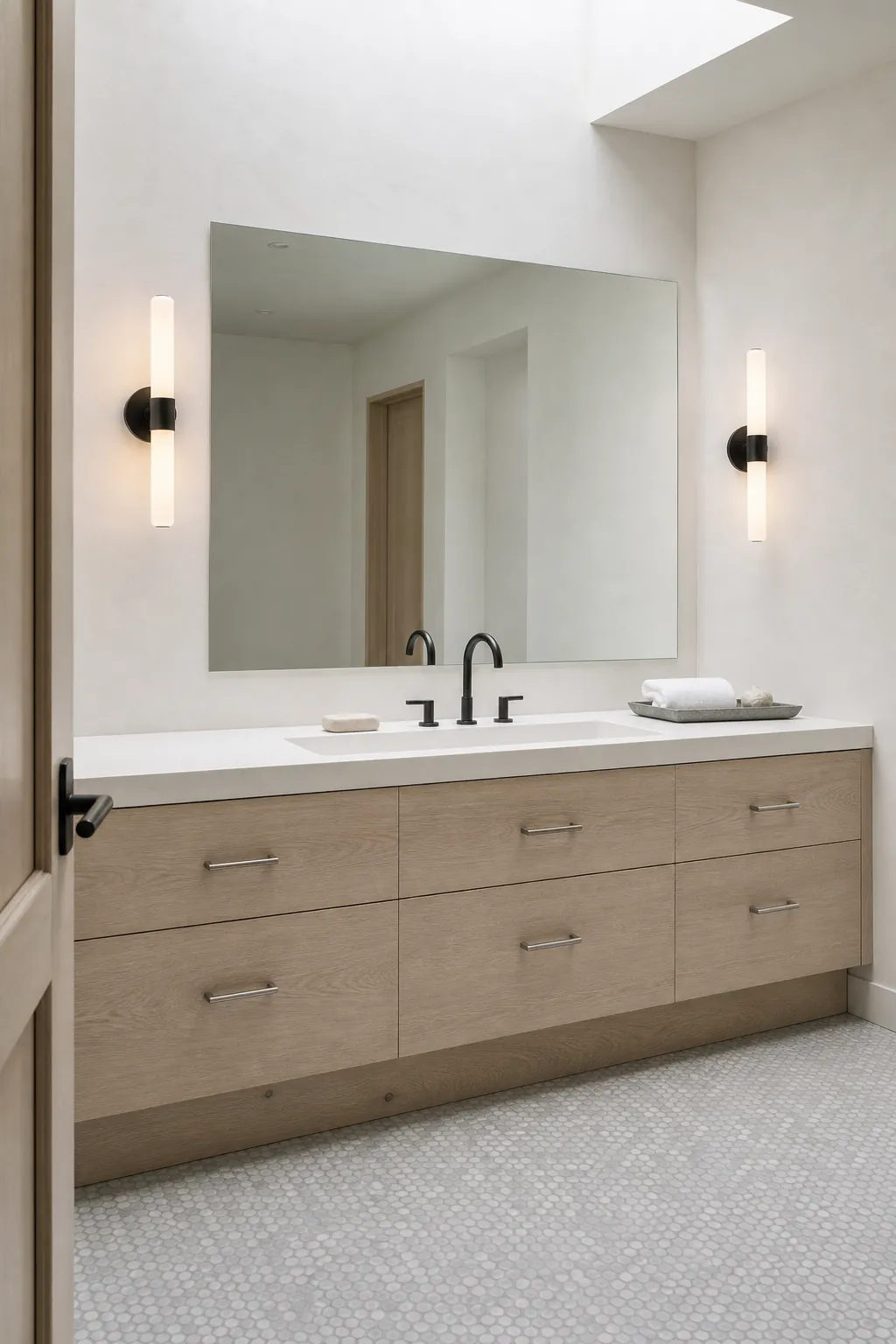
Matte black fixtures softened by pale walls
Black sconces can look gentle when their shades are diffused and the surrounding wall is light enough to reflect illumination. Choose slender forms with breathing room around the mirror instead of heavy cages or exposed bulbs. A soft wall color prevents the contrast from feeling stark while preserving a crisp outline.
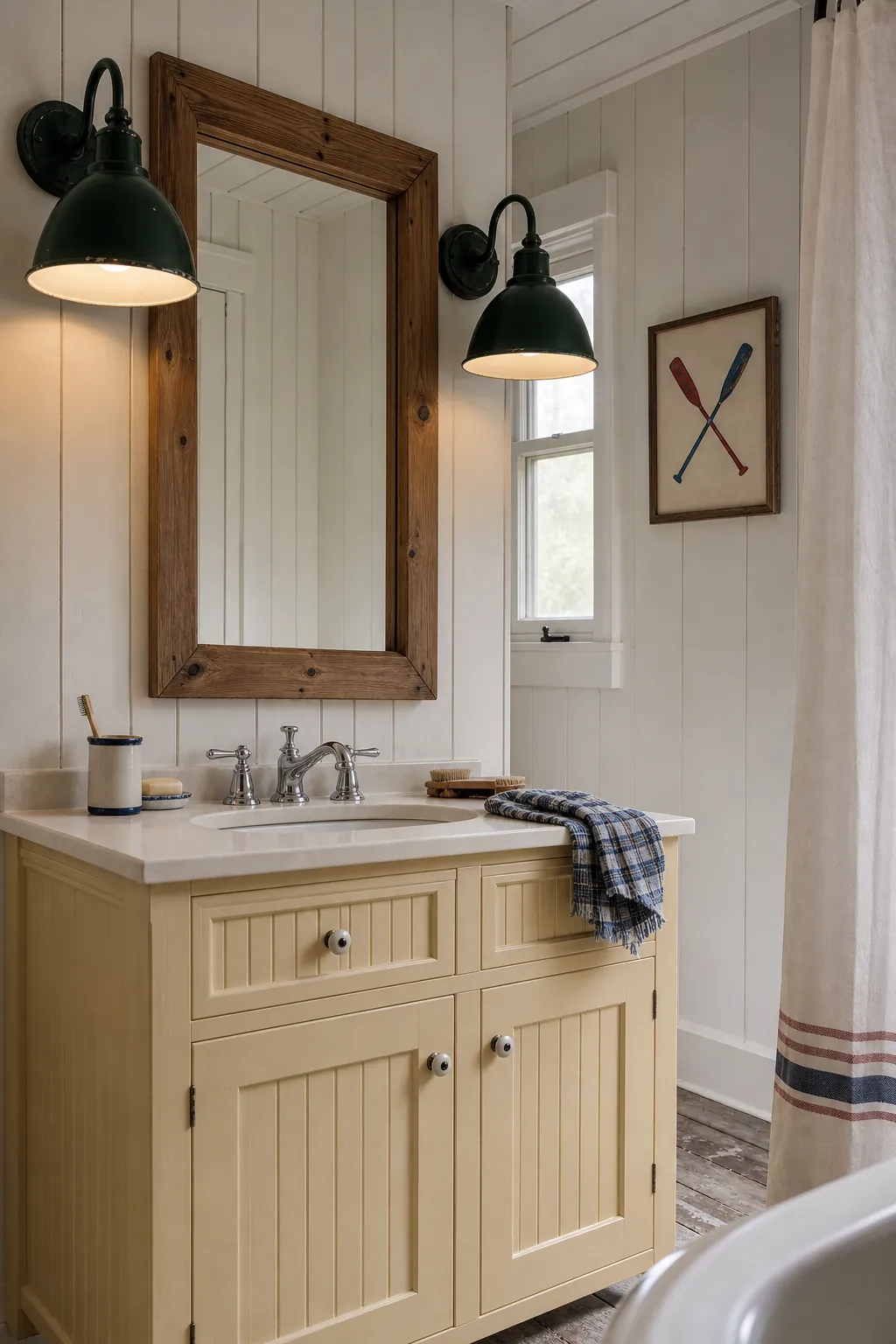
Dimmable globe bulbs hidden by deep shades
If you love a fixture with replaceable bulbs, choose shades deep enough that the glowing filament is not directly in your sightline. Frosted globe lamps distribute light more comfortably than clear Edison bulbs. Check maximum wattage, fixture rating, lamp dimensions, and dimmer compatibility before assuming any decorative bulb will work.
Side lights mounted through a mirror panel
Mounting sconces on a large mirror can multiply their glow and make a compact vanity feel deeper. This requires precise fabrication, approved wiring, and coordination before the mirror is installed; it is not a casual retrofit. Keep the reflected sources diffused, because mirrored glare doubles as readily as mirrored light.
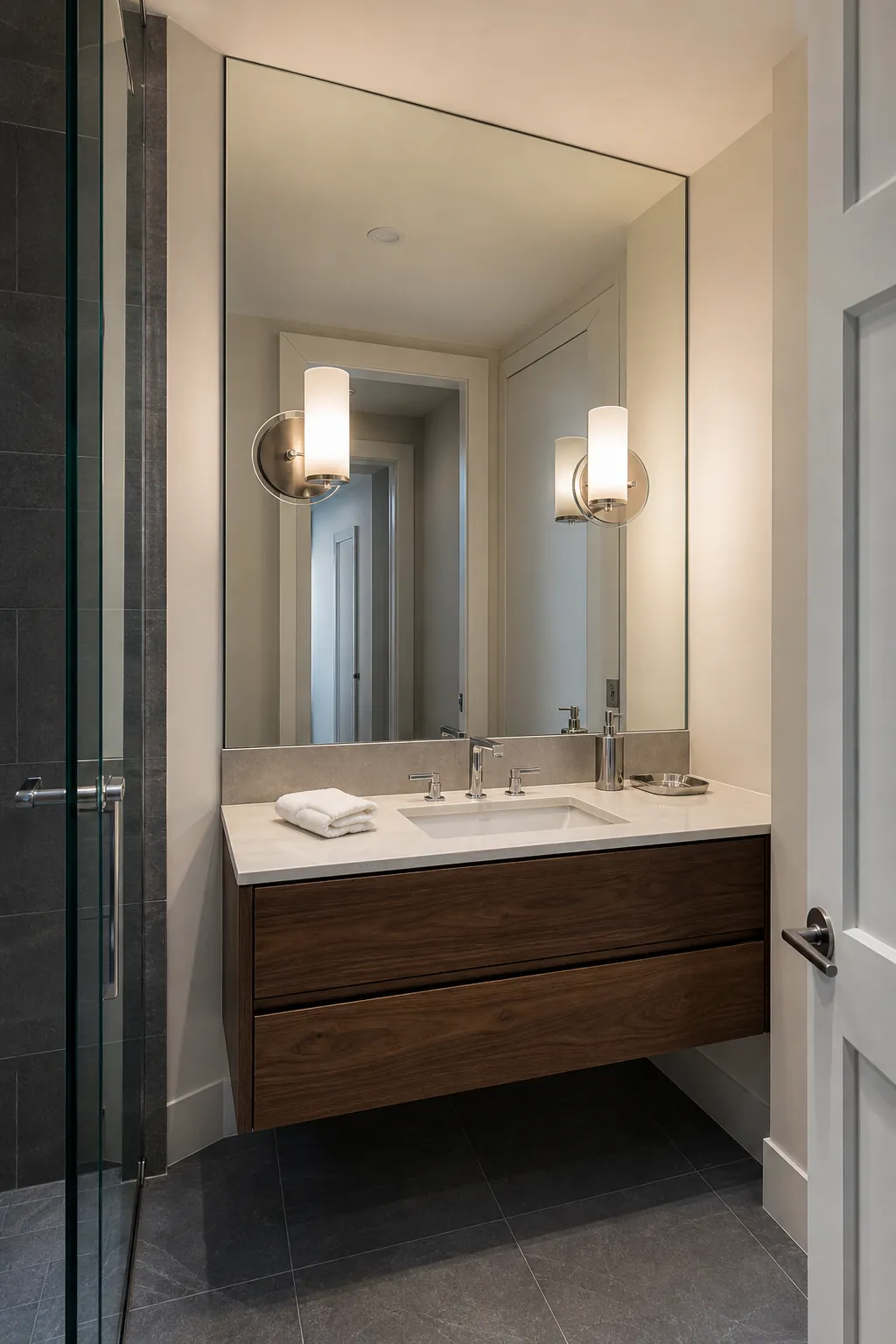
One sculptural sconce in a tiny powder room
A tiny powder room may have room for only one wall light. Treat it as a deliberate sculptural accent beside the mirror, then support it with soft ceiling ambient light so one side of the face is not lost. An opaque or frosted form keeps the close-range source comfortable.
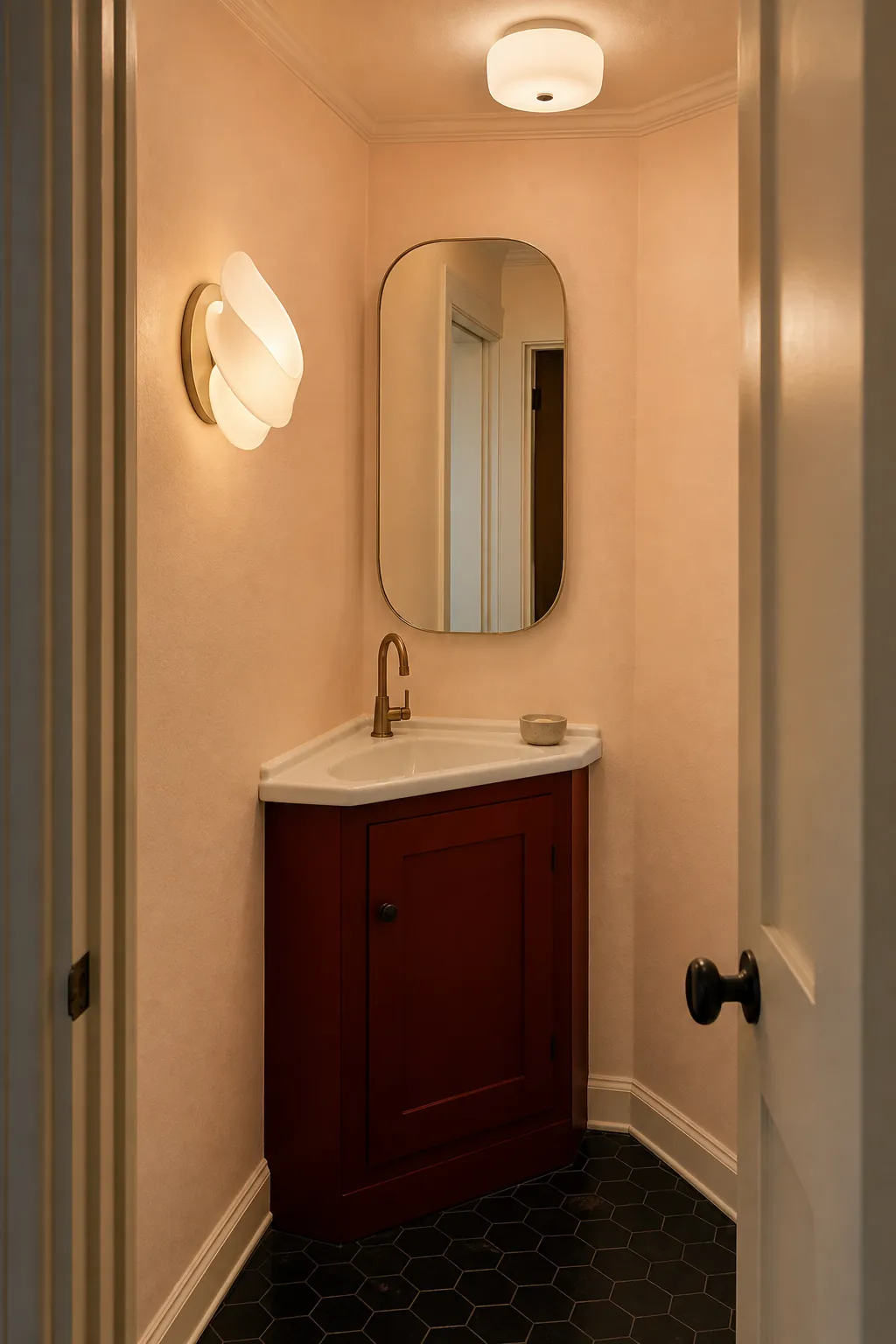
Translucent alabaster for a stone-like glow
Real or convincing composite alabaster turns each fixture into a softly veined lantern. It works beautifully with plaster, stone, and quiet wood, but the natural material varies and may reduce output. Use it where mood matters, then confirm that the total scheme still provides enough task light for the mirror.
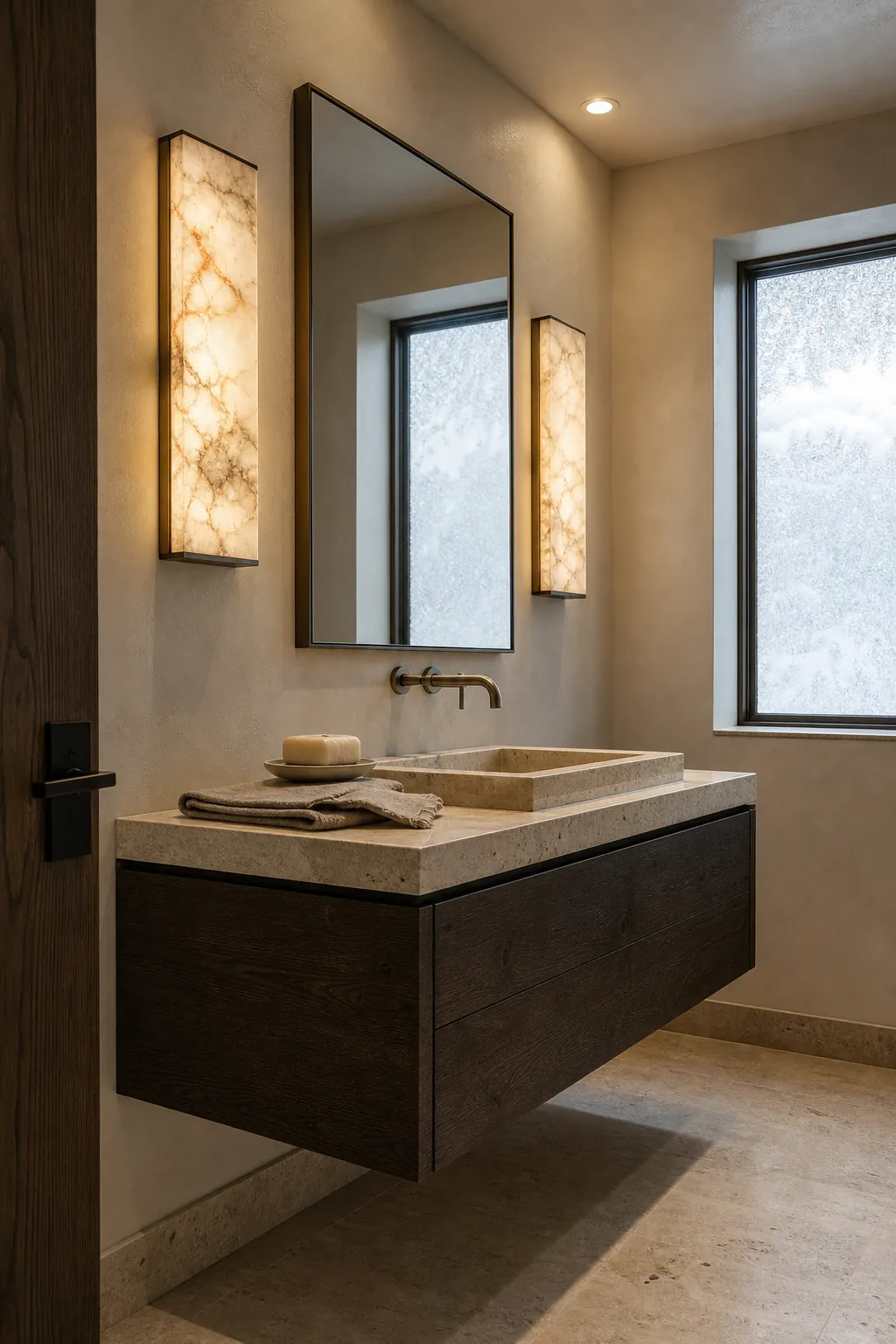
Layered ceiling and vanity lights on separate switches
Separate controls are one of the most useful luxury-feeling upgrades. Bright, even vanity lights can handle grooming; a quiet flush mount can handle general movement; a low night light can guide late visits. The ability to choose one layer is what creates softness, rather than forcing every fixture to be dim all the time.
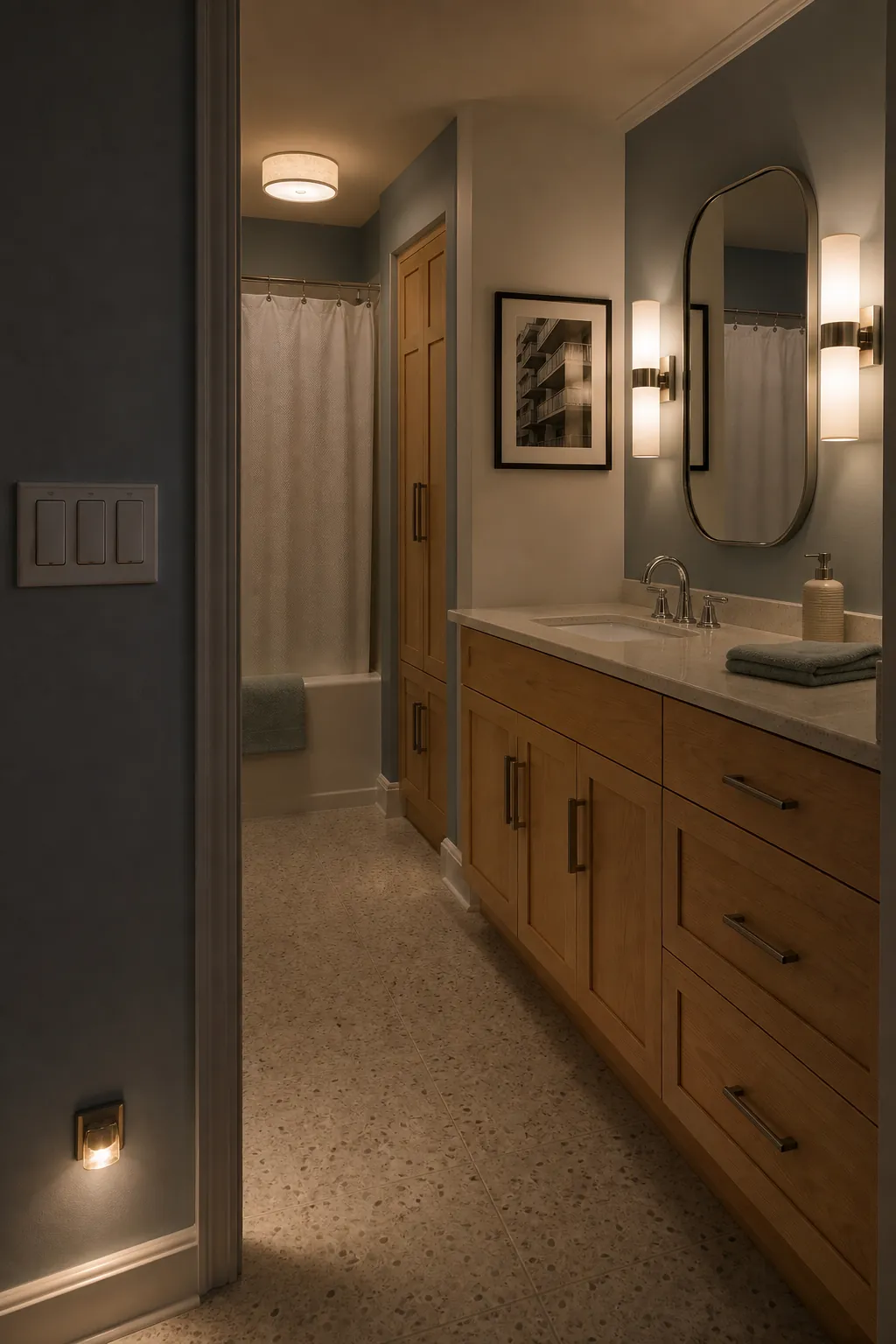
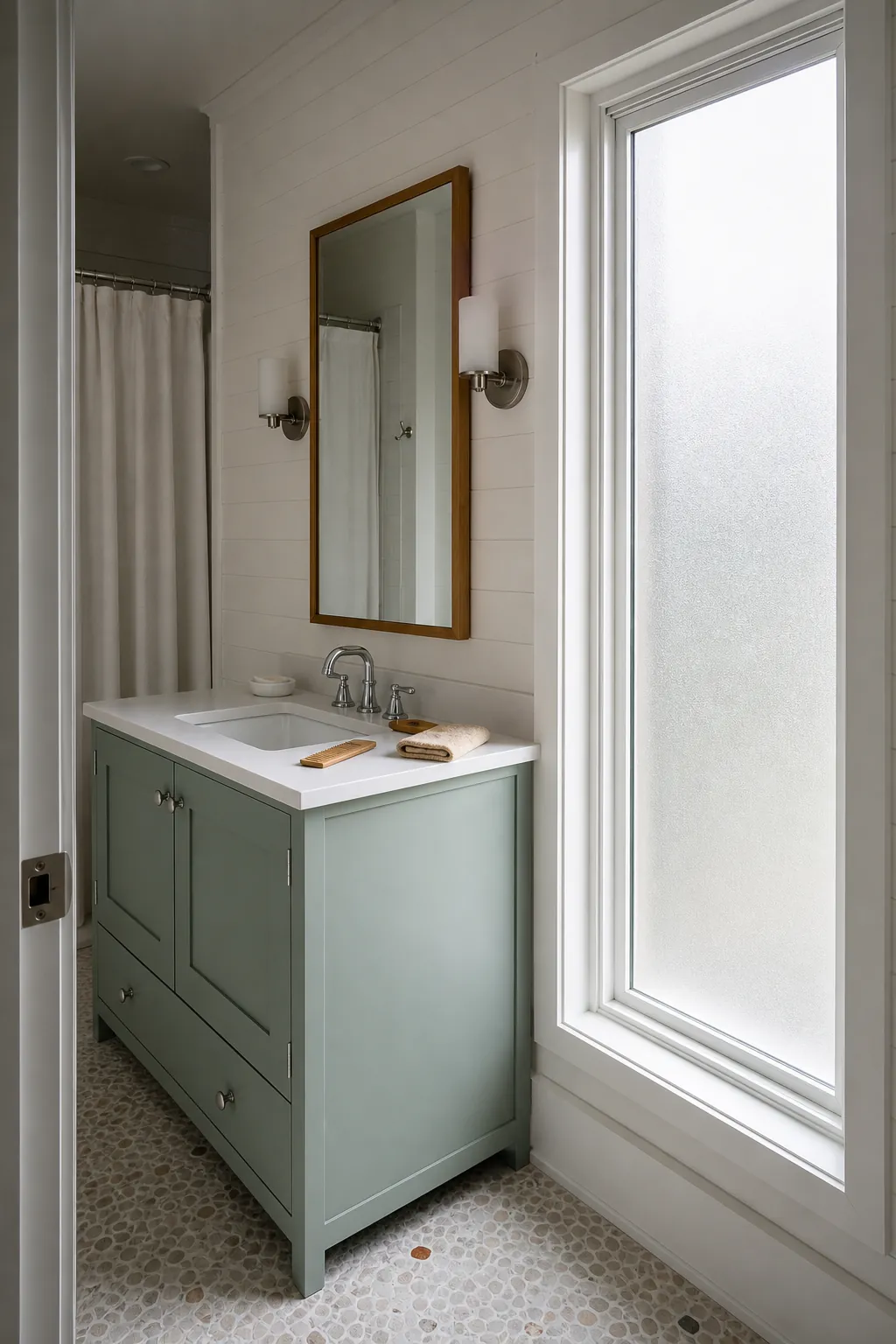
A mirror near the window for daylight softness
Positioning the vanity near a frosted window lets daylight become the gentlest task source for much of the day. Use the mirror to spread that light rather than reflect a cluttered view, and add dimmable sconces for dark hours. Privacy glass, moisture-resistant trim, and realistic window clearances are part of the plan.
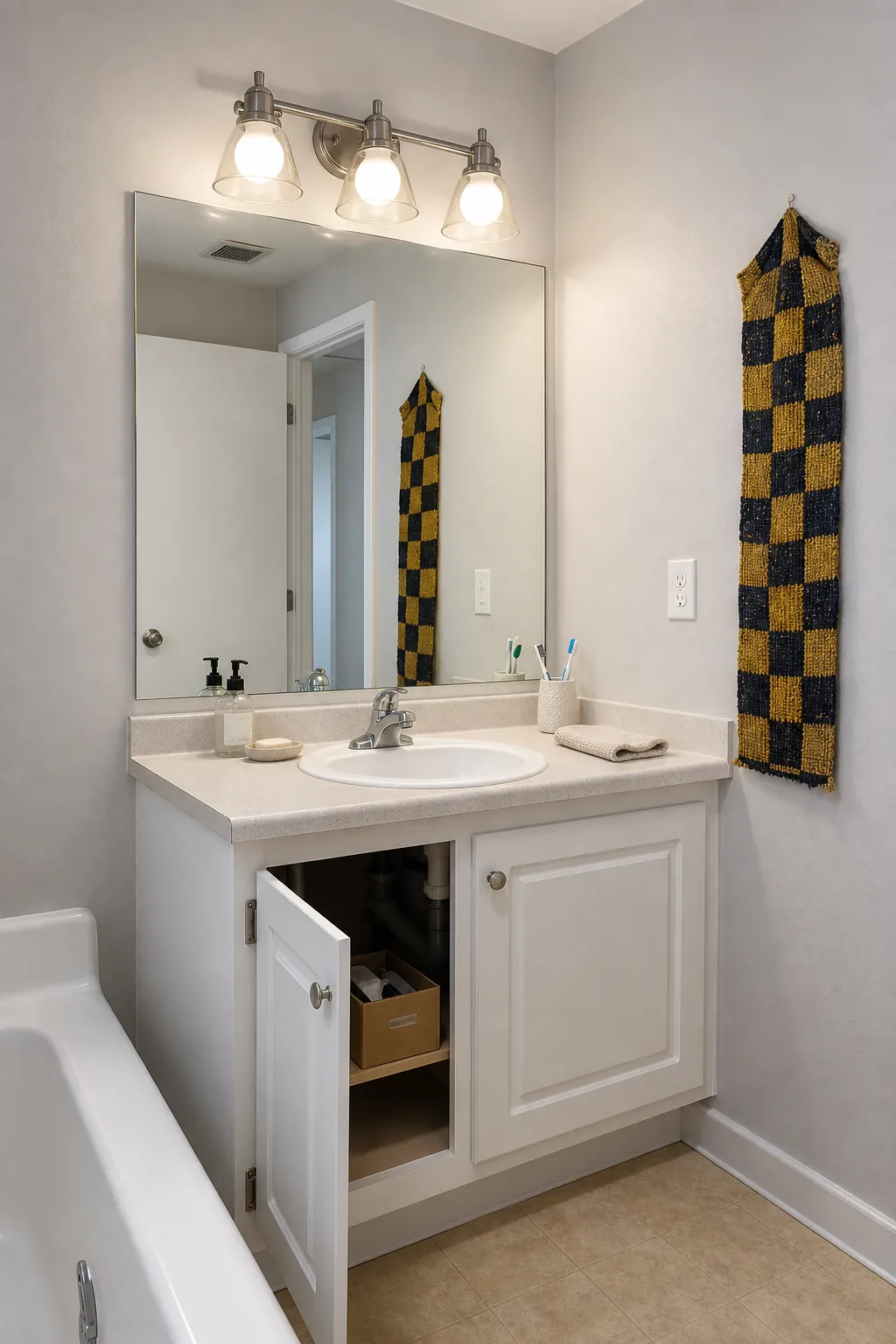
Low-glare lights for a renter-friendly refresh
Renters can sometimes replace an existing fixture and restore it later with permission, but even a bulb change can reduce glare. Choose frosted, high-CRI, dimmable lamps in a compatible color temperature, store the original parts, and avoid adhesive electrical improvisations near water. A plug-in lamp belongs only where code and outlet placement allow it.
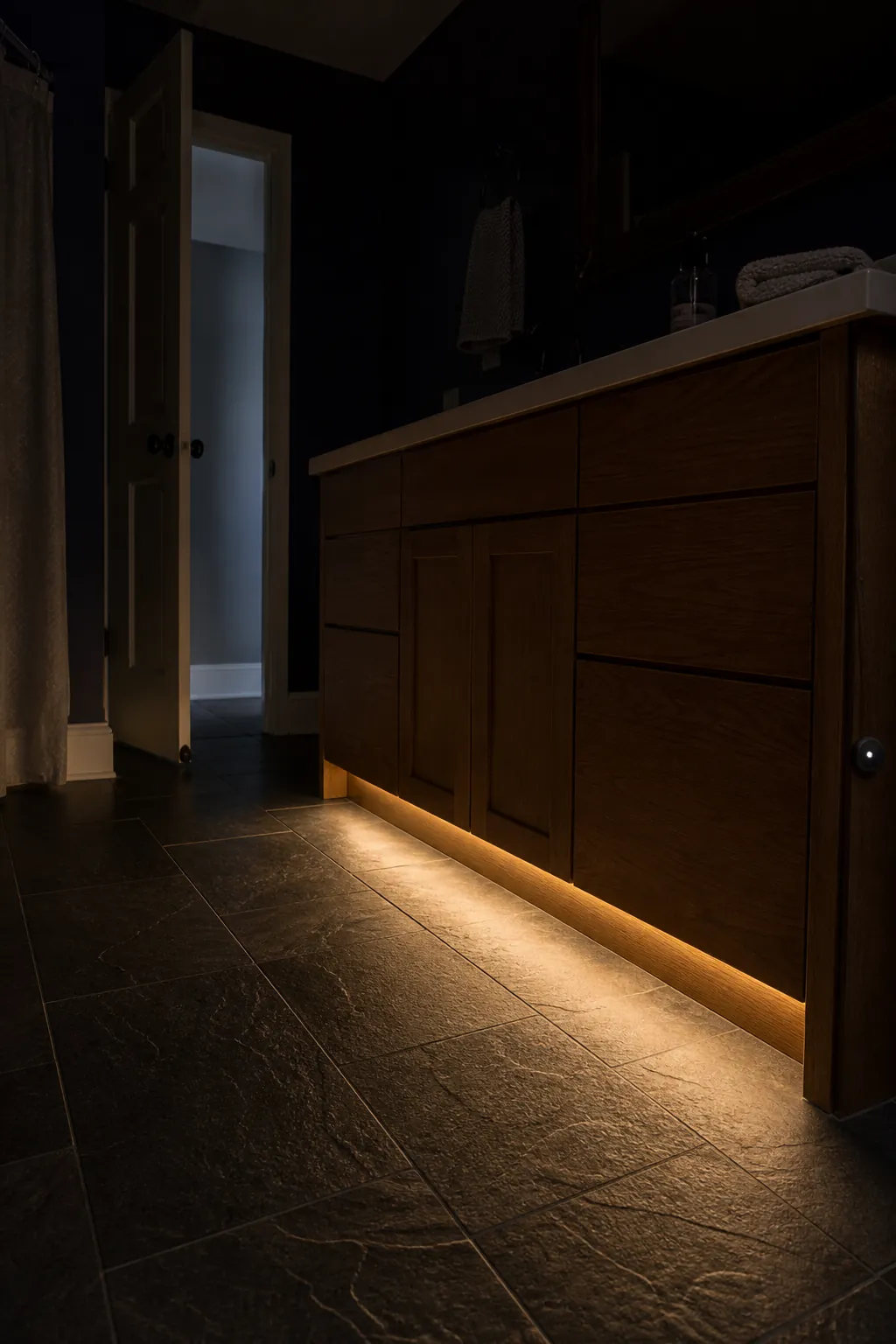
Hidden toe-kick lighting for late-night visits
A concealed low-output strip beneath a wall-mounted or recessed-toe-kick vanity can illuminate the floor without shining into sleepy eyes. Use a properly rated channel and power supply, keep it away from standing water, and place it on a motion sensor or separate control. It is wayfinding light, not a substitute for vanity task lighting.
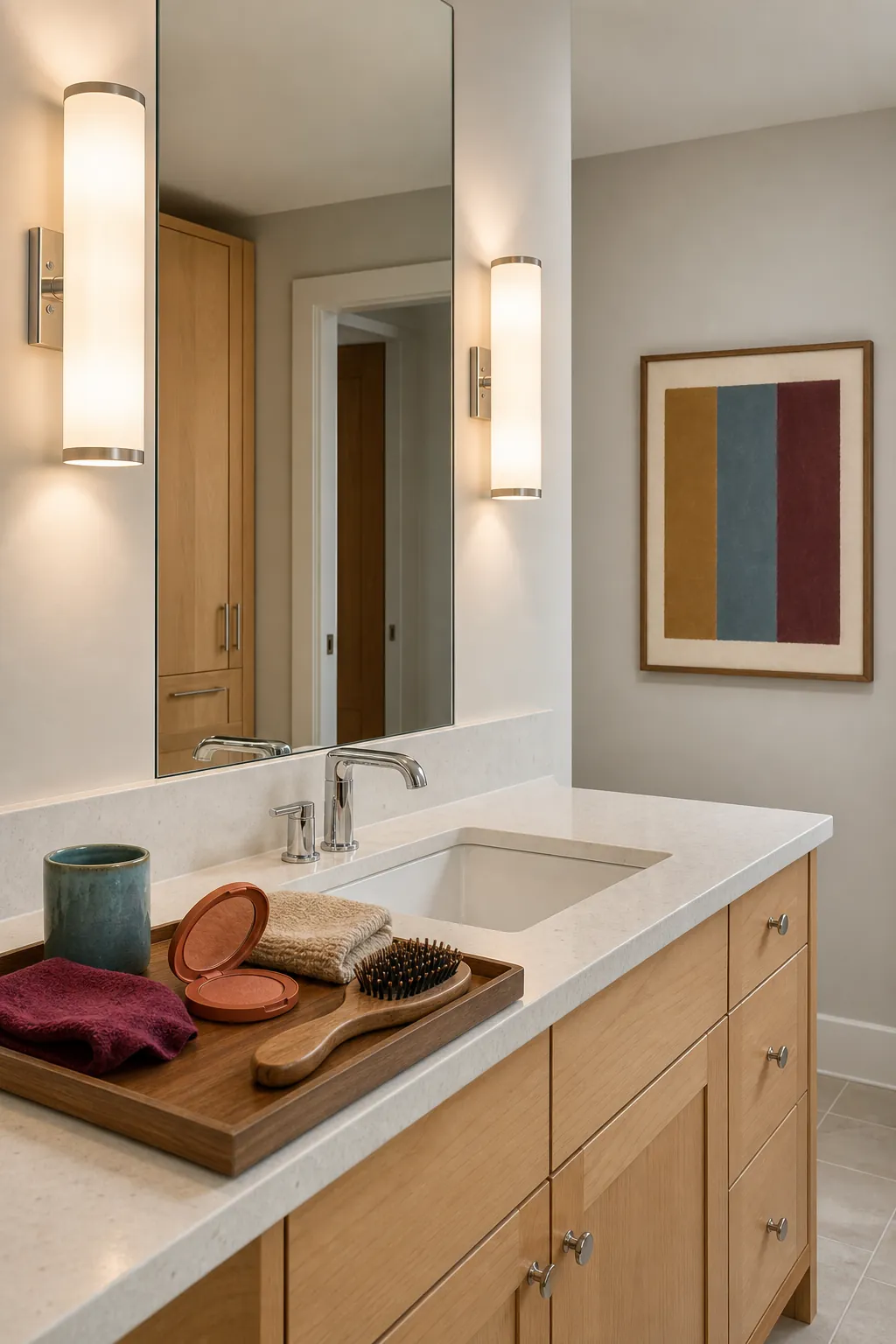
High-CRI lamps that keep soft colors honest
A soft scheme fails if whites look dingy, skin looks gray, or paint shifts strangely under the lamps. Look beyond color temperature and choose a high color-rendering source; 90+ CRI is a useful starting point for a vanity. Keep every lamp in the room at a compatible appearance so one fixture does not read green or blue beside another.
Test the actual lamps in the actual shades before finalizing the room. Diffusion, placement, brightness, wall color, dimming behavior, and reflections all change the result. The best soft bathroom lighting still lets you see clearly—it simply gives you control over when the room needs to be crisp and when it can become quiet.