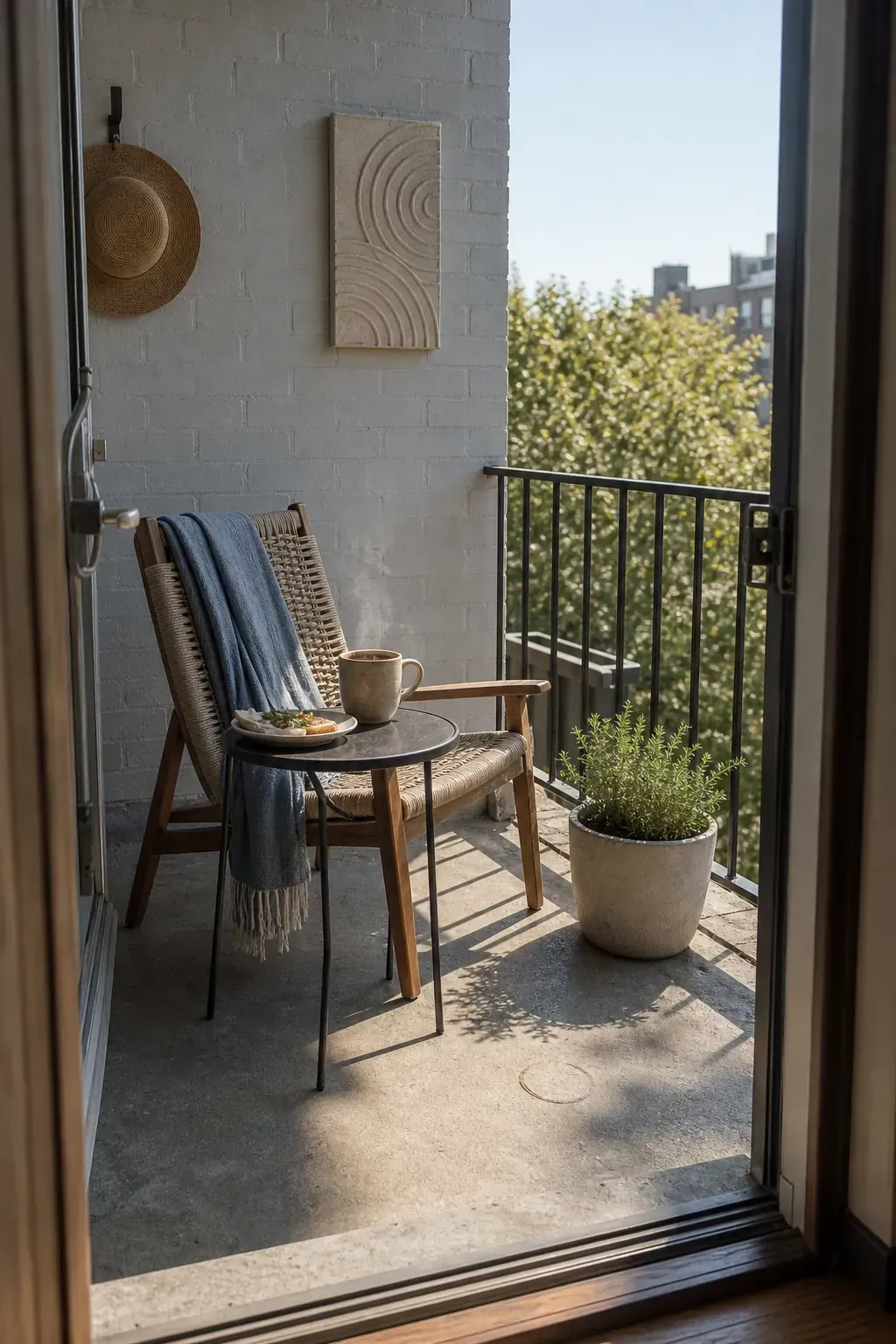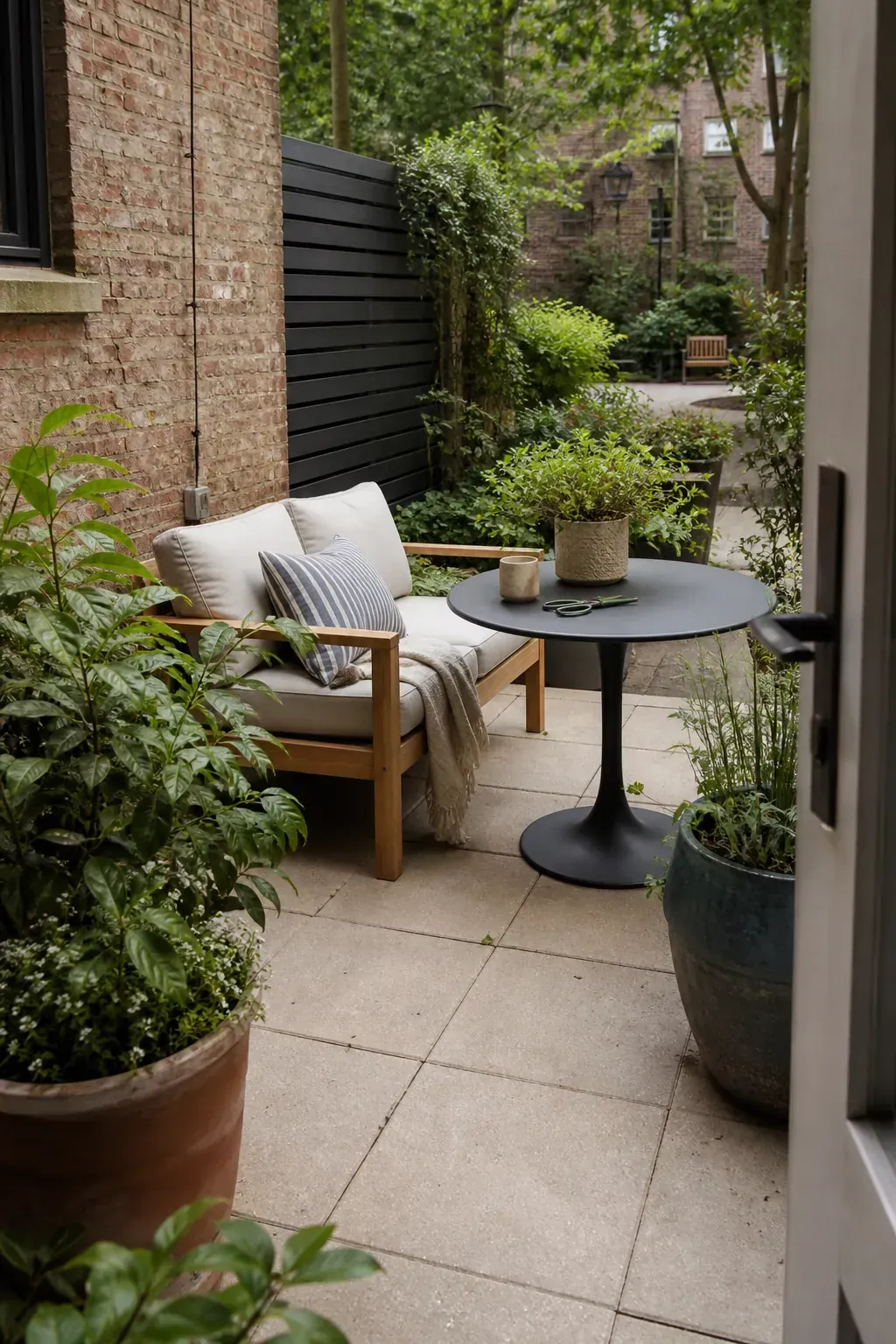
A small patio does not need miniature versions of everything. It needs a clear job, enough open floor to move, and furnishings that earn their footprint. These 21 small patio ideas solve the problems people actually run into—hot containers, exposed sightlines, awkward doors, wind, and nowhere to put a drink—while still making the space feel personal.
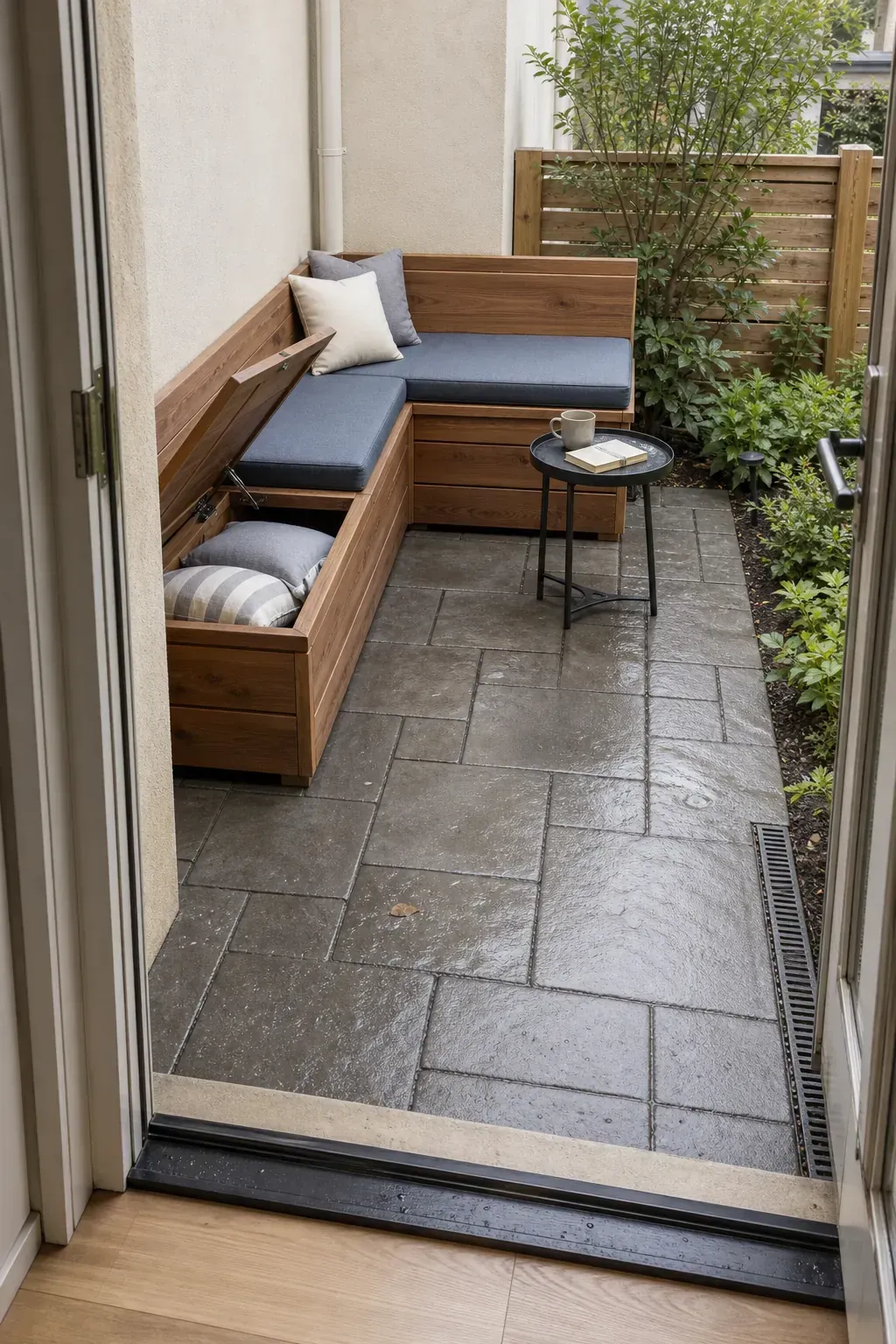
Build a Corner Bench That Frees the Center
Push seating into the least useful corner instead of floating two chairs in the middle. An L-shaped bench turns dead perimeter space into room for three or four people while leaving a clean path from the door. A back depth around 20 inches feels comfortable without swallowing a mini patio.
Choose a bench with a lift-up seat so cushions, watering tools, and citronella candles disappear between uses. Outdoor-rated quick-dry foam and washable covers matter more than decorative throw pillows when the patio is exposed to rain.
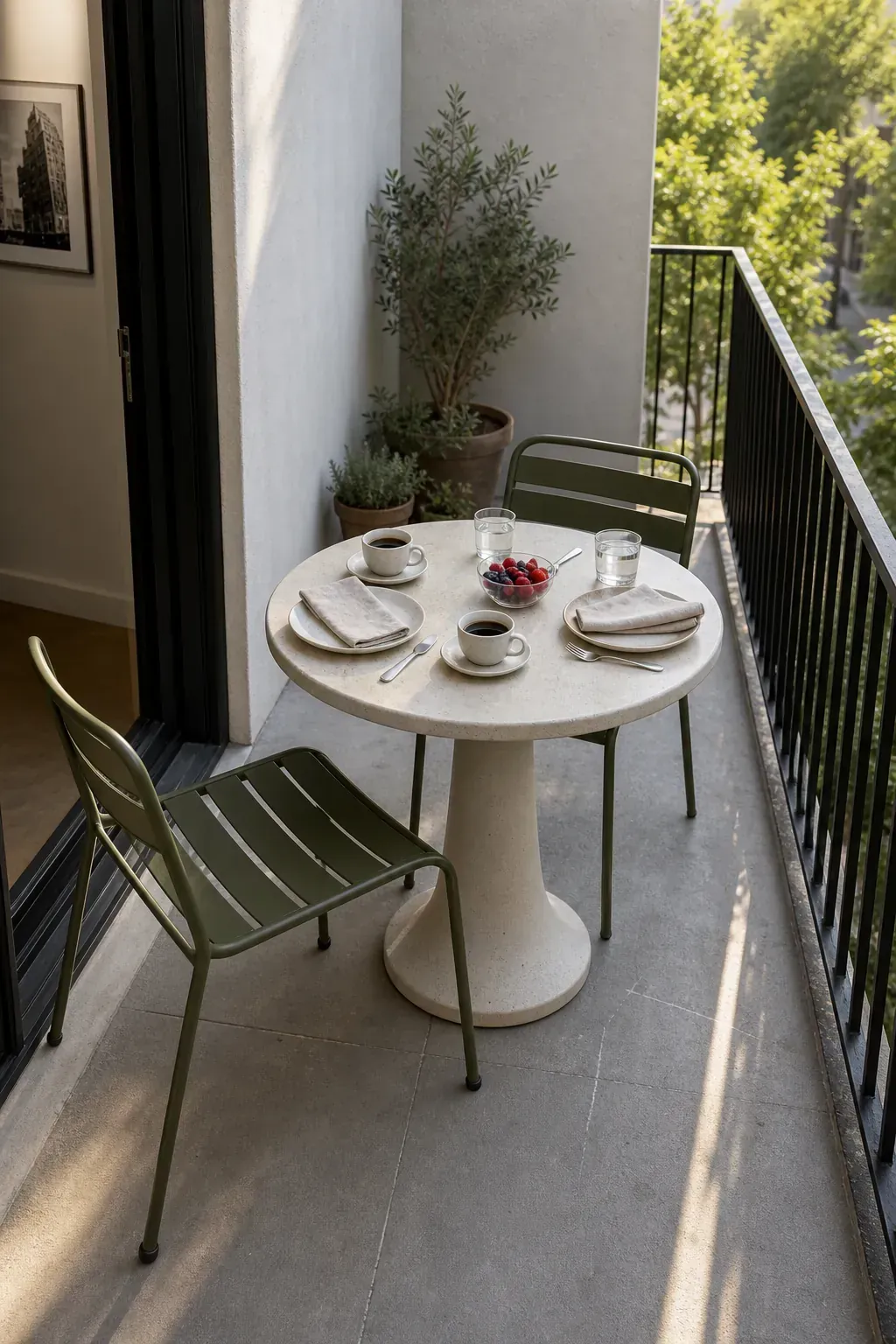
Choose a Pedestal Table for Easier Knees
Four table legs create four obstacles in a tight dining zone. A small round pedestal table gives knees and chair legs more freedom, and its curved edge makes circulation feel less pinched. A 28- to 32-inch top is enough for coffee, breakfast, or two dinner plates.
Before buying, tape the tabletop outline onto the floor and open the patio door fully. Keep the door swing and primary walking route clear. This simple test prevents one of the most common patio design mistakes: furniture that fits on paper but blocks daily use.
Use a Folding Bistro Set for Flexible Space
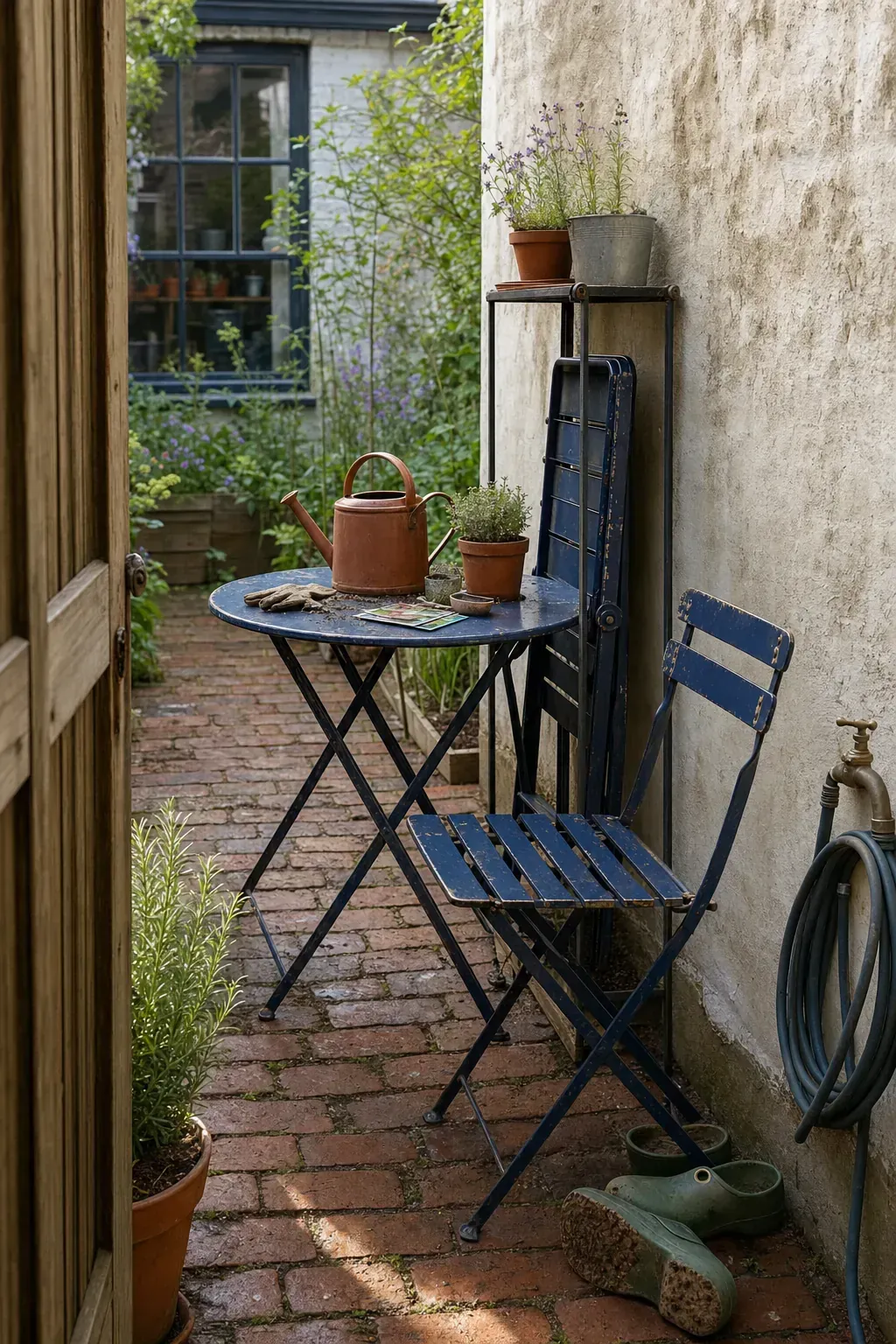
A folding bistro set is useful when your patio must switch between morning coffee, plant care, and open floor space. Look for chairs that fold nearly flat and a table light enough to move but heavy enough not to skate in a breeze.
Add a wall hook or narrow storage gap where the pieces can live when folded. The flexibility only works if putting the furniture away is genuinely easy; otherwise it becomes permanent clutter.
Layer Planters Upward Instead of Outward
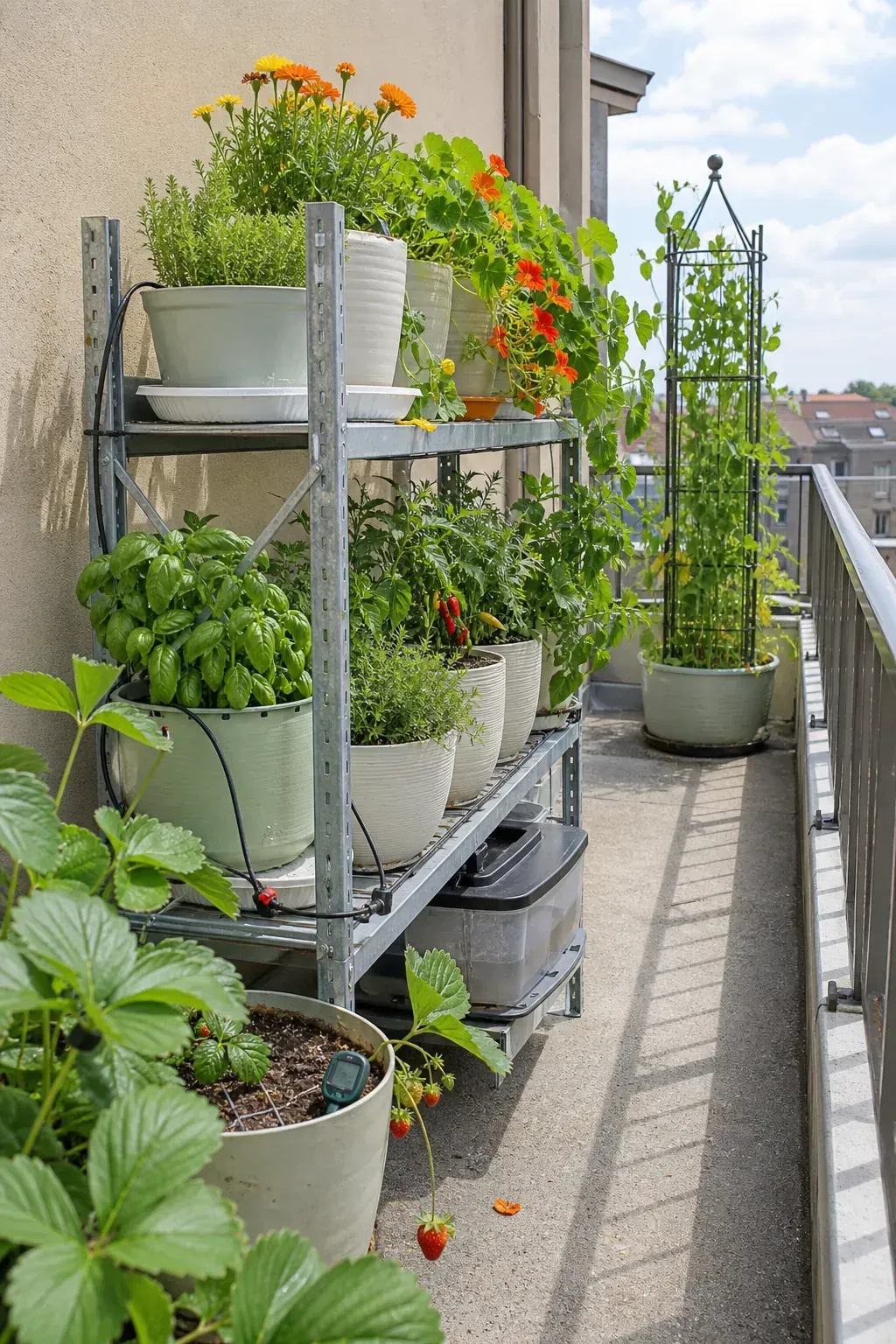
A tiered stand, ladder shelf, or narrow trellis lets a patio garden use height without consuming the walkway. Put sun lovers on top, shade-tolerant plants lower down, and the heaviest pots at the base. Leave enough air between leaves to reduce mildew and make watering practical.
Match containers to exposure, not just color. Terracotta can dry rapidly in hot sun, while larger light-colored pots and self-watering planters hold moisture longer. On an elevated balcony, confirm building rules and account for the combined weight of pots, wet soil, and water.
Screen One Sightline Rather Than Every Side
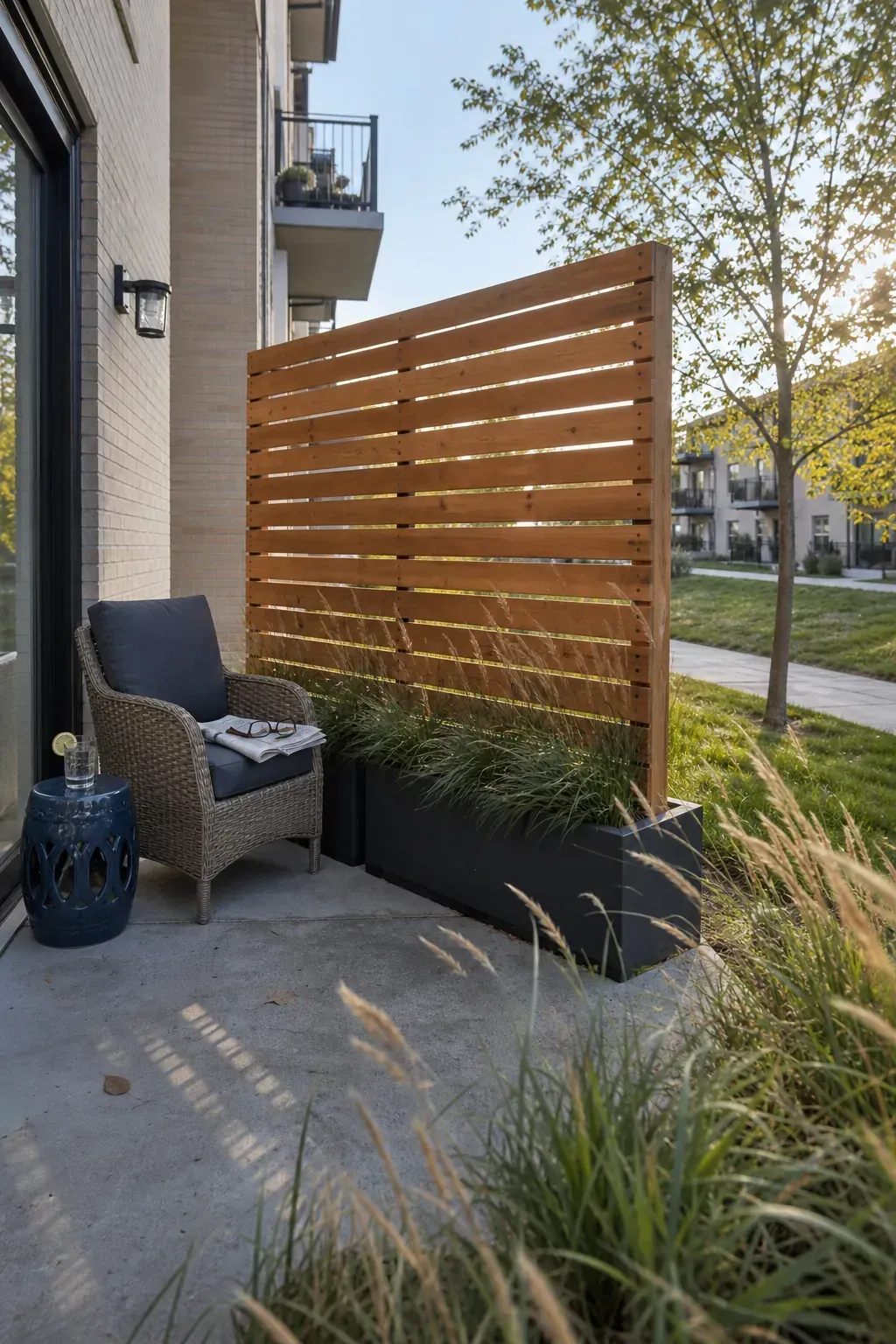
Privacy improves fastest when you block the specific view that makes you uncomfortable. A freestanding slatted panel, narrow planter with a trellis, or railing screen can interrupt a neighbor’s direct sightline without turning the patio into a dark box.
Check your lease, fire-exit requirements, and wind exposure before attaching anything. A tall panel needs a broad, weighted base, and railing fabric should have secure grommets. Never trade a little privacy for an unstable object in high wind.
Define the Floor With One Outdoor Rug
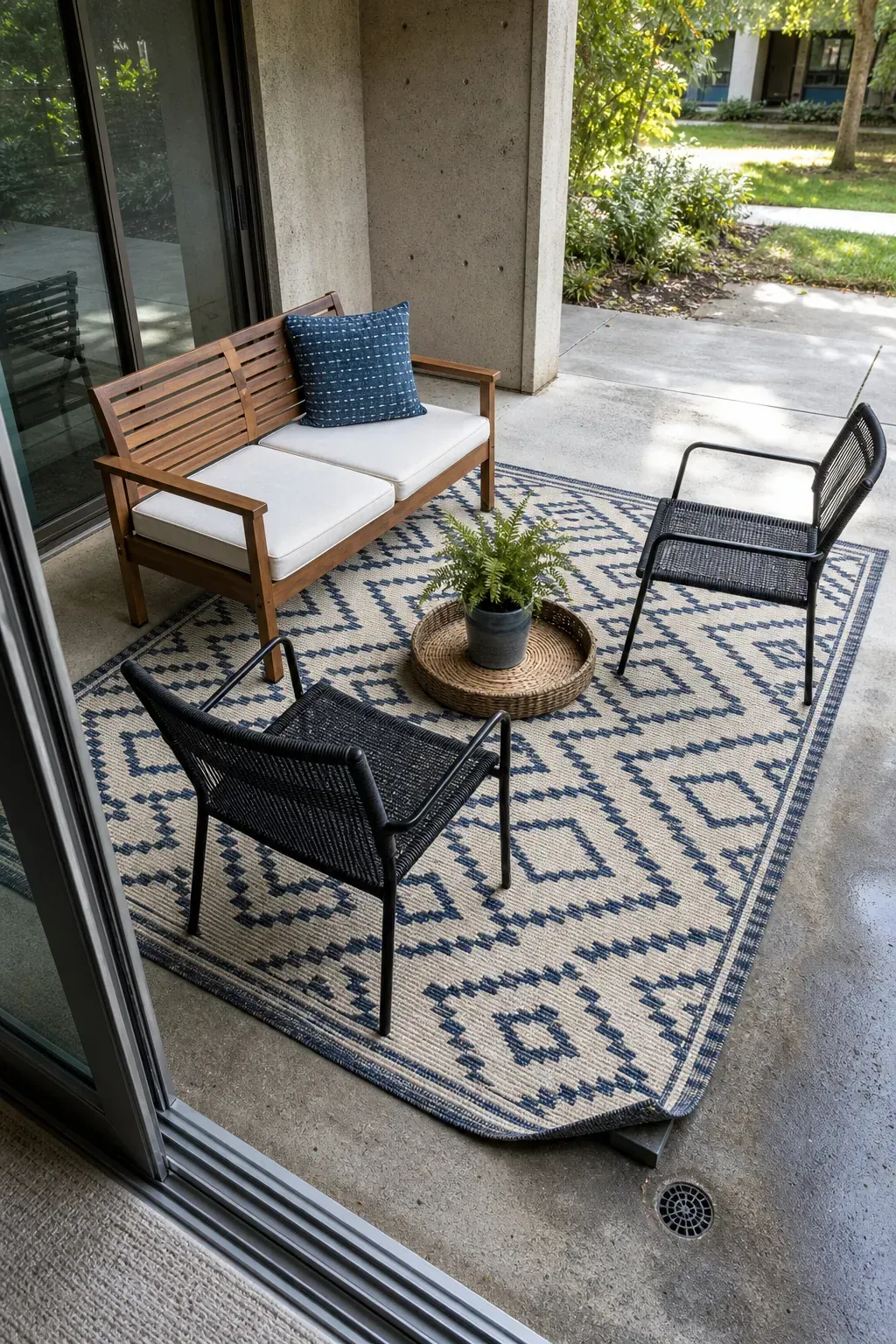
An outdoor rug visually gathers mismatched chairs and planters into one intentional zone. Choose a size that lets at least the front legs of every seat rest on it; a tiny floating mat makes the patio look more fragmented, not larger.
For uncovered spaces, use a flatwoven polypropylene rug that drains and dries quickly. Lift it occasionally to clean grit and check for trapped moisture. On rough concrete, a rug also makes bare feet more comfortable and softens sound for downstairs neighbors.
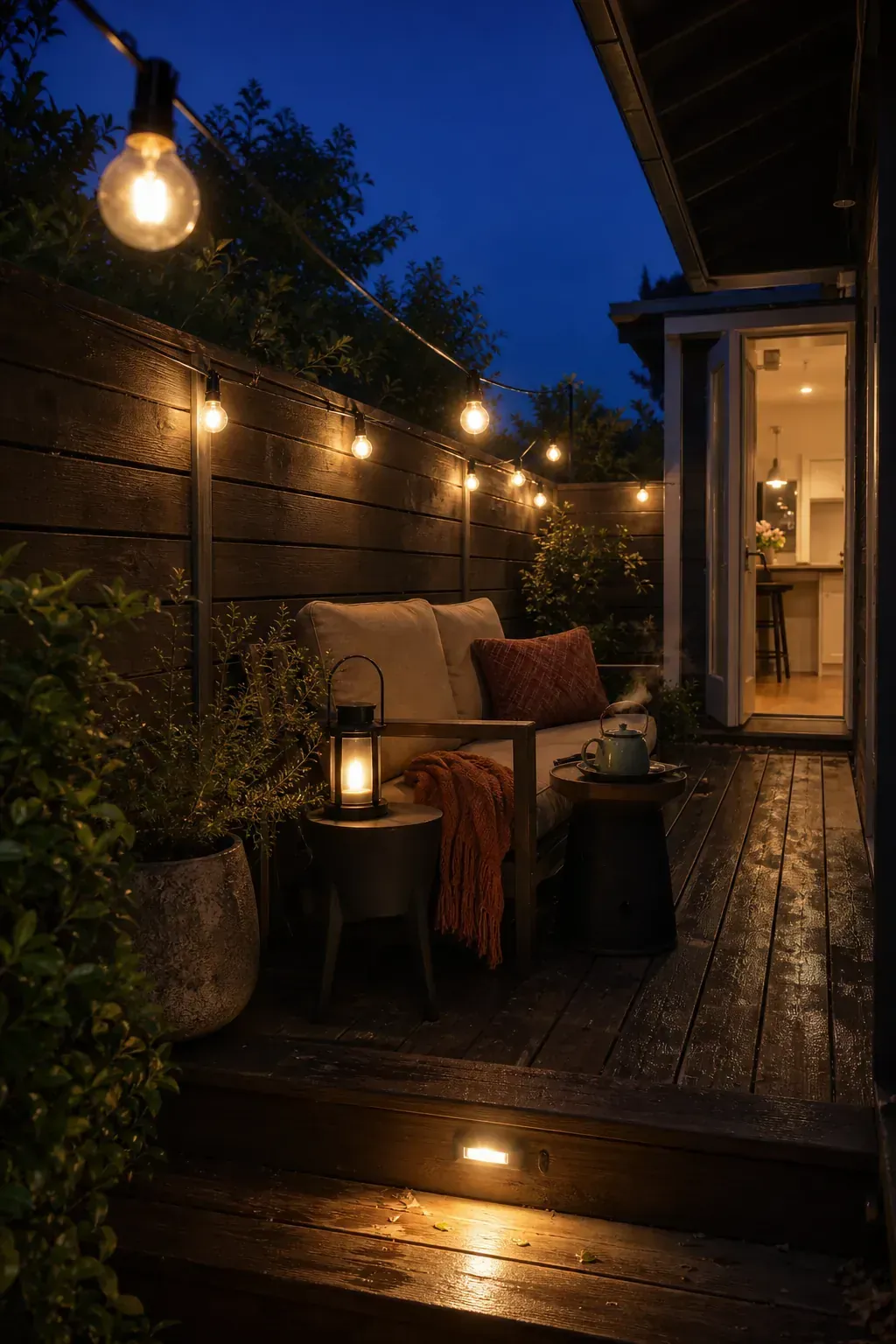
Hang Warm Light Along the Perimeter
Perimeter lighting makes the boundary of a small back patio visible without sacrificing table space. Use outdoor-rated string lights where overhead attachment is allowed, or place rechargeable lanterns at different heights when drilling and wiring are off limits.
Aim for warm, low-glare light rather than a single bright fixture. The goal is to see faces and steps, not illuminate the whole yard. Secure every cable so wind cannot whip it against a railing, and keep cords away from walking paths and standing water.
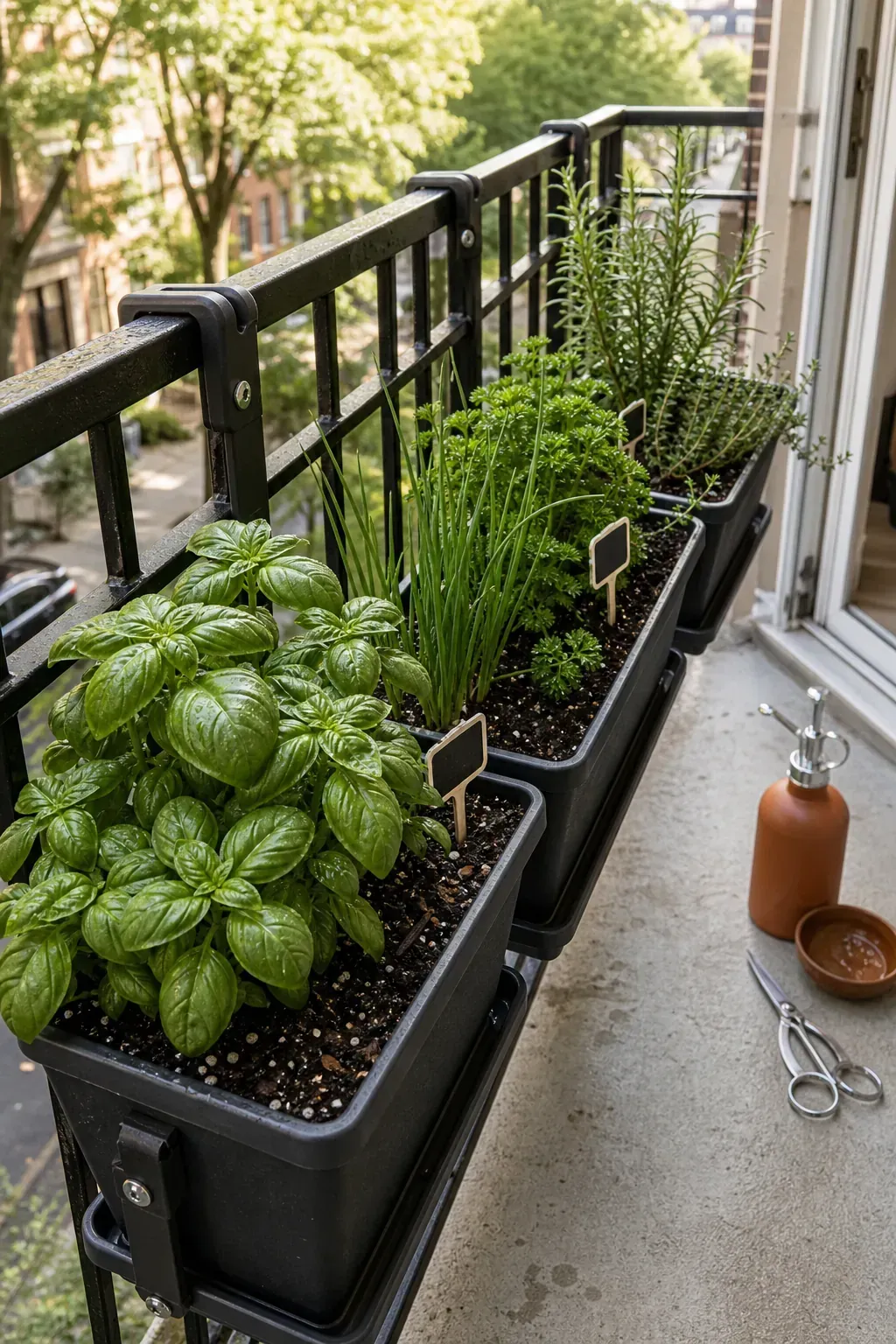
Turn a Railing Into a Slim Herb Garden
Railing planters put useful greenery at waist height without taking floor space. Grow herbs you actually cook with, selecting them for the patio’s real sun hours. Mint is best kept in its own pot, while rosemary prefers faster-draining soil than basil.
Use brackets made for your railing profile and secure each planter against tipping. Include drainage holes and saucers where runoff could bother neighbors. In exposed sun and wind, check moisture daily because elevated containers dry faster than ground-level beds.
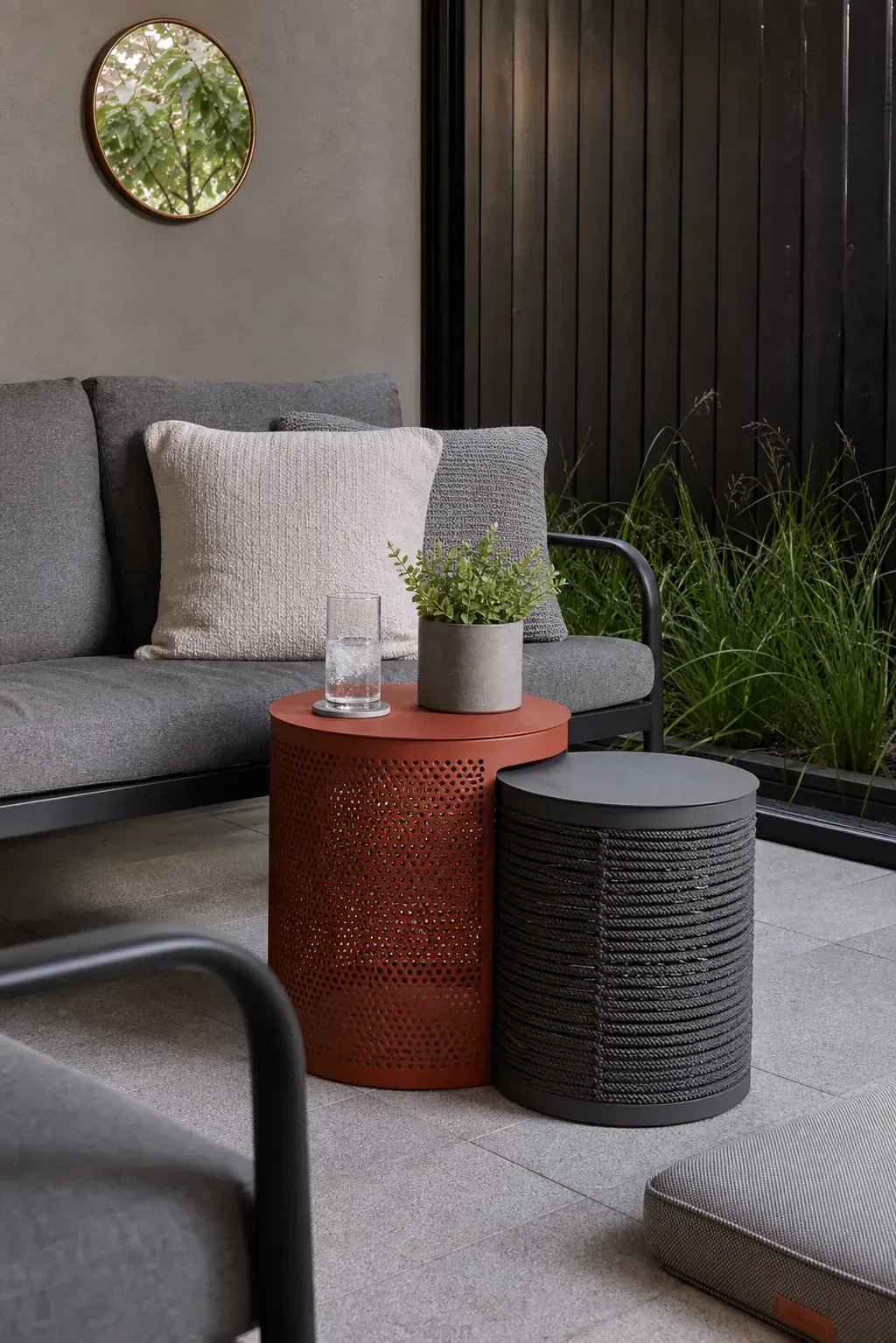
Swap a Coffee Table for Nesting Stools
Two nesting stools can serve as drink tables, plant stands, or extra seats, then tuck into one footprint. They are especially effective beside a compact loveseat where a conventional coffee table would choke the walkway.
Pick stools with broad, stable feet and outdoor-safe finishes. A slight rim keeps cups from sliding, while a slatted or perforated top sheds rain. Limit the arrangement to pieces with a clear purpose so “flexible furniture” does not become another name for clutter.
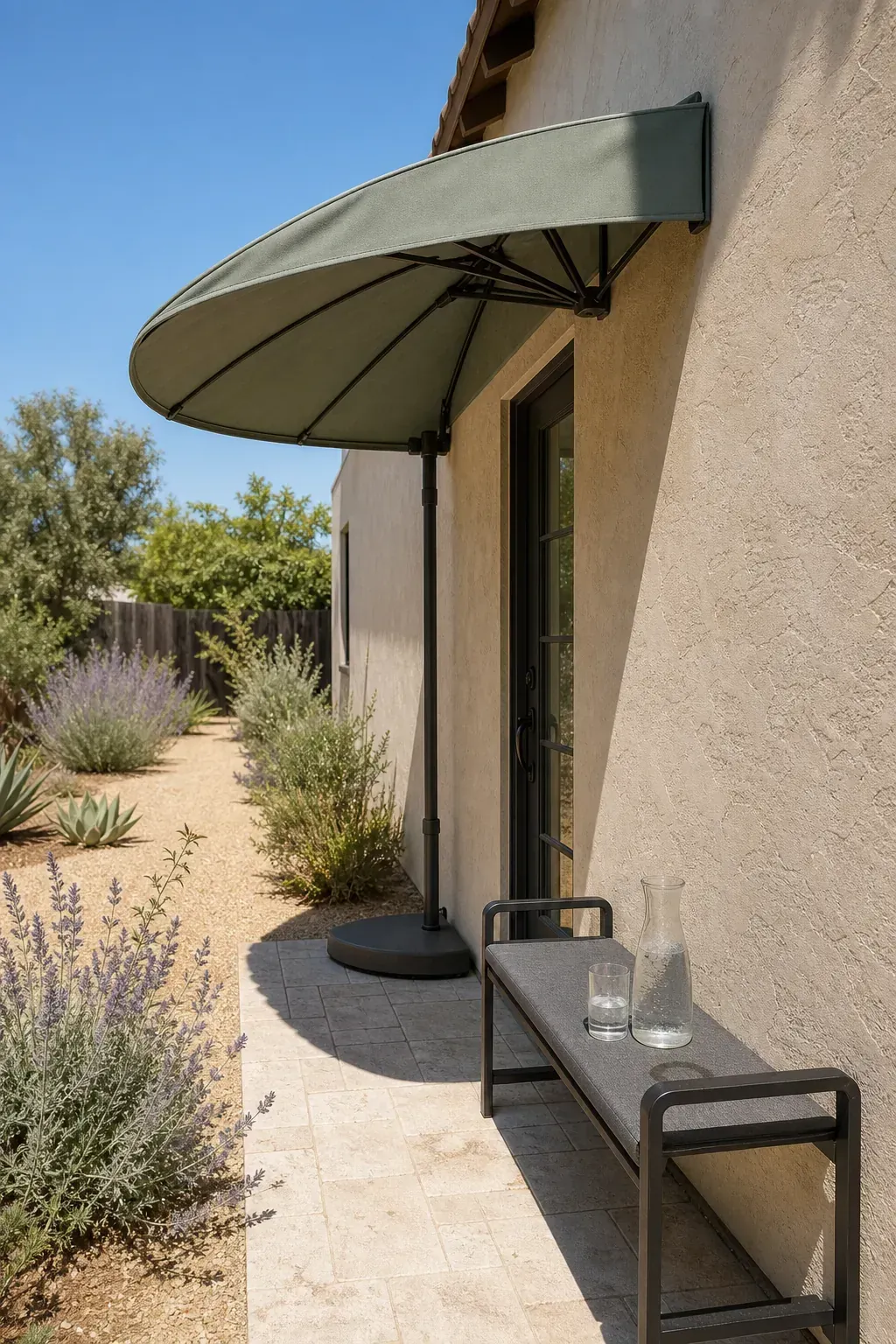
Create Shade With a Half Umbrella
A half-round umbrella sits flat against a wall, making it one of the most efficient shade tools for a narrow patio. Position it to block the hottest part of the day rather than centering it automatically over the furniture.
Measure the open canopy, not only the pole and base. Use a properly weighted stand, close the umbrella whenever you leave, and avoid adding one where gusts funnel between buildings. If umbrellas are prohibited, a freestanding market shade may still require written approval.
Plant One Large Container as a Focal Point
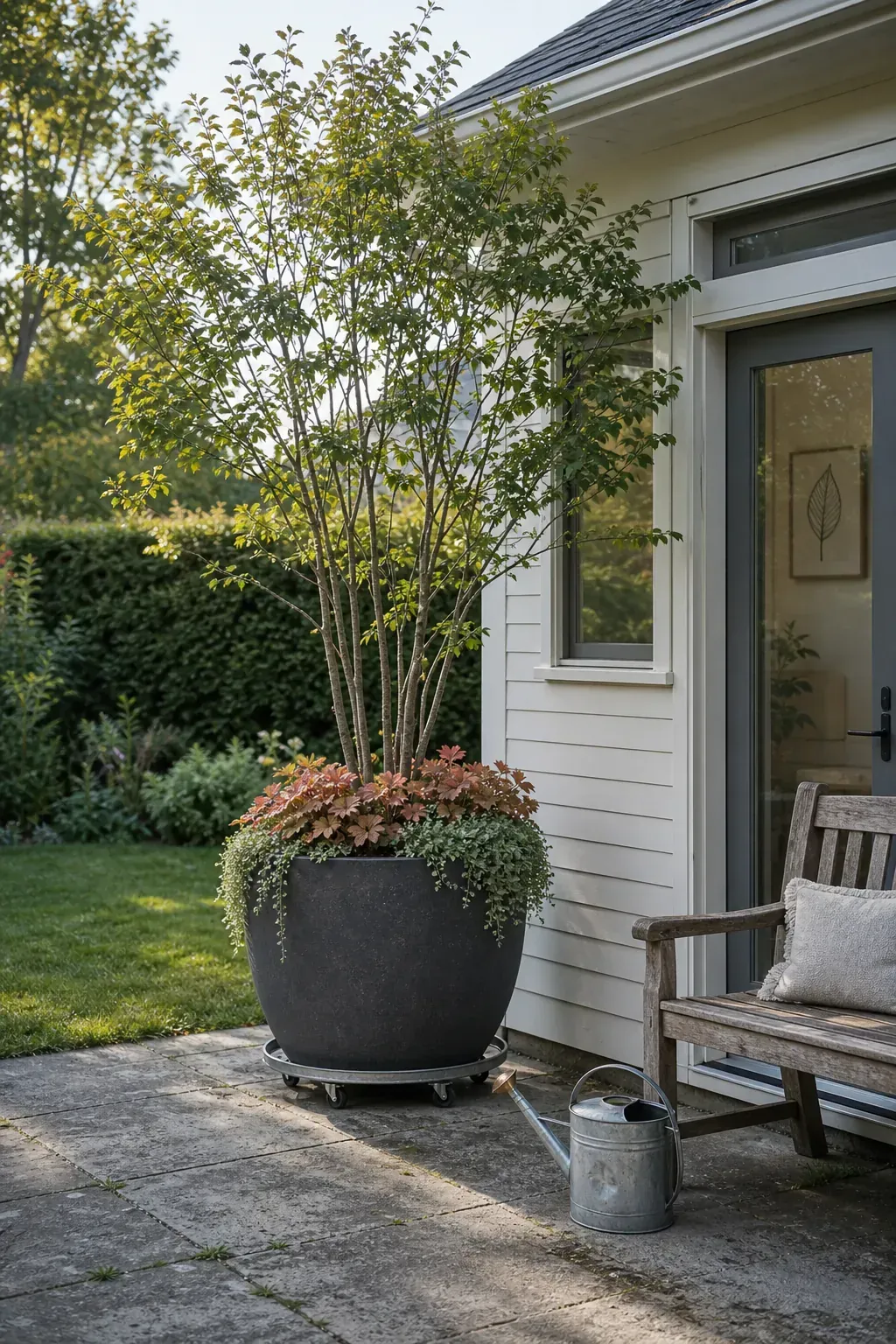
A crowd of tiny pots can make limited square footage feel busy and creates constant watering work. One substantial planter with a small tree, tall grass, or layered “thriller, filler, spiller” combination gives the eye a destination.
Choose the plant after measuring direct sun and checking winter conditions. Larger containers hold moisture longer, but they become extremely heavy when wet. Set the pot on a rated caddy before filling it and use potting mix—not dense garden soil—to protect drainage.
Add a Narrow Potting Console
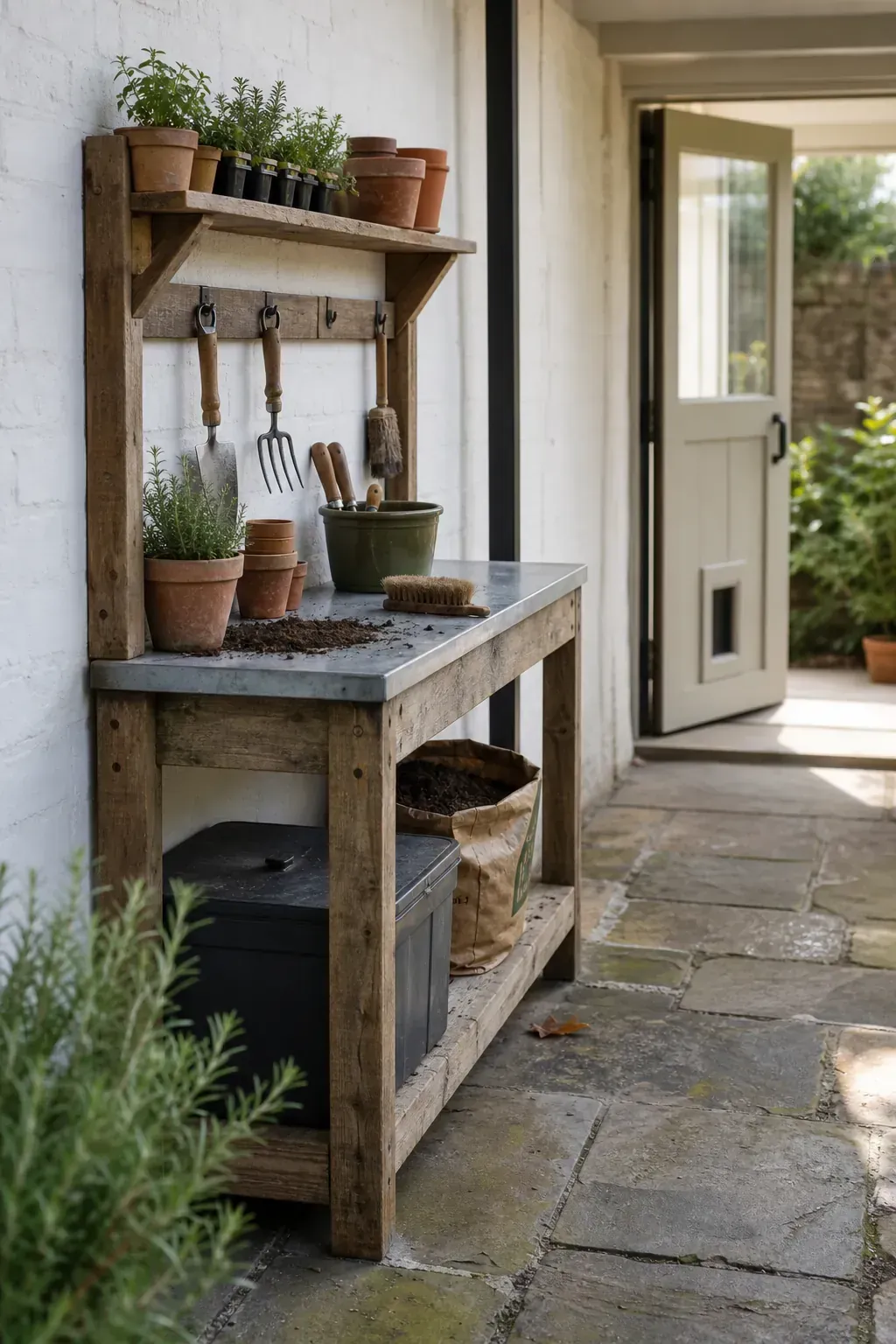
A console only 10 to 14 inches deep can function as a potting surface, serving shelf, and storage station. Place it against a solid wall outside the main traffic line, with frequently used tools in a lidded bin below.
Give every shelf a job: working surface at waist height, small pots above, heavy supplies below. Keep fertilizer and sharp tools inaccessible to children and pets. A console with feet rather than a solid plinth allows water and debris to be cleaned underneath.
Angle the Seating Toward the Best View
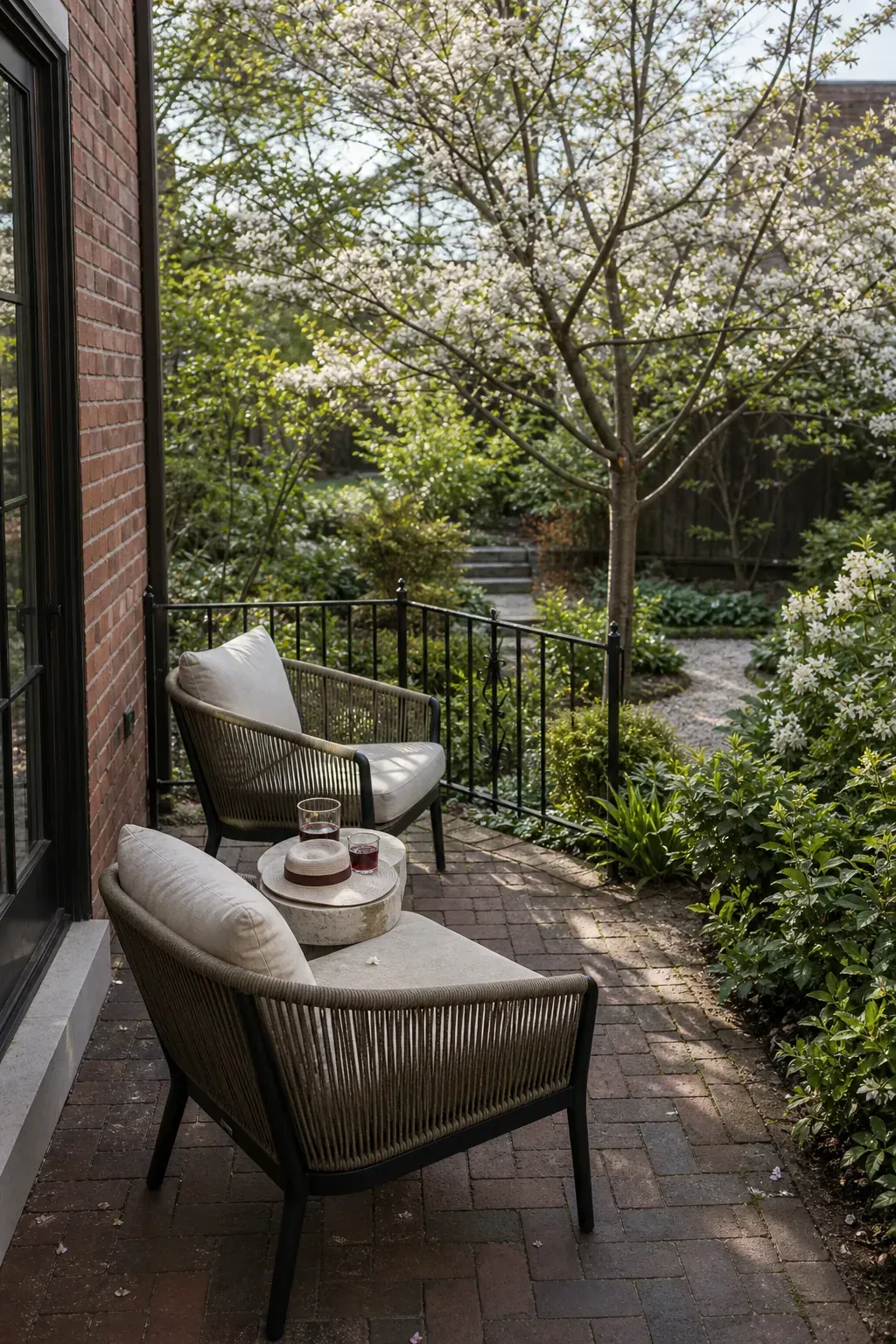
Furniture does not always need to sit square with the building. Turning two chairs slightly toward a garden, sunset, or attractive planting can make the patio feel connected to something beyond its boundary. The diagonal also softens a rigid rectangular floor plan.
Keep the back legs close to the perimeter and preserve a direct 30-inch walking route where possible. Test the arrangement using existing indoor chairs before purchasing outdoor pieces; the view from a seated eye level may be very different from the view while standing.
Use a Wall-Mounted Drop-Leaf Bar
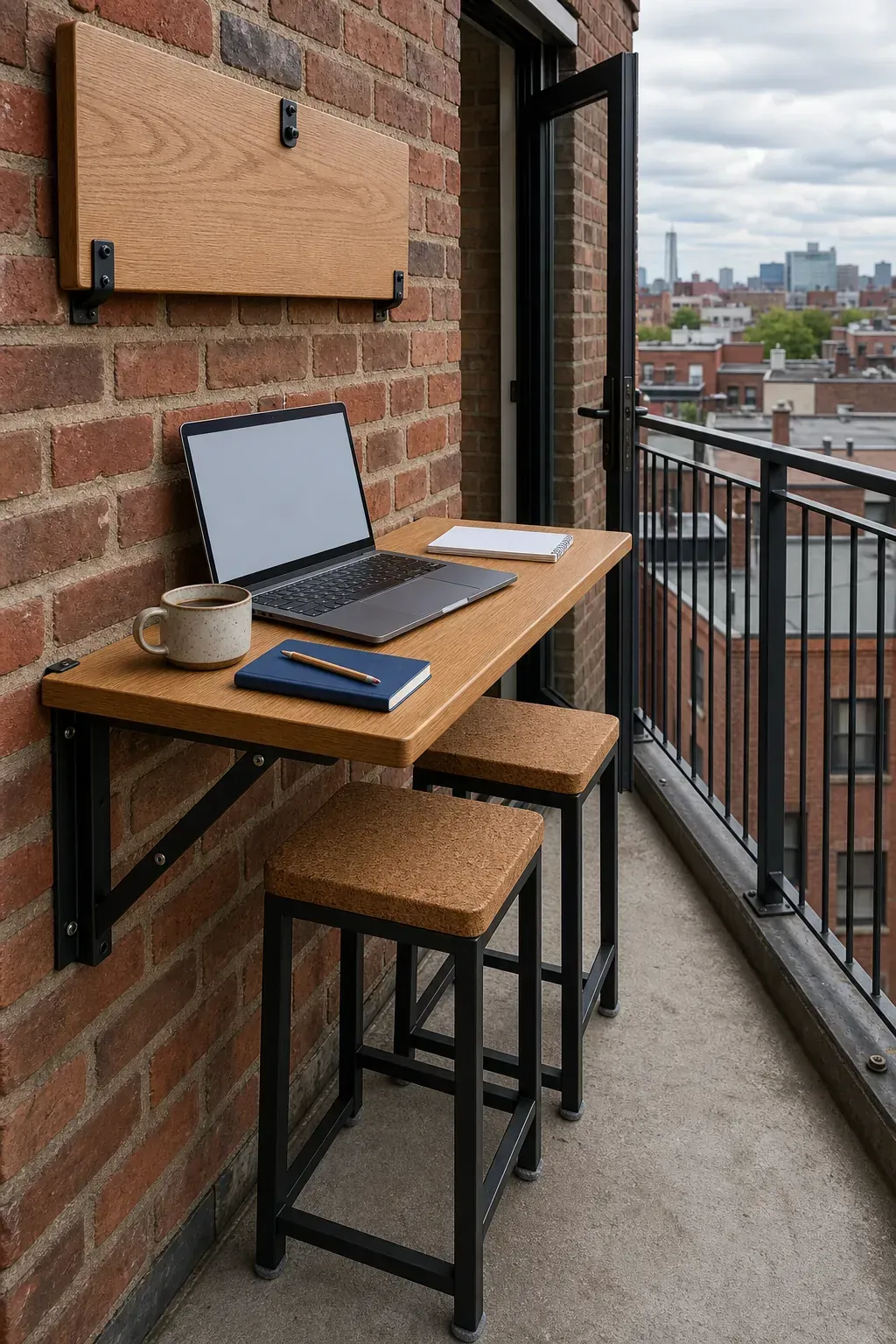
A drop-leaf shelf creates a dining or laptop surface only when you need it. Mounted at bar height, it pairs with stools that slide completely underneath, leaving the floor open the rest of the day.
This works best for owners or renters with explicit permission to drill. Fasteners must suit the wall material and support the expected load. Avoid positioning the leaf behind an outward-swinging door, and fold it down before storms so it cannot catch wind.
Grow a Green Screen in a Long Planter
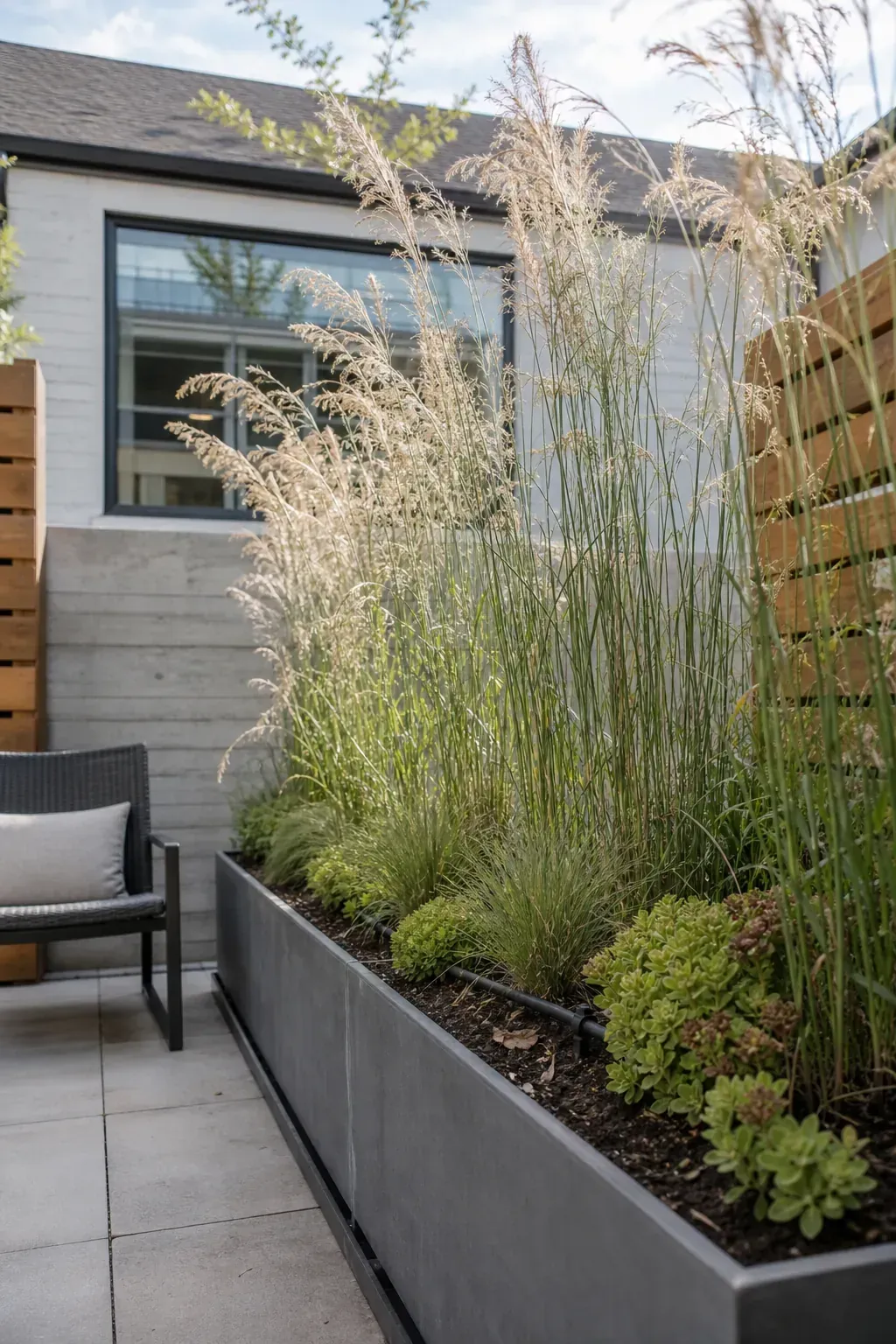
A long rectangular planter can combine privacy and greenery without a permanent wall. Use clumping bamboo only in a suitable contained variety, or choose tall ornamental grasses and columnar evergreens matched to your climate and light.
A narrow planter must still be deep enough for stable roots. Add weight low in the container, preserve drainage, and avoid plants that become top-heavy in wind. Living screens need time and maintenance, but they filter views more gently than opaque panels.
Make a Gravel-and-Paver Patio Zone
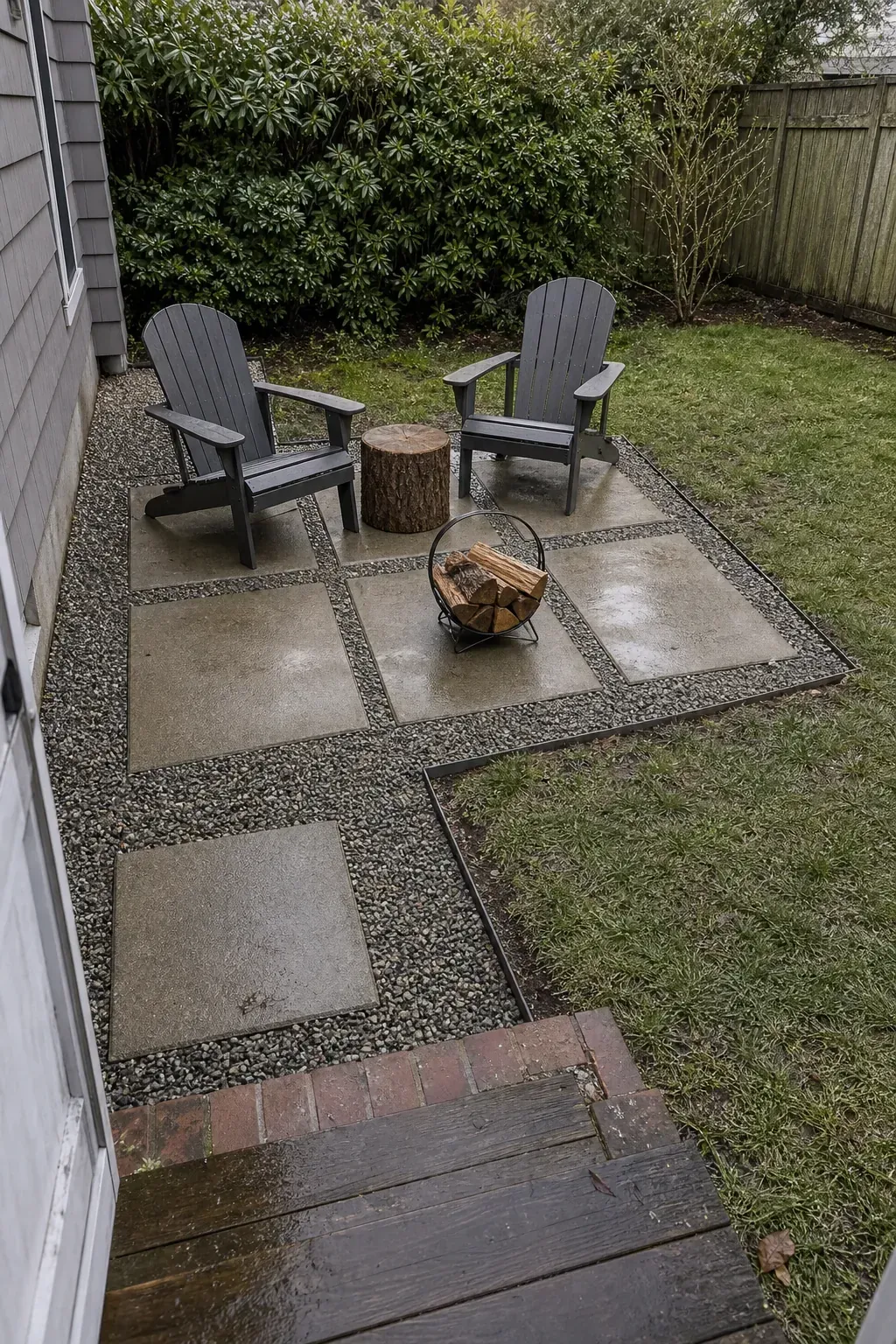
For a small backyard without a finished surface, a compact gravel pad with large stepping pavers can establish an outdoor room without pouring a slab. Excavate appropriately, install a compacted base, and edge the perimeter so gravel stays contained.
Set chair legs on pavers rather than loose stone to prevent wobbling. Local drainage and frost conditions determine the correct base depth, so this simple patio idea still deserves careful preparation. Keep the finished surface graded away from the house.
Keep a Clear Strip Beside the Door
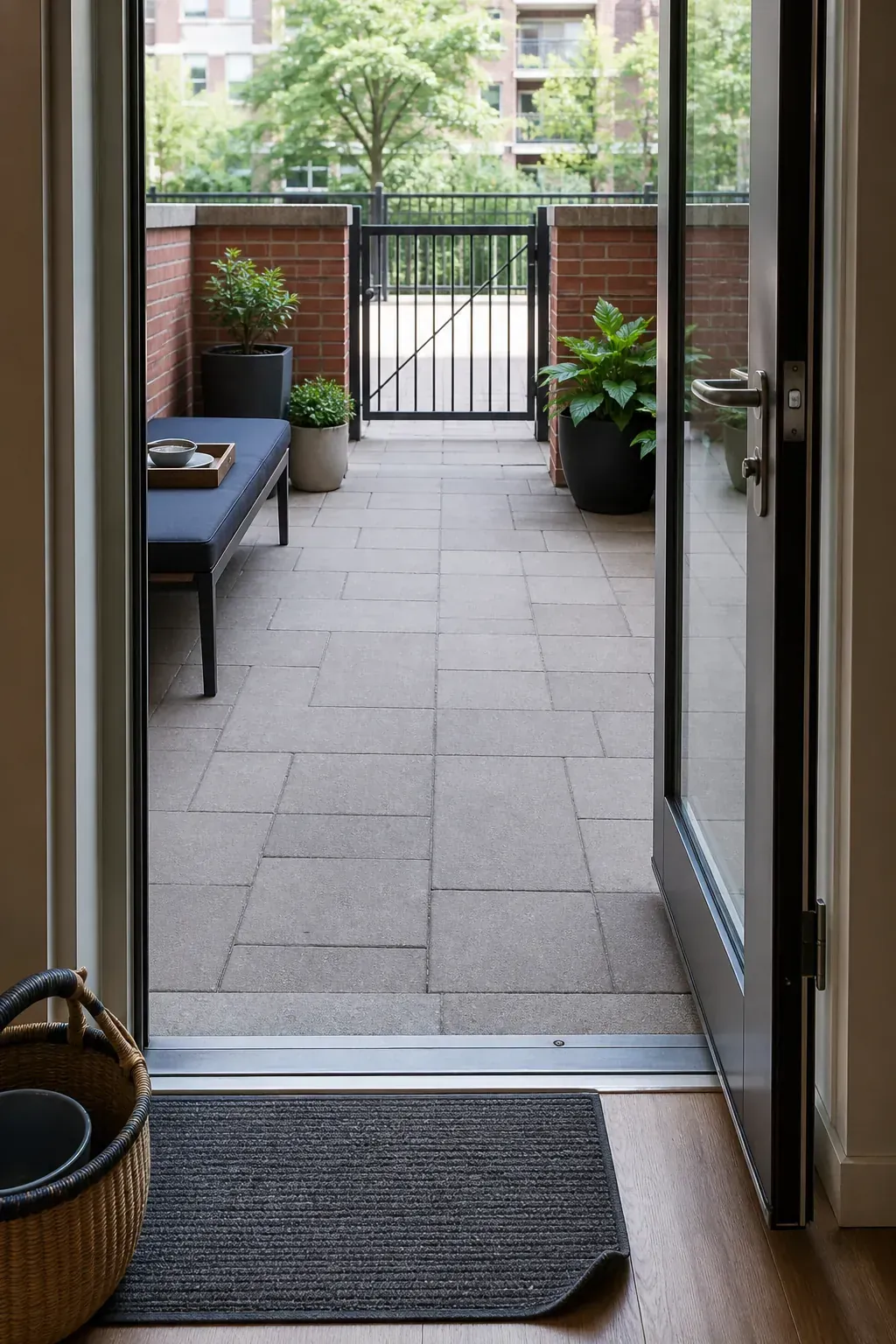
The most effective layout improvement may be leaving part of the patio empty. Create a clear landing outside the door and an unobstructed route to seating, stairs, or the yard. This makes carrying food safer and keeps guests from squeezing past furniture.
Place décor on the opposite perimeter and keep planters out of the threshold. If the patio is also an emergency exit, follow all building requirements. Negative space is functional square footage, not an unfinished part of the design.
Set Up a Compact Outdoor Reading Chair
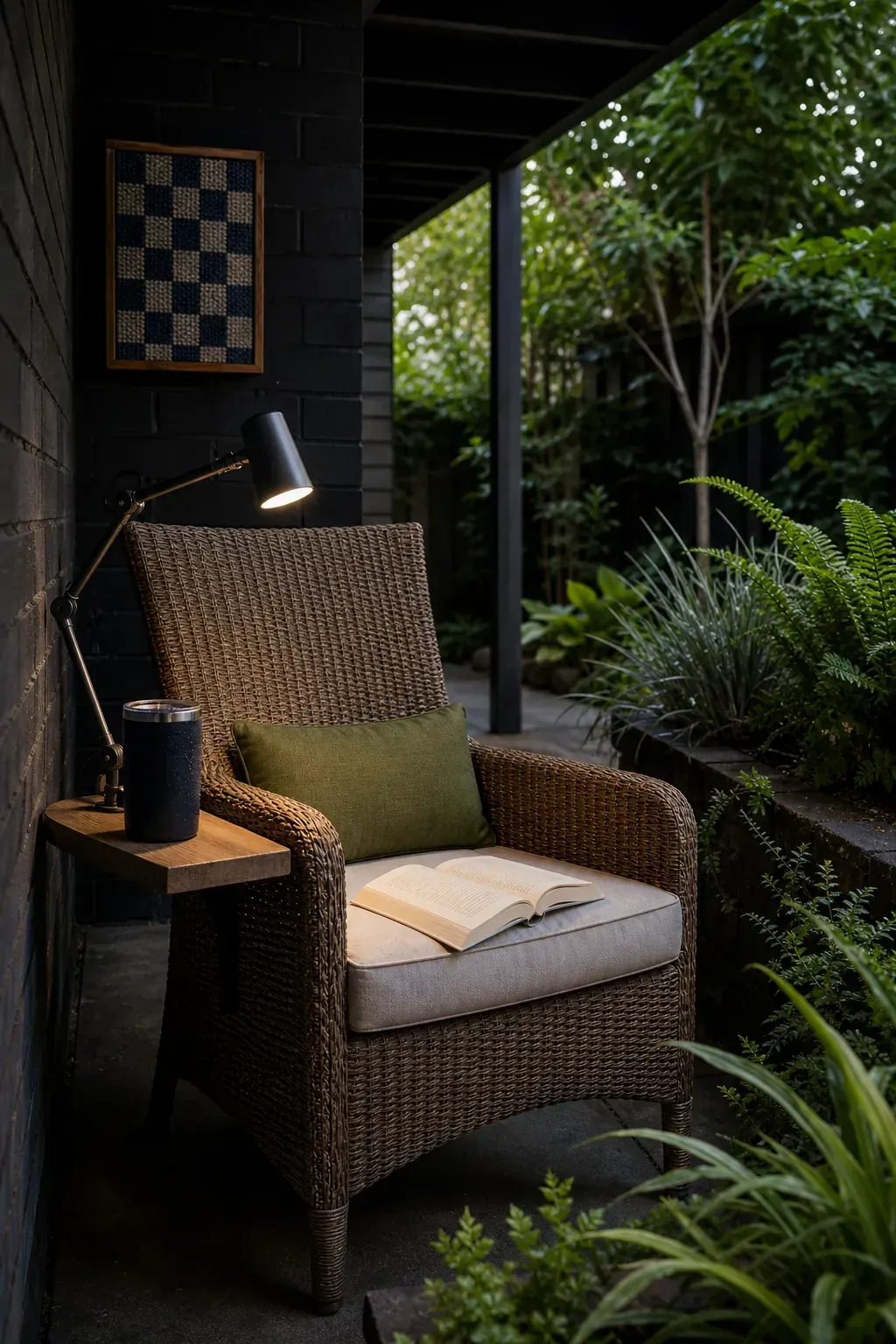
If you rarely entertain outdoors, design for the person who uses the patio every day. One supportive lounge chair, a small drink ledge, and an adjustable shade source can create a more satisfying retreat than a cramped four-person dining set.
Look for an upright seat with a modest footprint rather than an oversized recliner. Add a washable lumbar cushion and place the chair where indoor light does not glare on a book or tablet. A single-purpose patio often feels calmer because every object supports the same routine.
Tuck Weatherproof Storage Under Seating
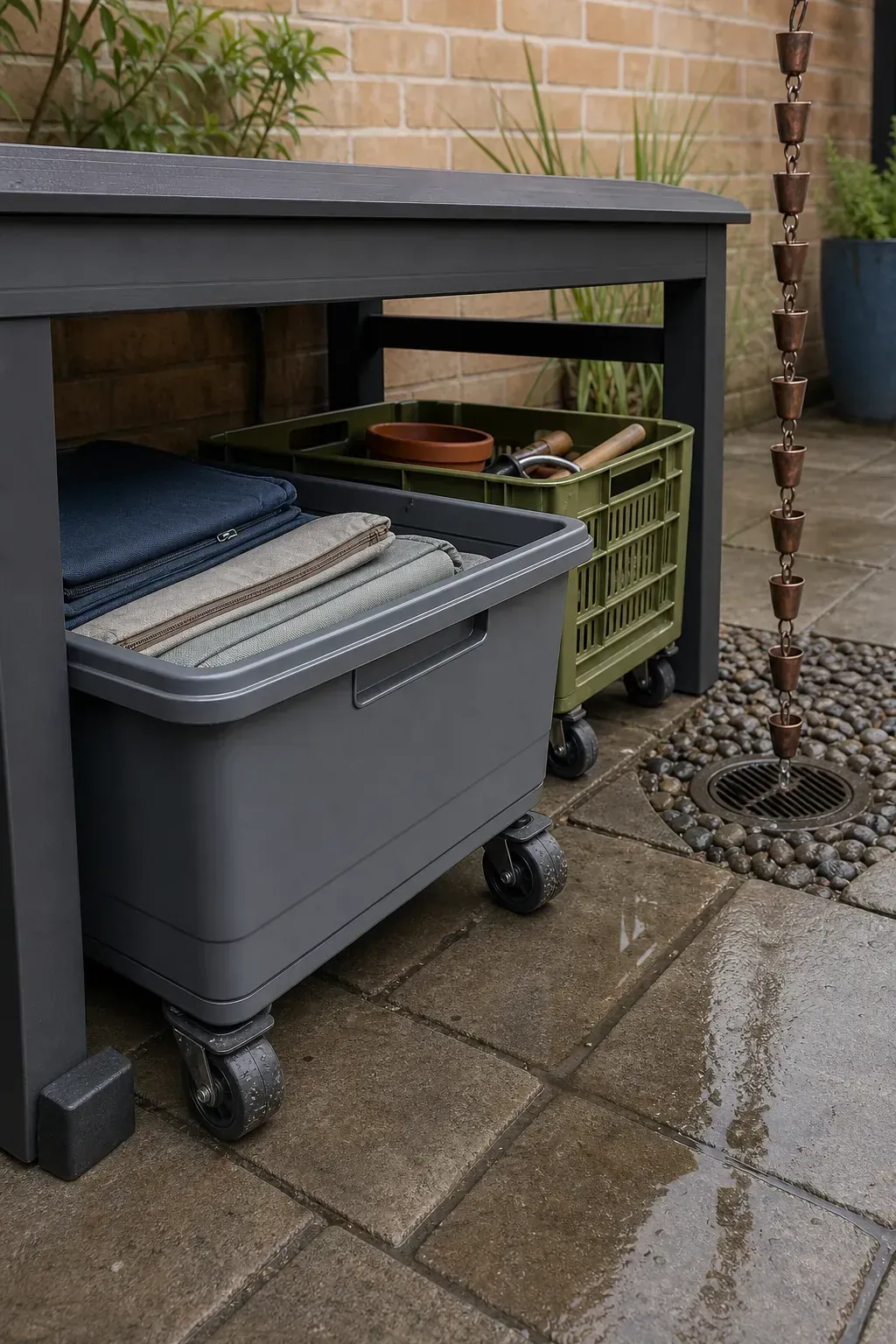
Low rolling bins can turn the space beneath a bench into practical storage without adding another cabinet. Use sealed containers for textiles and ventilated ones for empty plant pots or garden tools. Labeling the lids prevents everything from becoming one damp mystery box.
Raise bins slightly above floors that puddle and never store wet cushions sealed inside. Choose wheels that roll over the actual surface—large rubber casters for pavers, smaller ones for smooth concrete—and include a stop so the bin stays put.
Repeat Two Materials for a Calmer Look
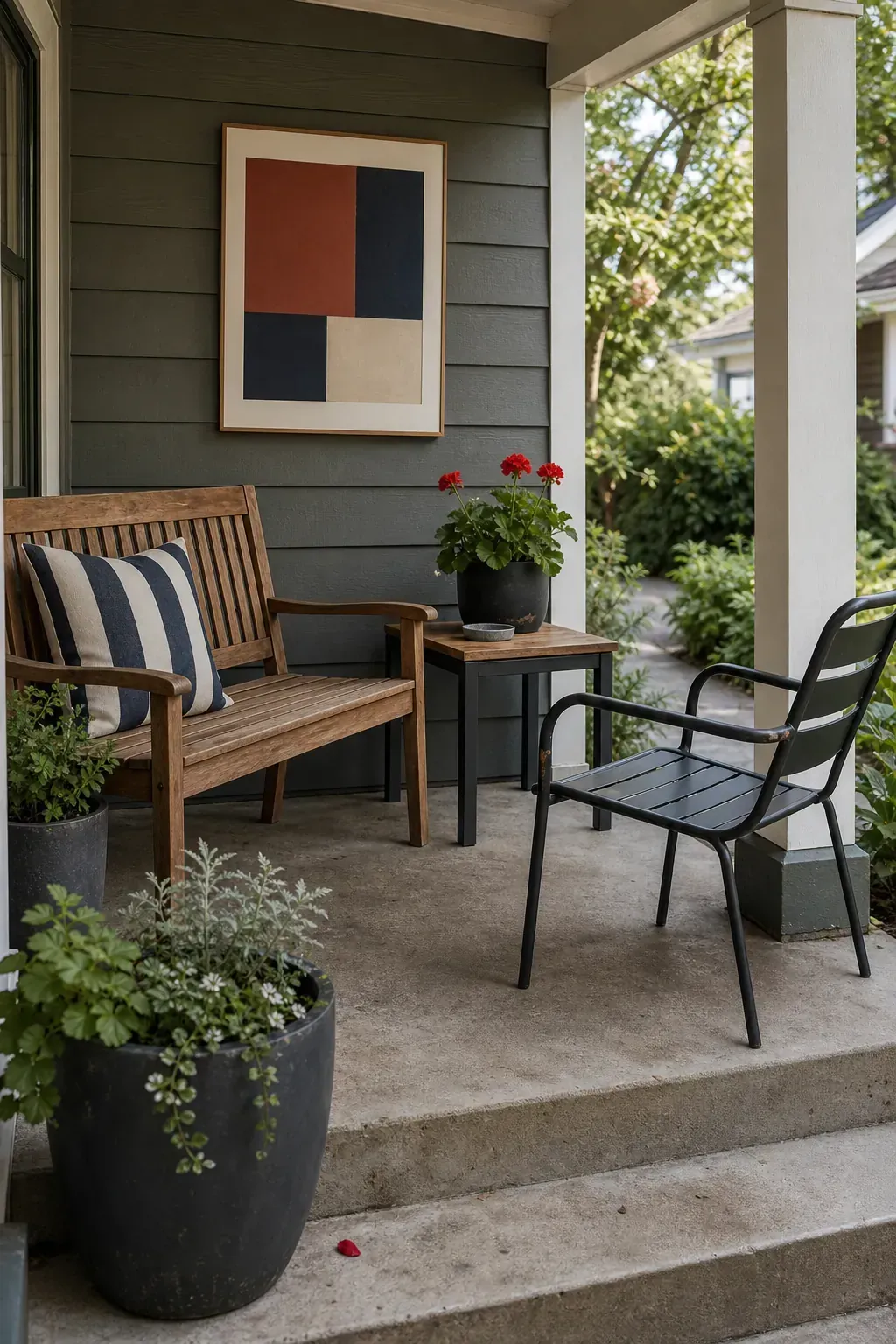
Small spaces become visually noisy when every object introduces a new finish. Repeat one warm material, such as teak-toned wood, and one cool material, such as matte charcoal metal, across furniture and planters. The repetition connects budget finds that were not purchased as a set.
Let plants and one textile supply the color accents. This is not about making everything beige; it is about reducing competition among hard surfaces. A consistent material pair also makes future purchases easier because you know what belongs.
Design Around One Daily Ritual
The best small patio inspiration starts with a sentence: “I want to use this space for…” Maybe it is coffee before work, dinner for two, tending herbs, or reading after sunset. Choose the seat, surface, light, and storage that make that ritual effortless, then decline pieces that support an imaginary lifestyle.
Measure the space, track its sun and wind for a few days, and arrange what you already own before spending. A patio feels generous when it works without rearranging, watering does not become a burden, and the door opens freely. Function is what turns a decorated outdoor corner into a place you actually use.