
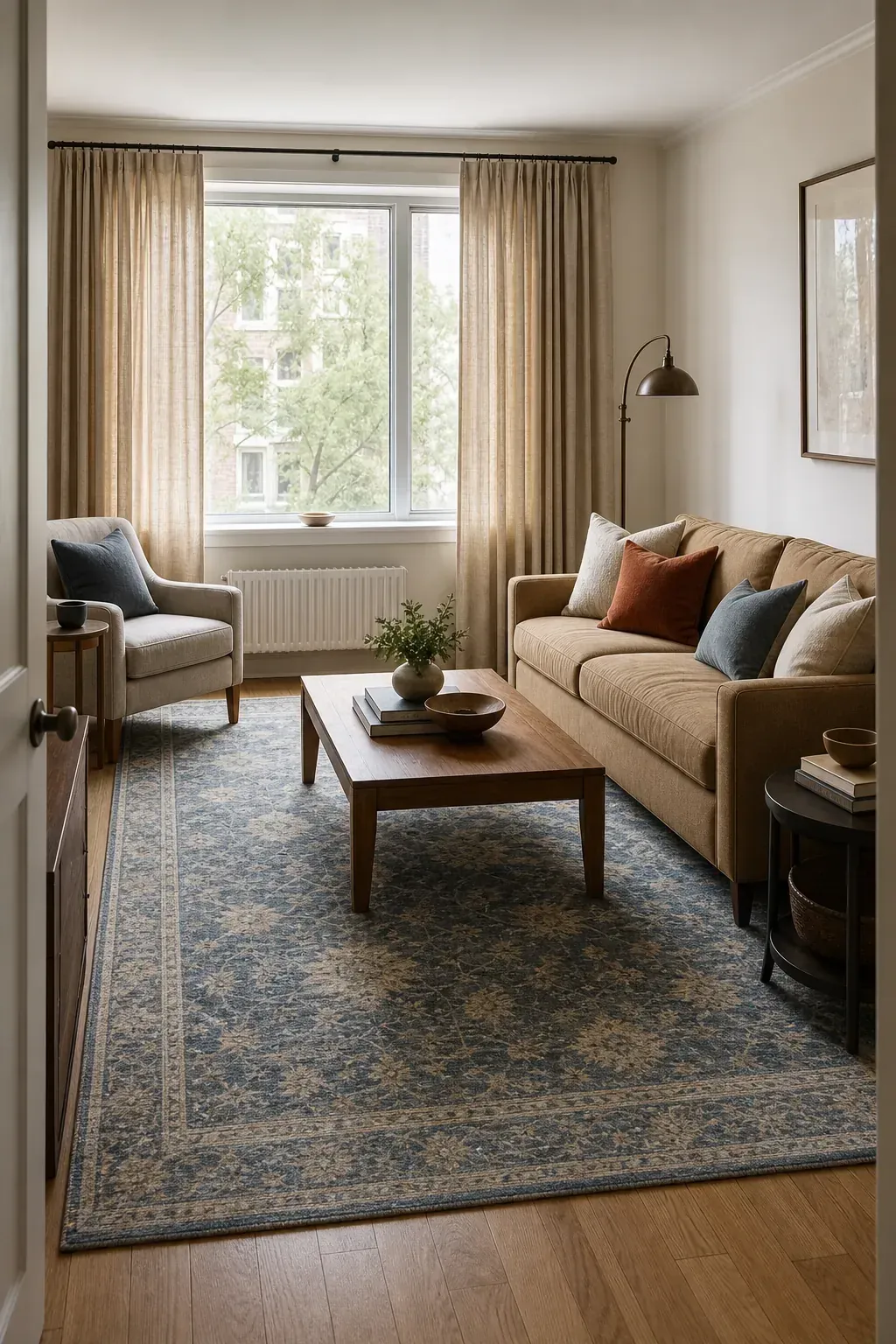
A room rarely feels unfinished because it needs more objects. It feels unfinished because the rug, pillows, and curtains read as three unrelated purchases. The fix is not to match them exactly. Give each soft layer a different job, then repeat just enough color and texture to make the eye connect them. This order of decisions works in living rooms and bedrooms, including spaces where the walls, sofa, or bed must stay.
Start With the Rug Because It Sets the Boundaries
The area rug is the largest and least flexible soft-decor decision, so begin there. In a living room, aim for at least the front legs of the main seating to rest on it; a small rug floating beneath only the coffee table makes every piece look separate. In a bedroom, extend enough rug beyond the sides and foot of the bed to create a comfortable landing. If a favorite patterned rug is undersized, layer it over a larger plain sisal or flat weave instead of pretending the scale works.
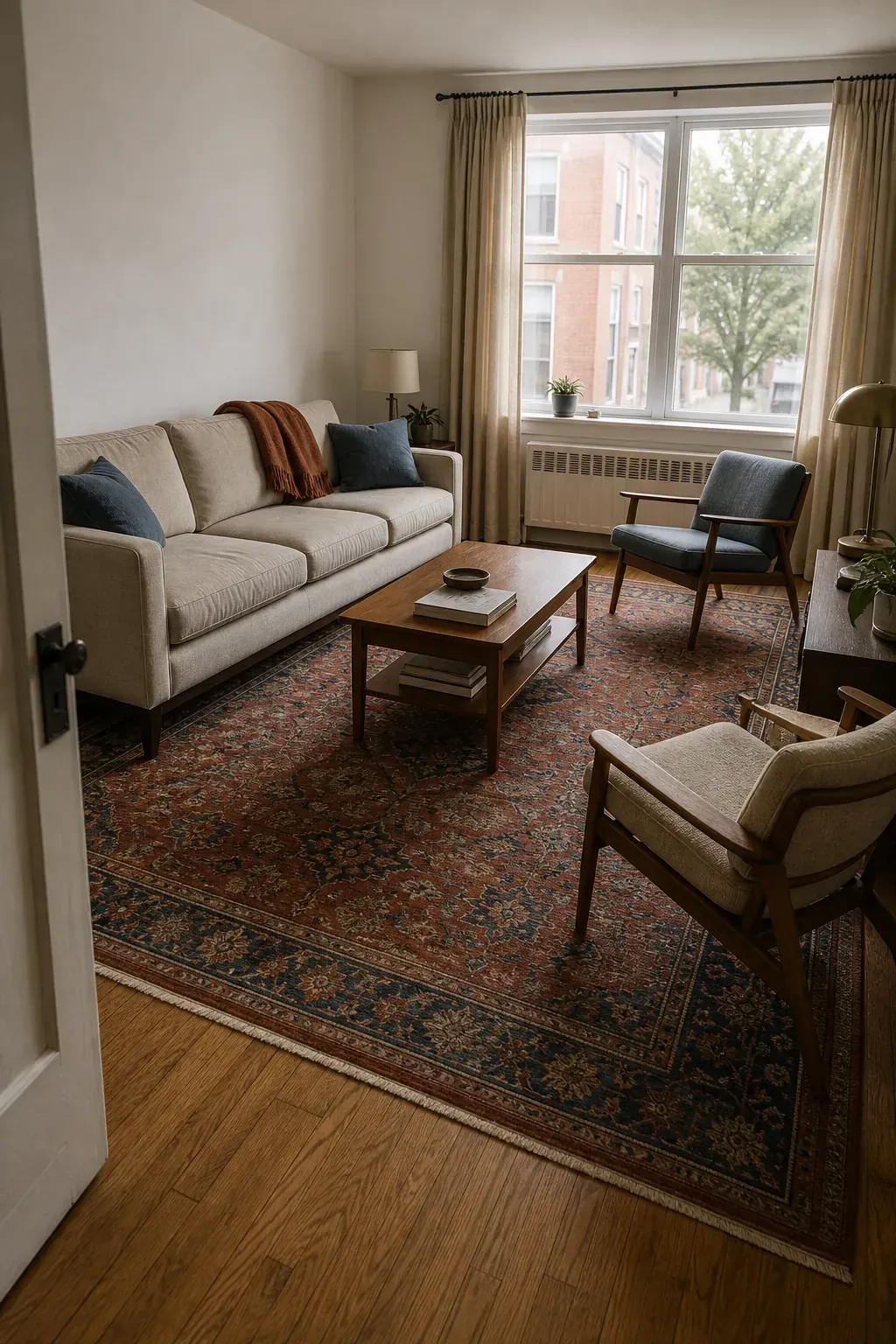
Assign One Lead Pattern and Two Supporting Roles
Let one layer carry the strongest pattern. If the rug has a detailed vintage motif, choose mostly solid curtains and use pillows for one small stripe or geometric accent. If the rug is quiet, the curtains can take a subtle print while the pillows supply texture. Pattern scale matters more than pattern category: combine a large motif with a medium stripe and a small irregular texture rather than repeating three equally busy designs.
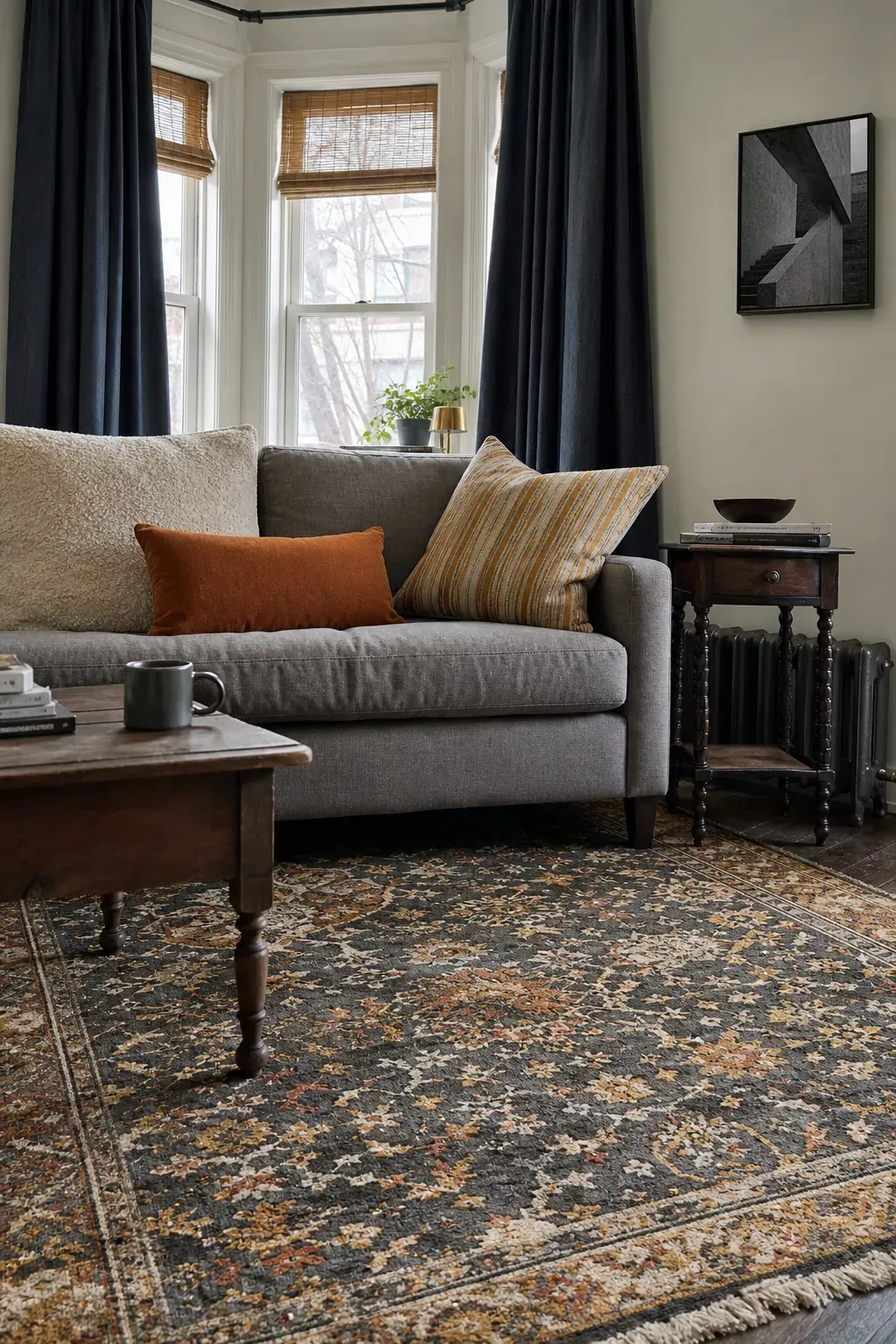
Build a Three-Color Thread Instead of an Exact Match
Pull three usable colors from the room: a dominant neutral, a secondary color, and a smaller accent. The rug might carry all three, the curtains may use only the neutral, and the pillows can repeat the secondary and accent in different proportions. Tonal relatives count. A dusty blue pillow does not need to be identical to a blue-gray rug detail, and forcing an exact match often looks more manufactured than cohesive.
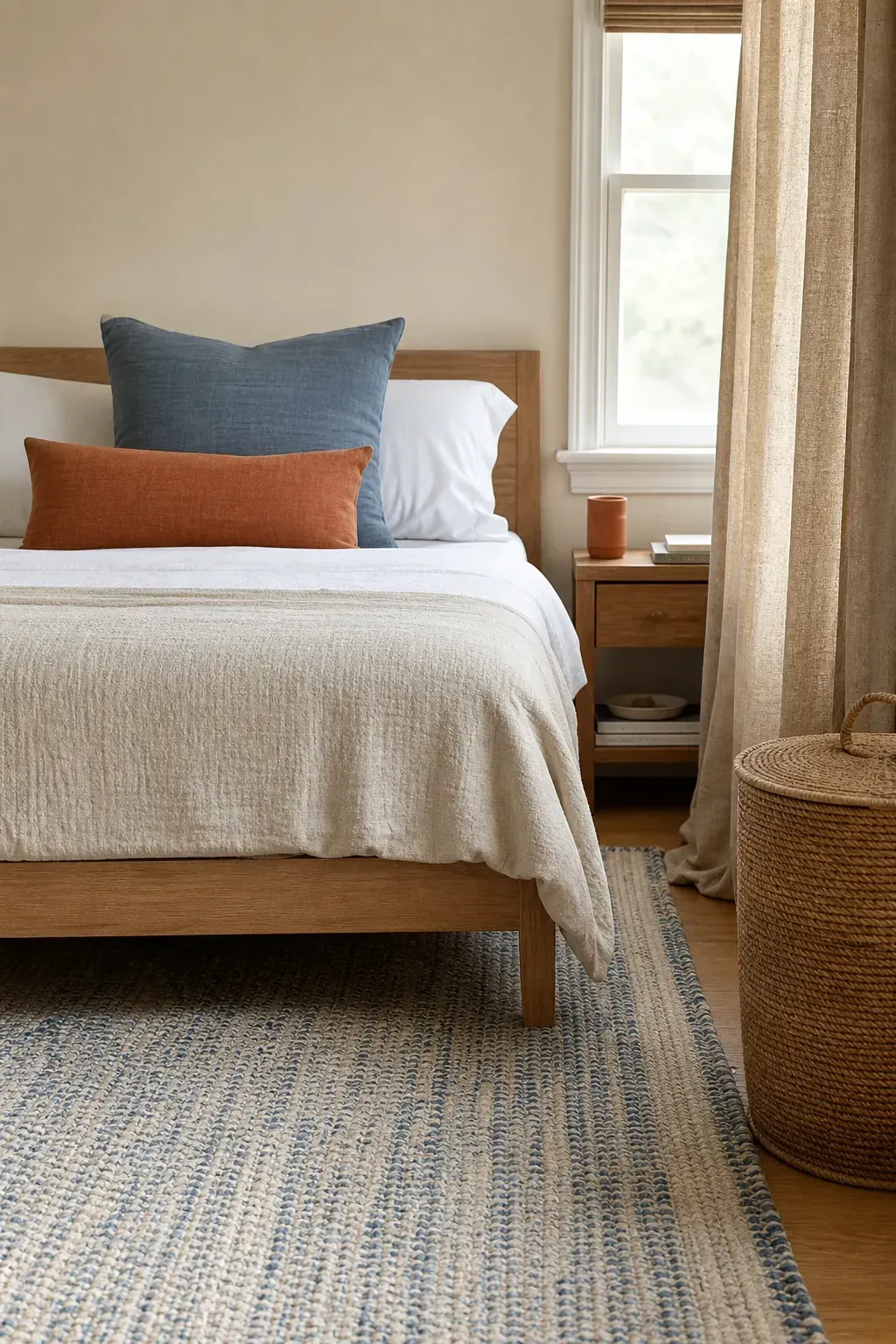
Vary the Texture Before Adding More Color
When a neutral room looks flat, adding five accent colors is usually the wrong first move. Combine different tactile surfaces: a low-pile wool rug, linen curtains, one velvet pillow, one woven cushion, and a washed cotton throw. Keep glossy materials limited because they compete with the calm effect of soft decor. Texture creates shadow, and shadow is what makes close neutral tones legible.
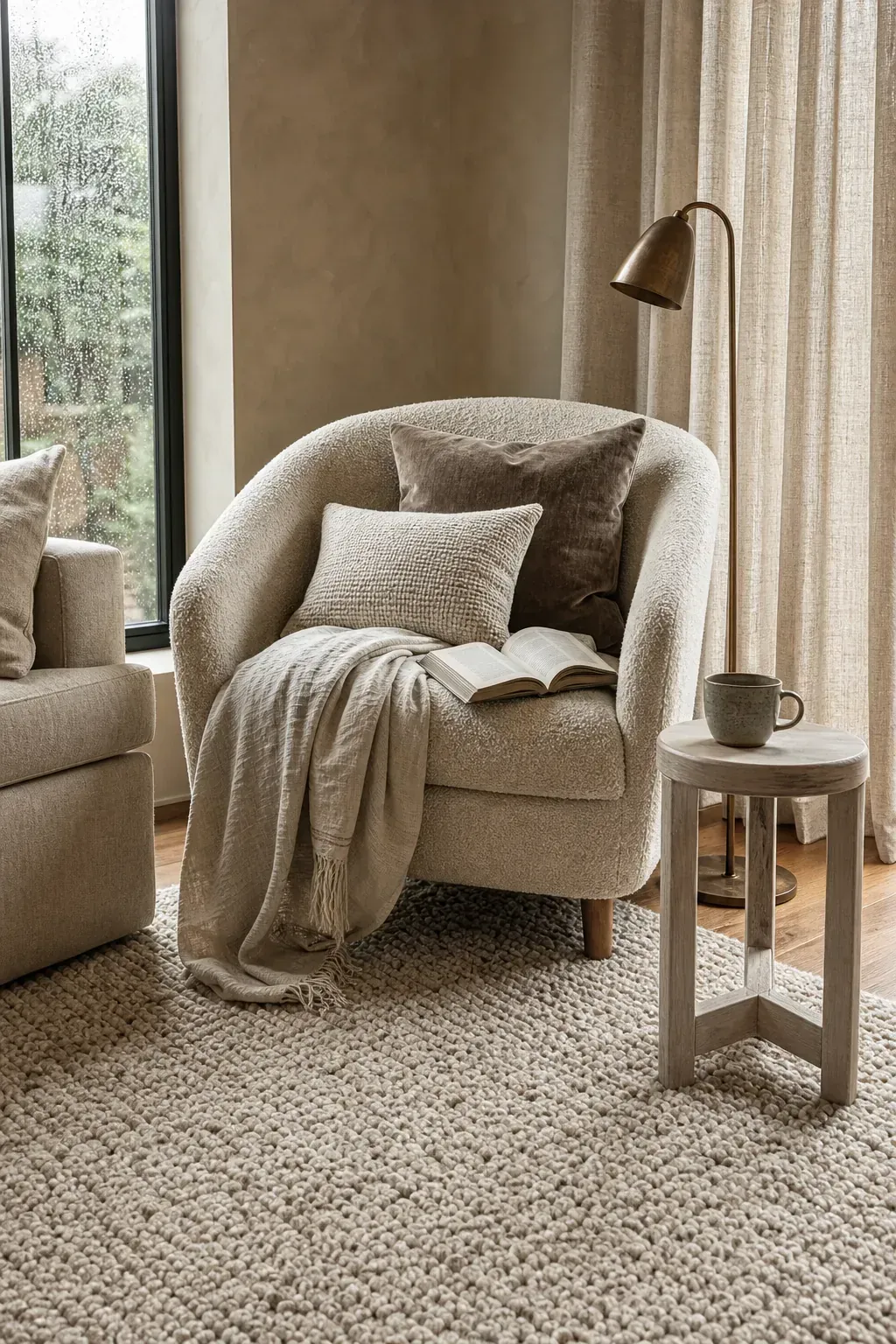
Use Curtain Fullness to Balance the Rug
A substantial rug can make skimpy curtains look accidental. Mount rods higher, extend them beyond the window frame, and use enough fabric that panels still show folds when closed. Where heat sources or built-ins make long drapes unsafe, use a Roman shade instead of short panels that interrupt the wall. Full window treatments add visual weight and acoustic softness, allowing the room’s lower rug layer to feel connected to the architecture.
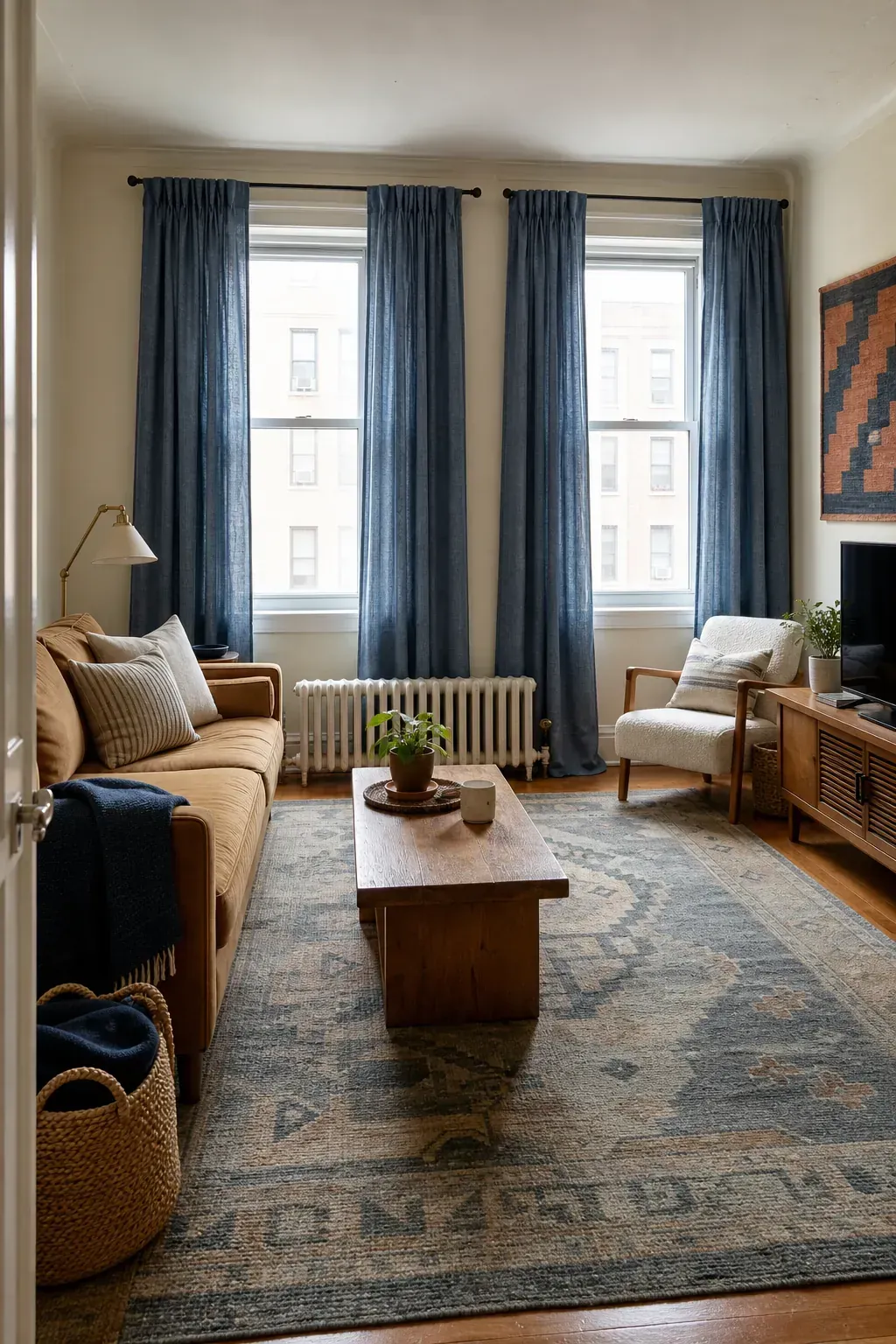
Arrange Pillows as Bridges, Not a Matching Set
Use pillows to bridge elements that are physically far apart. One cushion might repeat the rug’s rust accent, another might echo the curtain’s flax color, and a smaller lumbar can introduce a stripe containing both. Vary shape and scale, but keep the count practical for the sofa or bed. A single odd cushion often looks stranded; a mountain of coordinated pillows looks staged. The useful middle is an asymmetric group with a clear shared palette.
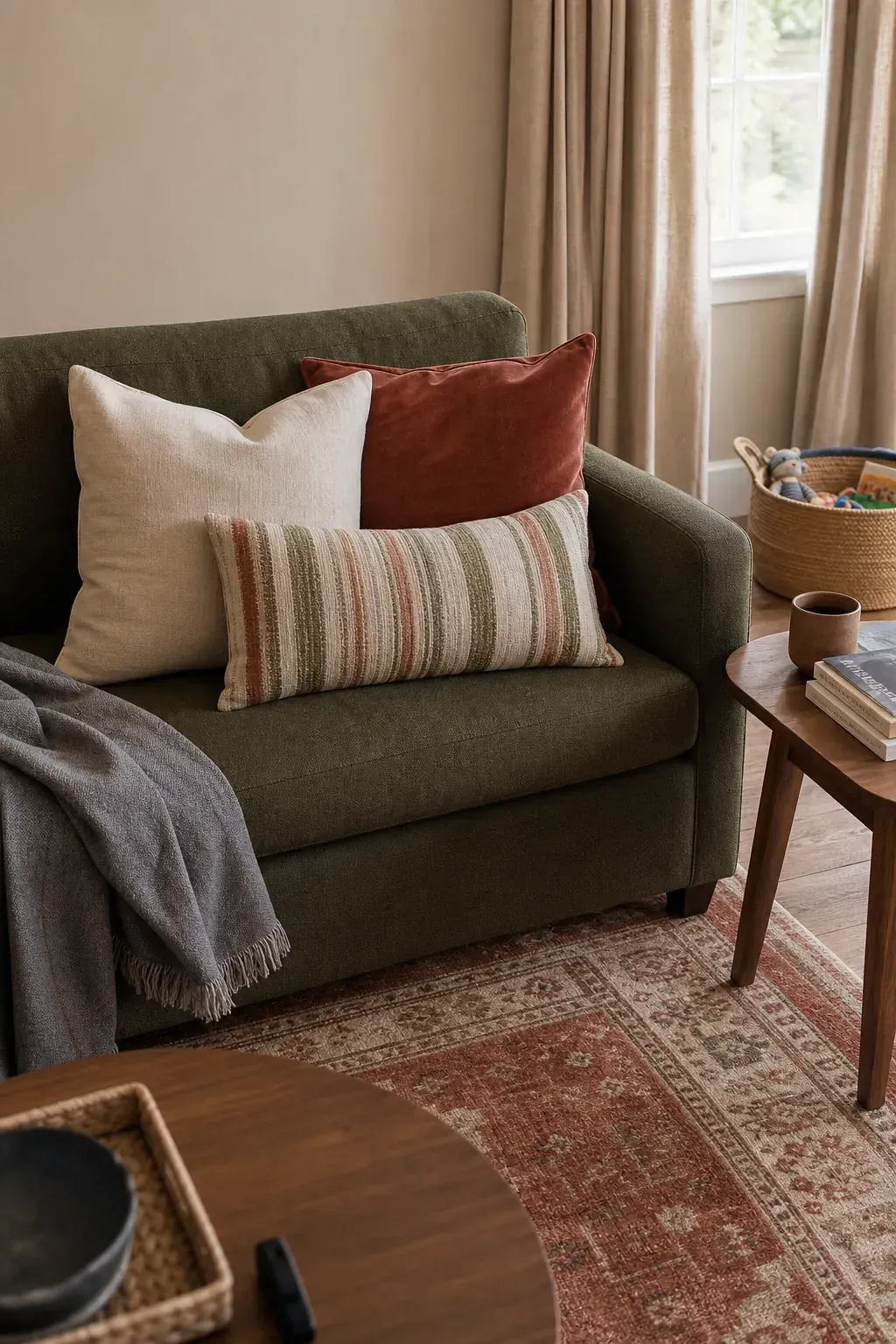
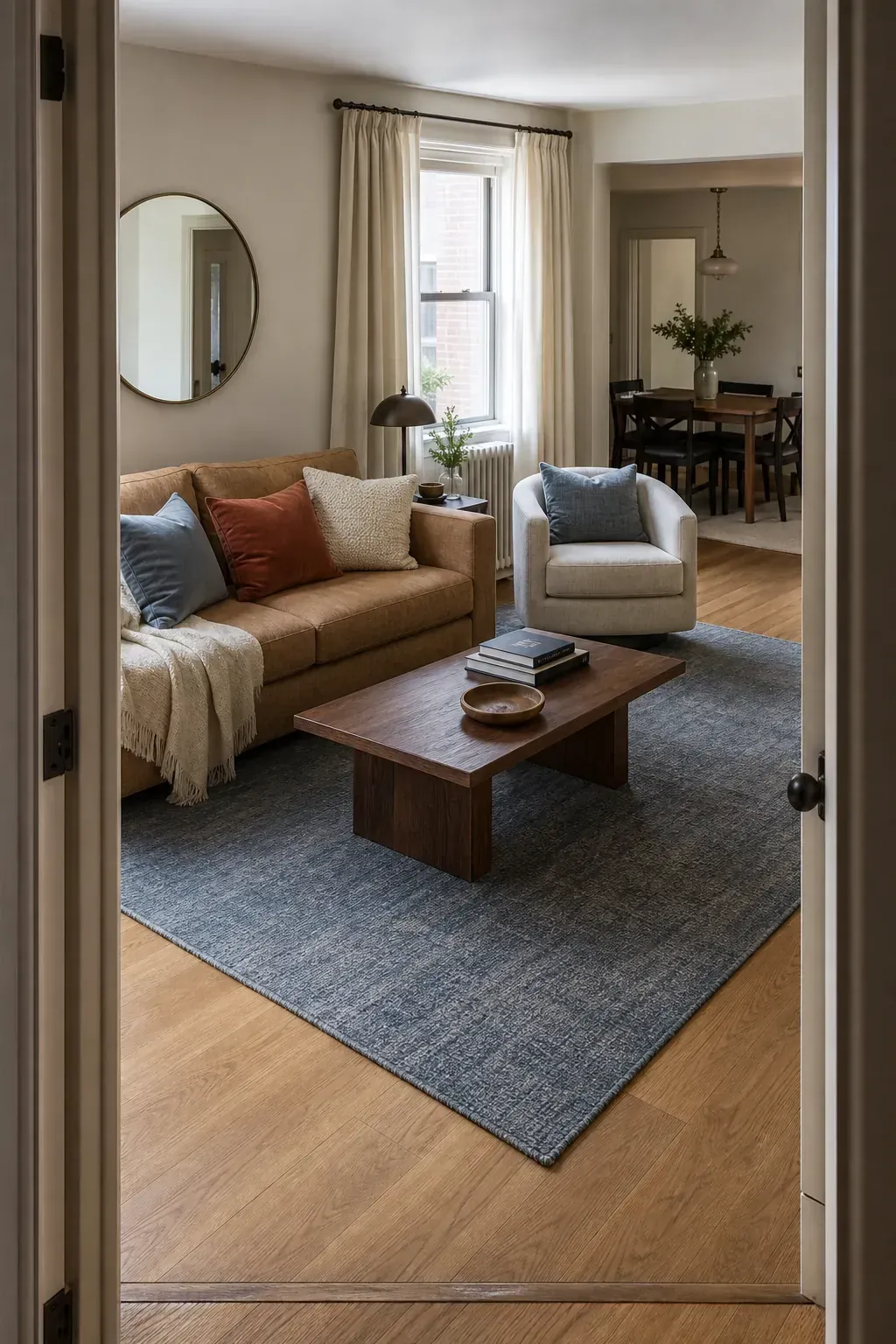
Edit the Whole Room From the Doorway
Step out, return, and notice what your eye lands on first. If every textile shouts, quiet one layer. If everything blends, deepen one color or introduce a coarser texture. Check whether the rug actually connects the furniture, whether open curtains clear the glass, and whether the pillows repeat colors already present rather than inventing a fourth palette.
The best layered decor does not announce a formula. It makes separate pieces feel related while leaving enough variation for the room to look collected. When the rug establishes the space, the curtains shape its height, and the pillows carry color between them, the room stops looking assembled and starts looking settled.