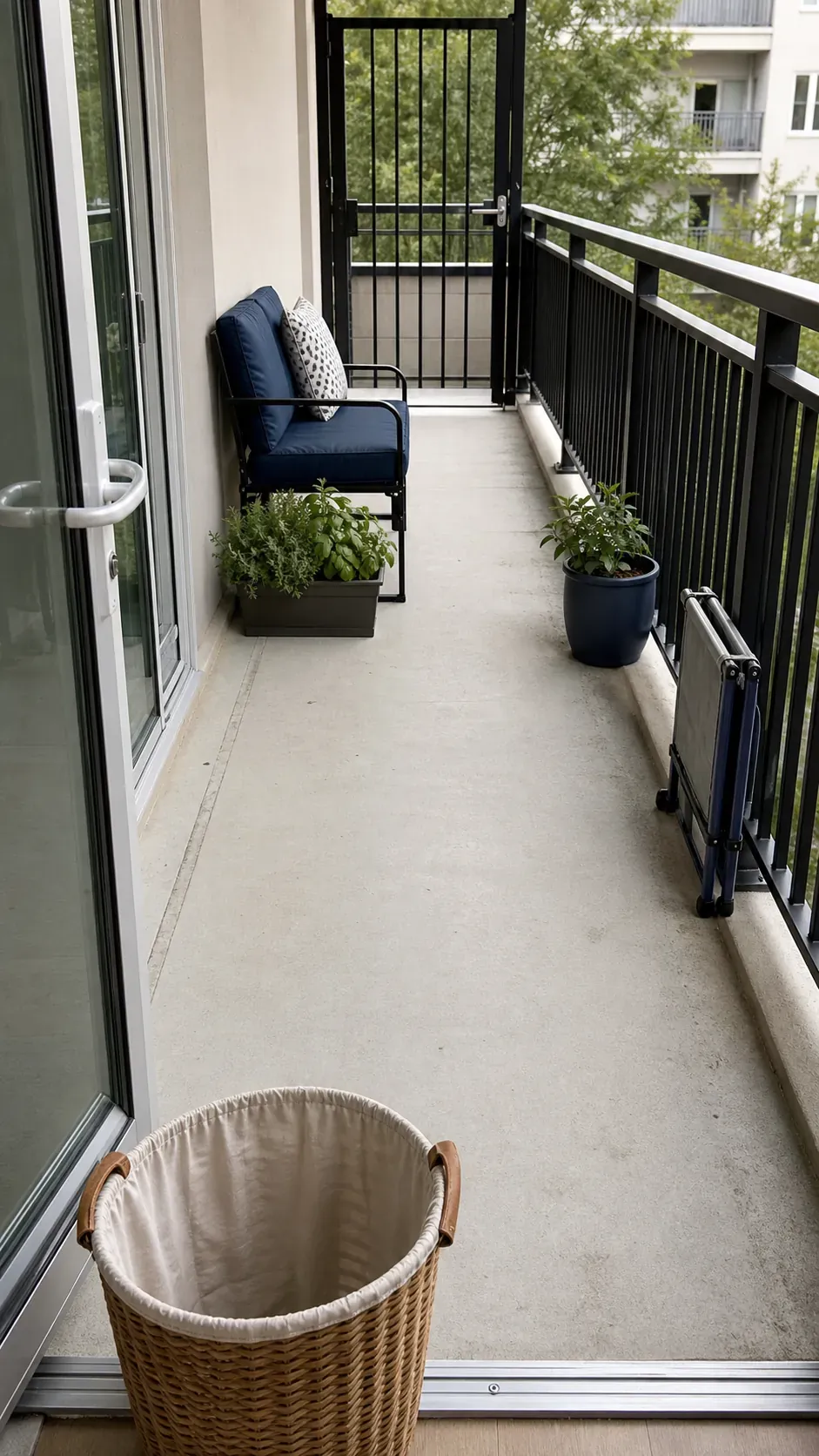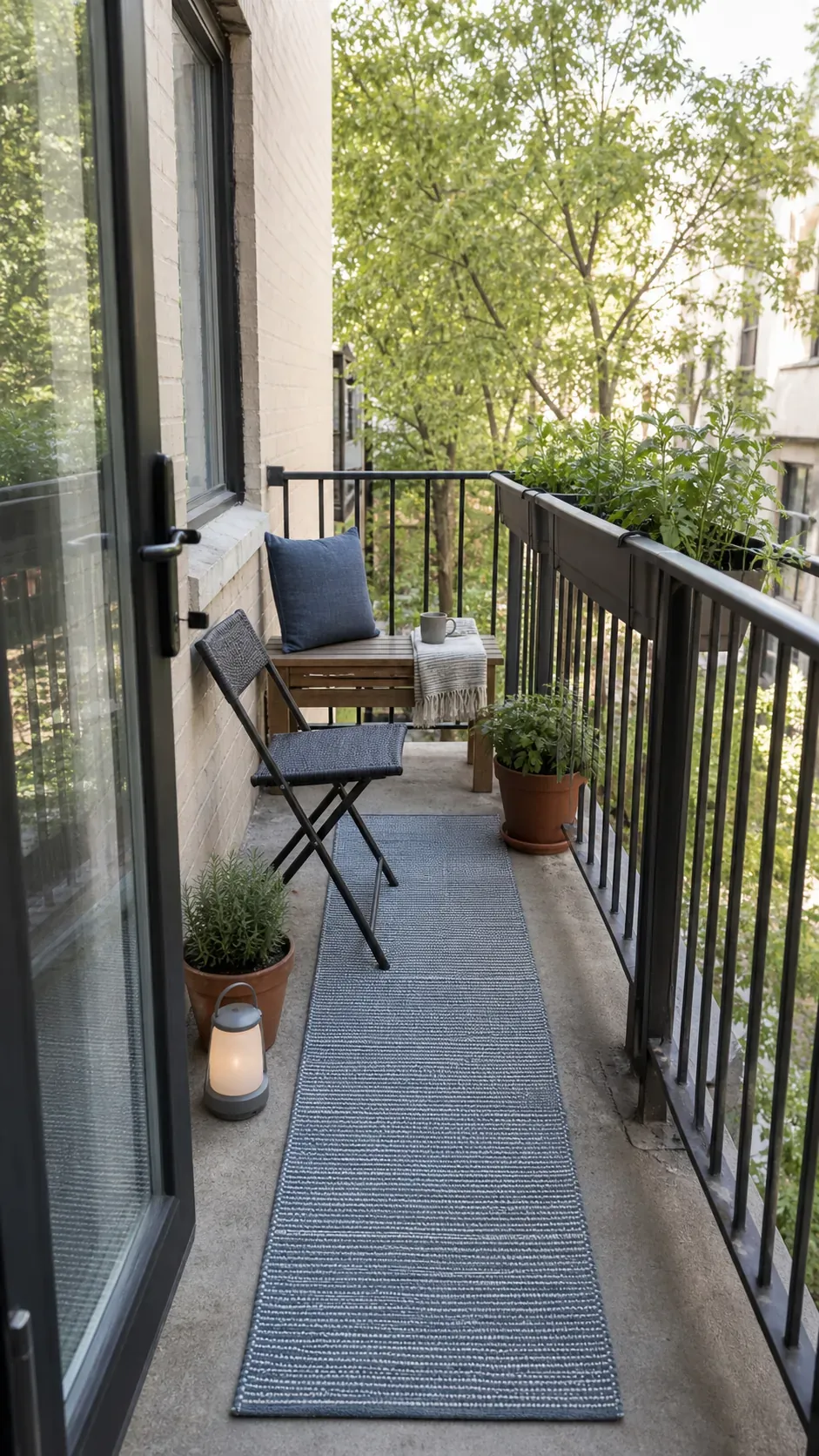
A tiny apartment balcony is not an outdoor storage room, and it is not a miniature backyard. It is a narrow, exposed extension of your home with rules, wind, weight, drainage, and neighbors below to consider. These 19 small patio ideas for an apartment tiny balcony make that reality part of the design, so the result is safe, comfortable, and easy to use.
Start With a Lease-and-Weather Audit
Before buying anything, read the balcony rules and note what can be attached to walls, ceilings, and railings. Confirm whether screens, lights, planters, deck tiles, and umbrellas are permitted. Never block an emergency route or introduce an open flame where grills are prohibited.
Then observe direct sun, deep shade, wind direction, and where rain collects. A five-minute plan prevents expensive décor from becoming unsafe clutter. If structural load is uncertain, ask building management before adding wet soil, heavy stone, or a storage bench.
Fit a Slim Bench Along the Short Wall
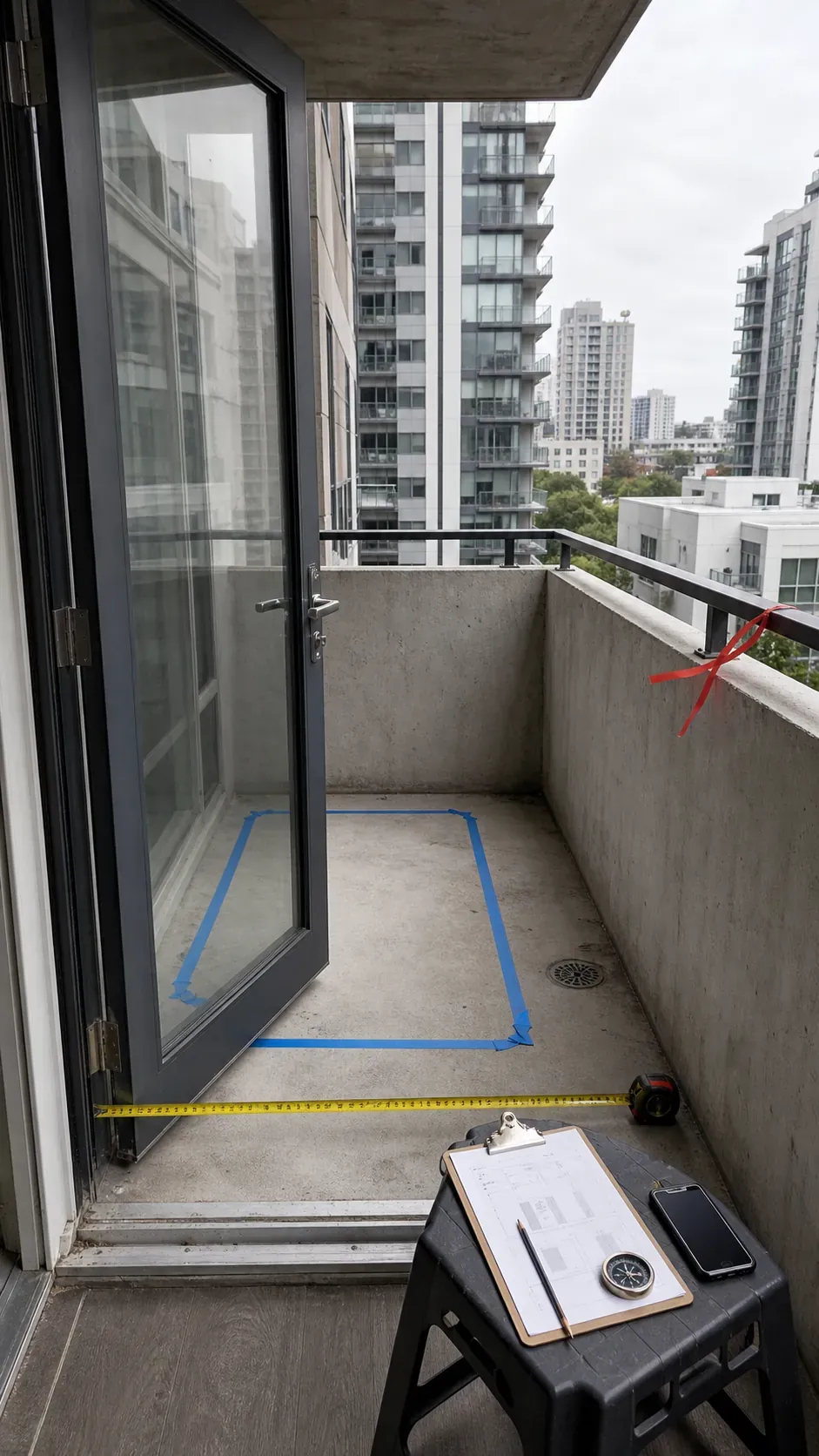
A bench on the short end uses the balcony’s width without turning the entire length into furniture. Look for an 18- to 20-inch seat depth and measure the real space left between the bench and railing.
Choose outdoor materials and removable cushions you can bring inside during storms. A backless bench often feels less bulky beneath a window, while a supportive corner back works better if the balcony is primarily for reading.
Pair Folding Chairs With a Moveable Stool
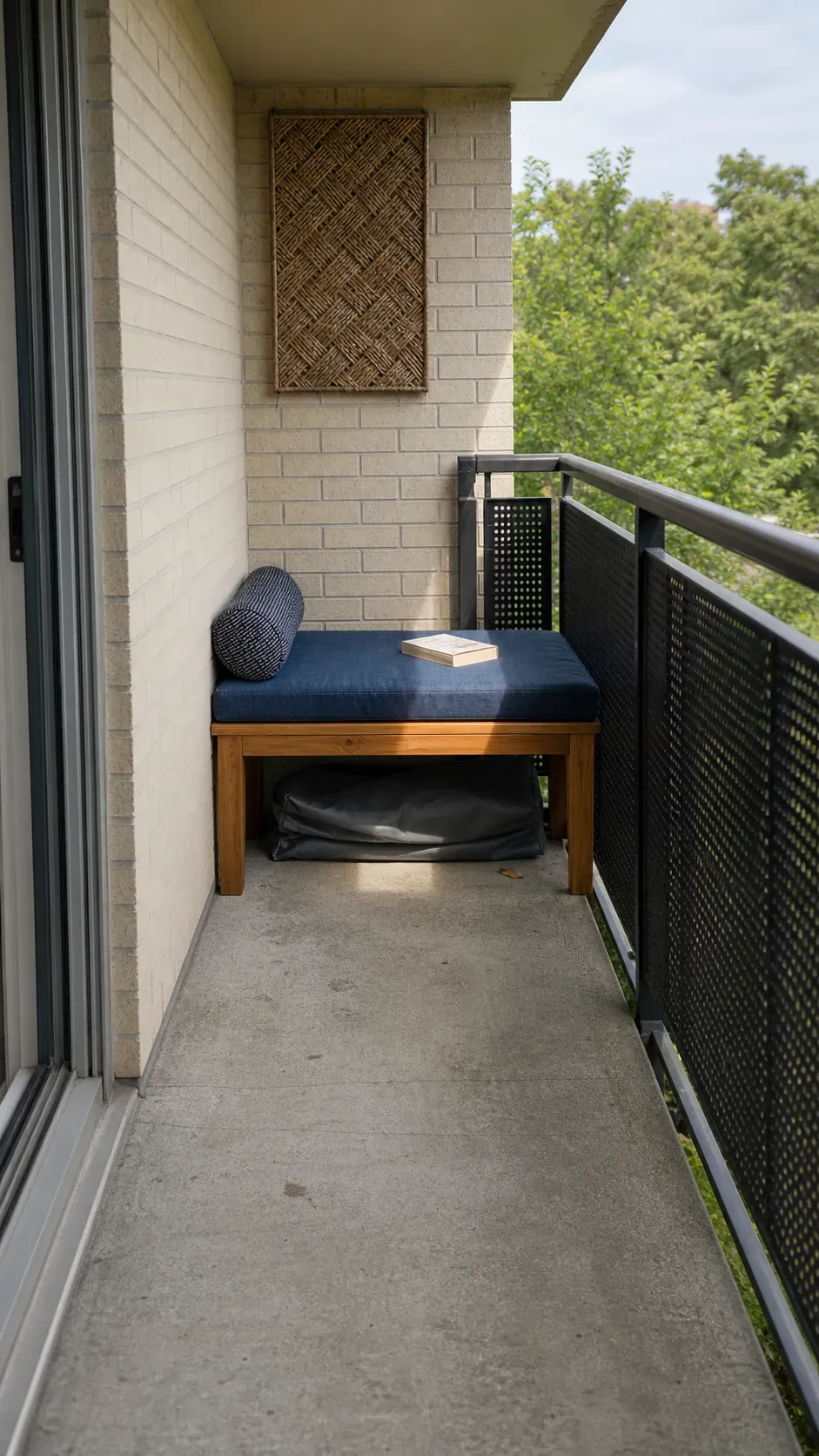
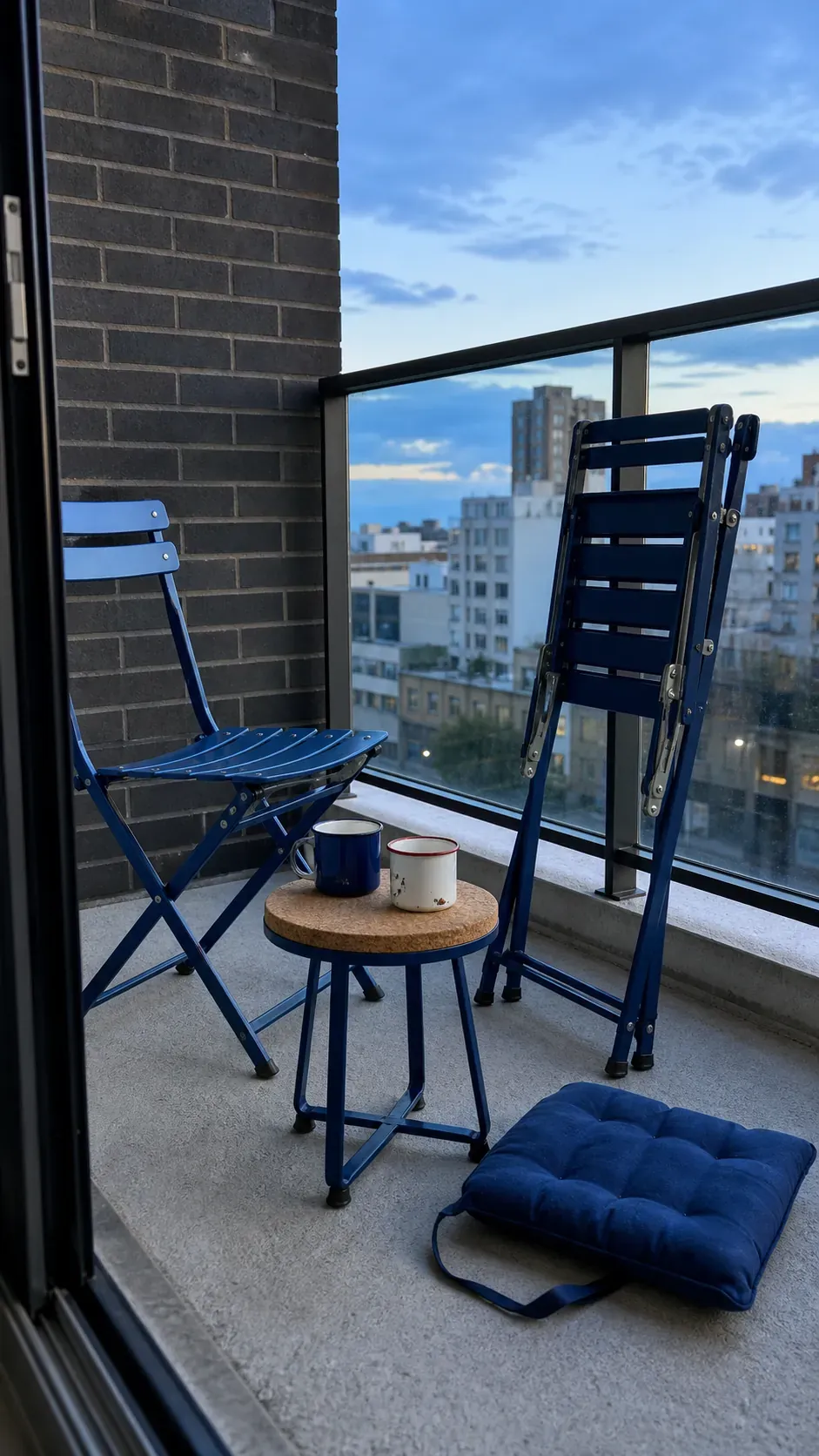
Two folding chairs and one sturdy stool can support coffee for two, a laptop, or an extra guest without permanently filling the floor. The stool can move between seats or become a plant stand when no drink surface is needed.
Store folding chairs indoors or secure them flat before high winds. Pick outdoor-rated pieces with broad feet that will not catch between deck tiles, and avoid lightweight furniture that can blow against glazing or over a railing.
Use an Approved Railing Breakfast Shelf
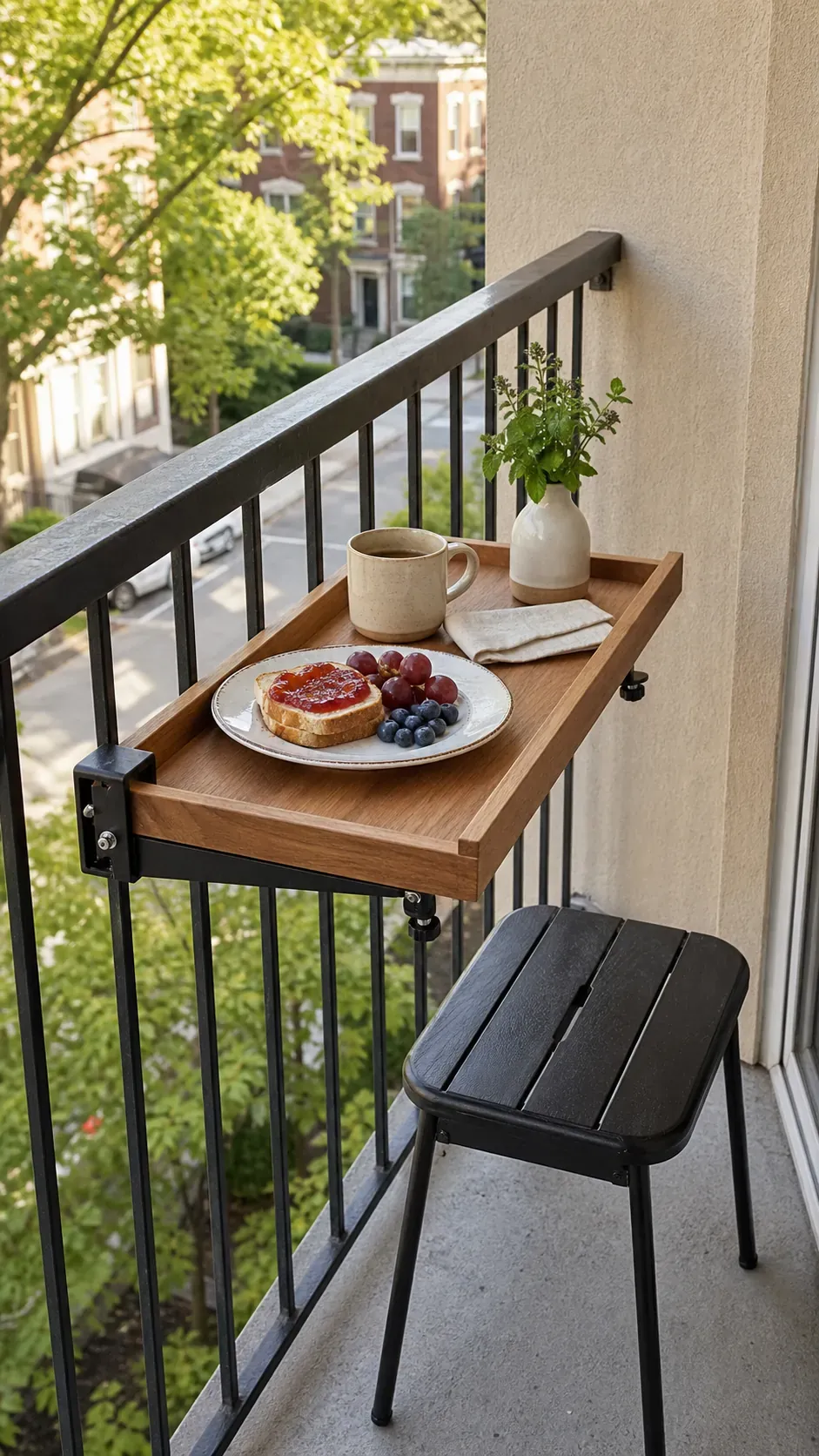
A shallow railing shelf creates a useful counter without adding table legs. Choose a purpose-built model that clamps inward, includes a raised edge, and is explicitly permitted by your building. Keep hot drinks and breakable objects away from the outer side.
Measure seated elbow height before ordering. The shelf should leave enough width behind the stool for someone to pass and must never interfere with the top rail’s safety function.
Choose a Half-Moon Table Against the Wall
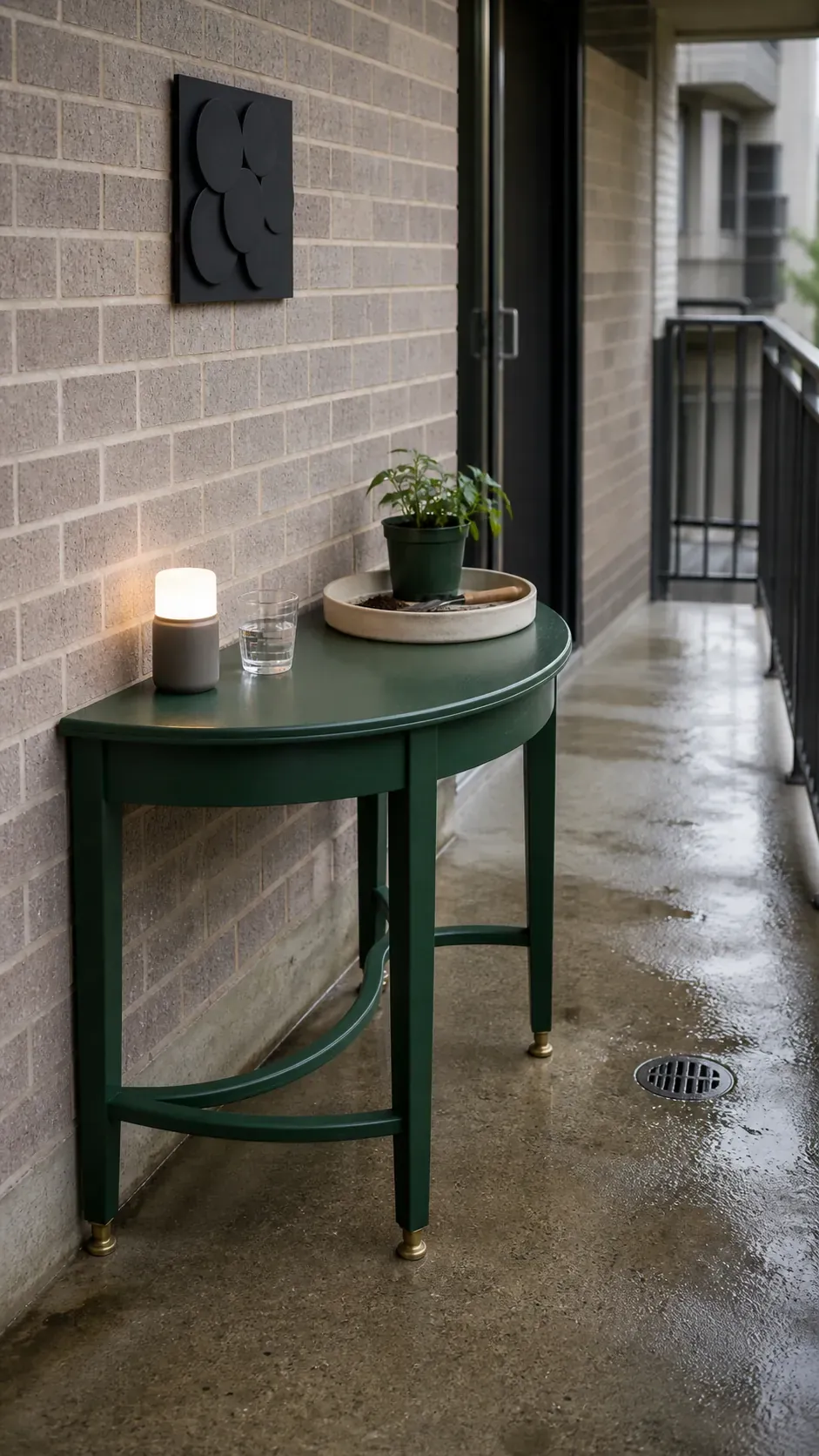
A half-moon table gives you a curved front edge and a flat back that sits close to the building. It is a smart alternative when drilling for a fold-down shelf is not allowed.
Use it as a breakfast table, plant-care station, or evening bar—just not all three at once. A lower stretcher makes slender legs more stable, and adjustable feet help on floors that slope toward a drain.
Raise Sun-Loving Plants on One Narrow Stand
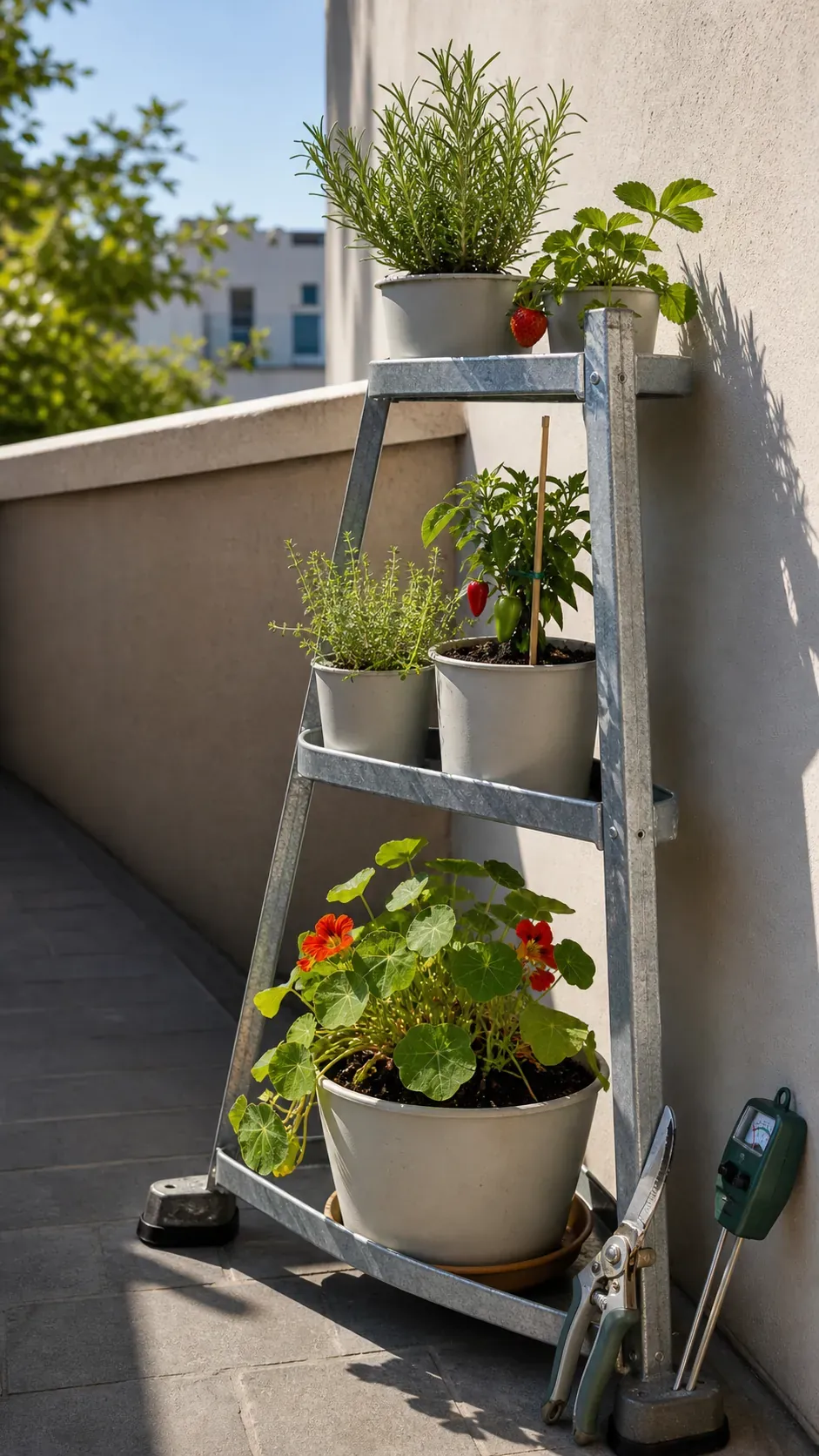
Balcony parapets often cast shade on everything near the floor. A narrow stepped stand can lift herbs and flowers into available light while keeping pots off the walking route. Put the heaviest containers at the bottom and secure the stand against tipping without making an unapproved attachment.
Do not fill every shelf. Plants need airflow and space for your hand and watering can. Match each species to the balcony’s measured light rather than assuming “outdoor” automatically means full sun.
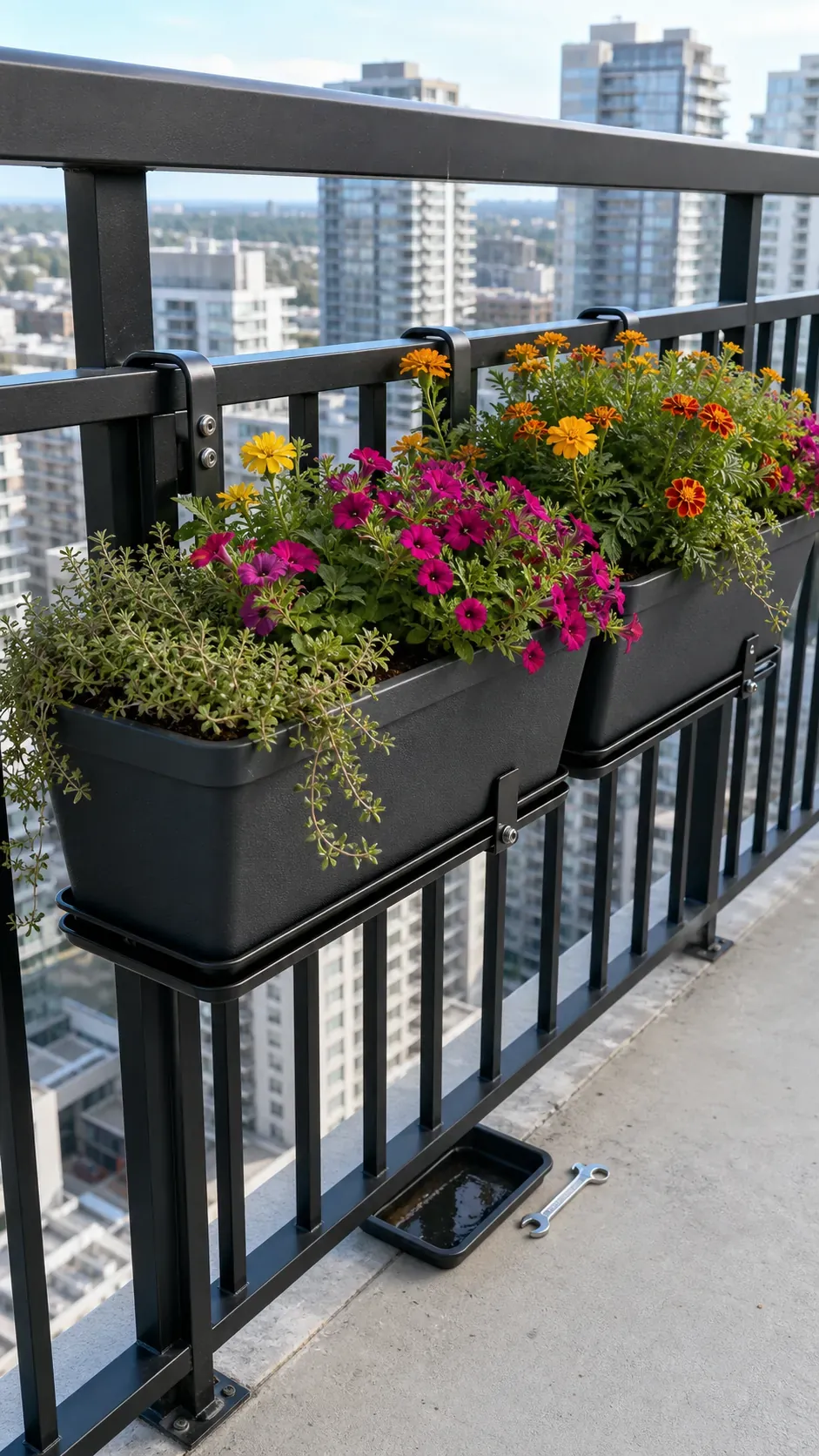
Hang Planters Inward for Safer Greenery
If railing planters are allowed, orient them inside the balcony. Use brackets made for the exact railing profile, tighten every fastener, and keep foliage from projecting into the public side.
Choose lightweight containers with controlled drainage and saucers. Wet soil adds substantial weight, while wind can turn a loose pot into a serious hazard. Check fixings at the start of each season and after storms.
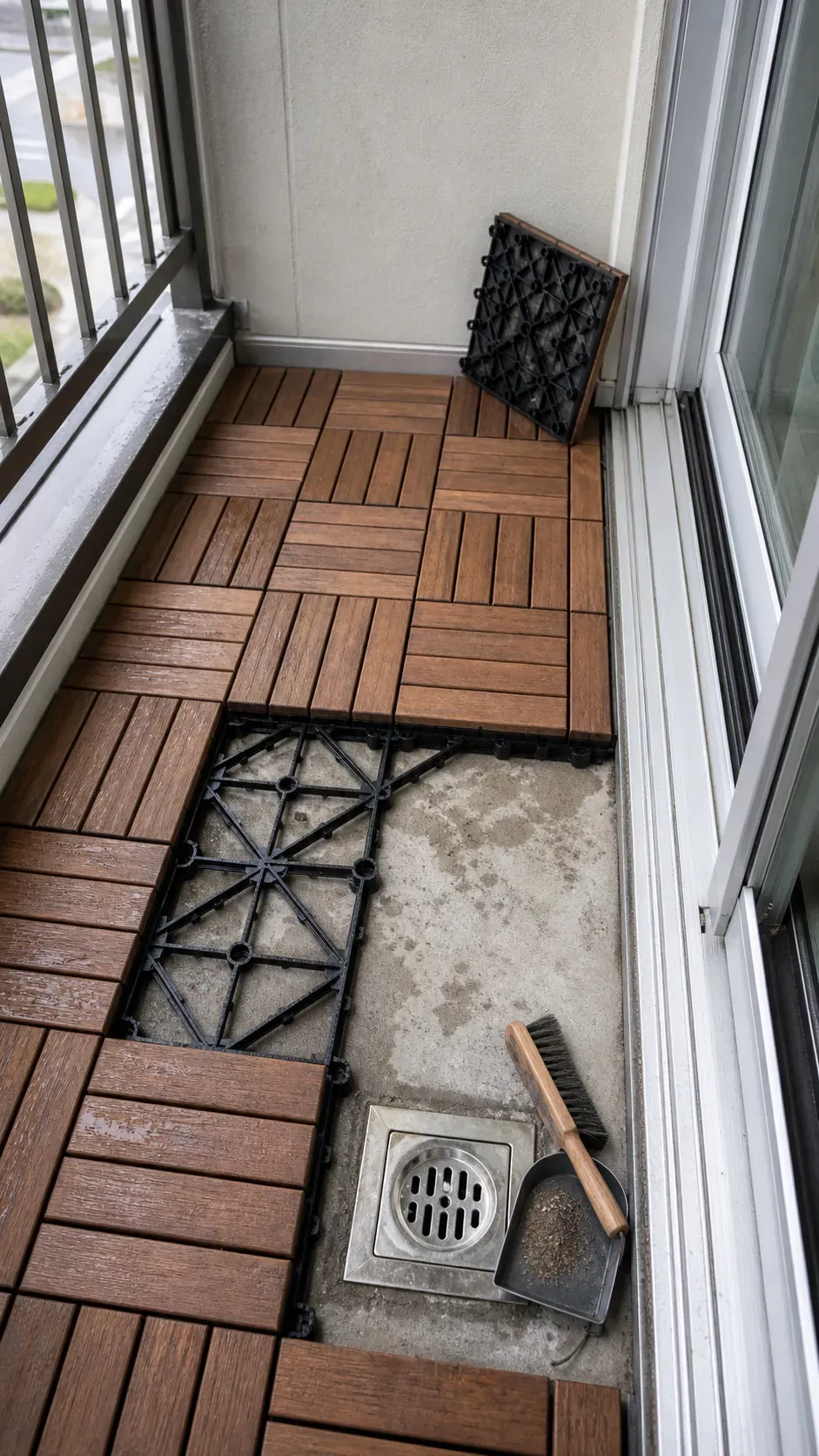
Lay Removable Deck Tiles in a Drain-Safe Grid
Interlocking deck tiles warm up concrete and can make a tiny balcony feel closer to an outdoor room. Select an outdoor system that allows water underneath, trim only according to the manufacturer’s method, and keep the floor drain accessible.
Lift a few tiles seasonally to sweep debris and check for trapped moisture. Stop the grid before the door track so the threshold remains visible and does not become a trip point.
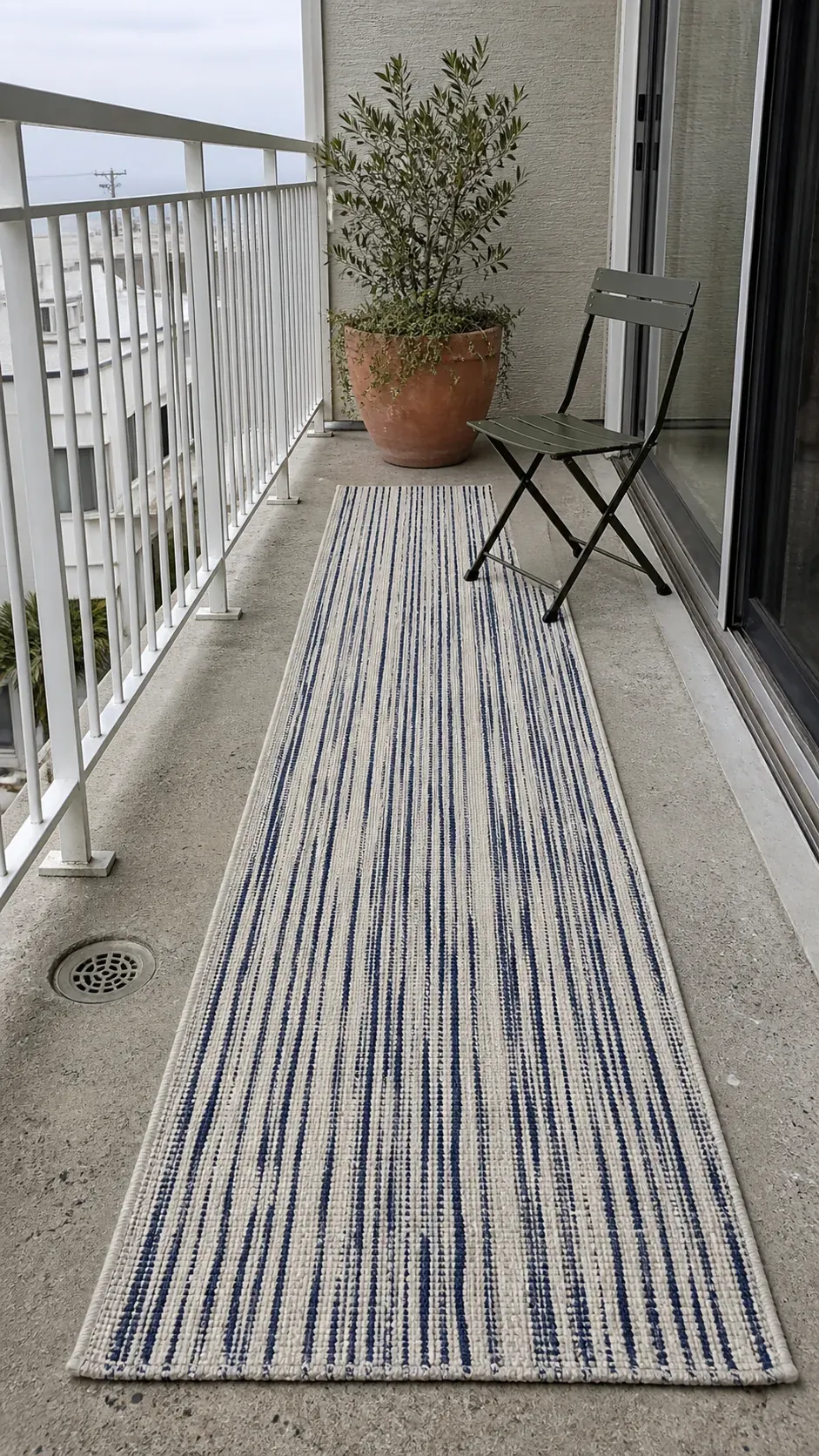
Run a Washable Rug Along the Length
A narrow outdoor runner emphasizes the long axis and softens hard concrete without crowding the sides. Keep it clear of the drain and choose a flat weave that will not catch folding chair feet.
Use a breathable outdoor rug pad only if the balcony rules allow it and it drains freely. Shake out grit regularly, because trapped debris can scratch finishes and hold moisture against the slab.
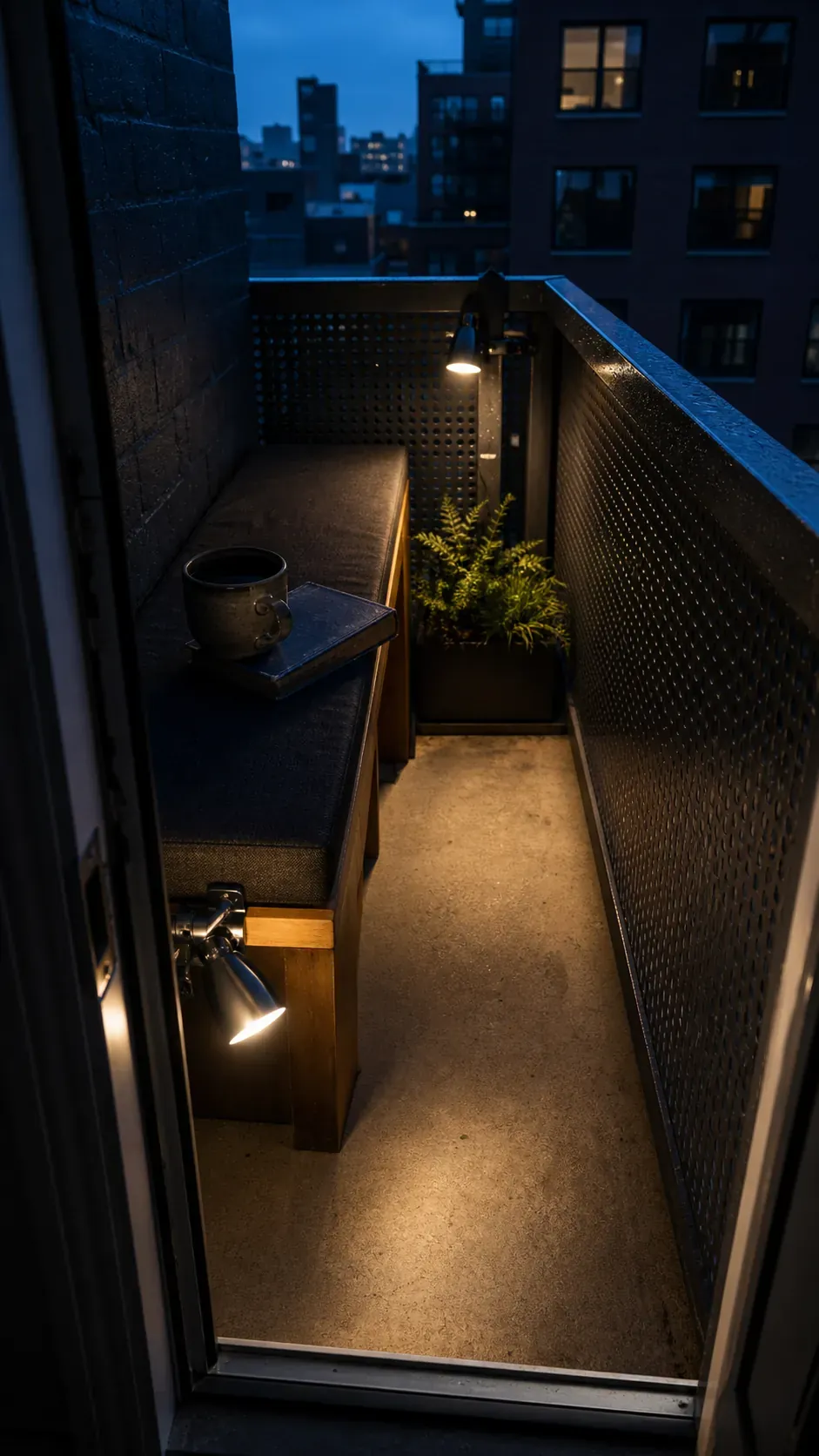
Add Low Clip-On Lights Instead of a Canopy
When overhead string lights are prohibited, outdoor-rated rechargeable lights can clip to furniture or approved inward-facing rail points. Place them below neighbors’ windows and aim the beam toward the floor or table.
Warm, low light is more useful than a bright decorative web. Bring detachable fixtures inside during storms and skip wind chimes or noisy ornaments that can disturb neighboring apartments.
Filter One Side With a Lease-Safe Screen
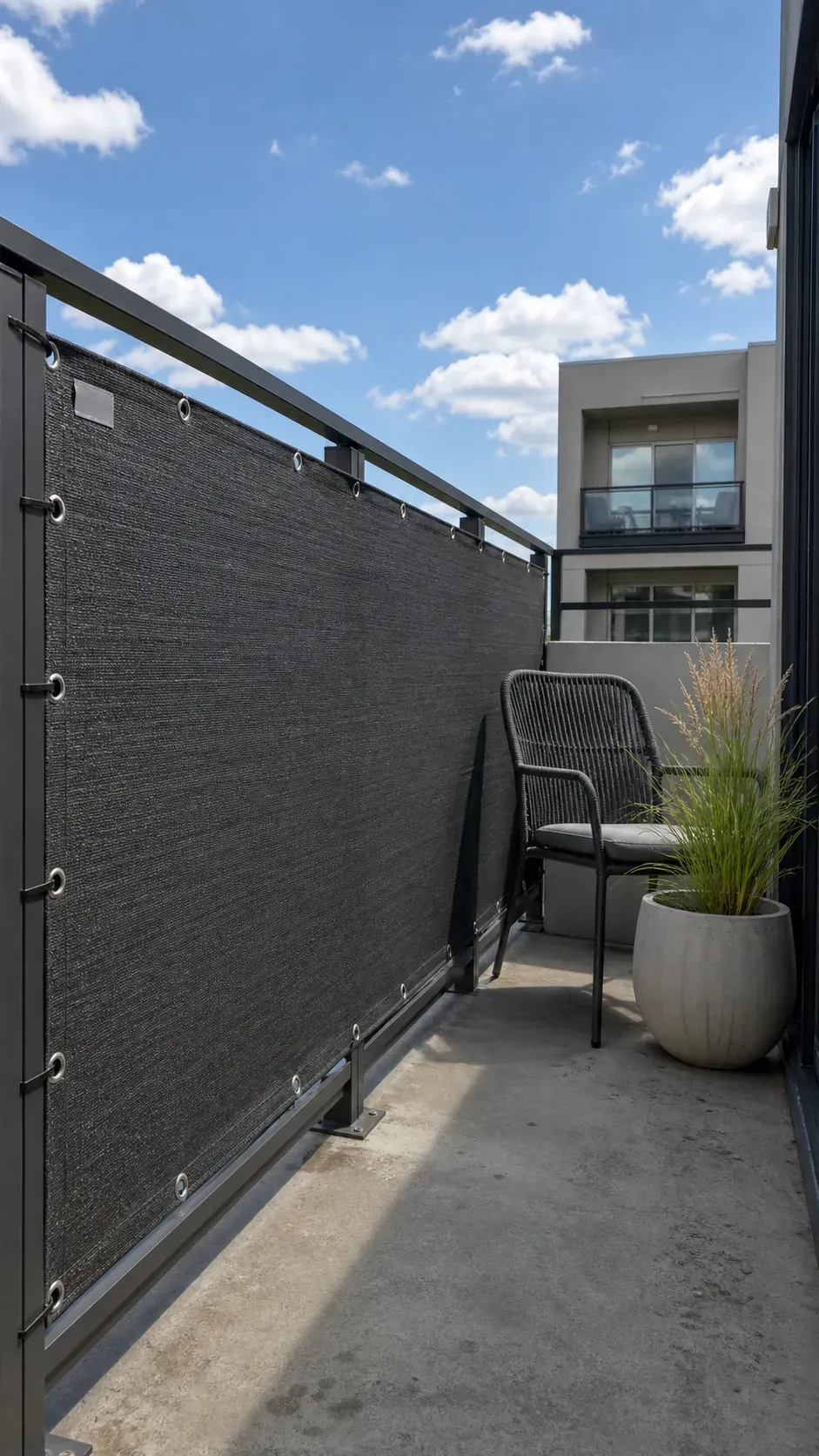
If your building permits privacy screens, cover only the problem sightline. A low-porosity fabric fixed through every approved grommet creates less wind load than a loose curtain, while a weighted freestanding lattice may work where rail attachments are banned.
Keep the screen below required heights and away from exits. Written approval is more valuable than a clever installation when building façades and fire routes are regulated.
Use Low Plants on a Windy Balcony
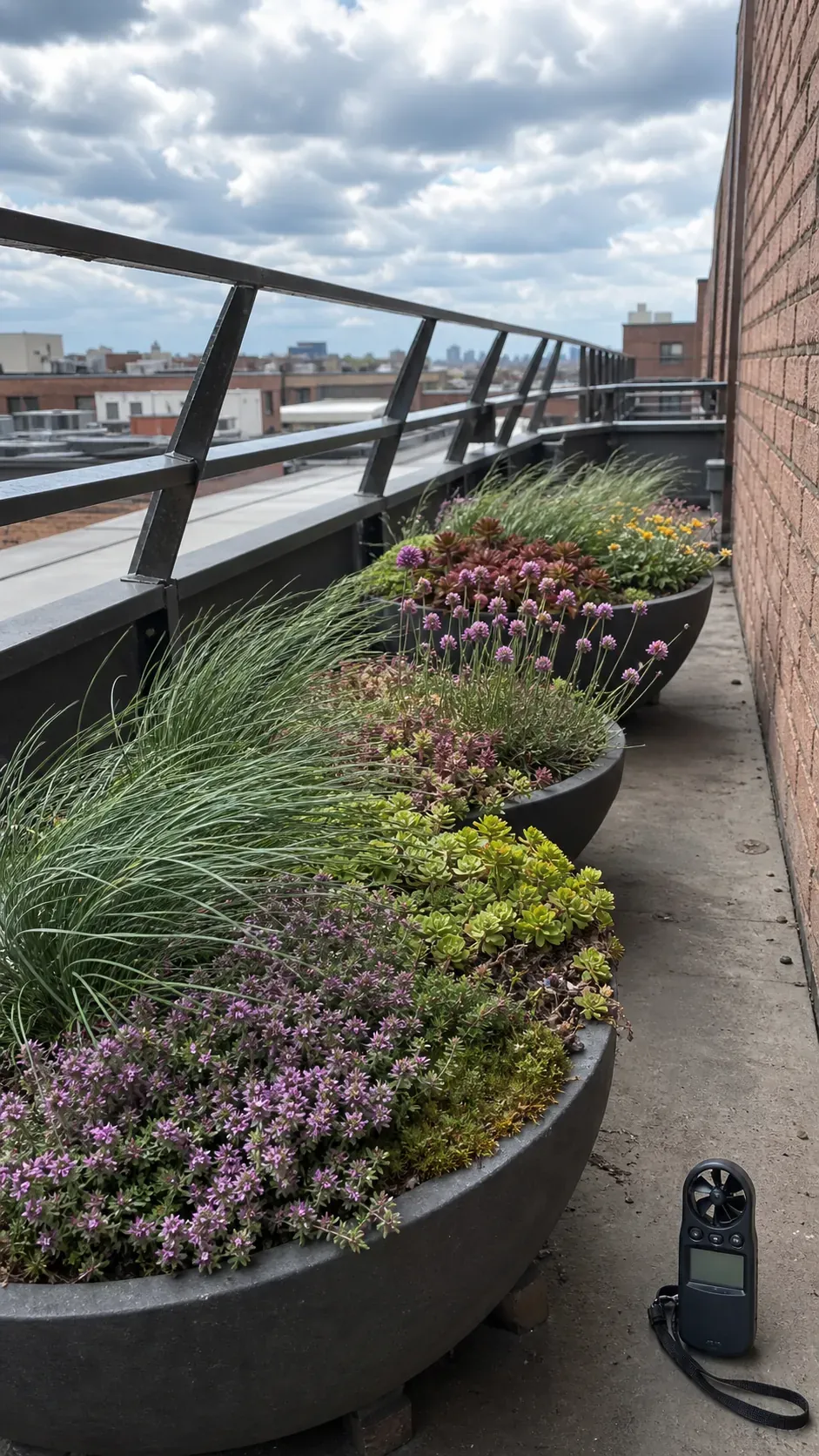
A wind tunnel is the wrong place for tall top-heavy pots. Group low, flexible plants in broad containers and choose species suited to your climate, salt exposure, and real sunlight. Low planting can still add color without acting like a sail.
Move tender pots indoors before severe weather and avoid filling pot bottoms with random rocks as a substitute for proper stability or drainage. The safest container is broad, appropriately sized, and kept inside the railing.
Create a Cat-Safe Perch Without Blocking the Net
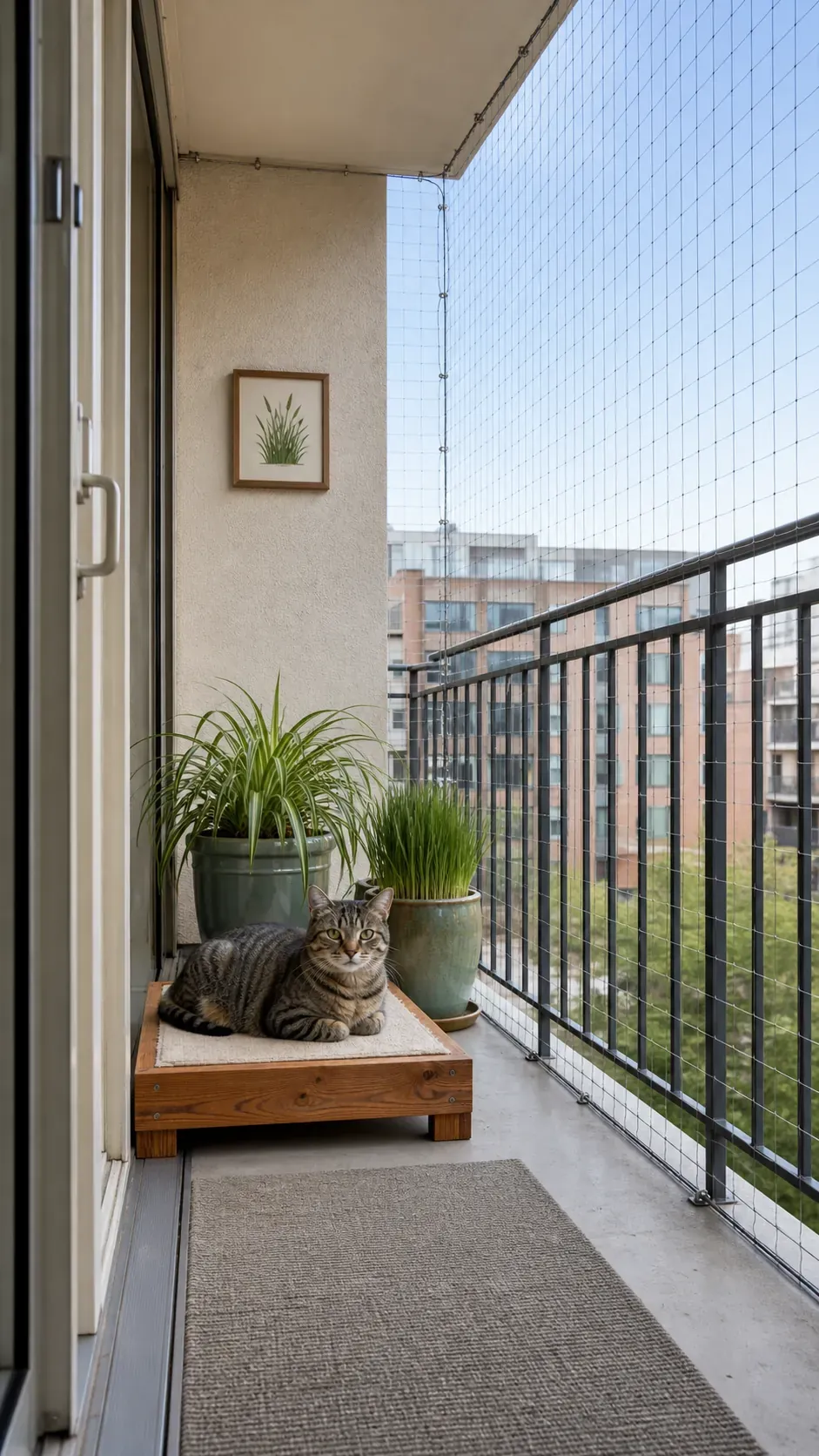
Where a professionally installed cat net is permitted, keep furniture and plants from bowing or stressing it. A low stable perch set back from the railing gives a cat a view without creating a launch point against loose mesh.
Supervise balcony time, check the complete perimeter for gaps, and confirm every plant is pet-safe. A decorative setup is never a substitute for a secure enclosure designed for the animal and building.
Build a Cooking Herb Box Near the Door
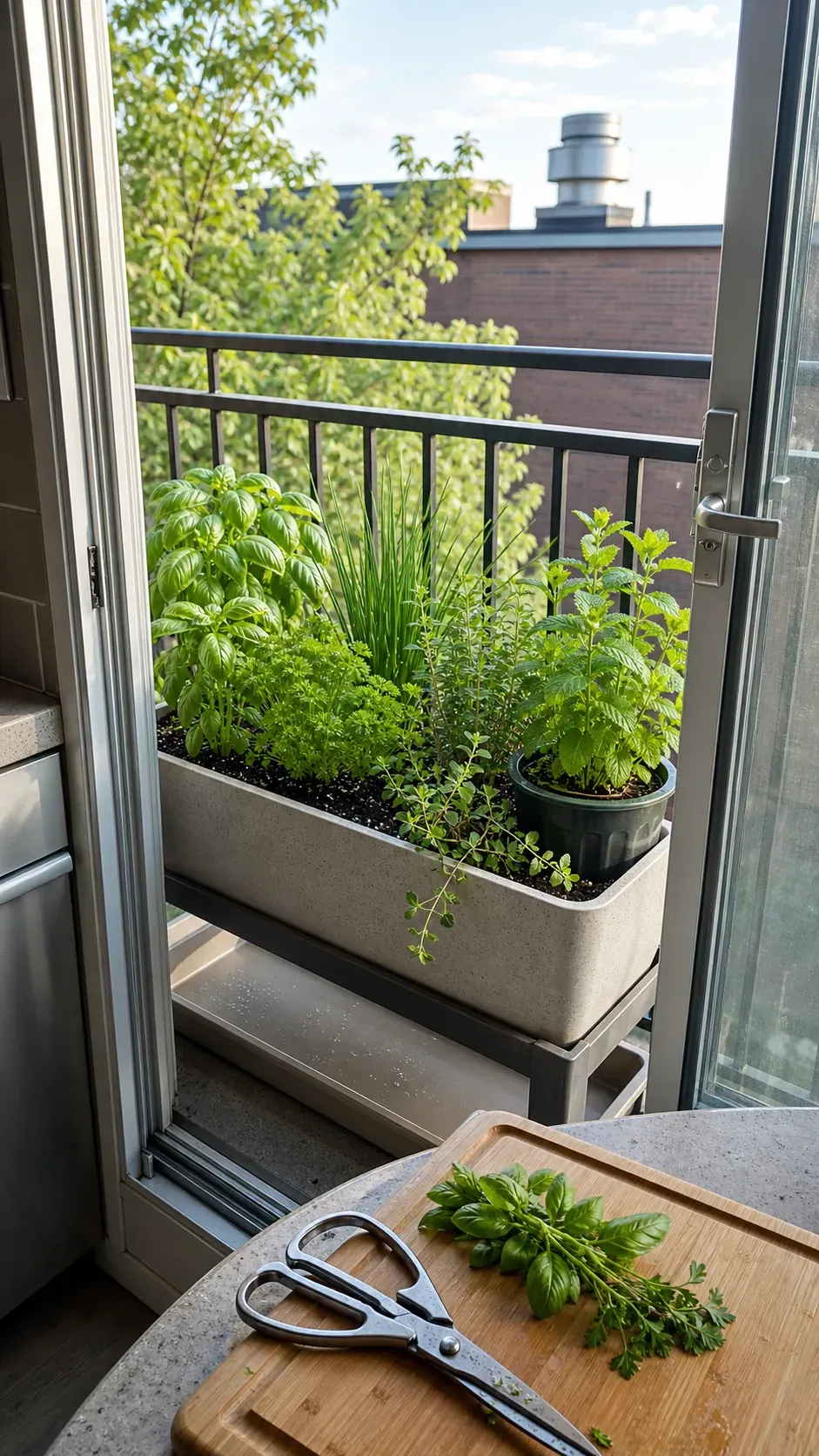
One long herb box close to the kitchen is easier to maintain than pots scattered over every shelf. Group plants with similar water needs and give aggressive mint its own insert so it does not dominate the box.
Use fresh potting mix, working drainage holes, and a catch tray. Keep edible plants away from questionable exhaust outlets, contaminated runoff, or surfaces where building maintenance chemicals may drift.
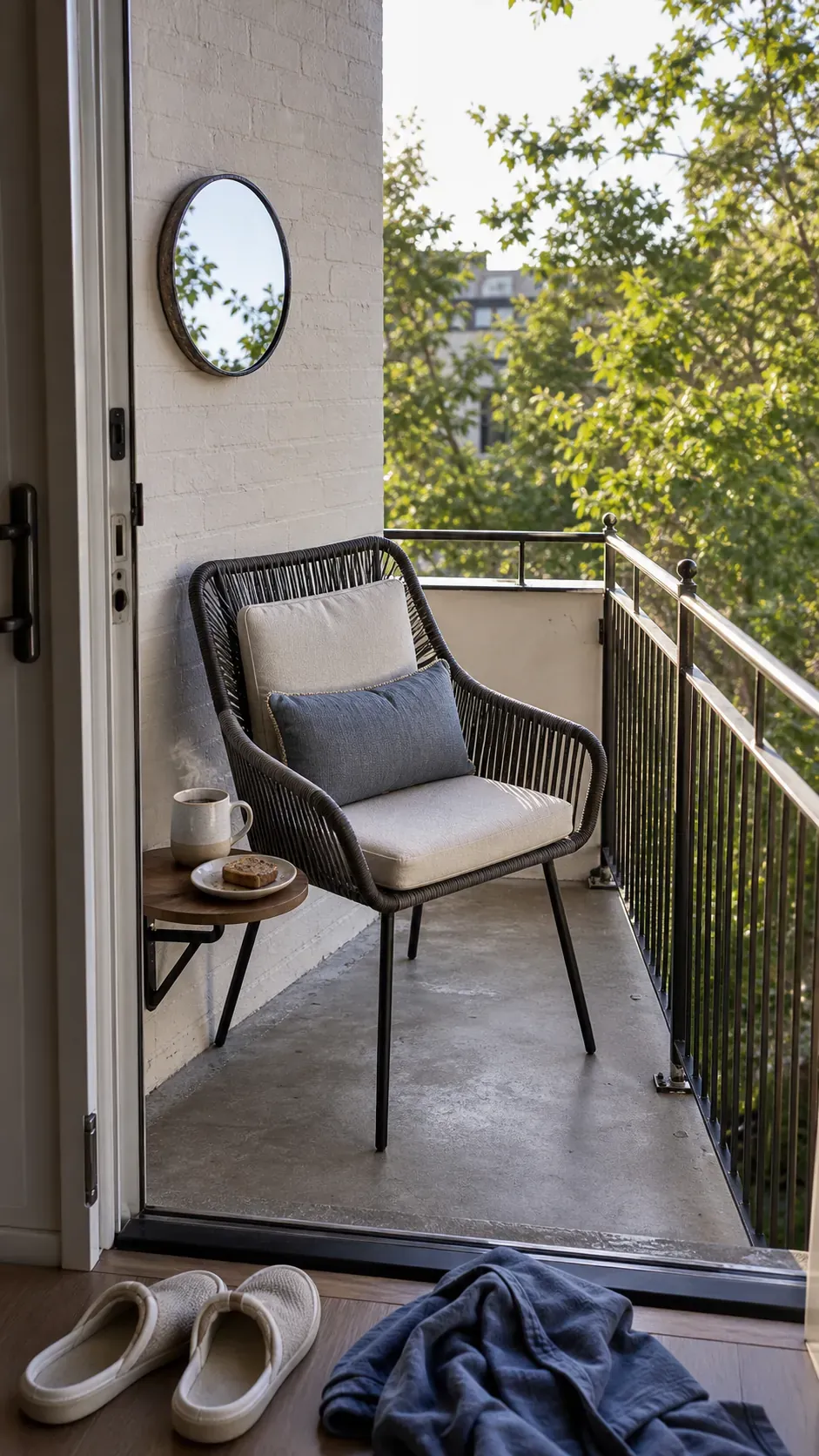
Turn One Corner Into a Morning Coffee Seat
A very small balcony may work best with one good chair instead of a compromised two-person set. Place it where morning light is comfortable, add a tiny wall-side ledge or stool, and leave the rest of the floor open.
Designing for the ritual you actually repeat makes a small balcony feel more generous. A supportive seat and secure drink surface will be used more often than a crowded collection of decorative furniture.
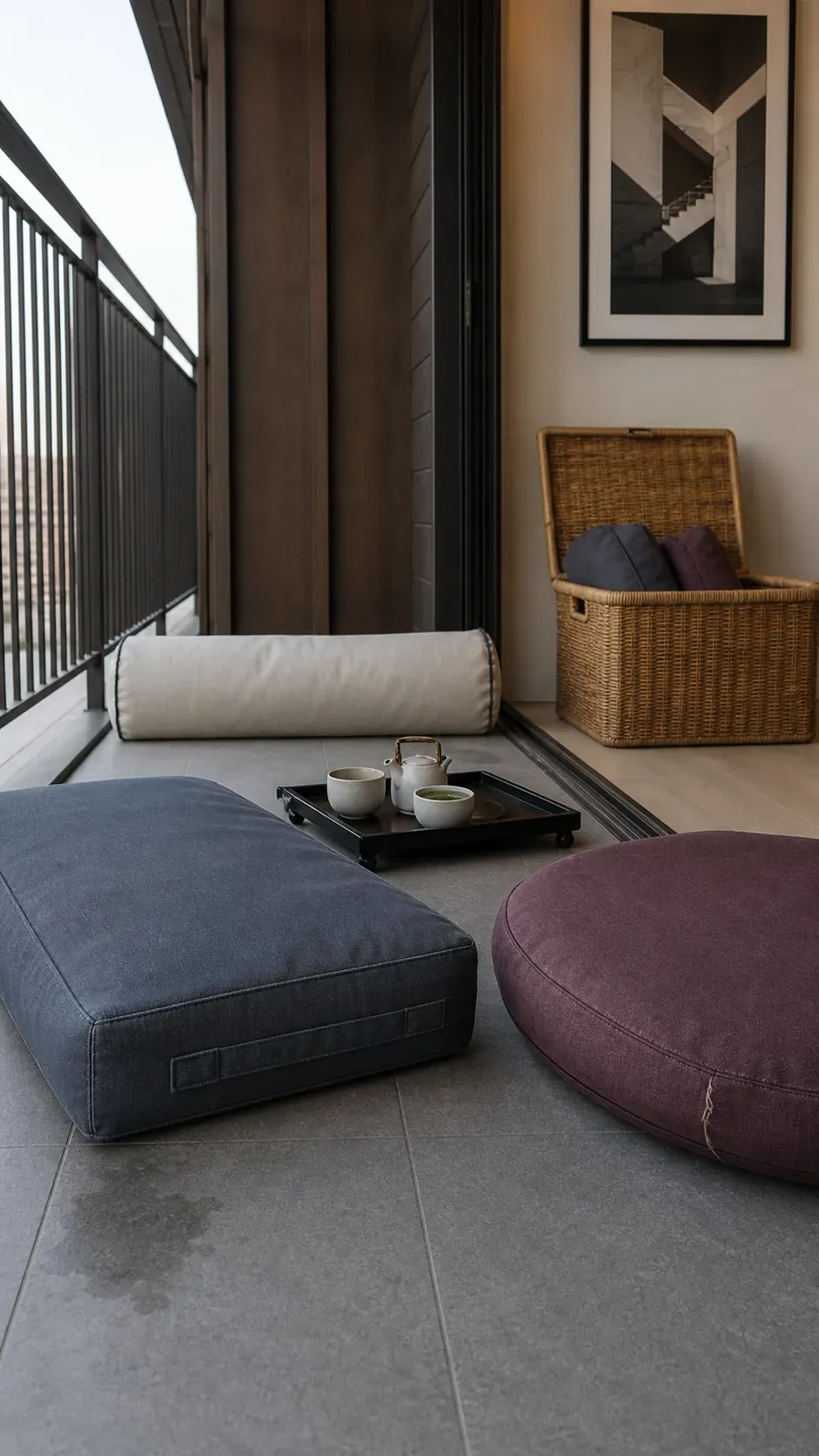
Make a Floor-Cushion Lounge You Can Pack Away
Outdoor floor cushions can create occasional lounge seating without permanent frames, but they need a clean dry surface and an indoor storage home. Use firm outdoor-rated cushions with washable covers rather than indoor pillows that absorb moisture.
Keep cushions away from the railing base, drain, and door track. Bring them in after every session and before wind or rain; this idea only stays charming when the setup and pack-away routine take less than a minute.
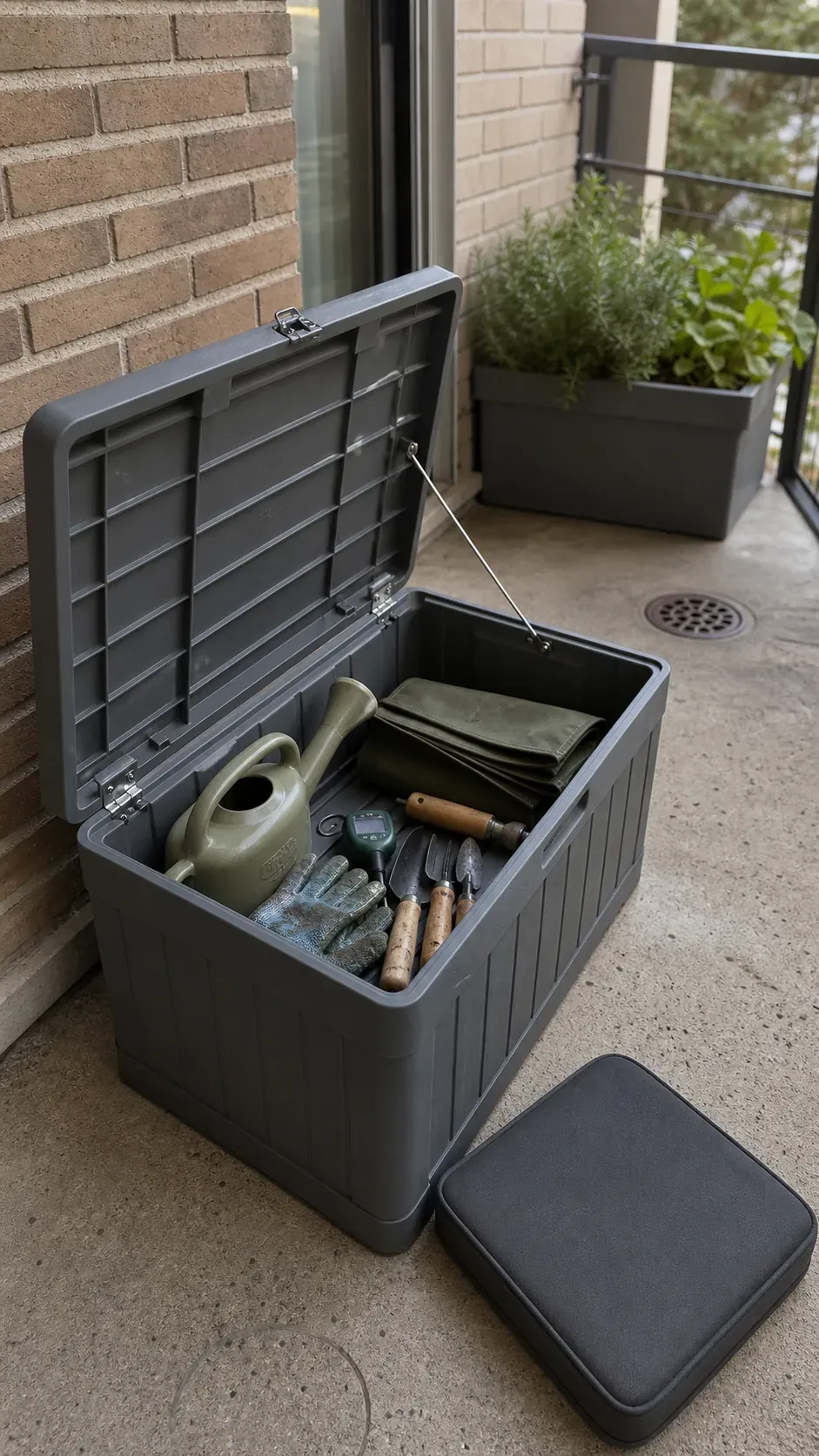
Hide Garden Tools in a Seat-Height Box
A compact outdoor box can store a watering can, gloves, and folded plant mats while doubling as a stool. Check that balcony storage is permitted, choose a lid that cannot blow open, and avoid using the box for household overflow.
Keep heavy items low and do not seal wet tools or textiles inside. The box should fit within the furniture zone and leave the drain and full route to the door exposed.
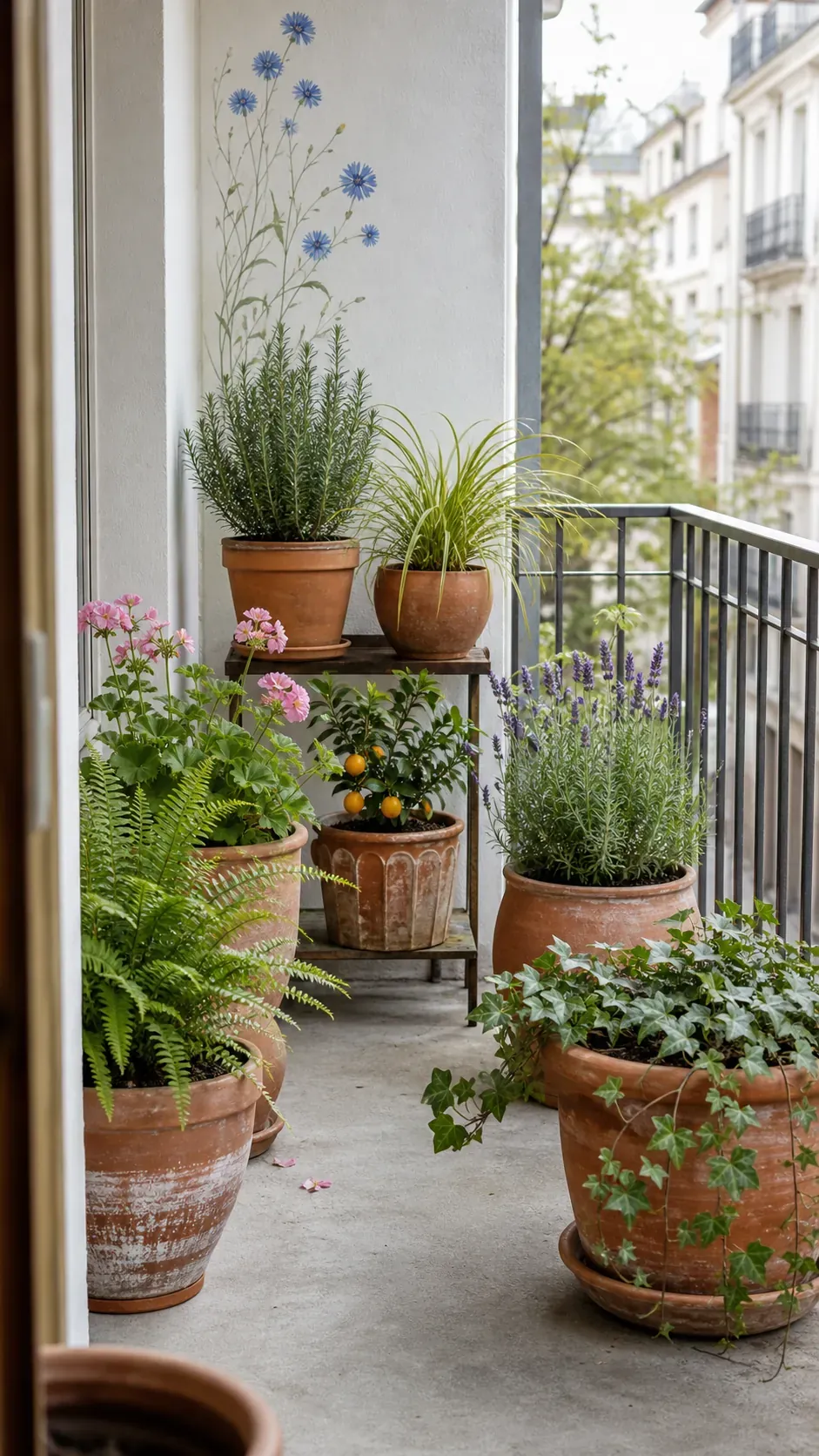
Repeat One Pot Color to Quiet the View
Plant-heavy balconies look calmer when containers share one color family even if their shapes differ. Charcoal, terracotta, or pale stone can visually connect thrifted pots without requiring a matching set.
Do not repot healthy plants solely for appearance. Slip lightweight nursery pots into stable cachepots with managed drainage, or repaint only containers made for a compatible outdoor coating.
Preserve a Full-Width Exit Lane
Finish the layout by removing anything that pinches the route between the apartment and the safest exit point. Open the door completely, carry a laundry basket through, and sit in every chair before deciding the plan works.
Keep foliage, rug corners, cords, and folding furniture outside that lane. The most successful narrow balcony ideas leave visible empty floor, because daily access, storm cleanup, and emergencies matter more than fitting one extra object.