
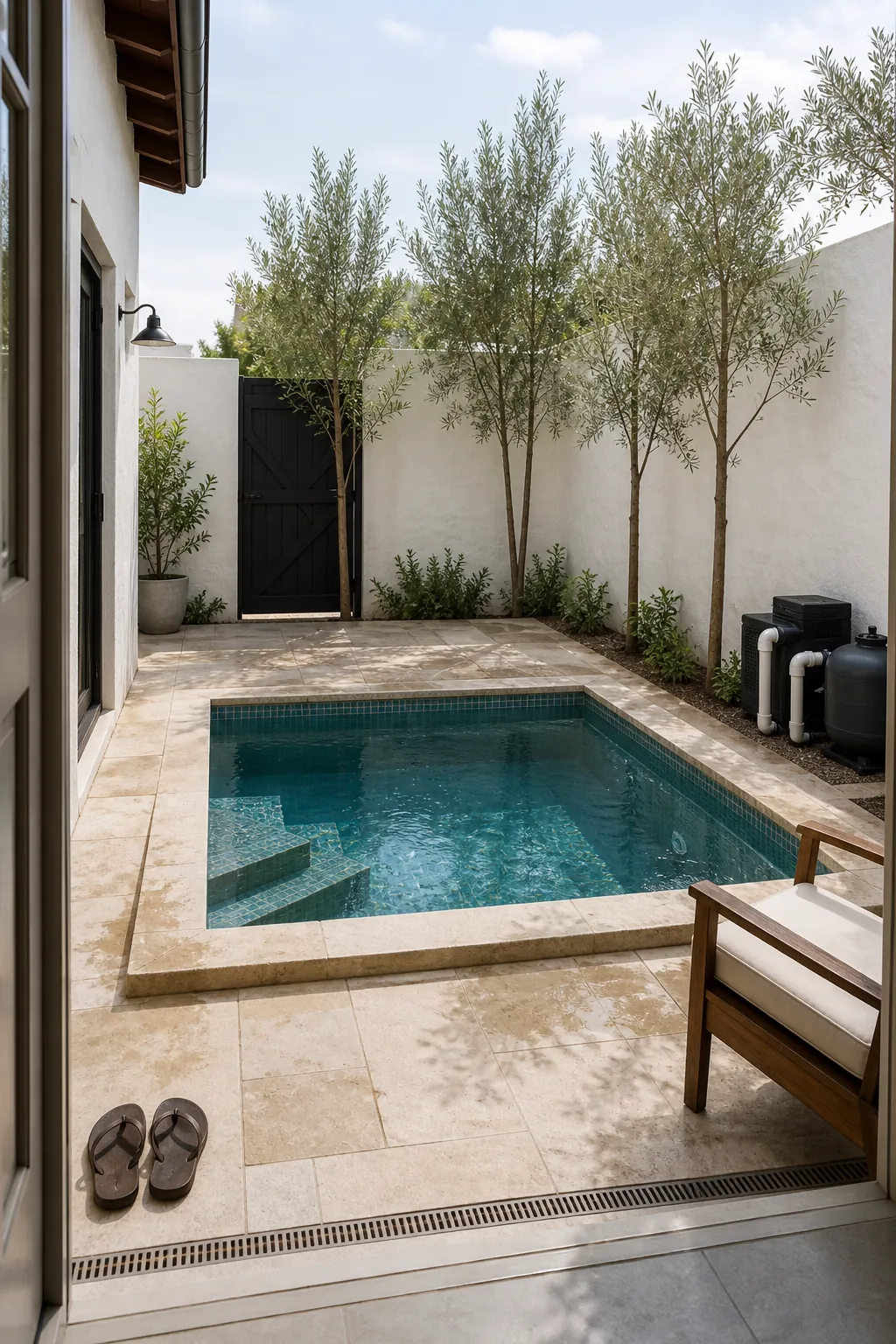
A plunge pool works best when it has a clear job. It might cool two people after work, provide a warm soak in spring, support a swim jet, or anchor a small garden used mostly for meals. Without that decision, even a beautiful compact pool can feel like a permanent object that displaced the rest of the yard.
Owners praise small pools for quick heating and simpler cleaning, but they also warn about water getting too hot, hidden installation costs, repairs, chemistry, and the amount of yard surrendered. These plunge pool ideas pair each visual direction with the practical reason it can earn its footprint.
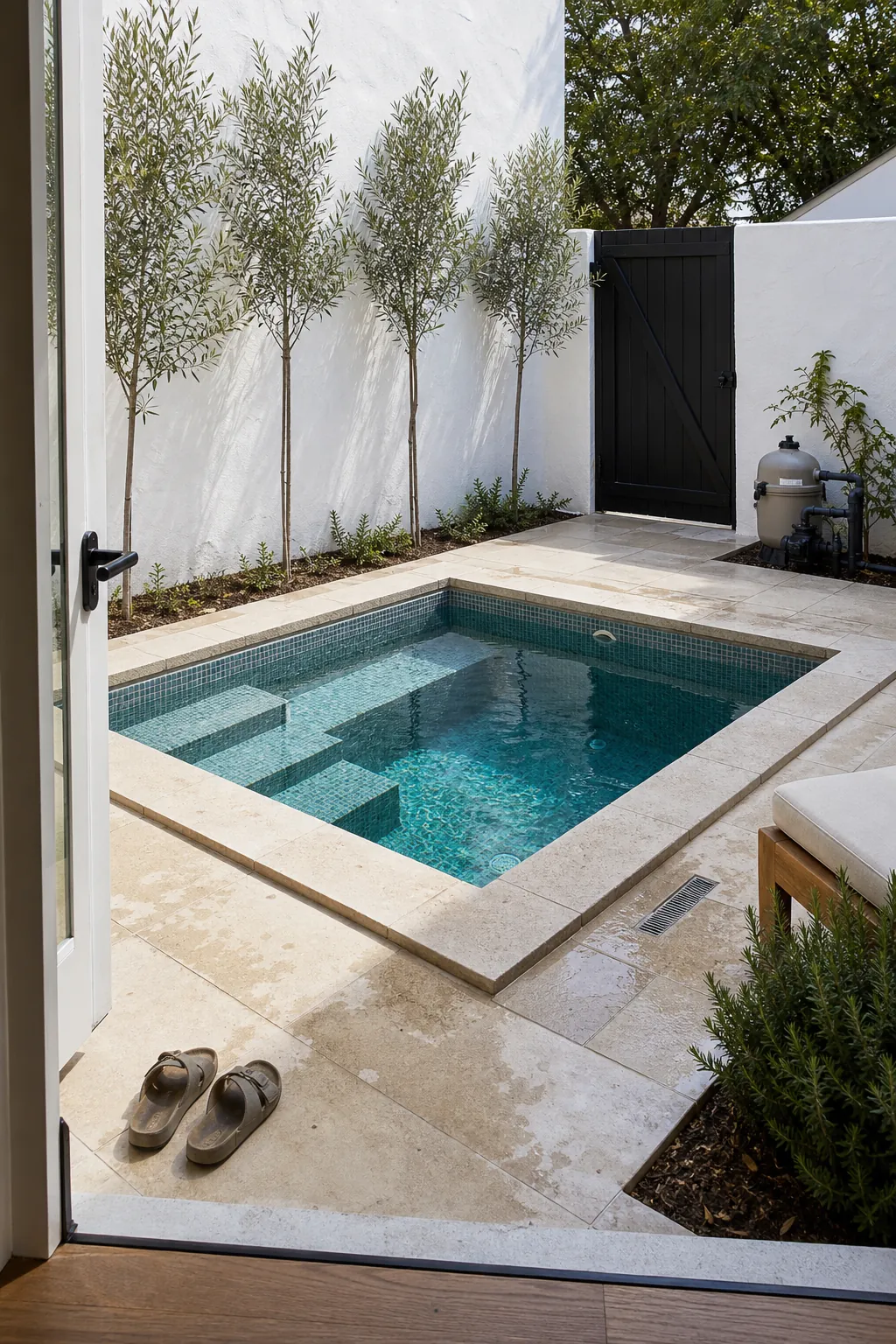
A Simple Square Plunge Pool
A square pool provides useful width for soaking and conversation without pretending to be a lap lane. Keep the geometry simple and reserve enough perimeter for cleaning, entry, and a comfortable route from the house.
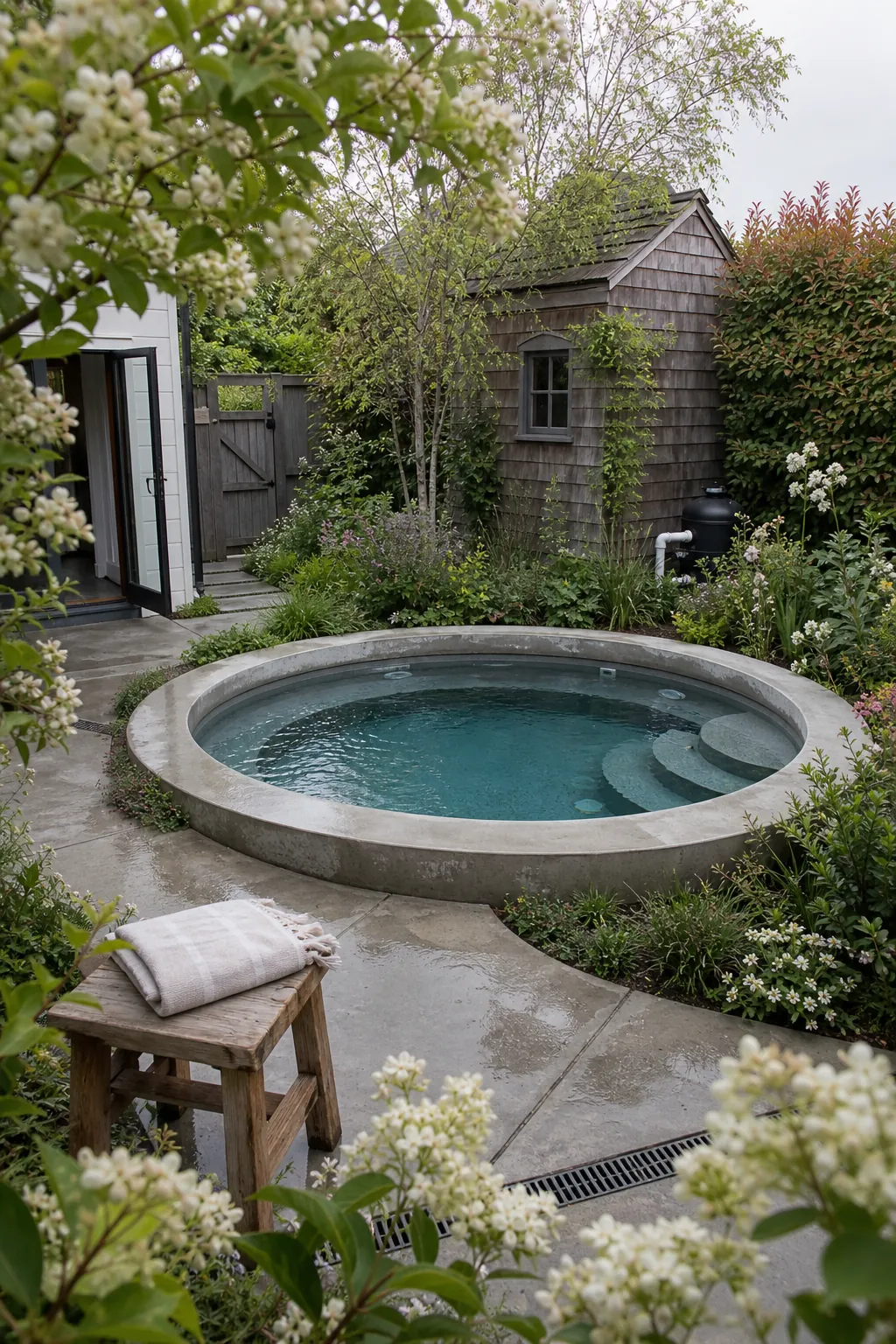
A Round Plunge Pool
A round plunge pool makes it easy for several people to face one another. The curve also sits naturally among informal planting, though a custom cover and curved paving can affect the final price.
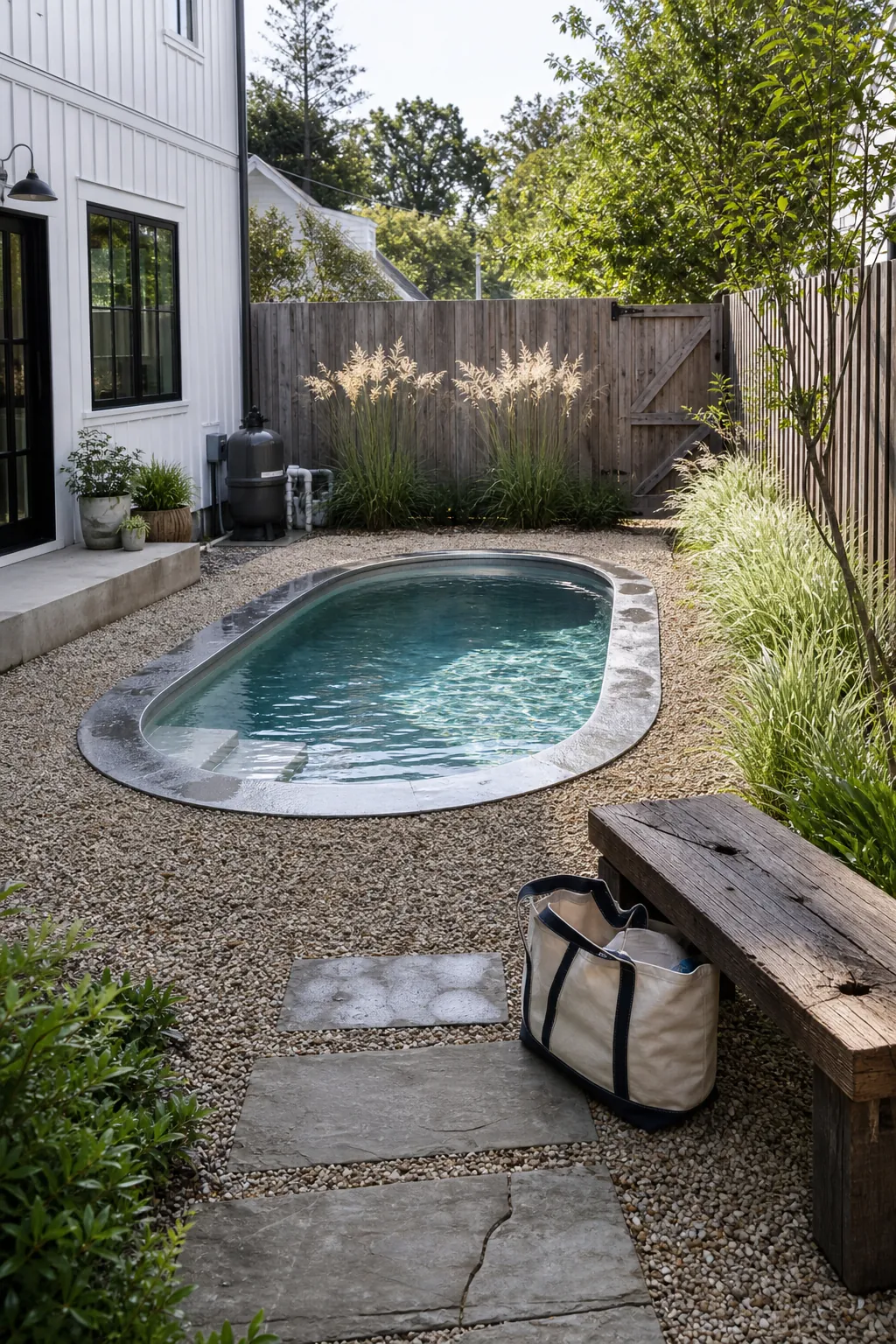
A Stock-Tank-Inspired Inground Pool
An oval metal form brings a relaxed farmhouse character to the backyard. Treat the look as inspiration rather than a shortcut: foundations, circulation, bonding, drainage, and filtration still need professional design.
A Cocktail Pool with a Wraparound Bench
An L-shaped bench supports conversation while preserving standing room. Built-in seating has a real spatial cost, so mark its full underwater footprint before committing to the shell.
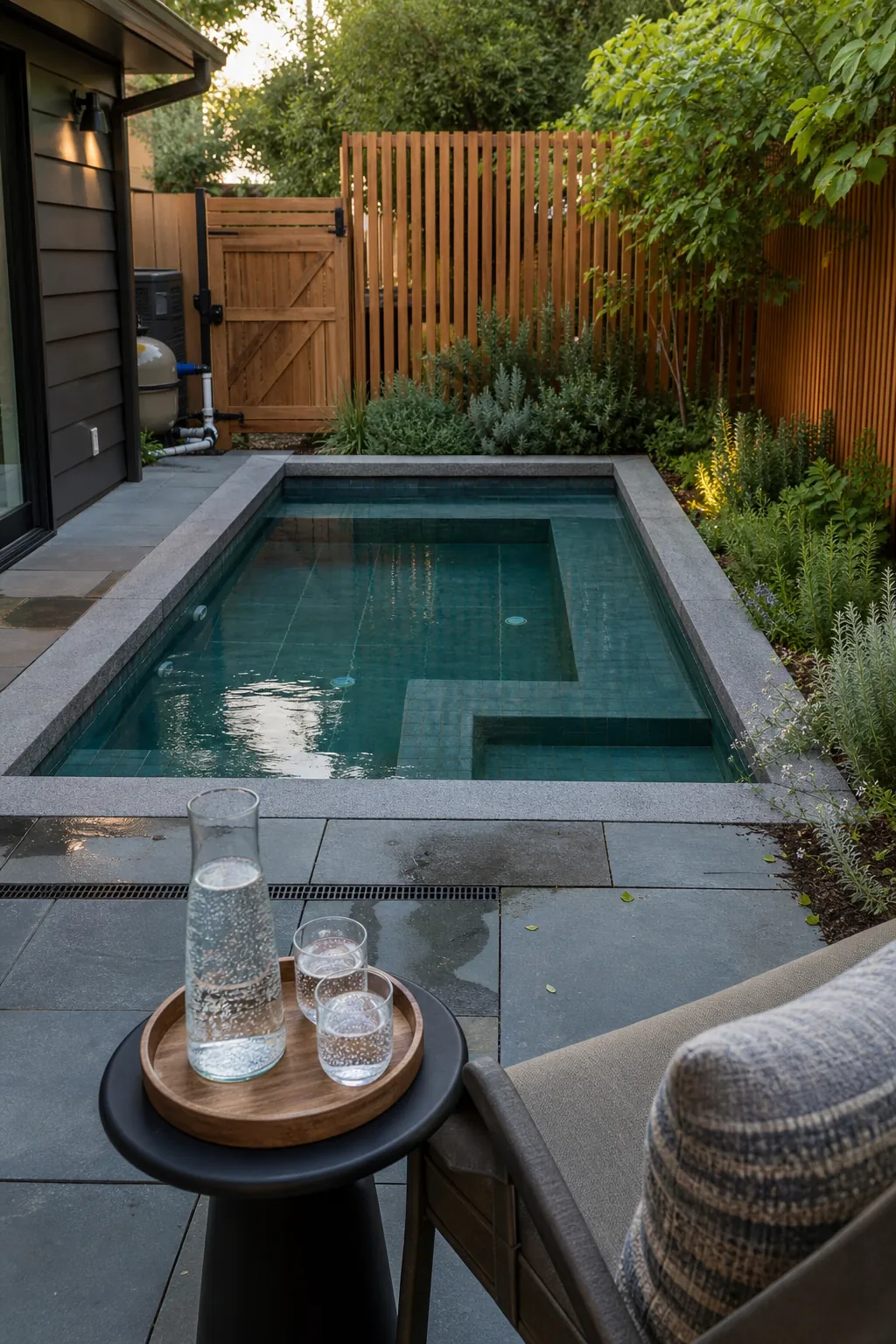
A Heated Plunge Pool for Cool Seasons
Small water volumes warm quickly, which is an advantage in cool weather. A well-fitted insulated cover, wind protection, and efficient equipment reduce the energy needed to extend the season.
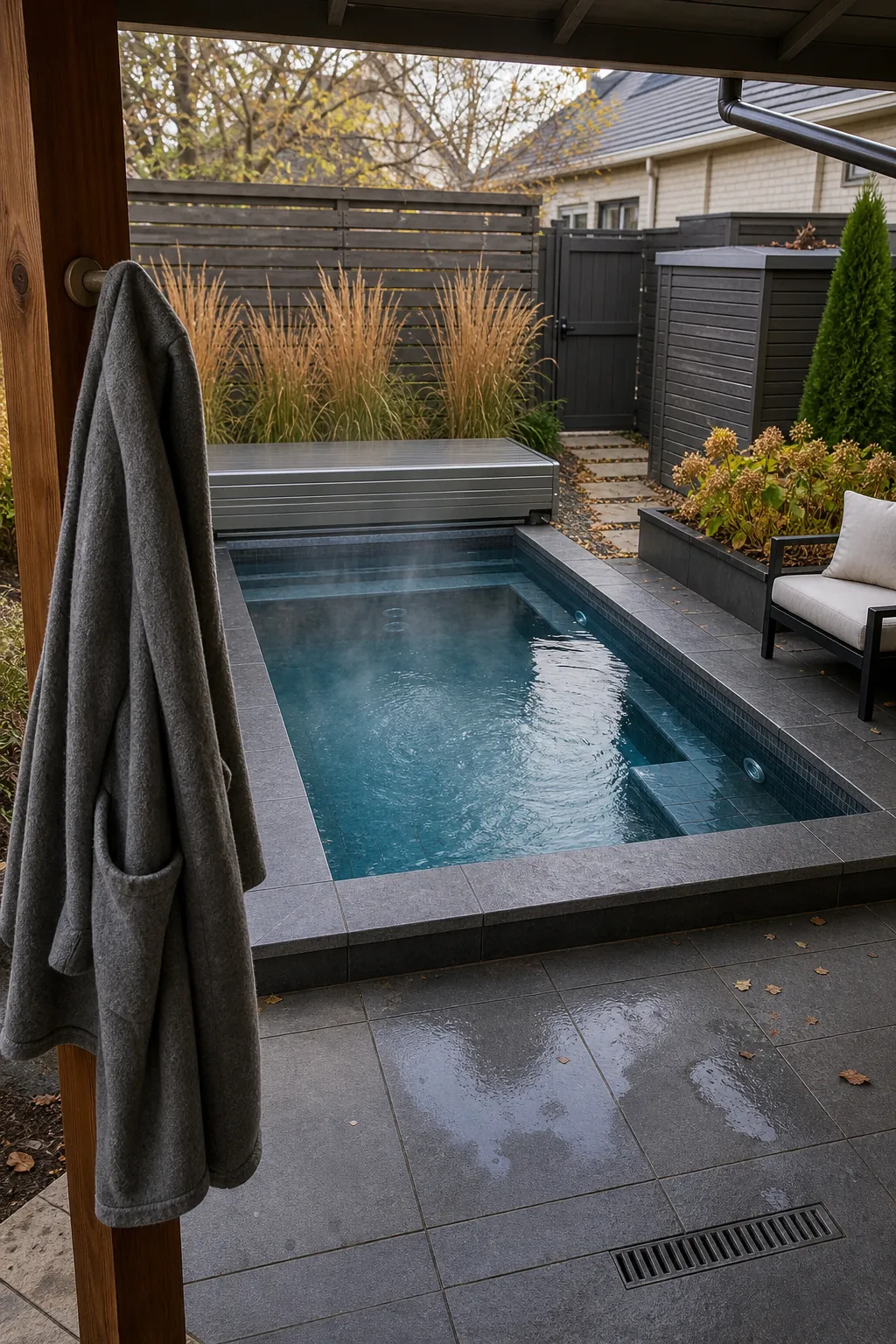
A Plunge Pool with a Swim Jet
A counter-current jet turns a short basin into an exercise zone. Align it with a clear centerline and keep steps or benches to the side so the strongest flow remains usable.
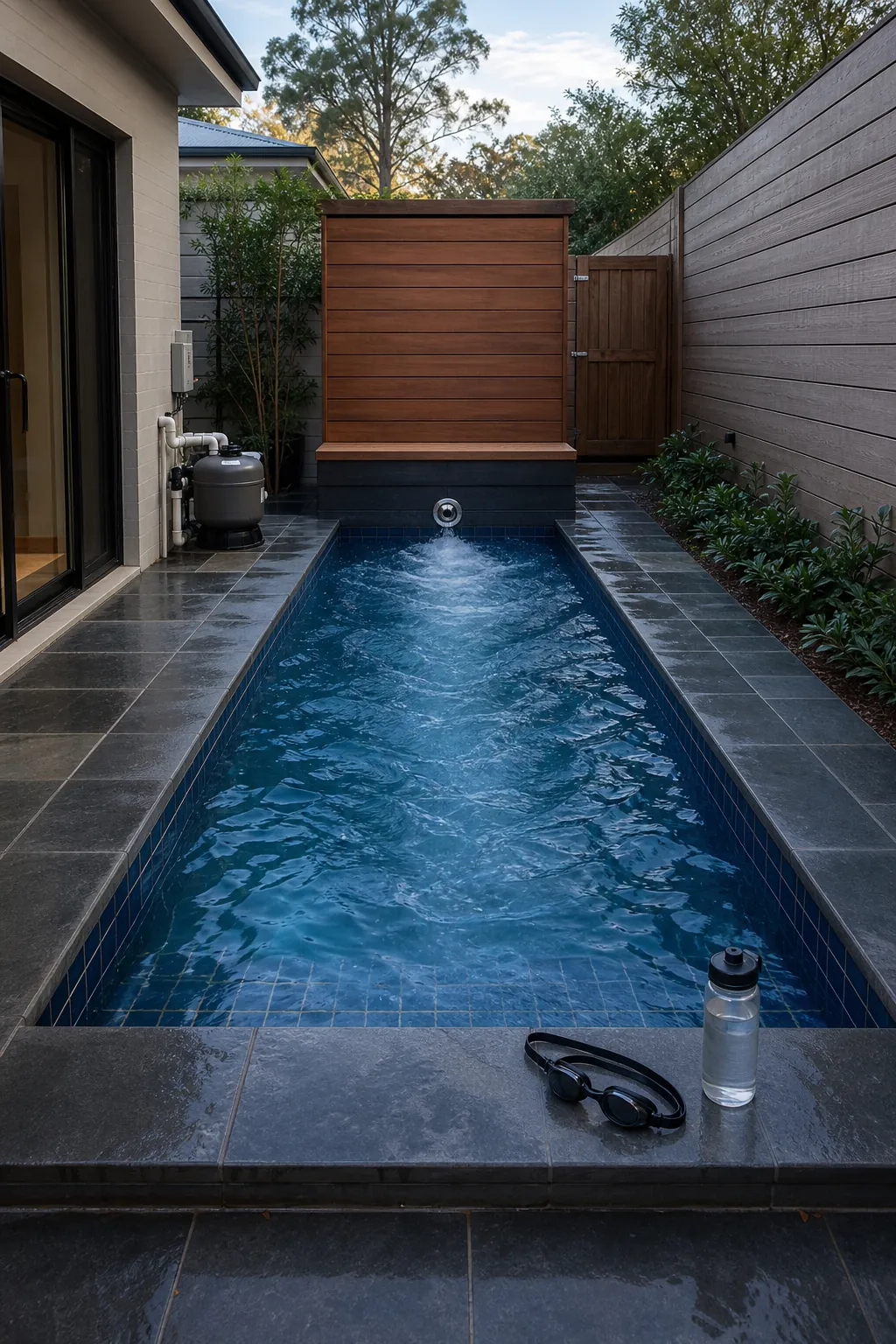
A Plunge Pool with a Shallow Ledge
A shallow ledge is useful for sitting, cooling off, and supervised play. In a small plunge pool, however, it can consume a large share of the water; choose it because your household will use it often.
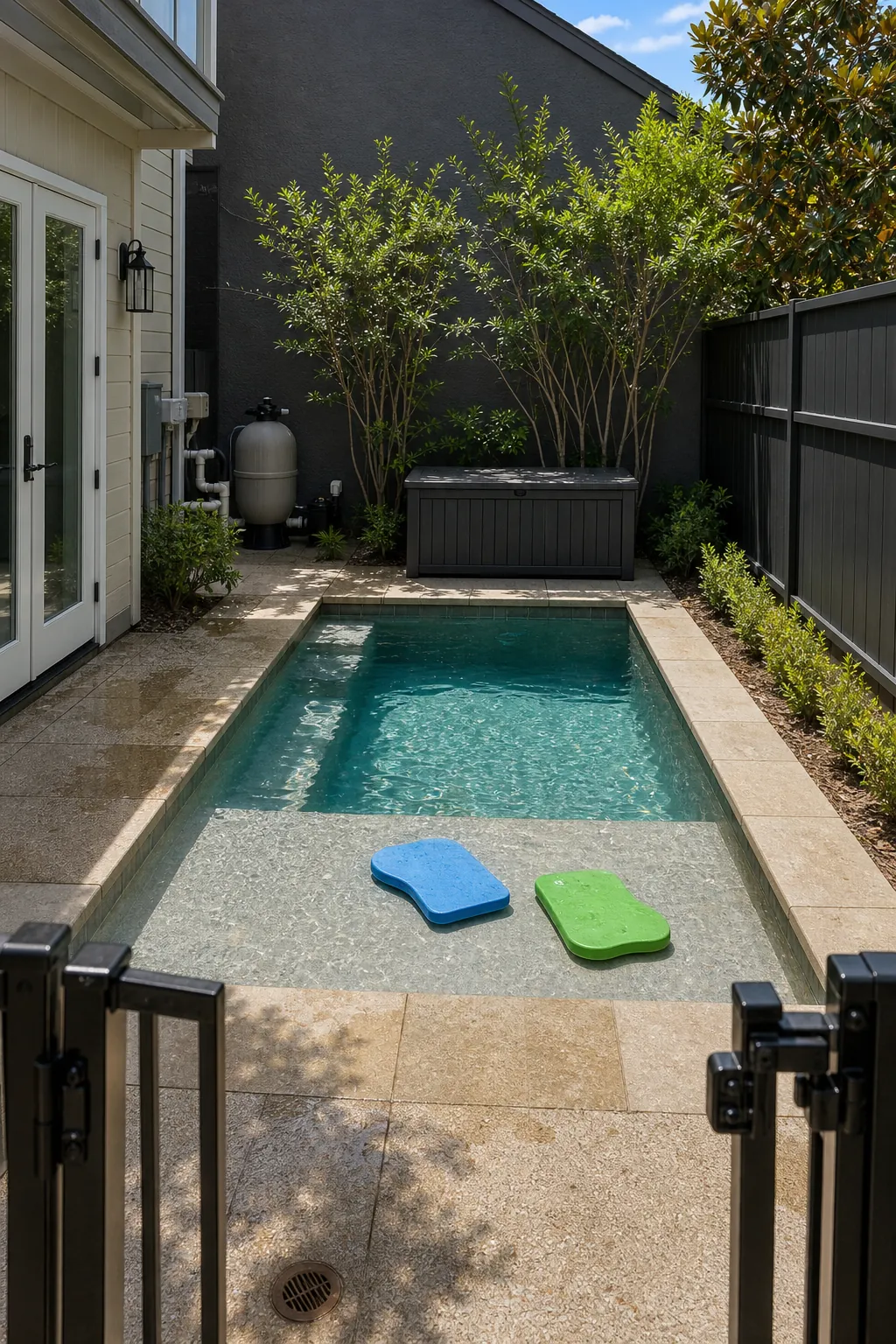
A Corner Plunge Pool
Tucking the pool into a corner protects a larger continuous patio for meals and furniture. Leave practical access on at least two sides and avoid trapping the skimmer or equipment behind dense planting.
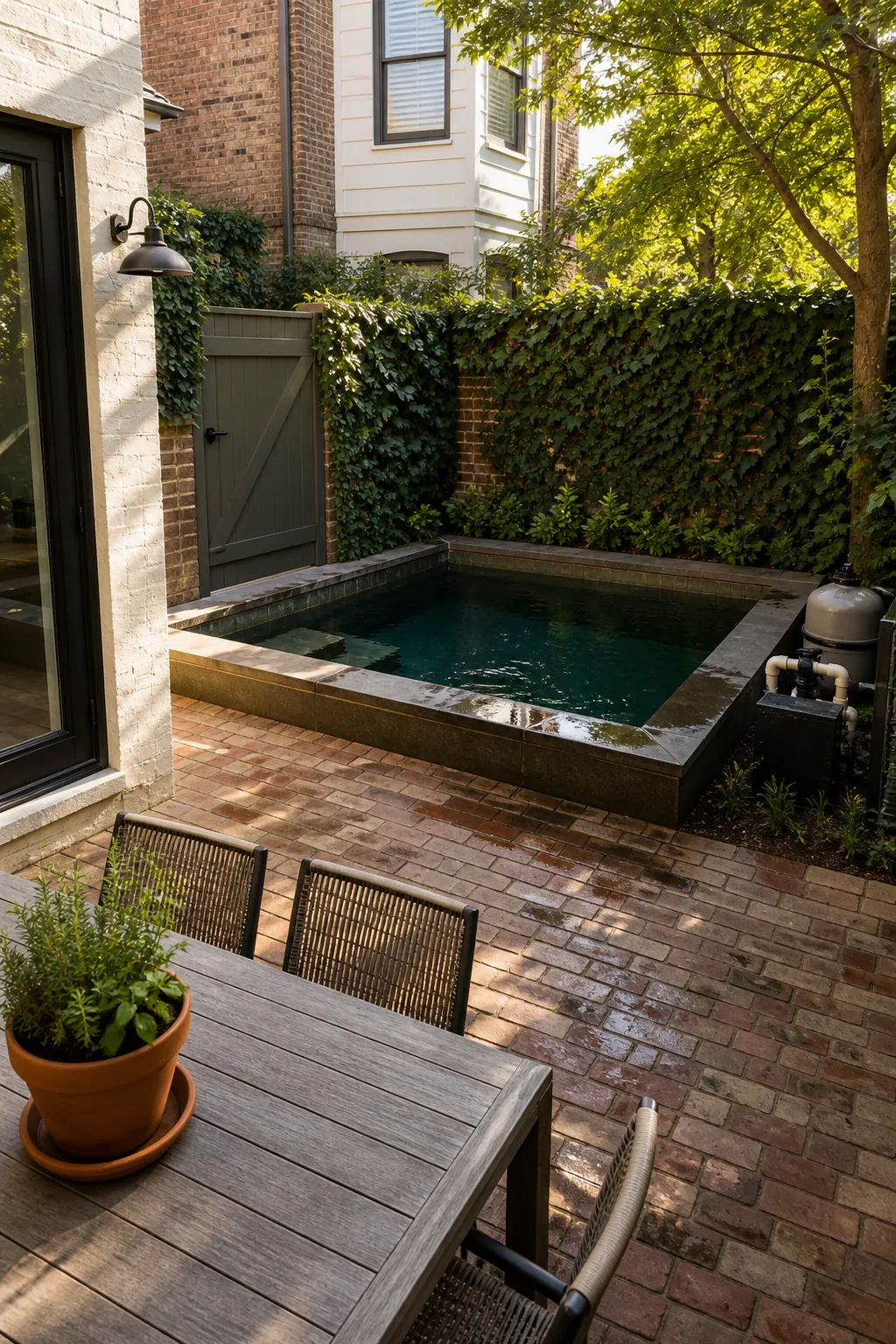
A Raised-Edge Plunge Pool
A partially raised shell can work with a sloping yard and provide casual edge seating. Design the structure, back drainage, coping height, and route around it together.
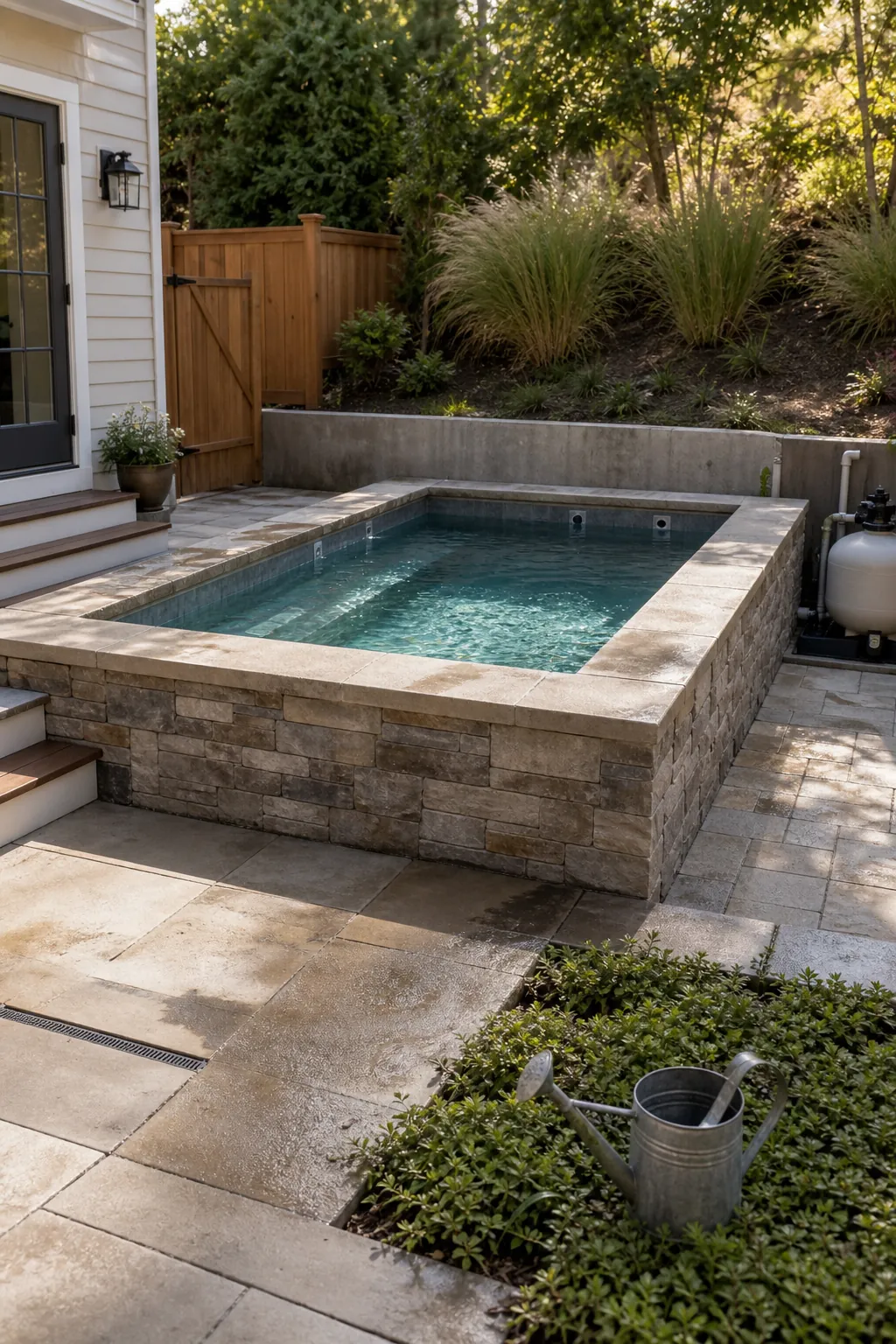
A Fountain-Like Tiled Plunge Pool
Handmade tile and a modest spout make a tiny pool feel like a purposeful garden fountain. Keep the water sound gentle near seating and specify a slip-rated floor rather than using glossy wall tile everywhere.
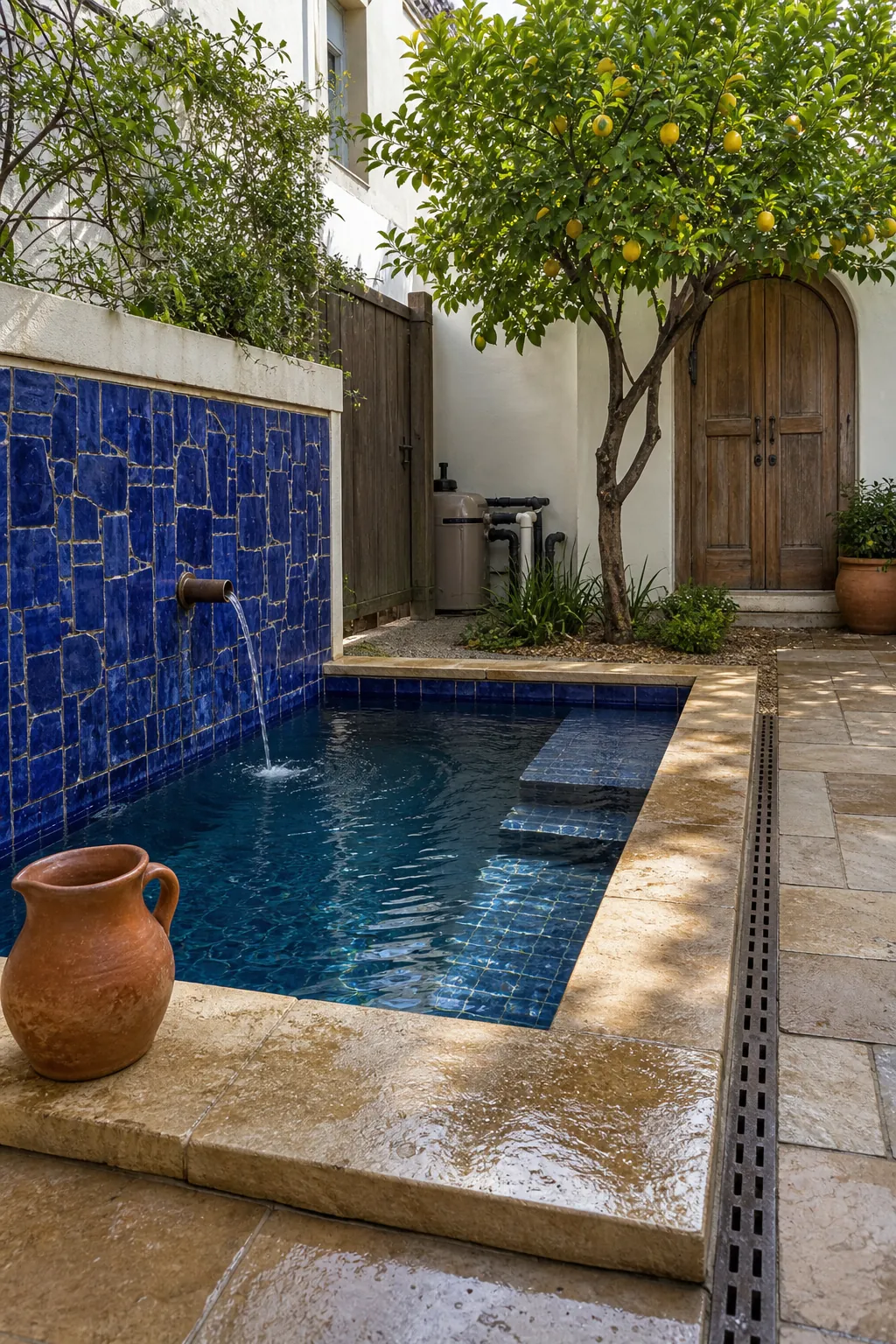
A Plunge Pool Set into a Timber Deck
A plunge pool set flush into timber decking feels broad and relaxed. Ventilate the structure, direct water away from joists, and include liftable hatches so pumps and valves remain serviceable.
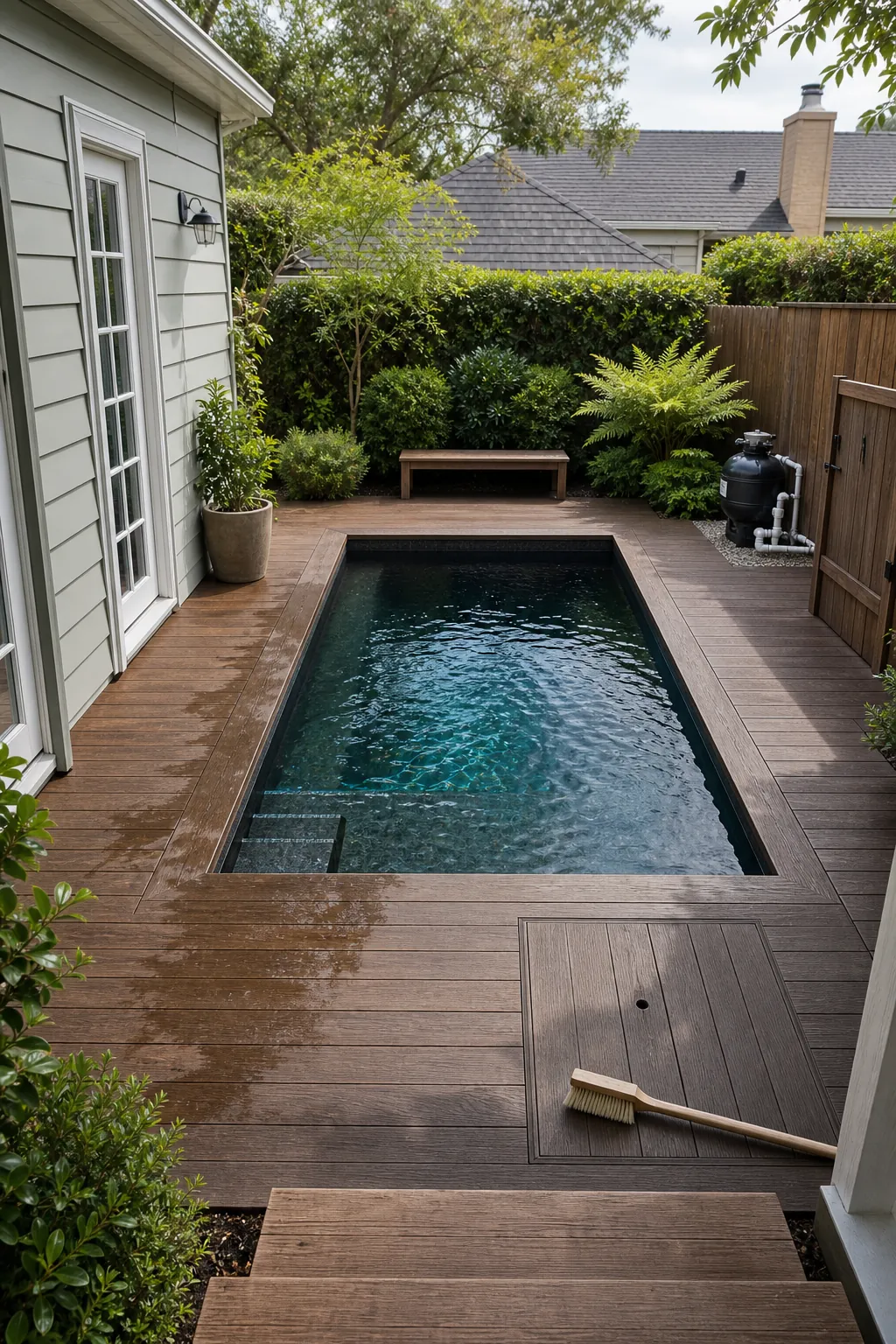
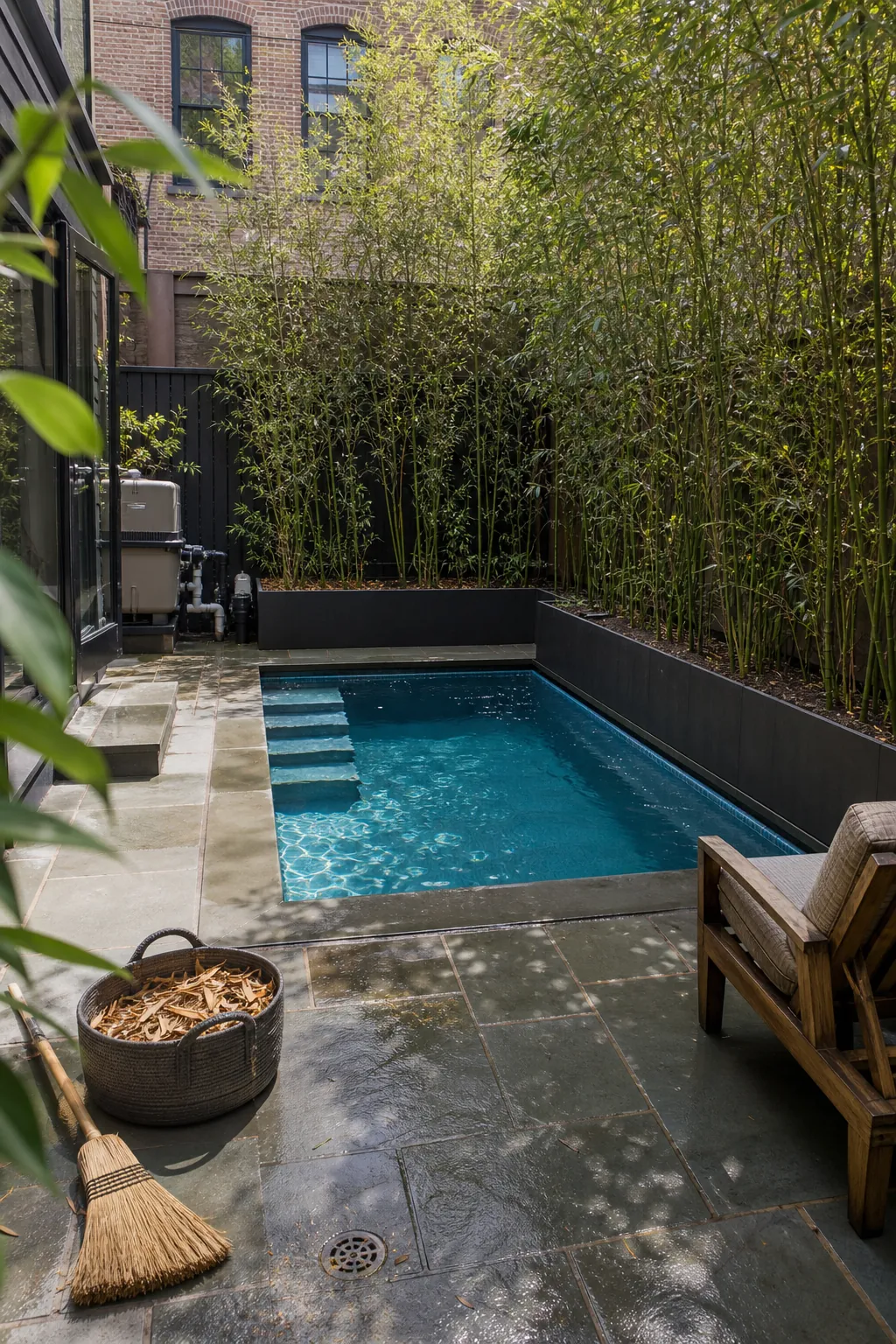
A Bamboo-Screened Plunge Pool
Clumping bamboo provides fast height where neighboring windows overlook the yard. Root management and leaf cleanup are part of the choice; keep one pool edge open for routine care.
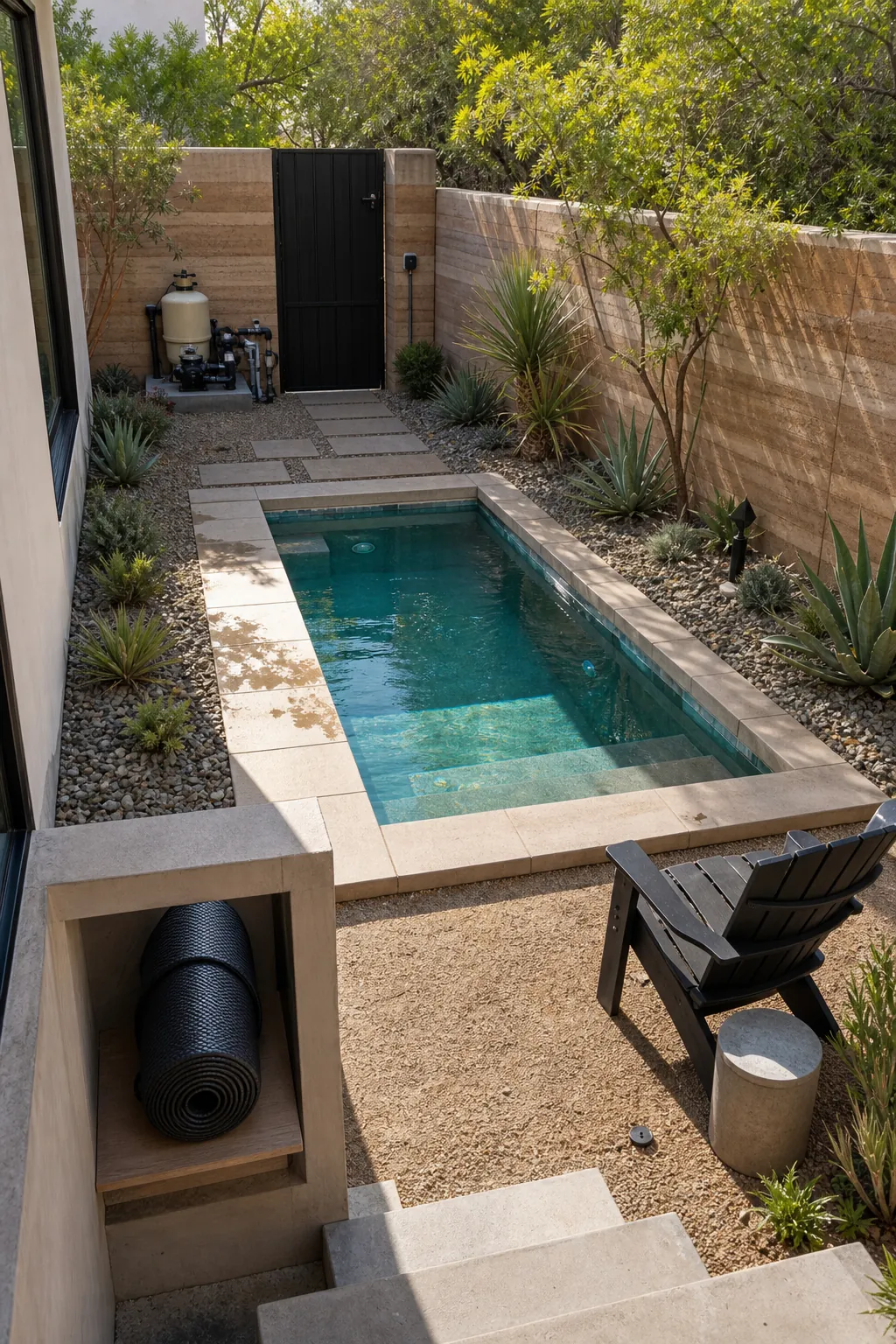
A Desert Plunge Pool
In a hot climate, shade and active cooling may matter more than heating. Small pools can become uncomfortably warm, so coordinate a cover, chiller or reversible heat pump, and the timing of direct sun.
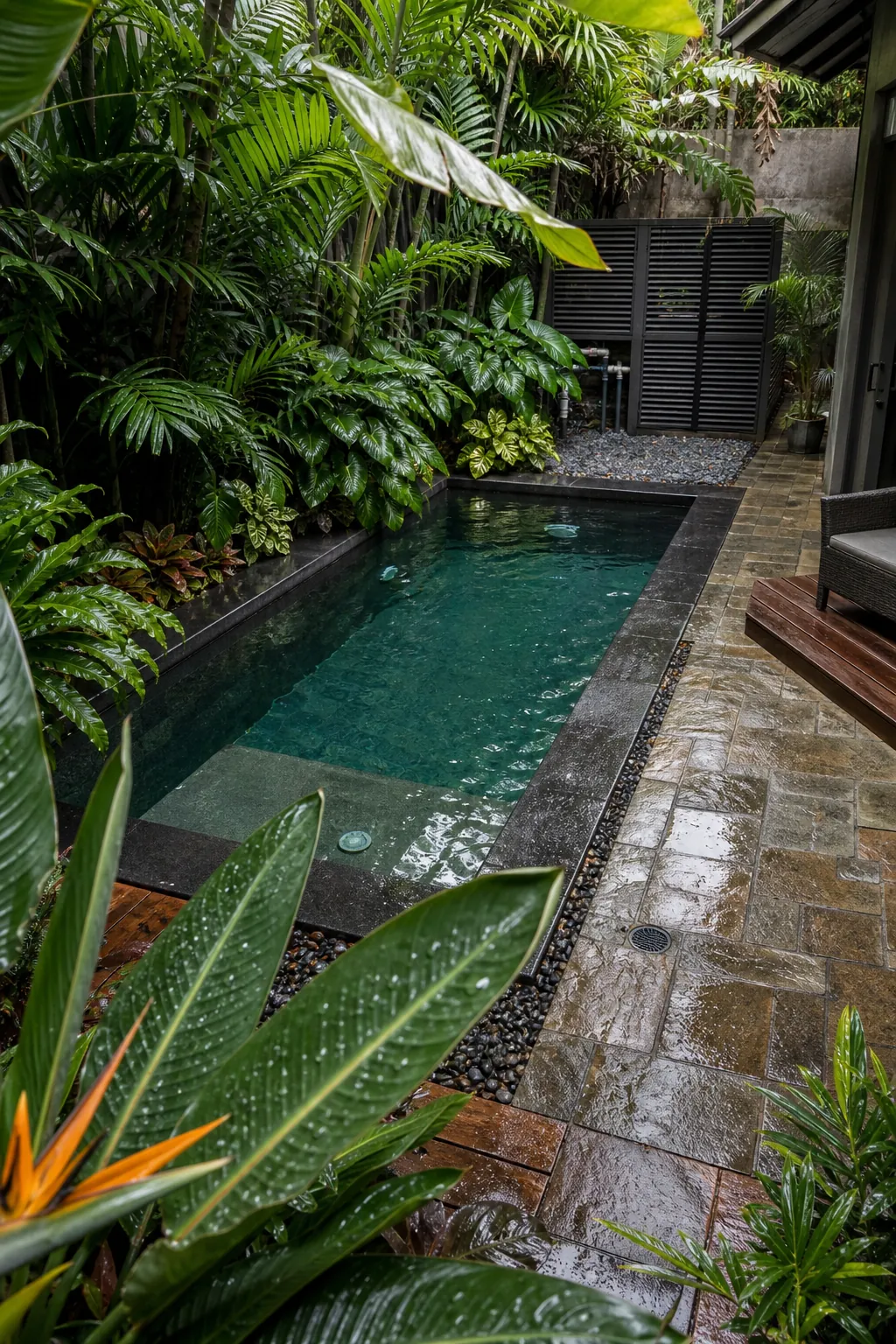
A Tropical Plunge Pool
Layered tropical planting creates immediate enclosure, but the densest foliage belongs behind the pool. Preserve an open service route and avoid flowers or fruit that constantly fall into the water.
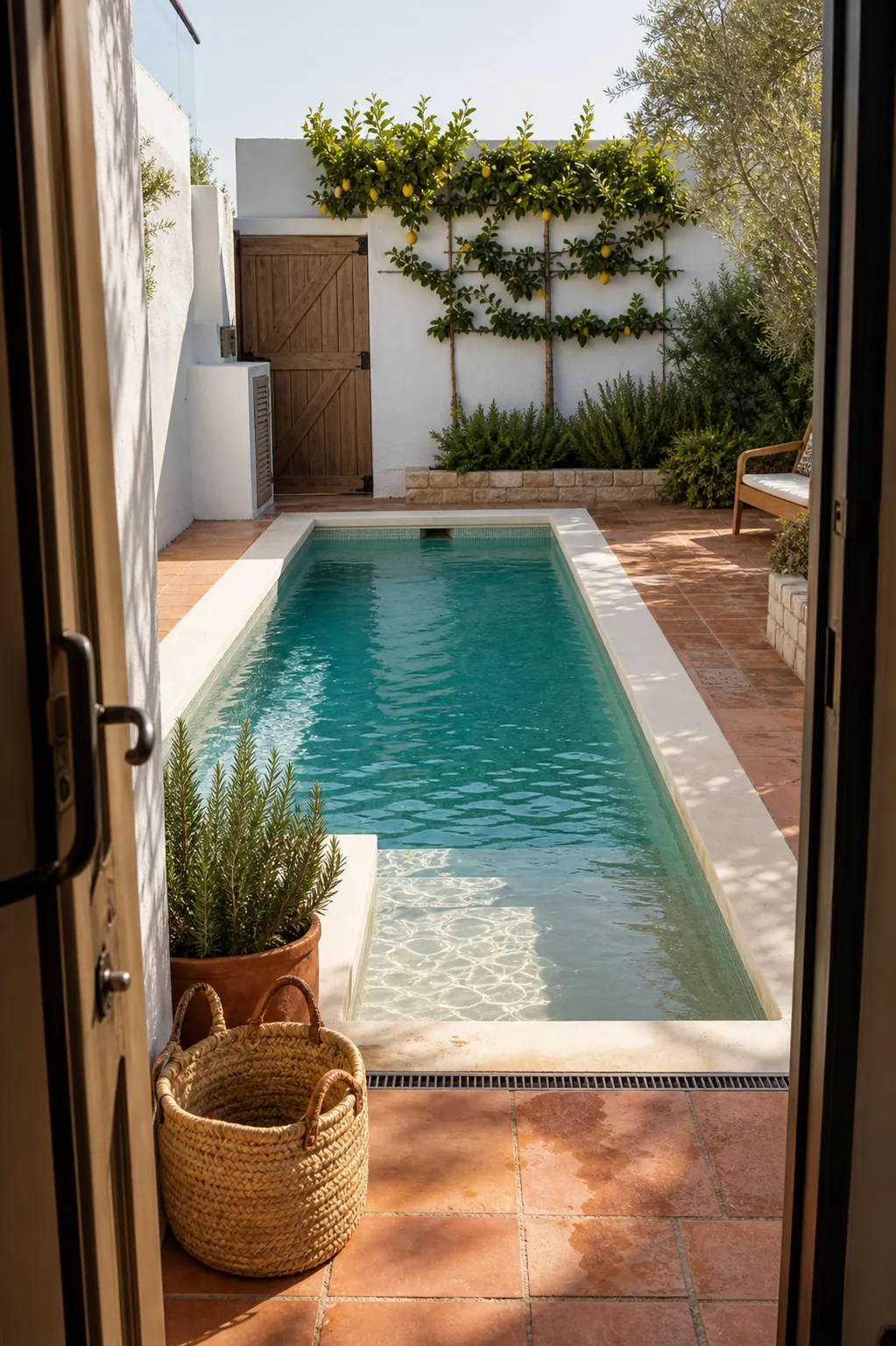
A Mediterranean Plunge Pool
Limewash, terracotta, rosemary, and one citrus tree create a coastal mood without crowding the yard. Limiting the material palette makes the small pool look intentional rather than busy.
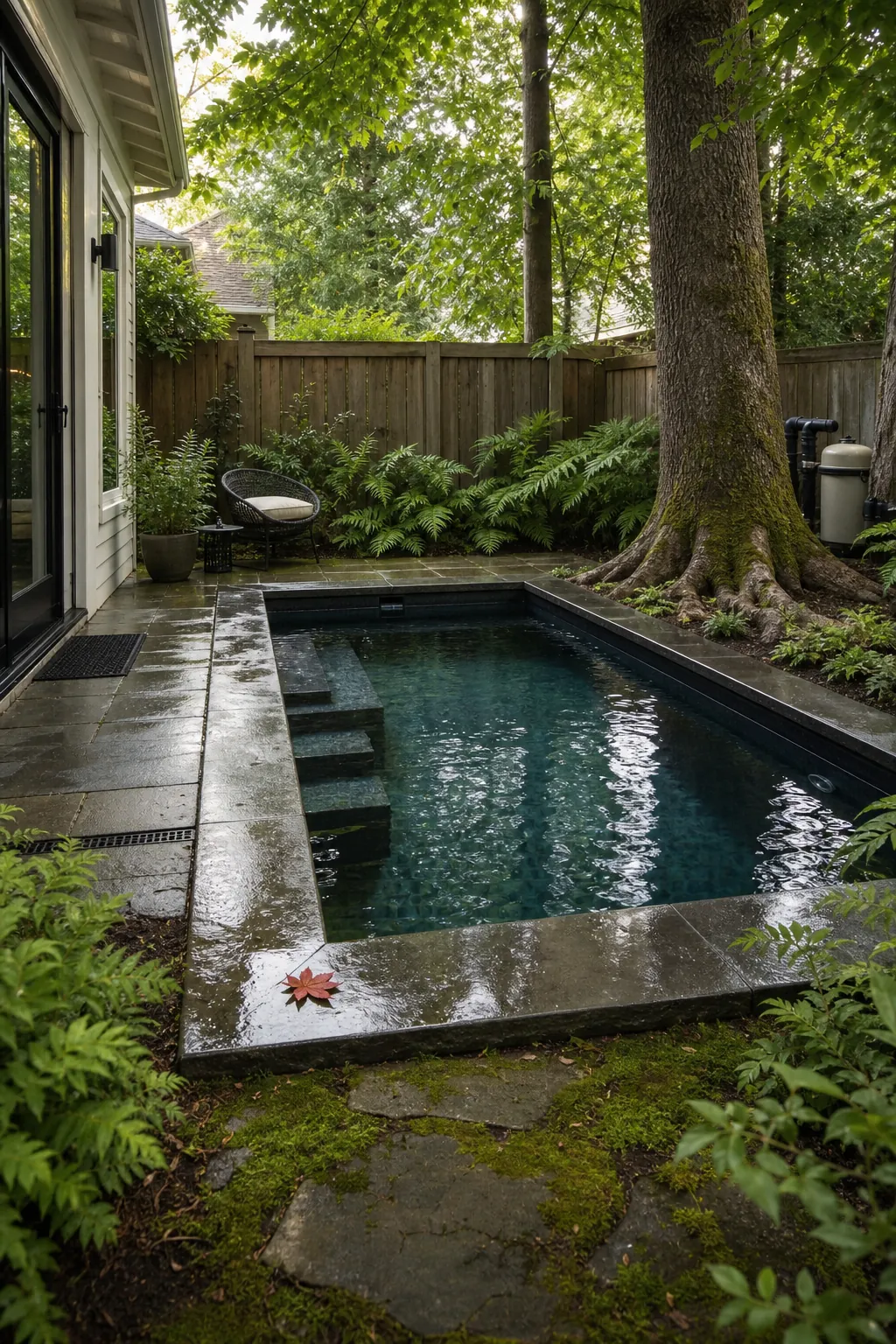
A Shaded Woodland Plunge Pool
Mature canopy can keep a plunge pool comfortable and reflective through summer. Protect major roots during excavation, keep the shell outside the root flare, and budget time for seasonal leaf removal.
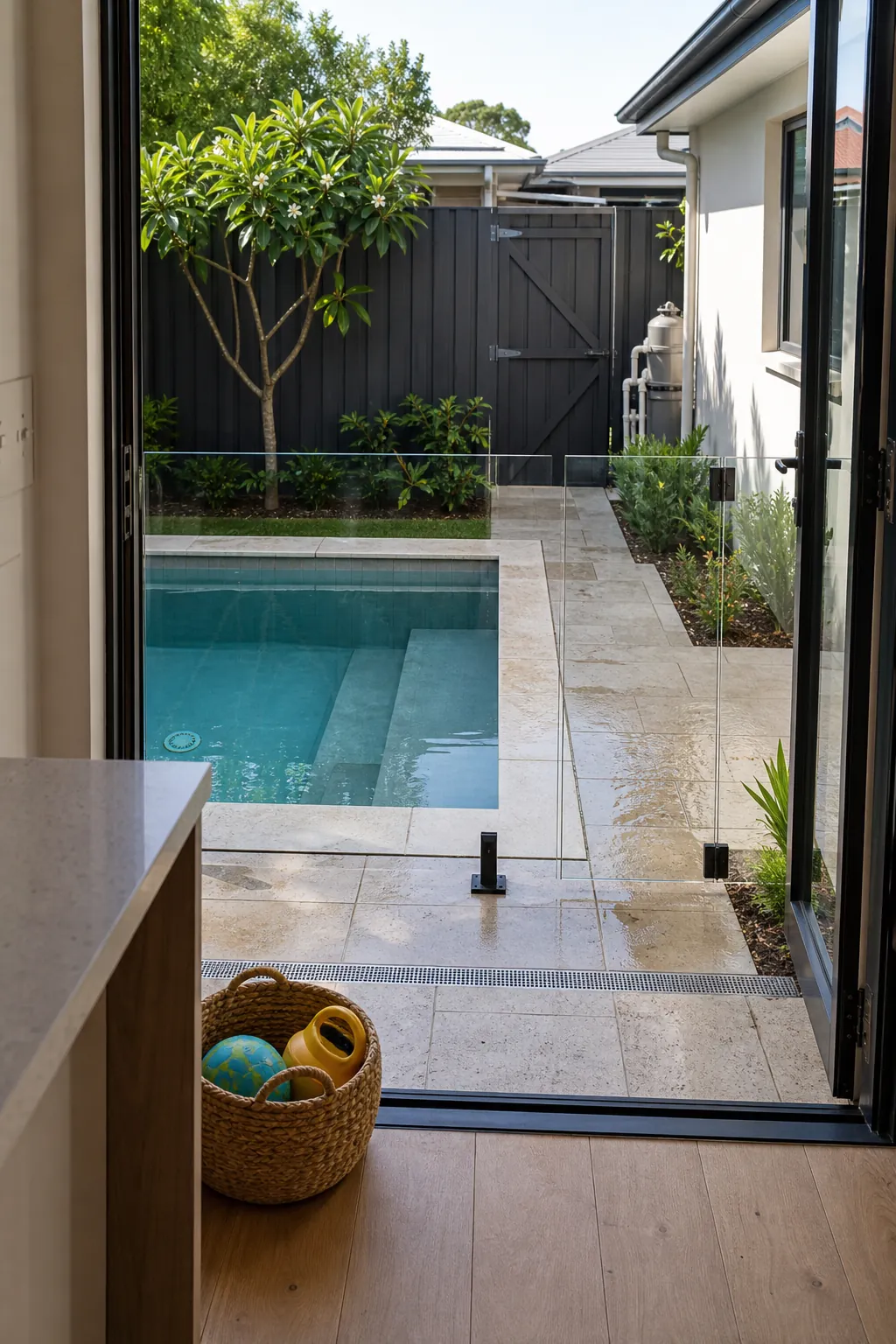
A Family Plunge Pool with Clear Sightlines
A transparent barrier can maintain the visual size of a compact backyard while supporting safety. Keep the gate, shallow entry, and full water surface visible from the house and use low planting near critical sightlines.
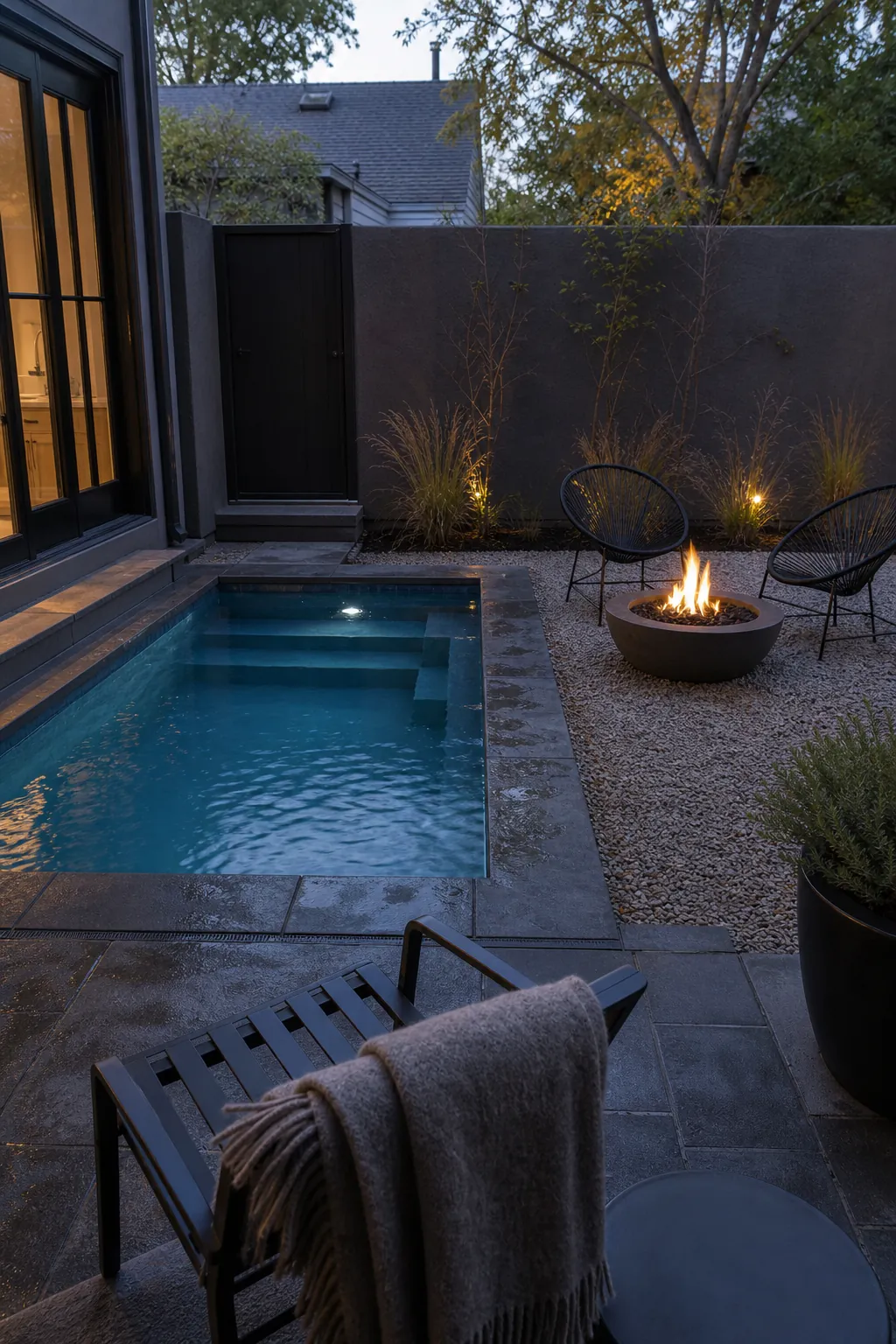
A Plunge Pool Beside a Fire Lounge
Water and fire can share a backyard when the dry lounge is clearly separated. Maintain code-compliant distances, keep wet traffic away from flame, and protect fuel and electrical components from splash.
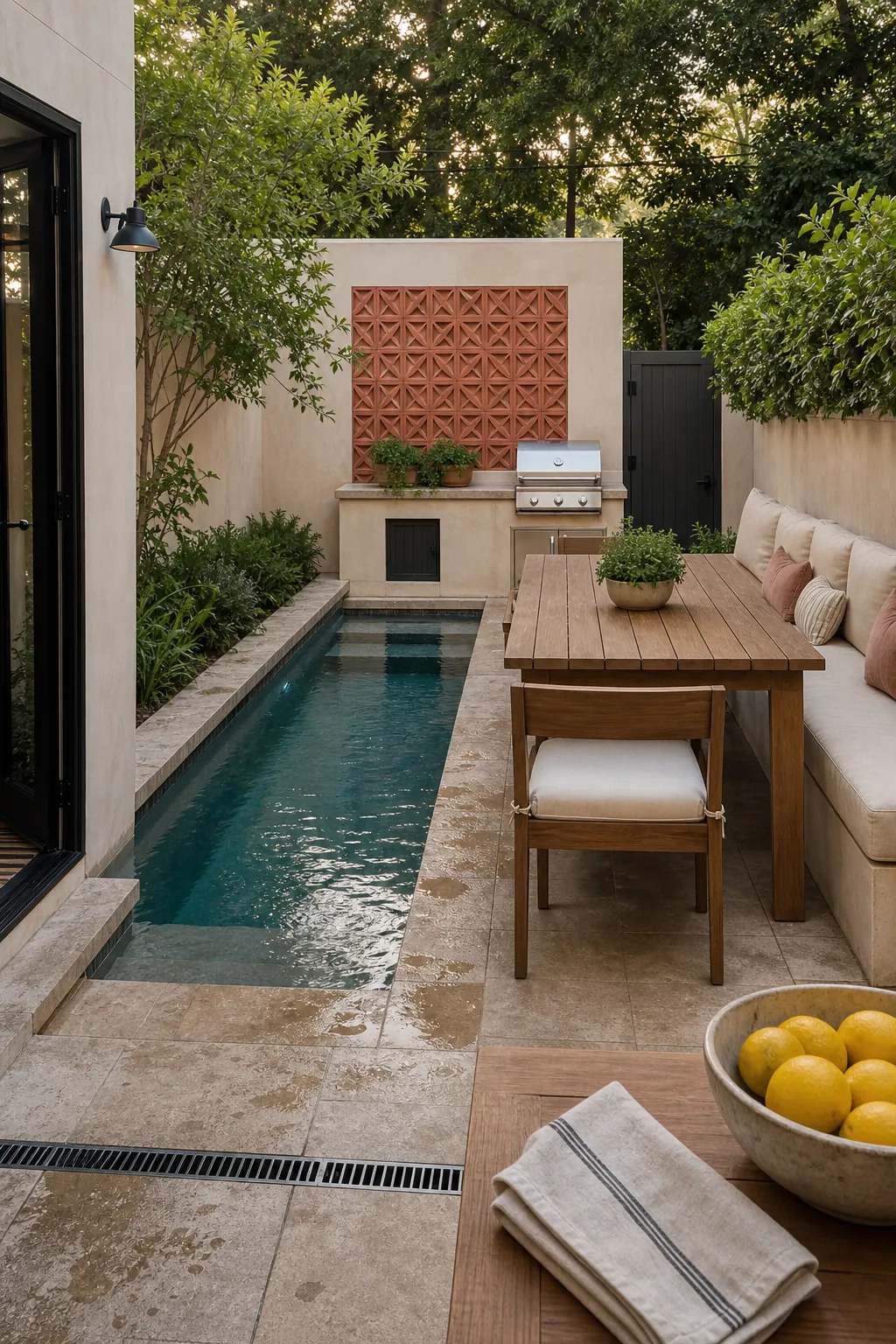
A Plunge Pool Beside a Dining Terrace
A dining terrace often justifies the pool more than an extra few feet of water. A built-in banquette saves space, while a direct kitchen route and dry storage make the retreat easy to use. Design the hours beside the pool as carefully as the minutes inside it.
Before ordering a shell or approving excavation, compare the complete installed cost with the number of months and ways you expect to use it. Then draw drainage, barriers, equipment, cover movement, access, furniture, and planting at scale. A plunge pool becomes a retreat when the whole small backyard still functions after the water arrives.