
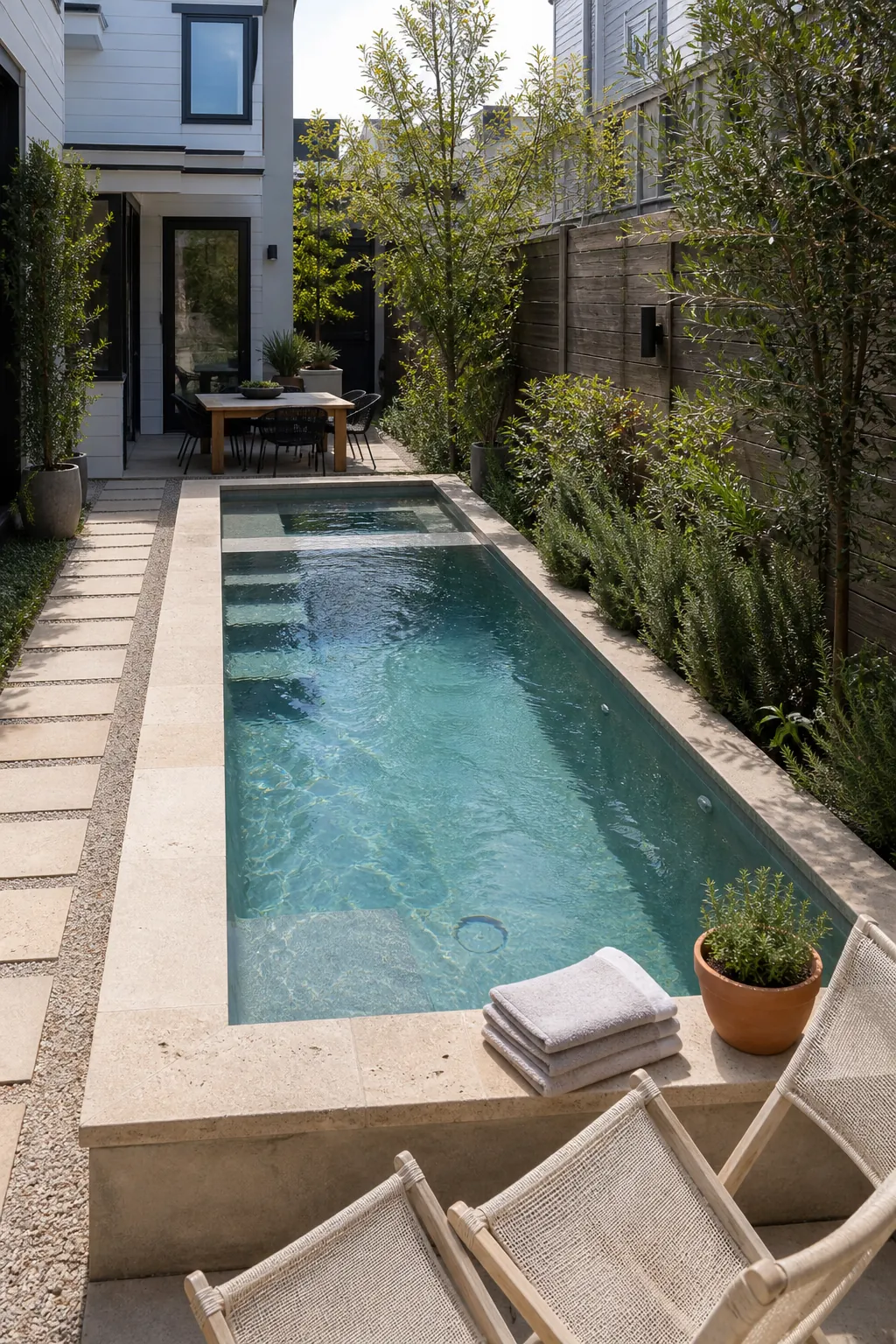
A small yard does not need a full-size swimming pool to feel like a private resort. The best cocktail pool ideas begin with a clear purpose: cooling off, soaking with jets, entertaining a few friends, or fitting water into a landscape that still needs room for dining and planting. A spool—part spa, part pool—can do several of those jobs in one compact footprint.
Real owners often praise quick heating and lighter cleaning, but they also warn that every added pump, jet, waterfall, and control creates another maintenance point. Before choosing finishes, confirm setbacks, equipment access, drainage, barriers, and the route contractors will use to reach the yard. Then let one of these 17 designs turn those practical limits into the shape of the project.
Tuck a Rectangular Plunge Pool Into a Sunny Corner
A crisp rectangle is often the most space-efficient answer for a cocktail pool small backyard layout. Place it along the least-used boundary rather than in the center, leaving one uninterrupted zone for a table, lawn, or play. A slim coping edge and a narrow planting strip keep the water from feeling boxed in.
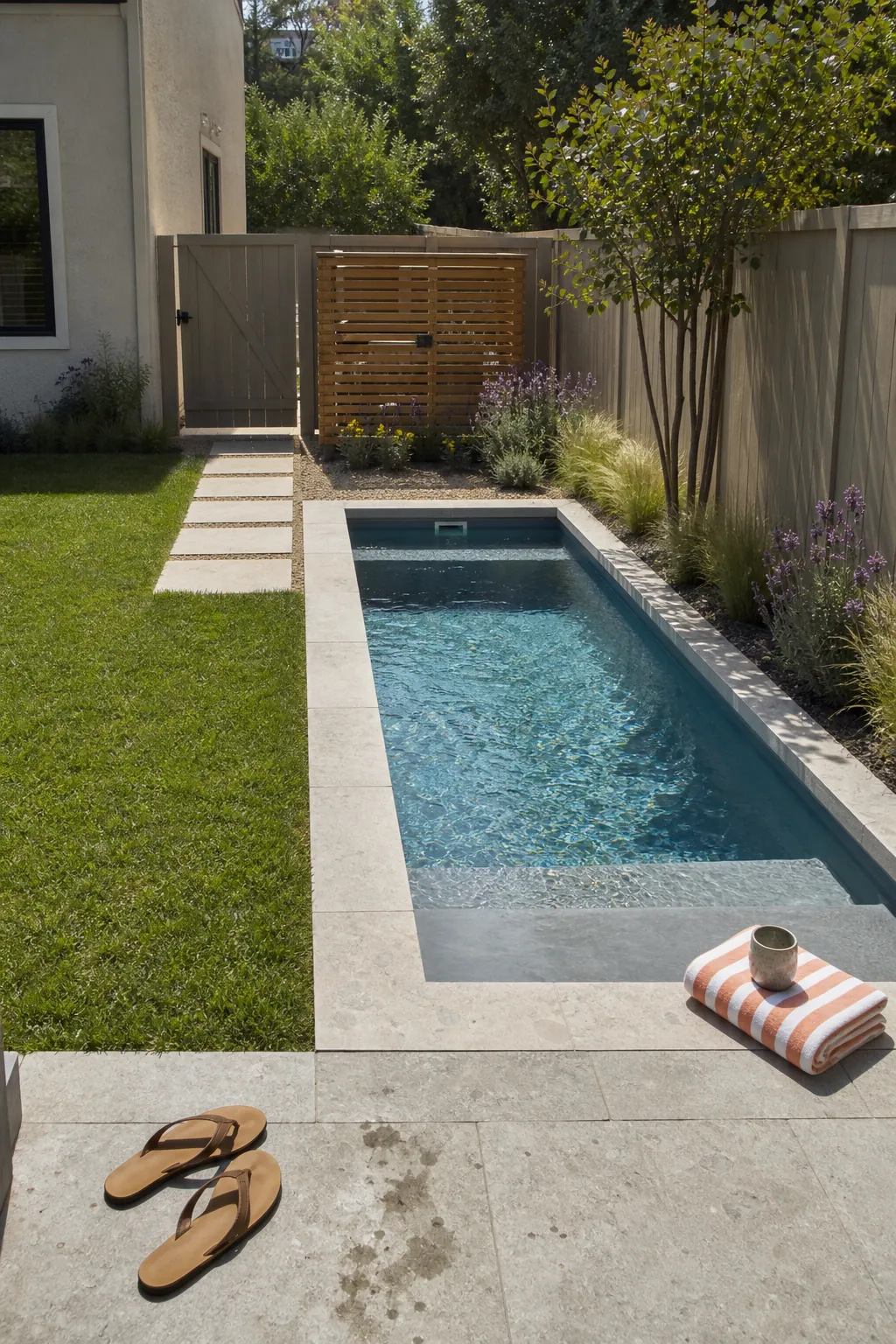
Keep the long side visually open to the yard and put the equipment behind the short end. This orientation makes a modest pool appear longer while preserving a direct walking path from the house.
Wrap an L-Shaped Spool Around a Patio
An L-shaped spool can define two outdoor rooms without building a wall. One leg becomes a deeper cooling zone; the shorter leg becomes a warm bench-lined spa. The inside corner naturally holds a dining terrace where guests remain close to the water without blocking circulation.
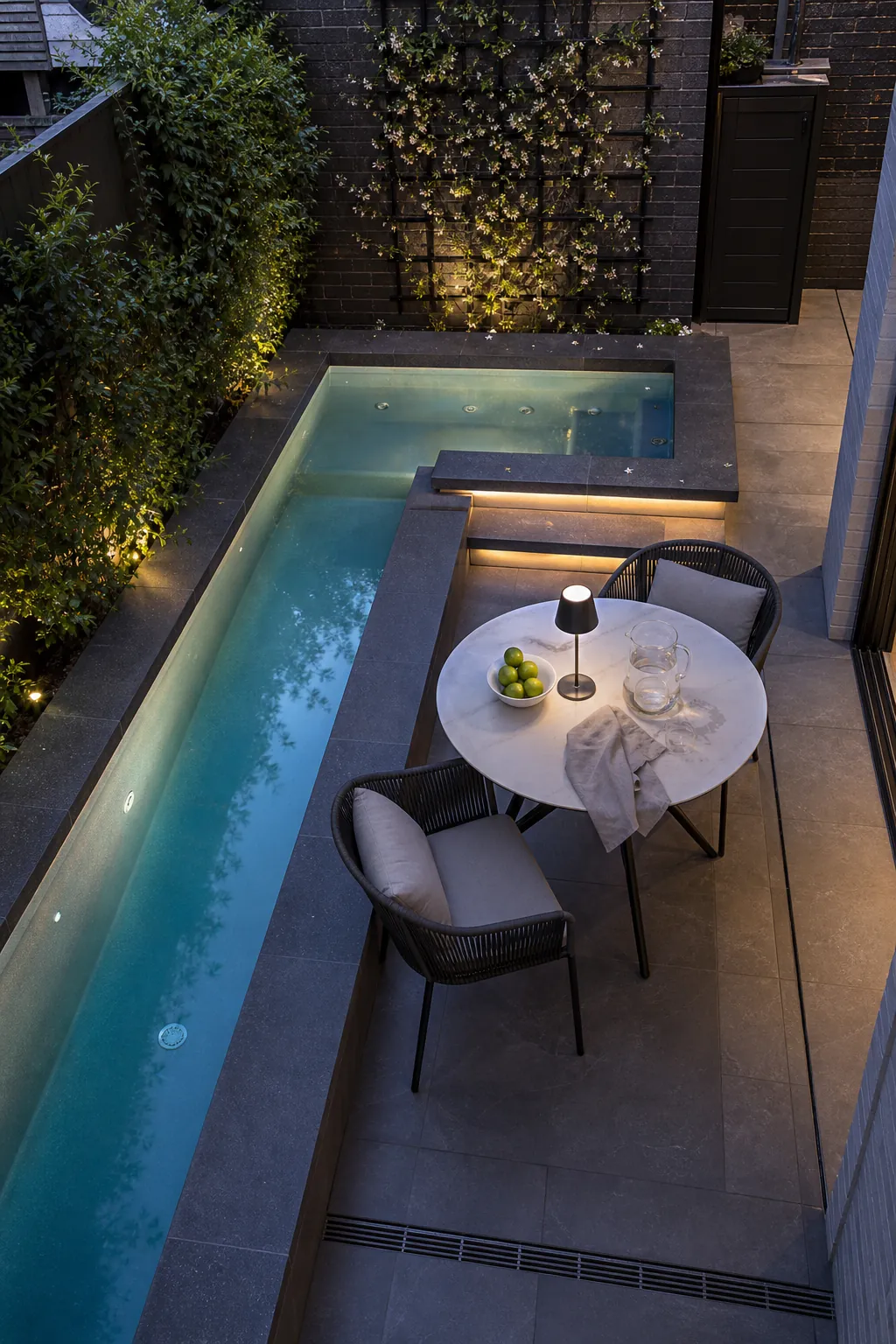
This shape costs more to form than a basic rectangle, so use it only when the bend solves a real site problem. Aligning both legs with existing architecture makes the design feel intentional rather than squeezed into leftover space.
Build a Wide Tanning Ledge for Everyday Lounging
A shallow ledge gives a small soaking pool more daily uses: feet-in-the-water seating, a safe place for young children with close supervision, and space for an in-water lounger. Include a sleeve for a removable umbrella so the ledge stays comfortable in strong afternoon sun.
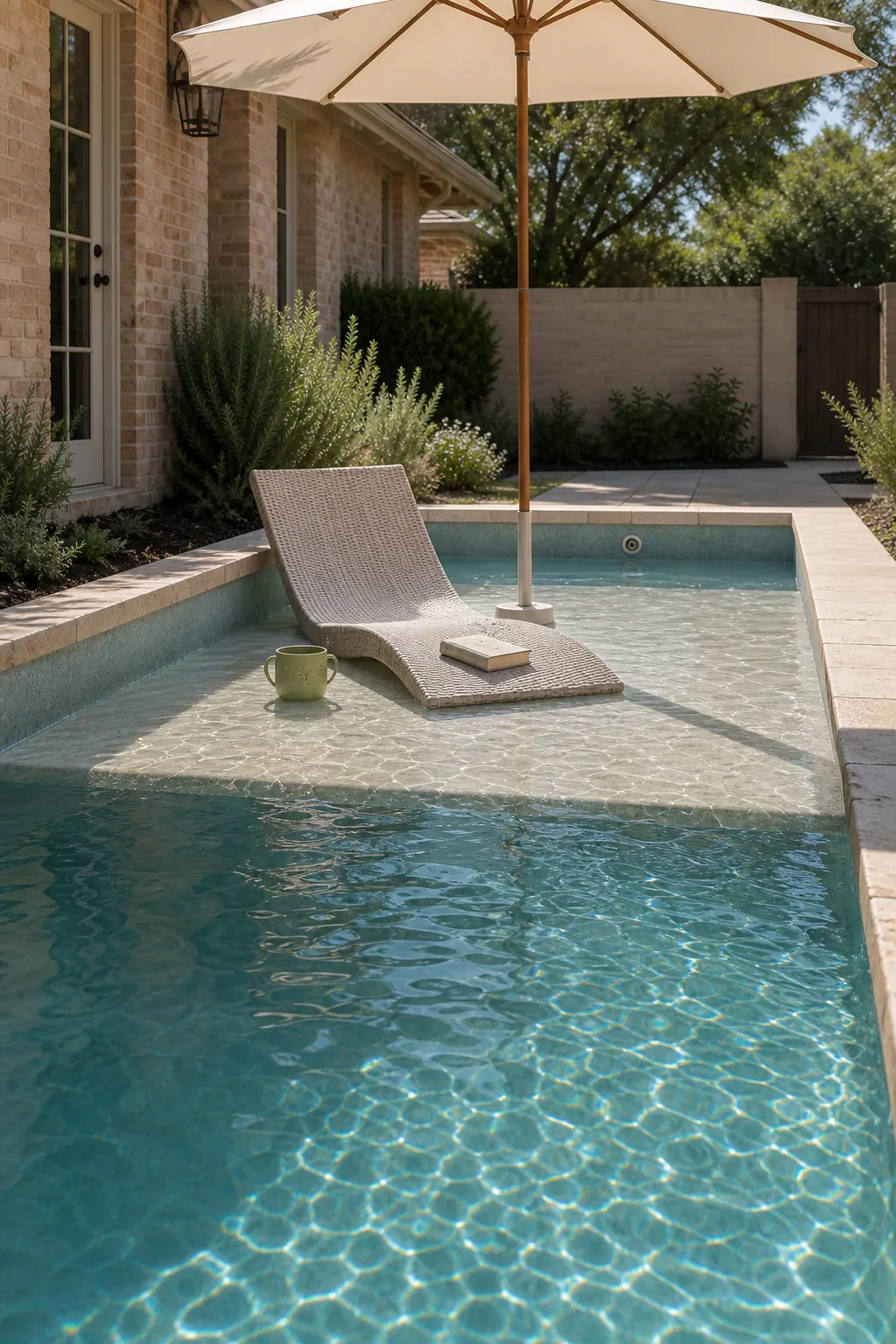
Measure the remaining open water before committing. In a tiny shell, an oversized shelf can consume the area needed to turn, float, or exercise. A ledge that runs across one short end usually protects the longest usable dimension.
Turn One Wall Into a Hydrotherapy Bench
For a true pool spa hybrid, build a continuous bench along one side and aim jets at the back and calves. The opposite side stays clear for dipping and gentle movement. Varying the bench depth lets shorter and taller users sit comfortably without adding separate molded seats.
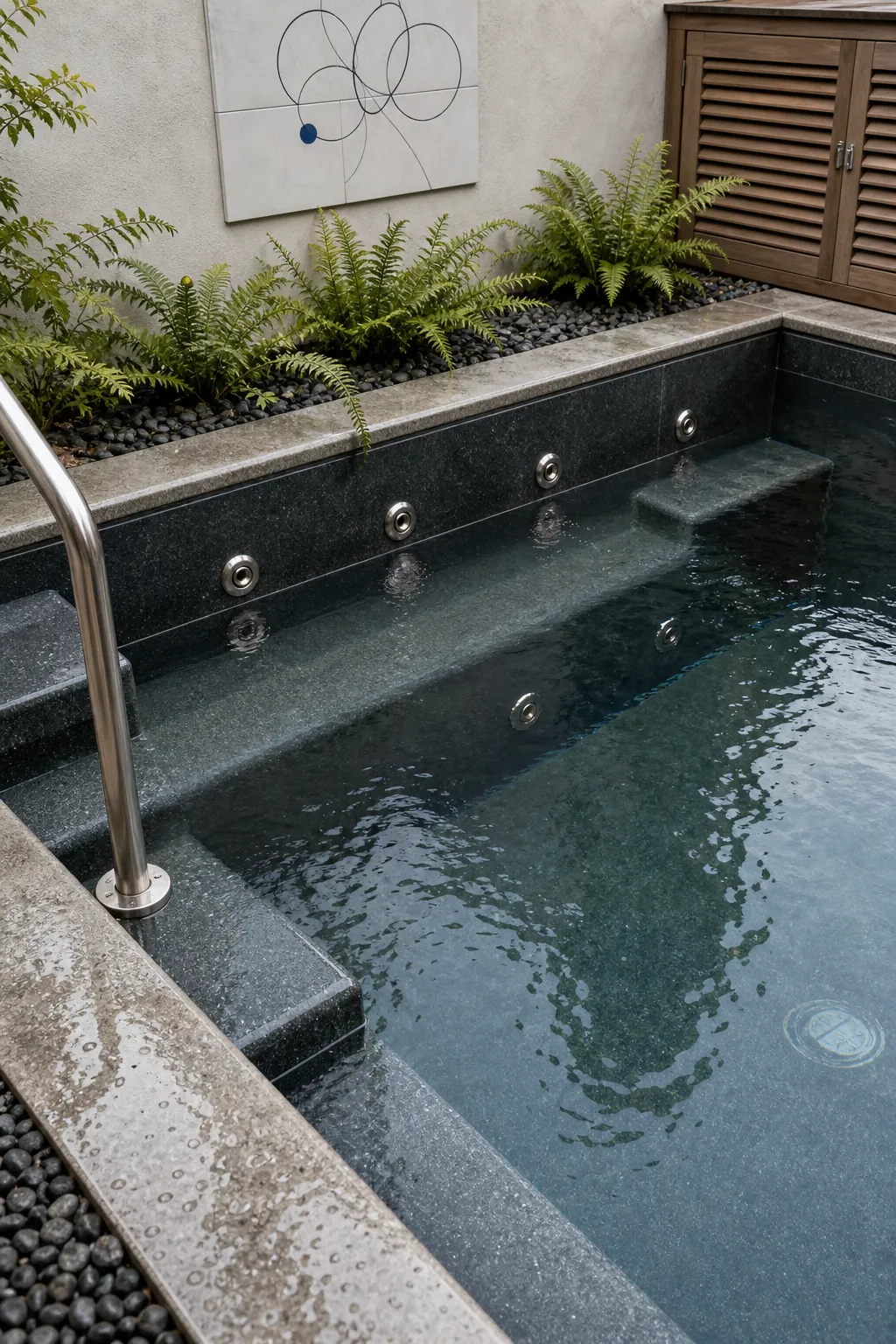
Ask the builder to map pump capacity, return placement, and service access before construction. More jets are not automatically better; properly placed jets and simple controls can deliver a stronger experience with fewer components to maintain.
Use a Long Narrow Pool in a Side Yard
A neglected side yard can hold a slender compact swimming pool while the main garden remains untouched. Run the water parallel to the house, keep decking to one side, and use the far wall for a narrow vertical planting screen. The linear view from an interior window makes the entire property feel deeper.
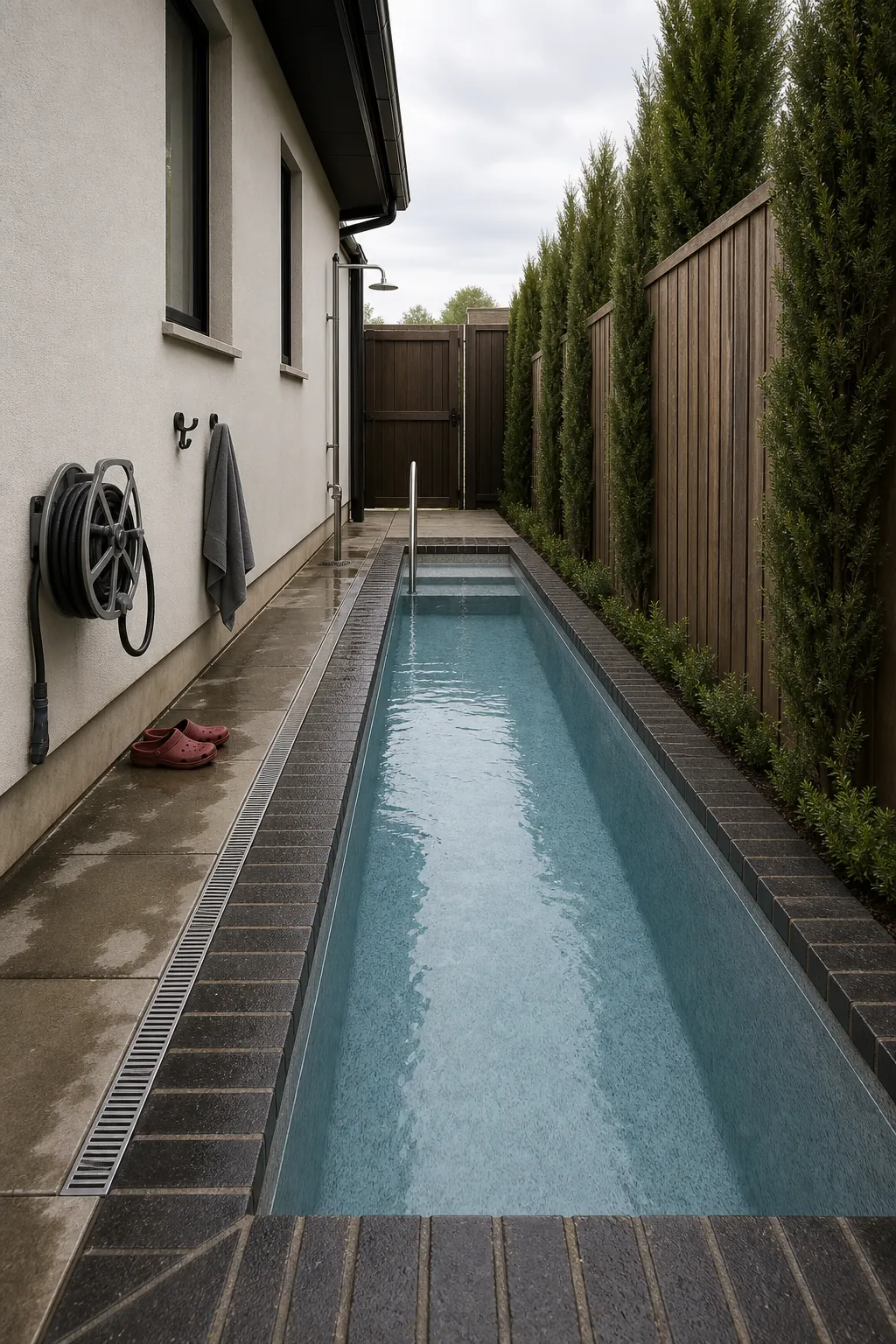
Side-yard projects depend on code-compliant clearance. Confirm the distance from foundations and property lines, gate width, emergency access, and where excavation spoil can travel before treating the plan as feasible.
Raise the Shell to Create Casual Seating
A partially raised shell can reduce excavation and turn the pool wall into a broad perch. Cap it with smooth stone or thermally modified wood at a comfortable sitting height. The result gives party guests somewhere to gather without filling the patio with extra chairs.
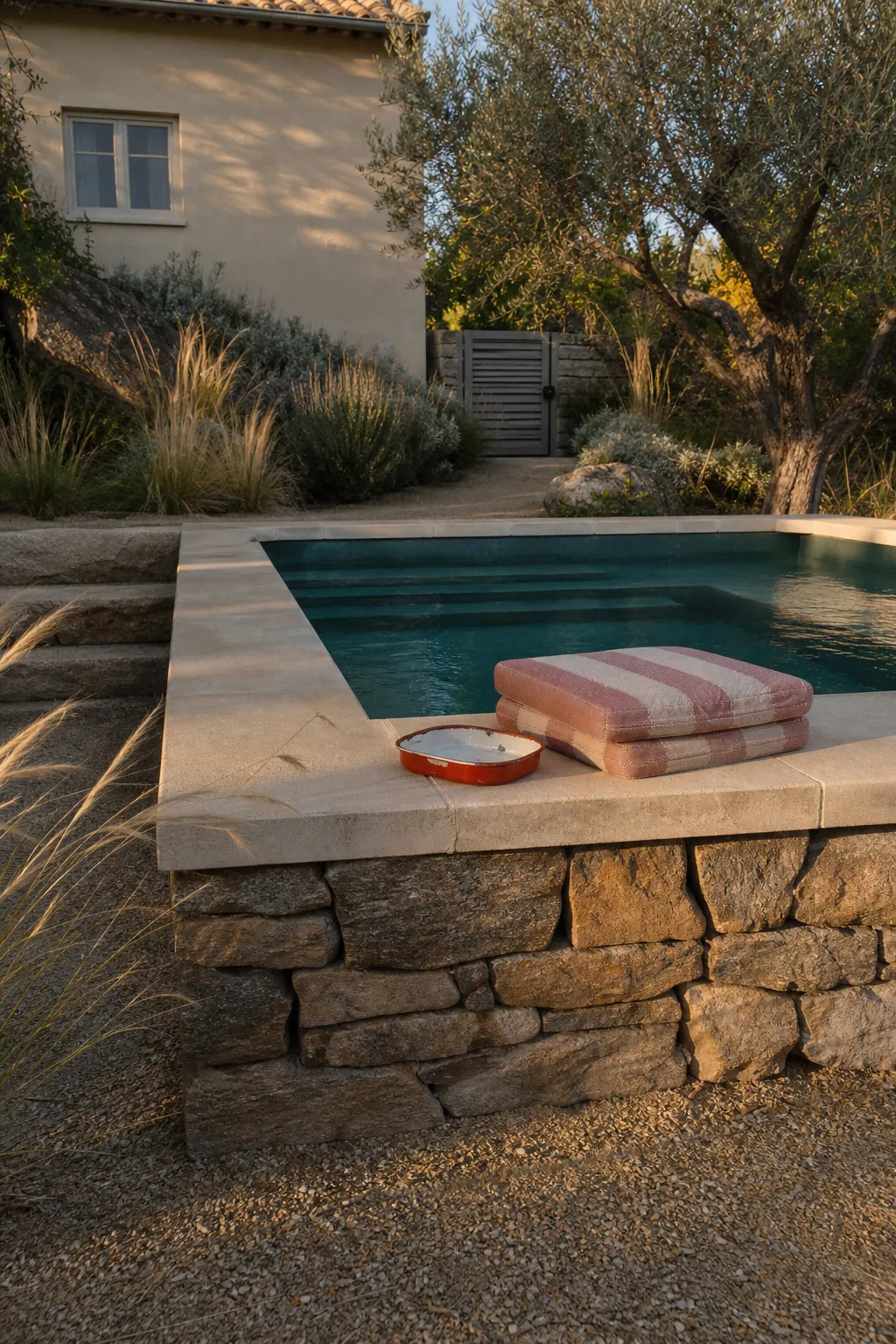
A raised edge also makes the water visible from indoors, but it changes entry and safety details. Integrate broad steps or a handrail, and avoid a coping profile that invites people to dive into shallow water.
Sink the Waterline Flush With a Timber Deck
Setting a prefabricated spool into a deck gives an above-ground unit a built-in appearance. Keep removable access panels around pumps and controls, and slope the boards away from the shell. A narrow border of contrasting boards can signal the water’s edge without visually chopping up the terrace.
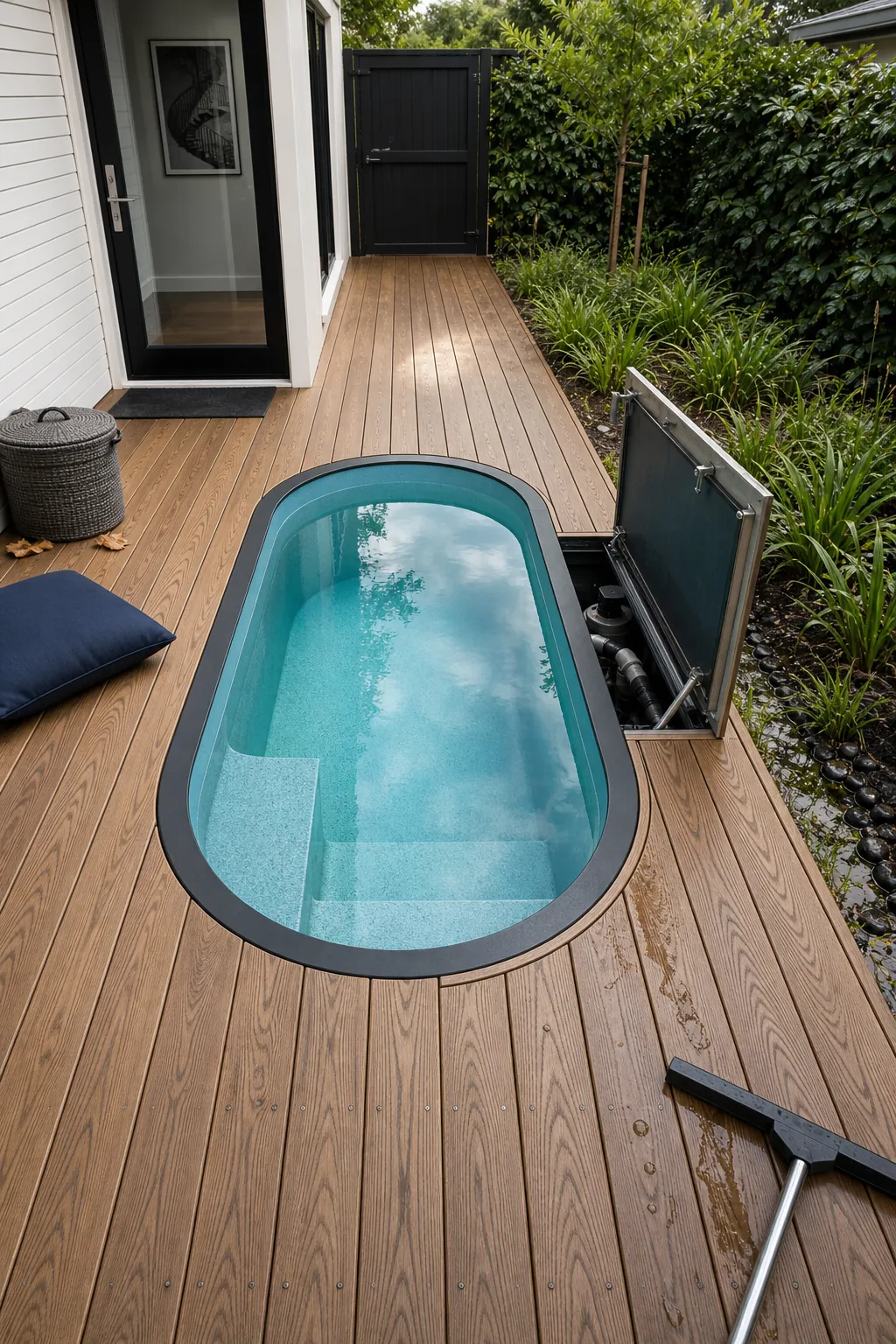
This is one of the strongest spool pool ideas for renters only when the structure is freestanding and permitted; permanent decks and electrical work usually require owner approval. In every case, use slip-resistant boards and allow ventilation beneath them.
Make a Courtyard Pool the View From Indoors
In a walled courtyard, treat the pool as both recreation and scenery. Center it on the most-used door or window, then leave an offset walking path rather than forcing circulation around every side. A quiet spillway adds movement while a pale interior finish brightens shaded conditions.
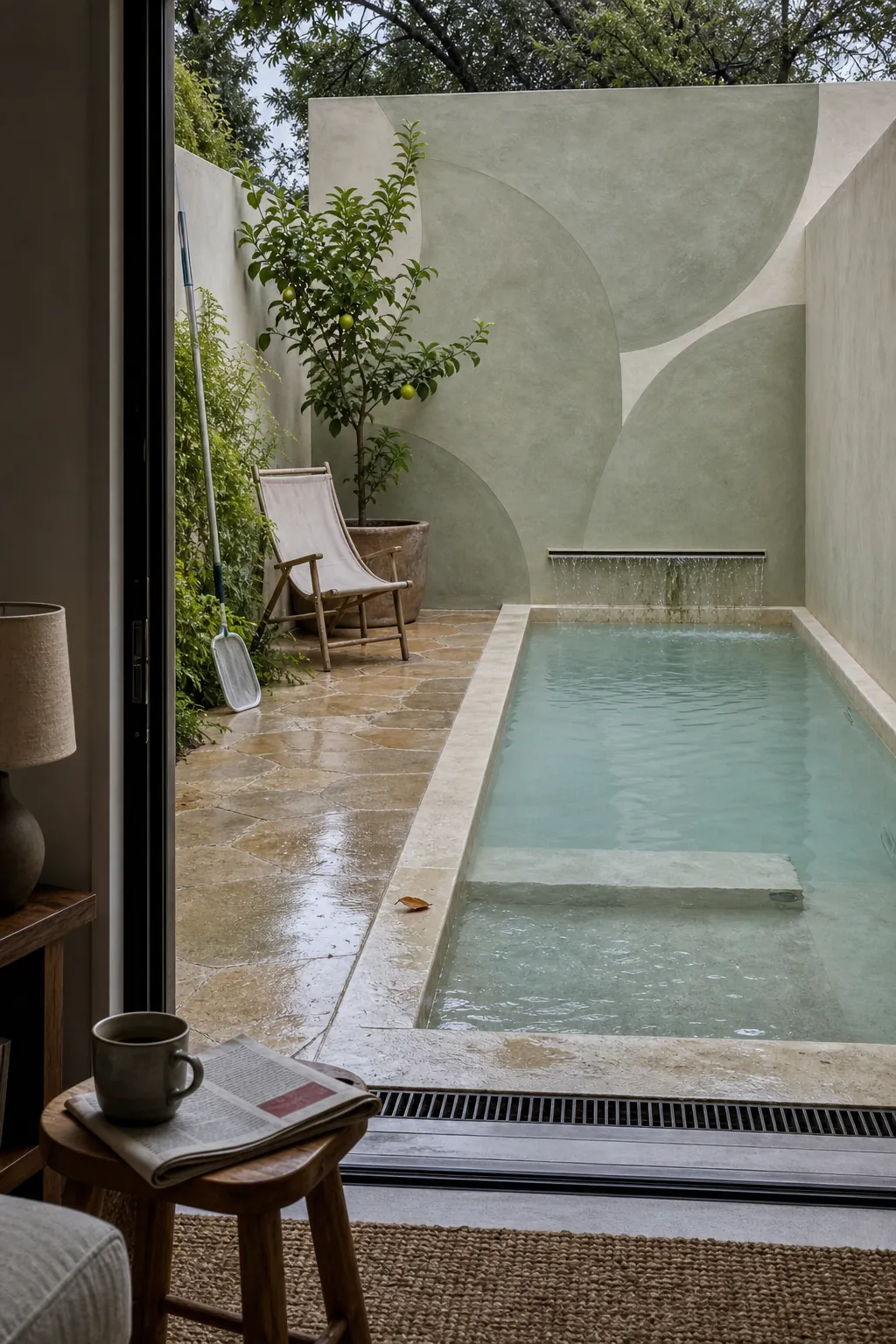
Hard walls amplify equipment and water noise, so specify quiet pumps and test spillway sound levels. Good drainage is equally important because courtyard paving can funnel stormwater toward the pool.
Choose a Round Basin for Easy Conversation
A circular cocktail pool removes the formal “swimming lane” expectation and makes face-to-face conversation natural. A continuous underwater bench can hold several adults while the center remains open. Surround it with curved gravel and planting beds rather than a square slab that wastes the corners.
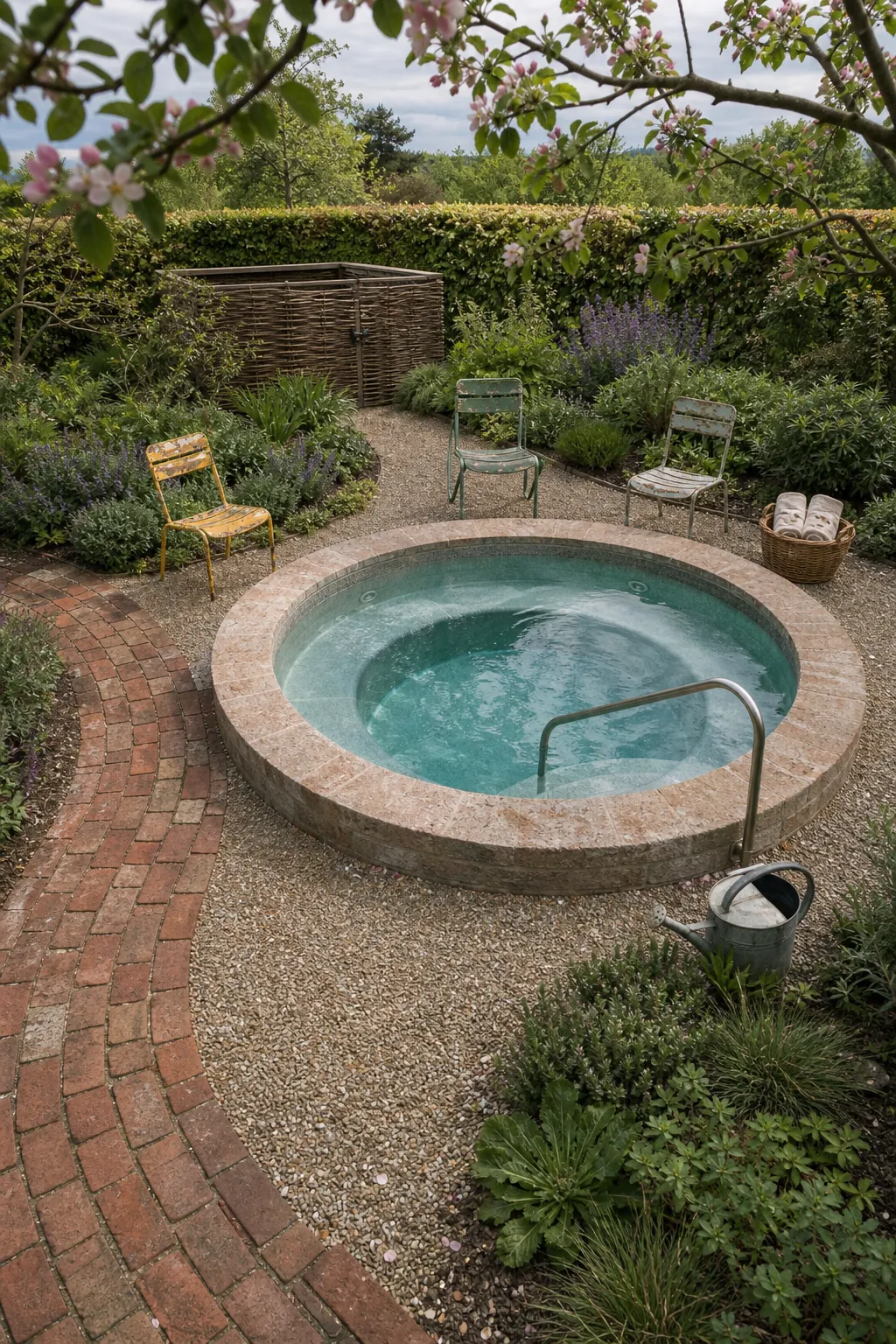
Round forms work especially well with stock-tank-inspired shells, masonry basins, and soft cottage planting. Keep at least one landing zone broad enough for safe entry, towels, and a pool cover mechanism.
Add a Vanishing Edge on a Sloped Lot
When a small yard drops away from the house, a vanishing edge can turn an awkward grade into the main attraction. The water appears to extend beyond its compact shell, while the catch basin and equipment occupy the lower side that was difficult to use anyway.
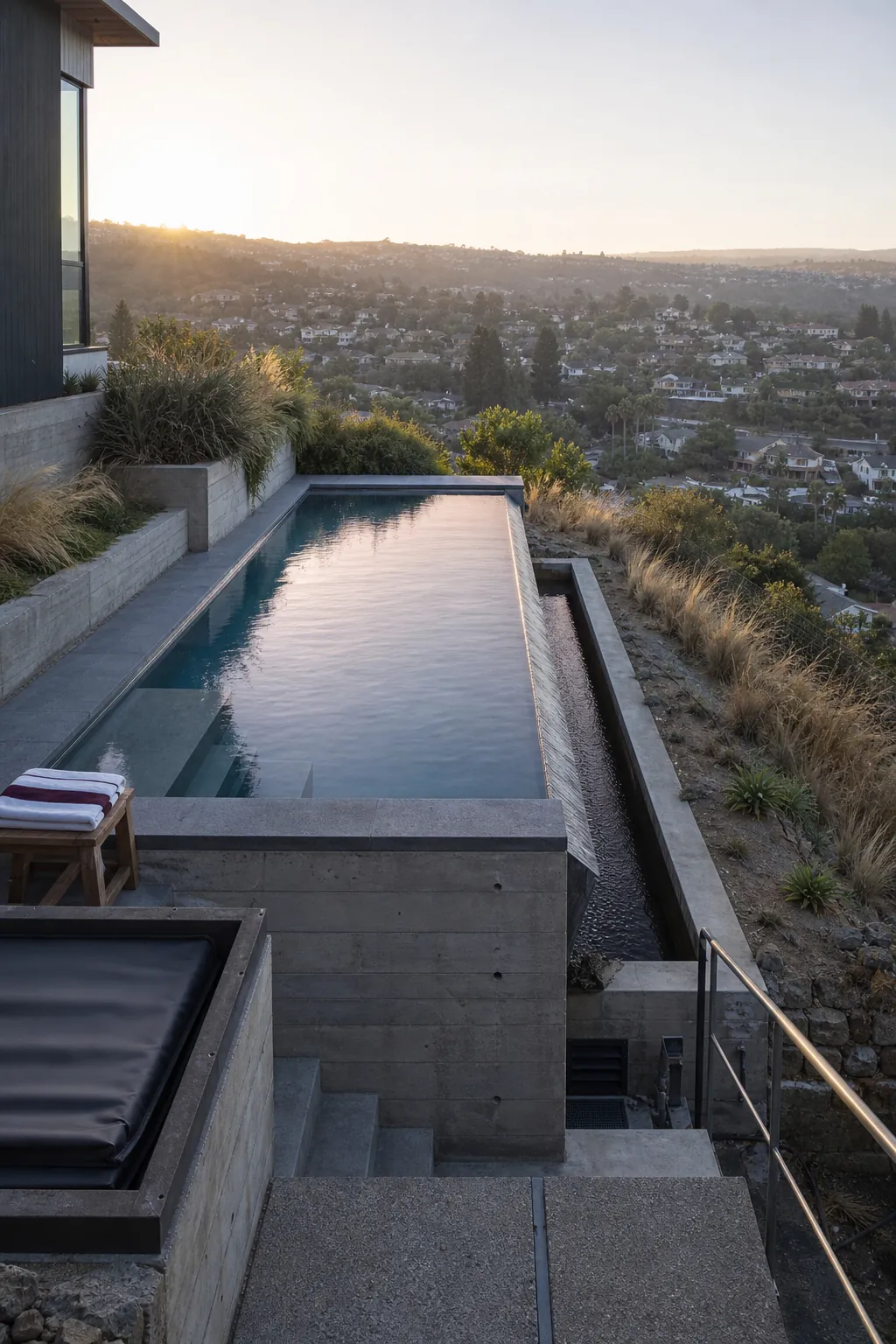
The visual payoff comes with extra engineering, water balance, and pump operation. Get structural and drainage advice early, and compare the ongoing energy cost with a simpler dark coping line that can create a similar visual boundary.
Shade the Water With a Slatted Pergola
A pergola can make a small backyard spool usable through the hottest part of the day. Position slats for the local sun path, covering the bench and deck while leaving part of the water open to sky. A vine-free structure drops less debris than a planted arbor.
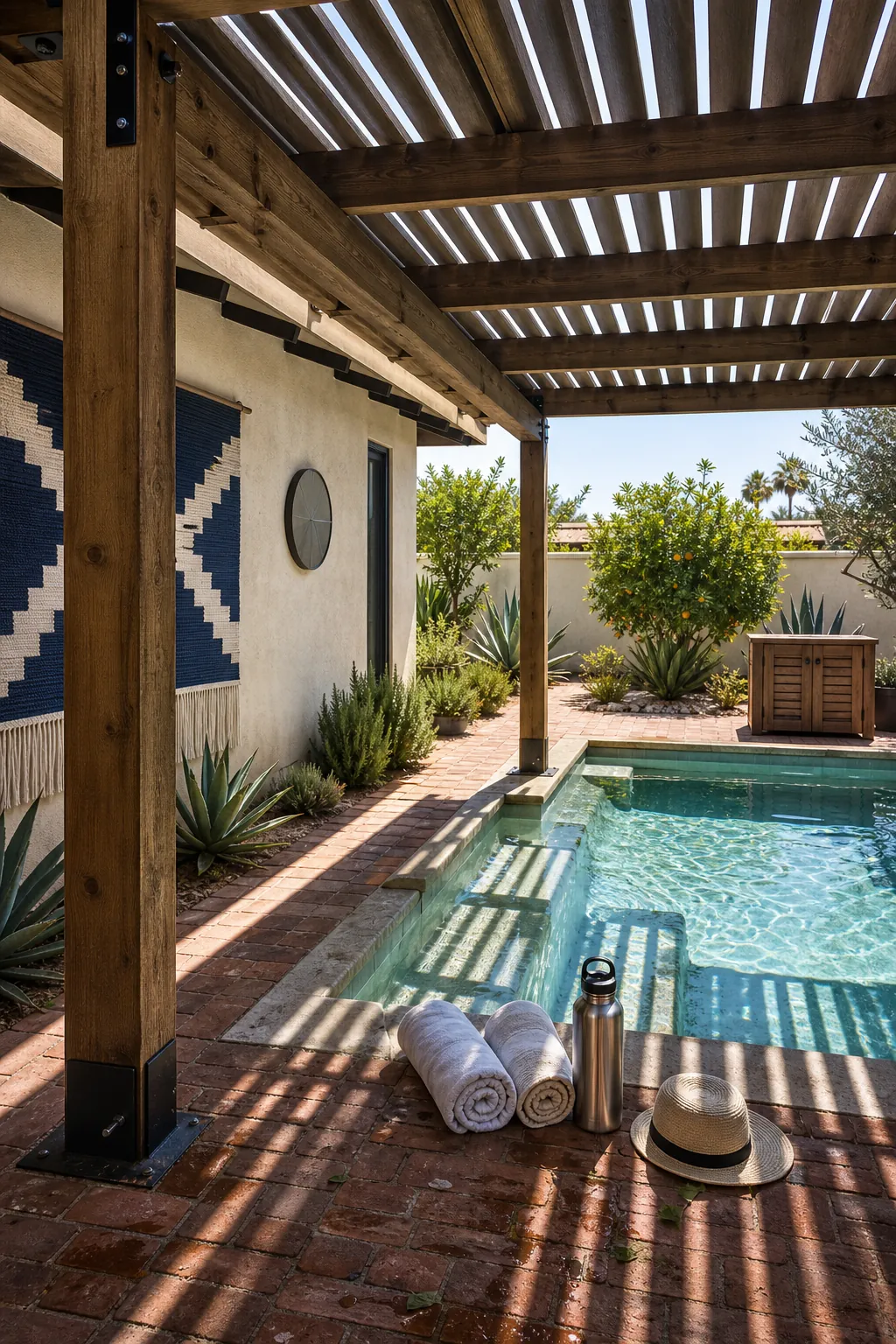
Keep posts outside wet circulation paths and confirm that footings do not conflict with the shell or buried plumbing. Low-voltage lighting tucked into the beams extends the space after dark without adding fixtures around the narrow deck.
Pair a Linear Fire Feature With the Water
Fire and water give a tiny yard a strong evening identity. Place a linear fire trough beyond the pool rather than between the water and the house, preserving a clear path and a safe separation. The flame becomes a focal point reflected across the water.
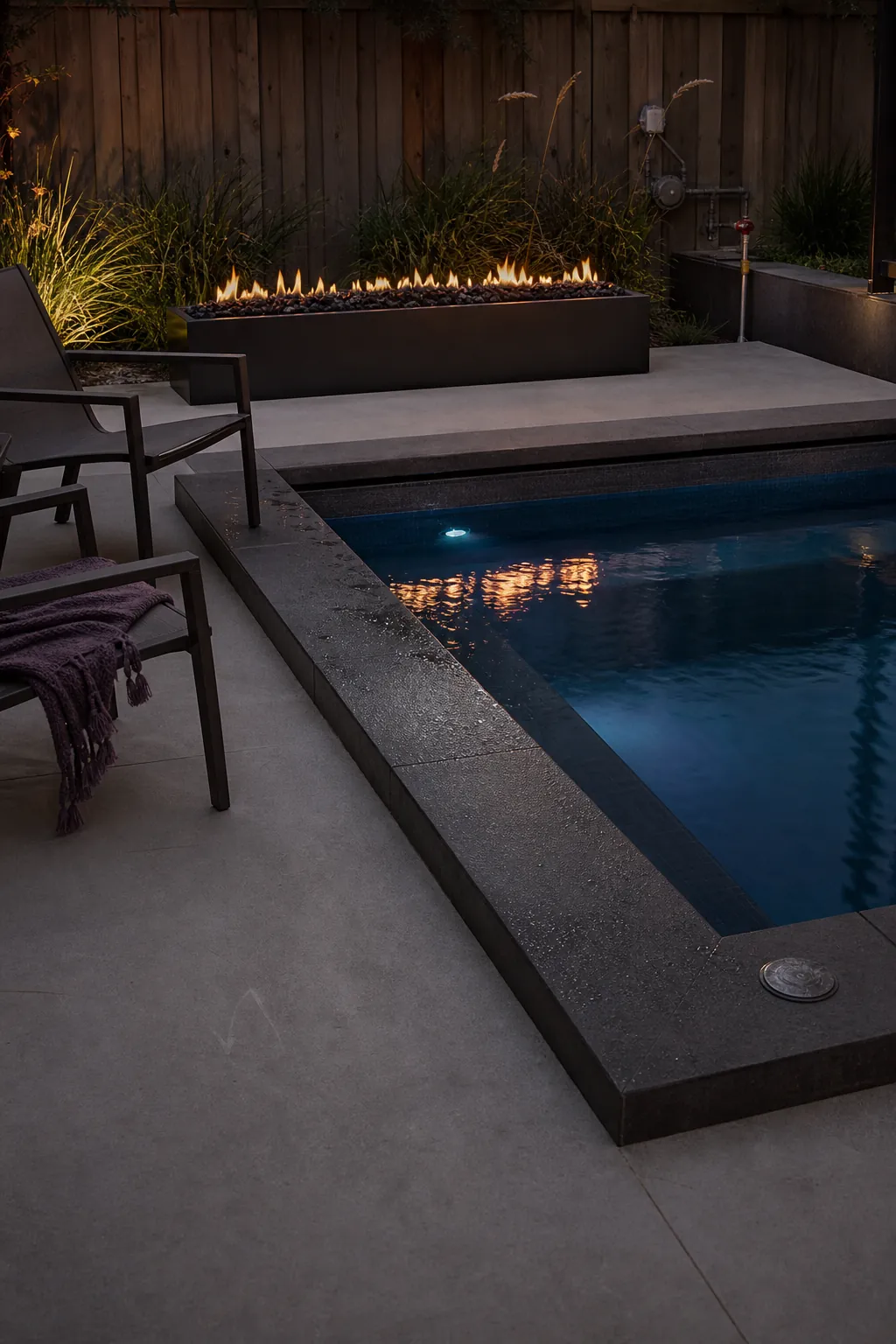
Use this move only where local codes, wind, fuel lines, and manufacturer clearances support it. One restrained flame element feels more spacious than multiple bowls, and it leaves room in the budget for the heater that makes a spool genuinely versatile.
Screen the Pool With Layered Climate-Smart Planting
Privacy planting can soften a small pool without turning it into a leaf trap. Combine a narrow evergreen screen, a middle layer of architectural shrubs, and low groundcovers that tolerate reflected heat. Keep thorny, fruiting, and aggressively shedding plants away from the coping.
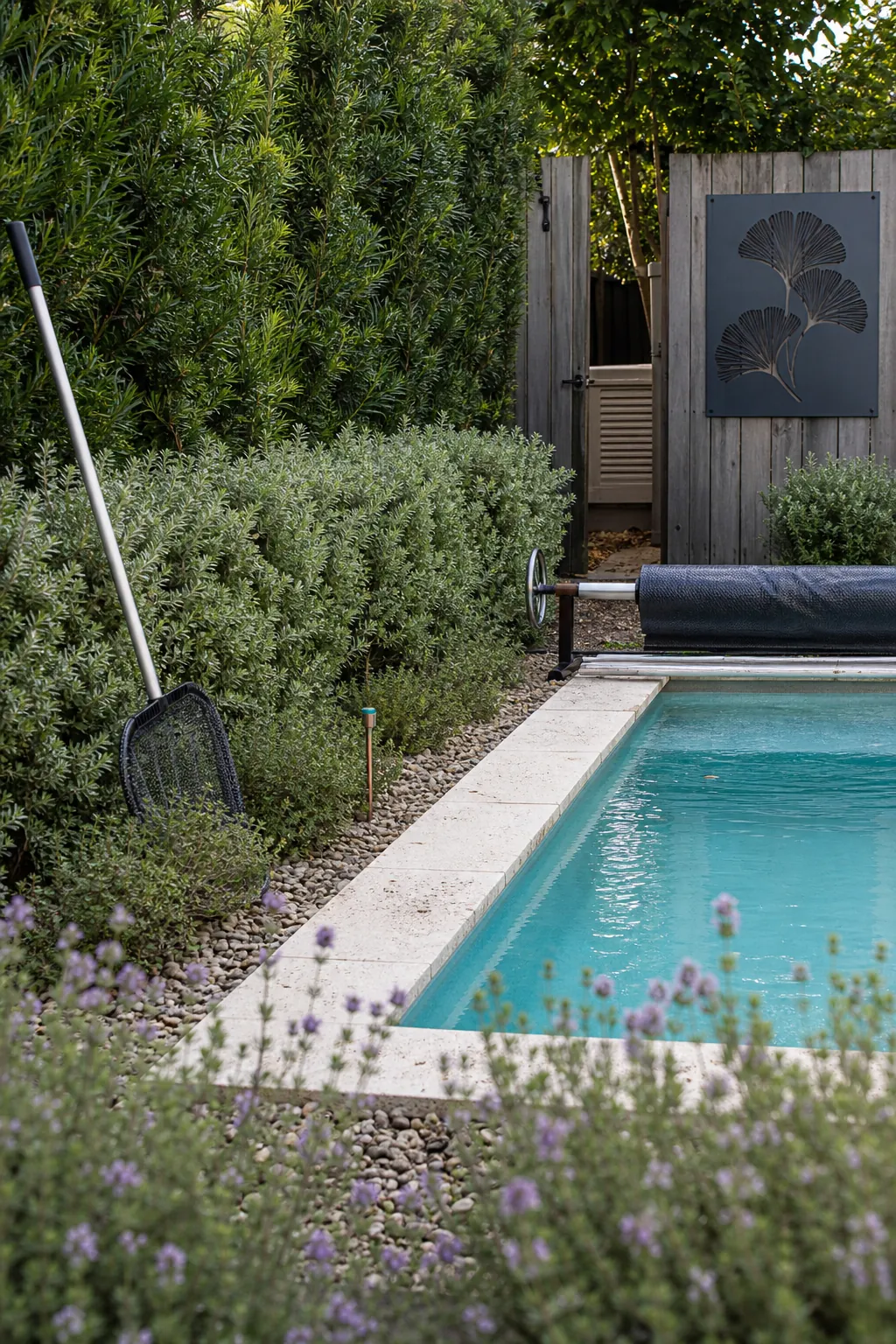
Leave airflow around equipment and maintain a service path behind the bed. In windy regions, a fitted cover often prevents more debris than any planting plan, so select plants and cover hardware as one system.
Hide a Retractable Cover Beneath the Coping
A concealed cover makes a compact pool easier to live with by reducing evaporation, holding heat, and blocking windblown debris. Build the roller into a dry service vault at one short end so the deck stays uncluttered and the cover pulls across the simplest dimension.
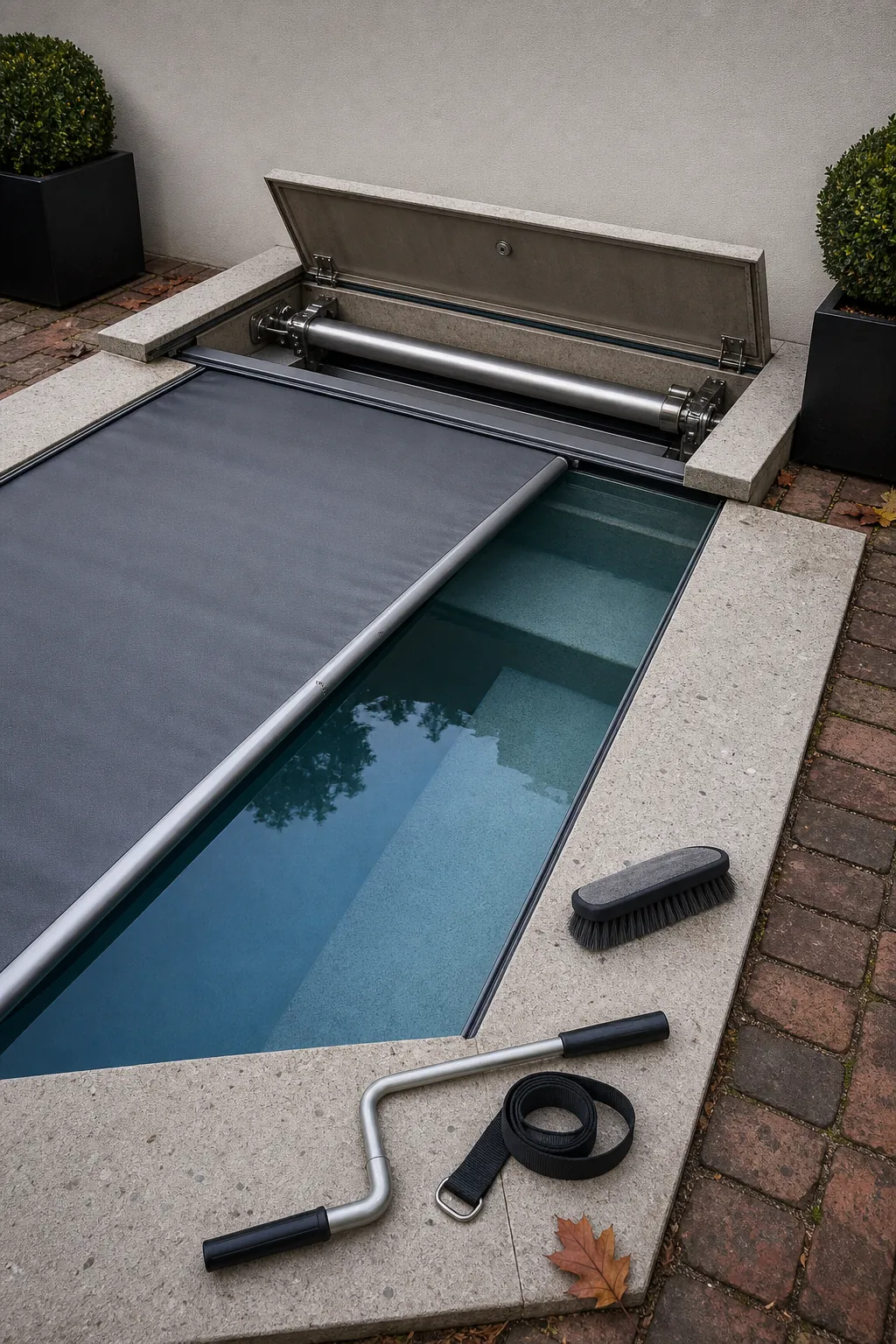
Specify the cover at the design stage, not after the pool is poured. Bench shapes, raised walls, and spillways can interrupt the cover path. A neat manual system may be preferable to automation when simplicity and easy repair matter most.
Install a Swim Current in a Straight Run
If exercise matters, reserve a straight, obstacle-free channel and install a properly sized swim-current system. Put steps and the spa bench at the opposite end or along one side so they do not disturb the flow. Handholds near the current make interval training and recovery easier.
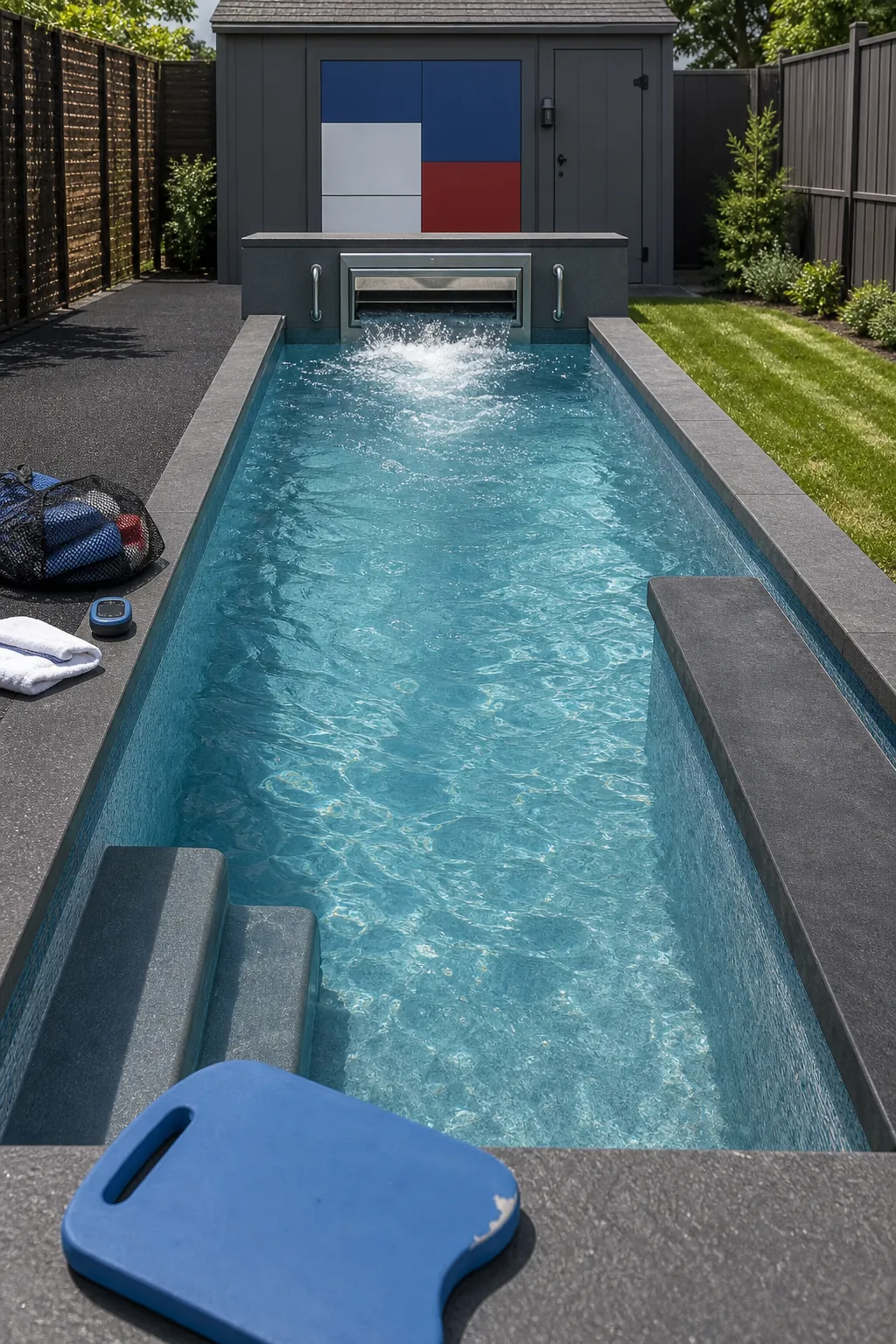
This feature changes the equipment, electrical demand, and noise profile. Try a comparable system before buying: a current that feels smooth to one swimmer can feel turbulent to another, and an undersized unit will not turn a lounging pool into a satisfying training pool.
Design for Warm Soaks and Cool Plunges
A well-insulated small pool and spa combo can shift with the season—cool for summer afternoons, warm for shoulder-season evenings. Choose a depth that supports relaxed standing and seated soaking, then pair efficient heating with a fitted cover and wind protection.
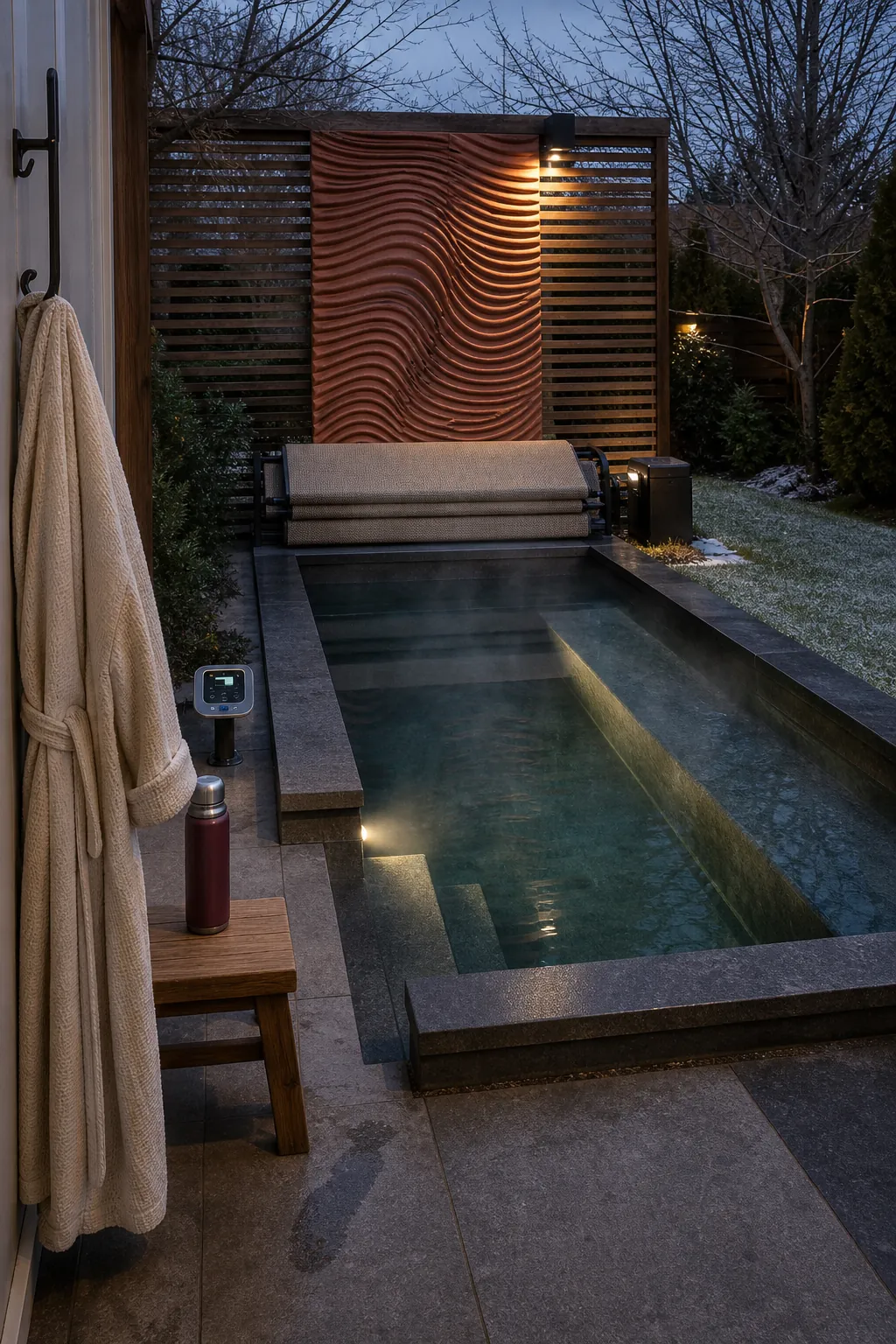
Ask for realistic warm-up times in your climate and price both electricity and fuel. Smaller volume generally responds faster, but frequent temperature swings can erase the efficiency advantage if insulation and cover habits are poor.
Finish a Tiny Basin Like a Garden Jewel
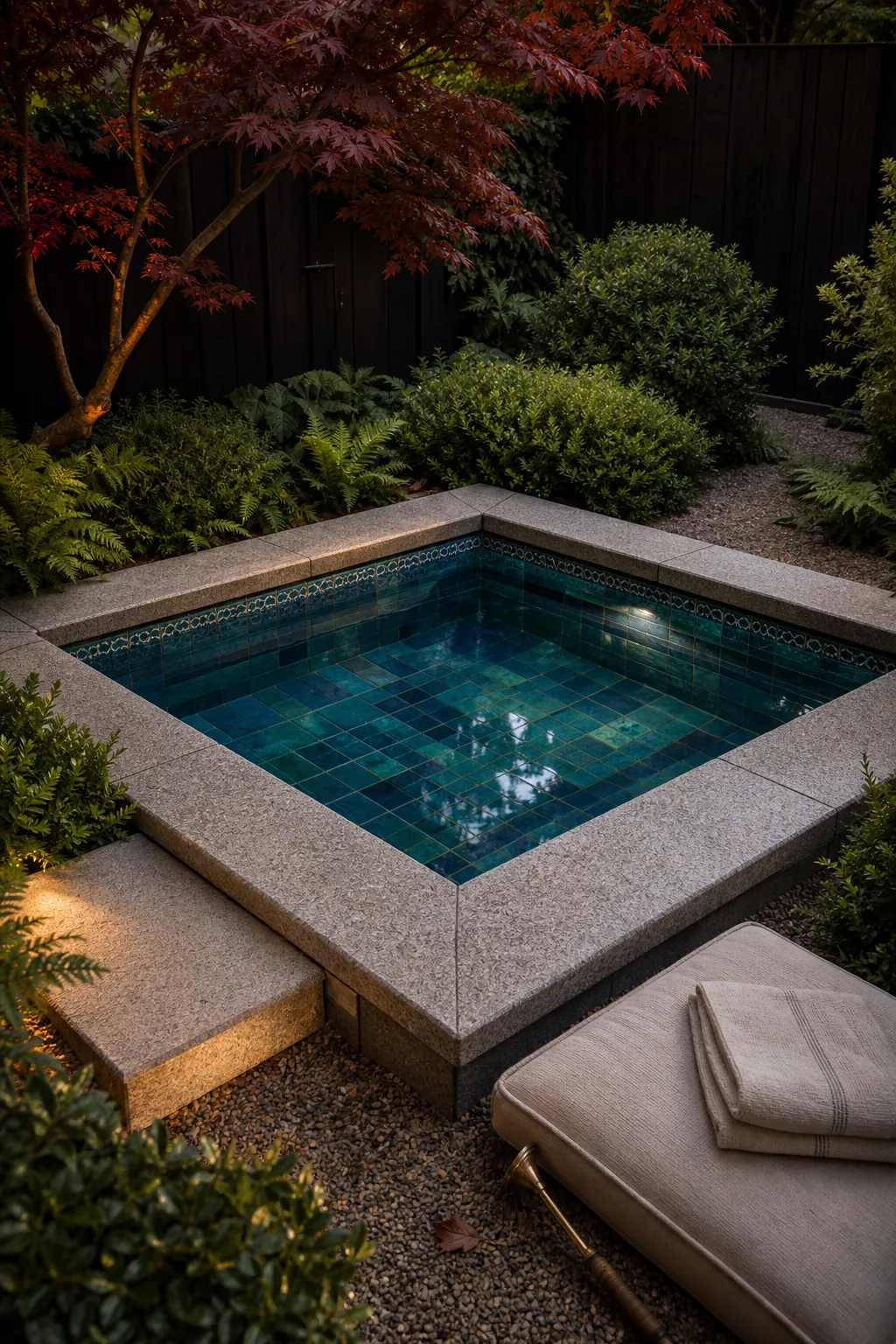
When the footprint cannot grow, make every visible surface count. A deep blue-green interior, slim handmade tile at the waterline, and one beautifully cut coping material can give a tiny basin more presence than a complicated shape. Repeat the coping stone once in a nearby step or bench so the pool belongs to the garden.
The smartest design is not the one with the longest feature list. It is the one that protects the parts of the yard you already use, gives the water one clear primary job, and keeps service access straightforward. Mark the proposed shell and deck with tape or stakes, walk around it for several days, and adjust before excavation makes those proportions permanent.