
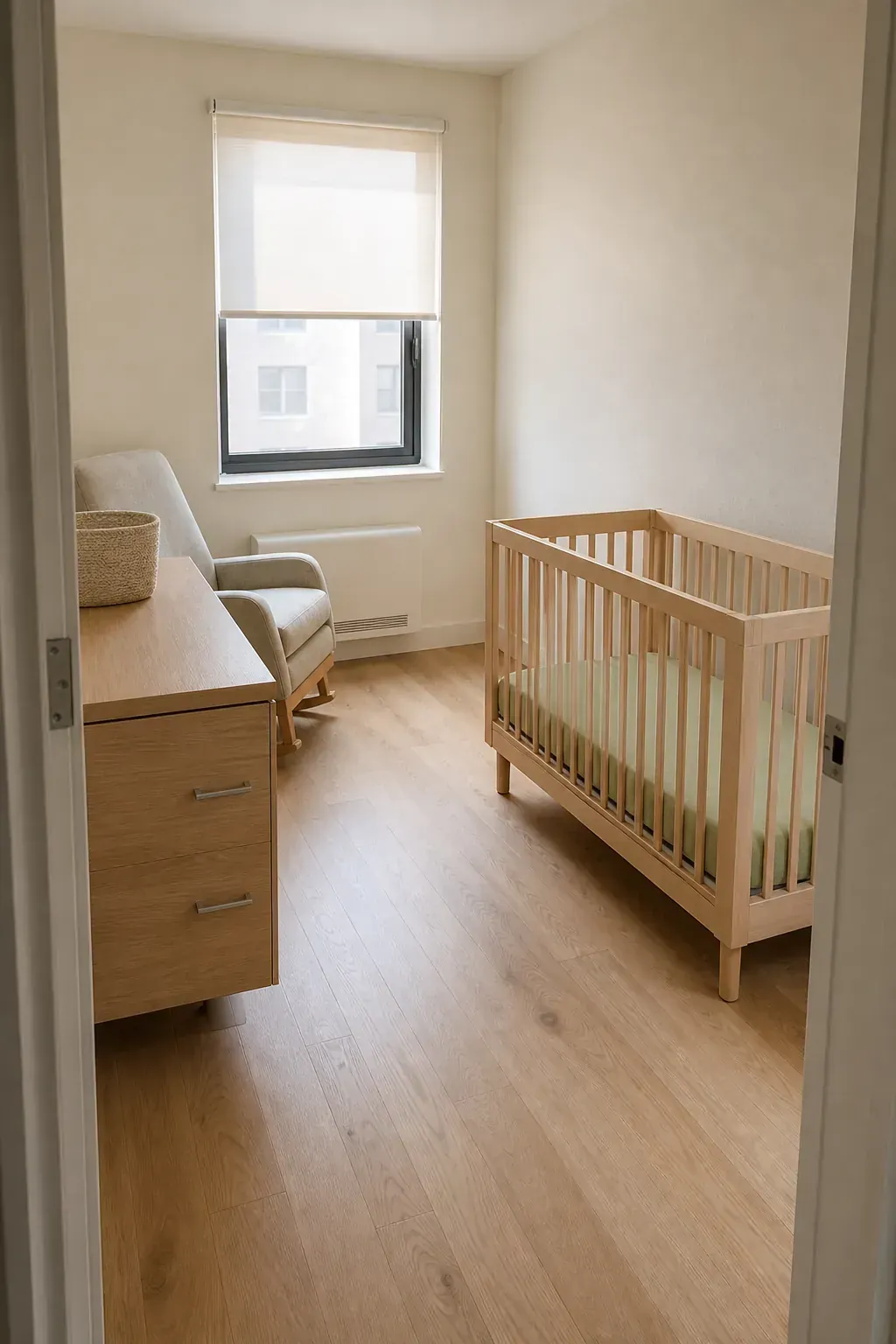
A small nursery does not need to hold every product marketed to new parents. It needs a safe sleep space, an efficient place for routine care, reachable supplies for an adult, and a clear path during tired nighttime visits. The best small nursery ideas give those jobs priority and let decorative extras earn whatever space remains.
Safety comes before styling. Follow the current instructions for every product you use, check recalls, anchor furniture, keep cords out of reach, and use a sleep product that meets applicable standards. The U.S. Consumer Product Safety Commission says a baby’s sleep space should be bare except for a fitted sheet, while the American Academy of Pediatrics advises room sharing—not bed sharing—for at least the first six months.
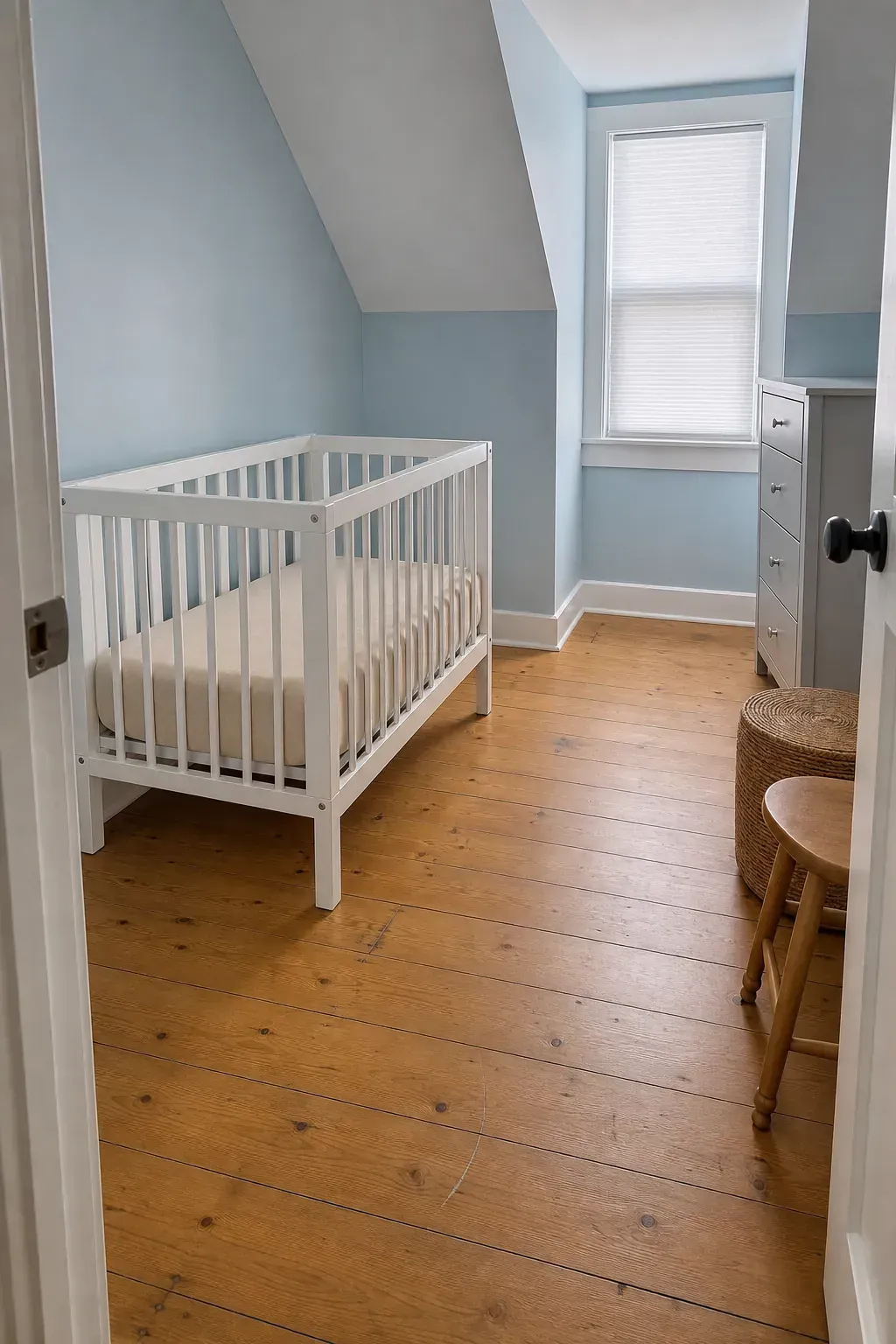
Choose a Safety-Approved Mini Crib
A mini crib can release valuable floor area in a tiny baby room, but smaller does not mean improvised. Select a product intended for infant sleep that complies with the standards where you live, follow its mattress and assembly instructions exactly, and confirm how long your child can use it.
Measure the crib’s full exterior dimensions and required clearances before ordering. Keep the mattress firm and flat with a fitted sheet only. Decorative pillows, bumpers, quilts, toys, positioners, and loose blankets belong outside the crib, even when styled nursery photos show otherwise.
Turn a Low Dresser Into the Changing Station
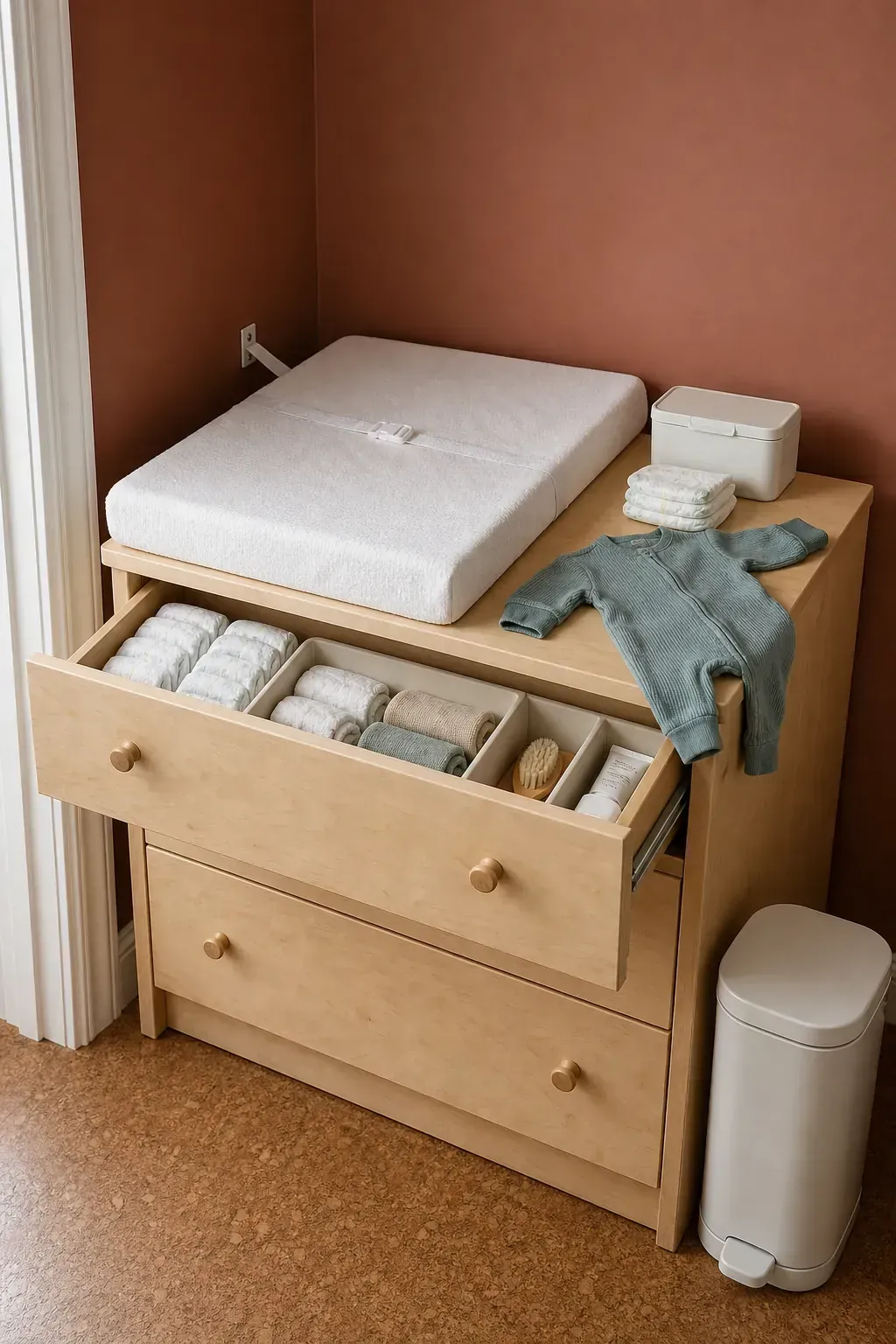
A sturdy low dresser can store clothes now and serve the room long after diaper days end. Use only a changing pad and attachment method that suit the surface and follow their instructions. Anchor the dresser securely to the wall; tip-over prevention is not optional.
Keep one hand on the baby and keep frequently used supplies within the adult’s reach, never the baby’s. Store backup stock elsewhere. A shallow top drawer divided into diapers, wipes, and clothing changes is usually faster than open decorative baskets spread across the room.
Give the Crib the Quietest Solid Wall
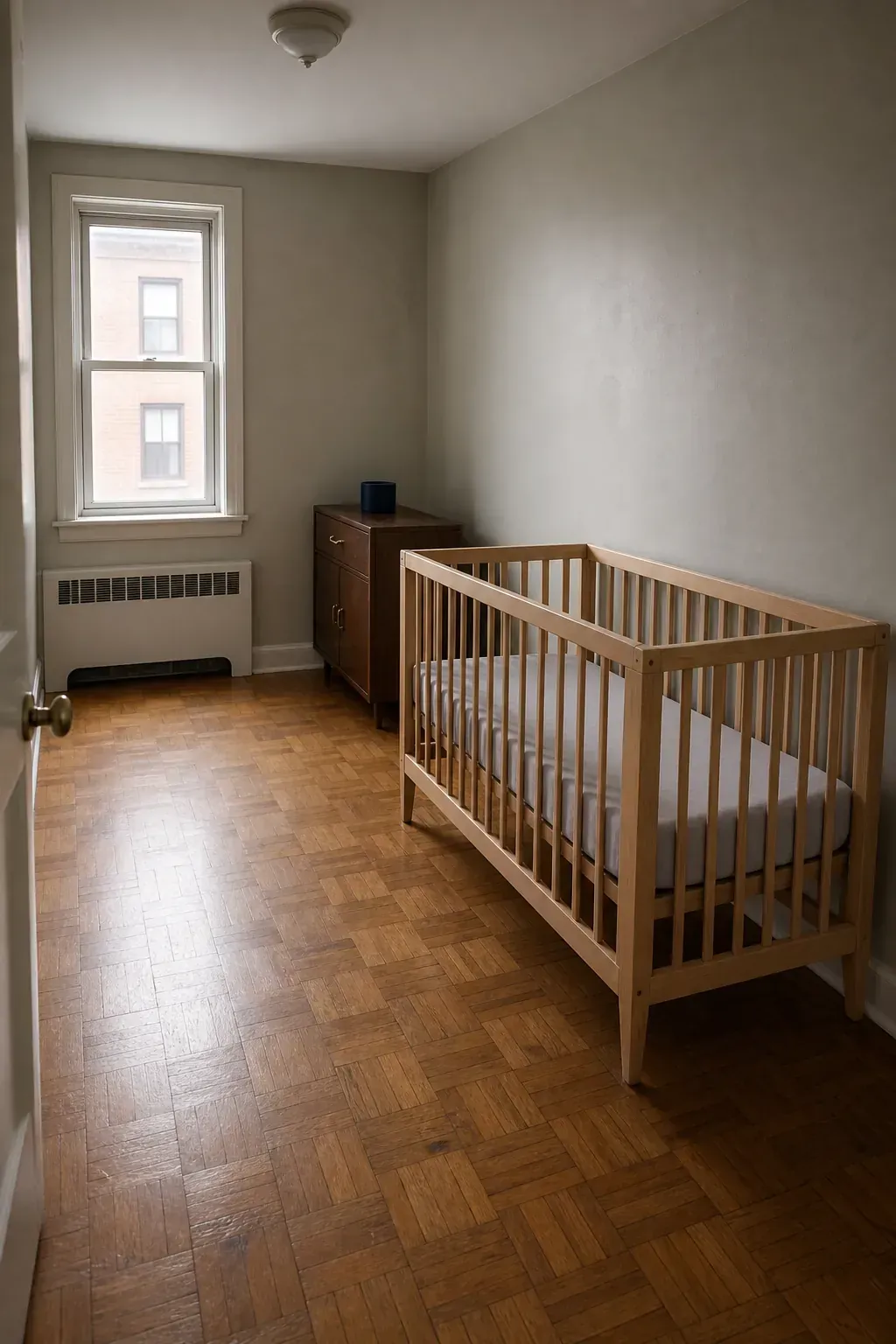
Start a small nursery layout with the crib, not the rug. A solid wall away from dangling window-covering cords, hot radiators, heaters, and shelves full of loose objects often provides the clearest, calmest placement. Respect every clearance specified by the crib maker.
Then test the route from the door to the crib in low light. You should not have to sidestep a footstool or squeeze between furniture. The empty lane will feel more valuable at 3 a.m. than another storage cabinet.
Create a Nursery Corner in the Parents’ Room
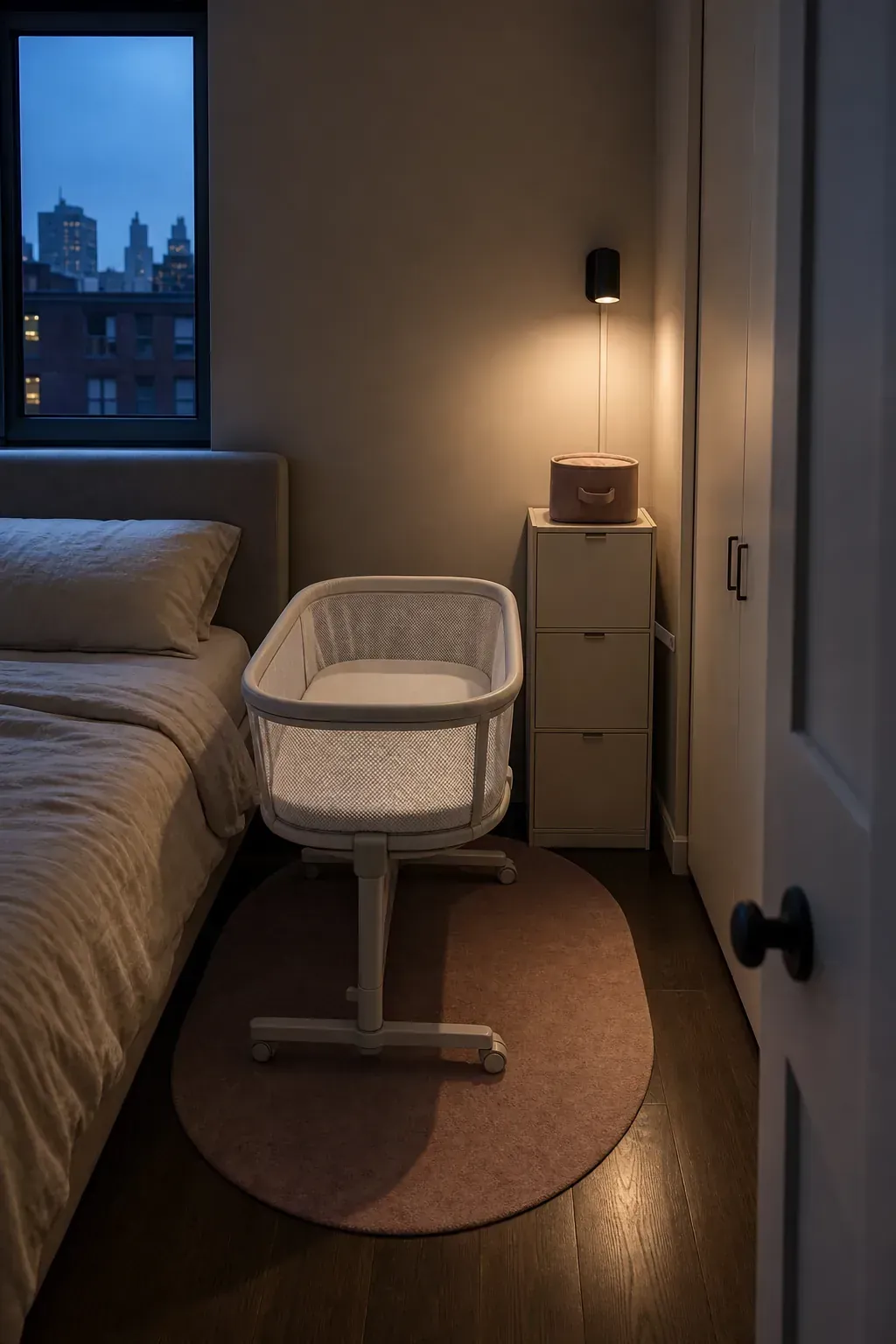
A separate room is not required for a functional newborn setup. A compliant bassinet, mini crib, portable crib, or play yard can form a nursery corner in the parents’ room, keeping the baby close without sharing the adult bed.
Define the zone with function rather than a divider: sleep space, a narrow drawer unit anchored securely, and a dim task light positioned so its cord stays unreachable. Avoid curtains or screens that could reduce airflow, fall, or become an entanglement hazard.
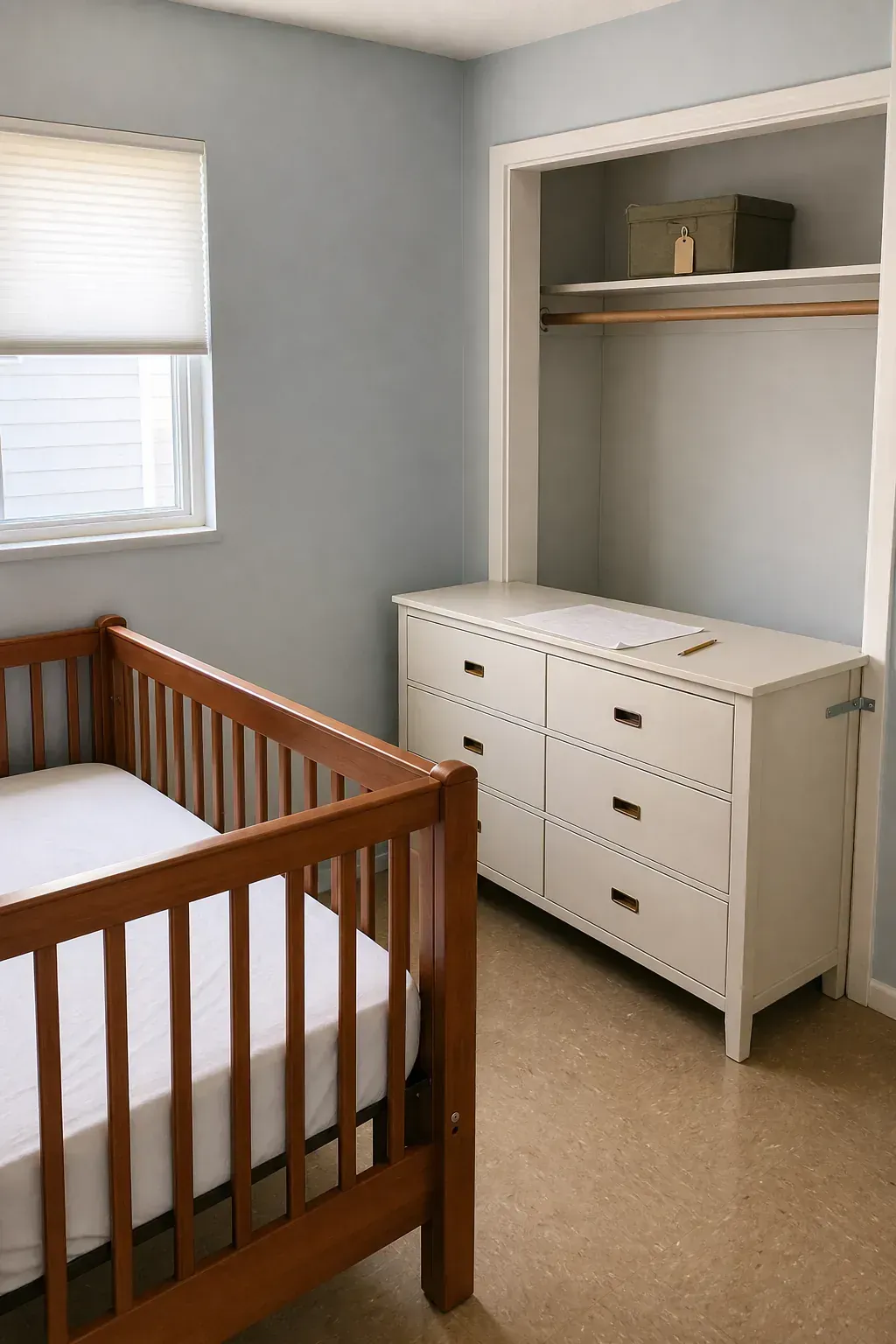
Convert Part of the Closet Into Care Storage
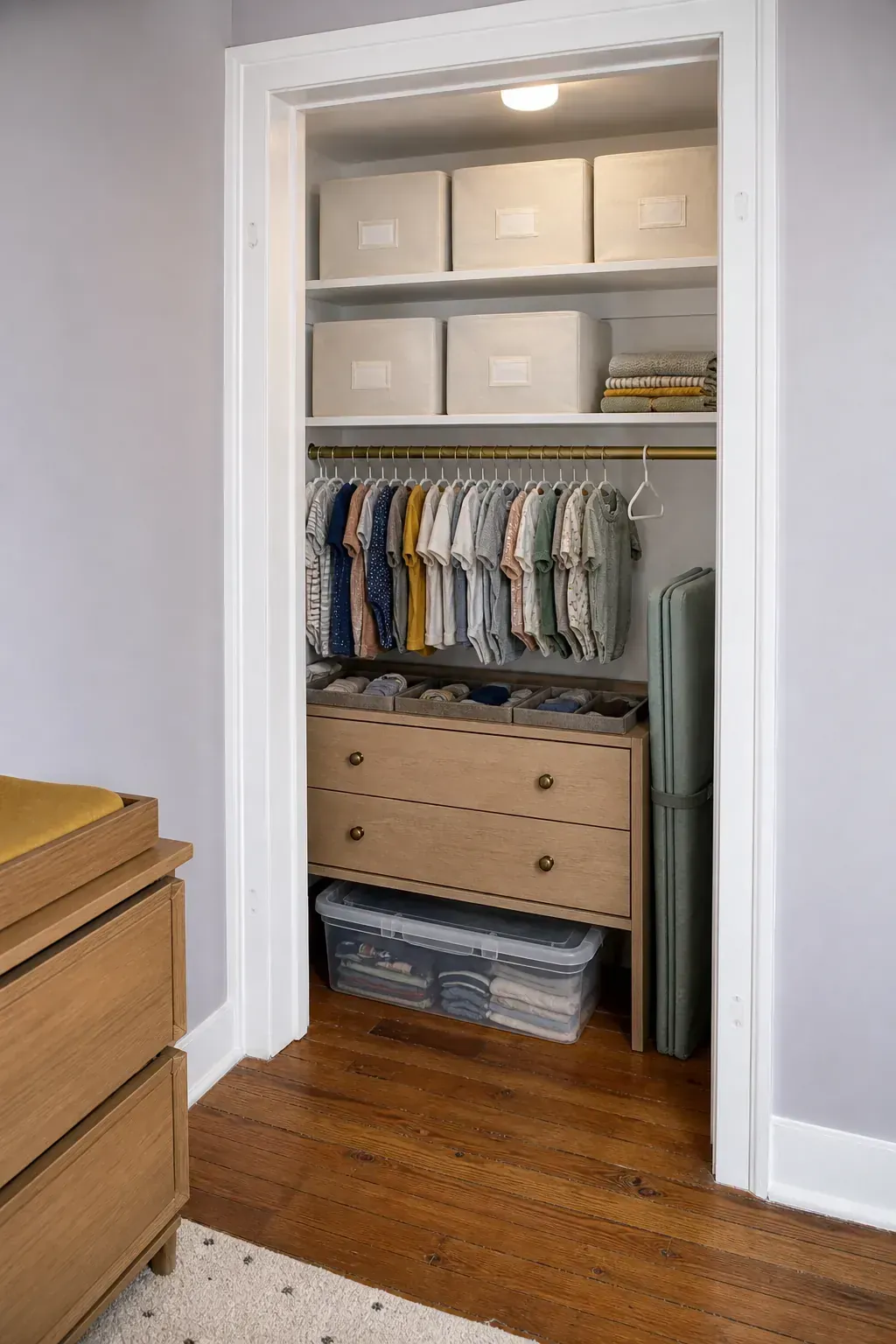
A closet can absorb diapers, linens, and outgrown-size bins so the main room stays calm. Use labeled adult-level shelves for backups and low drawers for everyday clothing. Never place a crib inside an ordinary closet or create a sleep area without confirming ventilation, egress, product instructions, and local safety requirements.
If doors consume floor area, consider removing them only if the opening can be finished safely and hardware is fully dealt with. A simple curtain introduces another cord or fabric near a child, so an open, tidy closet may be the better small-space choice.
Install High Shelves for Adult-Reach Supplies
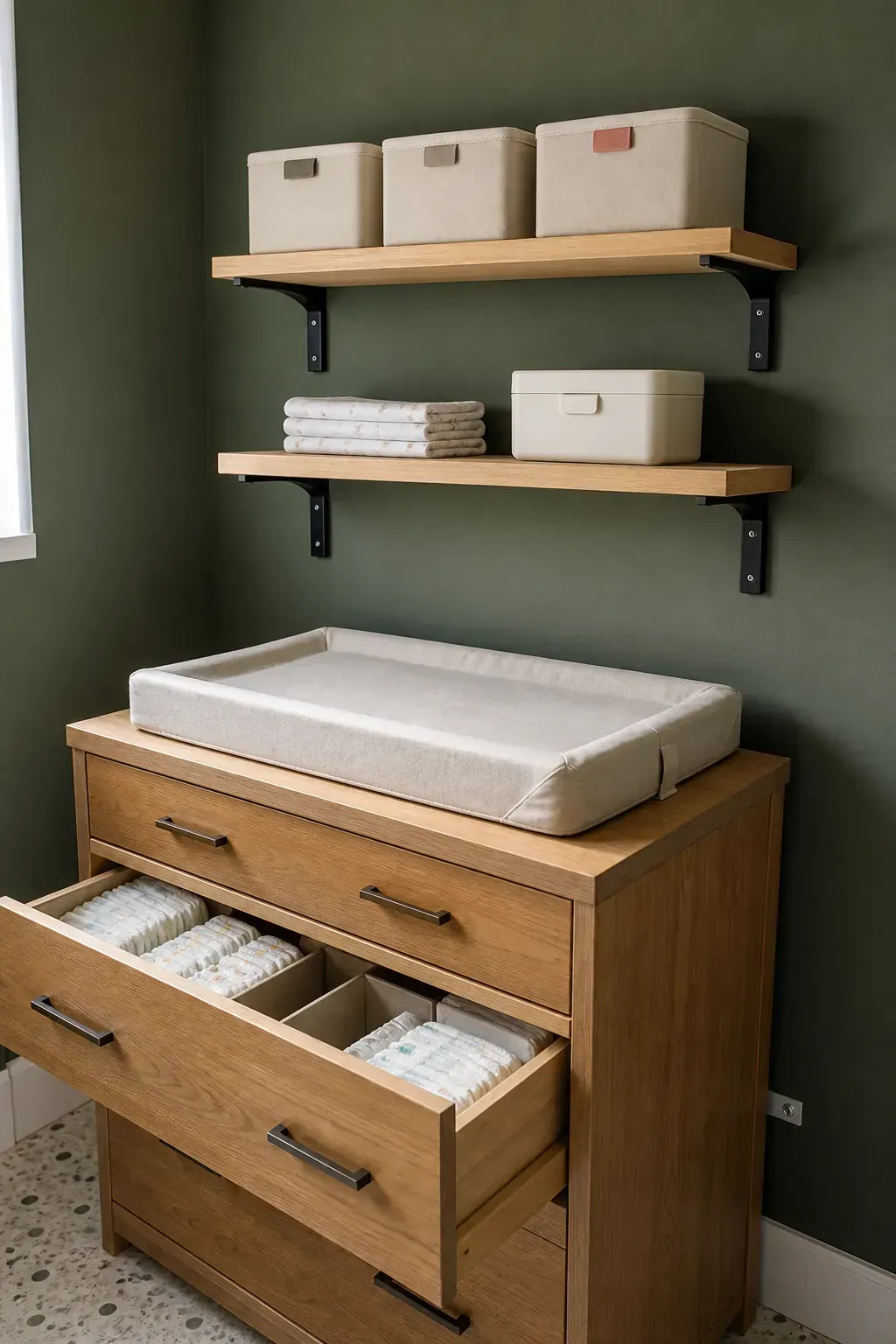
A short run of properly anchored shelving can hold sealed backup supplies without stealing floor area. Place it over a dresser or another adult work zone—not over the crib—and keep heavy, breakable, or hazardous products secured according to their instructions.
Use matching opaque bins for visual quiet, but label them clearly for a tired caregiver. The shelf should not invite climbing as the child grows. Reassess the arrangement before the baby becomes mobile rather than assuming today’s unreachable spot will stay unreachable.
Use a Secure Wall Rail Away From the Crib
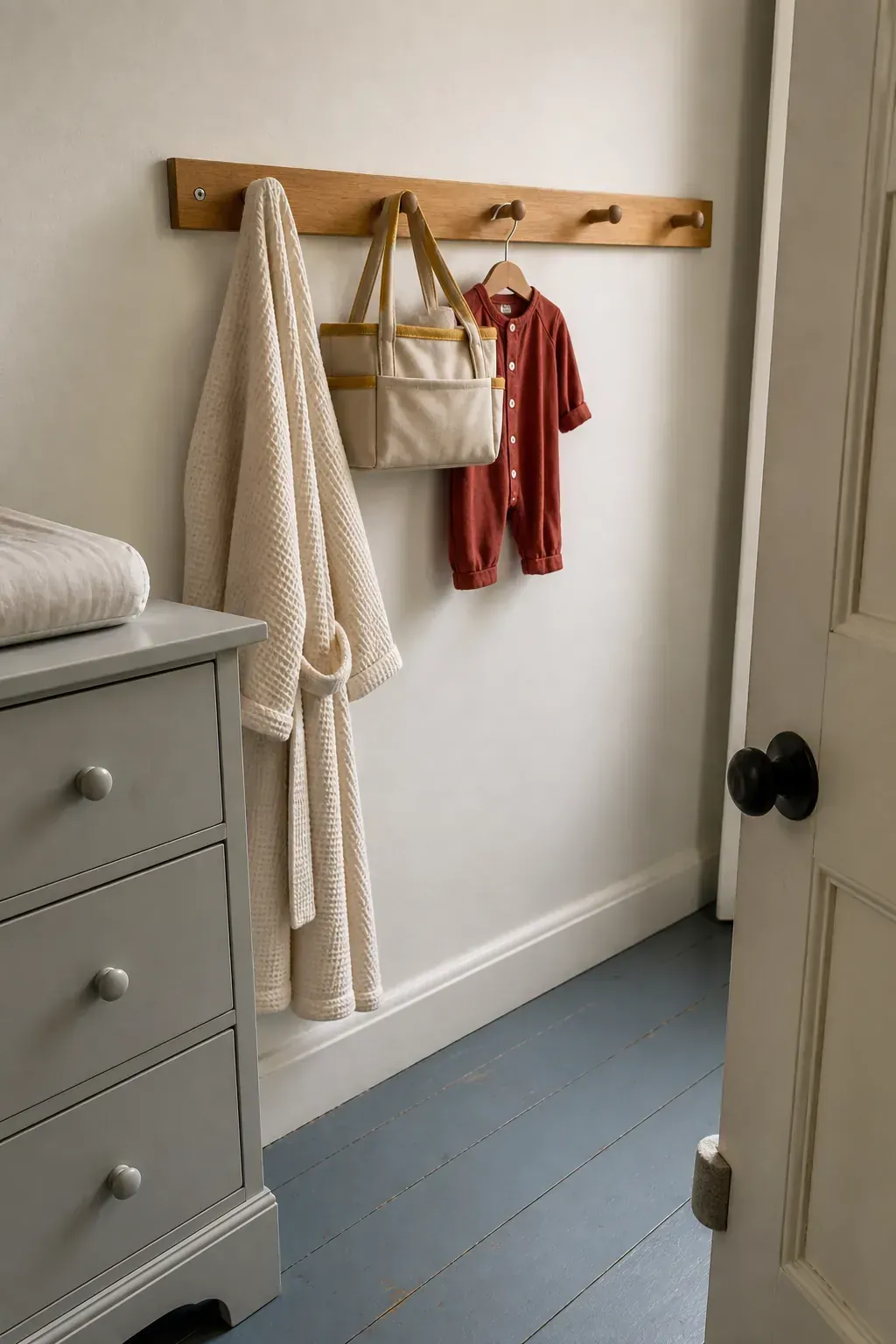
A firmly installed peg rail near the changing zone can hold an adult’s robe, a structured diaper caddy, or tomorrow’s outfit. Keep it well beyond the crib and future climbing reach, and avoid long straps, loops, or dangling cords.
Treat the rail as a controlled landing spot, not vertical clutter. Three useful items are better than ten decorative ones. Check fasteners periodically and move the contents as soon as the baby can pull up, crawl, or reach farther than expected.
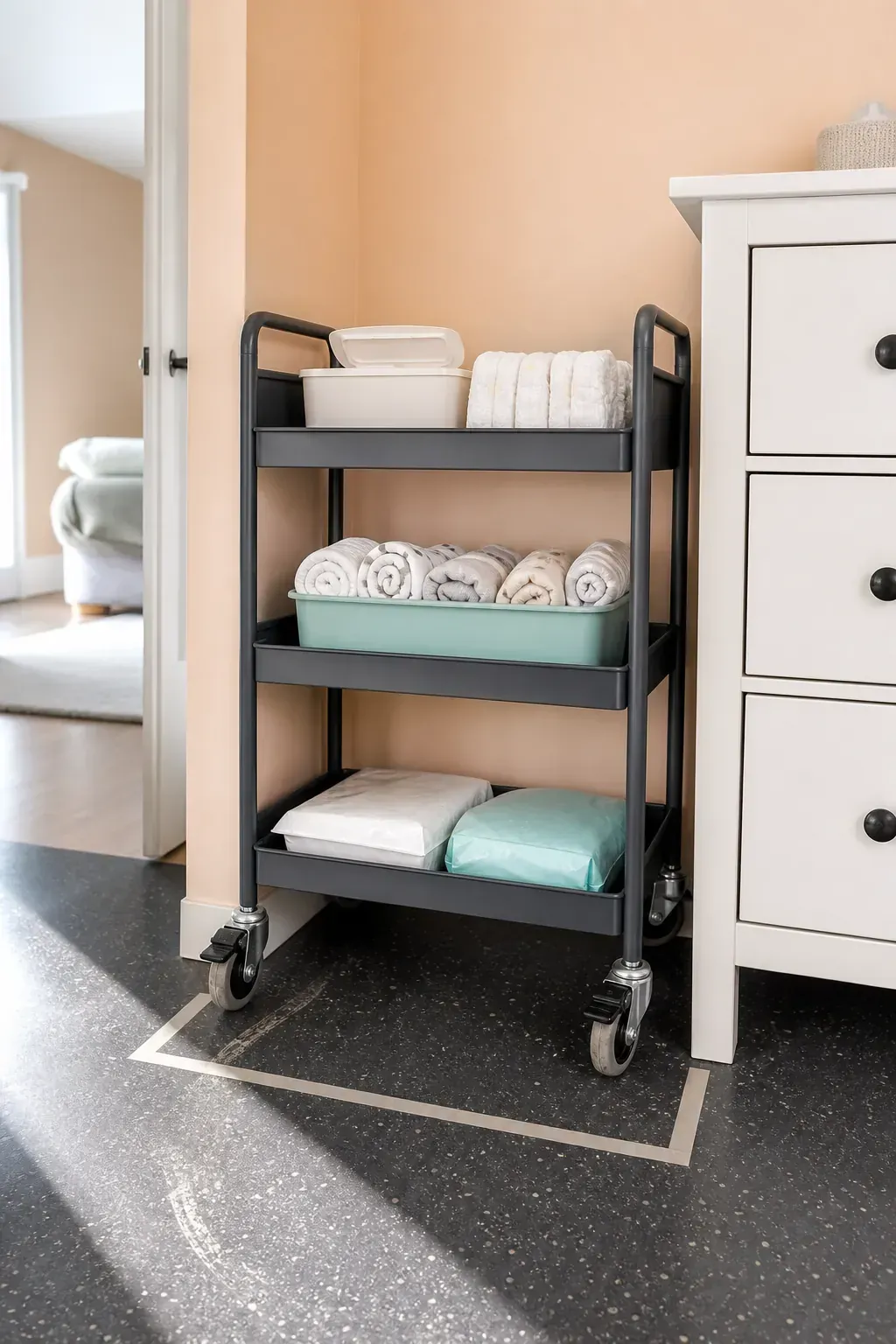
Park a Locking Supply Cart at the Care Zone
A compact rolling cart can serve two care stations, especially when the baby sleeps in the parents’ room first. Choose a stable model with brakes, avoid overloaded top-heavy bins, and park it out of the sleep area and future child reach.
Stock only the current day’s essentials and return it to the same locked position. The cart is useful because it moves; if it permanently blocks a closet, heater, or walkway, it has become another cabinet with worse stability.
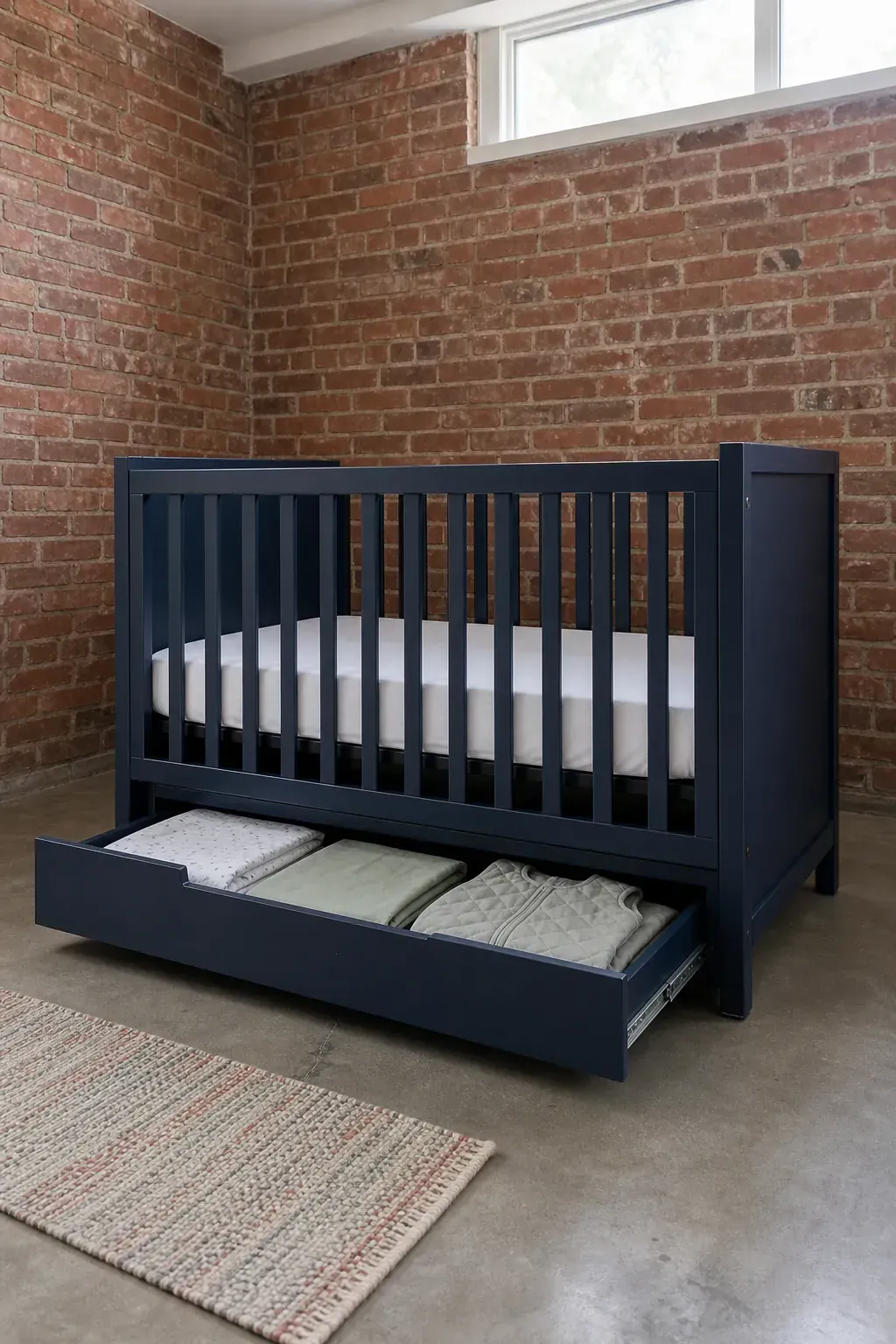
Select a Crib With Manufacturer-Designed Storage
Some cribs include a drawer designed and tested as part of the product. That can be a sensible place for fitted sheets or wearable blankets. Use only the components intended for that exact model; do not slide loose boxes beneath a crib if they interfere with ventilation, hardware, or instructions.
Under-crib storage is best for low-frequency, lightweight items. Daily supplies belong where an adult can reach them without kneeling beside a sleeping baby. Keep the drawer closed so it never becomes a tripping or climbing opportunity.
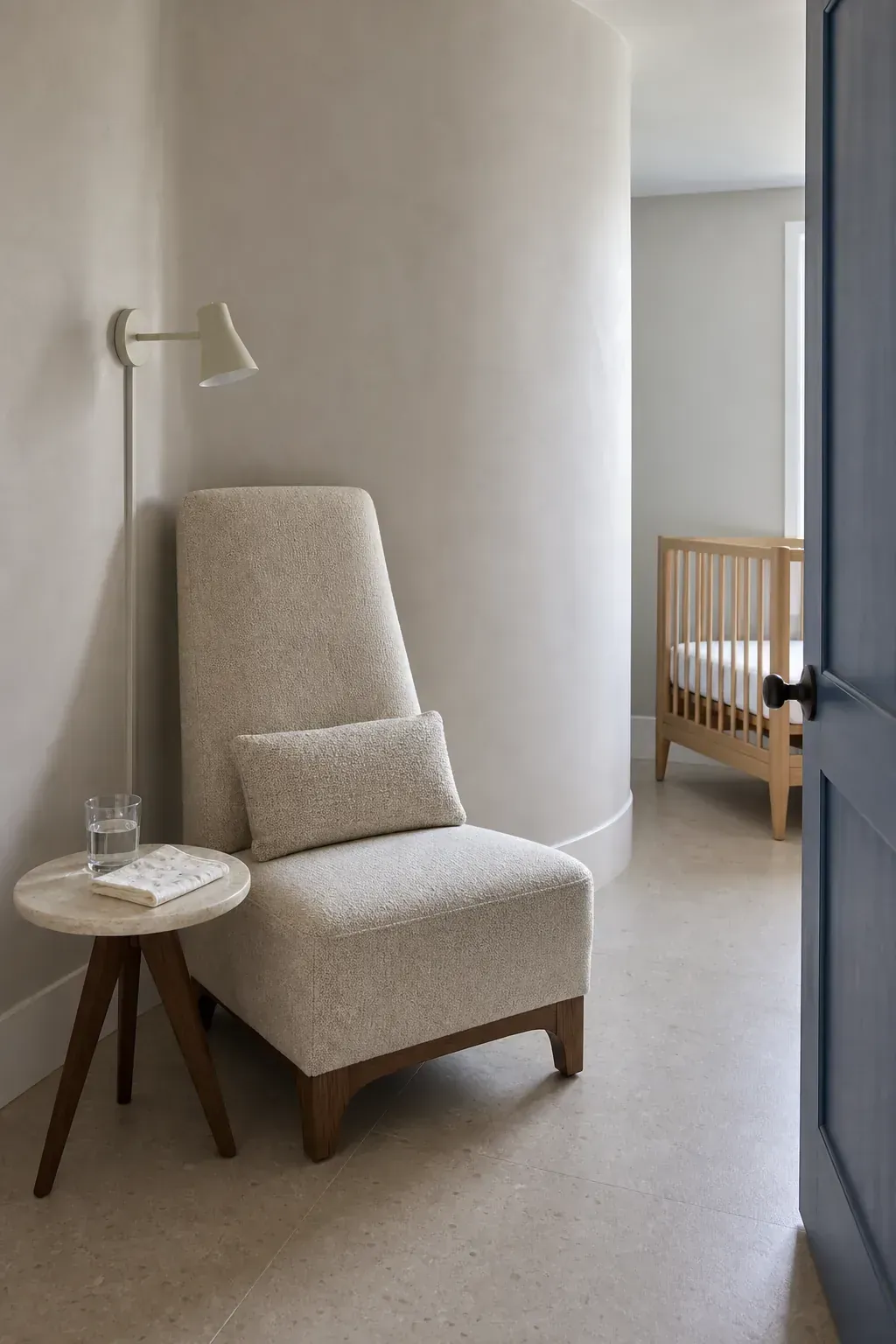
Fit One Supportive Chair Into a Corner
A compact upright chair often fits where a deep glider does not. Test seat height, back support, and the room needed to stand while holding a baby. An armless or narrow-arm design can save inches, but comfort and stability still matter.
Place the chair outside the crib’s clearance zone and keep blankets, pillows, and nursing accessories away from the sleep surface. If the chair pinches the route, move it to the living room; feeding and soothing do not have to happen inside the nursery.
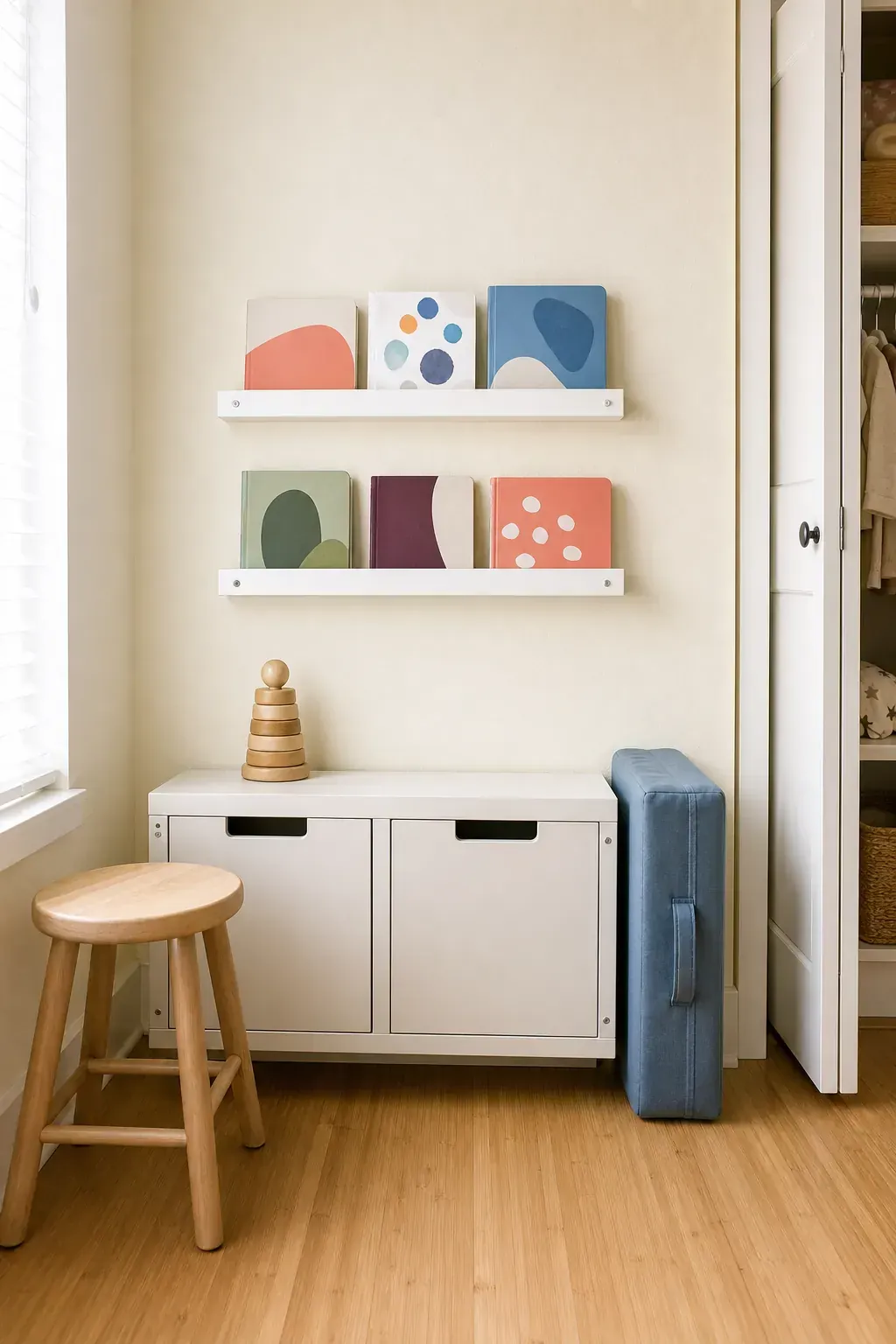
Mount Book Ledges Well Beyond Reach
Forward-facing books add color without deep bookcase furniture. Install ledges securely in an adult reading zone, never above the crib, and keep them beyond the child’s present and near-future reach. Display only a few lightweight board books.
Store the rest in a low anchored cabinet for rotation. Fewer visible covers make the room calmer and reduce dusting. As soon as the ledges become a climbing target, relocate the books and reassess the hardware.
Choose Cordless Window Coverings
Light control can improve naps, but cords near a crib are a serious hazard. Choose a cordless product suitable for the window, install it correctly, and keep the crib away from window coverings, radiators, and direct drafts.
A well-fitted shade is more efficient than layers of loose fabric. Check that the window remains usable for ventilation or emergency egress where required. Blackout does not mean sealing a room or ignoring temperature.

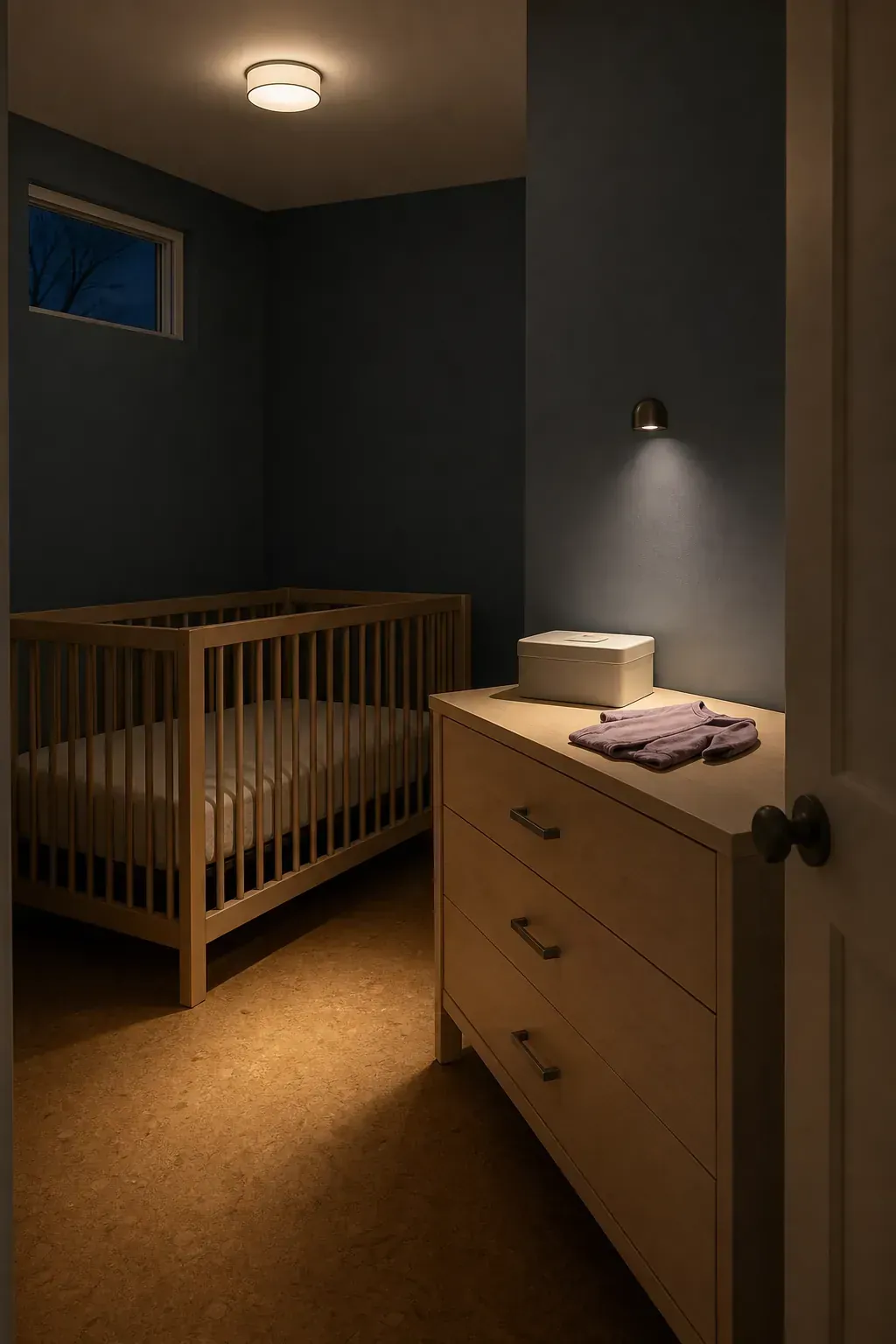
Layer a Dim Task Light With Soft Ambient Light
A dimmable ceiling fixture provides general visibility; a shielded task light at the changing area handles detailed care. Place lamps and monitor cords where a child cannot reach them, and follow product guidance for mounting and distance.
Warm, low light can make nighttime care less jarring, but it still must be bright enough for safe movement. Test the route with the door closed and all drawers open. Eliminate glare rather than relying on decorative strings of lights.
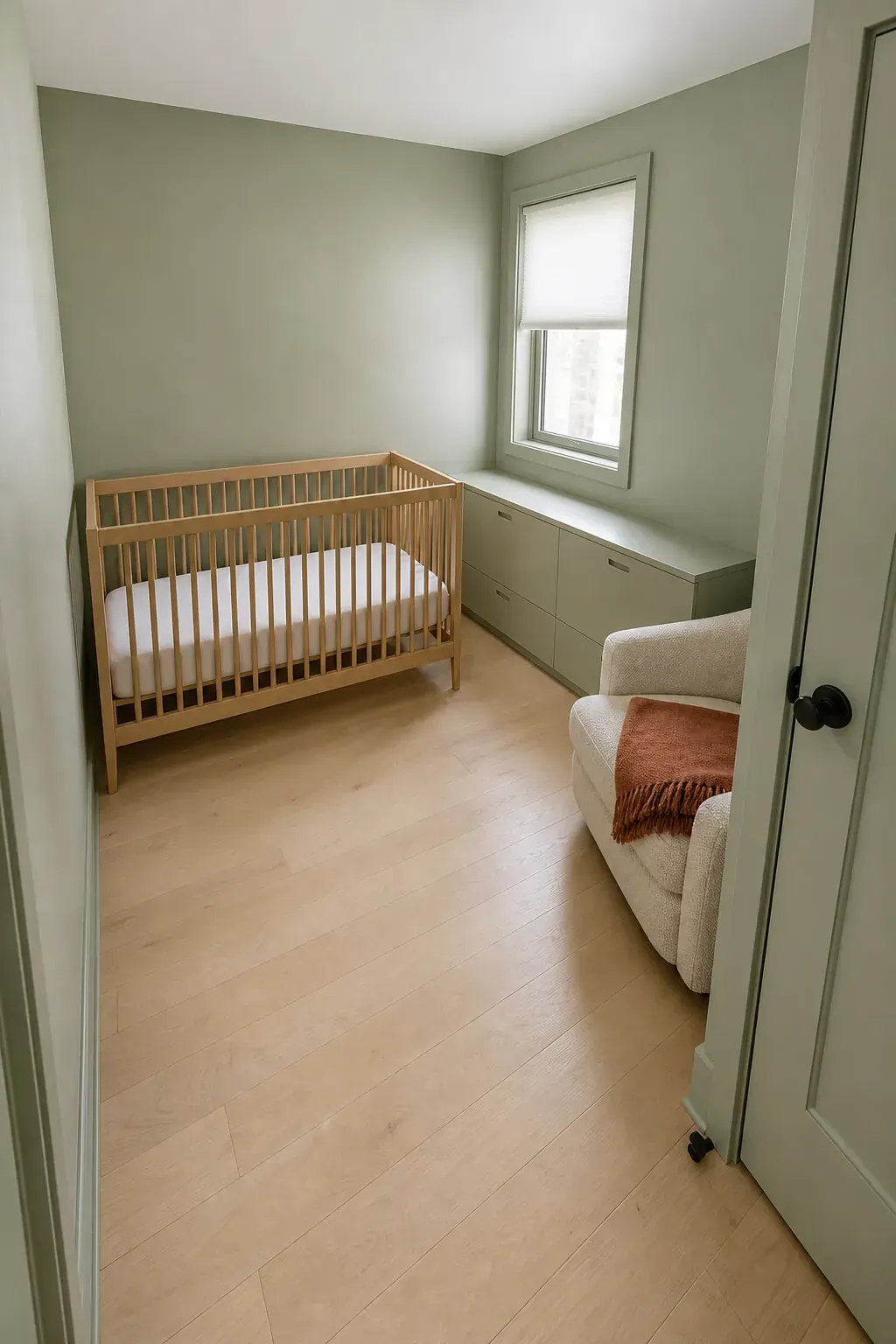
Use One Continuous Light Color
Painting walls, trim, and shallow built-ins in closely related light tones reduces visual breaks and helps an awkward micro nursery feel calmer. Light color does not have to mean stark white; muted clay, pale blue, soft sage, and warm gray can all work.
Choose a washable low-odor interior finish appropriate to the room, ventilate during work, and allow proper cure time before use. Let textiles provide a few controlled accents rather than dividing every wall into a different theme.
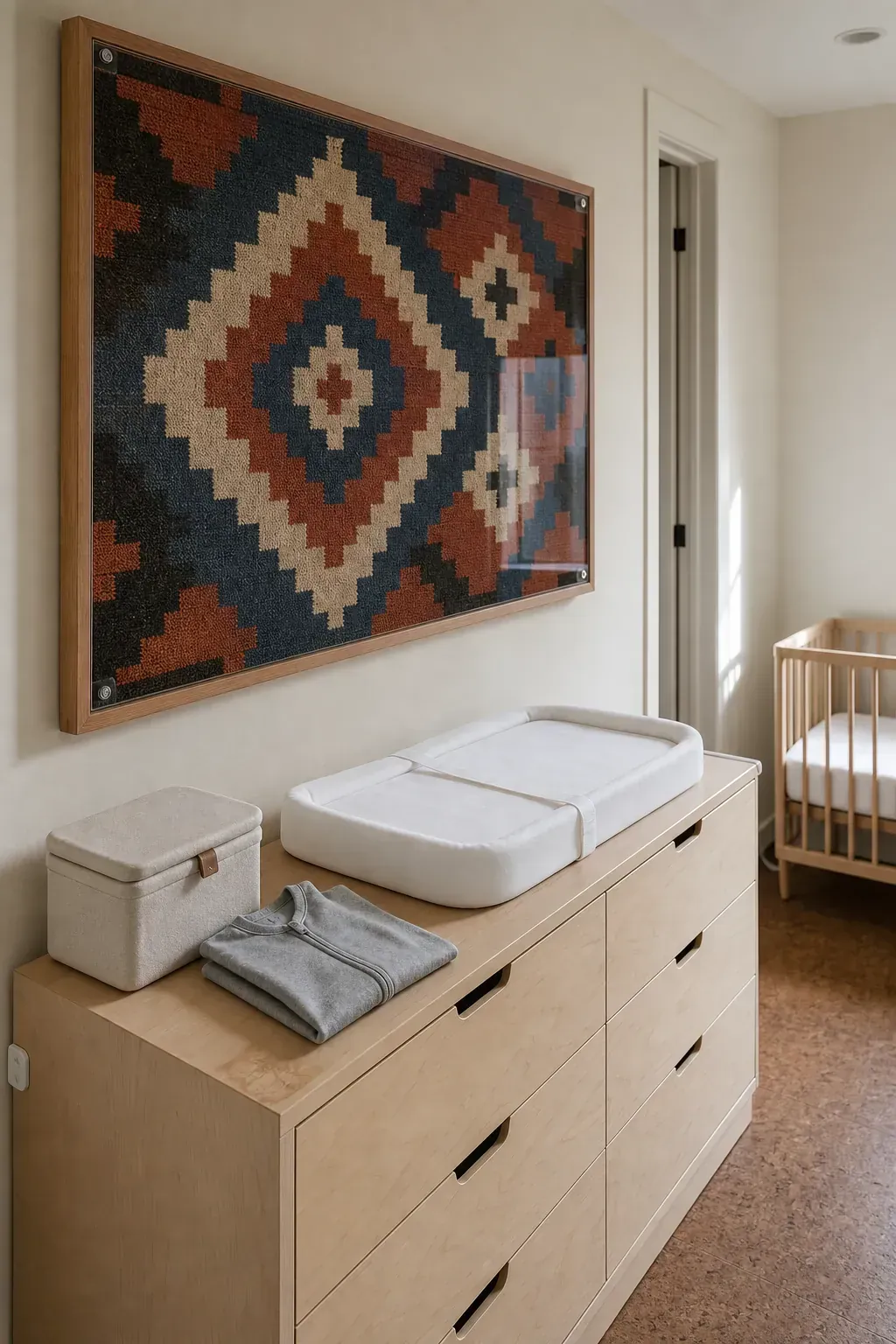
Add One Secure Tactile Wall Feature
Instead of filling every surface, choose one securely installed visual feature in the adult care zone: a woven textile panel behind acrylic, a painted geometric arch, or a shallow wood relief with no detachable parts. Keep it away from and never directly over the crib.
One deliberate feature gives a unisex nursery identity without adding furniture. Check mounting regularly and remove anything that becomes reachable, loose, or damaged as the child grows.
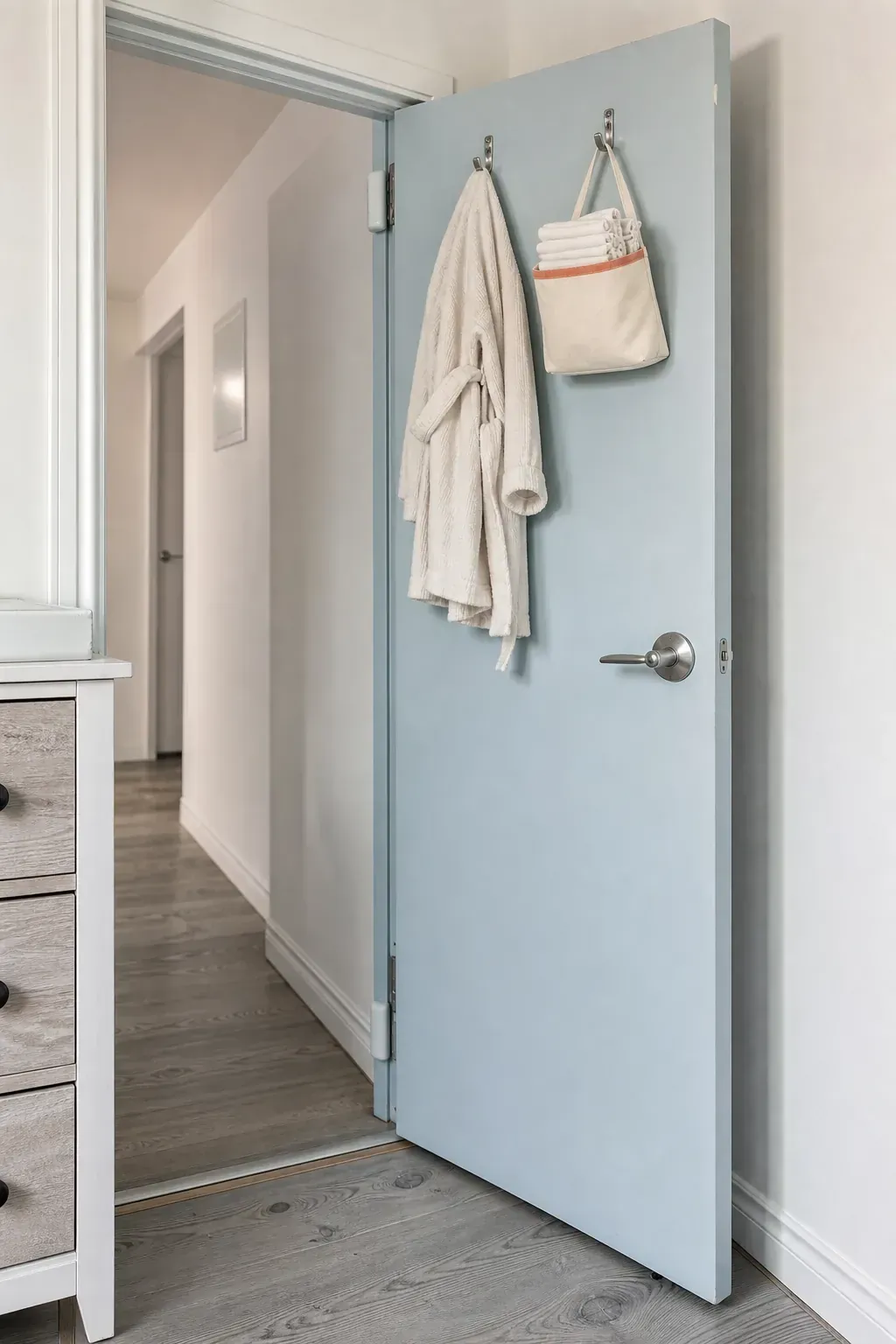
Use the Back of the Door Carefully
An over-door organizer can hold adult backup supplies only if the door, hardware, product instructions, and room layout make it safe. It must not interfere with closing, emergency access, fingers, or the baby’s reach.
A better option for many rooms is a few high, firmly fixed hooks on the adult side of the door. Avoid long straps and heavy hanging loads. If the door becomes noisy or difficult to operate, reclaim it as plain circulation space.
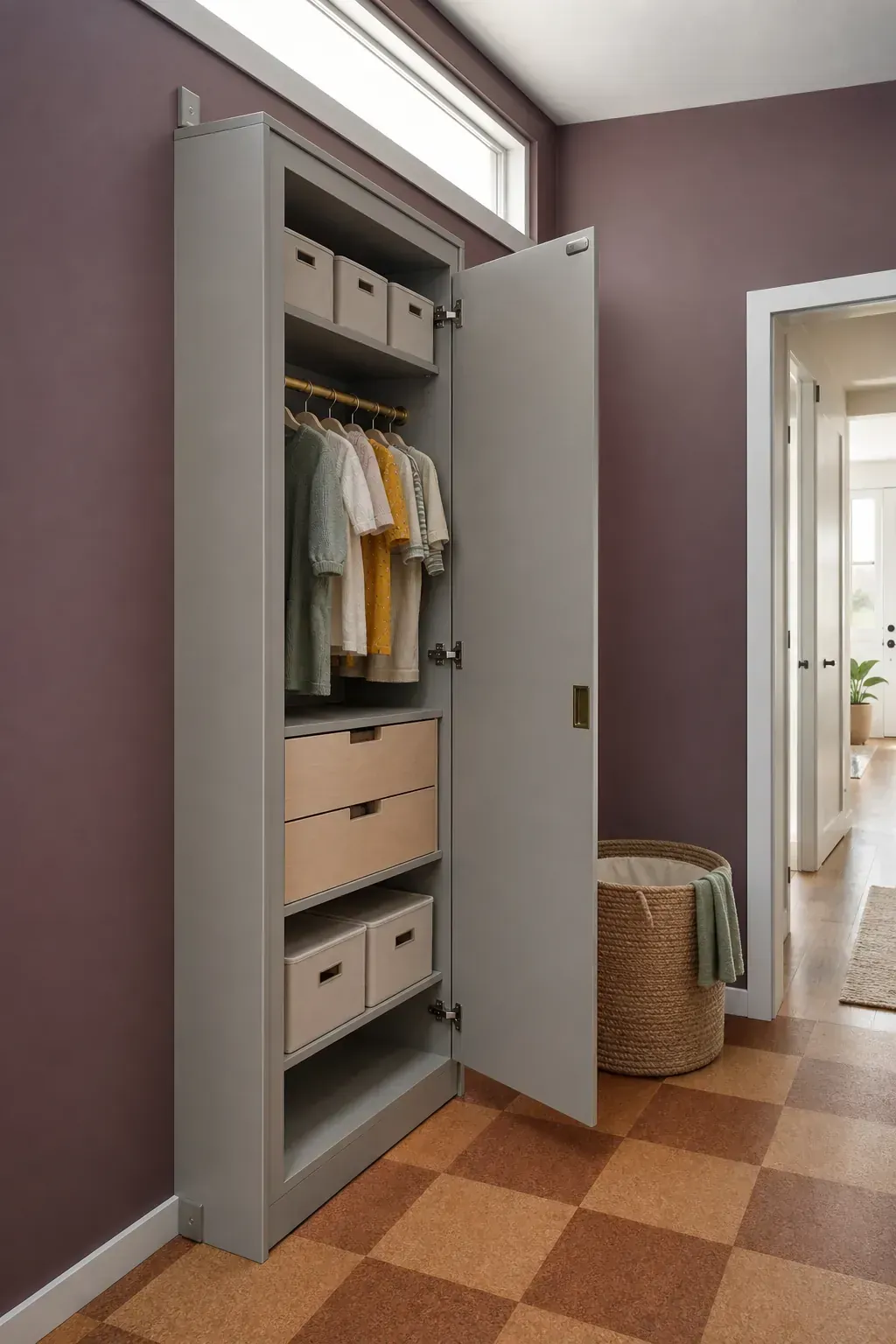
Build a Shallow Anchored Wardrobe
Where there is no closet, a shallow wardrobe can use wall height without projecting as far as a standard cabinet. Anchor it securely and specify stable doors, safe hardware, and ventilation appropriate to the contents.
Fit short baby clothes on one rail and use drawers or bins below. Adjustable interiors help the piece evolve. Keep the top closed rather than displaying heavy boxes that could fall or tempt climbing.
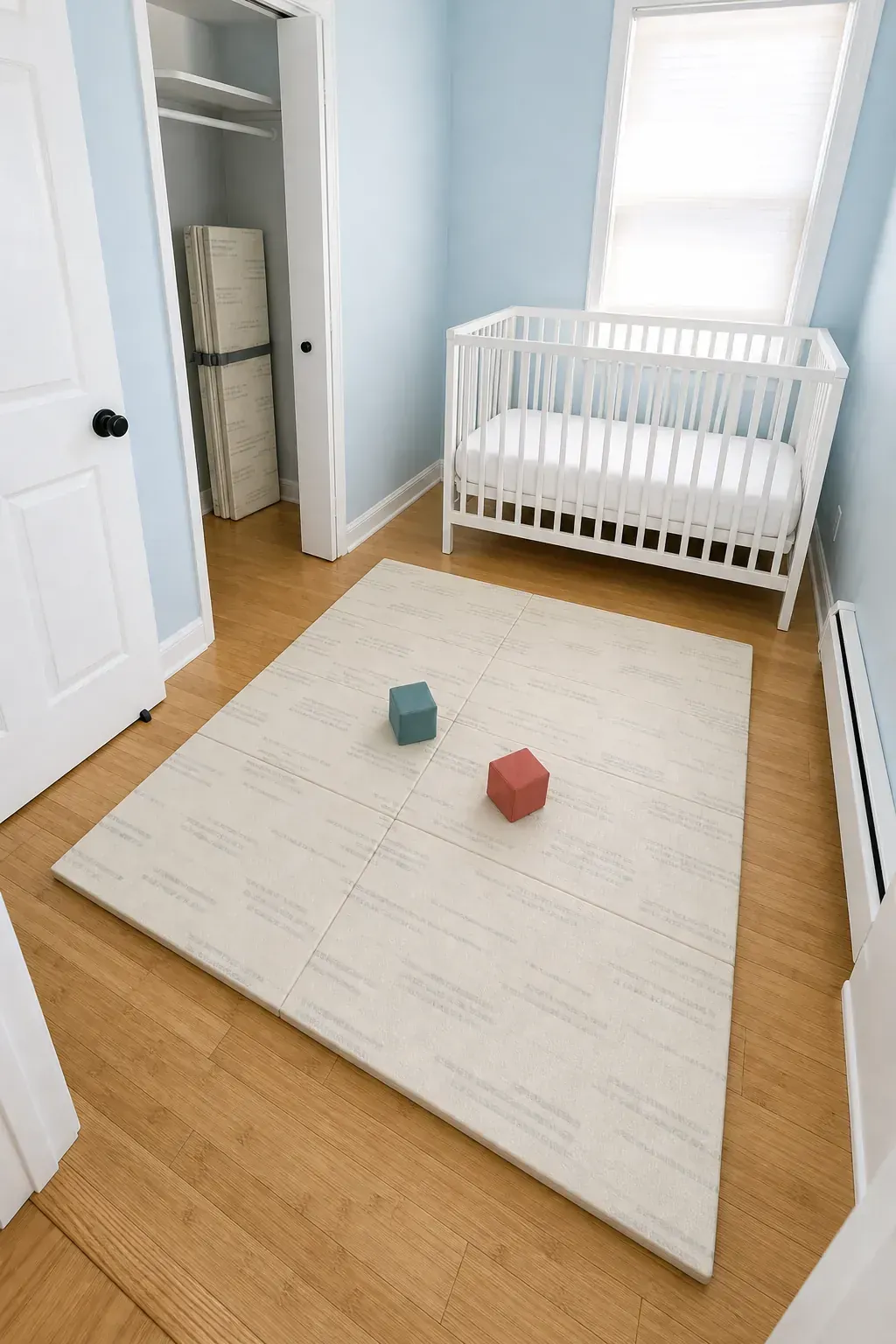
Store a Folding Play Mat Outside Sleep Time
A folding floor mat can create a temporary supervised play zone, then slide into a closet when the room needs a clear lane. Use it on a clean flat floor according to its instructions and treat it as play equipment, not an infant sleep surface.
Choose a size that can open completely without touching a heater or blocking the door. The ability to remove it is the design advantage; permanent floor padding often consumes the flexibility a tiny room needs.
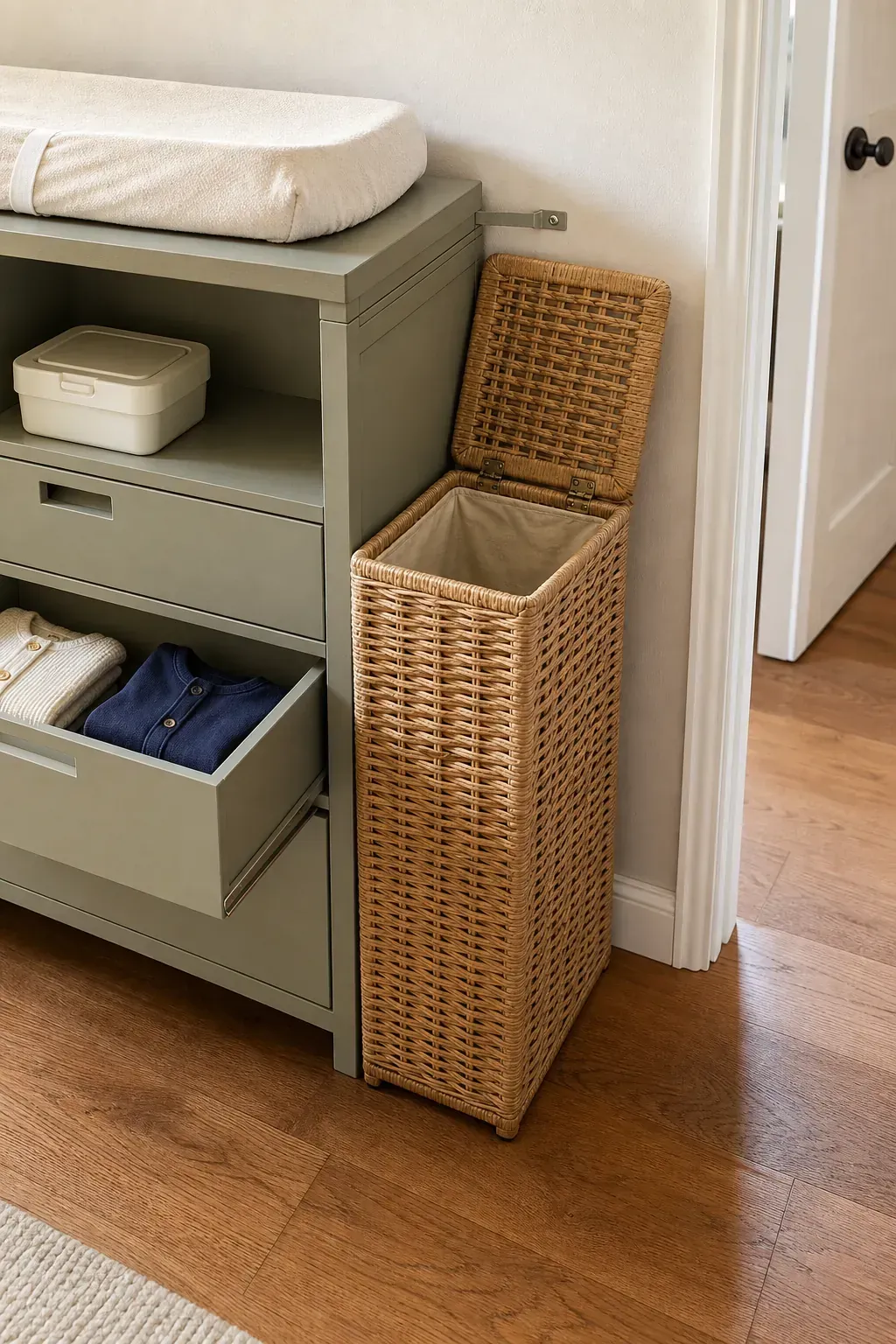
Tuck a Narrow Hamper Beside the Dresser
A tall narrow hamper uses an awkward gap and keeps soiled clothing out of open baskets. Choose a stable, ventilated design without long drawstrings and position it where an adult can use it while keeping one hand on the baby.
Empty it often; capacity encourages accumulation. If the lid or liner becomes a play hazard as mobility increases, change the setup. A small nursery succeeds through frequent resets, not maximum storage density.
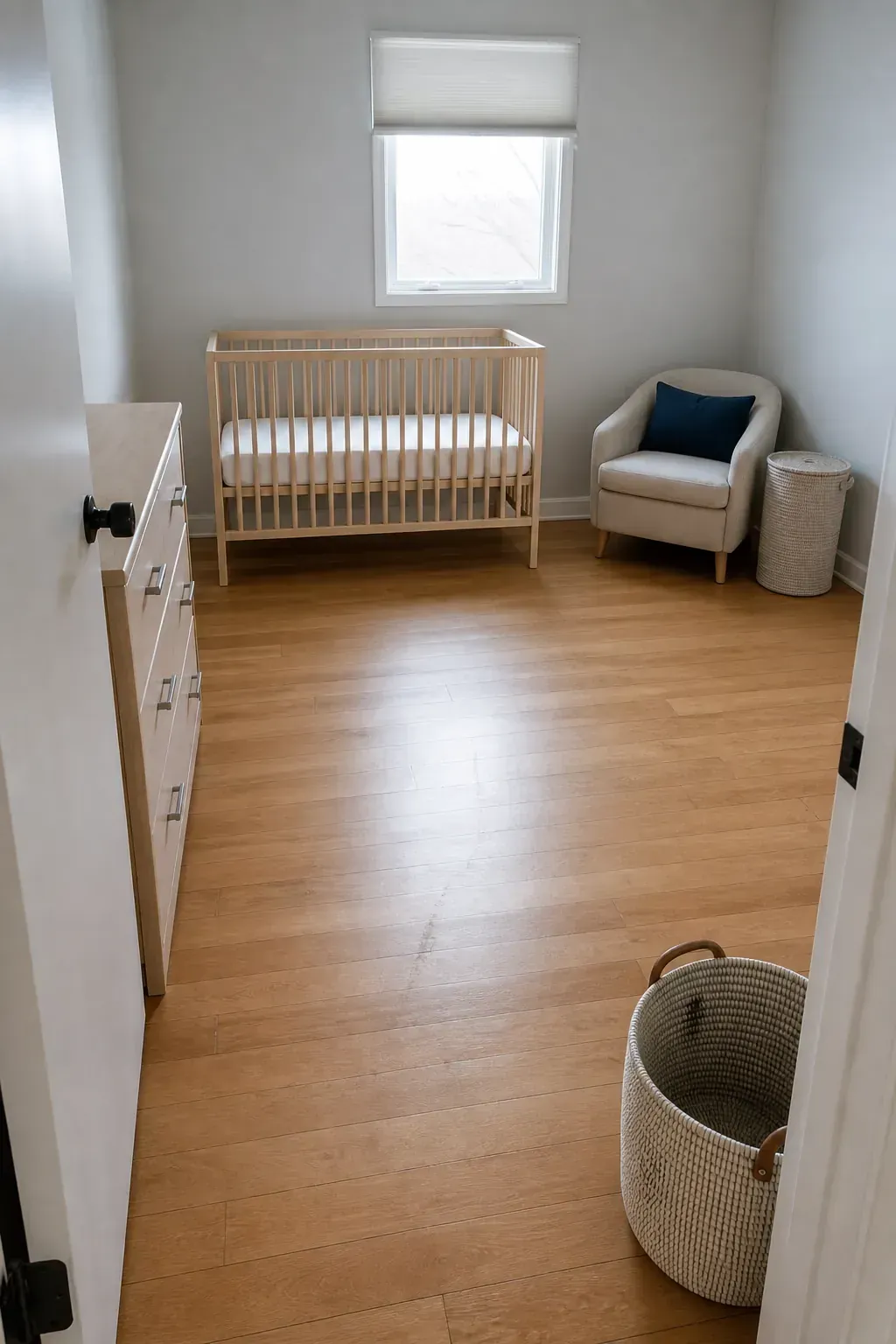
Keep the Center of the Floor Clear
Furniture arranged around the perimeter can leave one useful patch of open floor for dressing, supervised play, or setting down a laundry basket. Do not fill that patch simply because a small rug or ottoman fits.
Walk the room carrying a weighted bundle. Open every door and drawer. If the route requires twisting, edit again. Clear circulation is storage for movement, and it is one of the most valuable assets in a small nursery room.
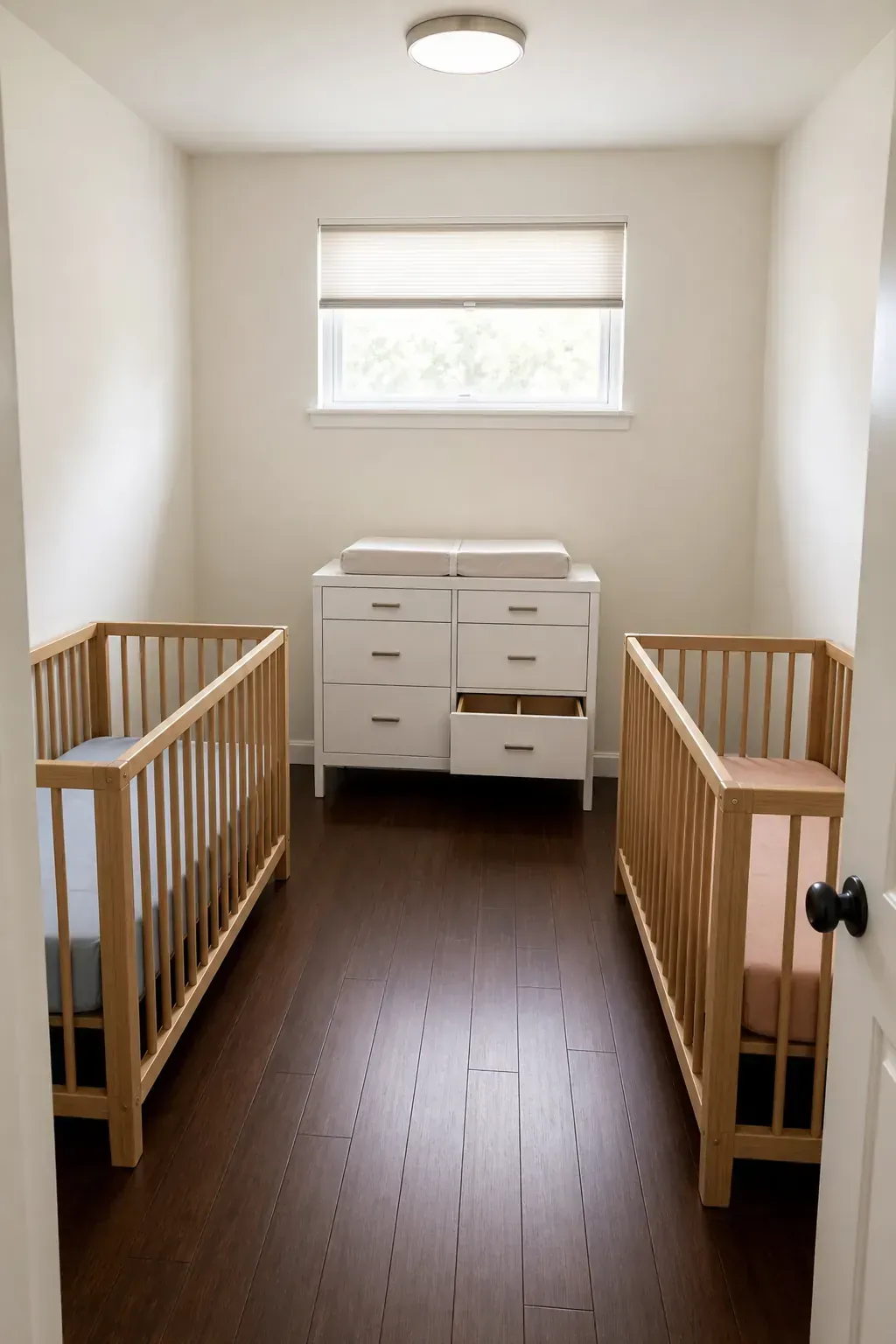
Create a Two-Zone Shared Nursery
When siblings or twins share a small room, give each sleep product its required clearance and keep one shared care station rather than duplicating every dresser and shelf. Never place two babies in one sleep space unless that product is specifically intended and approved for the arrangement.
Use matching bins or drawer halves to simplify sorting. If a feeding chair prevents safe clearance, relocate it. The room’s capacity is set by safe sleeping and movement, not by the number of matching furniture pieces.
Plan the Toddler Transition Before Buying Furniture
Sketch the next version of the room before committing to a crib, dresser, and chair. Can the dresser remain? Where will a toddler bed fit? Which anchored storage will still be safe and useful? A transition plan prevents a small room from becoming a holding area for outgrown pieces.
Convertible furniture is valuable only when you will use the conversion and have space for its future footprint. Record hardware and instructions in a labeled bag so the promised flexibility is not lost before you need it.
Let the Bare Crib Be the Calmest Place
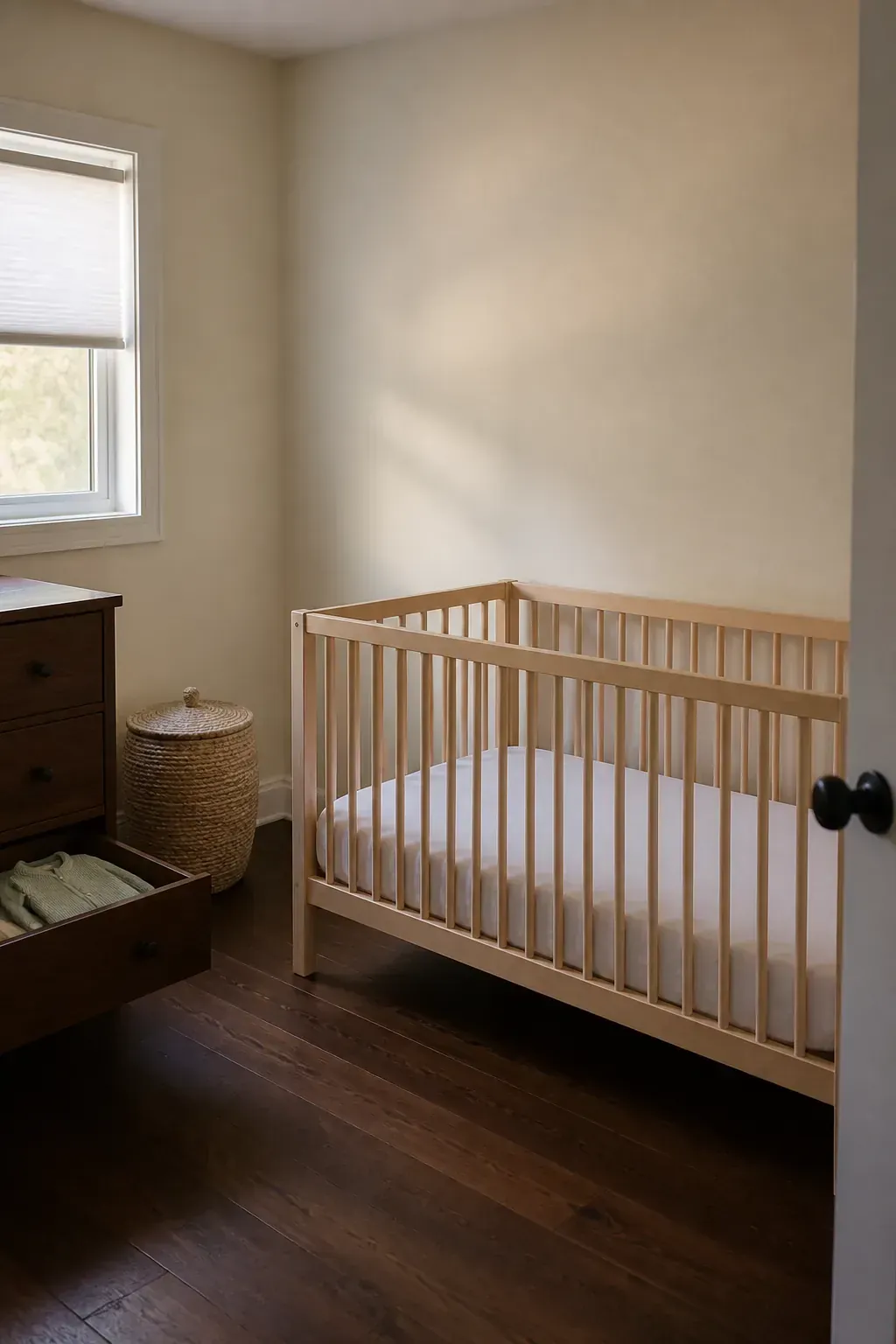
The safest-looking nursery photographs are not always the safest rooms. Keep the crib visually quiet and physically bare: a firm flat mattress with a fitted sheet, with the baby placed on their back for sleep. Put quilts on a wall only when securely mounted away from the crib, store toys elsewhere, and use wearable sleep clothing when appropriate rather than loose bedding.
That emptiness is not unfinished design. It is the point around which every other decision should organize itself. When the sleep space is safe, the route is clear, furniture is anchored, and daily supplies have disciplined homes, even a tiny nursery can feel settled.