
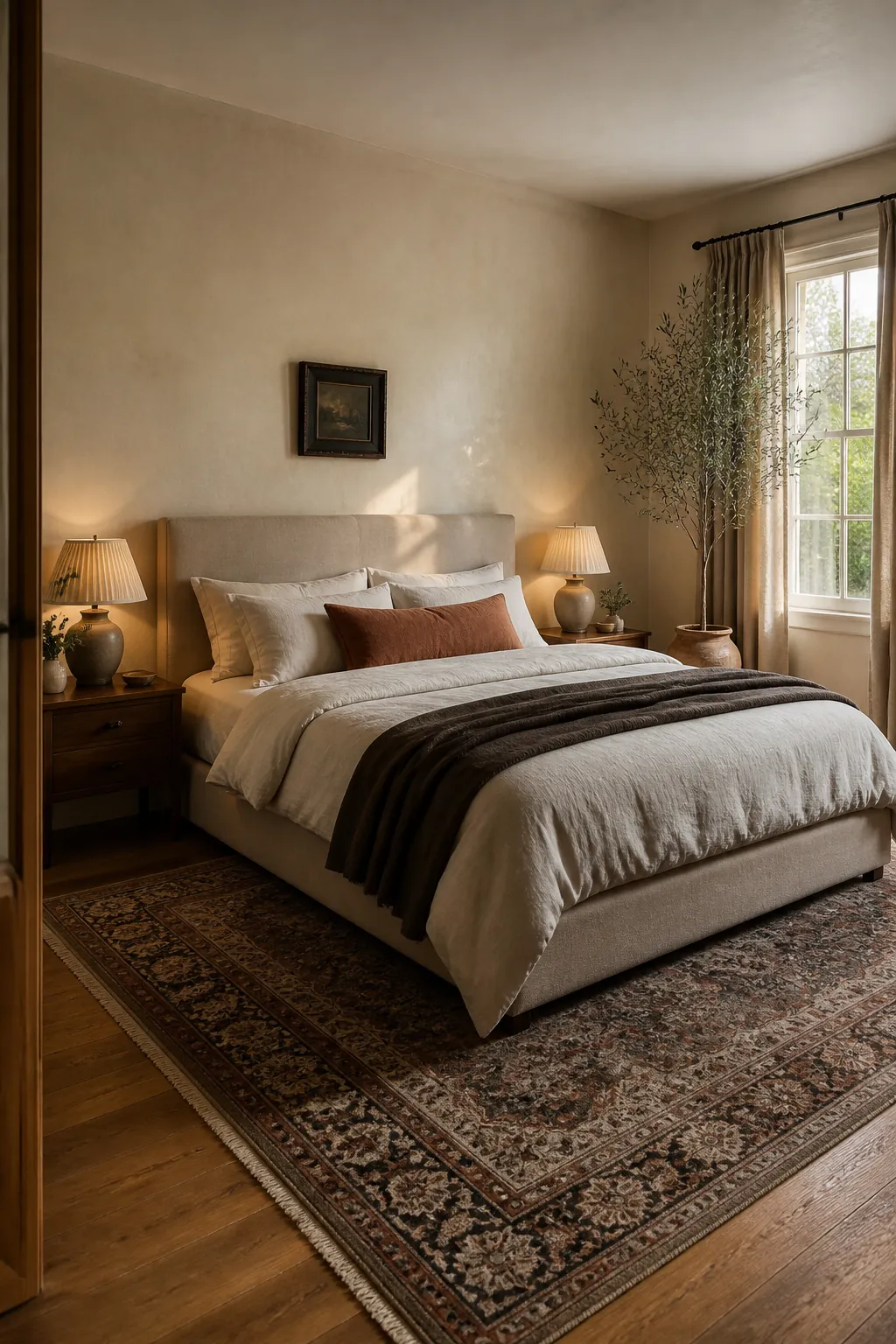
A beige bed frame is easy to buy and surprisingly easy to style badly. When the carpet, wall, bedding, and upholstery all land on the same pale note, the bed can look oversized and the room can feel more like an unfinished hotel than a retreat. The answer is not necessarily brighter color. It is to give the eye contrast, texture, scale, and a clear focal point.
Use the bed as the calm center, then build outward with deliberate differences. These ideas work for cream and beige bedrooms, modern beige bedrooms, small rooms, and awkward attic layouts.
Start by identifying the beige undertone
Look at the frame in daylight and beside plain white paper. Beige that leans yellow or peach is warm; beige that appears gray, mushroom, or slightly green is cool. Several almost-matching neutrals can look accidental when their undertones fight.
For warm beige, repeat cognac, walnut, rust, clay, olive, or creamy white. For cooler greige, try charcoal, weathered oak, muted blue, black, and crisp off-white. The neutrals need not match, but they should feel related. Check samples in morning, afternoon, and lamplight before committing.

Layer the bed instead of matching it
The quickest way to flatten a beige bedframe bedroom is one matching bedding set. Build layers with distinct weights: smooth cotton sheets, a lightly rumpled linen duvet, two structured shams, one lumbar cushion, and a throw with visible weave. Keep the pillow count practical.
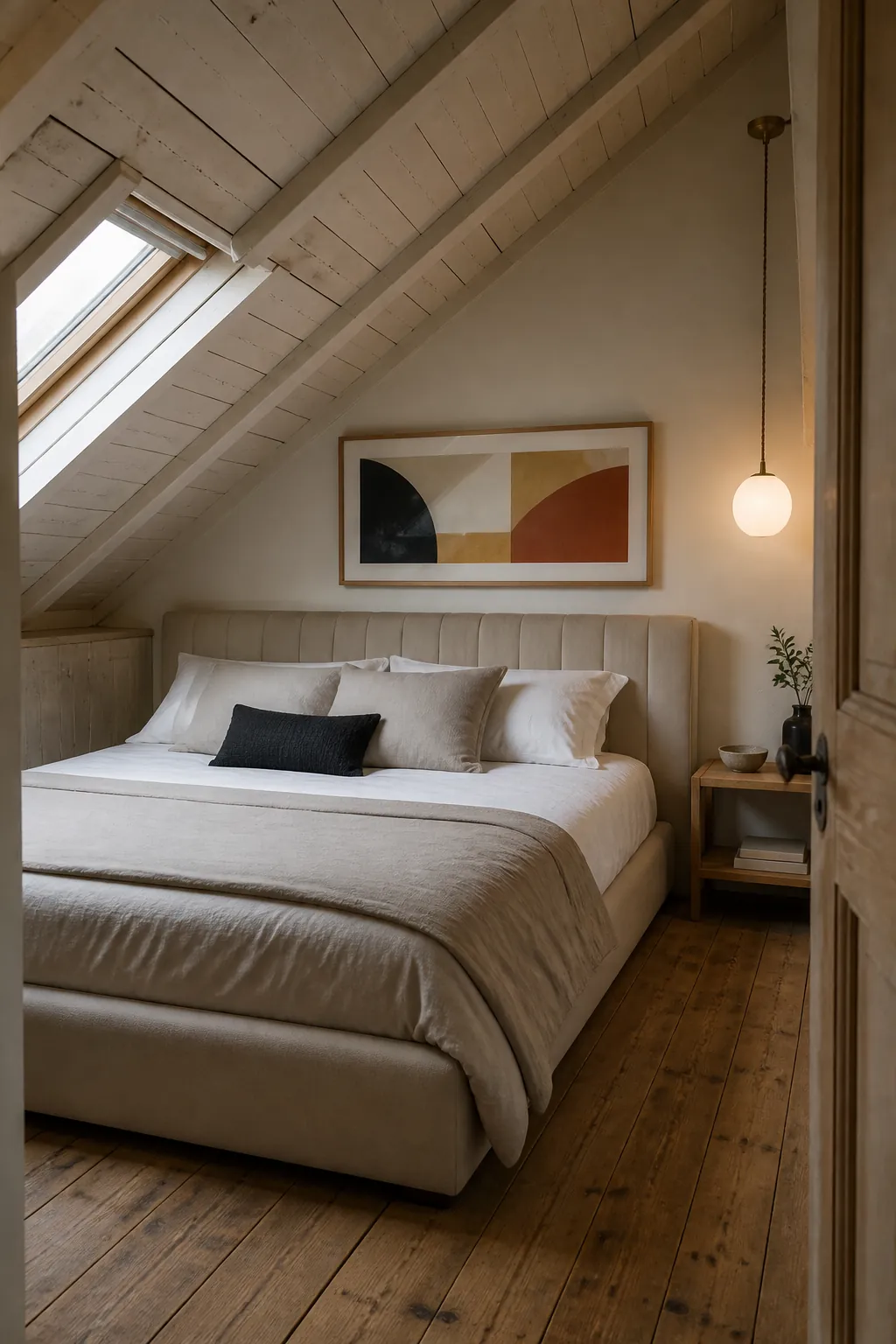
A useful formula is two light neutrals, one darker anchor, and one restrained accent. Ivory sheets and an oatmeal duvet can sit behind a chocolate lumbar pillow and muted terracotta throw. For an entirely cream and beige bedroom, make the contrast tactile: bouclé against linen, ribbed cotton beside velvet, and wool over a smooth coverlet.

Ground a pale bed with the right rug
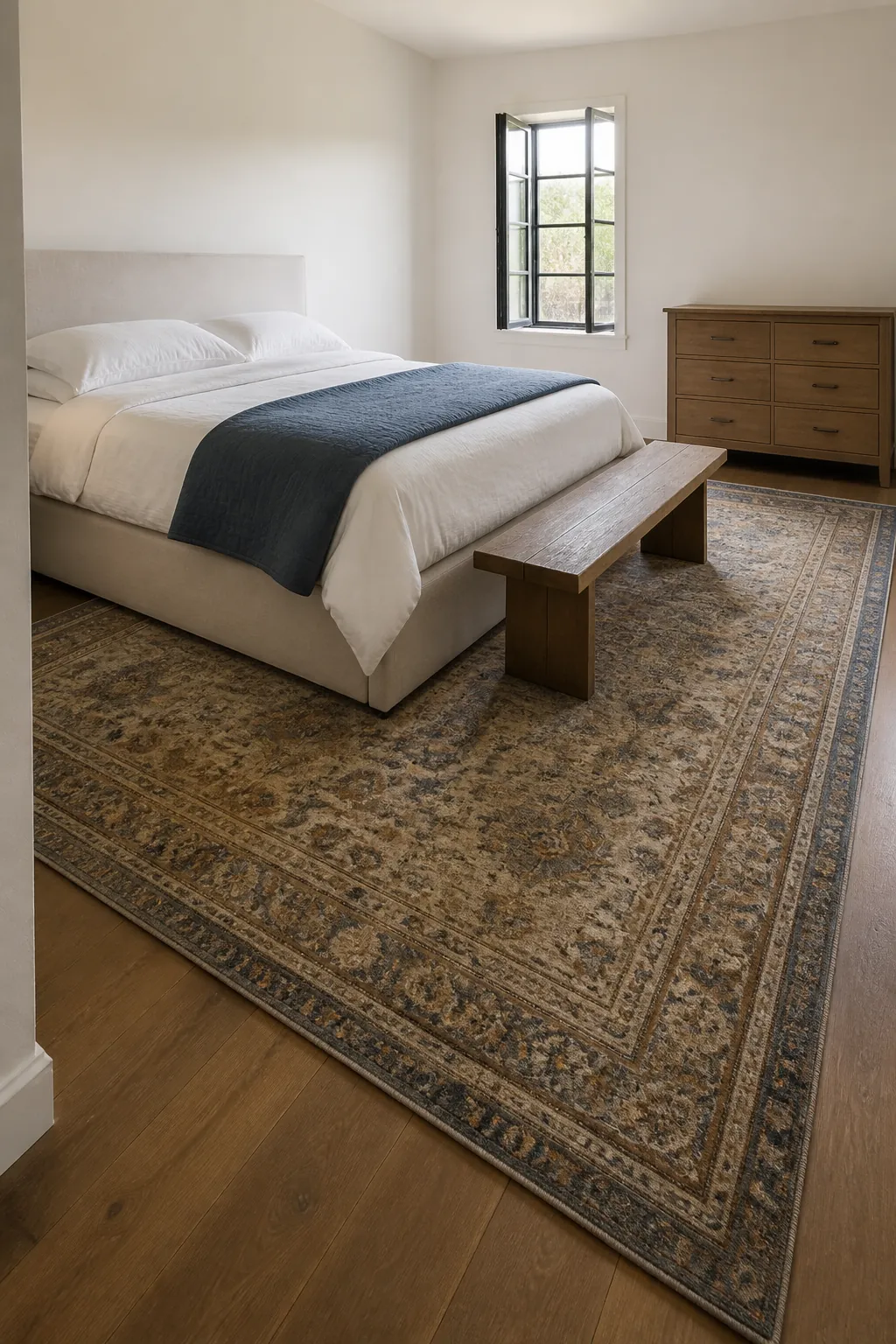
If the frame sits on beige carpet, a rug can still help. Choose a low-contrast pattern with enough dark detail to define the bed. On wood, use a rug that extends beyond both sides and the foot. A tiny rug makes a substantial upholstered frame look larger.
Try faded tobacco and blue, olive and sand, charcoal linework on ivory, or quiet brown checks. The rug should create a base, not compete with the headboard. Tape its outline on the floor before ordering; the bed and nightstands should read as one connected zone.
Choose nightstands and lamps for visual weight
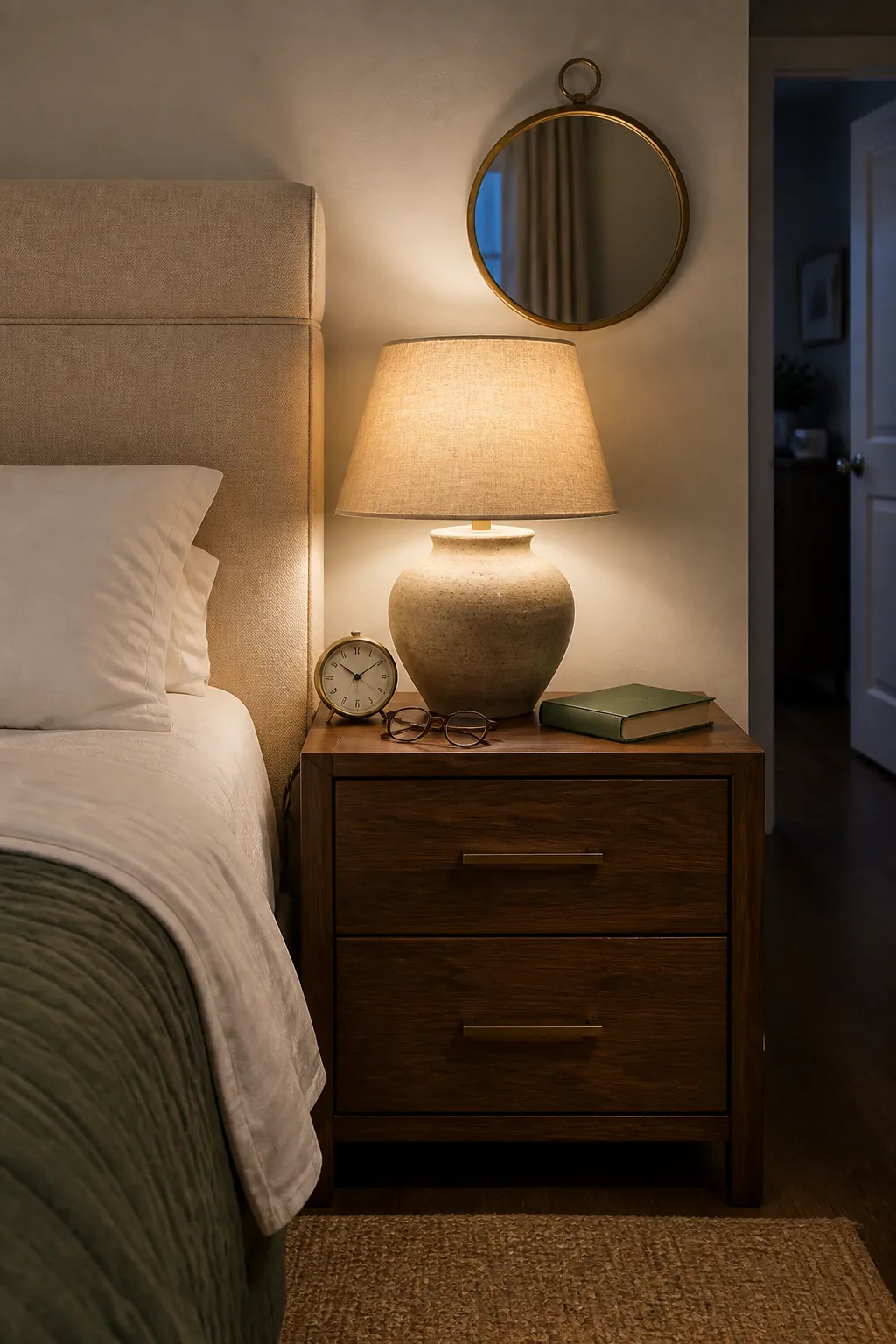
A tall, wide headboard can dwarf narrow nightstands and tiny lamps. Aim for bedside surfaces close to mattress height and wide enough to balance the frame. Walnut, painted olive, or black metal adds structure; pale ash keeps a small room airy when the rug supplies contrast.
Lamp shades should be generous and bulbs warm. Cool bulbs often turn beige upholstery gray and cream bedding sterile. In a tight room, sconces free the surface, but align them with how you sit and read. Function is part of a room looking finished.
Add color in a repeatable thread
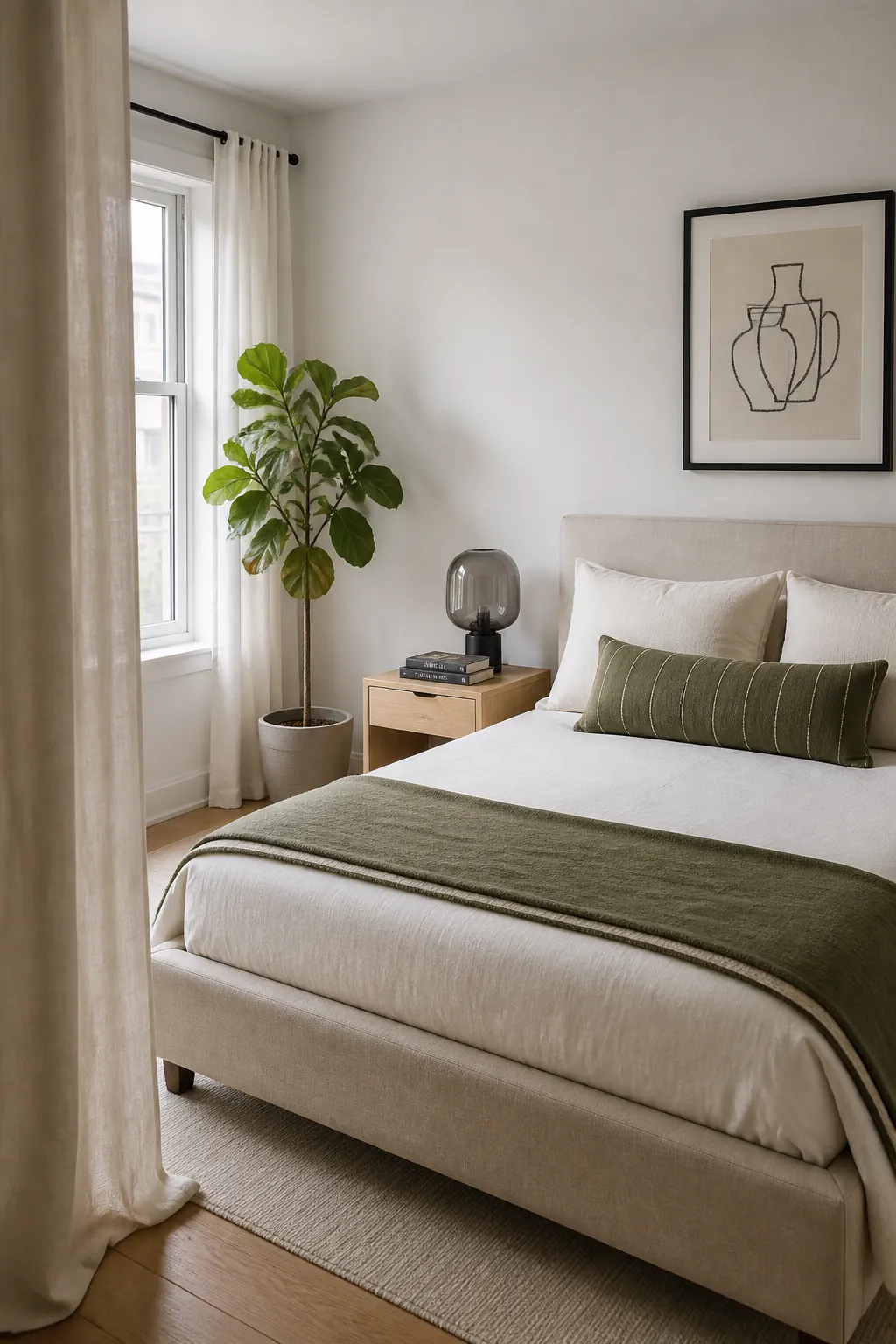
A single bright pillow can feel stranded. Repeat one accent in three small doses. Rust might appear in a throw, a rug stripe, and a ceramic dish. Dusty blue can connect a cushion, curtain edge, and book spine. Olive can travel from a plant to a pillow and painted nightstand.
This repetition gives beige headboard bedroom color schemes rhythm without sacrificing calm. Renters can use textiles and movable accessories; homeowners can add paint. Keep expensive items neutral and let lower-cost pieces carry color, so the room can evolve without replacing the bed.
Use wall space to correct the bed’s proportions
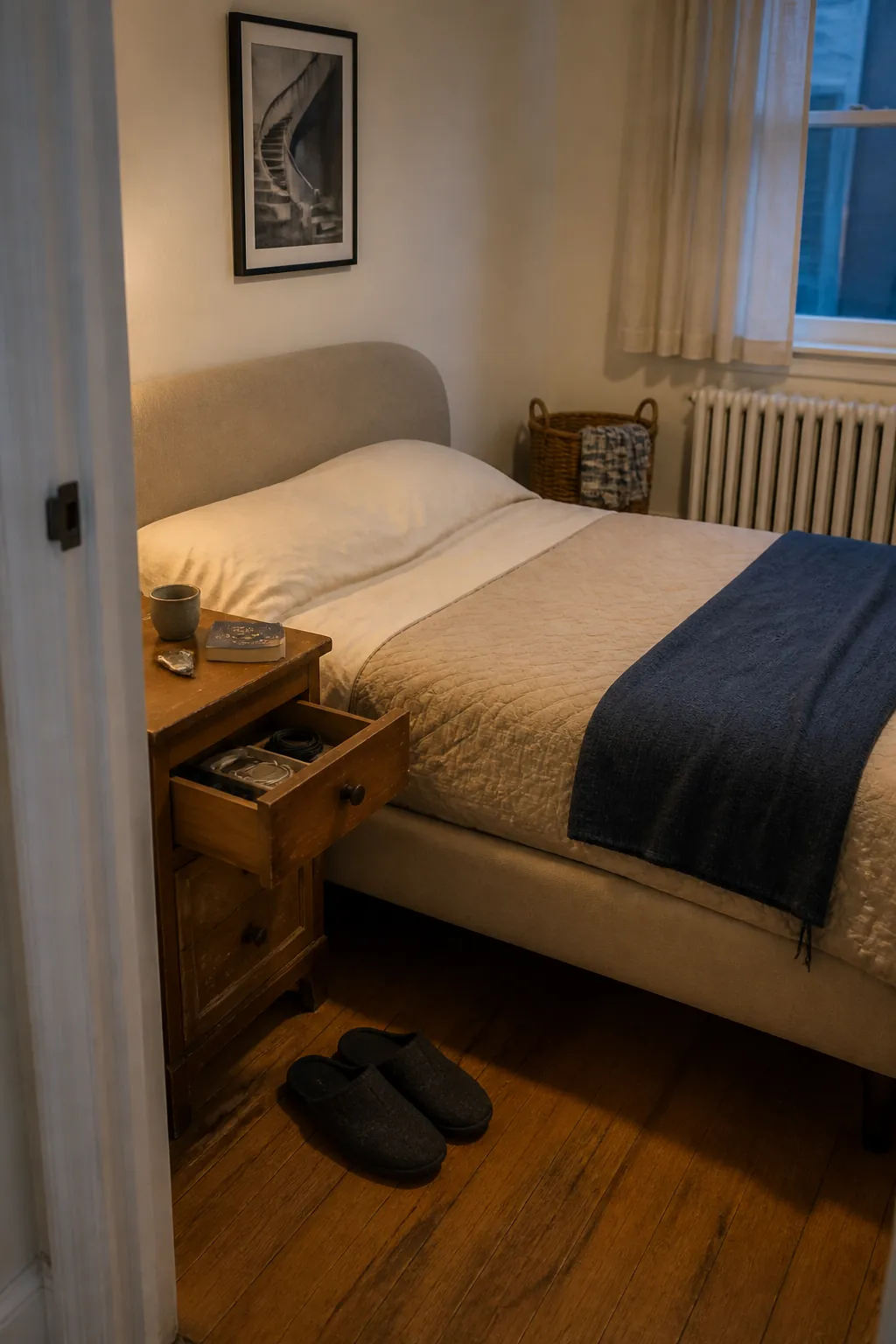
Small art above a wide headboard makes the bed feel bulkier. Choose one piece or compact grouping whose total width relates to the headboard, with breathing room around it. A black-and-white architectural photograph, woven textile panel, or geometric color-block print adds definition without repeating the upholstery.
If the headboard is already tall, leave that wall blank and add interest through curtains or lighting. In attic bedroom ideas, respect the roofline rather than forcing centered art under a slope. A low pendant, narrow mirror, or painted niche can make asymmetry intentional.
Keep the finished room calm but lived in
The difference between serene and bland is evidence of real life. Leave a book on the nightstand, use a washable throw that comes out on cold nights, and give daily items a tray or drawer. Wood grain, creased linen, hand-thrown pottery, and warm pools of light create more depth than decorative clutter.
For upholstered frames, vacuum seams with a soft attachment and treat spills according to the fabric code. The strongest beige bed frame room ideas do not disguise the bed; they let it provide quiet structure while the room earns personality through materials, proportion, and repeated choices.