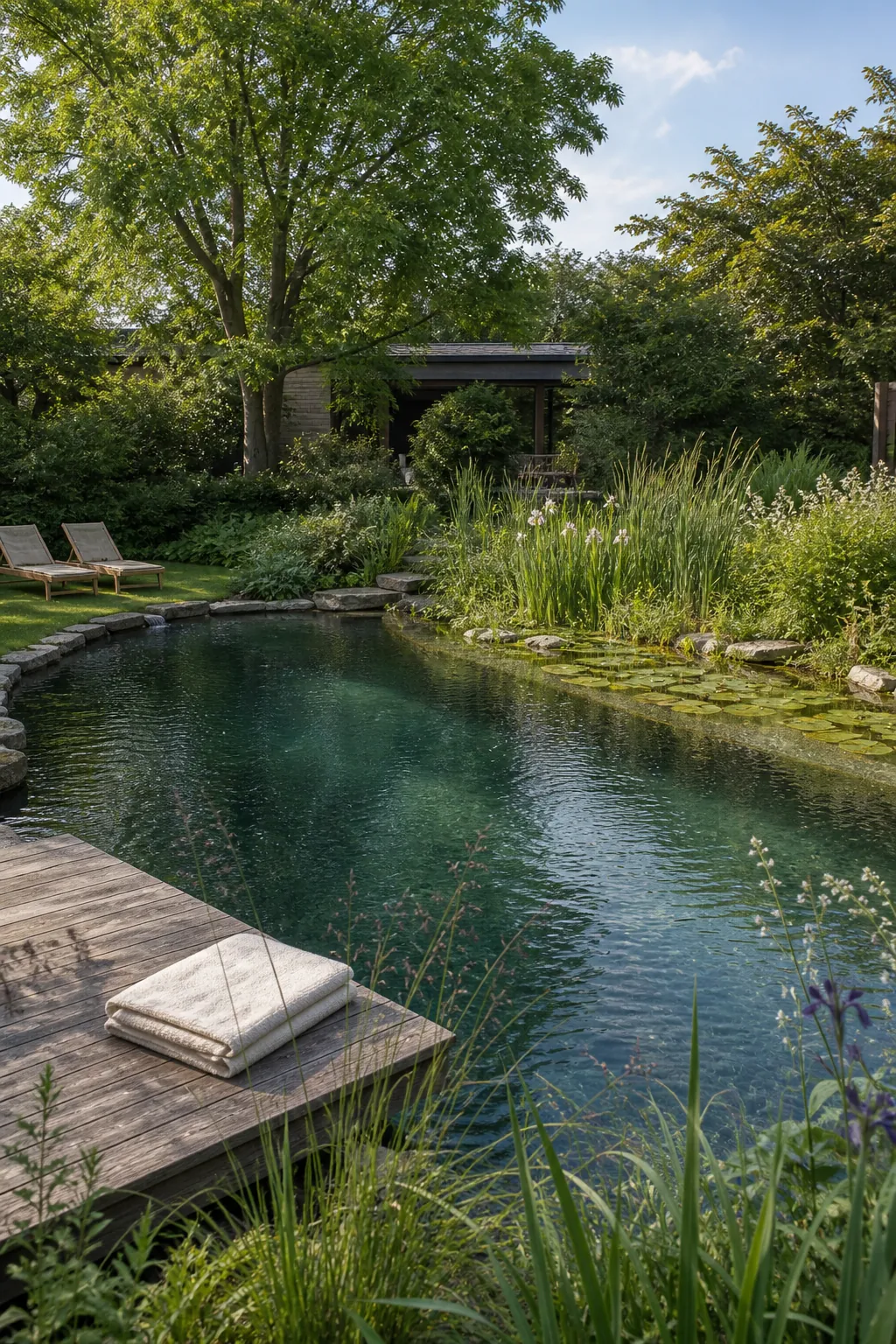
A natural pool succeeds when it feels less like an object dropped into the yard and more like a piece of the landscape that happens to be swimmable. The best natural swimming pool designs balance three things at once: clear circulation, a healthy planted filtration zone, and comfortable access for real life. That means thinking beyond the waterline to paths, shade, views, leaf drop, drainage, and the weekly work required to keep the system in balance.
The ideas below show how a chemical free pool can belong in gardens ranging from compact courtyards to loose country landscapes. Use them as visual directions, then have a natural-pool specialist size the swimming and regeneration zones for your climate, swimmer load, and water-quality requirements.
A Softly Planted Beach Entry
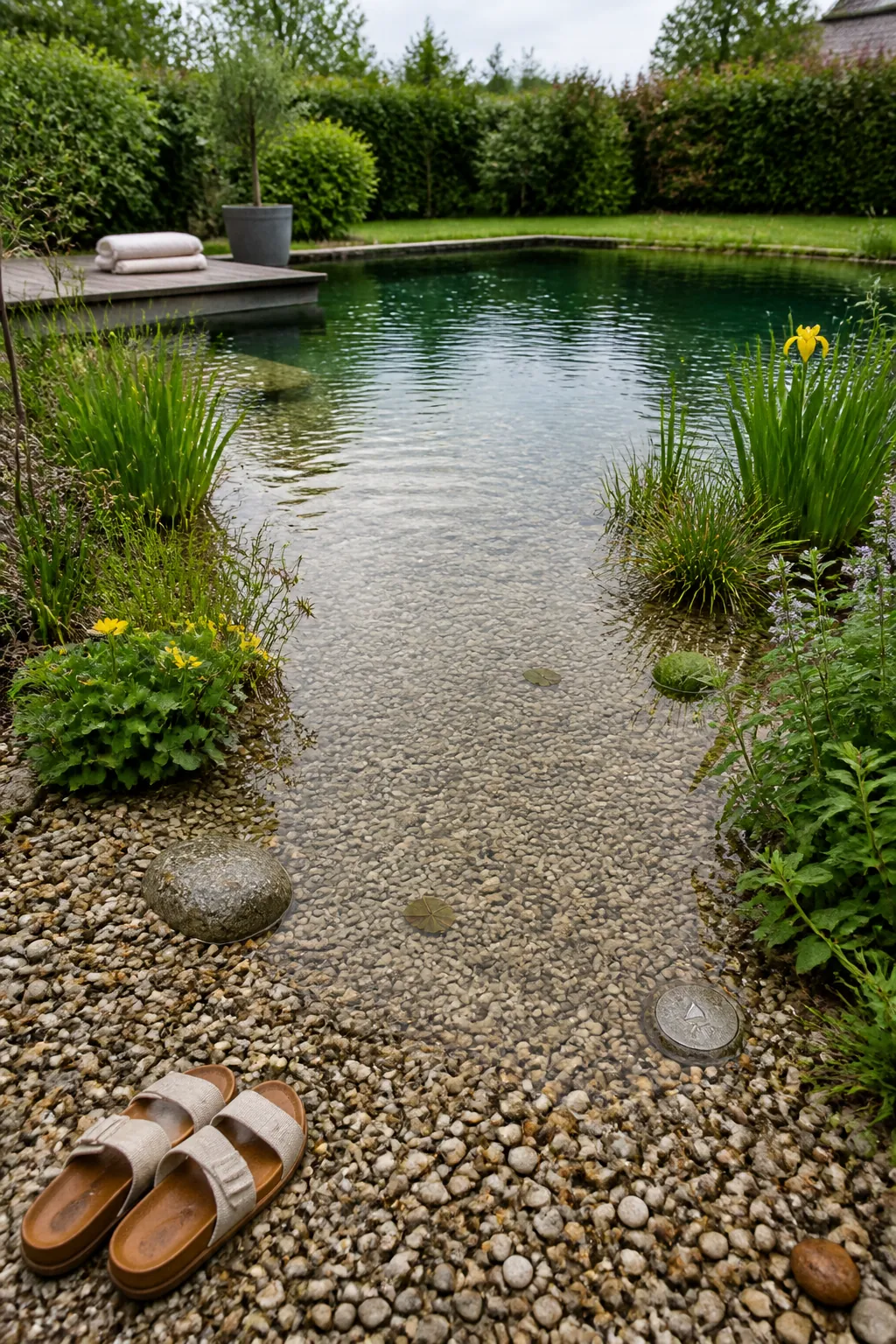
A shallow gravel entry makes the transition from lawn to water feel gradual and inviting. Instead of a bright coping line, use rounded river stone, low sedges, and a few emergent plants to blur the edge. Keep the actual walking route firm, visible, and slip resistant; the soft look should never make footing uncertain.
This approach works especially well for families because the shelf can become a sitting and cooling zone. A deeper swimming area should still be clearly differentiated through water depth, edge detailing, or an underwater change in material.
A Timber Boardwalk Through the Regeneration Zone
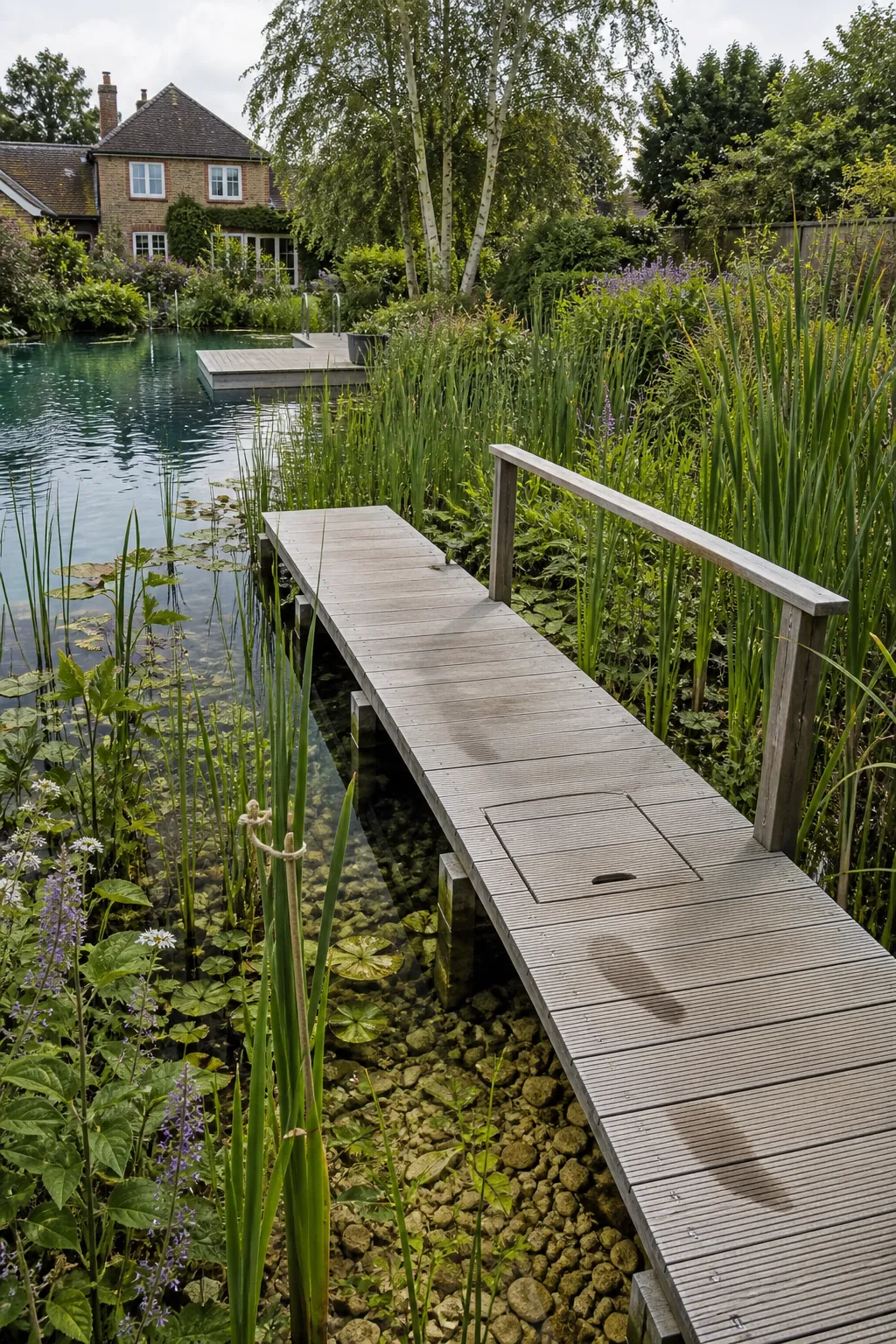
A narrow boardwalk can turn the filtration area into part of the garden journey. It lets swimmers cross reeds and oxygenating plants without trampling them, while creating a satisfying reveal of the open swimming water. Choose durable, responsibly sourced timber or a convincing low-maintenance alternative with a textured finish.
Leave enough visual openness for routine inspection. Pumps, skimmers, and access points should remain reachable without lifting half the deck. The most convincing version feels delicate but is engineered for wet feet, seasonal movement, and safe loads.
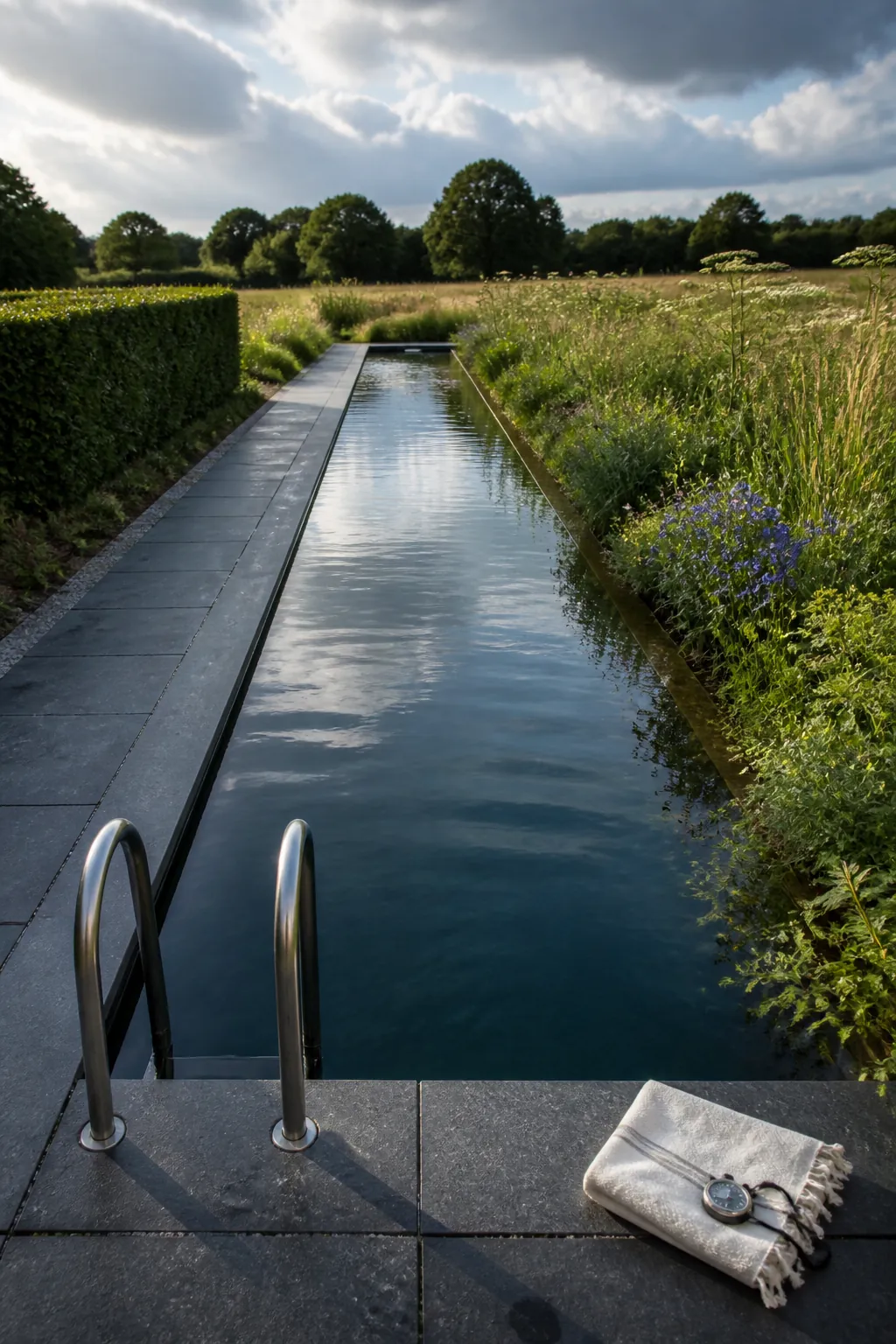
A Clean Swim Lane Framed by Wild Planting
You do not have to choose between a proper lap and a naturalistic garden. A long rectangular swimming zone can sit inside loose meadow planting, with the biological filter tucked along one side. The contrast between a crisp water volume and wind-moved grasses gives the design energy without making it feel formal.
Keep ornamental planting from leaning into the stroke path, and allow a clear maintenance strip along at least one long edge. This is one of the most practical natural pool ideas for swimmers who care about exercise as much as habitat.
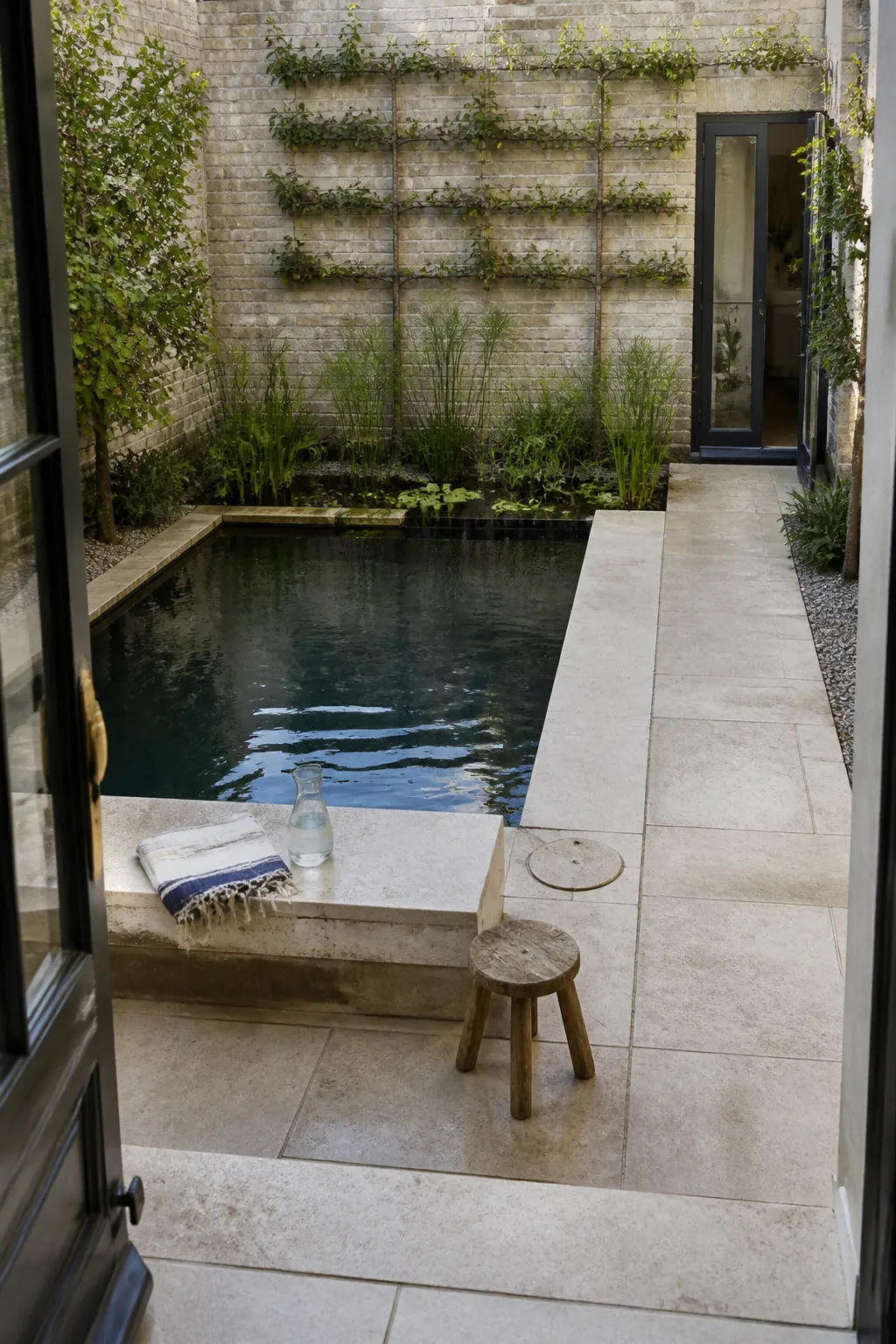
A Compact Courtyard Swimming Pond
In a small enclosed garden, simplify the palette. A compact dark-water basin, one disciplined band of filtration planting, and a generous paved sitting edge can feel calmer than trying to imitate a large country pond. Repetition is useful here: one stone, one timber tone, and a restrained plant community.
Small volume does not mean casual engineering. Tight sites make circulation, equipment access, splash control, and setbacks even more important. Build those constraints into the geometry rather than squeezing them into leftover corners.
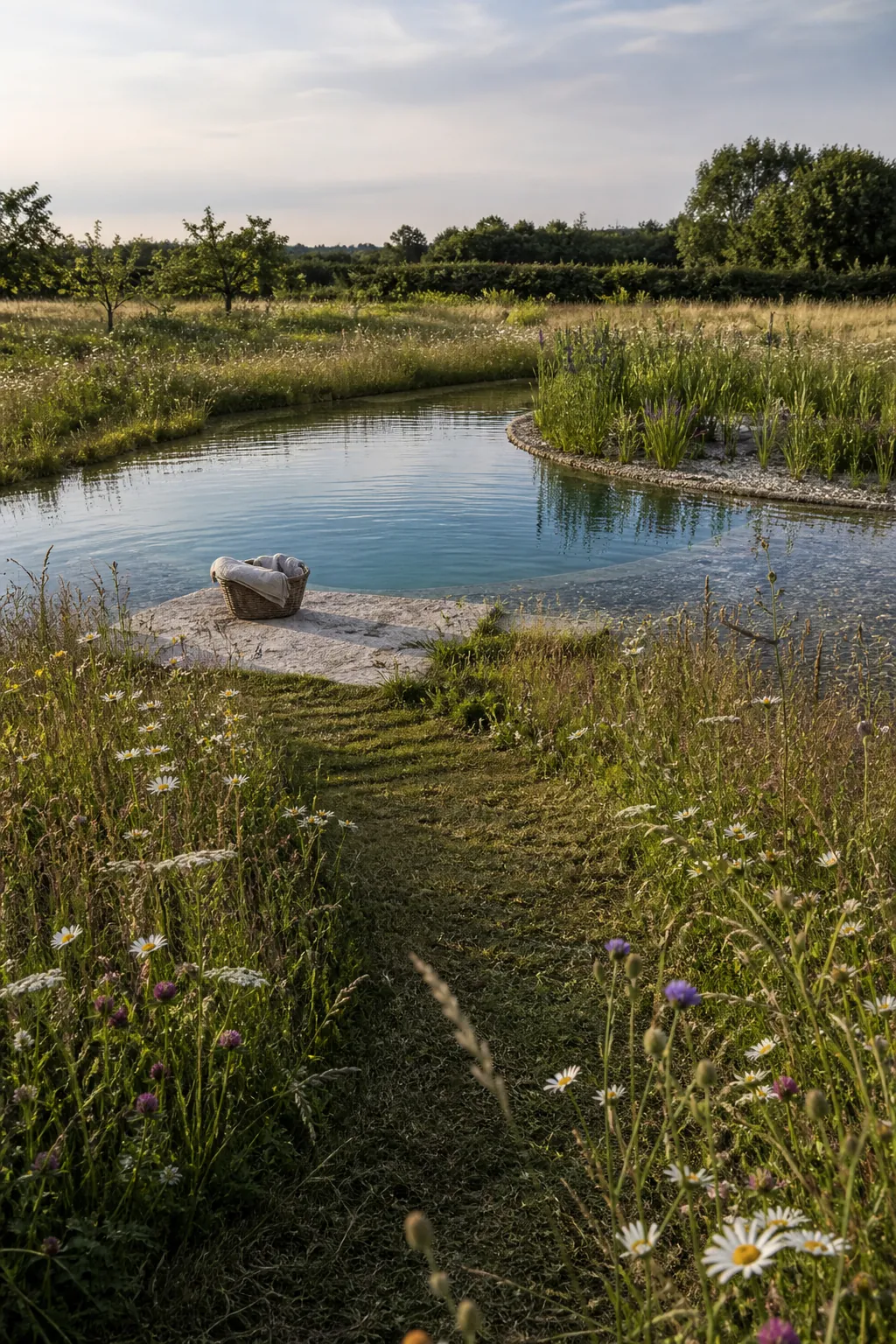
A Meadow-Edge Pool with Mown Paths
Let a swimming pond sit inside a meadow instead of surrounding it with a conventional deck. Short mown paths create deliberate routes through the longer grass, making the water feel discovered. The approach is economical in appearance and supports a broader transition between aquatic planting and dry garden habitat.
Use low-litter species near the water and keep the prevailing wind in mind so seeds and clippings do not constantly enter the pool. A narrow stone landing at the entry point gives swimmers a clean place for towels and footwear.
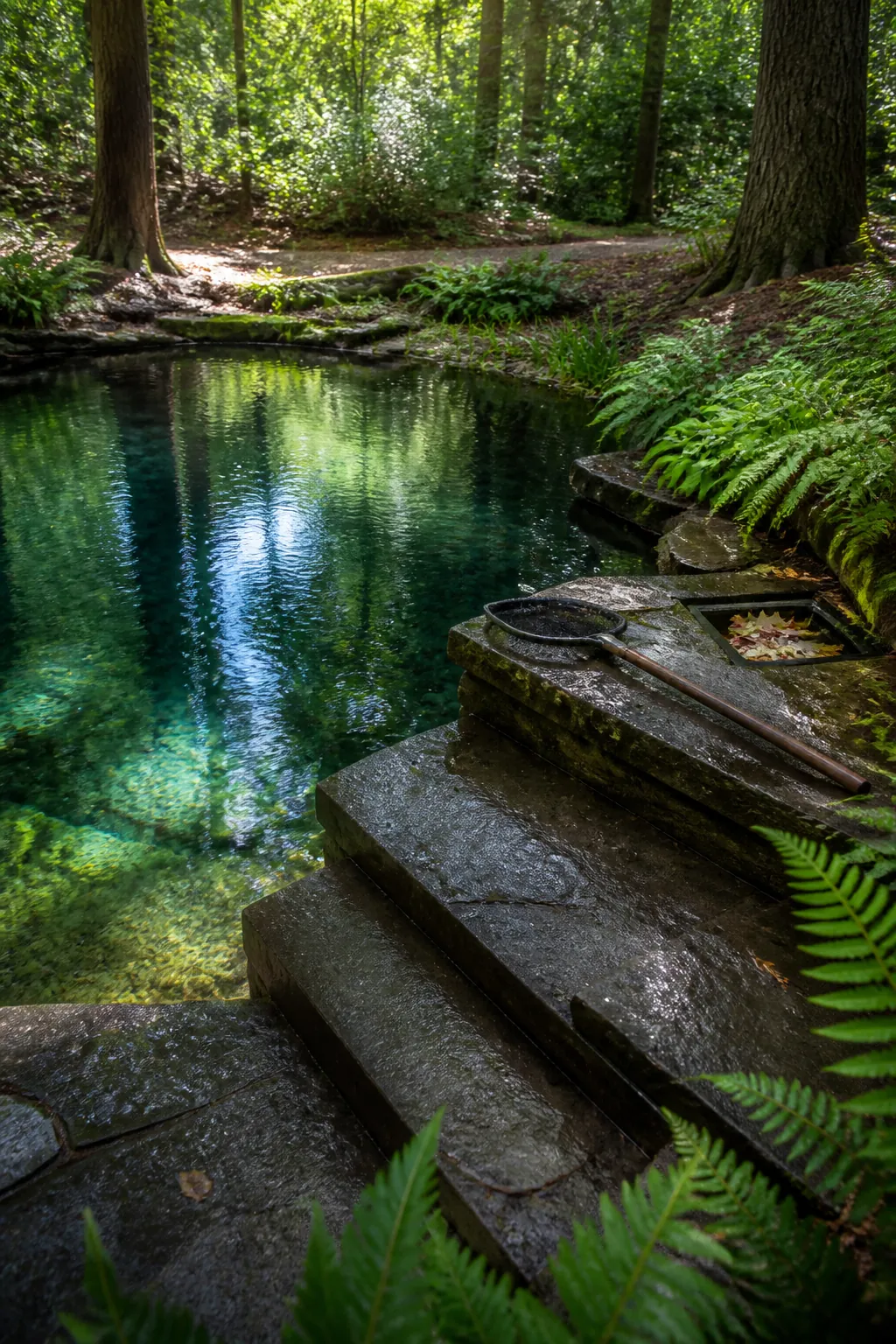
A Woodland Pool Under Filtered Shade
Dappled shade can make a backyard swimming pond feel wonderfully secluded. Retain selected trees at a sensible distance, layer ferns and shade-tolerant groundcovers beyond the wet edge, and use stone steps that look settled into the terrain. The result is cooler and moodier than a sun-baked resort pool.
The tradeoff is organic debris. A woodland design needs a realistic leaf-management plan, convenient skimming access, and enough light for the chosen aquatic plants. Do not preserve a tree merely for atmosphere if its roots or canopy will compromise the structure.
A Quarry-Inspired Stone Basin
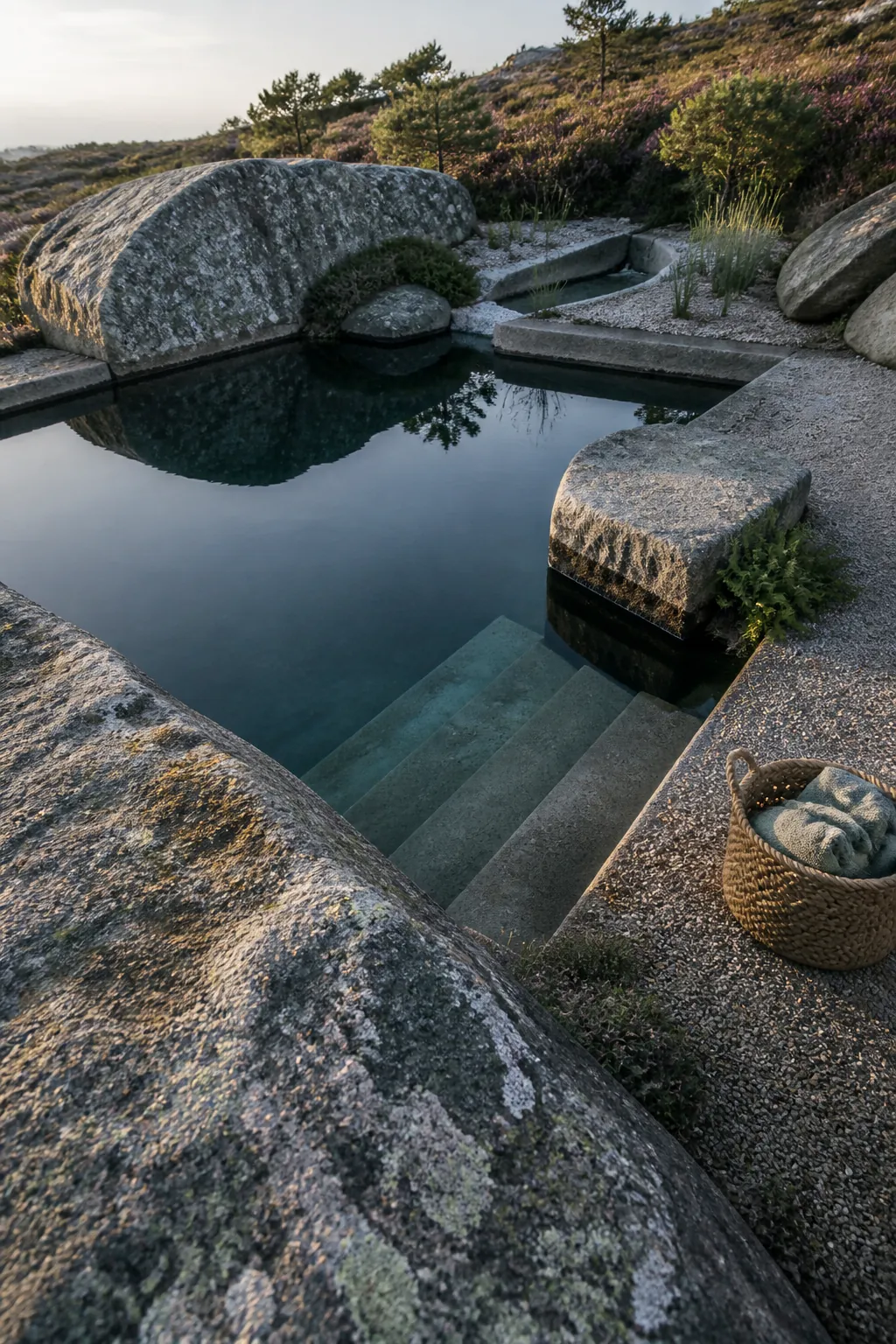
Large local stones can give the water the quiet weight of an old quarry. Use a few substantial pieces rather than a necklace of small rocks, and carry the same geology into steps, retaining walls, and nearby planting beds. Darker submerged finishes deepen reflections and keep the swimming area visually calm.
Stone placement must remain physically plausible and serviceable. Avoid unstable boulders, inaccessible crevices that collect debris, and rough projections beside active swimming routes. The best version looks ancient but functions like carefully planned contemporary construction.
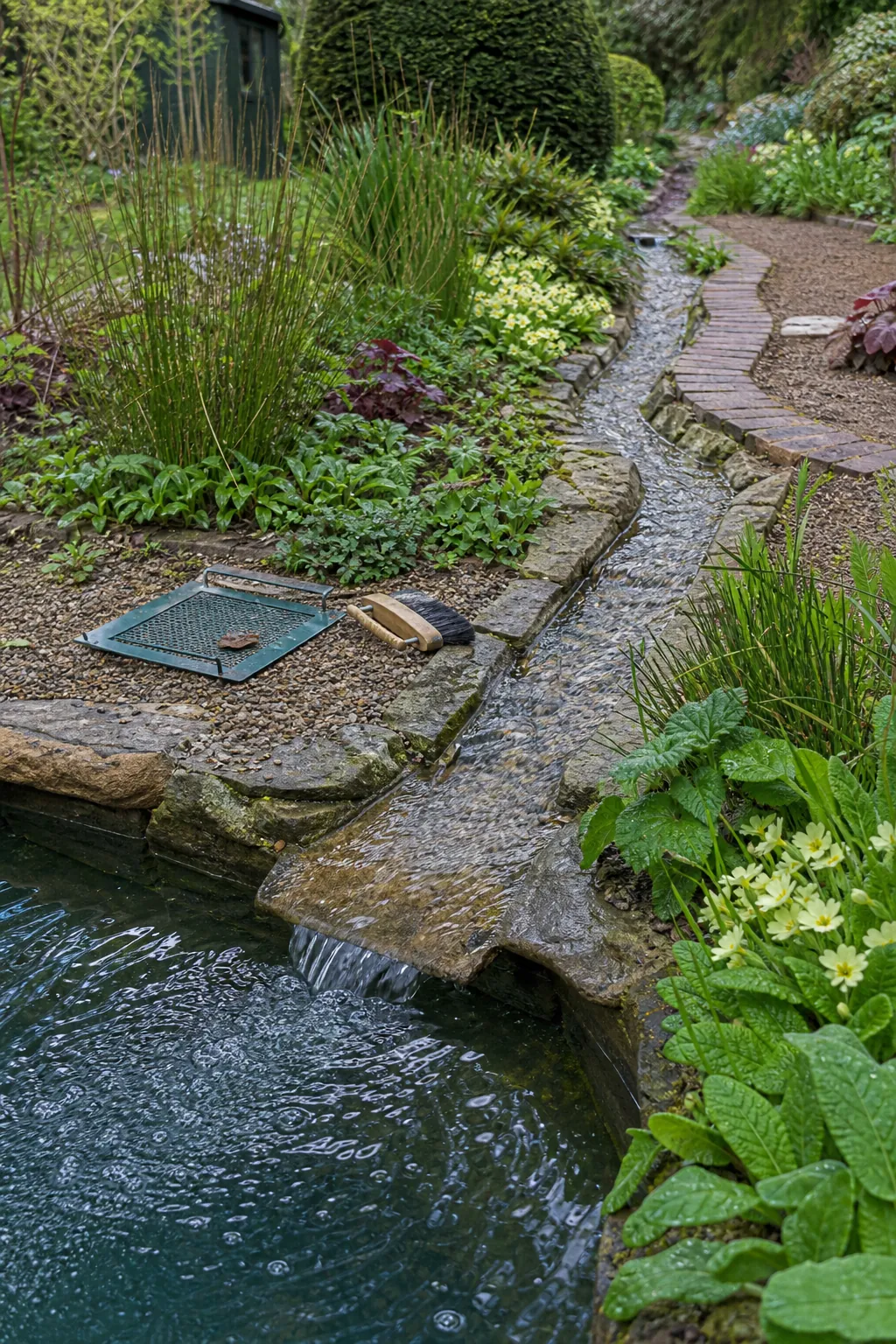
A Stream-Like Rill Feeding the Pool
A shallow rill can provide movement and sound before water reaches the main basin. Trace it beside a path, pass it through gravel and moisture-loving planting, then let it meet the pool at a low stone lip. The route makes circulation visible, turning a functional system into a garden feature.
Keep the watercourse restrained. An oversized artificial cascade can undermine the natural effect and increase evaporation. A quiet, low-flow channel with accessible clean-out points usually blends more convincingly into a residential garden.
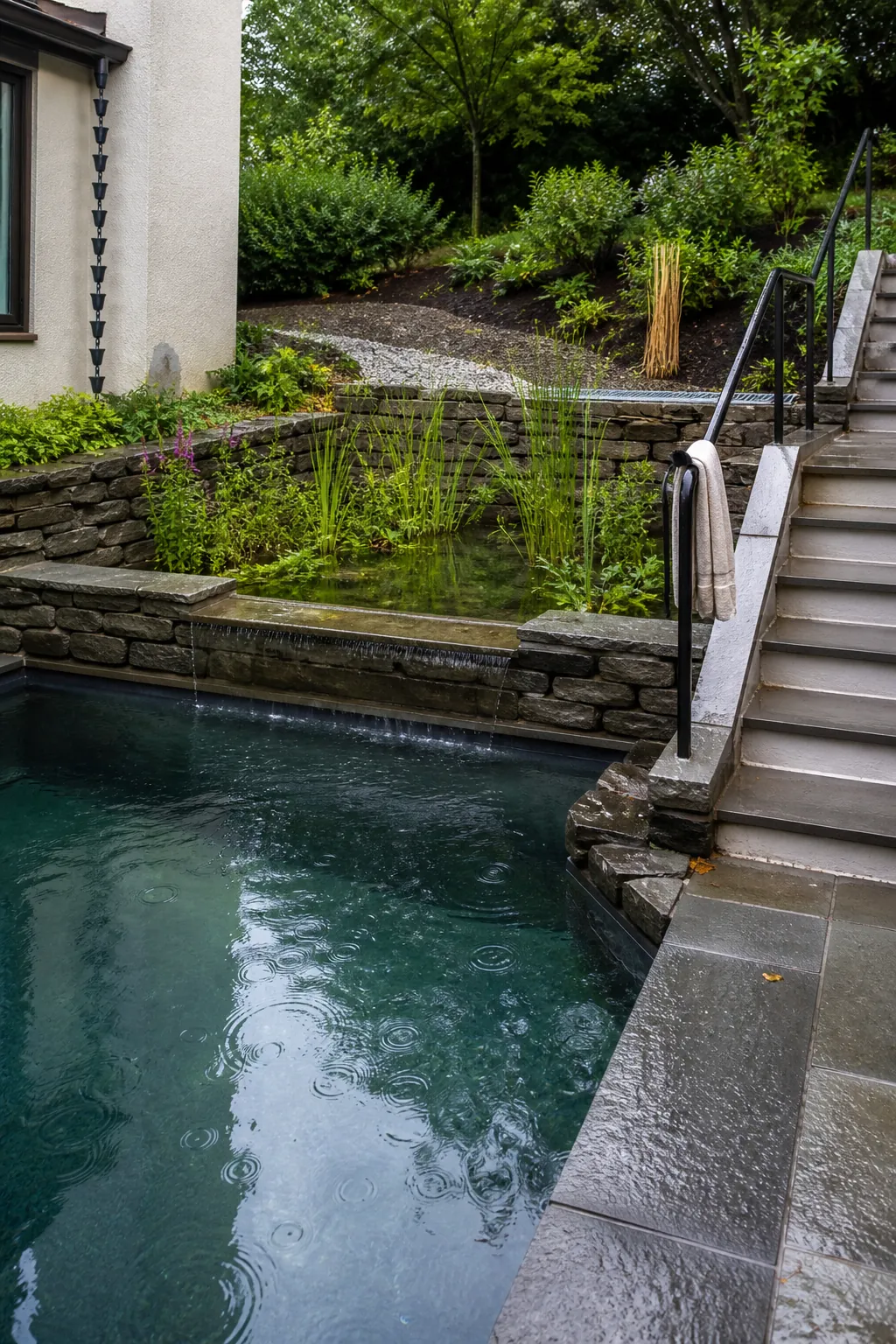
A Split-Level Pool on a Sloping Garden
A slope can become an asset when the swimming basin and planted filter occupy related terraces. A modest level change allows a narrow sheet of circulating water to connect them, while low retaining walls create sitting edges and control views. This can reduce the sense that the pool was forced onto the land.
Drainage and structural design come first. Surface water from uphill should be intercepted before it carries soil and nutrients into the system. Make the route between terraces direct, well lit, and comfortable for bare feet.
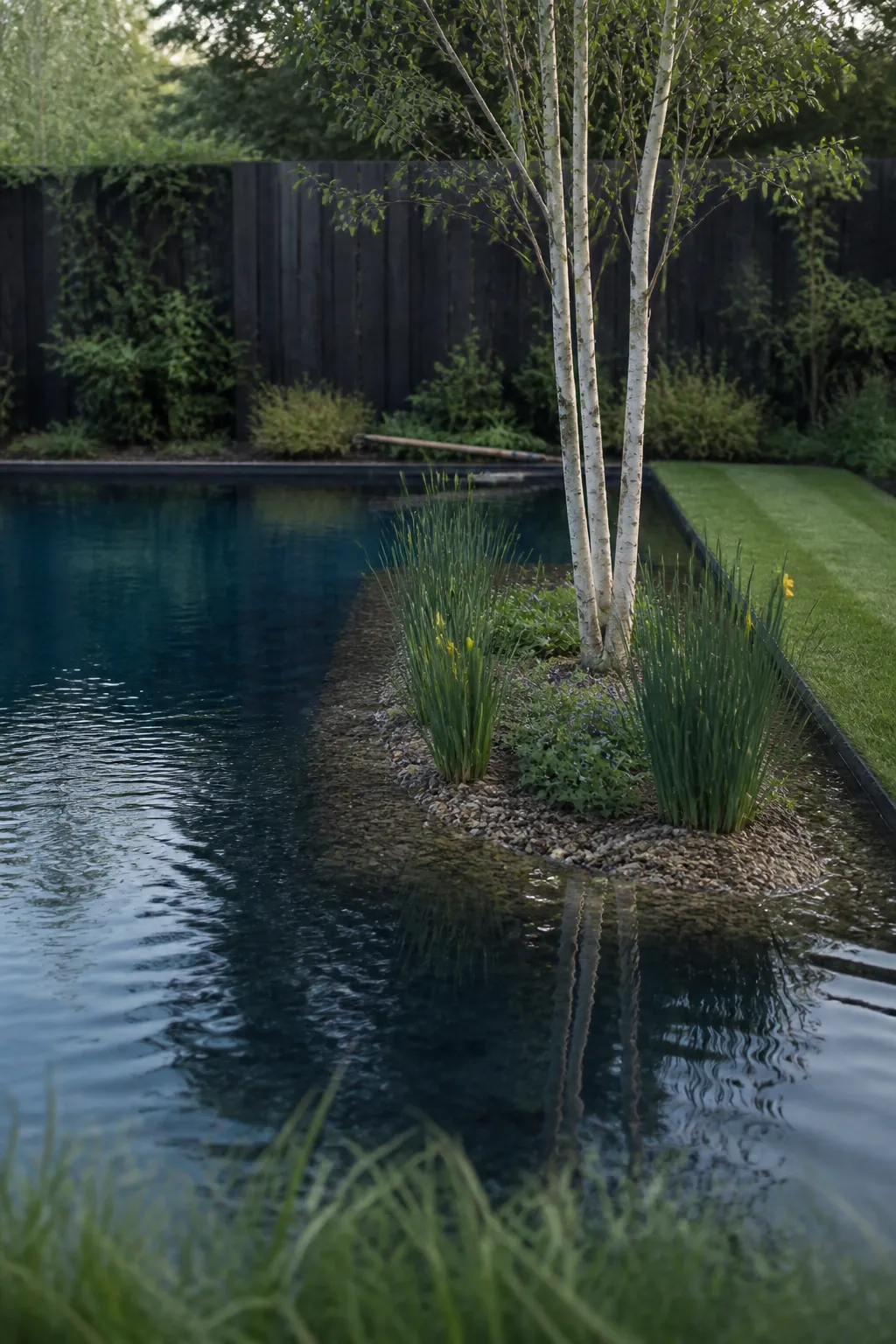
A Planted Island as a Living Focal Point
A small planted island can break up a broad water surface and pull the garden visually into the pool. Position it outside the main swimming line, using a limited mix of rushes, iris-like foliage, and one sculptural shrub suited to the conditions. Reflections make a modest planting feel more substantial.
The island should contribute to circulation, not create a stagnant pocket. Confirm how water moves around it and how a gardener will prune, divide, and clear the plants without wading through the swim zone.
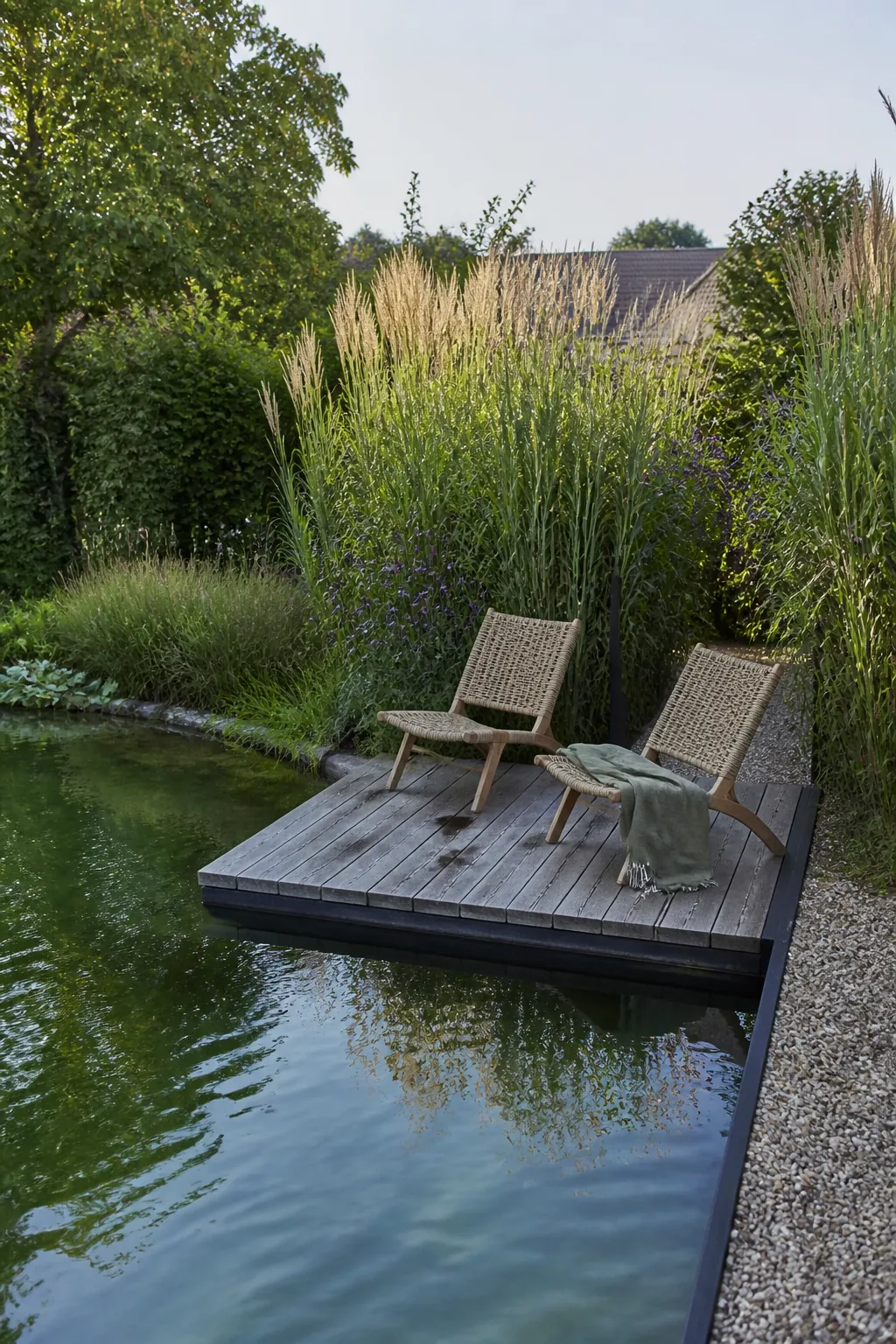
A Sunken Deck Hidden at Water Level
Rather than wrapping the entire pond in decking, create one compact platform nearly flush with the water. Set it into tall planting so it reads as a private place to sit, dry off, or watch wildlife. The limited hardscape preserves the garden character and focuses activity in one durable zone.
Allow comfortable circulation behind chairs and provide a defined route back to the house. Wet edges, step changes, and concealed drops demand careful detailing, especially where children or evening swimmers will use the space.
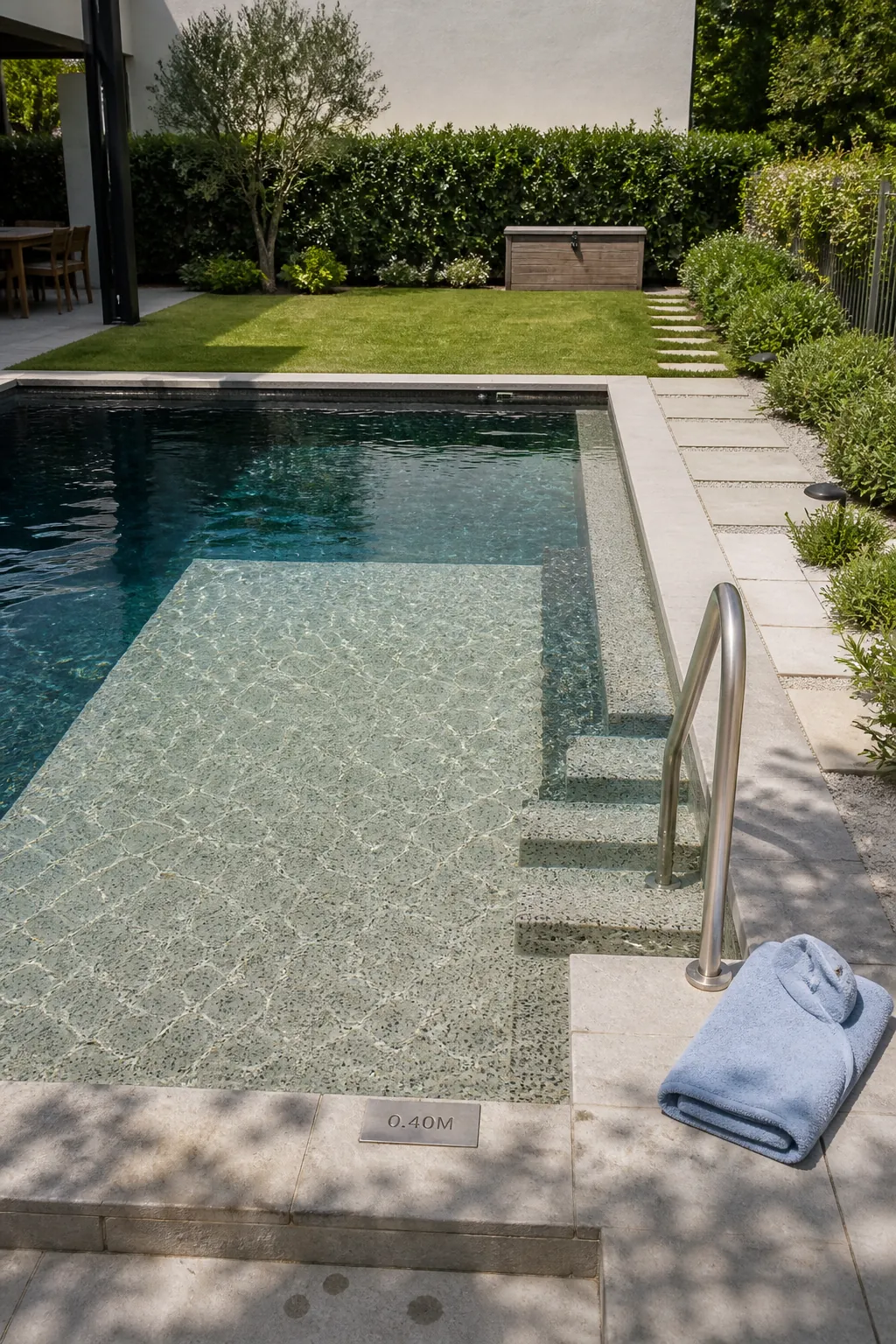
A Family-Friendly Shallow Shelf
A generous shallow shelf can support supervised play, easy entry, and relaxed sitting without turning the whole pool into a resort-style tanning ledge. Finish it with a subtly contrasting aggregate so the depth change is legible through the water, and place the main steps where they align with the garden path.
No landscape treatment replaces barriers, supervision, and local safety rules. Design the shelf, deeper zone, covers, gates, and rescue access as one safety system, not as separate decorative choices.
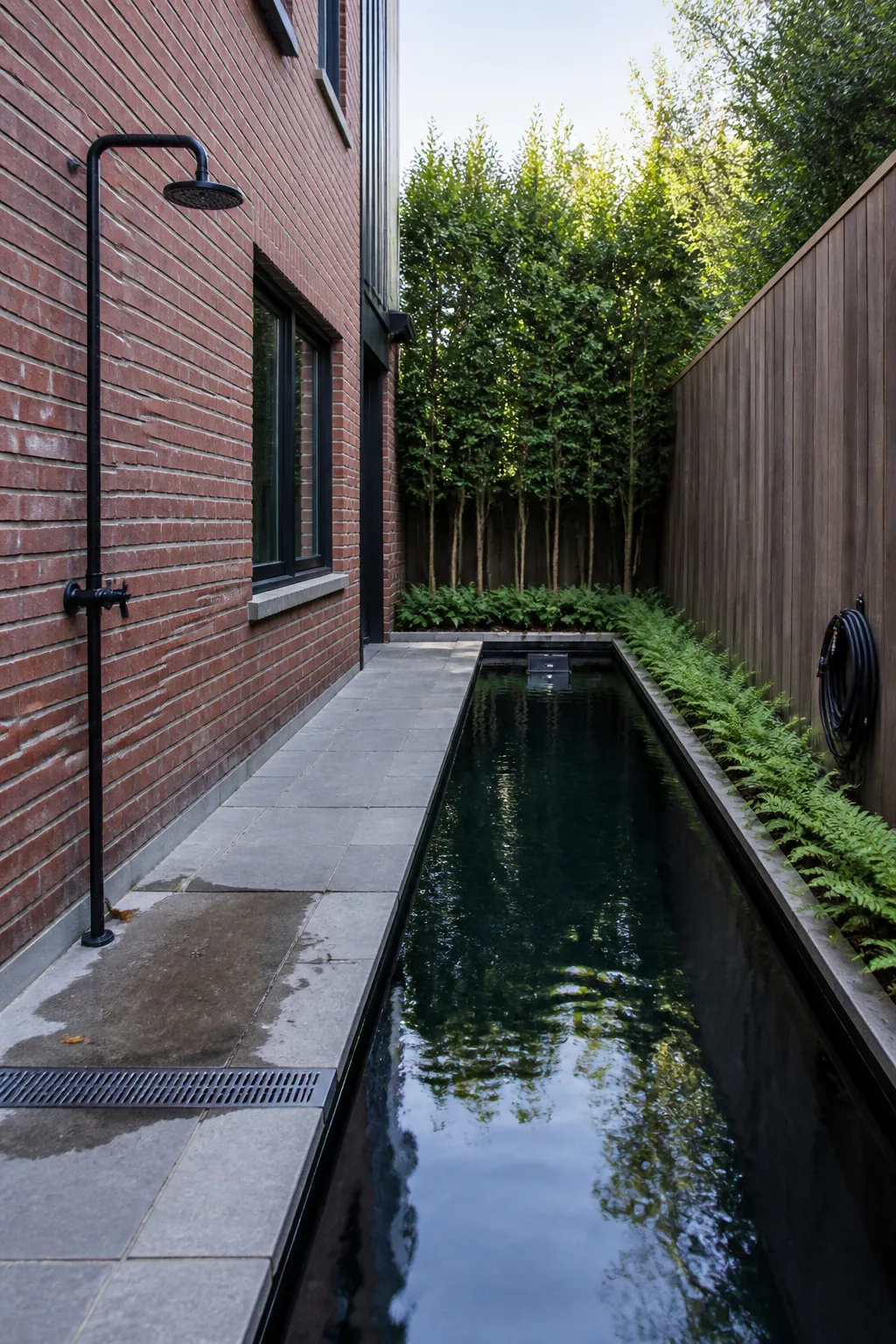
A Narrow Side-Garden Lap Pond
A long side yard can hold a surprisingly elegant swimming lane. Keep the pool parallel to the house, place the planted treatment zone at the far end or behind a low divider, and reserve one uninterrupted path for access. Vertical planting can soften boundary walls without consuming valuable width.
Study window splash, privacy, foundation setbacks, and equipment noise before committing. In a tight passage, every inch of walking clearance matters more than adding another decorative feature.
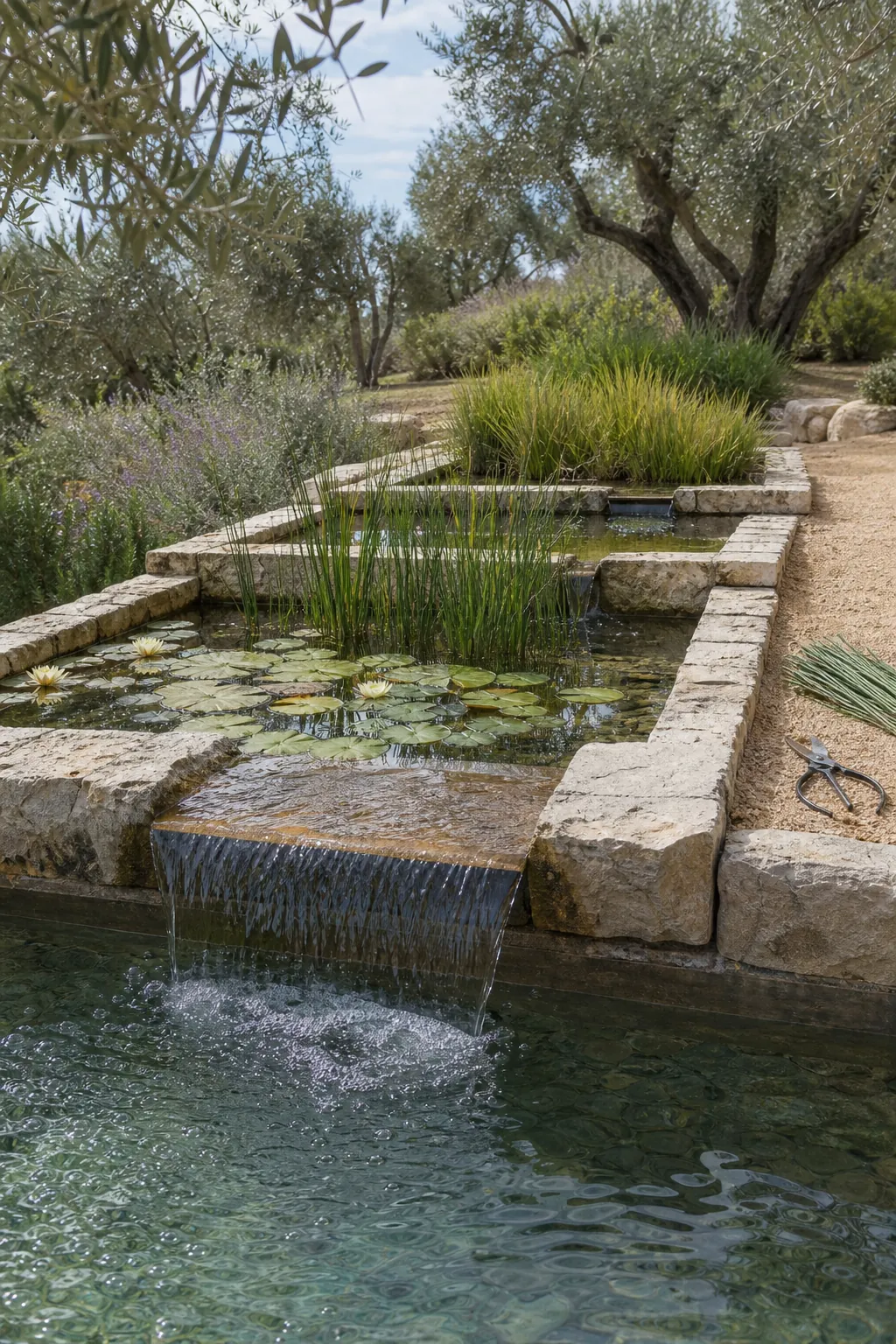
A Terraced Wetland Above the Swim Zone
Place the regeneration garden slightly above the pool and allow filtered water to return through a broad, quiet spillway. The elevation separates lush wetland planting from the open swimming surface while making the biological process visible. Low stone terraces can echo existing grade changes elsewhere in the garden.
Give each terrace an overflow route and enough access for seasonal cutting back. The feature should keep working during heavy rain and maintenance, not only on a dry day when the water level is perfect.
A Wildlife Margin Kept Separate from Swimming
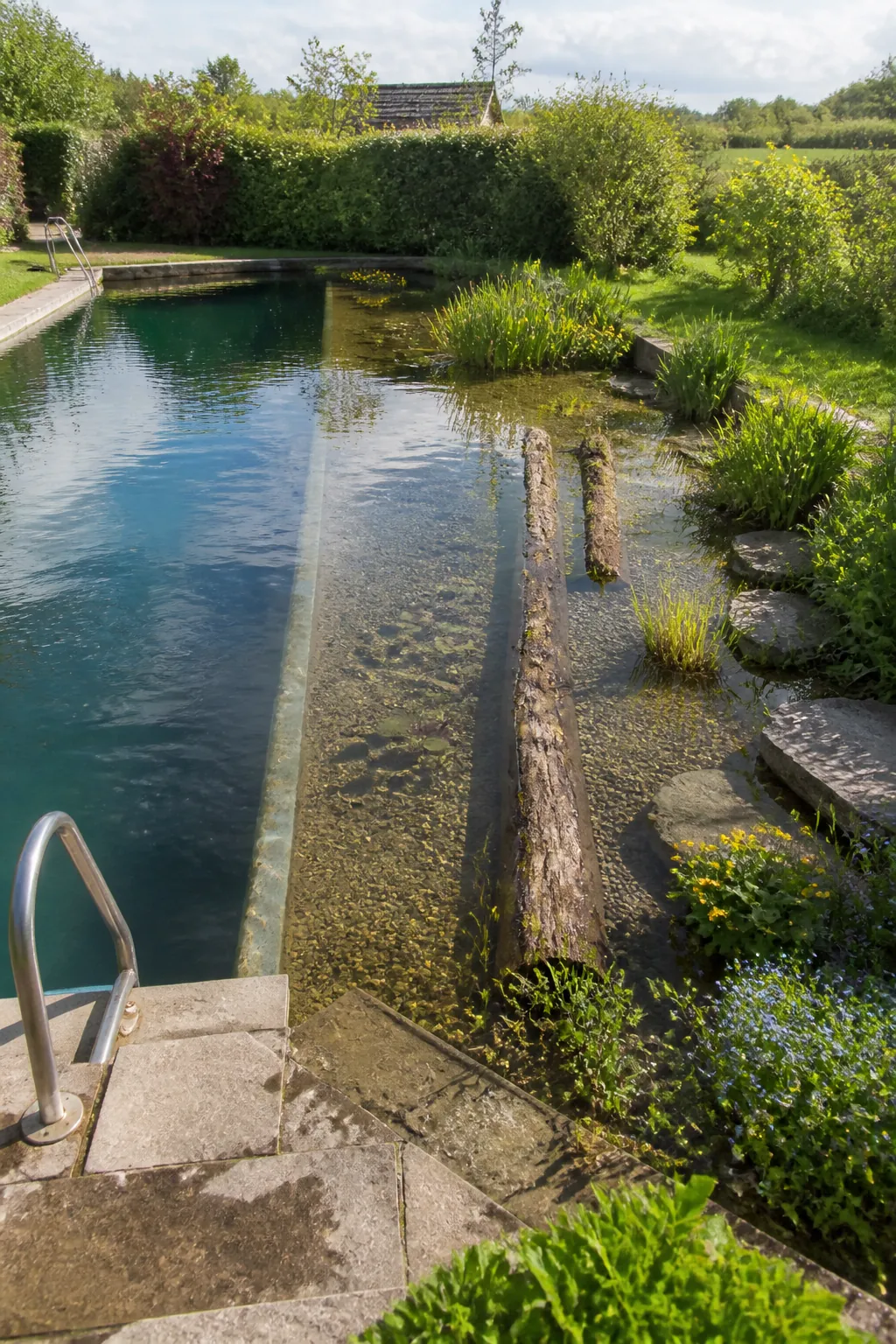
Create a shallow habitat shelf along the garden-facing side and keep the human entry on the opposite edge. Logs, stones, and varied plant heights can offer routes for small creatures while a discreet divider protects the swimming lane. This gives wildlife a genuine margin instead of scattering habitat features through active water.
Expect frogs, insects, and seasonal change; they are part of the experience. If that prospect feels uncomfortable, a more architectural bio-pool with concealed filtration may suit you better than a pond-like design.
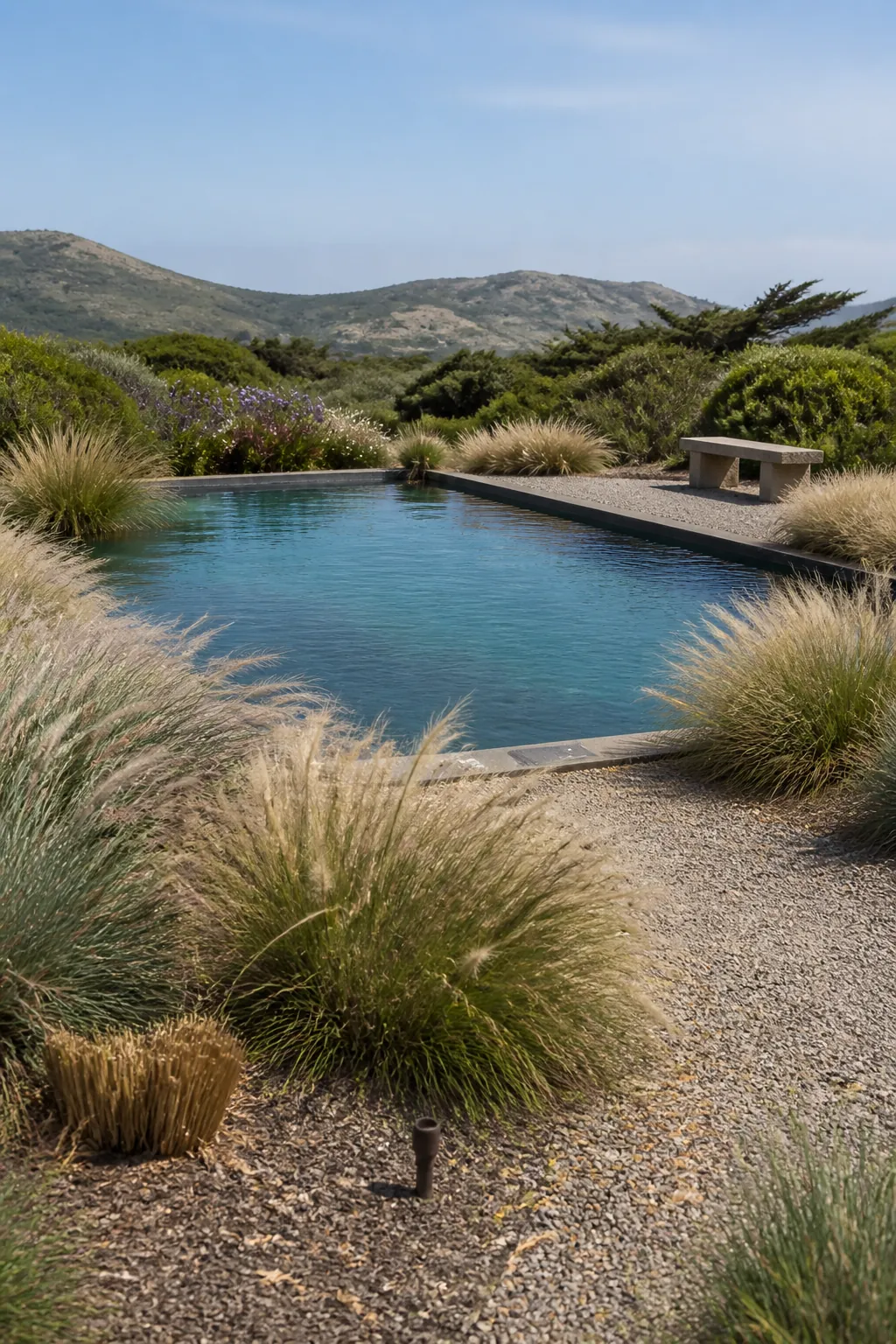
A Native-Grass Frame for Open Views
Low native grasses can connect the water to the wider landscape without blocking sightlines. Plant in broad drifts rather than a busy collection of specimens, and leave openings where the house, seating area, and pool need visual connection. The moving seed heads animate still water beautifully.
Select species for local climate, fire conditions, and litter behavior. Keep dry foliage away from equipment and ensure planting does not conceal the pool from the primary supervision point.
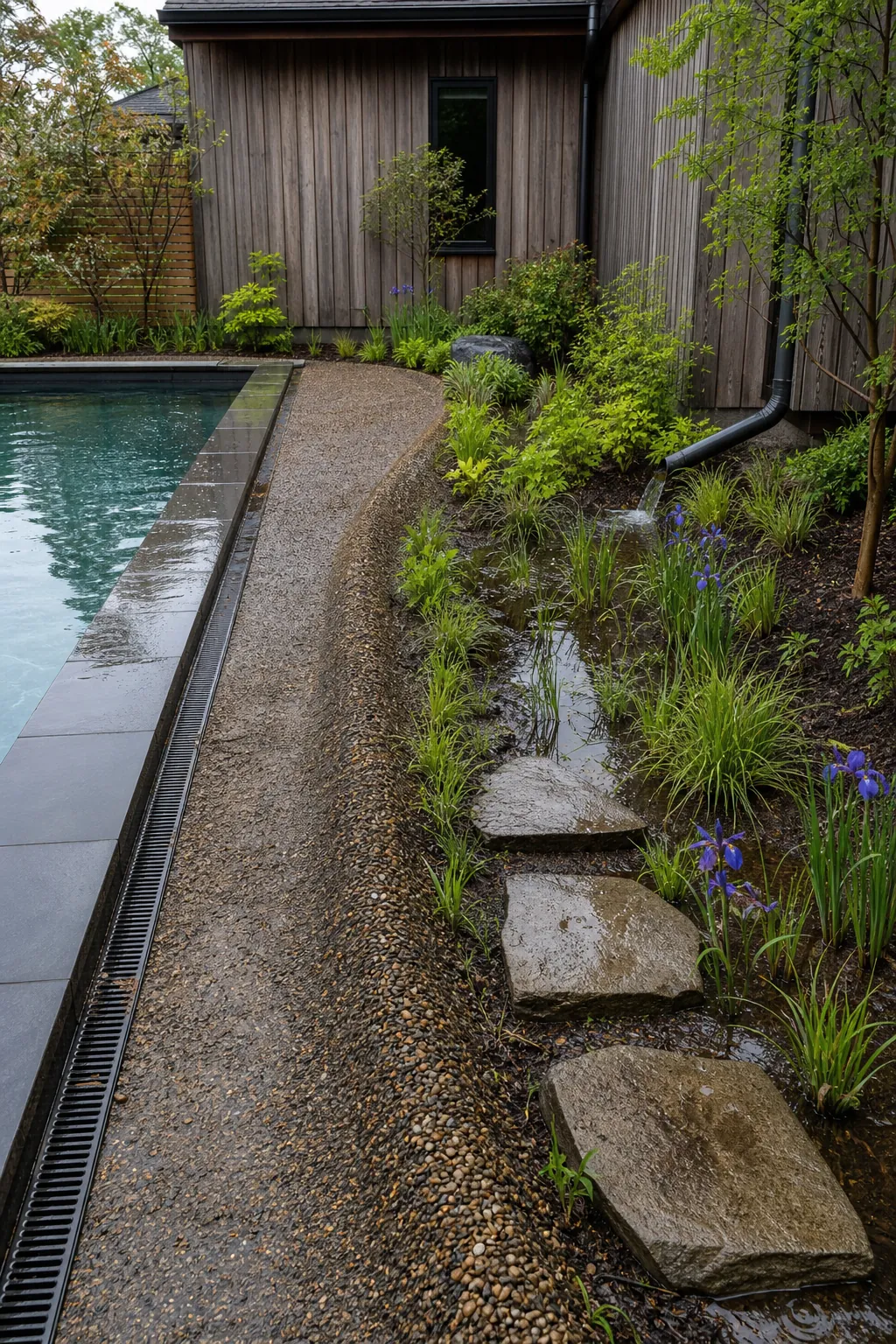
A Rain-Garden Transition Beyond the Pool
A separate rain garden can visually continue the wetland character while managing runoff elsewhere on the site. Connect the spaces with repeated gravel, sedges, and stepping stones, but keep stormwater from washing directly into swimming water. The design feels ecologically coherent without confusing two different water systems.
Map where roof and paving runoff travels during a downpour. A beautiful eco friendly swimming pool still needs controlled drainage so soil, fertilizer, and contaminated surface water do not overload its biological balance.
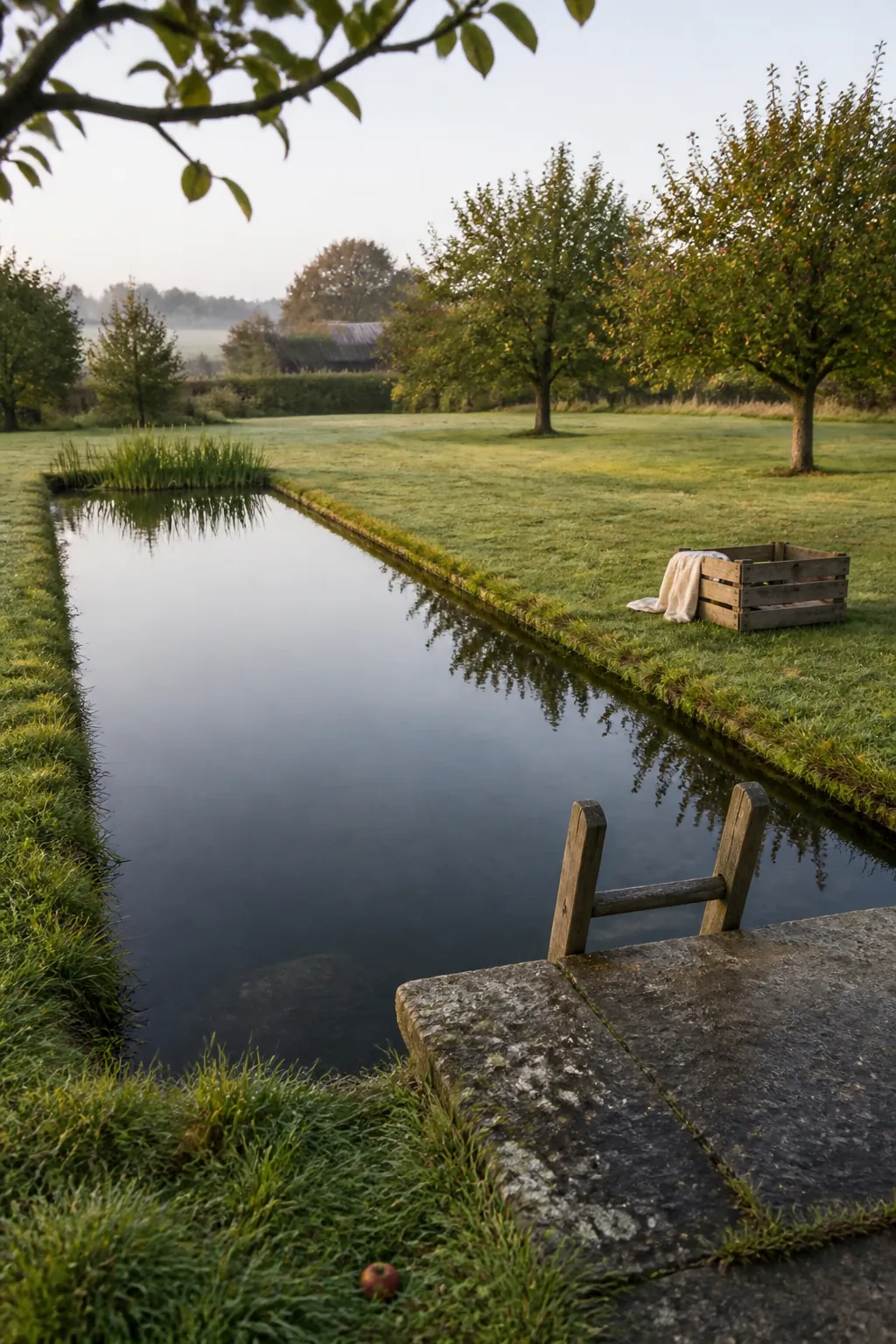
An Orchard-Side Country Swimming Pond
In a rural garden, a simple rectangular pond can sit comfortably beside an orchard when its materials stay quiet. A grass bank, reclaimed-looking stone landing, timber ladder, and loose hedge are often enough. The restraint lets mature trees and changing seasons provide the character.
Do not place the water directly beneath fruit trees. Fallen fruit, leaves, shade, and roots create avoidable maintenance. Preserve the orchard relationship through views and nearby planting while keeping a practical buffer around the basin.
A Minimal Pavilion Beside Living Water
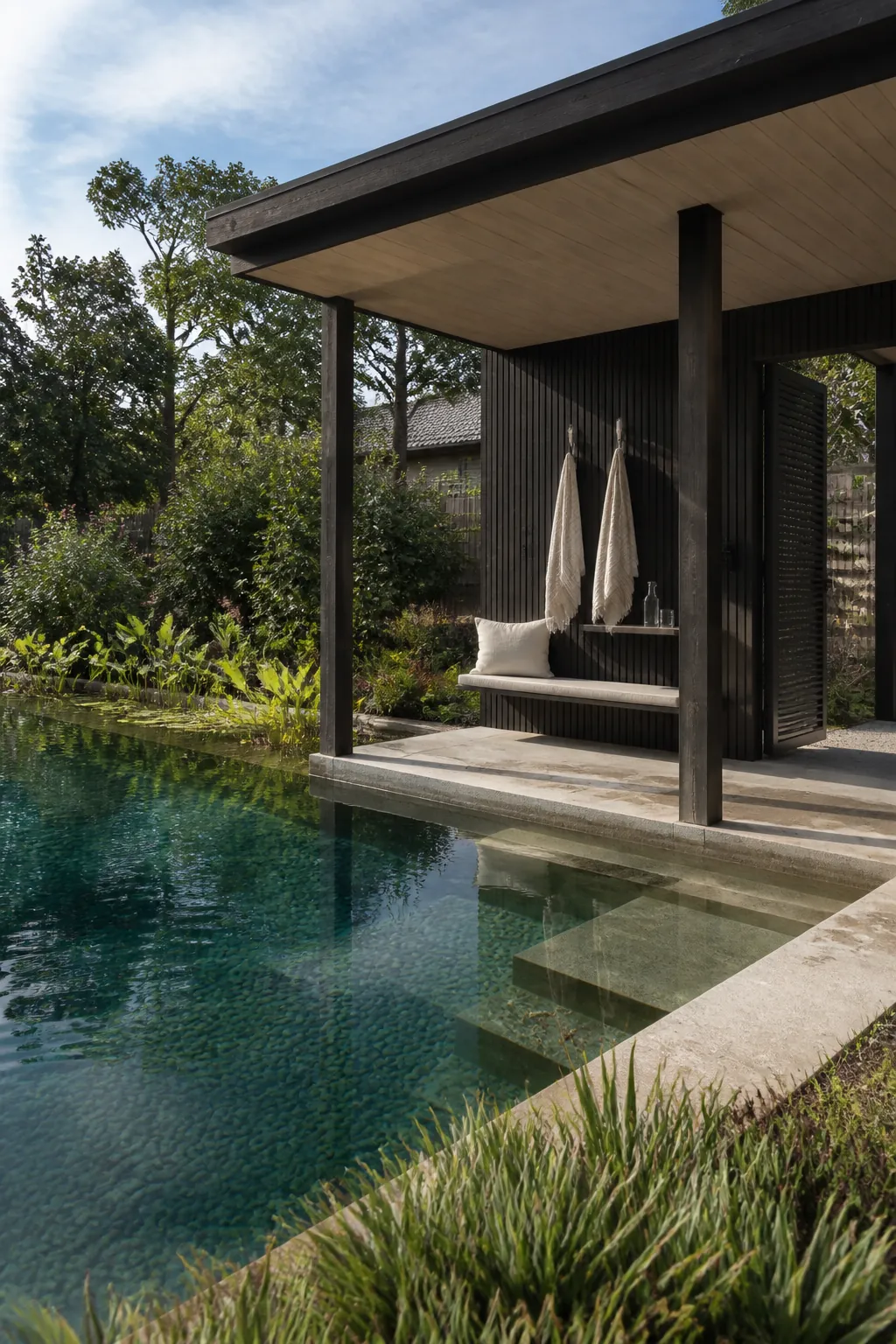
A slim pavilion gives a natural pool a comfortable all-day destination. Keep its roofline low, open the structure toward the water, and repeat one material from the pool edge so architecture and landscape belong together. A bench, hooks, and a small surface for drinks are more useful than filling it with furniture.
Place shade where people actually sit, not where it casts the regeneration plants into unsuitable darkness. The pavilion should also screen equipment or neighboring views without blocking supervision and breezes.
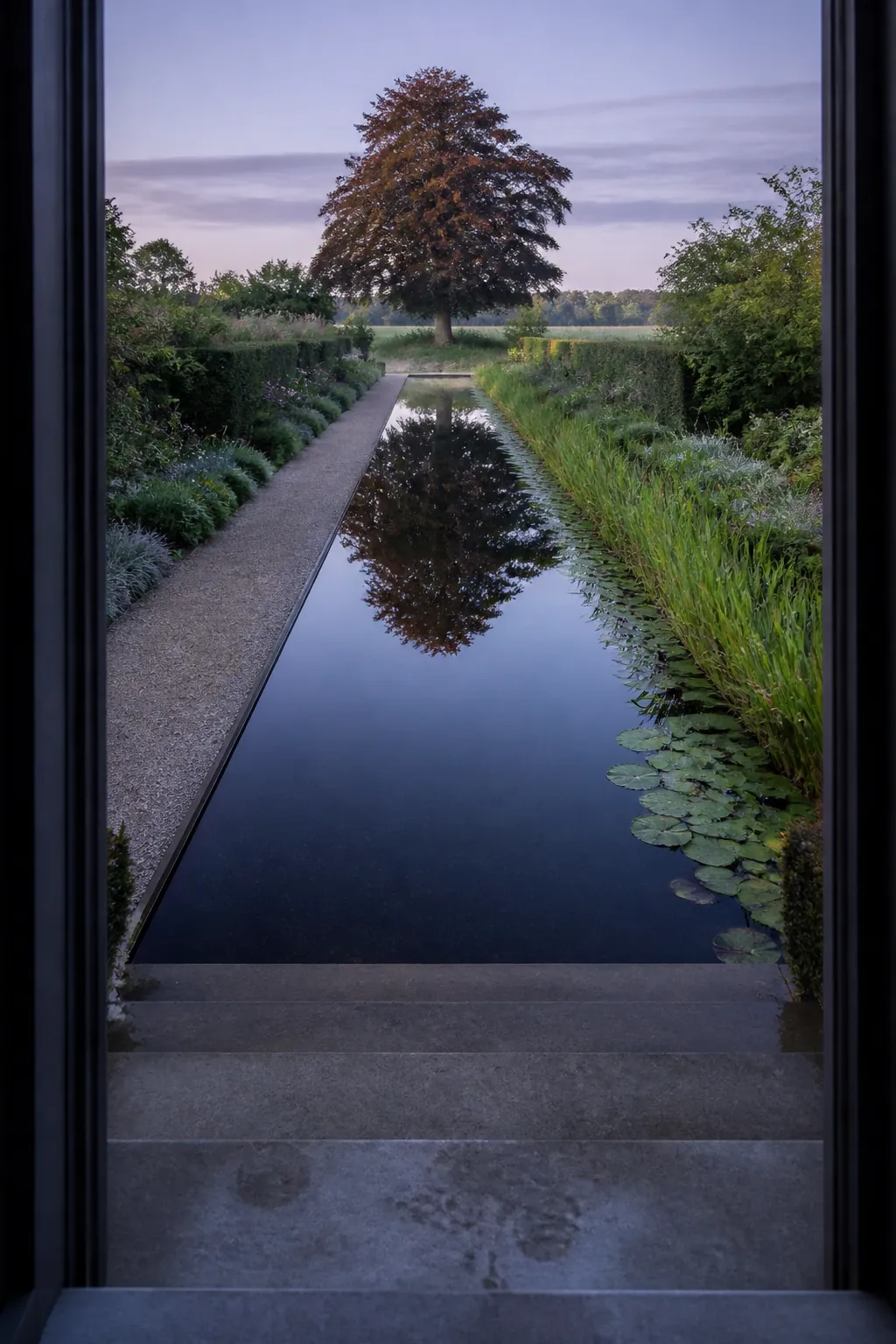
A Reflective Pool Aligned with a Garden Vista
Align a long pool with a doorway, specimen tree, or distant opening to make it part of the garden’s structure. Keep the near end simple so the eye travels across the reflective surface. Plant the filtration zone along a side edge where it softens the view without interrupting the axis.
This idea is strongest when the view already deserves emphasis. If the axis points toward equipment, bins, or a busy boundary, fix the destination before making the water direct attention to it.
A Boulder Step Route Across Shallow Water
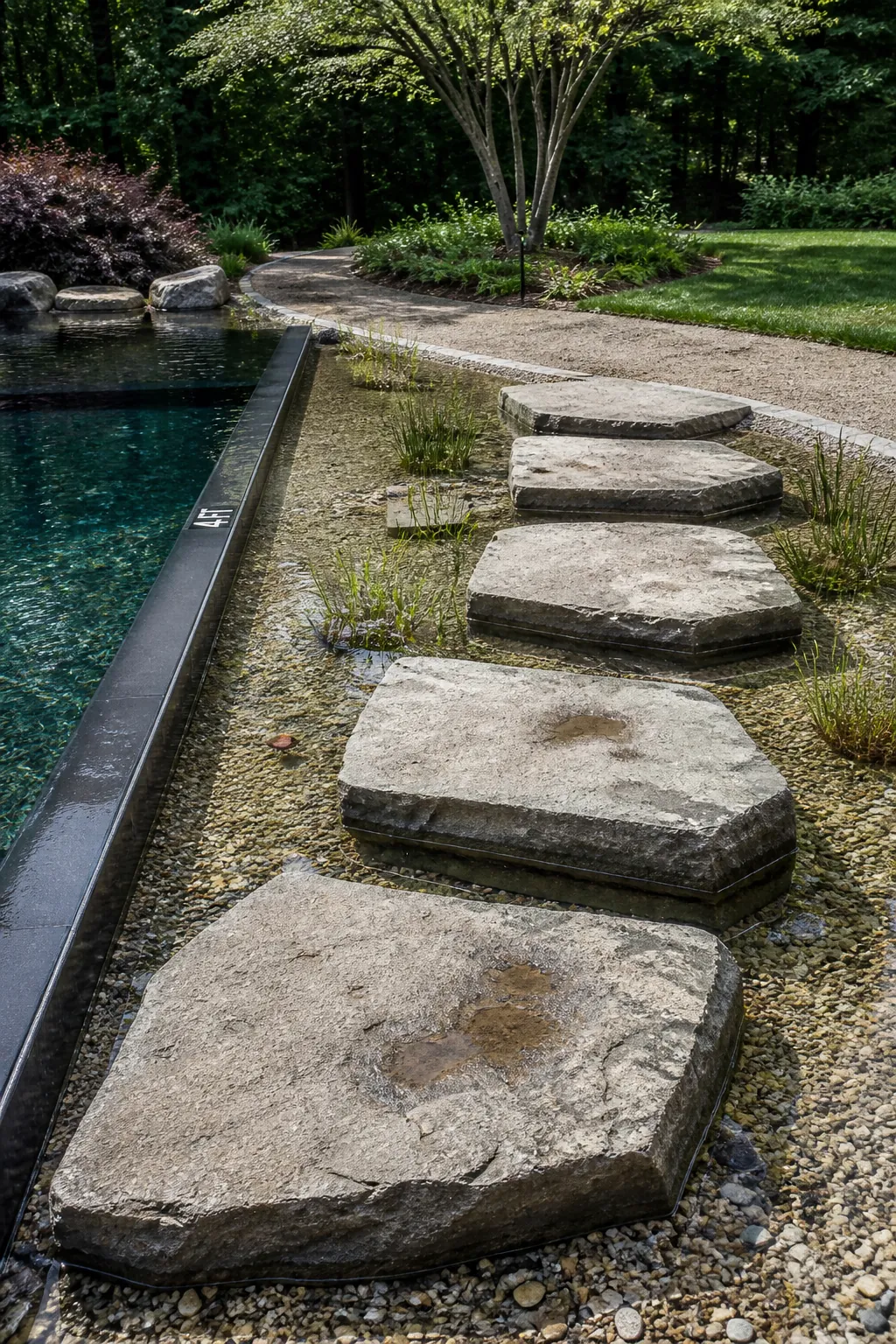
Broad flat stones crossing a shallow planted edge can create a memorable approach to the swimming zone. Vary their outlines while maintaining a comfortable, predictable stride. Gravel and low aquatic foliage around the stones make them look grounded rather than placed on top of the water.
Use this as a secondary garden route, not the only safe access. Stones must be stable and slip resistant, with no hidden depth change beside them. A conventional path should remain available for children, older visitors, equipment, and wet-weather use.