
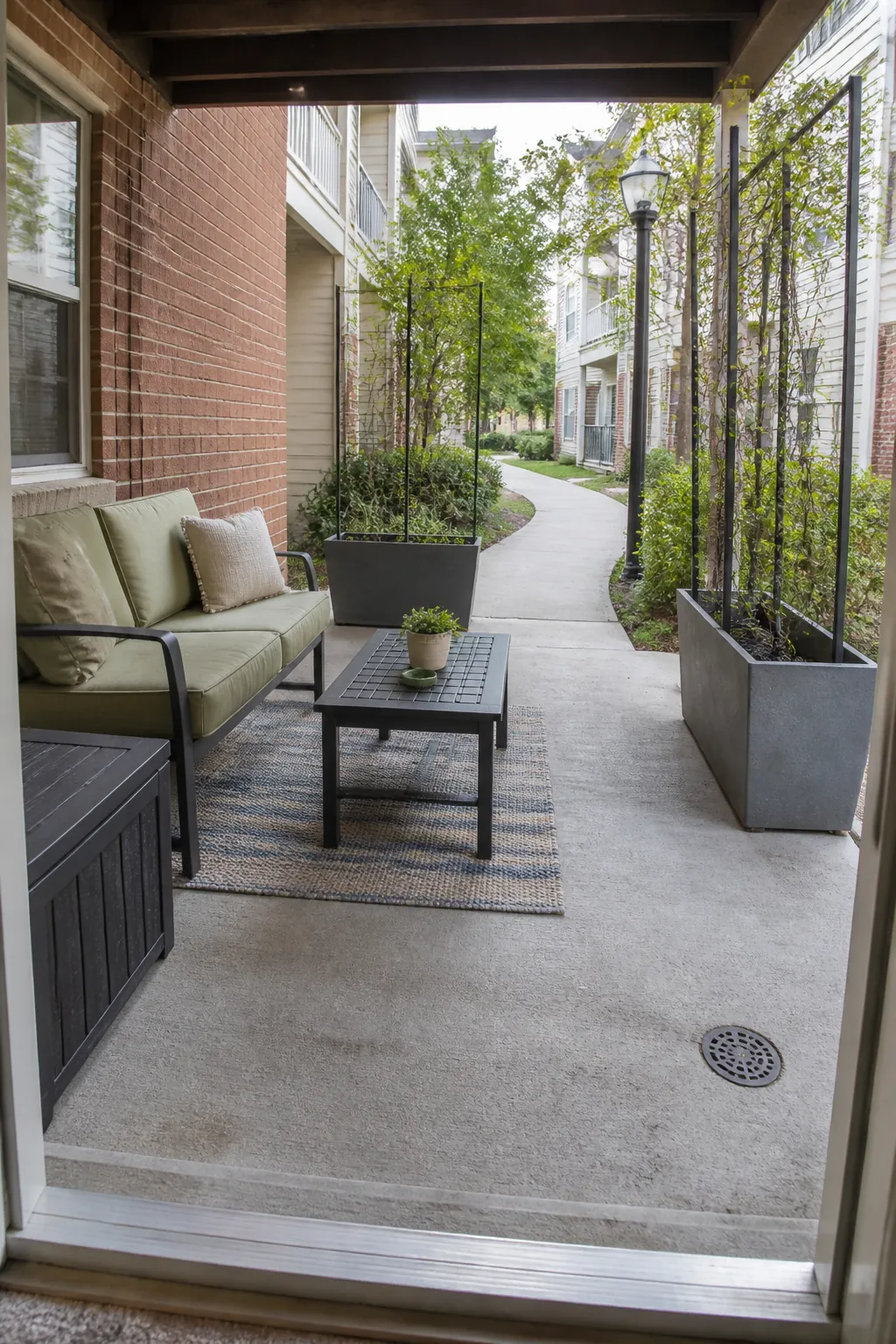
A ground-floor apartment patio is not simply a balcony without height. It sits beside shared paths, receives kicked-up grit and curious pets, and can expose your living room to every passerby. The best small patio ideas apartment ground floor renters can use create a clear boundary without turning the slab into a barricade.
Start with your lease and building rules. Keep doors, required egress, drains, utilities, and shared walkways completely open. Favor freestanding, weighted, portable pieces; remove or secure anything wind can lift. The goal is filtered privacy and comfortable use—not pretending a communal exterior is a sealed private yard.
A Pair of Planter-Trellis Screens
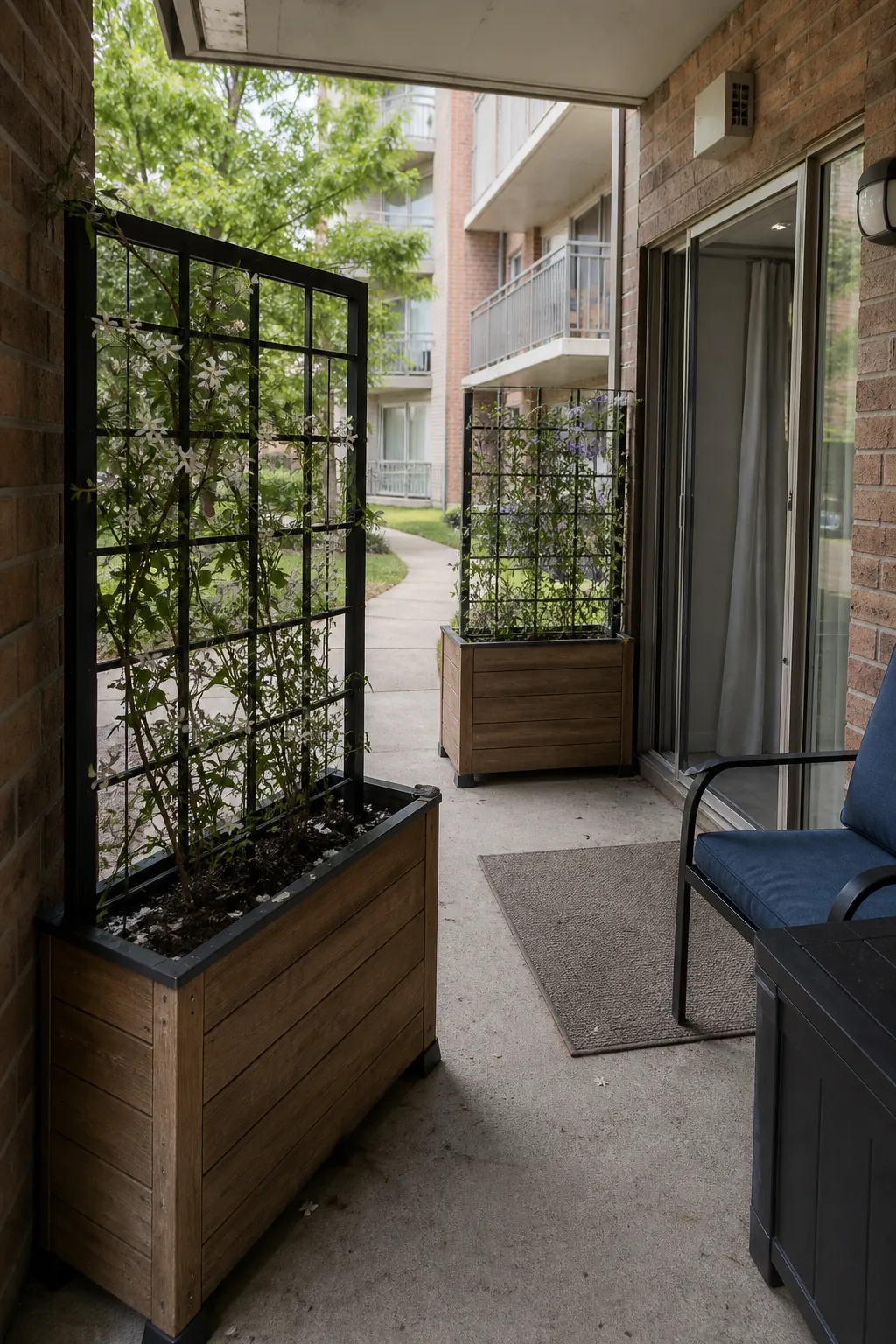
Two broad planter boxes with integrated trellises can interrupt sightlines from a shared path without drilling into the building. Choose a height and wind rating allowed by management, keep the bases stable, and train noninvasive container vines rather than covering every opening. Stagger the screens so daylight and a clear route remain.
A Tall-Grass Privacy Line
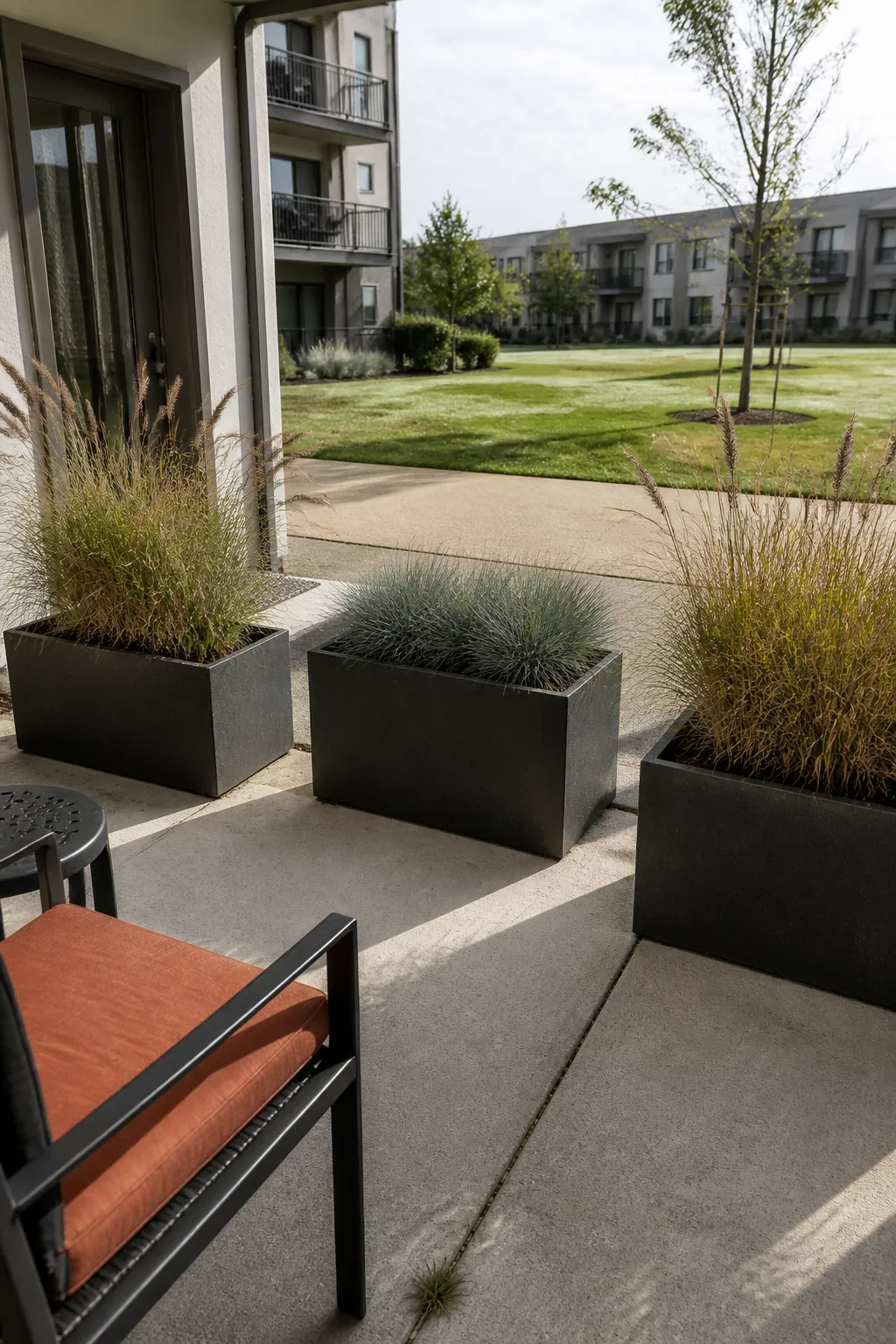
Three low, wide containers of climate-appropriate ornamental grass soften movement along the path while remaining more transparent than a solid screen. Avoid top-heavy pots and species that spread aggressively. Leave gaps so you can see out, inspect the boundary, and clean windblown litter.
A Slatted Freestanding Divider
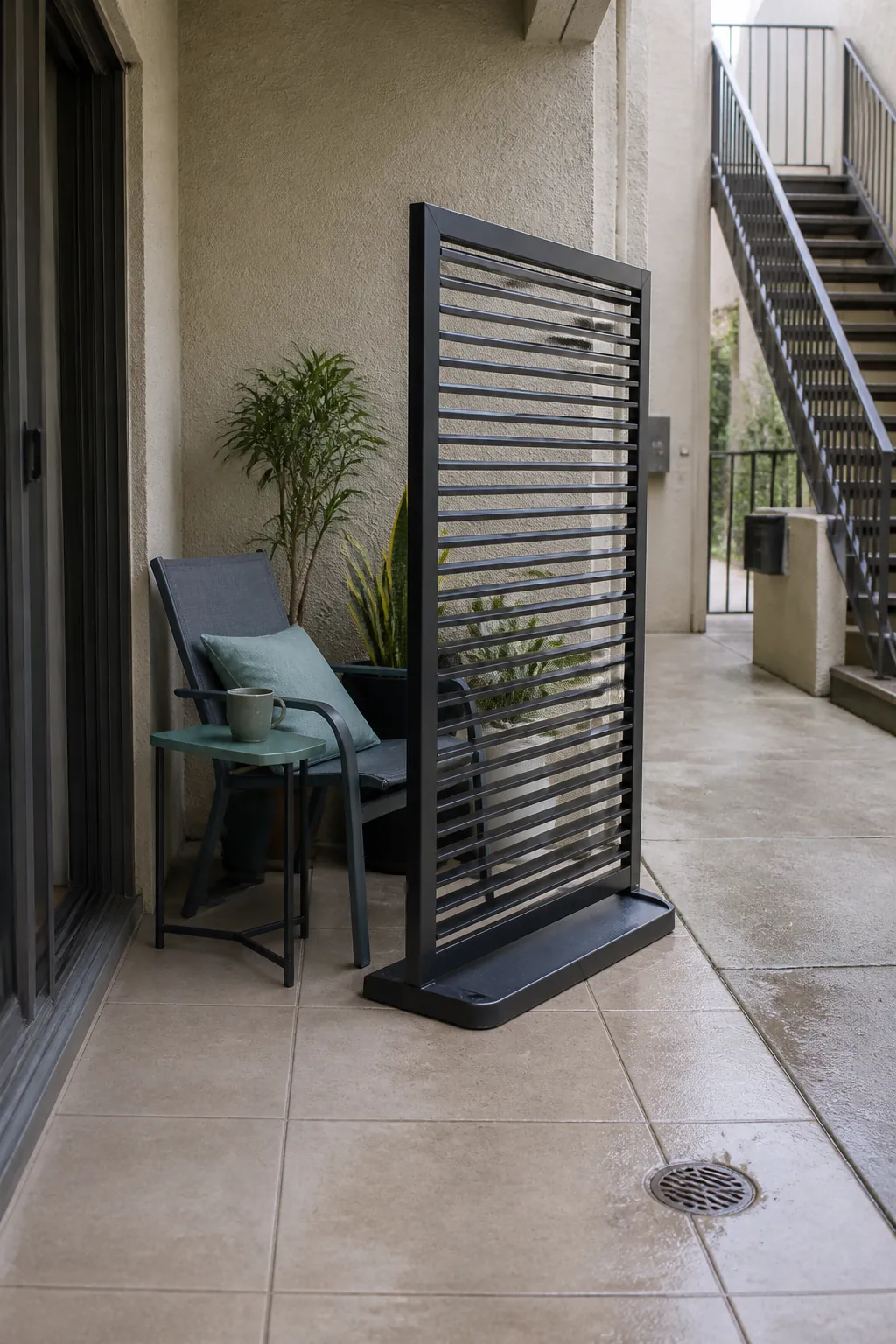
A purpose-made outdoor divider with a broad weighted foot can shield the chair nearest a walkway. Angled slats preserve airflow and light better than an opaque panel. Position it wholly inside your assigned patio and follow its wind guidance; never improvise a sail-like wall from loose fabric.
A Bench Facing the Apartment
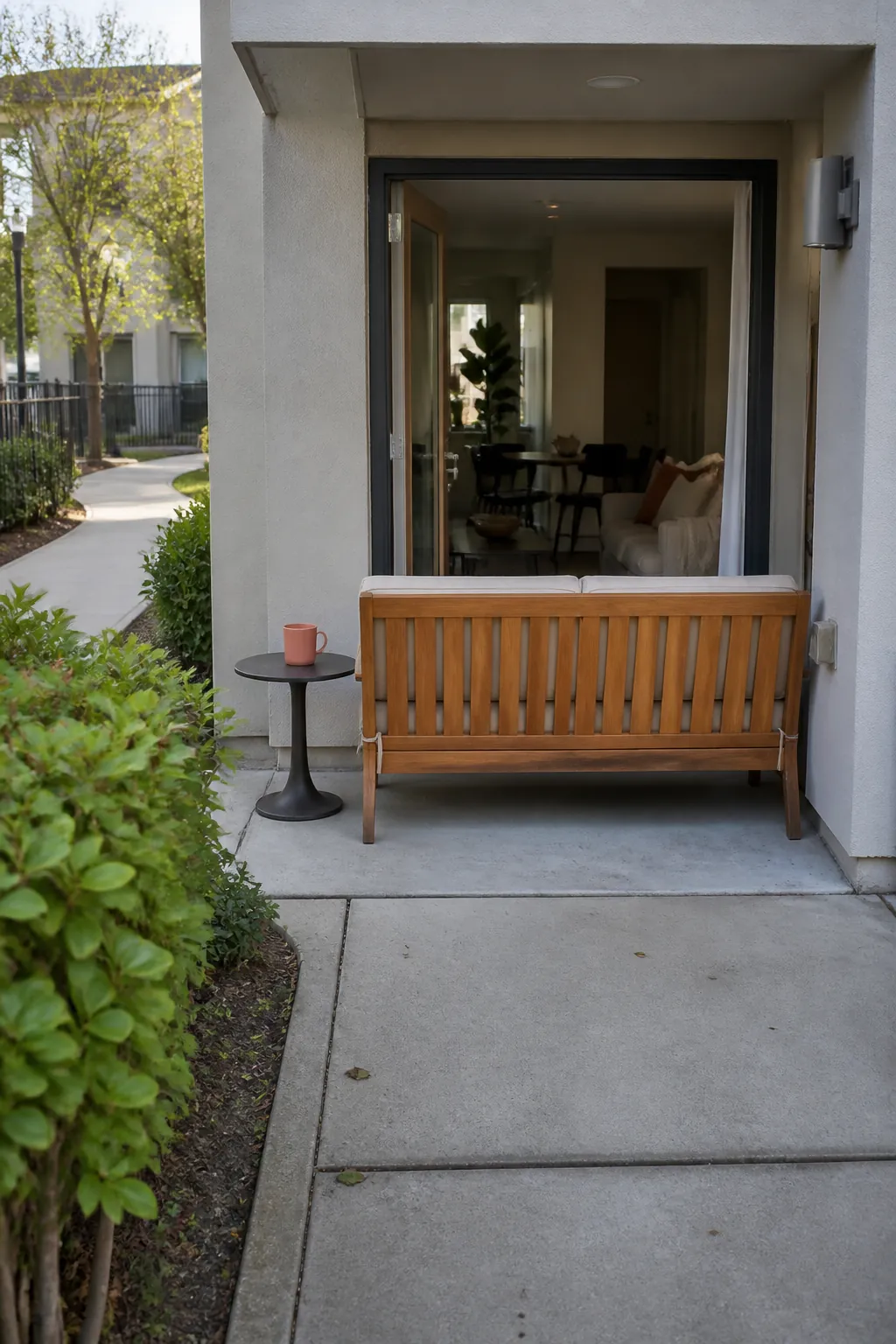
Sometimes orientation creates more comfort than another screen. Turn a narrow bench toward the apartment or side garden so passersby are behind the sitter rather than directly in view. A slim table beside it preserves the exit route and makes the patio feel intentional with only two pieces.
A Corner Café Table
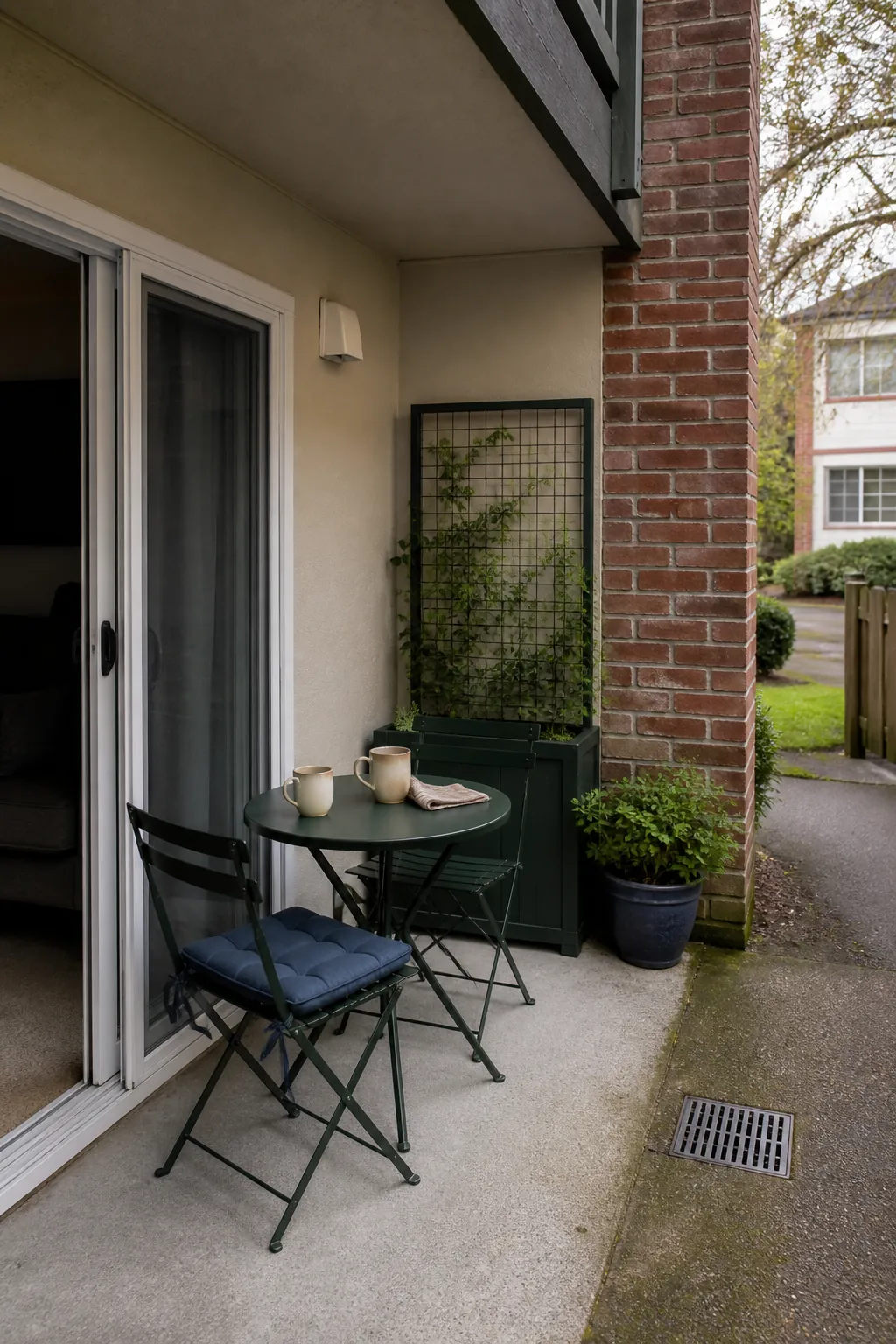
Place a small round table in the most protected corner and use armless chairs that tuck fully underneath. This keeps the exposed edge open and gives the seating a visual back. Test the door swing with both chairs pulled out; if the route disappears, the table is too large.
A Storage Bench Boundary
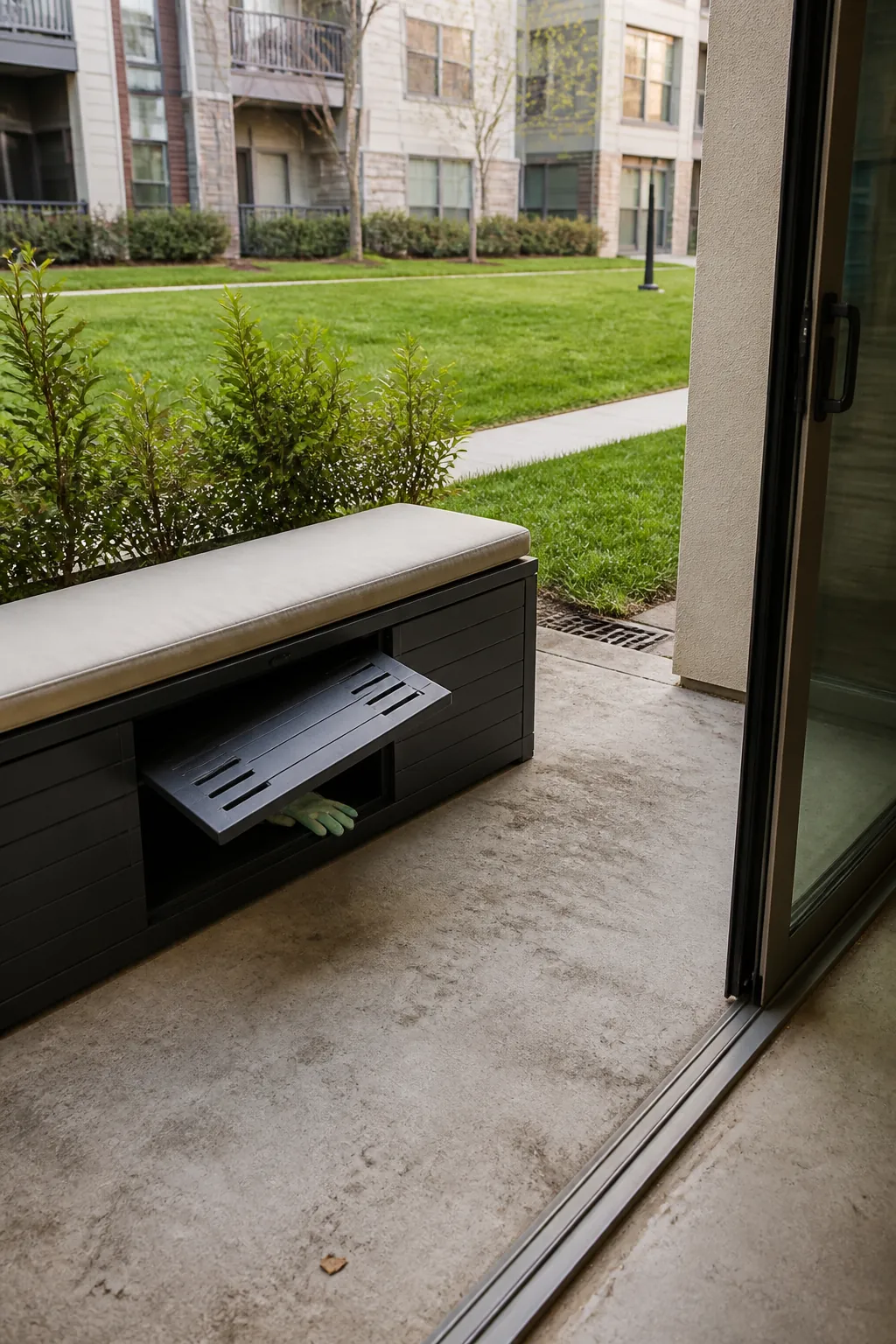
A low weatherproof bench can mark where private space begins without blocking views or resembling a fence. Store cushions and gardening supplies inside, but keep chemicals elsewhere in locked adult storage. Maintain clearance from drains, utility panels, and the shared path.
A Removable Deck-Tile Zone
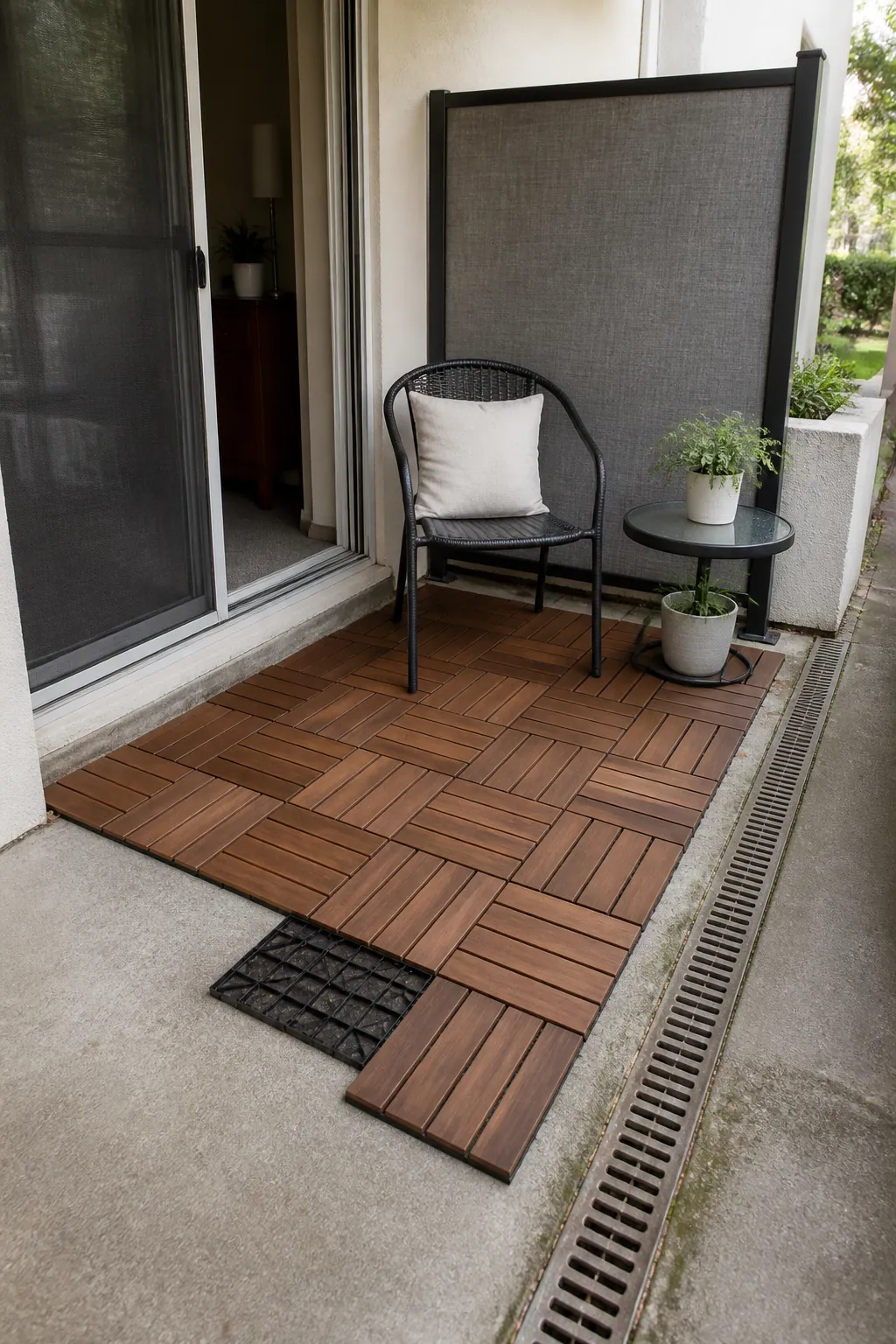
Interlocking outdoor tiles can visually separate your patio from adjacent concrete without adhesive. Confirm they are permitted, leave drainage channels and door thresholds unobstructed, and lift them periodically to clean underneath. Use tiles only beneath the seating zone instead of forcing them into every irregular edge.
A Quick-Dry Rug Inside the Perimeter
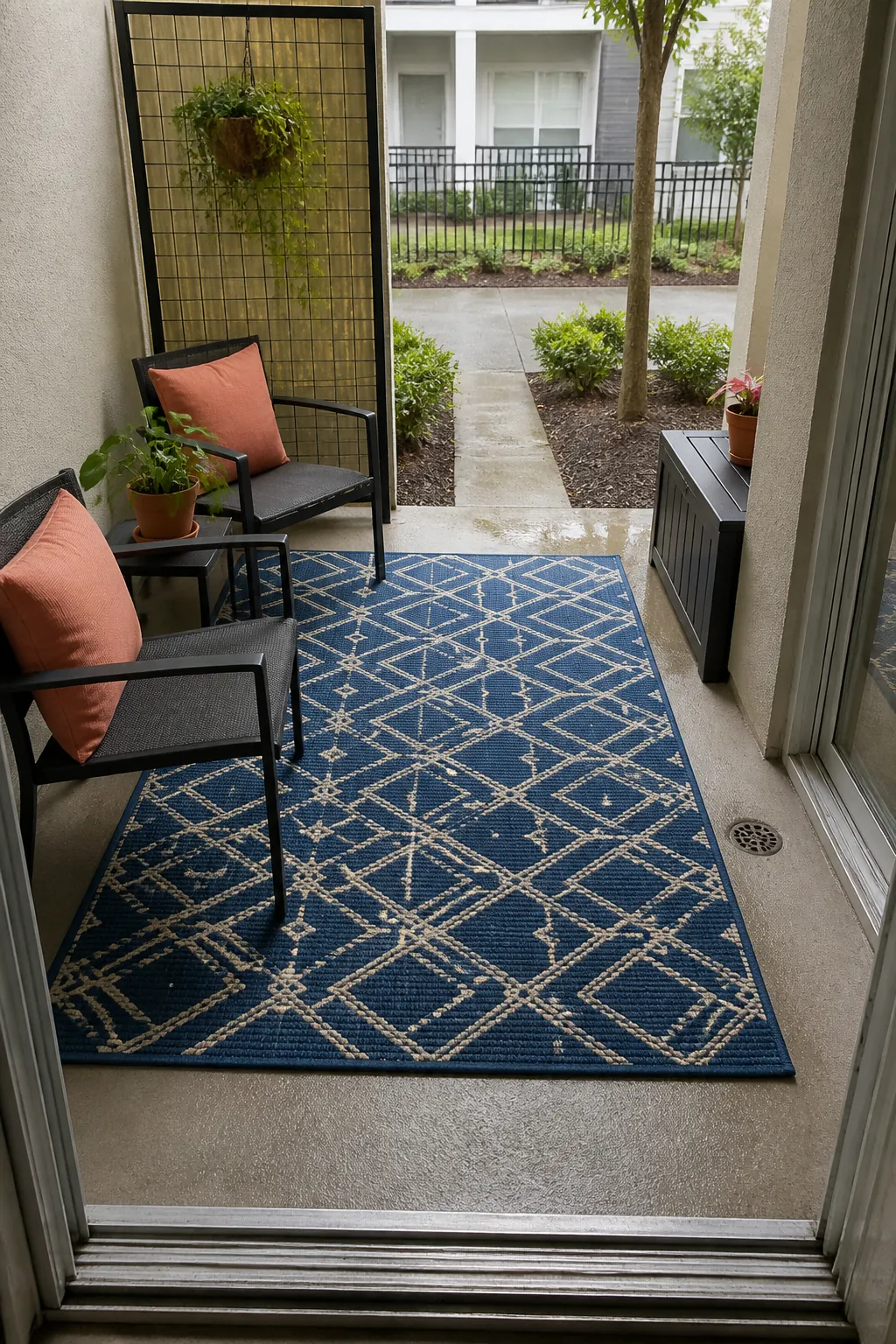
A thin, flat outdoor rug makes bare concrete feel like a room, but its edges must stay inside the assigned patio and away from the main door track. Pick a quick-drying weave, use an appropriate nonslip backing, and roll it up during prolonged damp weather or building maintenance.
A Rolling Herb Cart
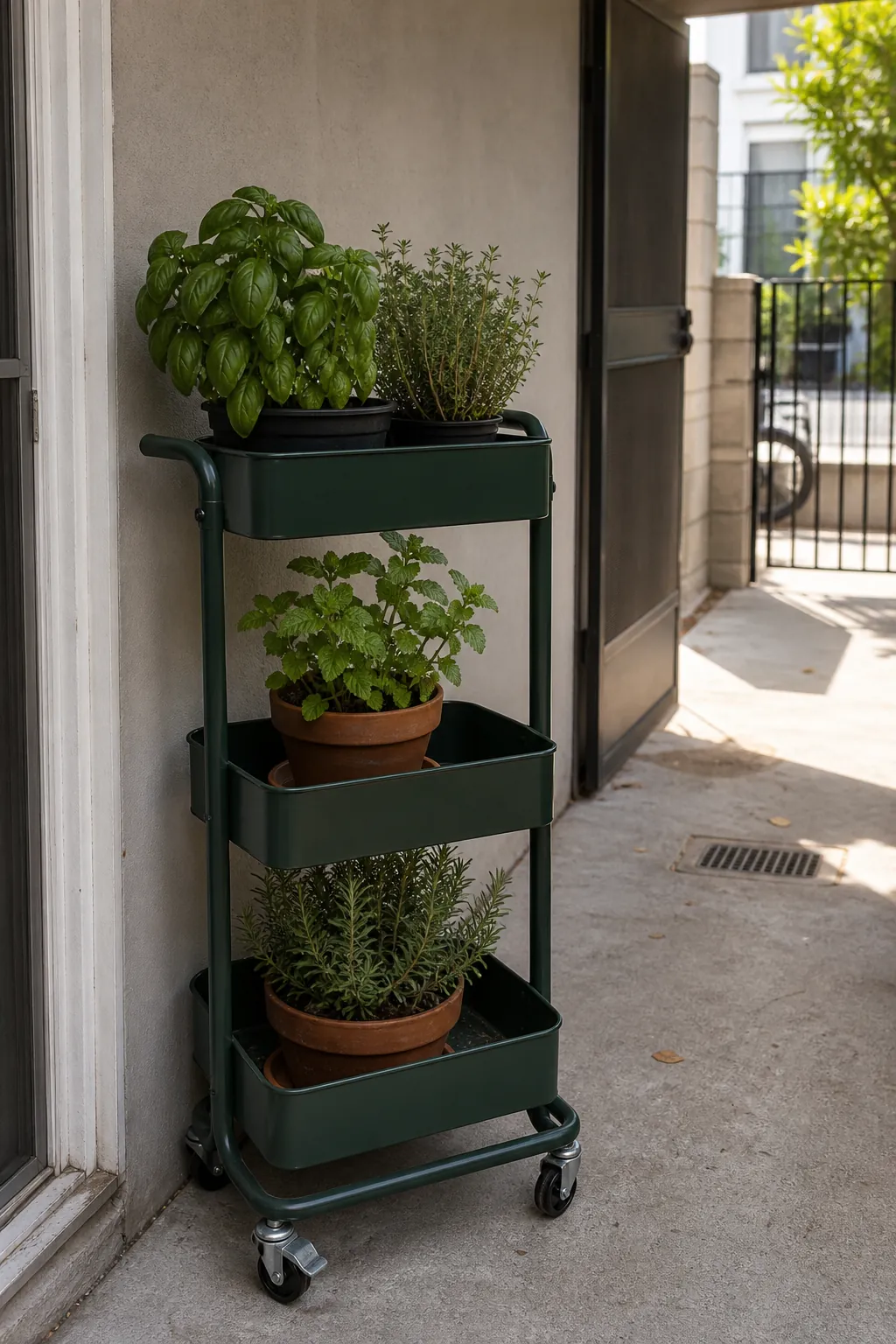
A lockable three-tier cart lets herbs follow the small patch of sun, then returns against the wall after watering. Use saucers, keep heavy pots low, and select plants for the actual light. The cart should move only when stable and never become an obstacle at the door.
A Shady Hosta Cluster
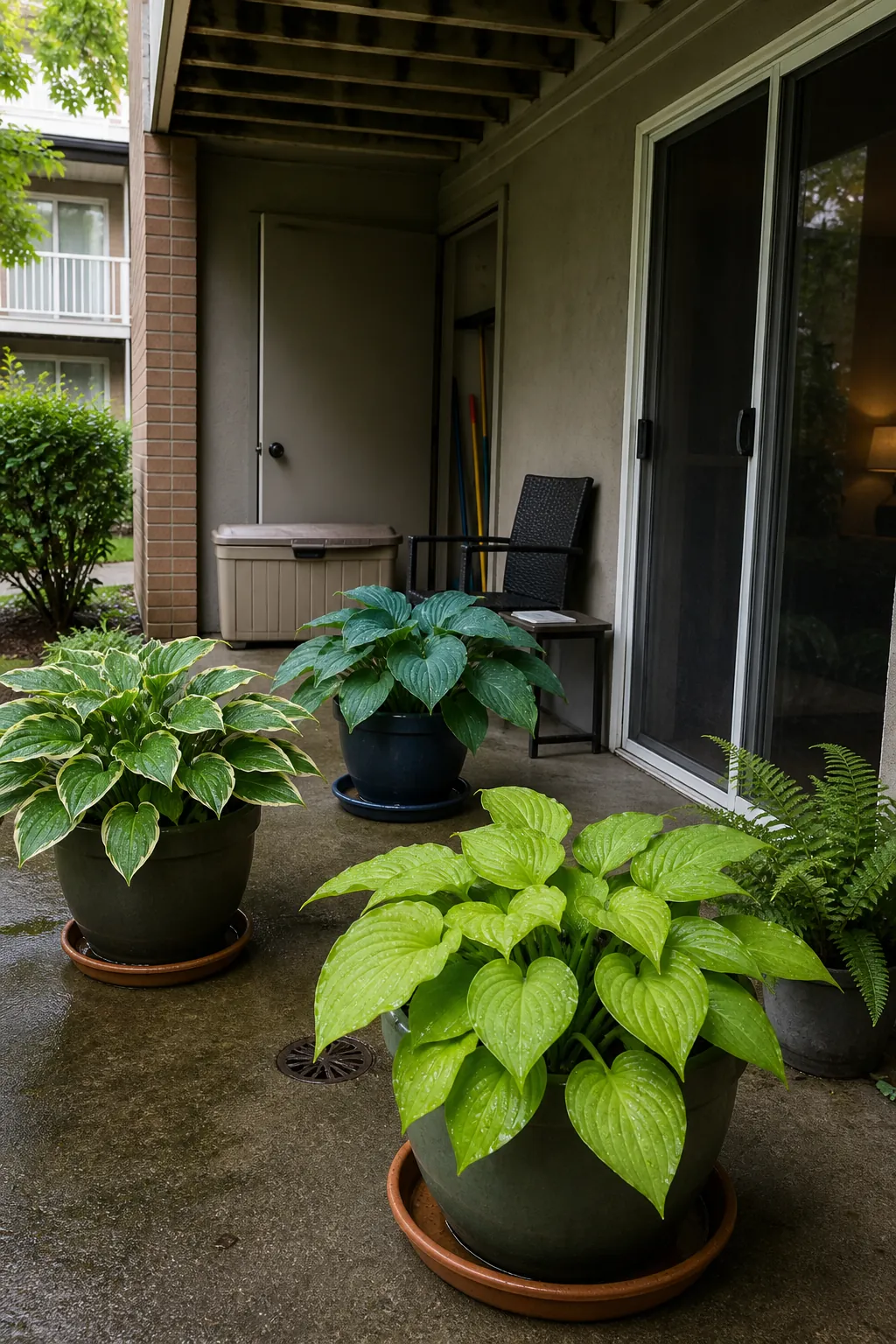
Under an upstairs balcony, foliage often succeeds where sun-loving flowers struggle. A cluster of three broad, stable pots with shade-suited plants creates depth without fake greenery. Verify plant safety for pets and children, use saucers, and keep foliage from brushing the building or trapping moisture.
A Narrow Vertical Herb Stand
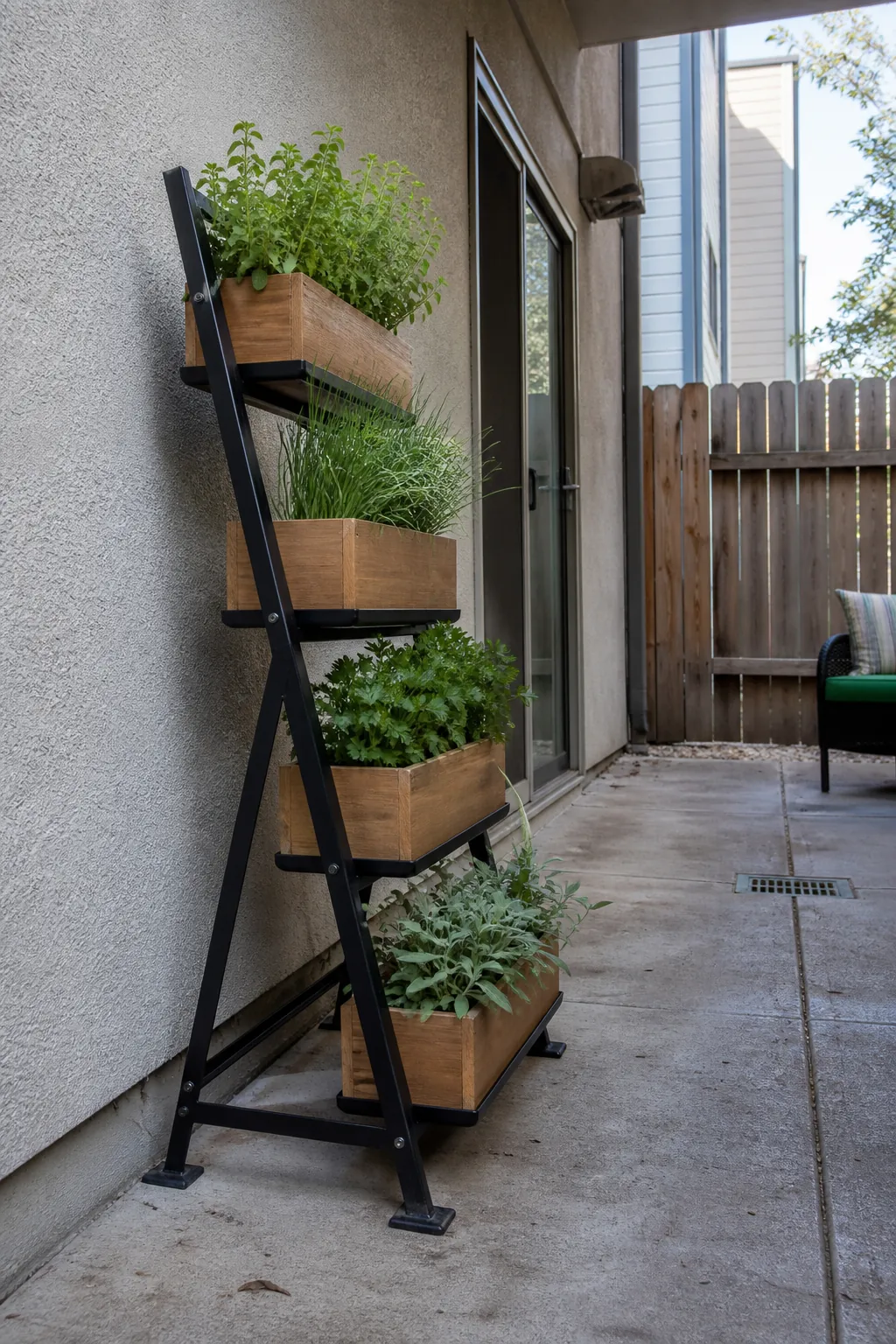
A freestanding tiered planter uses vertical space without attaching to siding. Keep the stand lower than lease limits, put heavier containers on the bottom, and ensure every tray drains into a saucer. Position it where falling leaves or water cannot enter a neighbor’s path.
A Foldable Morning-Coffee Set
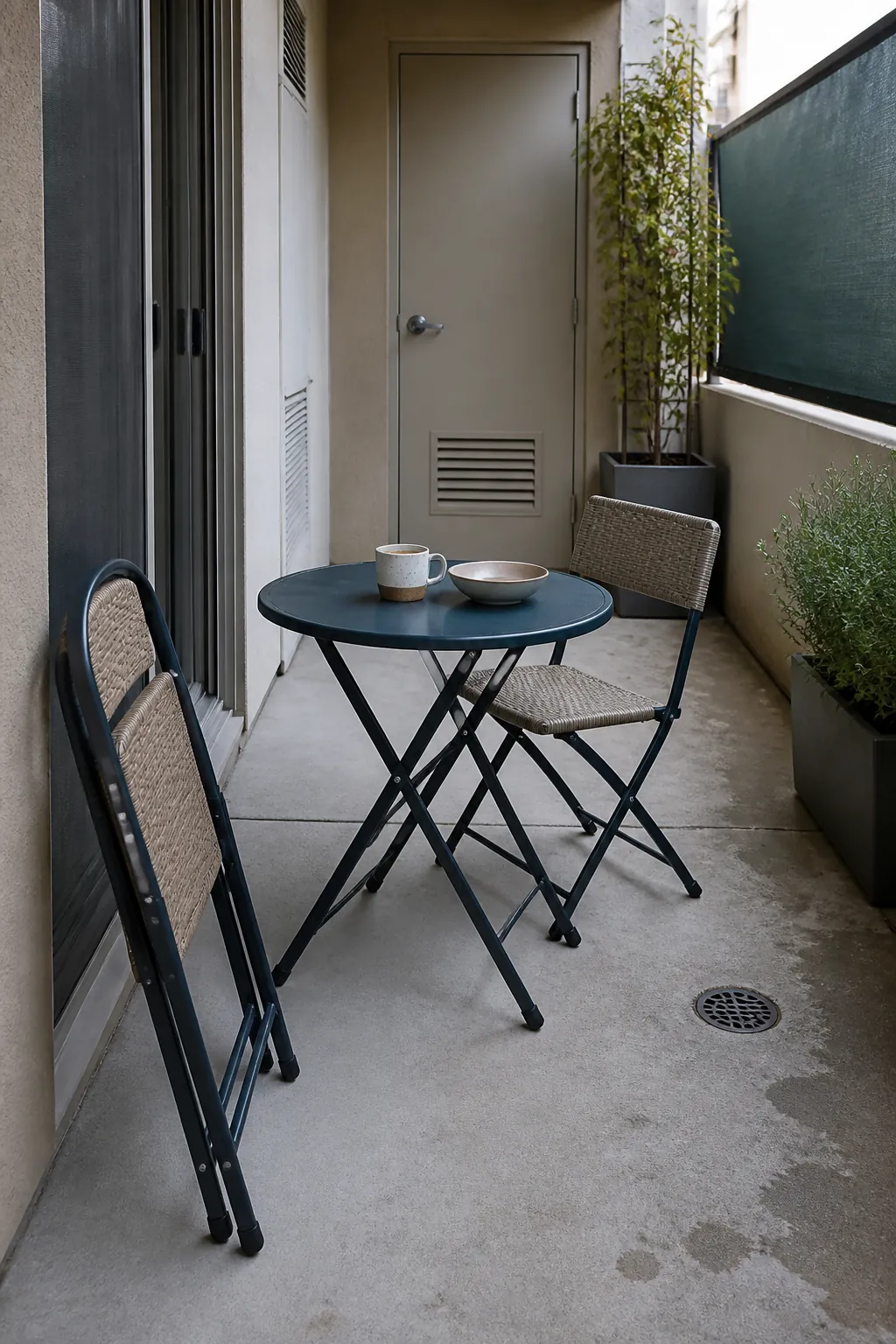
A lightweight table and two folding chairs serve breakfast, then collapse to free the entire slab. Choose locking hinges and store pieces securely so wind cannot move them. This is especially useful when maintenance crews need access or the patio doubles as the route to a small yard.
A Low-Lighting Layer
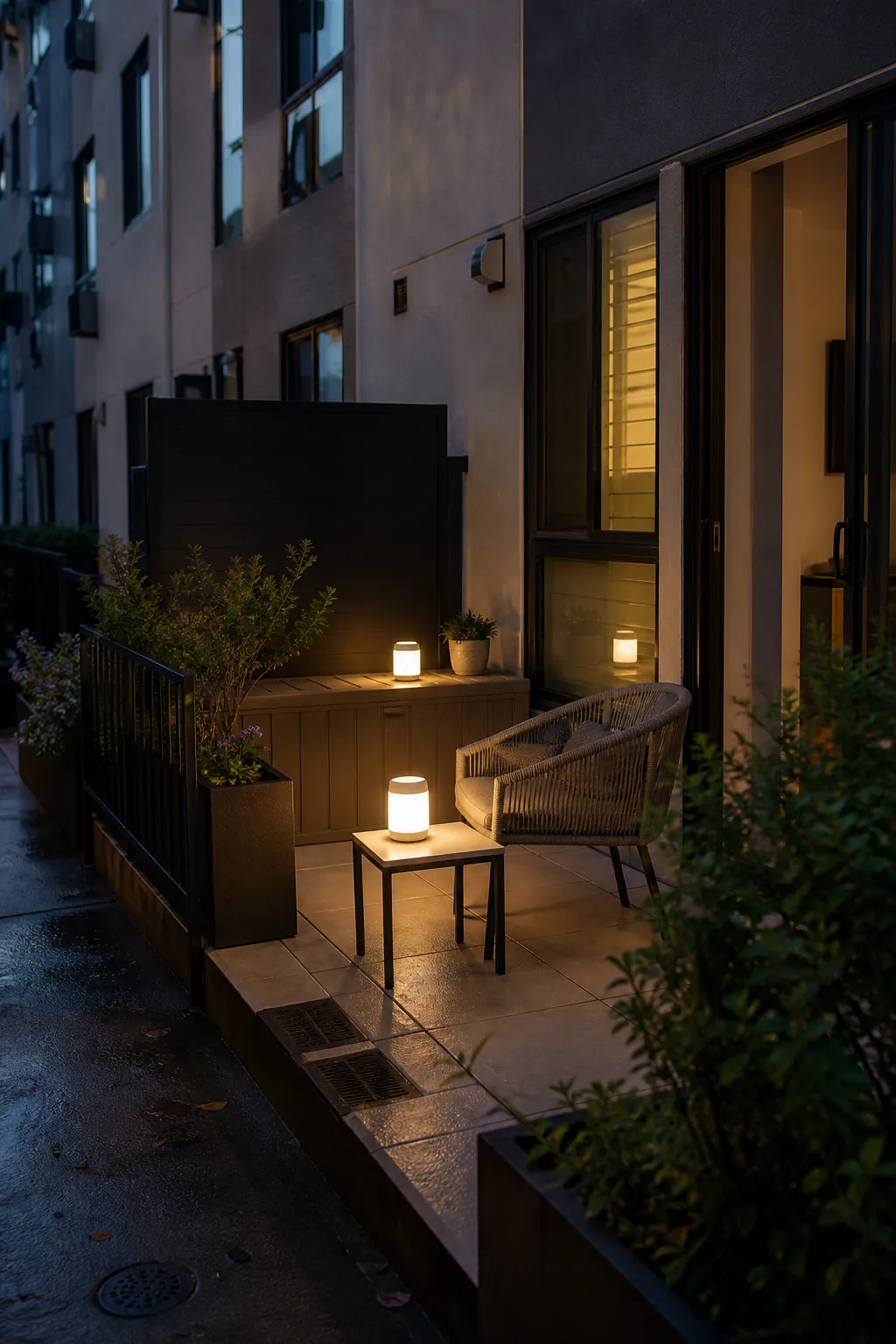
Use outdoor-rated rechargeable table lamps or management-approved fixtures instead of running cords across the door. Keep light warm, low, and aimed within your patio so it does not shine into neighboring units or the shared path. Bring portable lamps inside after use.
A Compact Rain-Ready Corner
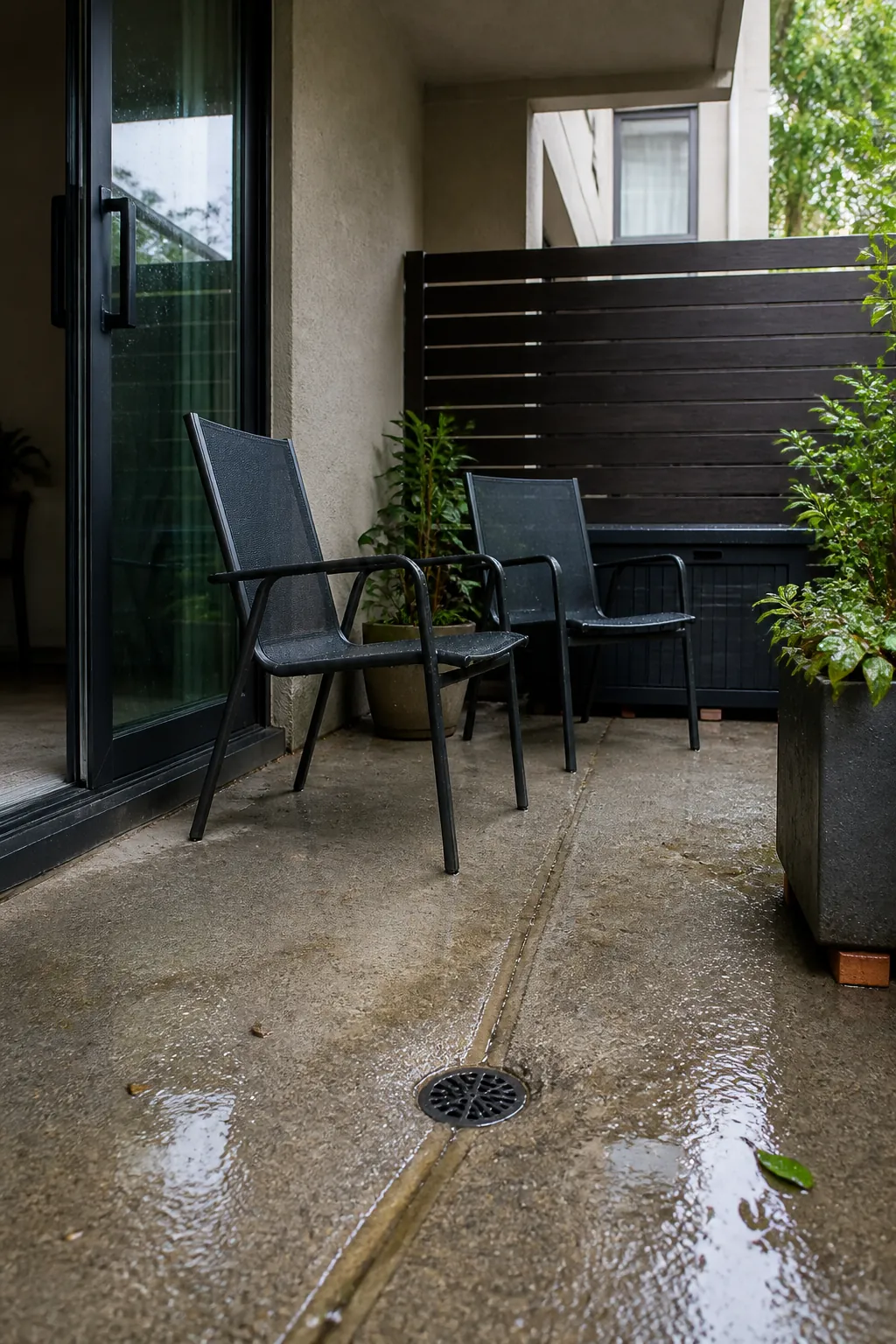
Choose mesh chairs, raised planters, and a vented cushion box so water drains and air circulates. Leave the slab’s natural slope and drain uncovered. After storms, inspect for pooled water, debris from upper balconies, and damp textiles before setting the patio back up.
A Pet-Aware Planting Strip
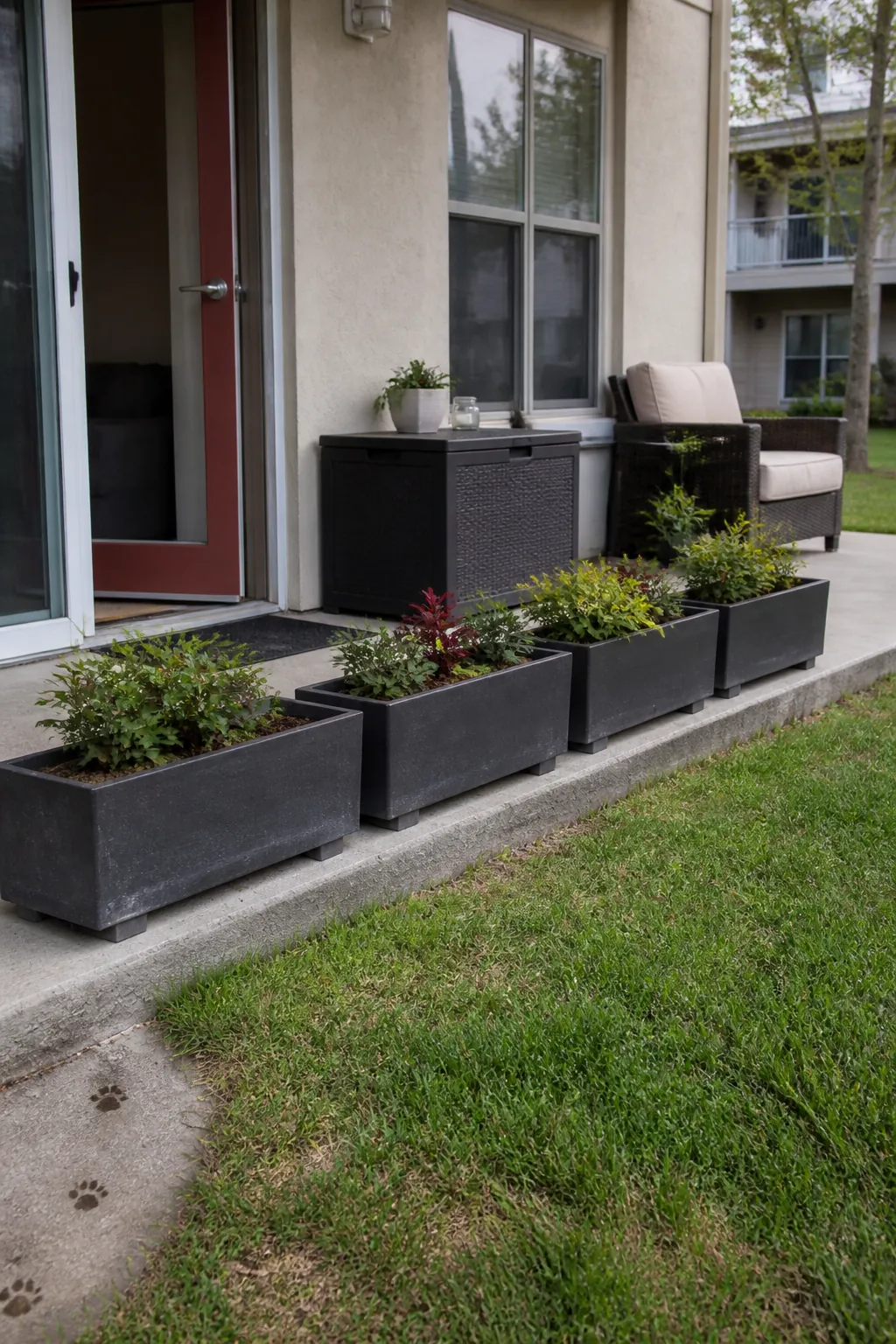
A row of low planters can discourage casual cut-throughs without becoming a dangerous barrier. Select non-toxic plants for animals likely to pass nearby, avoid sharp stakes, and keep pots entirely within your area. Plants do not replace management action for uncontrolled dogs or security concerns.
An Indoor-Outdoor Color Link
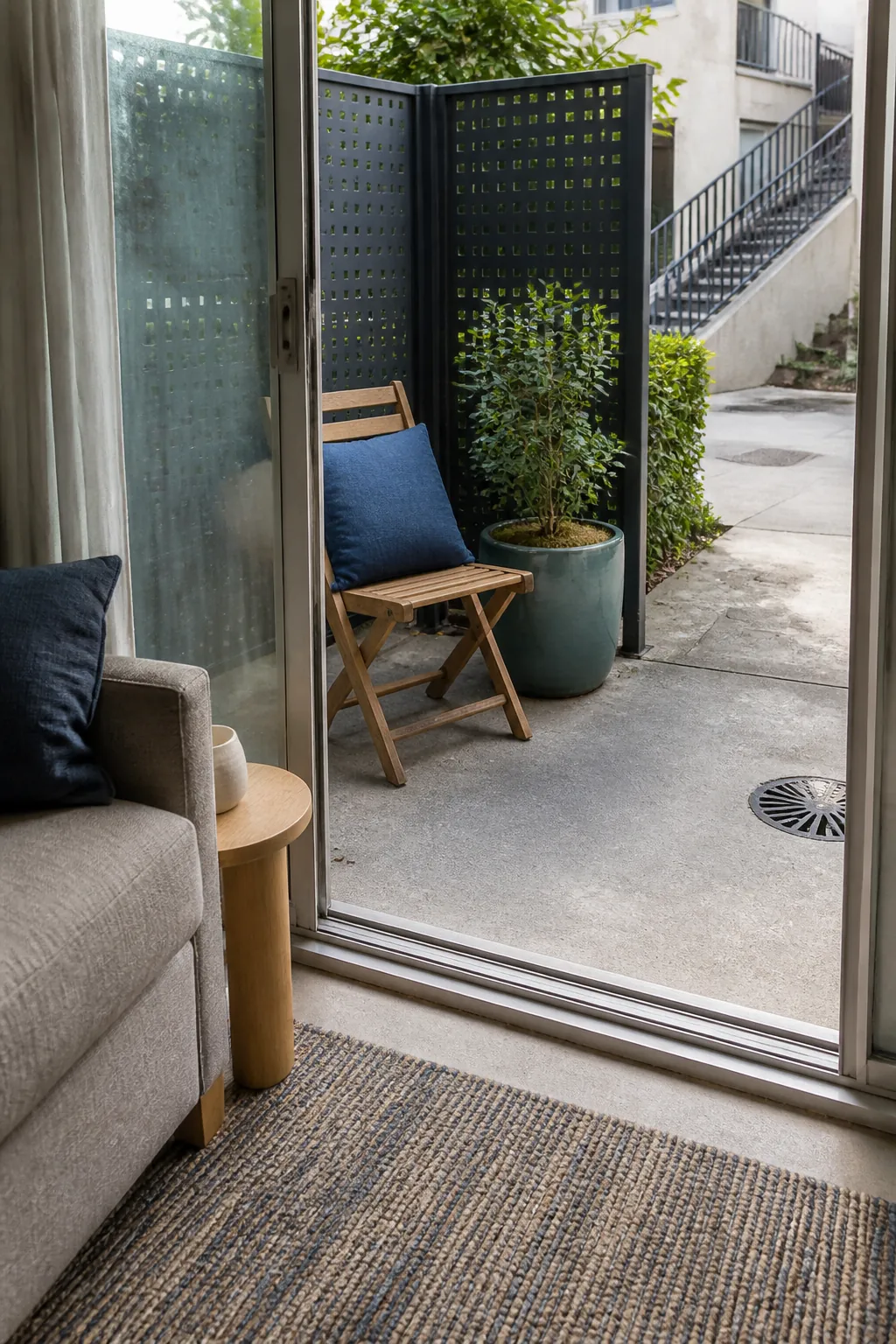
Repeat one indoor color outdoors—a muted blue cushion, green planter, or warm wood tone—so the small slab reads as an extension of the room through the glass. Keep the palette edited. Visual continuity adds depth without adding another object to the floor.
A Shared-Path Buffer With Open Sightlines
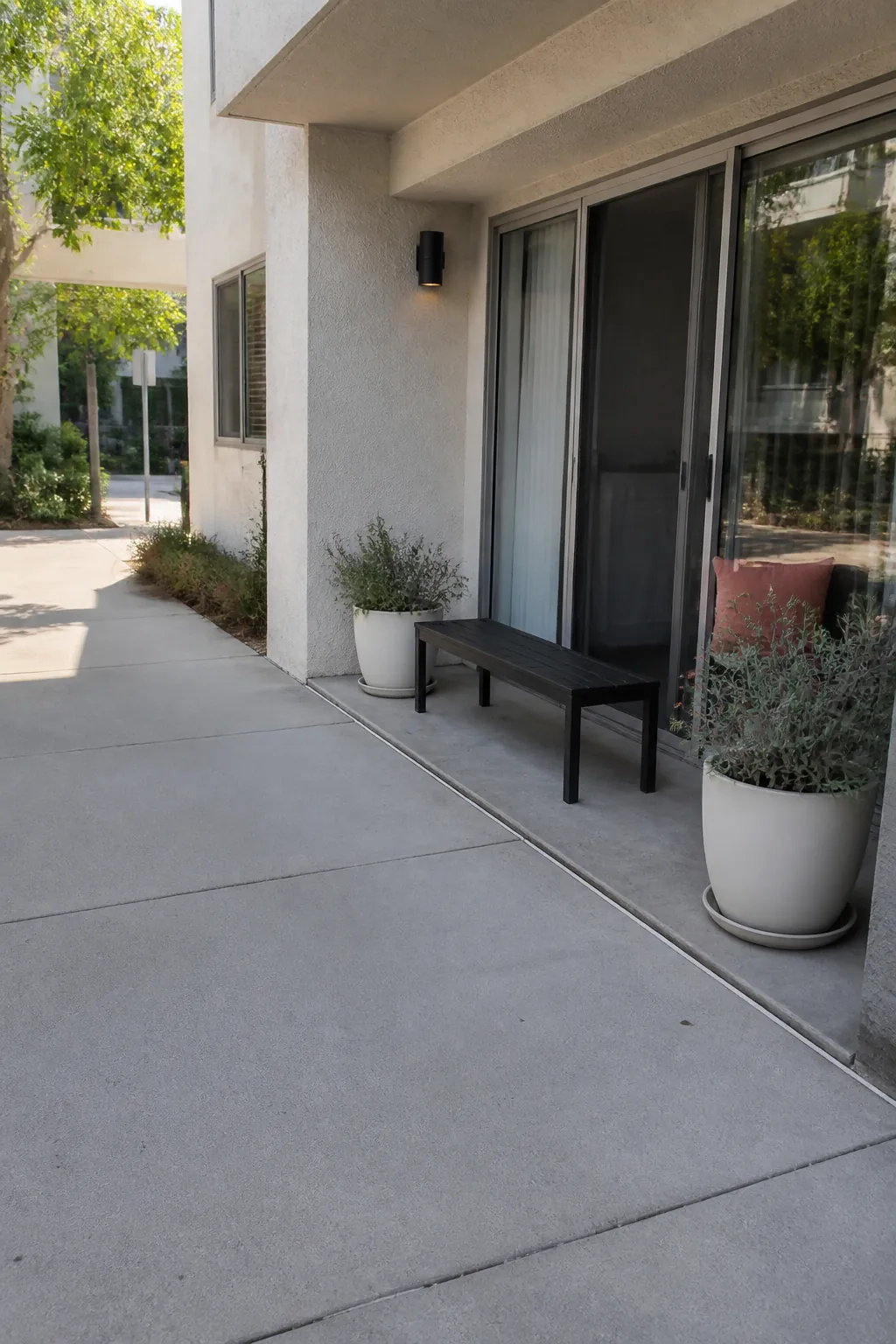
Combine one low bench, two spaced planters, and an intentional gap at the official entrance. The arrangement signals a boundary while preserving visibility and access. Never narrow a common walkway, obstruct accessibility, or install anything beyond your assigned patio line.
A Seasonal One-Bin Rotation
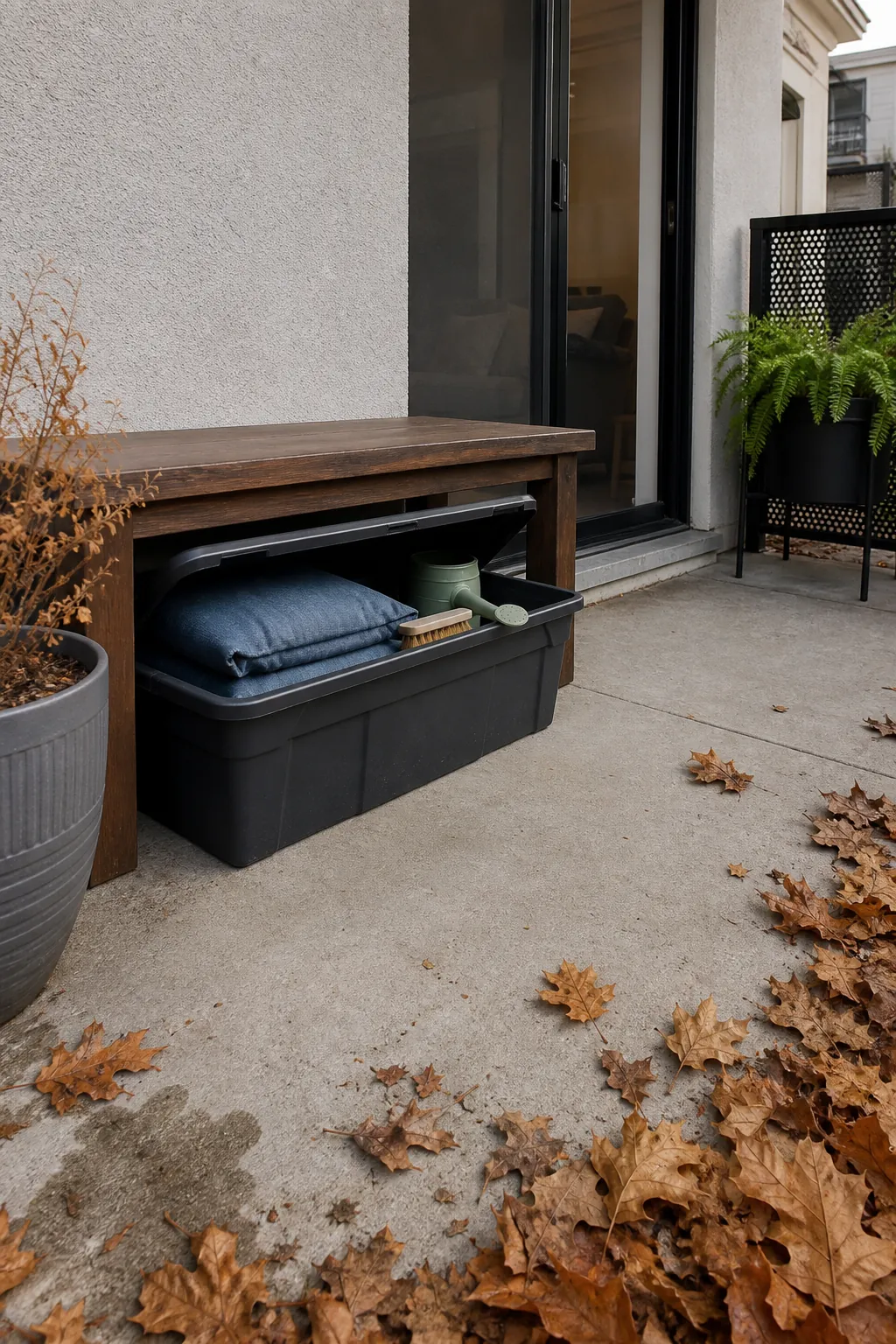
Limit seasonal decor, watering tools, and spare textiles to one weatherproof bin that fits under a bench. Rotate rather than accumulate. A ground-floor patio stays easier to inspect for pests, moisture, and stray debris when the slab is not lined with rarely used containers.
A Door-to-Path Clear Zone
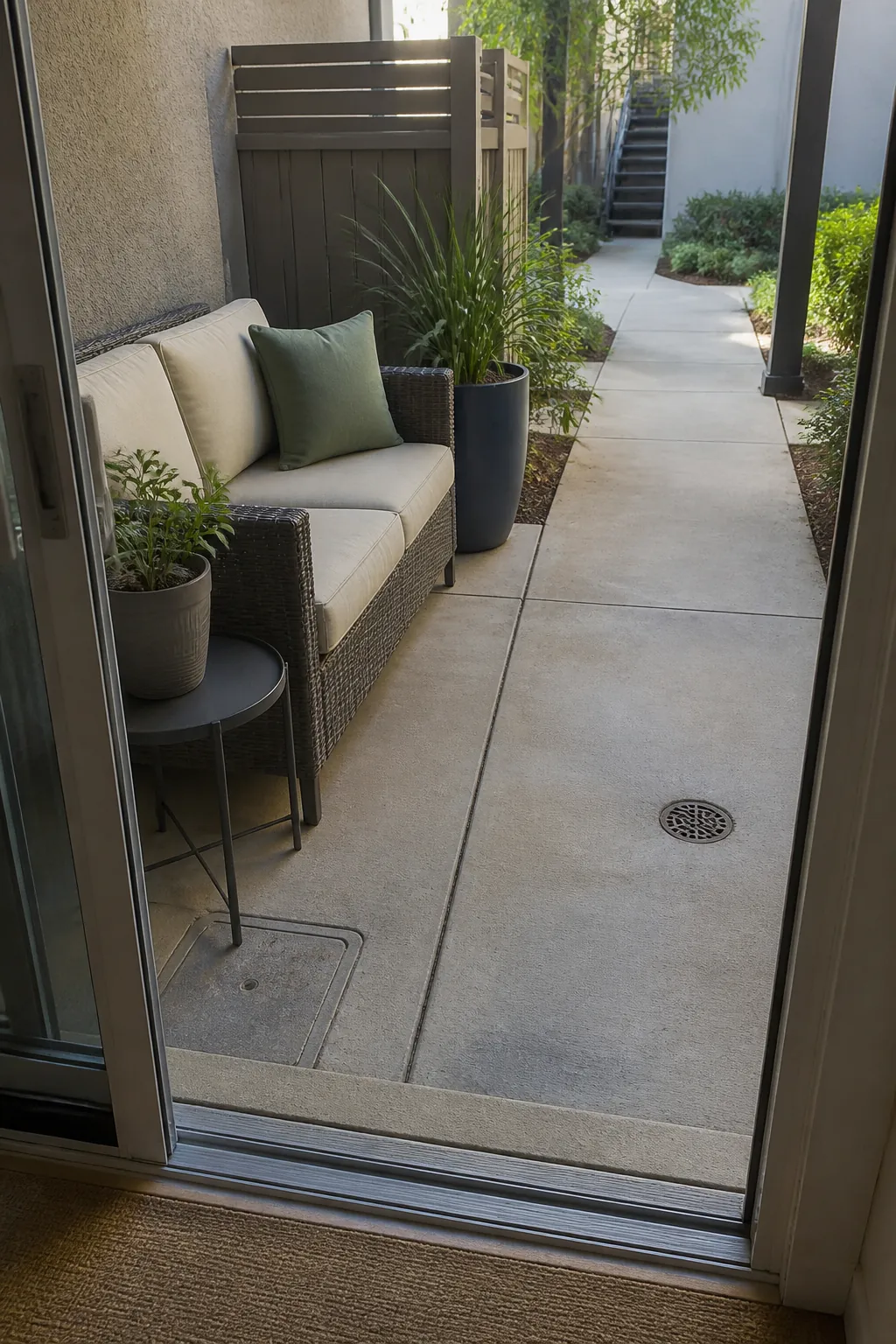
The final design move is empty space. Preserve a continuous route from the apartment door to the designated patio opening or shared path, and test it with every chair in use. Keep drains, utility access, thresholds, and building equipment visible. Place privacy pieces beside this route, never across it.
That open strip solves more than movement. It makes cleaning faster, reveals pooled water or pests, gives maintenance staff access, and prevents a collection of renter-friendly objects from becoming one unfriendly obstacle. Once the route is protected, every plant, rug, and seat has a clear zone and purpose.