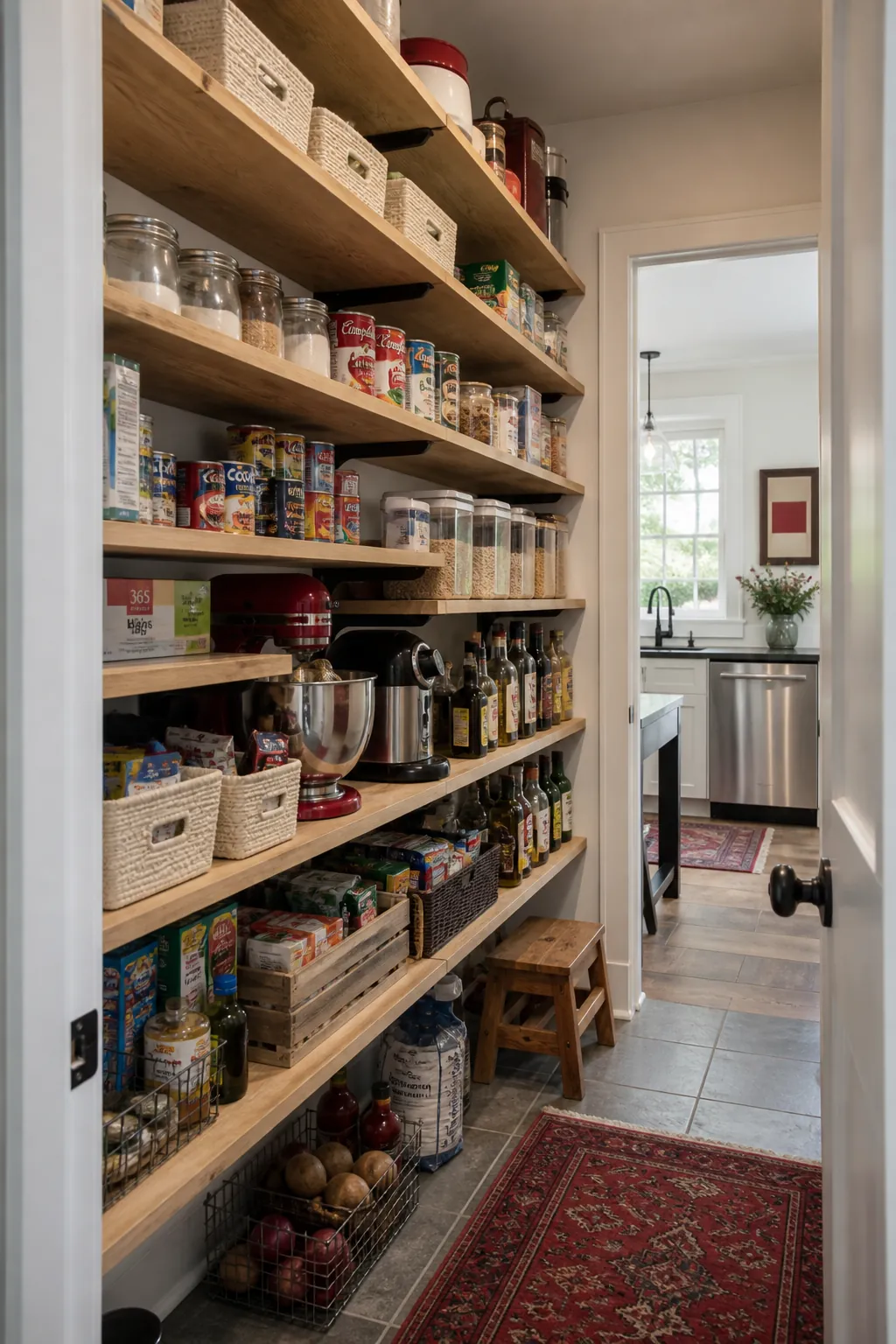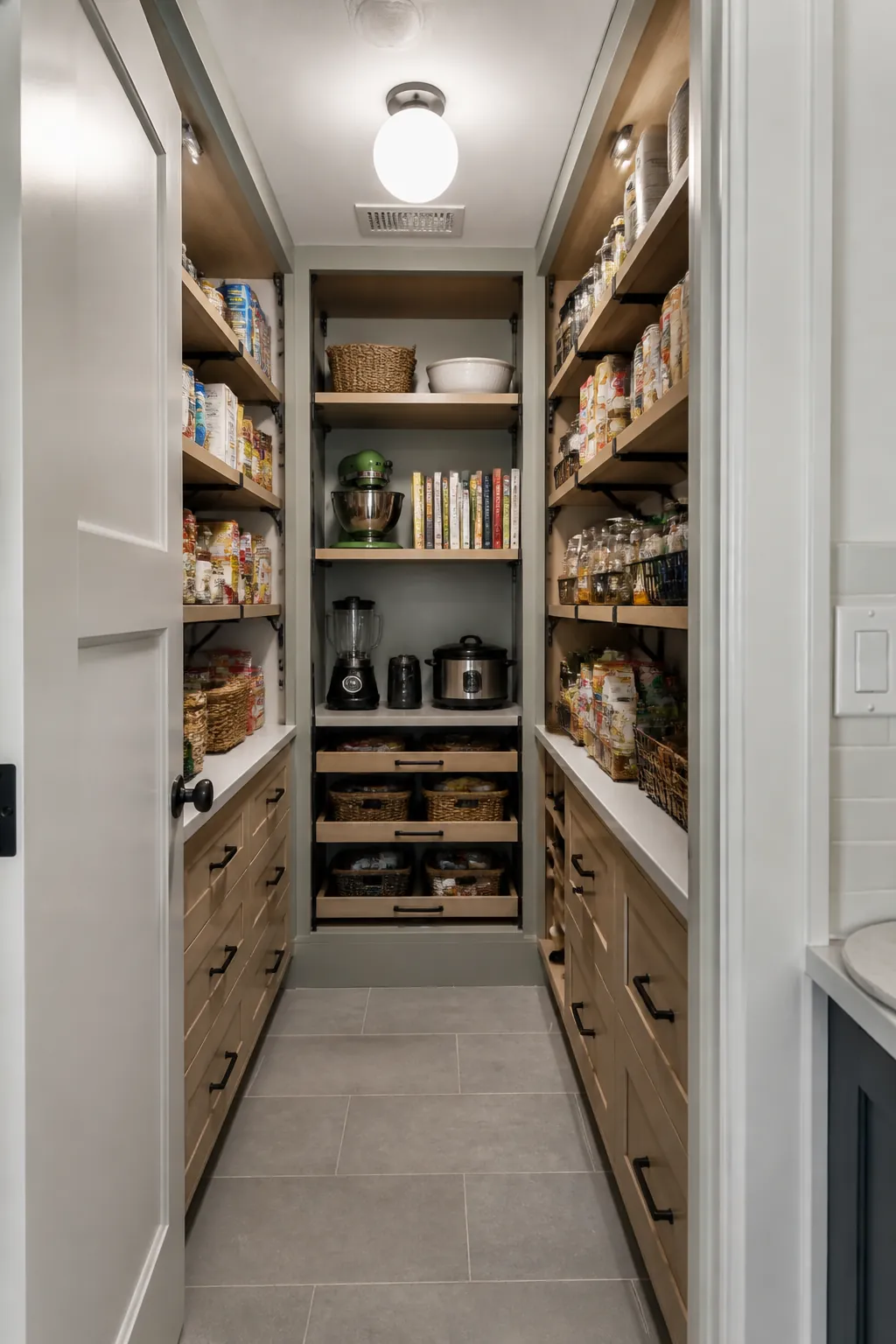
Shelf dimensions decide whether a pantry feels effortless or becomes a hiding place for expired food. These 21 walk in pantry ideas layout shelves match depth, spacing, support, and reach to the things a household actually stores—while protecting the aisle that makes a walk-in room worth having.
Make Cans One Row Deep
Shelves around 8 inches deep keep cans and standard jars visible without risers. This single-depth approach is especially effective in a narrow walk in pantry where every inch added to shelving comes out of the aisle.
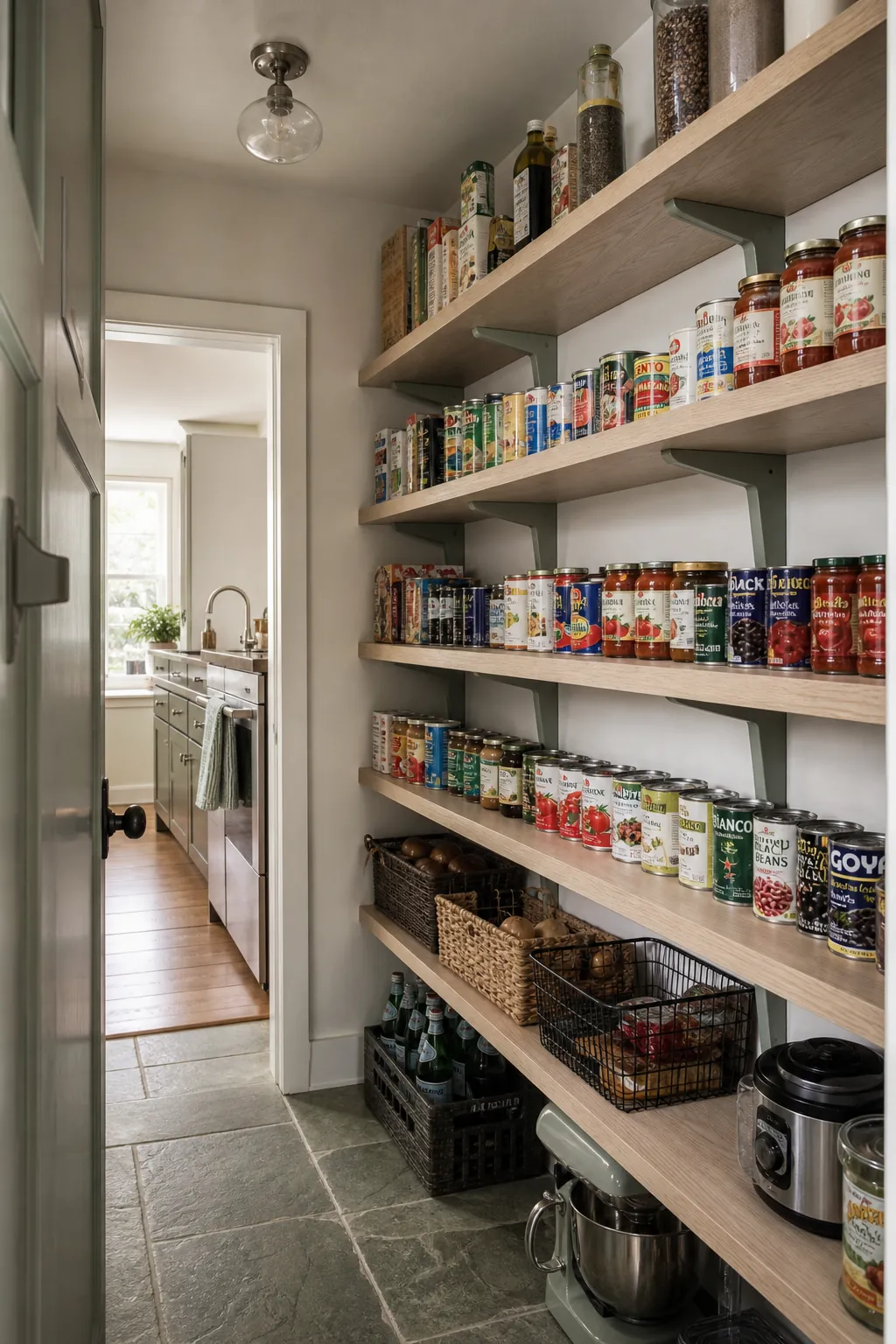
Use Twelve Inches for Flexible Groceries
A 12-inch shelf accommodates many cereal boxes, baskets, and small appliances without becoming a cave. Treat it as a flexible middle depth, not an automatic dimension for every wall.
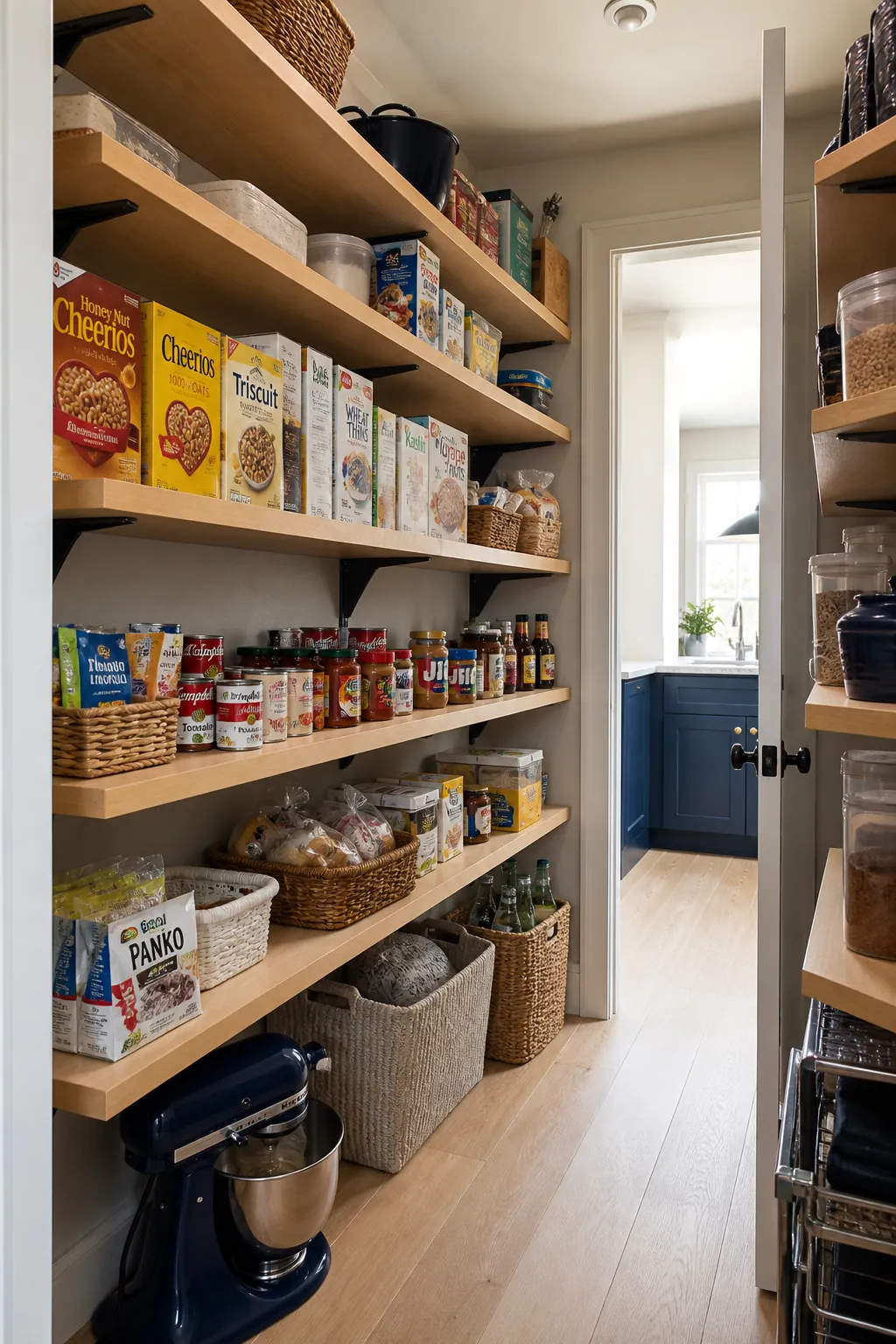
Put Sixteen-Inch Shelves at the Back
A deeper back-wall bay suits mixers, pressure cookers, bulk packs, and large pots. Limiting that depth to the room’s endpoint protects the central passage along the side walls.
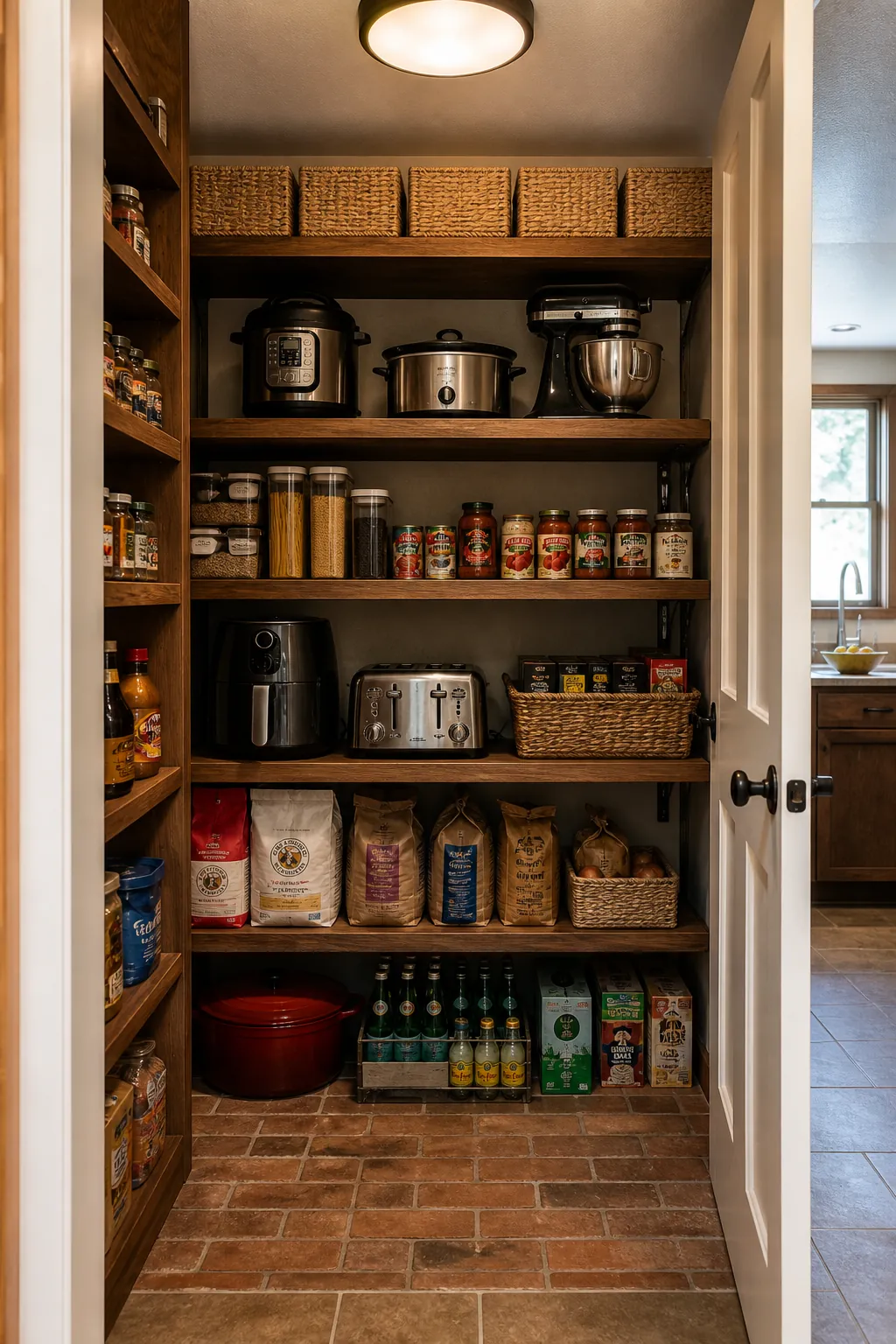
Taper Shelves Near the Door
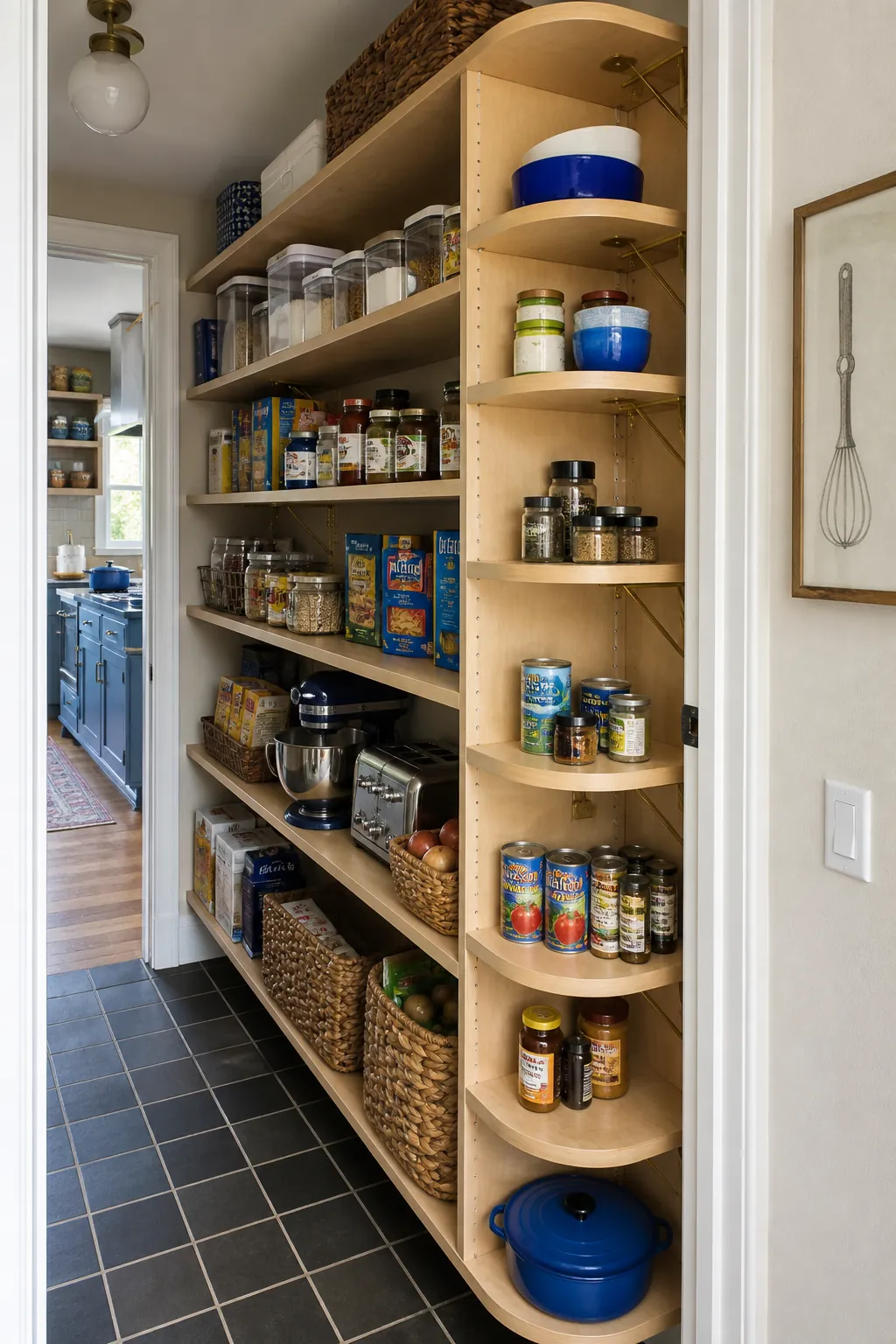
Reducing shelf depth as it approaches the opening prevents shoulder bumps and gives the door hardware room to move. A tapered end can still hold spices, cans, or slim trays.
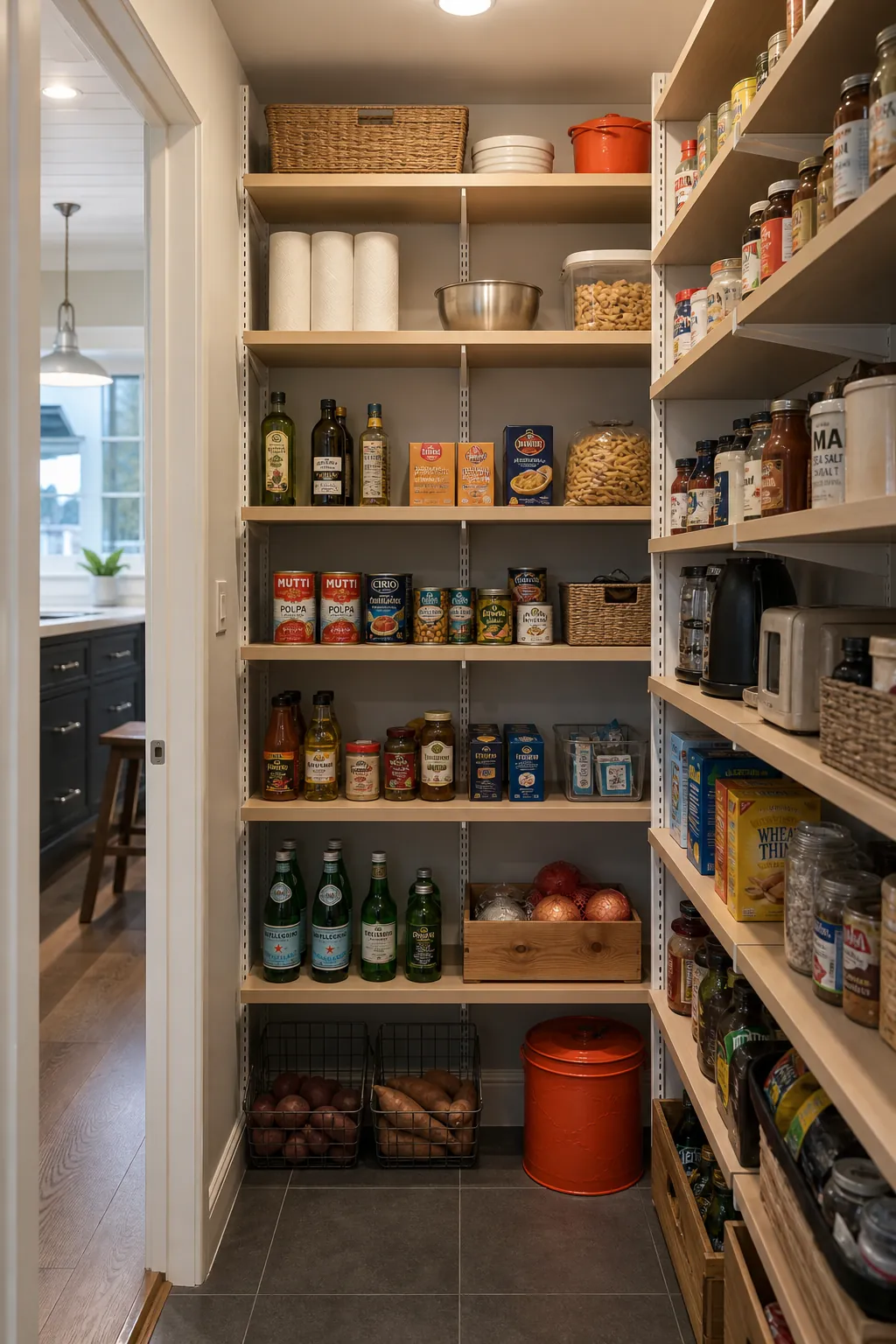
Install Adjustable Standards
Standards or pin holes let shelf heights follow packages instead of arbitrary equal spacing. Keep several spare shelf positions so the layout can change after bulk purchases or a small pantry makeover.
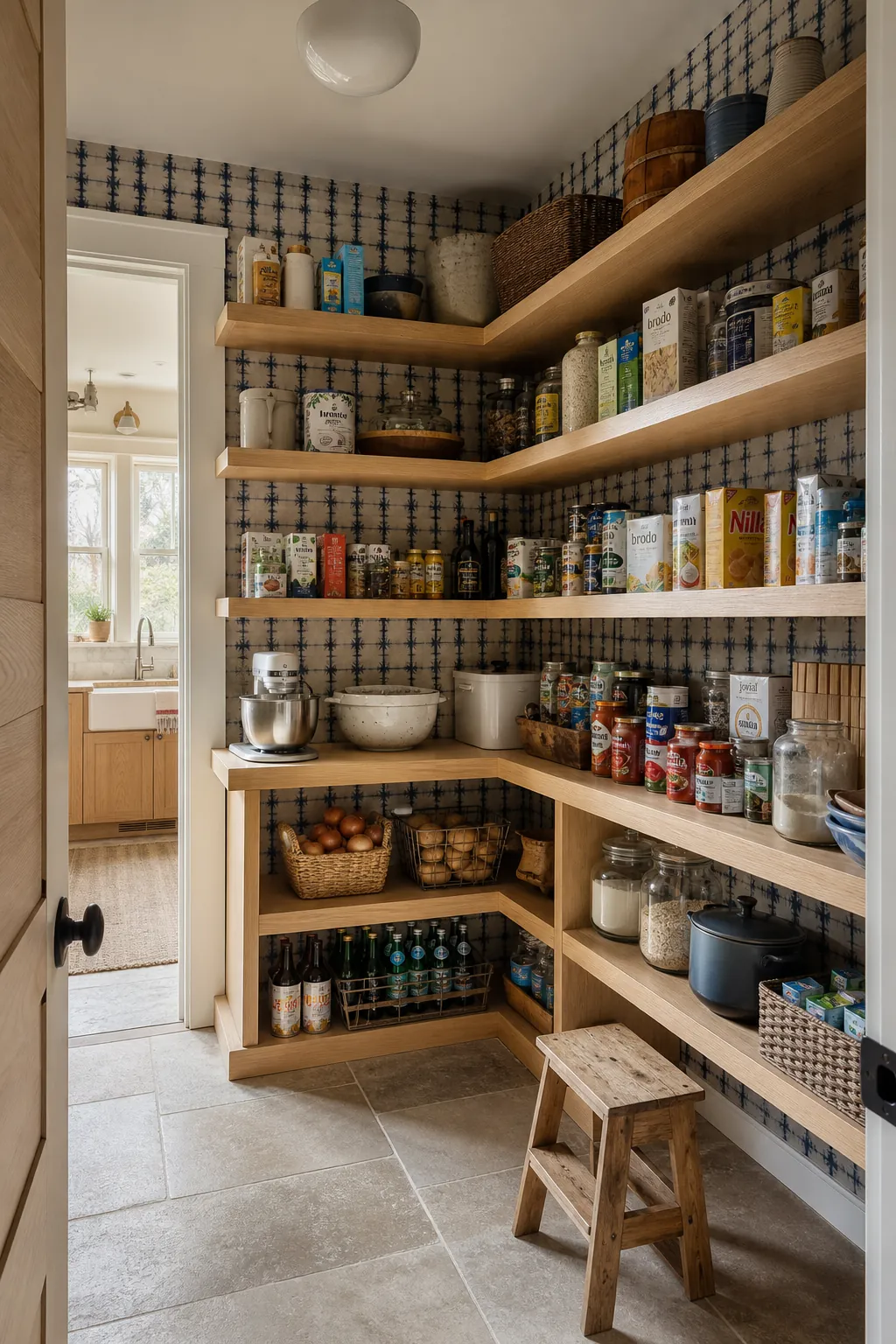
Wrap Two Walls in an Open L
An L layout gives strong capacity while leaving one wall free for entry and movement. Stop one run before the corner or use a purpose-built transition so nothing becomes unreachable.
Keep U-Shaped Side Shelves Shallow
A U can work in a broader pantry when side shelves remain shallow and the back shelf takes bulky goods. Check the finished standing area before committing to three full-depth walls.
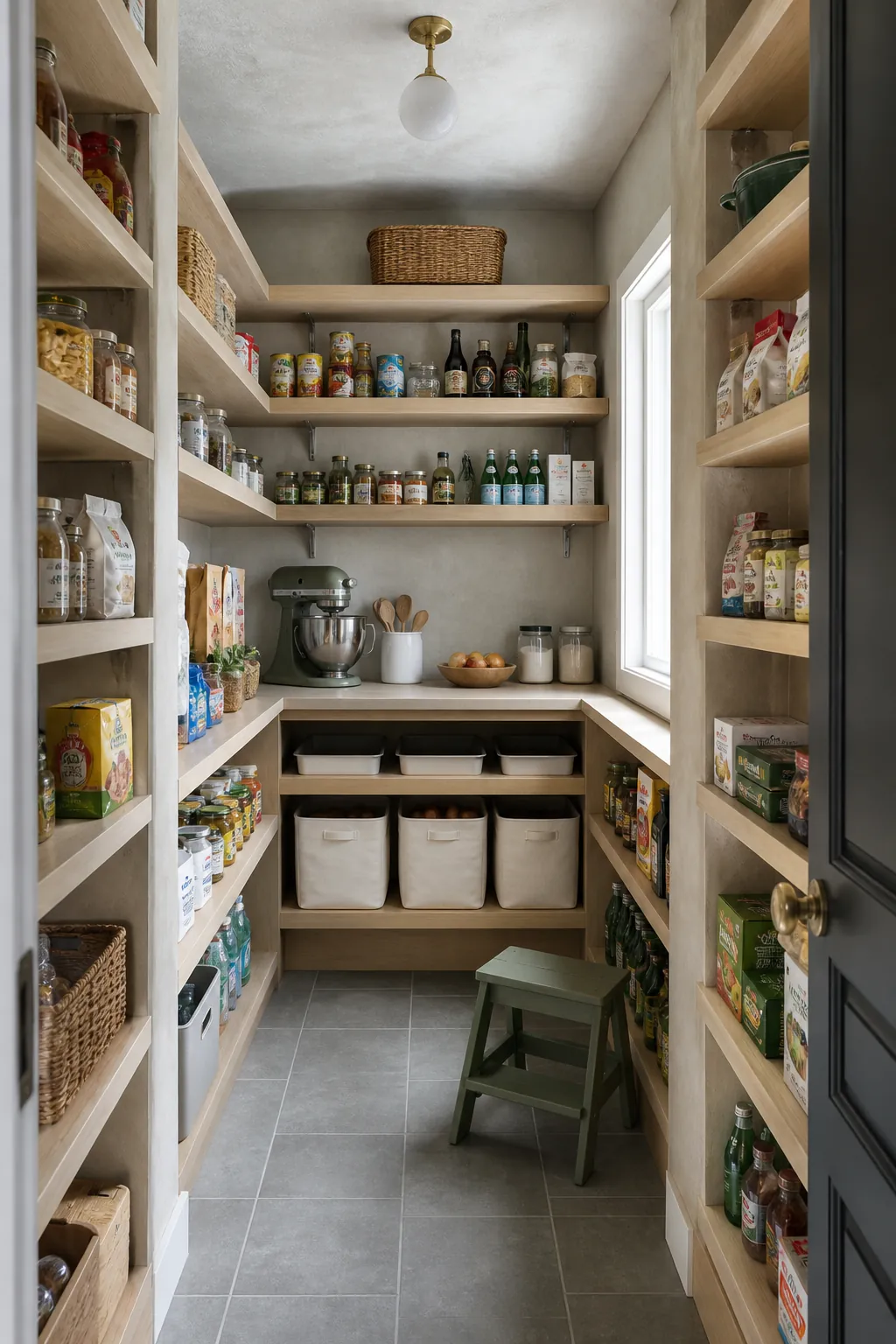
Round the Inside Corner
A rounded corner shelf prevents a sharp overlap and makes bottles easier to sweep into view. It is useful for oils or jars, but should not become a deep dumping pocket.
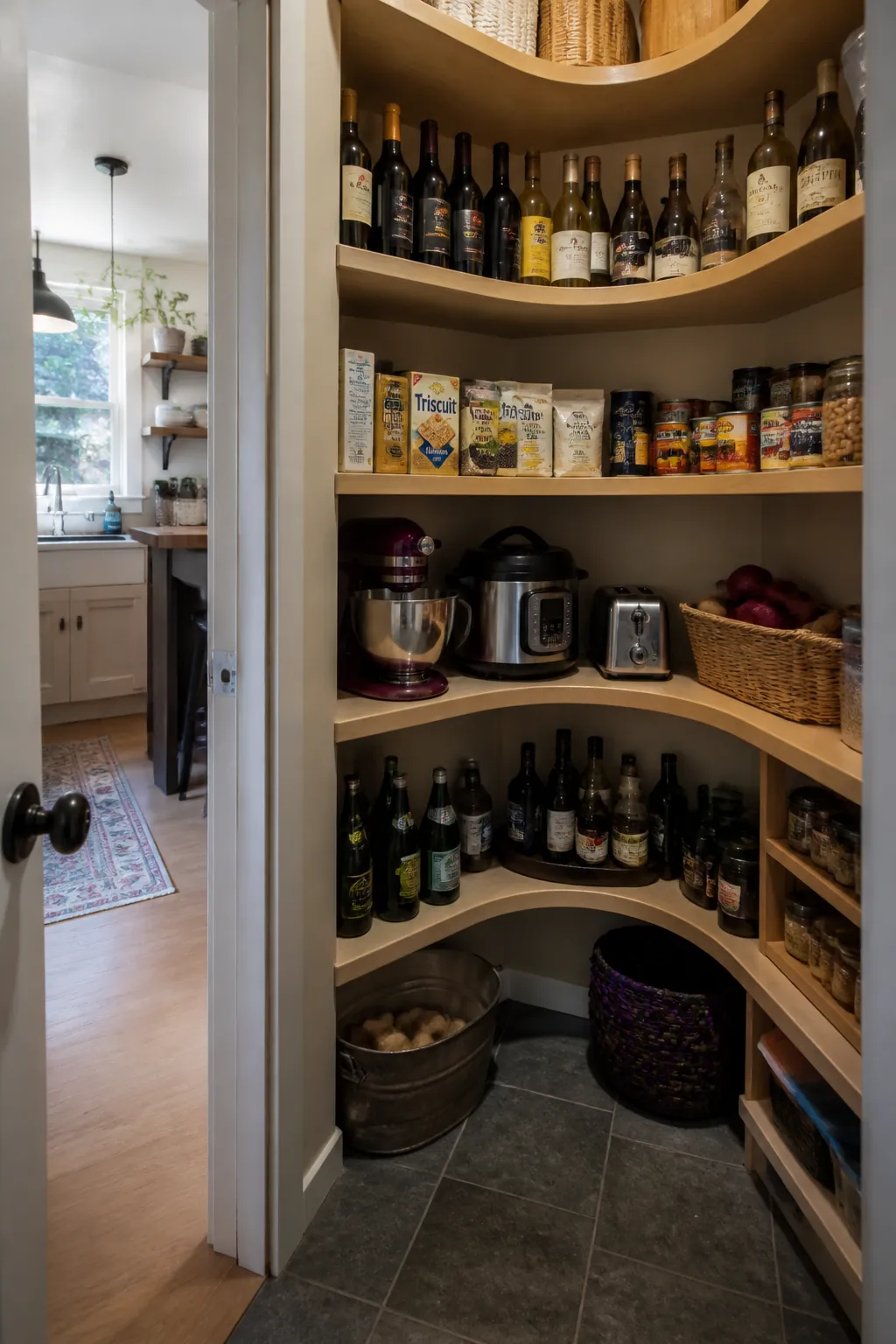
Leave Floor Space Under the First Shelf
An open lower bay can hold pet-food bins, bulk bags, a rolling crate, or a vacuum. Set the first shelf high enough to clean beneath it without wasting the entire lower wall.
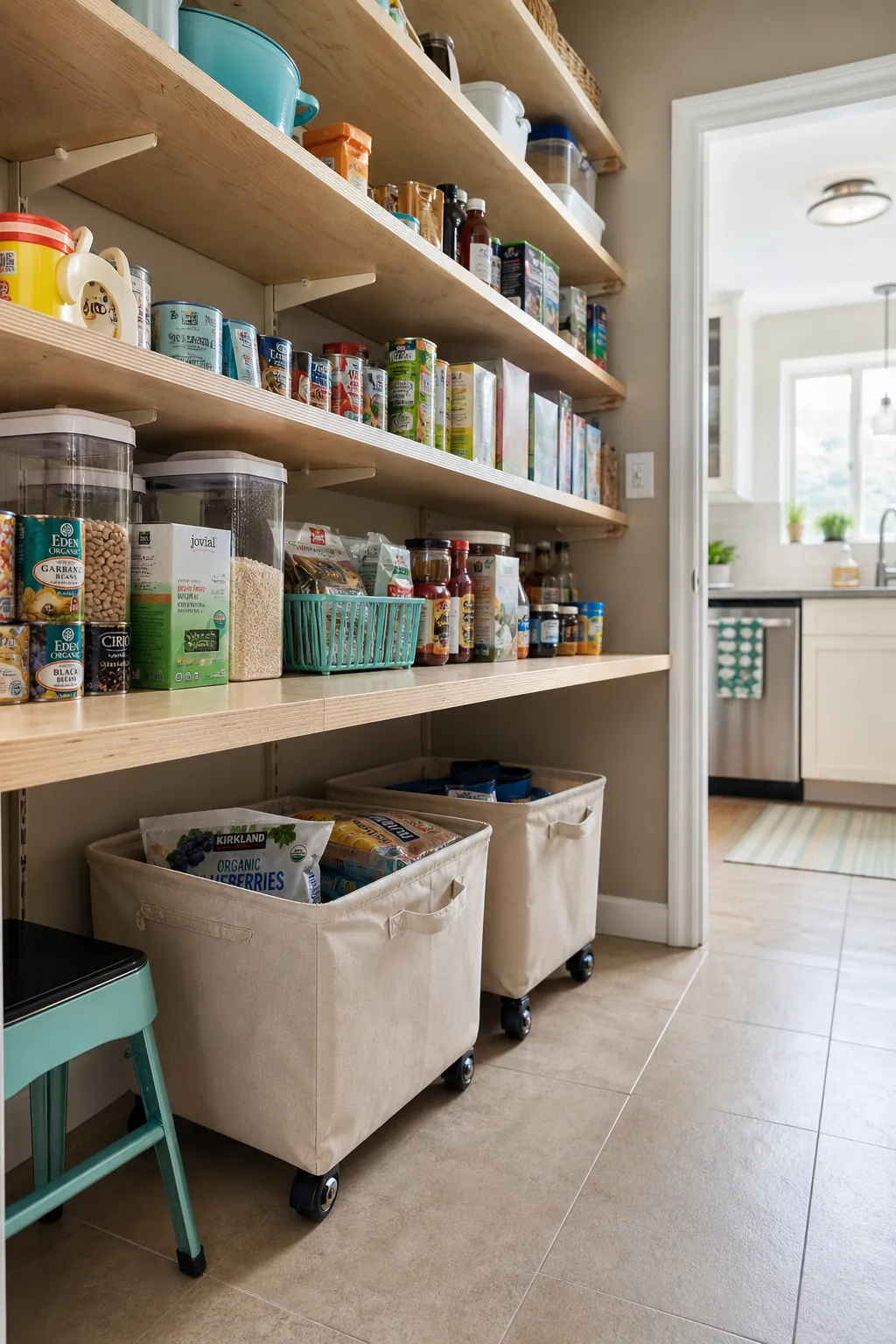
Reserve the Top for Lightweight Backstock
High shelves are best for paper goods, empty serving baskets, and rarely used light items. Avoid lifting heavy appliances overhead, and keep a stable step stool in a dedicated slot.
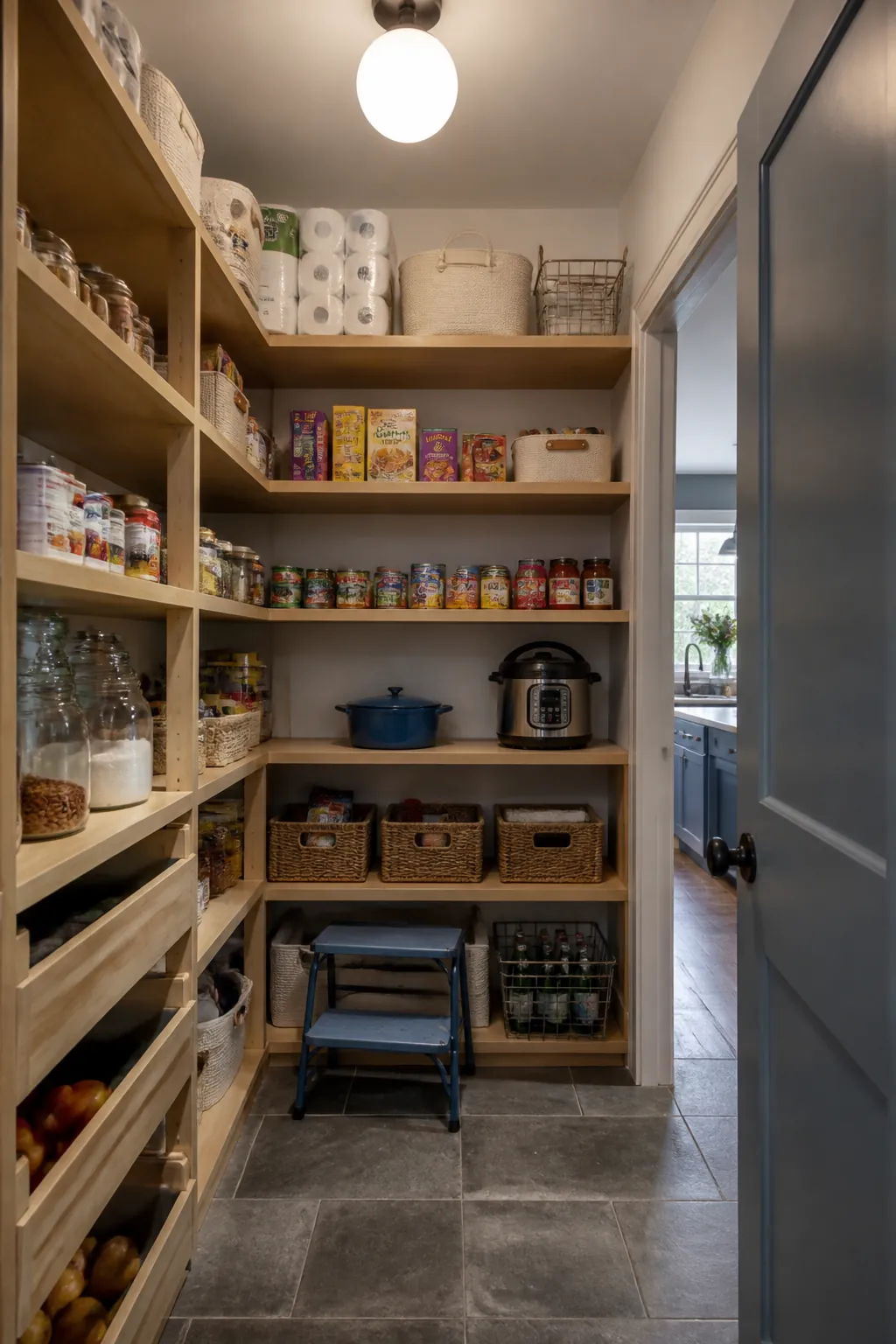
Place Fast Movers at Eye Level
Breakfast staples, snacks, pasta, and canned goods deserve the easiest reach zone. Keeping these items visible reduces rummaging and makes the pantry’s daily rhythm obvious to everyone.
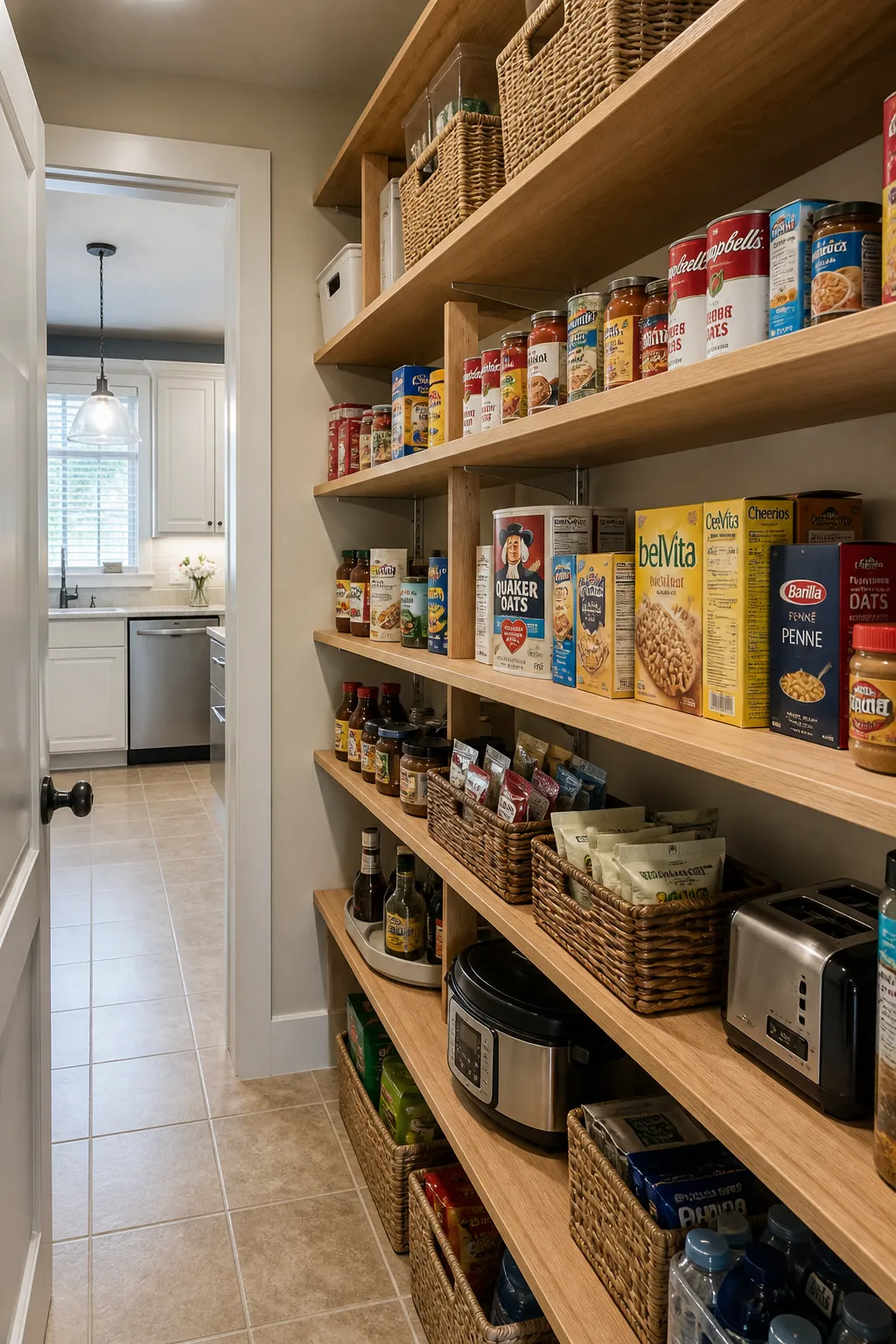
Add Shallow Drawers Below the Counter
Packets, snack bars, tea, and small baking tools stay contained in shallow drawers. Full extension matters more than extra depth because it lets users see every small item.
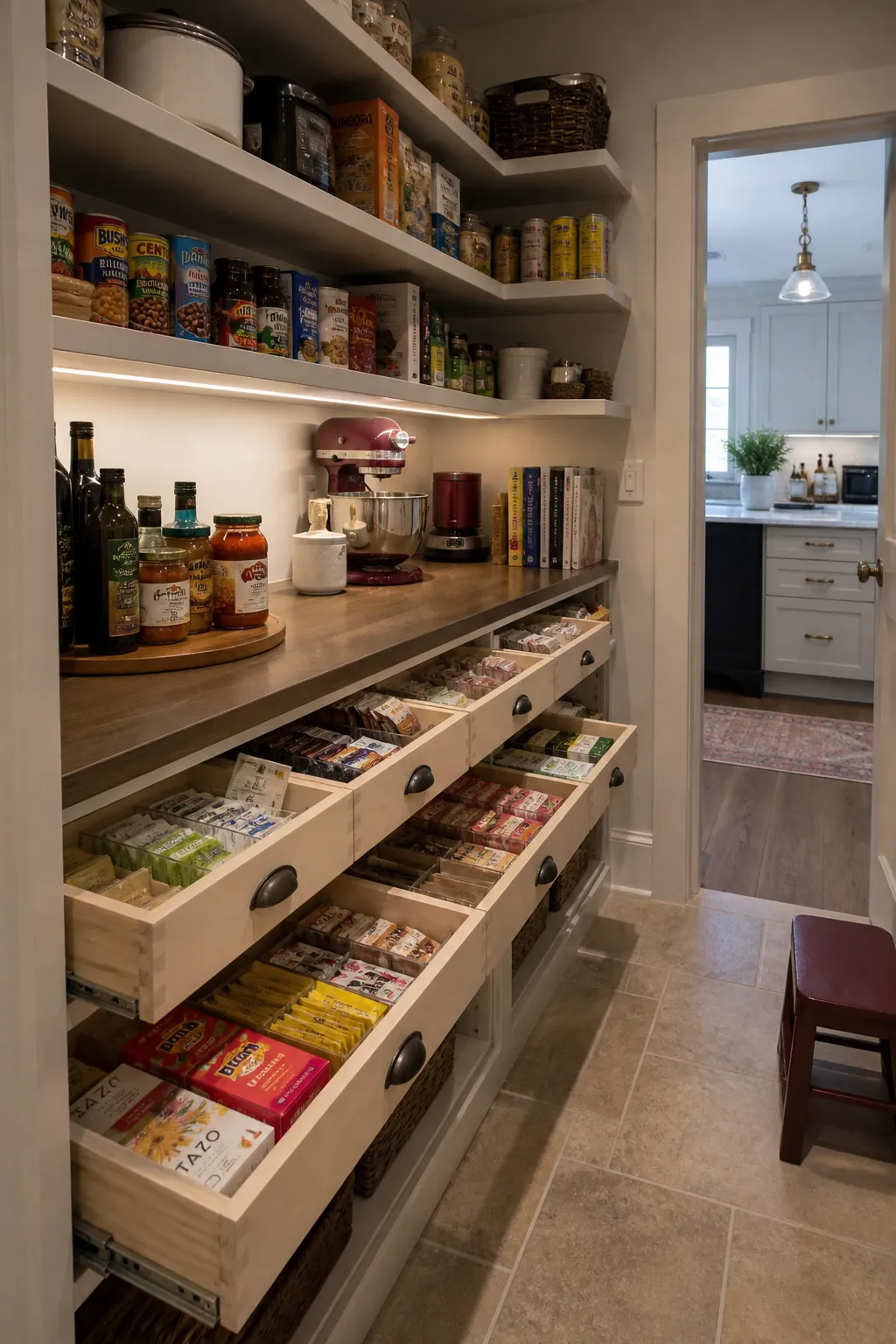
Use Pull-Out Trays in Deep Cabinet Bays
When built in pantry ideas include deep lower cabinets, full-extension trays prevent lost cans and jars. Match slide ratings to the load and keep the heaviest stock near the floor.
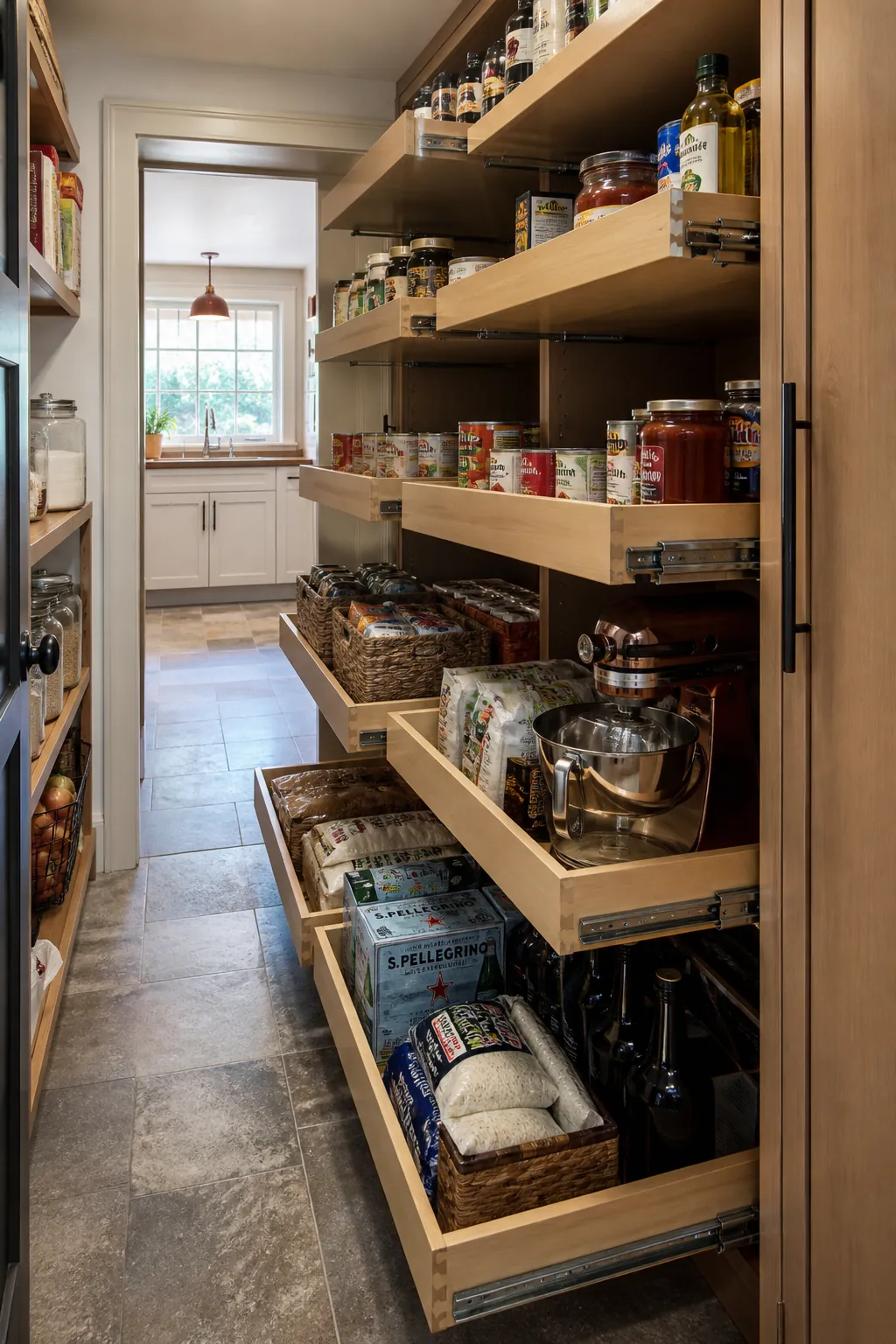
Divide Baking Sheets Vertically
Vertical dividers turn one lower shelf into accessible slots for trays, boards, and cooling racks. Place the bay close to the kitchen or baking counter so large pieces do not travel down the full aisle.
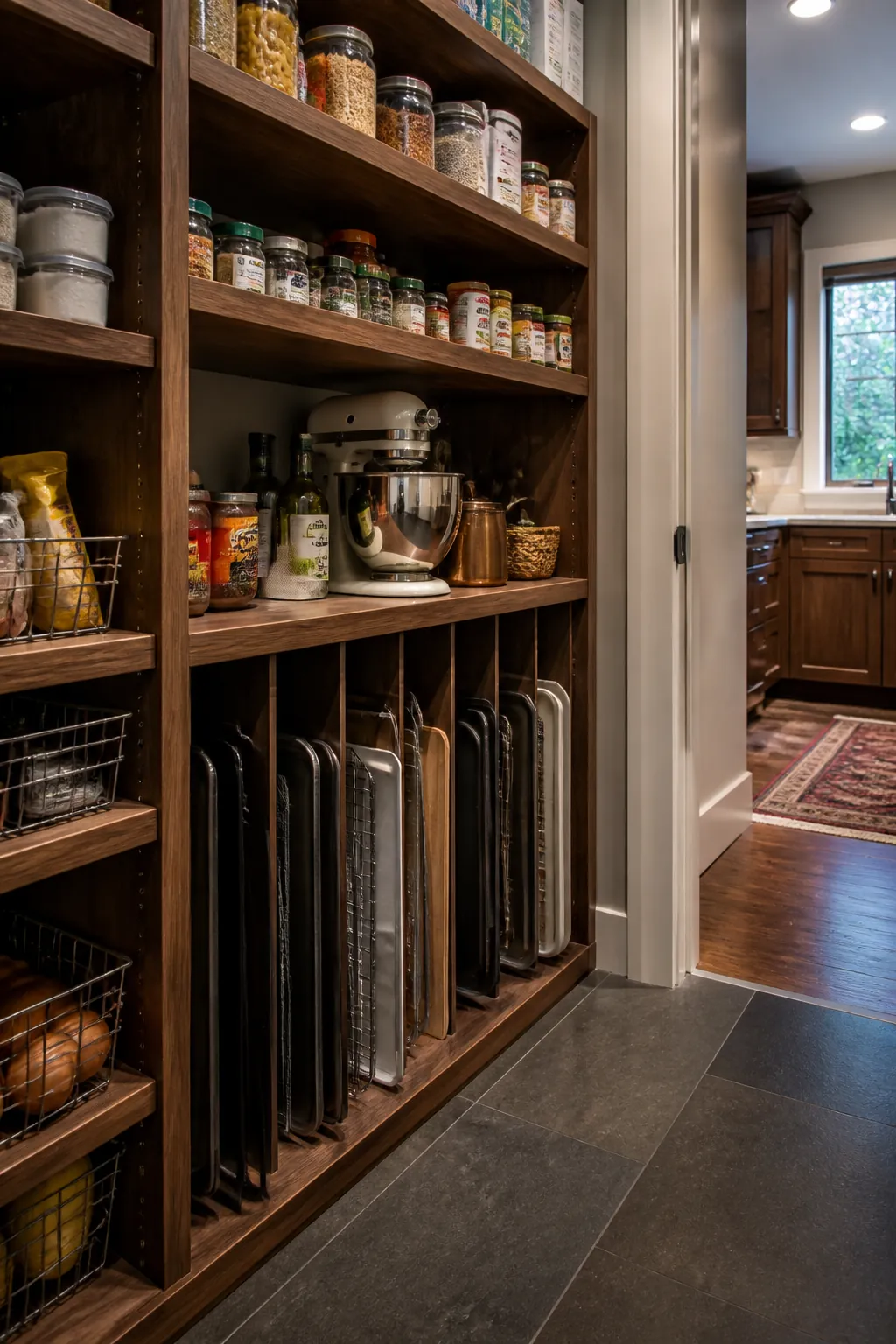
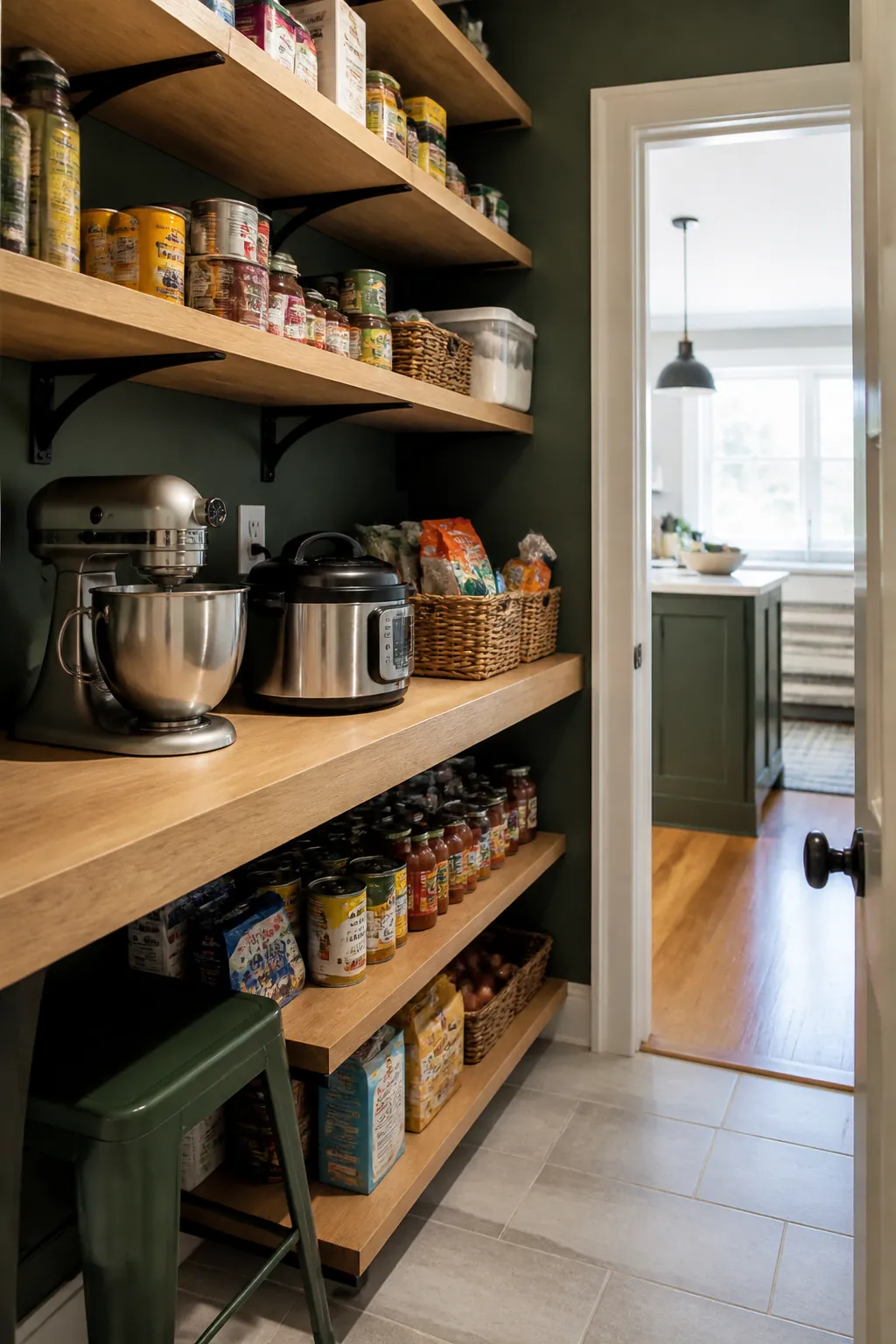
Give Small Appliances a Reinforced Shelf
Stand mixers and pressure cookers need a shelf with appropriate span, thickness, anchoring, and reach height. Measure each appliance including handles and lid removal space before construction.
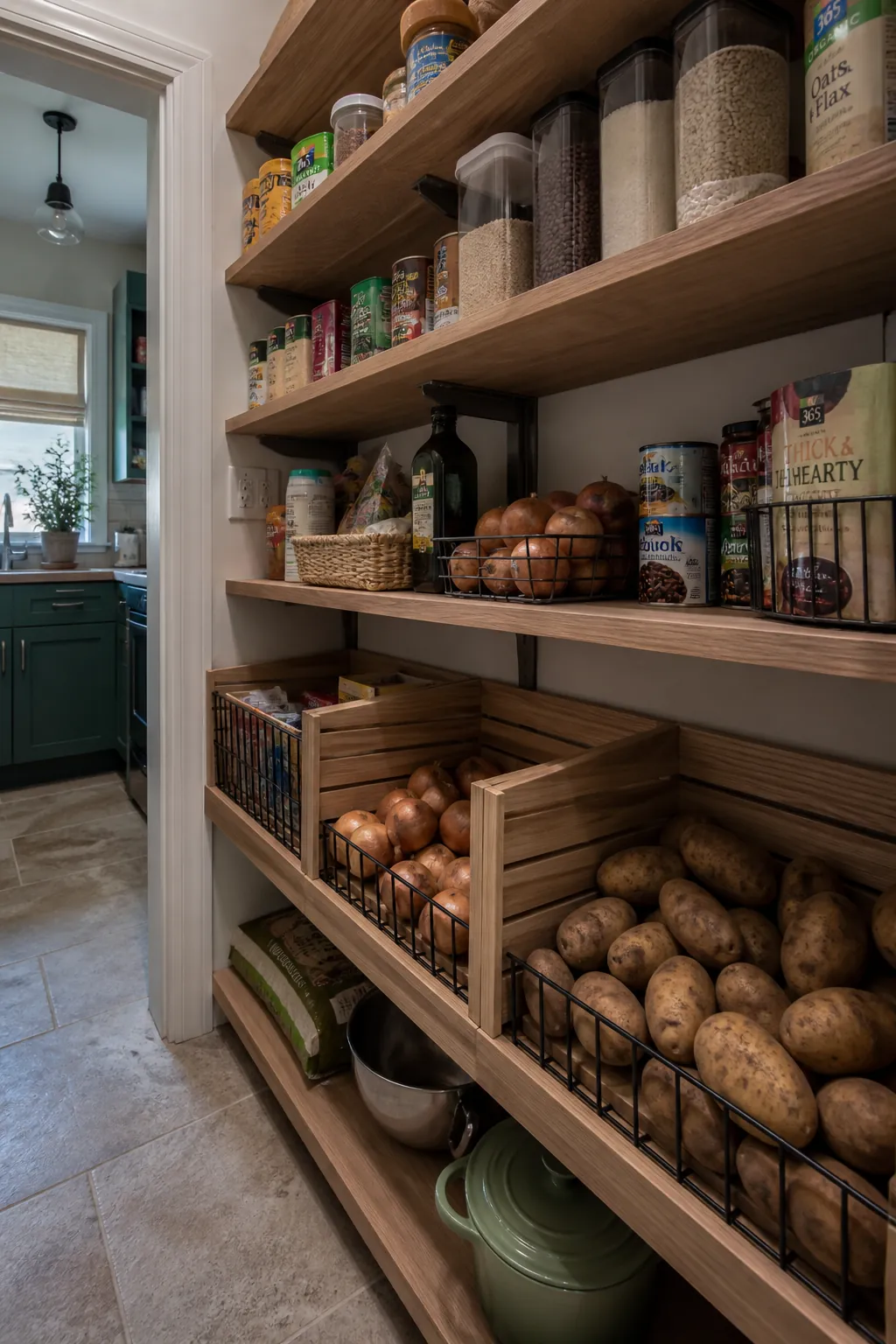
Build Ventilated Produce Shelves
Slatted or wire shelves encourage airflow around onions and potatoes while making inspection easy. Keep produce groups separate and use washable trays to catch soil or papery skins.
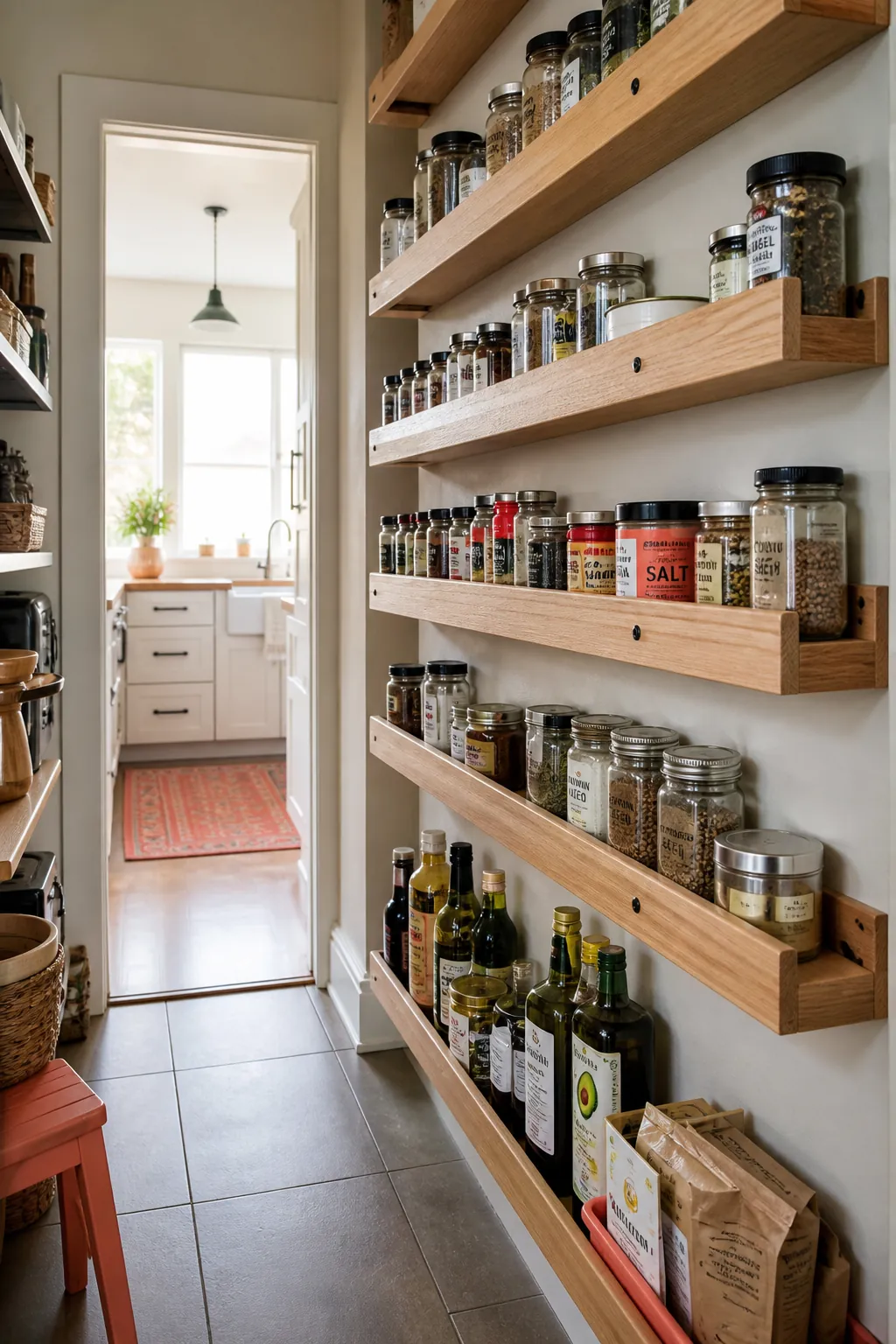
Add a Raised Lip to Slim Ledges
Very shallow ledges for spices or cans benefit from a small front lip, especially near a door or in an earthquake-prone region. The restraint should secure items without hiding their labels.
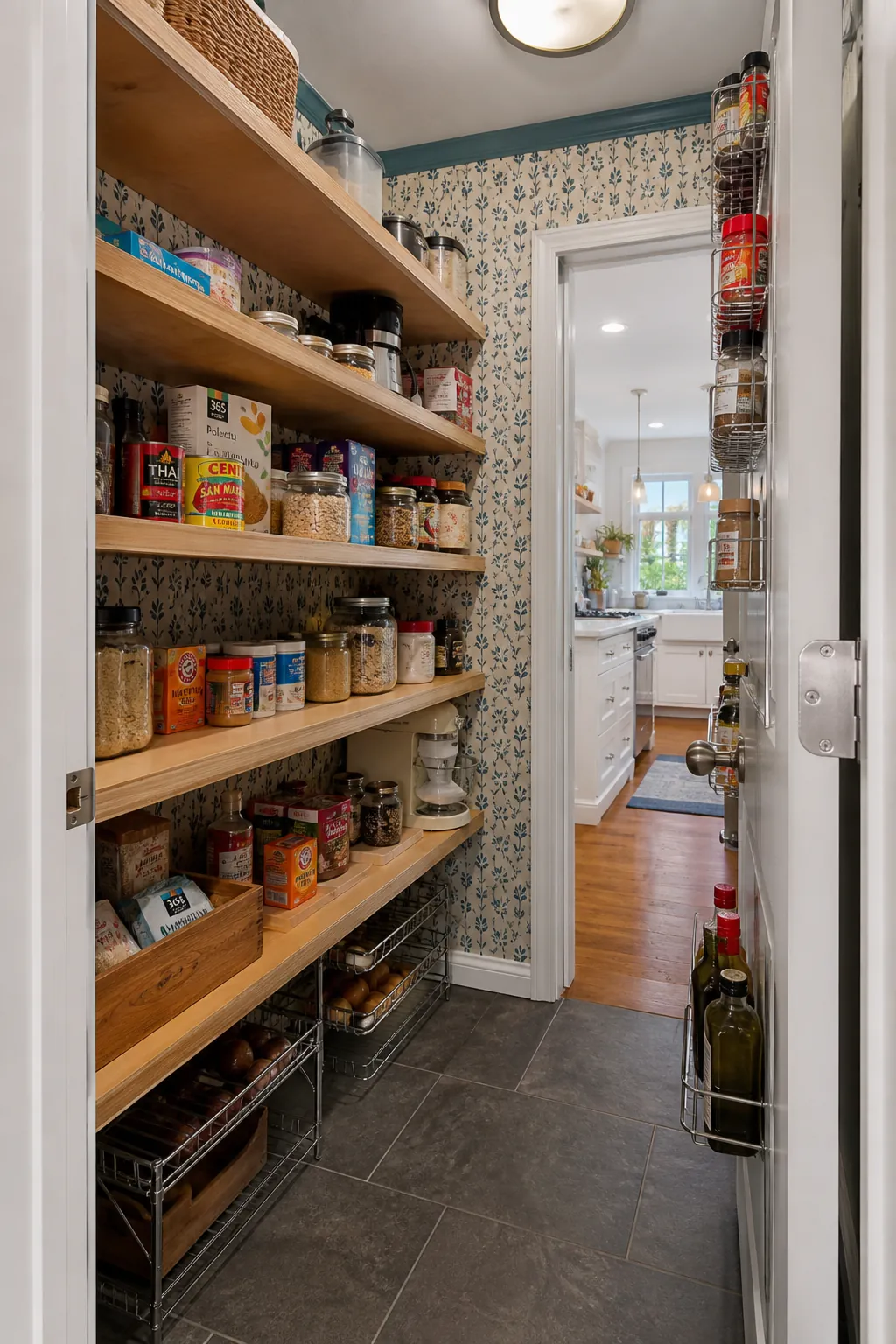
Stop Shelves Before Door Hardware
Door casing, hinges, handles, and racks need operating room. Draw the full swing and loaded rack depth before extending shelves into the entrance corner.
Back Custom Shelves With Plywood
Plywood behind finished wall surfaces gives brackets, rails, hooks, and future changes more anchoring options than studs alone. Coordinate backing before drywall and record its location for later work.
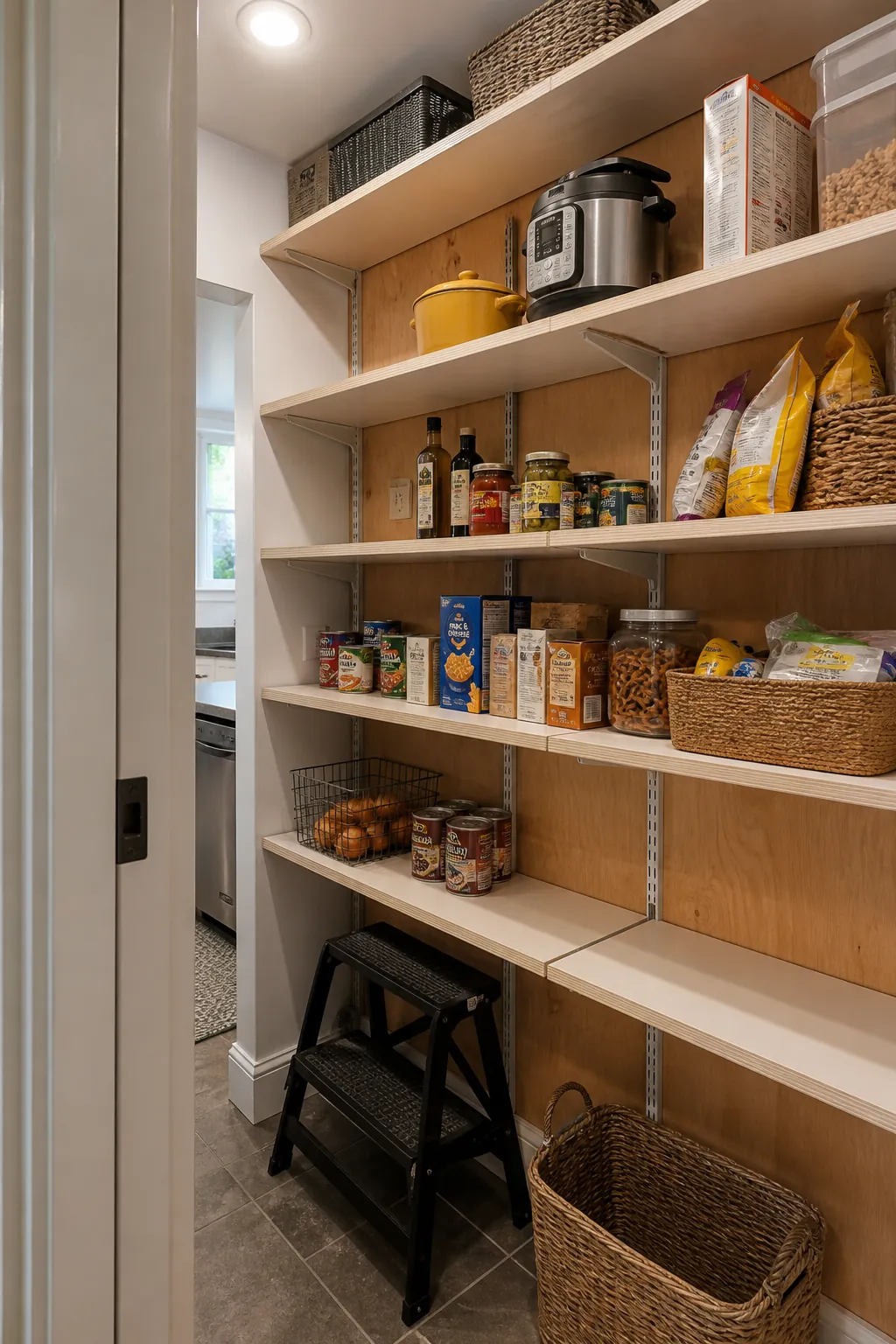
Integrate Light Under Selected Shelves
Shielded LEDs can brighten label faces where ceiling light creates shadows. Use accessible drivers, neutral color temperature, and deliberate wire routes rather than glowing every shelf like a display case.
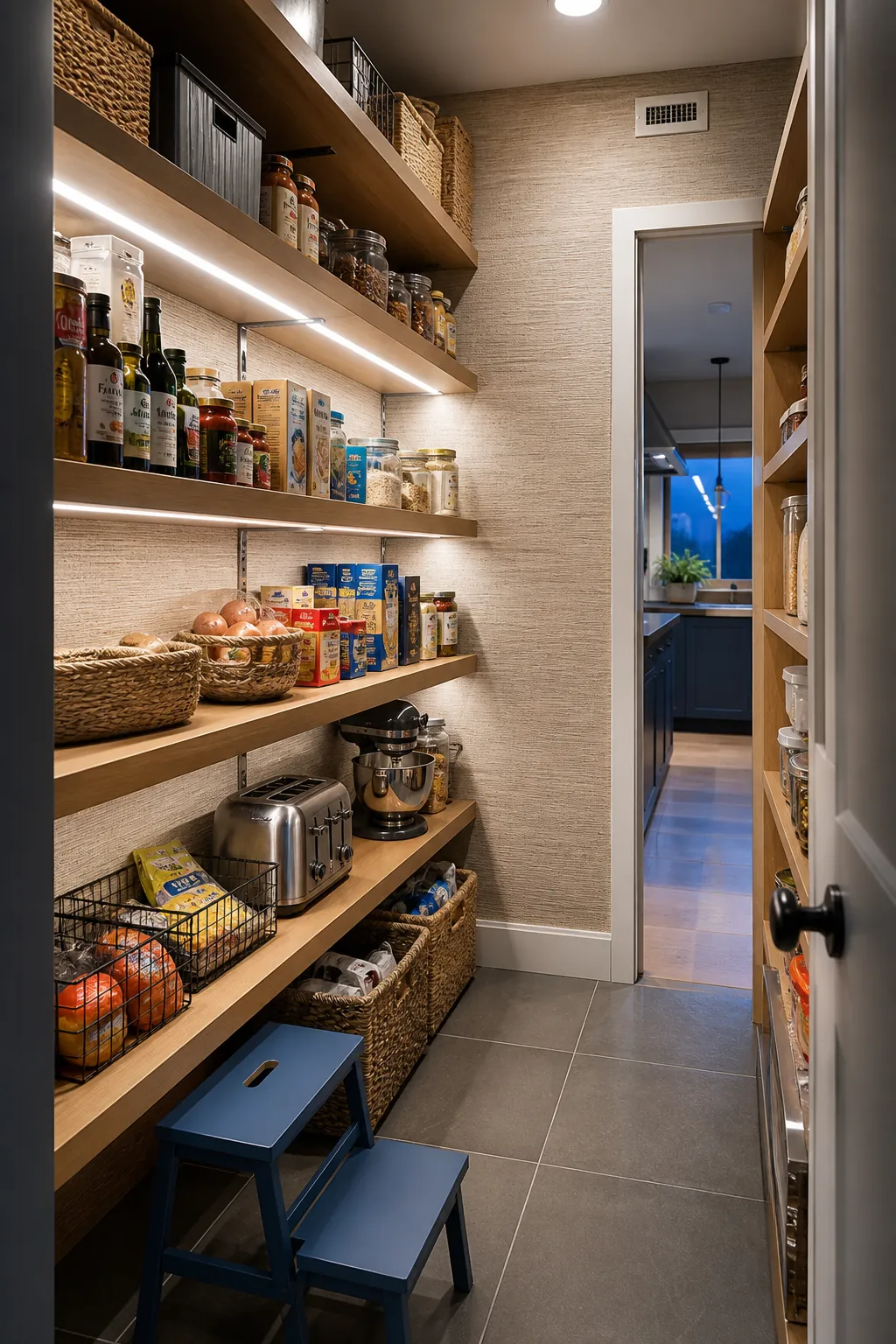
Mock Up Shelves With Your Real Groceries
Before ordering custom pantry ideas, tape shelf outlines on the wall and place recurring packages in a temporary arrangement. A shelf plan is successful when every depth has a purpose and the aisle stays clear, not when every elevation looks perfectly symmetrical.