
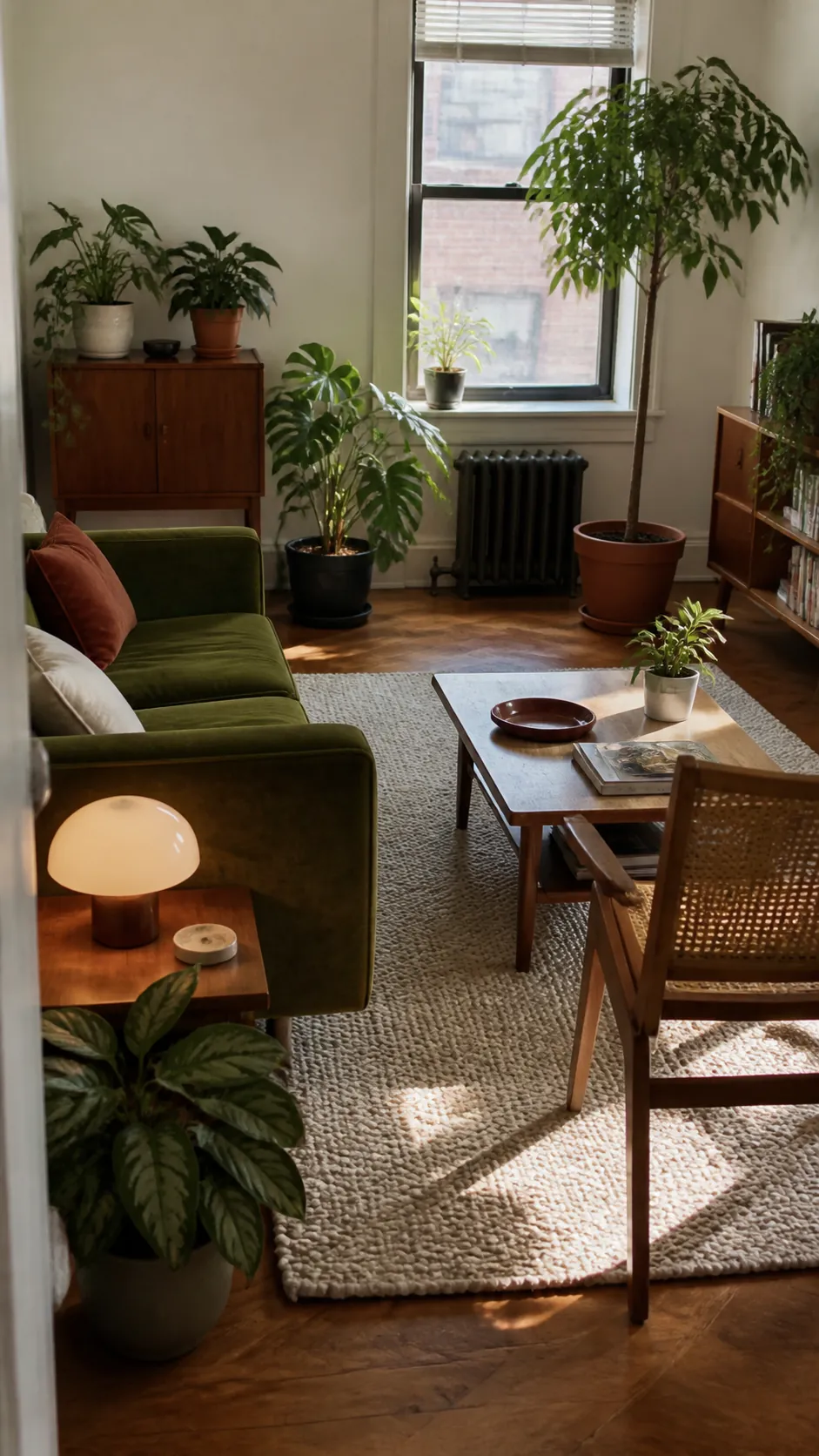
Retro living rooms feel cozy when they are layered, not when they are crowded. The most memorable plant-filled rooms combine secondhand furniture, warm wood, tactile fabrics, and genuinely healthy greenery, yet they still leave space to sit, walk, water, and clean. These ideas use the best of 70s decor without turning the room into a theme set or an accidental greenhouse.
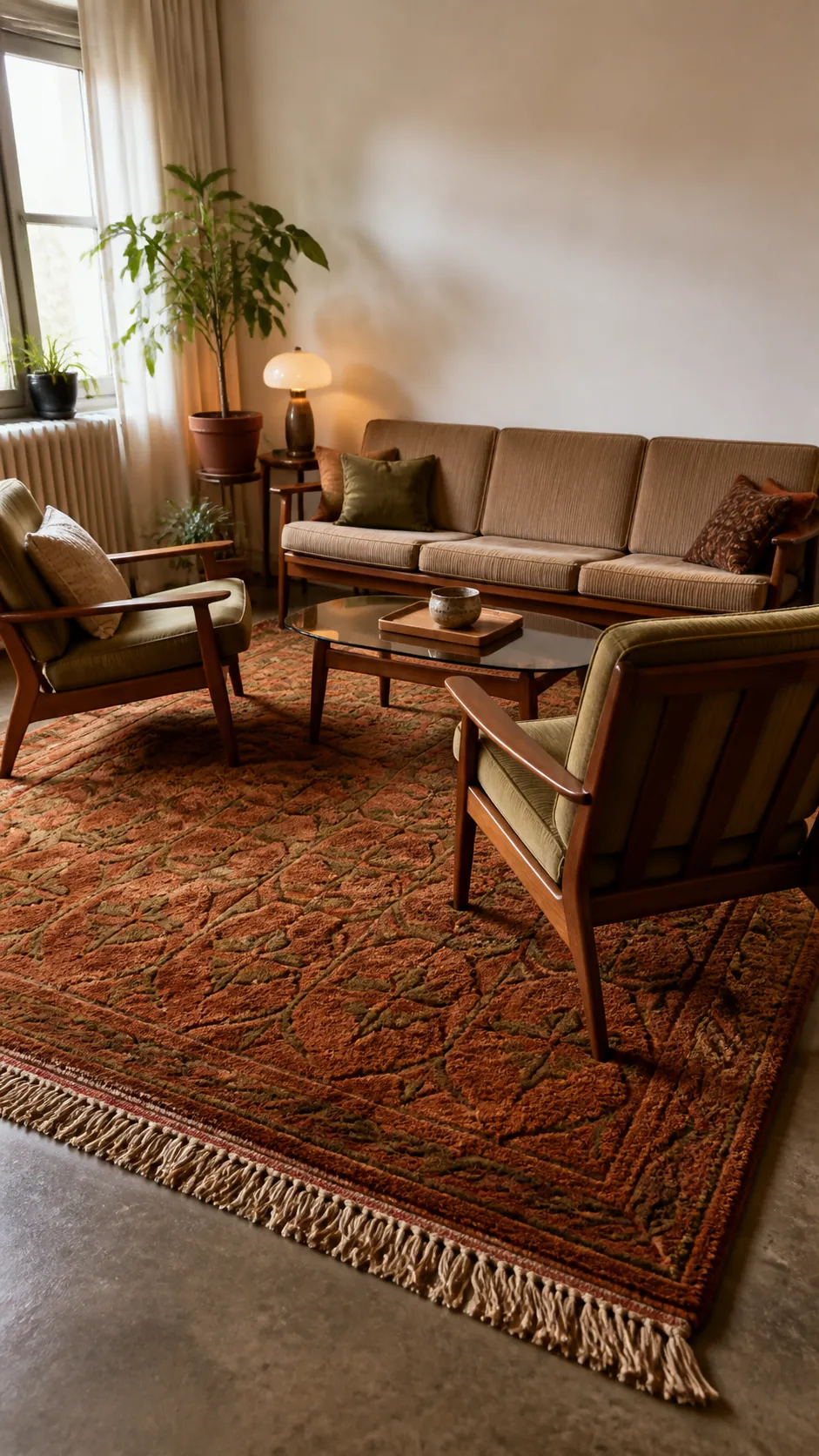
Anchor the Room With a Deep-Pile Rug
A generous rug gives separate vintage pieces one shared foundation. Choose a size that reaches under the front legs of the sofa and chairs instead of floating beneath only the coffee table. A dense wool pile, carved pattern, or faded geometric design adds tactile depth before another object enters the room. Keep door swings and floor vents clear, and use a suitable pad to prevent movement. The rug should define the conversation area while leaving an obvious route through it.
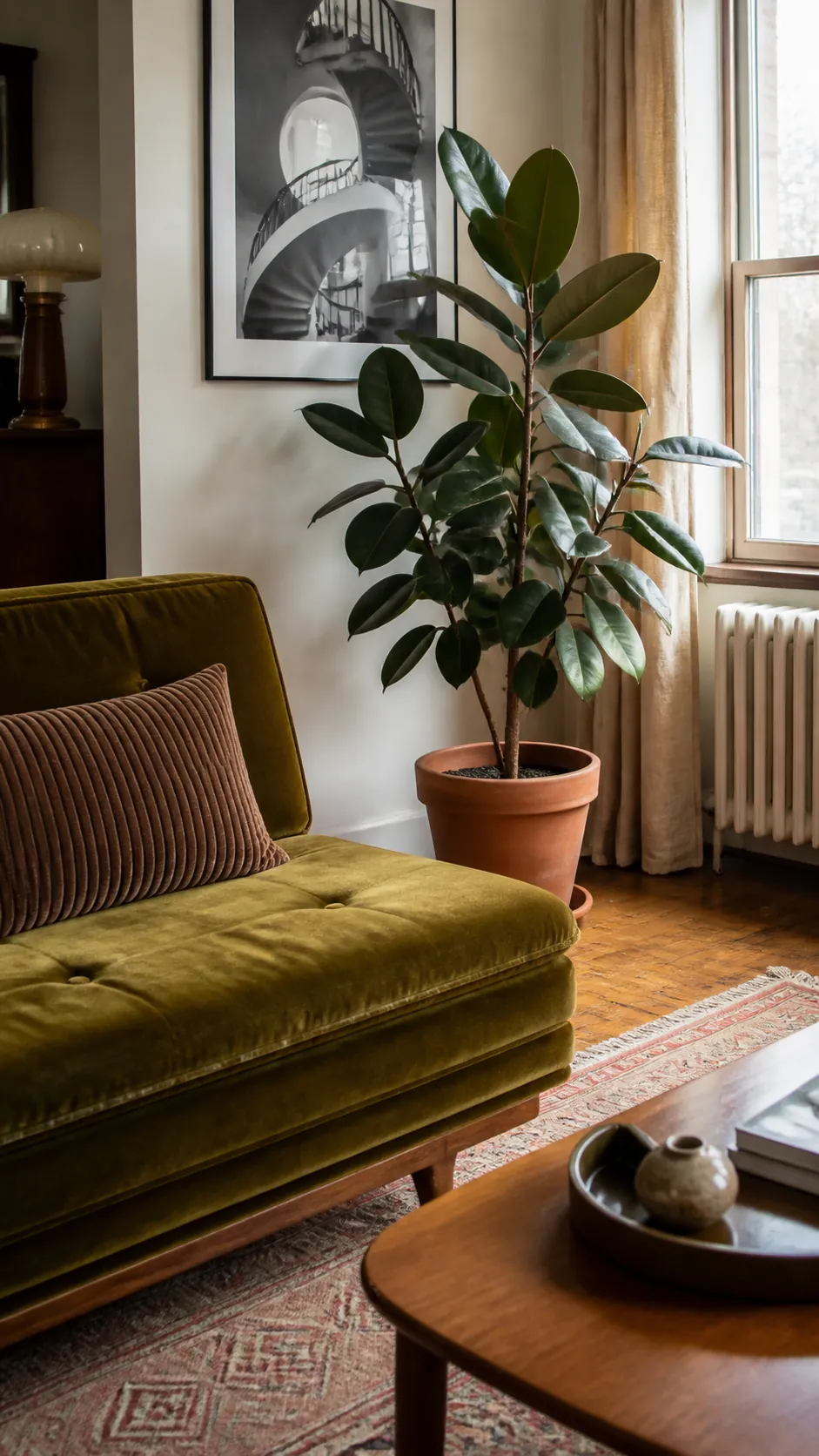
Pair Velvet Seating With Crisp Plant Leaves
Velvet absorbs light while glossy leaves reflect it, creating contrast without needing many colors. An olive, rust, ochre, or chocolate sofa feels distinctly retro but can still work with modern walls. Place one broad-leaf plant nearby rather than lining the entire sofa with pots. Leave enough distance to protect upholstery from damp soil and dripping leaves. The combination works best when the plant silhouette remains visible against a quiet background.
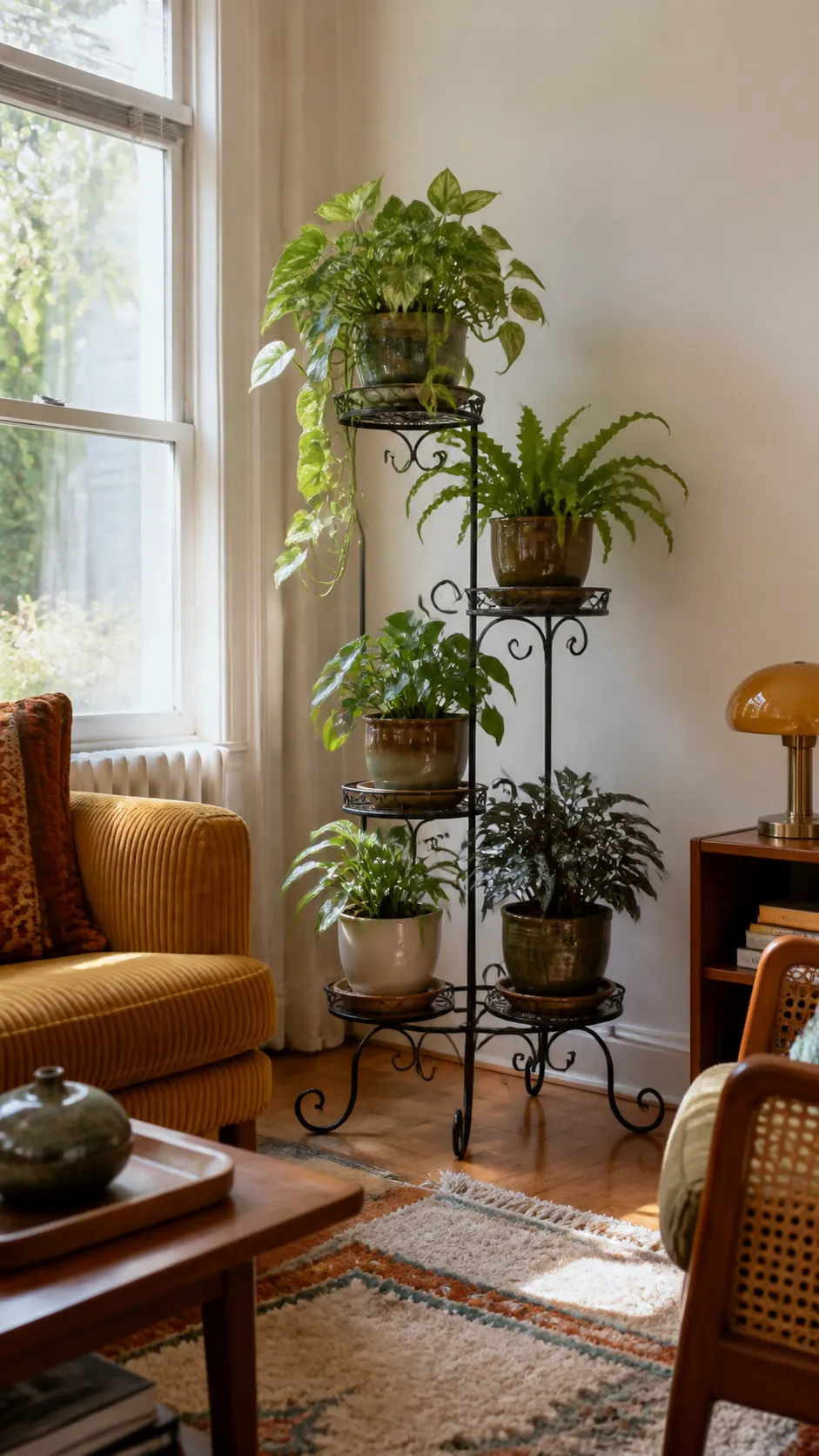
Create Height With a Vintage Plant Stand
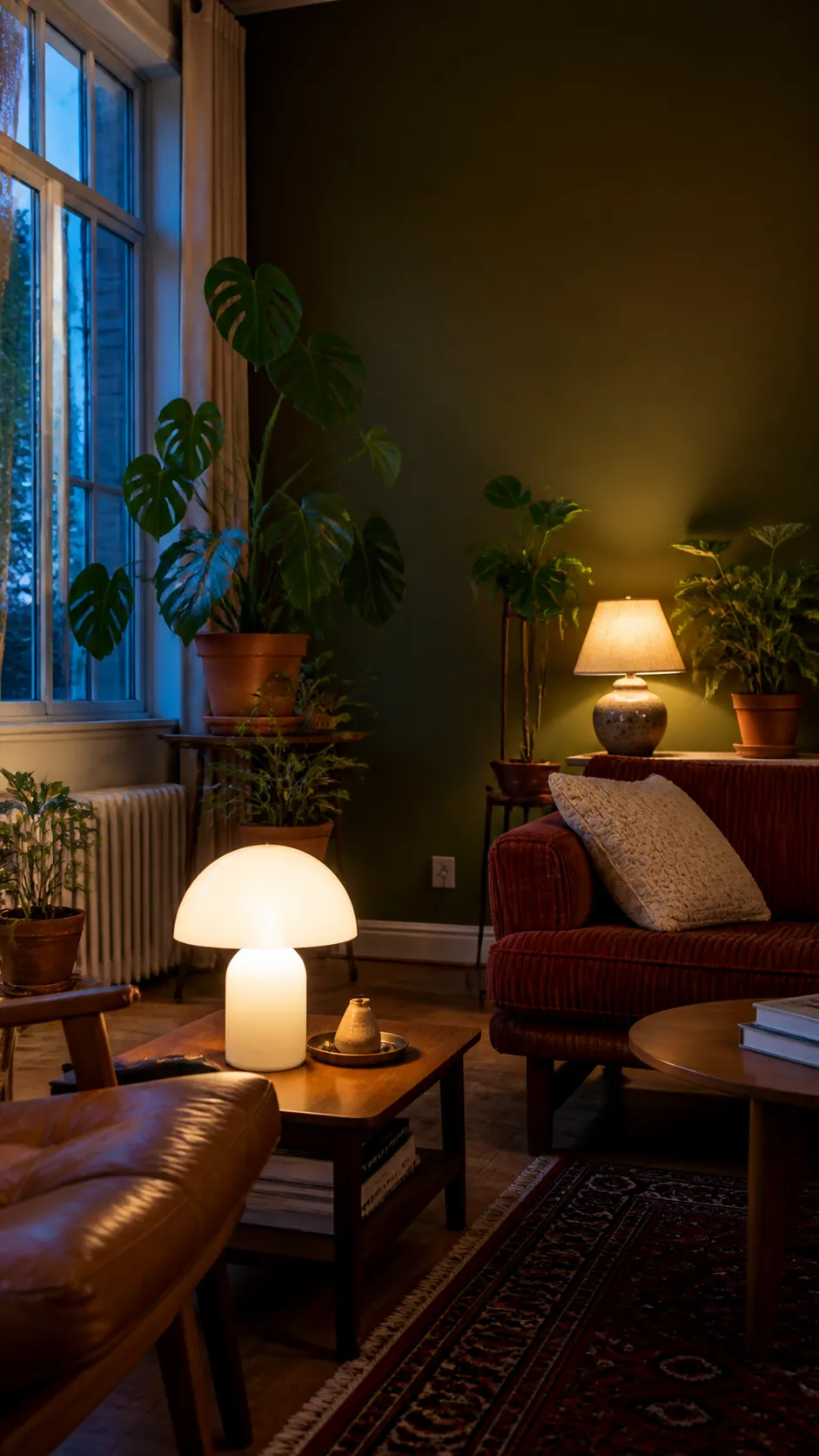
A tiered stand turns several small pots into one composed vertical group. Match each plant to the light available at its tier instead of arranging only by appearance. Use watertight saucers and confirm the stand is stable on the actual floor. Keep foliage within the stand’s footprint so the grouping does not obstruct circulation. Wood, wrought iron, chrome, or bamboo can connect the plants to the room’s existing retro furniture.
Use Cane and Rattan as a Lighter Texture
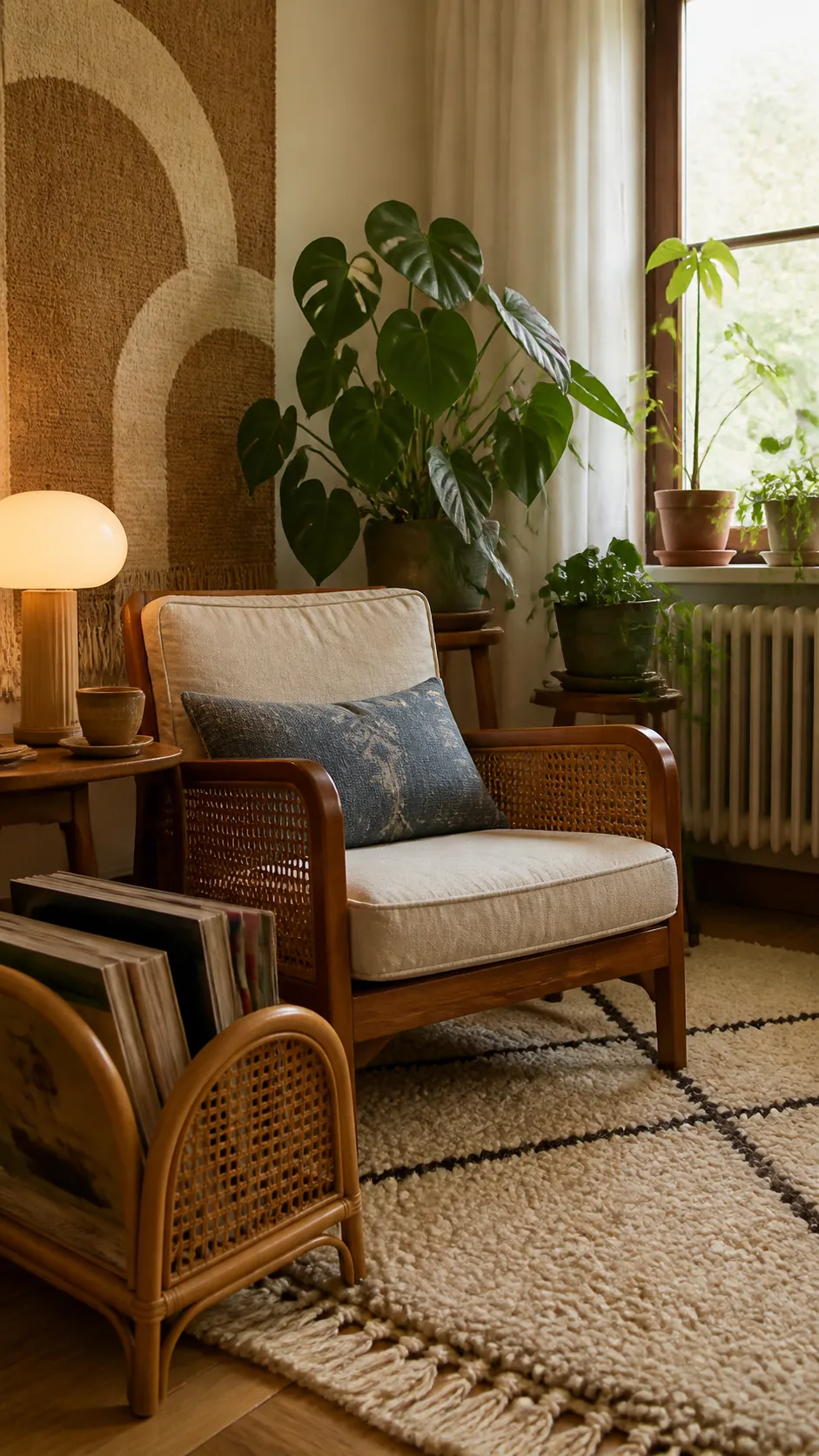
Cane panels and rattan furniture introduce texture without adding another heavy upholstered shape. A single lounge chair, magazine rack, or cabinet front is enough to bring the material into the room. Pair it with soft cushions so the seating remains comfortable rather than purely decorative. Keep natural fiber away from repeated splashes during plant care. Its open weave also prevents a brown palette from becoming visually solid.
Light the Corners With Low Lamps
Cozy retro rooms rarely depend on one bright ceiling fixture. Use a mushroom lamp, ceramic table lamp, or low arc lamp to create smaller pools of light around seating. Warm bulbs can flatter wood and ochre fabric, but the room should not turn uniformly orange. Keep electrical cords controlled and lamps clear of watering paths. A grow light can support plants when needed, provided its placement and color do not overpower the living room at night.
Group Plants by Their Real Light Needs
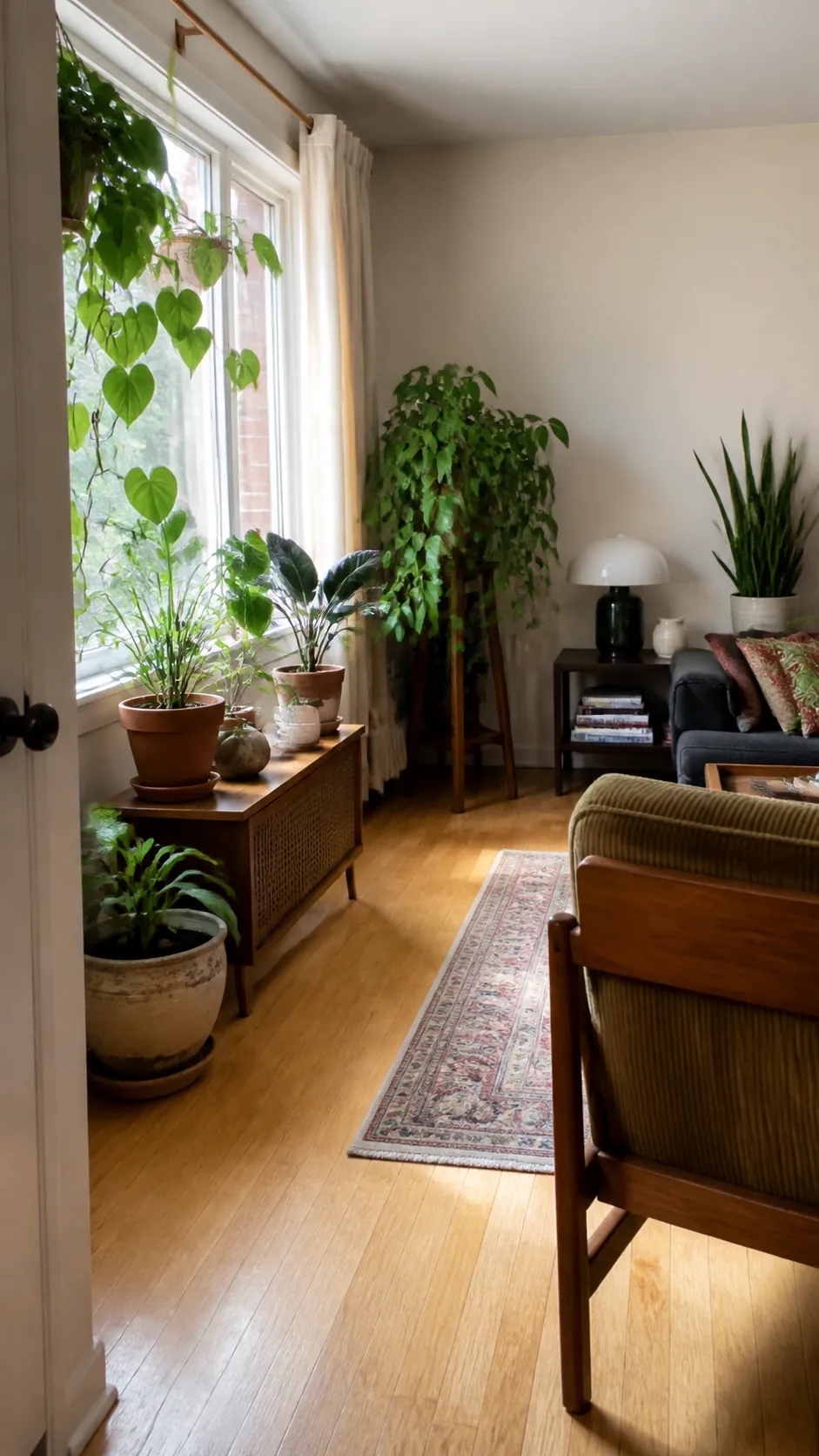
A visually balanced plant arrangement still has to work horticulturally. Put sun-loving plants closest to the bright window and shade-tolerant varieties farther into the room. Grouping plants can simplify watering and create a stronger shape than scattering single pots on every surface. Leave air around leaves and maintain access to curtains, radiators, and windows. Healthy plants look more decorative than a larger collection struggling in the wrong conditions.
Bring in a Rounded Coffee Table
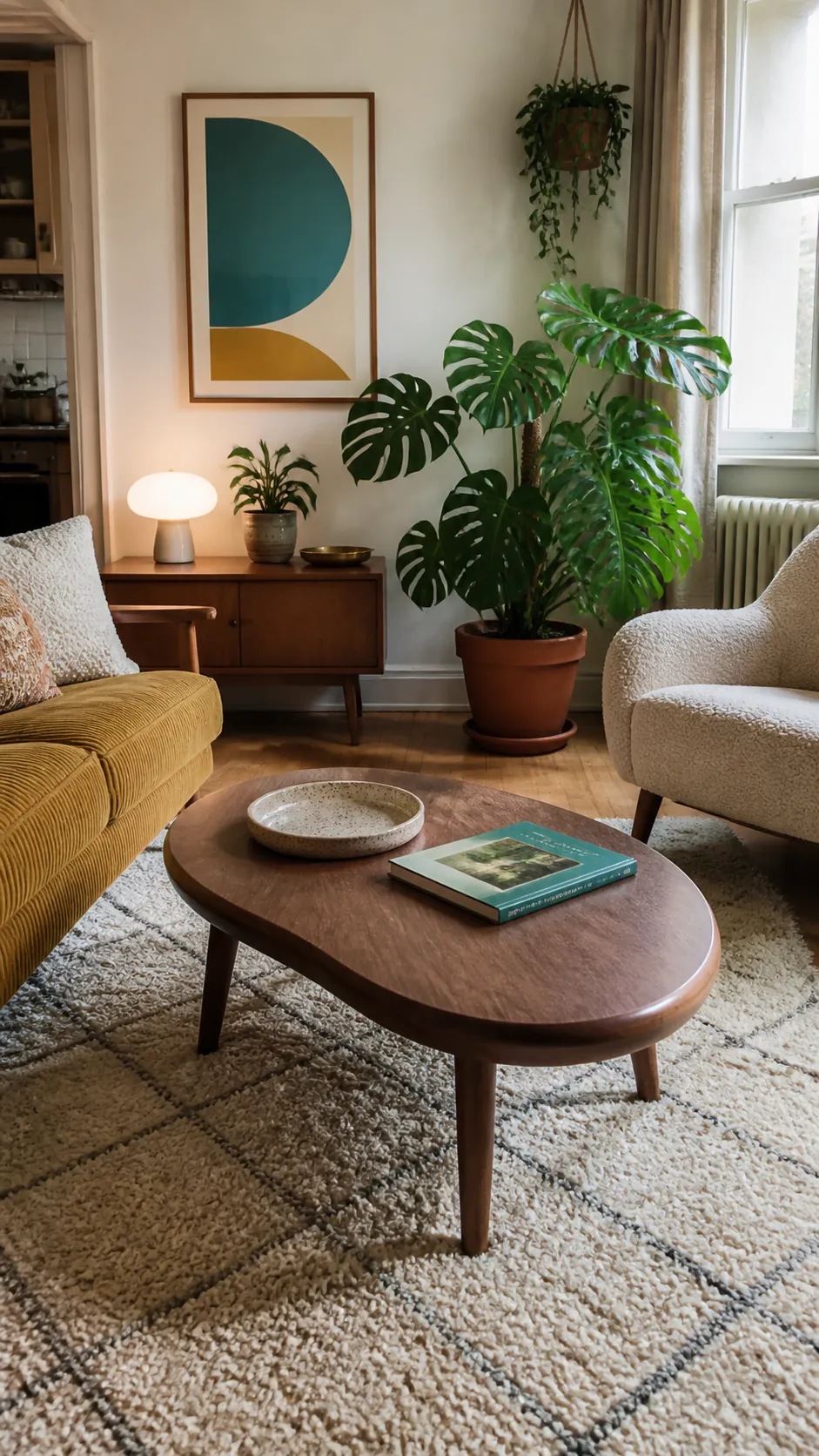
A kidney, oval, or round coffee table immediately softens a boxy sofa and rectangular room. Curved edges also improve circulation in a tight living area. Choose a height that relates to the sofa seat and keep enough clearance for knees and walking. Let the table’s wood, smoked glass, or stone repeat another material already present. Style it with one useful tray and a book rather than a miniature forest of objects.
Layer Curtains Without Blocking Plant Light
Sheer curtains soften daylight and add movement, while heavier side panels make the window feel finished. Mount the panels so they can stack beyond the glass rather than covering the only bright area. Keep fabric clear of wet pots, soil, and heat sources. A subtle weave or narrow stripe supplies texture without competing with a patterned rug. The window should still open easily for ventilation and plant care.
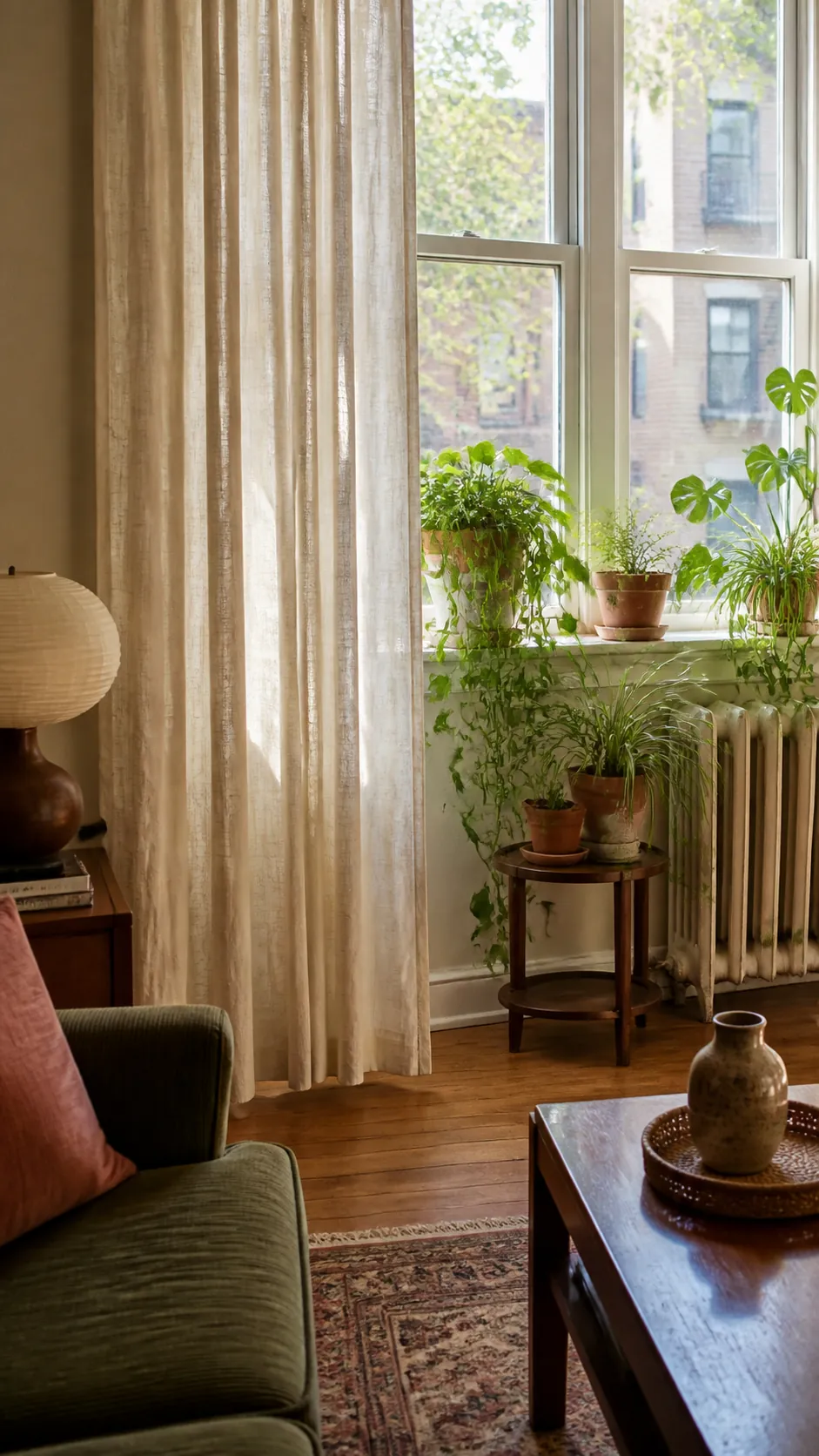
Mix One Bold Pattern With Quiet Solids
Retro pattern is most convincing when one element leads. Choose a geometric rug, floral chair, or graphic curtain, then let most surrounding upholstery stay solid. Pull two or three colors from the pattern into cushions, pottery, or book spines. Vary texture more than print so the room remains rich without becoming noisy. Plants add another complex pattern through leaf shape, so account for them in the balance.
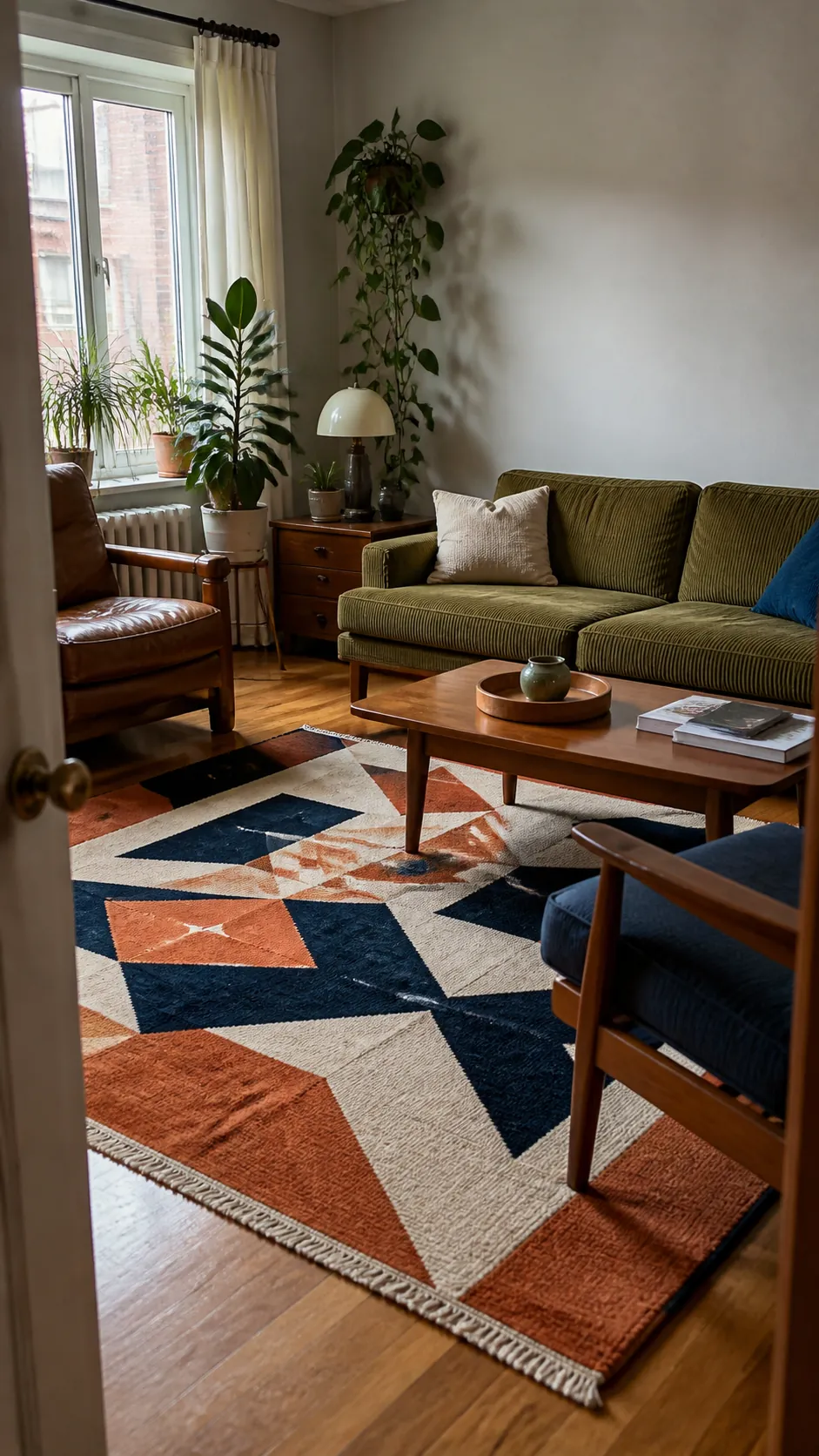
Display Books and Plants on Open Shelving
Books give plant shelves visual weight and make the room feel inhabited. Use substantial book runs instead of alternating one pot with one tiny stack across every shelf. Set plants in saucers and keep them away from vulnerable paper edges. Place heavier books and pots low, with smaller trailing varieties high enough to fall freely without hiding the whole unit. Leave a few open areas so foliage can be seen as a silhouette.
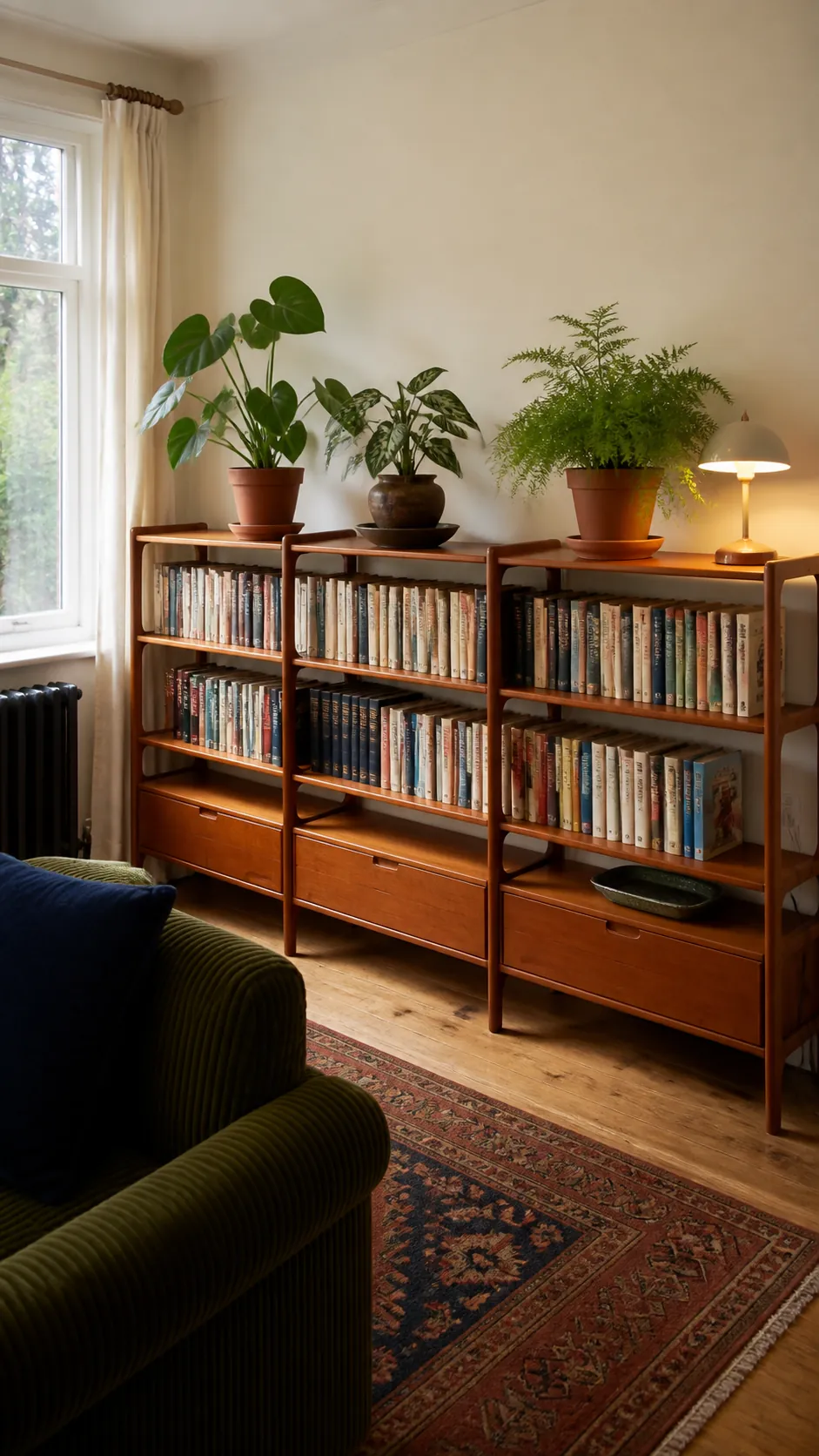
Add a Nubby Throw to Smooth Upholstery
A boucle, wool, or heavily woven throw adds tactile contrast to a smooth velvet or leather seat. Fold it loosely over one arm so the upholstery remains visible. Choose a fiber that suits the household, since delicate loops can snag on pets or jewelry. Repeat the throw color in a small pot or lampshade to make it feel integrated. One substantial textile usually creates more coziness than several thin blankets.
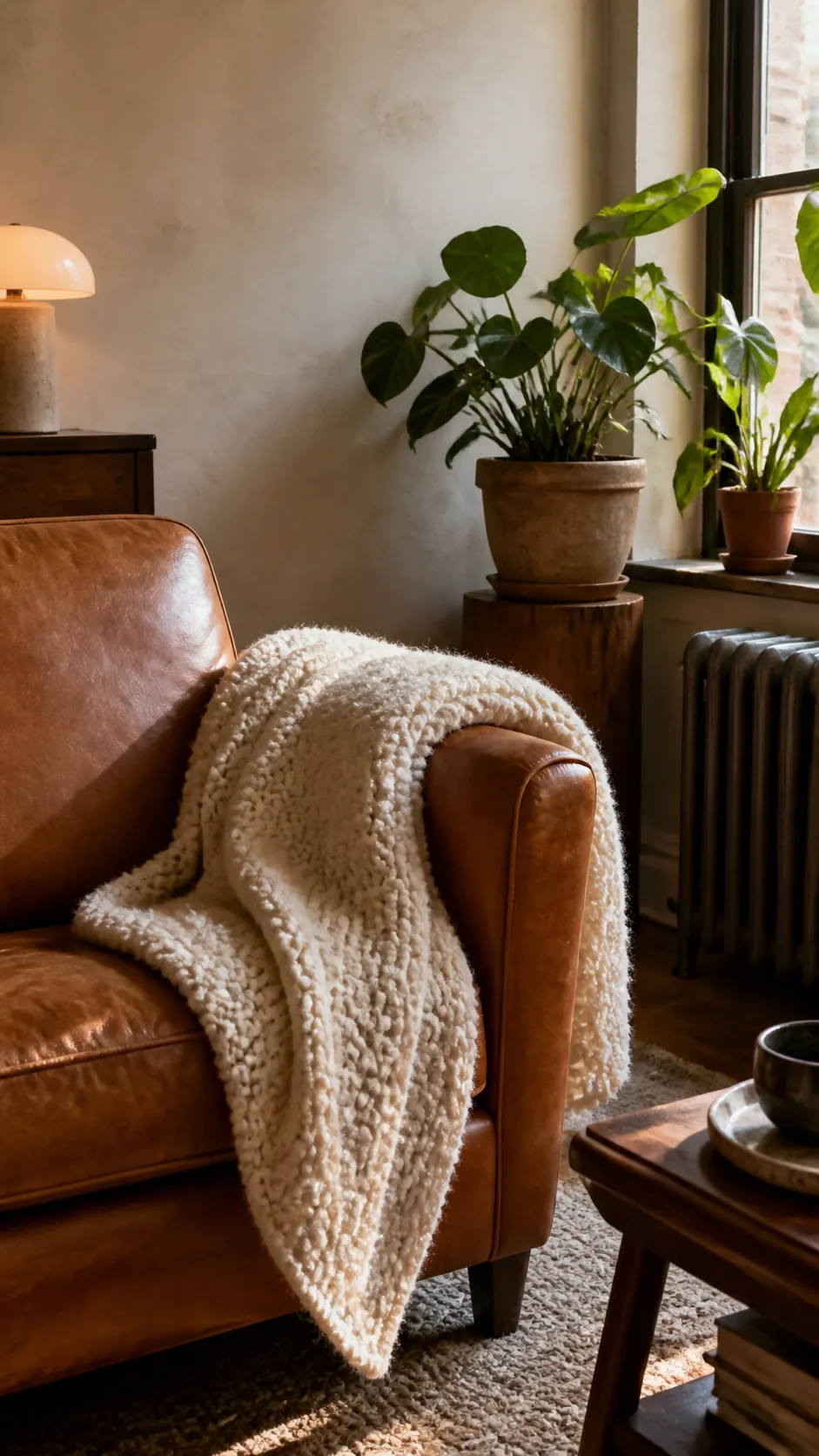
Let Terracotta Pots Repeat Warm Accents
Terracotta connects naturally with rust upholstery, warm wood, brick, and 70s ceramics. Repeat it in a few separated pots rather than converting every plant container to the same material. Use sealed saucers or cachepots where moisture could damage furniture. Mix plain forms with one ribbed or footed shape for variety. The clay should support the palette while the foliage remains the main plant feature.
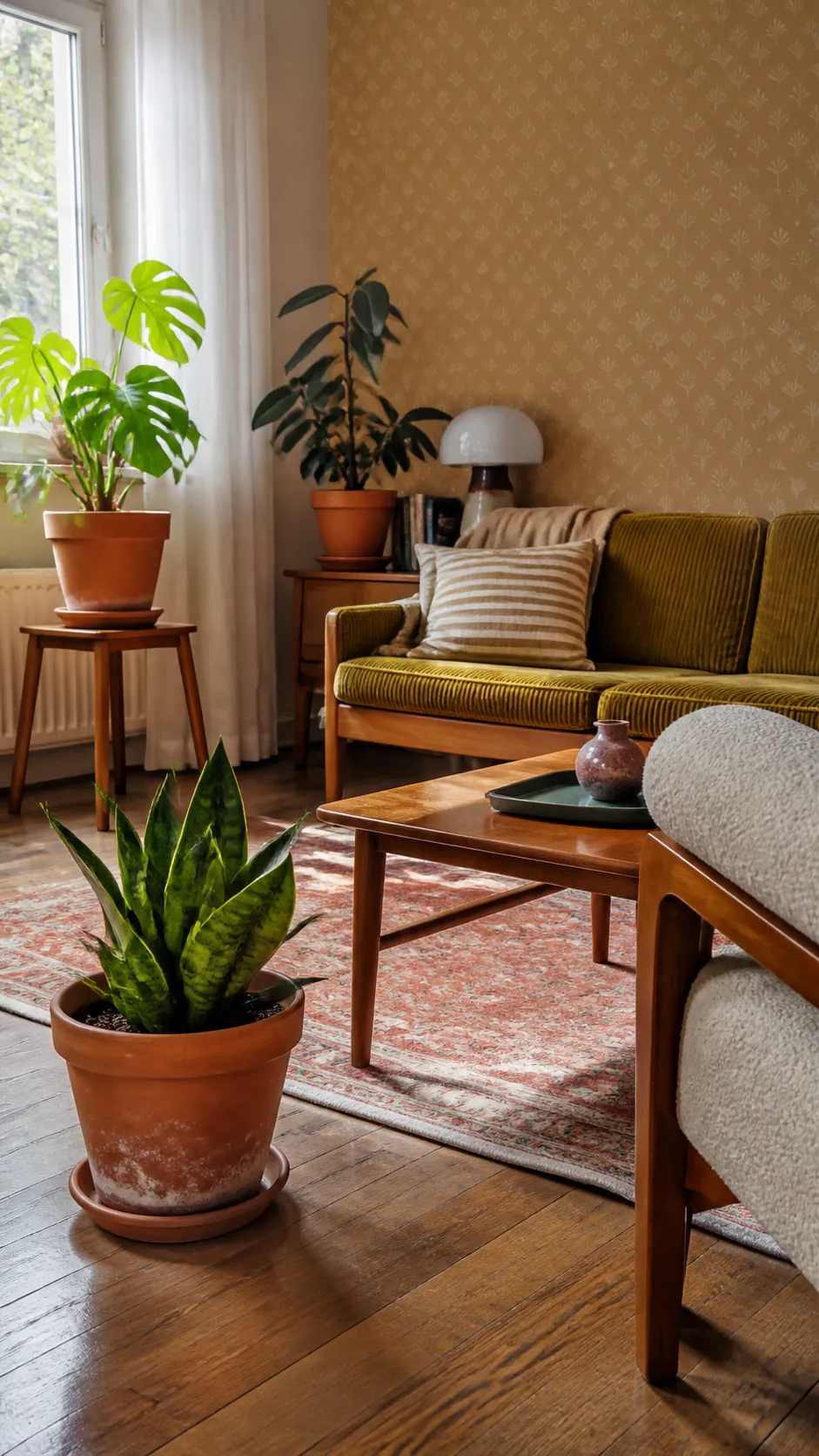
Work With Existing Brick or Wood Paneling
Original brick and wood paneling already provide the strongest texture in many retro rooms. Before painting them, reduce competing brown furniture and add cream, green, or blue textiles for separation. Plants look especially vivid against a darker masonry or timber background. Use lighting that reveals surface depth instead of flattening everything. Preserving one authentic architectural feature often feels more convincing than adding several new retro motifs.
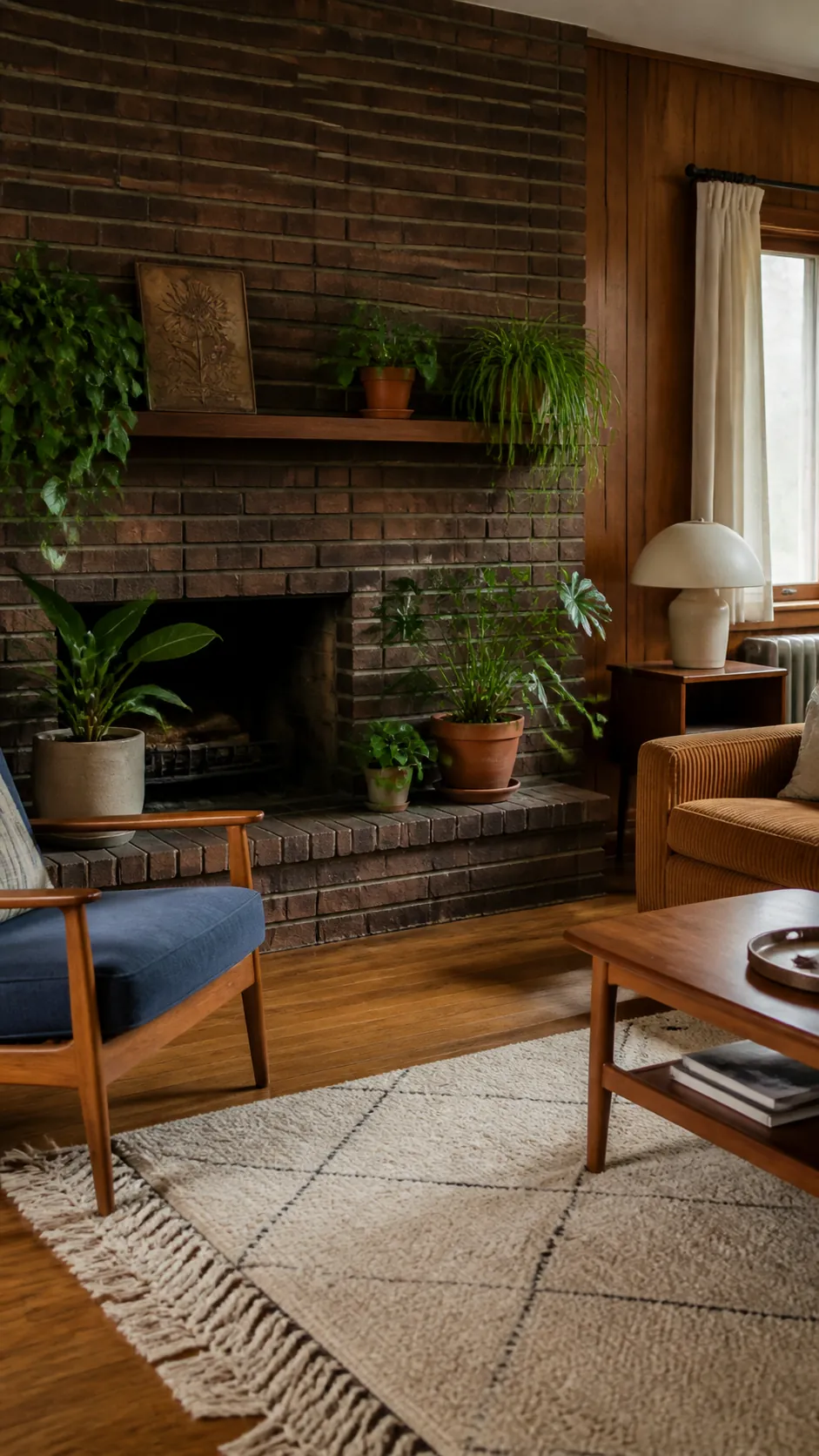
Choose Planters With Varied Silhouettes
A collection looks considered when pot shapes vary but share two or three colors or materials. Combine a low bowl, tall cylinder, footed planter, and simple hanging pot rather than repeating identical cachepots. Match each vessel’s width and weight to the plant’s root ball and mature size. Avoid top-heavy stands where pets or children move through the room. Shape variation creates rhythm even when the palette remains calm.
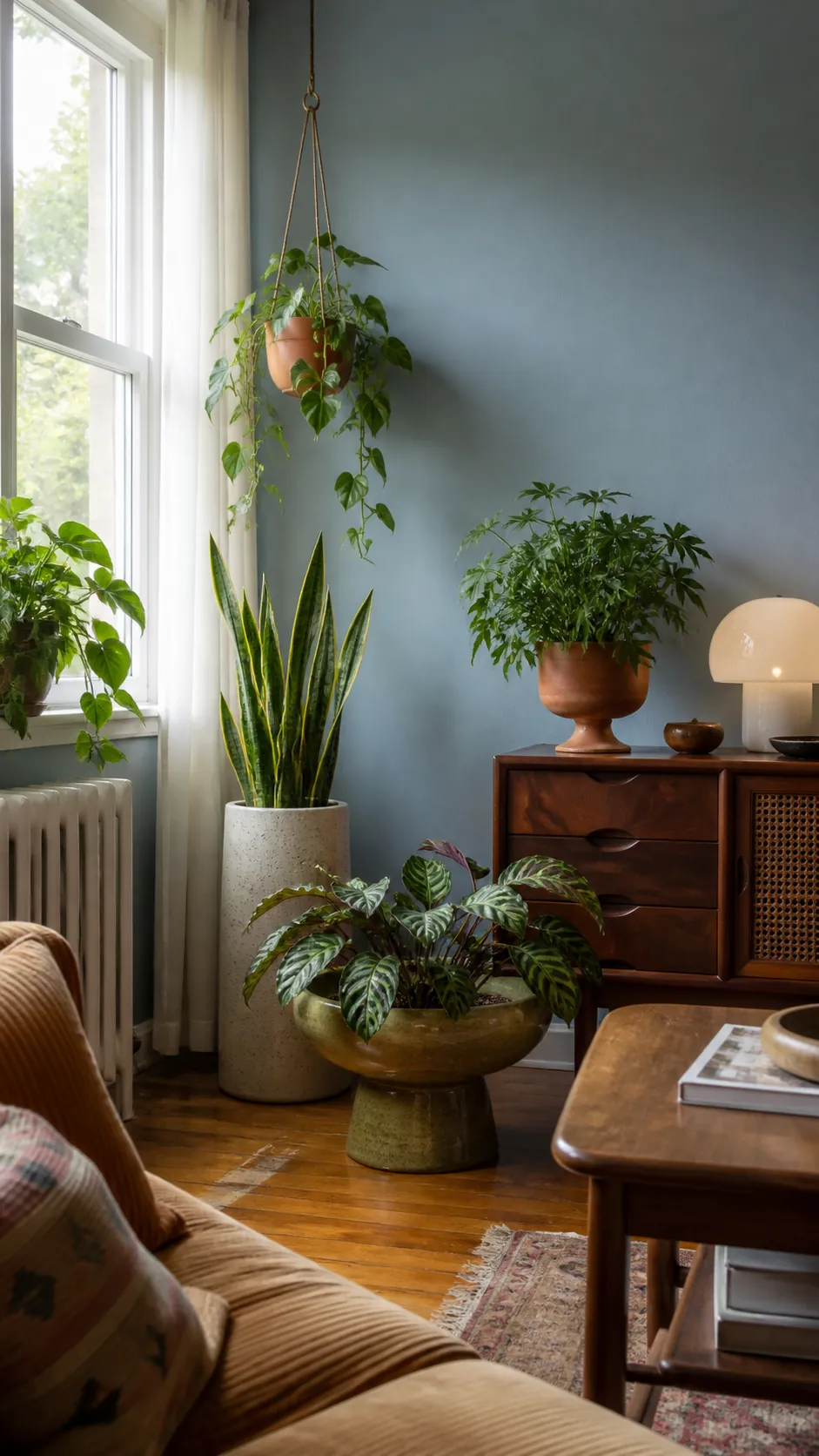
Use Wall Art With a Specific Graphic Motif
One large graphic print can establish the era without relying on generic “vintage” accessories. Choose a concrete motif such as concentric arches, abstract sunbursts, or bold botanical cut-paper forms. Frame it simply and give foliage enough separation that leaves do not obscure the design. Pull one restrained color from the print into a cushion or lamp. The art should support the room’s shapes rather than act as a costume backdrop.
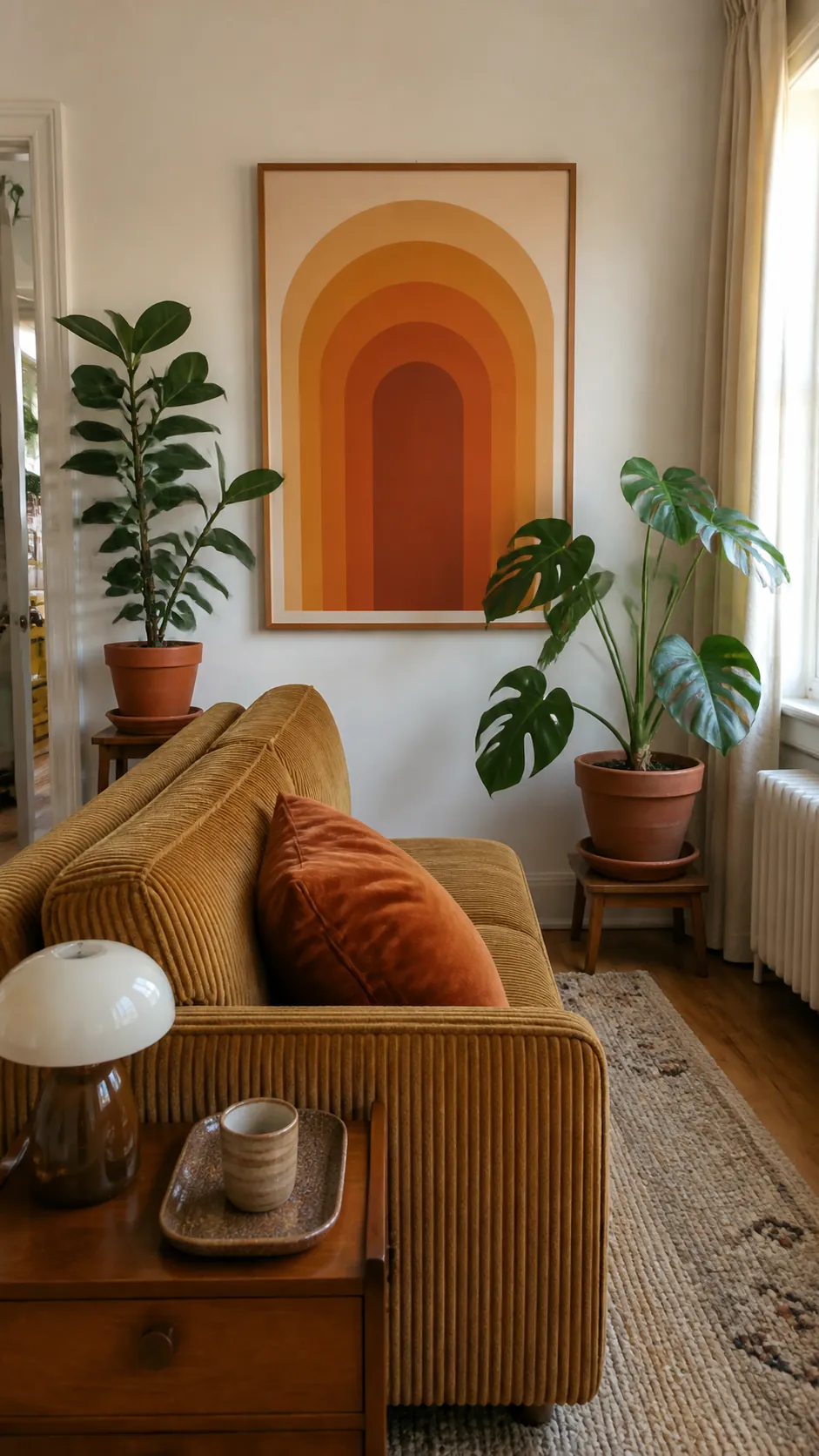
Make a Dedicated Watering Path
Plant decor stays enjoyable when care does not require moving half the room. Keep a clear route from the water source to each plant group, and use trays that can be lifted securely. Store a small watering can and cloth together in a nearby cabinet or basket. Check that trailing vines do not catch on sleeves during care. A practical watering path lets the room support a real collection without feeling overrun by it.
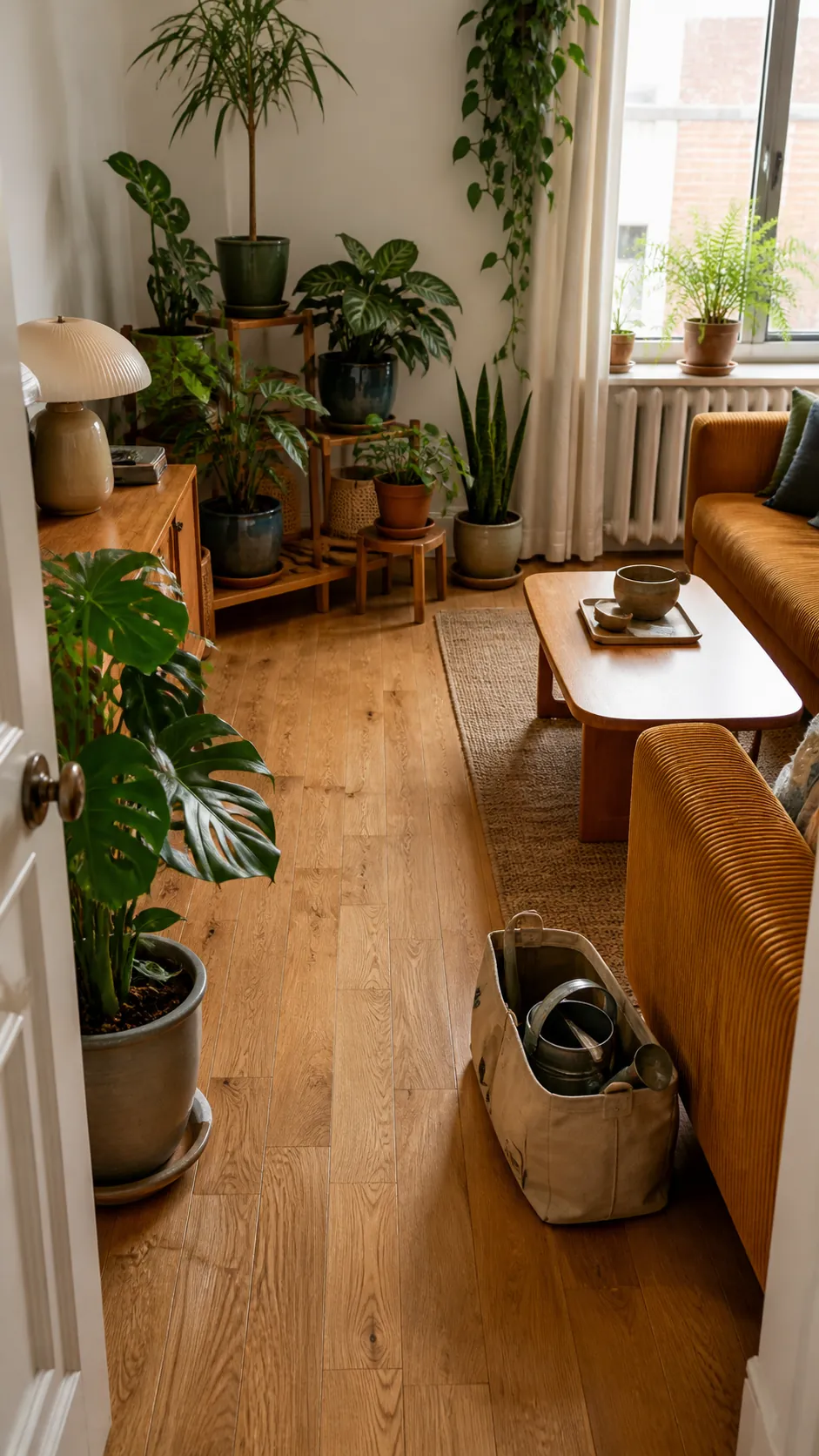
Finish With One Memorable Vintage Piece
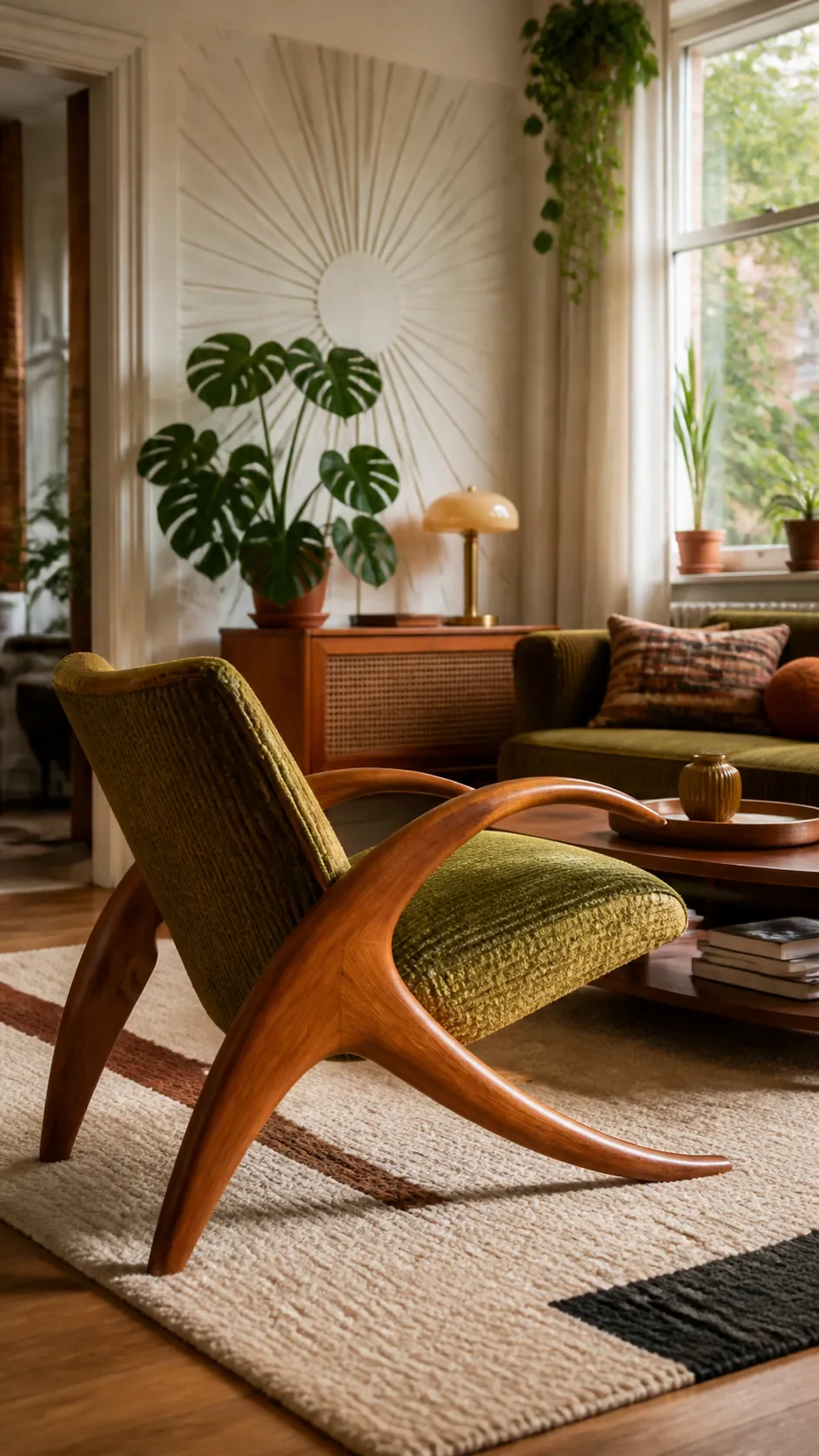
A room becomes more personal when one distinctive find carries the story. It might be a sculptural lamp, curved teak chair, tiled coffee table, or record cabinet discovered secondhand. Give that piece room to be seen instead of surrounding it with smaller retro props. Let plants frame it from a safe distance and repeat one of its colors elsewhere. The coziest retro living room feels assembled by a person with a point of view, not ordered as a complete decade-themed set.