
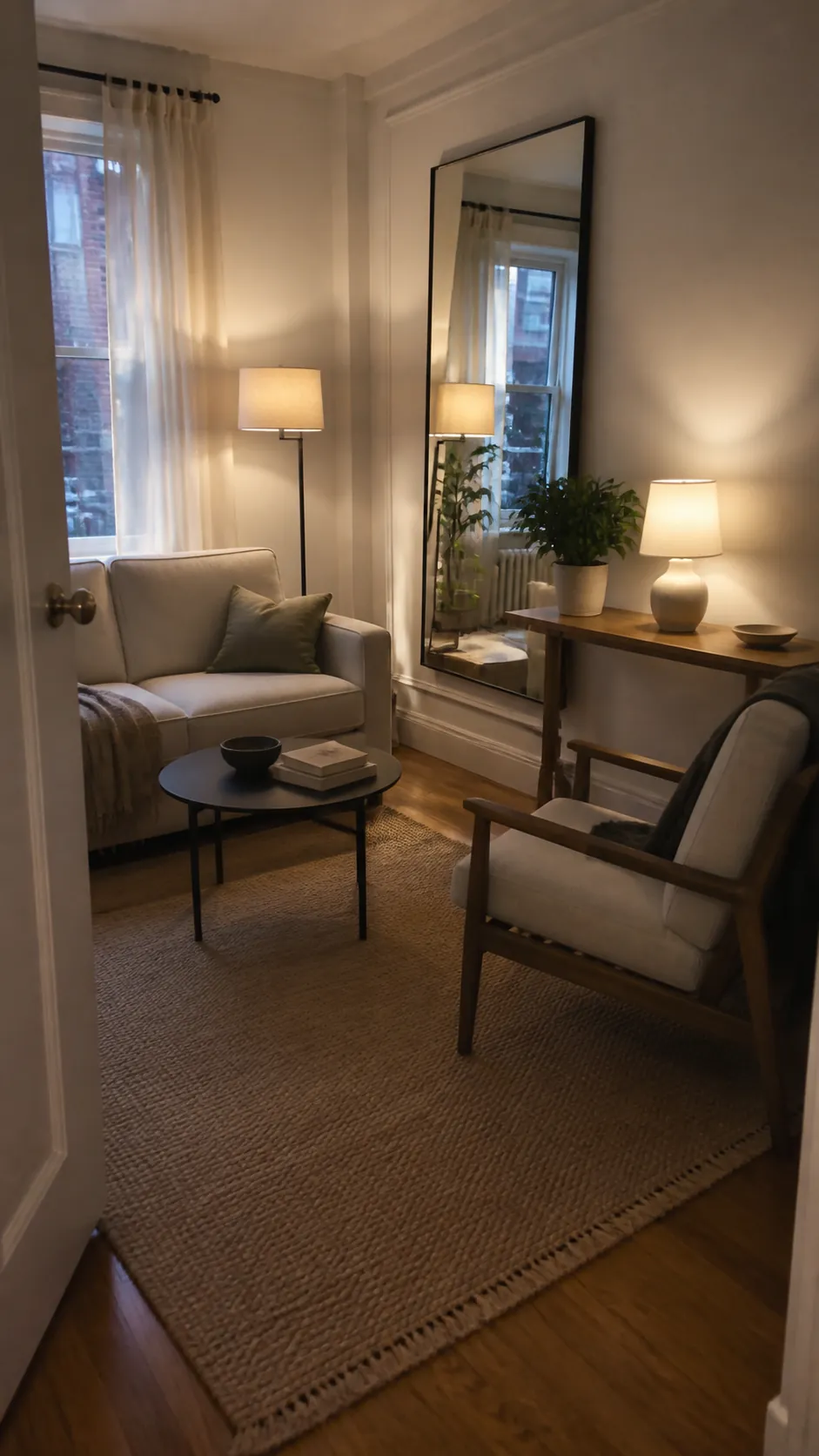
A mirror can make a compact room feel brighter and more open, but only when it reflects something worth seeing. Lighting works the same way: adding more fixtures does not automatically create comfort. The best results come from treating mirrors and lights as a pair, then checking what that pair does in daylight, after dark, and from the places where you actually sit.
Start With the Reflection, Not the Empty Wall
Before hanging a mirror, stand where you will most often see it and study the view it would capture. A mirror opposite an open doorway, a calm art wall, or a leafy window can create visual depth. The same mirror aimed at a crowded counter, television, or laundry rack doubles the very clutter you want the room to escape.
Use painter’s tape to outline the proposed mirror on the wall. Move around the room at standing and seated height, especially if the mirror will be visible from a sofa or bed. The reflected view matters more than perfect symmetry on the wall. This quick test also catches awkward reflections of private areas, bright screens, and ceiling fixtures before you drill a hole.
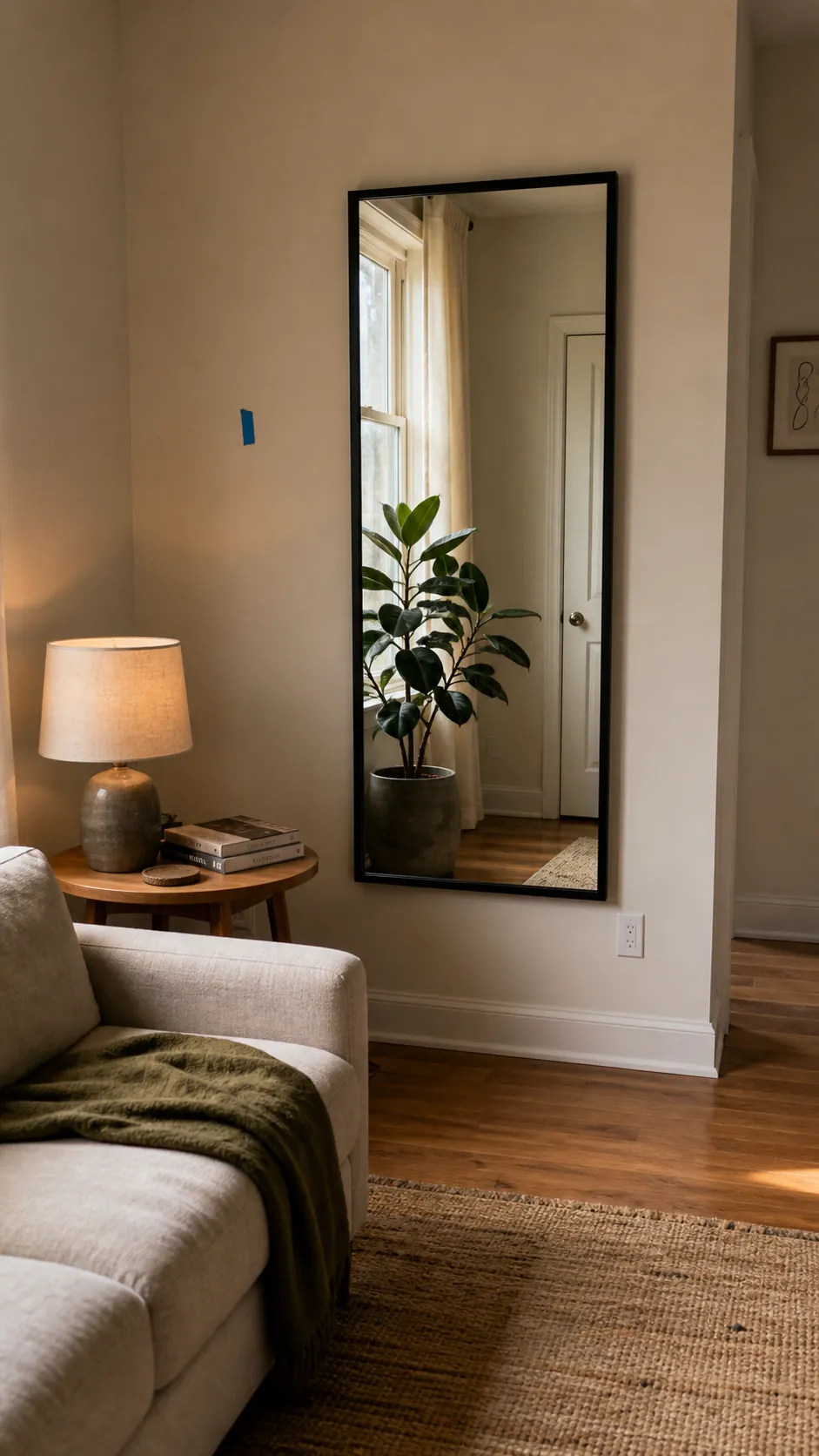
Borrow Daylight Without Creating Glare
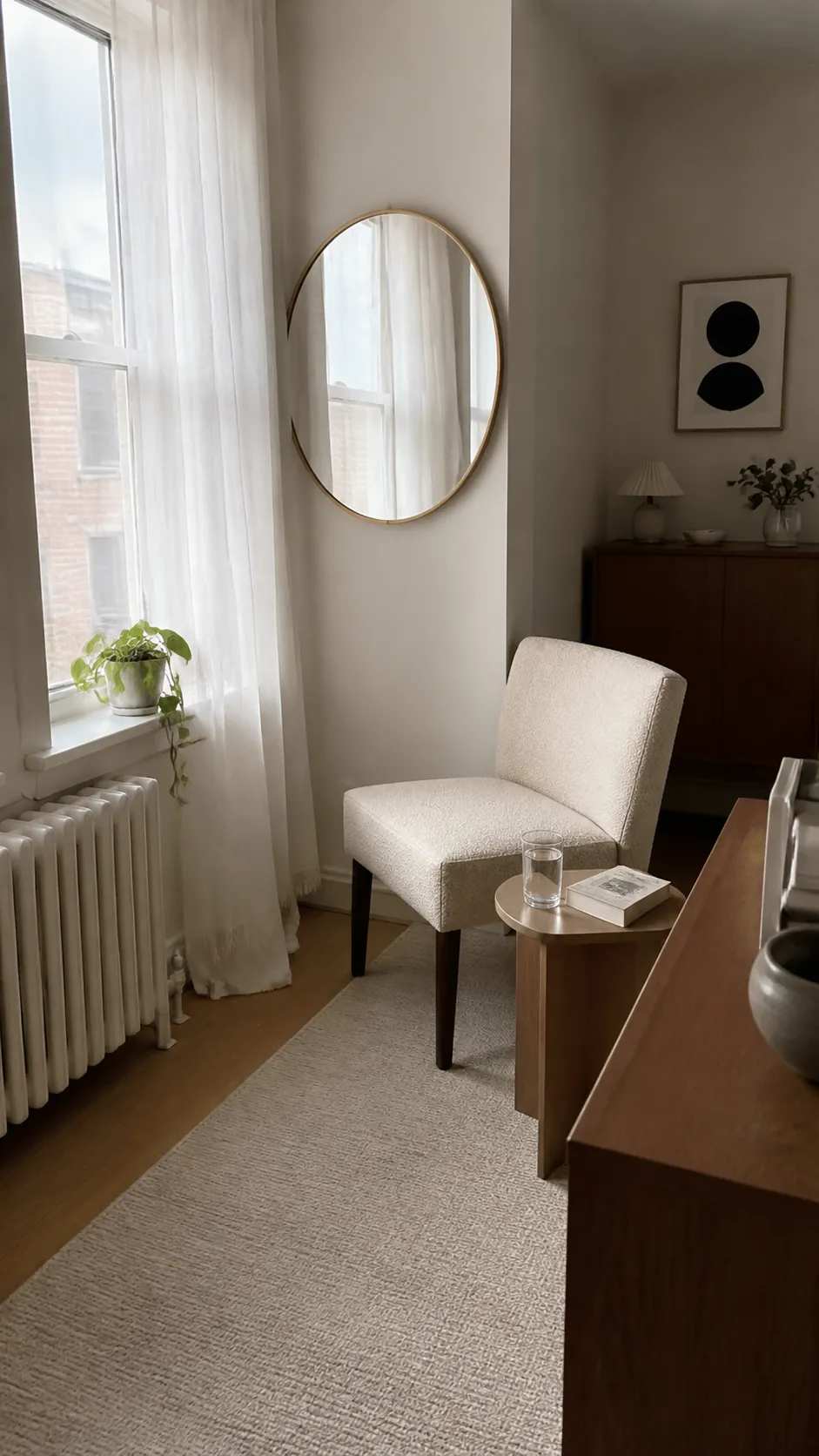
A mirror near a window can carry daylight farther into a narrow room. Placing it on a wall beside or roughly perpendicular to the window often produces a softer effect than positioning it directly opposite the glass. It catches the bright edge of the window and spreads that brightness without always sending a hard beam back toward a desk, television, or seat.
There is no universal rule because window direction, nearby buildings, and seasonal sun all change the result. Test the location with a movable mirror over the course of one clear day. If you see a sharp hotspot, shift the angle or move the mirror a little farther from the window. A sheer curtain can diffuse harsh sun while still allowing the mirror to amplify useful daylight.
Reflect a Soft Pool of Light, Not a Bare Bulb
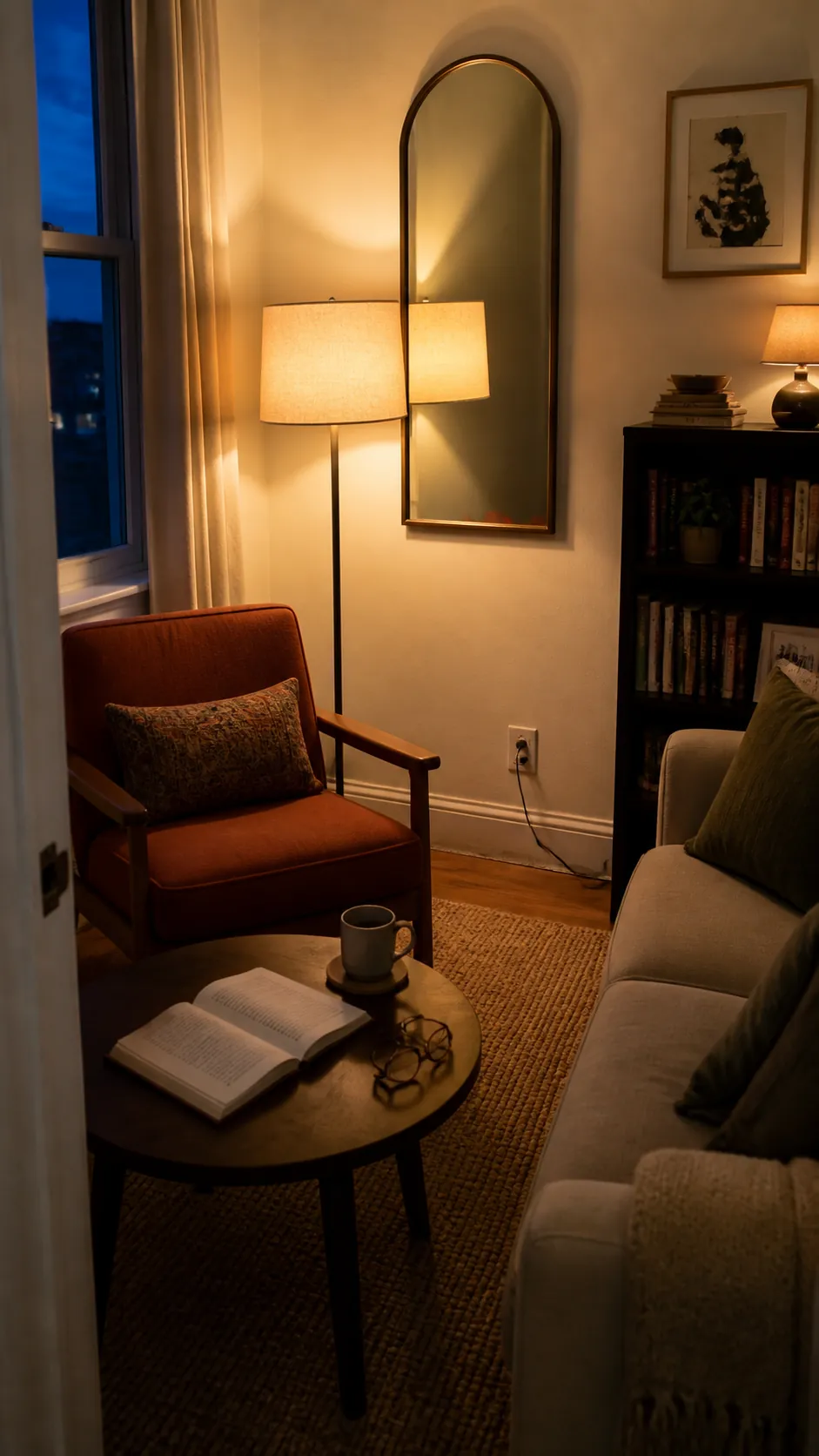
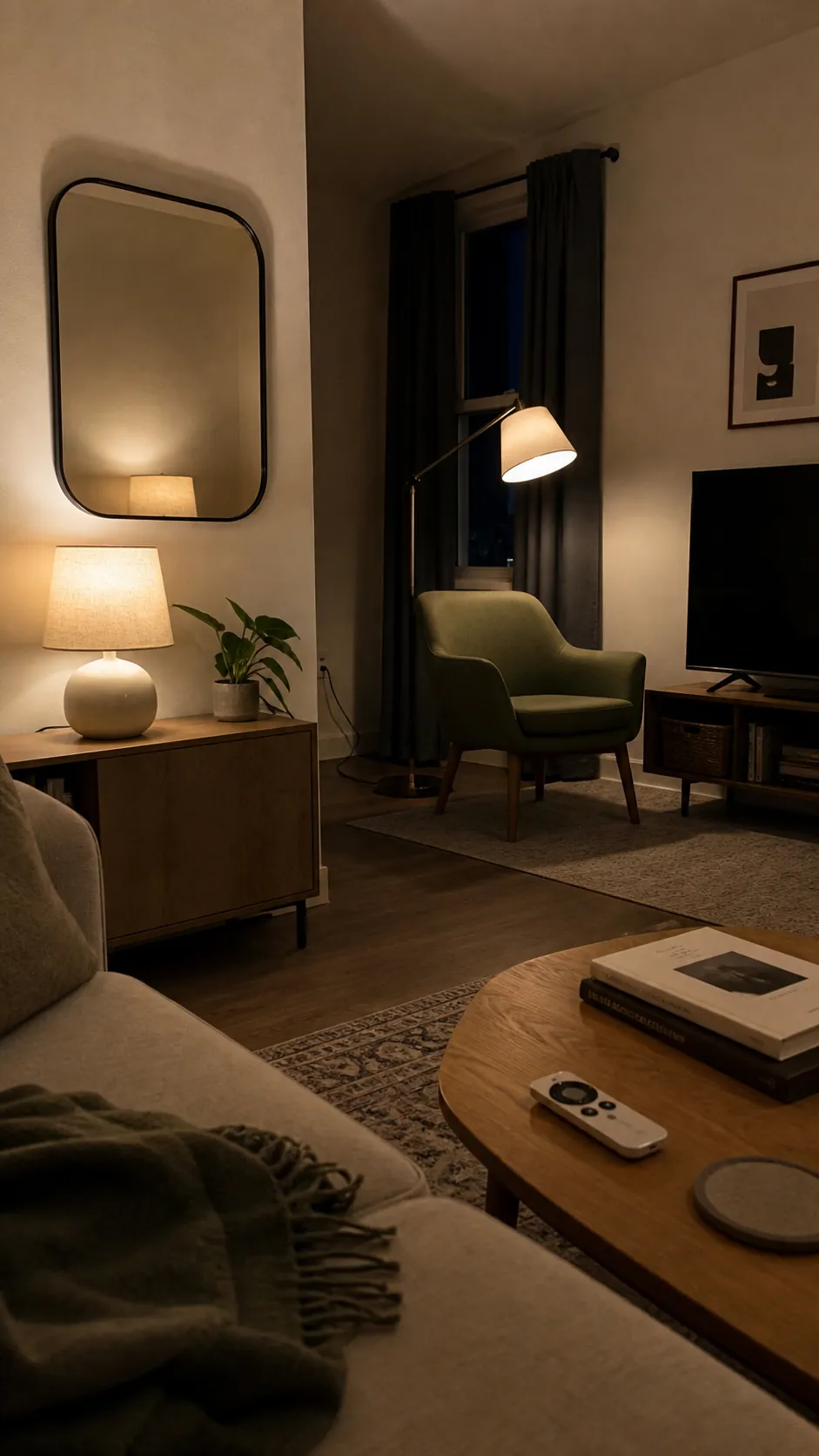
At night, a mirror doubles whatever light source appears in it. That can feel spacious when the source is a shaded floor lamp, a wall-washed glow, or a warm table lamp. It can feel harsh when the reflection is an exposed bulb or a bright downlight. Choose a fixture with a shade or diffuser and position it so the mirror catches the illuminated wall or soft pool of light rather than the bulb itself.
This is especially useful in a dark corner. A slim lamp placed near a mirror can make one fixture seem more generous without increasing brightness everywhere. Keep the lamp close enough to share light but far enough that its shade does not crowd the frame. A dimmer or low-lumen warm bulb gives you control after daylight fades.
Use Height to Stretch a Short Sightline
A tall mirror is often more effective than a cluster of small mirrors in a tight room. Its long uninterrupted reflection pulls the eye upward and creates a second vertical plane. Leaning mirrors can work in low-traffic bedrooms, but wall mounting is safer in narrow walkways, homes with children, and rooms where a vacuum or chair could knock the frame.
Choose a frame that relates to nearby furniture without becoming another heavy border. A thin wood or metal edge usually keeps the reflected area visually dominant. Leave a little breathing room above the floor and beside furniture, or align the mirror with a cabinet edge for a deliberate look. Avoid hanging it so high that it reflects mostly ceiling; the useful view should include the room, not just the light fixture overhead.
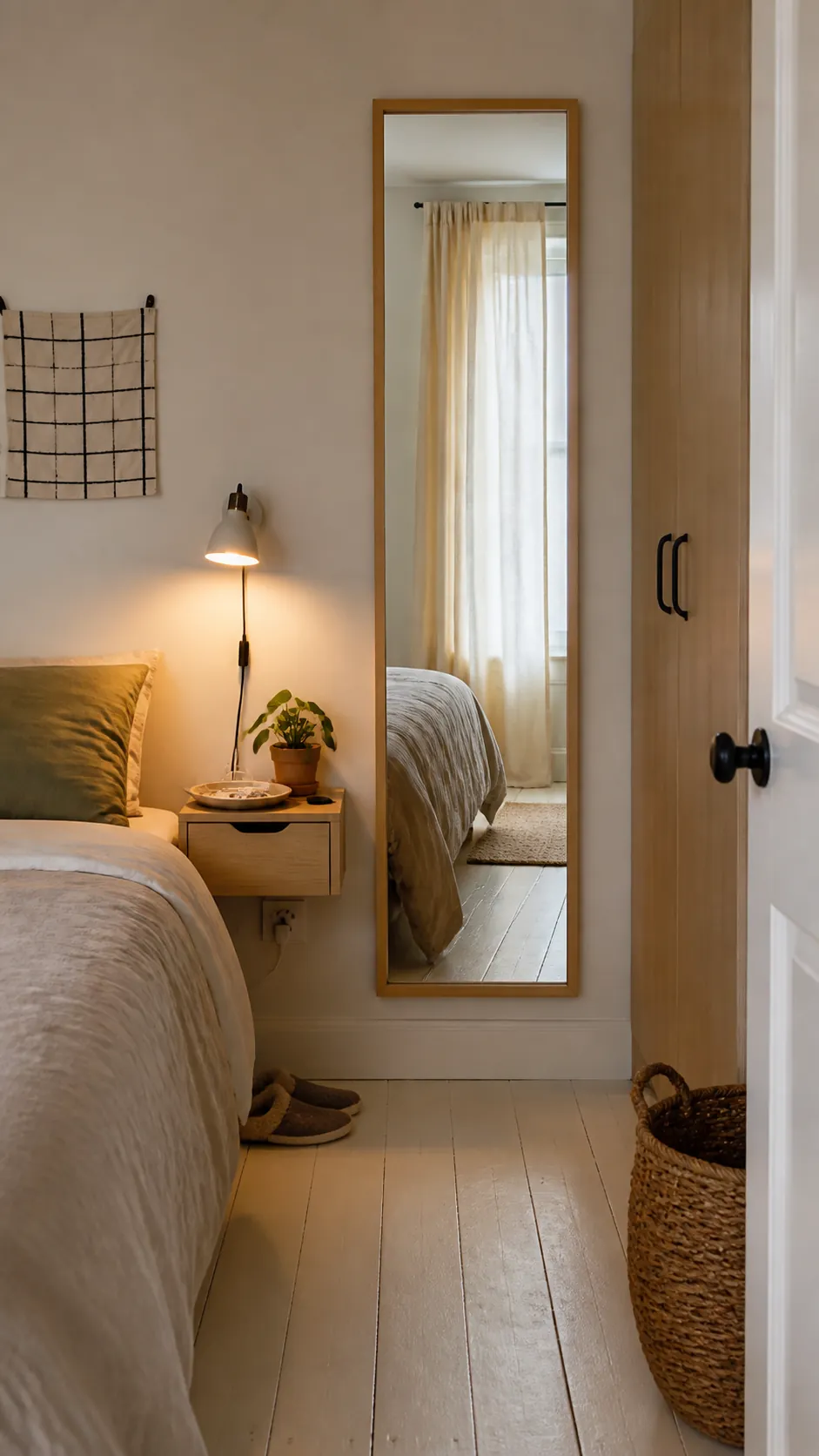
Layer Ambient, Task, and Accent Lighting
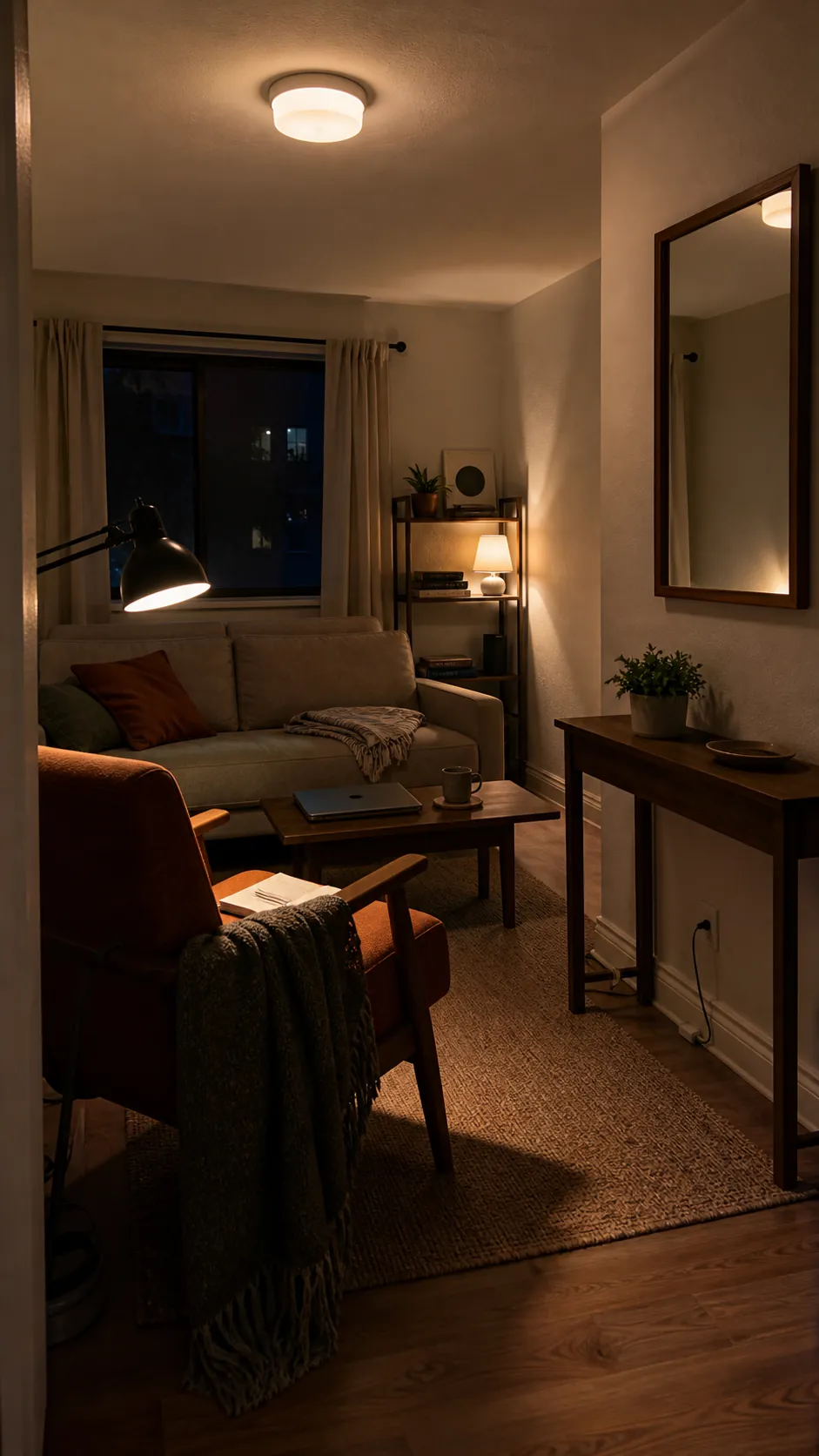
One ceiling light forces a small room to be either bright everywhere or dim everywhere. Layered lighting gives each zone a job. Ambient light lets you move around safely, task light supports reading or food preparation, and accent light adds depth to a wall, shelf, or plant. These layers need not mean three large fixtures; a compact ceiling fixture, a swing-arm lamp, and a small shaded lamp can be enough.
Let the mirror participate in one layer rather than trying to multiply all three. It might reflect the warm ambient wash while the task lamp remains directional and glare-free. Keep color temperature reasonably consistent—warm white around living and sleeping areas is usually calming—and use separate switches or smart bulbs when possible. That flexibility makes the room feel larger because your attention can move among different pools of light.
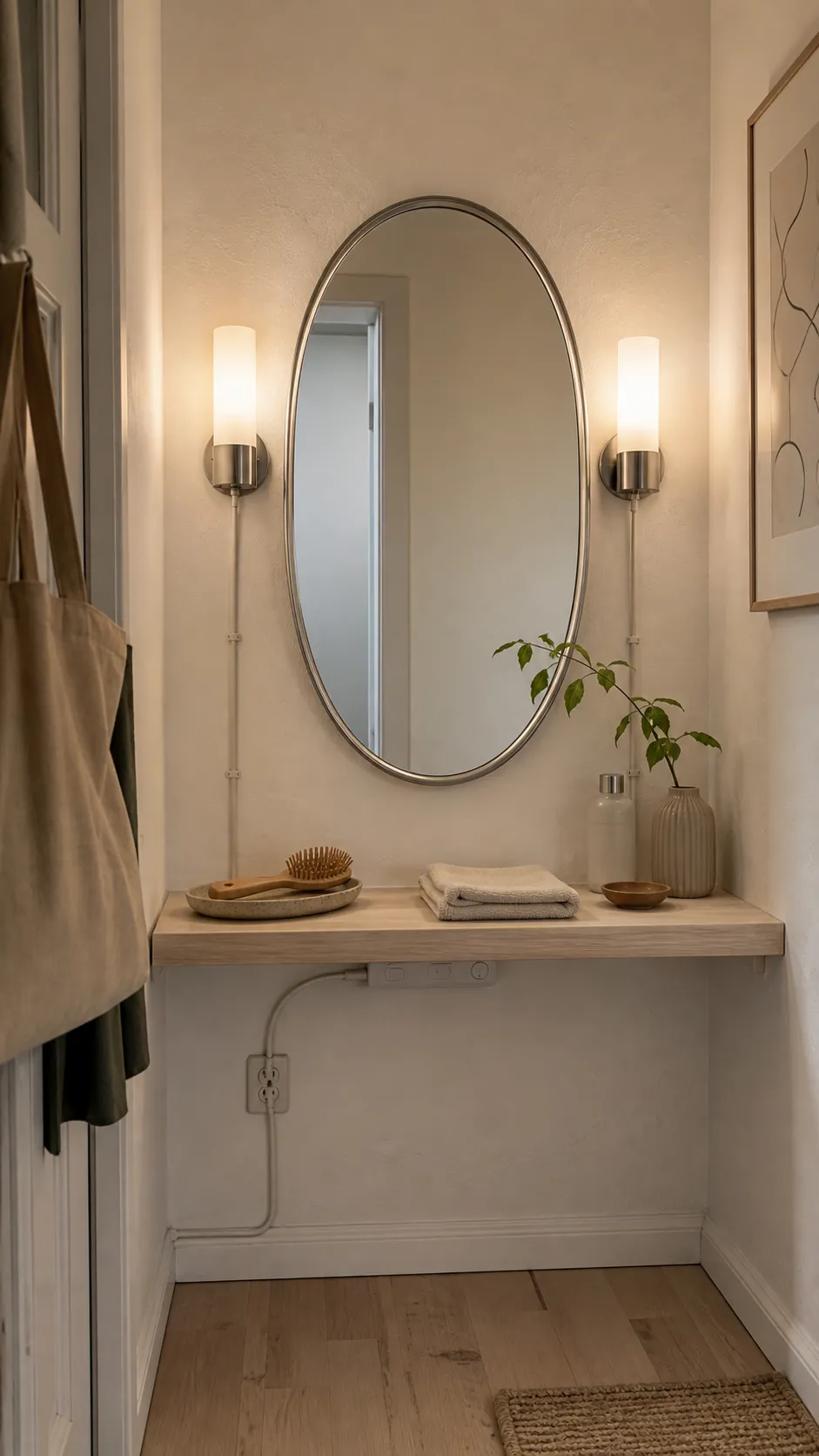
Light a Vanity Mirror From the Sides
For a bathroom, dressing nook, or entry mirror, flattering task light is more important than dramatic reflection. A single fixture above the mirror can cast shadows beneath the eyes and chin. Two compact sconces at roughly face height provide more even illumination. If wall space is extremely limited, a mirror with integrated diffused side lighting can deliver the same principle in one slim piece.
Check the fixture’s rating for the location, particularly near bathroom water. Select a high color-rendering bulb so skin tones and clothing colors look natural, and avoid placing an exposed lamp where you will stare directly at its reflection. The light should illuminate your face, not compete for attention. For renters, plug-in sconces or rechargeable lights can create the side-lighting effect with fewer permanent changes.
Test the Room Again After Dark
The most successful arrangement works at more than one hour of the day. Turn on each fixture separately after sunset and sit in every usual spot. Look for a reflected bulb, repeated screen glare, deep corners, and views that suddenly feel exposed. Small adjustments—turning a lamp, lowering its brightness, or shifting a mirror a few inches—often solve more than buying another fixture.
Keep only the combinations that support real routines: a bright task setting for cleaning or working, a comfortable general setting, and a low evening setting. Mirrors should make those scenes feel deeper and more luminous, not busier. When each reflection is intentional and every light has a clear job, even a very small room can feel calm, useful, and quietly expansive.