
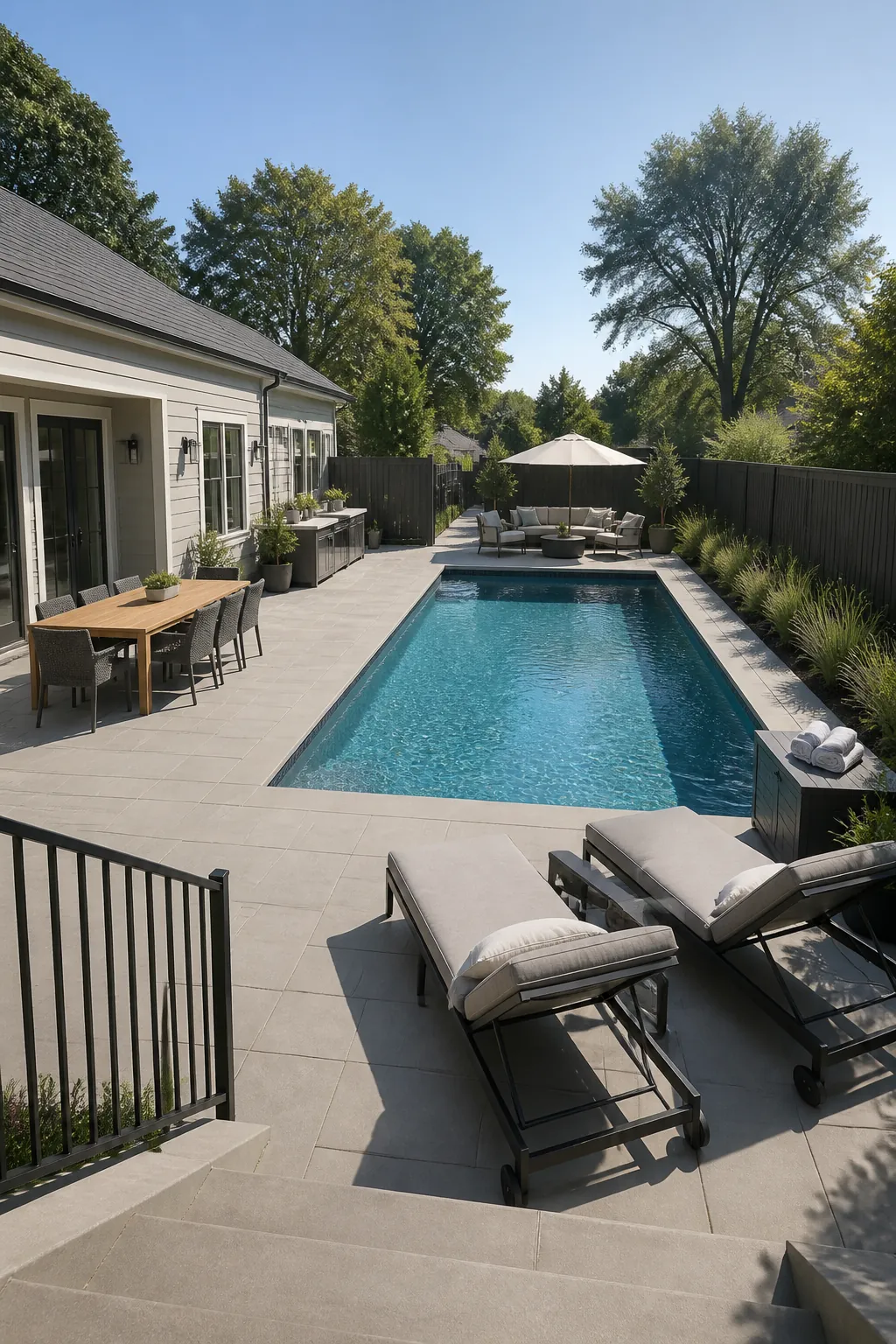
A great pool area is not measured by how many features fit around the water. It works when swimmers can move safely, dry guests have somewhere comfortable to sit, food stays away from splashes, and furniture does not need to be rearranged every time friends arrive. These outdoor pool area ideas turn the deck into flexible zones for ordinary lounging and real entertaining.
Keep a Clear Circulation Loop
Start with an unobstructed route between the house, gate, steps, seating, and pool equipment. Guests should never need to squeeze behind loungers or cross a conversation group while carrying towels. Test the loop with chairs pulled out, not pushed neatly under tables.
Clear movement is the foundation of good pool area design. Keep hoses, cover reels, planters, and umbrella bases outside the route. Use slip-resistant surfaces and preserve visibility around level changes.
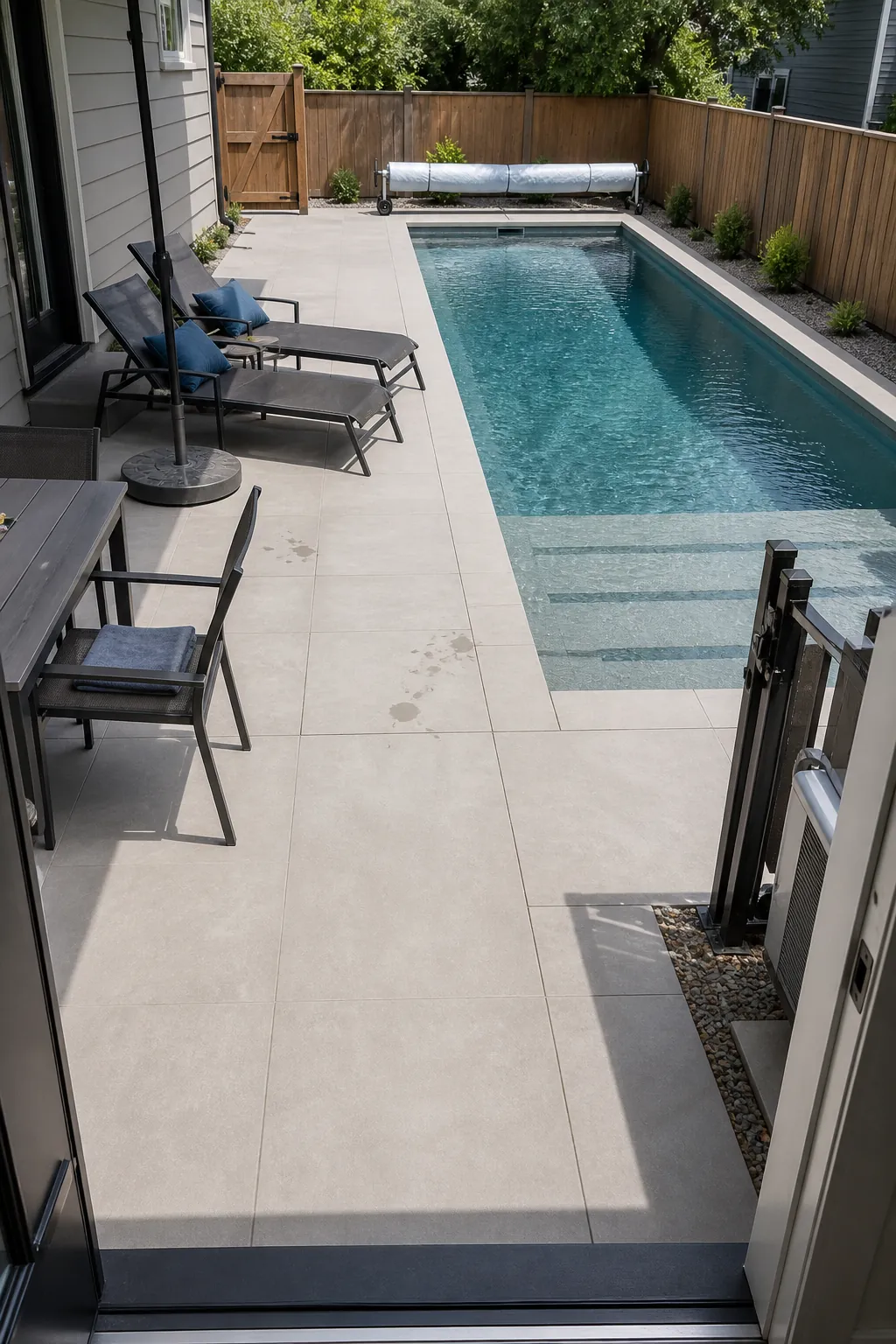
Create a Dedicated Dry Lounge
Place the main lounge beyond the splash zone so cushions, books, and phones can stay dry. Two facing sofas or a compact sectional encourage conversation without consuming the swimming deck. Anchor the group with a washable table rather than a loose rug that remains damp.
Orient at least one seat toward the water for supervision. Allow generous chair pullback and a clear route around the group. A dry lounge often gets more daily use than permanent furniture built inside the pool.
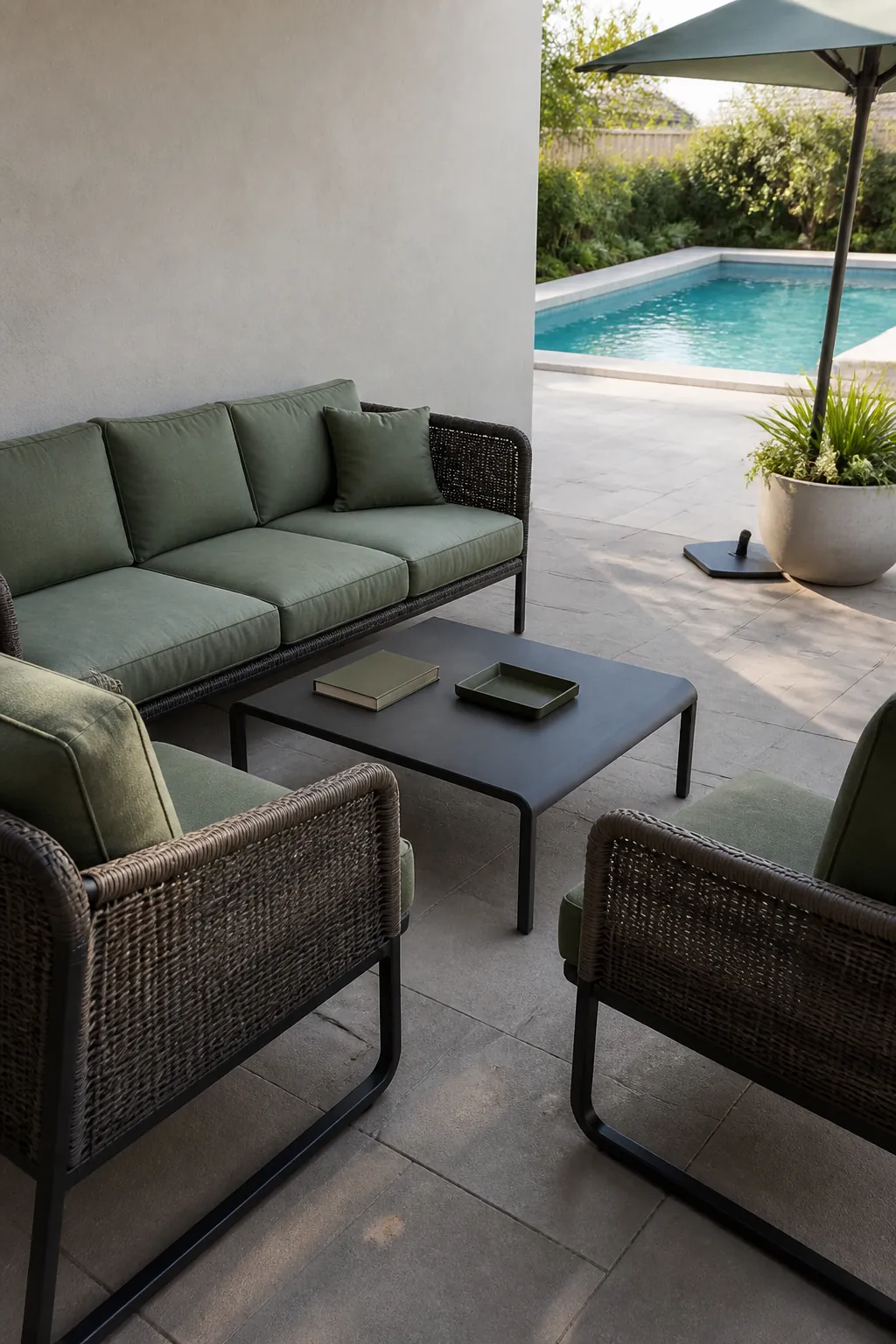
Pair Two Chaise Lounges With a Shared Table
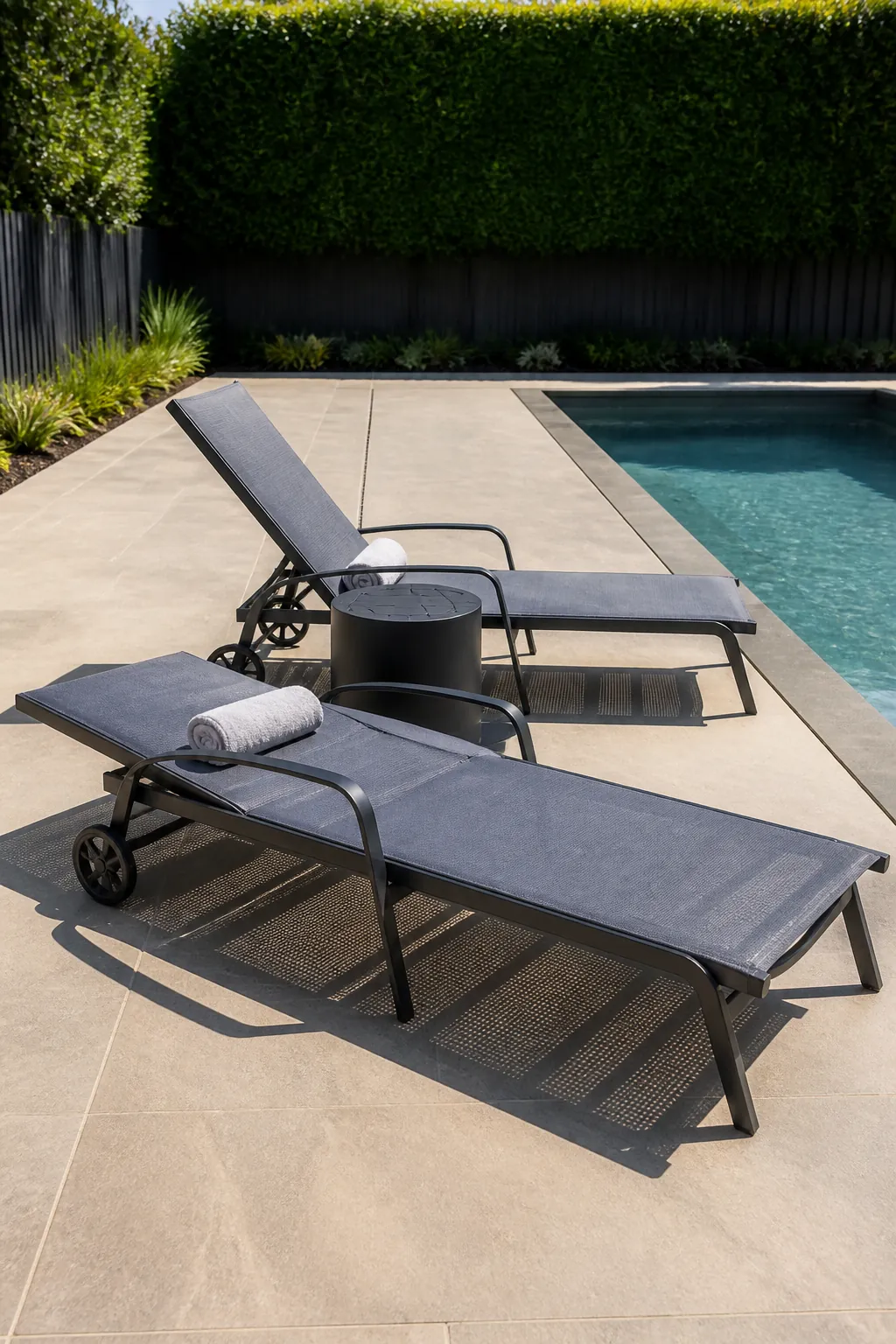
Two chaises are usually enough for a household that swims more than it sunbathes. A small shared table keeps drinks, sunscreen, and glasses off the deck. Choose adjustable backs, quick-drying mesh, and wheels that make the chairs easy to move.
Measure each chaise fully reclined before assigning its zone. Keep legs and wheels away from coping and drains. Extra guest loungers can be folding or stackable instead of permanently filling the deck.
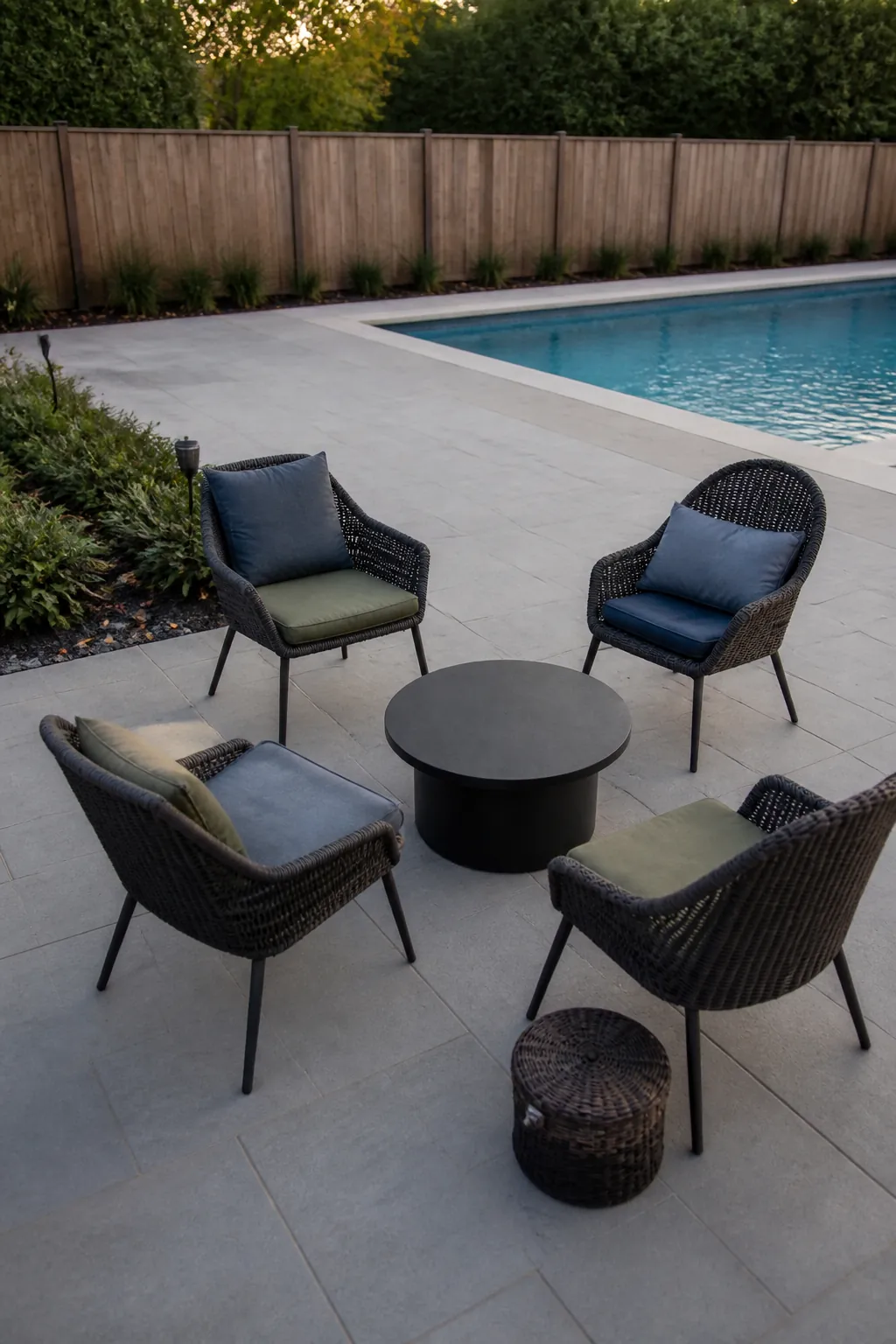
Build a Small Conversation Circle
Four movable chairs around a low table create an easy social zone for guests who are not swimming. A circle lets everyone talk without turning all seating into a row facing the water. Lightweight but wind-stable frames allow the layout to expand or contract.
Use a fire feature only where local rules, clearances, fuel storage, and supervision make it appropriate. An ordinary table is often more flexible near towels and children. Keep the circle on one level surface with a clear path behind each chair.
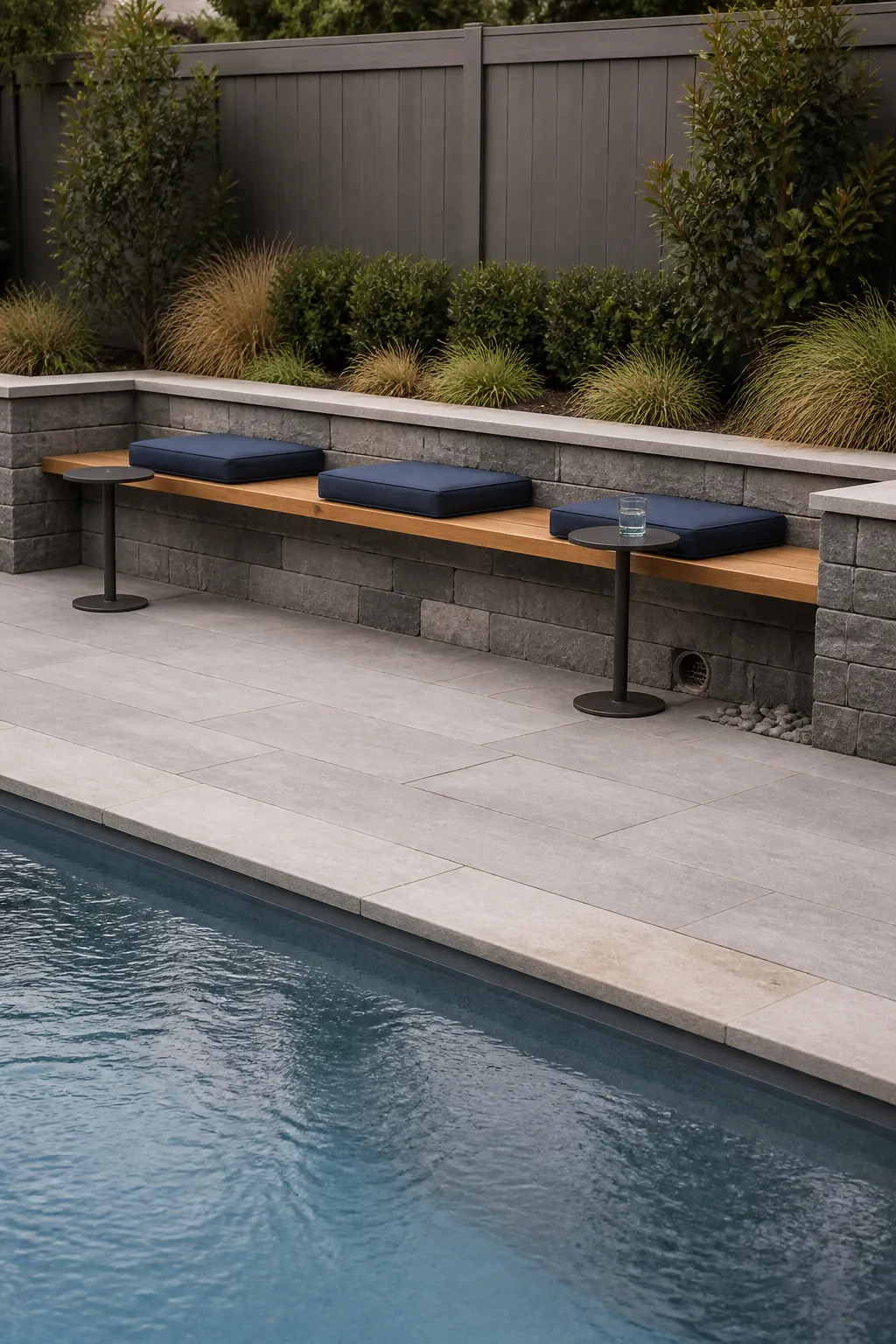
Use a Built-In Bench Along a Safe Edge
A dry-deck bench along a retaining wall or planter can seat several guests without a field of chair legs. Give it comfortable depth, a smooth cap, and cushions that can be stored. Break a long run into smaller conversational groups with side tables.
Do not place a bench where it becomes a climbing aid near a pool barrier. Preserve drainage and inspection access behind it. Built-in seating works best when it protects swimming space rather than taking it away.
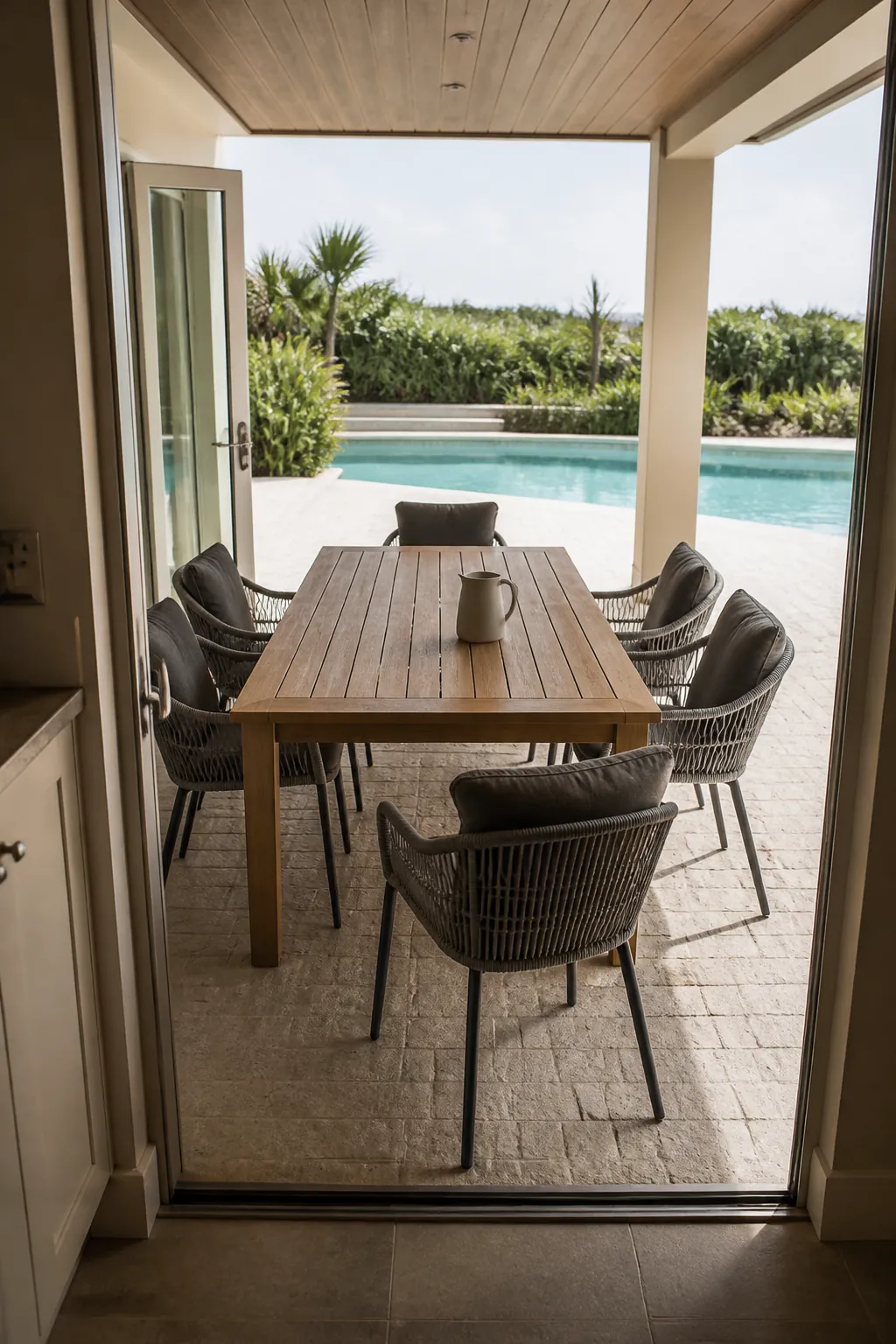
Add a Dining Table Near the House
Dining is easier close to the kitchen door, not at the far end of a wet deck. A table near the house shortens trips with hot food and breakable dishes. Place it beyond splash range while maintaining a view toward swimmers.
Allow room for every occupied chair and for someone to pass behind it. Choose a top that tolerates sun, moisture, and frequent wiping. Keep grills and cooking heat in a separately compliant location.
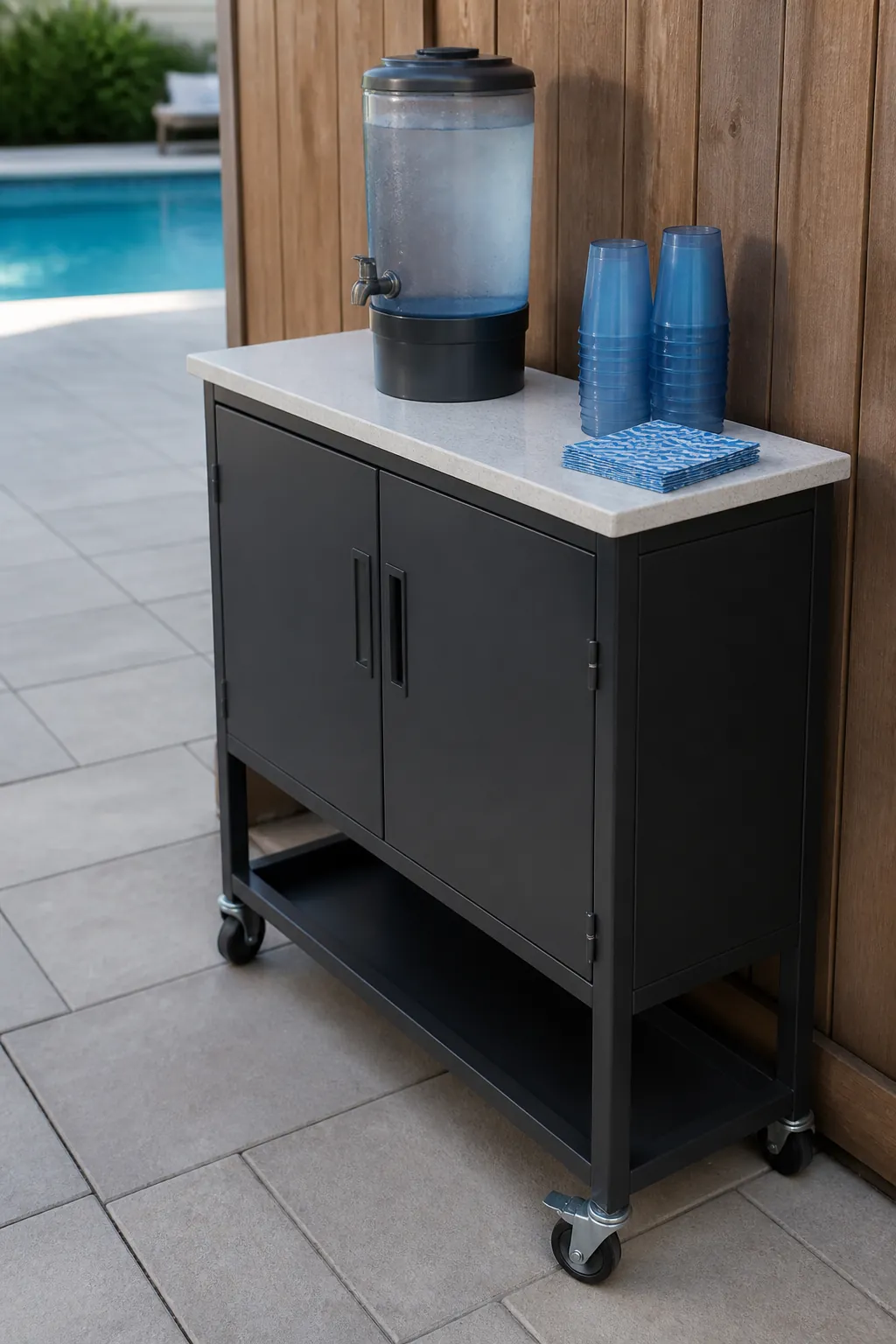
Set Up a Simple Serving Console
A narrow console can hold chilled water, napkins, and snacks without the cost or footprint of an outdoor kitchen. Choose closed storage below and a weather-resistant worktop above. Wheels help only when they lock securely on a level surface.
Keep electrical appliances and cords away from the pool unless specifically approved and installed for the setting. Use unbreakable serving pieces. The console should sit against a dry edge without narrowing the exit route.
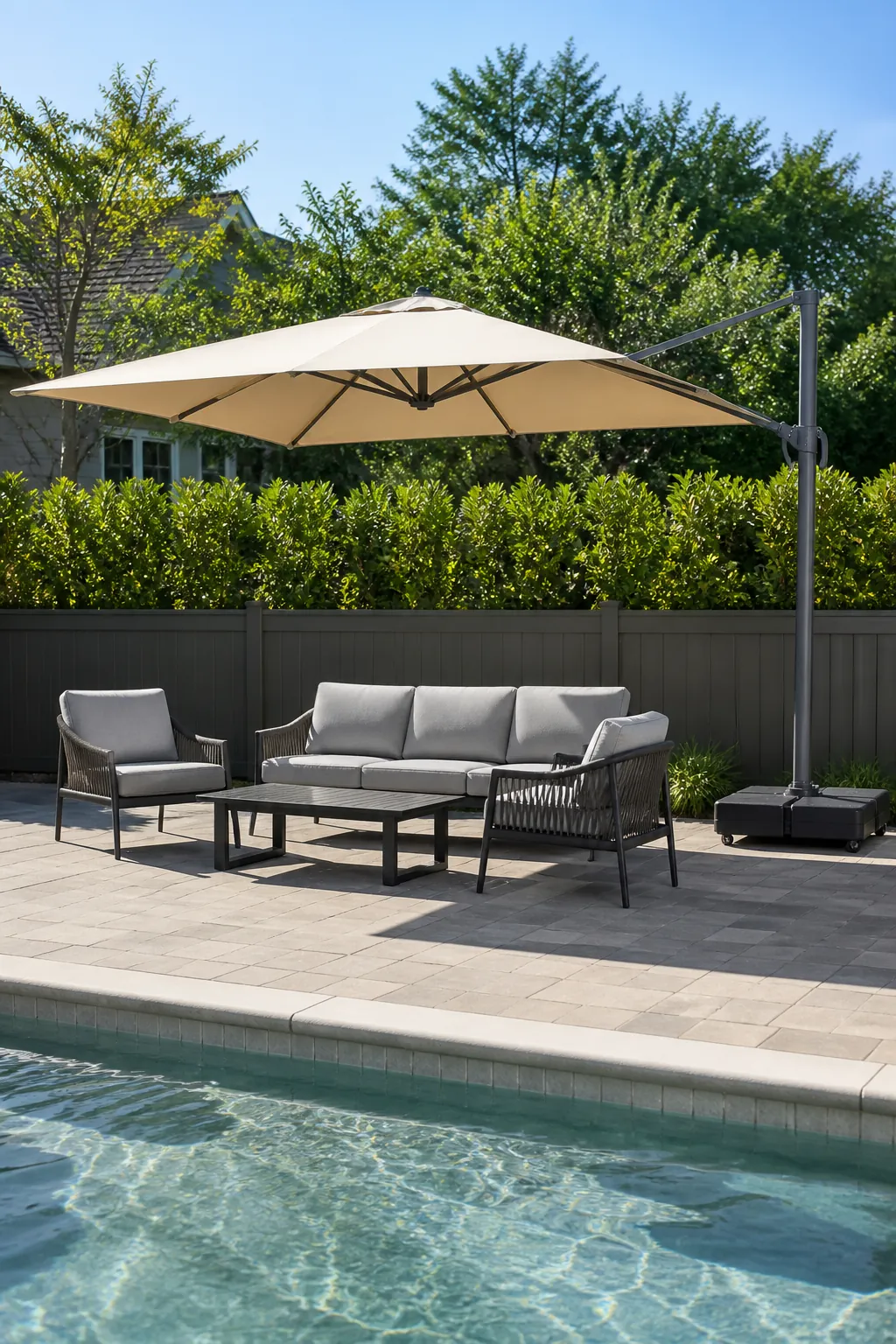
Shade the Main Seating With a Cantilever Umbrella
A cantilever umbrella shades a conversation group without putting a center pole between guests. Position the heavy base outside circulation and rotate the canopy as the sun moves. Select a size that covers seats rather than reaching over the water.
Close and secure it when unattended and during strong wind. Verify that the base cannot become a climbing aid near the fence. A neutral canopy coordinates with changing pool area decor.
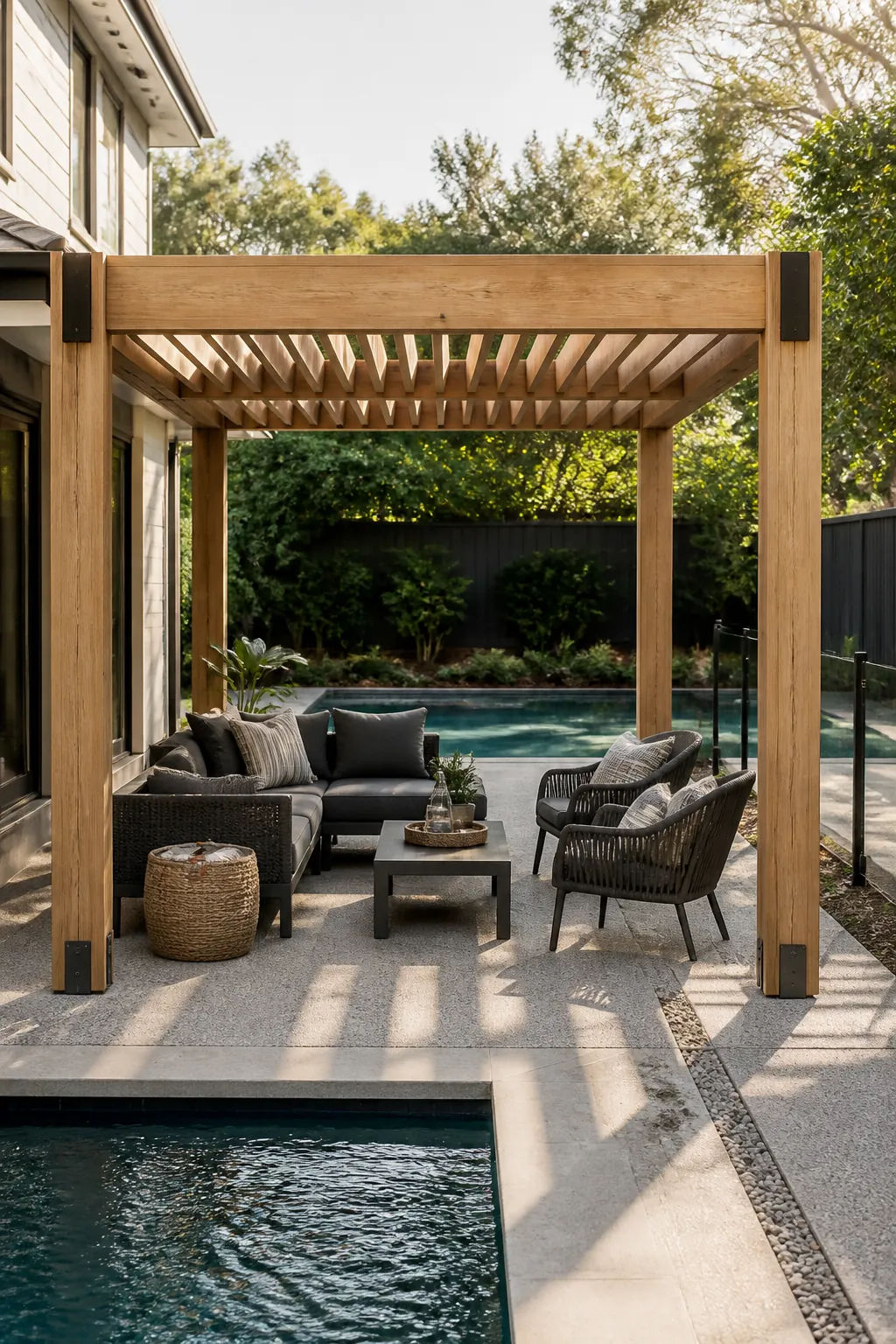
Cover a Lounge With an Open Pergola
An open pergola gives the lounge a room-like boundary while preserving airflow and views. Slats, a retractable canopy, or climbing foliage can adjust the level of shade. Keep the structure simple so furniture can change as entertaining needs evolve.
Engineer footings and connections for local weather and maintain all setbacks. Route rain away from the pool deck. Posts should frame the seating area, not become obstacles between the house and water.
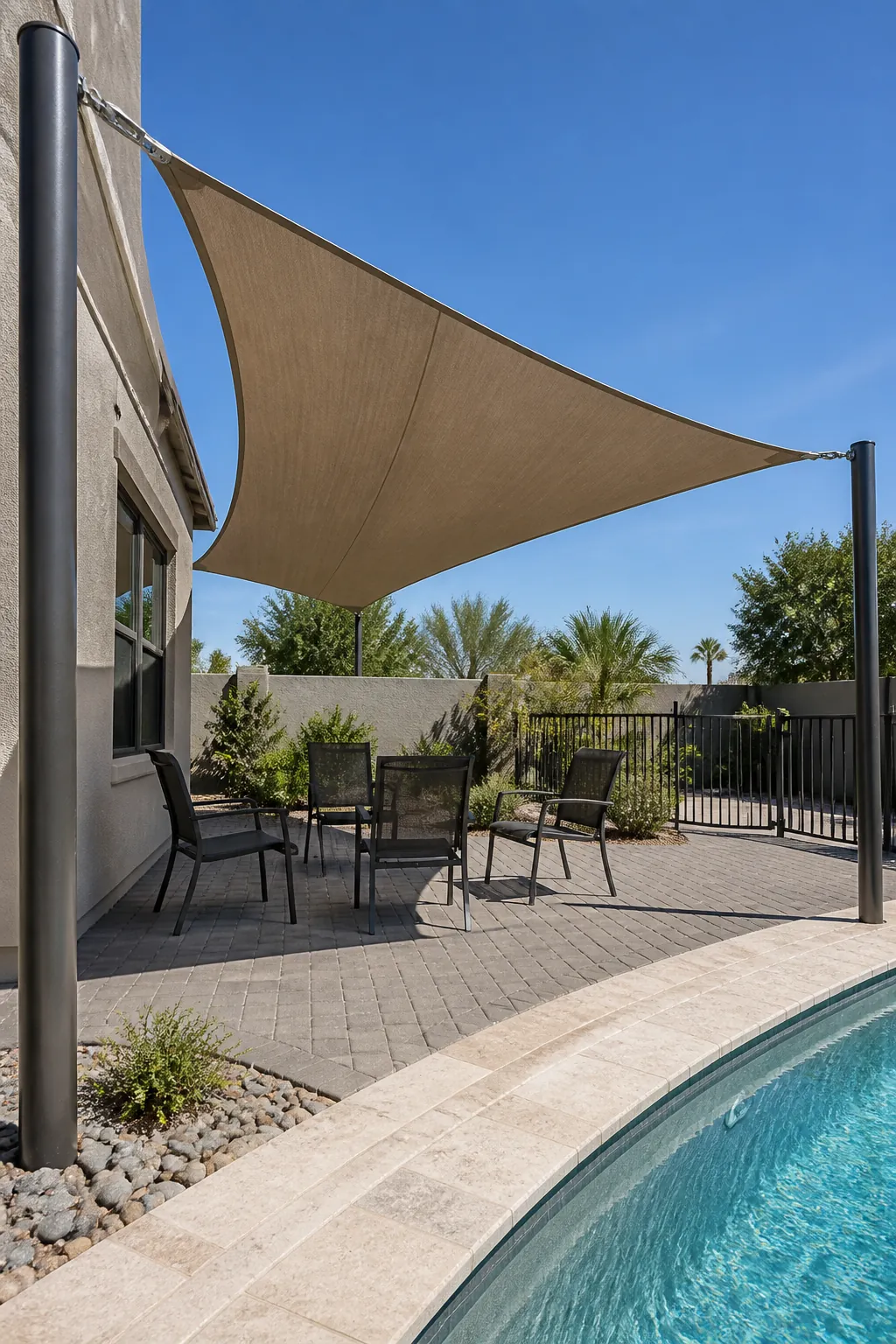
Hang a Tensioned Shade Sail
A shade sail works well over a flexible seating zone where permanent roof structure would feel heavy. Use varied anchor heights to shed rain and create a dynamic ceiling. A solid neutral color is easier to live with than a bold pattern.
Have anchors and posts designed for the sail’s wind load. Keep cables above reach and outside gate routes. Remove or secure the membrane according to manufacturer guidance for severe weather.
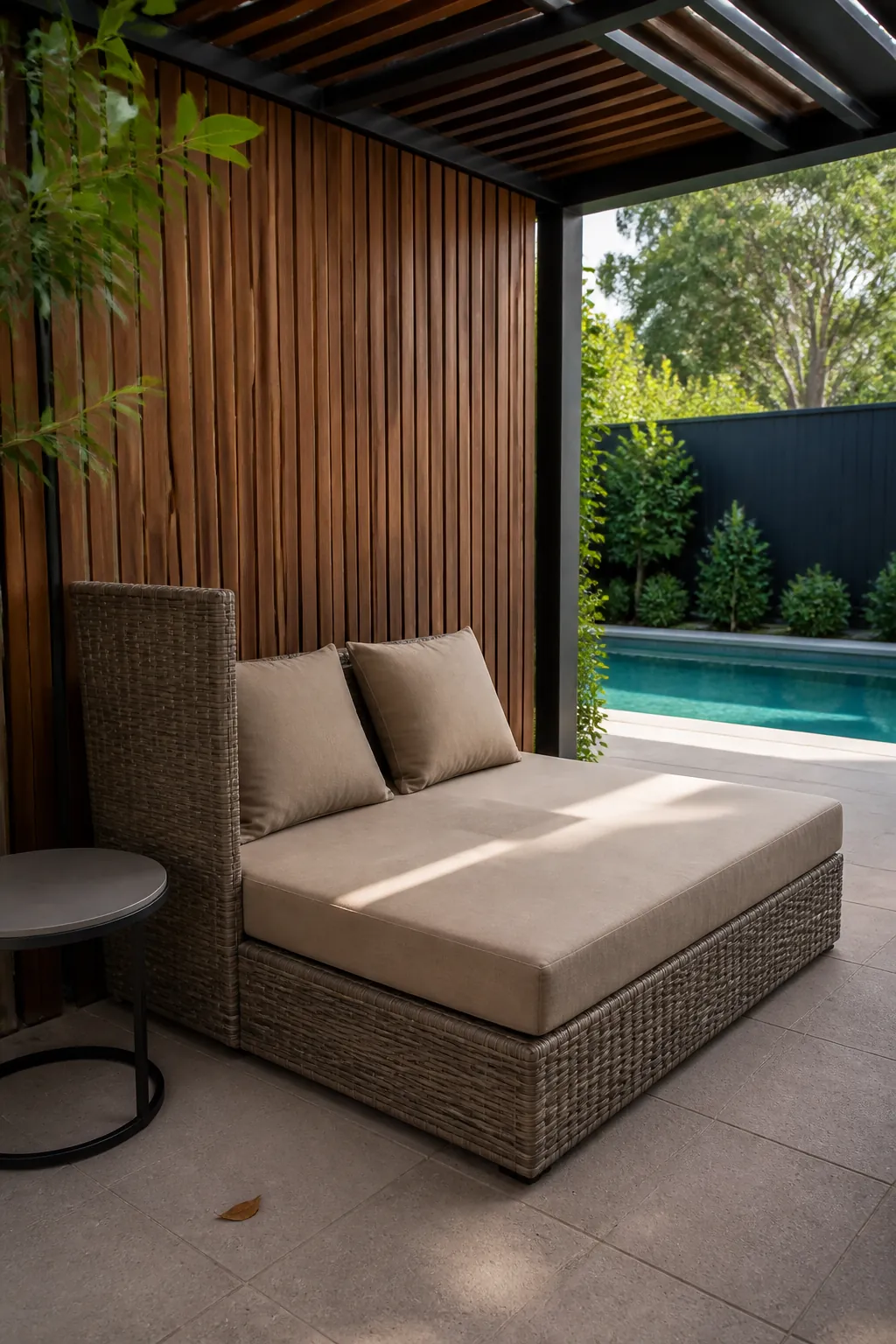
Place a Daybed in a Protected Corner
A compact outdoor daybed creates a quiet reading or napping spot away from the wettest activity. Choose quick-drying cushions and enough overhead shade to prevent the fabric from becoming too hot. A side screen can reduce wind without enclosing the corner.
Keep the bed visible from the main yard and away from the pool barrier. Store loose pillows during bad weather. Leave enough floor space to clean behind and underneath it.
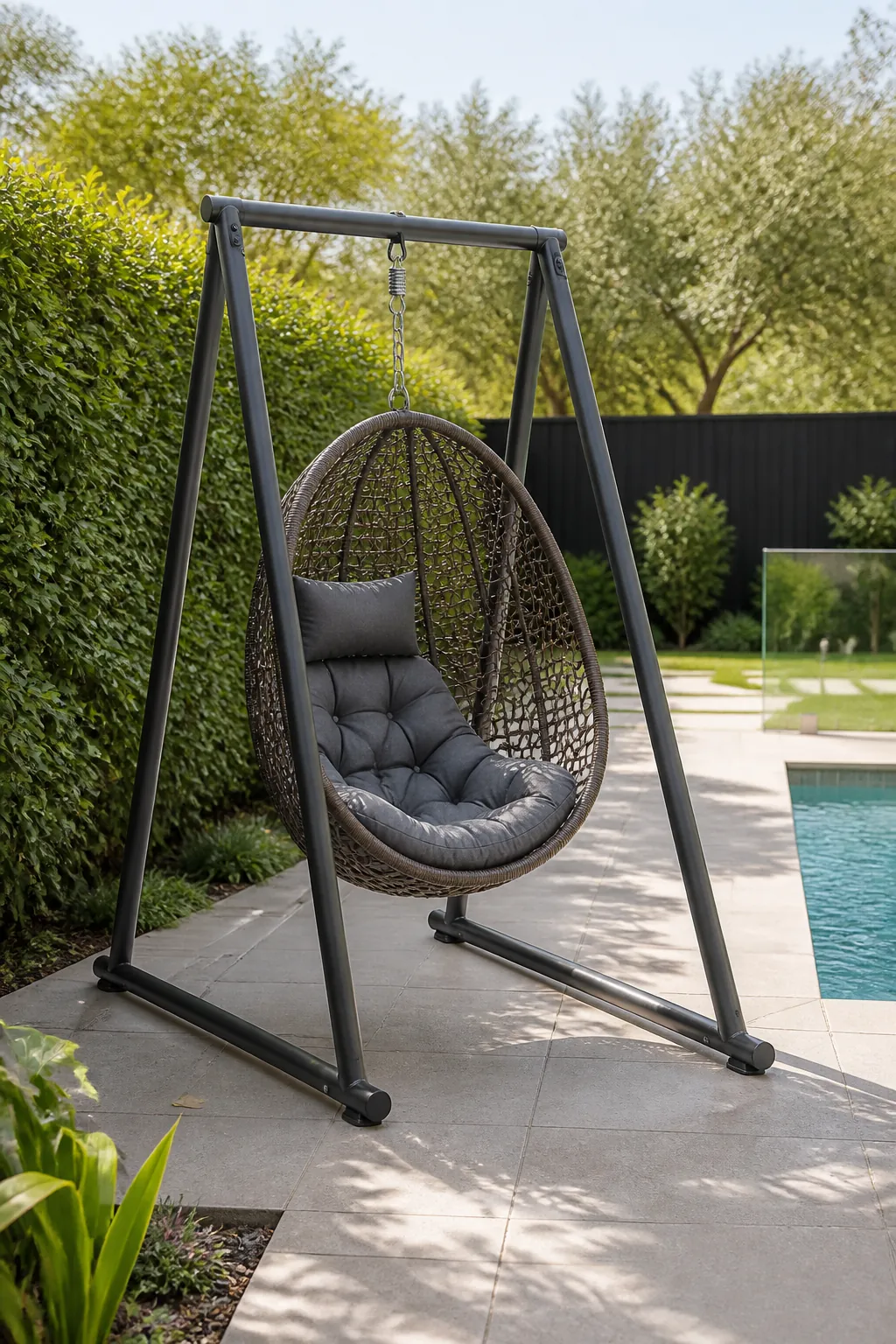
Suspend a Chair From an Engineered Frame
A hanging chair can add gentle movement without occupying a large seating footprint. Use a purpose-built freestanding frame on level paving rather than improvising an attachment to a pergola. Check the working load and hardware regularly.
Keep the chair’s full swing arc away from coping, glass, and circulation. It should never hang from the pool barrier. One suspended seat is a focal point; several become obstacles.
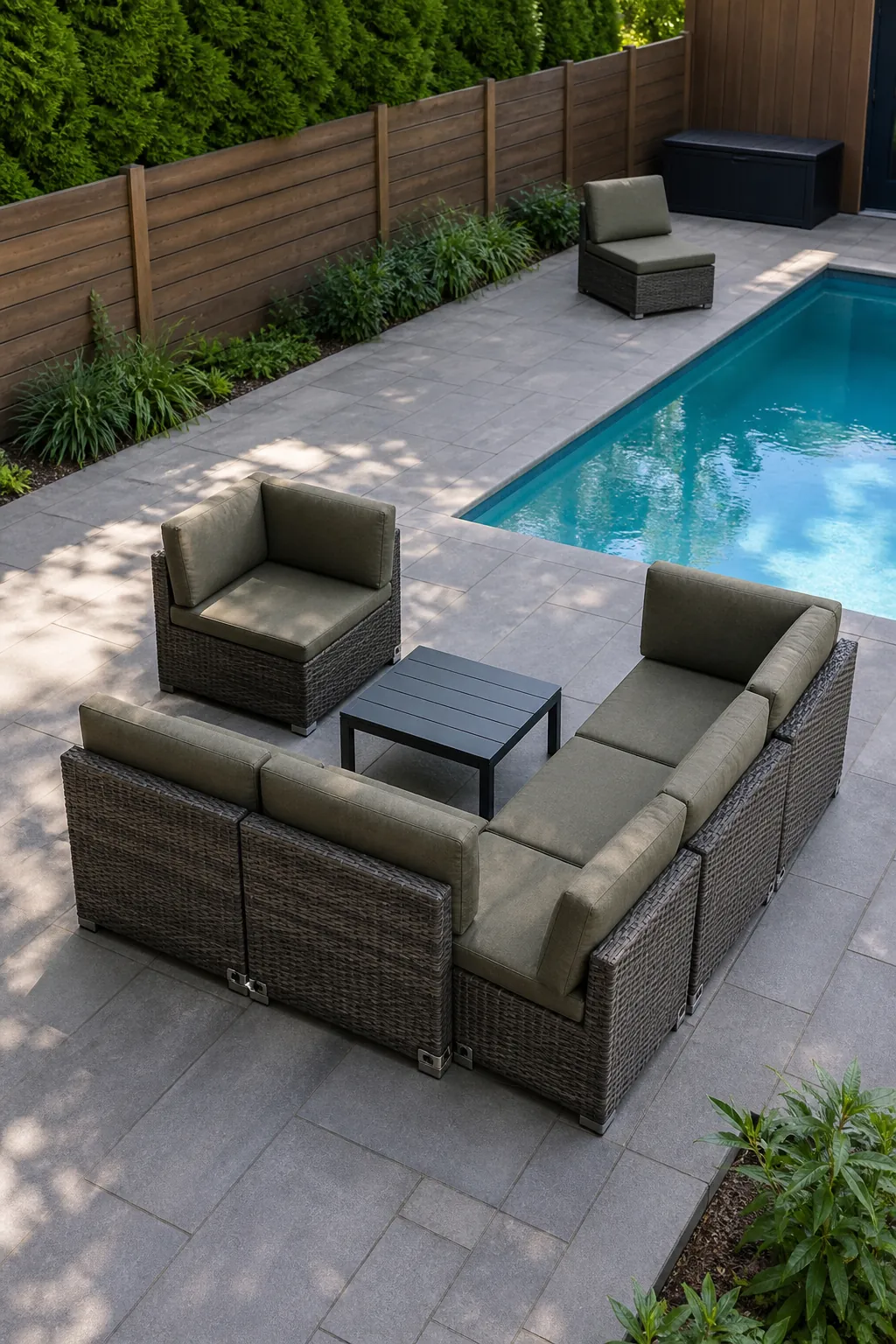
Choose Modular Seating for Different Groups
Modular outdoor seating can become a long sofa for family evenings or separate chairs for a party. Select manageable pieces with connectors that prevent unwanted sliding. Keep the module count proportional to the events you actually host.
Test both layouts while preserving the circulation loop. Use quick-drying cushions and visible legs so debris is easy to clean underneath. A storage plan is essential for extra modules and covers.
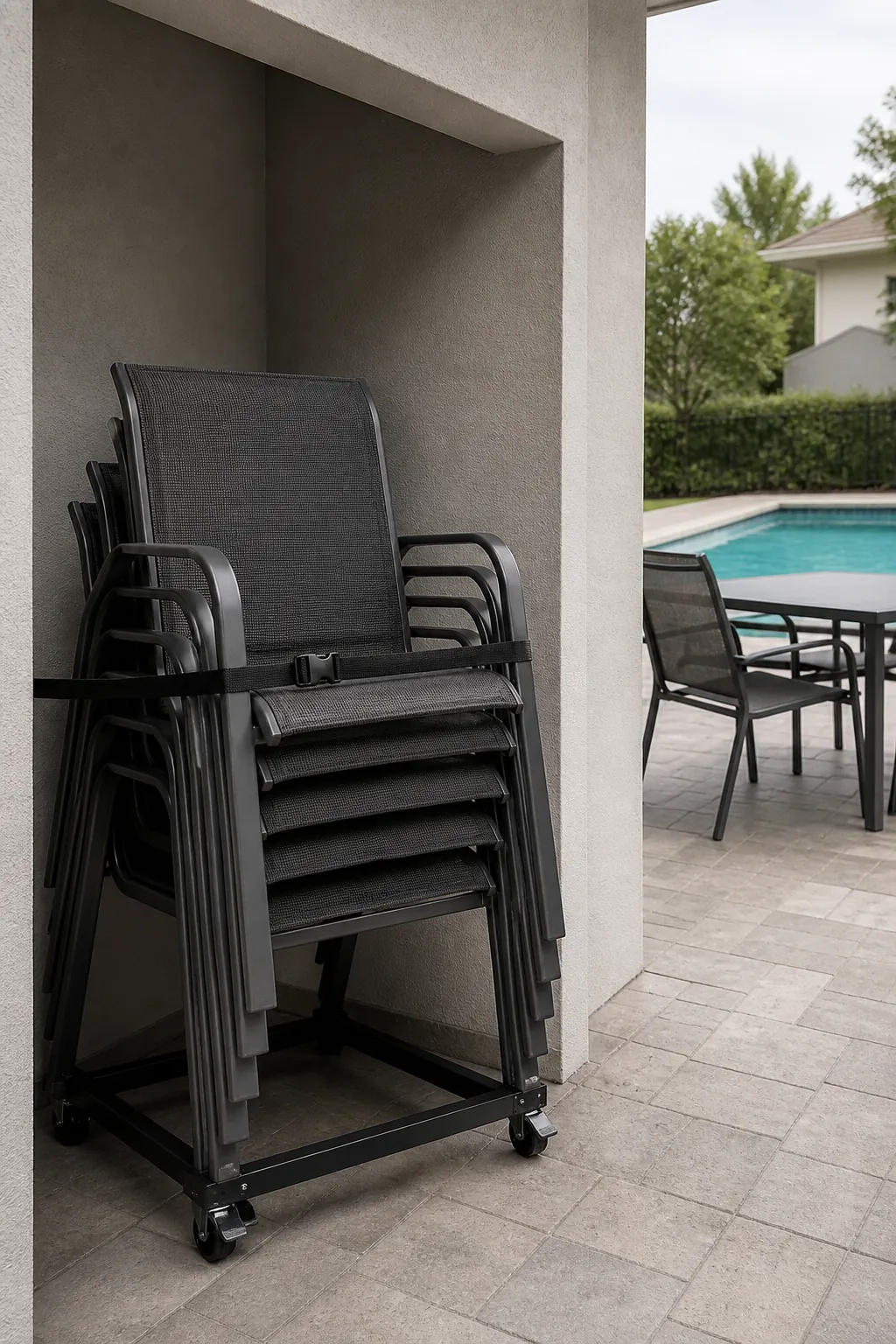
Add Stackable Guest Chairs
Stackable chairs provide extra seats without occupying the deck every day. Choose frames that are easy to carry but stable in wind, with feet that will not scratch the surface. Store them dry and close to the entertaining zone.
Set out only the number required and return the rest after guests leave. Never stack them beside the exterior of a pool fence where they become a climbing aid. A uniform color keeps temporary seating from looking improvised.
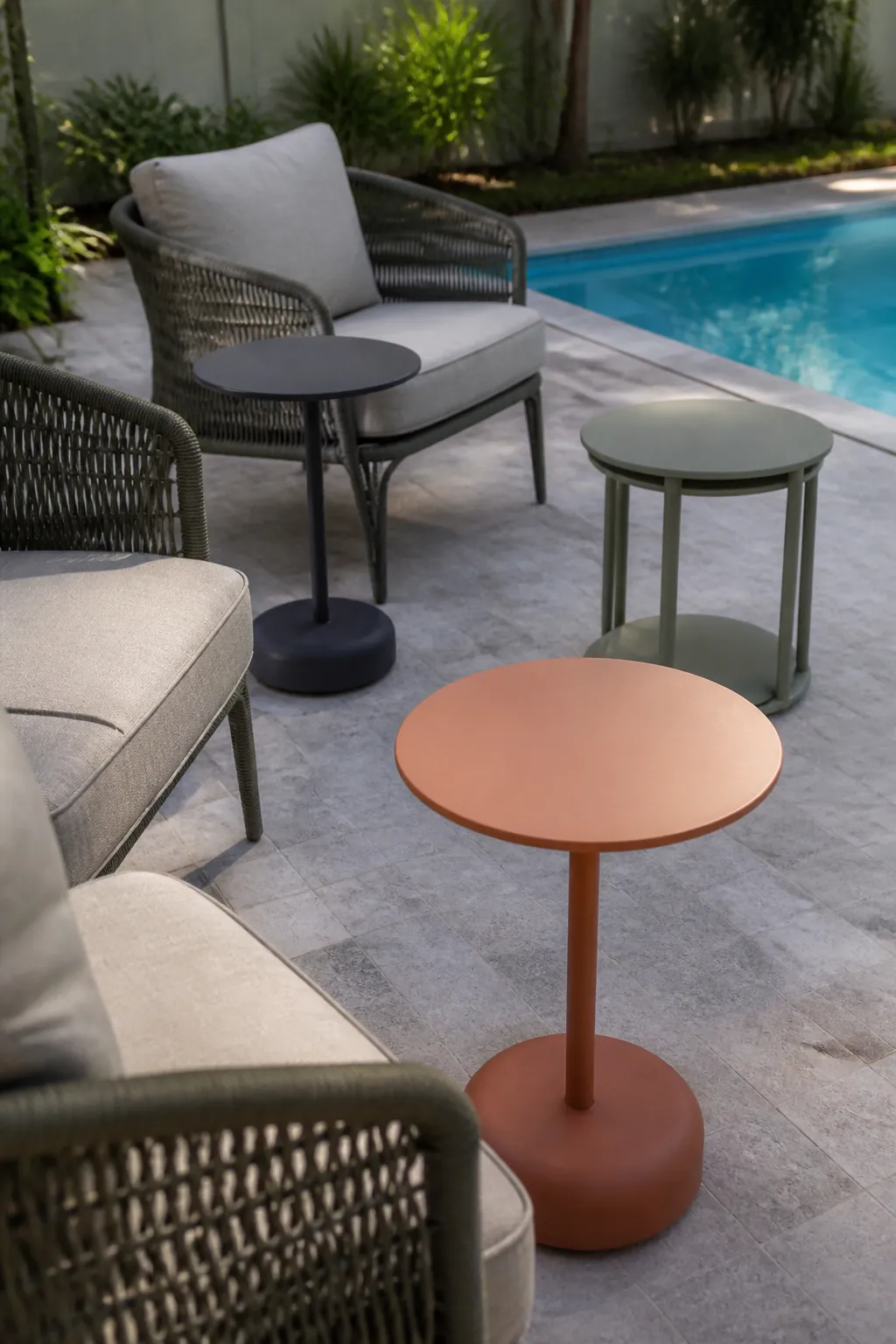
Use Side Tables Instead of One Huge Coffee Table
Several small side tables can move where guests need them and leave the center of a conversation group open. Nesting designs store compactly when the area is used for play or exercise. Rounded edges are friendlier in busy circulation zones.
Choose stable outdoor materials and avoid lightweight pieces that wind can send into the pool. Keep tabletops modest so they do not become clutter magnets. Position them within reach but outside chair pullback.
Install a Towel and Sunscreen Station
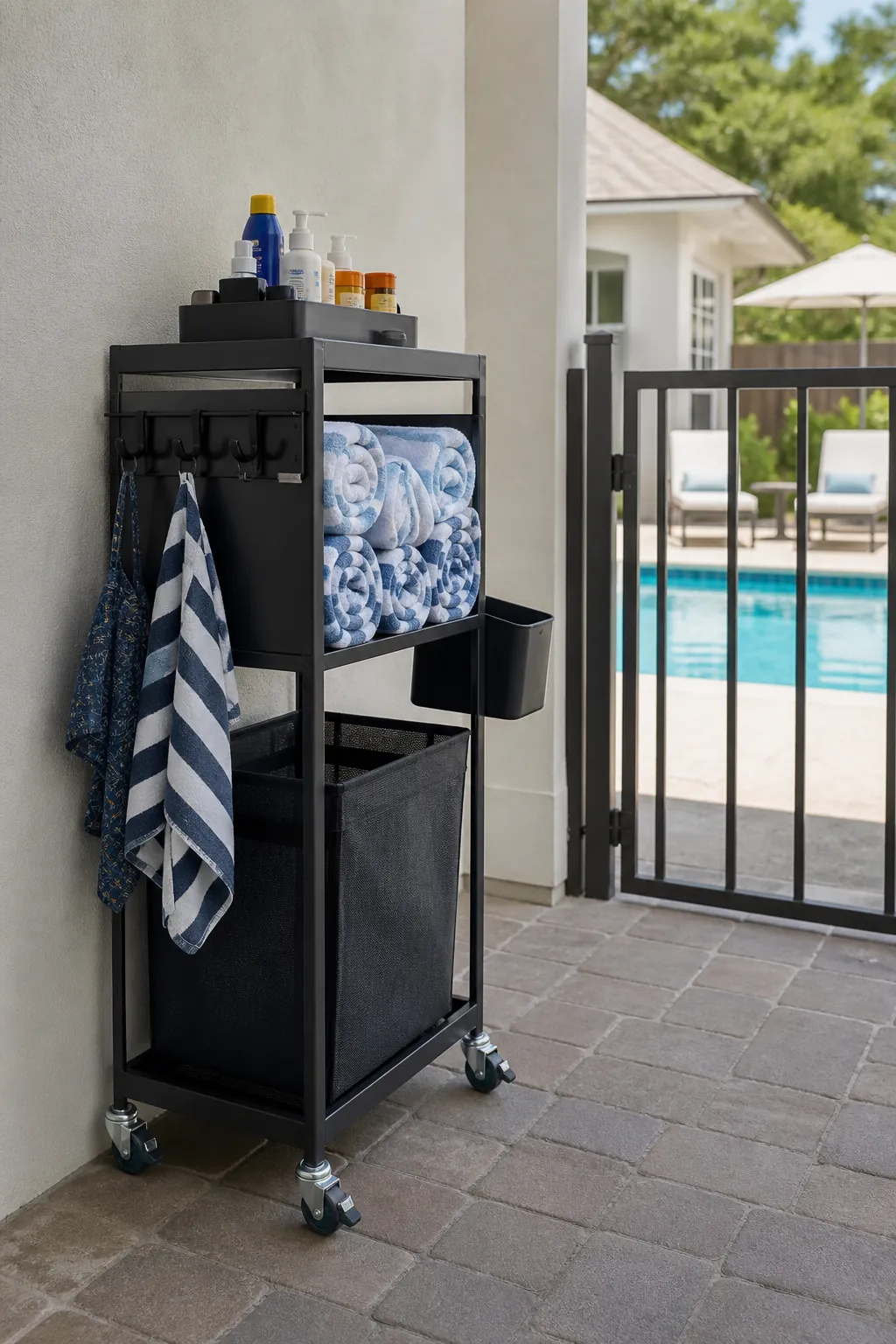
A compact station near the house or gate prevents wet towels and bottles from spreading across furniture. Use ventilated shelves, hooks, a lidded hamper, and a waterproof tray. Keep the unit outside the splash line but convenient enough that guests will use it.
Remove products that should not remain in heat and direct sun. Do not let hooks or shelving obstruct the safety gate. A clear towel routine makes entertaining feel calmer than more decoration does.
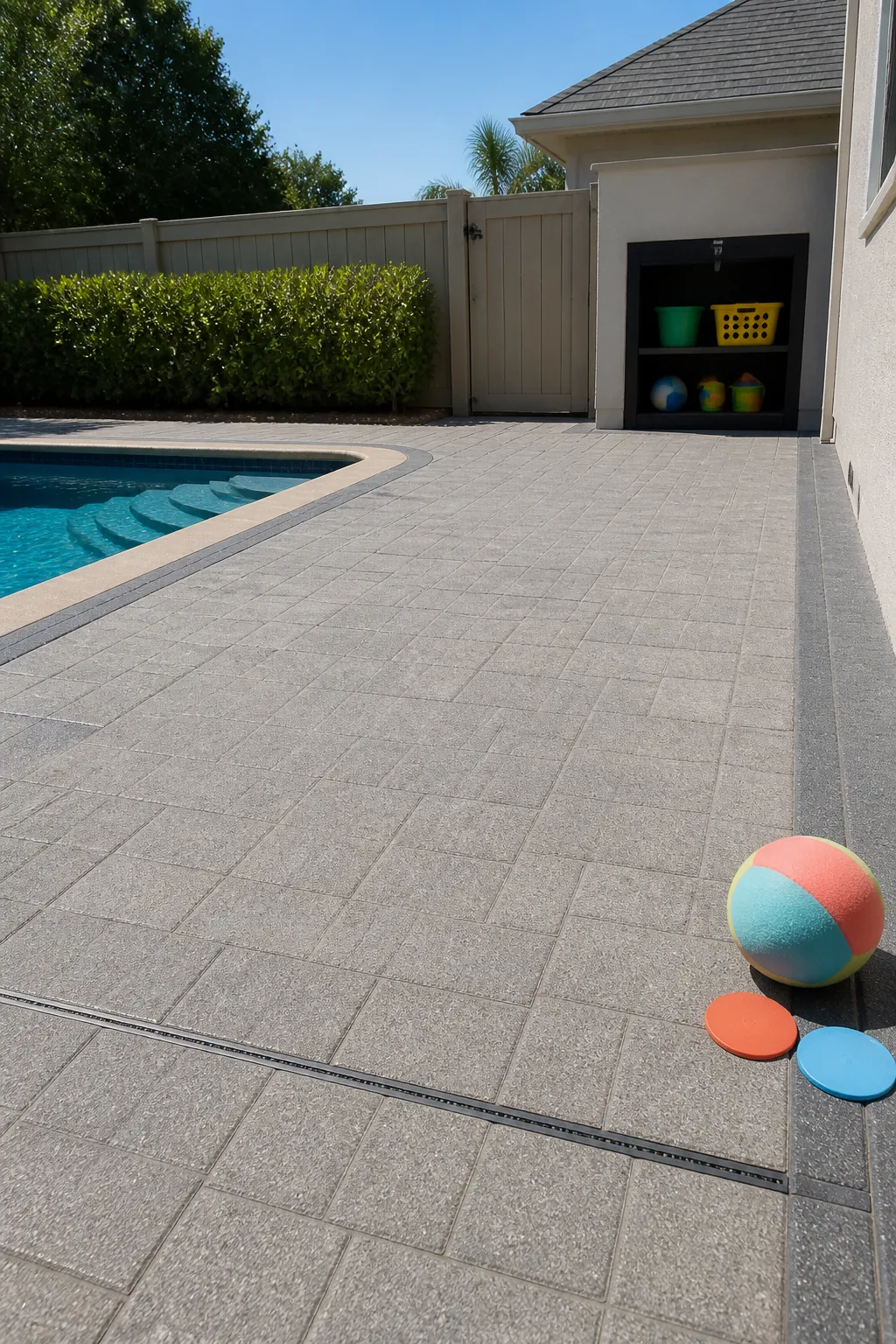
Hide Floats in a Ventilated Storage Bench
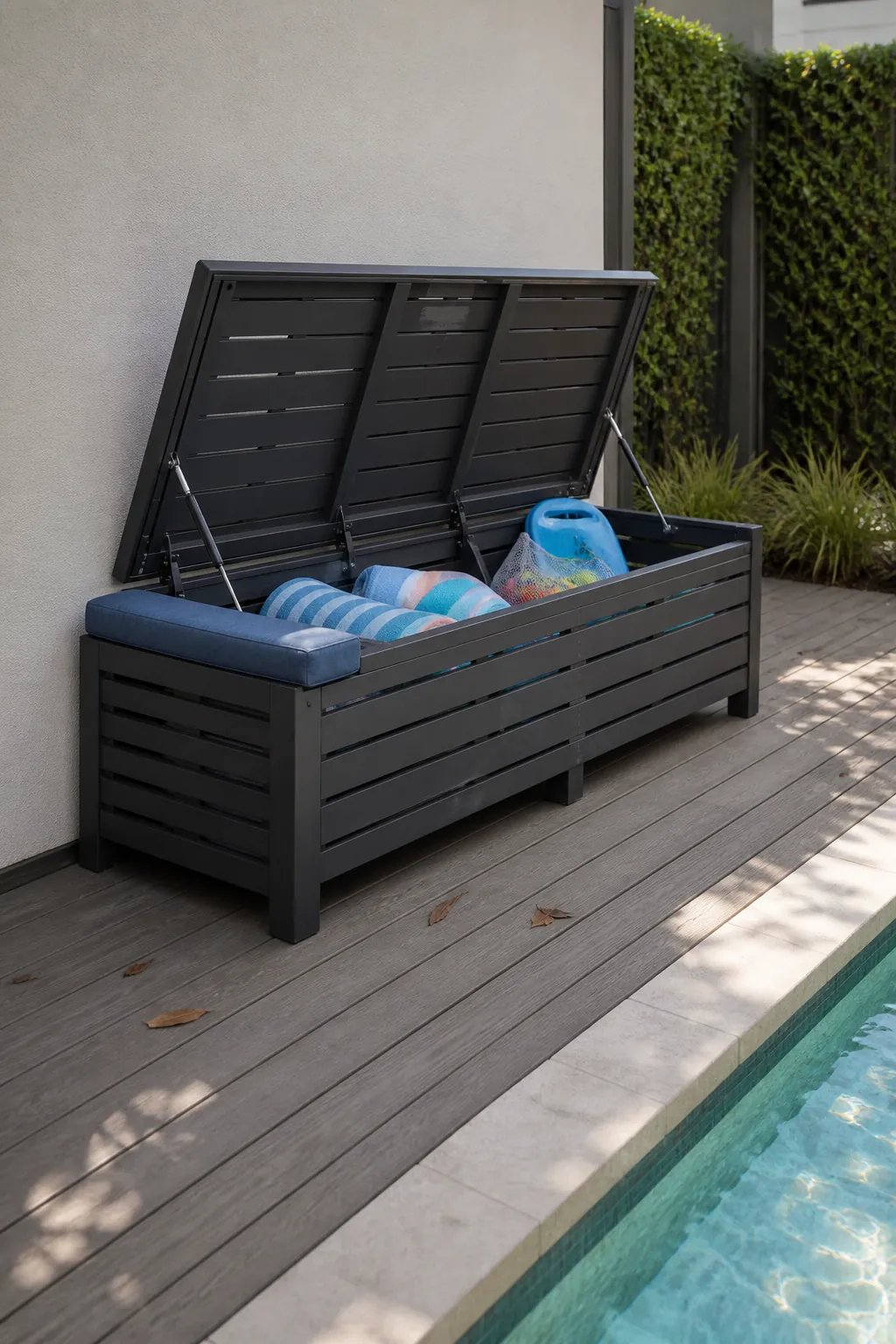
Pool floats need a home that allows them to dry and cannot blow open. A ventilated bench or deck box keeps colorful gear out of the daily view while providing occasional seating. Select a lockable lid with controlled closing hardware.
Place storage away from the exterior of the pool barrier and keep it clear of equipment panels. Drain wet items before closing the lid. A divided interior makes it easier to retrieve small toys without emptying everything.
Frame the Lounge With Oversized Planters
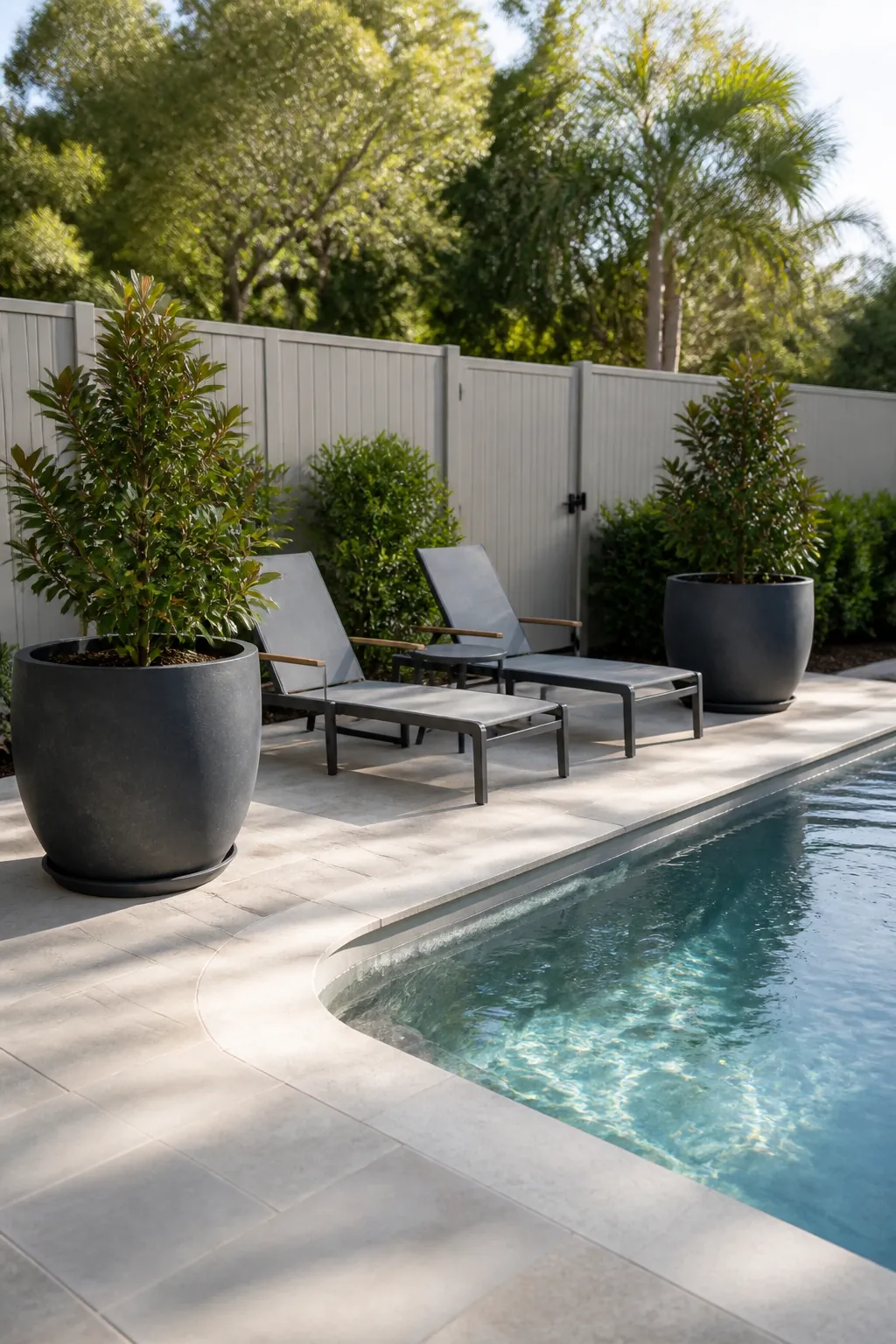
Two large planters can define the entrance to a seating zone without building a wall. Use sturdy containers and simple foliage that will not shed into the water. Matching pots create symmetry while varied plant heights keep the arrangement relaxed.
Add drip irrigation and open drainage, then keep the containers outside the main path. Confirm filled weight and wind stability. Avoid thorny plants near bare shoulders and towels.
Soften the Deck With a Narrow Planted Edge
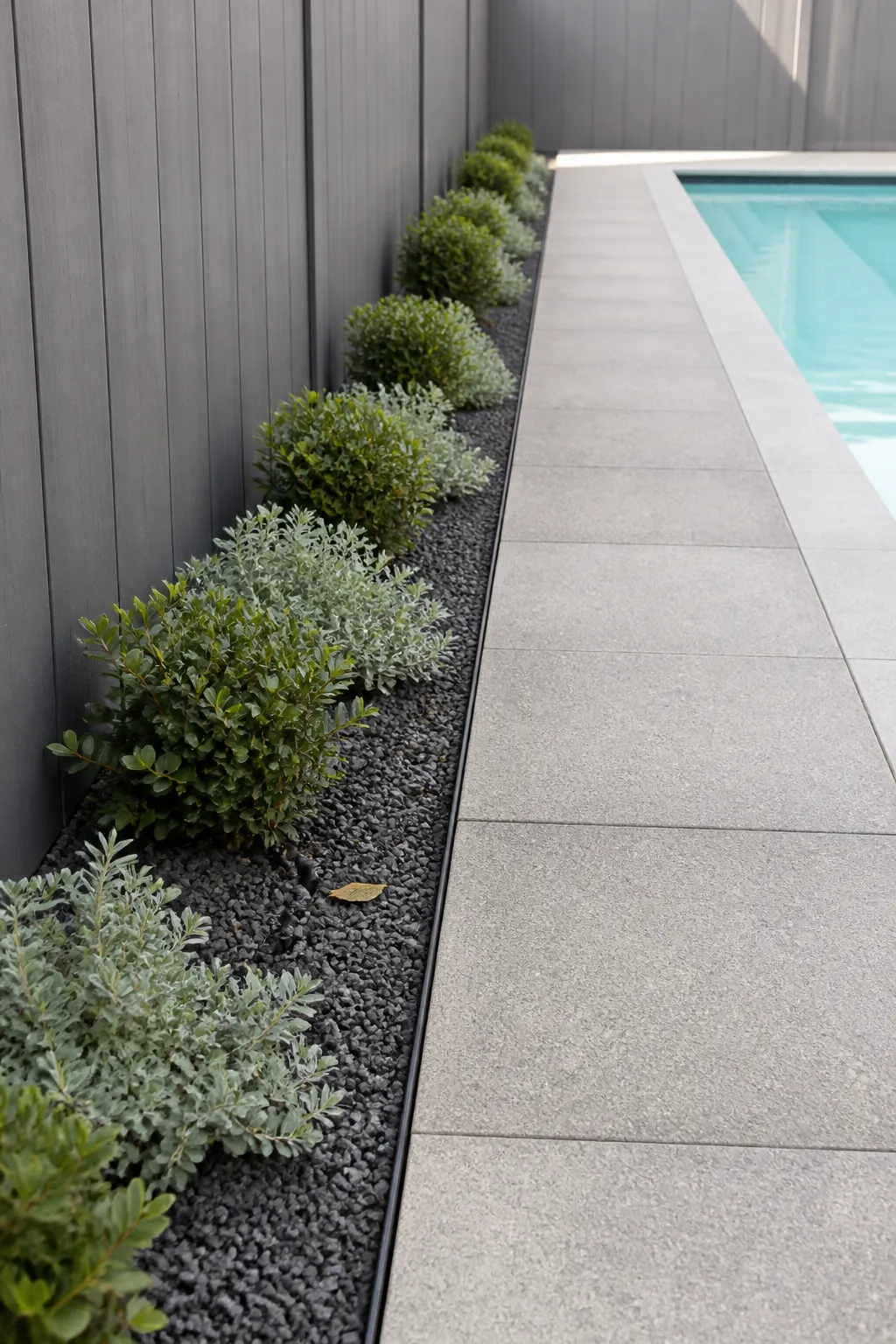
A slender bed of low-litter groundcover and compact shrubs can soften a broad deck without taking over the entertaining footprint. Repeat two or three plant forms for a calm background. Keep mature foliage behind a durable edge.
Select plants for local climate, reflected heat, splash, and mature size. Use drip irrigation rather than overspray. Leave service and gate zones unplanted.
Define Zones With Material Changes
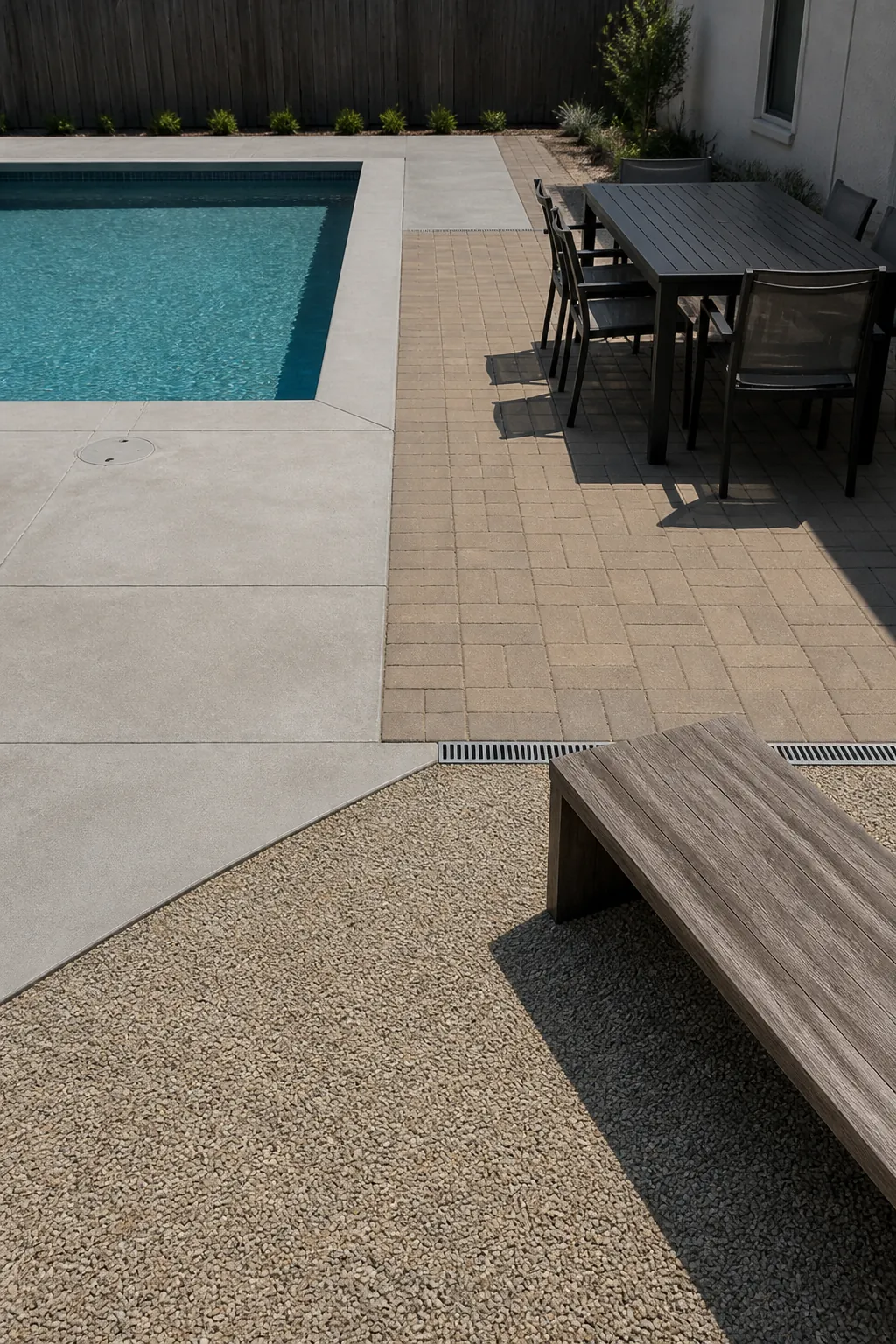
A shift from existing concrete to large pavers or compacted gravel can signal where dining ends and lounging begins. Keep the palette limited and transitions flush. Material changes work best when they follow real activity boundaries.
Prepare every base for drainage and furniture stability. Avoid loose stone under dining chairs or main walkways. Repeating one border material helps separate surfaces feel related.
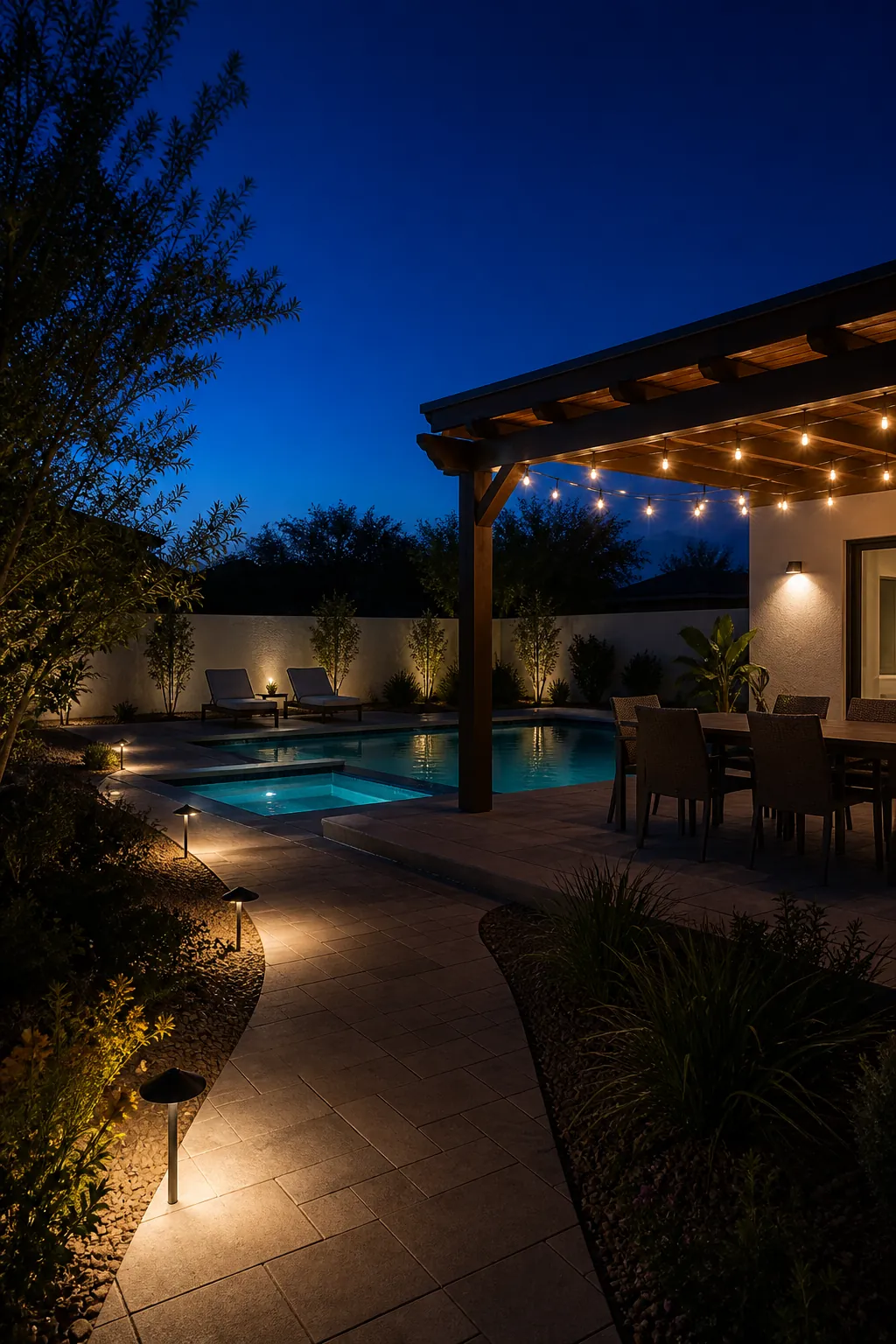
Layer Path Lights With Soft Overhead Light
Path lights reveal steps and edges, while a small run of rated overhead lights makes a dining or pergola zone feel welcoming. Keep both layers warm, shielded, and modest. The water itself should remain the brightest reflective surface.
Outdoor electrical installations near a pool must meet local requirements. Secure overhead cable and keep fixtures away from water. Avoid glare that makes it harder to see swimmers after dark.
Place a Fire Table in a Separate Dry Zone
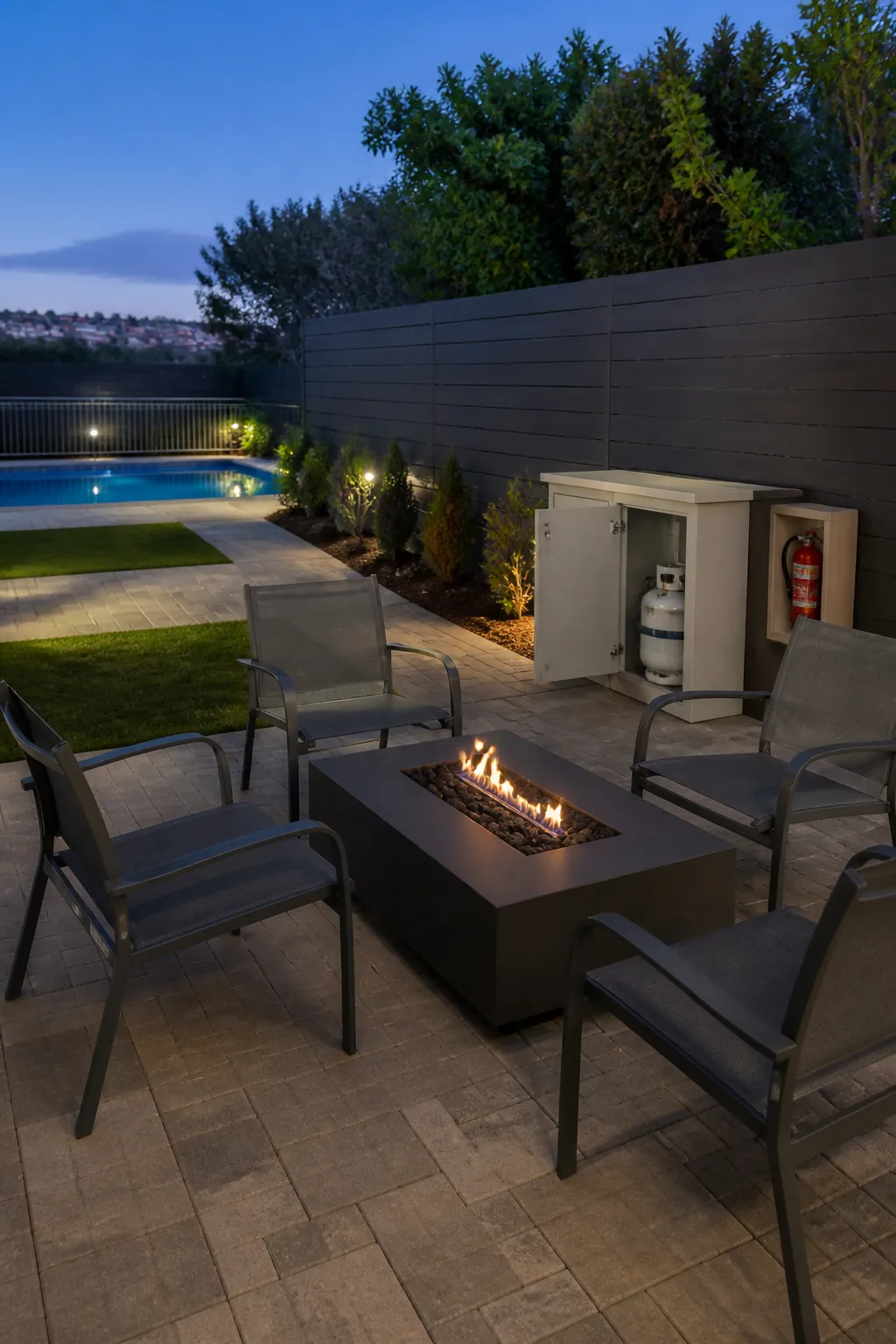
If a fire table suits your climate and regulations, place it in a dry conversation zone rather than on a narrow pool edge. Maintain manufacturer clearances from cushions, umbrellas, plants, and structures. Use seating that cannot tip toward the flame.
Store fuel correctly, supervise use, and keep swimming routes free of guests carrying drinks around fire. A solid coffee table can occupy the same footprint when flame is not appropriate. Safety matters more than a dramatic nighttime photograph.
Set Up a Screen-Free Game Table
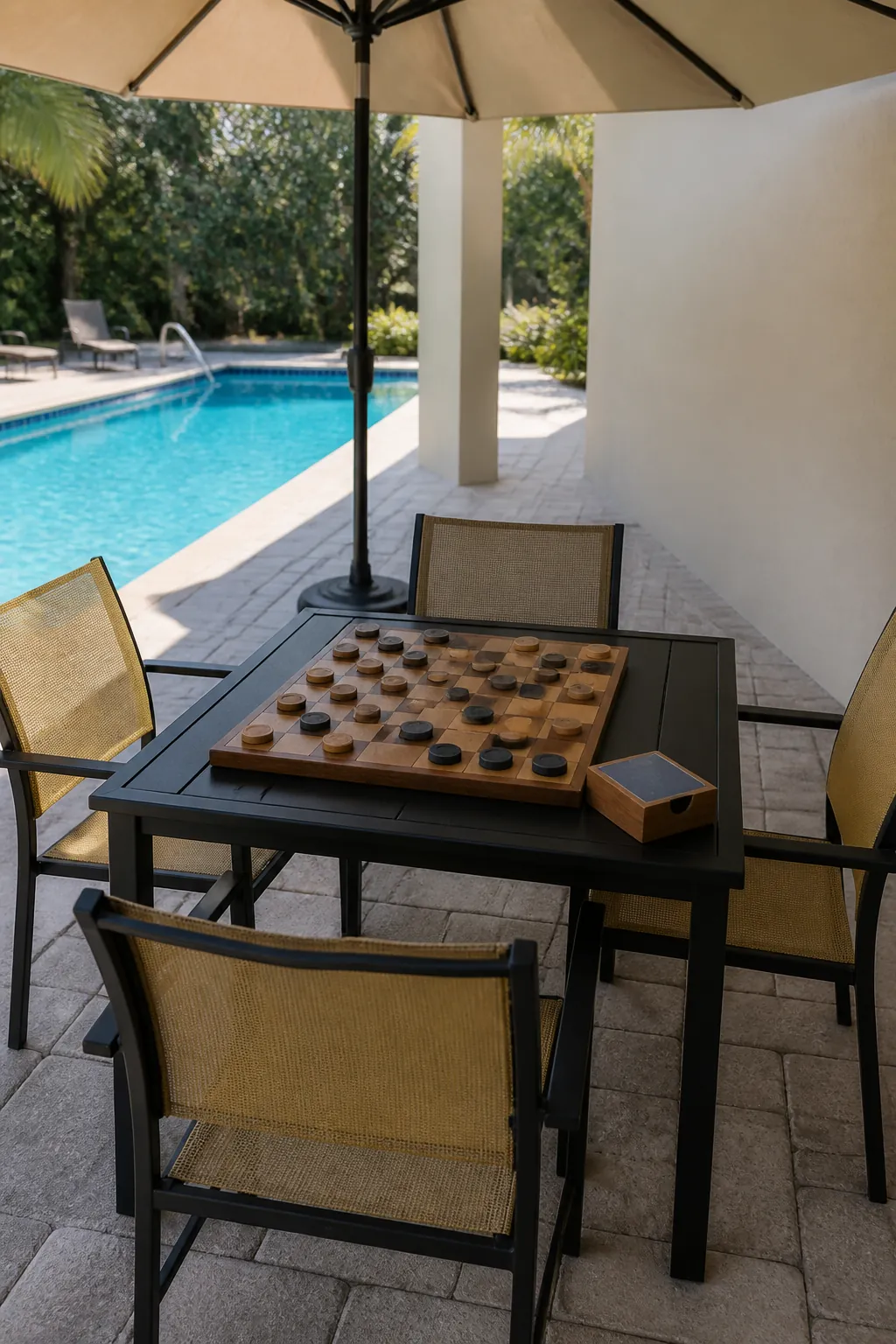
A small table for cards, puzzles, or snacks gives mixed-age groups something to do between swims. Place it under shade with stable chairs and a clear view of the water. Use a lidded box to store weather-safe games.
Keeping this zone screen-free reduces cords and electronics near water. Choose pieces that will not blow away. Allow enough tabletop light for evening use without creating glare.
Reserve an Open Play and Stretching Zone
An empty section of clean deck is useful for children’s supervised play, stretching, setting down a cooler, or adding temporary seating. It also makes sweeping and cover handling easier. Deliberate open space keeps a small pool area from feeling overfurnished.
Store toys when the pool is not supervised and keep the zone free of hoses or cords. Do not add a rug that becomes slippery or stays wet. Flexible space supports more types of gatherings than one permanent feature.
Design for the Gatherings You Actually Host
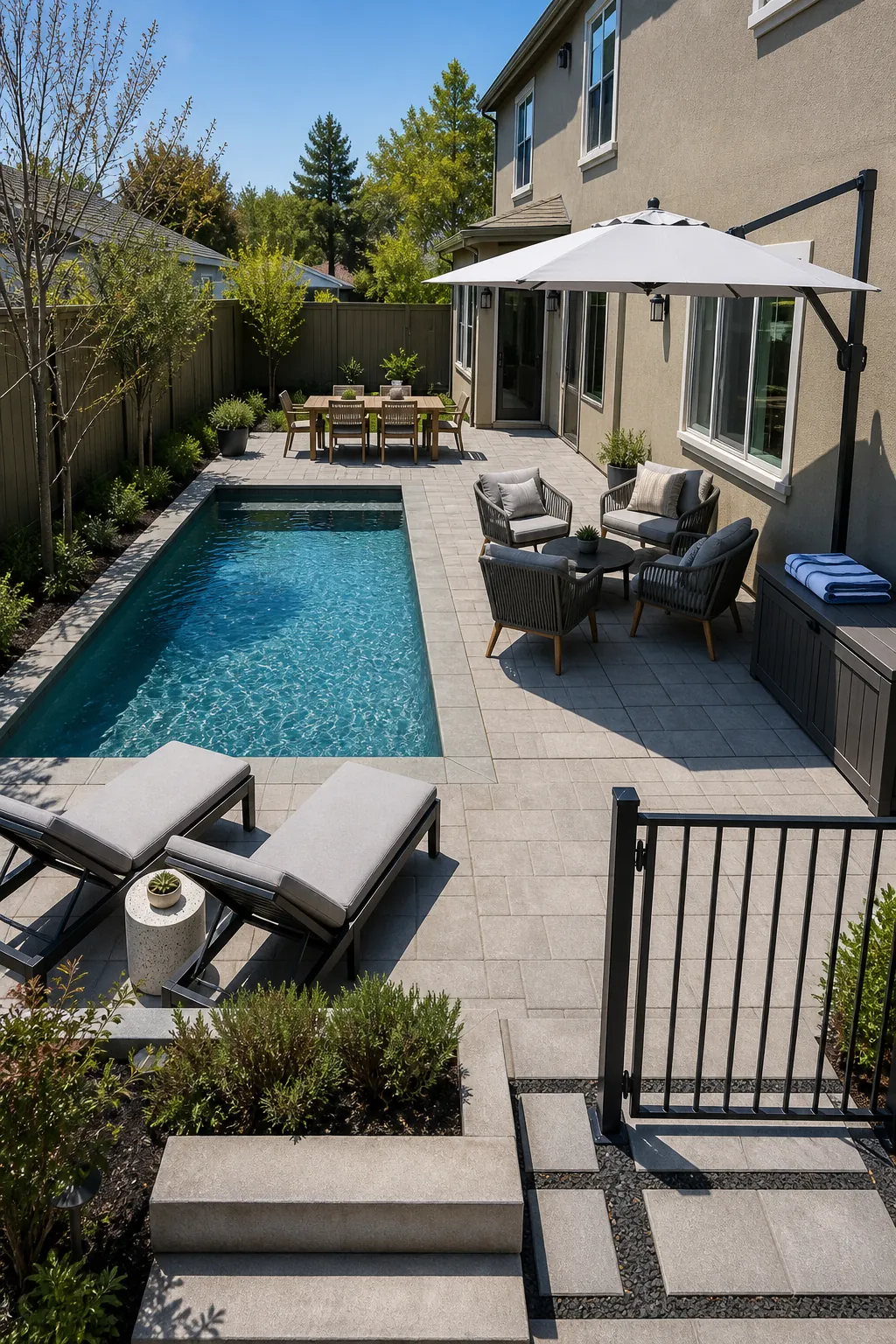
Count the people who use the pool every week, then add flexible seats for occasional guests. If your household swims, protect open water and dry-deck circulation instead of giving permanent space to a giant ledge, bar, or bench that looks good in a rendering. If conversation is the priority, invest in shade and comfortable chairs before novelty features.
Mock up furniture footprints with tape or cardboard and observe sun, shade, wind, and travel routes for several days. Keep the barrier, self-closing gate, drains, rescue access, and equipment clear in every layout. The best outdoor entertaining by the pool feels effortless because each zone matches real behavior and can change when the guest list does.