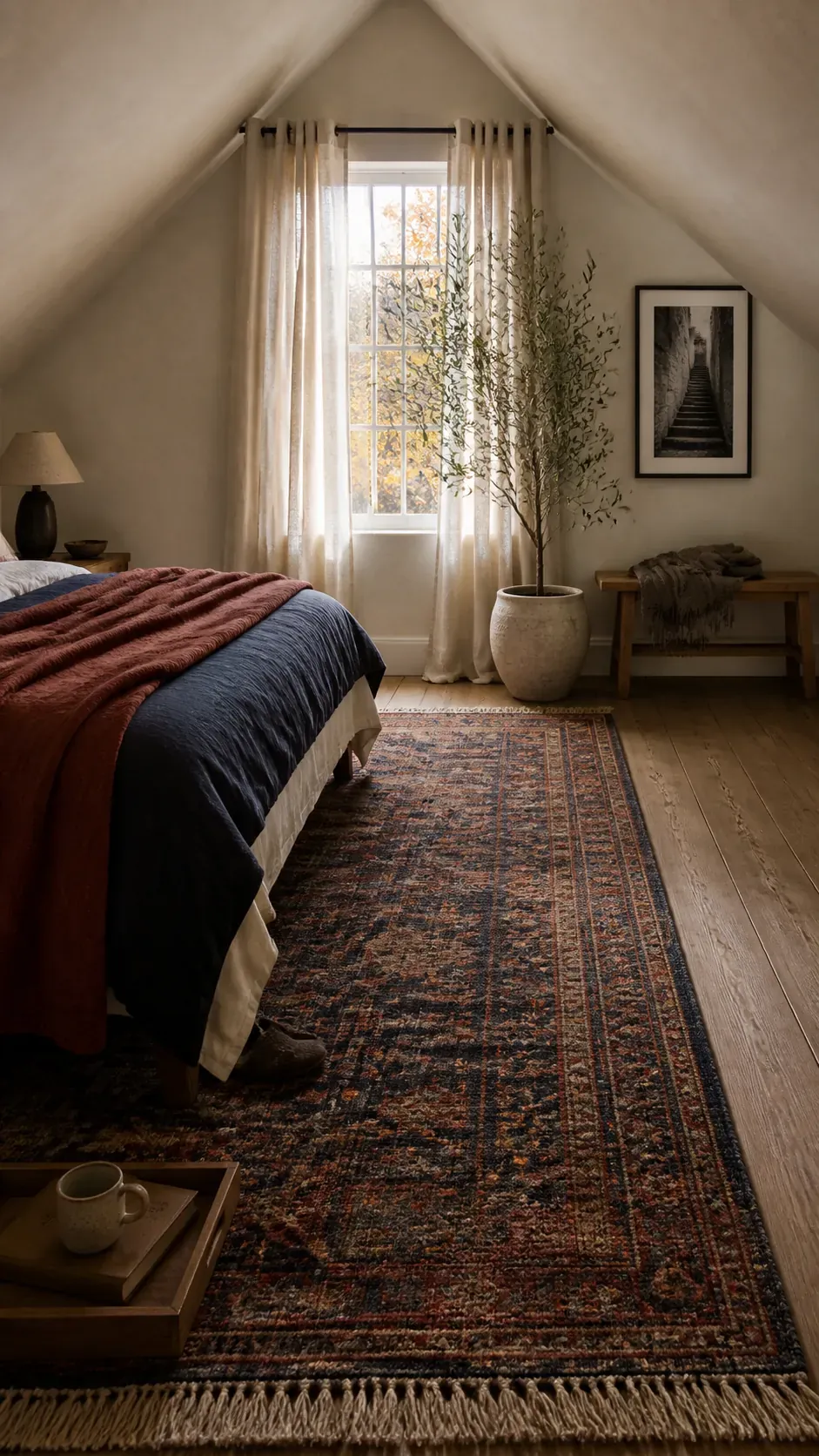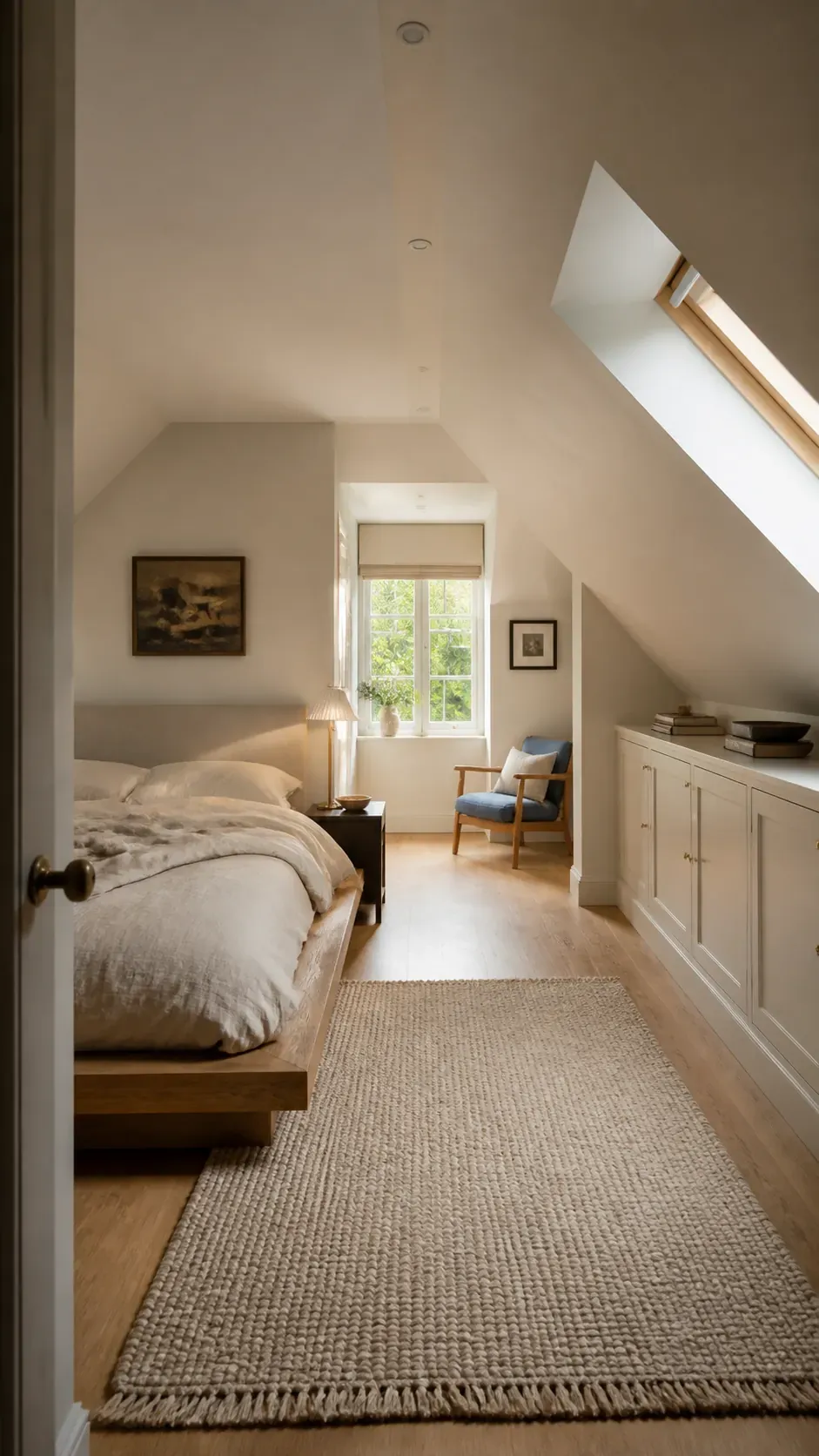
An attic bedroom becomes comfortable when you stop treating it like a standard rectangular room. The slopes are not wasted space; they simply need jobs that suit their height. Start by protecting the tallest path for walking, then place sleeping, storage, and sitting functions where the ceiling naturally supports them.
Map the standing-height zone before moving furniture
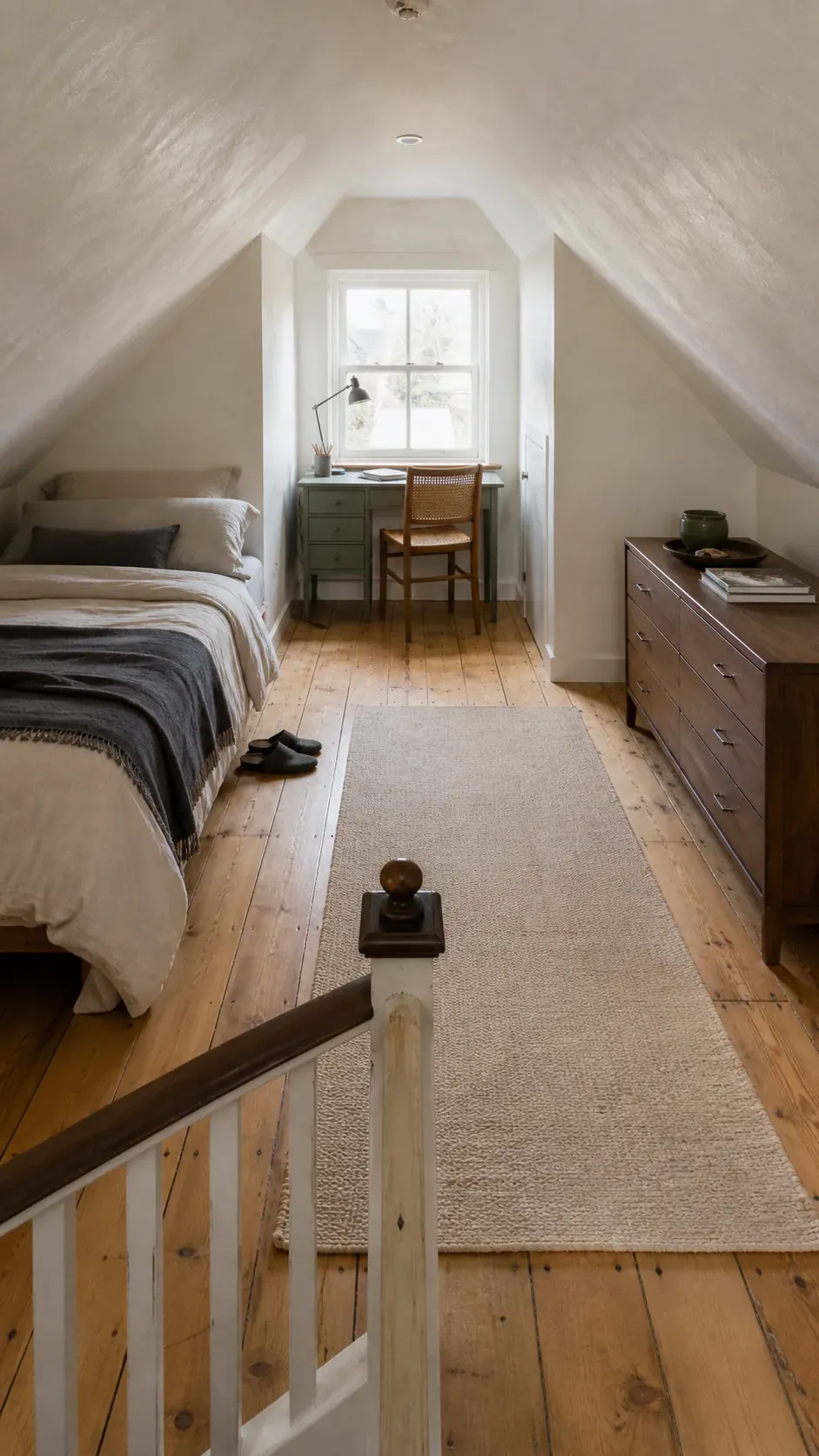
Mark the part of the floor where you can stand without ducking, including the route from the stairs or door to the bed. That strip is your circulation lane, and bulky furniture should not interrupt it. In a low ceiling bedroom, an open center often feels more spacious than squeezing pieces against every usable wall.
Place activities by posture: walking and dressing need full height, sitting needs less, and sleeping needs the least. A desk can work beneath a moderate slope if you can rise from the chair safely, while a bench, drawers, or the long side of a bed can occupy the lowest eaves. Design from headroom first, not from symmetry.
Choose a bed position that prevents daily head bumps
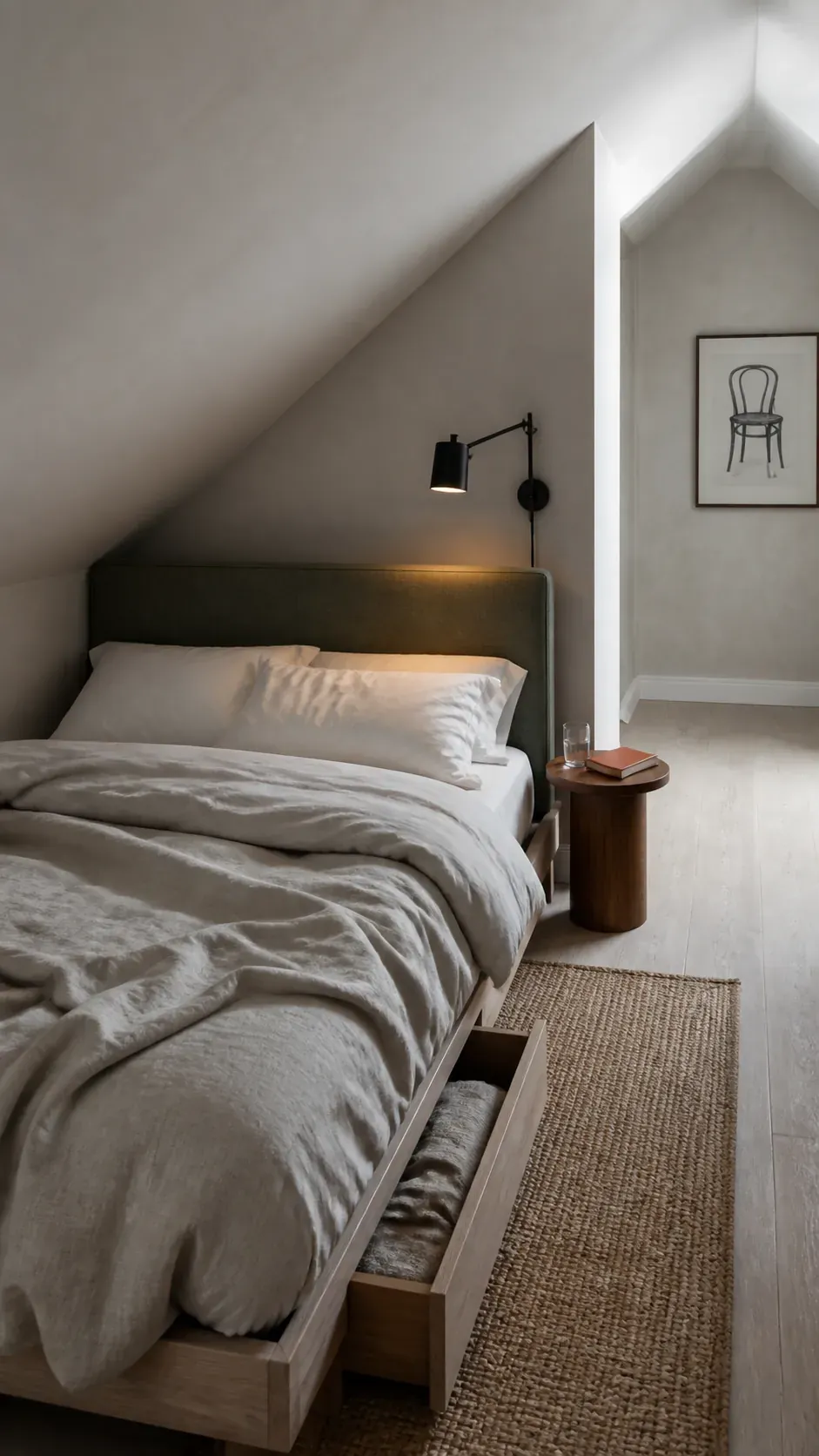
A bed can sit under a slope, but the place where you stand up should face the higher side of the room. Check the ceiling above both pillows and along the route to each side table. If one side is too tight, use a single wider nightstand on the open side instead of forcing a matched pair.
A low platform frame reduces visual bulk and leaves more air above the mattress. Keep the headboard modest so it does not collide with the roofline, and use wall-mounted reading lights only where wiring and mounting are safe. In a small attic room, an upholstered bed with under-bed drawers can combine comfort and hidden storage without adding another cabinet.
Turn the lowest eaves into closed storage
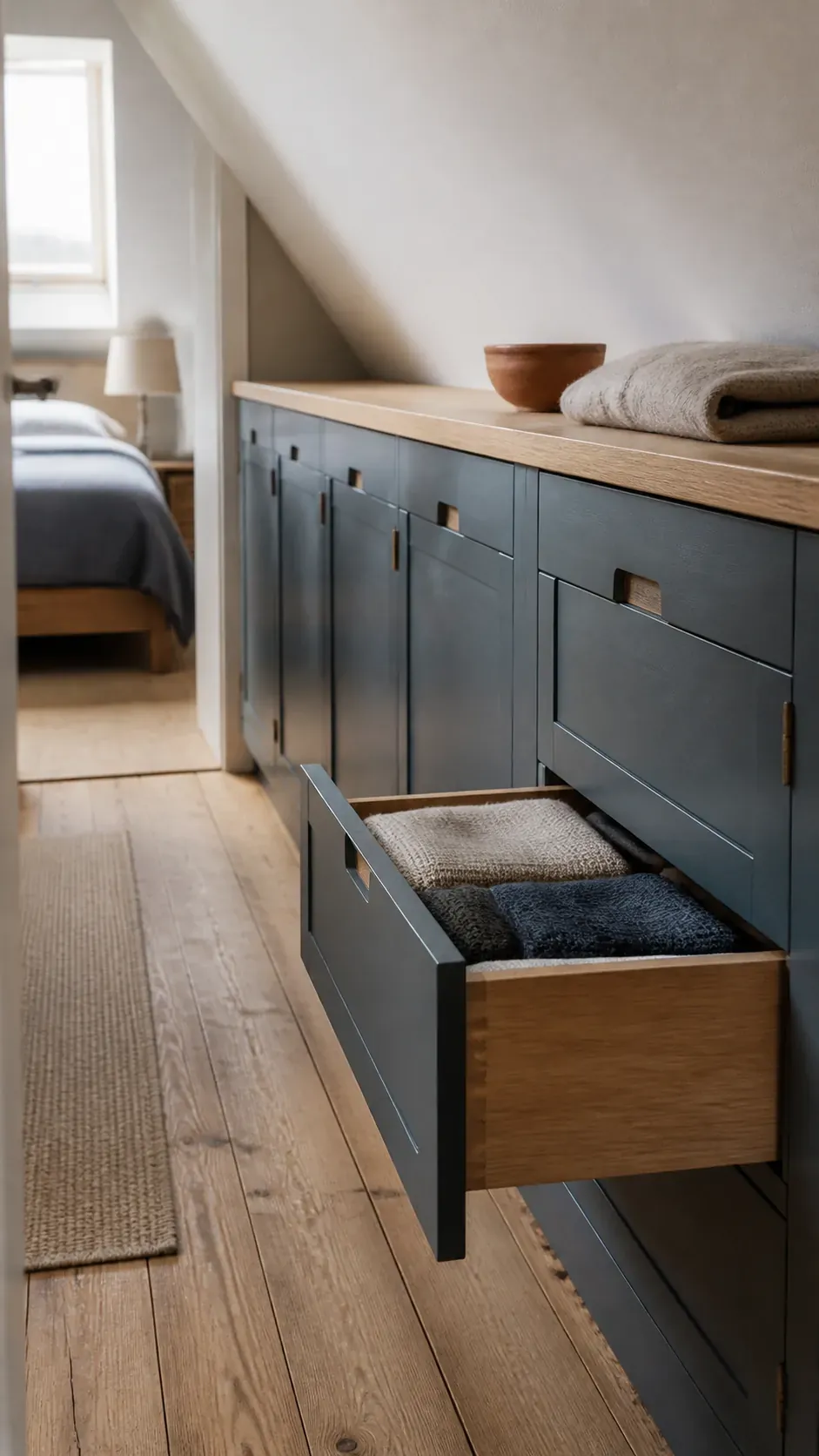
Open baskets look charming in photographs but can make angled rooms feel restless when every item remains visible. Low built-in cupboards, fitted drawers, or lidded benches use the deepest eaves while keeping dust and clothing piles contained. Measure the usable opening, the depth at several heights, and the clearance needed for hinges or drawers before ordering anything.
Reserve tall walls for wardrobes and use shallow zones for folded clothes, shoes, bedding, books, or luggage. If custom joinery is outside the budget, align several matching low cabinets and finish the top with one continuous board. These practical eaves storage ideas make the architecture look intentional and reduce the number of freestanding pieces competing for floor space.
Use one quiet paint envelope to simplify the angles
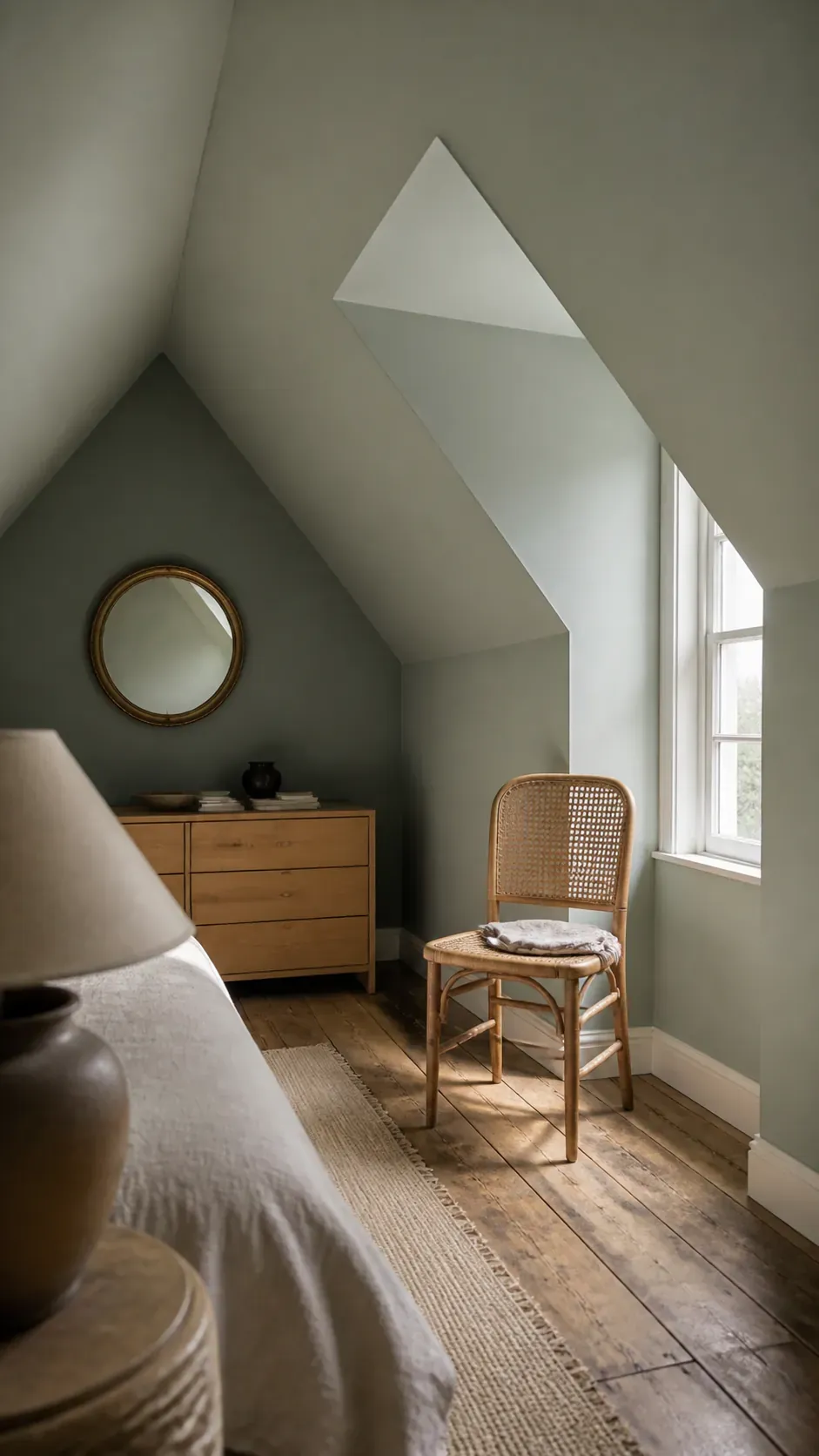
Attic rooms already contain many lines, so high-contrast paint breaks can make the roof geometry feel busier. A pale, warm wall color carried across vertical and sloped surfaces creates a calmer envelope, especially when the room has a small window. Keep trim slightly clearer or lighter so edges still look deliberate.
If you want an accent, use it on one full-height end wall rather than tracing every angle. Test large swatches during morning, afternoon, and lamplight because skylight bedroom color can change dramatically through the day. Texture from linen, wool, cane, and visible timber adds depth without asking paint to do all the decorating.
Layer light at three useful heights
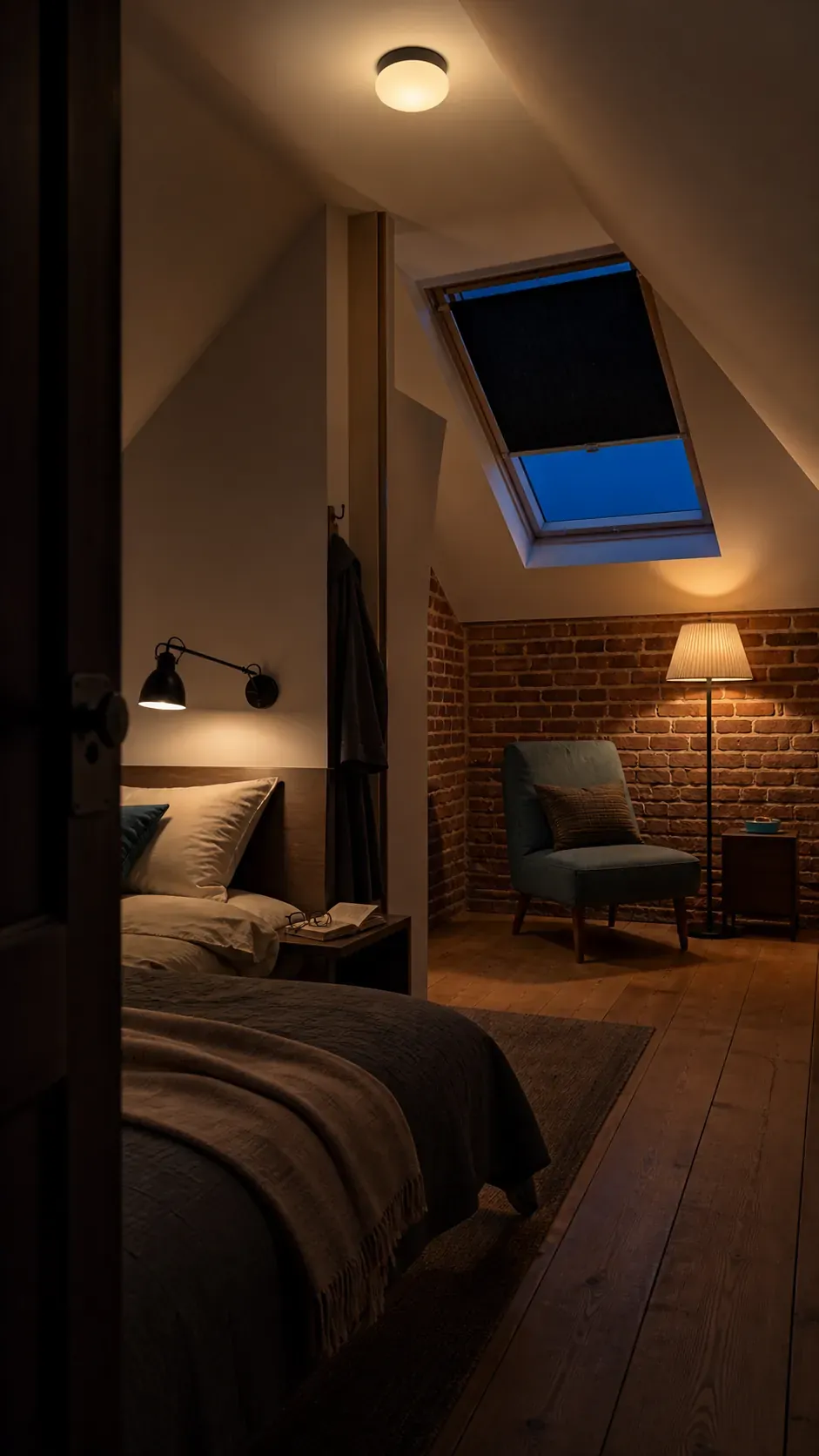
A single ceiling fixture usually exaggerates shadows under the slopes. Combine a compact ambient fixture with bedside reading lights and a lower lamp near a chair, dresser, or desk. Separate controls let you brighten the dressing zone without flooding the sleeping area late at night.
Choose fixtures that do not project into headroom, and keep bulbs in a consistent warm-neutral range so paint and textiles remain natural. A skylight supplies excellent daytime light, but it also needs a blackout blind for sleep and heat control. Thoughtful attic bedroom lighting is less about brightness than placing light where the roof would otherwise create a dark pocket.
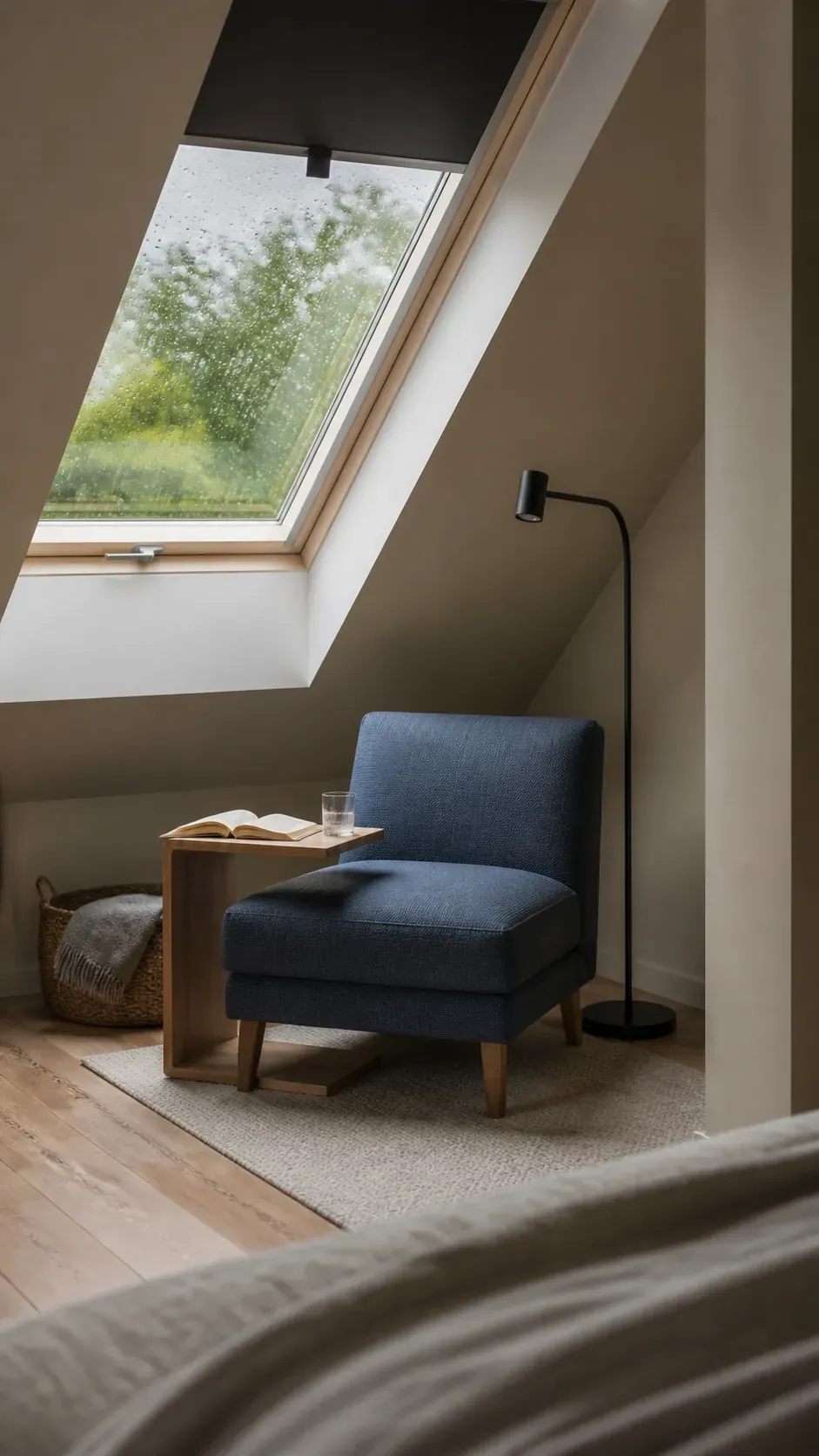
A medium-height pocket beside a skylight can also become a useful reading corner. Use an armless chair that is easy to rise from, keep its front edge facing the taller zone, and fit a blackout blind so daytime comfort does not compromise sleep.
Finish with fewer, larger decorative choices
Small objects scattered across low surfaces make an attic bedroom look crowded faster than they would in a conventional room. Choose one generous rug that connects the bed to the clear walkway, full-length curtains where the window allows, and bedding with a limited palette. Keep collections together on one tray or shelf rather than distributing them around the room.
Hang art on secure vertical walls instead of improvising unsafe fixings on a slant. A mirror on a full-height end wall can borrow daylight, while one plant near the brightest window brings life without cluttering the eaves. The best cozy attic bedroom is not packed with decor; it feels settled because every awkward zone has a clear purpose and the center remains easy to move through.