
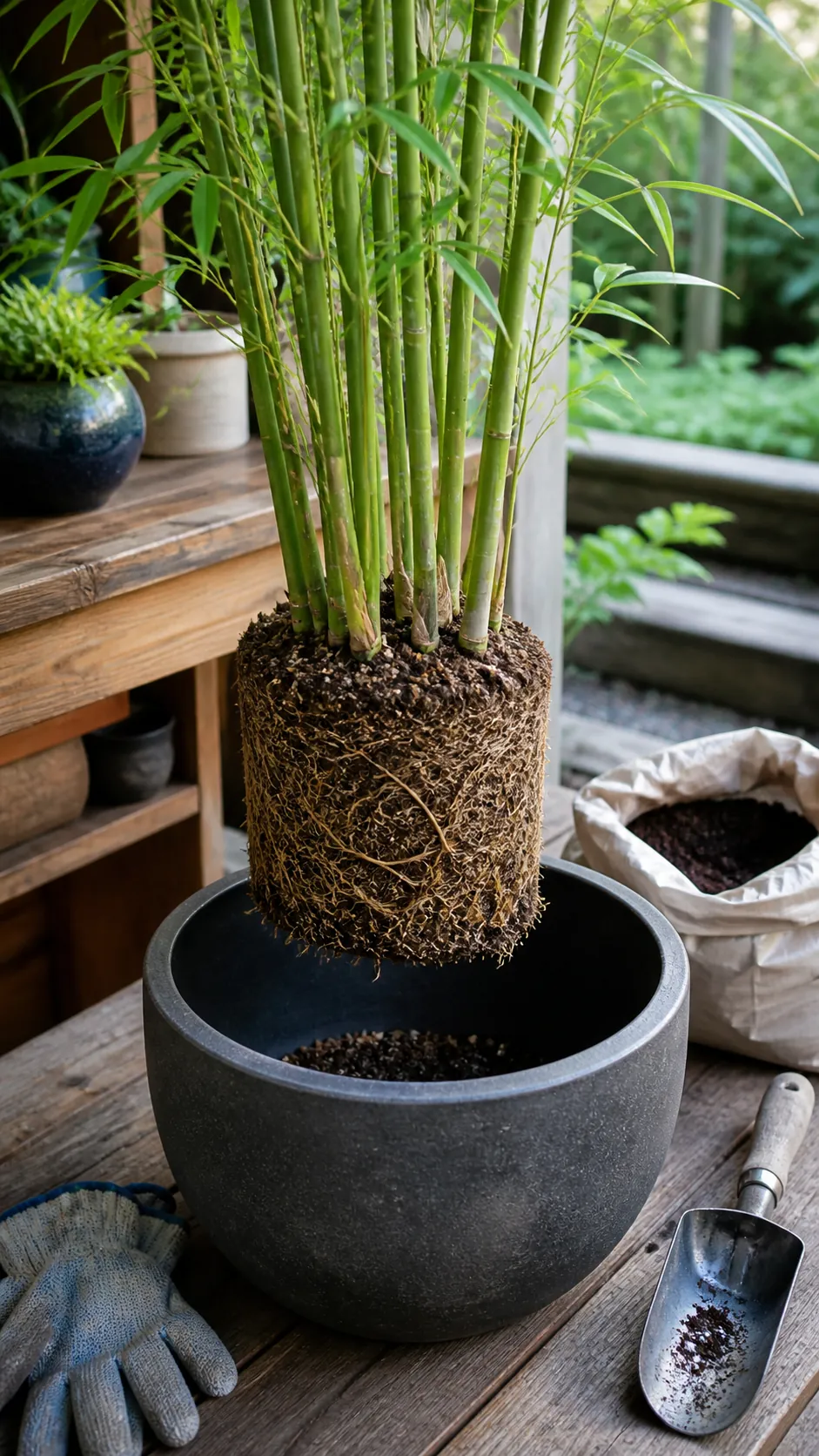
A bamboo that wilts soon after watering, tips over in its pot, or sends roots through the drainage holes is telling you that its container no longer works. Moving it can restore a useful balance between roots, moisture, air, and fresh growing mix. The result depends less on buying an enormous planter and more on identifying the plant, disturbing the roots only as much as necessary, and keeping the original planting depth.
Start by checking what you actually grow. True bamboo is a grass with canes and underground rhizomes. Lucky bamboo is Dracaena sanderiana, a tropical foliage plant often sold as bundled green stalks in water, pebbles, or soil. Both can outgrow a container, but their root systems, potting choices, and recovery needs are not identical.
Confirm That Repotting Is the Right Fix
One root at a drainage hole is a clue, not a diagnosis. Look for several signs together: a dense root mat, roots circling the pot wall, soil that has almost disappeared, water racing through without wetting the center, repeated wilting, slower growth, or a container that bulges and rocks. A healthy plant in usable mix does not need disturbance merely because a calendar says it is time.
Repotting will not correct every yellow leaf. Soggy soil, a blocked drainage hole, mineral buildup, harsh sun, cold exposure, and irregular watering can create similar symptoms. If the mix smells sour or roots feel soft and dark, address decay as part of the move. If the root ball still has open soil and healthy firm roots, correct the care problem before increasing the pot size.
Choose the Right Time and Work Area
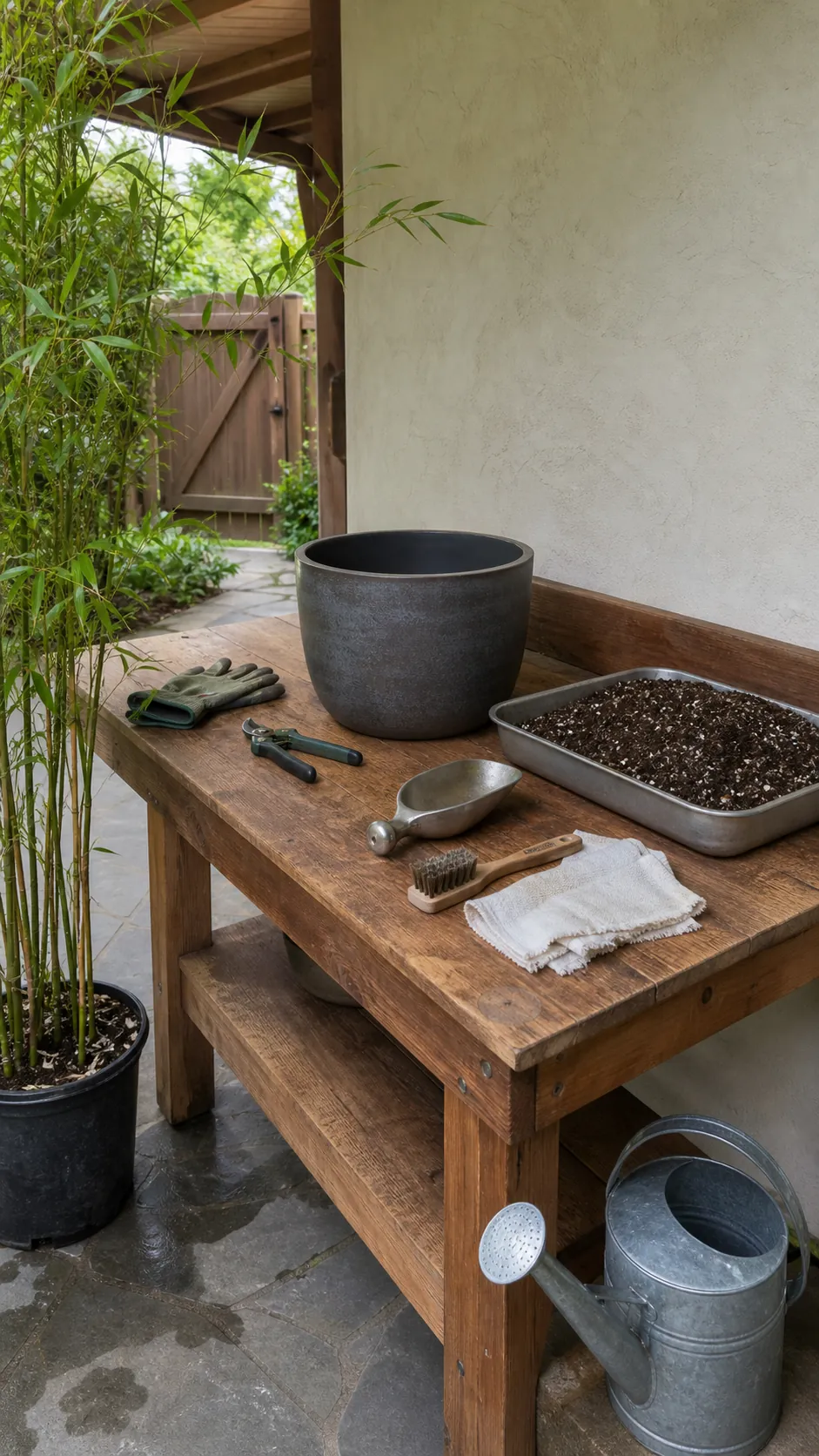
Spring and early summer are forgiving times for most indoor plants because increasing light supports new root growth. For outdoor true bamboo, a cool mild period is safer than a hot afternoon or a freezing spell. Water the plant the day before if the root ball is dry, then work in shade so exposed roots do not heat up while you prepare the new container.
Gather the pot, fresh mix, a clean knife or pruning tool, gloves, a watering can, and a sheet or tray for loose soil. Clean cutting tools before they touch damaged roots. Have every material ready before the plant leaves its old pot, because a fast calm transfer causes less stress than letting the root ball sit bare while you search for supplies.
Select a Stable Pot With Real Drainage
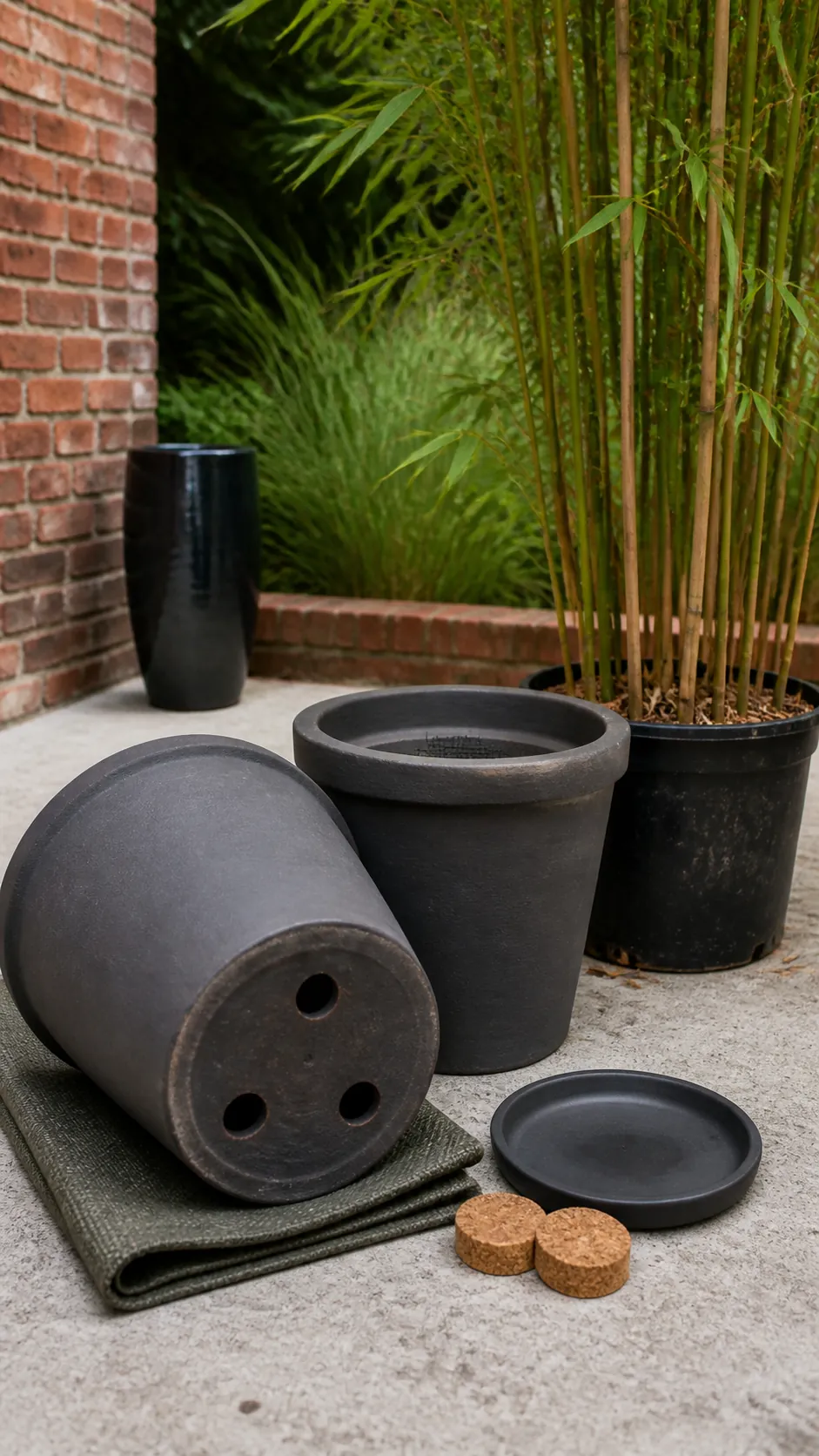
For an indoor lucky bamboo growing in soil, choose a pot only one size wider than the root mass. Too much unused wet soil can stay damp long after the roots have taken what they need. For a large outdoor bamboo, use a broad, strong container that gives rhizomes room and resists tipping. A low, substantial shape often supports tall canes better than a narrow decorative vessel.
At least one unobstructed drainage hole is essential for a soil grown plant. Do not create a false drainage layer with a deep bed of stones, since water can still remain in the mix above it. If the decorative planter has no hole, keep the bamboo in a fitted nursery pot that can drain fully, then empty any collected water from the outer pot after watering.
Build a Bamboo Potting Mix That Holds Air
A useful bamboo potting mix stays evenly moist but does not collapse into mud. For true bamboo, begin with quality container mix and improve its structure with fine bark and a porous mineral material such as pumice or perlite. The mix should accept water across the surface, hold some moisture for active growth, and release excess water through the pot.
Lucky bamboo transferred from water to soil needs an especially airy mix and careful watering while it adjusts. Stalks that will remain in water do not need potting soil at all. They need a clean, stable vessel, washed pebbles if used for support, and enough good quality water to cover the roots without submerging most of the stalk. Match the medium to the plant and its existing root habit.
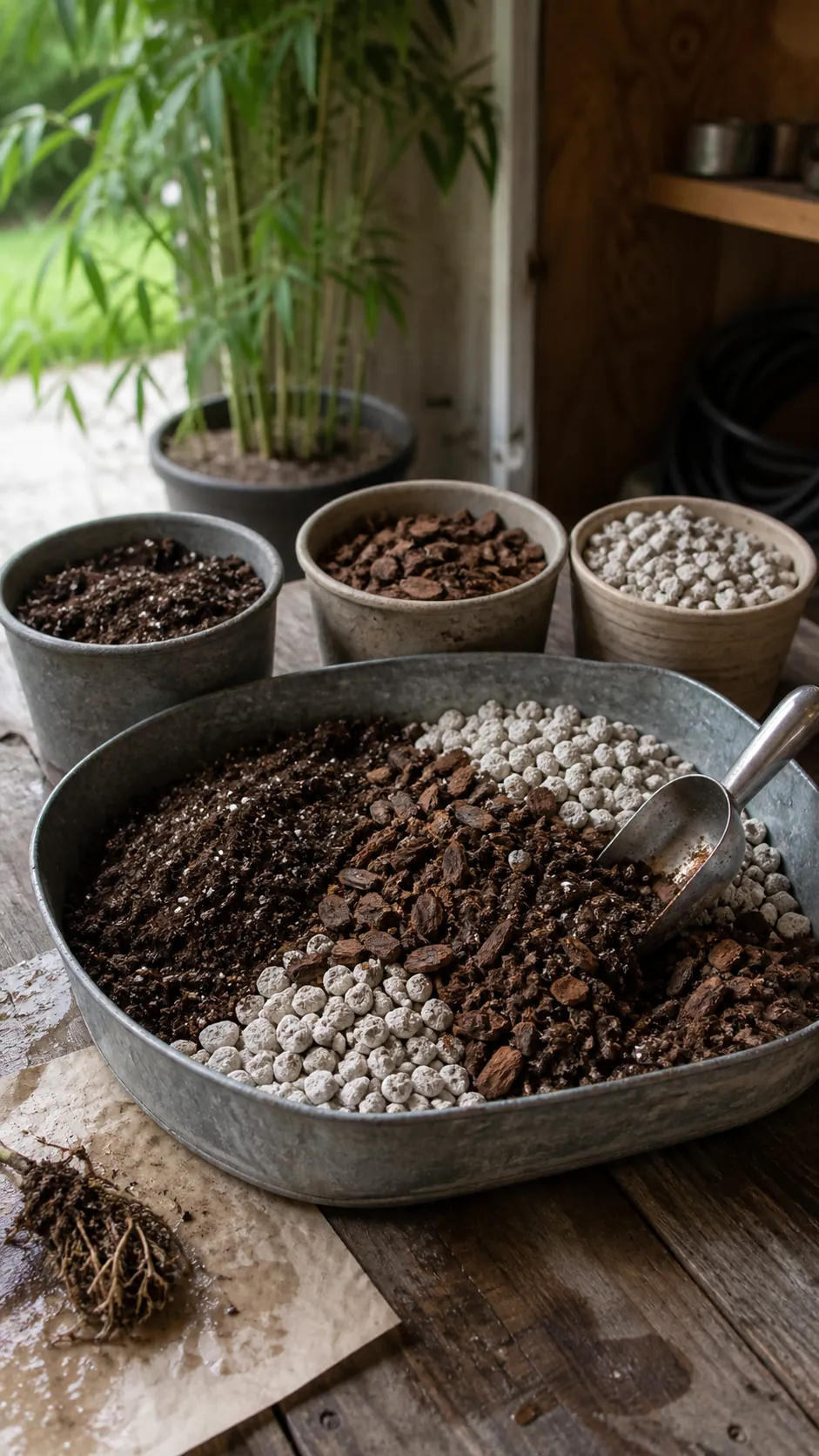
Release and Inspect the Root Ball
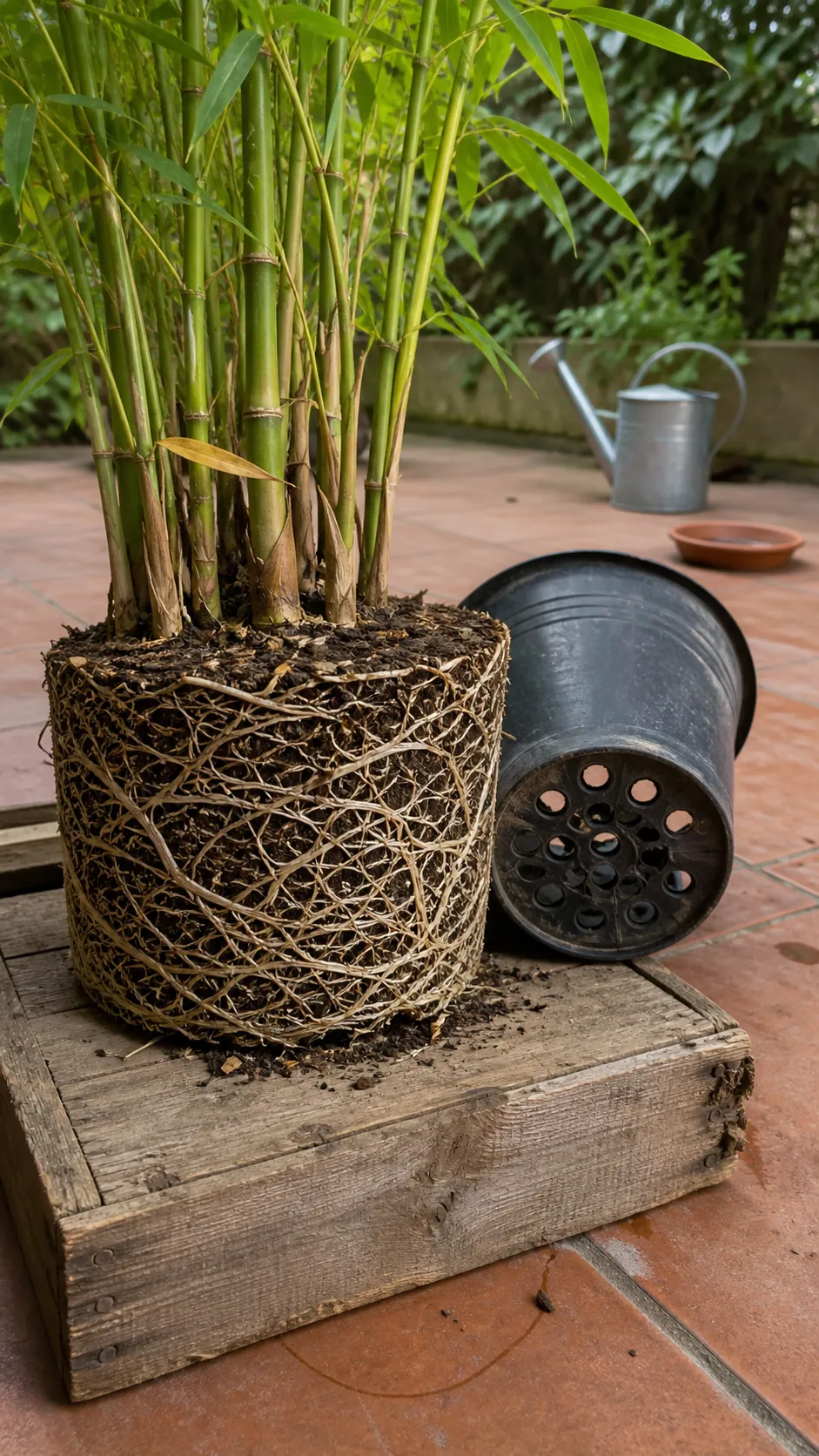
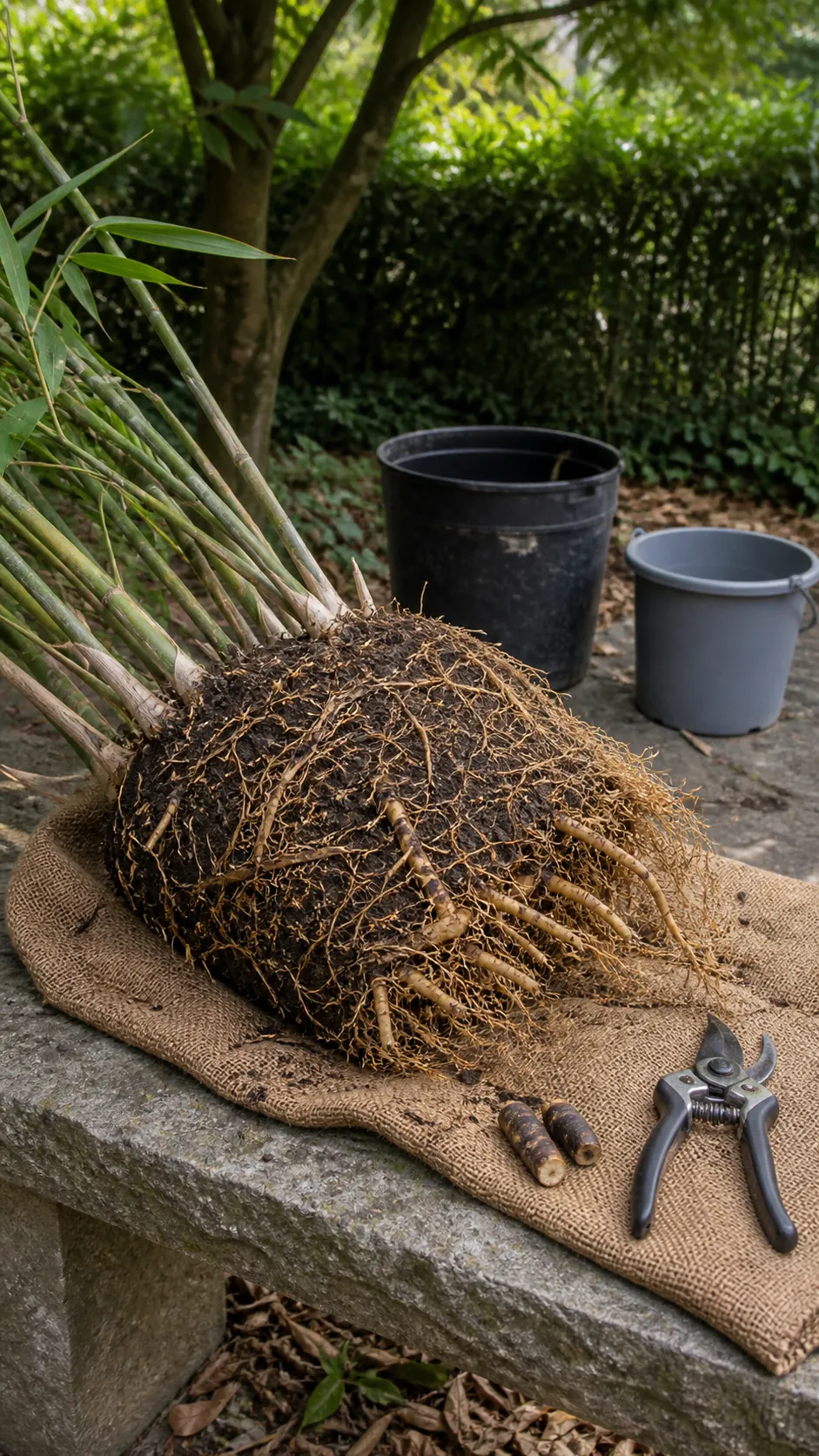
Lay a tall plant on its side and support the canes near their base. Squeeze a flexible nursery pot, tap around a rigid pot, and slide the root ball out by holding the soil mass rather than pulling the stems. If roots have escaped through drainage holes, free them gently or cut only the trapped ends. Breaking a pot can be safer than tearing apart a valuable, tightly wedged plant.
Healthy roots are firm. Their color varies by species and age, so texture and smell are more useful than color alone. Trim roots that are mushy, hollow, foul smelling, or completely dead. Tease a few tight outer roots outward if they circle densely, but do not strip all soil from a healthy true bamboo clump. If you divide true bamboo, keep viable canes, rhizomes, and roots together in each section.
Set the Plant at Its Original Depth
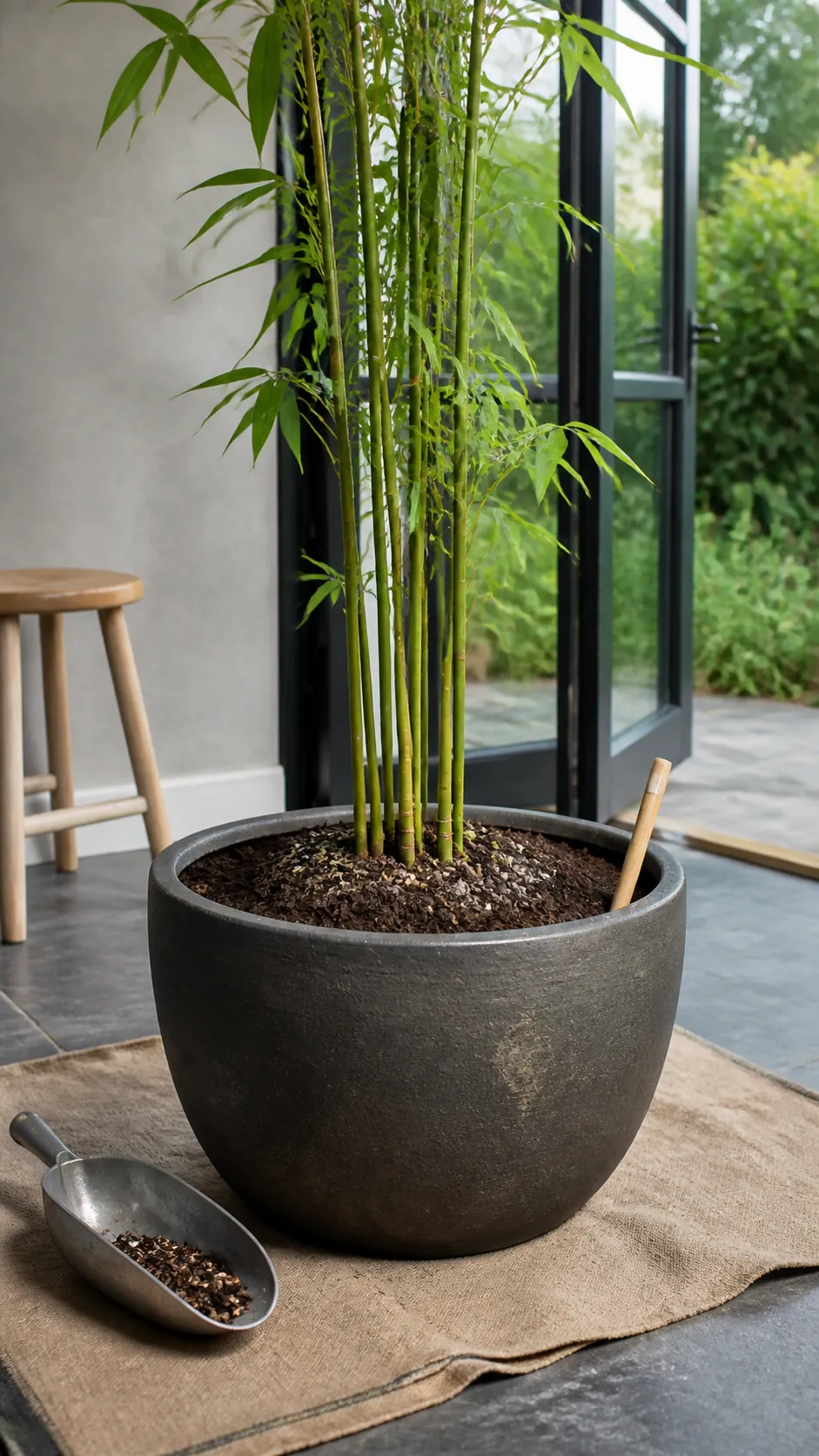
Add enough fresh mix to the base so the top of the root ball sits at the same level it occupied before. Center the plant, check the canes from more than one angle, and fill around the sides in stages. Use your fingers or a slim tool to settle mix into large gaps, but do not compress it into a hard mass. Leave space below the rim so water can spread across the surface instead of spilling away.
Water slowly until the entire root zone is moist and excess water exits. This first watering settles loose mix around roots and reveals low spots that need a little more material. Do not bury the base of the canes or add fertilizer to compensate for stress. Correct depth, complete watering, and open drainage matter more than a rich feeding on the first day.
Guide Recovery Without Drowning the Roots
Return the bamboo to bright light that suits its species, but protect a freshly moved plant from sudden intense sun and drying wind. Check moisture with your finger and by feeling the pot weight. Water when the mix has begun to lose moisture, then drain it completely. A larger pot usually dries more slowly than the old one, so keeping the former watering schedule can lead to saturated roots.
Some drooping or a few aging leaves can follow root disturbance. Stable moisture and appropriate light are more useful than repeated changes. Wait for clear new growth before beginning a normal feeding routine, and use a modest dose suited to the plant. If decline continues, inspect the actual conditions: standing water, dry pockets, damaged roots, heat around the pot, cold drafts, or poor water quality for sensitive lucky bamboo.
Know What to Watch During the Next Month
The most useful sign is not instant leaf growth. It is a root zone that wets evenly, drains freely, and dries at a predictable pace. New shoots or leaves may follow after the plant settles, while old cosmetic damage will remain. Remove a fully dead leaf or cane only when you can do so without injuring healthy tissue.
Check outdoor containers for stability and escaped rhizomes. Check indoor saucers and outer pots for hidden water. If the plant remains firm and its moisture cycle becomes easier to manage, the repot has done its job. The best container bamboo care is a repeatable routine: observe the roots, preserve air in the mix, water thoroughly, and let drainage work.