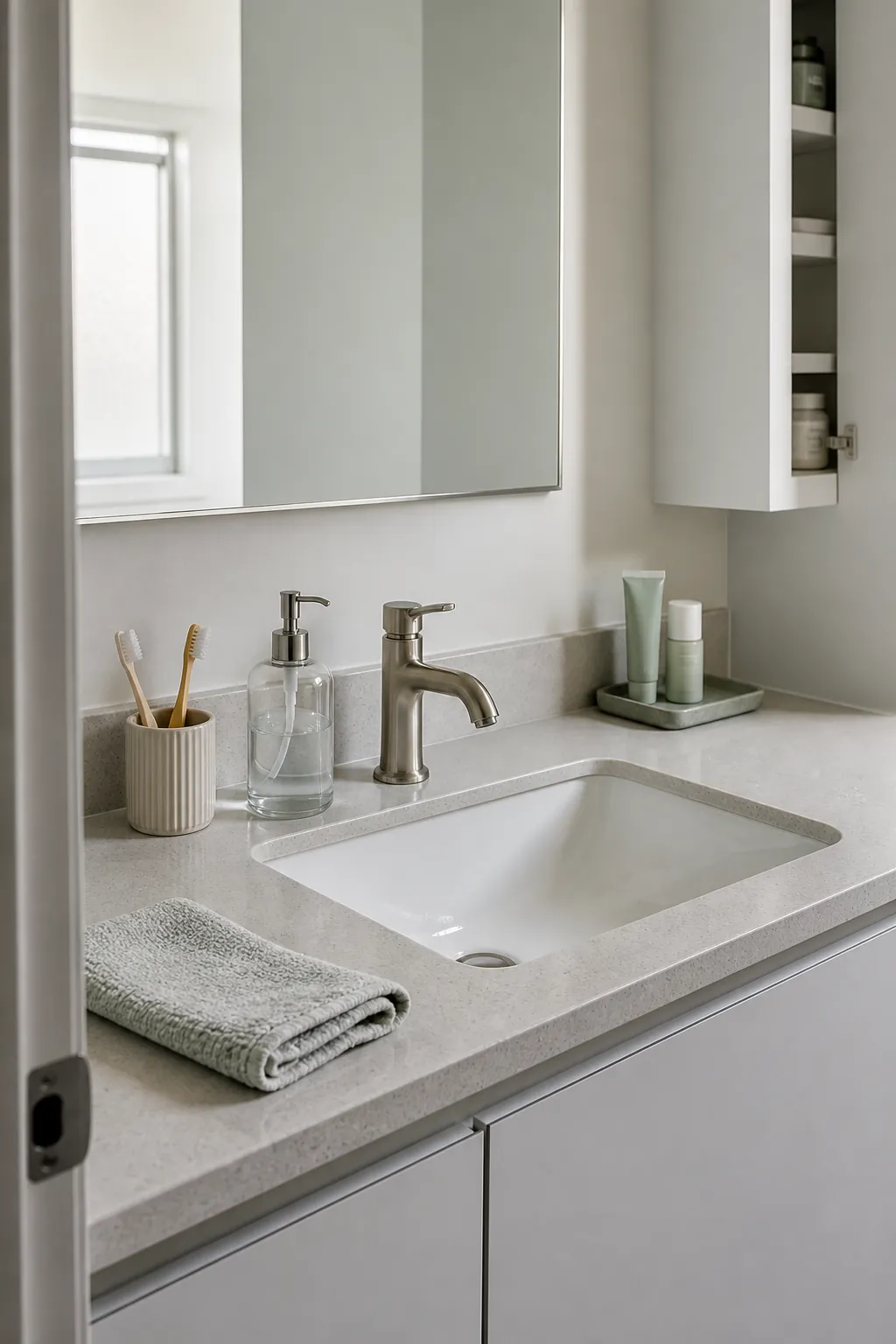
A crowded sink makes a short routine feel strangely demanding. Bottles block the faucet, damp rings collect under containers, and every wipe down turns into a small moving project. The useful goal is not an empty display. It is a counter that supports washing, grooming, and cleaning without asking you to reorganize the room each morning.
Start With an Access Test
Remove everything from the surface and group it by how often you actually reach for it. Daily items earn the easiest locations, weekly products belong one step farther away, and backups should leave the sink zone completely. This exposes duplicates, expired samples, and products that stayed visible only because they never had a home.
Be strict about the word daily. A serum used twice a week does not need the same access as toothpaste, and a spare cleanser does not need to sit behind the open one. Frequency should decide location before appearance does. Keep a small donation bag nearby for sealed products and follow local disposal guidance for medicines and chemical products.
Build One Daily Toiletries Zone
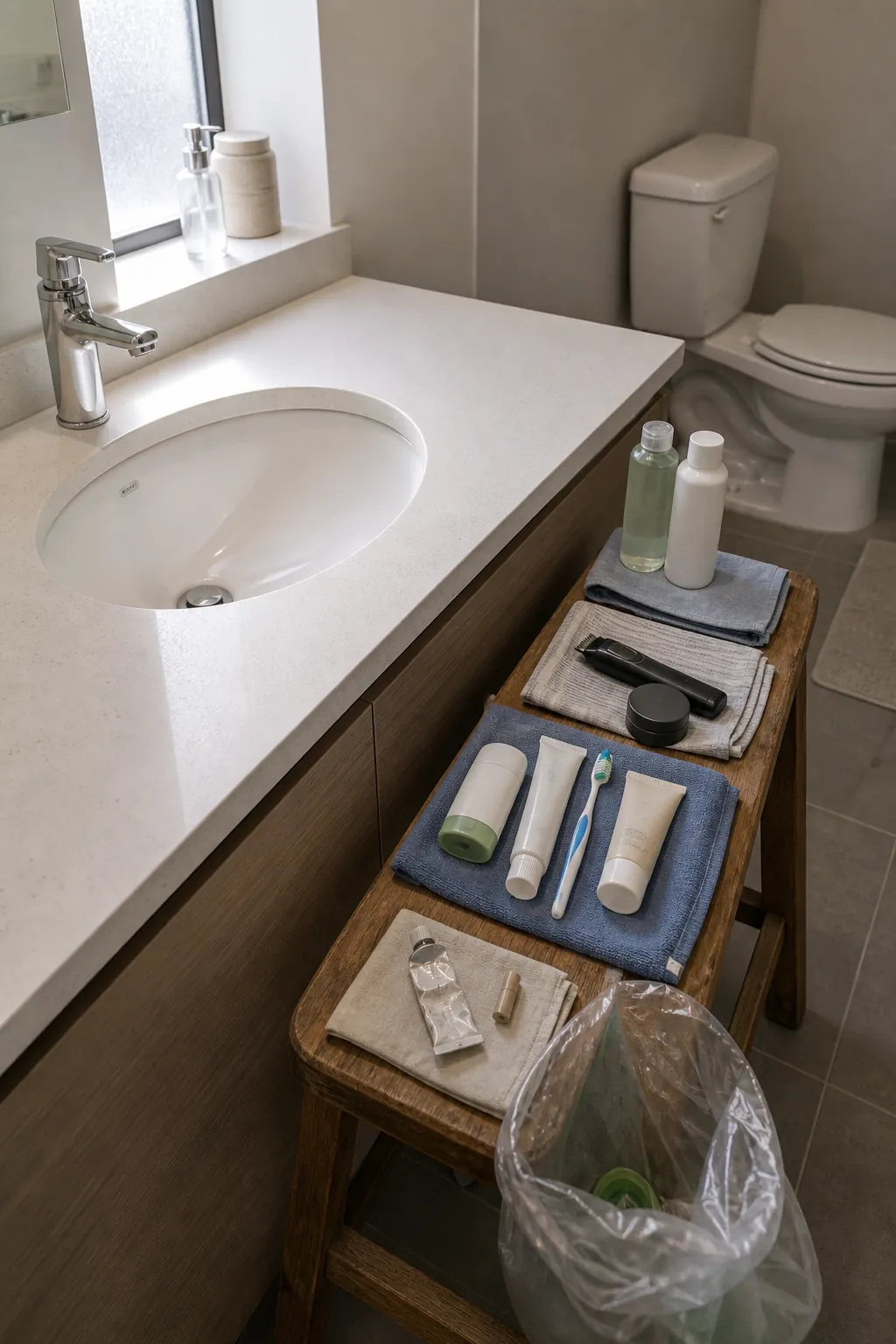
A bathroom countertop organizer works best when it defines a boundary instead of becoming another place to pile things. Choose one compact washable tray for the few products that truly stay out, then leave open space around the sink and faucet. The boundary makes excess obvious because a new bottle cannot quietly spread across the vanity.
Arrange items in the order you use them, with tall bottles behind shorter ones and wet items separated from dry tools. Shared bathrooms benefit from one small container per person, provided each container can be lifted away in a single motion. The best daily toiletries storage shortens the routine and the cleanup at the same time.
Give Drawers Fixed Boundaries
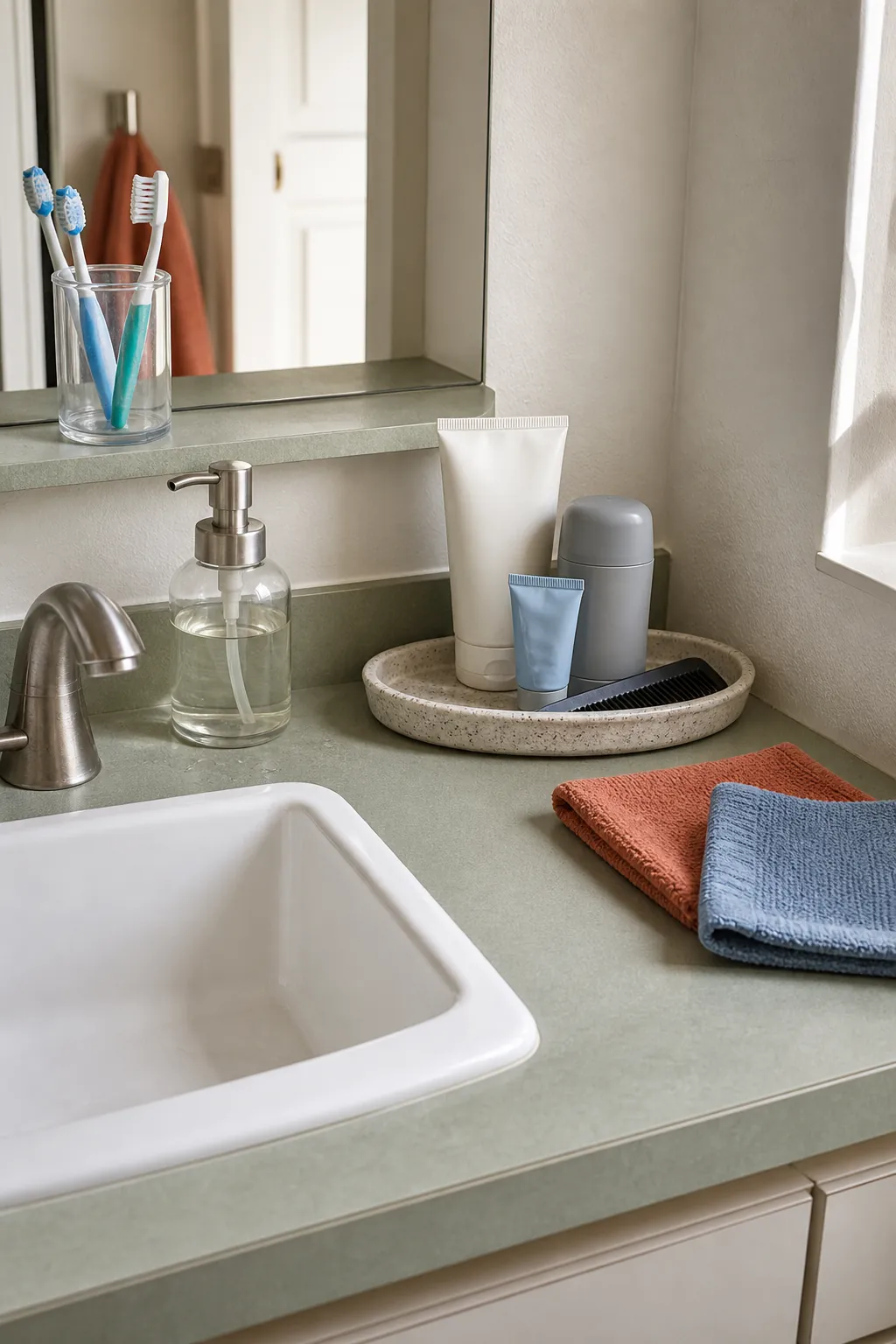
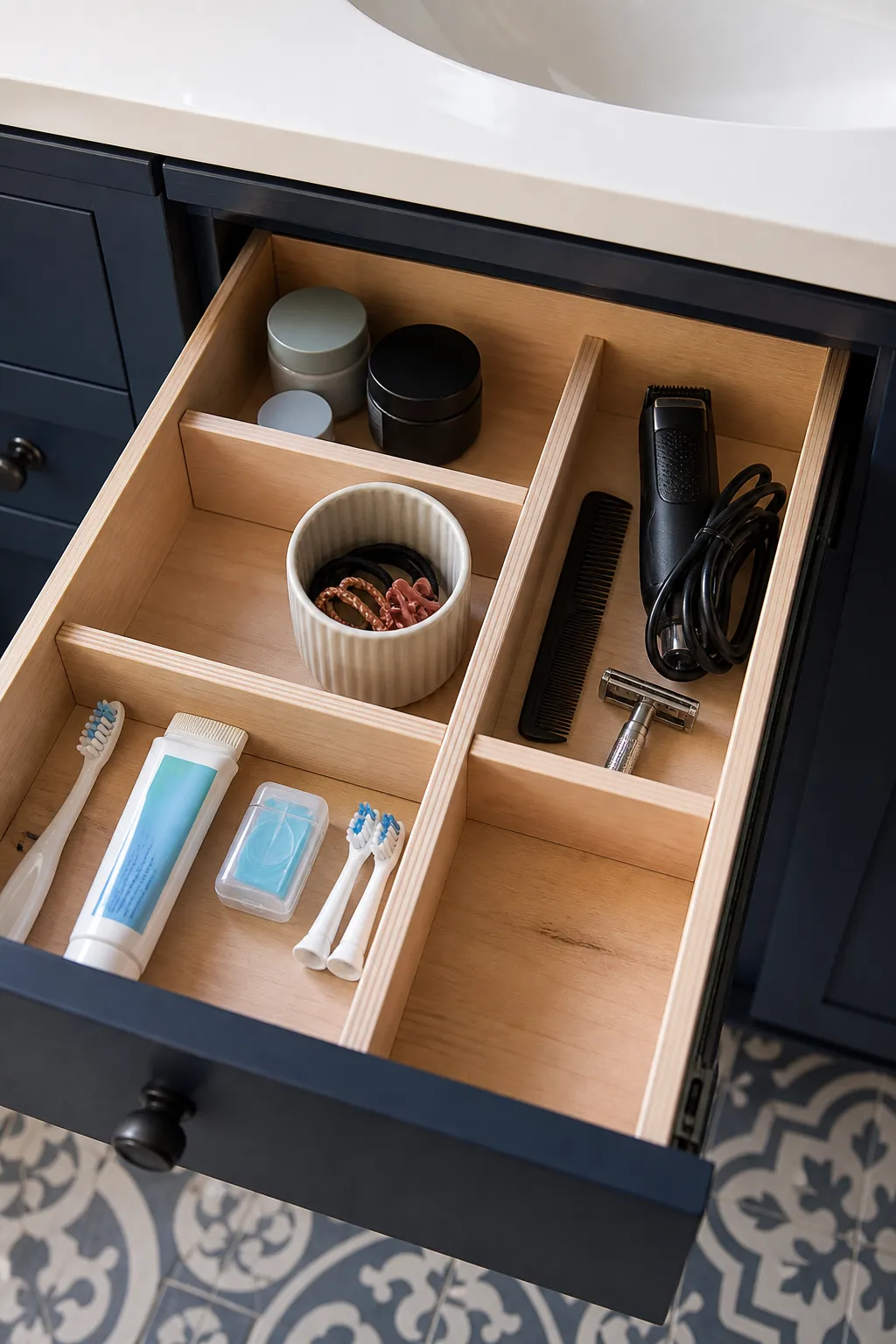
Moving clutter into a drawer only works if the drawer still lets you see and return each item. Measure the usable width, depth, and height before buying containers, especially around plumbing or shallow vanity rails. Bathroom drawer dividers can create separate homes for dental care, skin care, grooming tools, and small accessories.
Place the most frequently used category nearest the hand that opens the drawer. Keep cords loosely coiled and allow hot styling tools to cool in a safe holder before storage. A little empty room is functional because fingers need space to lift products without disturbing everything beside them. Stop filling compartments when retrieval starts to require shuffling.
Use the Medicine Cabinet by Routine
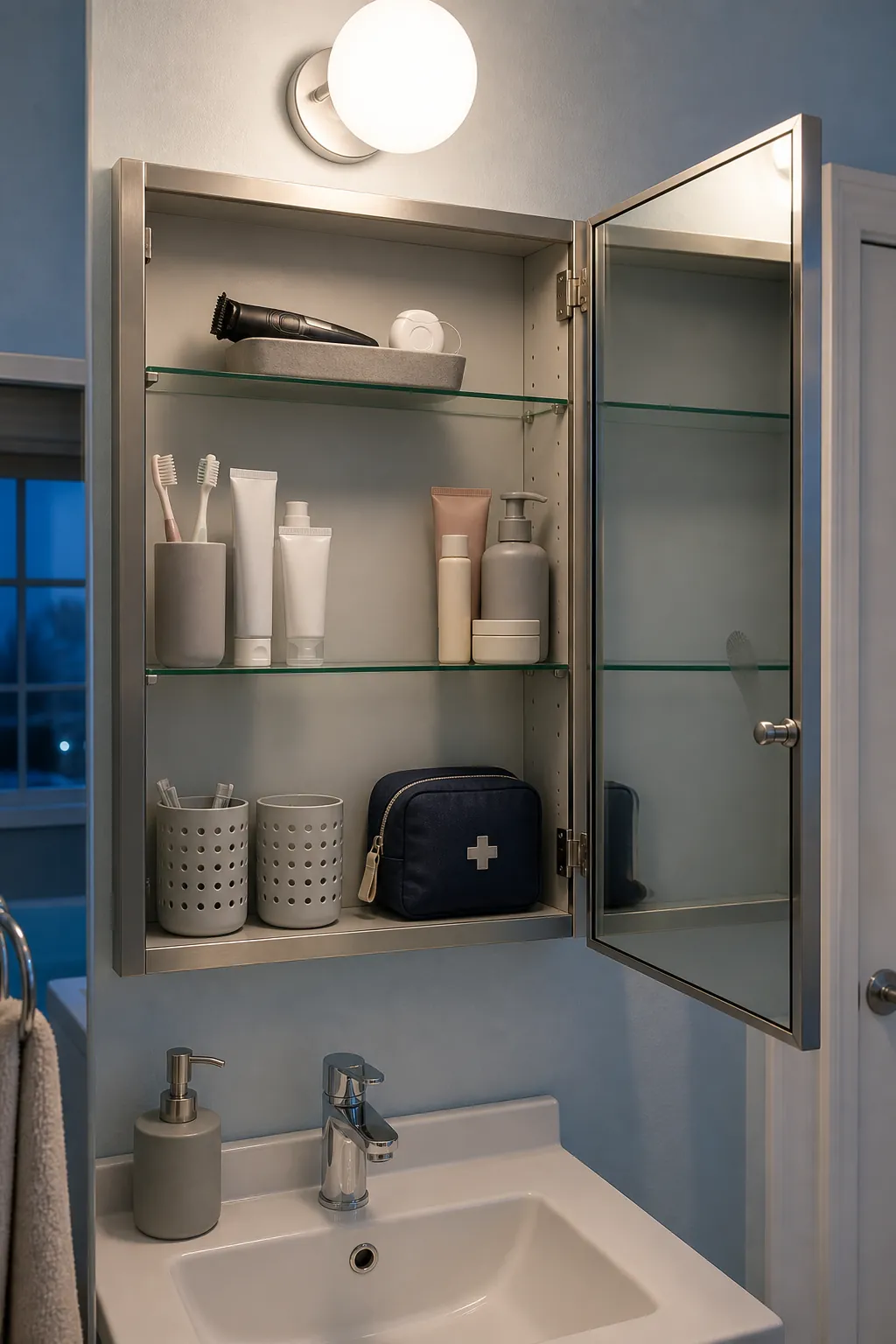
Medicine cabinet organization becomes easier when shelves follow routines rather than product shapes. Reserve eye level space for morning and evening essentials, place occasional grooming items higher, and keep small products together in shallow removable cups. Avoid stacking jars two deep because the hidden row quickly becomes forgotten inventory.
Check every label before storing medicines in a humid bathroom, since many products require a cool and dry location. Child resistant or locked storage may also be necessary in a family home. Toothbrushes and open grooming tools need airflow and a clean location away from splashes. A clear cabinet map prevents the counter from becoming overflow.
Move Repeated Functions to the Wall
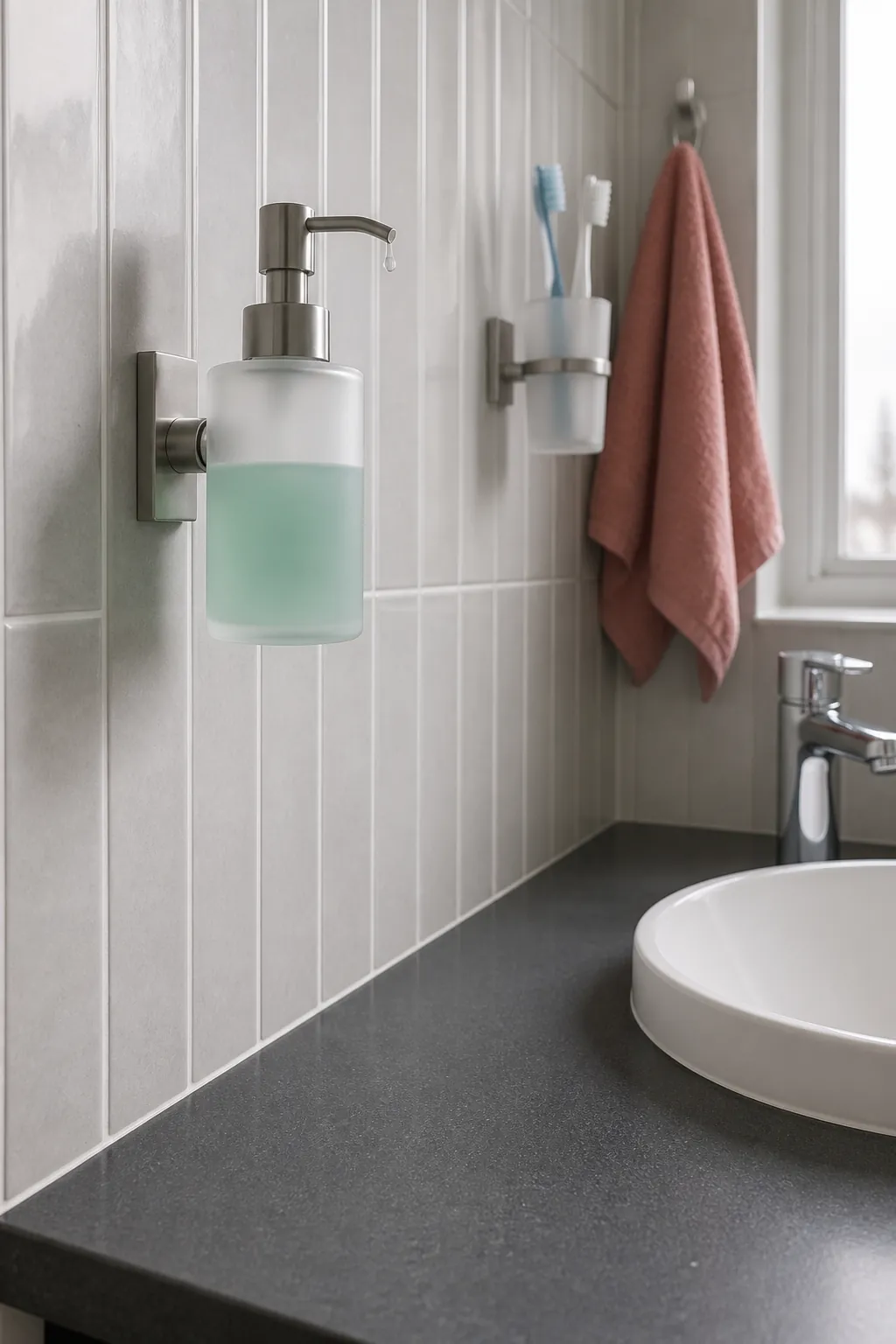
Wall space can solve the specific functions that consume the counter every day. A wall mounted soap dispenser removes one wet bottle footprint, while a secure toothbrush holder or narrow shelf can lift another routine above the splash zone. Renters can consider purpose rated removable systems, but must check surface compatibility, weight limits, and moisture instructions.
Mount only items that are genuinely used in that exact spot. Too many holders make the wall harder to clean and can turn vertical space into visual clutter. Keep dispensers far enough from the faucet for comfortable hand movement and low enough for every user to reach. One well placed fixture is more valuable than a collection of clever attachments.
Protect the Clear Counter With a Reset
A clutter free bathroom lasts when the closing routine is shorter than the temptation to leave things out. Return products as the final step of grooming, wipe the exposed surface, and carry unrelated objects out of the room. A small return basket can help in a shared home, but empty it daily so it never becomes permanent storage.
Limit backups to an amount that fits one assigned bin and check that bin before shopping. Review the daily zone whenever a new product enters the routine, since the right setup should change with real use. If an item repeatedly stays out, improve its home instead of blaming your habits. A sixty second reset is the real system behind a clear bathroom counter.
Set a Firm Limit for Backups
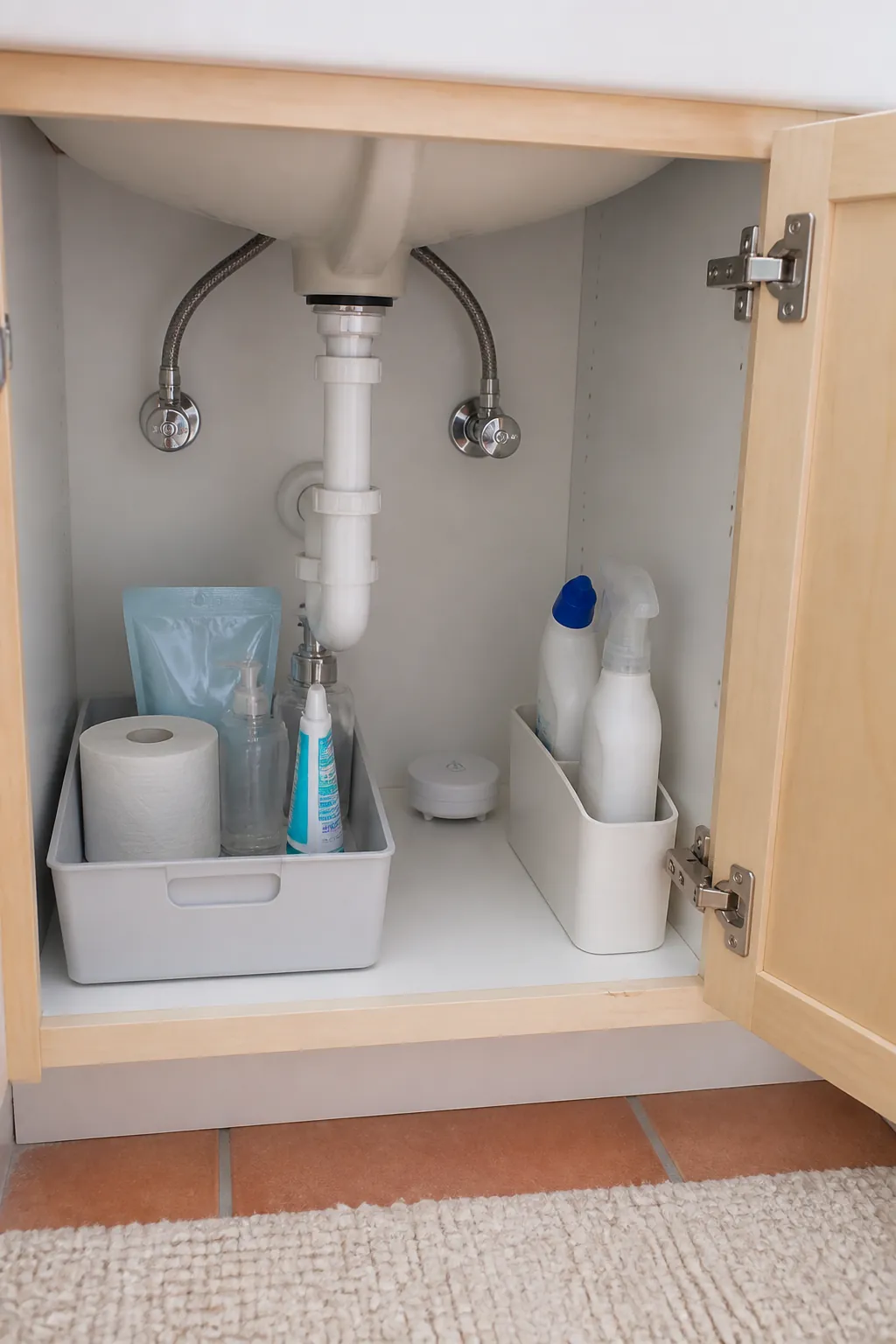
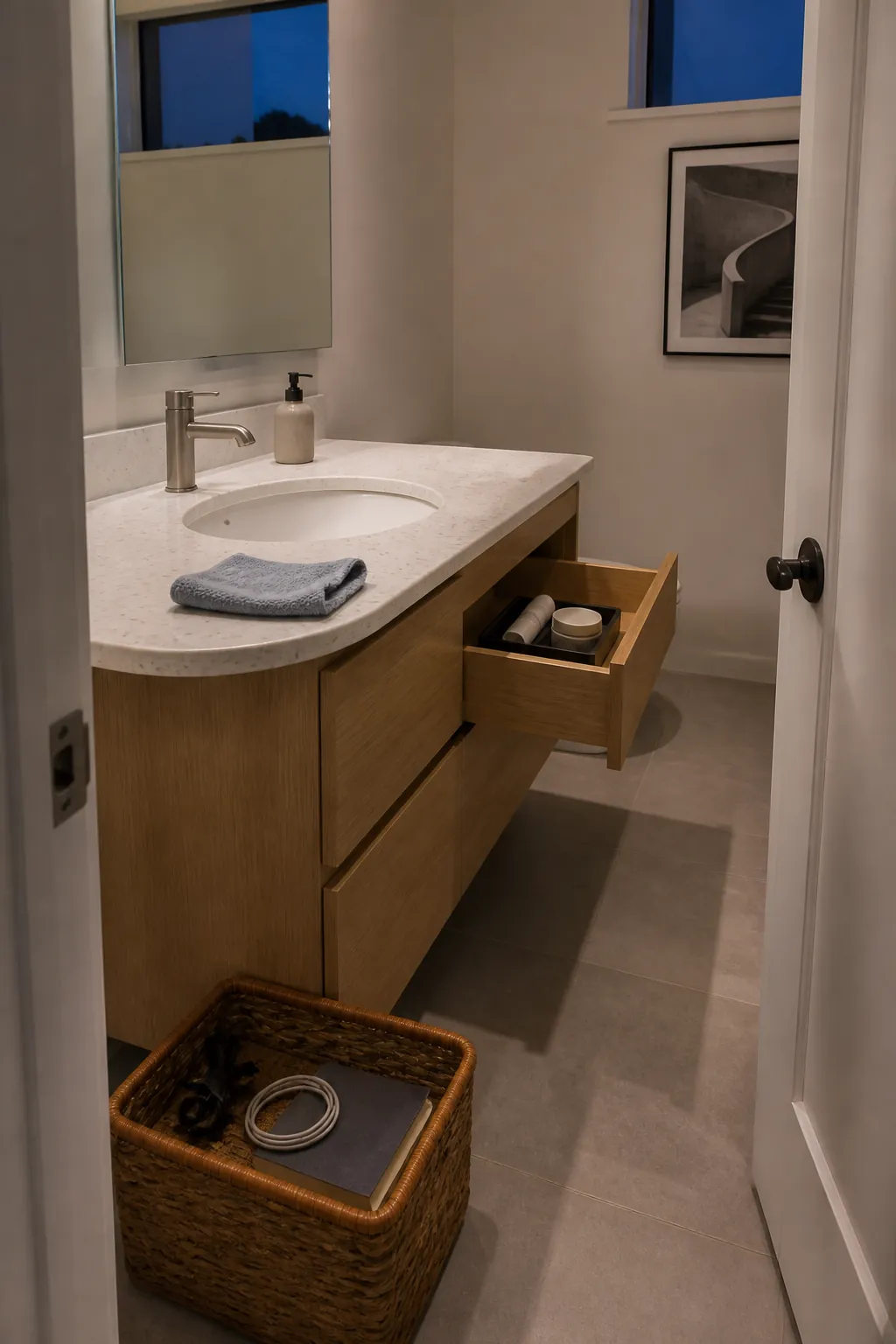
Unopened supplies crowd a daily zone even though they are not part of the current routine. Assign one bin beneath the sink or in a nearby closet, then choose a simple limit such as one spare of each essential. Keep plumbing valves visible and protect supplies from leaks or standing moisture.
Store cleaning products separately from personal care items and follow every product label. Check the backup bin before shopping so a discount does not create six months of counter overflow. A physical container makes the inventory limit visible without another tracking system. When the bin is full, use what you own before buying more.