The hardest part of towel storage is not finding an unused patch of wall. It is finding a place where a wet towel can open, release moisture, and stay out of the path between the sink, toilet, shower, and door. A compact room works better when each towel has a specific job and a drying zone sized for that job.
Map Reach and Clearance First
Stand at the shower and sink, then note where your hand naturally reaches without crossing a wet floor. Open the main door, vanity door, shower screen, and drawers to reveal collision zones. A fixture that fits the wall can still catch a shoulder or disappear behind a door.
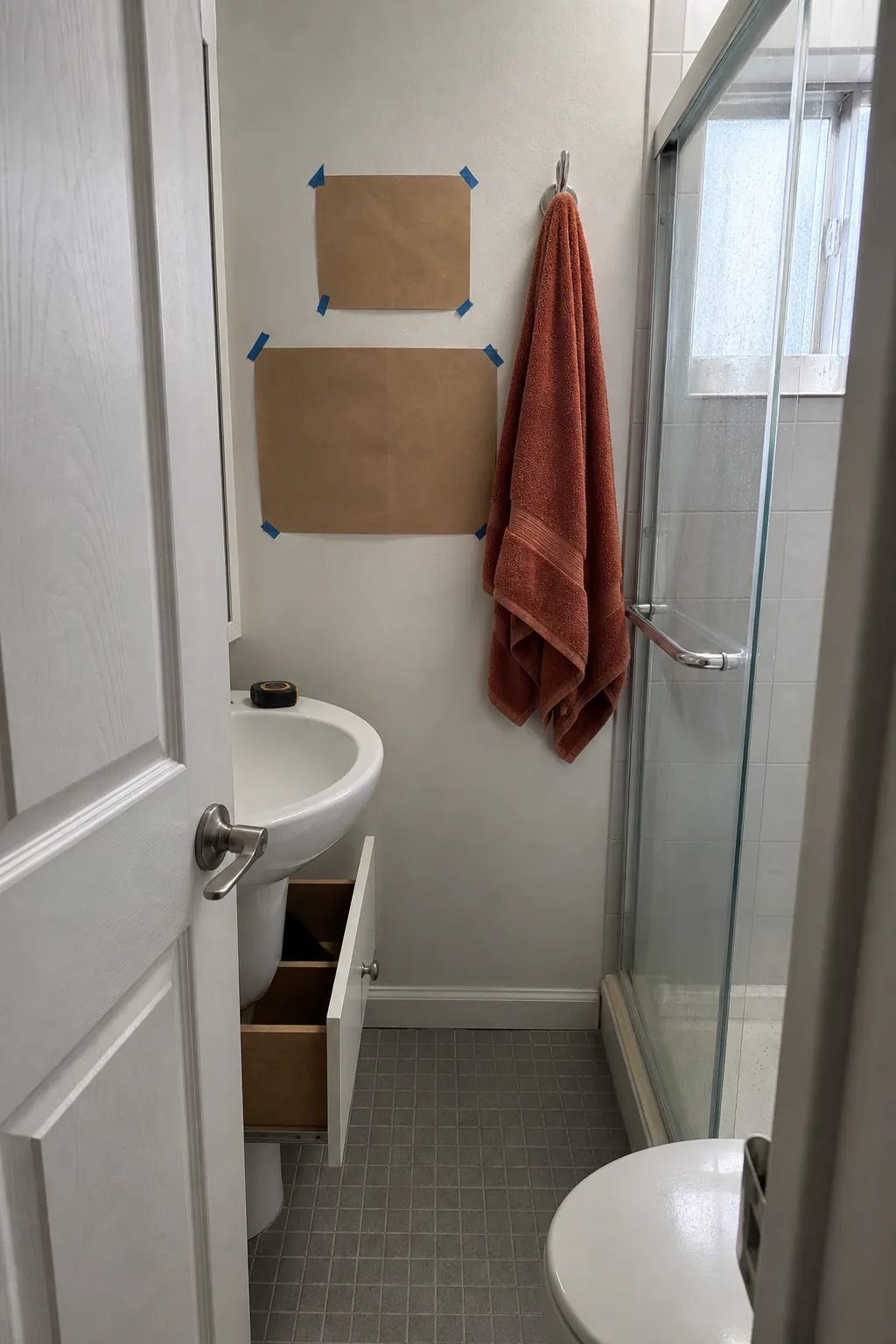
Use removable paper outlines to test towel bar placement before making holes. Include the hanging towel in the outline because fabric extends well below the hardware. Keep switches, outlets, vents, and plumbing routes clear, and use suitable anchors or framing for permanent fixtures. Measure movement, not just empty wall width.
Choose a Bar for the Main Bath Towel
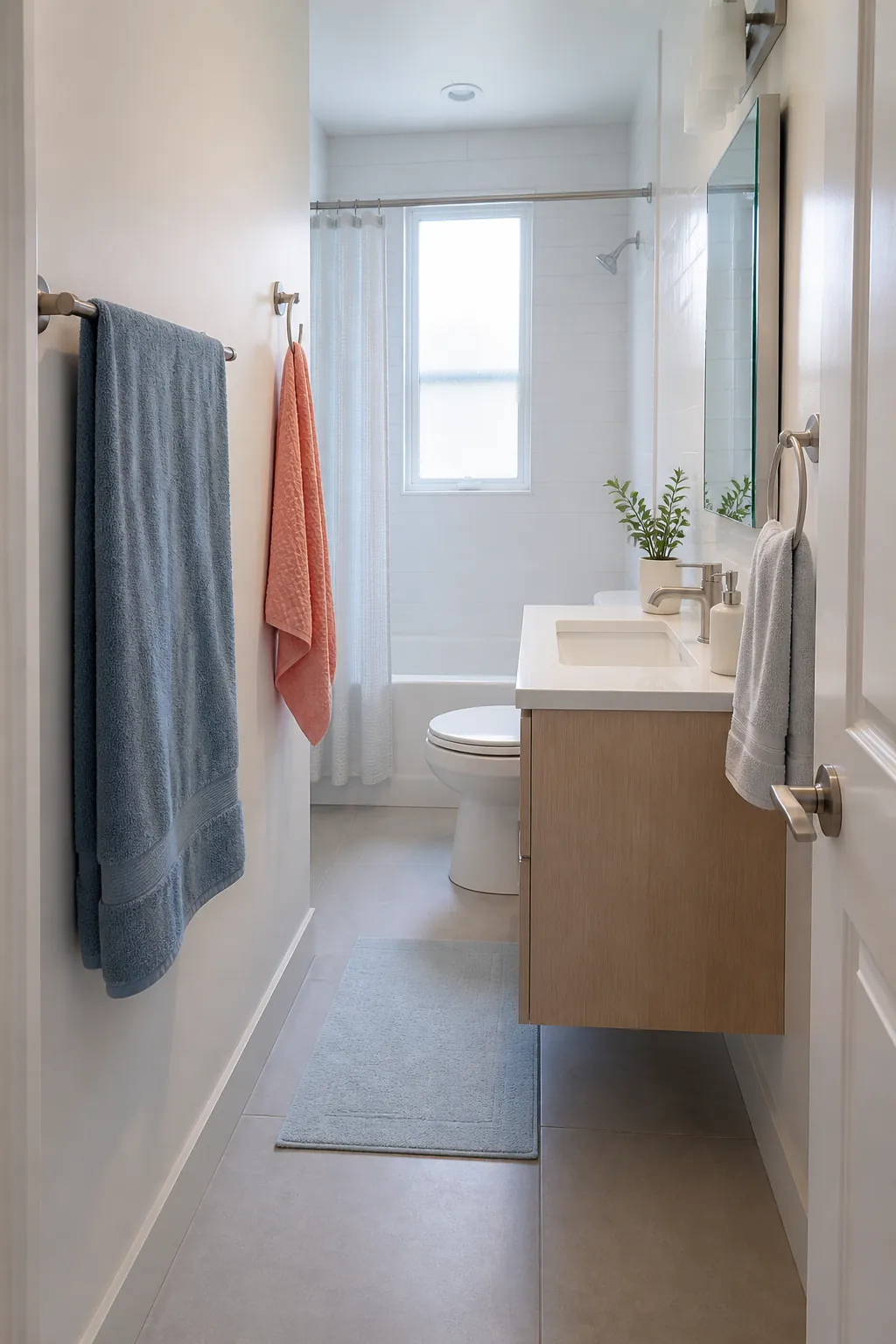
A wall mounted towel rack or simple bar gives a bath towel more exposed surface than a hook. That matters in a humid room, especially when the fan is modest or several people shower close together. Choose the widest bar the circulation path safely allows and hang one towel without folding it into thick layers.
A swing arm or compact double rail can add drying length when a full bar will not fit. Leave an air gap between overlapping rails and avoid pressing damp fabric against the wall. Run the bathroom fan as directed and leave the door open afterward when privacy and household conditions allow. Good airflow is more useful than squeezing another towel onto the fixture.

Stagger Hooks for Shared Towels
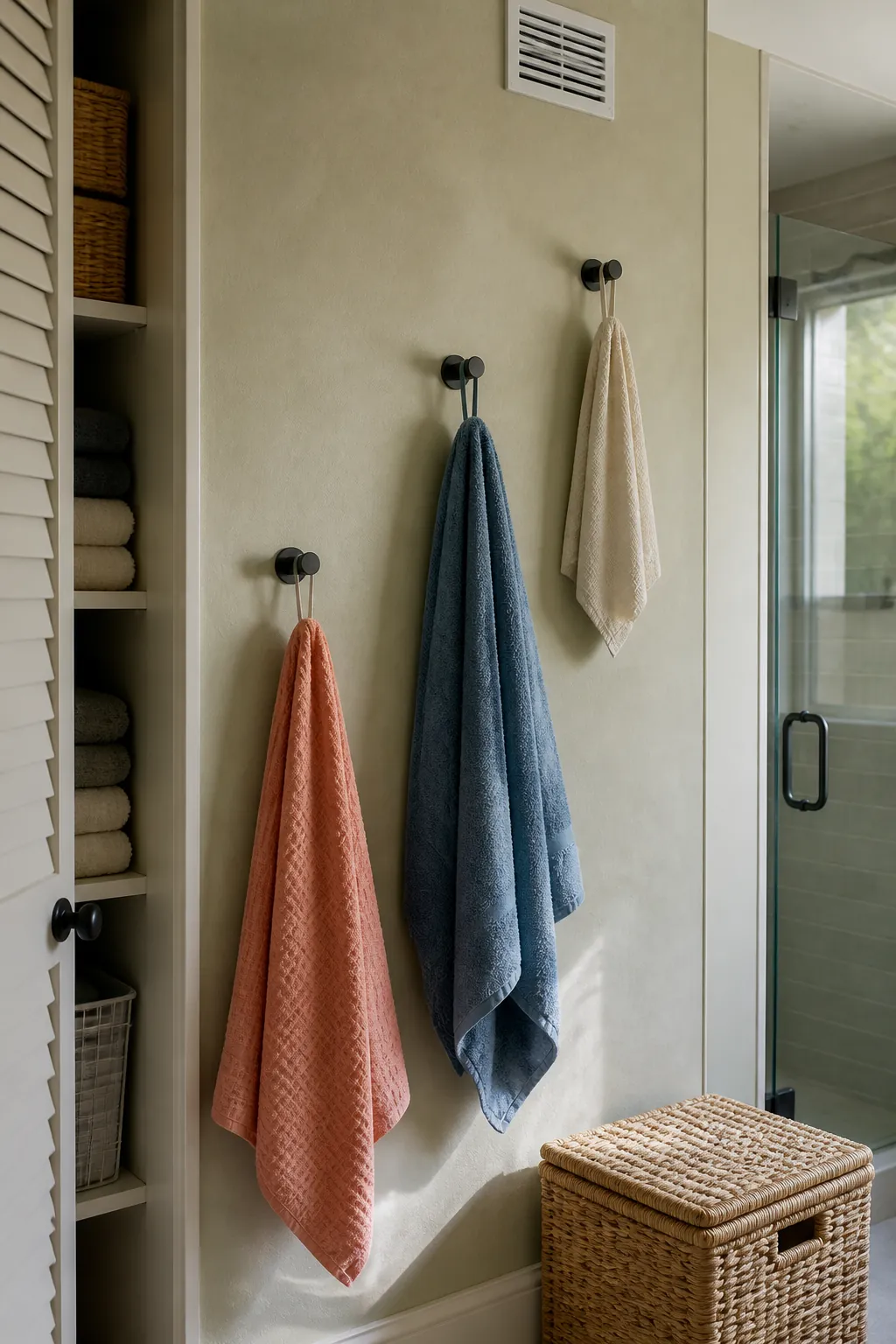
Small bathroom towel hooks save wall width and make individual places easy to recognize. Stagger them vertically and horizontally so neighboring towels do not lie on top of each other. Give each person a consistent hook, using different towel colors or hook shapes rather than adding labels that dislike humidity.
Hooks suit robes, hair towels, and quick drying waffle towels particularly well. Thick terry towels may remain damp in the center when bunched, so move them to a bar or a better ventilated room if they are not dry before the next use. A hook solves access only when the fabric also has room to breathe.
Keep the Hand Towel Beside the Sink
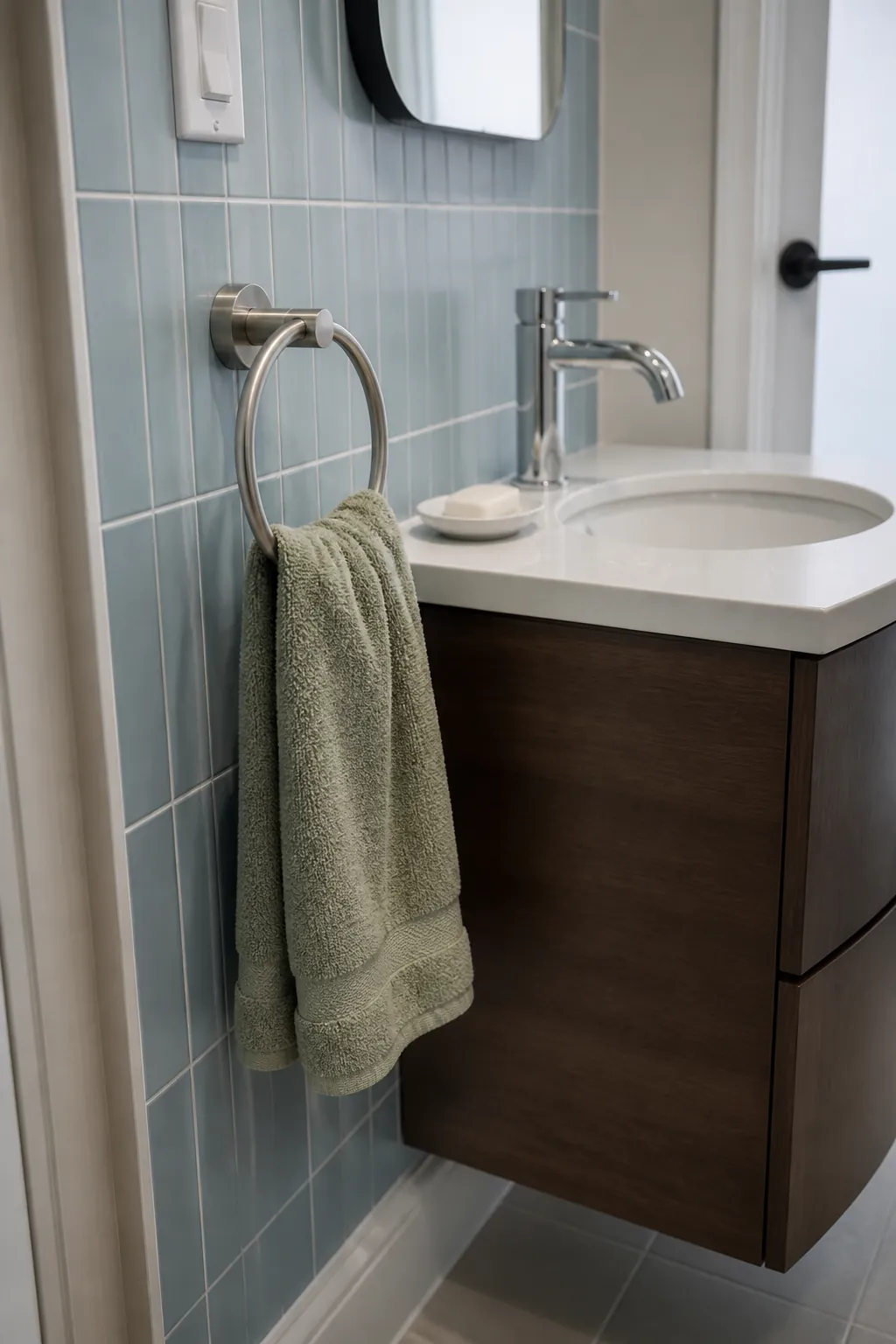
Bathroom towel rings and short bars are useful beside a compact vanity because a hand towel needs less hanging length. Place the fixture where wet hands can reach it before dripping across the floor or cabinet face. Check that the towel will not cover an outlet, touch the toilet, or drag across the counter.
A ring naturally gathers fabric, so reserve it for a hand towel rather than a full bath sheet. If the nearest side wall is too narrow, consider the side of a sturdy vanity after checking the panel construction and drawer clearance. Wash shared hand towels frequently and replace them sooner when they stay damp. The shortest wet hand path is usually the best location.
Use the Door Only After a Swing Test
Over door towel storage can recover vertical space, but it must allow the door to close without scraping the frame. Check the top gap, hardware depth, hinge load, and whether hanging fabric will strike a wall hook or toilet. Add protective pads where approved so metal does not mark the finish.
The back of the door works best for dry reserves, robes, or a towel that receives airflow when the door stays open. It is less useful when the open door traps damp towels against a wall. Make sure children and shorter adults can reach their assigned level safely. Door storage should preserve the door as an exit before it serves as a rack.

Add Flexible Vertical Storage Without Crowding
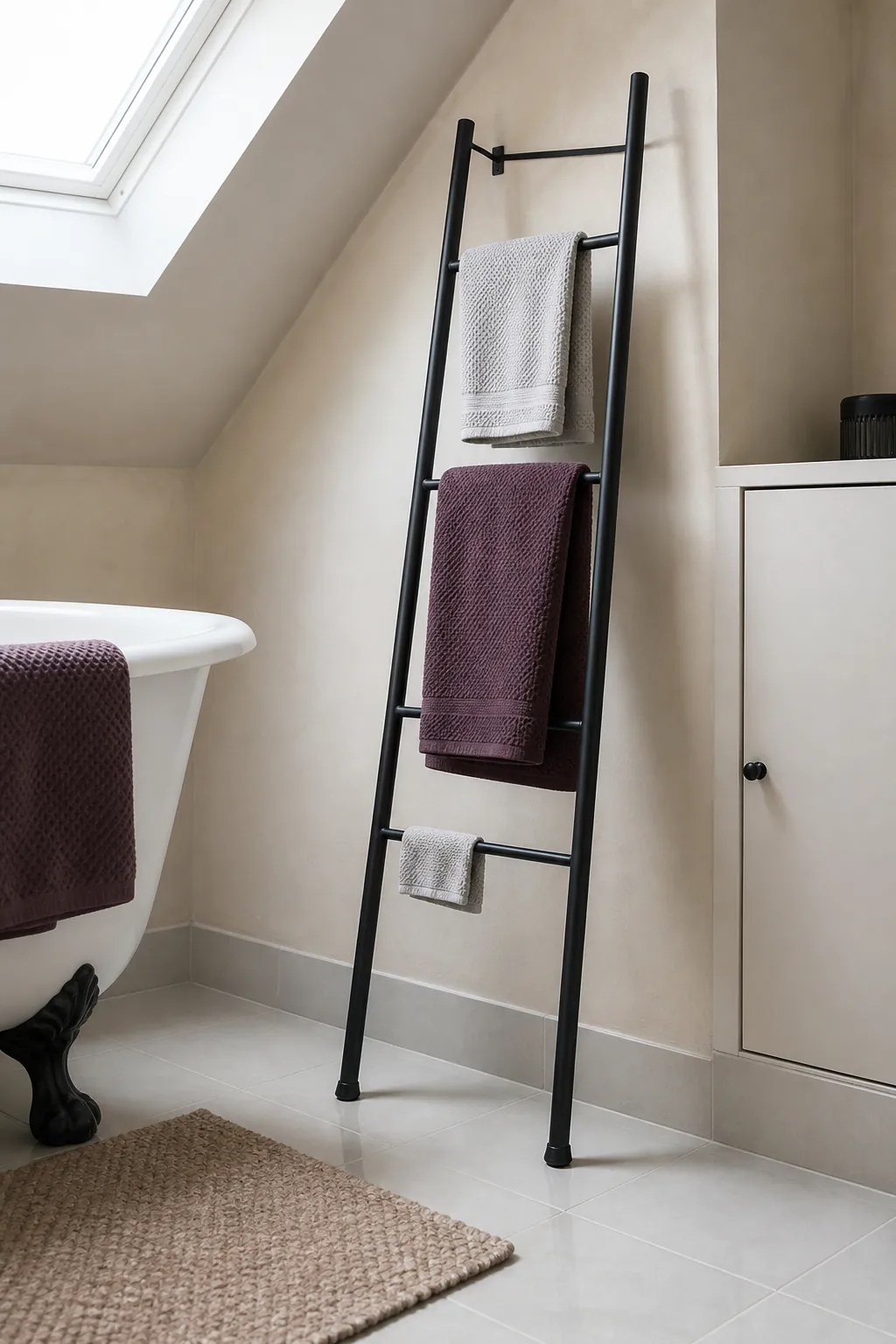
Towel ladder ideas and slim freestanding rails help when drilling is not possible, provided the floor has a stable dry corner. Spread towels across separate rungs and leave a gap from the wall. Secure a leaning ladder when required by its maker, especially around children, pets, or slippery floors.
Purpose rated no drill towel hooks can support lighter pieces on compatible smooth surfaces, but installation instructions and weight limits matter. Clean and prepare the surface exactly as directed, then allow the adhesive to cure before loading it. Move damp towels to a better ventilated spot if any setup leaves them wet by the next routine. The right vertical towel storage earns its footprint by drying well and staying out of the walking path.
Reserve Adhesive Hooks for Lighter Towels
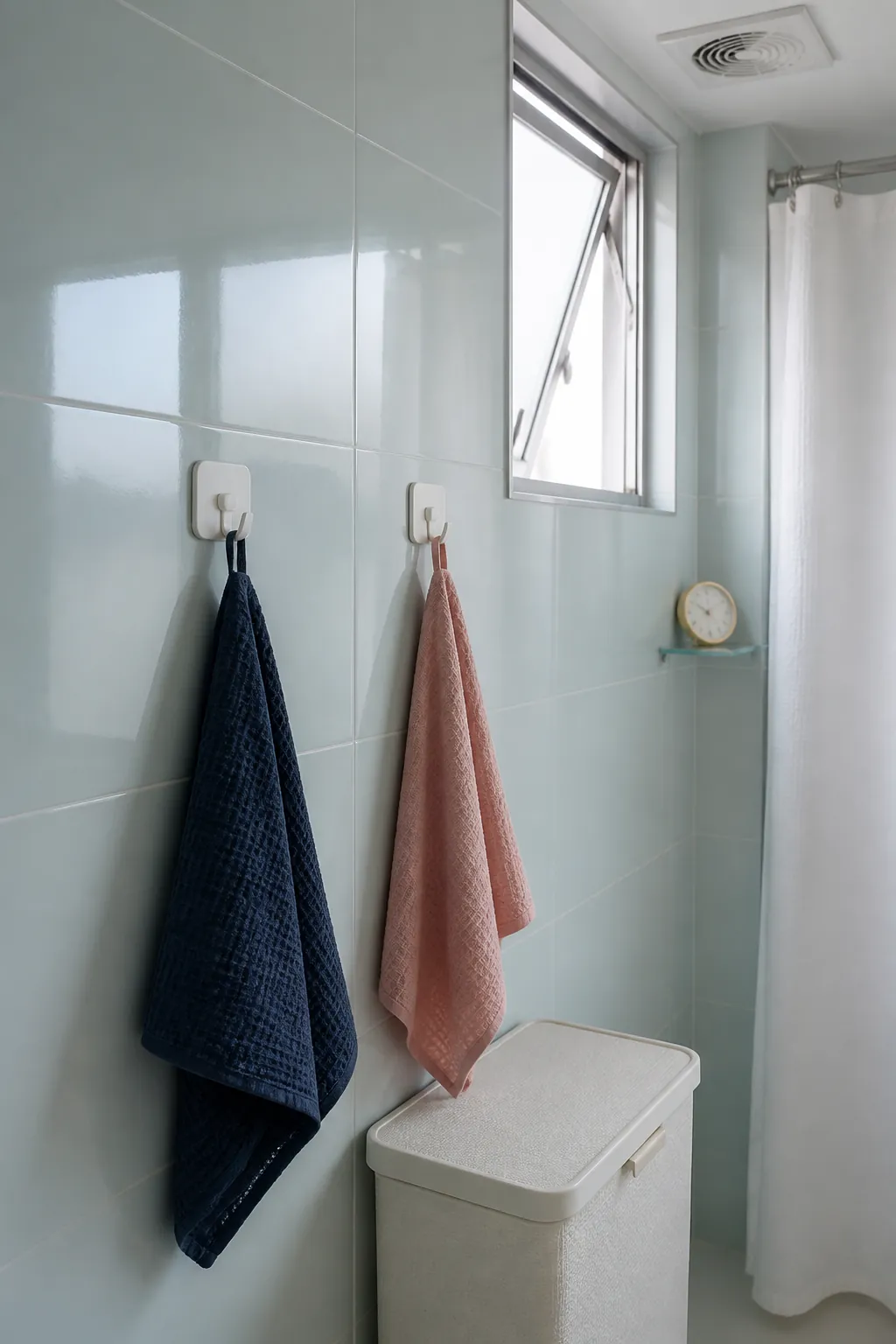
No drill towel hooks are most convincing when the surface and load match the product instructions. Smooth tile may accept a purpose rated adhesive system, while textured walls, grout lines, and damp surfaces may not. Clean the mounting area as directed and respect the full curing time.
Use these hooks for a hand towel, hair towel, or light waffle towel rather than assuming they can carry a heavy wet bath sheet. Space the hooks so fabric does not overlap and keep them outside direct shower spray. A removable fixture still needs a stable surface, an honest load, and enough ventilation. If it starts to shift, unload it instead of waiting for the towel to fall.