
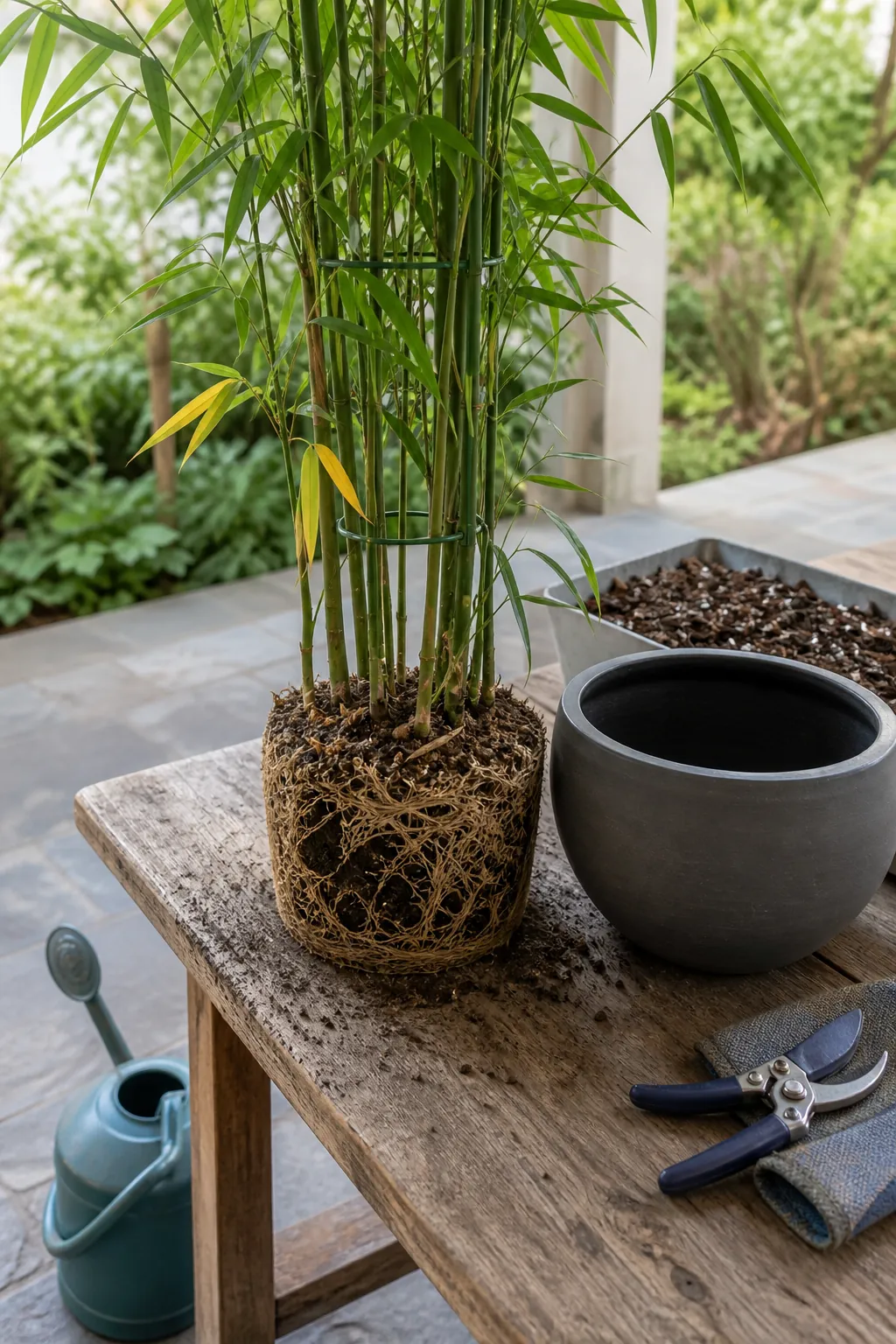
A struggling bamboo often looks urgent before the cause is clear. Yellow leaves, brown tips, drooping growth, and a soft stalk can point to very different problems. The fastest route to recovery is not a stronger fertilizer or a bigger watering can. It is a calm inspection that separates damage you can stop from tissue that has already died.
Change one failing condition at a time. If you move the plant, replace its water, repot it, prune it, and feed it on the same day, you will not know which action helped. Stabilize the roots first, match light and moisture to the actual plant, then judge progress by firm green stems and healthy new growth rather than expecting old yellow tissue to turn green.
Identify True Bamboo or Lucky Bamboo First
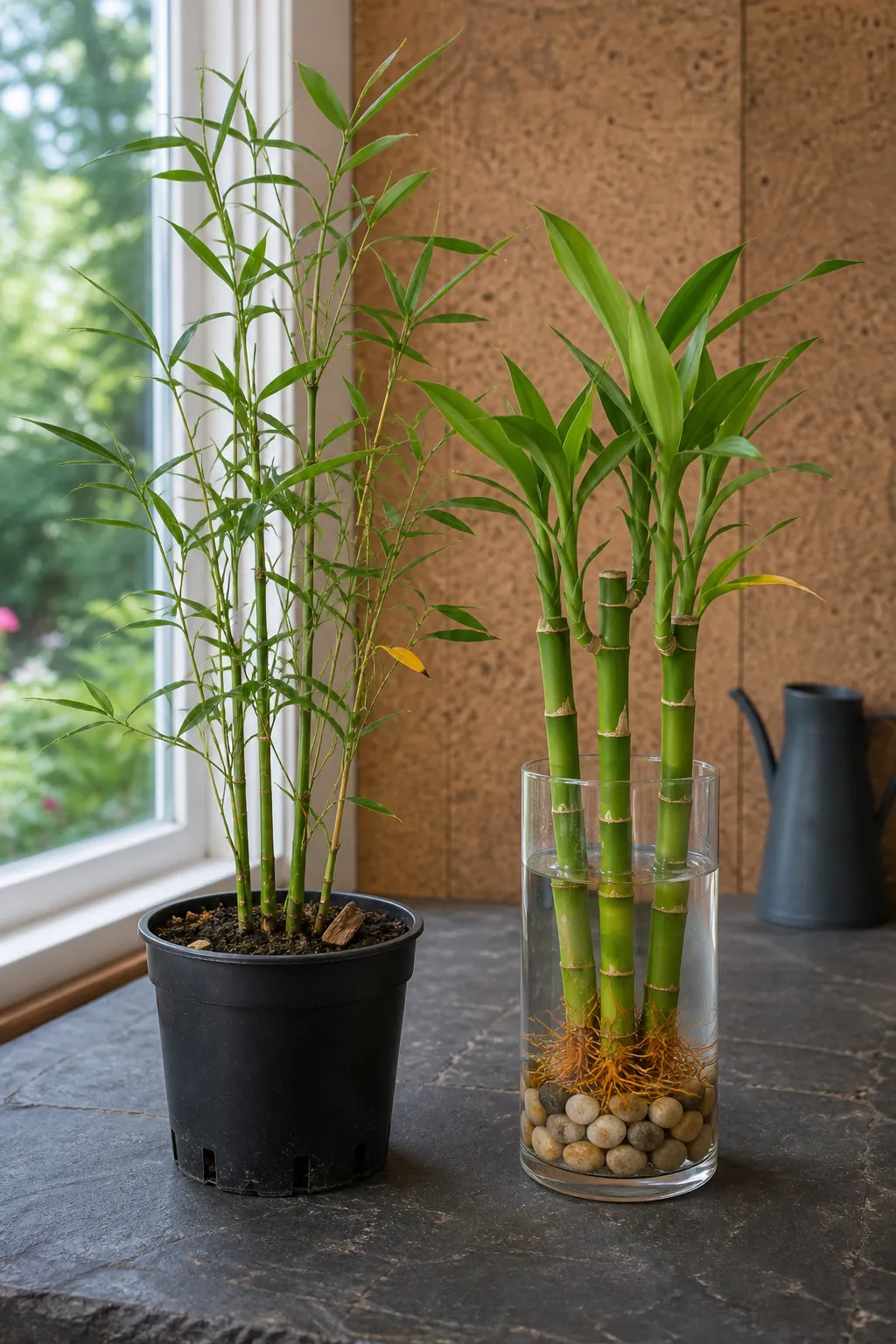
True bamboo is a grass that grows from underground rhizomes and produces jointed canes with branches and narrow leaves. Lucky bamboo is Dracaena sanderiana, a tropical foliage plant often sold as straight or curled green stalks in a glass vase. It can grow in water or airy soil, but it is not a true bamboo. This difference changes how you interpret standing water, root color, light, and winter exposure.
Outdoor true bamboo usually wants more light and a consistently moist but draining root zone. Indoor lucky bamboo prefers bright indirect light and may burn in strong window sun. If you cannot identify the species, examine how the stems branch, how the roots grow, and whether the plant was established in water or soil. Preserve its current healthy root habit while you diagnose it.
Read the Damage Pattern Before You Water
A dry plant often has light, pulling soil, curled leaves, crisp edges, and a root ball that has separated from the pot wall. An overwatered soil grown plant feels heavy for days, may smell stale, and can develop soft dark roots. Water culture lucky bamboo can live with submerged roots, but cloudy water, slime, odor, or a soft yellowing stalk signals poor conditions rather than healthy hydration.
One older yellow leaf may be normal. Widespread yellow bamboo leaves, rapid leaf drop, or discoloration moving through a stalk deserves investigation. Sun damage usually appears strongest on the exposed side, while salt stress often shows at tips and margins. Use moisture, root texture, smell, and the location of damage together instead of making a diagnosis from color alone.
Correct Dry Soil Without Flooding It
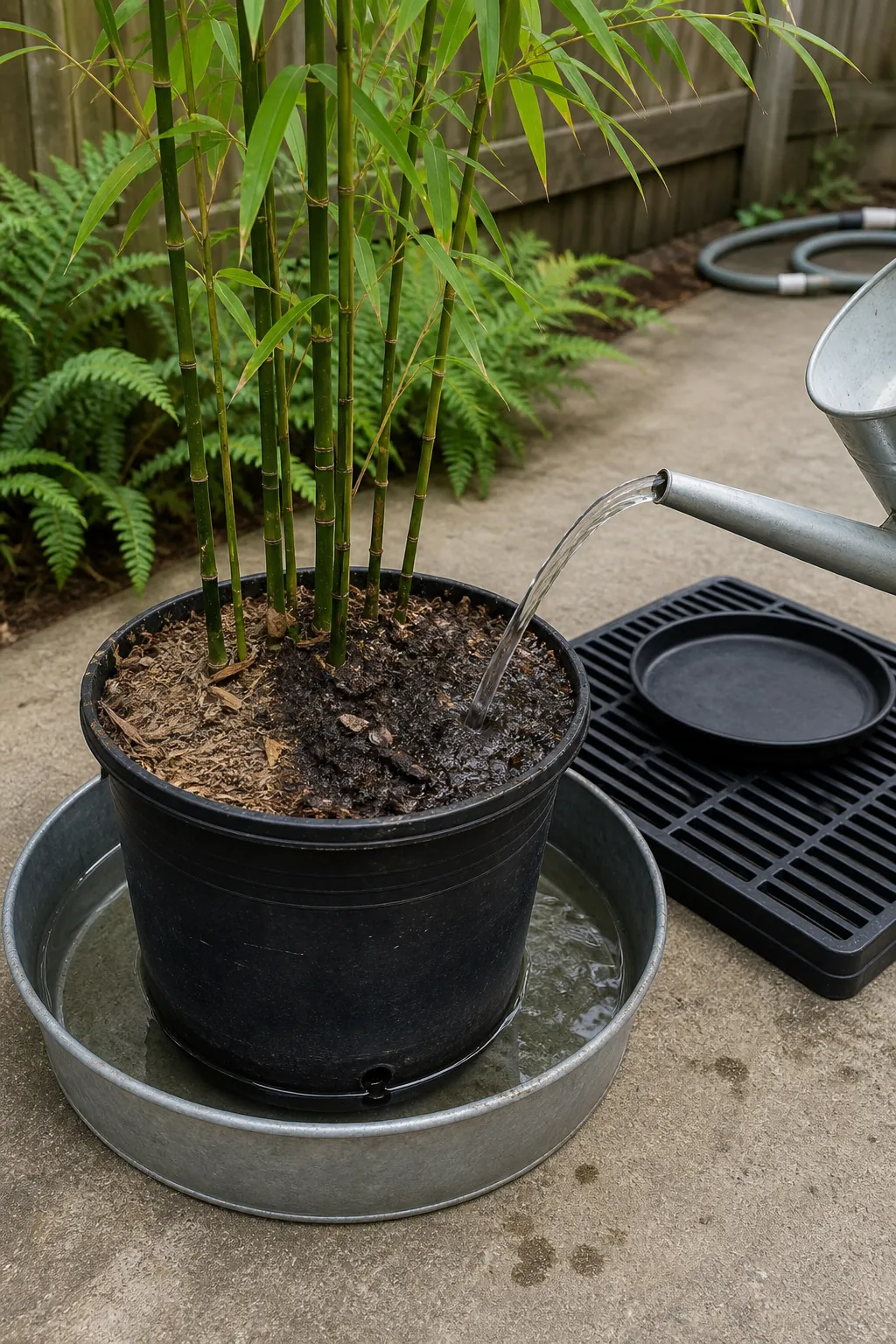
If dry mix has pulled from the container, pour water slowly across the surface in several passes. Let each pass soak in, then continue until the entire root zone is evenly moist and excess water drains. A severely dry root ball may need a brief soak in a basin, followed by complete drainage. Do not leave the pot standing in the basin once the center has rewetted.
Afterward, check moisture rather than following the same fixed day each week. Outdoor bamboo in heat may use water quickly, while a large indoor pot in cool conditions may remain damp much longer. Mulch can reduce drying for an outdoor container, but keep it away from cane bases and make sure it does not hide saturated soil.
Stop Root Rot and Restore Air
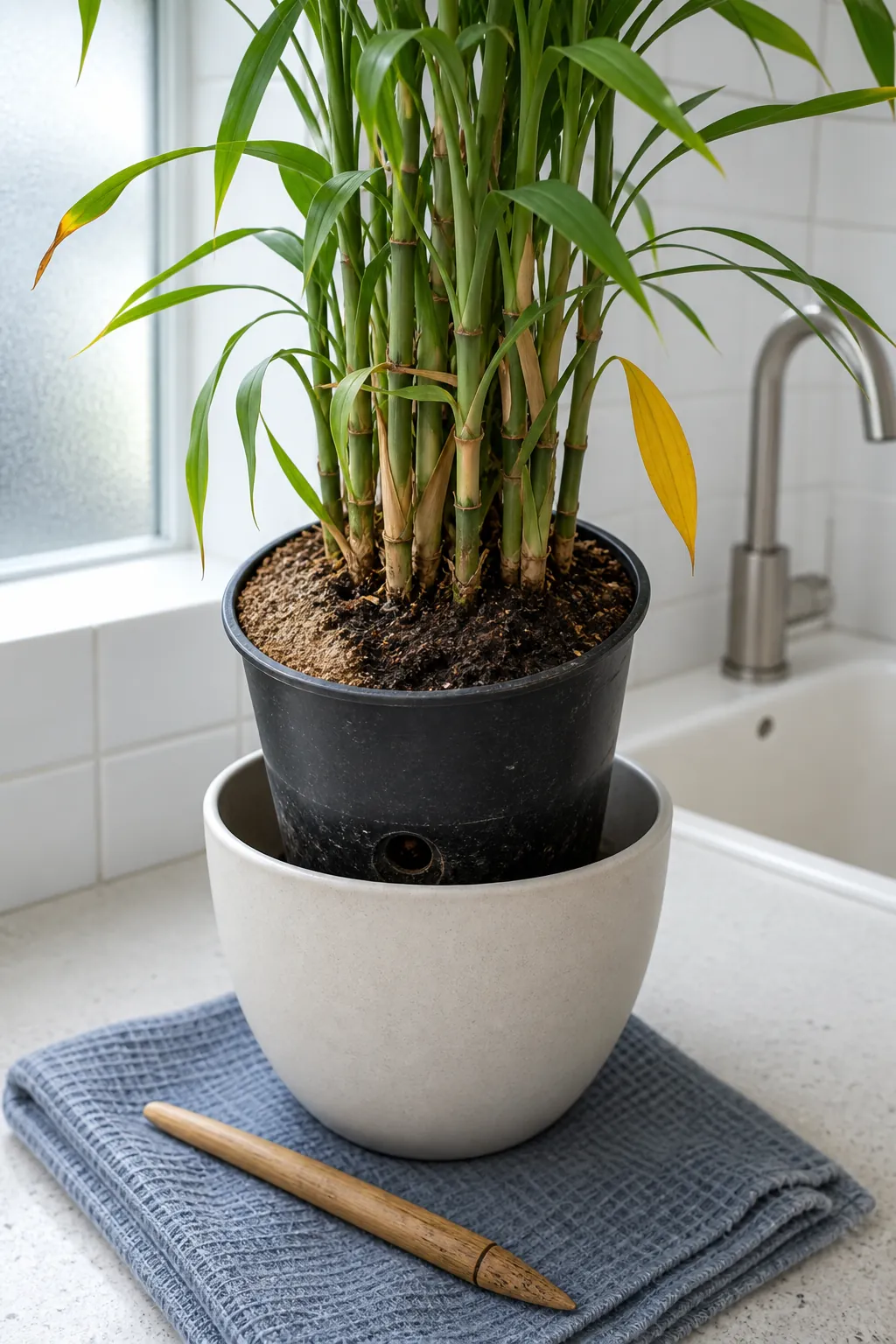
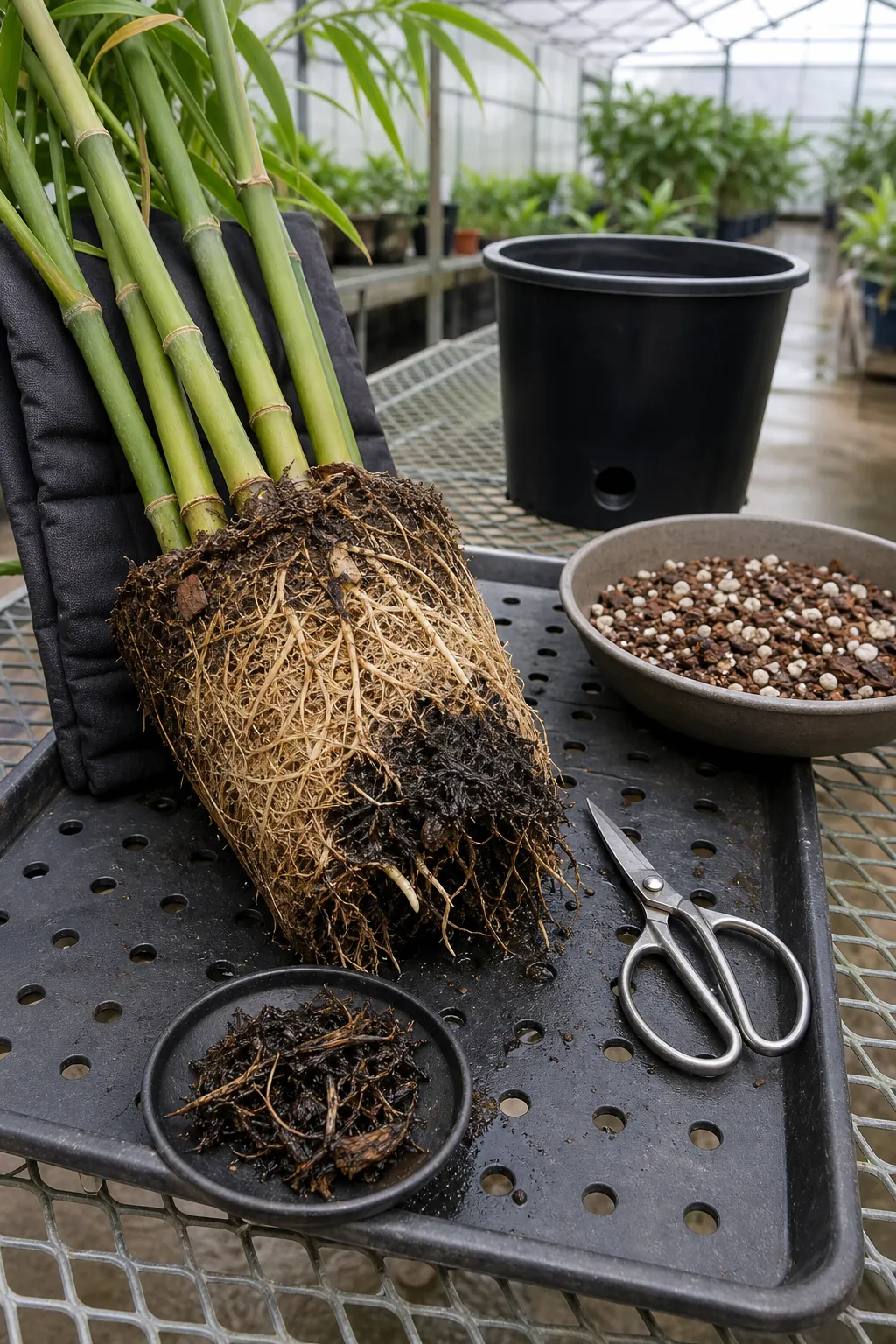
When soil stays wet, remove the inner pot from any decorative cover and empty the saucer. Confirm that drainage holes are open. If the smell, softness, or decline suggests bamboo root rot, slide out the root ball and inspect it. Firm roots should remain. Trim only mushy, hollow, or foul tissue with a clean tool, then use fresh airy mix in a pot that is not excessively large.
Do not add a stone layer beneath wet soil and expect it to create air. The mix itself must drain, and water must have a clear exit. Keep the crown at its original depth and water once to settle the replacement mix. After that, wait until moisture has begun to decline before watering again. An overwatered bamboo needs oxygen around surviving roots, not an immediate period of complete drought.
Refresh Lucky Bamboo Water and Its Container
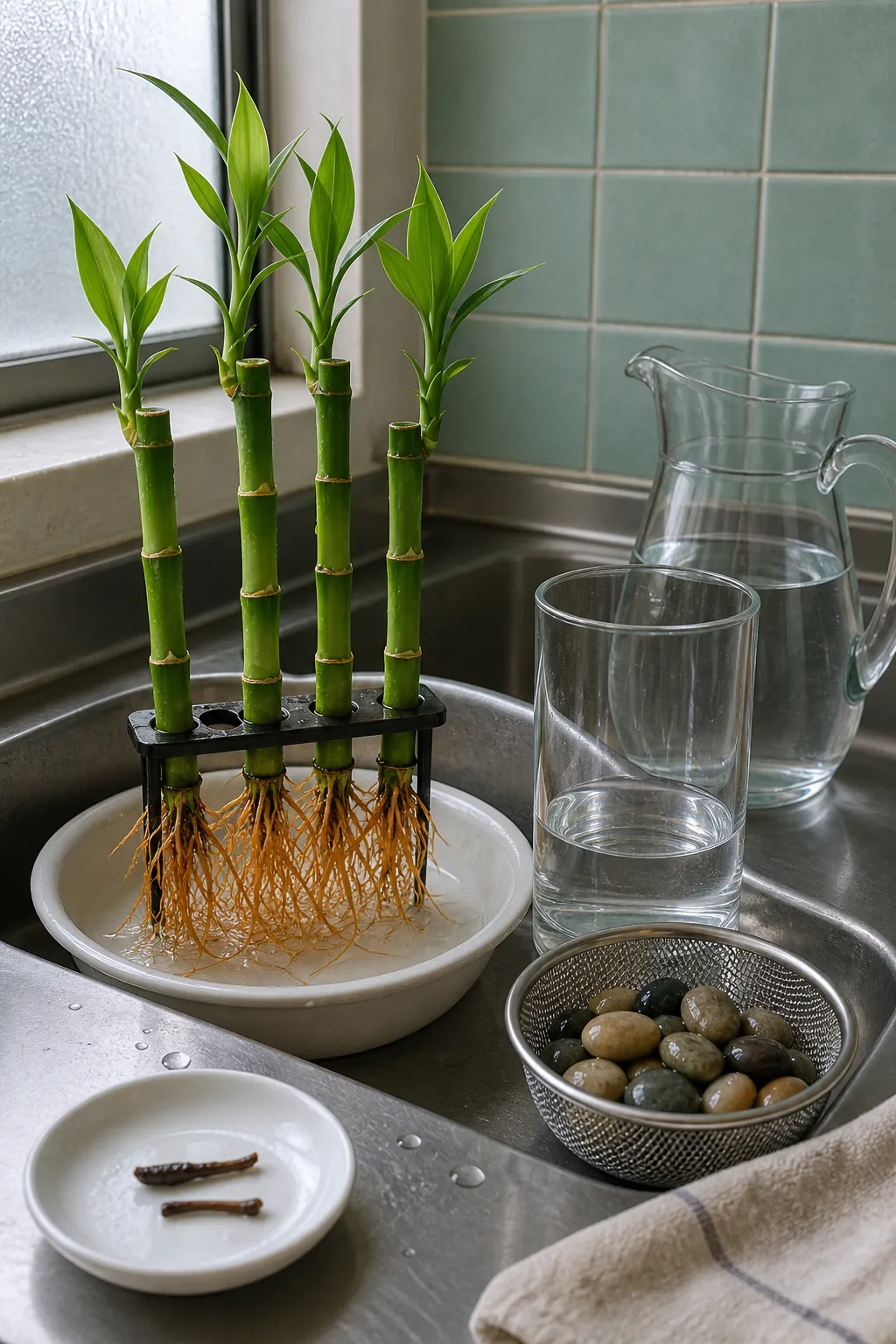
For lucky bamboo grown in water, lift the stalks out and rinse the roots gently with clean room temperature water. Wash the vase and support pebbles without leaving soap residue. Remove slimy dead roots, but preserve firm roots even when their natural color is not bright white. Refill with filtered or distilled water if local tap water has been causing repeated tip burn or mineral residue.
Cover the roots without submerging most of the stalk. Replace the water when it becomes cloudy and clean the vessel before buildup becomes heavy. Lucky bamboo is a light feeder, so do not add fertilizer during a rescue unless a verified deficiency is the real issue. Excess salts can worsen damaged roots and create more yellow or brown edges.
Reset Light Temperature and Feeding
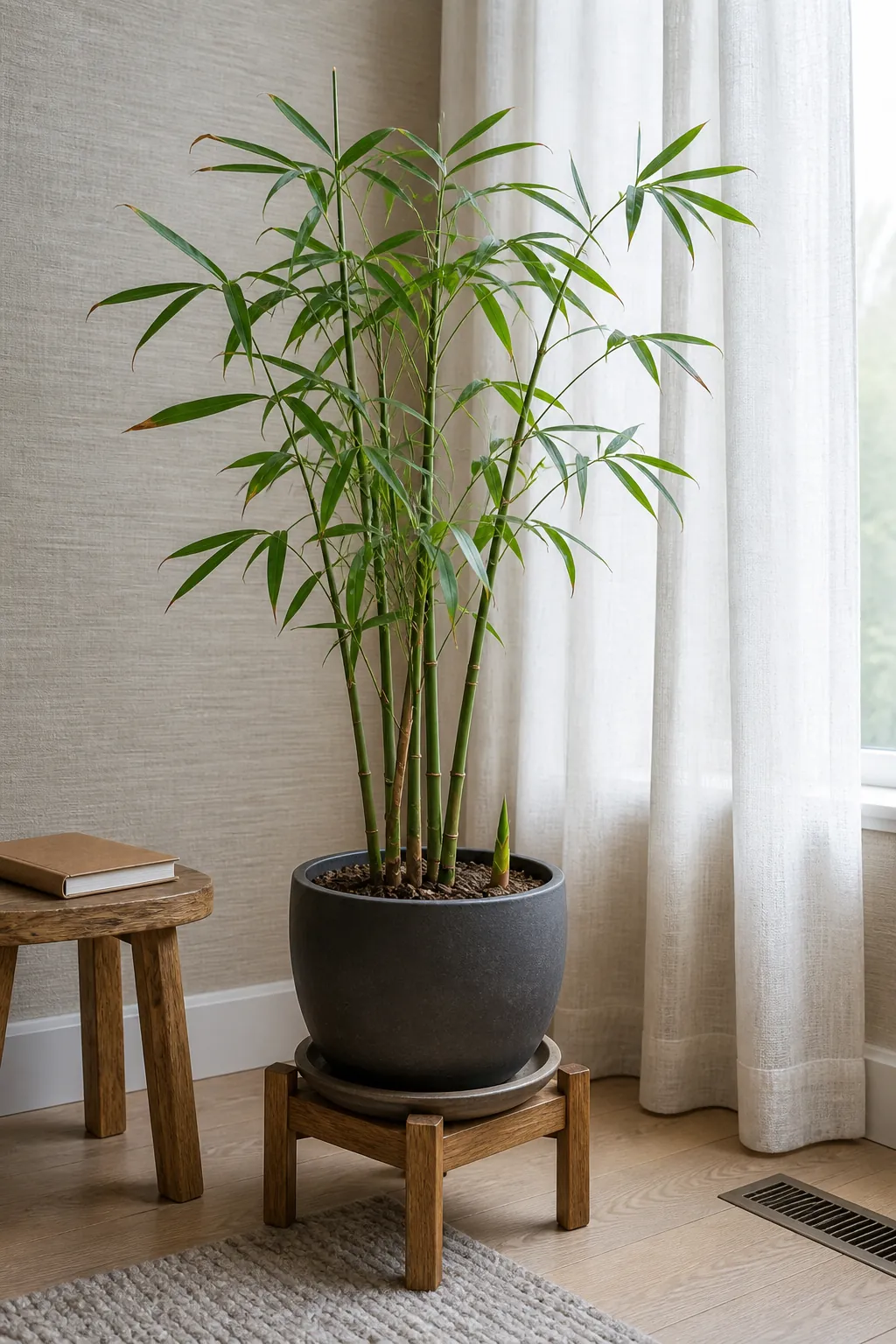
Move lucky bamboo out of harsh direct sun but keep it in bright indirect light. Move a shade stressed outdoor bamboo gradually rather than sending weakened foliage into intense heat. Protect both from sudden cold, heating vents, and drying drafts. A stable position with usable light is better than moving the plant to a new window every few days.
Pause fertilizer while roots are damaged or the cause remains uncertain. White crust on soil, a vase rim, or a planter can indicate mineral accumulation. Flush a draining soil grown plant with suitable water and let it drain fully. Resume a modest feeding routine only after firm new growth shows that roots are functioning again.
Remove Dead Tissue and Protect Living Growth
A fully yellow leaf will not become green again. Remove it with a clean cut where it joins healthy tissue. A lucky bamboo stalk that is yellow and soft from the base cannot heal in that section. If a firm green upper portion remains, it may be possible to cut well above the damaged area and root the healthy section separately. Keep it isolated from affected stalks while you watch for spread.
Do not remove healthy foliage simply to make the plant look tidy. Surviving green leaves help power recovery. For true bamboo, a cane that is completely dead can be cut near its base, while living canes should remain. Clean the cutting tool between affected areas so the rescue does not move decay from one section to another.
Judge Recovery by New Growth
Old scars, brown tips, and yellow sections remain visible after the cause is fixed. Look instead for a stable moisture cycle, firm stalks, roots without odor or slime, and leaves that emerge green. A badly stressed plant may pause before producing growth, so avoid another major change merely because it does not transform in a few days.
Inspect weekly and keep notes if the pattern is hard to read. Record light, watering, root condition, and any change in the affected area. If softness continues moving through a stalk or rot returns in fresh mix, salvage healthy material and discard tissue that cannot recover. Successful indoor plant rescue is measured by what grows next, not by forcing damaged leaves to look new.