A pedestal sink saves visual and floor space by giving up the cabinet that usually catches daily supplies. The answer is not to fill every open inch beneath it. A better plan protects the plumbing, keeps the basin comfortable to use, and moves each category to the closest safe surface.
Measure the Plumbing and Walking Zone
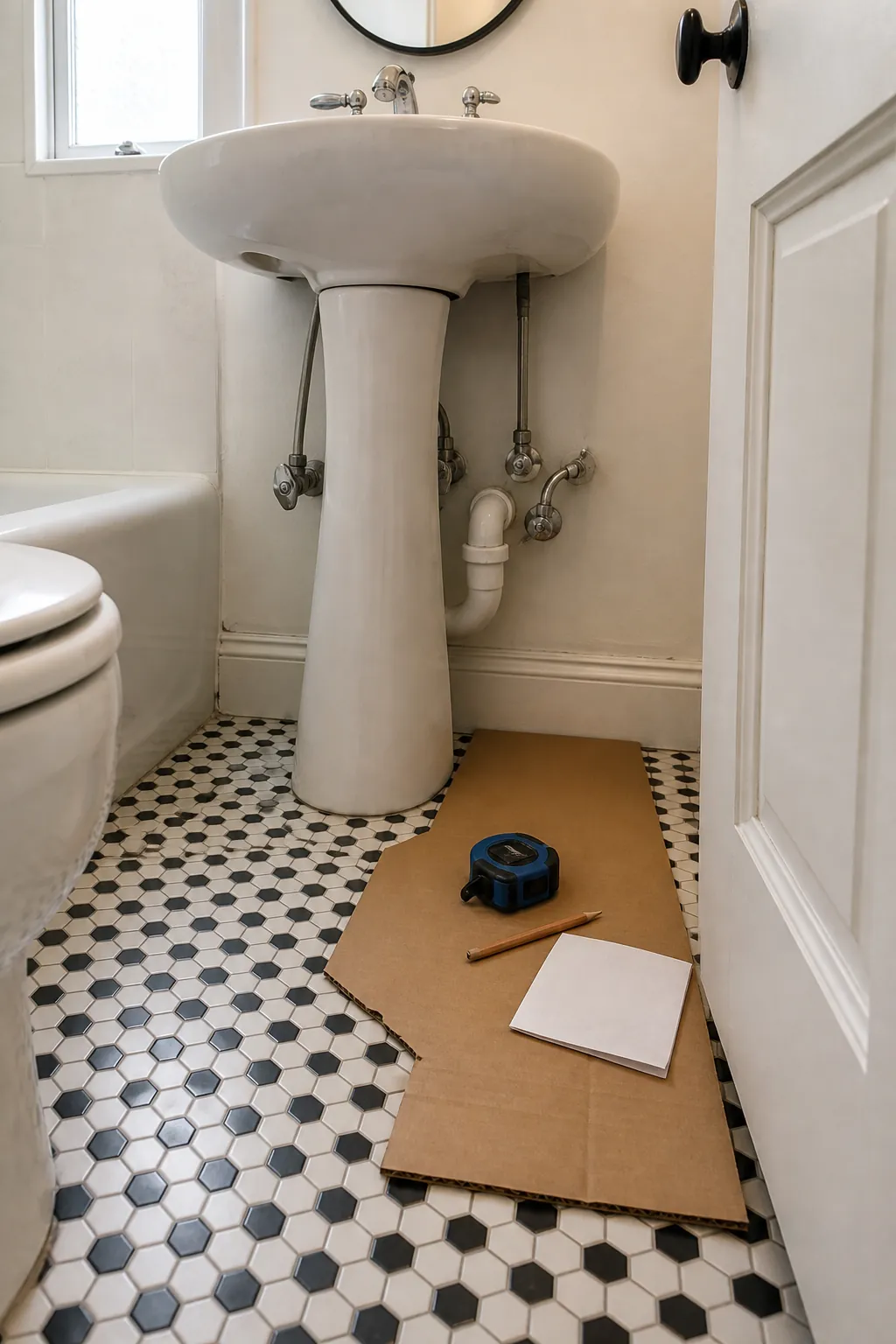
Record the width and depth around the pedestal at several heights because bases, traps, and supply lines rarely form a simple rectangle. Mark shutoff valves, pipe joints, wall access points, and the space a plumber would need to reach them. Open the bathroom door and trace the route to the toilet or shower before placing any storage.
Use a cardboard footprint to test a cabinet or cart at floor level. Make sure knees, toes, cleaning tools, and mobility aids still have room. Any pedestal sink storage idea that hides a leak or narrows the path is too large. Preserve enough open floor to spot moisture and wipe around the base.
Create a Shallow Daily Shelf
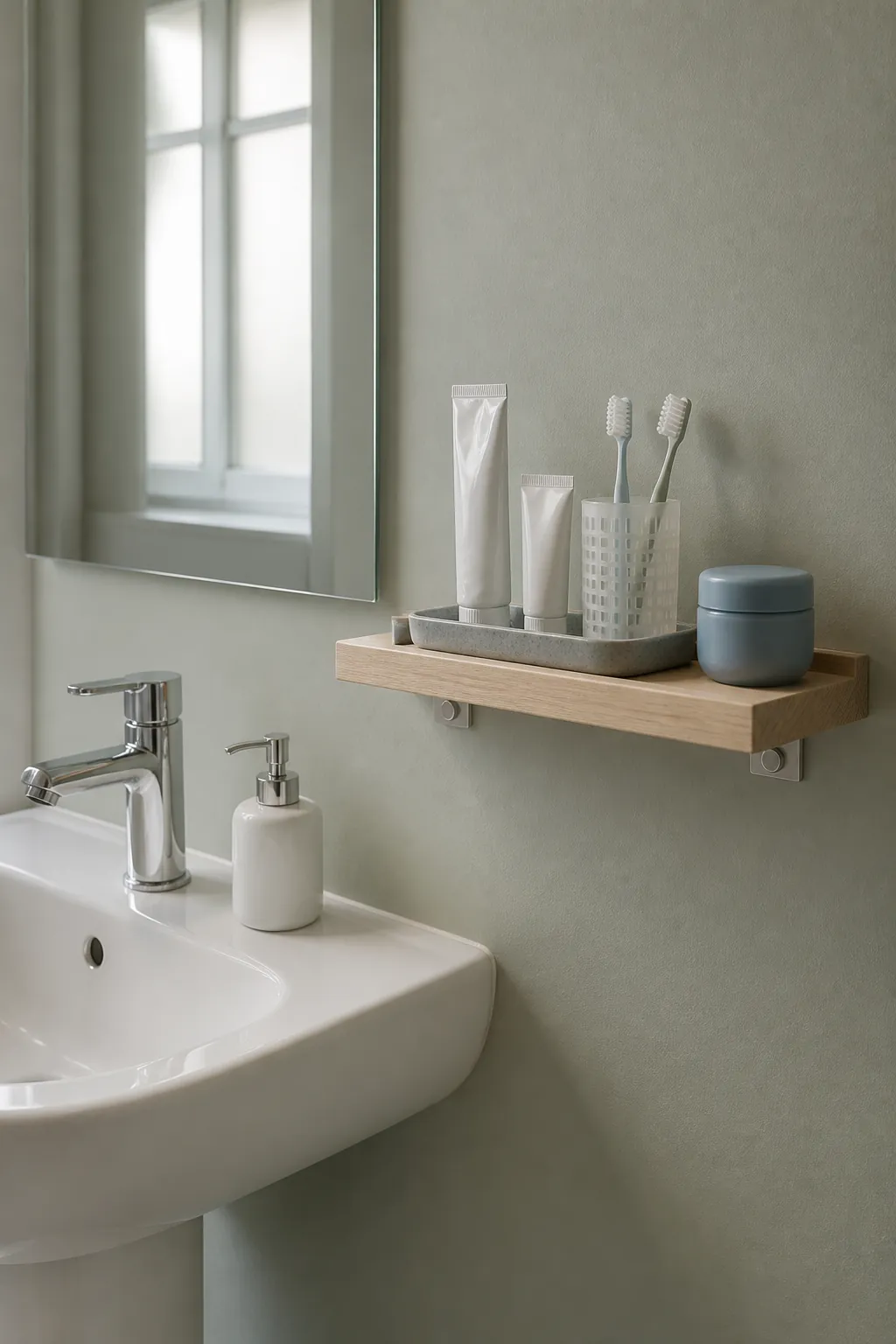
An over sink shelf can hold the few products used at the basin without taking over the rim. Keep it shallow enough that users do not bump their head and position it outside the direct splash path. A small lip or washable tray helps prevent narrow bottles from falling.
Store only dental care, hand soap refills, or a compact skin care routine here. Tall backups and heavy glass containers belong elsewhere. If the mirror leaves no safe wall area, a slim floating vanity shelf on a side wall may work better. Daily access improves when the shelf holds one routine instead of the whole bathroom inventory.
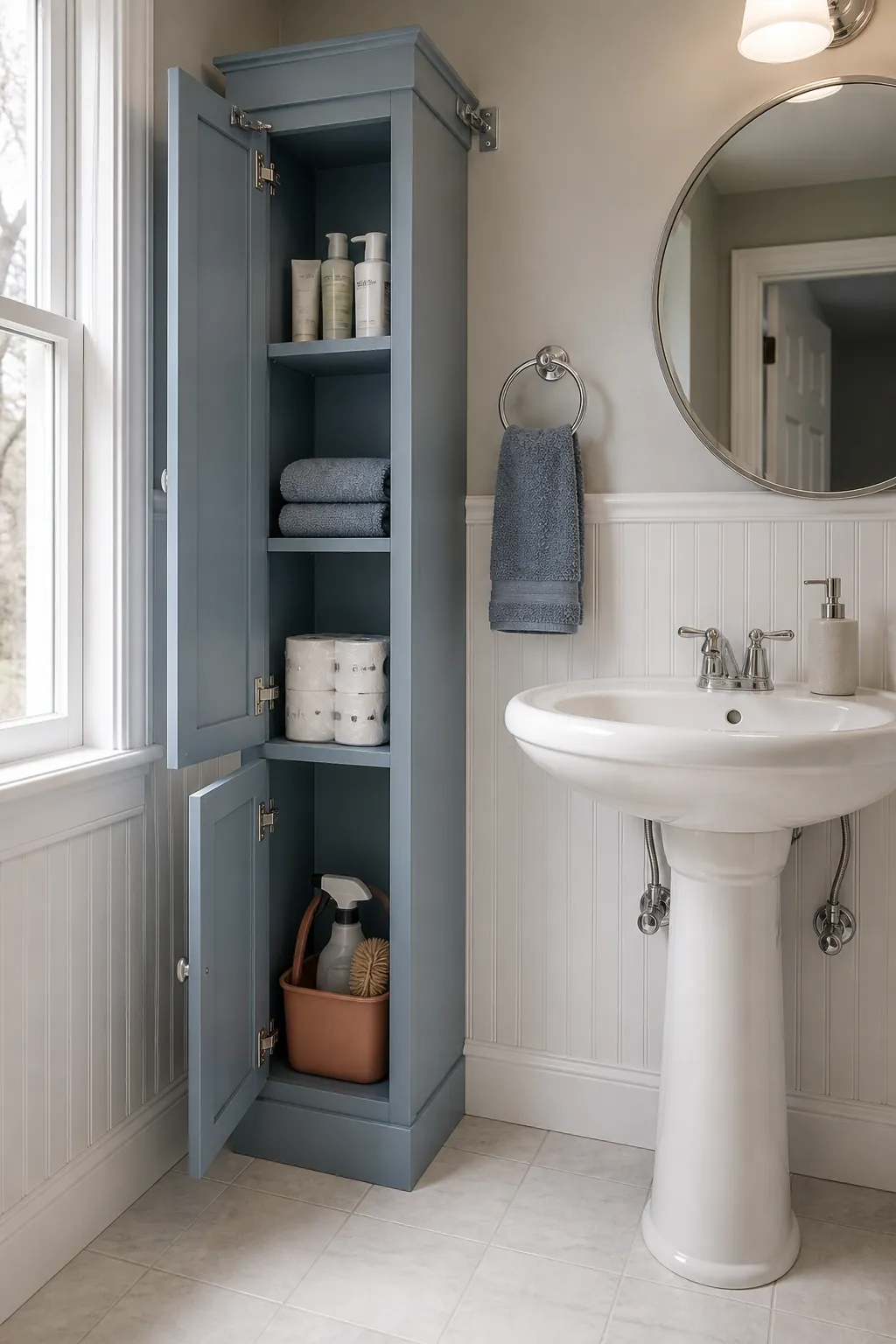
Place a Slim Cabinet Beside the Sink
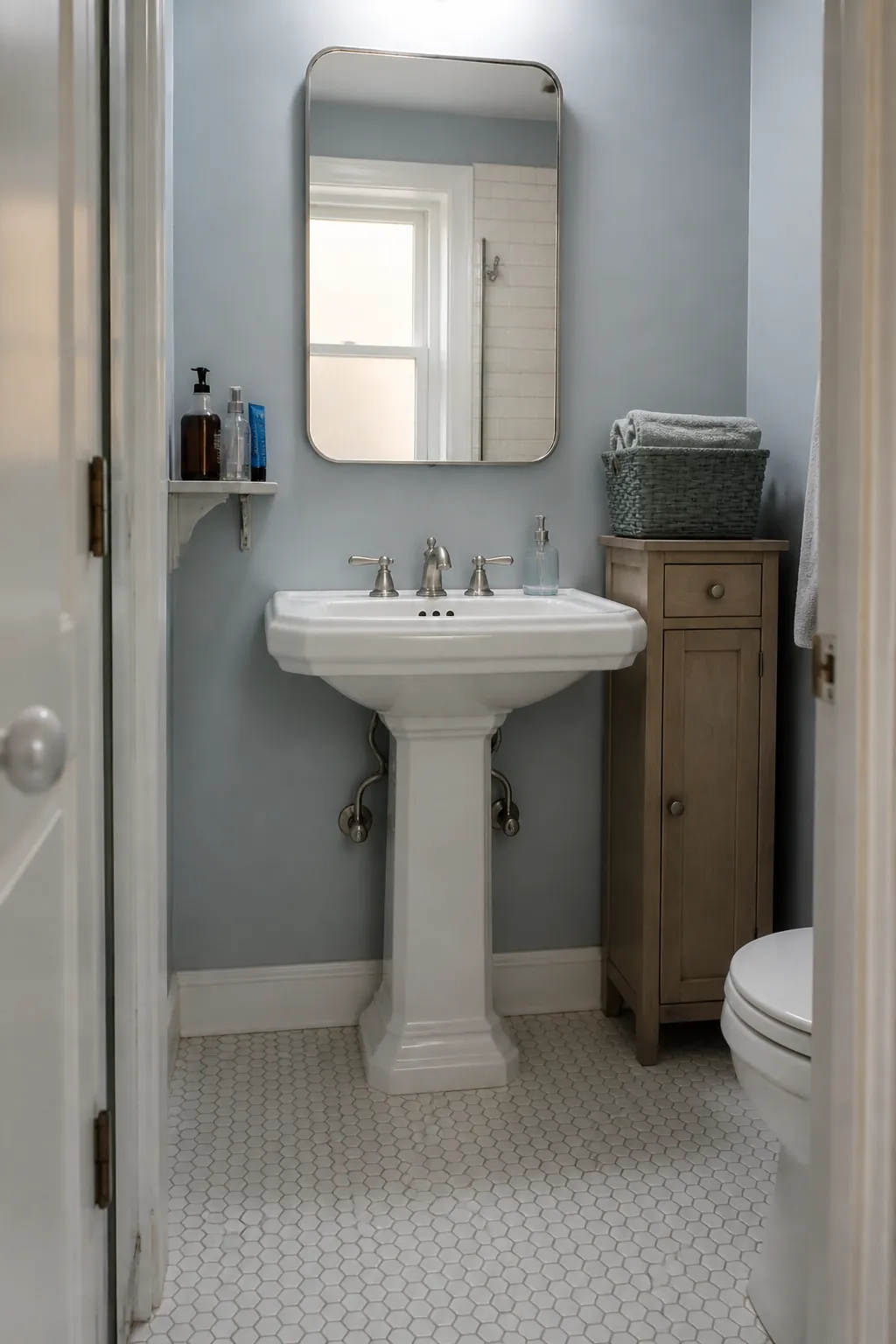
A slim bathroom cabinet can add closed storage without wrapping around the pedestal or hiding pipes. Choose a location that leaves the basin edge, towel, outlet, and door fully usable. Anchor tall furniture according to the maker and the wall construction so it cannot tip in a tight room.
Give eye level shelves to daily products, lower shelves to toilet tissue and towels, and a separate washable bin to cleaning items. Keep the top mostly clear so it does not become a second crowded counter. A narrow cabinet works because its categories are vertical, not because it can hold every spare.
Use a Rolling Cart as Movable Storage
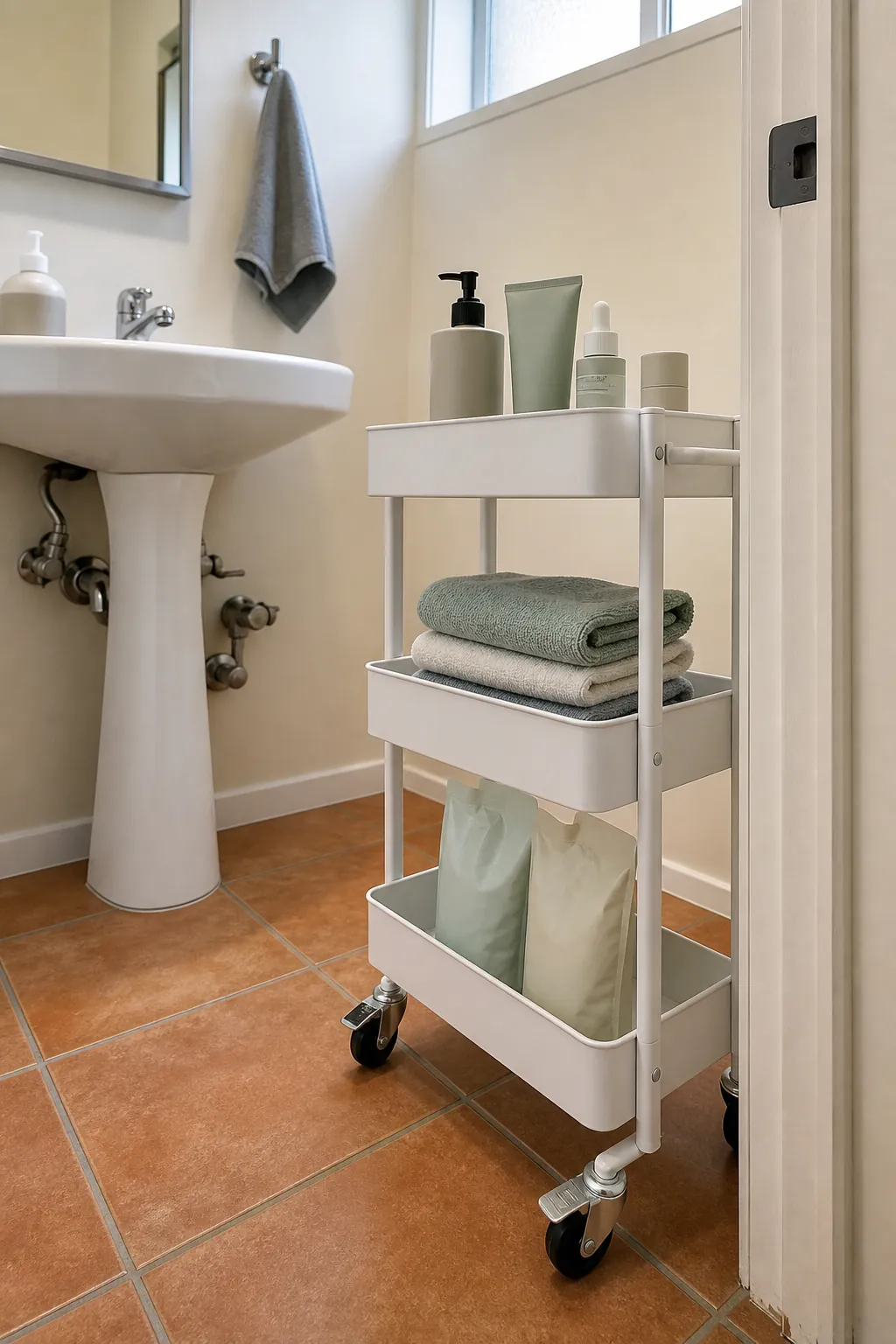
A rolling bathroom cart is useful when storage must move for cleaning or plumbing access. Select a narrow model that fits beside the sink rather than wedging behind the pedestal. Locking casters help it stay put during a routine, while open sides make dampness easier to notice.
Keep daily skin care on the top tier, folded cloths in the middle, and lightweight backups at the bottom. Avoid loading it with glass near an active doorway. Pull the cart forward to clean the floor and inspect supply lines regularly. A cart is only flexible when it can roll out without unloading half its contents.
Hide Light Storage With a Washable Sink Skirt
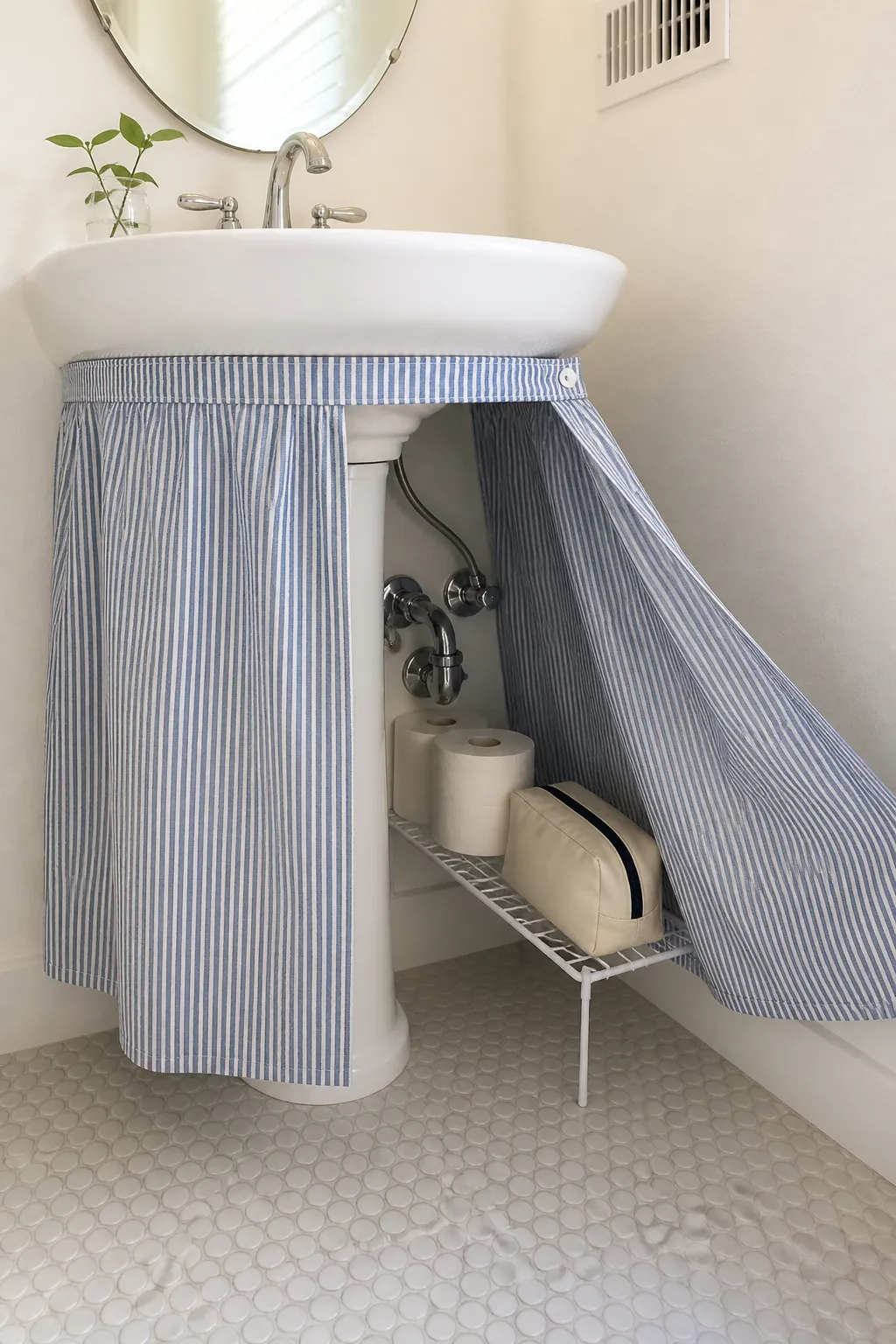
Sink skirt storage can soften exposed plumbing and conceal one low shelf or a few baskets. Choose washable quick drying fabric and a removable attachment suited to the sink material. Leave valves and joints easy to reach, and never wrap fabric around warm equipment, outlets, or active leaks.
Keep the hem above the floor so it does not wick mop water or collect dust. Use the hidden area for sealed paper goods or lightweight toiletries, not loose chemicals or medicines. Open the skirt during cleaning and after heavy steam so moisture cannot remain trapped. Concealment should never prevent inspection.
Keep Dry Reserves in One Floor Basket
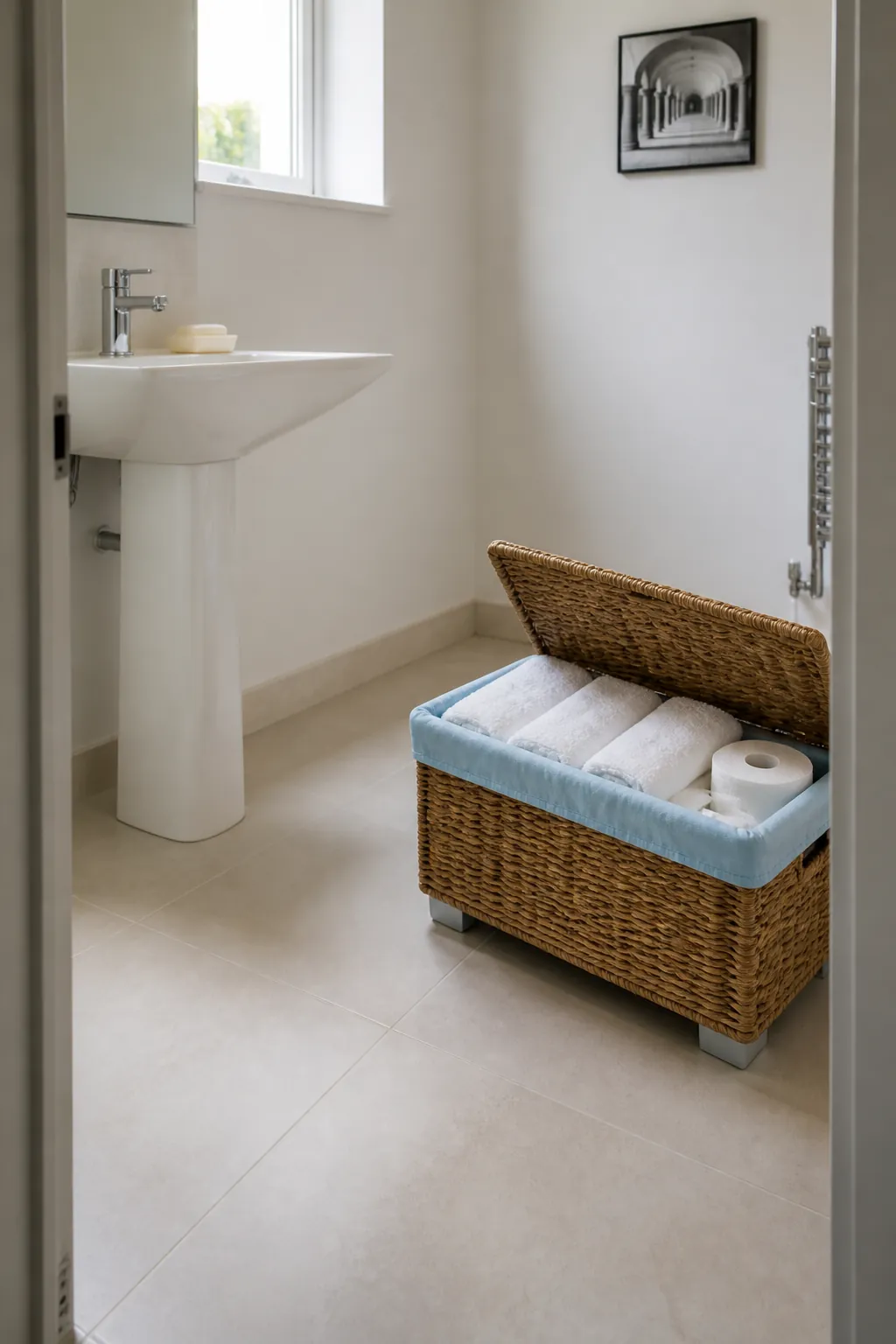
Small bathroom basket storage works best for dry categories that can leave the sink area entirely. One lidded basket can hold spare toilet tissue or clean hand towels in a ventilated corner. Add a washable liner and raise the basket from any floor that often stays wet.
Do not stack baskets around the pedestal or use them to disguise a growing product supply. Choose a capacity limit, check the contents before shopping, and keep the cleaning route open. Move the basket out whenever you inspect pipes or wash the floor. The open space around a pedestal sink is part of the storage system because it preserves light, access, and room to move.