
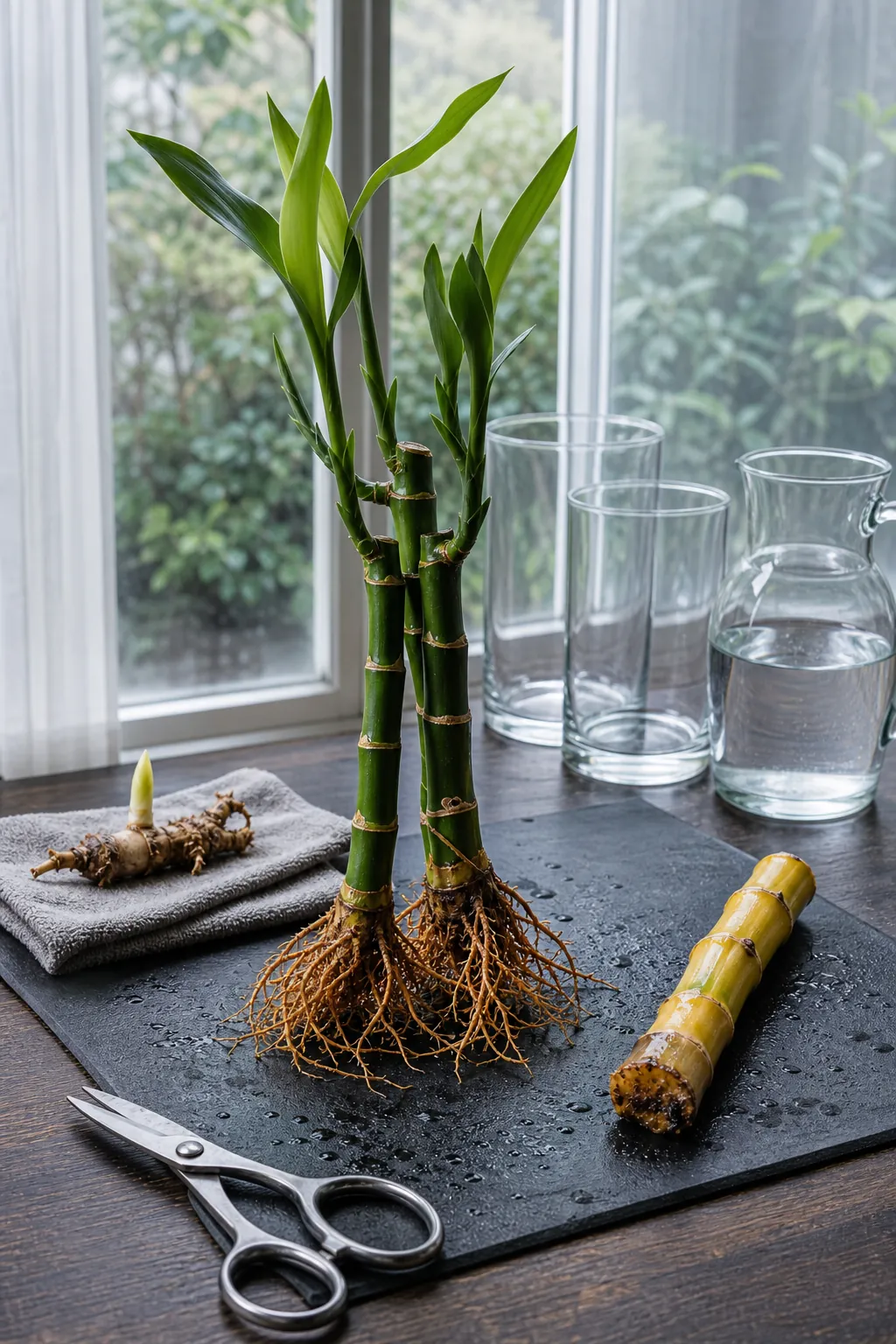
Saving a badly damaged bamboo does not always mean saving every cane or stalk. Sometimes the original base can recover. Sometimes the only living part is a green shoot that must become a new plant. The important decision is where healthy tissue ends and irreversible damage begins.
Work from the healthiest tissue outward. Firm green stems, living buds, flexible leaves, firm roots, and sound rhizomes are worth protecting. A completely yellow lucky bamboo stalk, a hollow dry cane, or a soft foul base will not turn healthy again. Removing those sections early can give the remaining plant a cleaner environment and a realistic chance.
Find the Parts That Are Still Alive
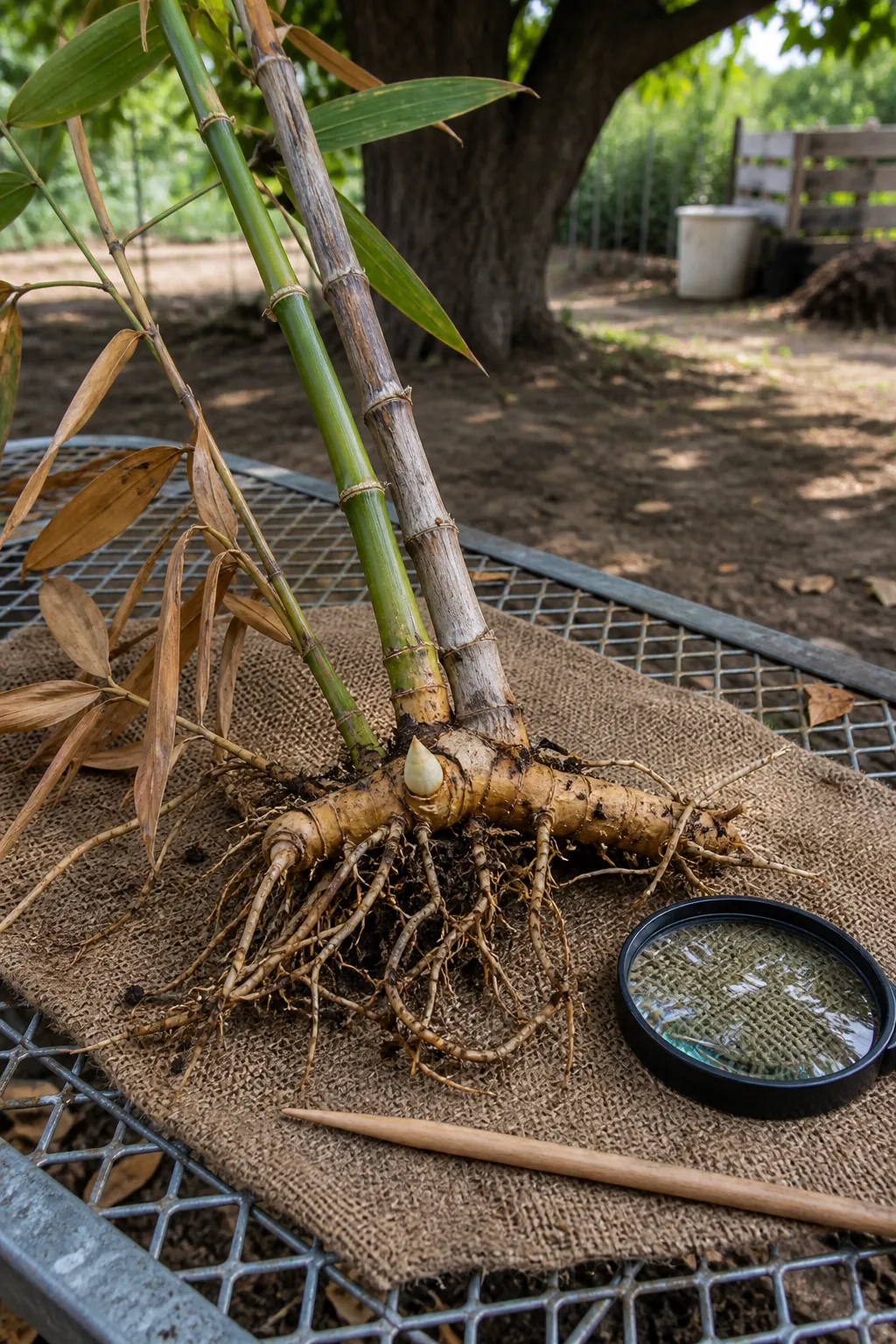
Begin with touch and structure, not color alone. A viable stalk or cane feels firm. A living true bamboo rhizome feels solid and may carry pale roots or a visible bud. Healthy lucky bamboo roots can range from pale to orange or reddish brown, but they should not feel slimy or collapse when touched. Scratch only a tiny questionable area if necessary and stop as soon as living green tissue appears.
Brown bamboo leaves can follow drought, cold, sun, salt buildup, or root loss. They do not prove the entire plant is dead. Follow each affected branch to its cane, then inspect the base and root zone. If the leaves are dry but the cane, rhizome, or stalk remains firm, correct the cause before removing large amounts of living material.
Separate the Survivor From the Source of Decline
Remove a failing inner pot from any decorative container and empty standing water. In a grouped lucky bamboo arrangement, take out a fully yellow or soft stalk rather than leaving it pressed against firm green neighbors. Rinse loose residue from surviving roots and move them into a clean temporary vessel while you wash the original vase or prepare a draining pot.
Keep suspect material away from healthy cuttings and clean the blade between cuts. Isolation also gives you a clearer view of progress. If softness continues upward on one stalk while another remains firm, you can respond to the affected plant without repeatedly disturbing the survivor.
Stabilize Roots in the Medium They Need
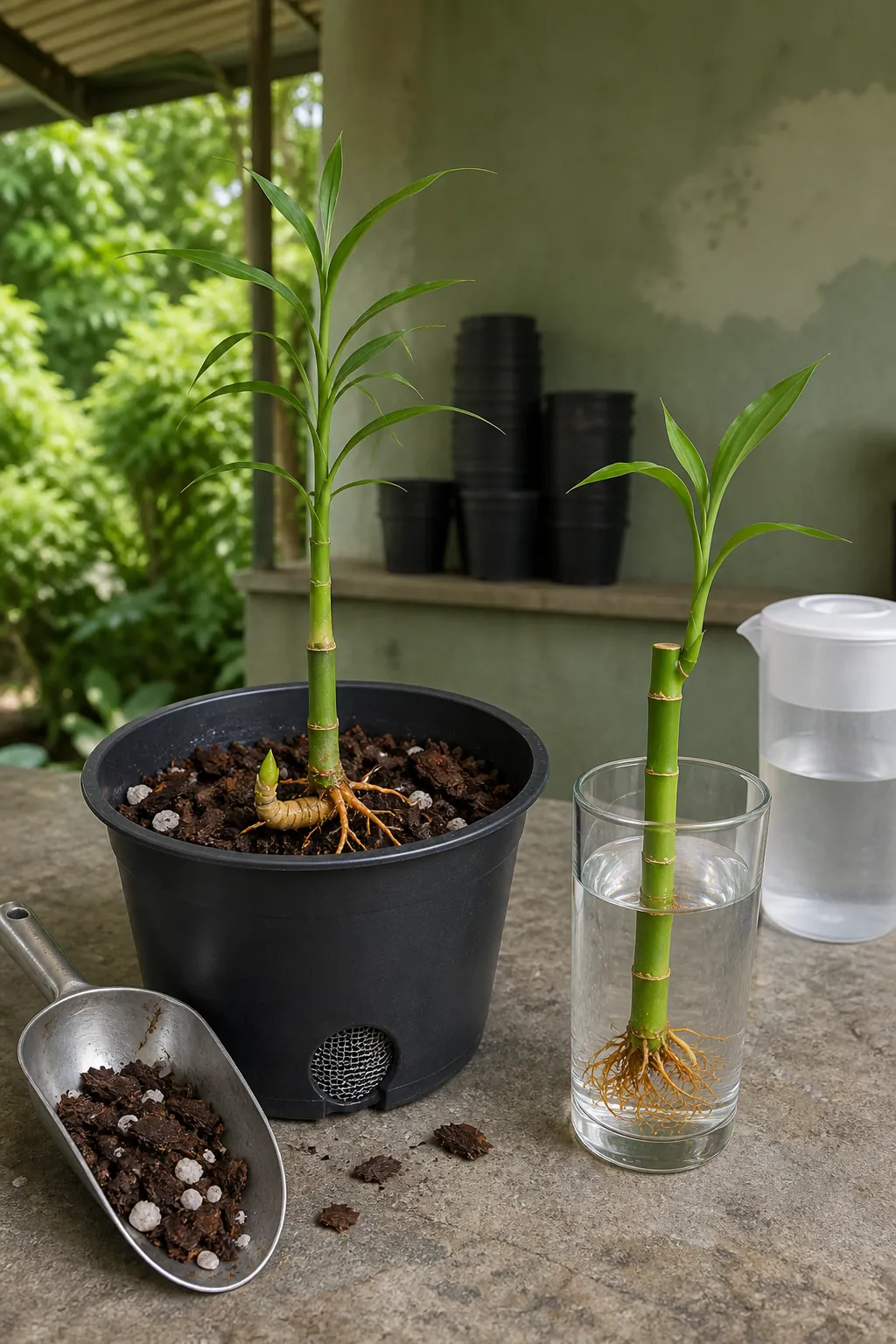
For soil grown bamboo, remove saturated collapsed mix from around damaged roots without stripping every healthy fiber. Cut away only soft or hollow sections and repot in fresh open mix at the original depth. The pot must have a clear drainage path. Water once to settle the mix, drain fully, and let the moisture begin to decline before the next watering.
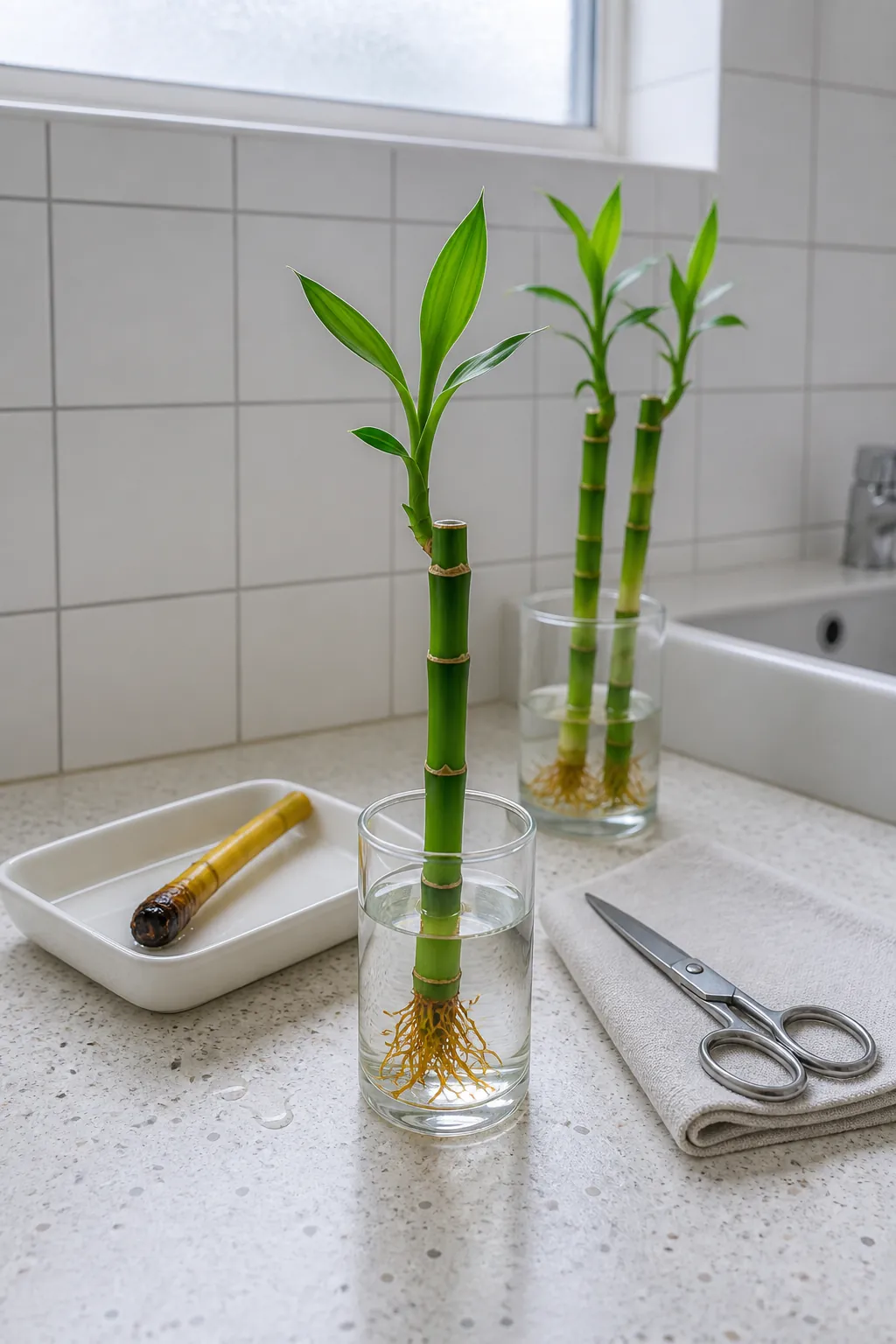
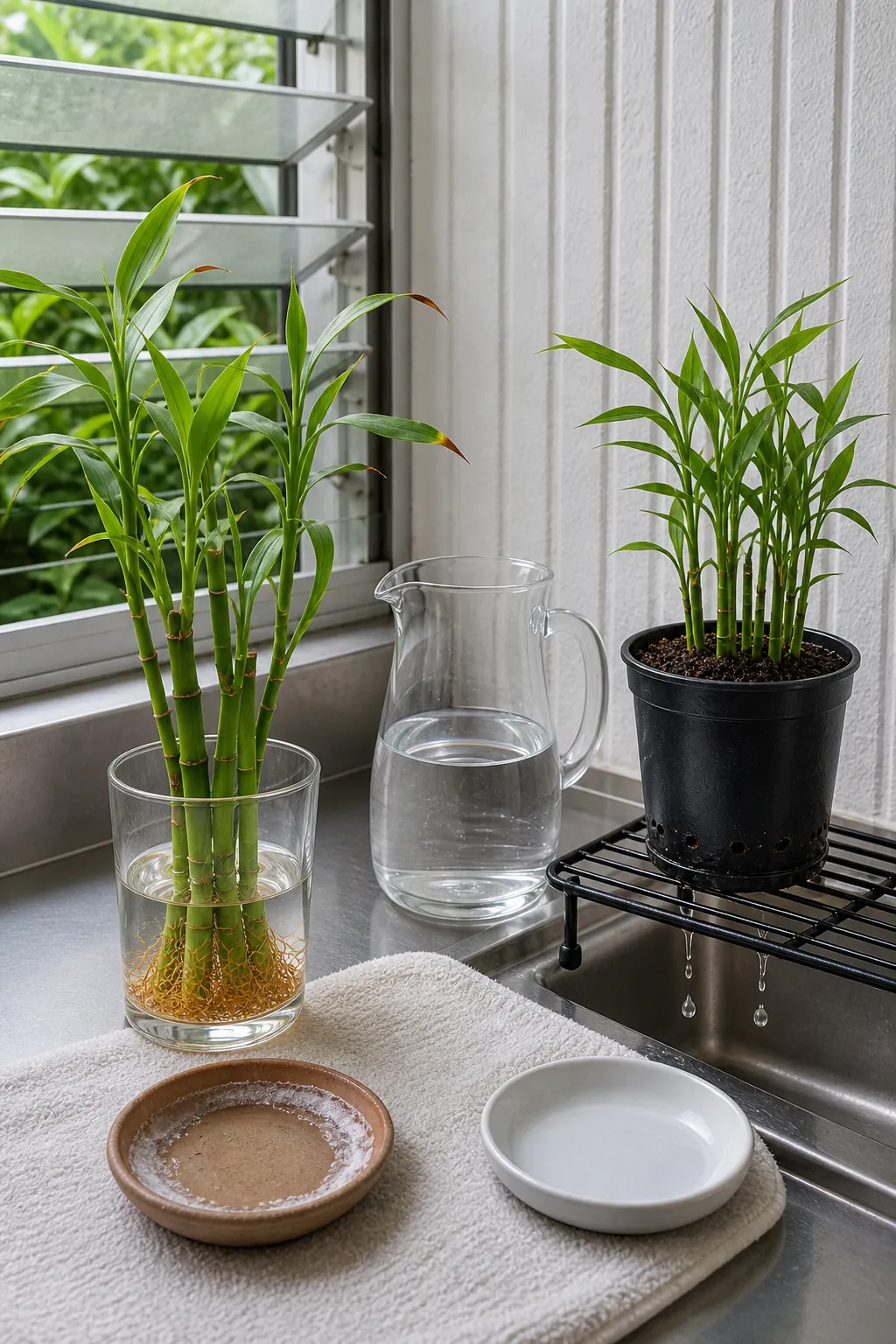
For lucky bamboo that will remain in water, clean the vessel and any support pebbles. Use water that has not been causing mineral or chemical damage, and cover the roots rather than most of the stalk. If water becomes cloudy or develops odor, replace it and clean the container. A clean root environment matters more than adding plant food during an emergency.
Salvage a Green Lucky Bamboo Shoot
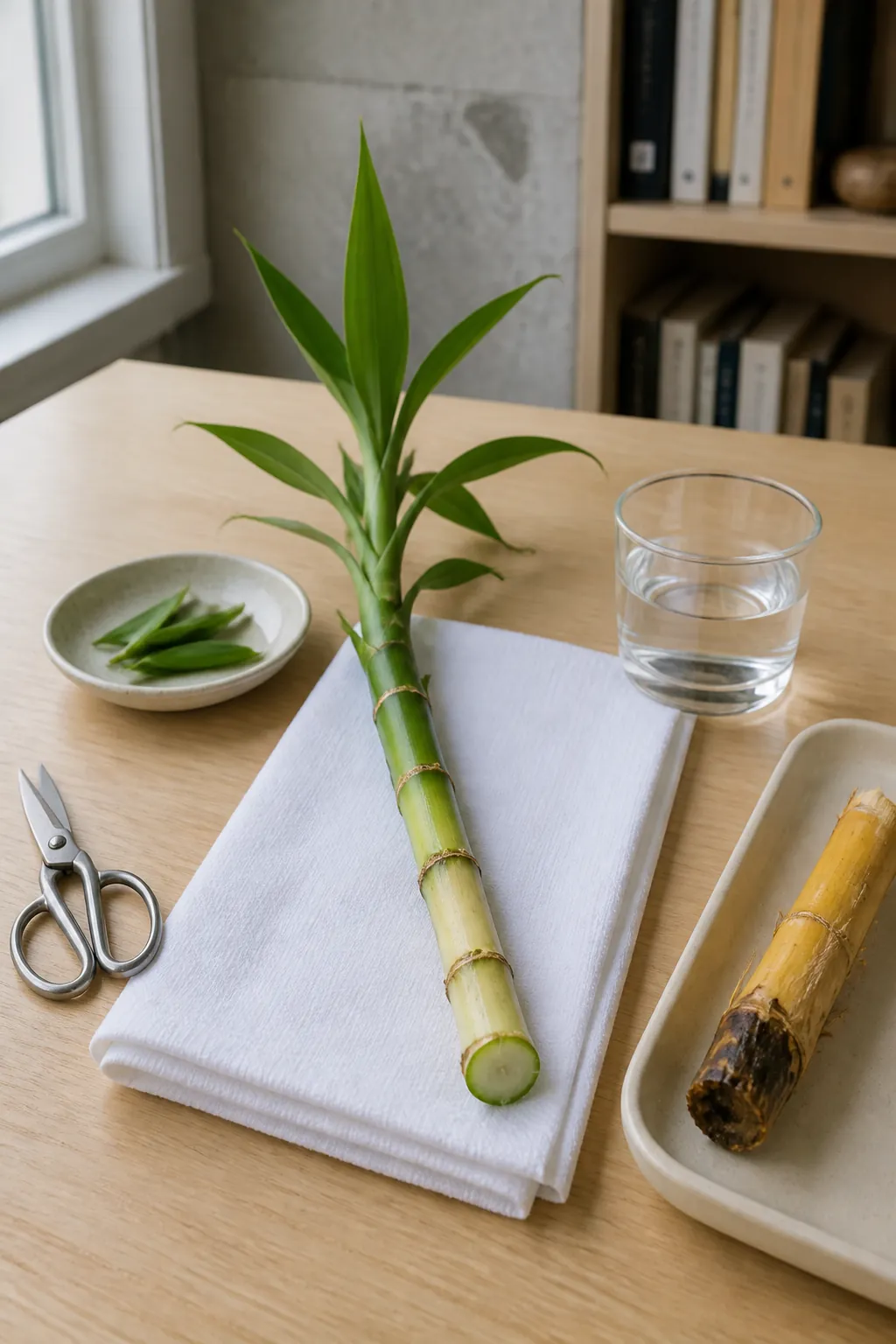
If the lower lucky bamboo stalk is soft or yellow but an upper shoot remains green, the shoot may be the part you can save. Use a clean sharp blade and cut through firm green tissue well above visible damage. Inspect the cut surface. If it shows discoloration or softness inside, clean the blade and cut slightly higher until the cross section is uniformly healthy.
Remove leaves that would sit in water and place the bare lower section in a small clean vessel. Keep foliage above the water line and provide bright indirect light. Change the water before it becomes cloudy. Rooting can be slow, and the original yellow stalk will not recover, but a firm green cutting can preserve the living plant.
Protect Viable Rhizomes on True Bamboo
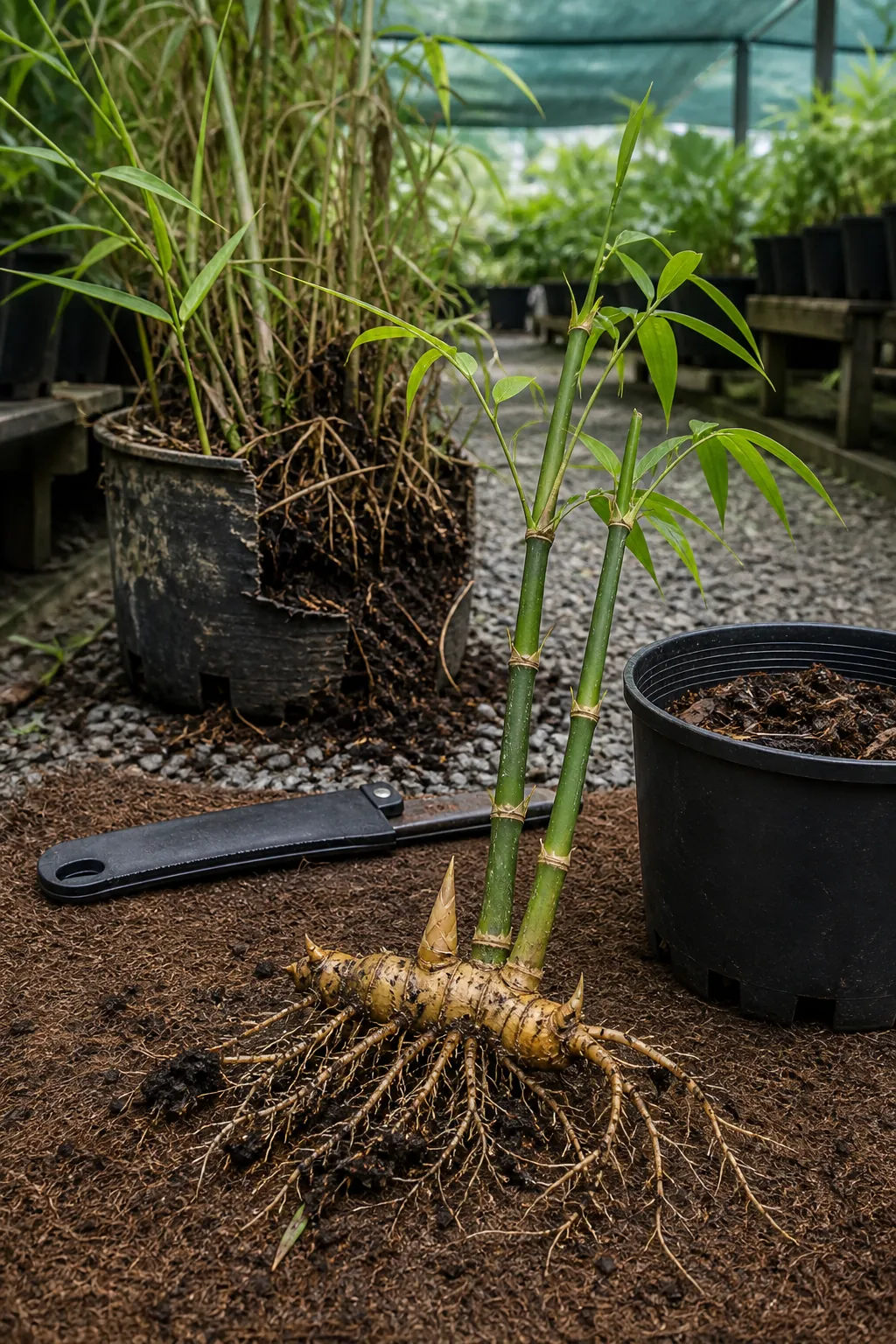
True bamboo can lose leaves or individual canes while living rhizomes remain capable of producing shoots. Remove a completely dead cane close to its base with a clean saw or pruner, but avoid cutting every cane merely because foliage looks rough. Remaining green leaves still provide energy, and the root zone benefits from shade.
If a container clump has suffered severe local rot, division can preserve a sound section. Each saved division needs a solid rhizome, viable buds, roots, and enough living top growth to support it. Pot it in draining mix, keep it evenly moist, and shelter it from drying wind while roots reestablish. A loose cane without a viable rhizome is not the same as a complete division.
Correct Water Quality and Salt Buildup
Repeated brown tips on lucky bamboo can be linked to water quality, while a white crust on a soil pot or vase signals accumulated minerals. Switch to filtered or distilled water when local tap water repeatedly leaves residue or damages sensitive foliage. Clean the vessel and begin with fresh water rather than topping up an increasingly concentrated solution.
For a draining soil grown plant, a thorough watering can move soluble salts out of the root zone, provided the container empties freely. Do not flush a pot that cannot drain. Pause fertilizer until new growth confirms that the roots are functioning, then return only to an appropriate modest feeding routine.
Give the Saved Plant a Quiet Recovery Period
Place lucky bamboo in bright indirect light. Give true bamboo light that suits its species while shielding a badly stressed container from sudden heat and wind. Keep temperatures steady and do not fertilize, repot again, or change locations repeatedly. The saved section has limited reserves and needs predictable conditions more than another intervention.
Watch for firm tissue, clean roots, and new buds or leaves. Old brown areas will remain. Mark the edge of a suspicious stalk patch with a small removable tie if you need to see whether it spreads, but do not cut into healthy tissue each time you inspect. New growth is the clearest proof that the plant has resumed normal function.
Know When the Original Plant Cannot Be Saved
A lucky bamboo stalk that is yellow or soft from end to end has no living section to root. A true bamboo division without a solid viable rhizome or living bud cannot restart merely because a dry cane remains upright. Keeping dead material in wet conditions encourages odor and decay rather than recovery.
If no firm green tissue, viable bud, sound rhizome, or healthy root remains, let the damaged plant go and clean the container before reusing it. If even one healthy section survives, focus your effort there. Saving a bamboo plant can mean preserving its living continuation, not restoring every part of the plant you started with.