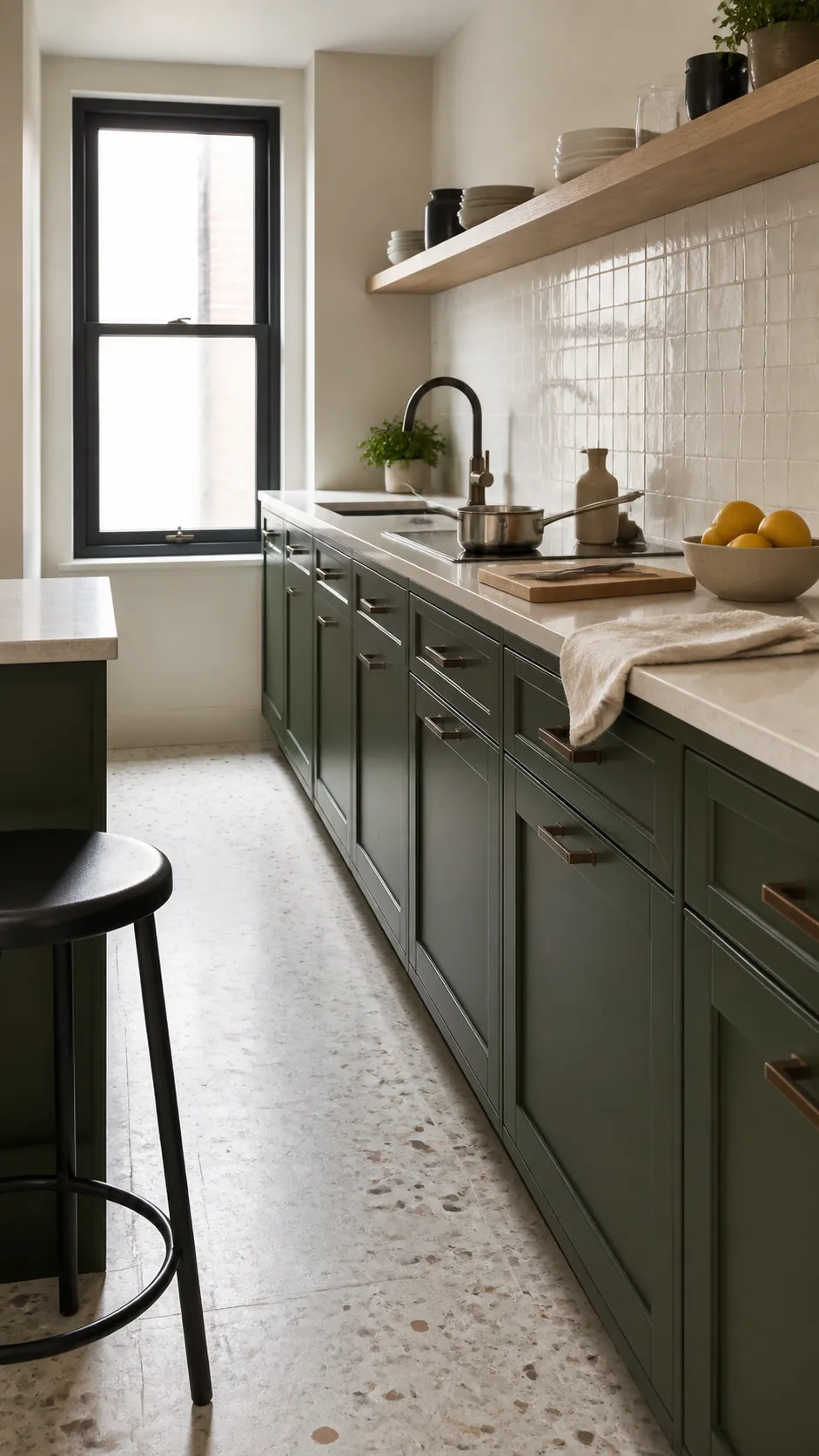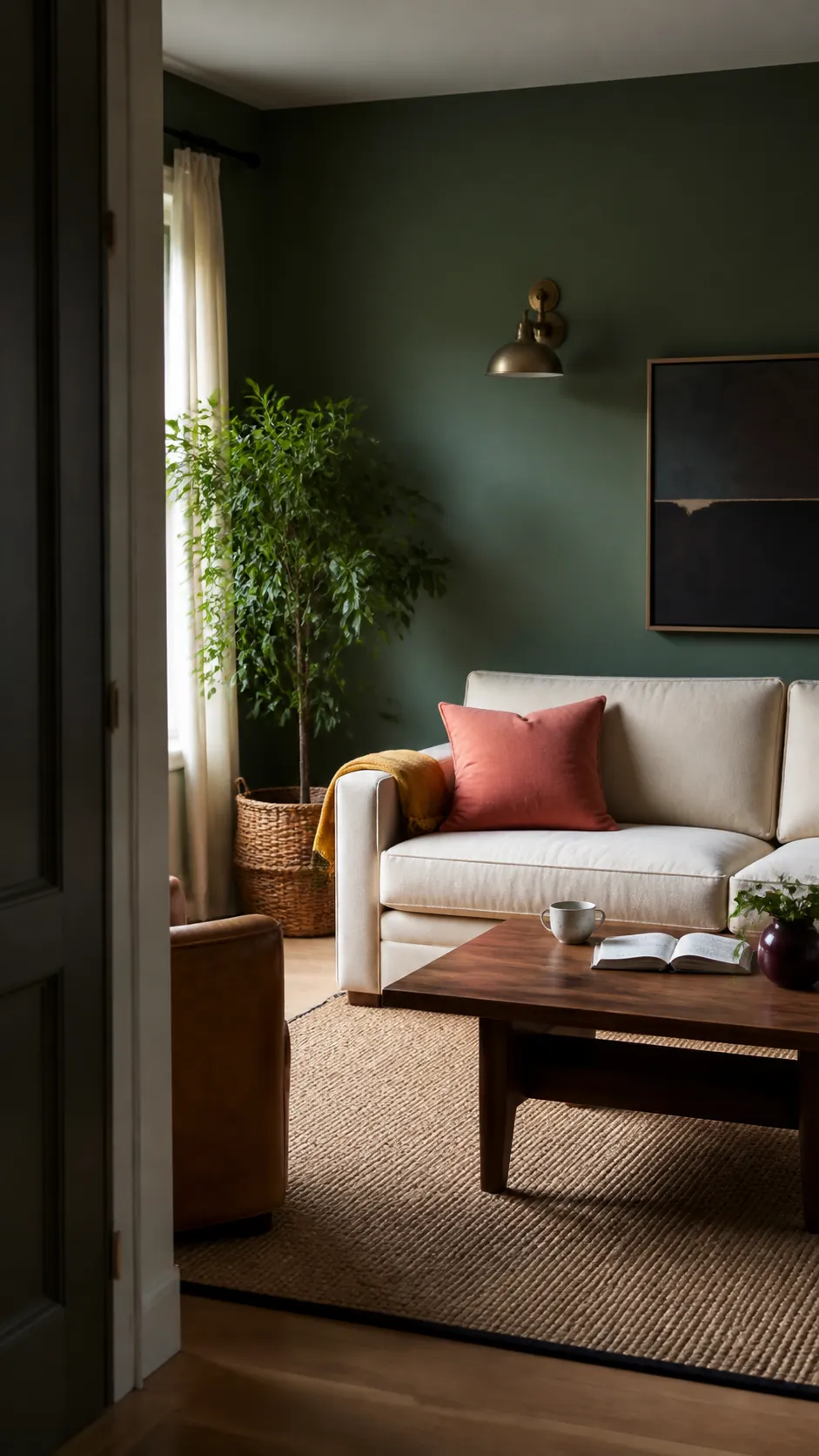
Forest green is easiest to decorate when you decide which existing surface already controls the room. Flooring, a large sofa, or a patterned rug usually matters more than a tiny paint card. Build the palette from the largest fixed material first, then use lighter textiles and one warmer accent to keep the green from swallowing every edge.
Parchment and Mushroom
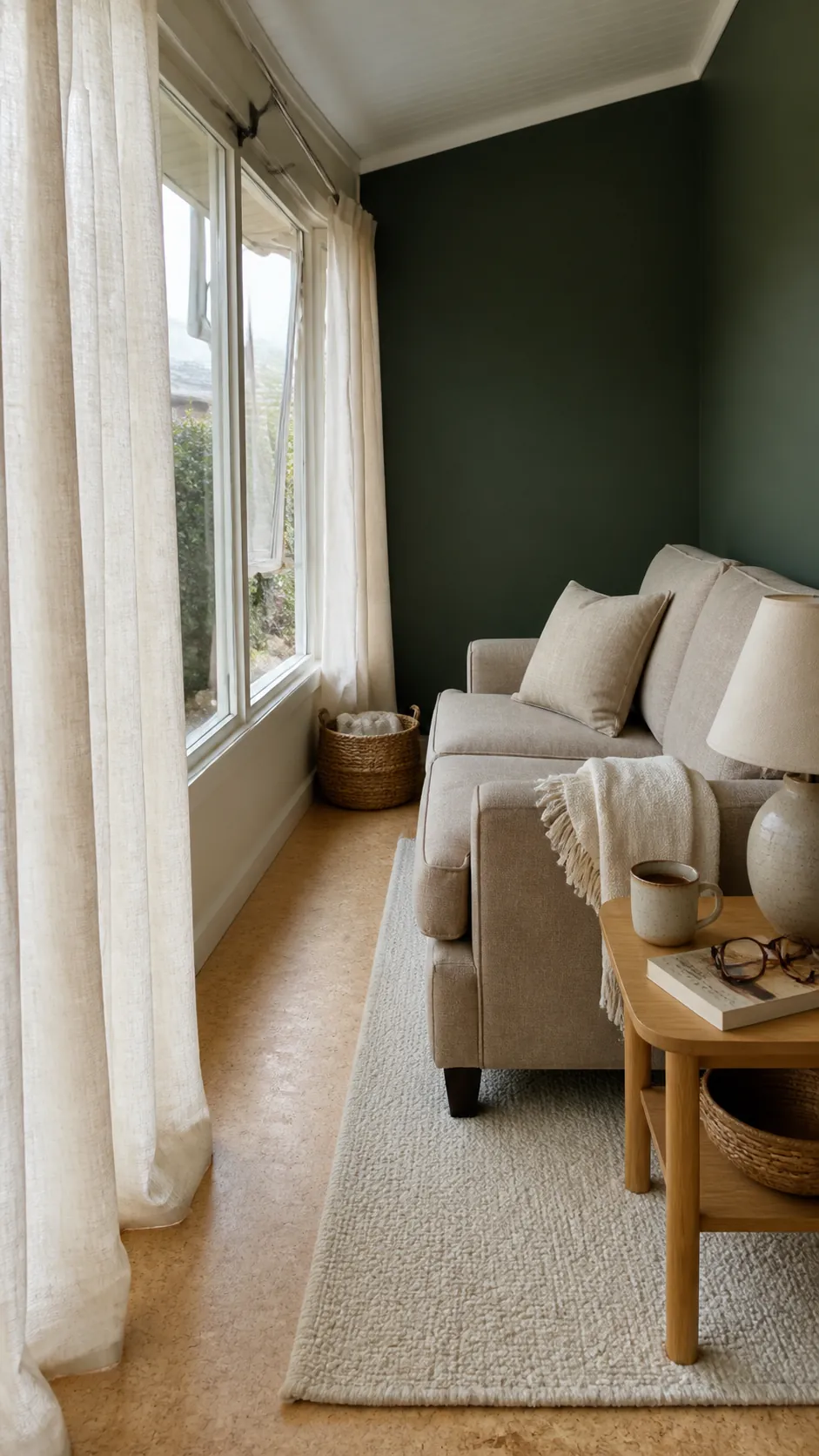
Parchment and mushroom give forest green a soft value contrast without the glare of brilliant white. They are especially useful for curtains, rugs, and larger seating because those surfaces can return light across the room. Choose a mushroom tone that relates to the floor, whether the undertone is warm beige or cooler stone. Carry the pale neutral across at least one large textile so it does real visual work.
Walnut and Cognac
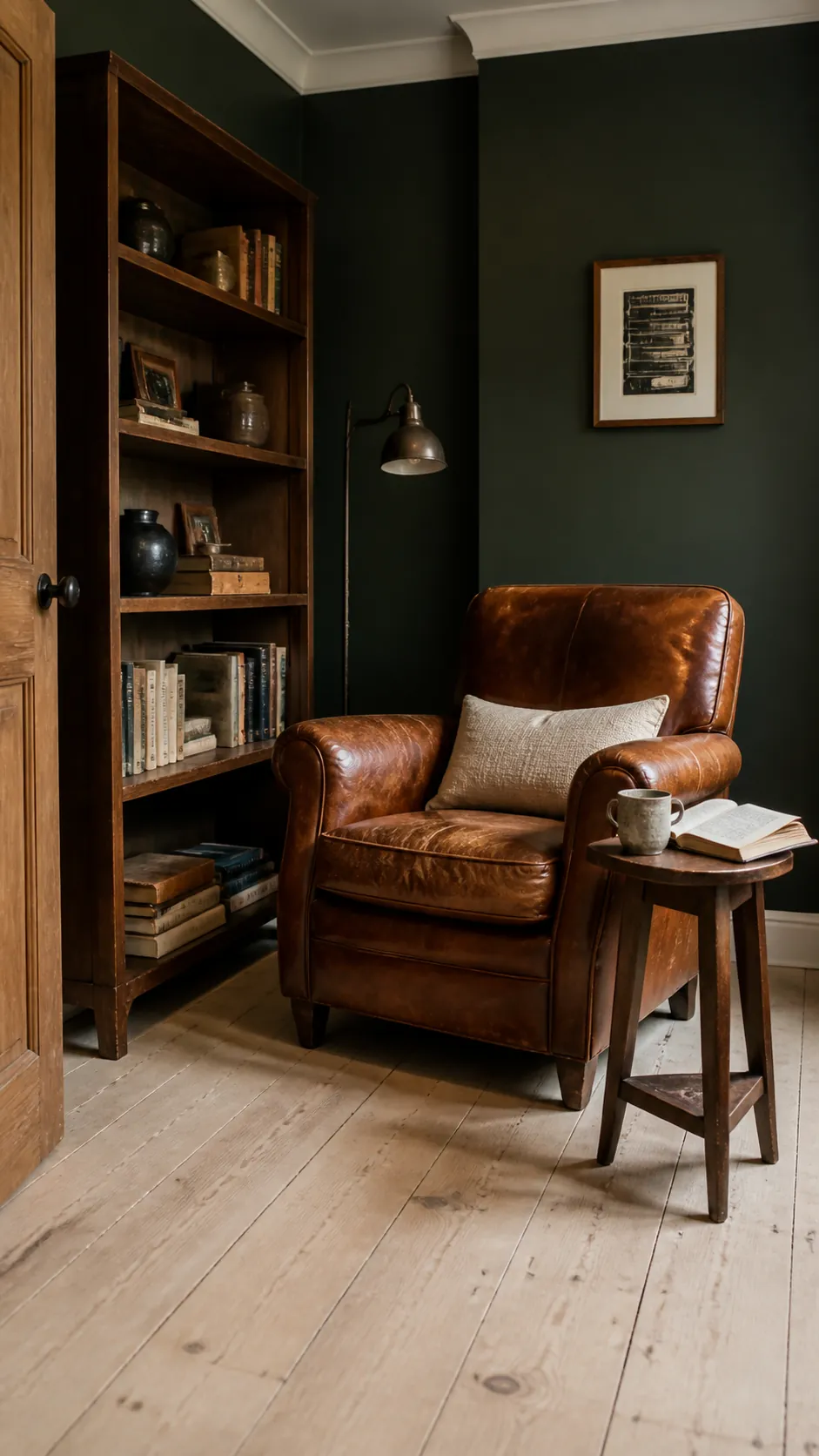
Walnut and cognac connect forest green to the natural world while adding enough warmth for an inviting room. Dark timber suits a bright space, while medium walnut is safer when daylight is limited. Cognac leather becomes more convincing as it ages, so minor creases and colour variation are assets rather than flaws. Break up the dark materials with a pale floor or rug to keep their outlines distinct.
Soft Coral and Clay Pink
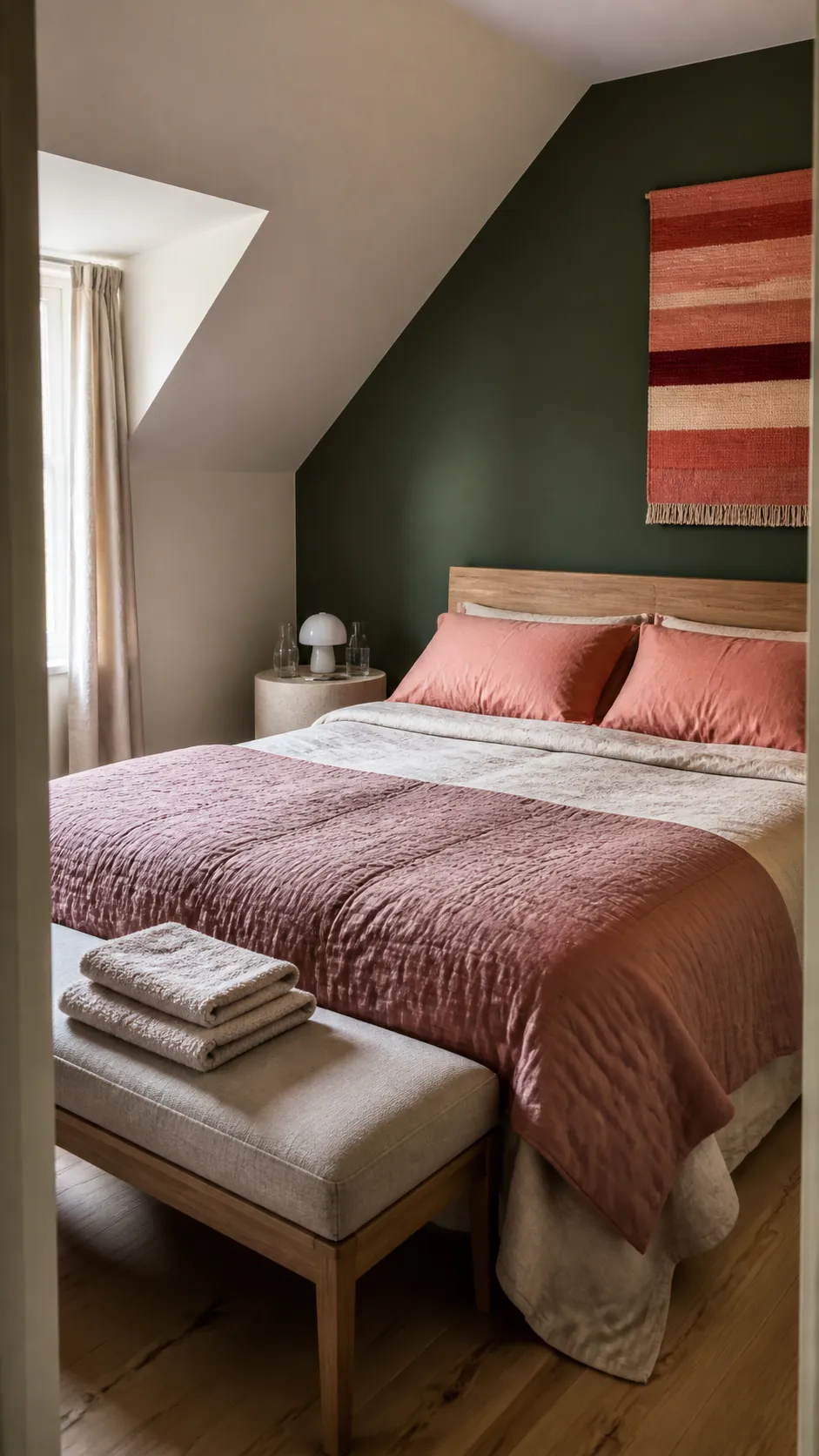
Soft coral offers clear contrast because it sits close to green’s opposite family, yet it can still feel earthy. Clay pink is quieter and works well in a forest green bedroom colour scheme through bedding or a compact upholstered piece. Keep both shades slightly muted so the effect feels grounded rather than tropical. Repeat the accent once in a much smaller object to connect the room without making it look matched.
Ochre and Muted Mustard
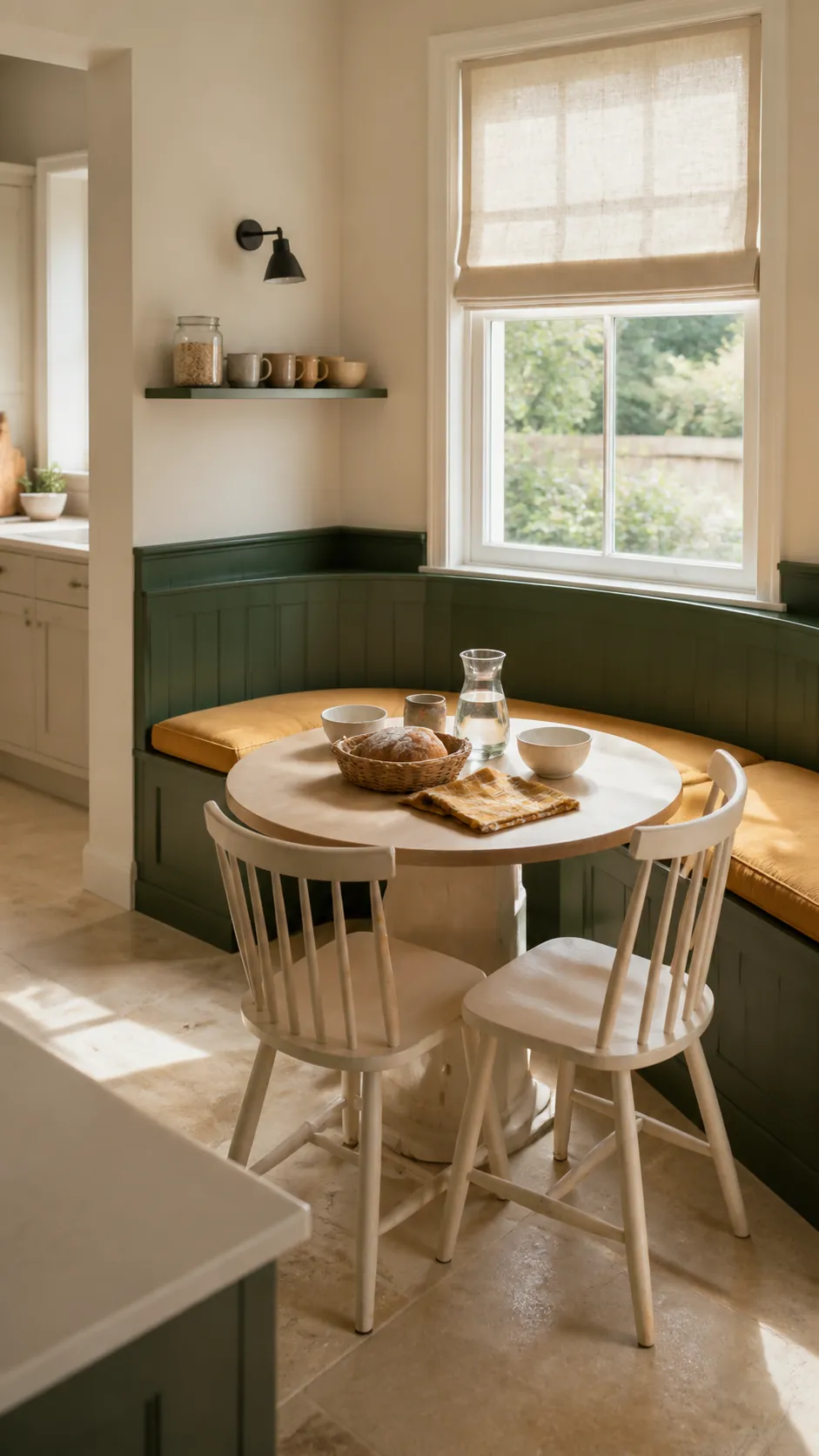
Ochre makes forest green feel lively without introducing a cold colour. It works best in small amounts through a lamp shade, a woven cushion, or details pulled from a patterned rug. Muted mustard has enough brown in it to sit comfortably beside timber and natural fibres. Use this pairing where daylight is steady, since weak artificial light can push both colours toward dull brown.
Plum and Mulberry
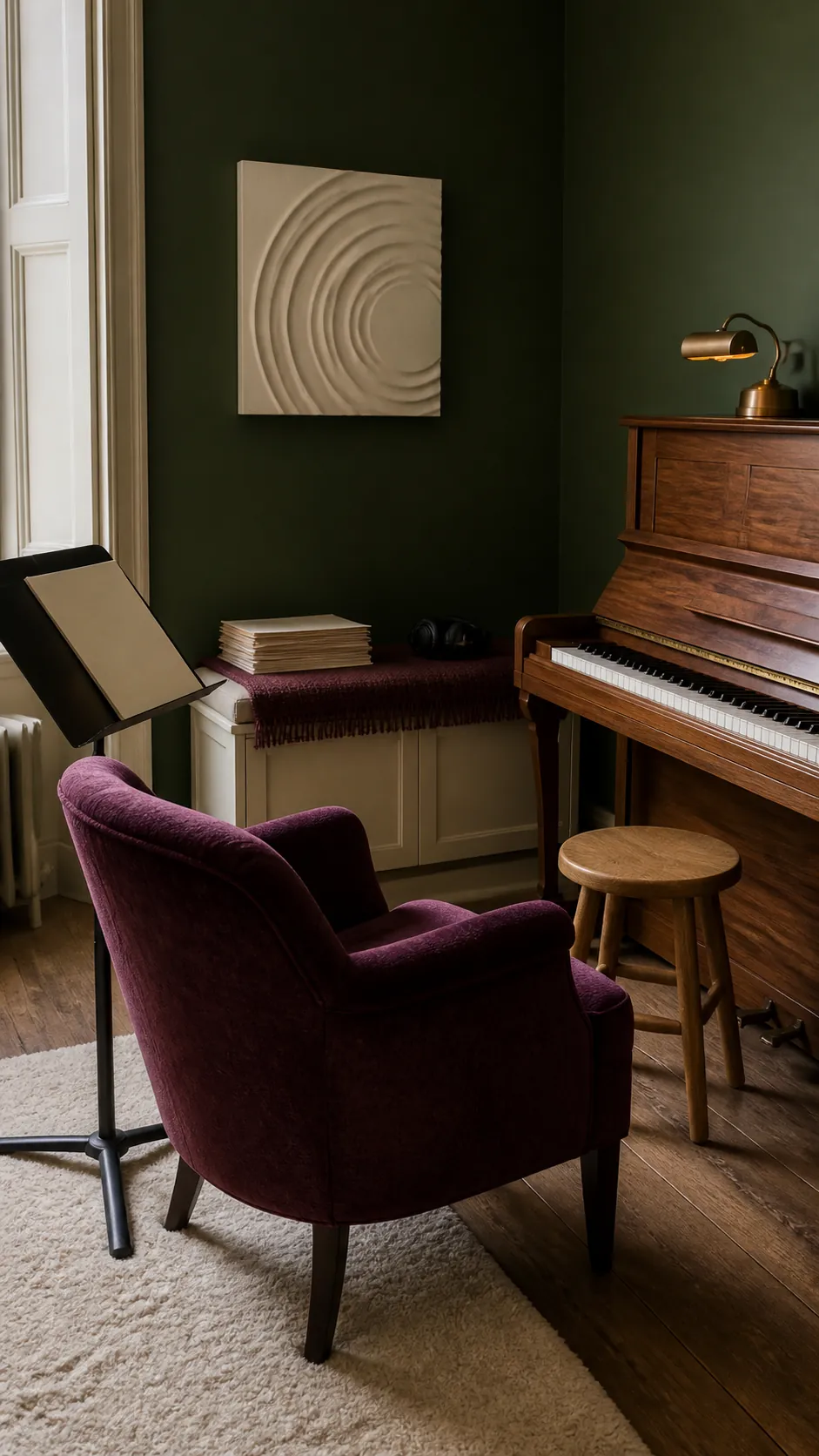
Plum brings a richer complementary note to forest green than pink, making it useful for a dramatic but mature palette. A mulberry throw or plum patterned curtain can add depth without competing with the wall when cream remains present nearby. Avoid covering several large surfaces in both colours, since their combined weight can become oppressive. Keep plum concentrated and tactile, then use pale trim to define the architecture.
Charcoal and Aged Bronze
Charcoal can outline a forest green interior colour palette through slim furniture, hardware, and window frames. Aged bronze adds warmth to those dark edges without looking bright or flashy. The combination needs a light counterweight, such as limestone, pale oak, or cream fabric, to remain readable. Treat charcoal and bronze as finishing marks, and the forest green will still feel like the main event.