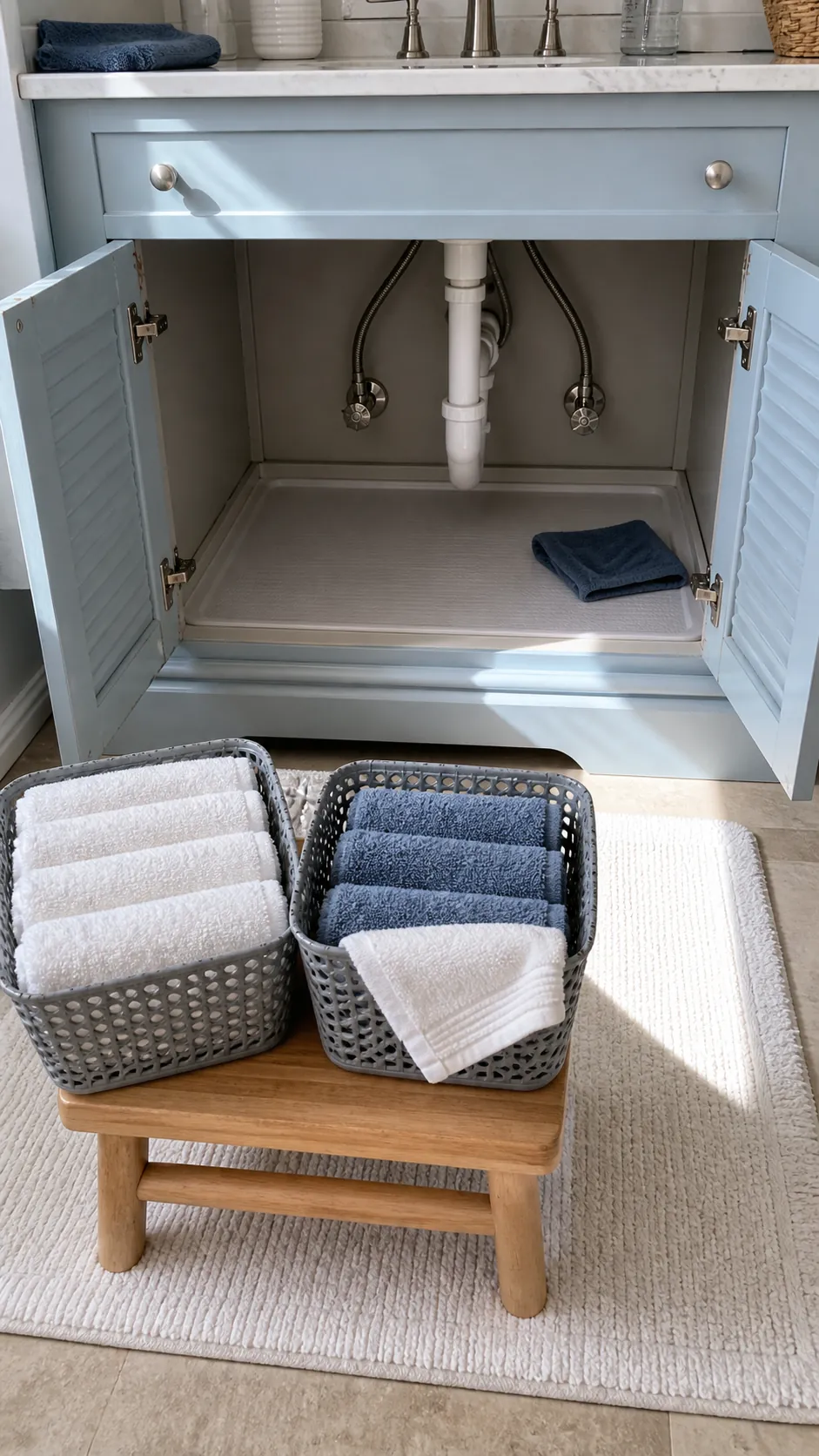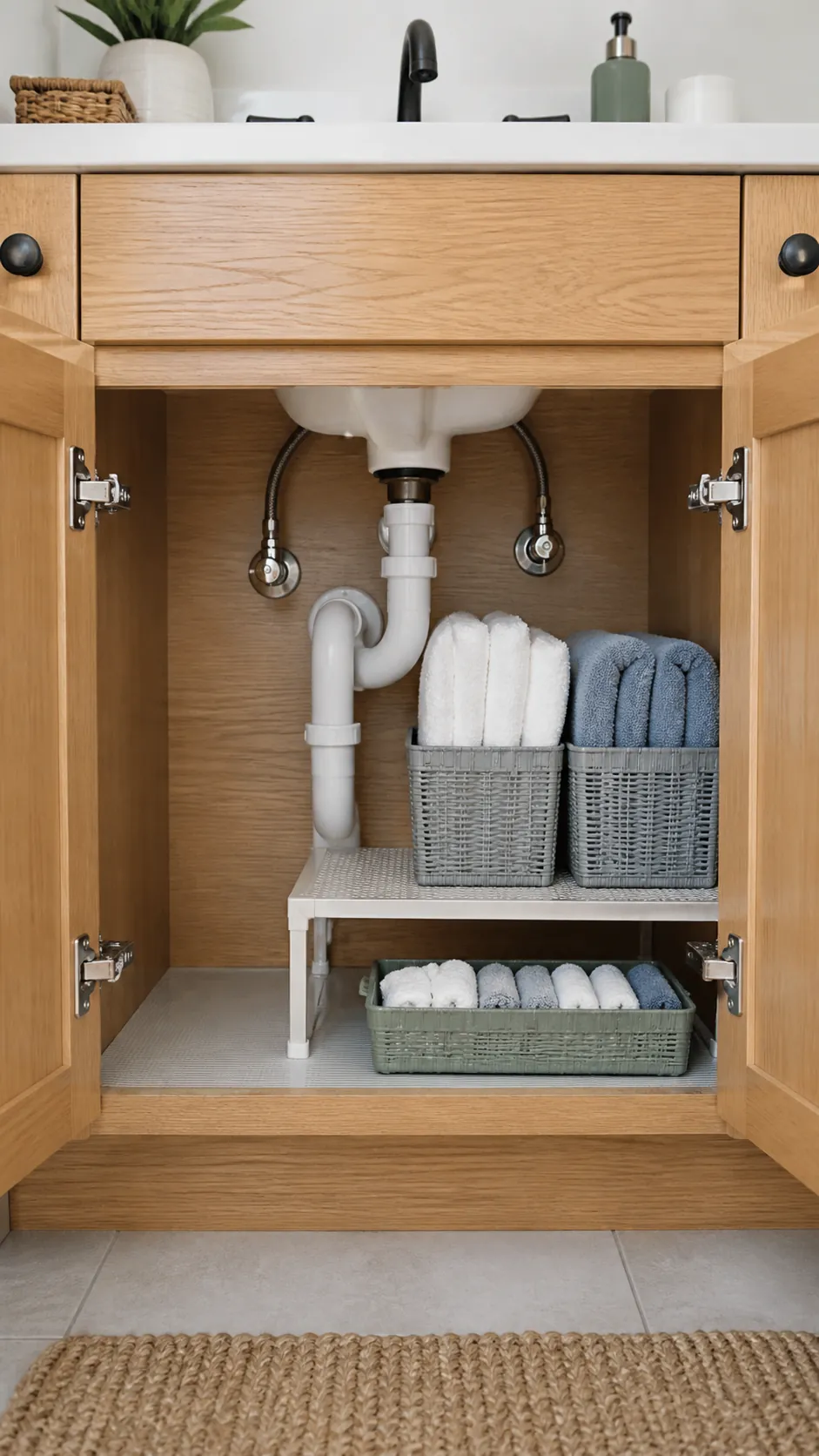
Fresh towels belong somewhere convenient, but the cabinet beneath a sink is also the place most likely to hide a slow drip. Stuffing a tall stack beside the drain makes the bottom towels hard to reach and leaves fabric vulnerable to moisture. The useful approach is to store only a working supply, keep it off the cabinet floor, and preserve a clear view of every plumbing joint.
Check Whether the Cabinet Is Dry Enough
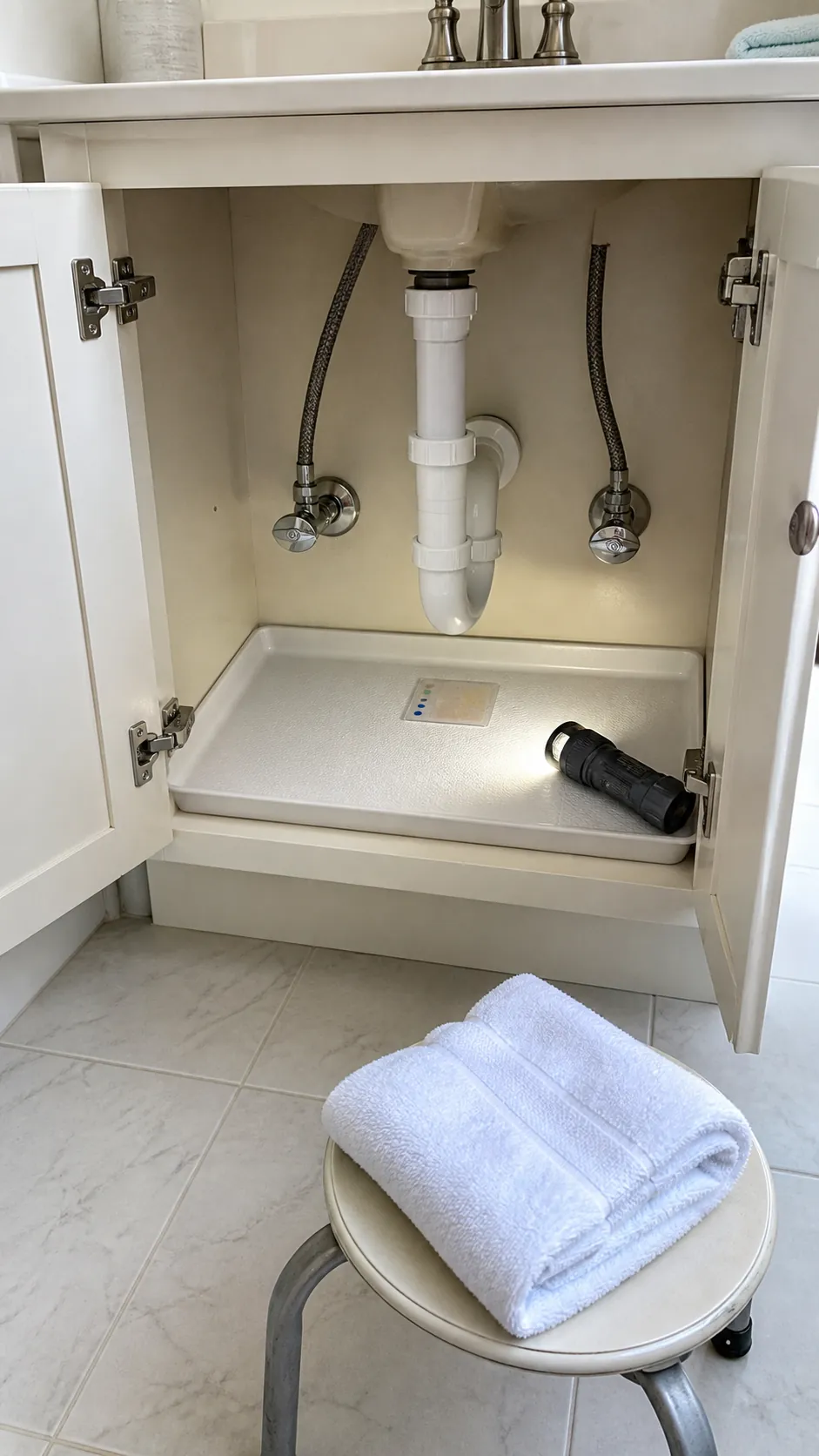
Empty the cabinet and inspect the floor, back panel, supply lines, drain trap, and valves. Any active leak, condensation, musty odor, swelling, or staining needs attention before clean linens go inside. Run the bathroom fan during bathing, dry wet surfaces promptly, and store only towels that are completely dry.
Place a washable waterproof tray below the plumbing, but do not cover the cabinet so completely that a leak becomes invisible. Leave hand space around the shutoff valves and a direct sight line to the drain connections. Moisture safe towel storage begins with inspection and airflow, not a sealed decorative basket.
Limit the Supply to What Fits Comfortably
Keep the household reserve elsewhere and give this cabinet a simple job: hold the towels needed between regular laundry days. In a small bathroom, that might mean a few hand towels, washcloths, and one or two bath towels. A smaller working set prevents the lowest pieces from becoming permanent residents that absorb bathroom humidity.
Sort by use before choosing a container. Face cloths need a shallow home near the front, while bulkier bath linens need the widest clear bay. If retrieving one towel requires unloading the whole cabinet, the stack is too large or in the wrong orientation.
Choose a Fold That Matches the Opening
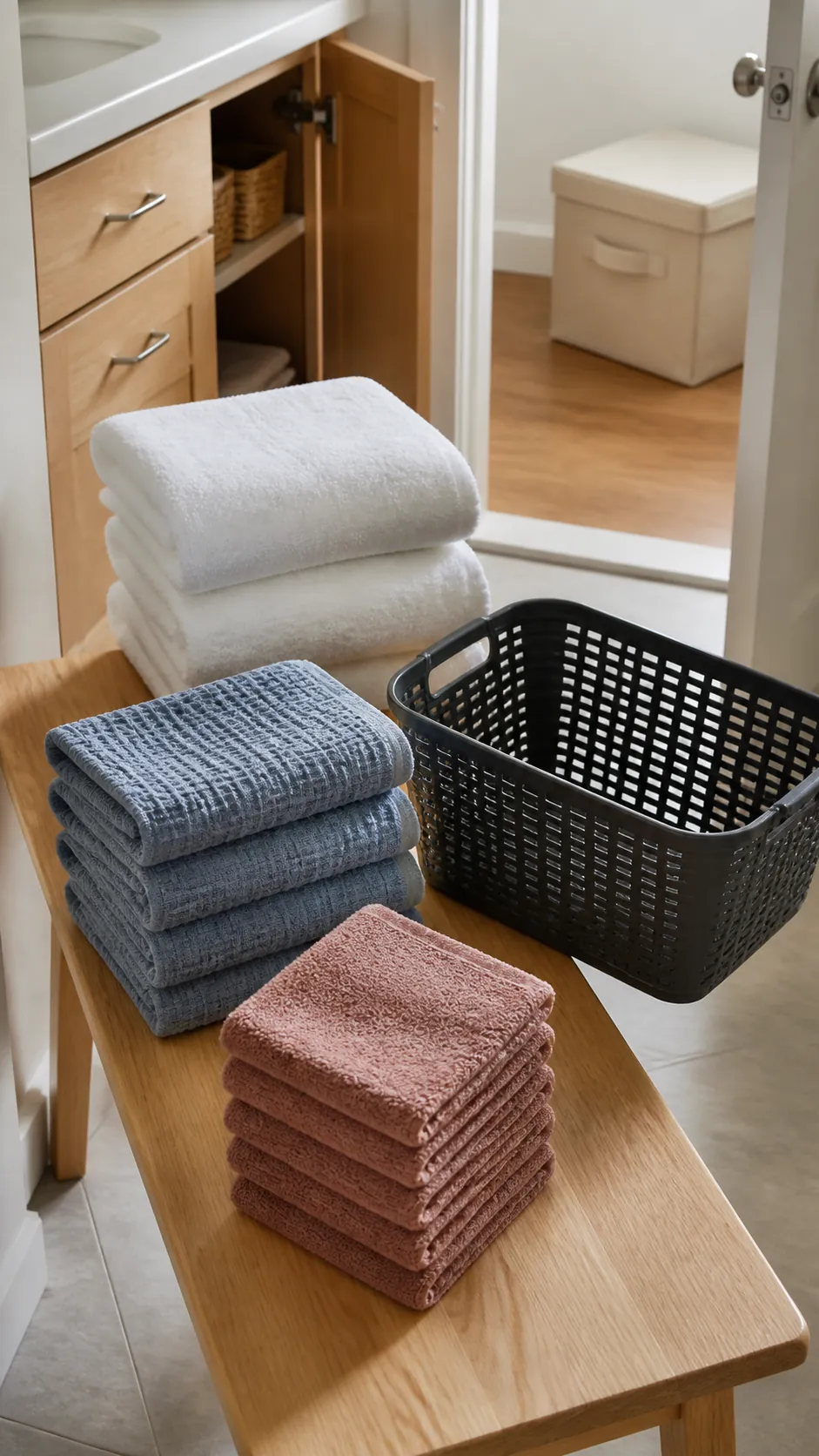
Measure the usable shelf width and cabinet depth, then fold one towel to test the real footprint. A compact rectangular fold works well on a shelf riser because the edges stay supported. Rolled towel storage suits a front facing basket when each roll can be removed without disturbing its neighbors.
Avoid compressing thick towels into a container that bows at the sides. Air should still move between the fabric and cabinet wall, and the basket should slide out without scraping pipes. The best fold is the one that lets you see and lift every towel independently.
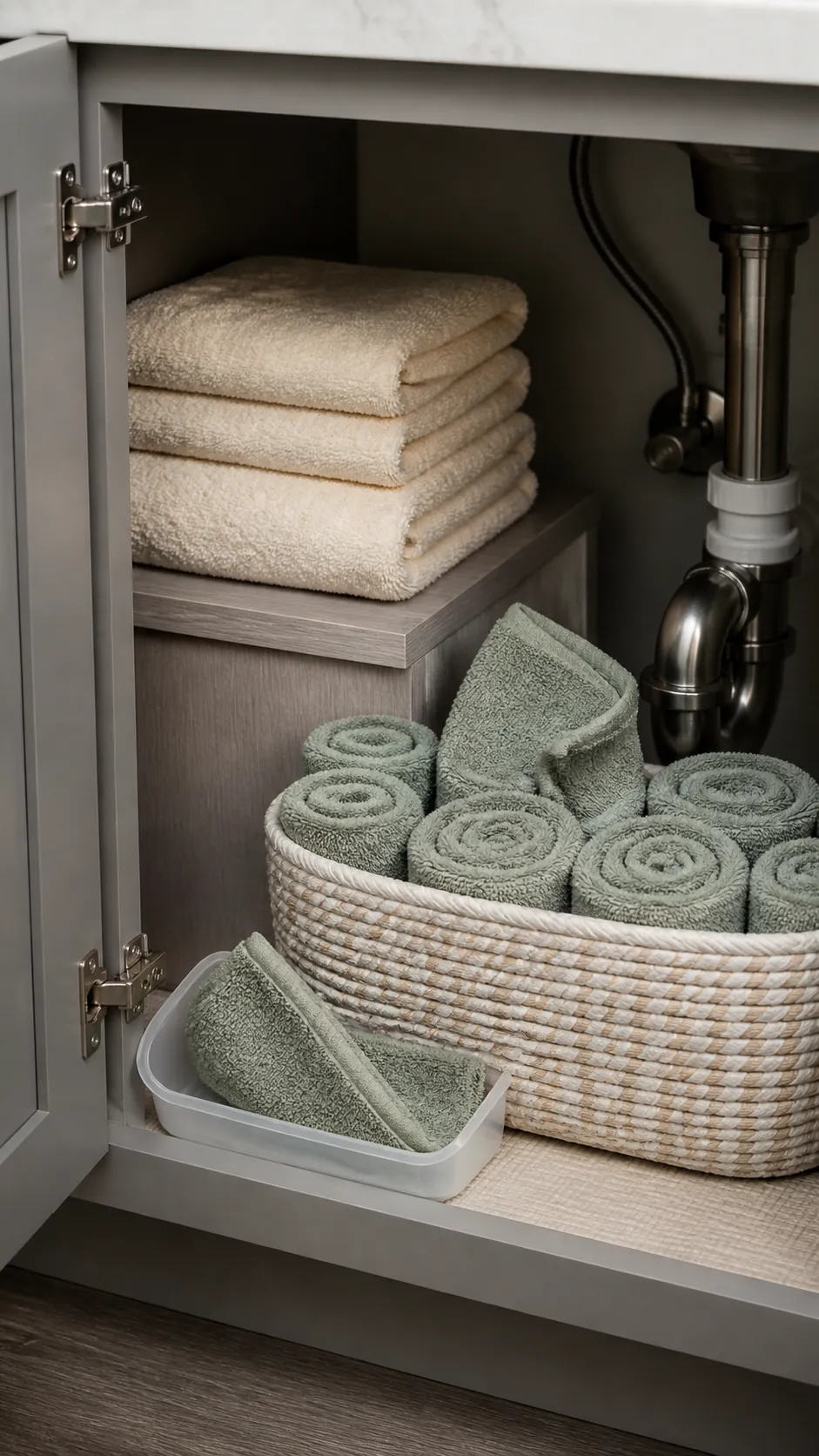
Lift Linens Above the Cabinet Floor
A bathroom cabinet shelf riser creates a protected towel level while leaving the tray and plumbing visible below. Choose a stable coated metal or sealed wood riser with legs that sit fully on the cabinet base. Position it to one side of the drain so it does not trap towels against supply lines.
For a deep cabinet, a pull out under sink drawer can bring smaller linens forward, but check the cabinet lip and door hinges before committing. The drawer must stop before the trap and should come out easily for cleaning. Vertical storage earns its space only when it preserves access to the cabinet itself.
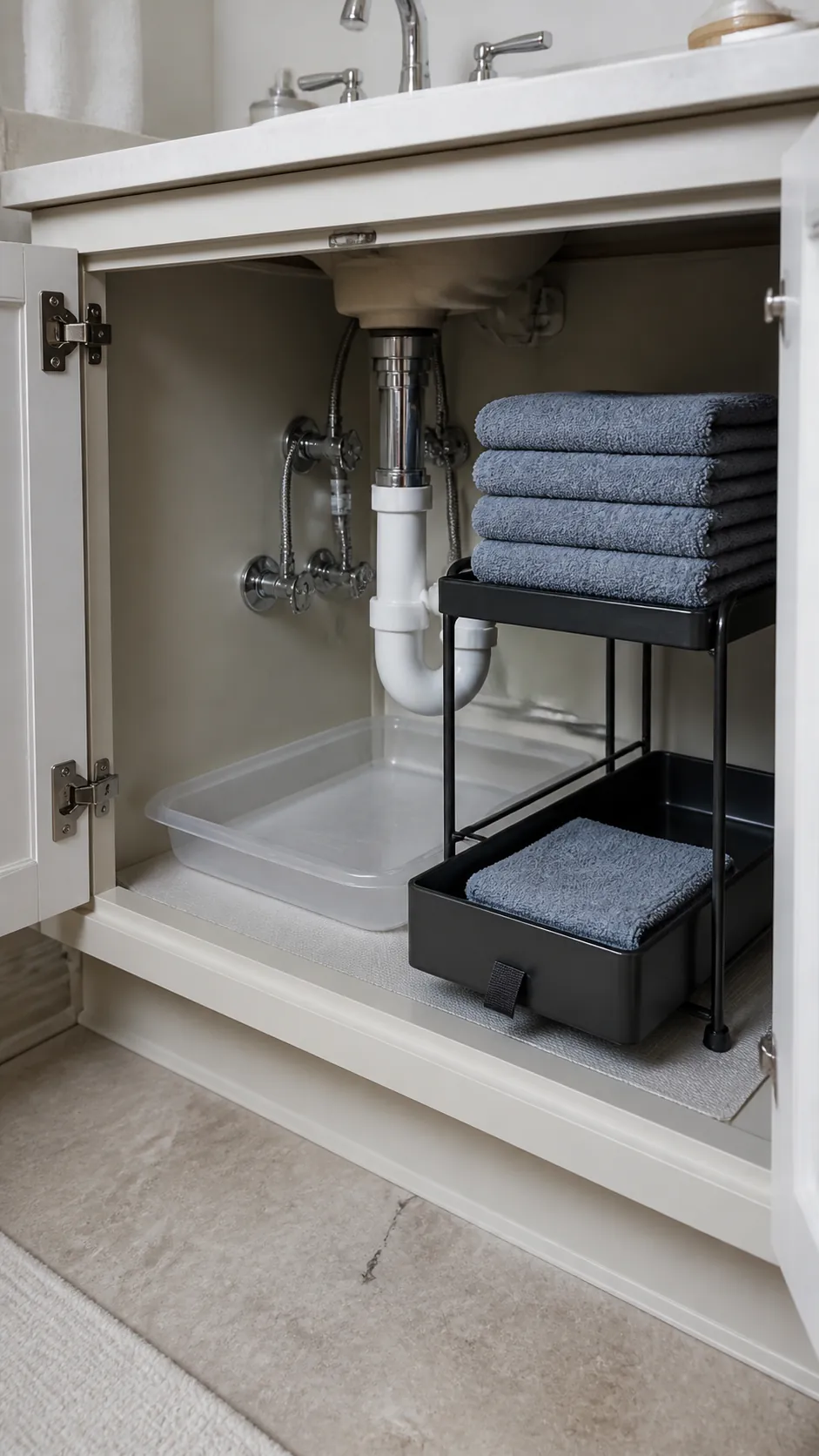
Separate Towel Sizes in Breathable Containers
Use open bathroom linen baskets so you can see what remains and notice dampness quickly. A shallow washable bin works for washcloths, while a wider ventilated basket can hold hand towels on edge. Avoid mixing cleaning products, spare toiletries, and clean fabric in the same container.
Labels can help a shared bathroom, but container shape matters more than words. Give each category a firm capacity and refill from the main linen closet after laundry. A basket should function as a movable shelf, not as a place to hide an overflowing pile.
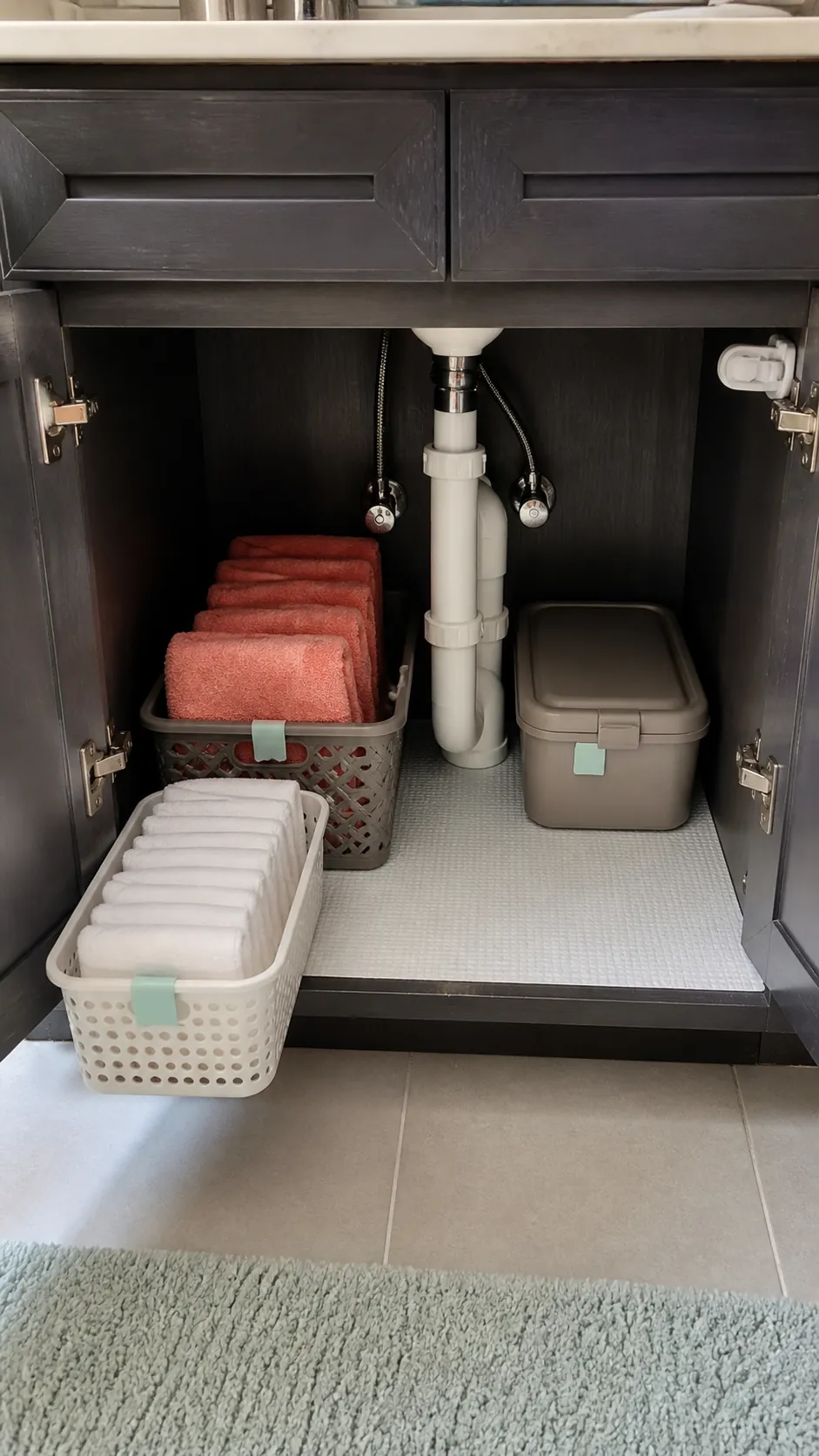
Rotate the Front Towel and Inspect Monthly
Place freshly laundered towels at the back or bottom and take the next towel from the front. This gentle rotation prevents one set from sitting untouched through weeks of humid showers. Never return a used or even slightly damp towel to the clean supply.
Once a month, remove every basket, wipe the tray, look for condensation or leaks, and smell the cabinet before restocking. Wash the containers when needed and reduce the towel count if air cannot circulate. Clean fabric stays dependable when the storage system makes moisture easy to detect.