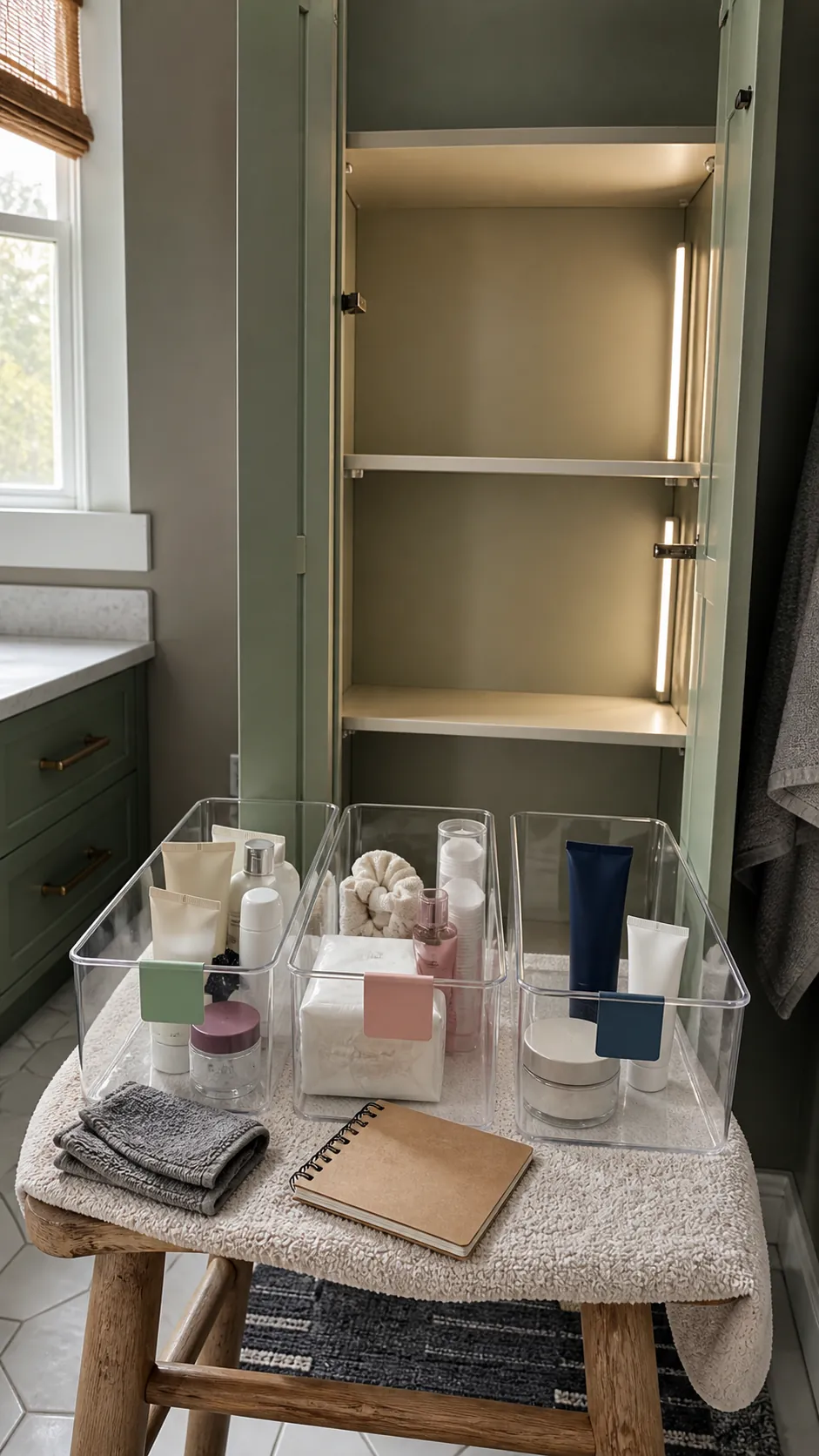
Bathroom cabinets become frustrating when daily toothpaste, backup shampoo, hair supplies, and forgotten samples all compete for the same front row. Deep shelves make the problem worse because the visible items hide everything behind them. The solution is to organize around frequency and complete routines, then use containers only to make those decisions easier to maintain.
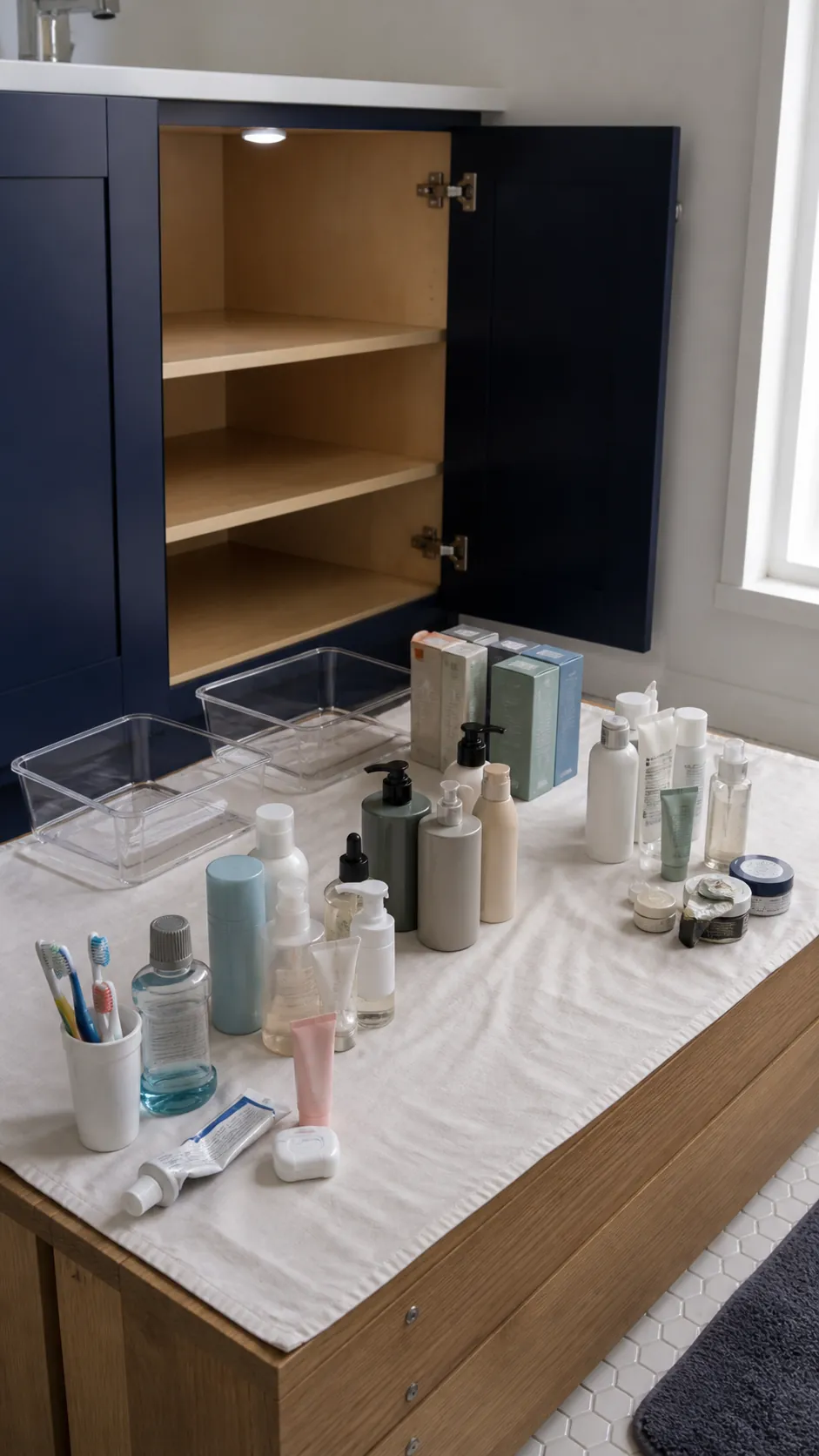
Pull Everything Out and Edit the Inventory
Empty one cabinet at a time and wipe every shelf before sorting. Group unopened duplicates, daily toiletries, occasional grooming items, cleaning supplies, and products that no longer belong in the room. Dispose of expired or unusable items through the appropriate local route, and donate suitable unopened extras where accepted.
Do not buy organizers until the edited inventory is visible. Count how many products each routine actually needs and note which tall bottles must remain upright. Decluttering creates useful cabinet space; containers merely divide what deserves to stay.
Assign Each Cabinet a Clear Job
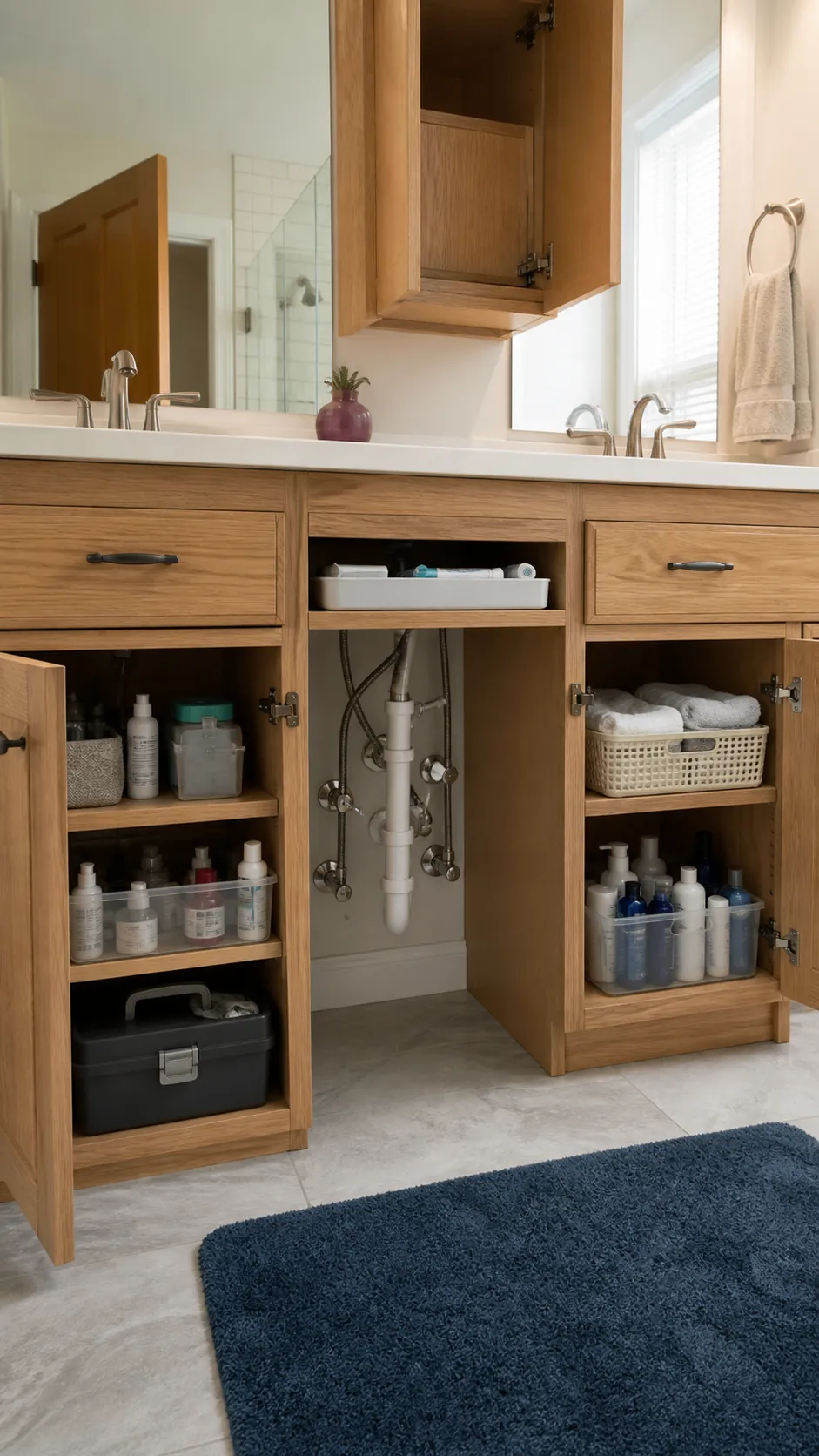
Map storage by reach. The easiest shelf should hold daily routines, lower vanity space can hold heavier refills and cleaning supplies, and awkward upper shelves should contain lightweight items used less often. In a shared bathroom, give each person a defined zone instead of mixing every product by type.
Keep clean linens away from liquids and reserve a visible gap around plumbing. Medicines often need a cool, dry location outside the bathroom, so follow the storage directions on each package rather than assuming a medicine cabinet is suitable. A clear cabinet job prevents one convenient shelf from becoming the home of everything.
Build One Removable Tray Per Daily Routine
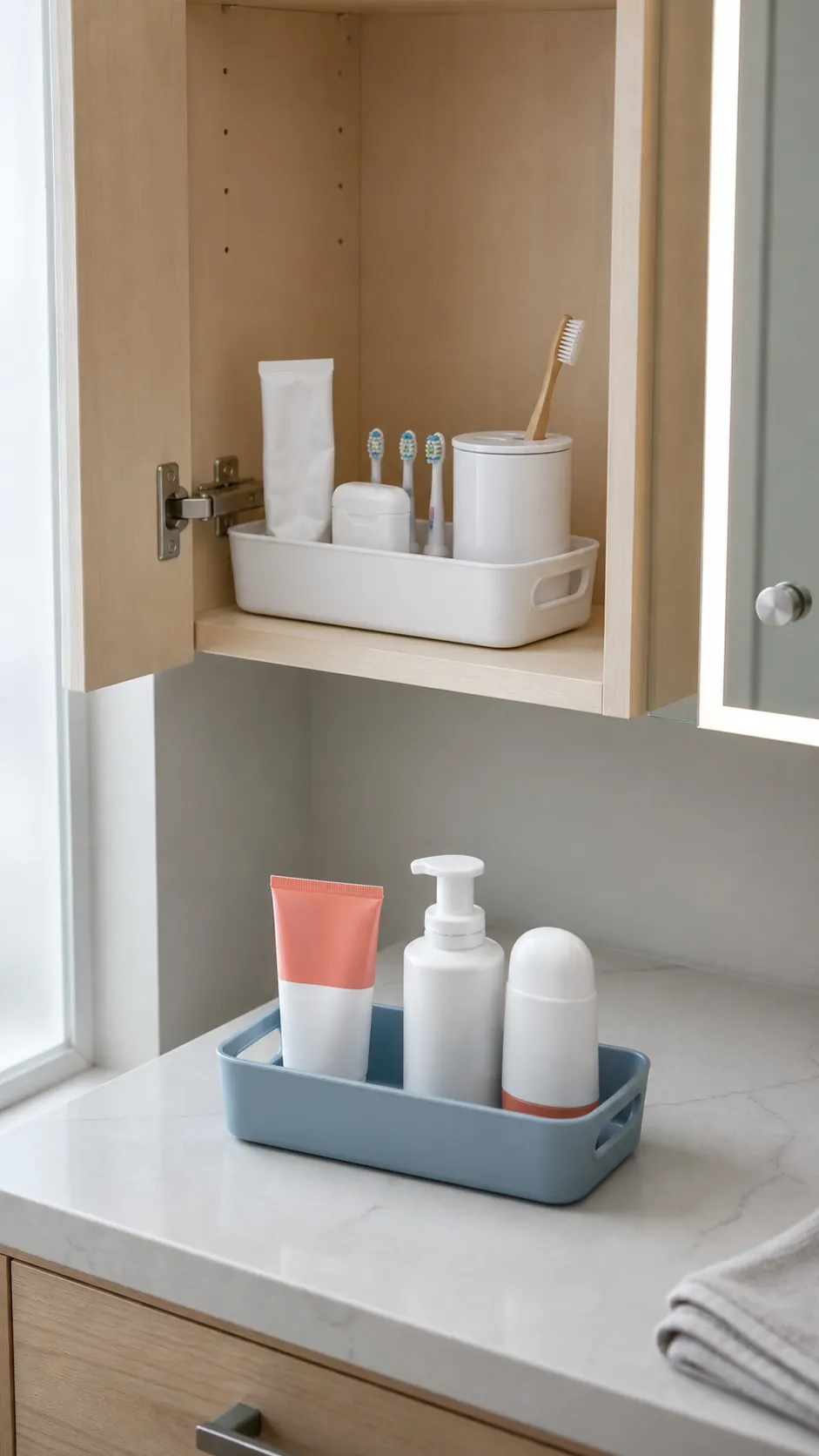
Place the products used together into a shallow tray that can move as one unit. A morning dental tray might hold toothpaste, floss, and toothbrush supplies, while a skin care tray contains only the current cleanser, moisturizer, and sunscreen. The container should be short enough that labels and remaining quantities stay visible.
When an item runs out, refill it from backstock instead of keeping several open versions in the daily zone. Return the entire tray after use so the counter clears in one motion. Routine trays reduce decisions because every item needed for one task travels together.
Turn Deep Shelves Into Pull Out Storage
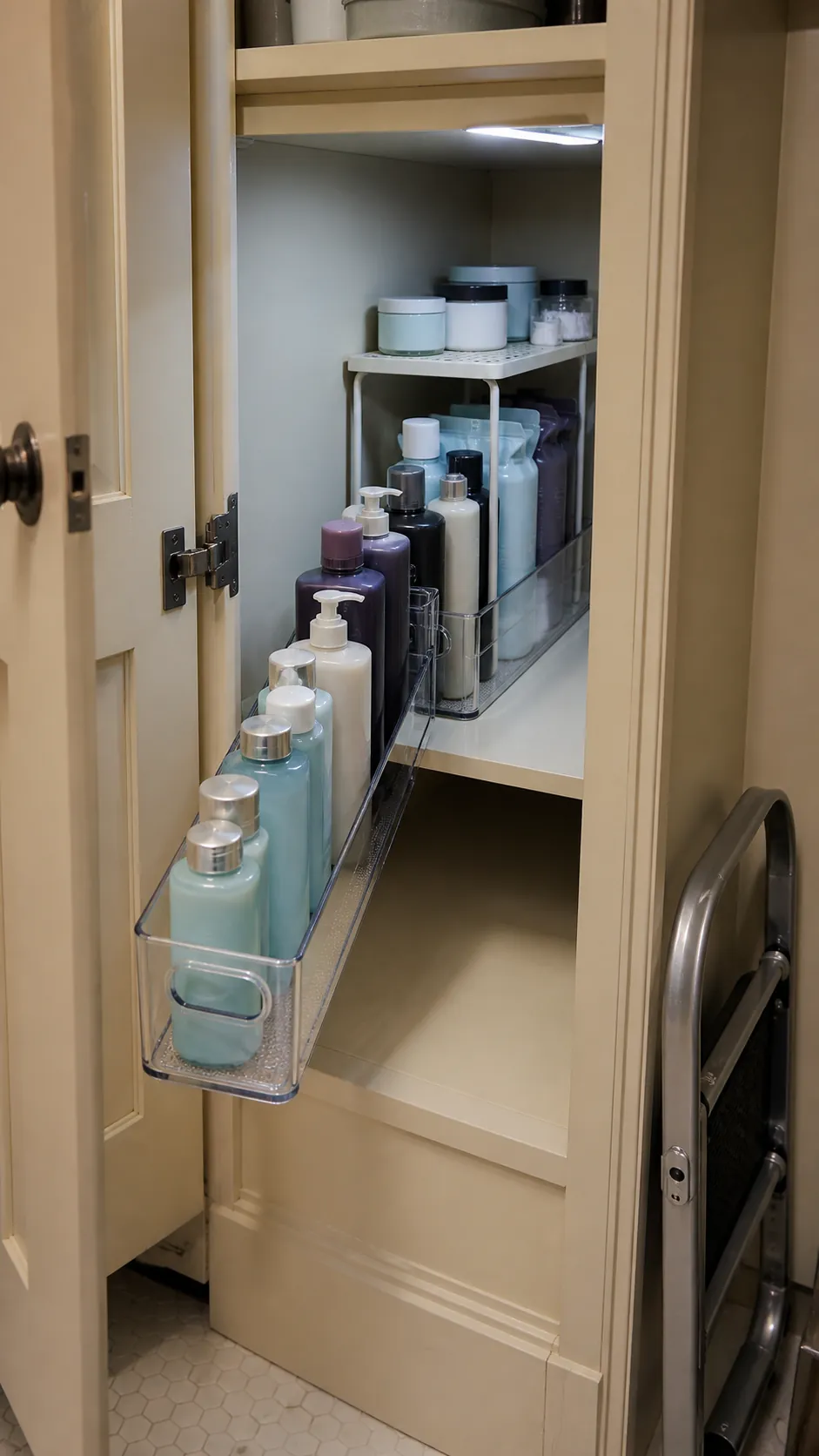
Long clear toiletry containers prevent the back of a deep cabinet from becoming a second invisible row. Group refills by routine, keep the tallest item at the rear, and choose bins with handles that can slide forward without unloading the shelf. A bathroom shelf riser can create another visible level for short jars.
Measure shelf depth, opening width, and hinge clearance before buying a vanity cabinet organizer. The best bin uses most of the depth but still comes out comfortably when full. If you cannot remove the container with one hand, the back of the shelf will disappear again.
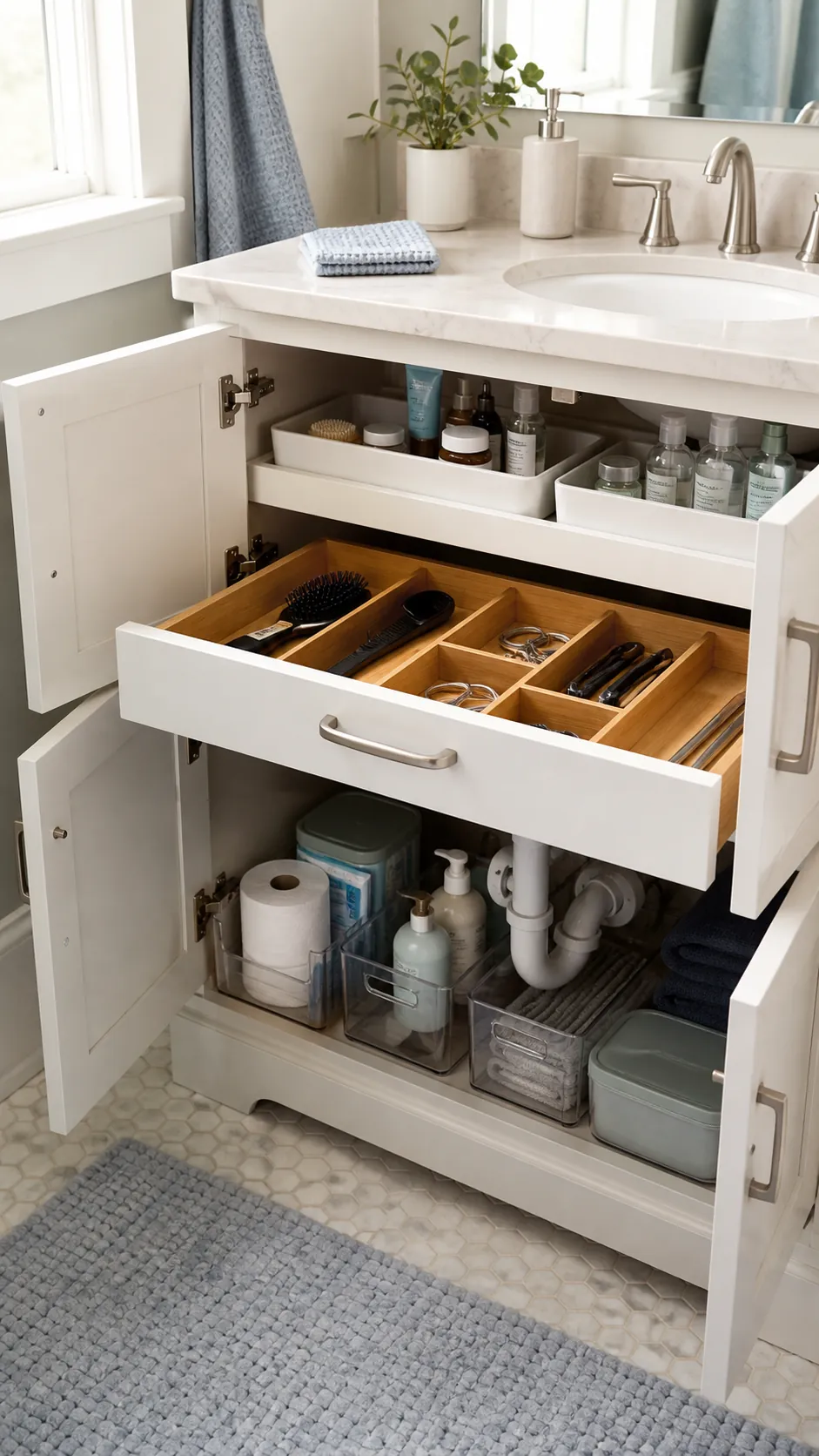
Divide Drawers by Object Size
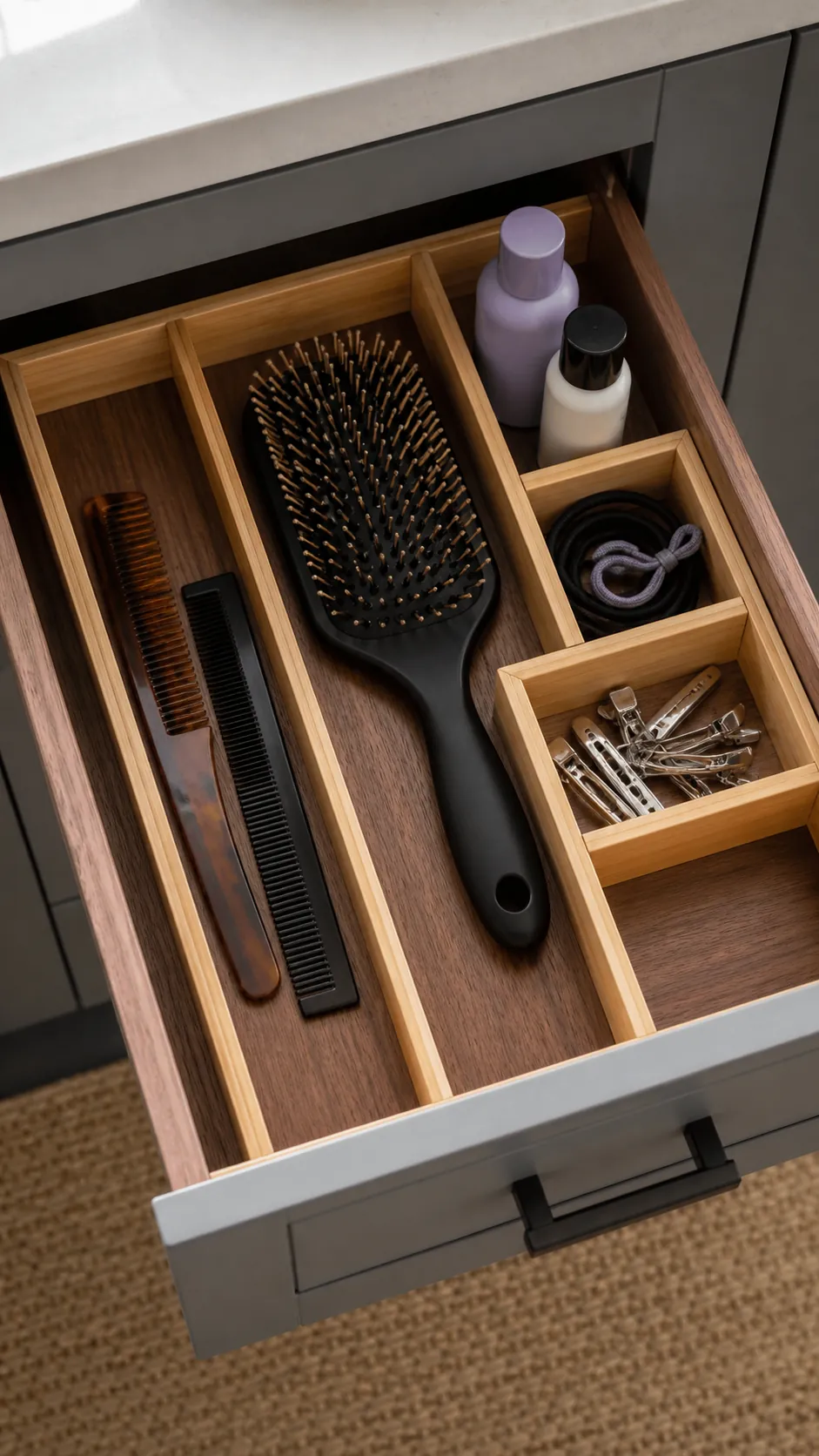
Bathroom drawer dividers work best when each compartment matches the objects it holds. Use narrow lanes for combs and toothbrush supplies, short sections for clips and ties, and a wider area for a brush or grooming tool. Keep products upright when leakage is possible and avoid stacking small items beneath larger ones.
Adjustable dividers let the layout follow your actual possessions rather than a preset kit. Leave one small open section for temporary items, then clear it during the weekly reset. A drawer stays organized when every object has a visible footprint and no category needs to pile vertically.
Label Limits and Reset the System
Labeled bathroom storage is most helpful when the label names a real boundary such as daily skin care, hair refills, or guest supplies. It should not excuse an oversized mixed bin. Keep one open product and a modest backup where appropriate, then pause purchasing when the category reaches its container limit.
Once a week, return stray items and wipe spills. Once a month, pull out every deep bin, check dates, inspect the under sink area, and notice which categories keep overflowing. The cabinet is finished when daily use is easy and excess has nowhere convenient to hide.