A small bedroom becomes frustrating when every useful thing competes for the same patch of floor. The real goal is not to squeeze in more furniture, but to give sleeping, dressing, playing, and tidying distinct places. Start with the daily routine, then choose storage that a child can actually reach and return.
Lift the Bed Over a Play Zone
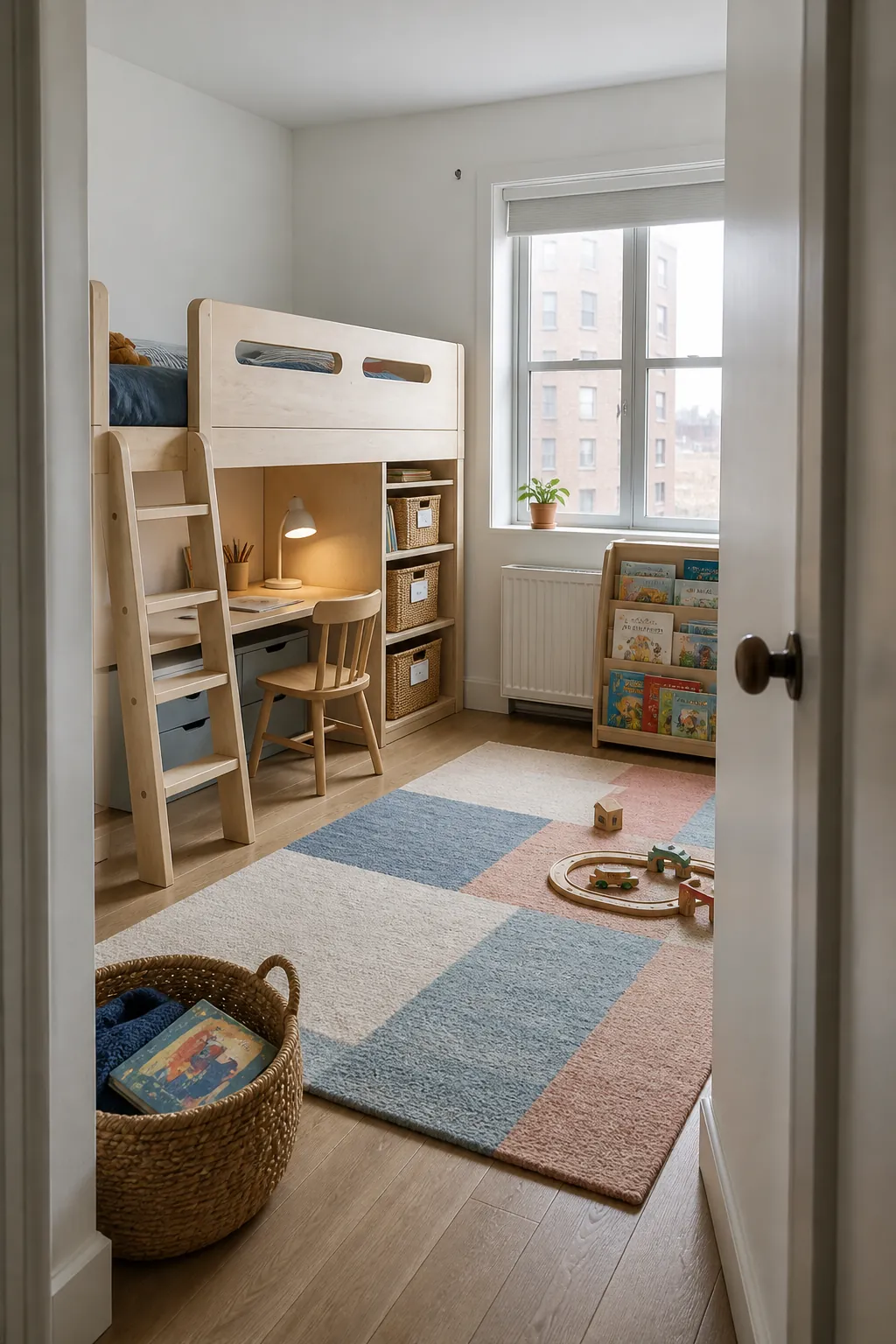
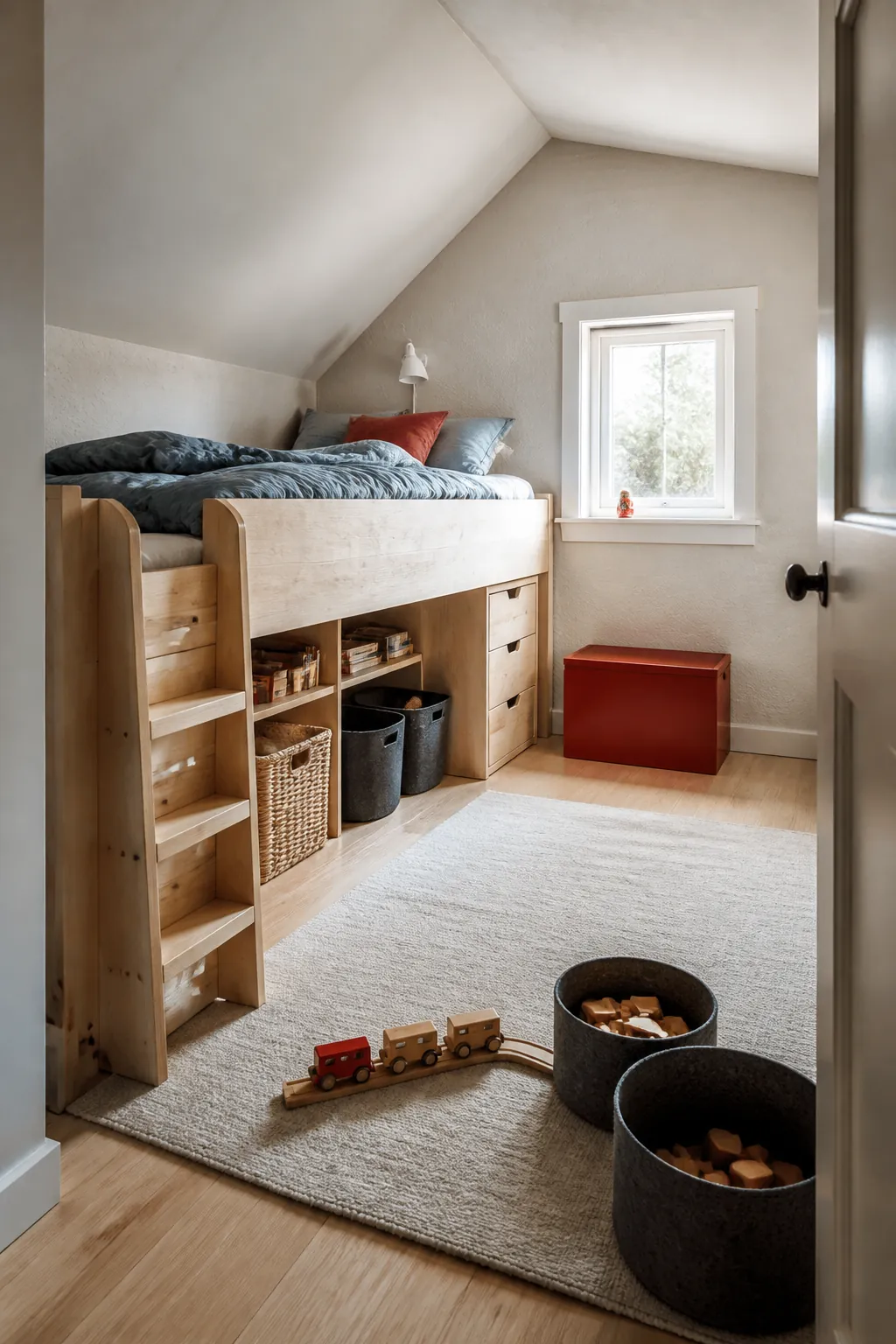
A low loft bed can release the largest single area in a tiny room without making the sleeping level feel intimidating. Use the space beneath for a washable rug, a few open toy baskets, and a front facing book ledge so play has a clear boundary. Check the maker’s age guidance, guardrail height, mattress depth, and ceiling clearance before treating this as a toddler solution. The best loft arrangement makes the lower zone useful every day, not merely impressive in a photo.
Choose Drawers Beneath the Mattress
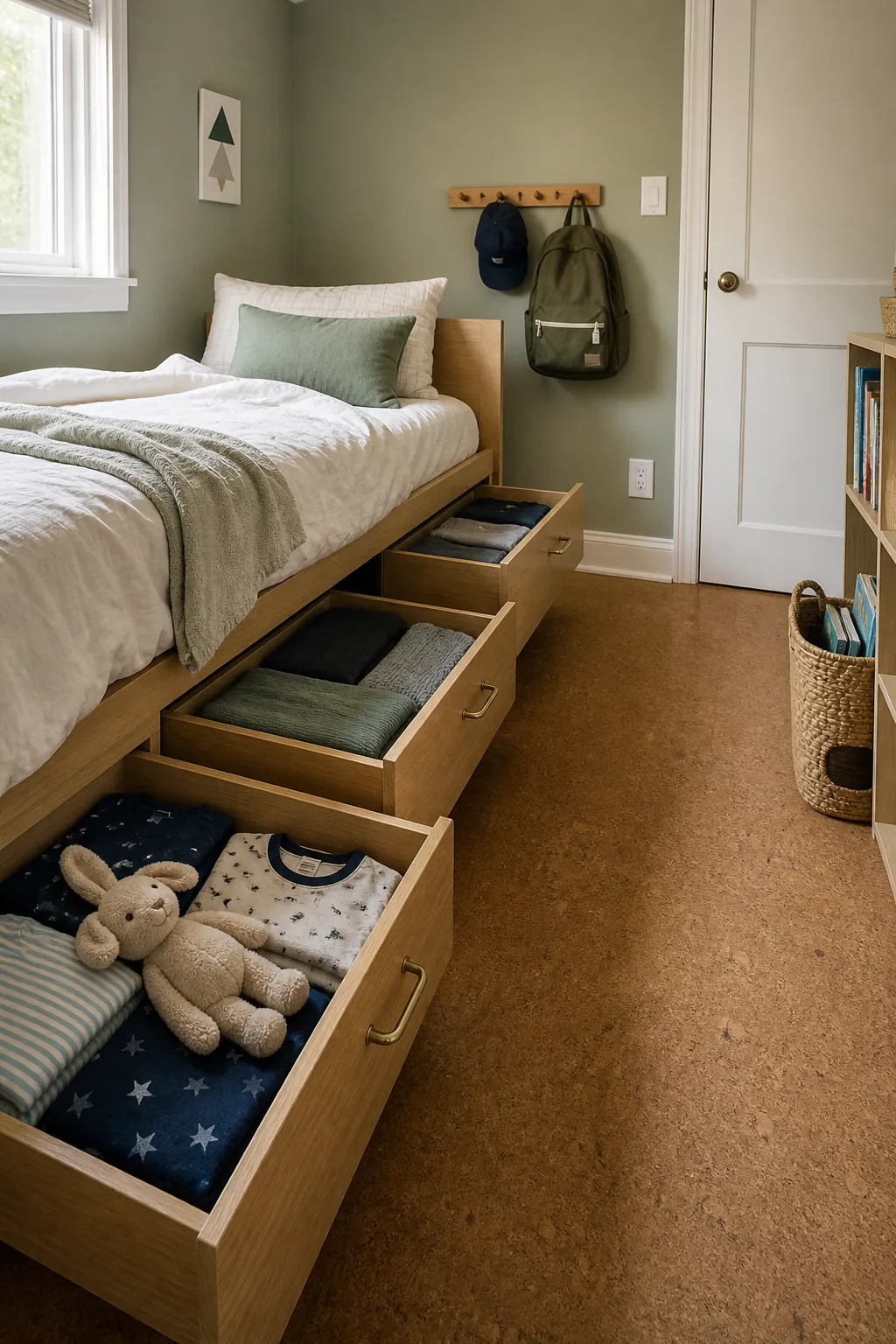
A storage bed turns the footprint you already own into a home for pajamas, spare bedding, or bulky toys. Drawers are easier for children to manage than deep loose bins because everything remains visible when opened. Leave enough aisle clearance for each drawer to extend fully, and avoid placing the pull side against a radiator or door swing. Measure the open drawer depth, not just the bed frame, before buying.
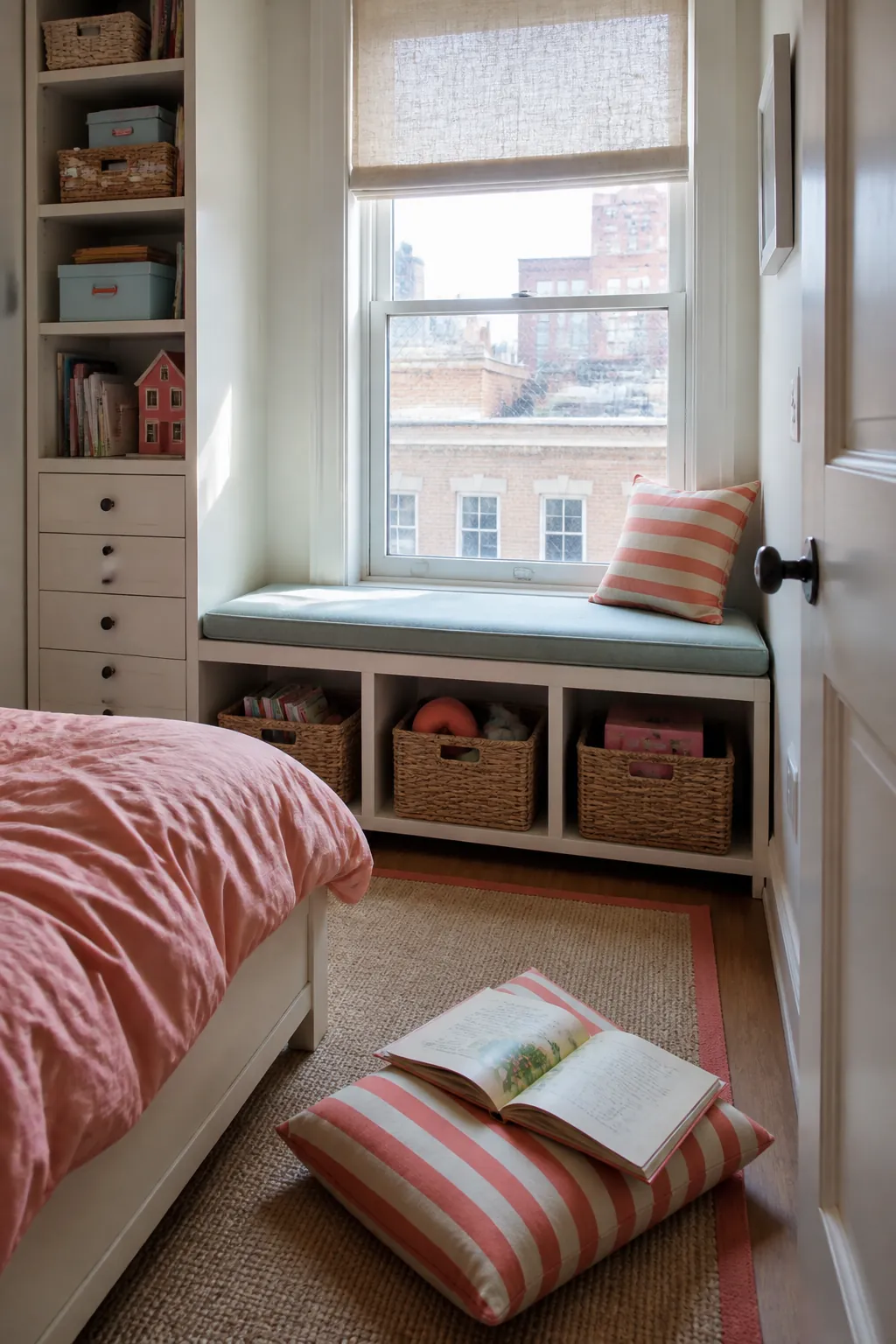
Build a Window Seat With Storage
A shallow bench below a safe window can combine reading space, toy storage, and an inviting destination at the room edge. Hinged lids need soft close hardware and finger protection, while cubbies with baskets are simpler for younger children. Keep the seat below opening hardware and never block required ventilation or an emergency route. A fitted cushion makes this hardworking piece feel like a reward rather than another cabinet.
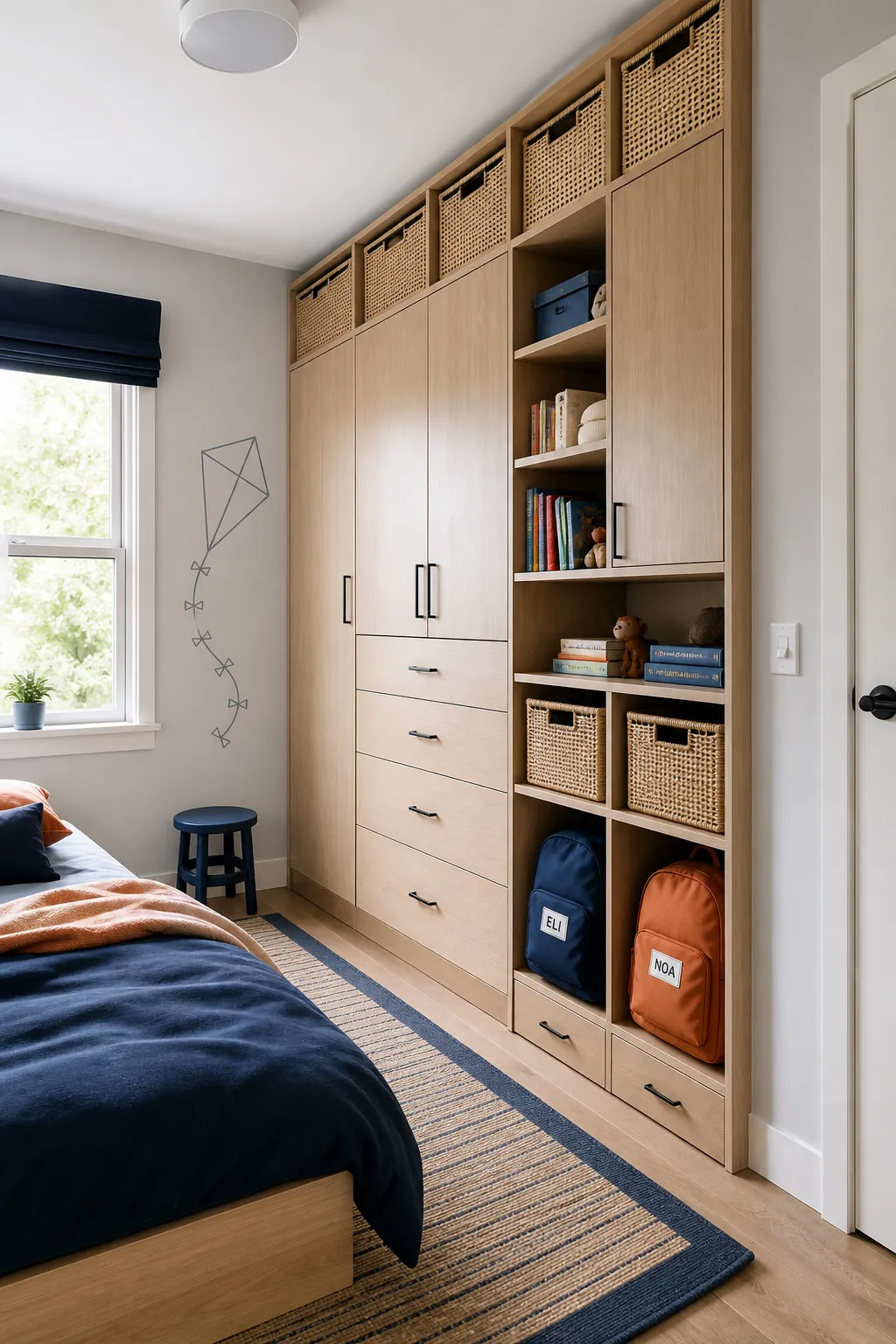
Turn One Wall Into a Storage Spine
Scattered cabinets create awkward gaps and make a small room feel busier than it is. Consolidating a wardrobe, drawers, baskets, and display space on one wall preserves a broad uninterrupted play area. Place everyday items low, seasonal supplies high, and anchor every tall unit according to its instructions. One organized storage wall usually feels calmer than several smaller pieces around the room.
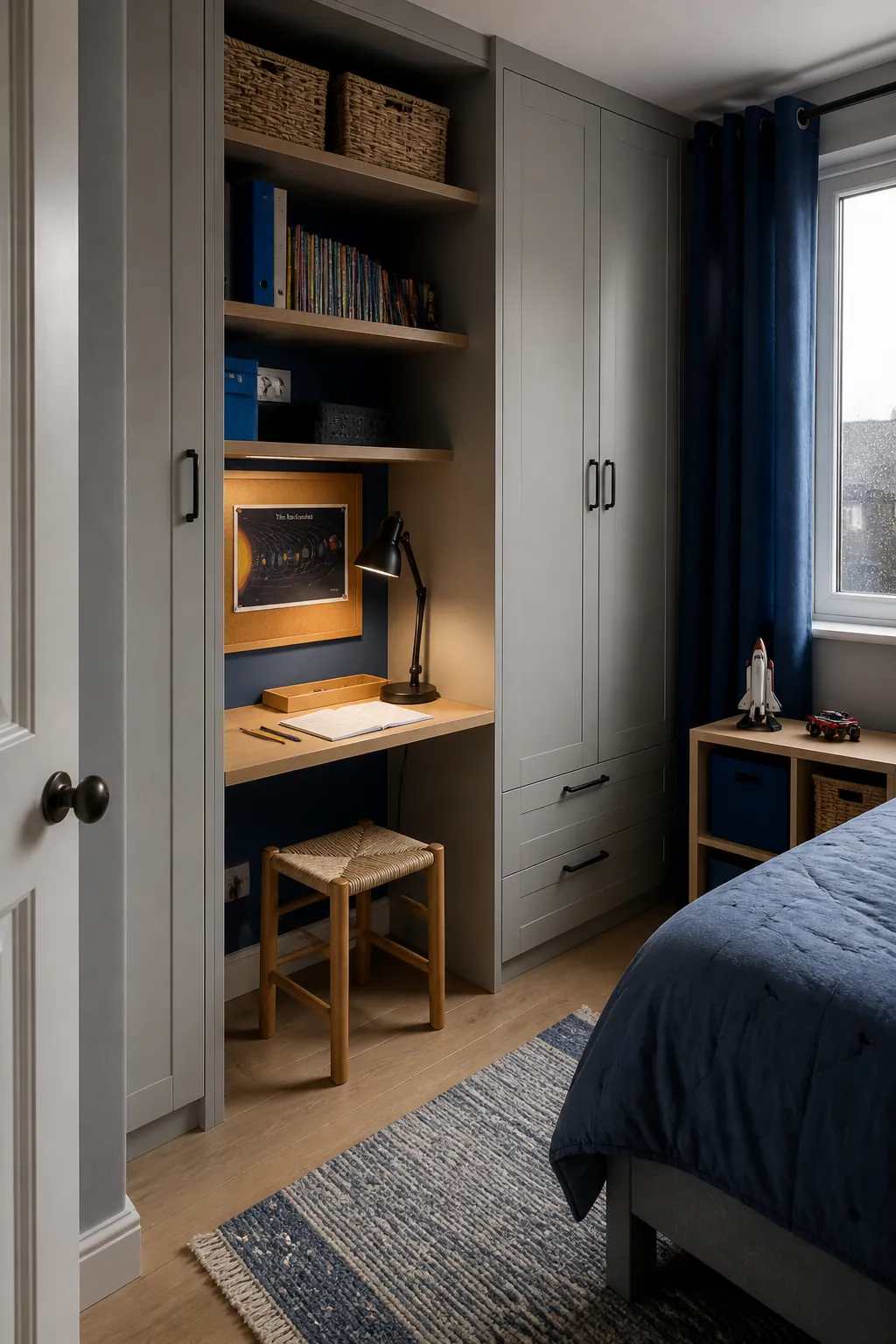
Place a Desk Between Wardrobes
A compact desk can occupy the otherwise wasted recess between two tall storage units. Keep the worktop shallow enough to protect circulation, then add a task light and one drawer for pencils and paper. The surrounding wardrobes visually frame the study spot while separating school materials from toys. A clear work surface helps a small room support homework without becoming an office.
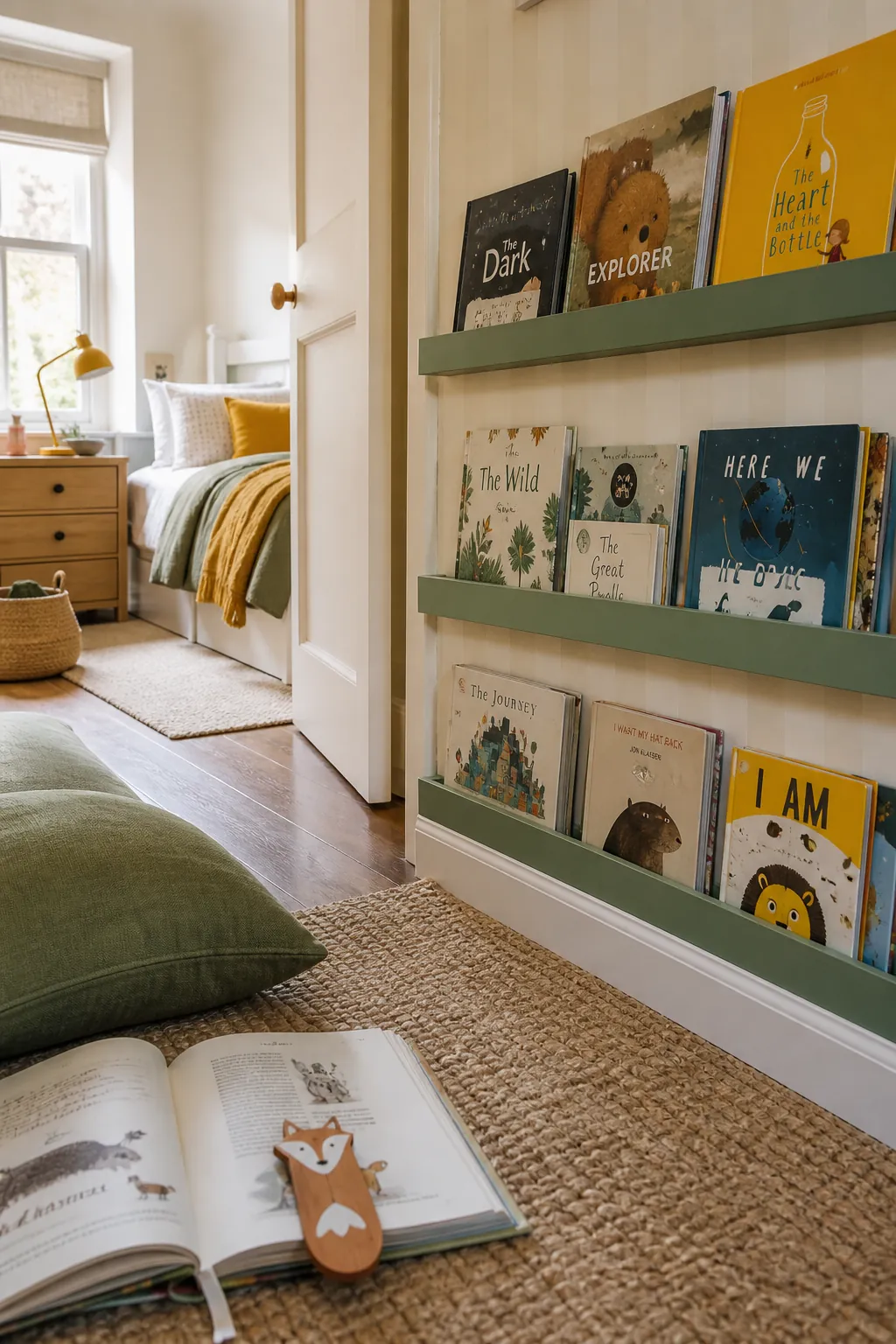
Swap Deep Shelves for Picture Ledges
Front facing book ledges use little depth and let children recognize covers without pulling out a whole stack. Install a short row near the reading spot and rotate a manageable selection instead of displaying every book. Secure each ledge into appropriate wall supports and keep heavy objects elsewhere. Visibility makes independent choosing and tidying much easier for young readers.
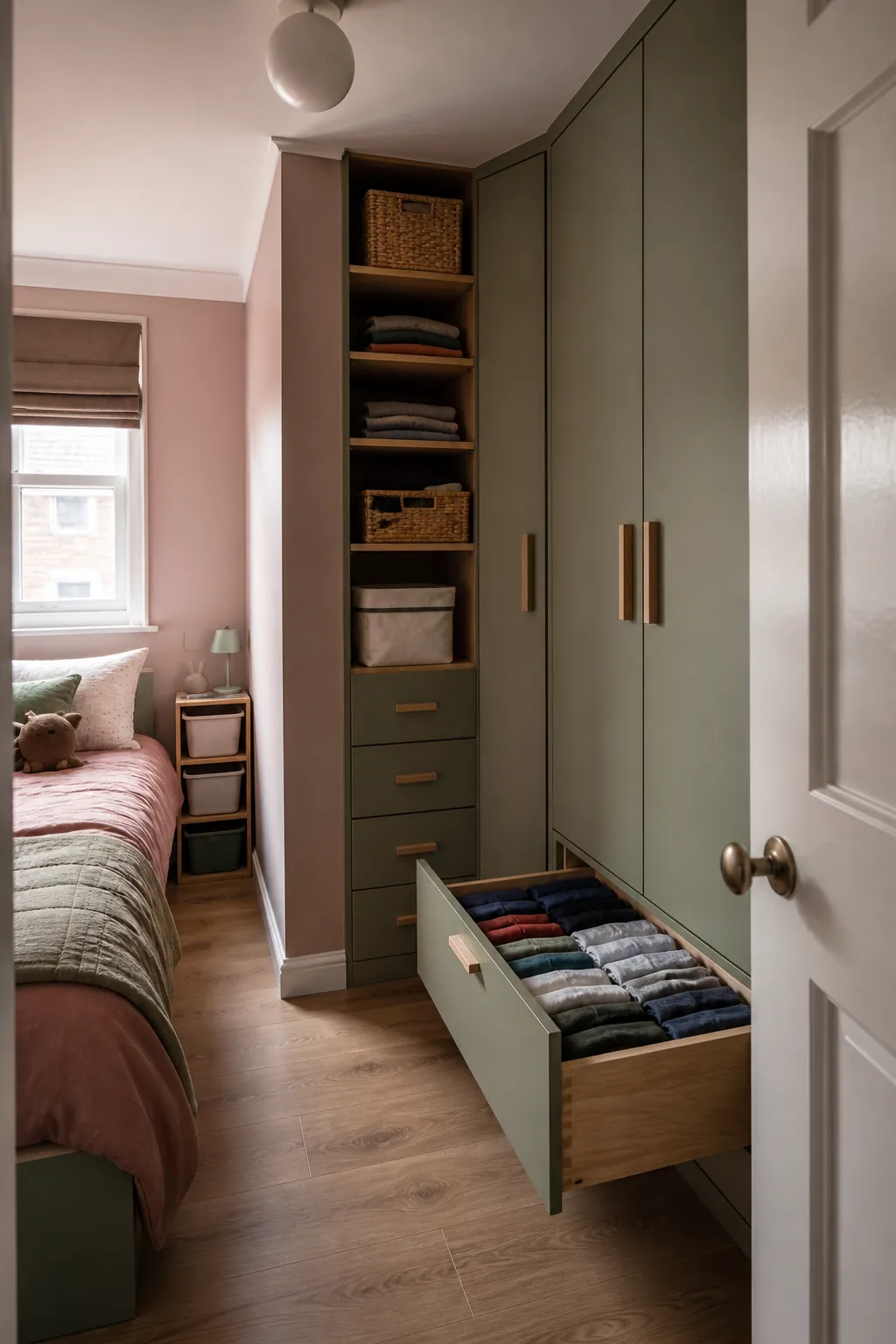
Create a Corner Wardrobe
An unused corner can hold more clothing when two shallow storage runs meet without blocking each other. Use the deeper side for hanging garments and the easier side for drawers or labeled baskets. Test every door and drawer path on the floor with tape before ordering pieces. A planned corner stores more than an oversized freestanding wardrobe that dominates one wall.
Try an L Shaped Shared Bed Layout
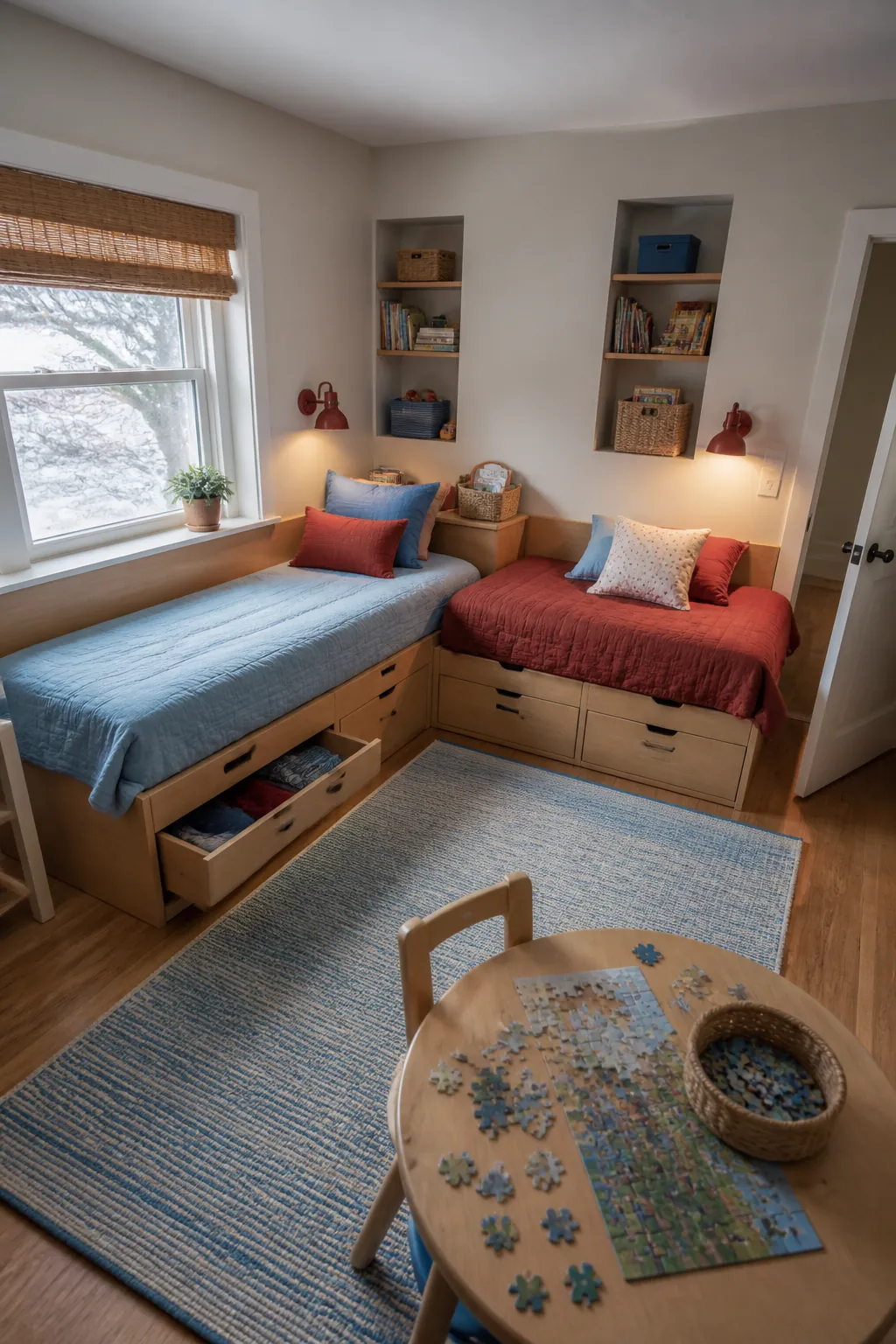
Two beds placed along adjoining walls can keep the center open and give each child a defined sleeping edge. The corner between them can become a shared table, lamp location, or closed bedding compartment. Match mattress heights only when it improves safety, and keep a direct path from each bed to the door. This arrangement offers visual connection without making both children climb a bunk.
Slide a Trundle Under a Daybed
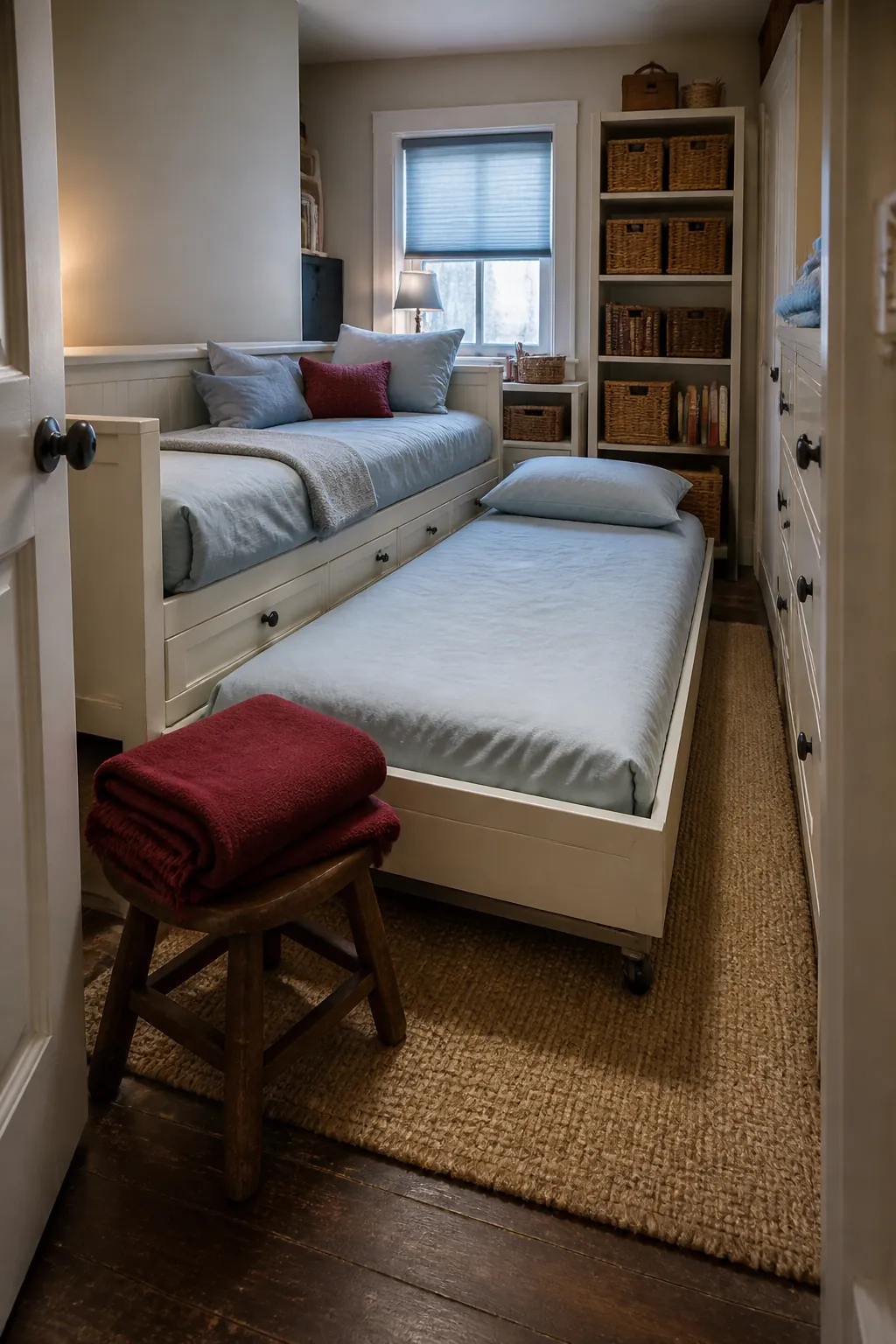
A daybed with a trundle can serve siblings or occasional guests while reading as a sofa during daylight hours. Reserve a clear pullout zone and choose bedding that stores compactly when the lower mattress is hidden. Because the trundle changes the overnight circulation route, rehearse how both sleepers reach the door. The design succeeds when the second bed disappears without creating a daily lifting chore.
Fit Baskets Into a Low Cube Unit
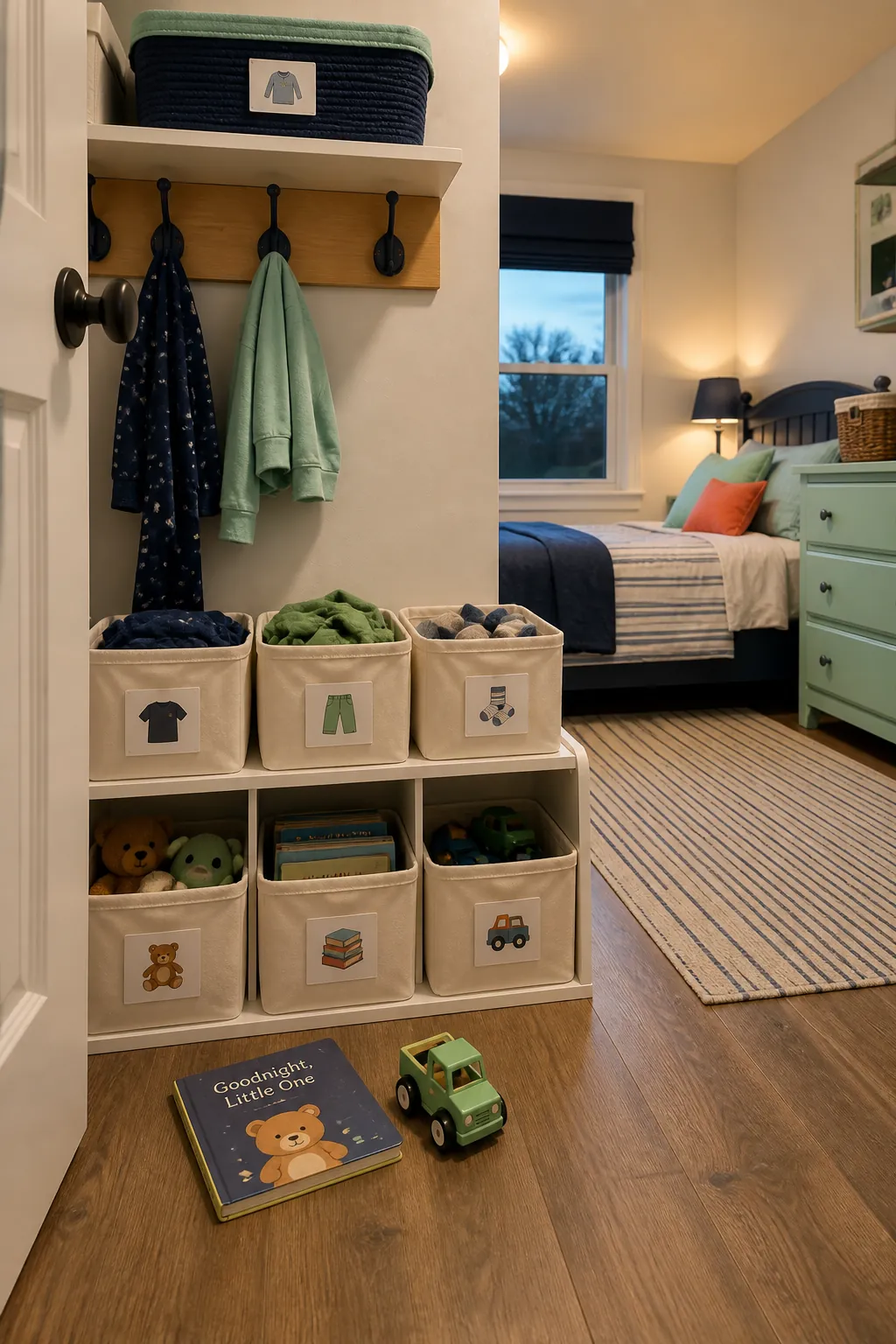
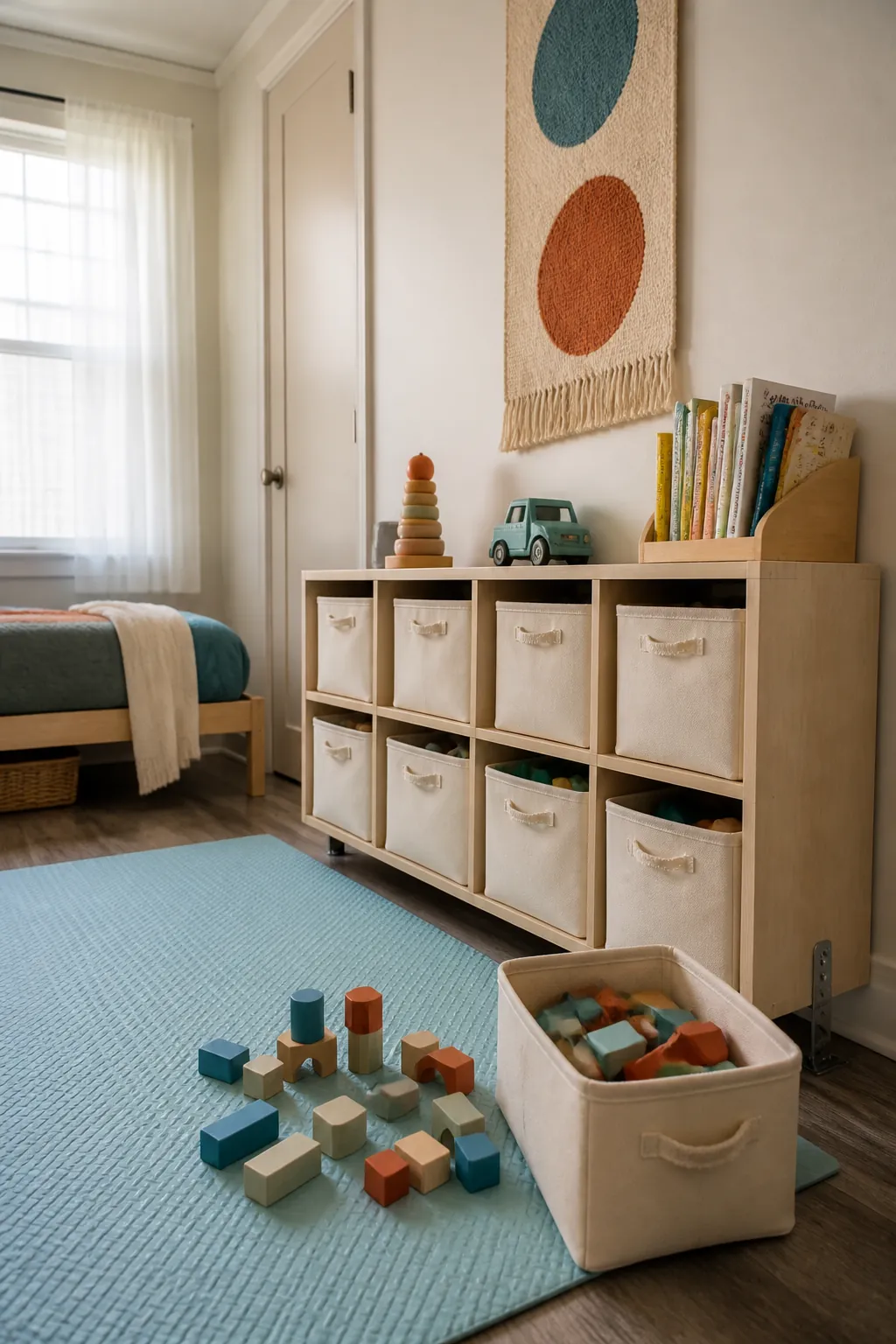
A low cube organizer gives toys obvious homes and offers a useful surface without towering over the room. Assign broad categories such as blocks, vehicles, dolls, and craft supplies so cleanup does not require perfect sorting. Choose light baskets with easy handles, and anchor the unit even when it appears stable. Simple categories are the heart of kids room organization ideas that survive real play.
Use the Back of the Door Carefully
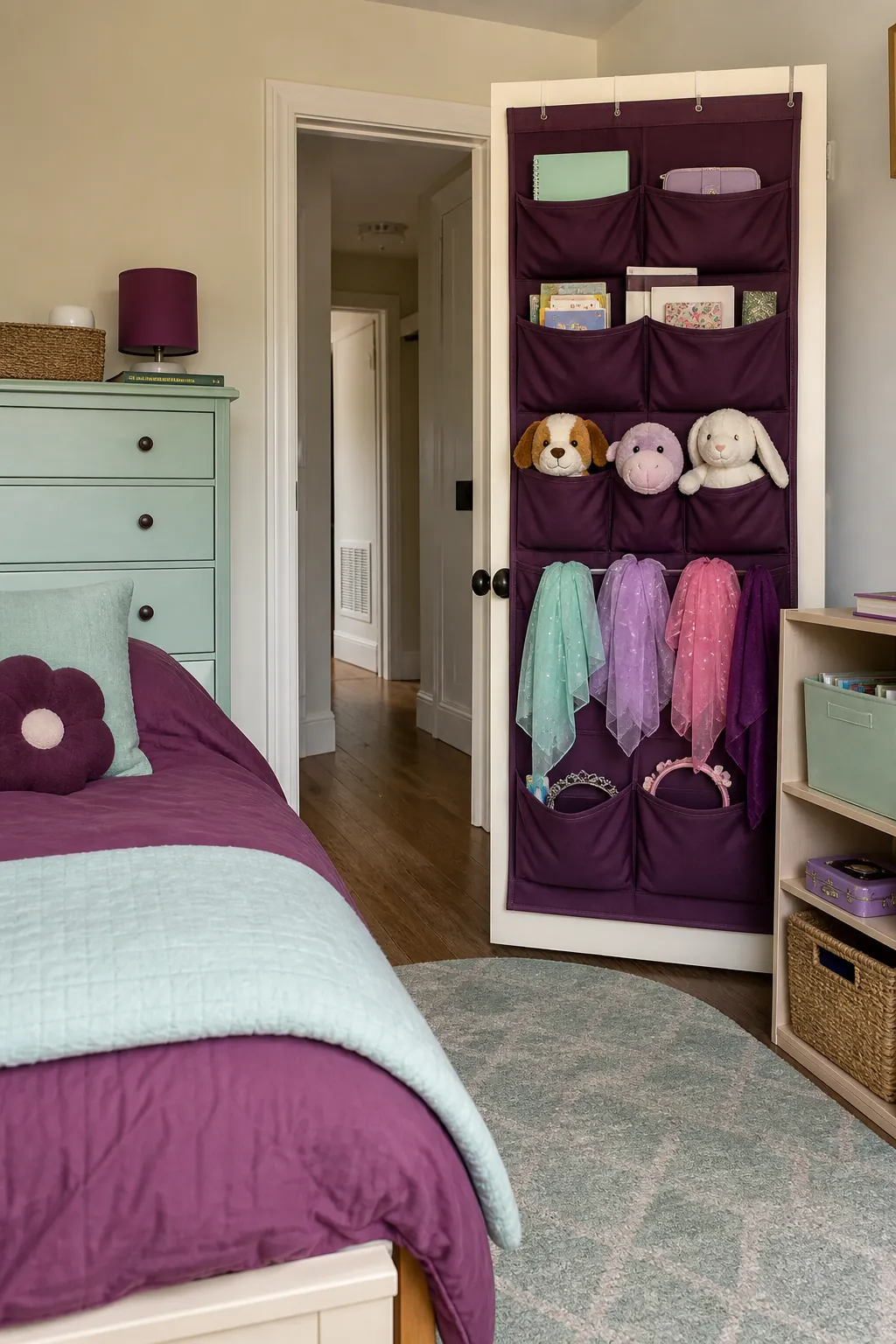
A slim door organizer can hold soft accessories, dress up clothes, or small plush toys without consuming wall space. Keep the load light so hinges operate smoothly and make sure pockets cannot trap fingers near the closing edge. Check that the door still opens fully and never obstruct a latch or emergency route. Door storage works best for flexible items that children use often.
Add a Peg Rail at Child Height
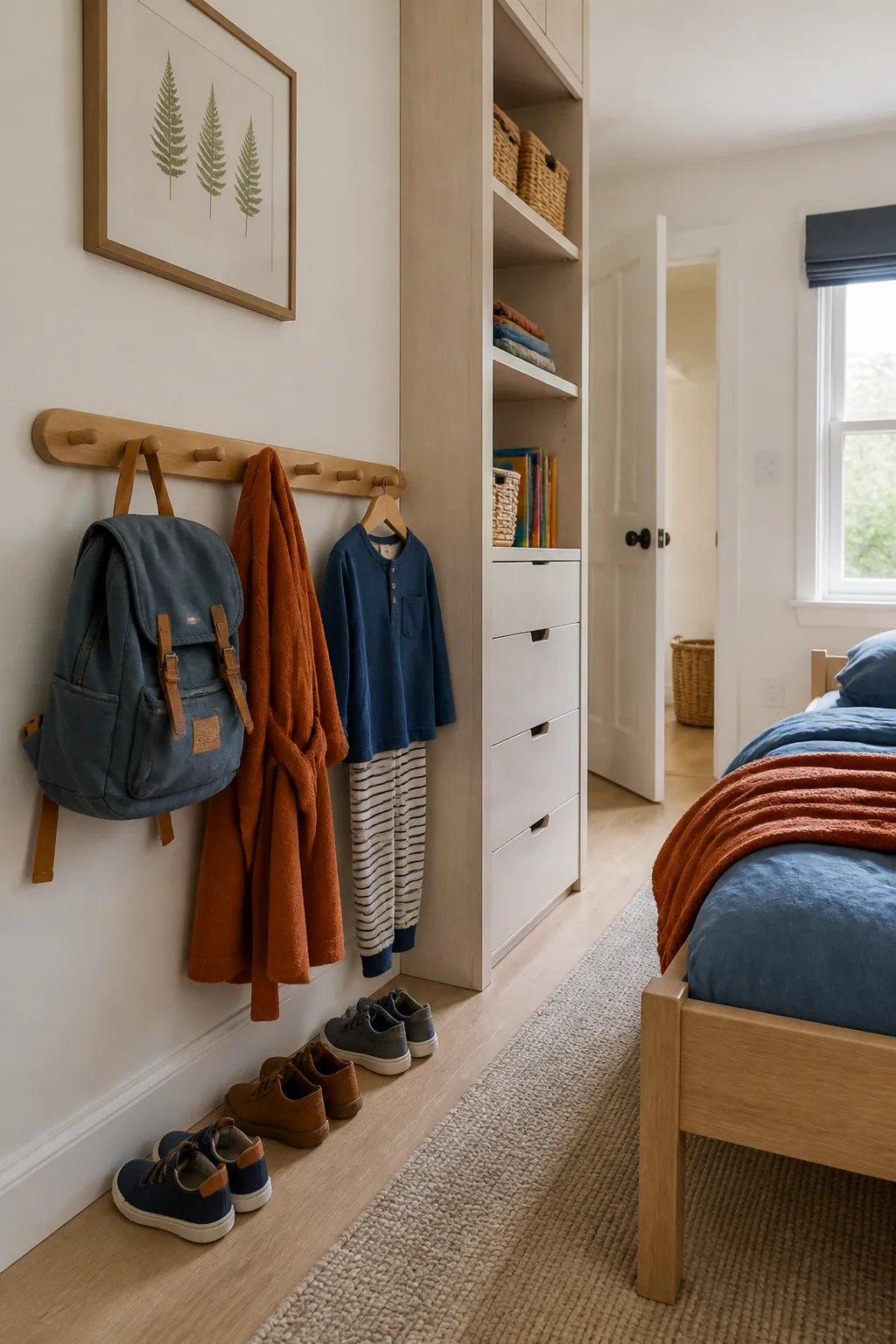
A sturdy peg rail gives tomorrow’s outfit, a backpack, and a robe somewhere to land before they reach the floor. Install it where hanging items will not narrow the main walkway or brush against a heater. Use rounded pegs, restrained quantities, and wall fixings suited to the expected load. Accessible hooks let a child participate in the room’s reset routine.
Tuck a Rolling Cart Beside the Desk
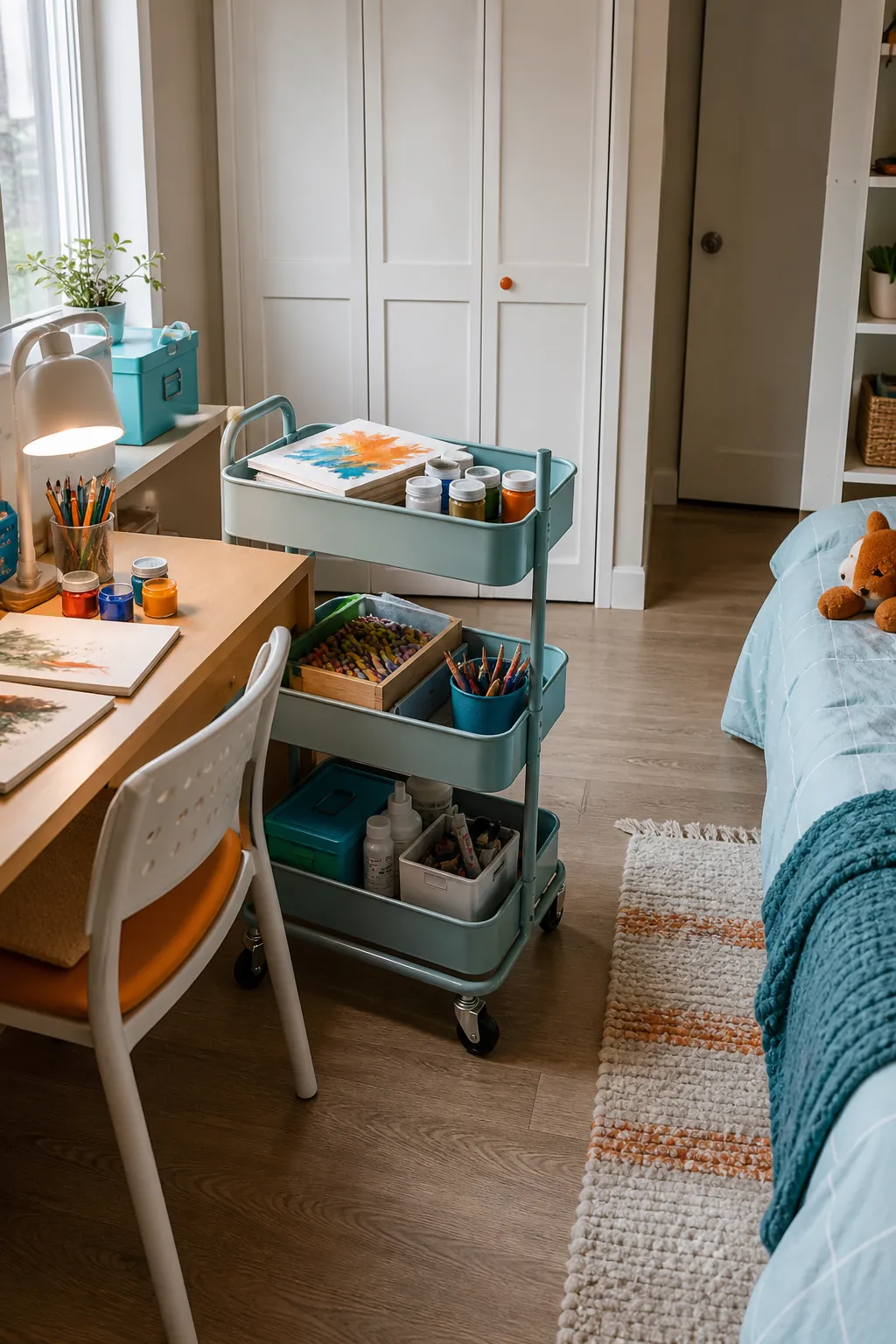
A narrow rolling cart can gather art supplies or school tools while fitting into a gap that no cabinet can use. Give each tier one purpose and park it against a wall when activities finish. Locking wheels are helpful on hard flooring, especially when younger children may pull on the frame. Mobility lets one small storage piece support several parts of the room.
Make the Closet Work in Layers
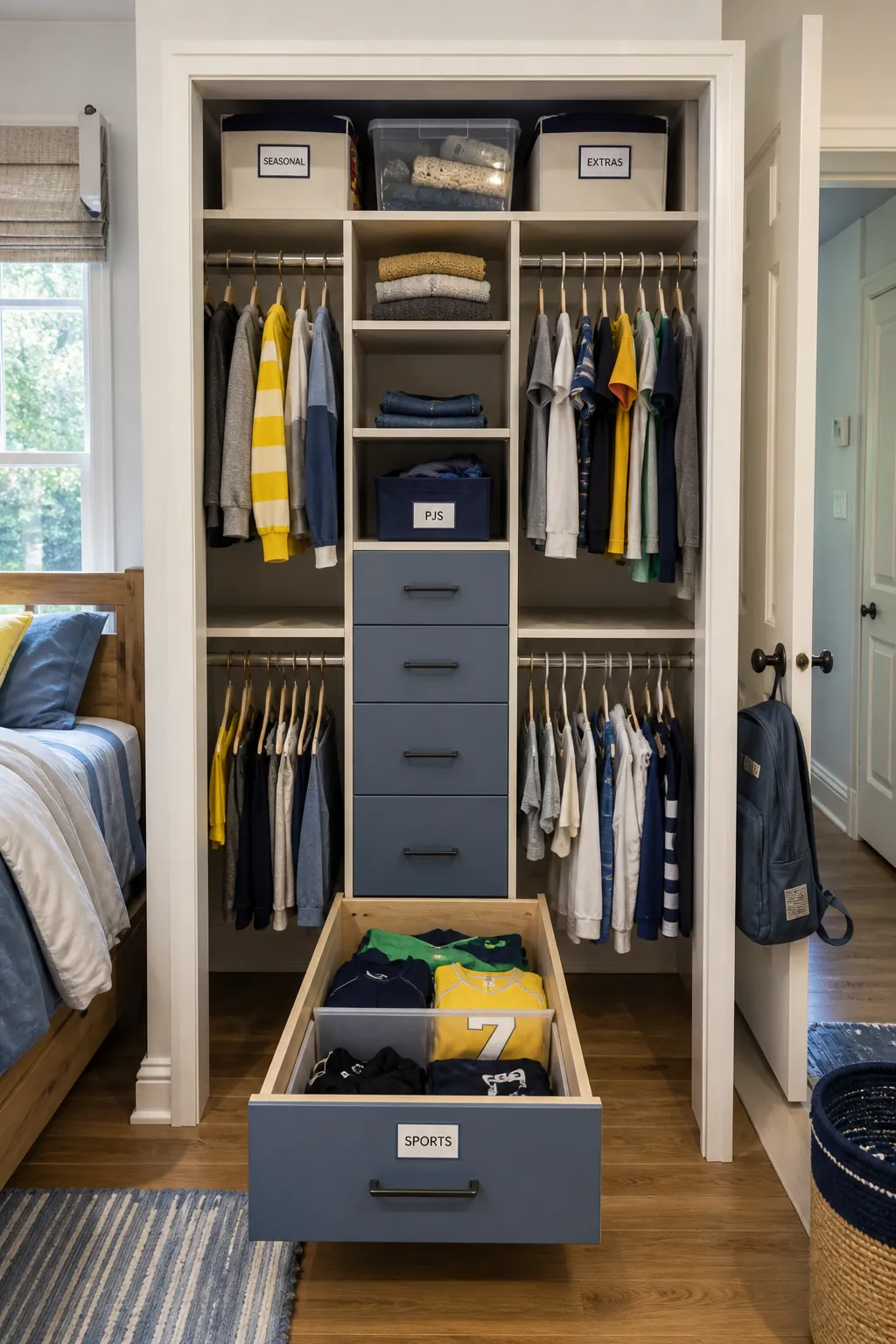
A single high rail leaves valuable space unused below short children’s clothes. Add a lower rail, compact drawer unit, or labeled shelf system while keeping seldom used items at the top. Sliding bins should come out without removing neighboring objects, and every heavy component needs proper support. Organize a kids room closet around reach and frequency rather than adult wardrobe habits.
Mount a Fold Down Activity Table
A wall mounted table can provide a surface for drawing or building, then fold away when floor play begins. Select hardware designed for the load, secure it to suitable structure, and keep the folding mechanism protected from small fingers. Store only a few supplies nearby so setup stays quick. A disappearing activity surface is valuable when the same square meter must support several routines.
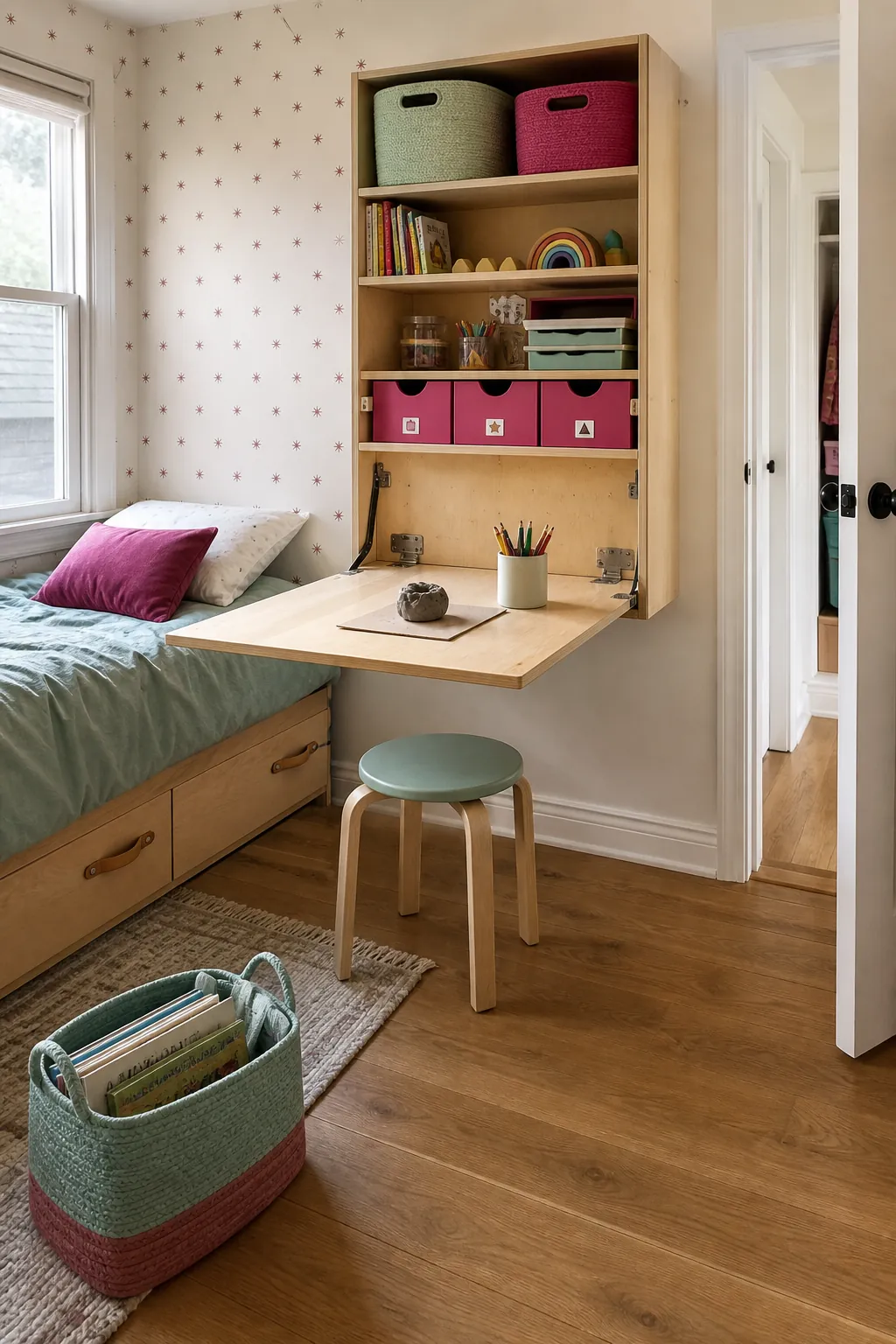
Frame the Bed With Shallow Cabinets
Shallow cabinets beside and above a bed can use wall volume while preserving the sleeping footprint. Keep overhead units professionally secured, avoid placing heavy loose items above the pillow, and provide enough head clearance for sitting up. Open niches at hand height can replace bedside furniture. The frame should feel protective and balanced, never cramped or top heavy.
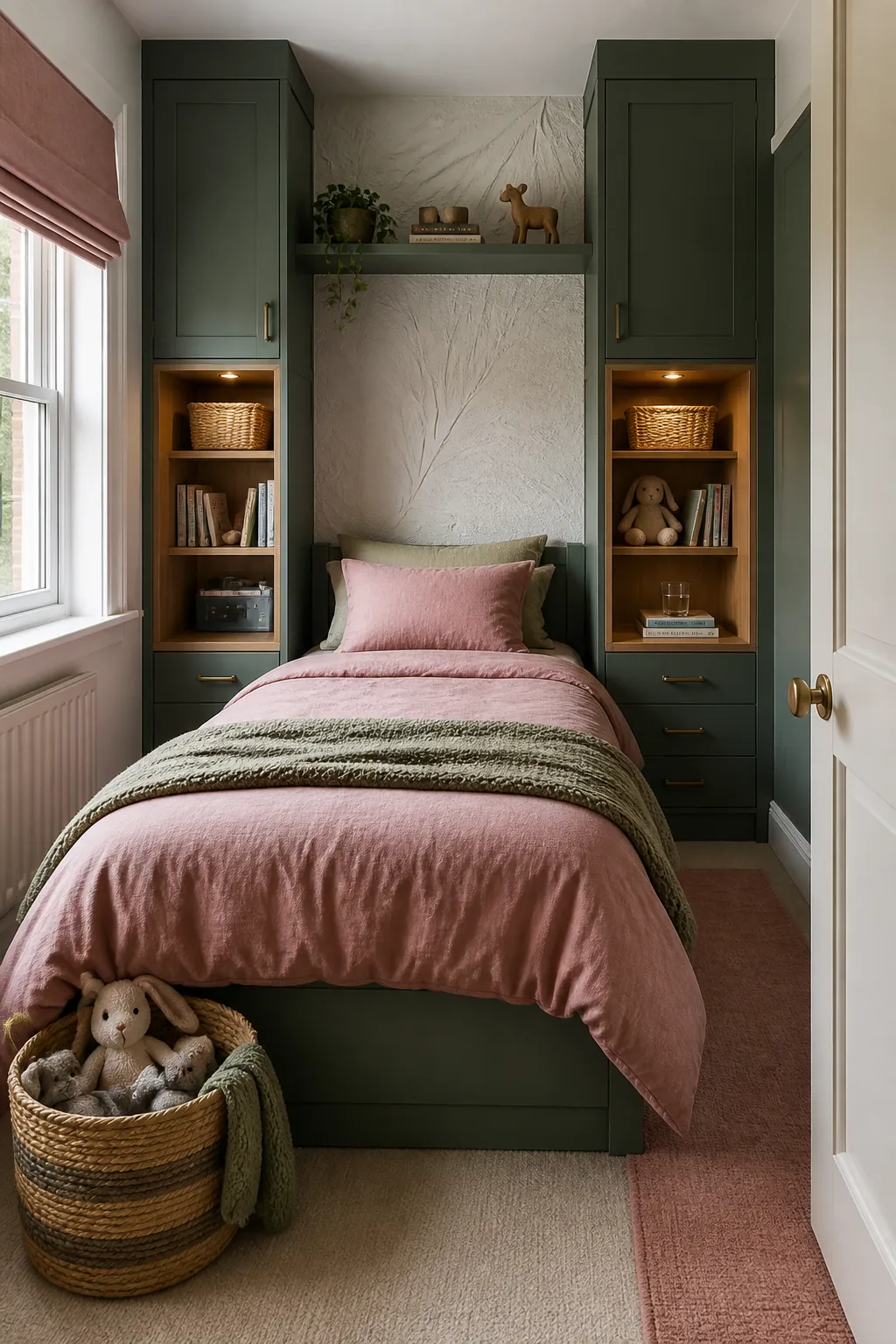
Define Two Personal Zones
Children sharing a compact room need a sense of ownership even when furniture must overlap. Give each child one color accent, one book ledge, one labeled drawer, and one small display area. A curtain or open shelf can suggest separation, but it should not reduce supervision, daylight, or airflow. Fairness often comes from equal control over a small zone, not perfectly equal floor area.
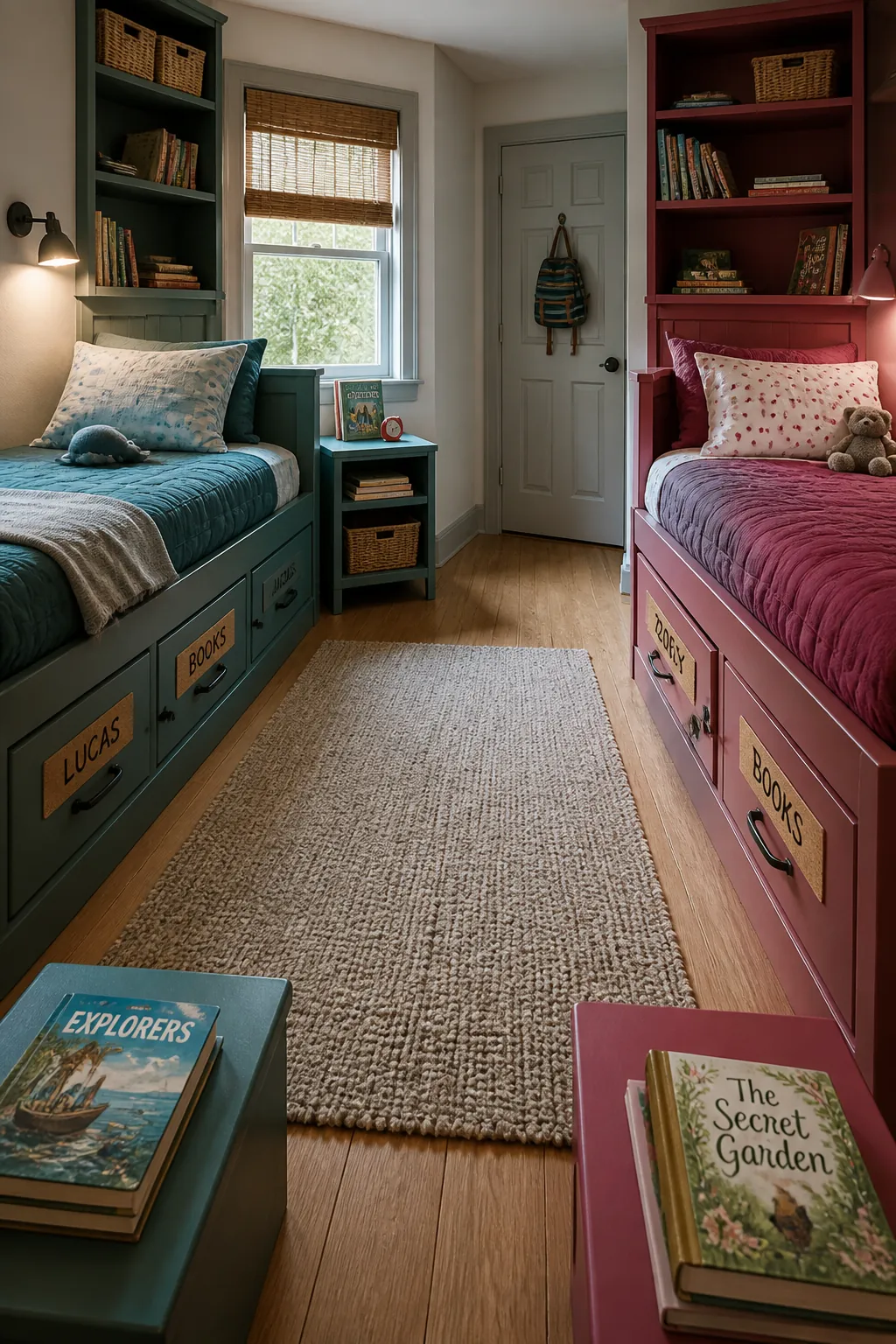
Keep the Center of the Floor Empty
Pushing major furniture toward the perimeter creates one useful play space instead of several unusable slivers. Place tape on the floor to test the bed, storage, and door paths before moving anything heavy. A right sized rug can define the clear center, but it should lie flat and allow drawers to open. Visible empty floor is functional capacity, not space waiting for another purchase.
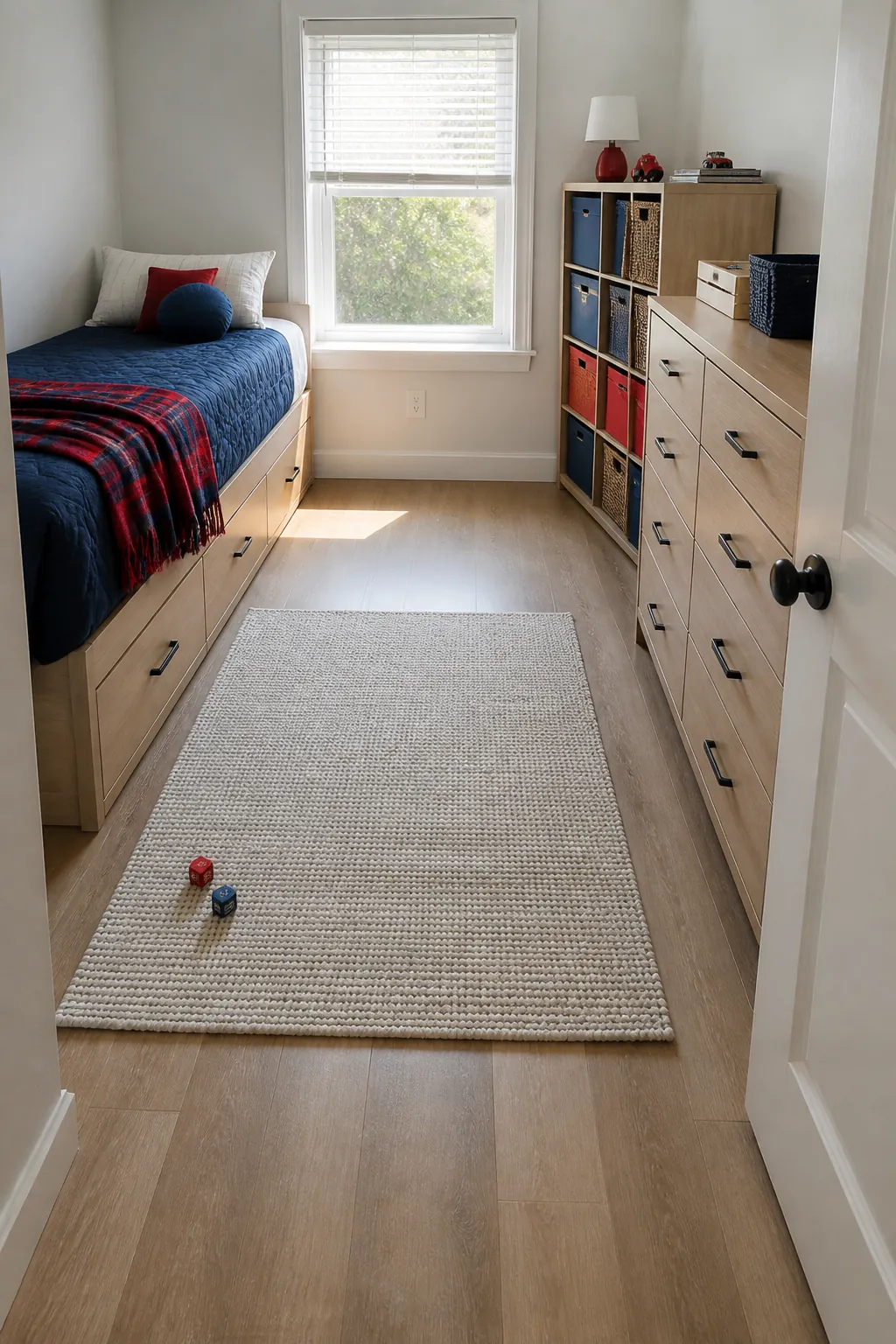
Rotate Toys Instead of Displaying Everything
A small room feels more generous when only the current favorites are available. Keep a limited set in reachable baskets and move the rest to a closed upper shelf or storage elsewhere in the home. Rotate by interest rather than by a rigid schedule, and involve the child in choosing what stays. Fewer visible choices can improve both play focus and cleanup speed.
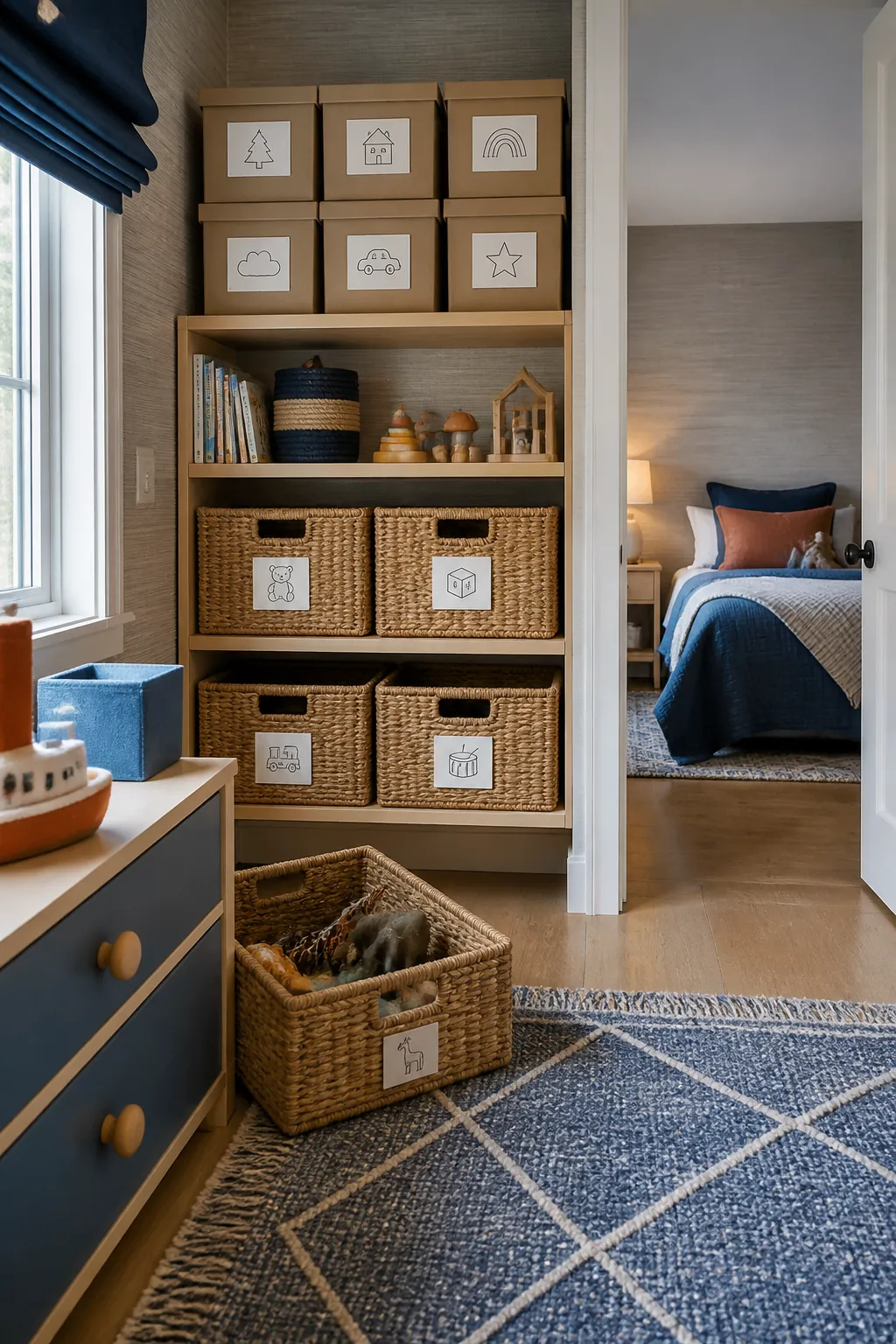
Choose Furniture That Changes With Age
Adjustable shelves, a convertible bed, and a simple desk can serve longer than theme shaped furniture with one narrow purpose. Neutral major pieces also make it easier to refresh a room with bedding, art, and baskets rather than replacing storage. Confirm that every converted arrangement still meets the manufacturer’s safety rules. Longevity saves both space and money because fewer discarded pieces pass through the room.
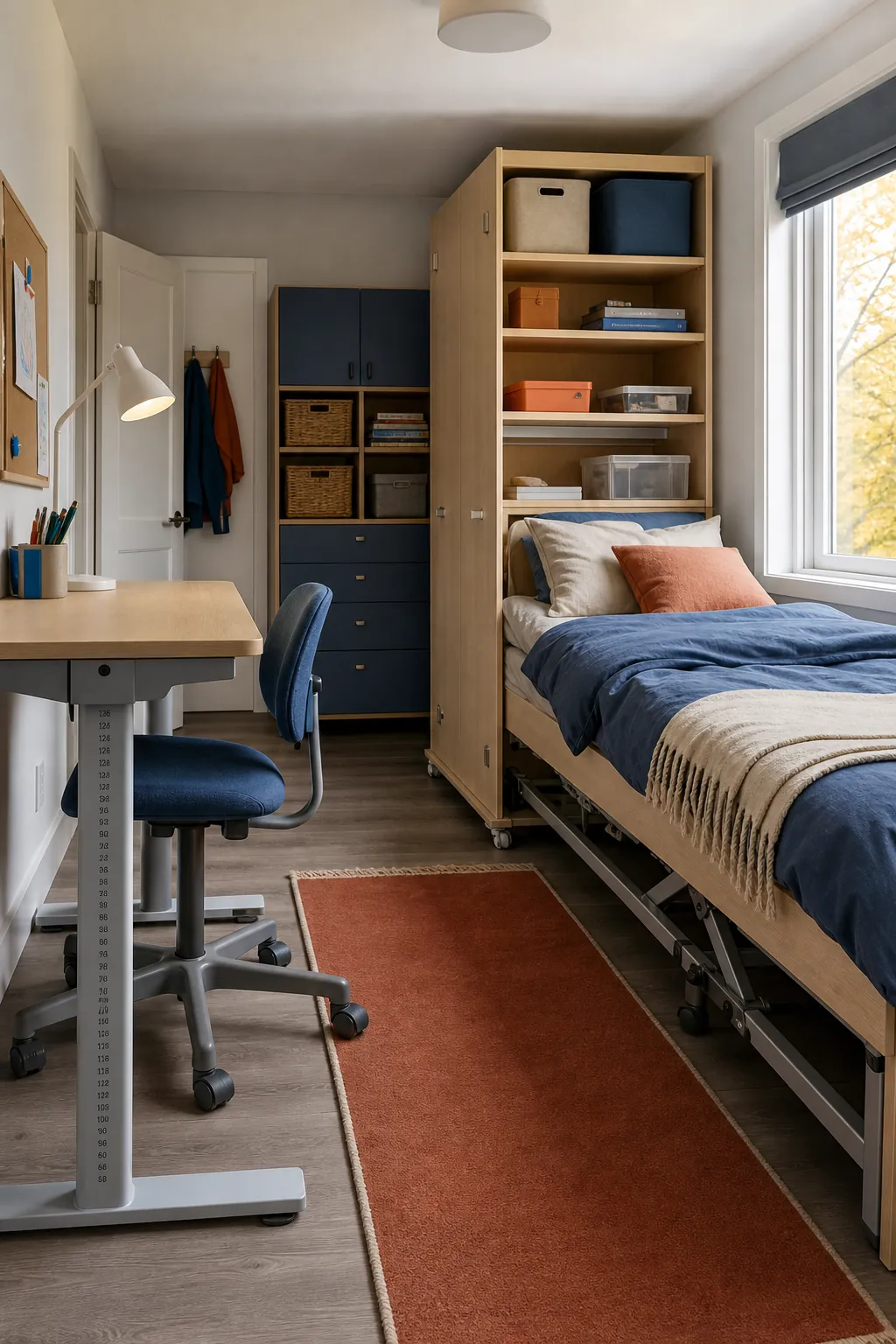
Finish With a Five Minute Reset
The most efficient layout still fails when putting things away is confusing or physically difficult. Give every daily item an obvious reachable home, use picture labels for early readers, and keep each container light enough to handle. Practice a short reset before bedtime until the route becomes familiar. A small kids room stays usable when the child can maintain the system with minimal adult sorting.