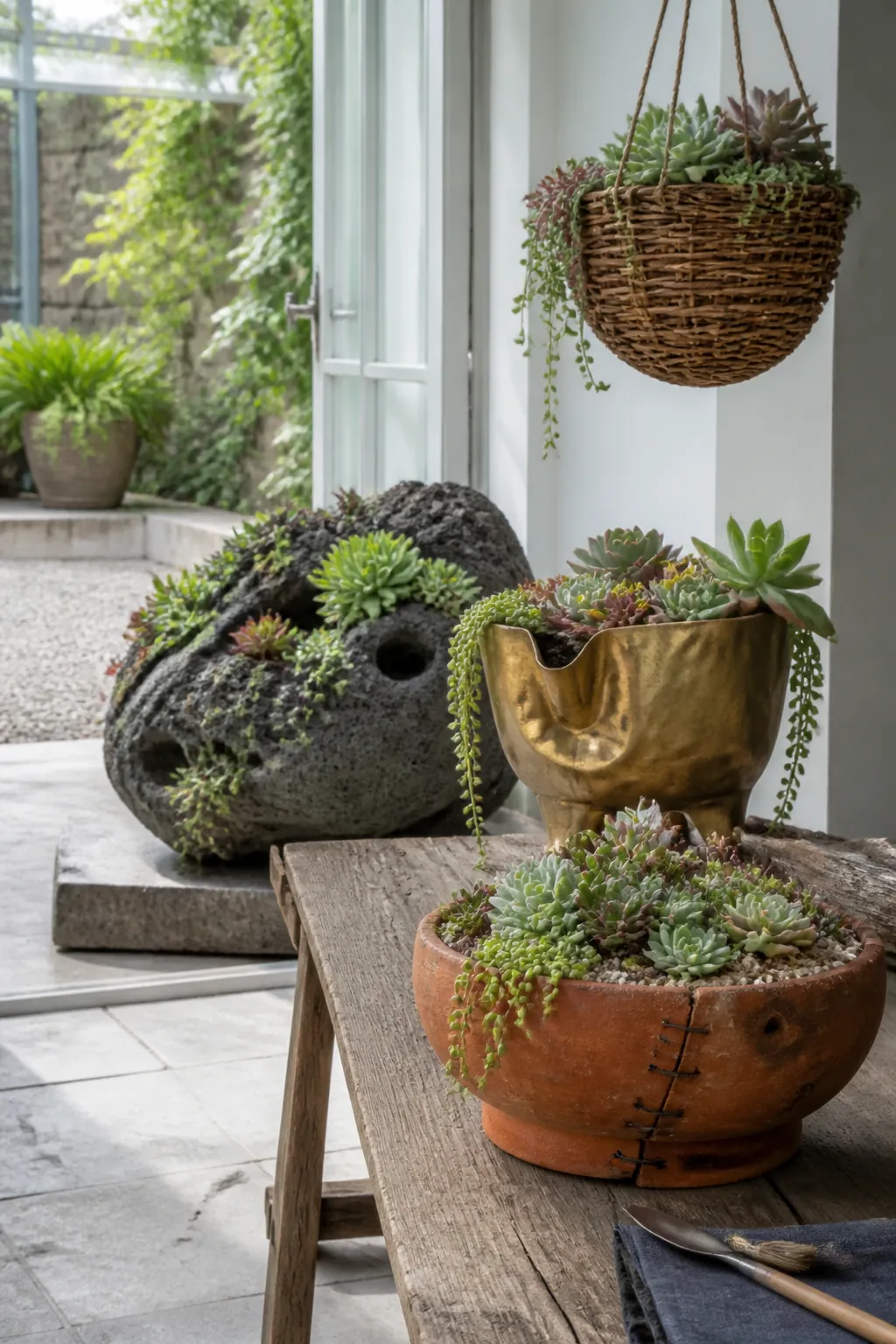
A memorable planter still has to protect roots from trapped water, unstable soil, and poor light. The best unusual containers solve those practical problems while giving a collection a clear focal point. Use these concepts as starting points, then match drainage depth and sun exposure to the succulent you actually own.
Salvaged Type Case Rosette Display
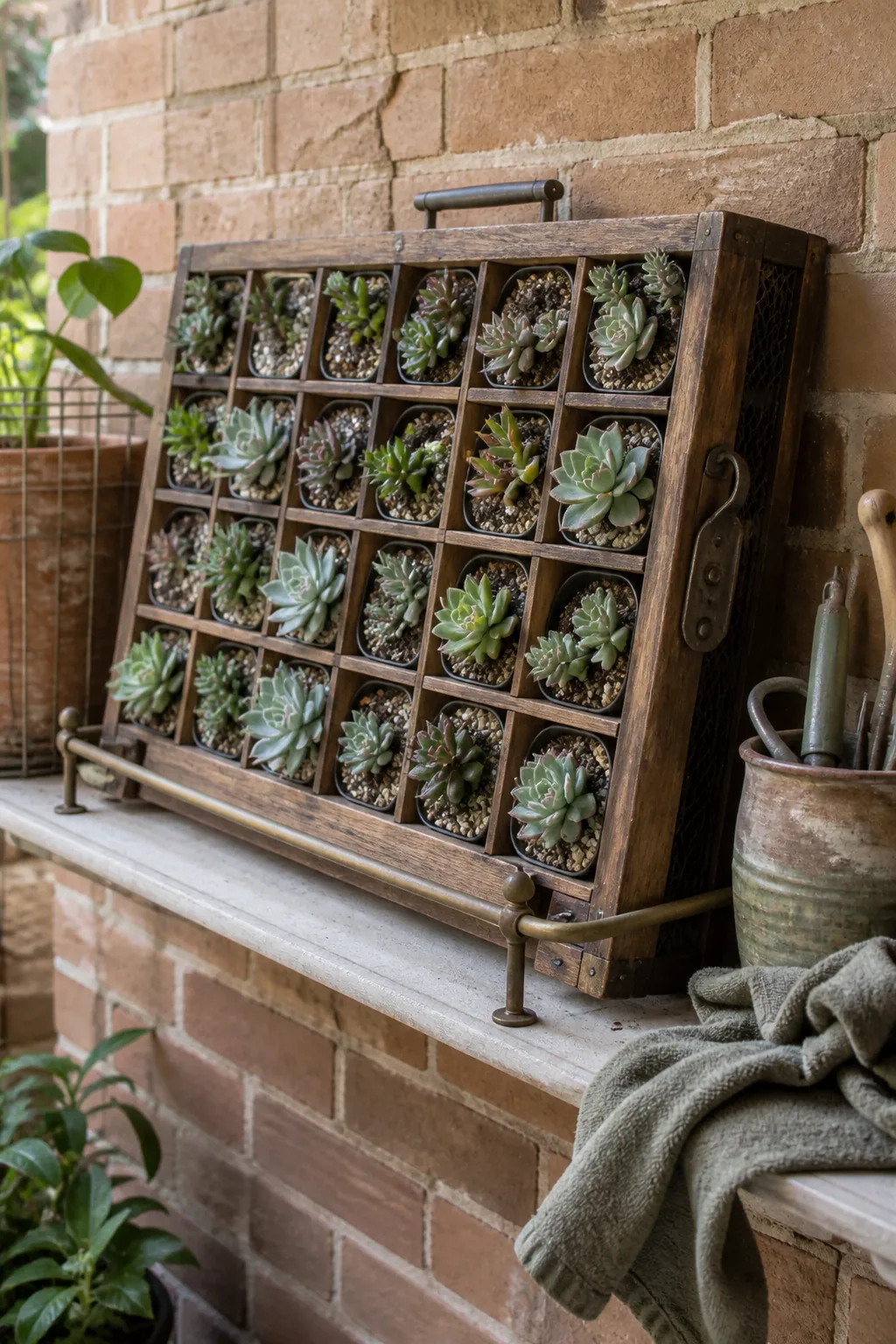
An old shallow type case can become a vertical mosaic for compact rosettes when each compartment receives a fitted nursery cup. Keep the case under a covered porch so the wood can dry between careful waterings. A removable backing panel makes inspection easier and prevents hidden moisture from damaging the wall.
Volcanic Rock Pocket Garden
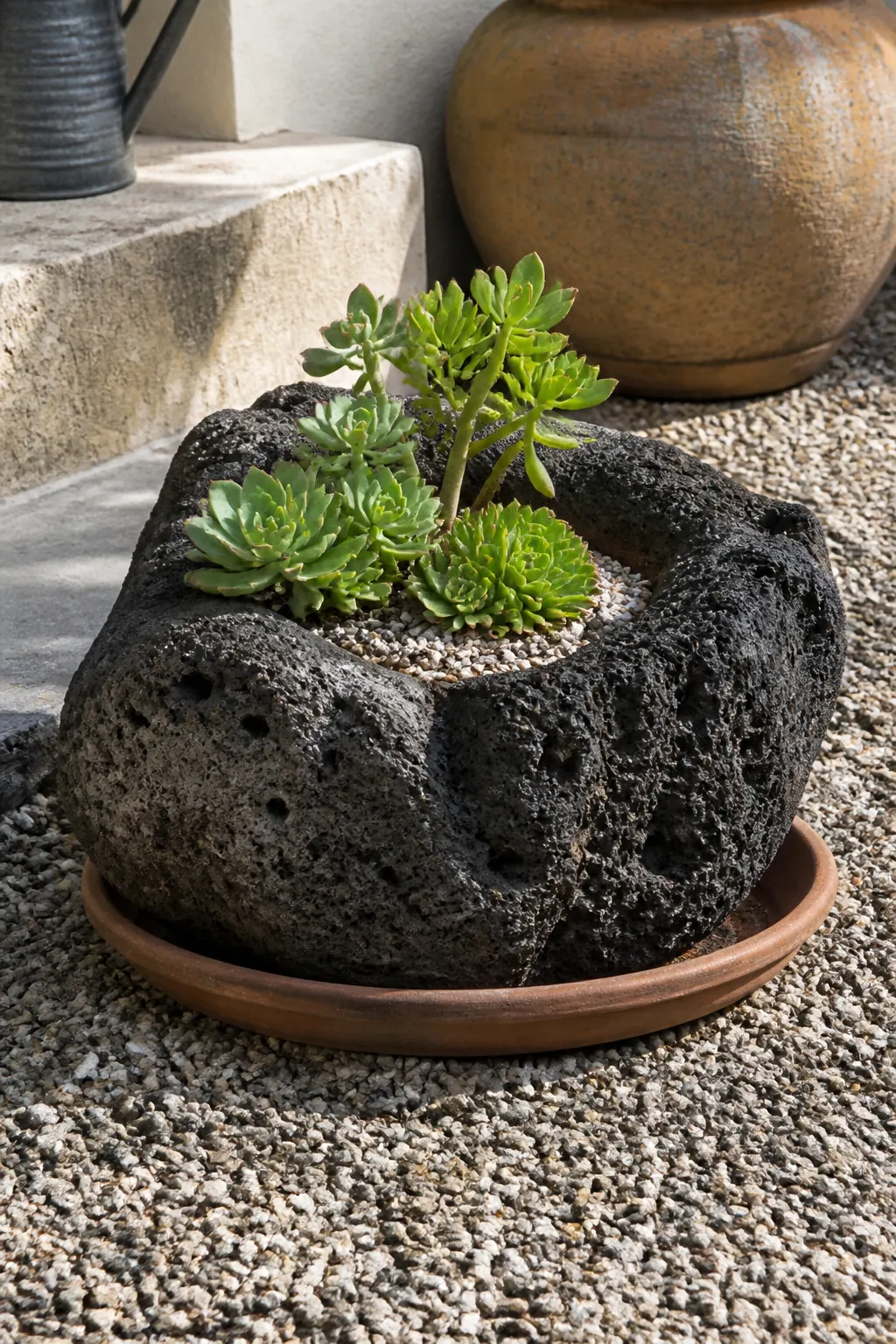
A naturally pitted lava rock gives a single small succulent the presence of a miniature landscape. Set a nursery plug into a pocket of gritty mix rather than forcing roots into bare stone. Place the rock on a broad saucer because water can travel through unexpected fissures.
Copper Pipe Propagation Rail
Short copper sleeves mounted along a rail create orderly stations for leaf propagation without consuming a whole sill. Slip tiny perforated pots inside the sleeves so soil never touches the metal and every plant can be removed. Leave generous spacing between stations because fresh offsets need airflow as much as they need bright light.
Broken Terracotta Crater Bowl
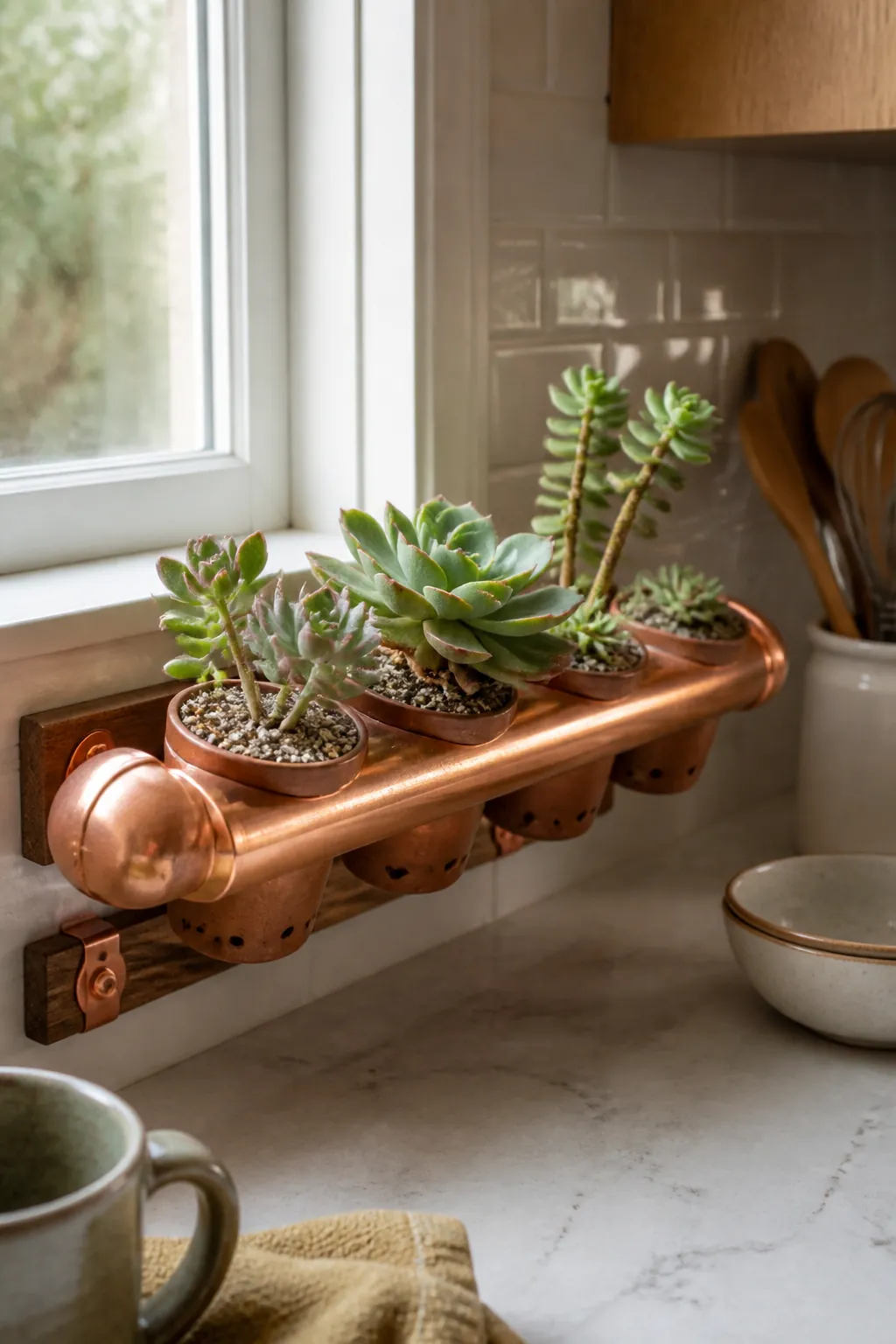
A cracked terracotta bowl can frame a stepped planting instead of heading to the bin. Sand every exposed edge, stabilize the fragments, and keep the drainage hole completely open before adding soil. Position larger rosettes near the intact rim and let smaller sedums occupy the lower terraces.
Stone Mortar Window Planter
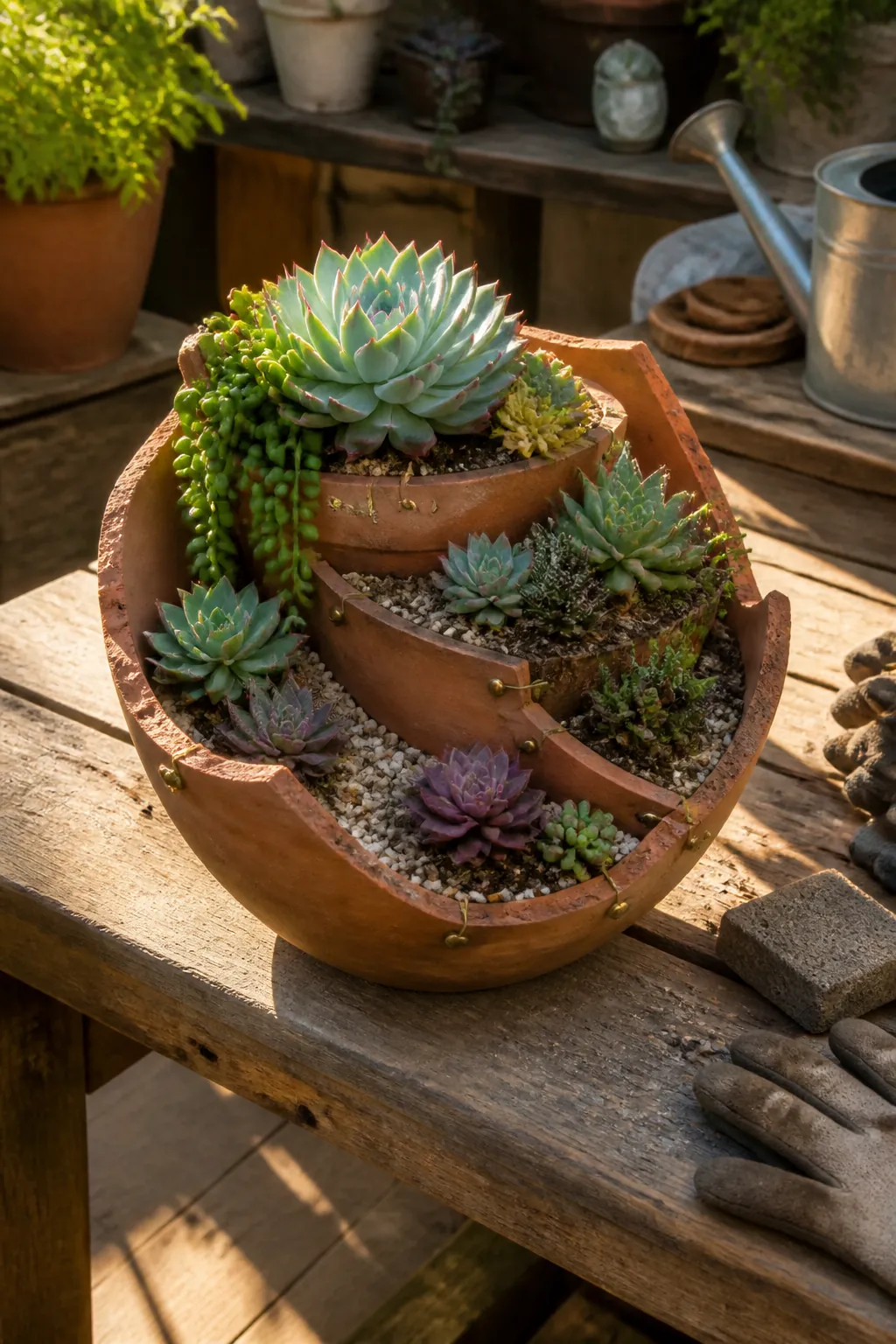
A weathered kitchen mortar makes a weighty counterpoint to delicate echeveria leaves. Use an internal pot if the stone vessel has no drainage, then lift it out for watering at the sink. Felt pads protect the sill while a thin top dressing keeps the nursery rim visually quiet.
Suspended Woven Cane Halo
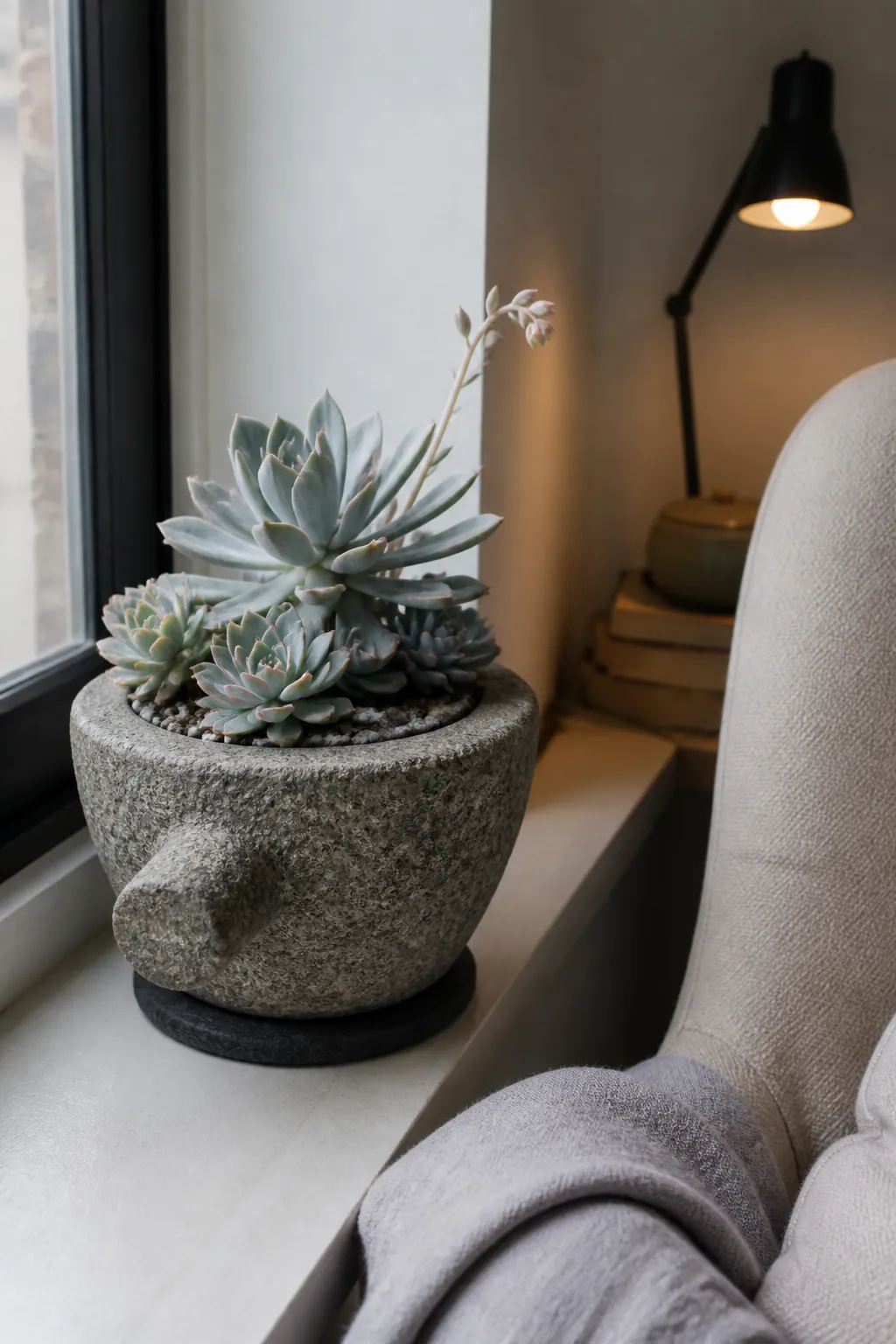
A circular cane frame can cradle a lightweight pot and turn a trailing succulent into a living mobile. Secure the frame at three balanced points and choose a ceiling anchor rated well above the wet weight. Hang it beside the window rather than directly against the glass to reduce heat stress.
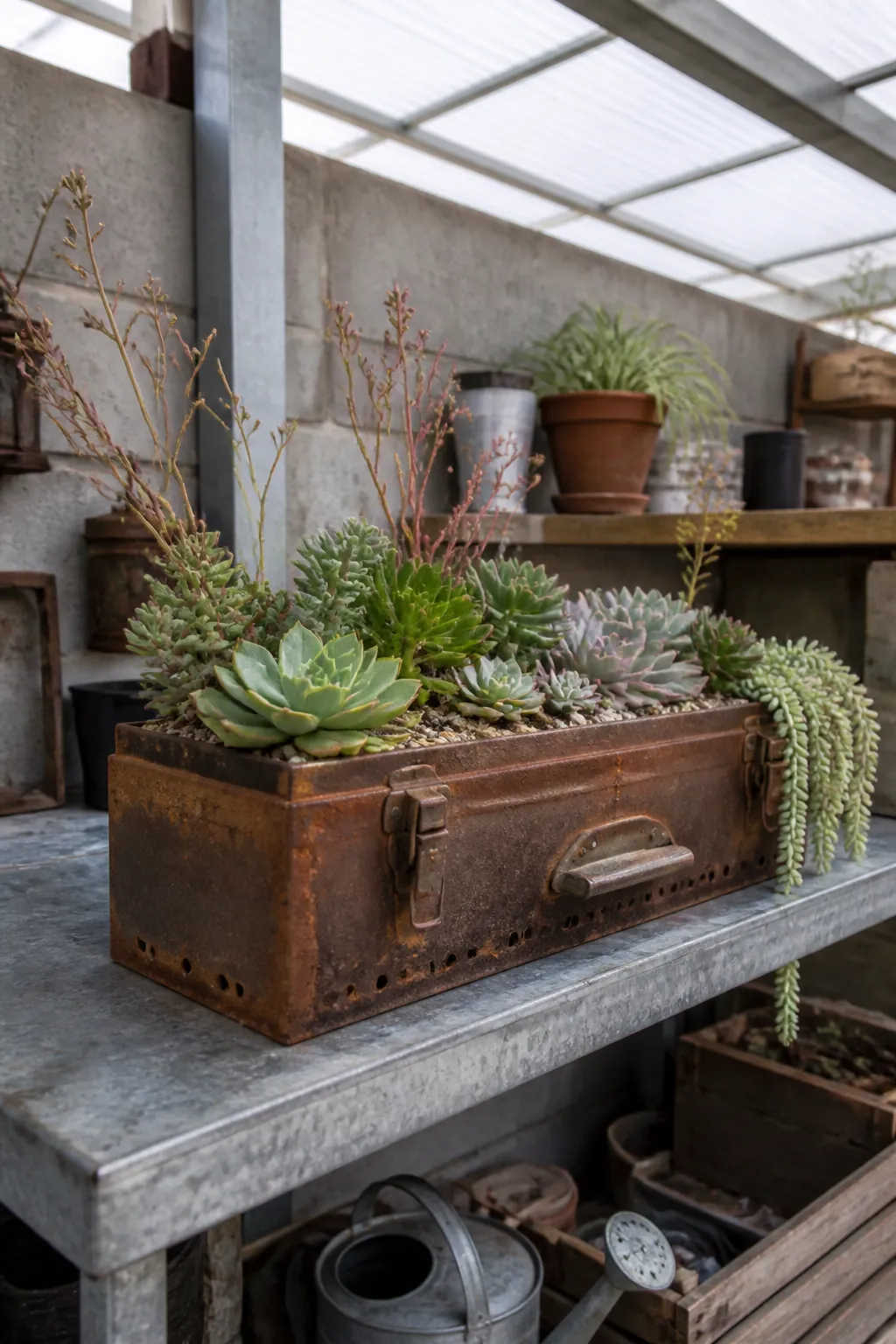
Rusted Tool Box Succulent Trough
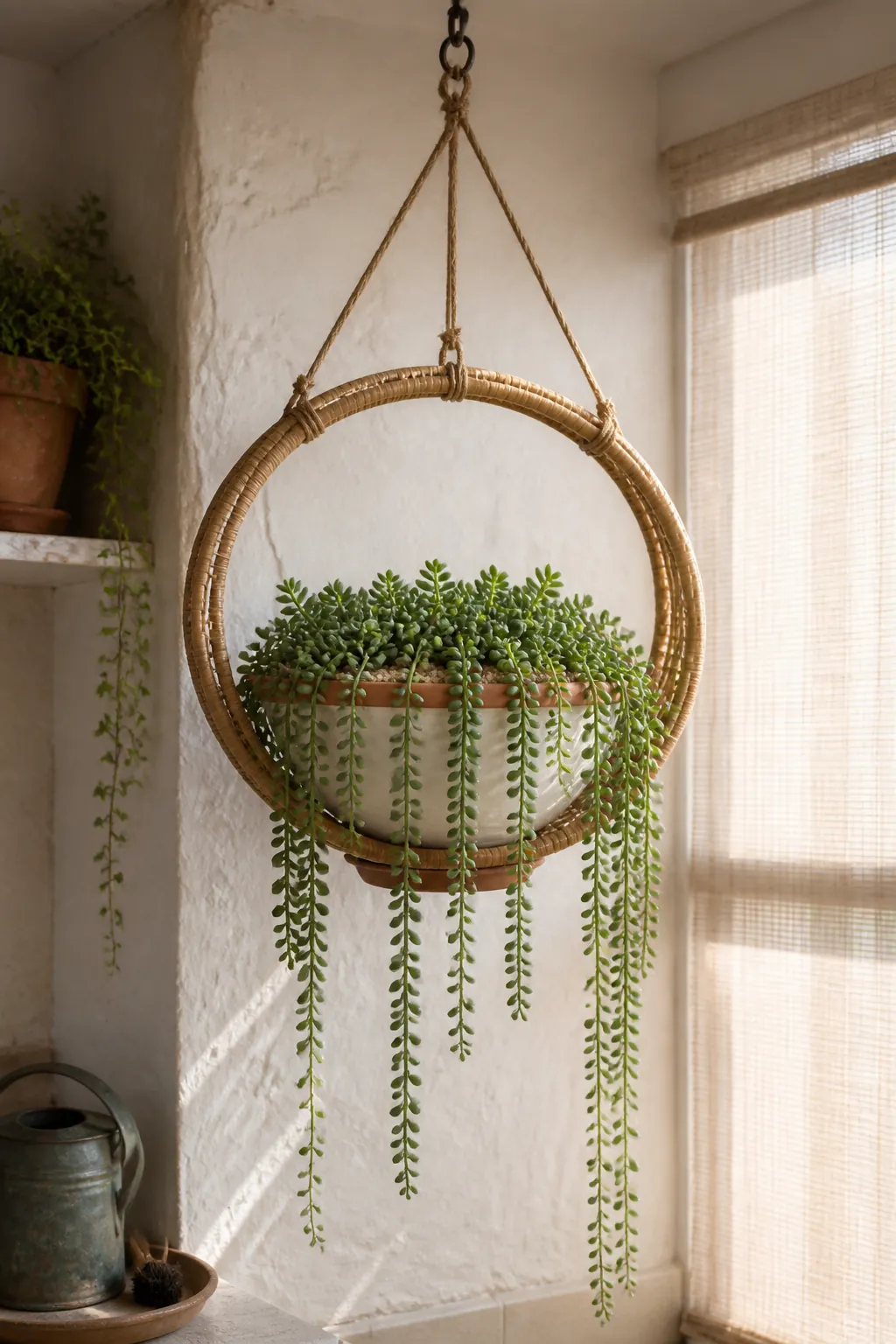
A narrow steel tool box offers enough length for a rhythmic row of hardy succulents. Drill drainage holes before planting and isolate the soil with a fitted liner that also drains. Preserve only stable surface patina, since flaking rust and sharp handles make a poor container near a busy path.
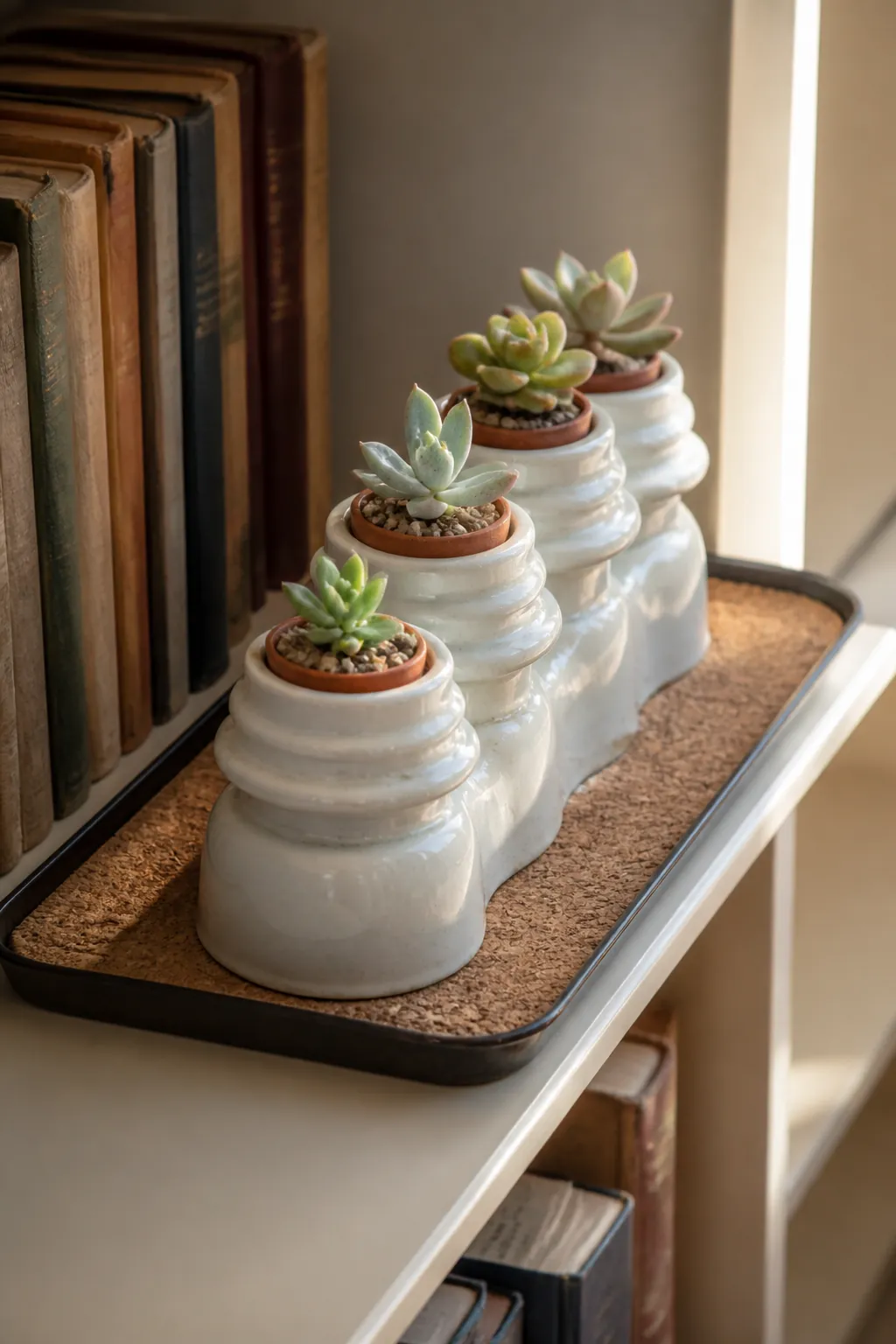
Ceramic Insulator Mini Pots
Vintage ceramic insulators have sculptural grooves that suit tiny offsets and rooted cuttings. Treat them as cachepots for removable inserts because their original openings rarely provide reliable drainage. Group three different profiles on a tray to make their industrial shapes feel intentional.
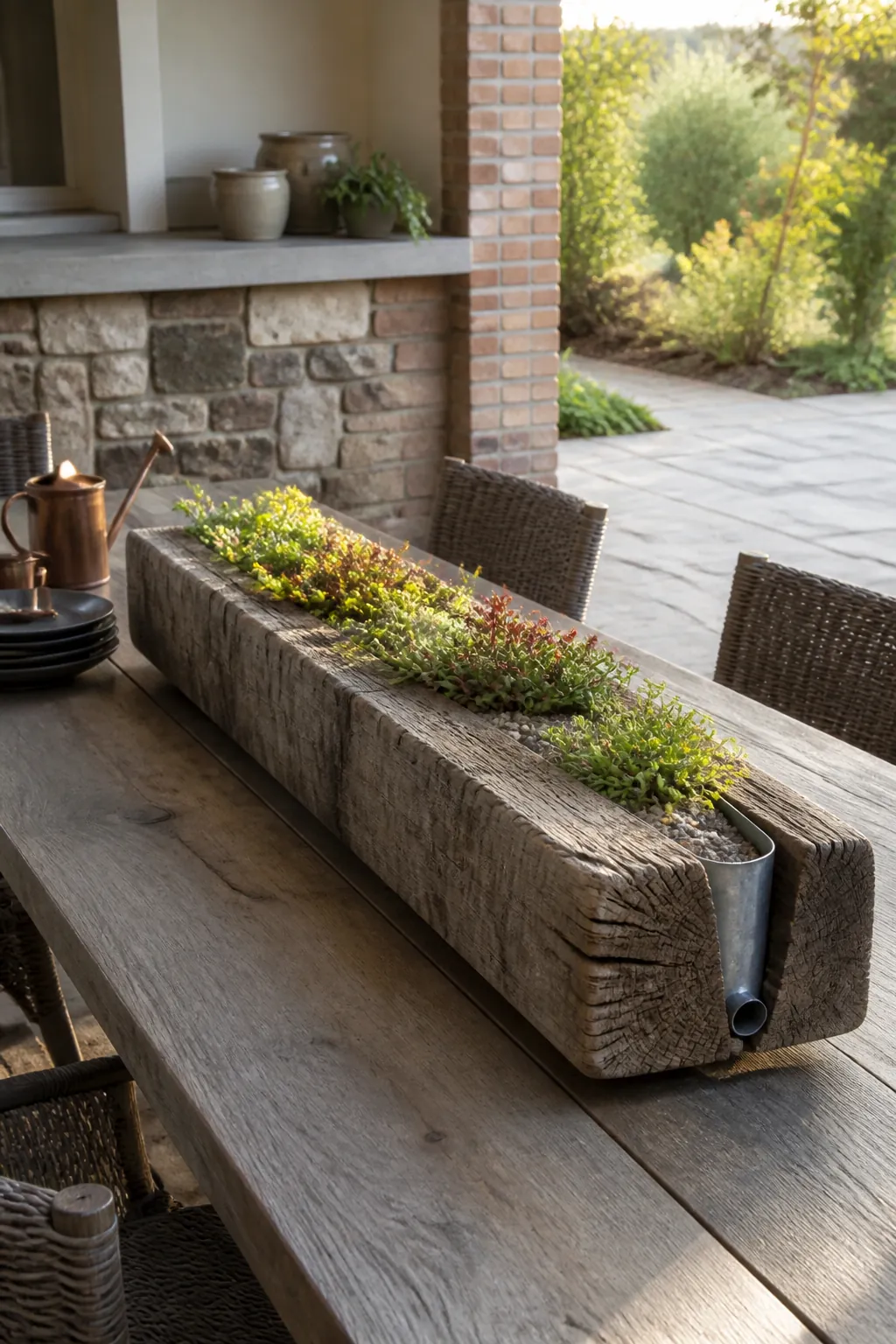
Carved Timber Beam Channel
A section of reclaimed beam can hold a long planted channel across a sturdy outdoor table. Remove soft wood, seal only the exterior, and fit a drained metal trough inside so roots are not trapped against decaying timber. Low sedums keep the silhouette clean and tolerate the shallow soil better than large rosettes.
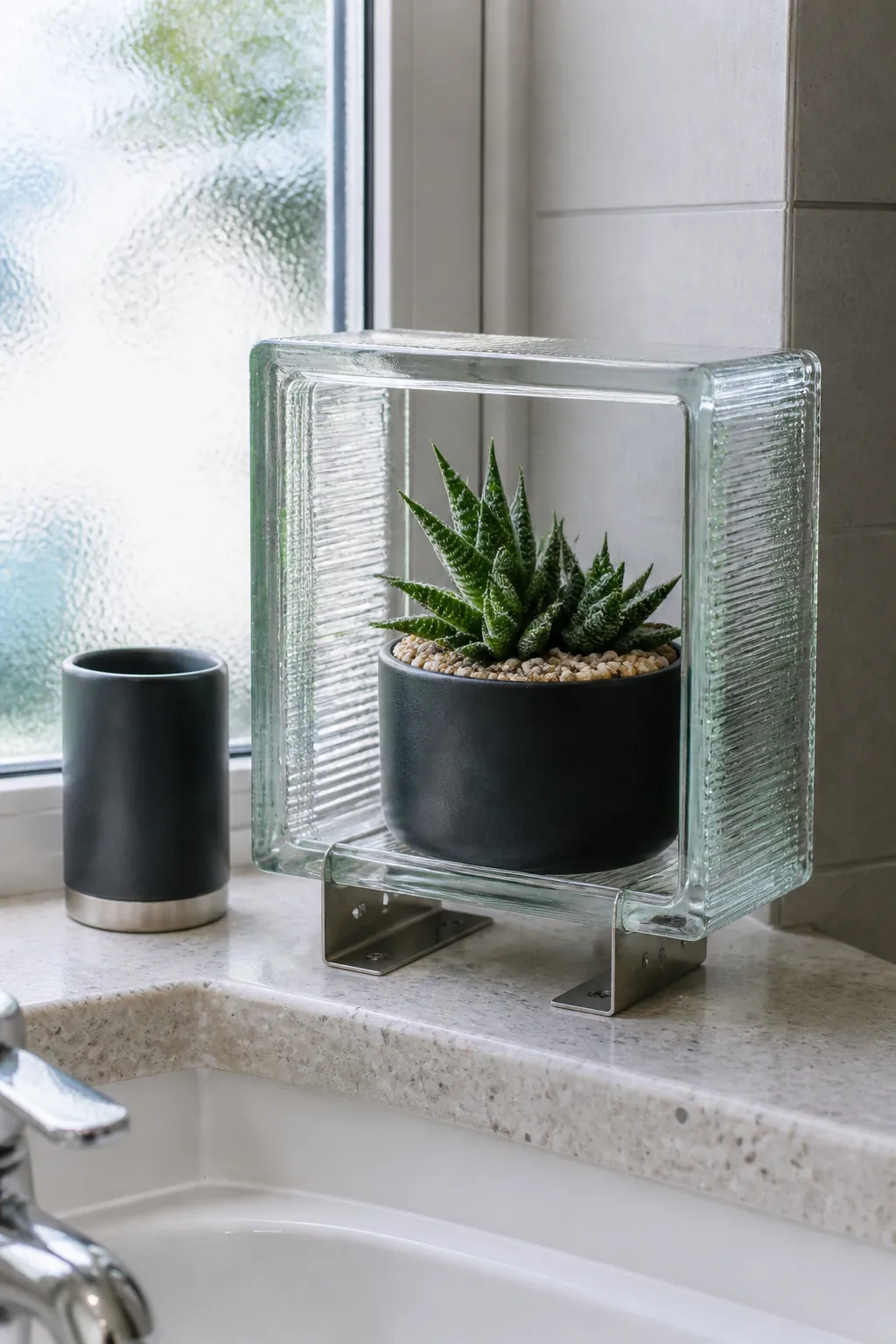
Glass Brick Light Box
A hollow glass brick can act as a luminous outer shell around one compact potted succulent. Keep the plant in a separate drained cup and add no standing water inside the brick. The textured glass looks best near indirect daylight where reflections remain soft and roots avoid overheating.
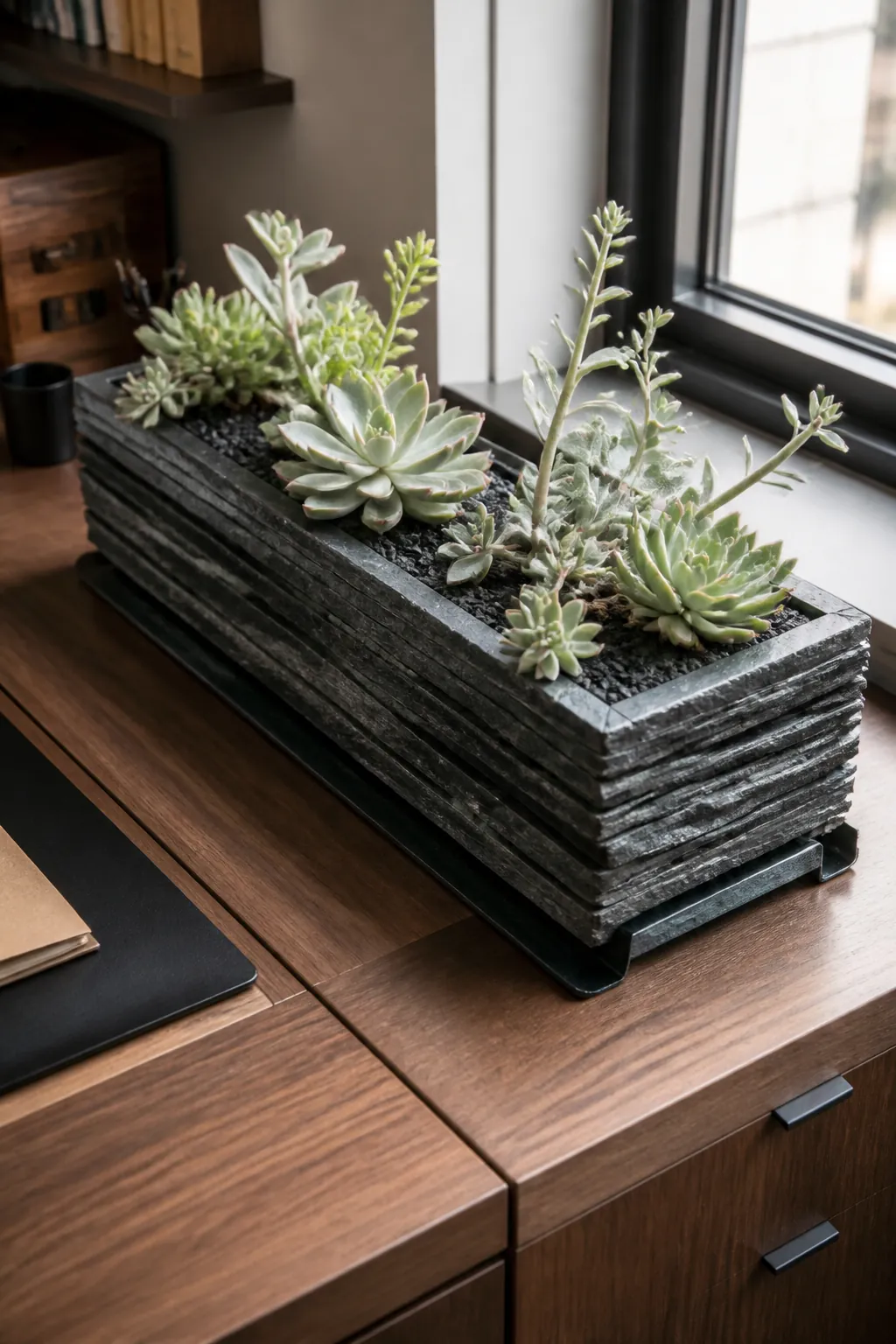
Slate Book Planter Stack
Thin pieces of slate stacked like uneven books can conceal a practical rectangular pot. Leave a visible gap beneath the insert so runoff can escape and air can reach the base. The dark stone makes pale farina and silver foliage stand out without relying on decorative clutter.
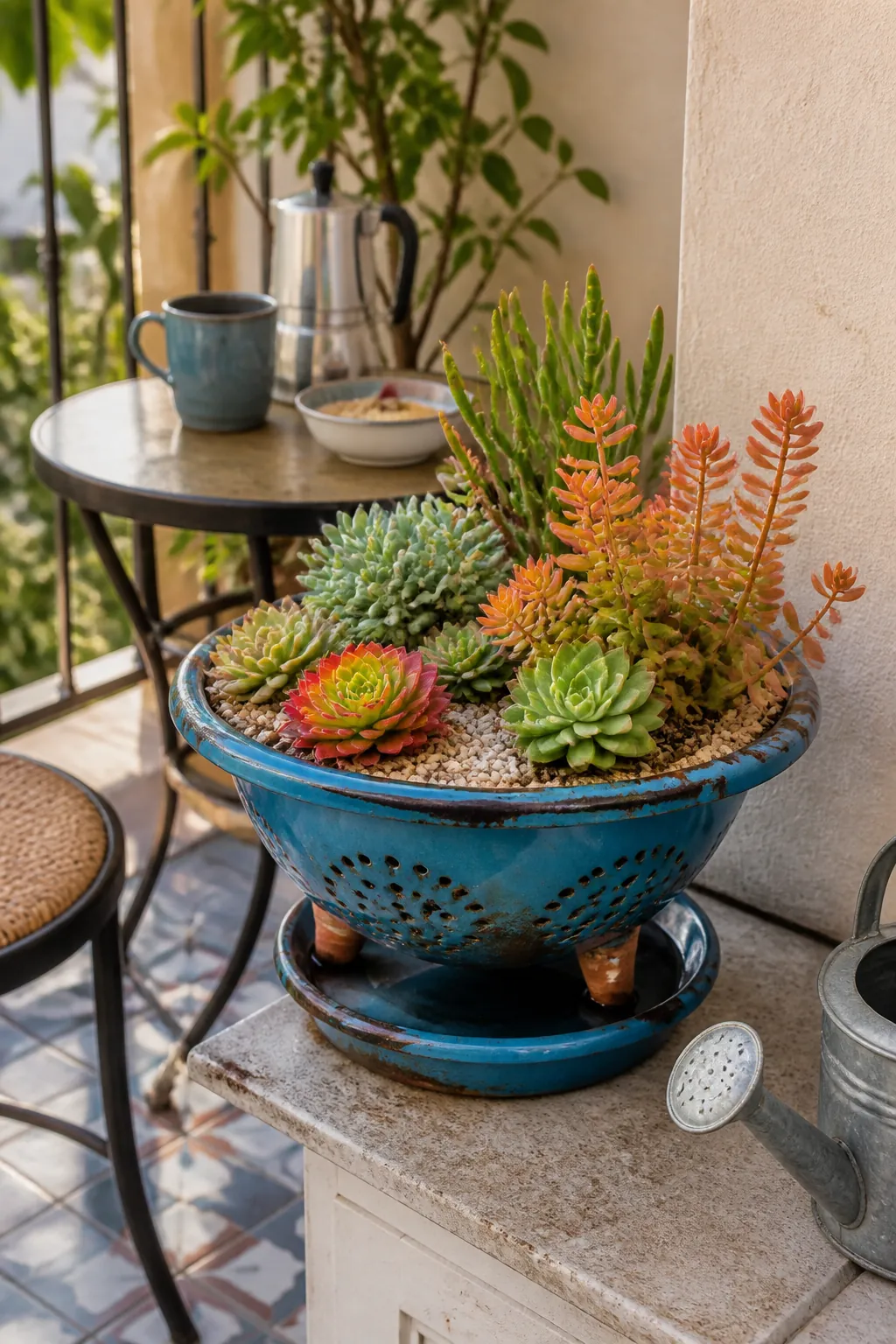
Enamel Colander Patio Pot
An enamel colander already provides abundant drainage for a sun loving patio arrangement. Cover the interior holes with coarse mesh, then use gritty mix that will not wash away during watering. Raise the handles on small blocks so air can circulate under the rounded base.
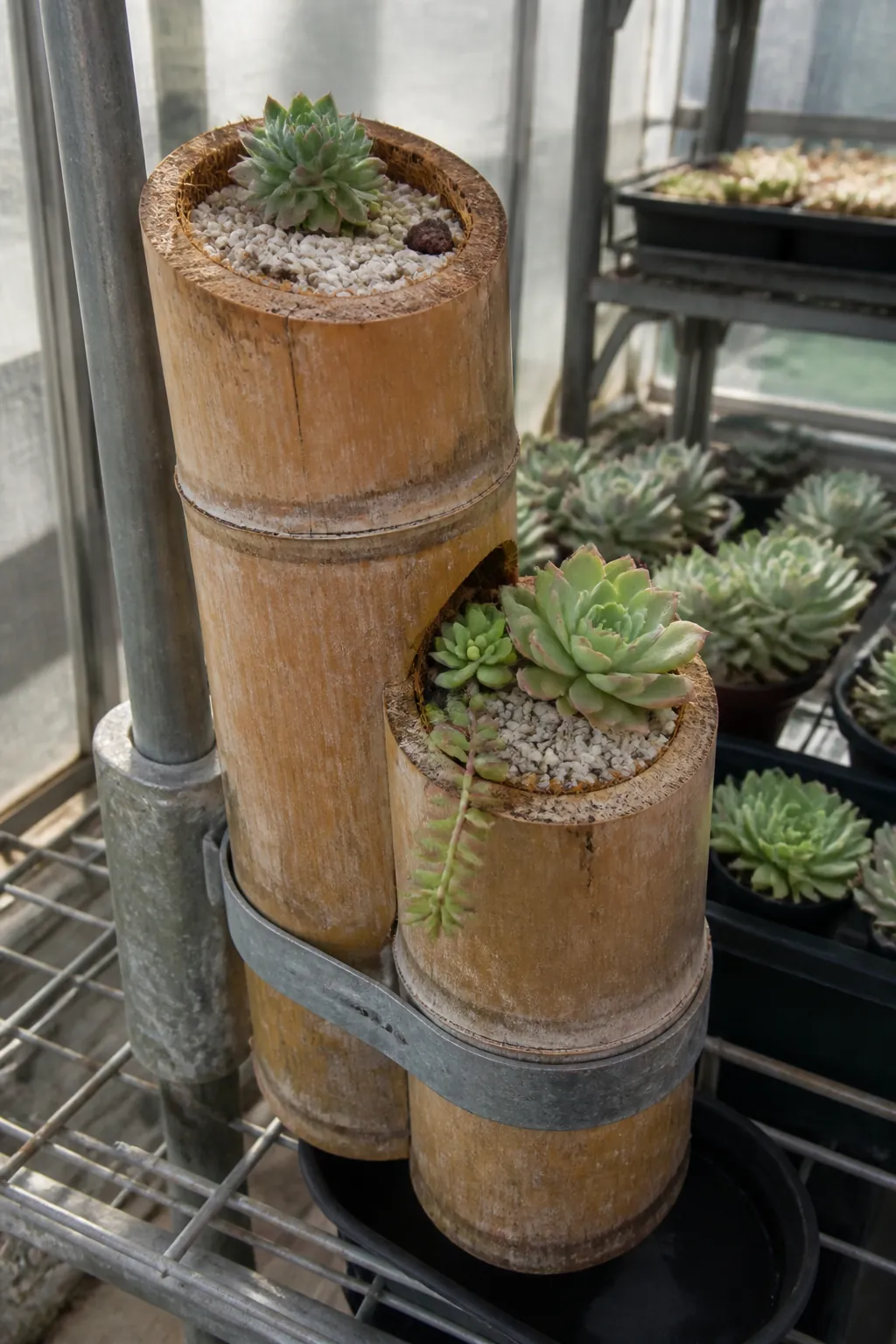
Bamboo Joint Nursery
Wide bamboo sections can become individual stations for newly rooted offsets. Open the base for drainage, fit a breathable liner, and keep the cut rim smooth. Arrange the vessels at varied heights on a sheltered bench where seasonal checking can reveal cracks before they spread.
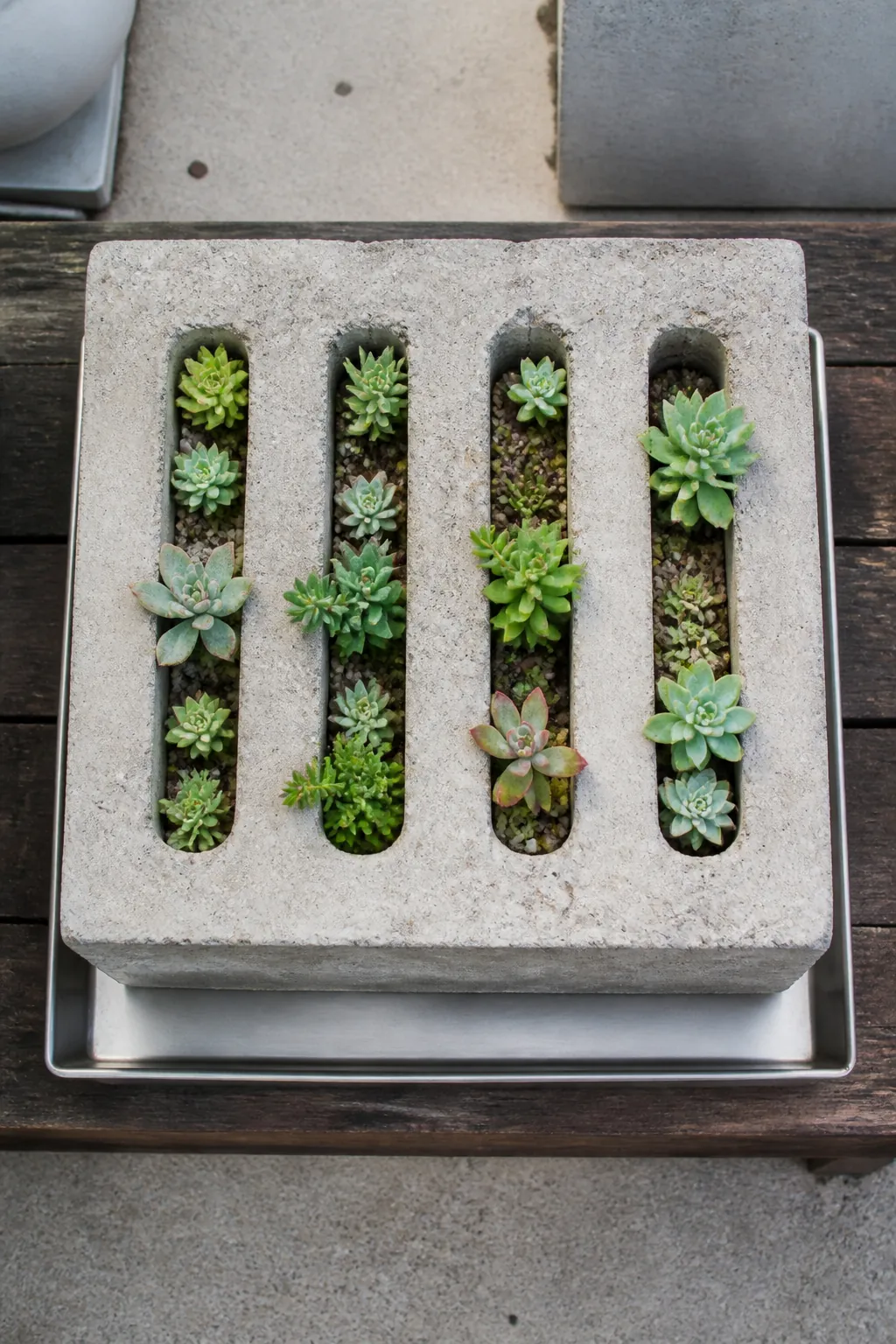
Concrete Drain Grate Garden
A clean architectural drain grate can support a field of small pots while hiding their ordinary plastic rims. Choose a retired grate with no residue, soften abrasive edges, and place it over a shallow runoff tray. Alternating leaf shapes create pattern without packing plants so tightly that inspection becomes difficult.
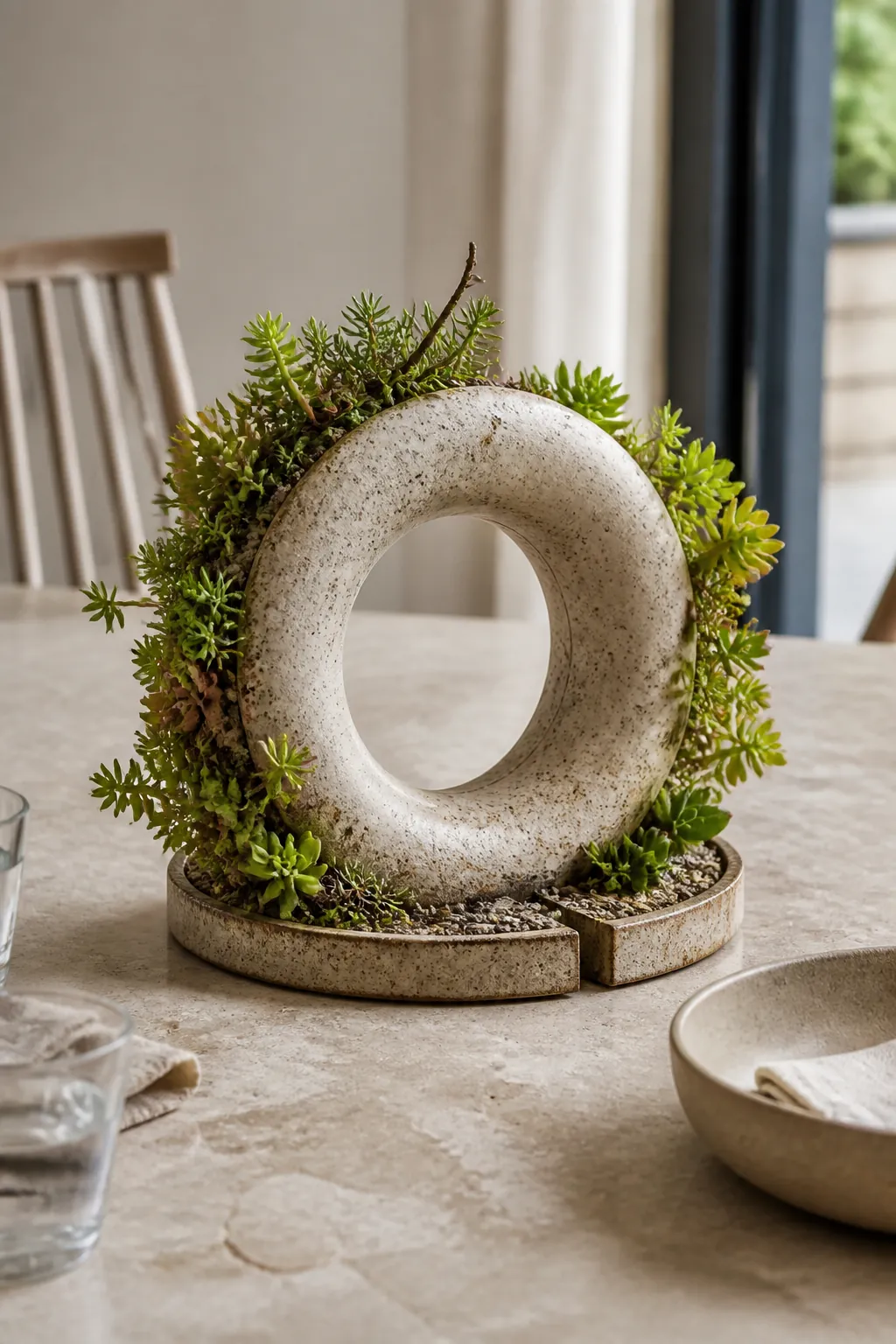
Hand Thrown Donut Vessel
A ring shaped ceramic vessel leaves a quiet center void that makes a small planting feel sculptural. Plant evenly around the curve only if every section connects to a drainage outlet. One repeated sedum variety emphasizes the form and avoids a crowded assortment.
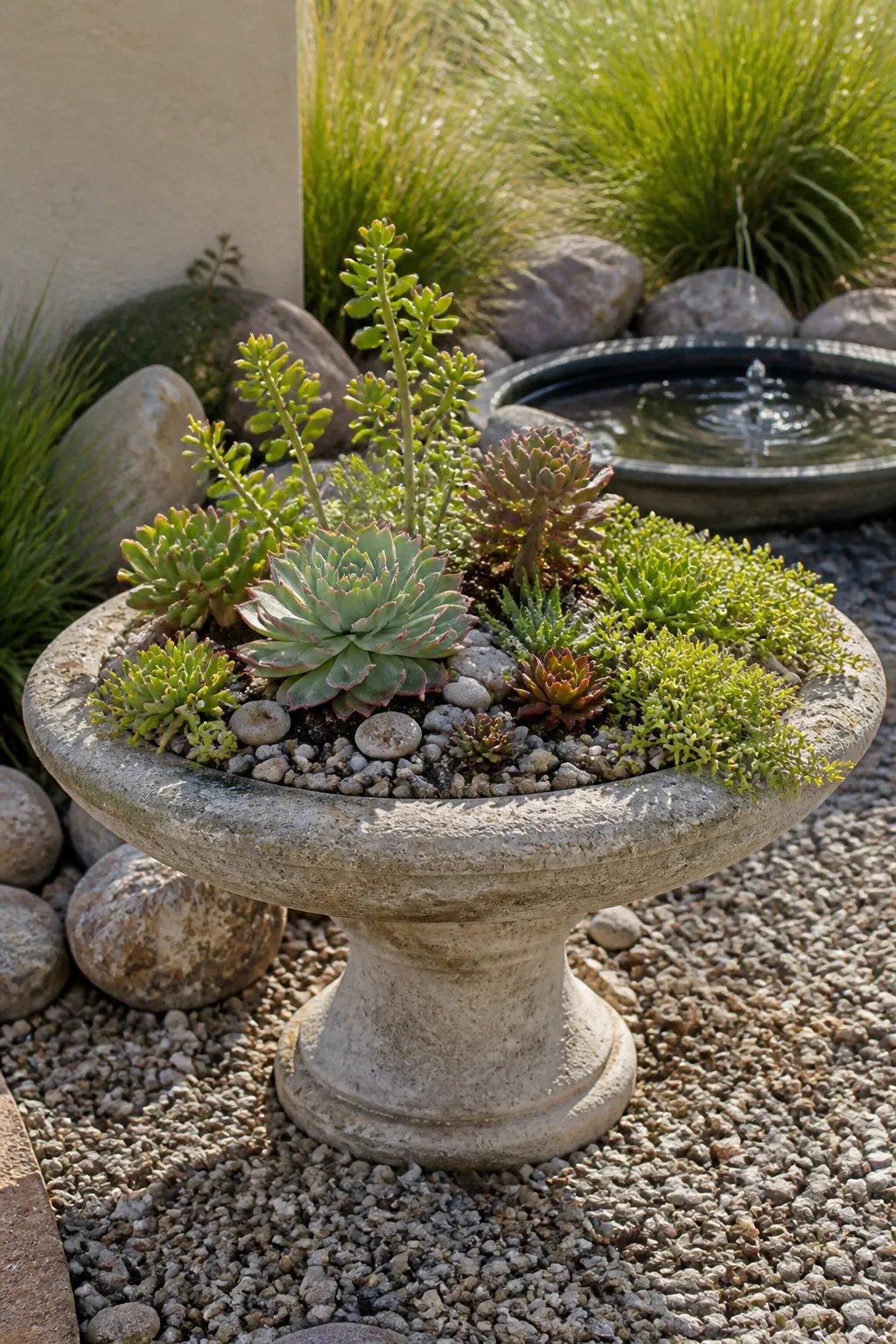
Repurposed Bird Bath Island
A shallow bird bath can hold a drought tolerant island in a gravel courtyard after it is retired from wildlife use. Add several open drainage points and mound mineral soil above the rim so rain moves away from the crowns. Keep a separate fresh water source nearby if birds previously depended on the basin.
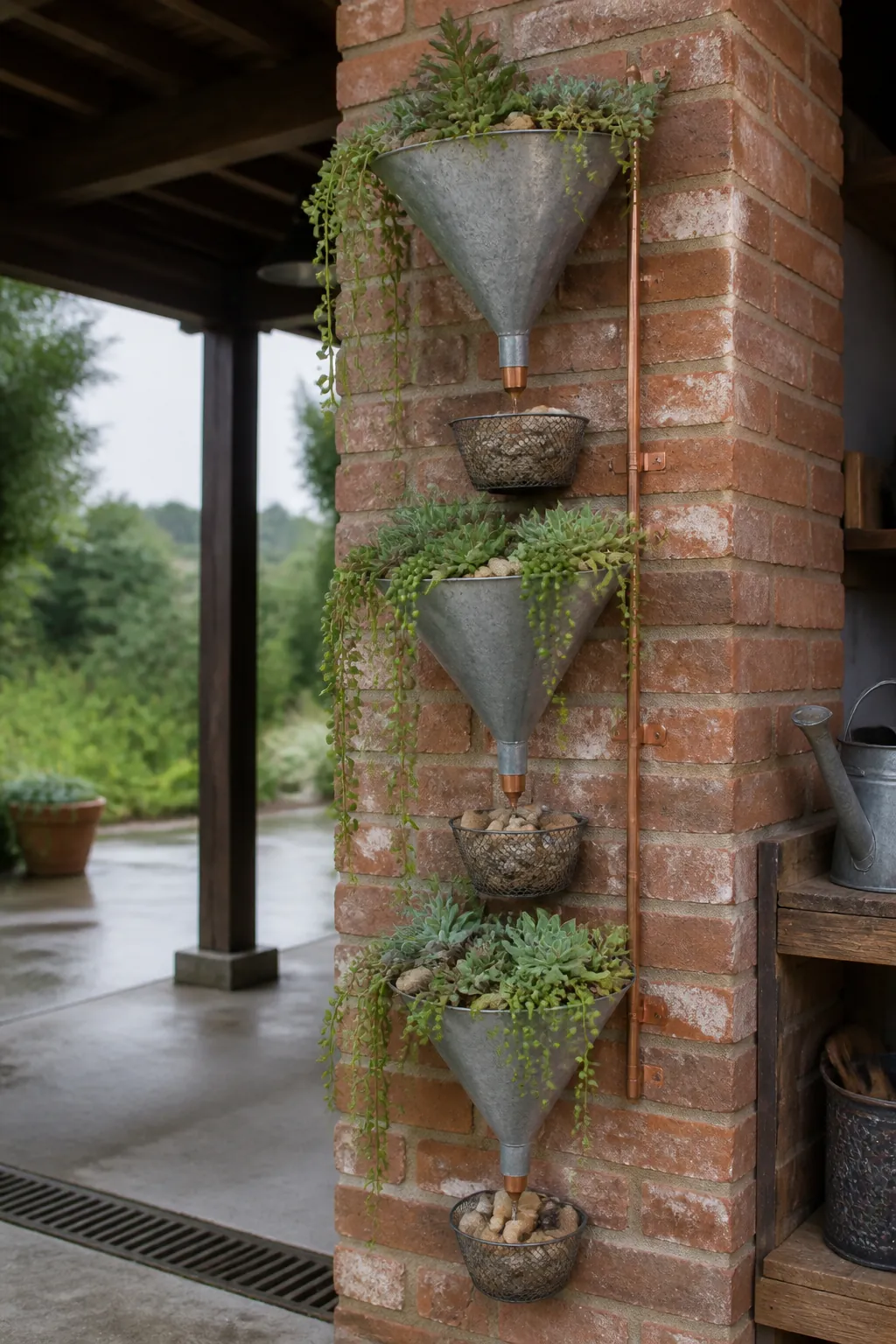
Wall Mounted Funnel Cascade
Several broad metal funnels can guide trailing stems down a sheltered masonry wall. Give each funnel a removable perforated liner and direct drainage away from the one below. The arrangement needs strong anchors and enough clearance for watering without wetting the wall repeatedly.
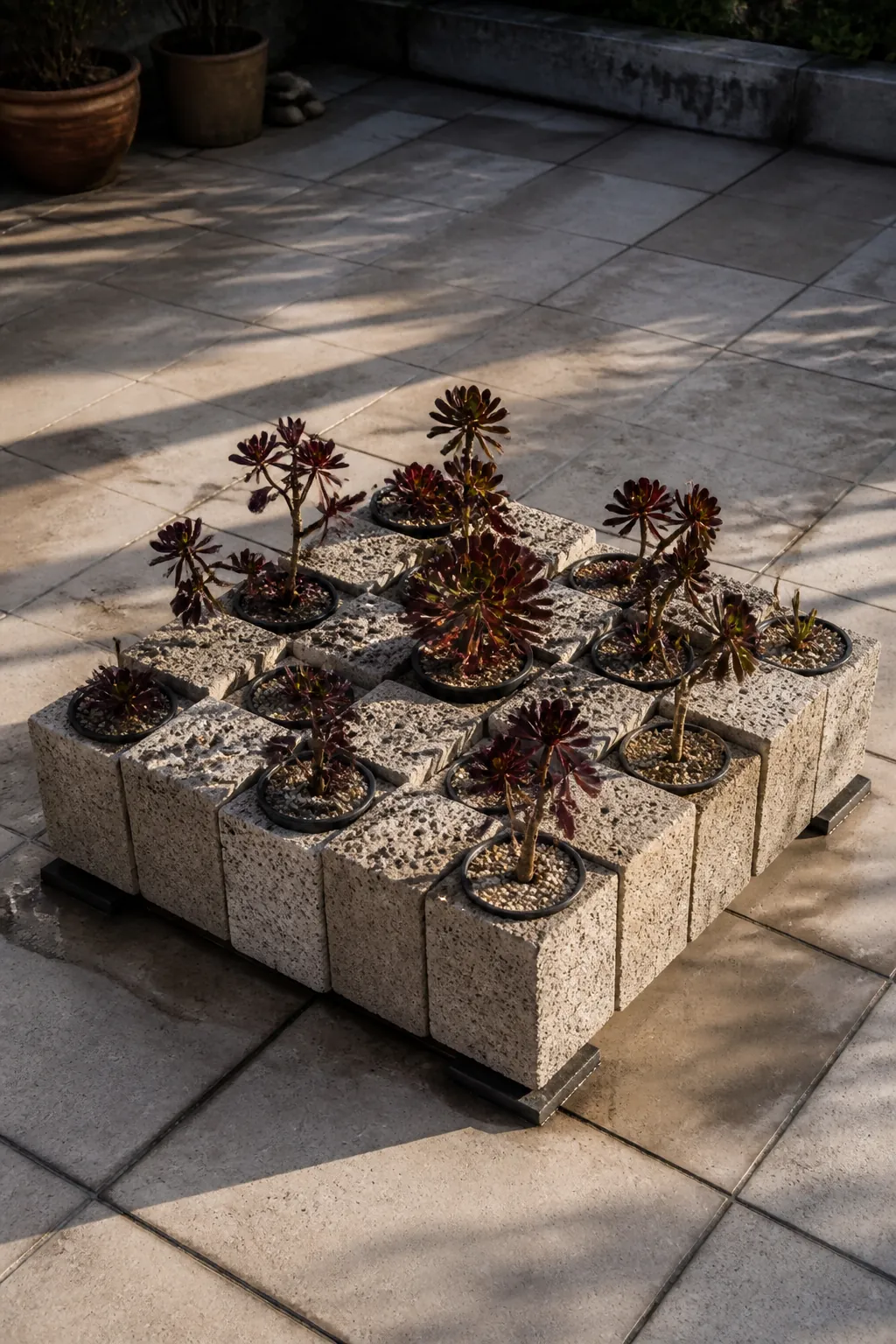
Pumice Chessboard Planter
Square pumice blocks arranged in a loose chessboard create pockets for a restrained outdoor collection. Set drained pots into selected openings and leave the neighboring squares empty to emphasize rhythm. Test the support beneath every block because porous stone can become surprisingly heavy after rain.
Vintage Camera Cachepot
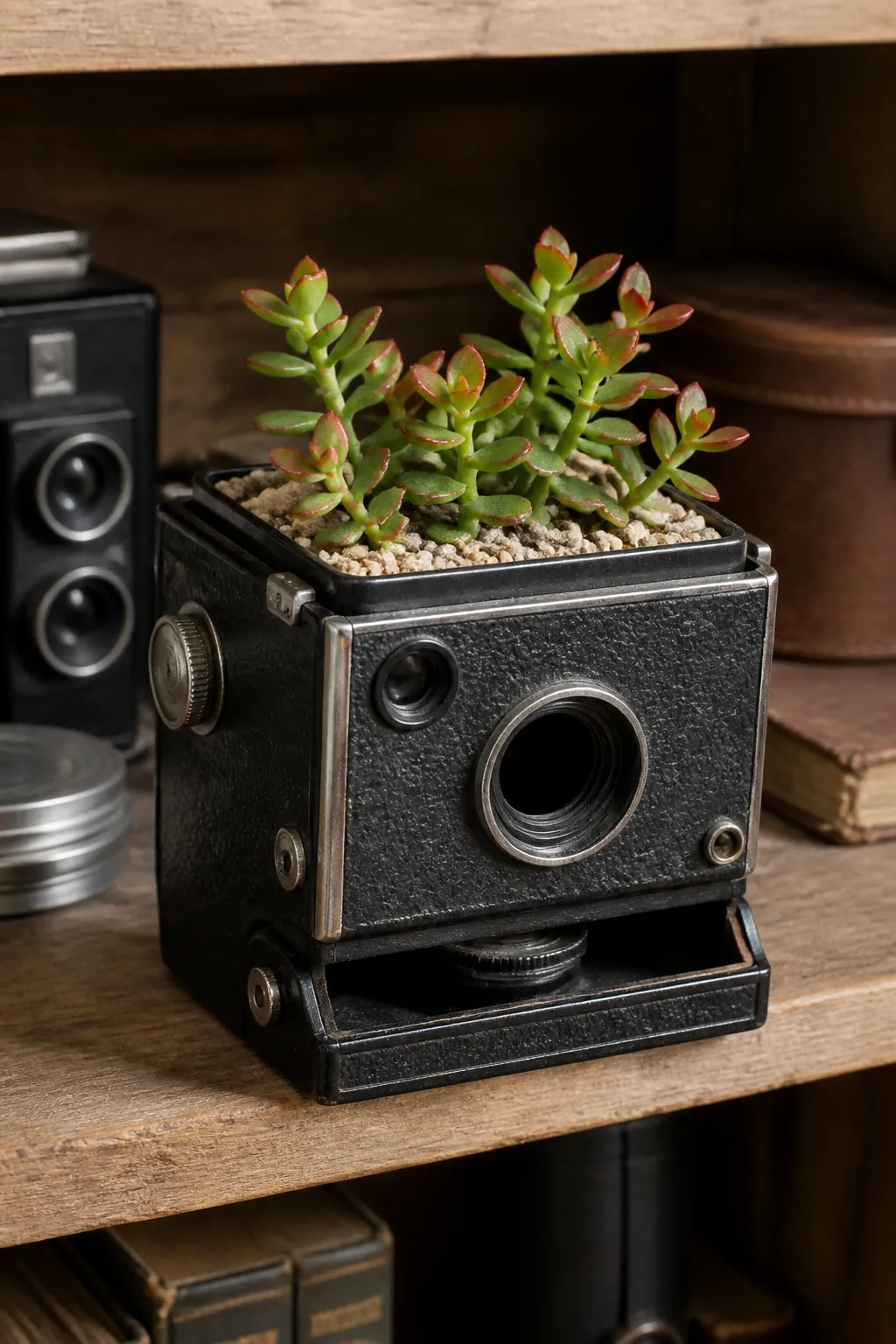
A damaged box camera can conceal a tiny nursery pot and become a conversation piece on a dry shelf. Remove batteries, glass shards, and loose internal parts before fitting a waterproof insert. Lift the plant out to water so the leather, metal, and wood remain dry.
Pebble Filled Gabion Cube
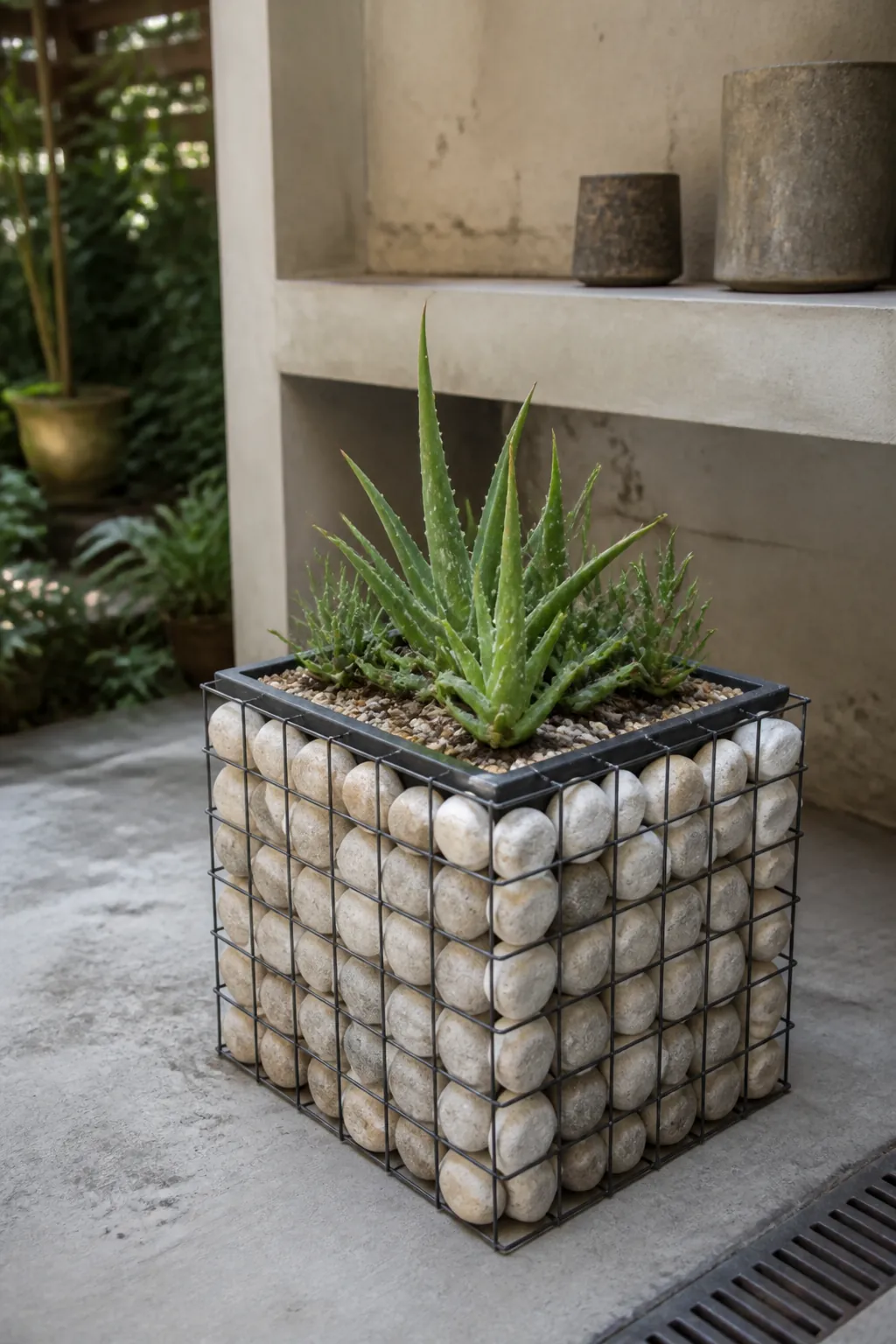
A compact wire gabion filled with pale river stones can support one dark recessed planter. Line the central cavity with a rigid drained pot rather than pouring soil among the stones. This substantial piece belongs on a ground level terrace where its weight cannot overload a shelf.
Folded Brass Ribbon Planter
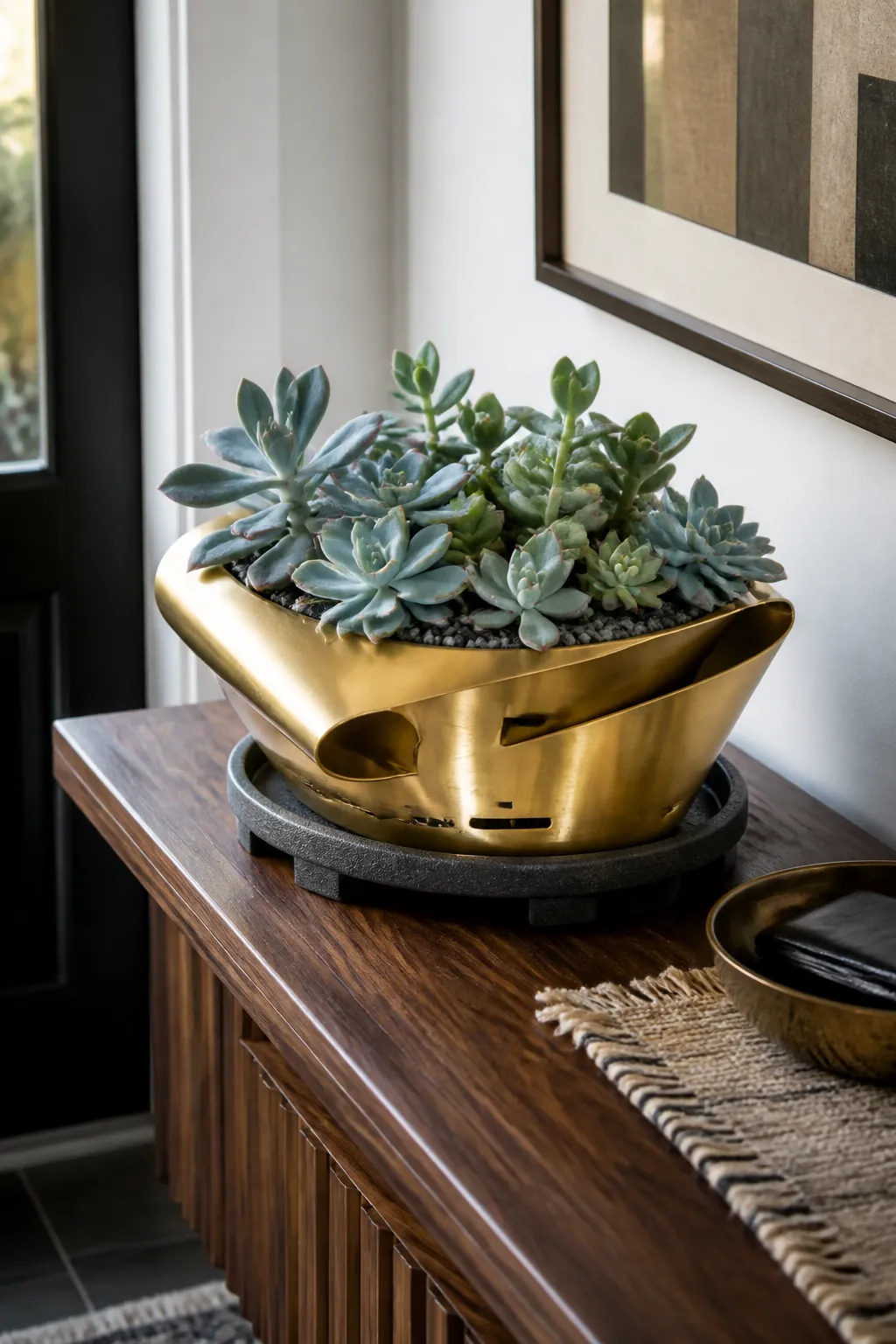
A folded strip of brass can wrap around a plain rectangular pot like an asymmetric ribbon. Keep soil inside the removable inner container and use spacers to prevent moisture from sitting against the metal. Warm brass pairs especially well with blue green leaves and a charcoal stone top dressing.
Porcelain Laboratory Basin
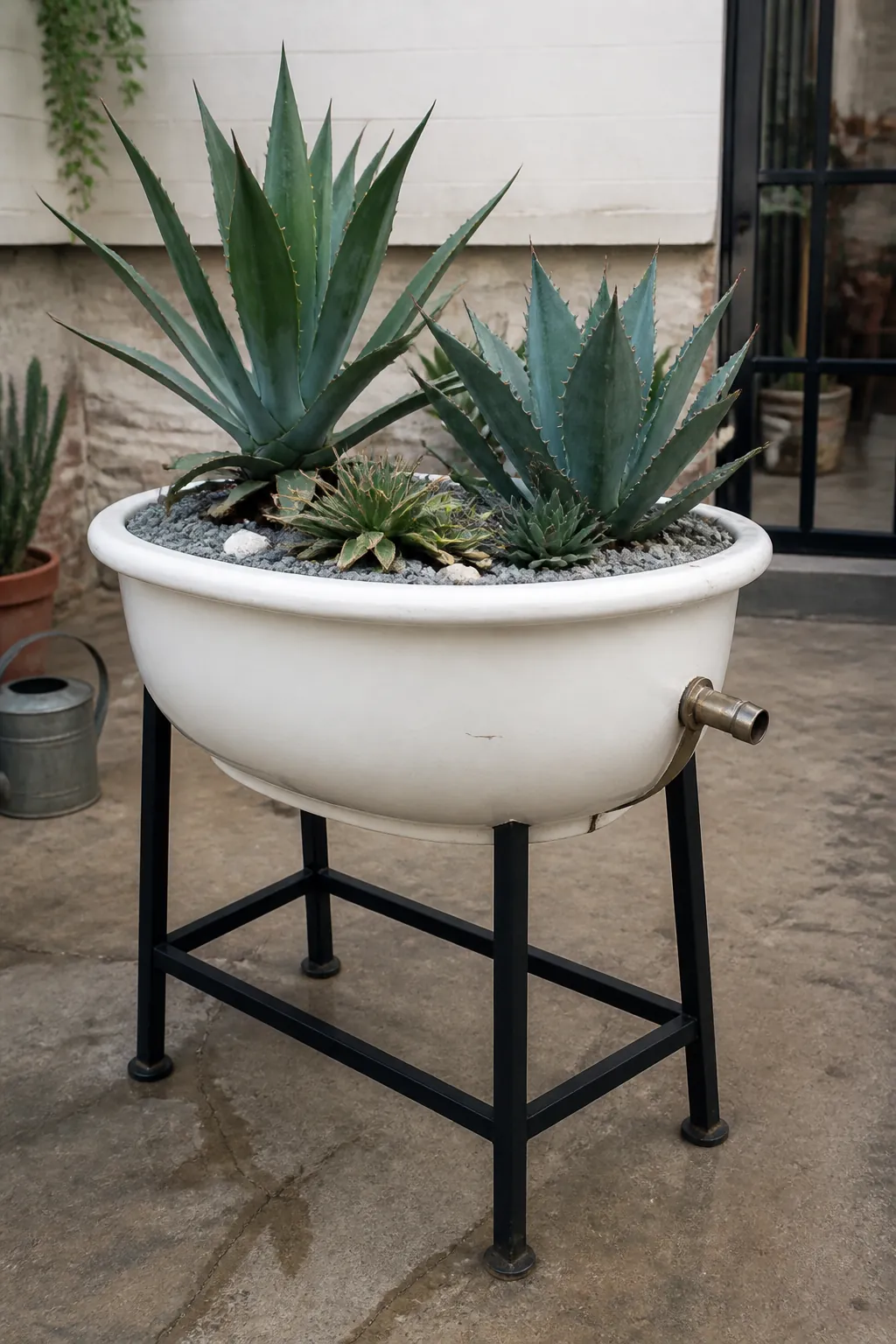
A retired porcelain laboratory basin gives a broad succulent arrangement an unexpected clinical frame. Use only a verified clean fixture, preserve the existing outlet, and raise the base so drainage stays visible. Sparse planting lets the curved white surface and mineral top dressing remain part of the composition.
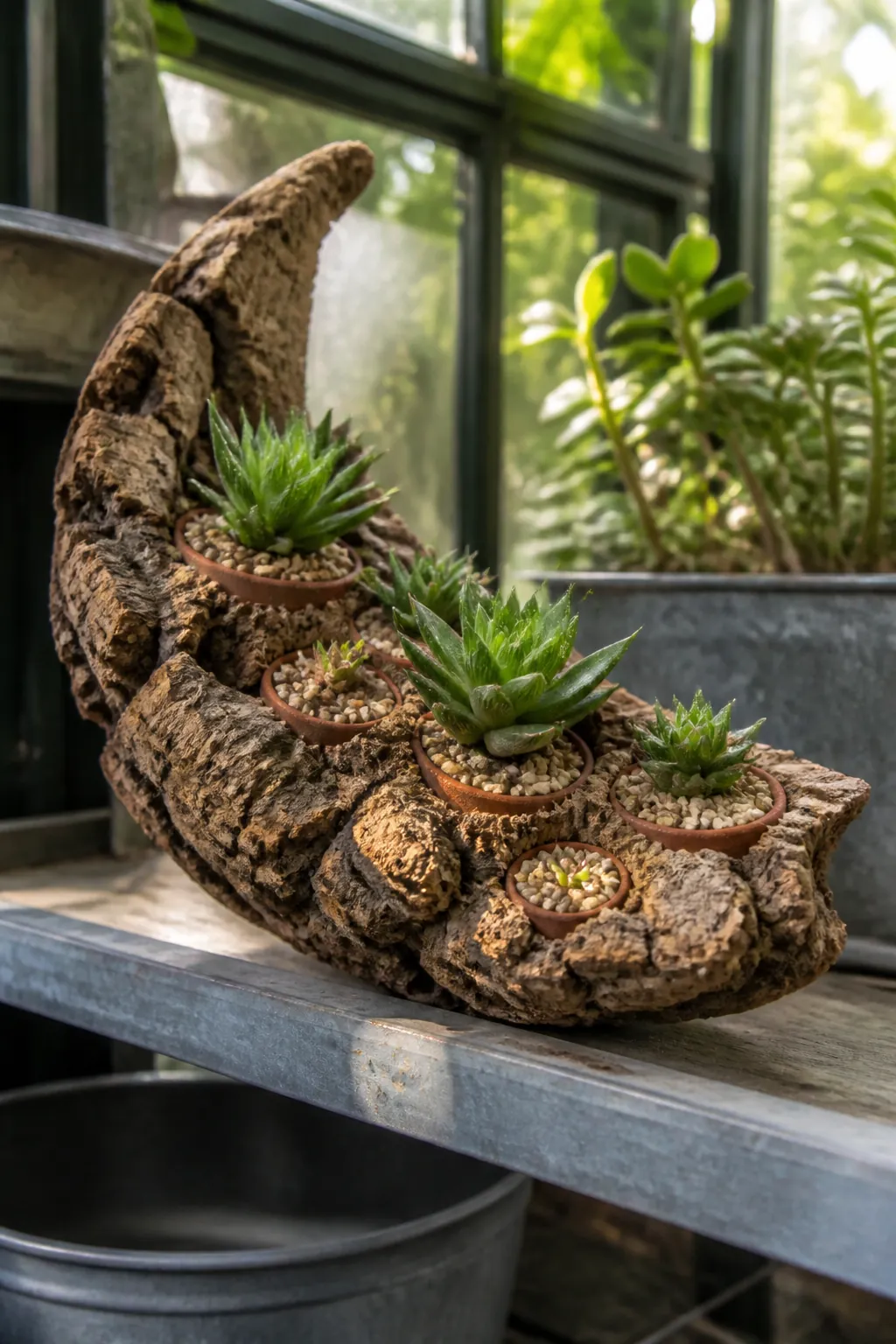
Cork Bark Crescent Garden
A curved slab of cork bark can shelter several miniature pots and suggest a dry woodland floor. Do not plant directly into the cork because repeated moisture shortens its life and hides root problems. Nestle the pots in removable mineral pockets, leaving the bark exposed around each crown.
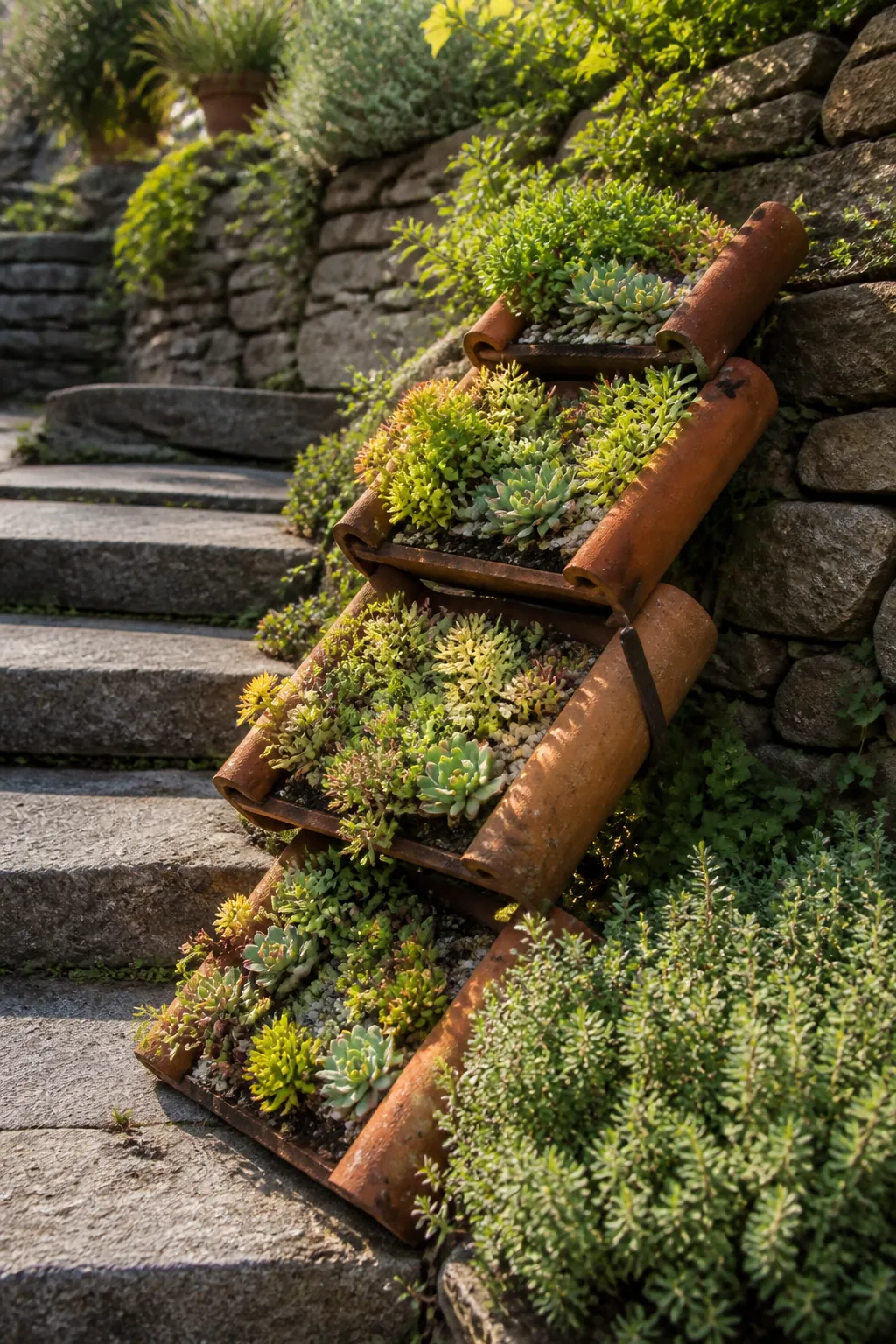
Clay Roof Tile Rill
Overlapping clay roof tiles can form a narrow rill for hardy outdoor sedums on a sunny slope. Secure each tile independently and place shallow drained inserts where the curves meet. The stepped layout slows visual movement while still allowing rain to leave every pocket.
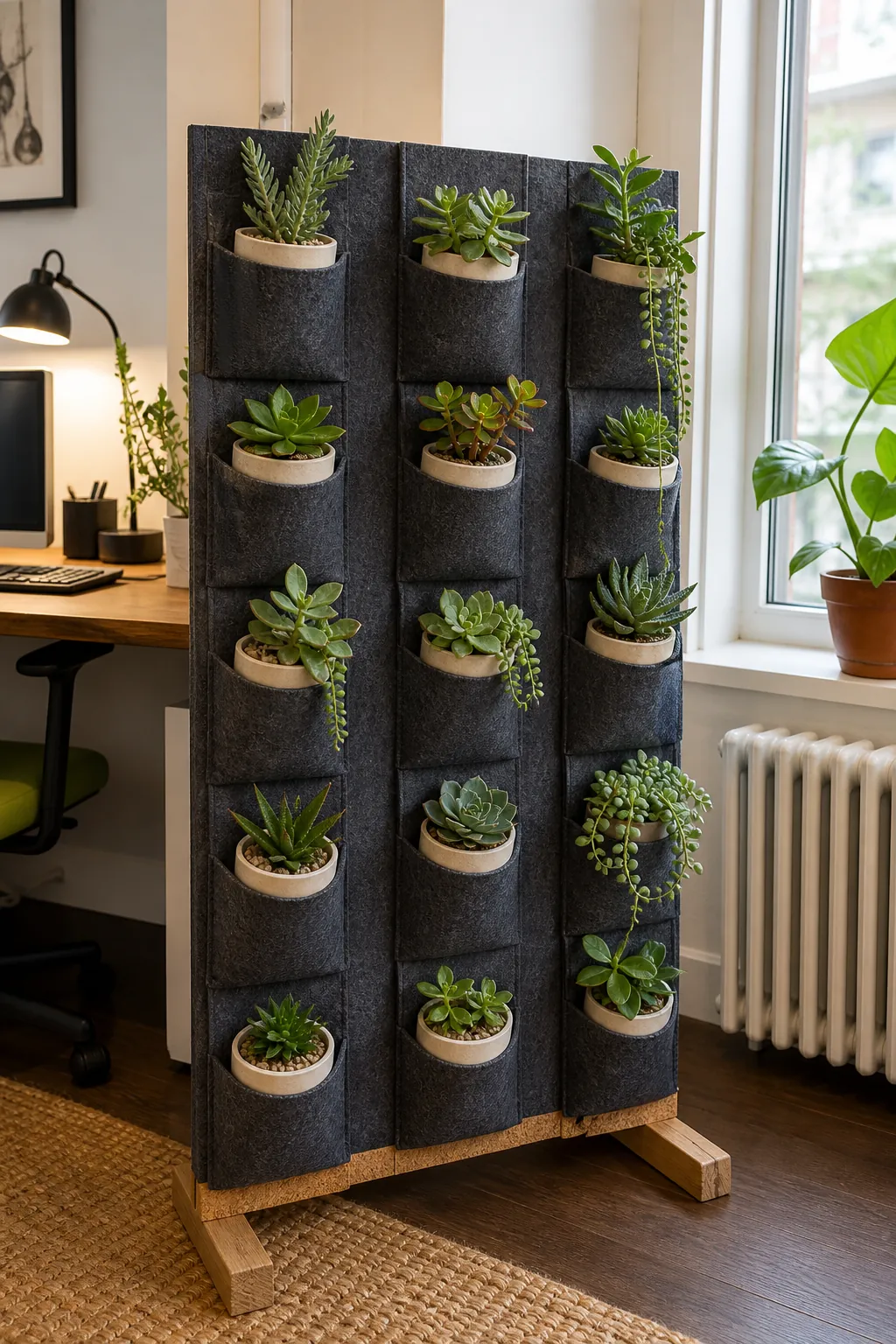
Geometric Felt Pocket Screen
A freestanding screen of thick felt pockets can hold lightweight nursery pots in a bright rented apartment. Install waterproof liners and remove each pot for watering so moisture never reaches the floor or screen frame. Reserve the upper pockets for the lightest plants and keep the base wide enough to resist tipping.
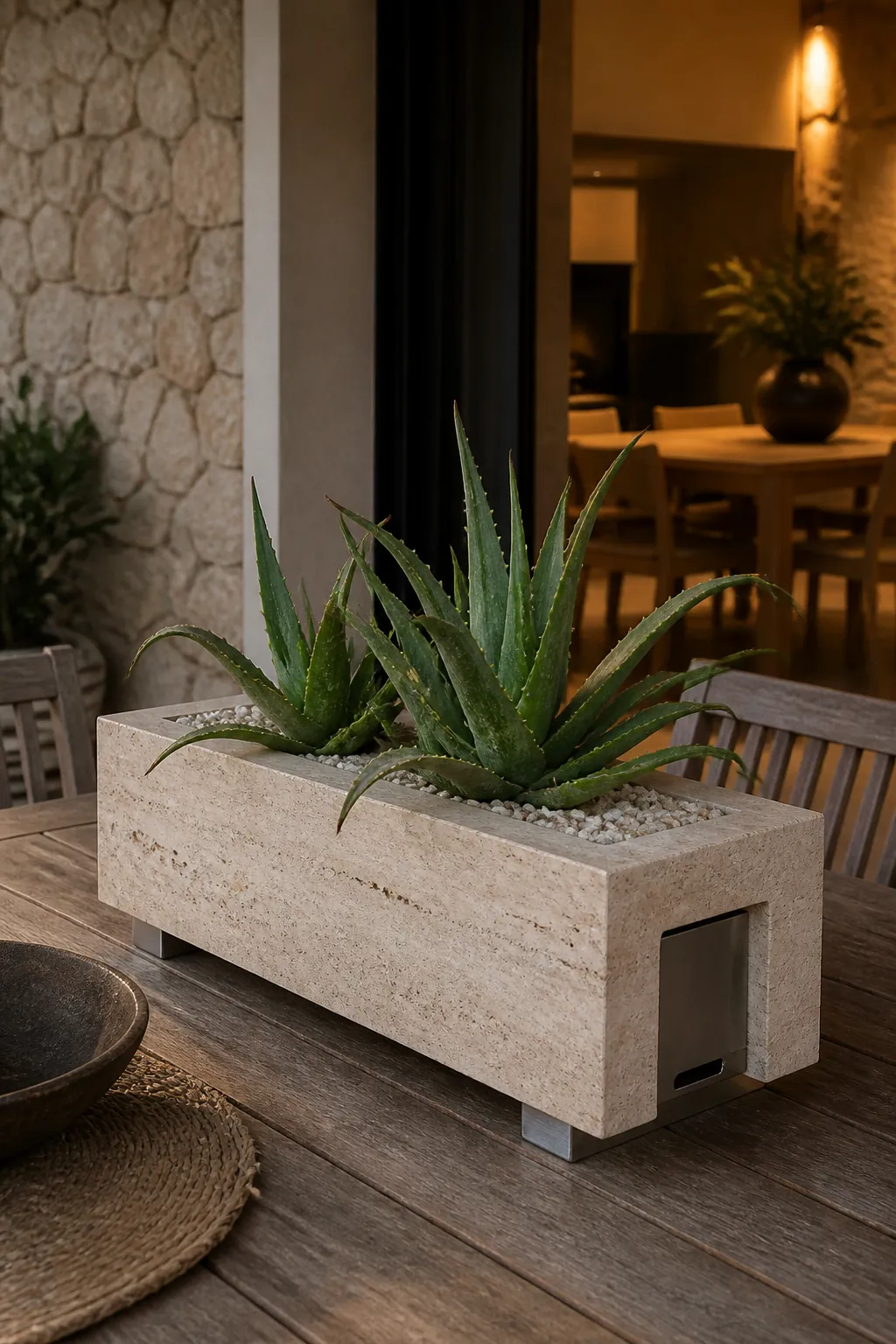
Hollow Travertine Table Block
A hollow travertine block can merge a planter with the end of a low outdoor table. Fit a sealed but drained stainless insert inside the cavity and preserve a safe rim for cups or books. One architectural agave or compact aloe gives the stone enough scale without crowding the usable surface.
Weathered Buoy Porch Planter
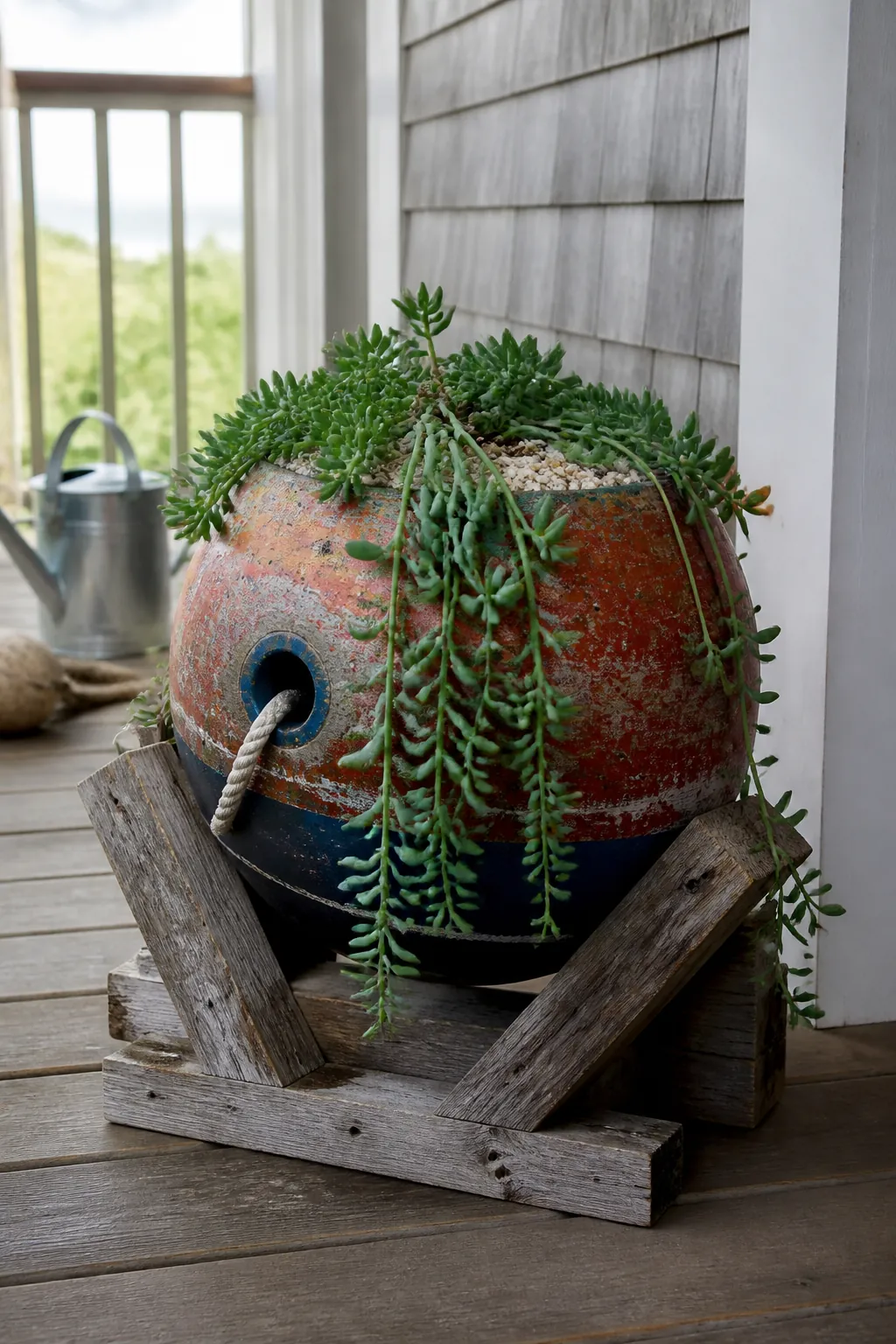
A retired marine buoy can become a rounded porch planter when its history is clean and its shell remains sound. Cut and finish the opening professionally, add a stable weighted cradle, and use a removable drained pot. A tough trailing succulent softens the hard form while allowing the faded painted surface to remain visible.