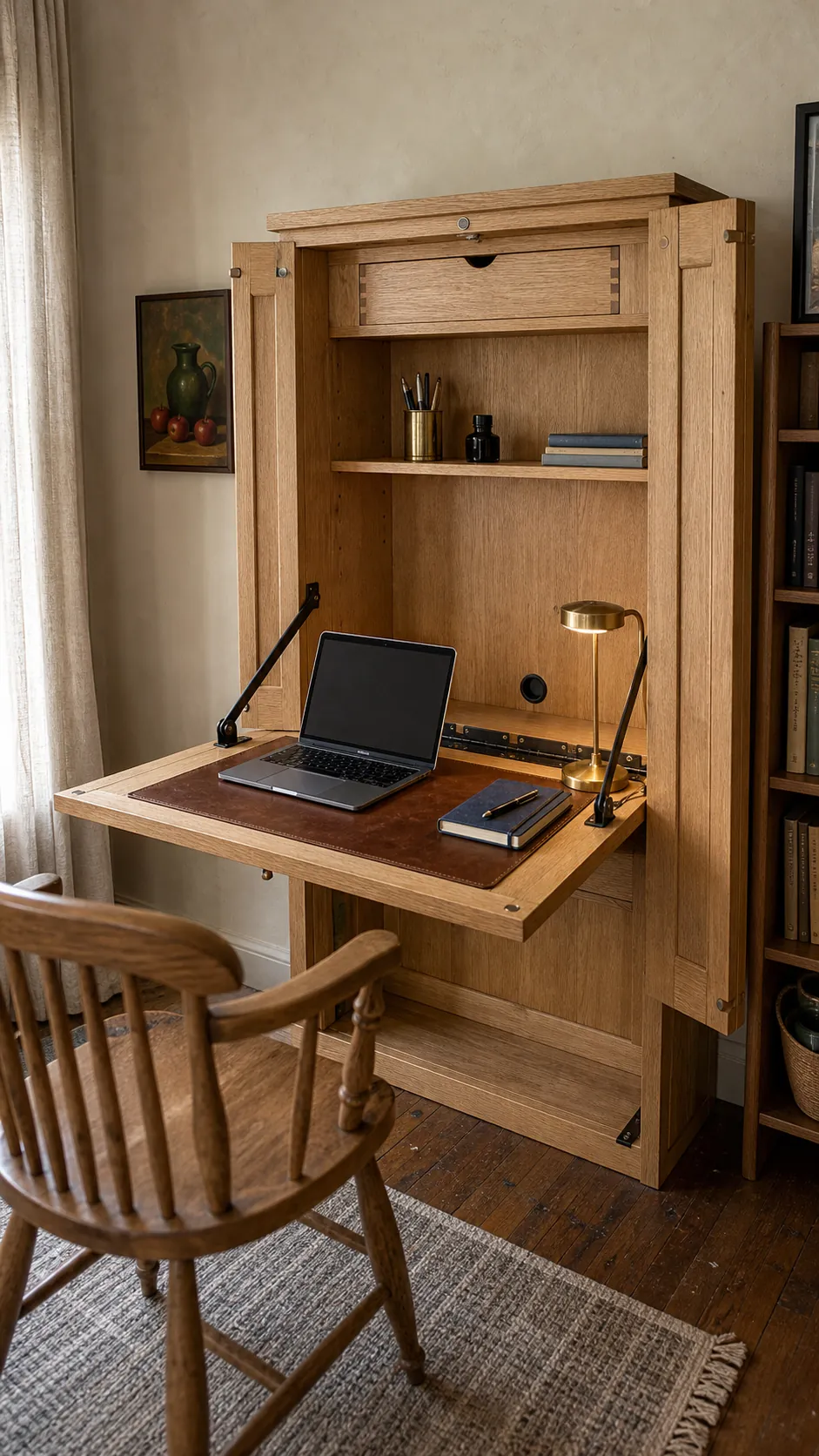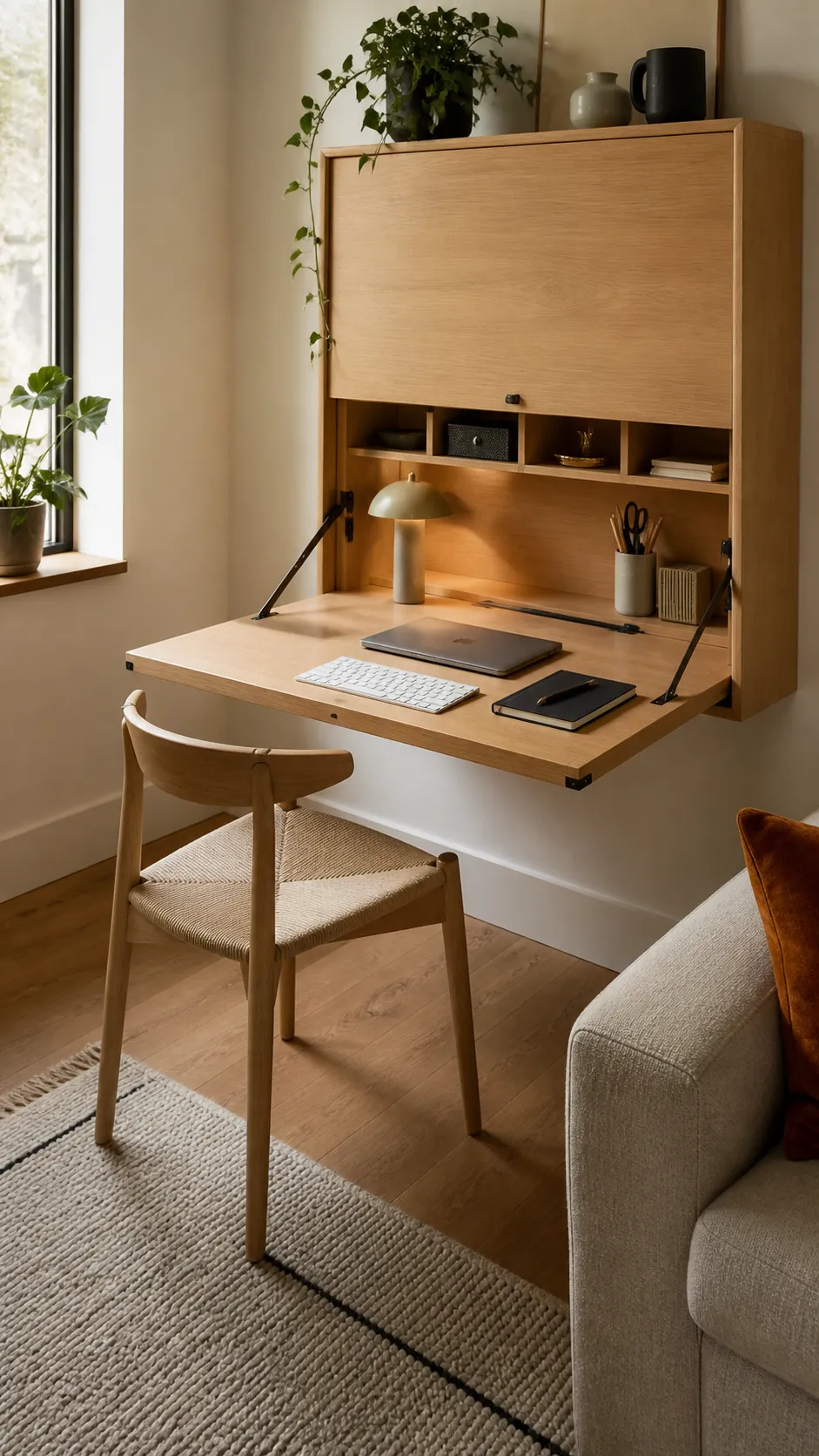
A fold down desk saves floor space only when its wall fixing, support hardware, working height, and closing routine make sense together. Start with the load the open surface must carry, then locate studs or suitable masonry anchors before choosing cabinet dimensions. Leave enough depth for your real equipment, and plan where every cable and loose object goes before the panel rises.
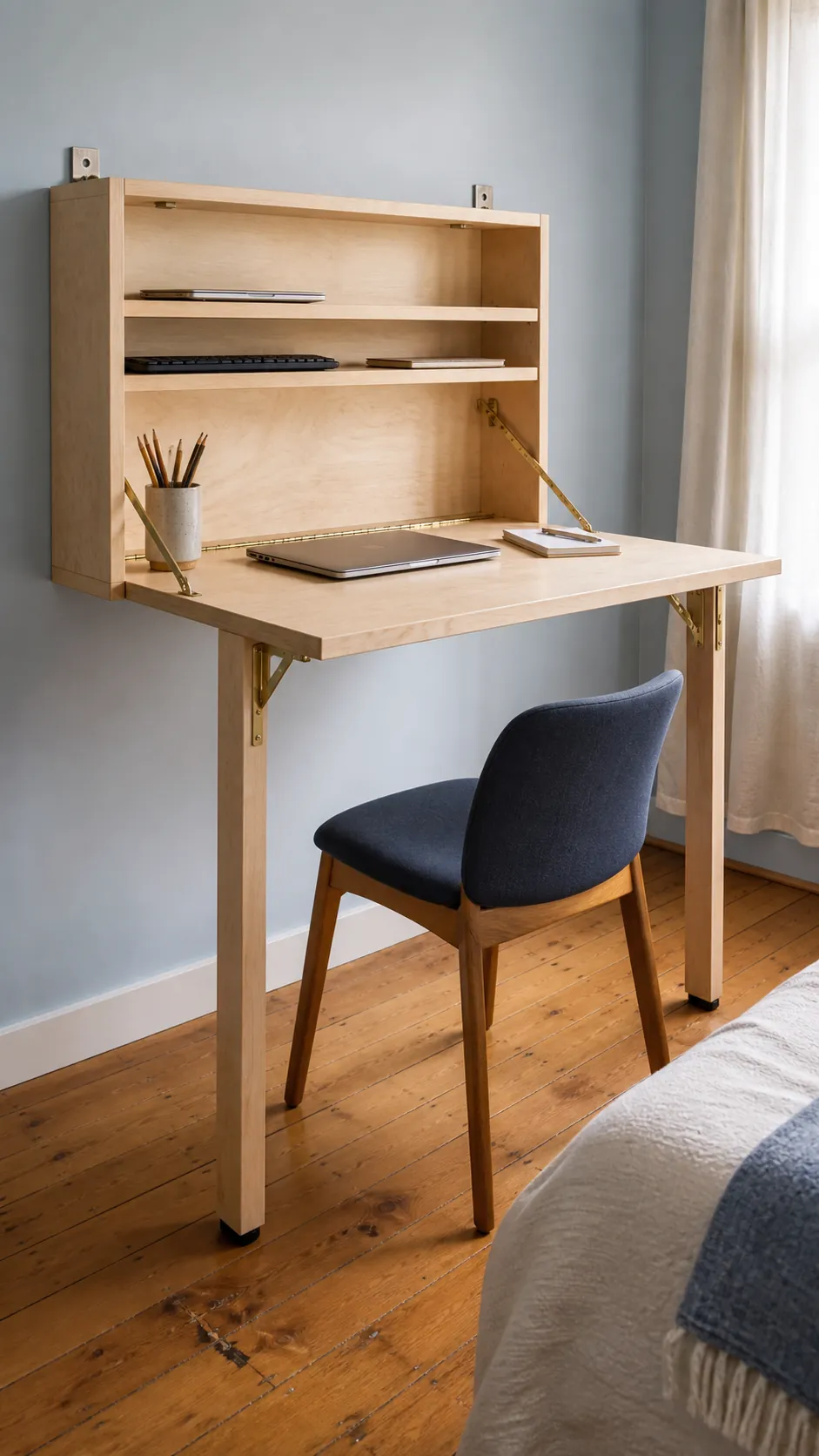
Simple panel with folding legs
A plain wall panel becomes a sturdy desk when two hinged legs swing down before the top opens. The legs transfer typing and leaning forces to the floor, which reduces demand on the wall hardware. Use positive locks so neither leg can fold during work.
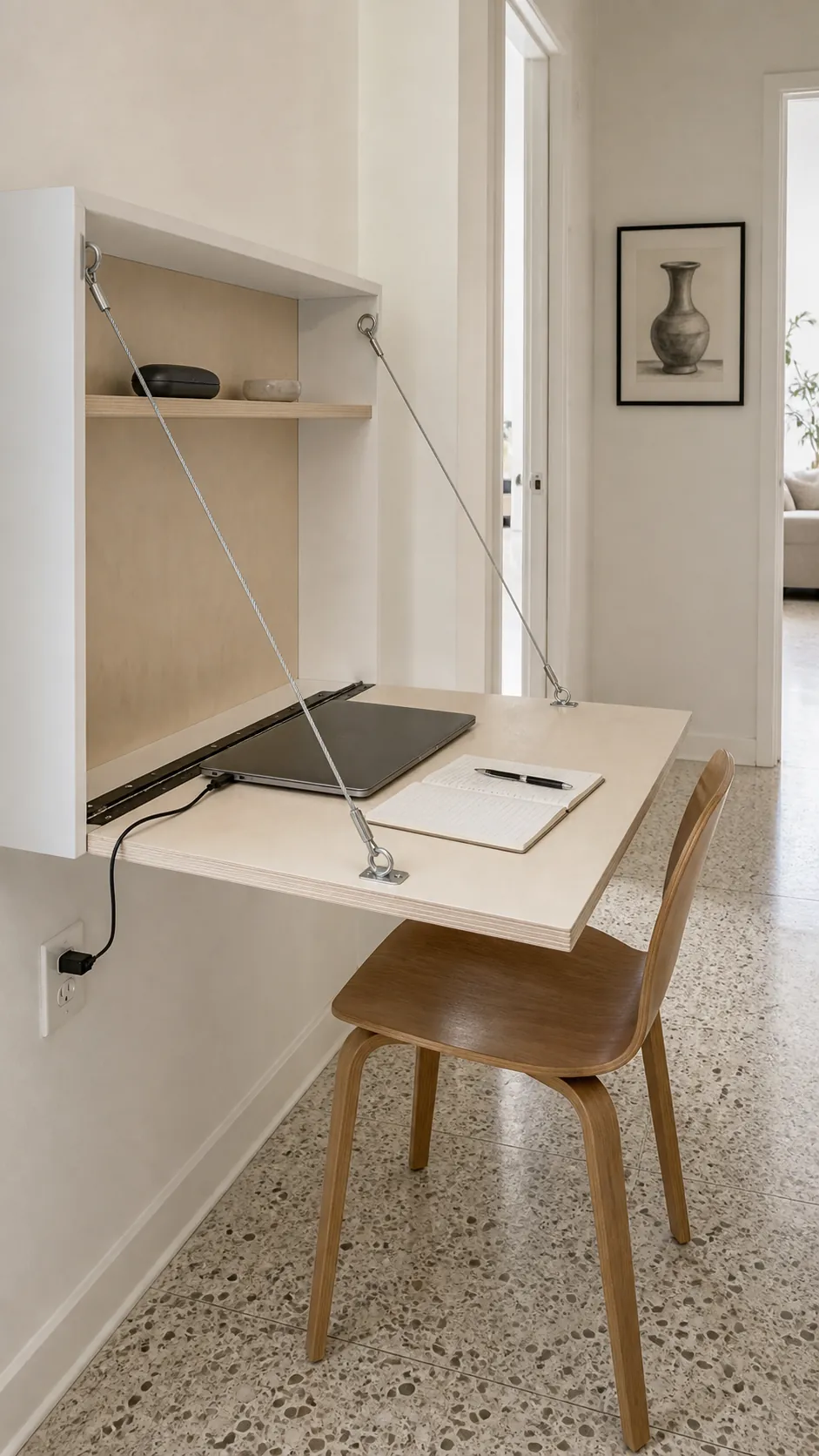
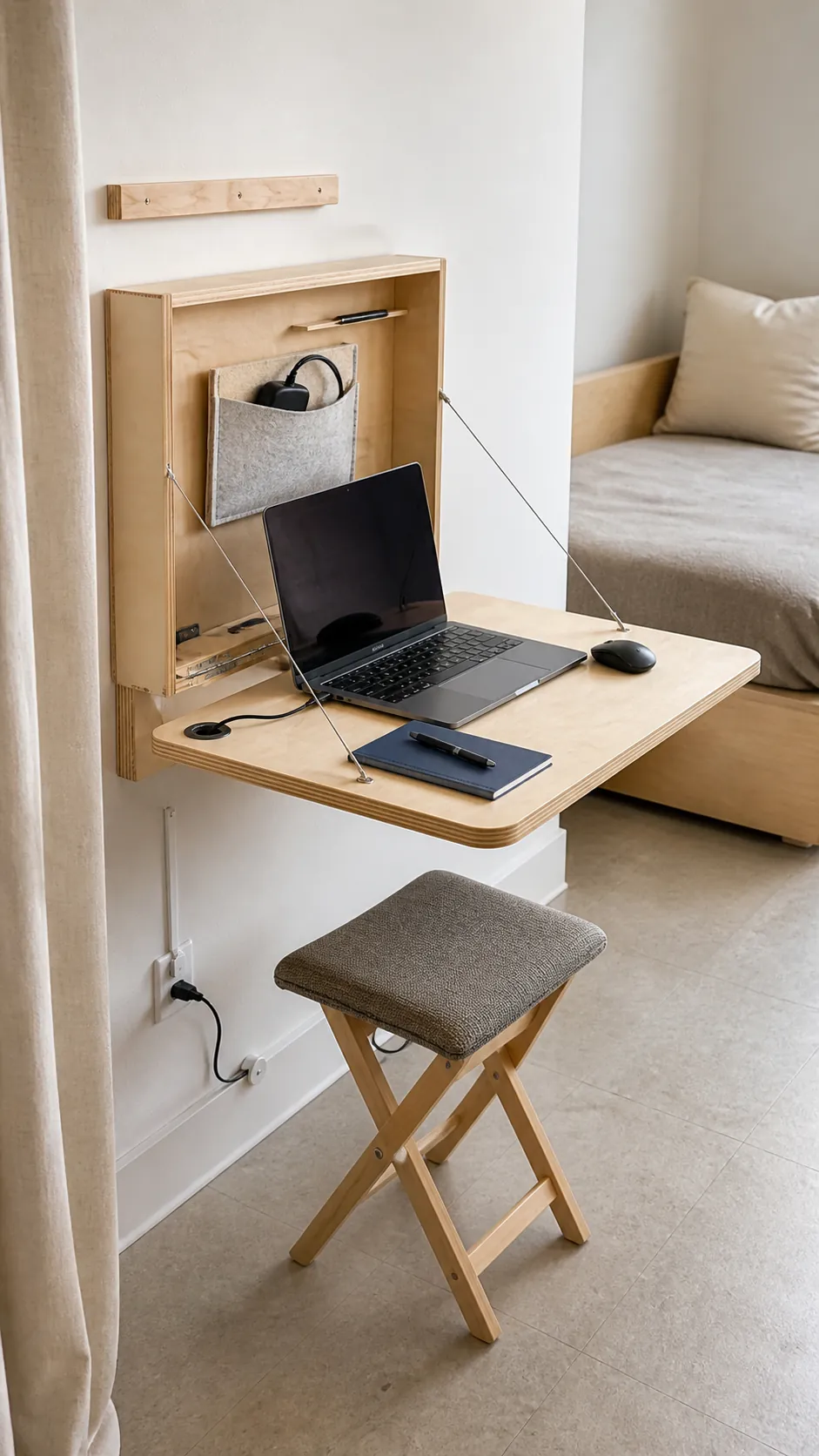
Cable supported writing desk
Strong side cables can hold a lightweight writing surface while keeping the floor clear. They need rated fittings, equal lengths, and anchors positioned to leave the panel level under load. This design suits notebooks and a laptop better than heavy monitors or vigorous craft work.
Desk with locking side stays
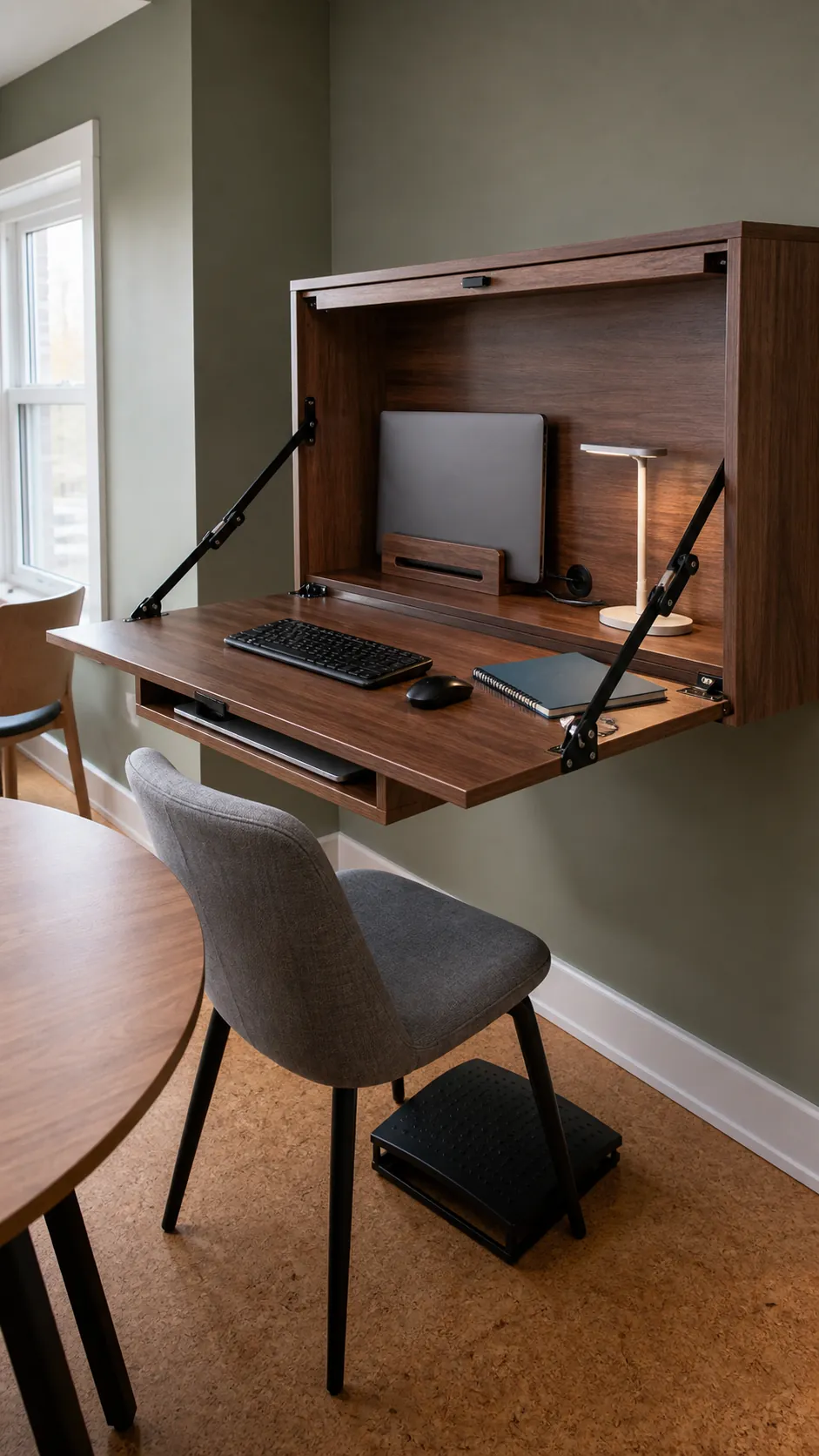
Metal side stays create a clean opening motion and stop the top at a repeatable level. Choose hardware rated for the surface size and place it where hands cannot be pinched during closing. A shallow cabinet behind the panel can hold the keyboard when the desk is shut.
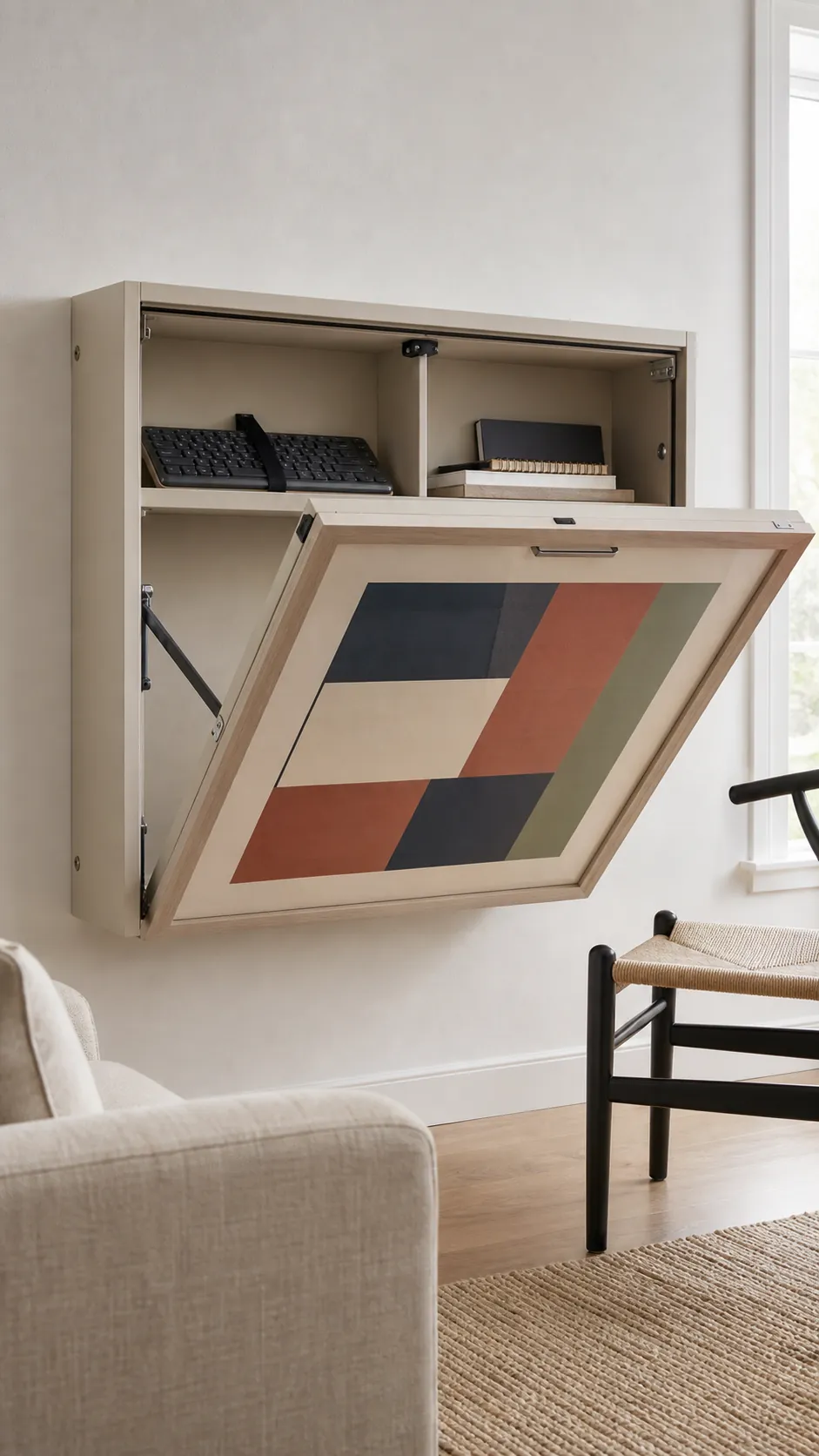
Framed art front panel
A shallow frame fixed to the outside can help a closed desk read as intentional wall decor. Keep the frame light, secure every component, and check that it remains upright without projecting into the room. Inside storage should be shallow enough that objects never collide with the folding top.
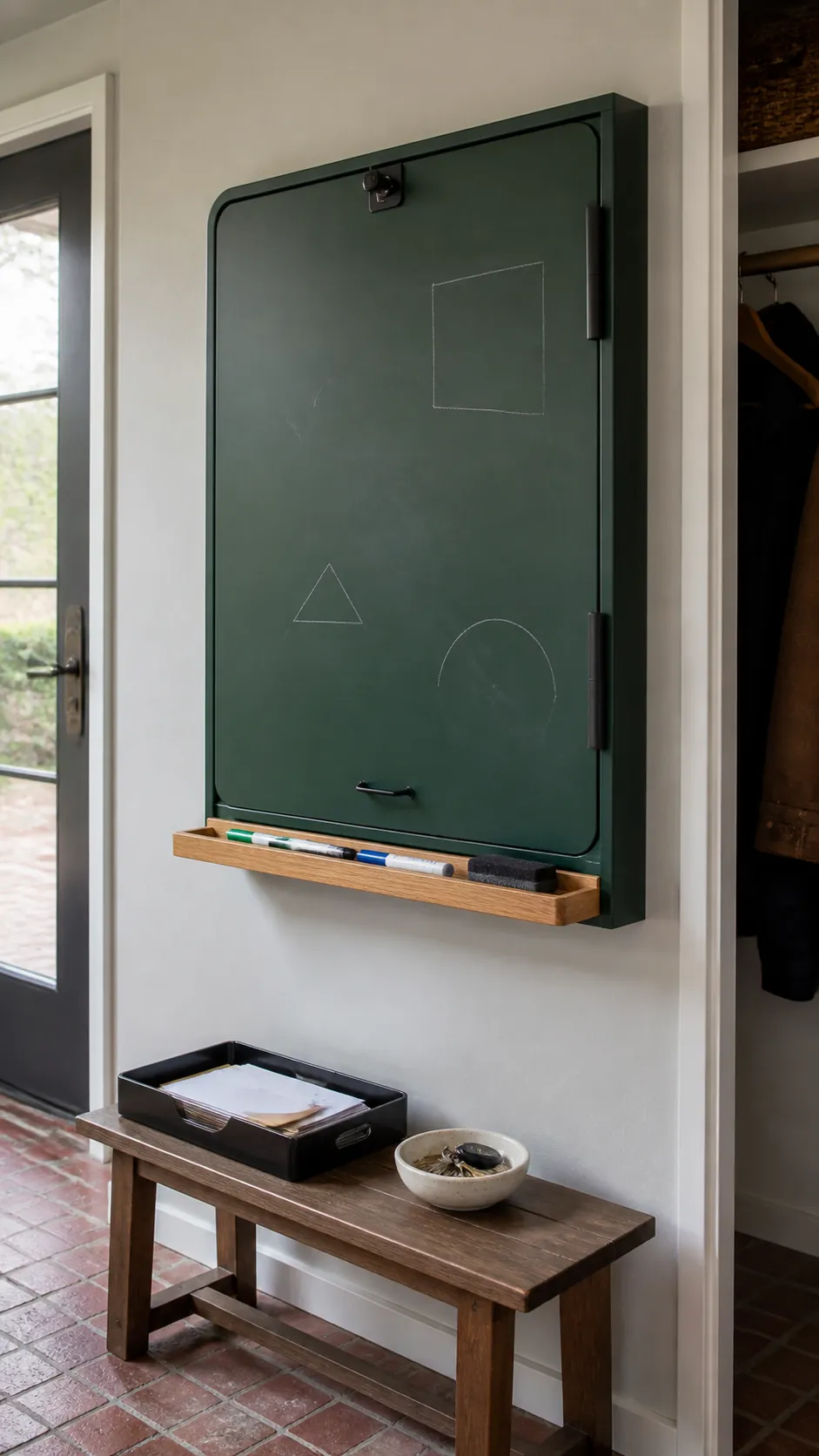
Writable front for family notes
A writable exterior turns the closed desk into a household message surface. Use a smooth low dust finish and a secure latch that resists the pressure of writing. Keep markers in a fixed tray that cannot fall when the panel opens.
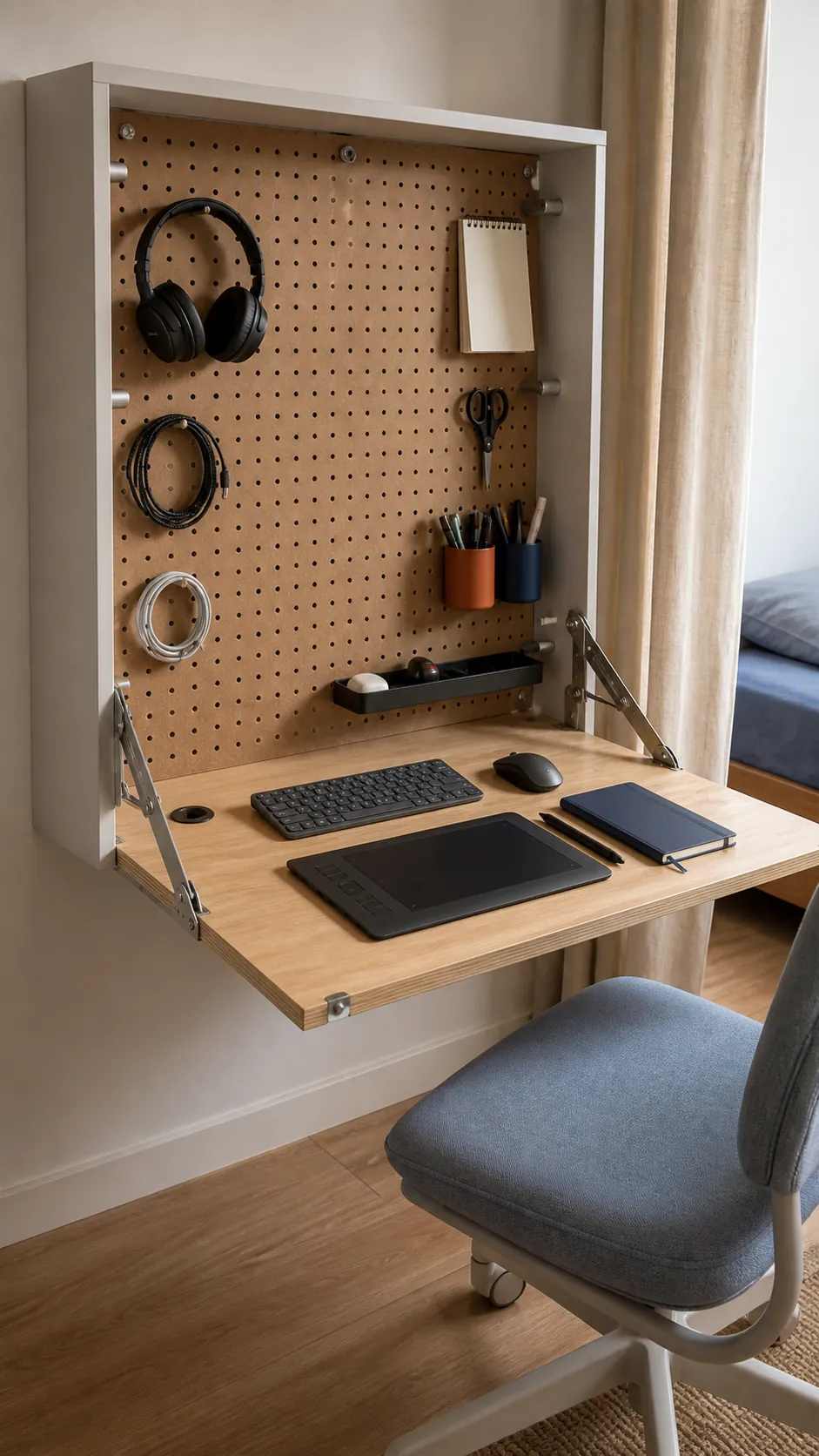
Pegboard storage inside the cabinet
An interior pegboard keeps light stationery and cables above the open worktop. Reserve a blank zone where the desk panel meets the cabinet so hooks do not prevent closing. Heavy tools belong in lower fixed storage rather than on small pegs.
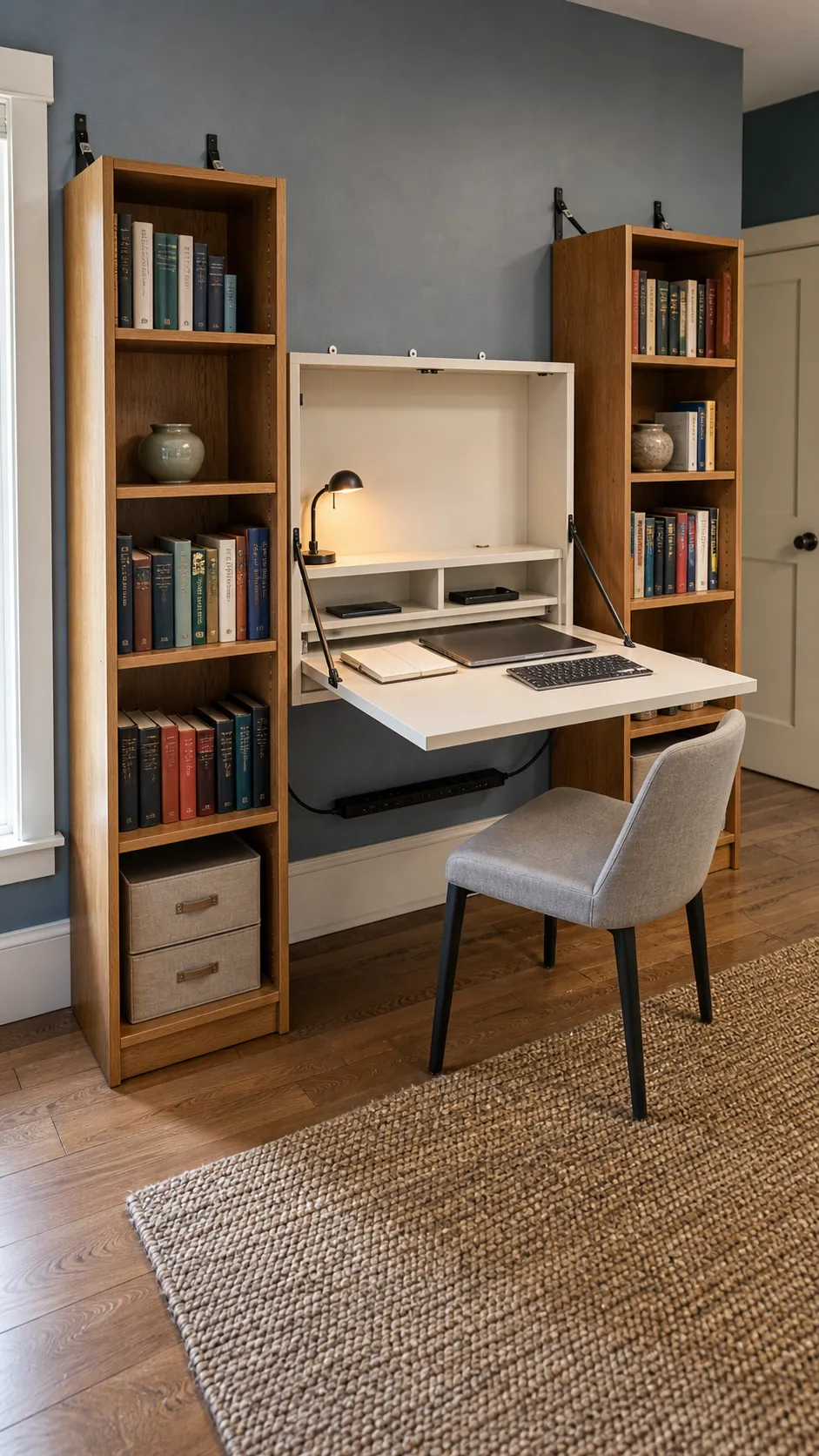
Bookcase cabinet with a folding center
Fixed shelves on each side can make a fold down desk feel like part of a small library. Leave clearance for the chair and avoid loading the center cabinet above its wall capacity. The bookshelves should anchor independently so desk movement does not loosen them.
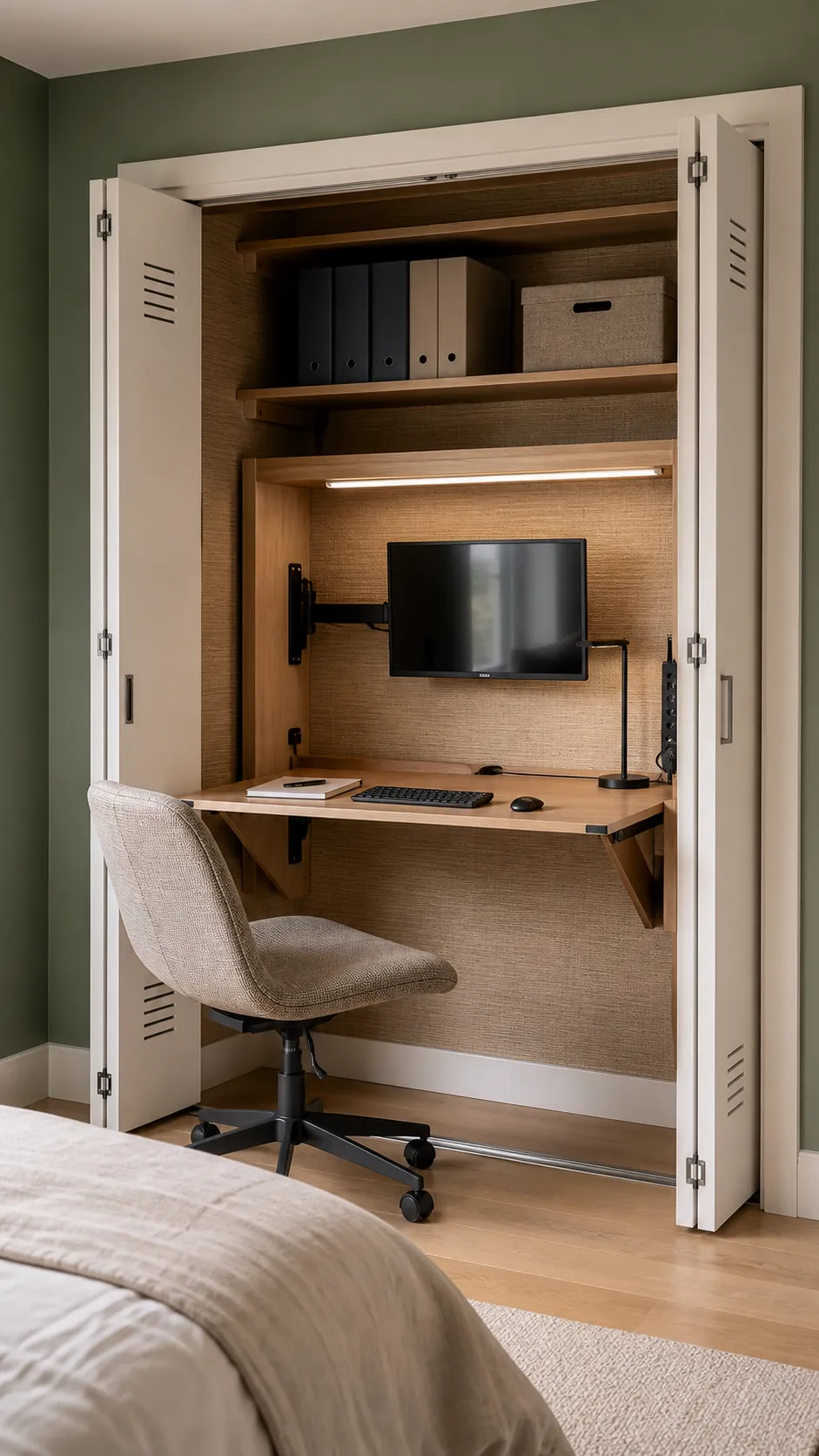
Closet desk behind folding doors
A closet can contain a folding top, shelves, and power while the chair stays outside. Open the doors fully before lowering the desk, and provide ventilation if equipment remains inside. Mount the surface at a tested seated height instead of accepting the position of an old shelf.
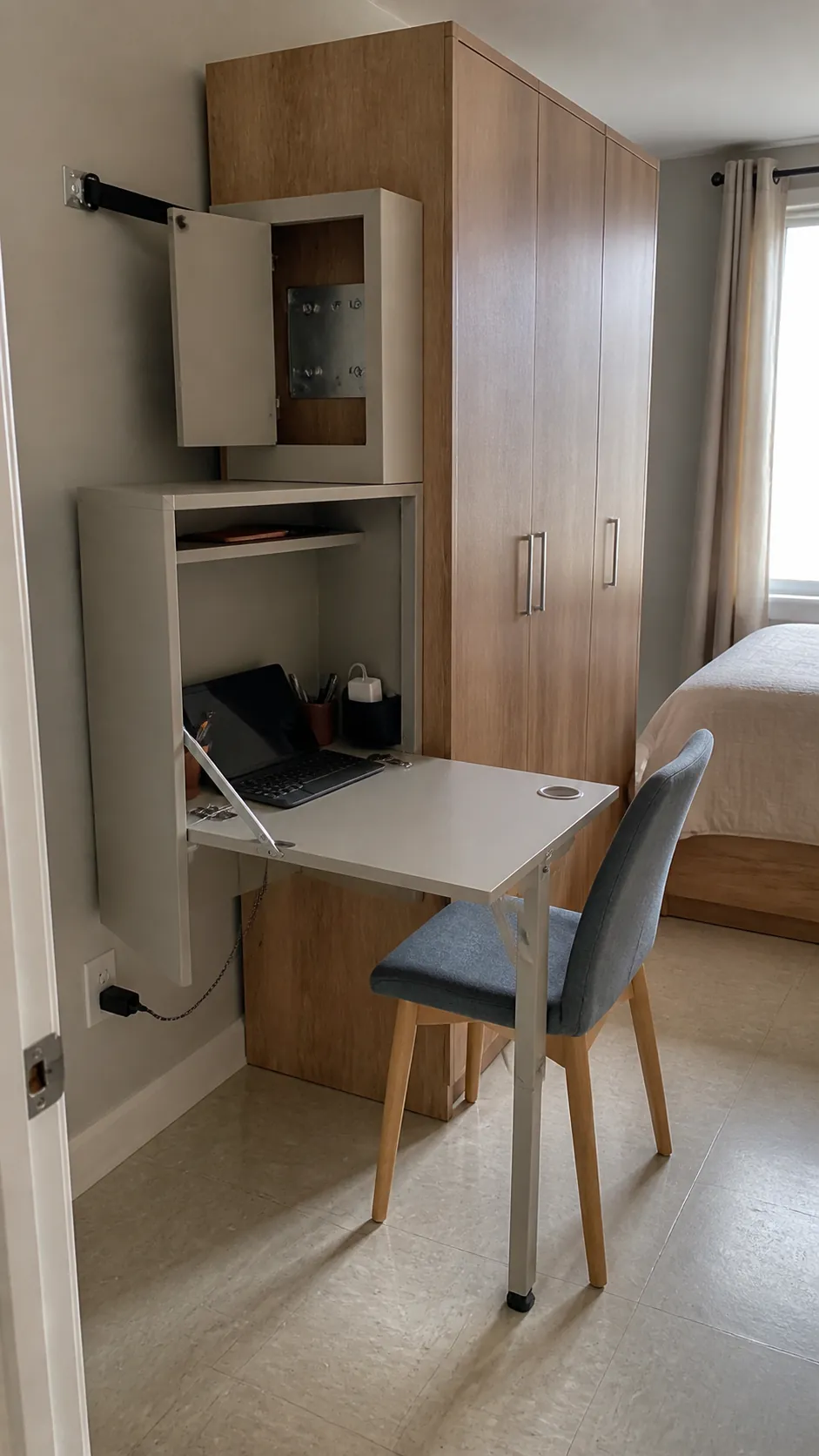
Desk folded from a wardrobe side
The outer side of a deep wardrobe can support a compact desk when the cabinet itself is anchored securely. Reinforce the side panel so hinge screws do not rely on thin material alone. This layout preserves the wardrobe front and uses a wall edge that would otherwise stay blank.
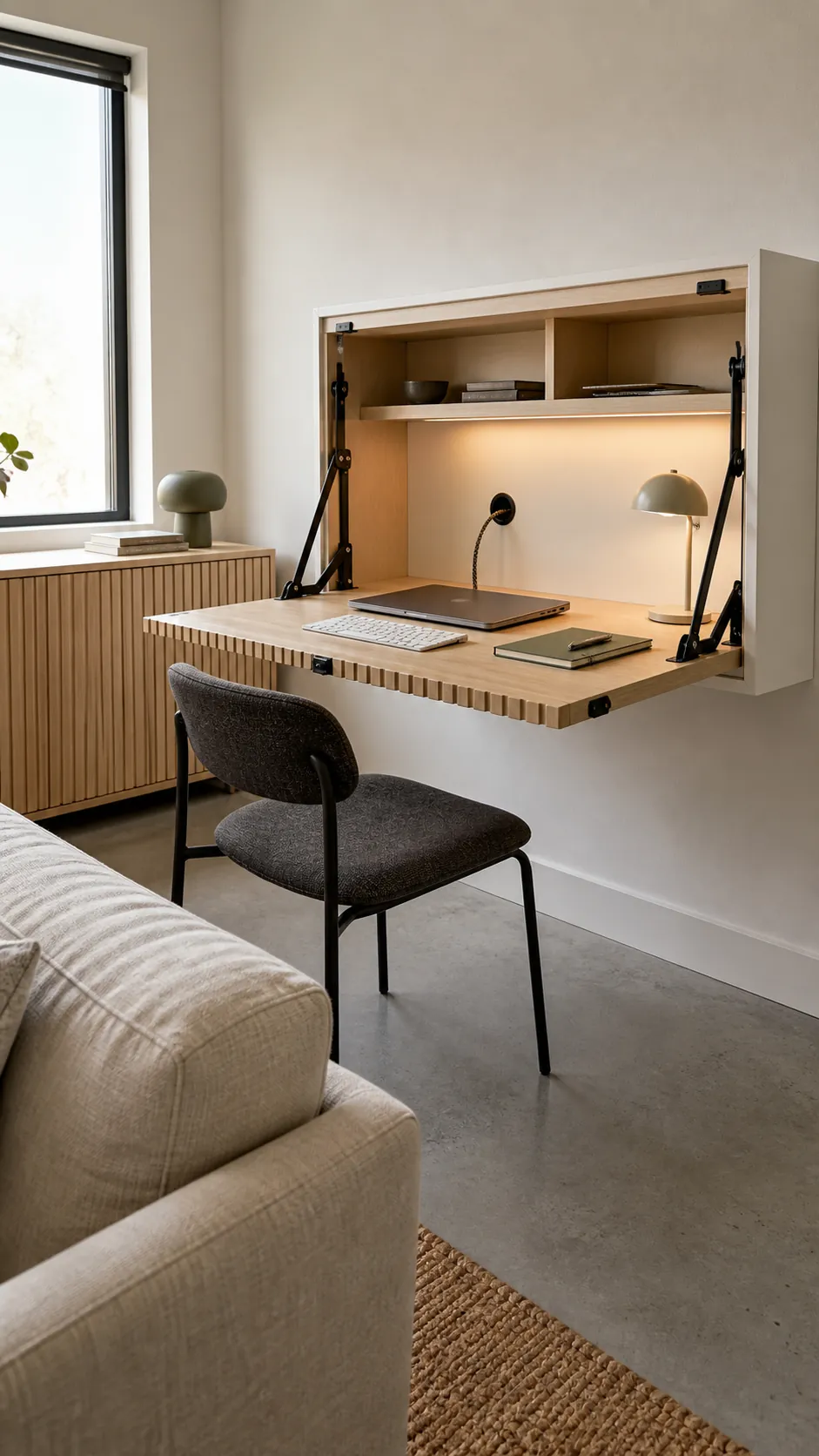
Slatted living room cabinet
A timber slat front can help a hidden desk blend with living room storage. Keep the slats light and allow gaps only where they will not collect cables or catch fingers. The open panel should clear nearby seating and leave a safe route through the room.
Bedroom desk beside the headboard
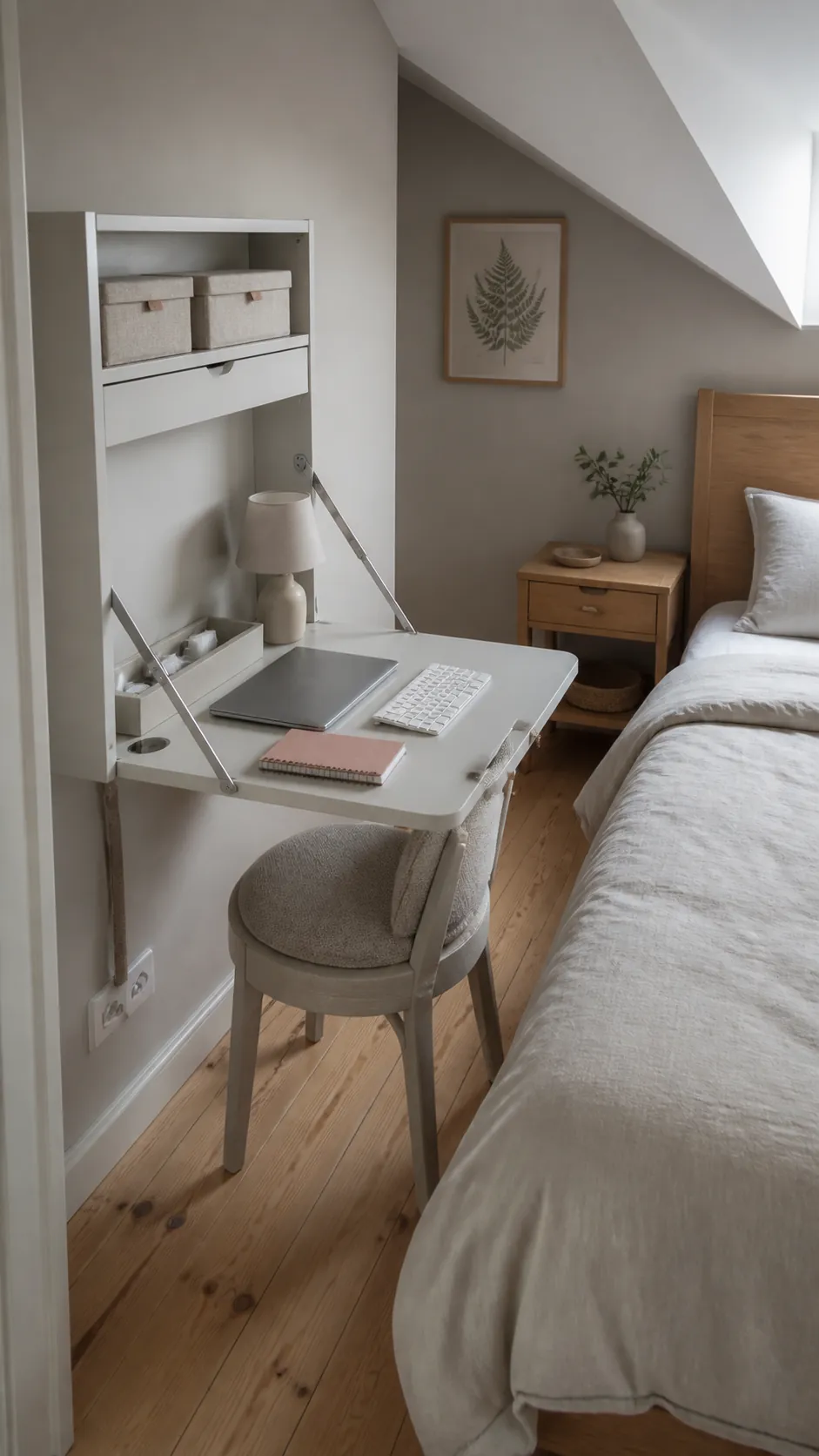
A narrow folding desk can occupy the wall beside a bed where a fixed table would block circulation. Measure the open panel and chair together so they do not pinch the route to the bed. Closed storage for chargers and papers helps the room feel restful after work.
Kitchen command center
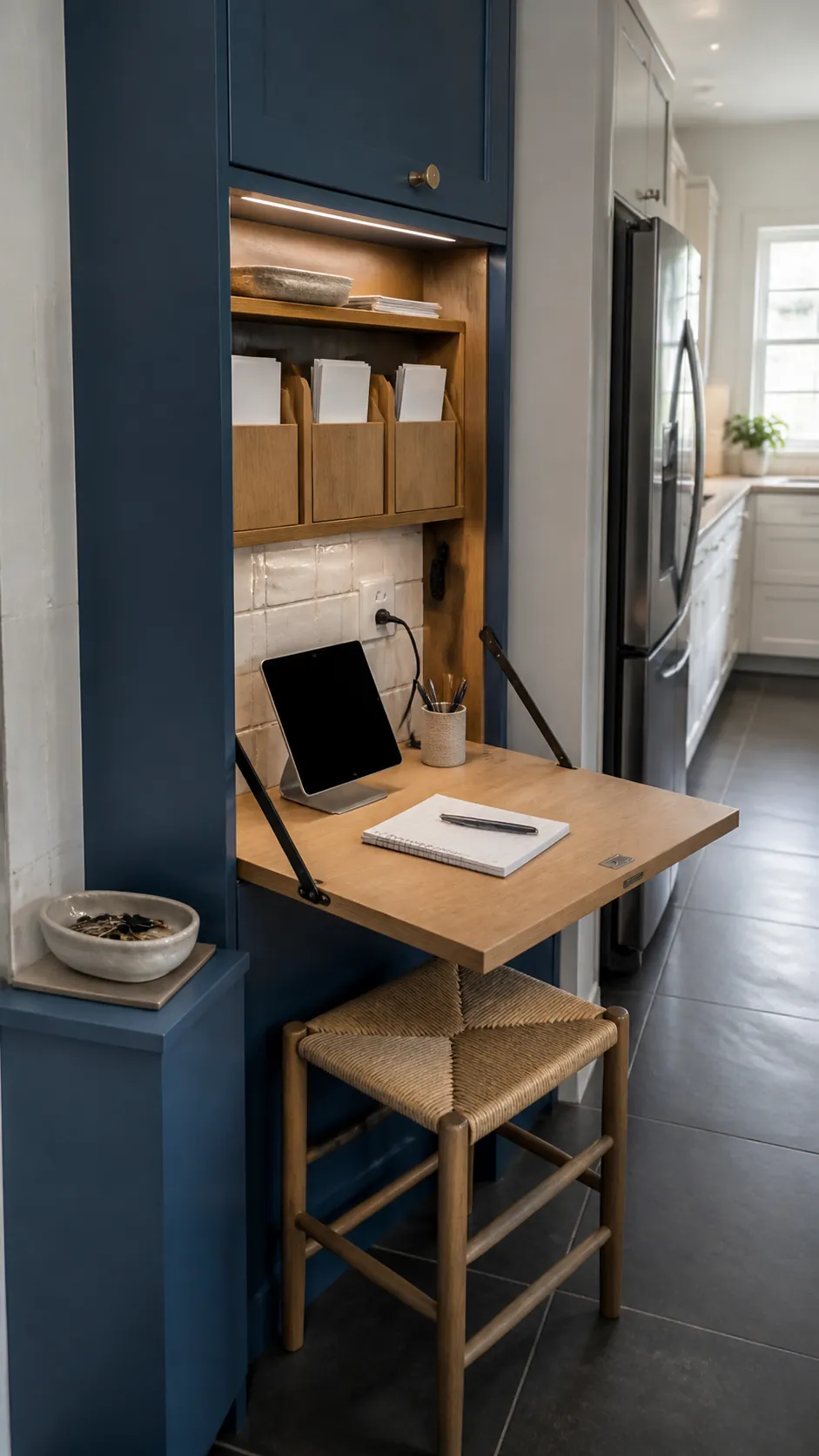
A small fold down surface at the dry end of a kitchen can handle schedules, mail, and short computer tasks. Separate it from heat and water, use wipeable finishes, and keep power above the worktop. A shallow file pocket inside the cabinet prevents papers from spreading onto food counters.
Hallway console that opens for work
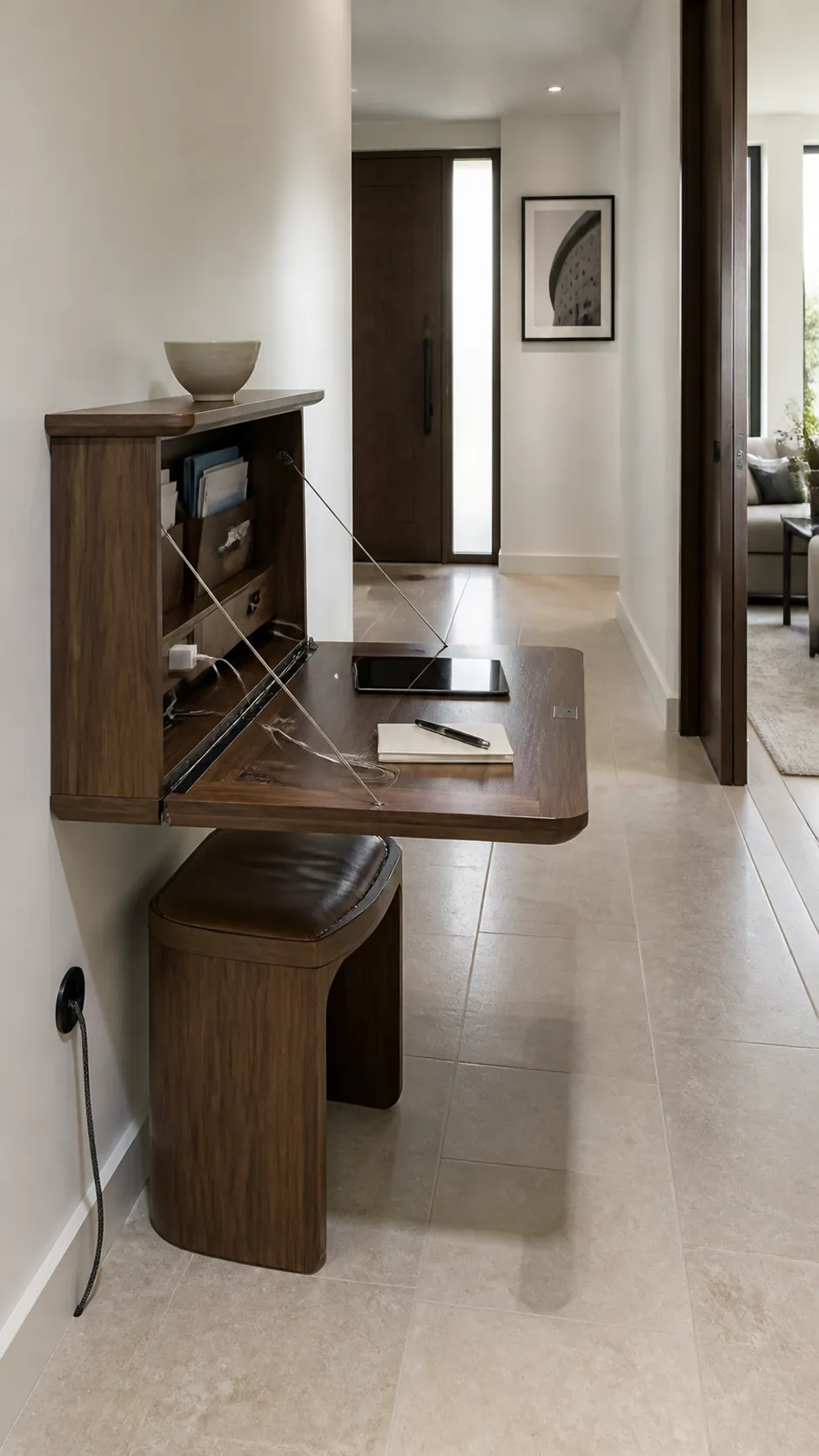
A closed cabinet can look like a slim console while the front lowers into a writing desk. Keep the open depth out of the main walking line and use rounded corners where people pass. Interior pockets can hold mail and a tablet without adding excessive cabinet depth.
Under stairs folding workstation
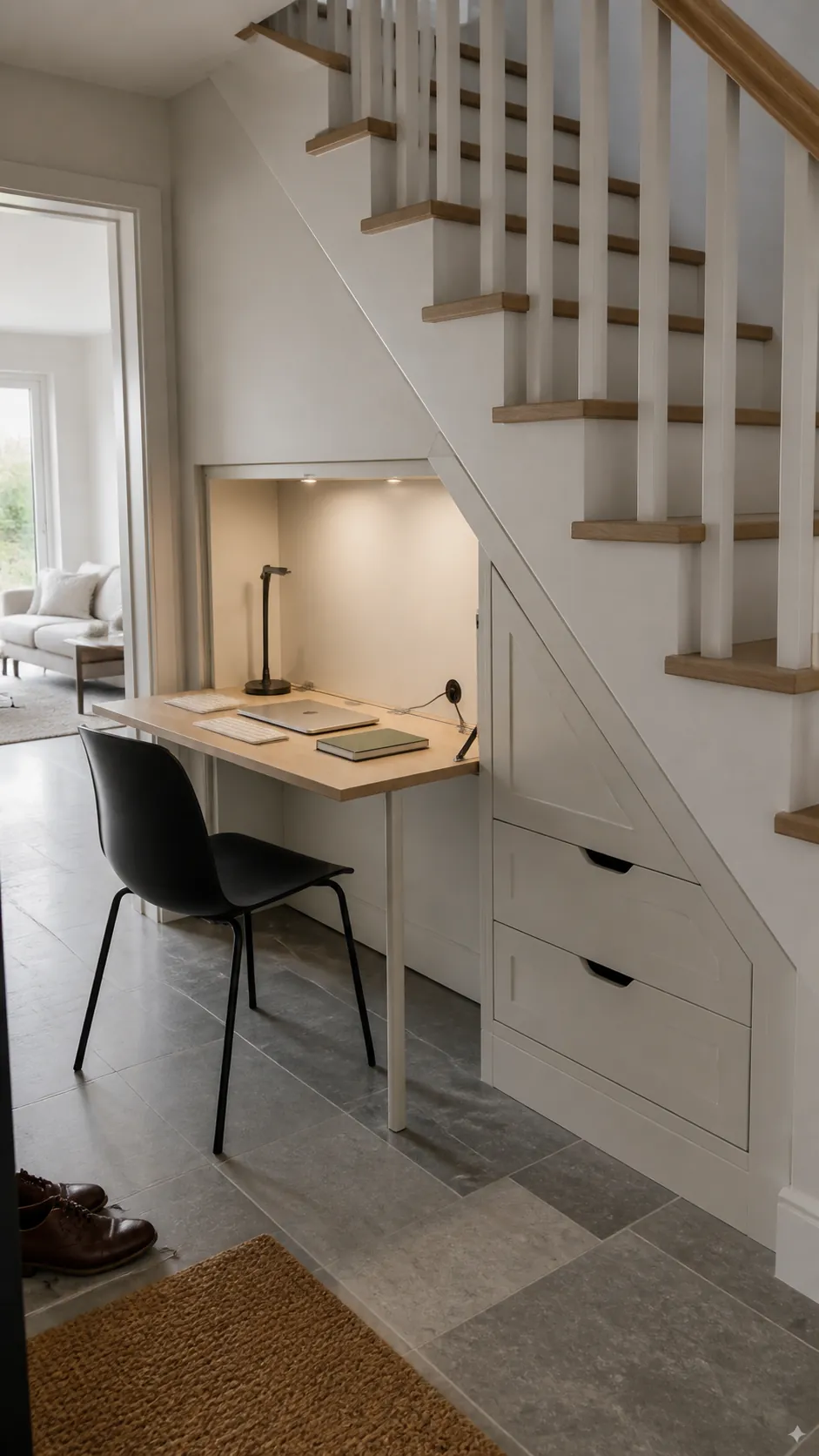
The tall end beneath stairs can hold a cabinet with a desk that closes against the wall. Confirm seated headroom, keep hinge hardware away from the stair structure, and line open treads to stop grit falling onto equipment. Use the low wedge for fixed storage rather than forcing the work surface into it.
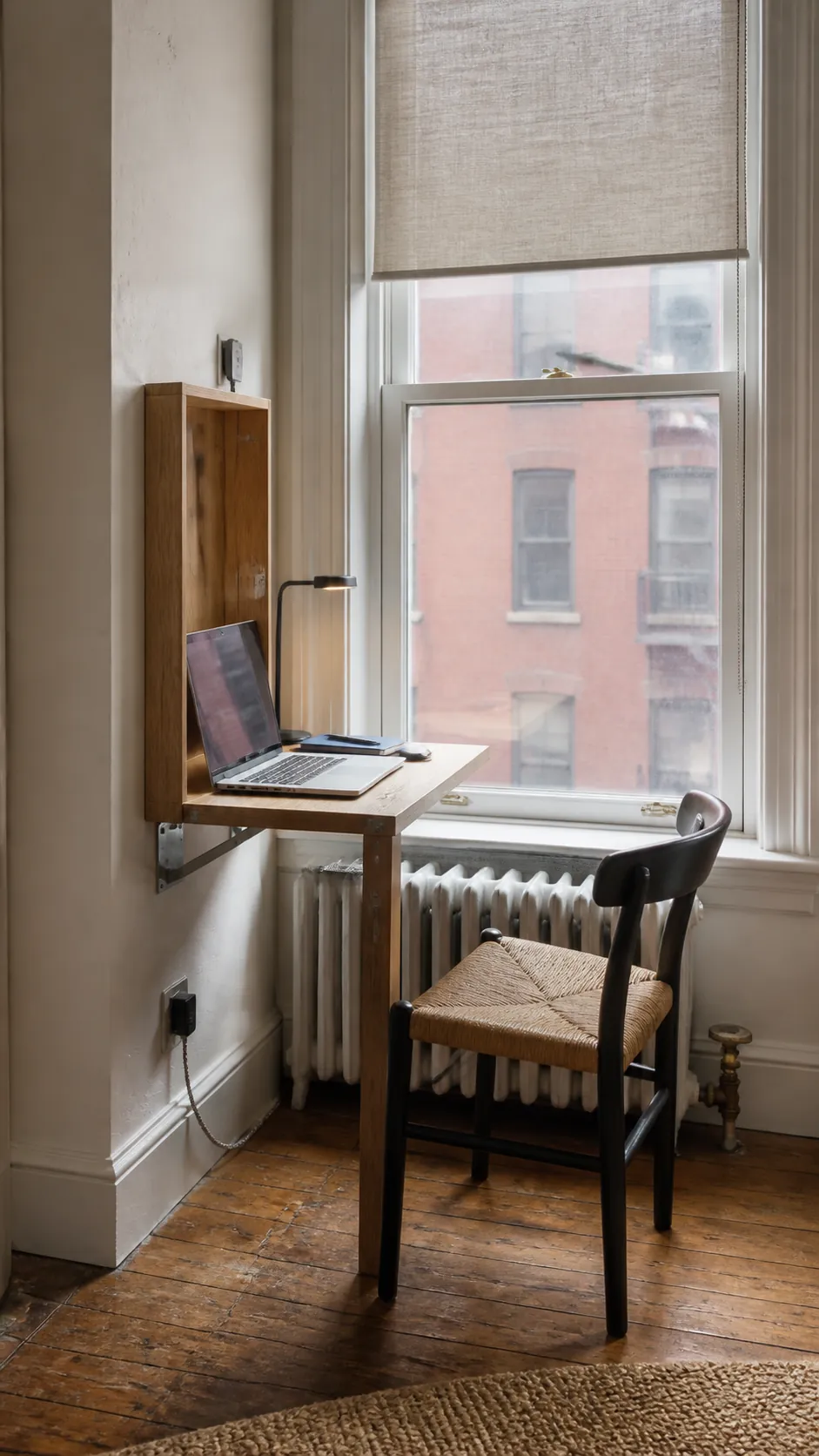
Window recess fold down desk
A deep window return can accept a folding desk without taking another wall. Fit a shade to control glare and keep the panel clear of handles, radiators, and opening sashes. Side mounted power and storage leave the view open when the desk is lowered.
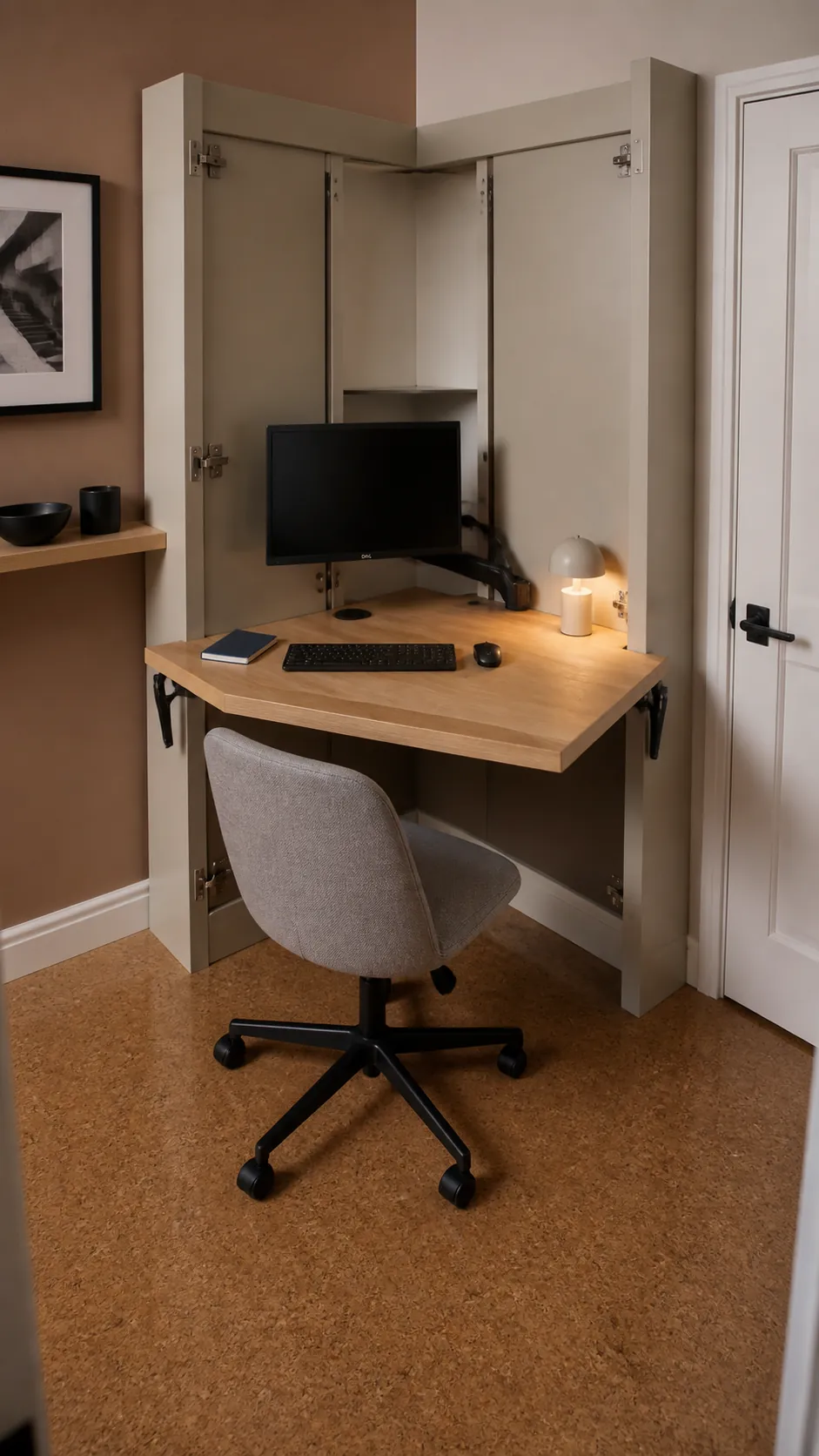
Corner cabinet with a diagonal top
A diagonal folding surface can use corner depth while keeping its front edge compact. The cabinet needs reinforced adjoining walls and hardware that opens without binding near the corner. Center the chair and screen on the working edge rather than on either wall.
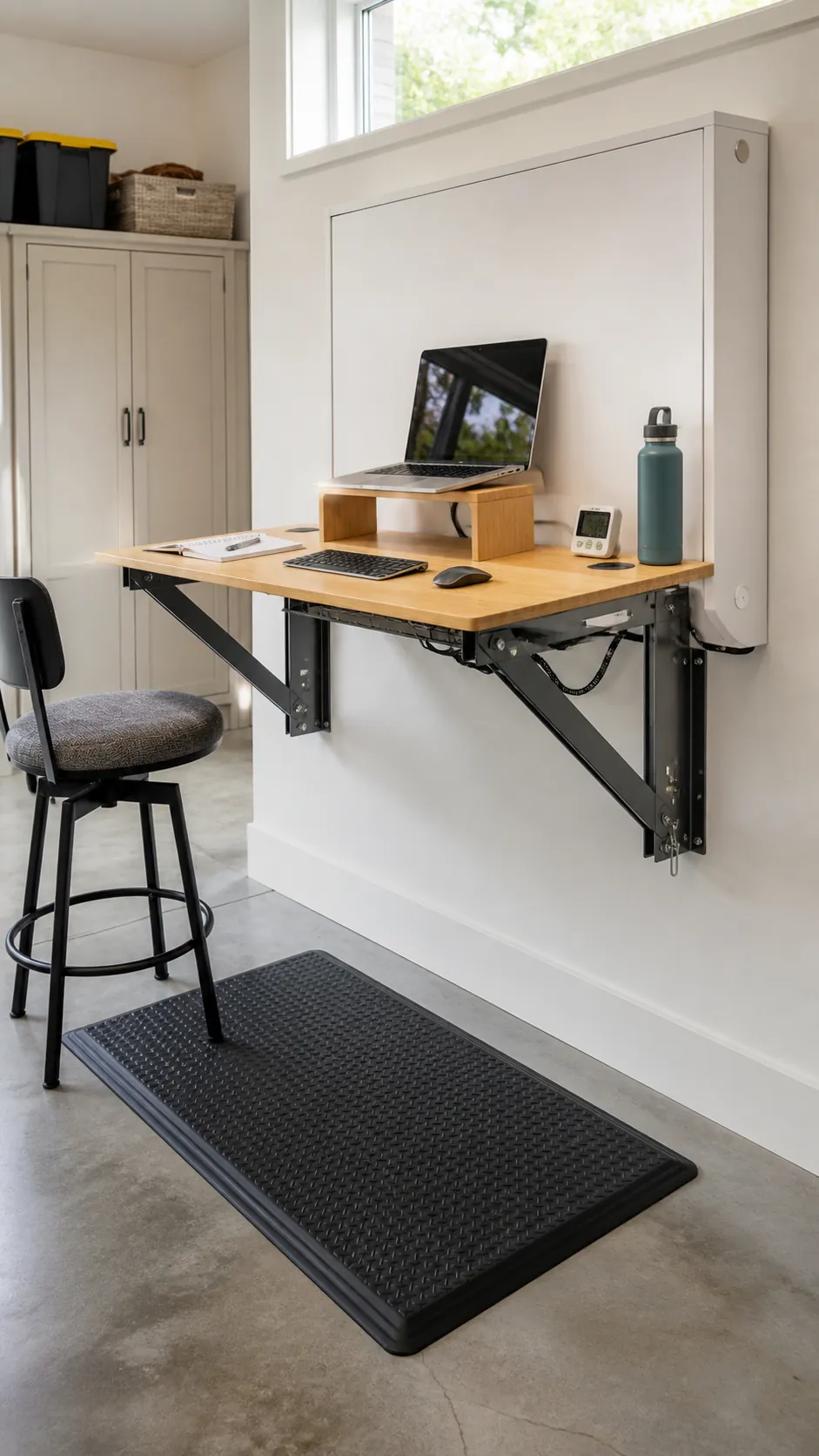
Standing height folding desk
A higher cabinet can create a standing desk without an adjustable frame. Test elbow height before drilling, then choose a supportive foot mat and a screen riser that folds or stores safely. Rated brackets must resist downward leaning as well as equipment weight.
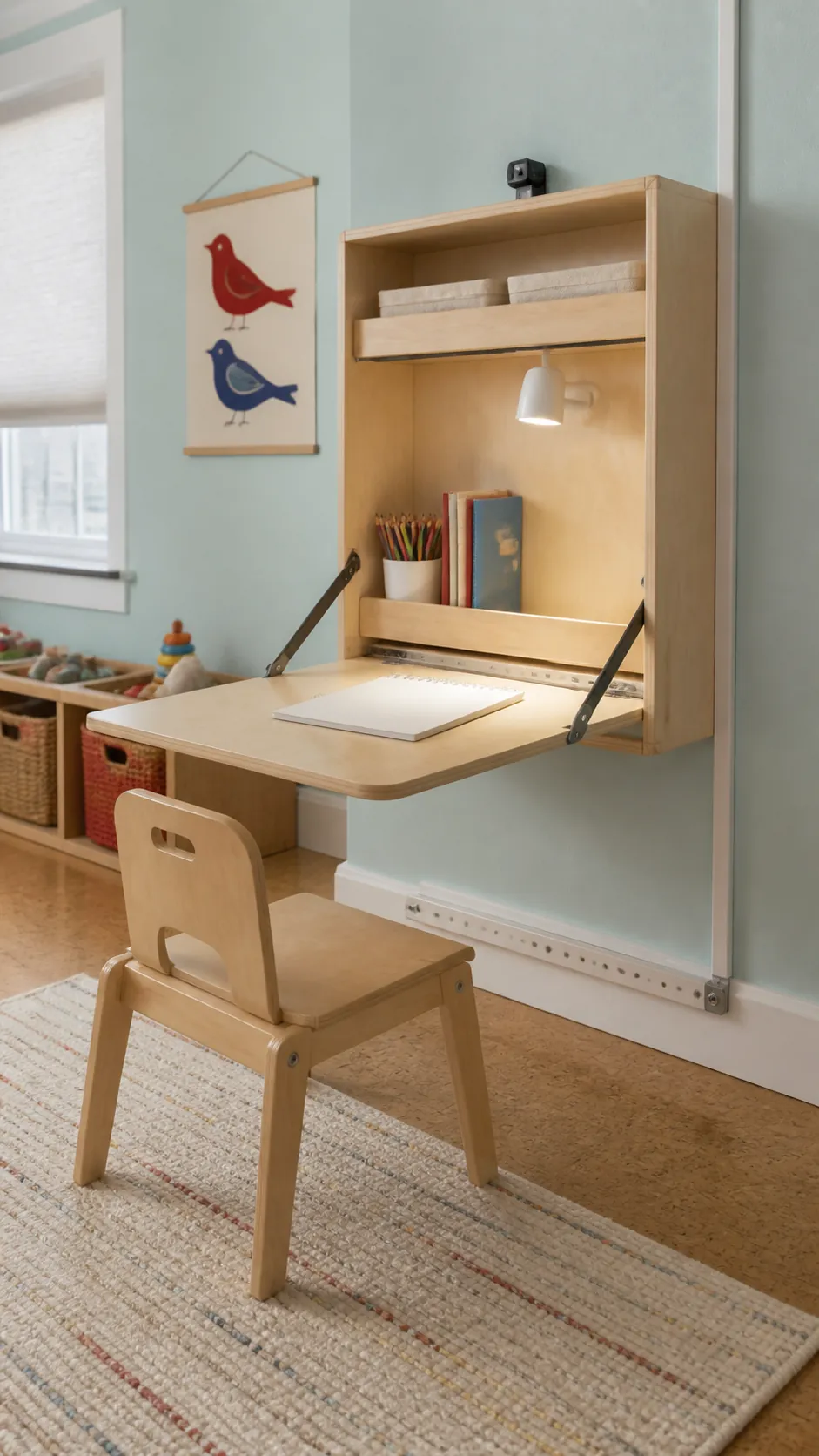
Child study station with safe hardware
A child sized fold down desk needs slow close hinges, rounded edges, and a latch placed beyond very young hands. Mount it for the current chair height while leaving a practical way to raise or replace the surface later. Keep storage shallow and avoid heavy objects above the seated area.
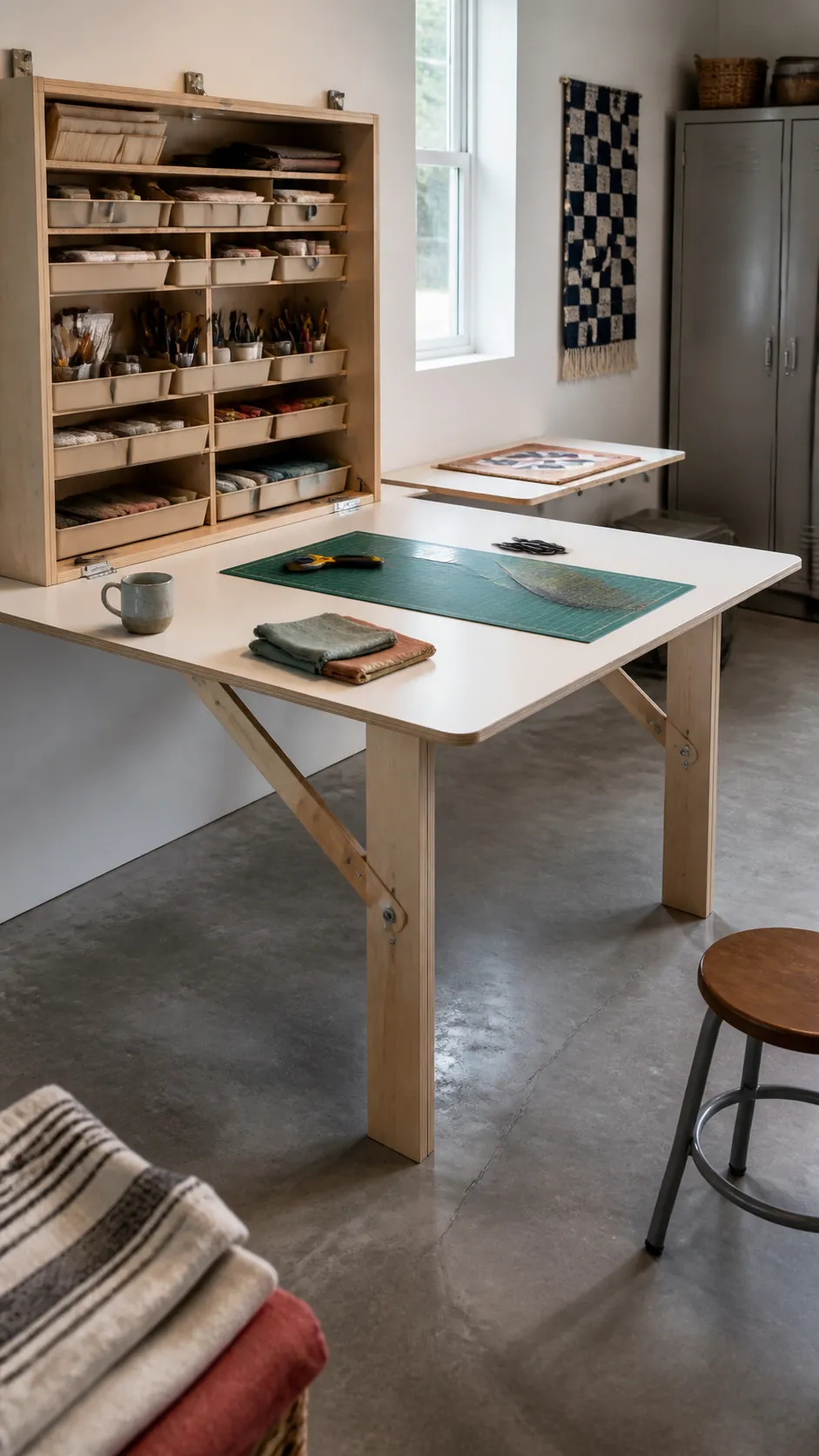
Craft table with washable surface
A wide fold down craft table benefits from floor legs because cutting and pressing create more force than typing. Use a durable washable top and fixed bins that remain upright when the panel closes. Plan a clear reset zone so projects can dry or wait without preventing the table from folding.
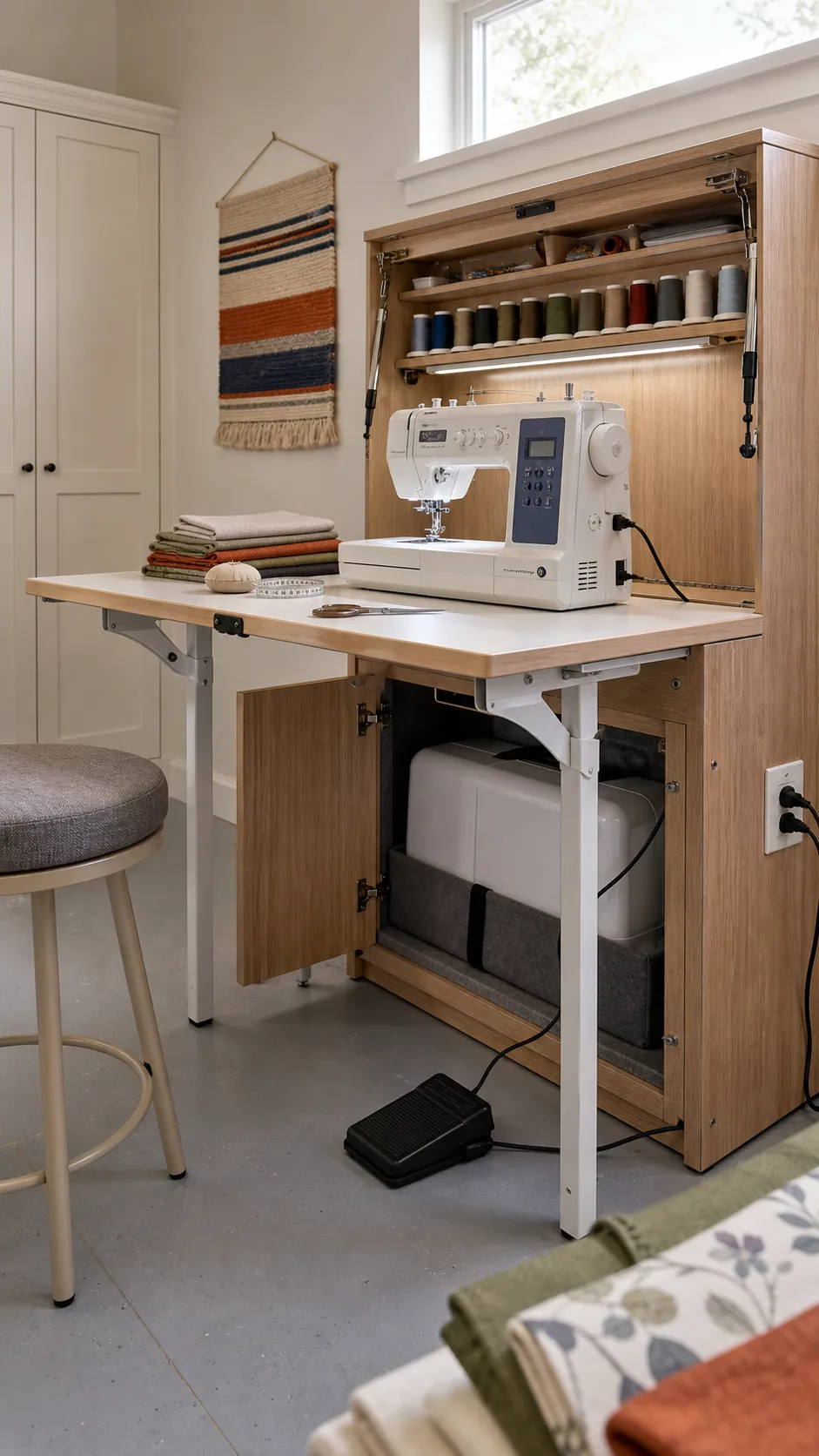
Sewing station with machine storage
A sewing machine is too heavy to balance casually on a shallow folding panel. Store it in a reinforced lower cabinet and move it onto a leg supported surface only when needed. Thread, tools, and fabric can stay in shallow interior compartments that latch before closing.
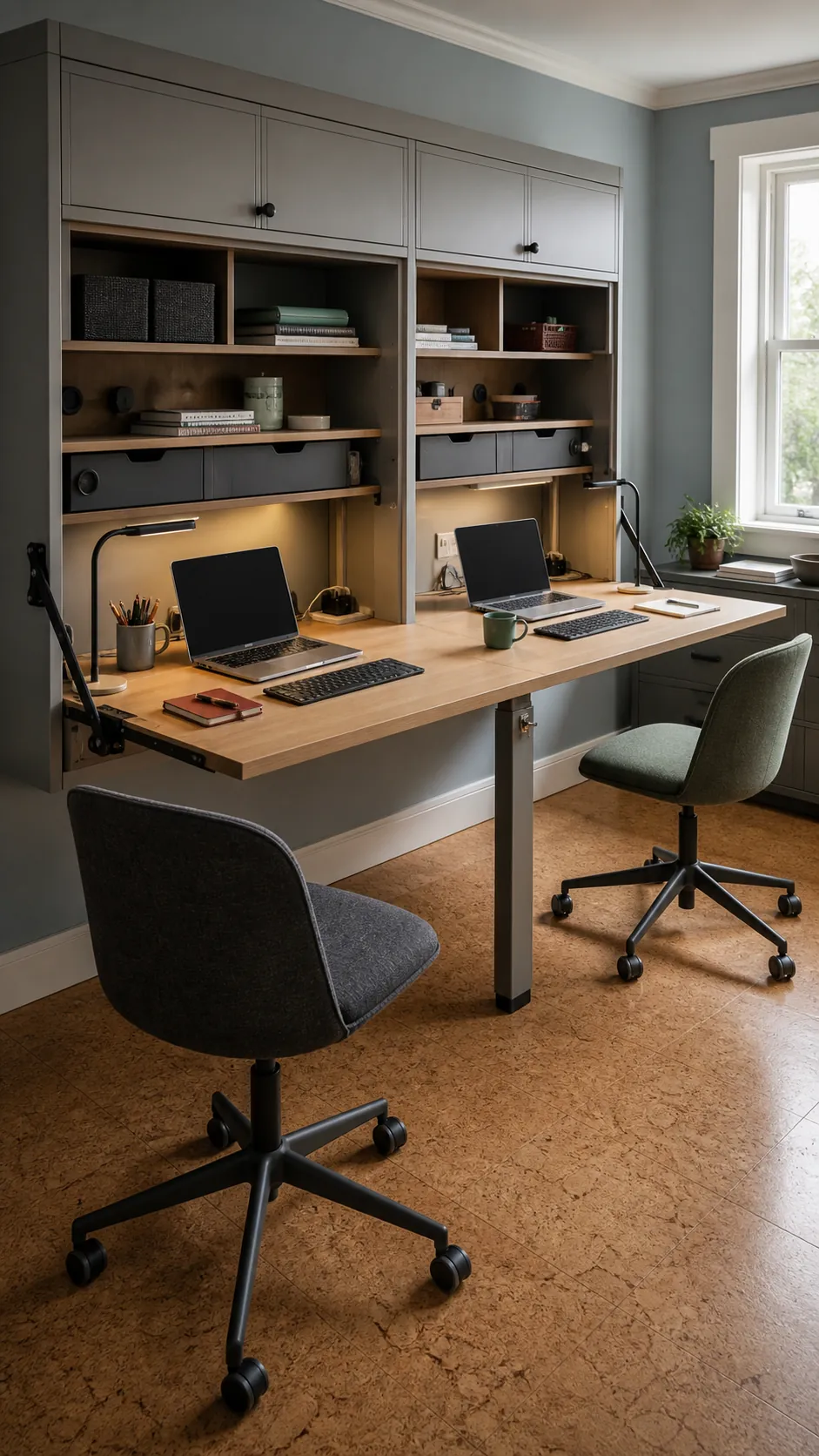
Wide desk for two people
A broad folding panel can serve two seats only when the center is supported against sagging. Use multiple wall anchors, a central folding leg, and separate cable zones for each user. The closed cabinet will be large, so its exterior should match nearby storage rather than pretend to disappear.
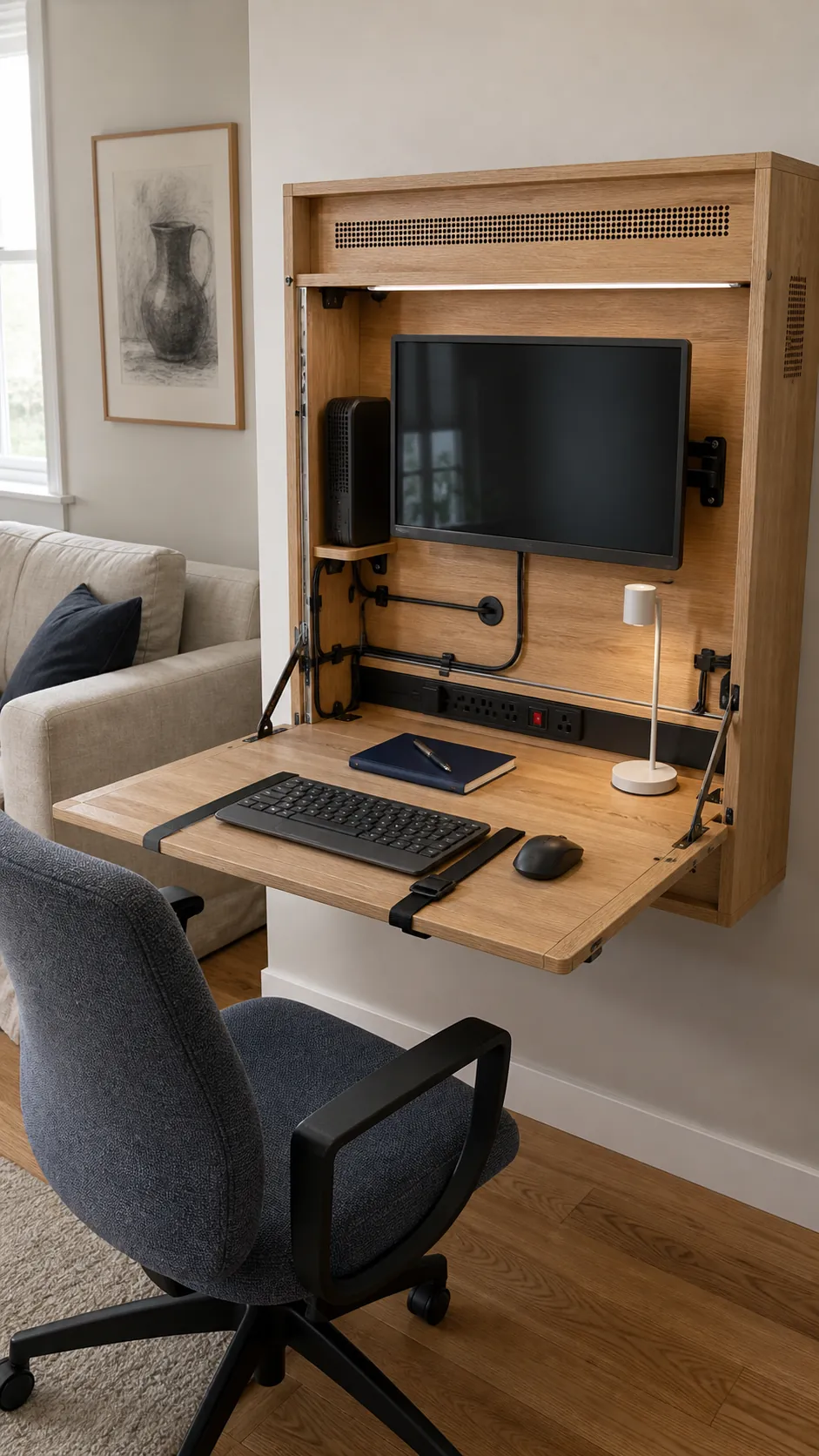
Monitor secured inside the cabinet
A slim monitor can remain inside the cabinet if its mount, ventilation, and closing clearance are planned together. Fix the screen to a solid back panel and ensure cables never cross the folding hinge. The keyboard needs a dedicated shelf or retaining strap before the desk closes.
Shallow laptop only cabinet
A laptop only desk can stay remarkably shallow because the equipment leaves when the panel closes. Provide one cable pass through, a small charger pocket, and enough depth for comfortable forearm support. This is a strong rental friendly choice when a permanent screen is unnecessary.
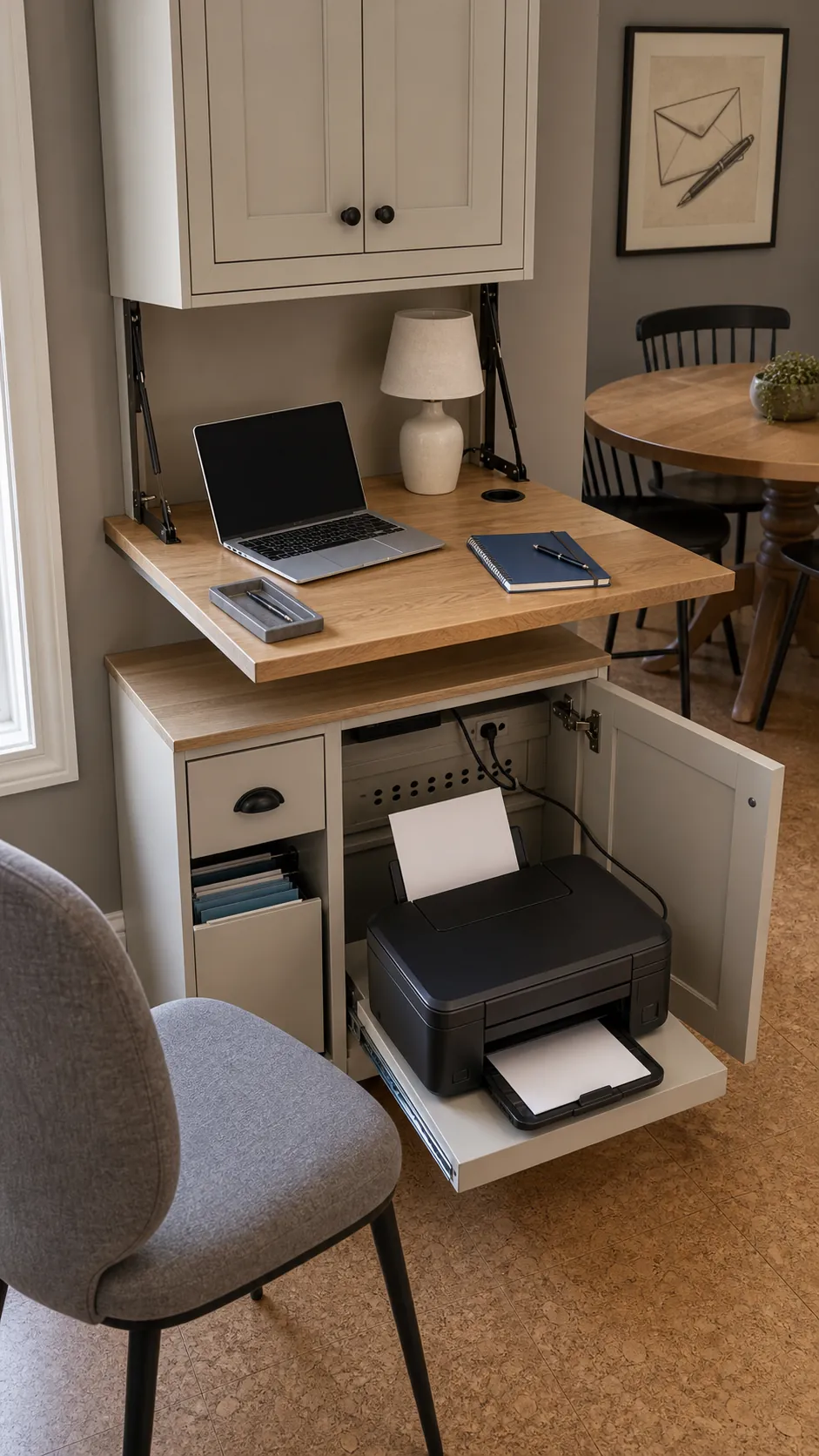
Printer storage below the desk
A fixed lower cabinet can hold a printer while the worktop folds above it. Put the printer on a pull out shelf for paper changes and leave room around its vents. The folding top should open without trapping cables or blocking the printer tray.
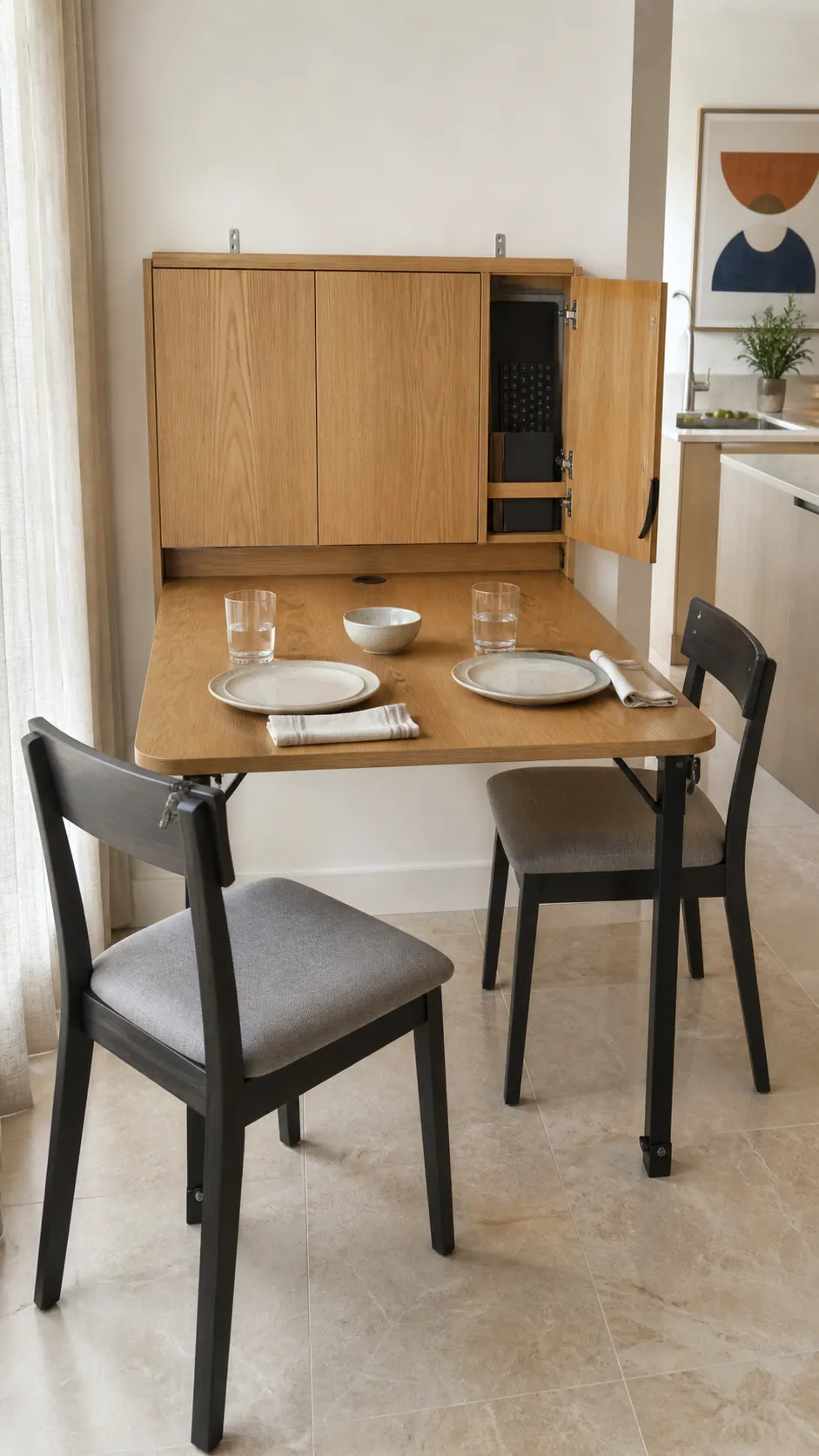
Desk that becomes a dining table
A larger folding panel can support meals after work when its surface is durable and easy to clear. Use floor legs, food safe finish, and storage that holds office items securely before plates arrive. Confirm chair positions for both purposes because dining usually needs more perimeter space.
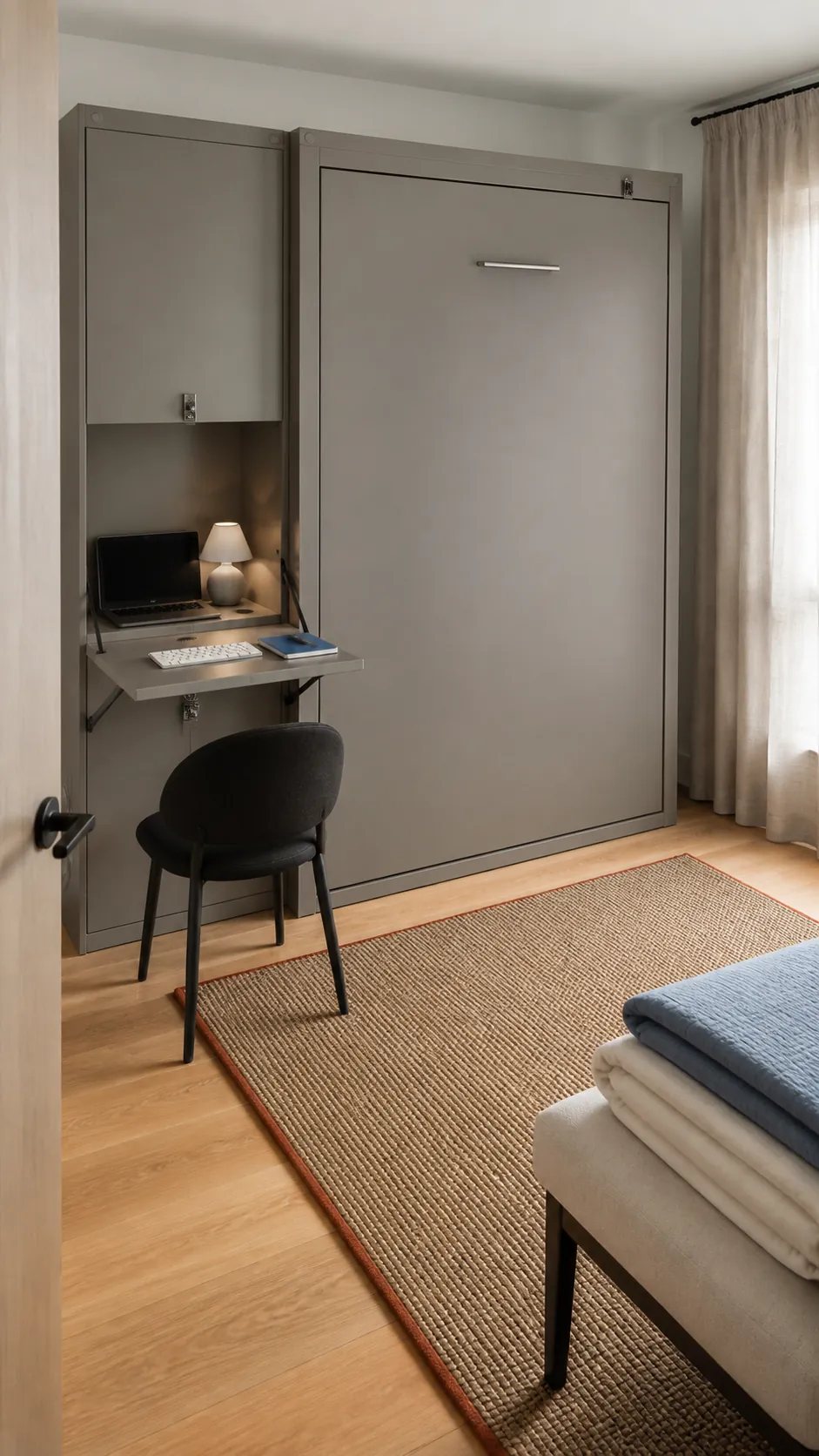
Companion desk beside a wall bed
A separate fold down desk can share a wall with a Murphy bed while keeping each mechanism simple. Map both opening arcs and never rely on one unit to support the other. The desk must close fully before the bed moves, with latches that make the required sequence obvious.
Stay level desk on a wall bed
A stay level mechanism can keep carefully placed items horizontal while a wall bed moves, but it requires engineered hardware and exact balancing. Confirm the final desk height in both positions and follow the mechanism maker’s load limits. This complex option deserves professional installation rather than improvised hinges.
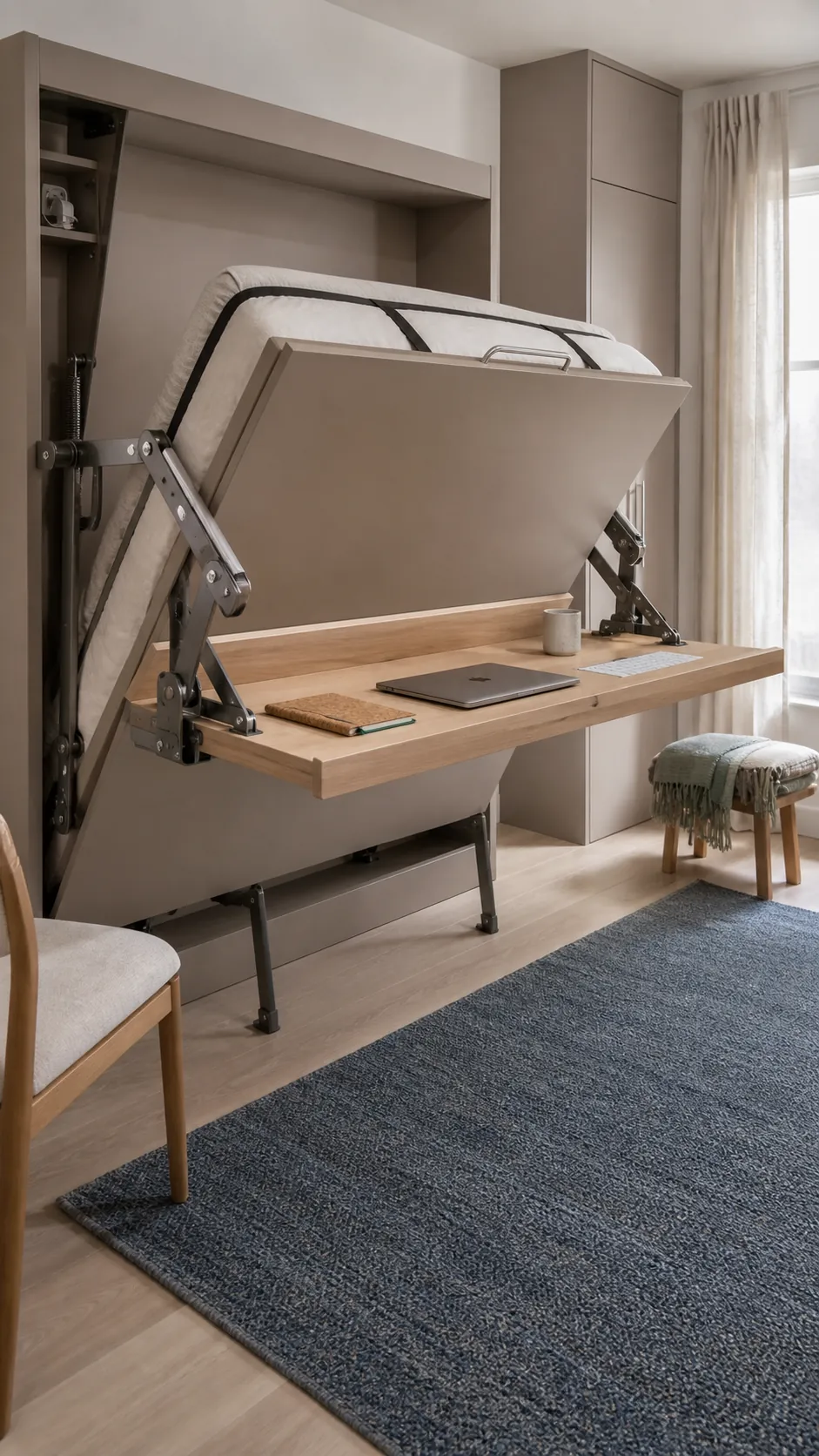
Rolling cabinet with a folding front
A mobile cabinet can carry a fold down desk between rooms when walls cannot be altered. Use a wide stable base, locking casters, and a panel that does not pull the cabinet forward under leaning pressure. The cabinet should move only while closed and empty of loose objects.
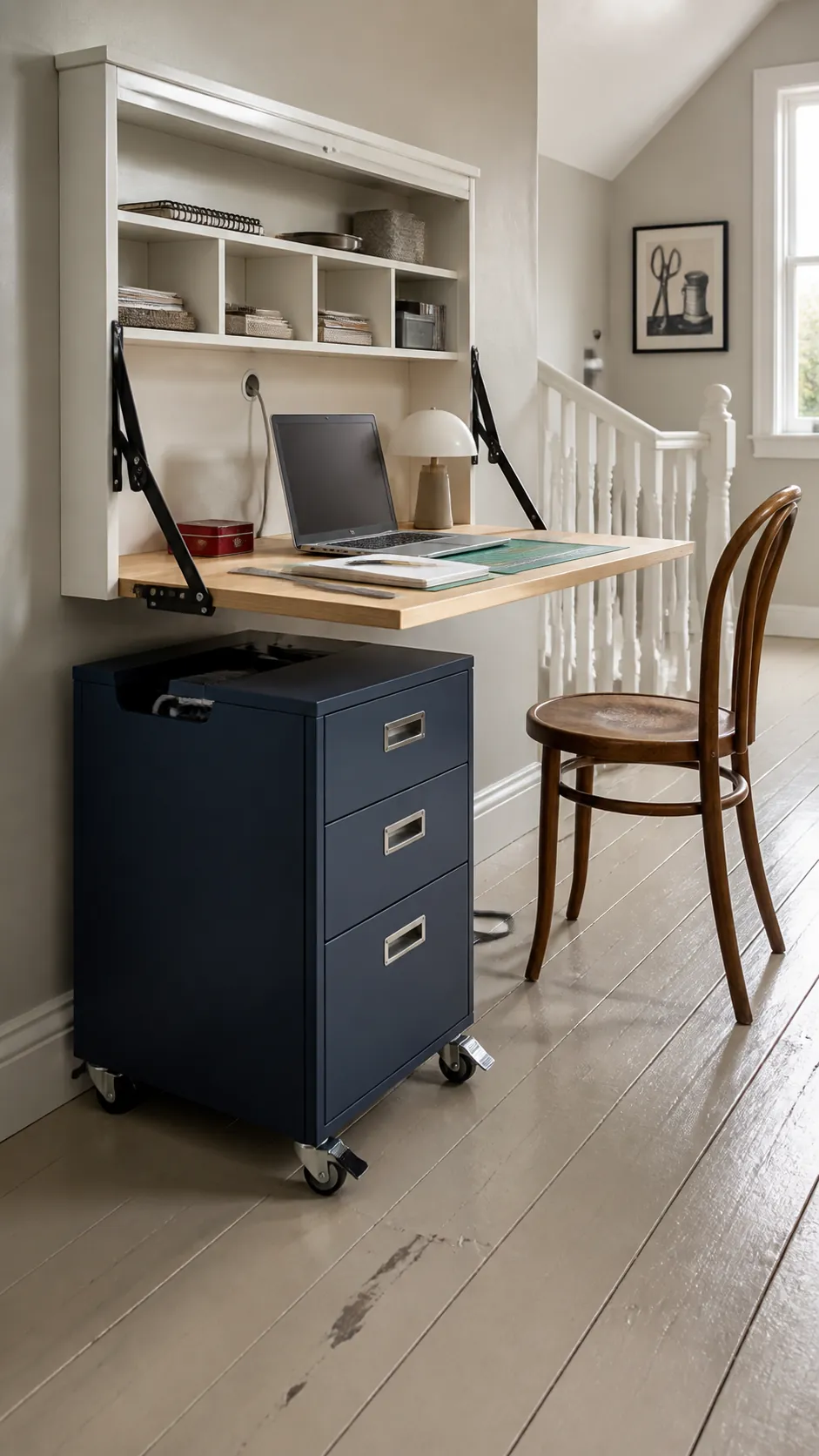
Pantry side homework desk
The blank side of a tall pantry cabinet can hold a compact homework desk near family activity. Reinforce the cabinet panel, keep the surface out of the kitchen passage, and protect papers from splashes. A shallow interior shelf can hold supplies without mixing them with food storage.
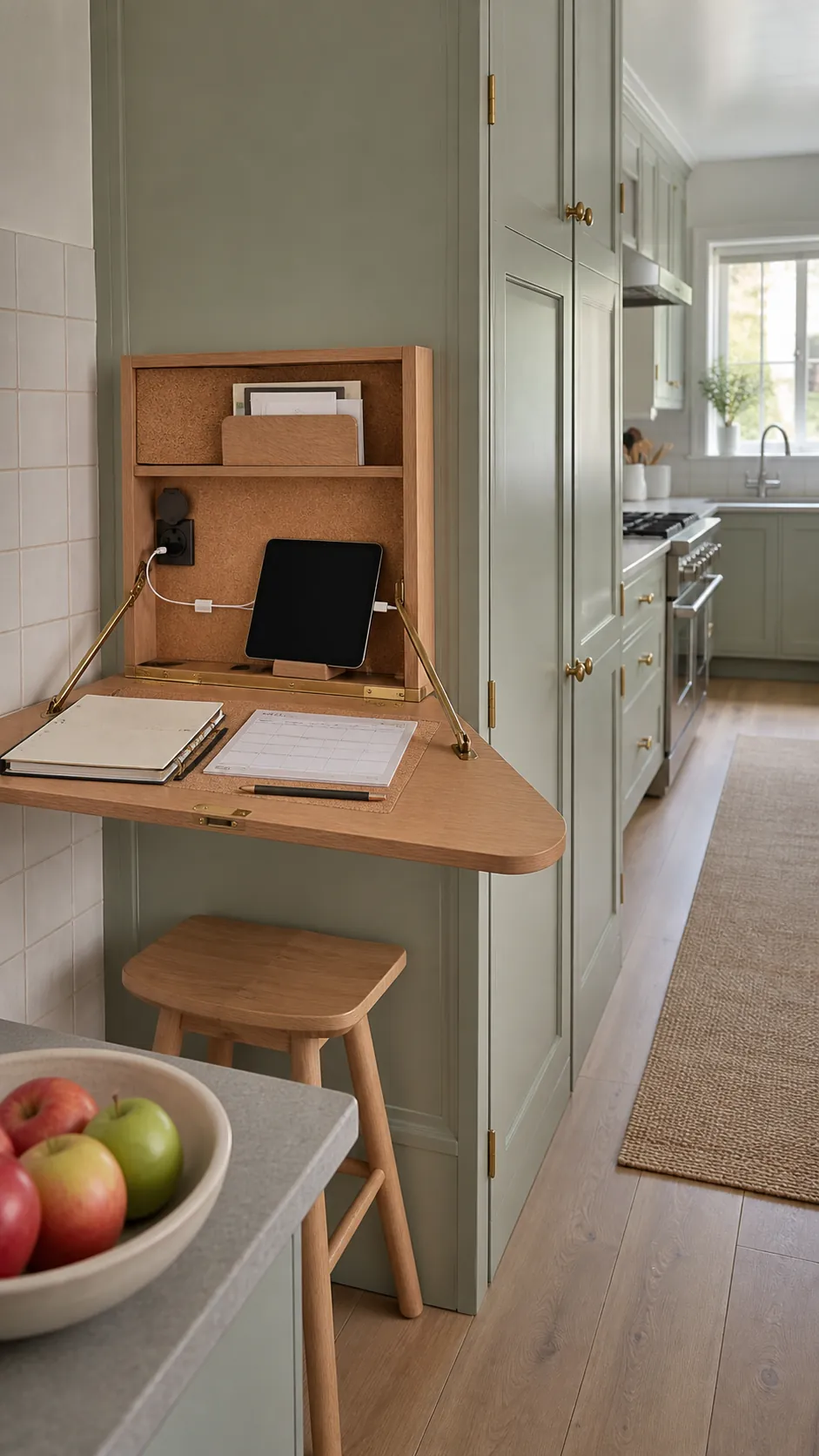
Entry mail sorting station
A small panel near the entrance can create a temporary place for opening mail and signing forms. Interior slots keep papers upright, while a fixed bowl holds keys without resting on the folding surface. The open panel must stay outside the door swing and the main path.
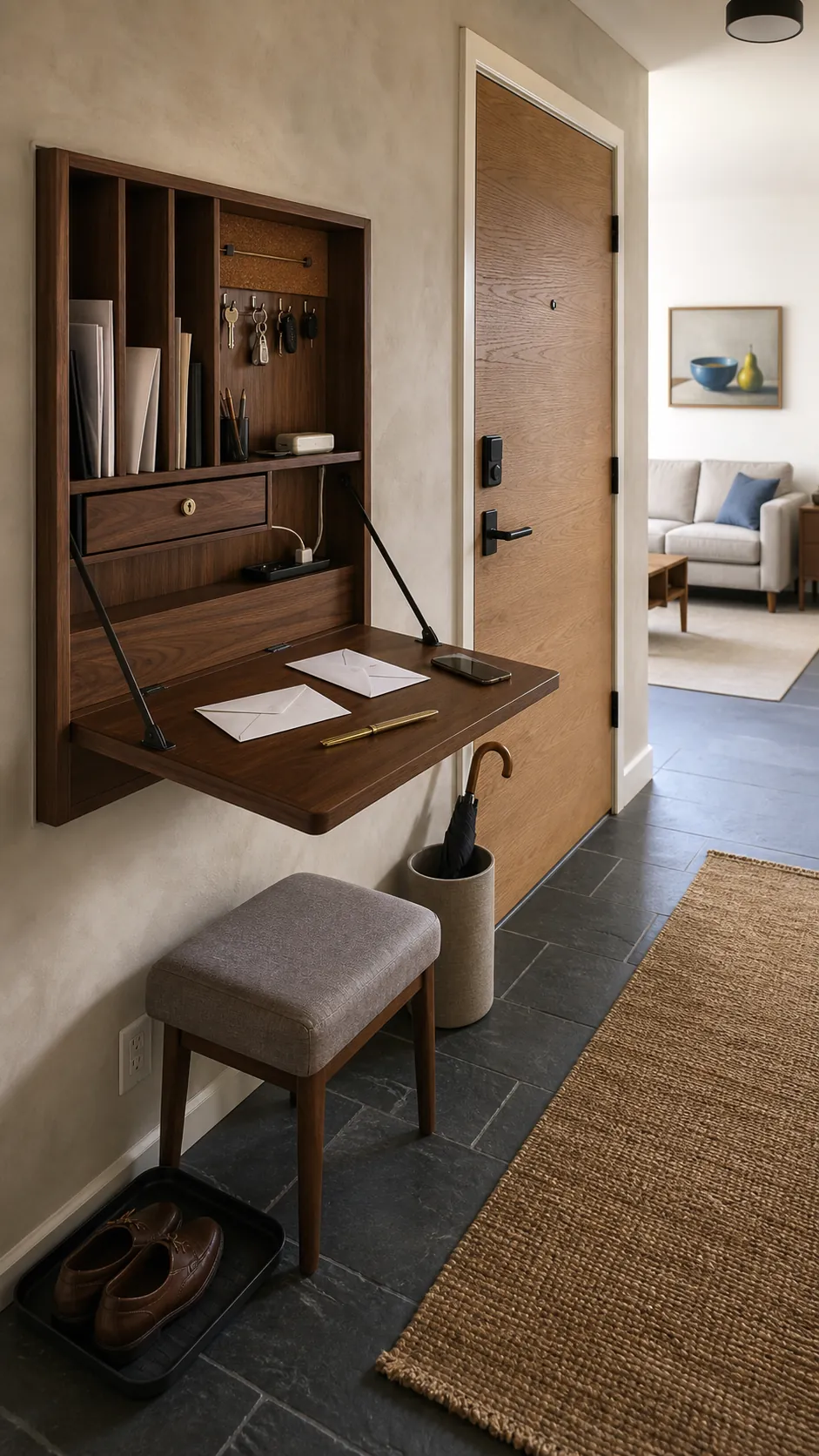
Guest room armoire office
An armoire can hide shelves, a monitor, and a folding desk while keeping the guest room adaptable. Anchor the tall cabinet to the wall and open its doors beyond the chair zone. Ventilation and switched power allow the equipment to shut down safely before the room returns to guests.
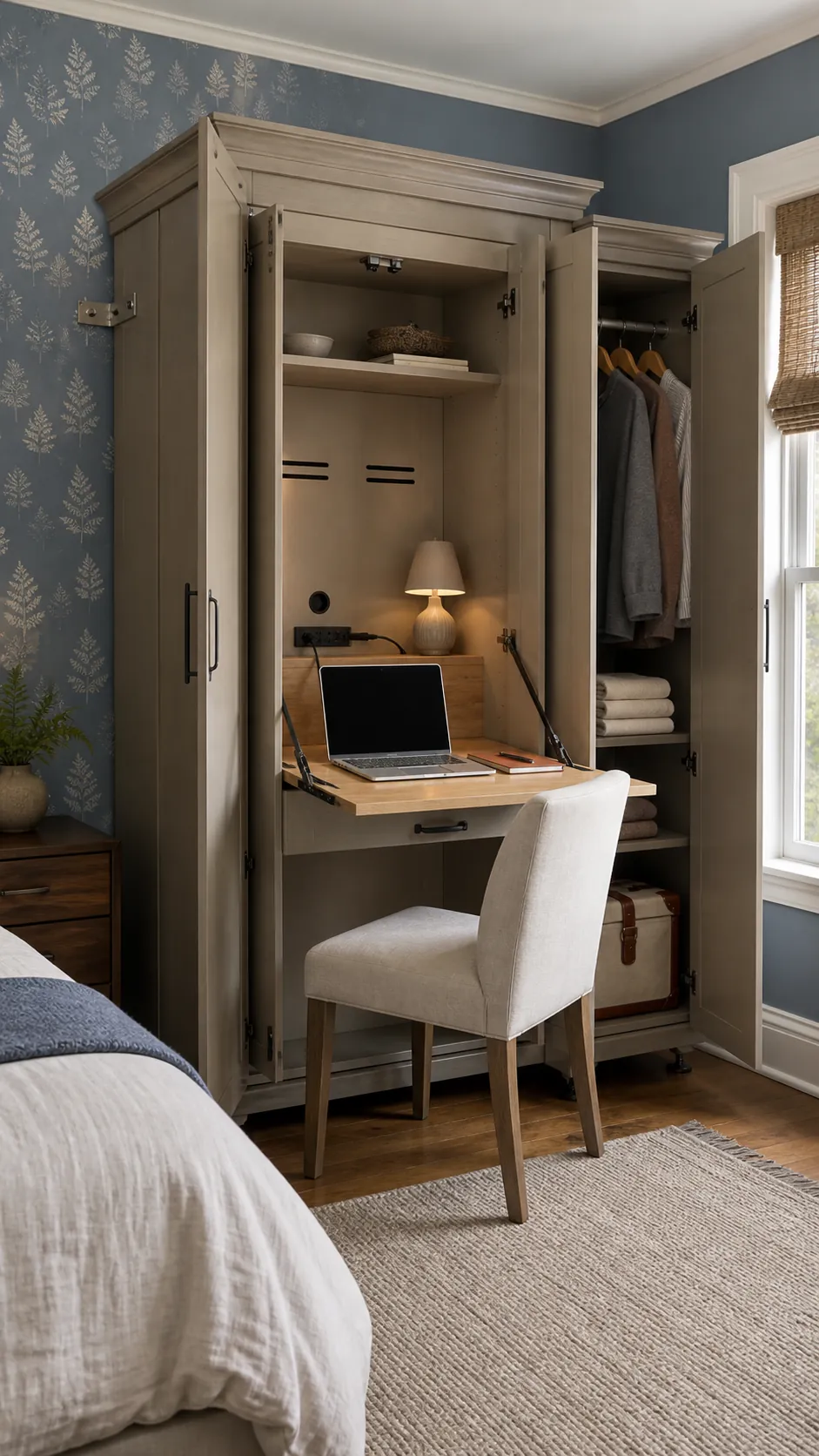
Removable cleat mounted desk
A cabinet hung on a robust interlocking cleat can be removed later with limited wall repair. The cleat still needs proper structural anchors and a lower fixing that prevents the cabinet from lifting during use. Keep the desk light and avoid exceeding the wall or lease limits.
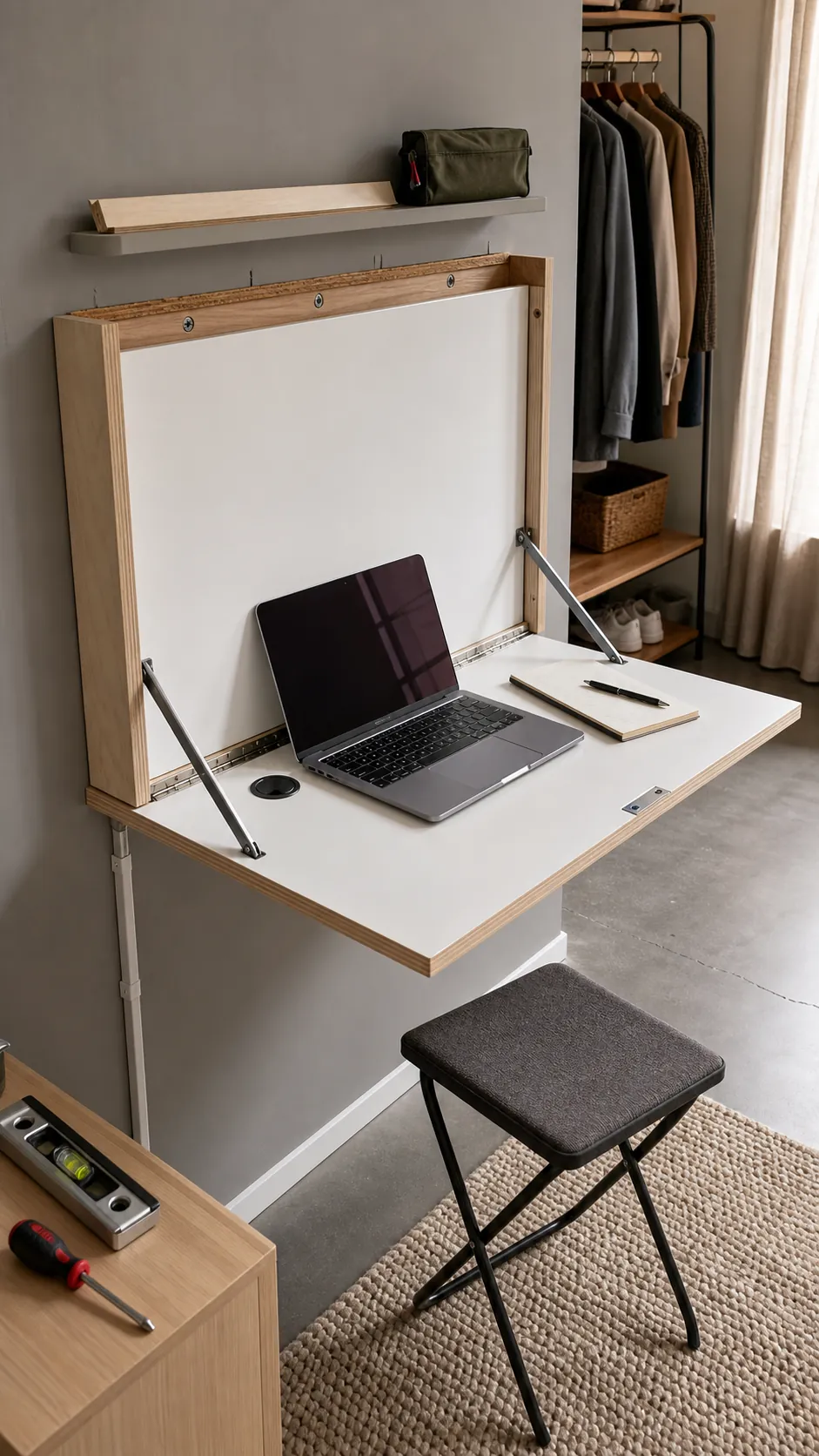
Solid wood heirloom cabinet
A solid wood cabinet can make a folding desk feel like lasting furniture rather than a temporary compromise. Allow for seasonal wood movement, use strong traditional joinery, and choose replaceable hardware that can be serviced. The panel still needs modern load testing and secure attachment to the building structure.