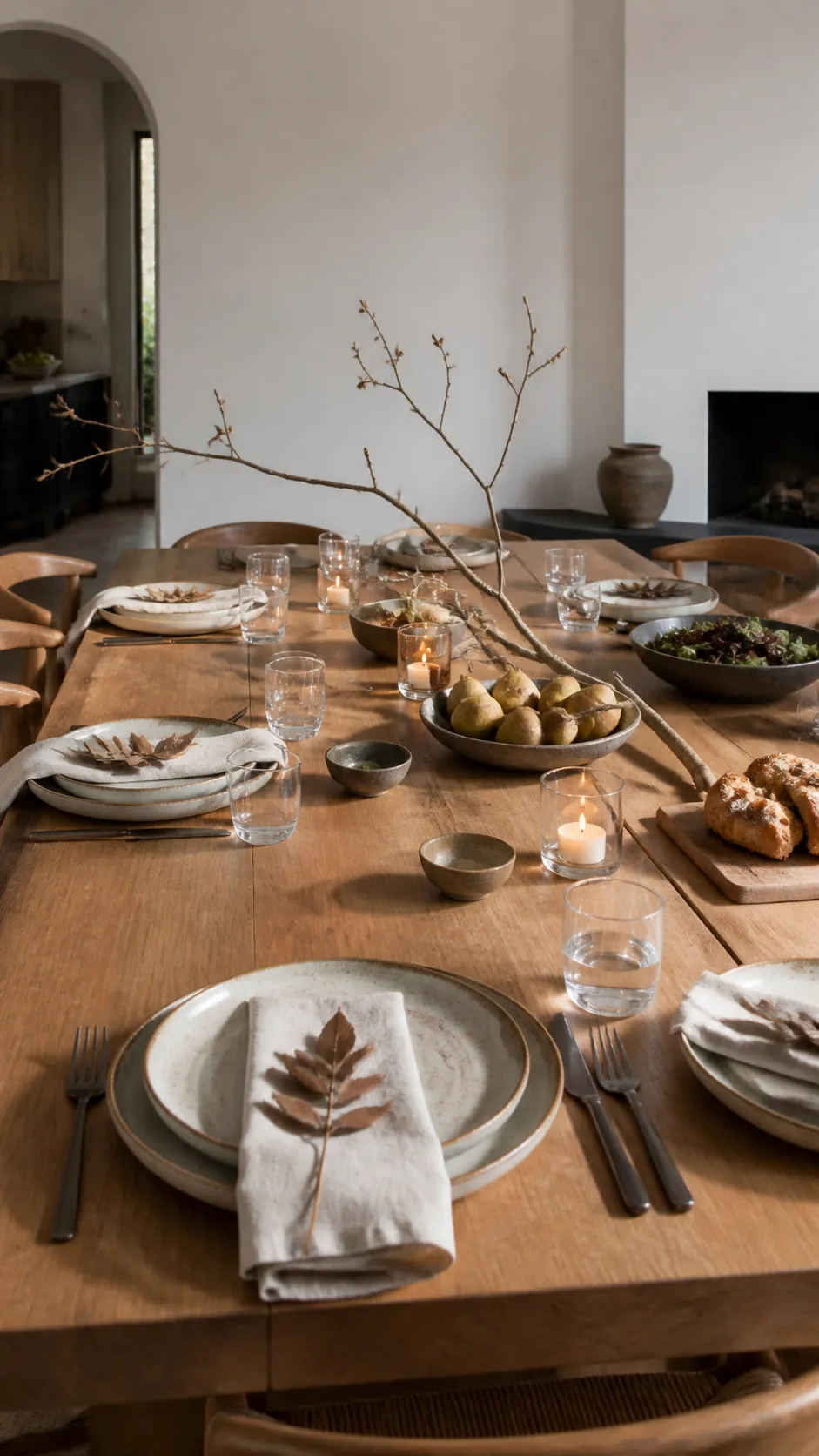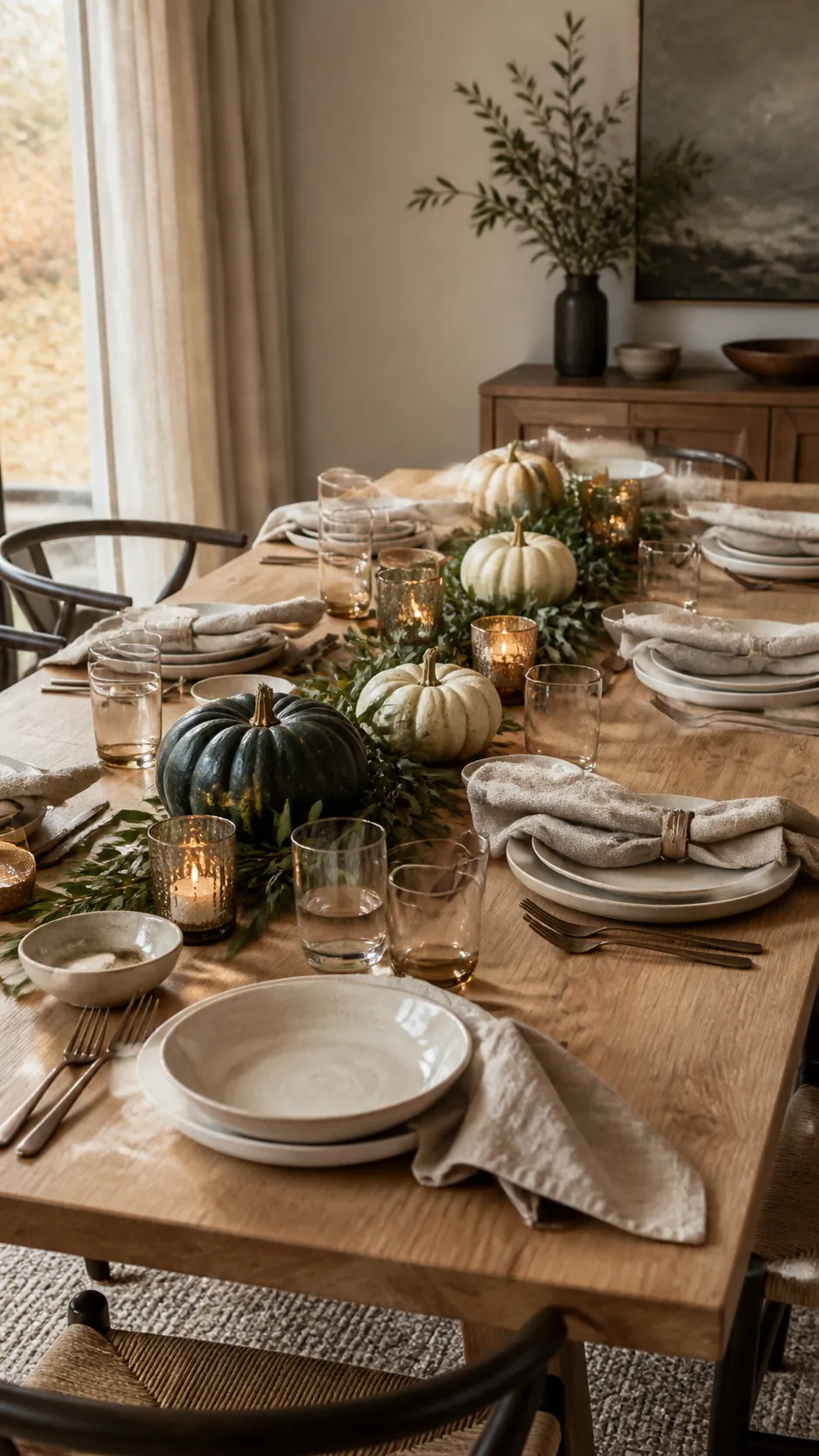
A dining table looks best when guests can still see one another, reach the food, and set down a glass without negotiating a maze of decor. The most successful fall tablescapes treat serving space as part of the design rather than an inconvenience. Low forms, movable groups, and seasonal materials make the table feel generous before the meal even begins.
Low pumpkin runner
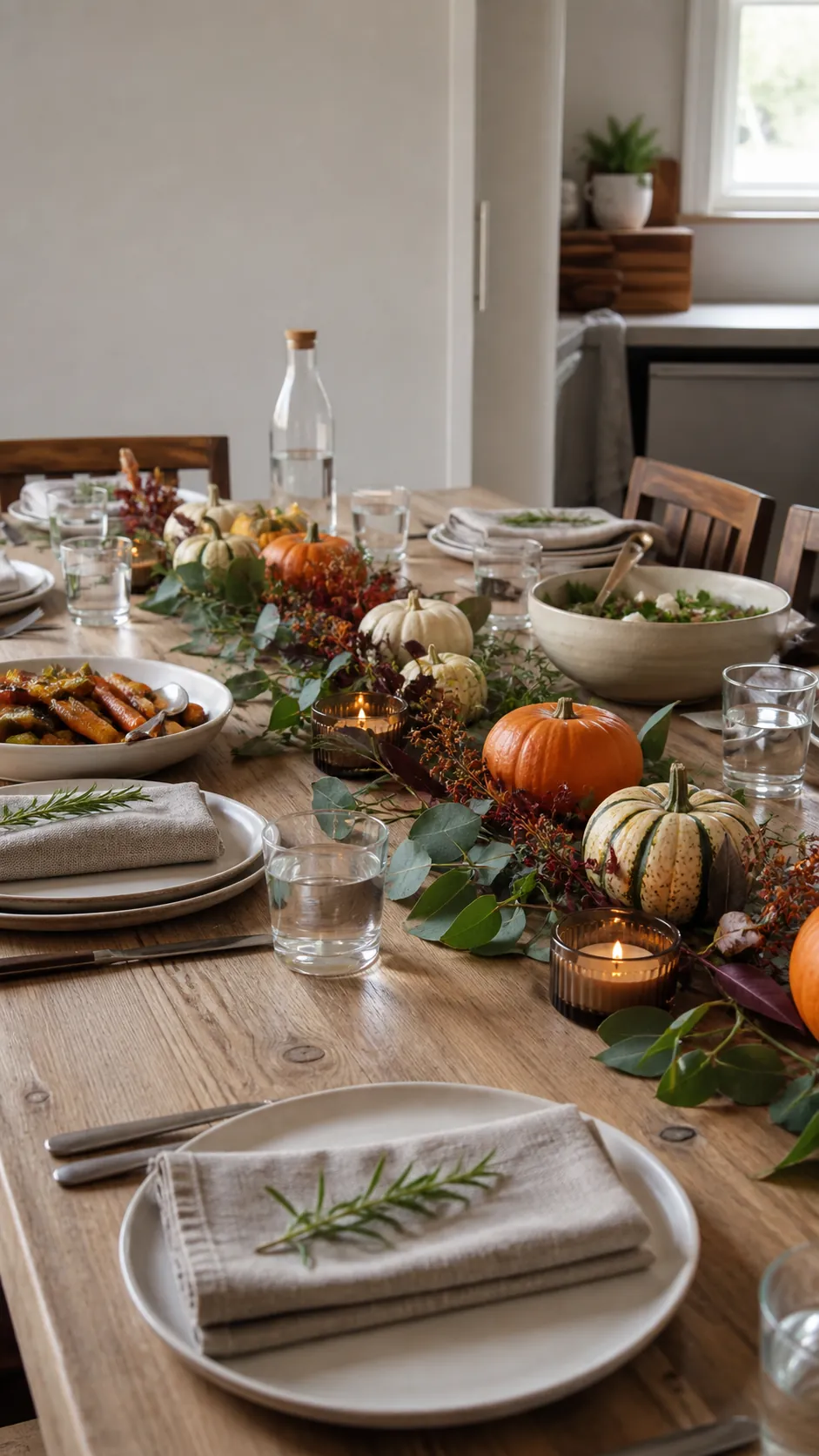
Line the table with small pumpkins rather than building one tall centerpiece. Leave deliberate gaps for serving bowls and keep every pumpkin below eye level. This simple fall tablescape lets guests see one another and adapts to tables of different lengths.
Amber bottle clusters
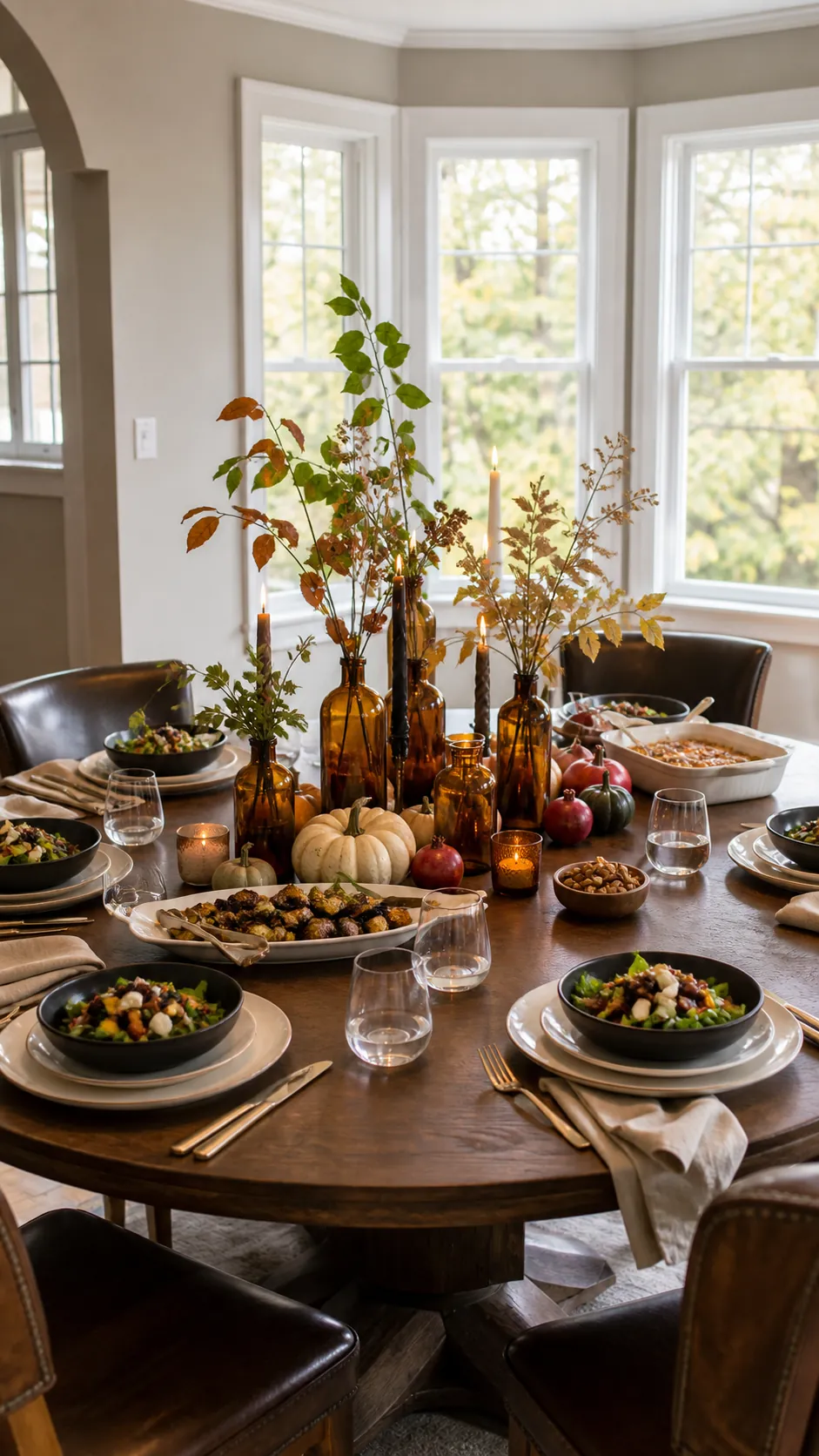
Divide amber bottles into two small clusters instead of one dense group. Use sparse stems so the glass can catch light without blocking conversation. The repeated color connects the full table while the open center remains available for food.
Apples in a wooden bowl
A broad wooden bowl filled with apples brings seasonal color through something familiar and useful. Stop below the rim so the fruit does not look like a display pile. Guests can take an apple later, which gives the centerpiece a natural reason to be there.
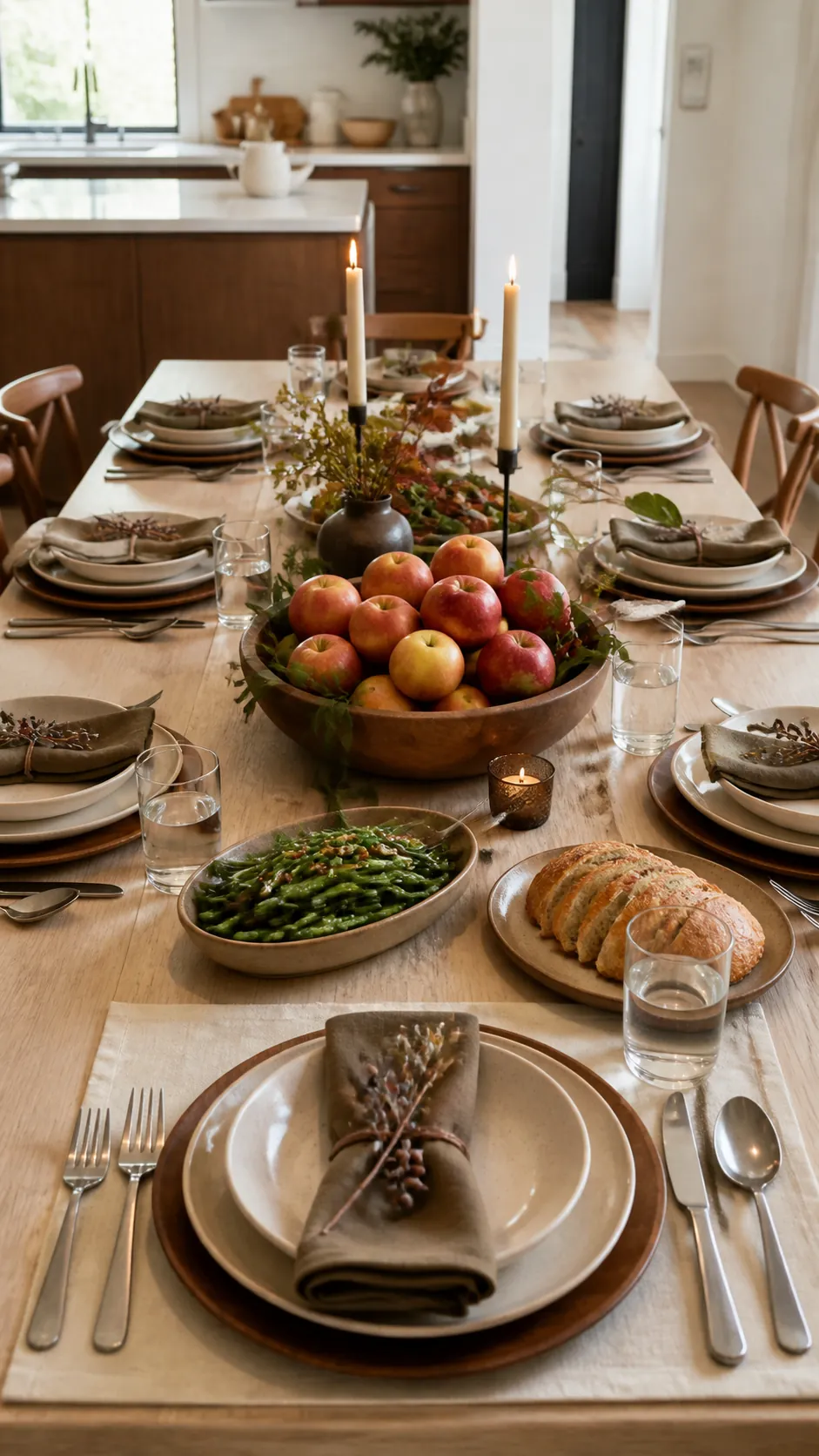
White pumpkins and olive leaves
White pumpkins create a calm base for silvery olive leaves. Arrange them loosely down the middle and allow the foliage to turn in different directions. The restrained palette works with elegant fall tablescapes without losing autumn texture.
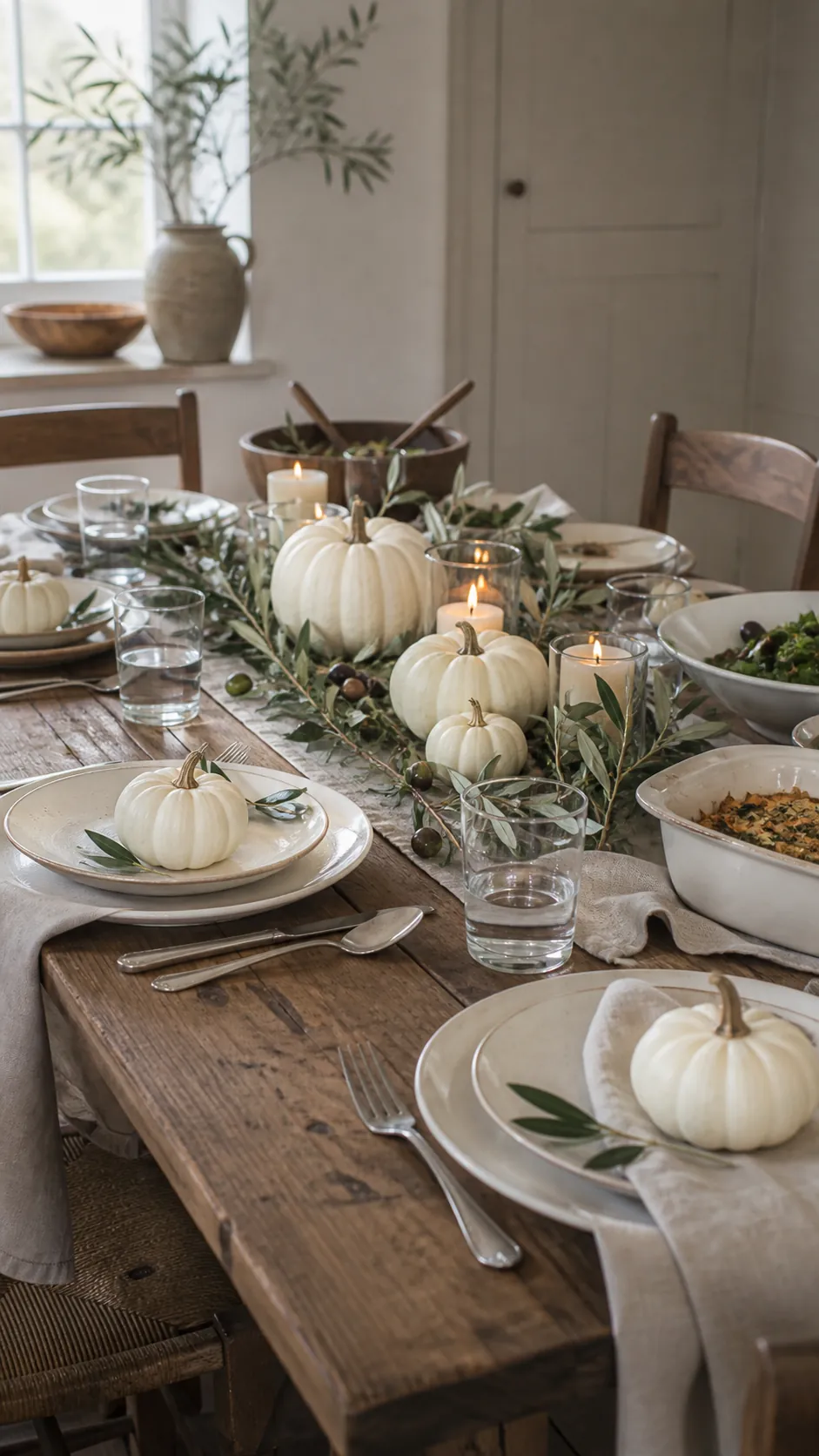
Brass candlesticks and pears
Slender brass candlesticks add height while occupying little table space. Place pears between them in groups of three, keeping flames safely above nearby fruit. The mix feels formal enough for guests but remains easy to clear.
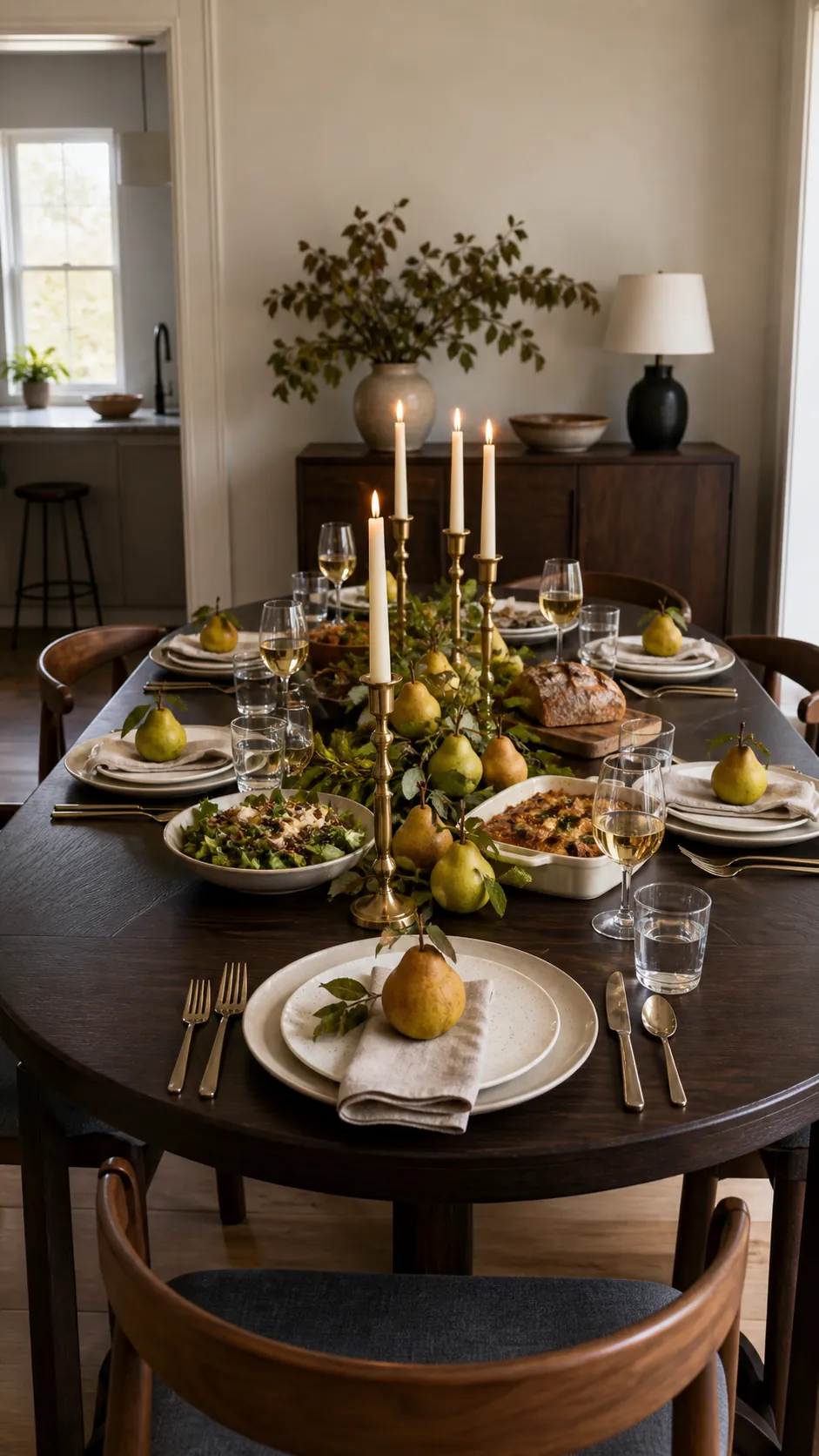
Stoneware crocks with wheat
Two squat stoneware crocks can carry short bundles of wheat without becoming a visual wall. Position one near each end of the center zone and keep the middle open. Repetition gives the table rhythm while allowing family style serving.
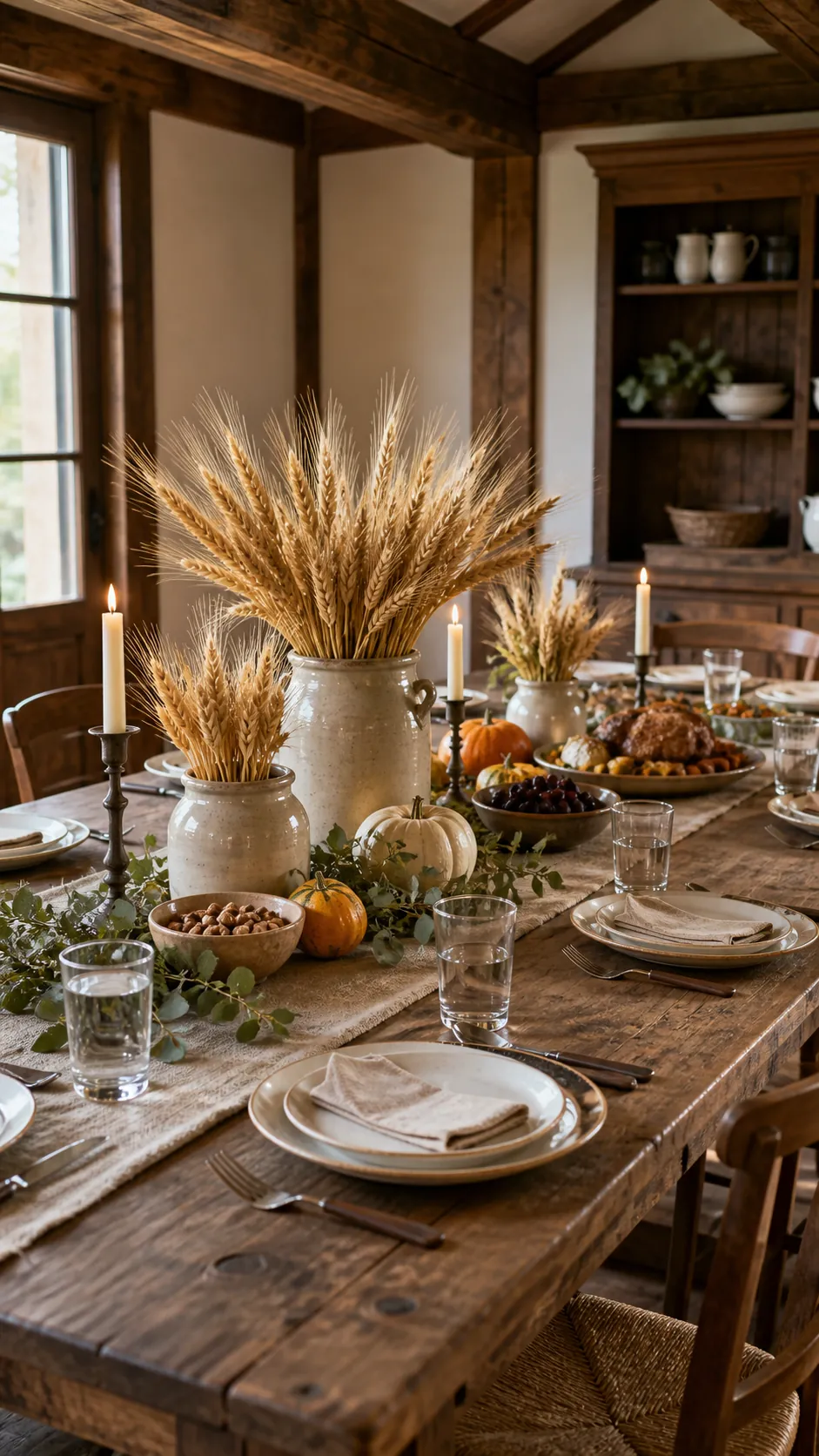
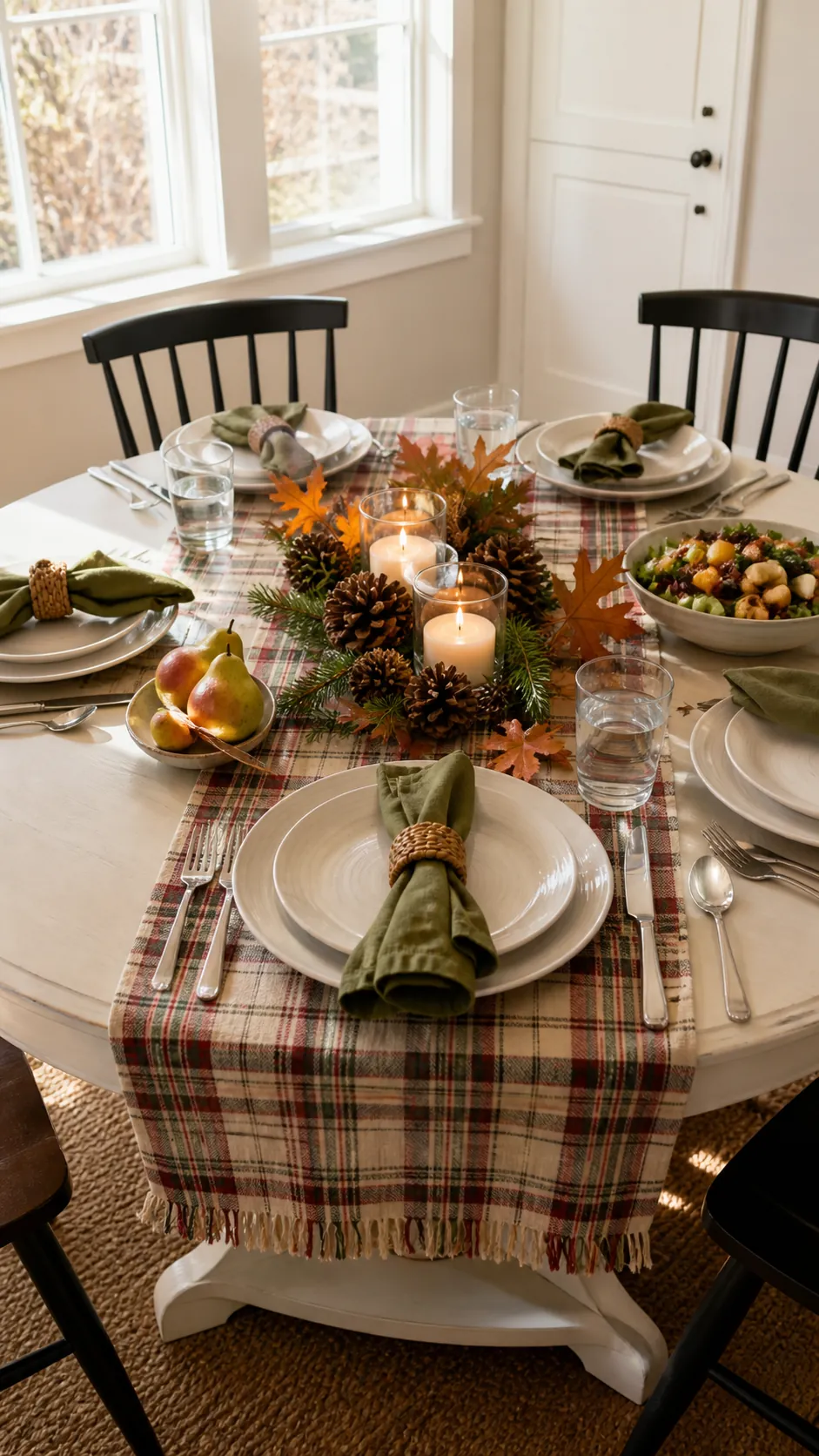
Plaid runner with pinecones
A narrow plaid runner supplies pattern before any objects are added. Gather pinecones in low groups rather than scattering them near place settings. The design reads as fall decor while crumbs and serving pieces remain easy to manage.
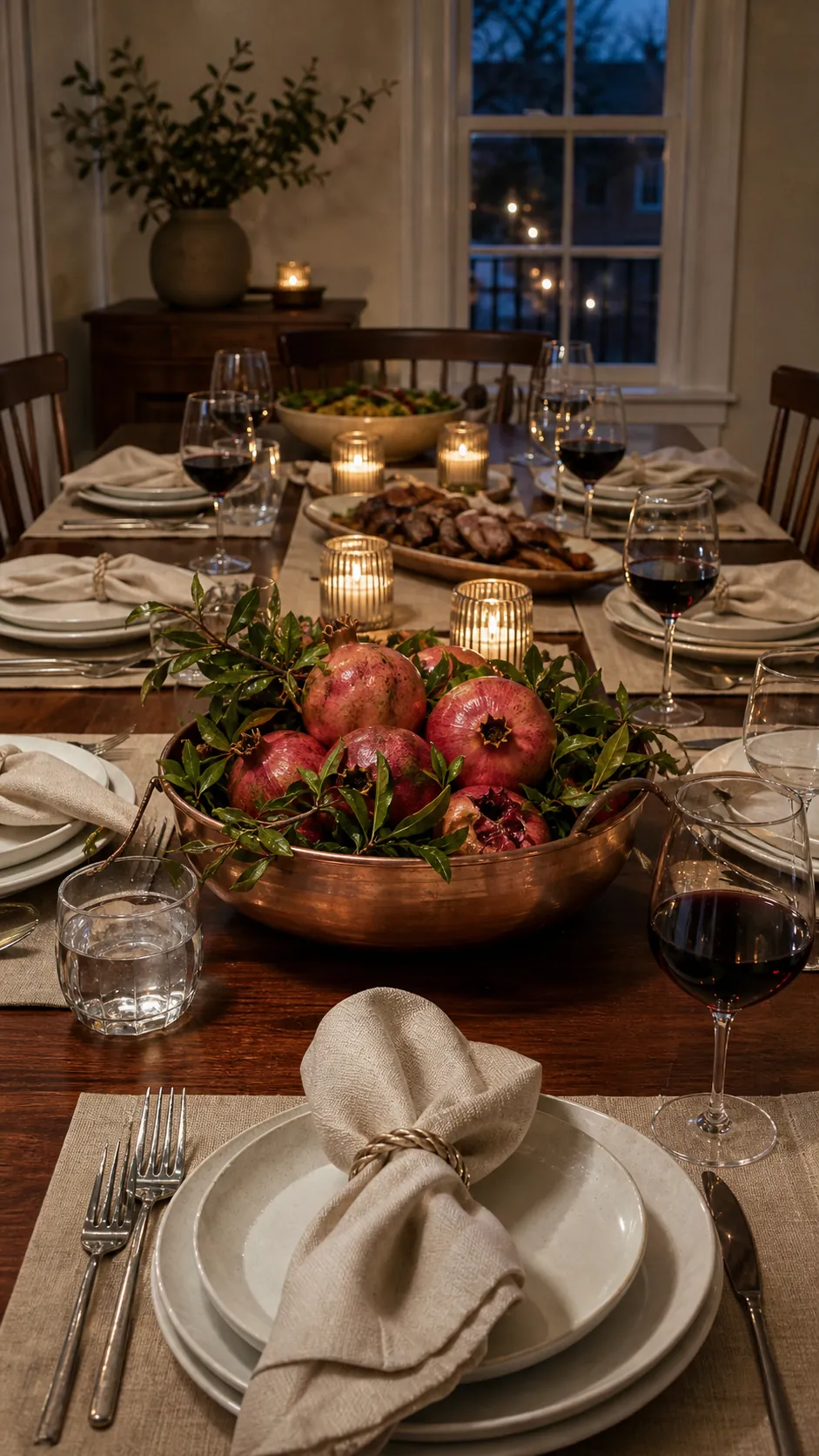
Copper bowl with pomegranates
A shallow copper bowl makes pomegranates glow without requiring bright flowers. Mix whole fruit with a few leaves, but avoid cut fruit that could stain the table. Warm metal brings depth to simple dishes and neutral linens.
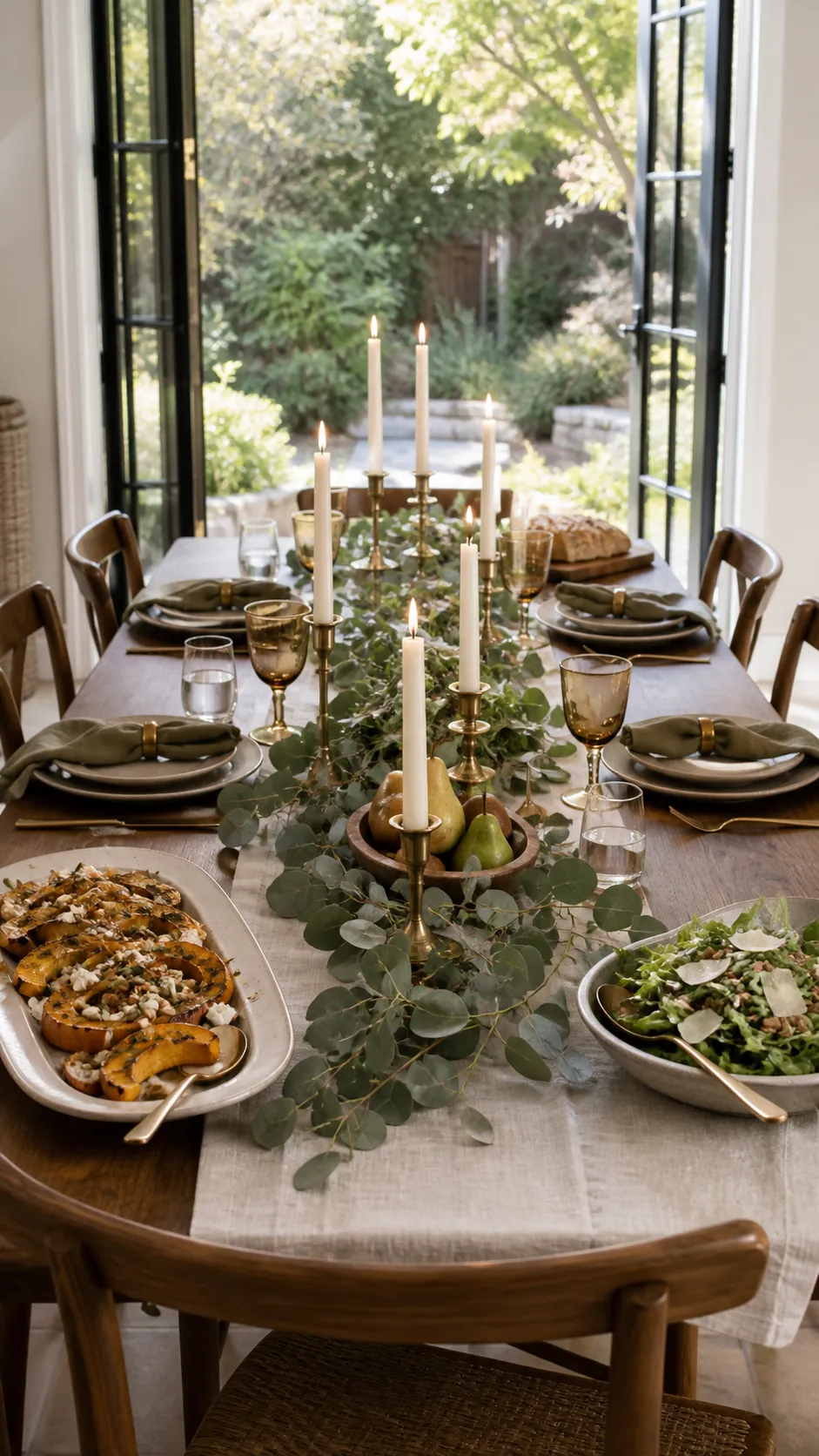
Eucalyptus and taper candles
Lay eucalyptus in a loose central line and interrupt it with spaced taper candles. Trim side stems so they do not enter plate or glass zones. The arrangement smells fresh, photographs beautifully, and still leaves clear paths for passing dishes.
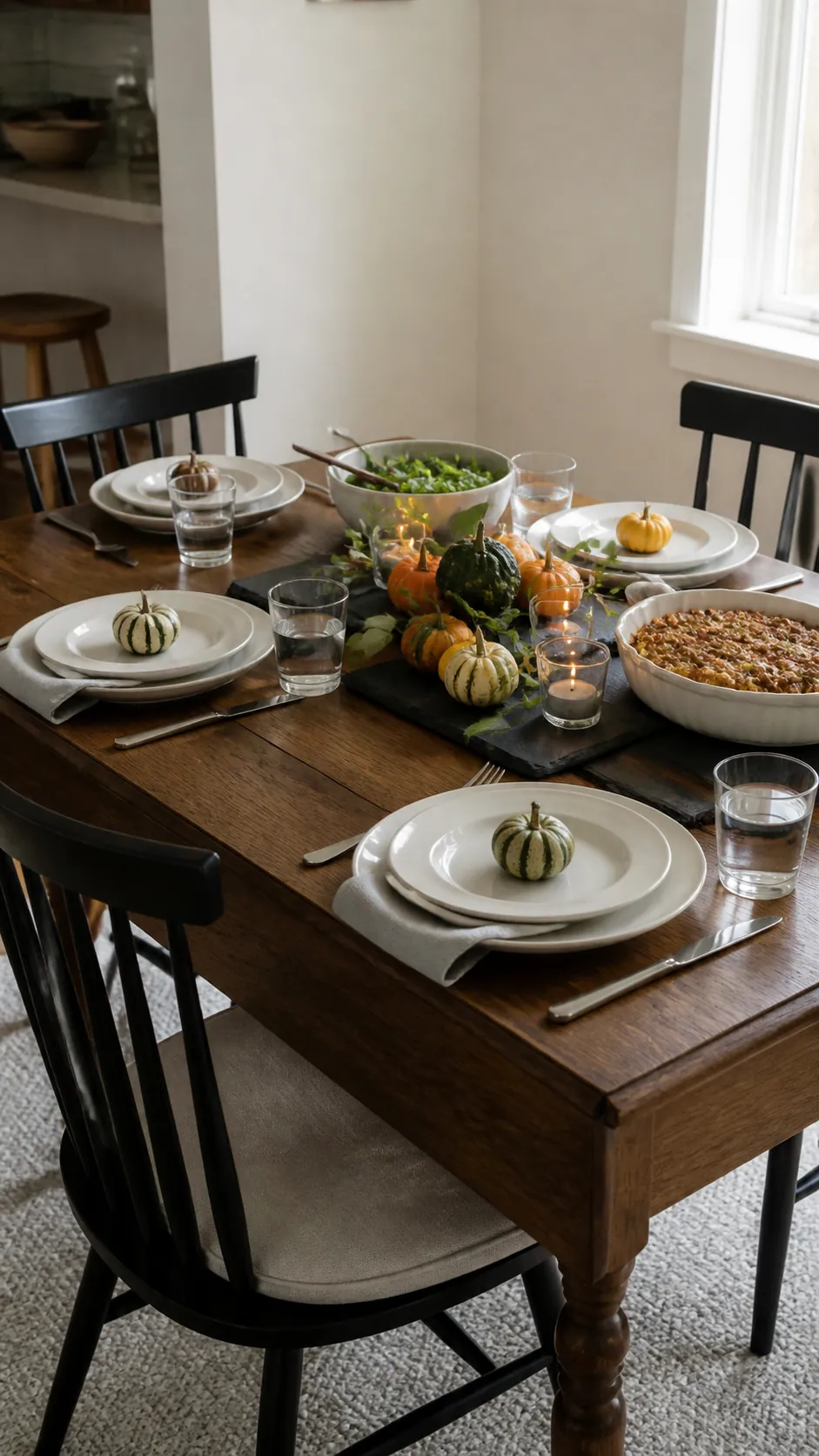
Mini gourds on slate boards
Use two narrow slate boards as dark platforms for miniature gourds. Separate the boards so a serving platter can sit between them. The strong contrast gives small objects importance without requiring more decoration.
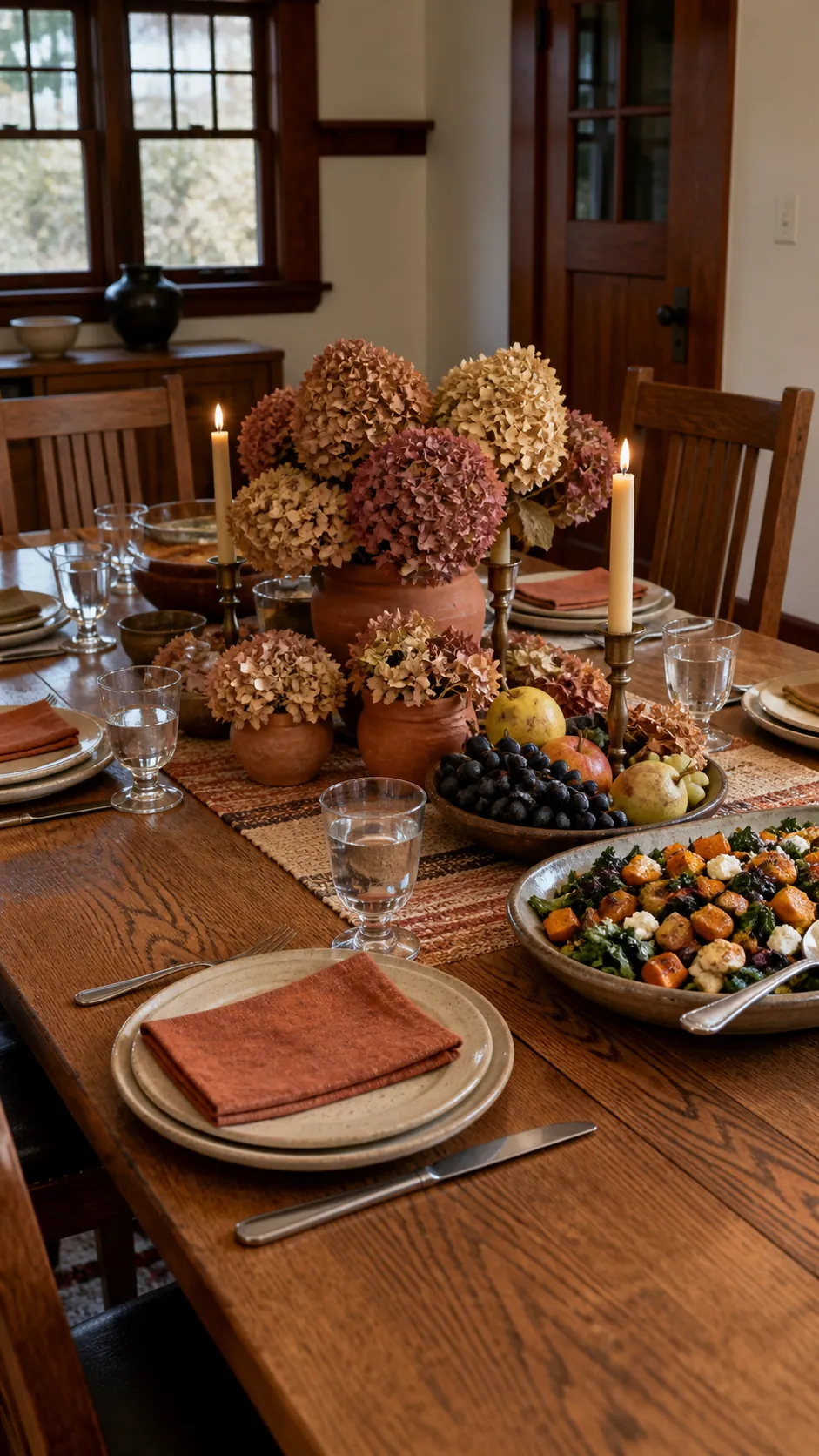
Dried hydrangea in terracotta
Dried hydrangea has enough volume to look generous in a small terracotta pot. Use one low pot and faded flower heads that stay below seated faces. The weathered surfaces suit kitchen fall decorating ideas and can move easily after dinner.
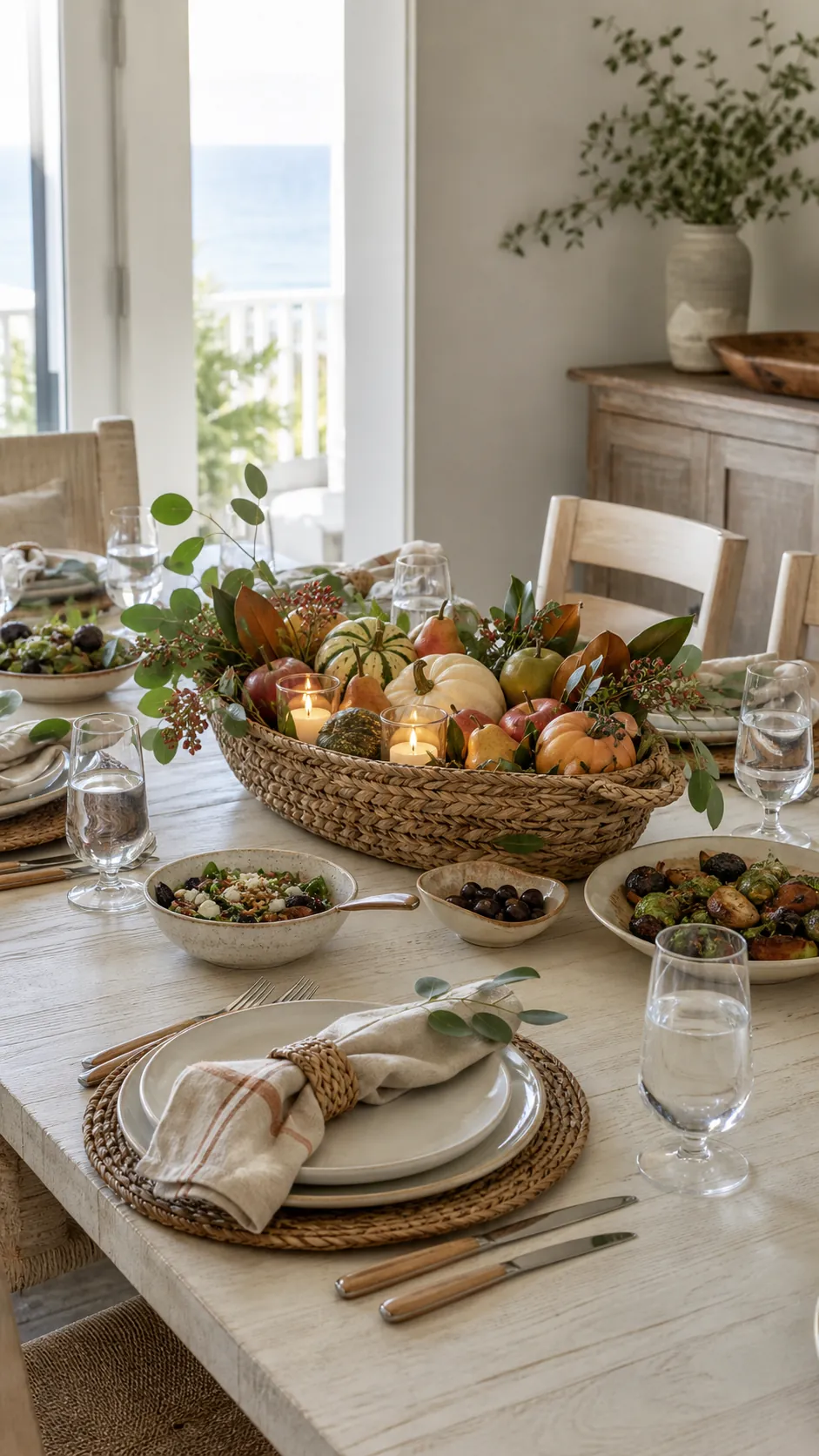
Woven basket harvest bowl
A shallow woven basket can hold squash, pears, and a few walnut shells in one controlled place. Keep the contents loose enough to see the weave. The contained harvest look prevents small natural pieces from rolling into place settings.
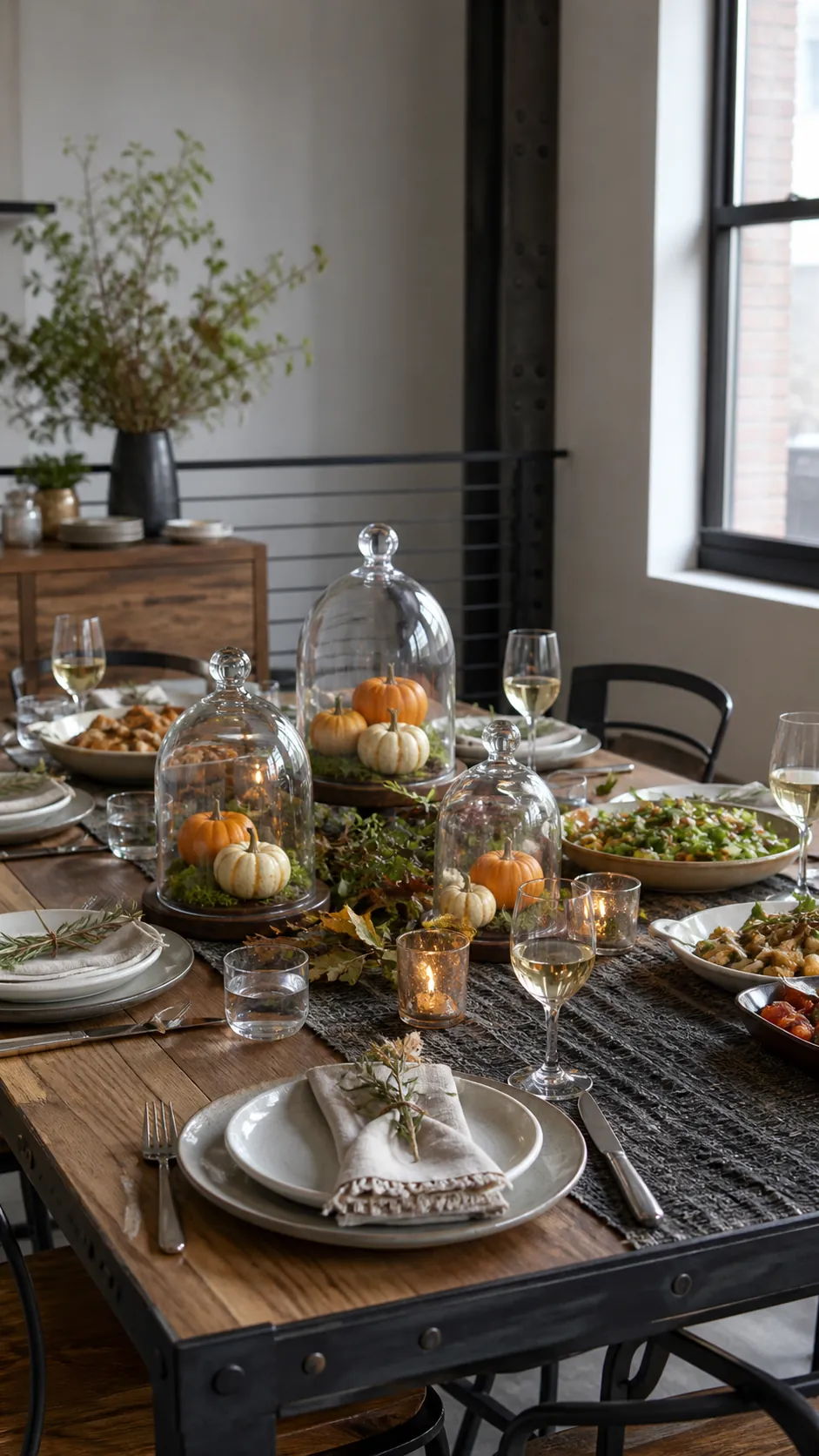
Glass cloches with tiny pumpkins
Two small glass cloches turn tiny pumpkins into light focal points. Space them apart and keep each base narrow enough to lift with one hand. Clear glass adds polish while preserving visual openness across the table.
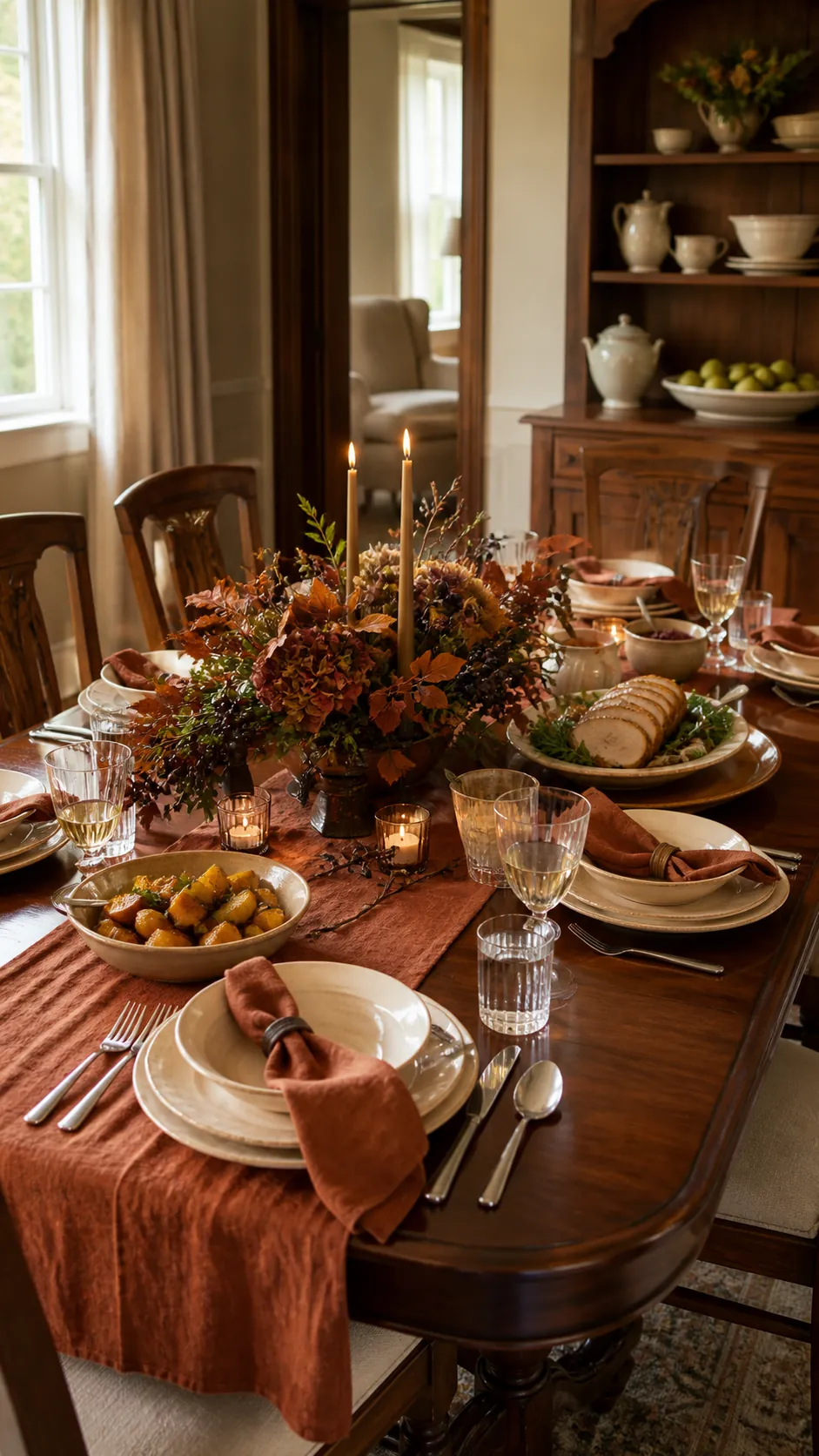
Rust linen and cream dishes
A rust linen runner can carry most of the autumn color on its own. Pair it with cream dishes and a minimal line of acorns held in tiny bowls. This approach makes cleanup simple because the strongest design element is washable fabric.
Moss bowl with mushrooms
A low stone bowl with moss and edible mushroom varieties creates a woodland mood. Keep the ingredients clean, dry, and separated from food service areas. The earthy texture feels distinctive without using another pumpkin centerpiece.
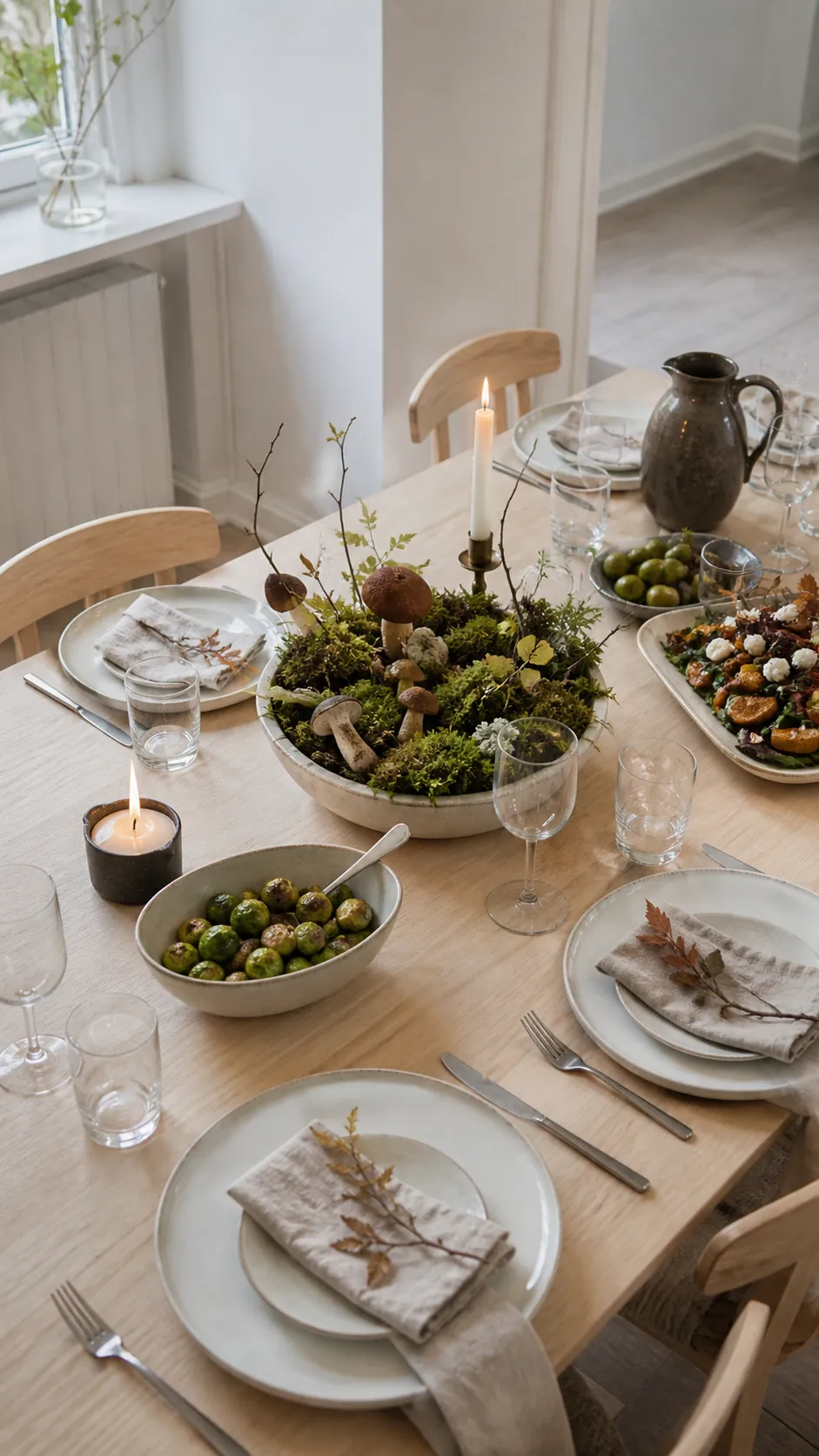
Blue pumpkins and walnut branches
Blue pumpkins cool the palette and make walnut branches look richer. Use short branch sections laid horizontally so the arrangement never blocks guests. Natural irregularity gives the table character without demanding perfect symmetry.
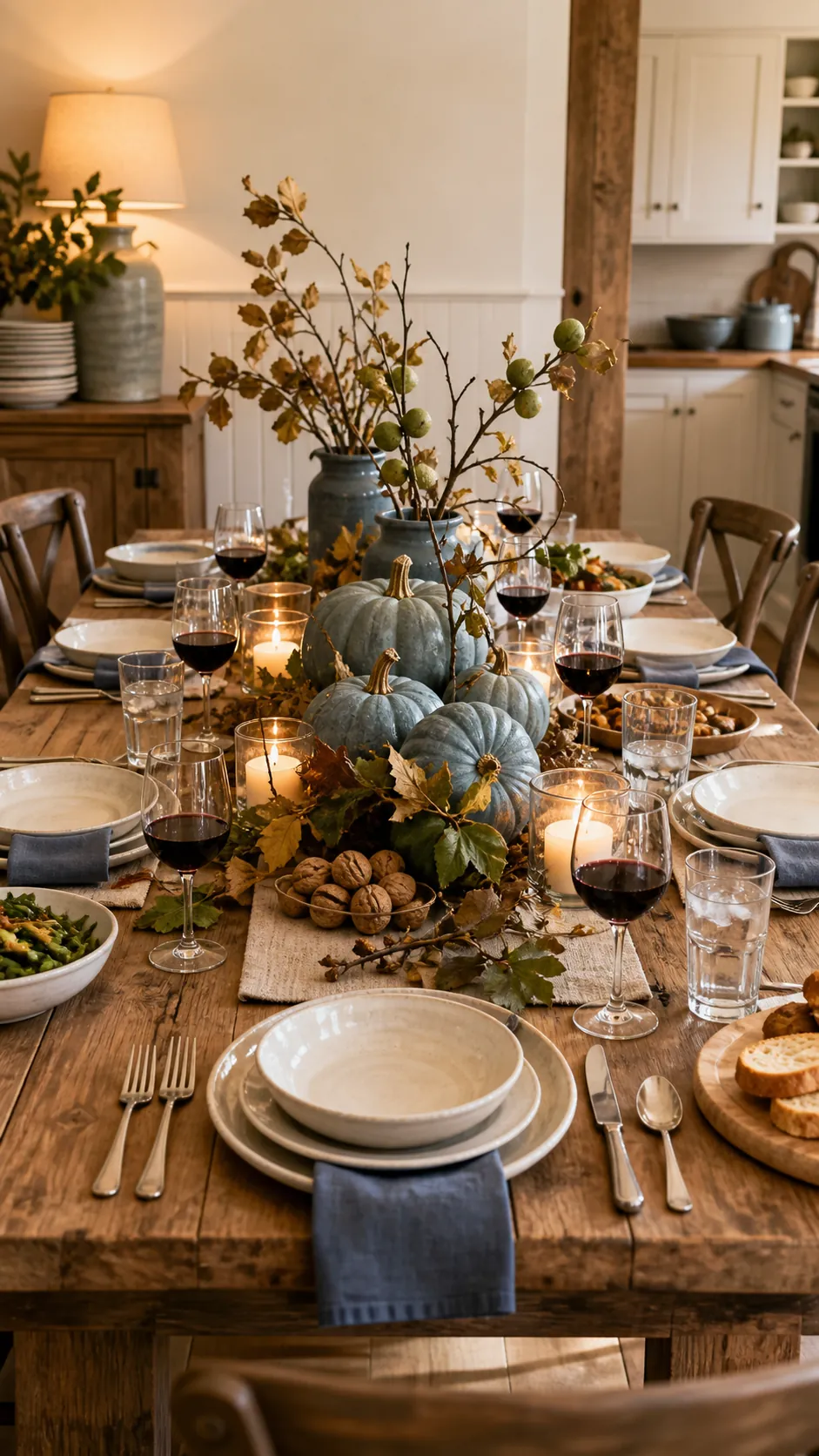
Ceramic pitchers with maple stems
Small ceramic pitchers make clipped maple stems feel casual and attainable. Use two pitchers with different heights, then leave the center between them bare. The pieces can later move to a fall buffet table without restyling.
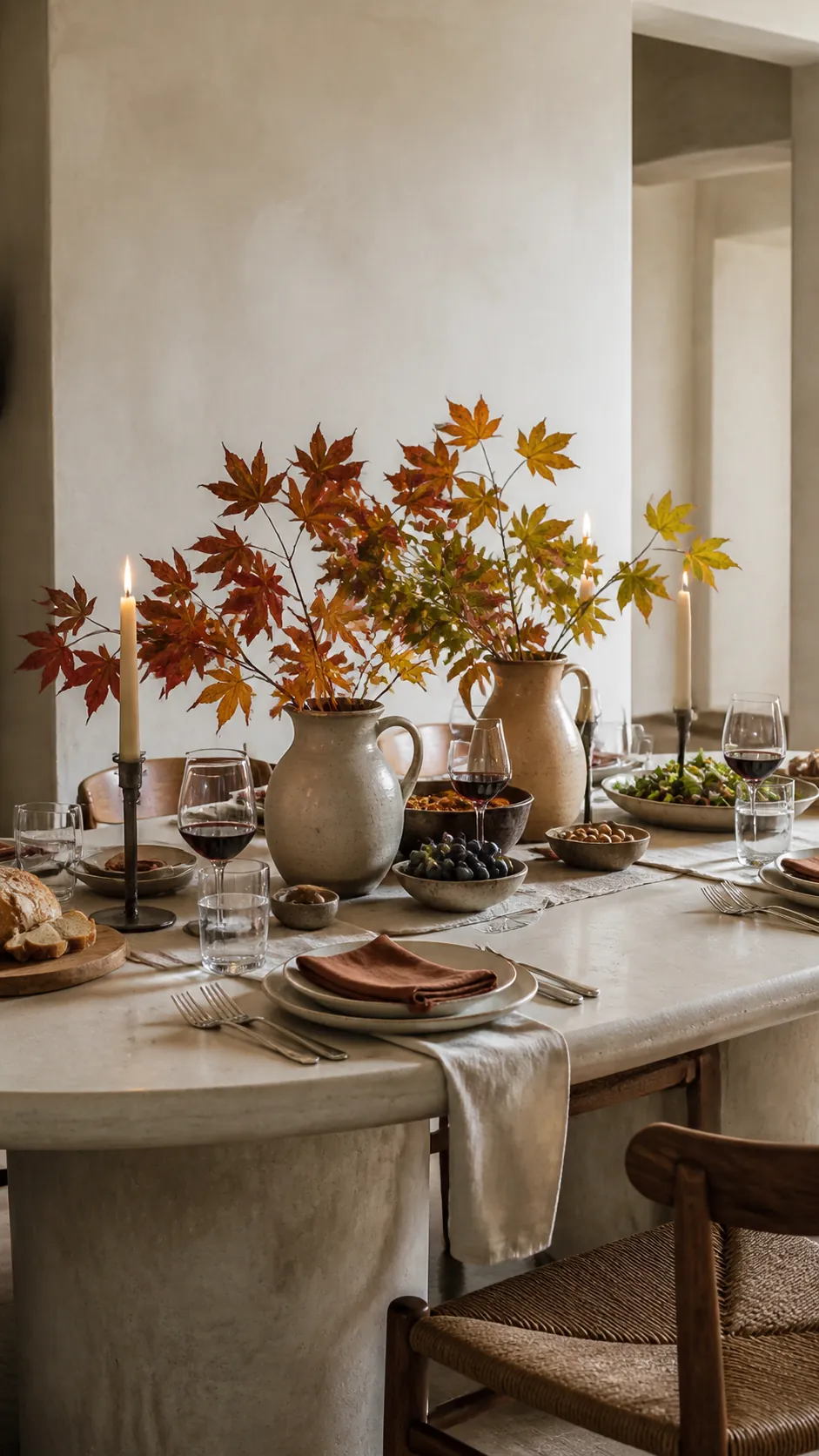
Candle lantern and chestnuts
A compact lantern provides evening glow in the center of a round table. Hold chestnuts in a shallow dish beside it rather than scattering them. A battery candle keeps the idea safe and easy to move when larger platters arrive.
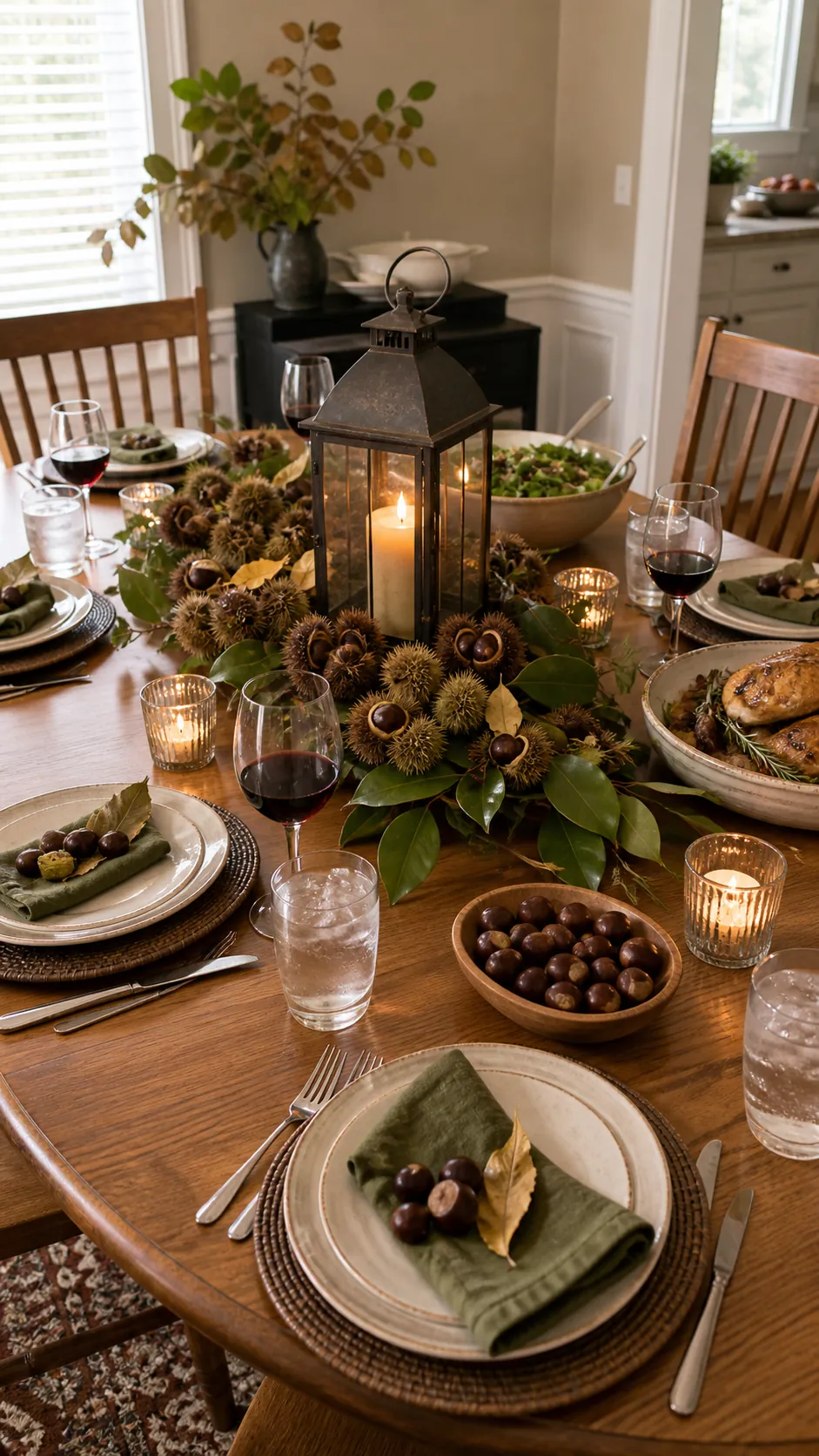
Vintage books and velvet pumpkins
A pair of vintage books can raise one small velvet pumpkin just enough to create hierarchy. Protect the books from spills by placing them away from water glasses. This vignette works best for a side section of a long table rather than the center serving zone.
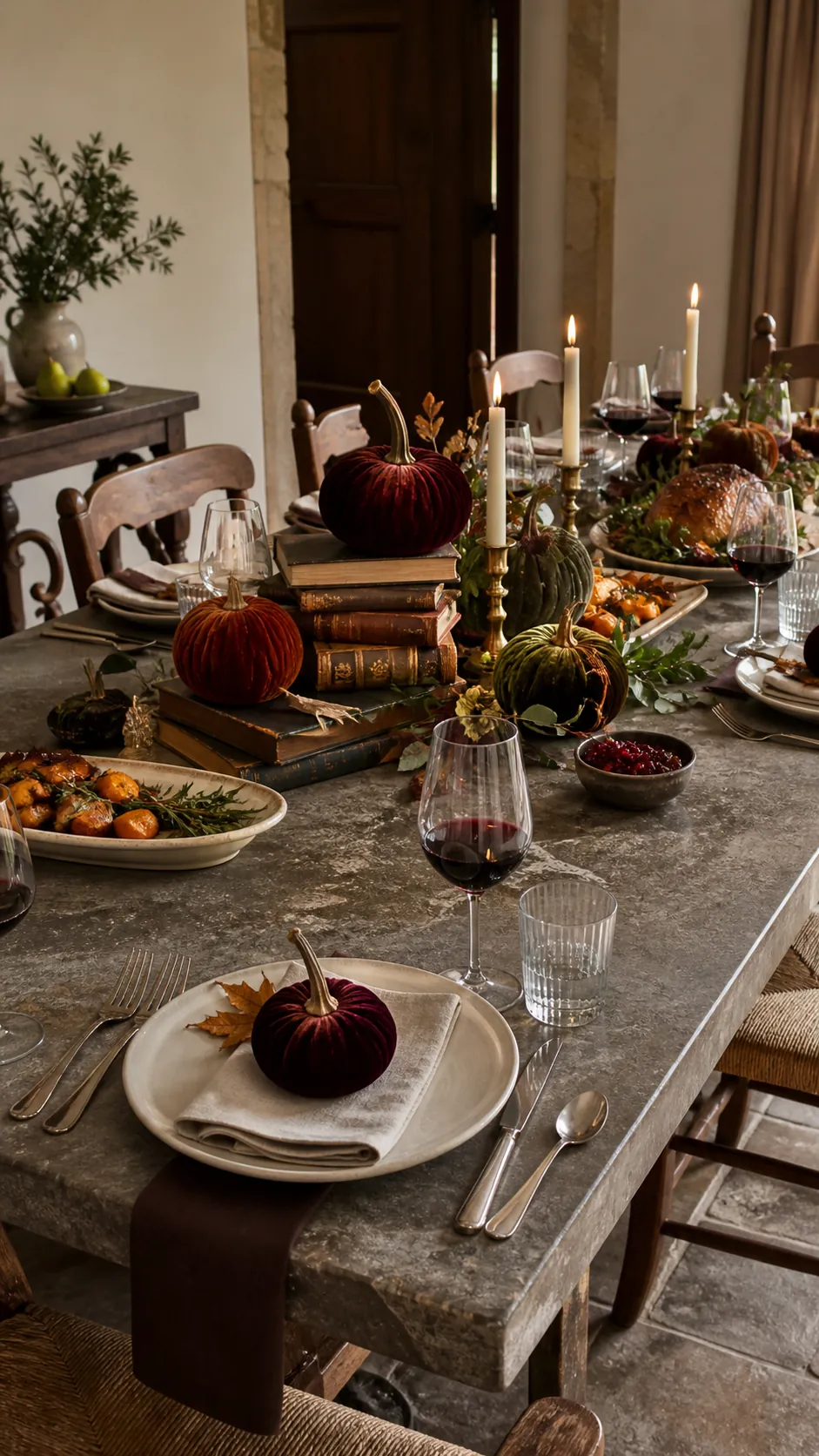
Marble tray with acorns
A cool marble tray sharpens the warm tones of pumpkins and acorns. Keep acorns inside one fluted dish so they cannot roll onto the floor. The heavy tray defines a compact centerpiece that looks tailored and remains movable.
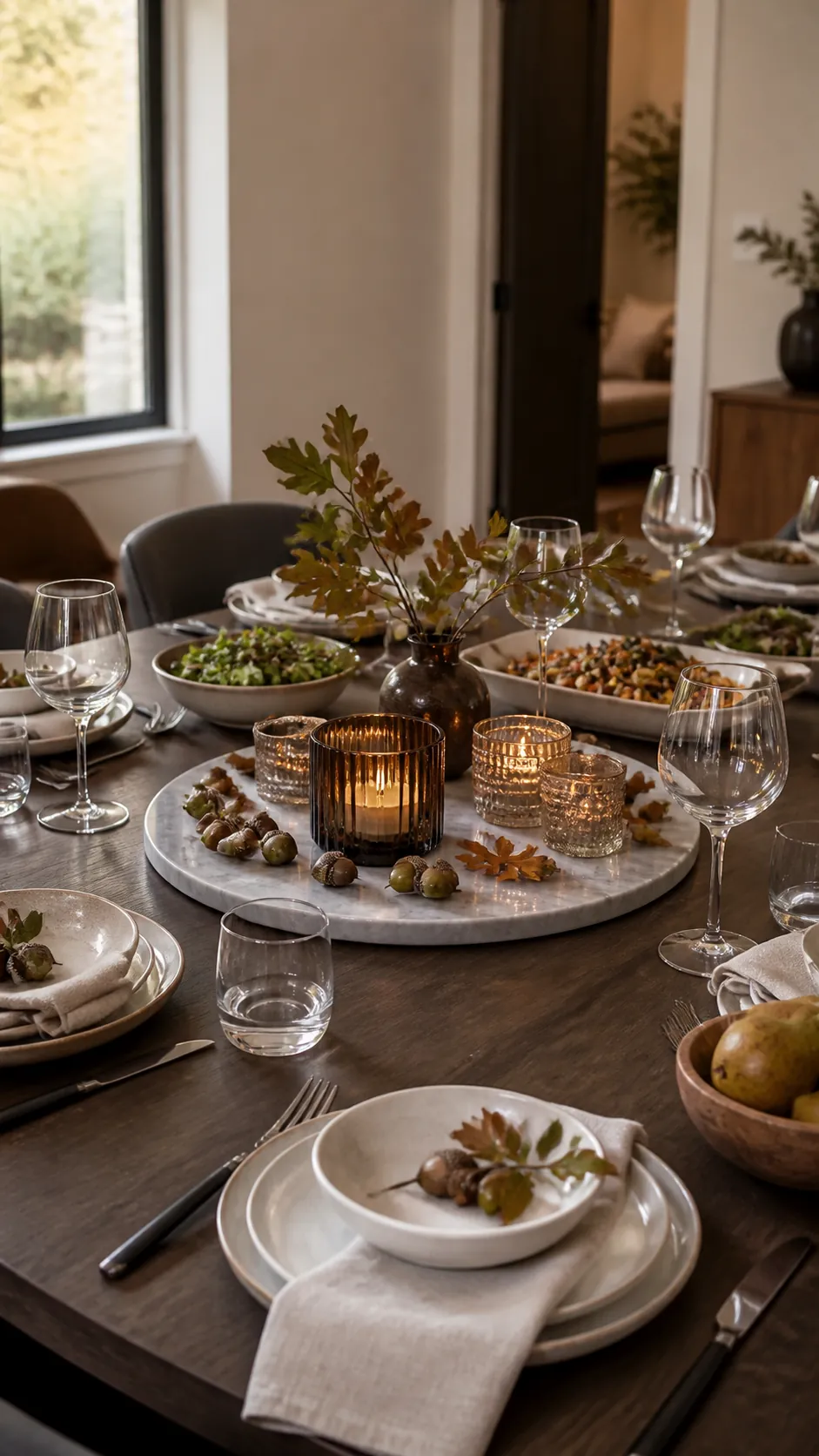
Dough bowl with pears and moss
A long dough bowl follows the shape of a rectangular dining table. Nestle pears into small patches of moss and leave the old wood visible. Low height and contained materials make it practical for meals with several serving dishes.
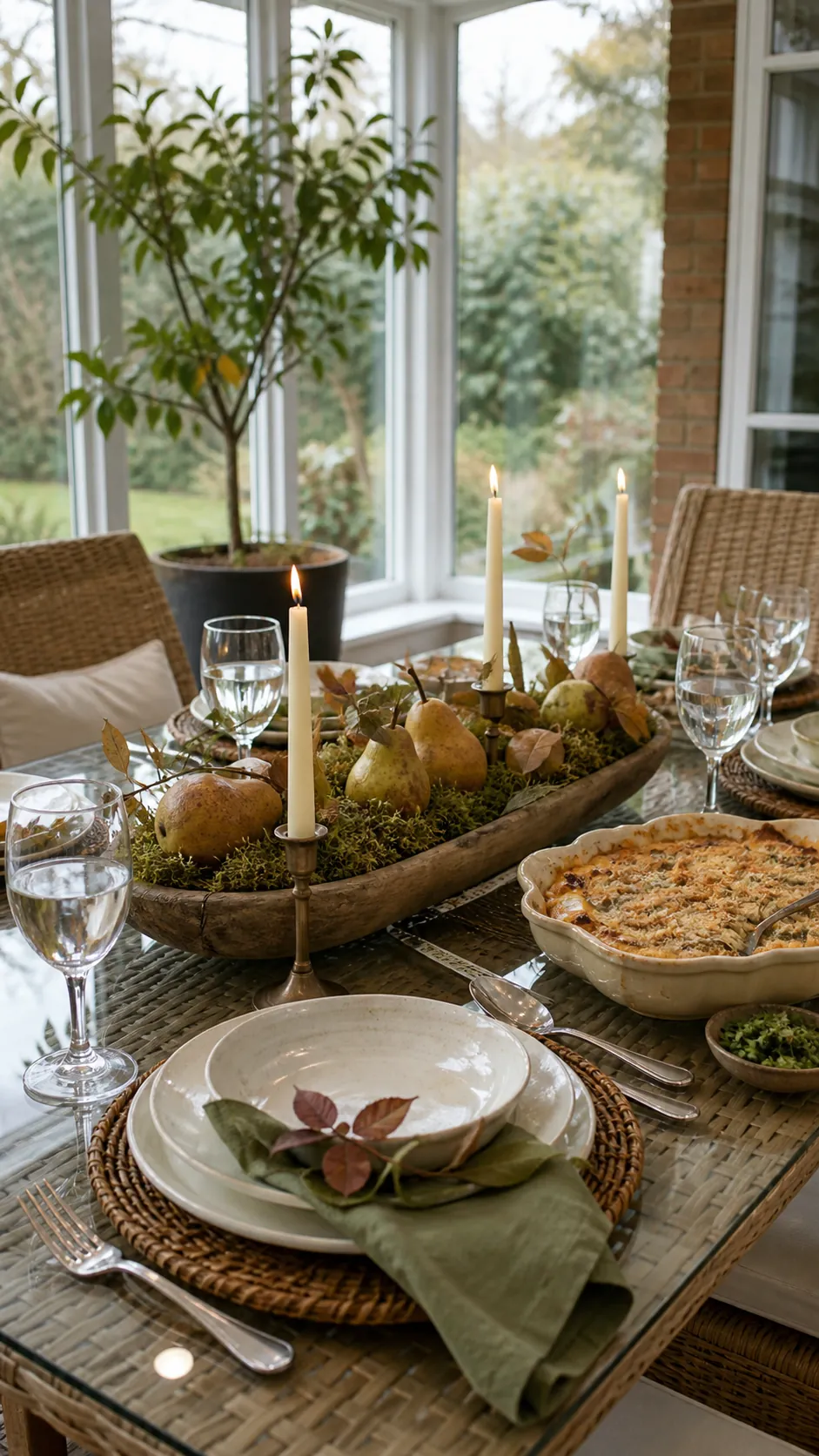
Iron candlesticks with orange leaves
Black iron candlesticks create a graphic frame for orange leaves. Use only a few clipped leaves at the base so the table does not become a craft display. The dark verticals connect naturally with black flatware or chair frames.
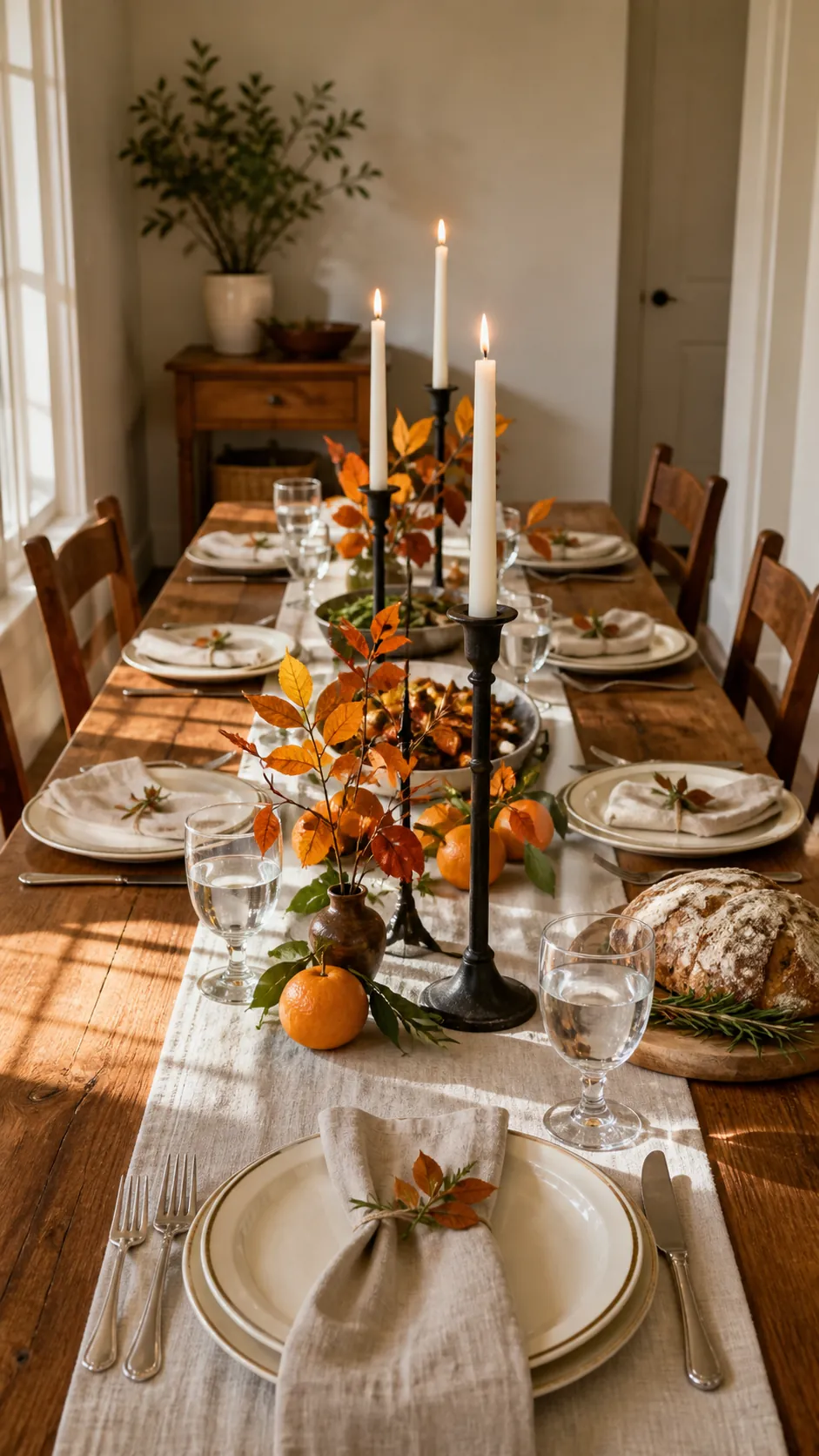
Clear vases with seed heads
Clear bud vases let seed heads add movement without adding visual weight. Place an odd number of vases at varied intervals and keep every stem sparse. Guests can rearrange them quickly when a large casserole needs the center.
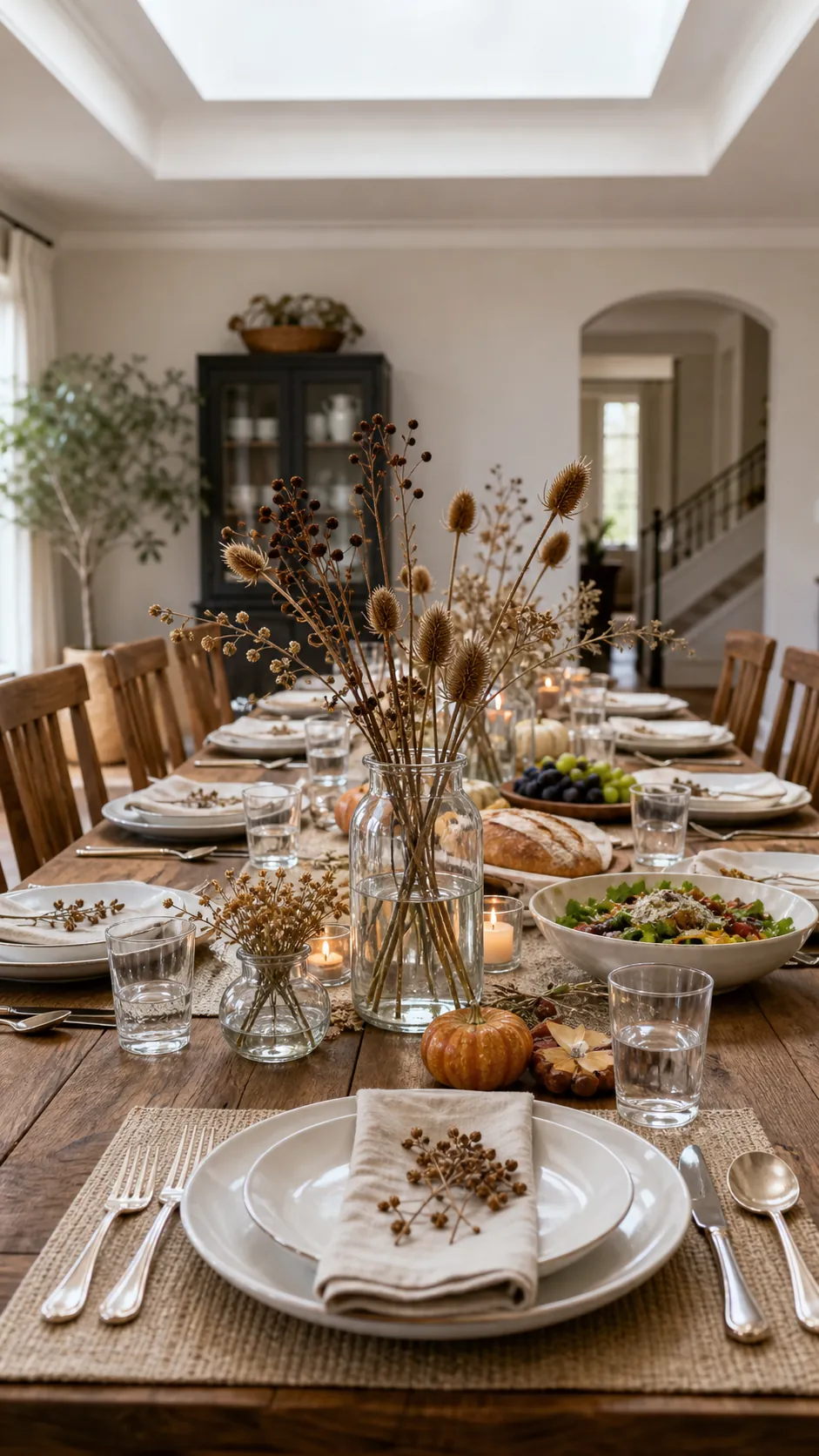
Wood slice place accents
Small wood slices can sit beneath napkins as place accents rather than forming a centerpiece. Choose smooth stable pieces that do not tip plates or catch fabric. Repeating one natural material at each seat gives the whole table a composed autumn identity.
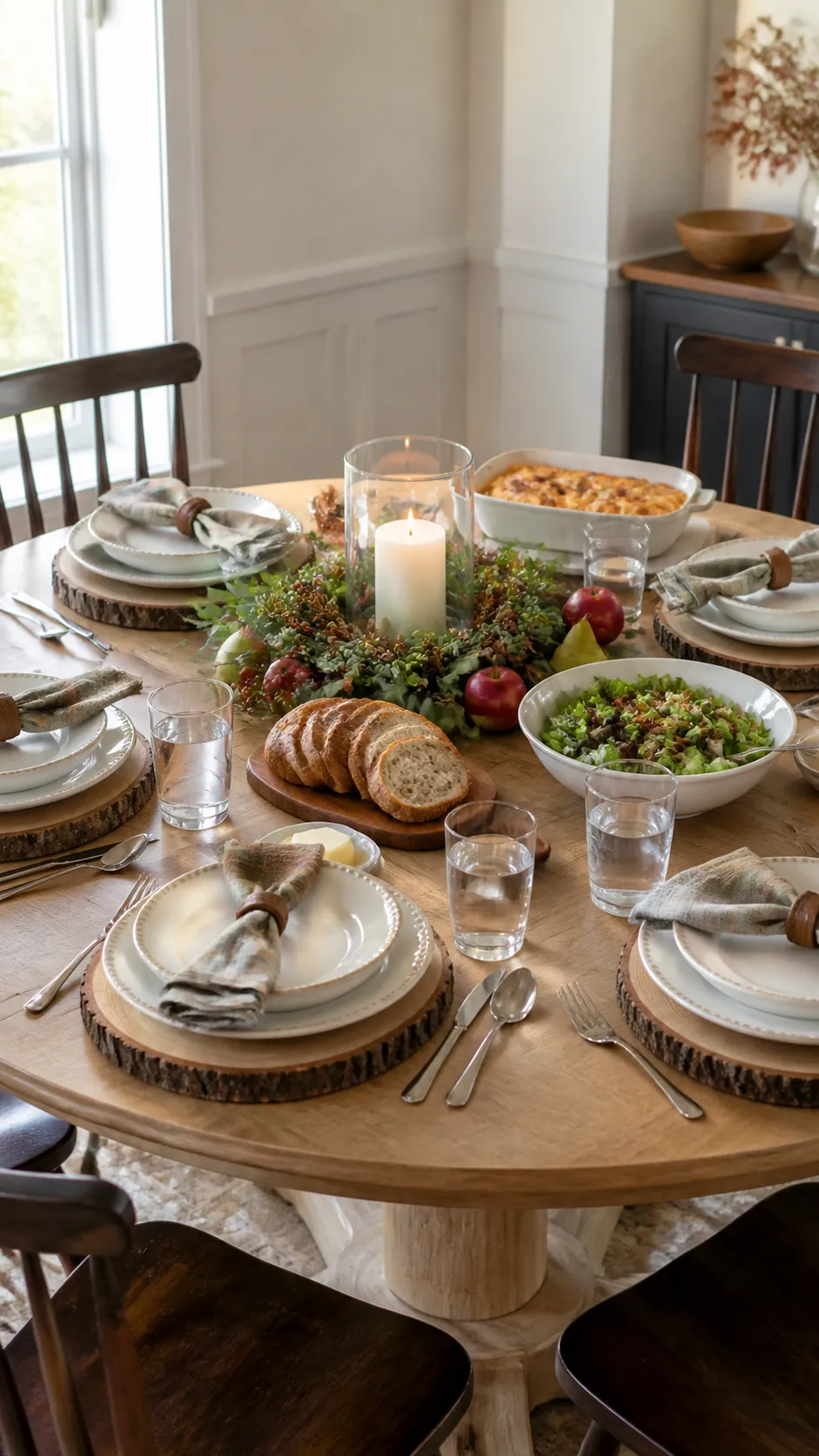
Burgundy leaves and pewter
Burgundy leaves bring depth to a pewter bowl without relying on orange. Let several stems arc outward while their height stays controlled. The cool metal and dark foliage create a mature table suited to evening meals.
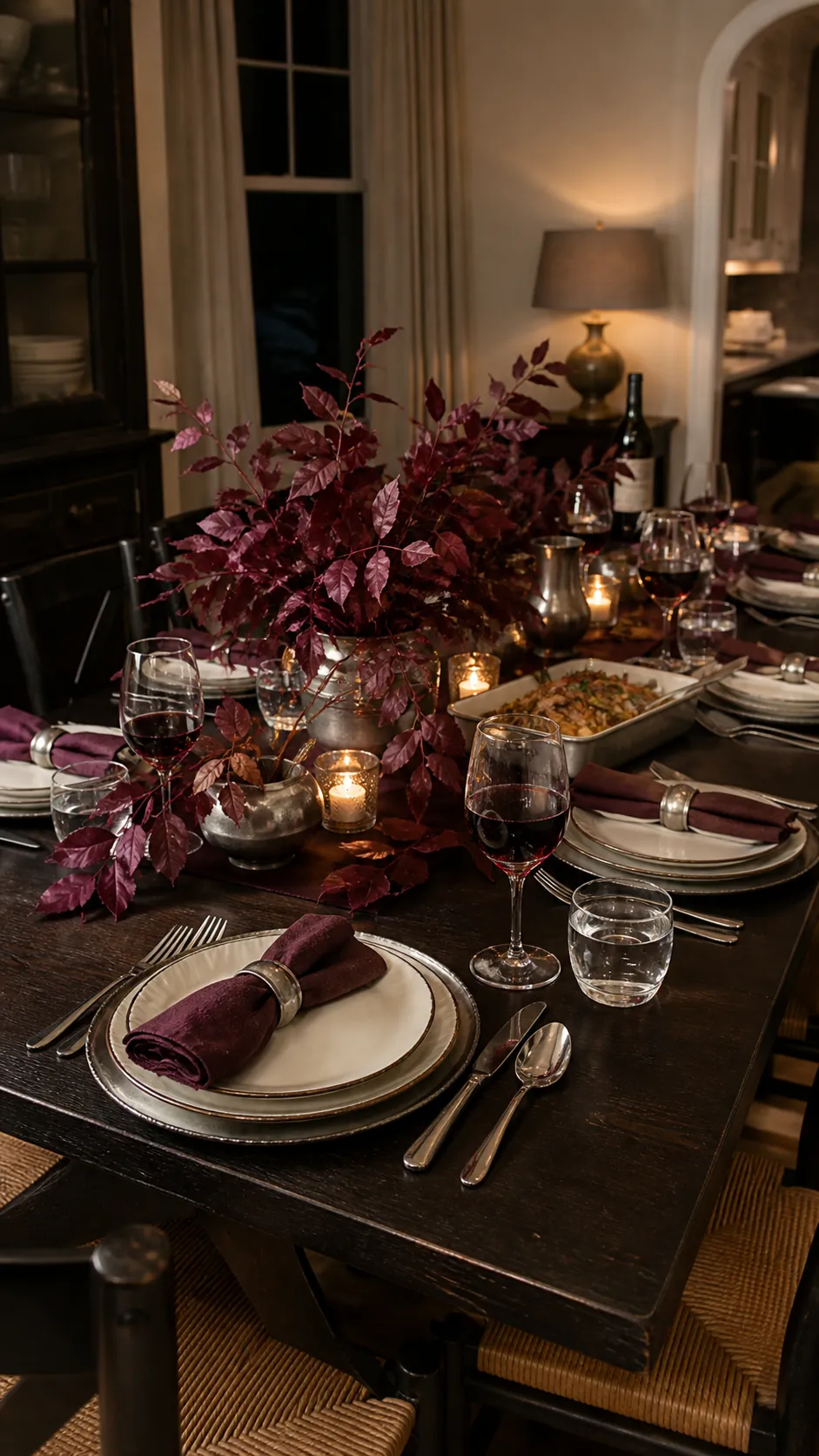
Cream candles in stone holders
Cream candles in low stone holders give a table quiet rhythm. Space the holders between serving zones and check that every flame has clear air around it. Their neutral color supports fall table decorations without competing with food.
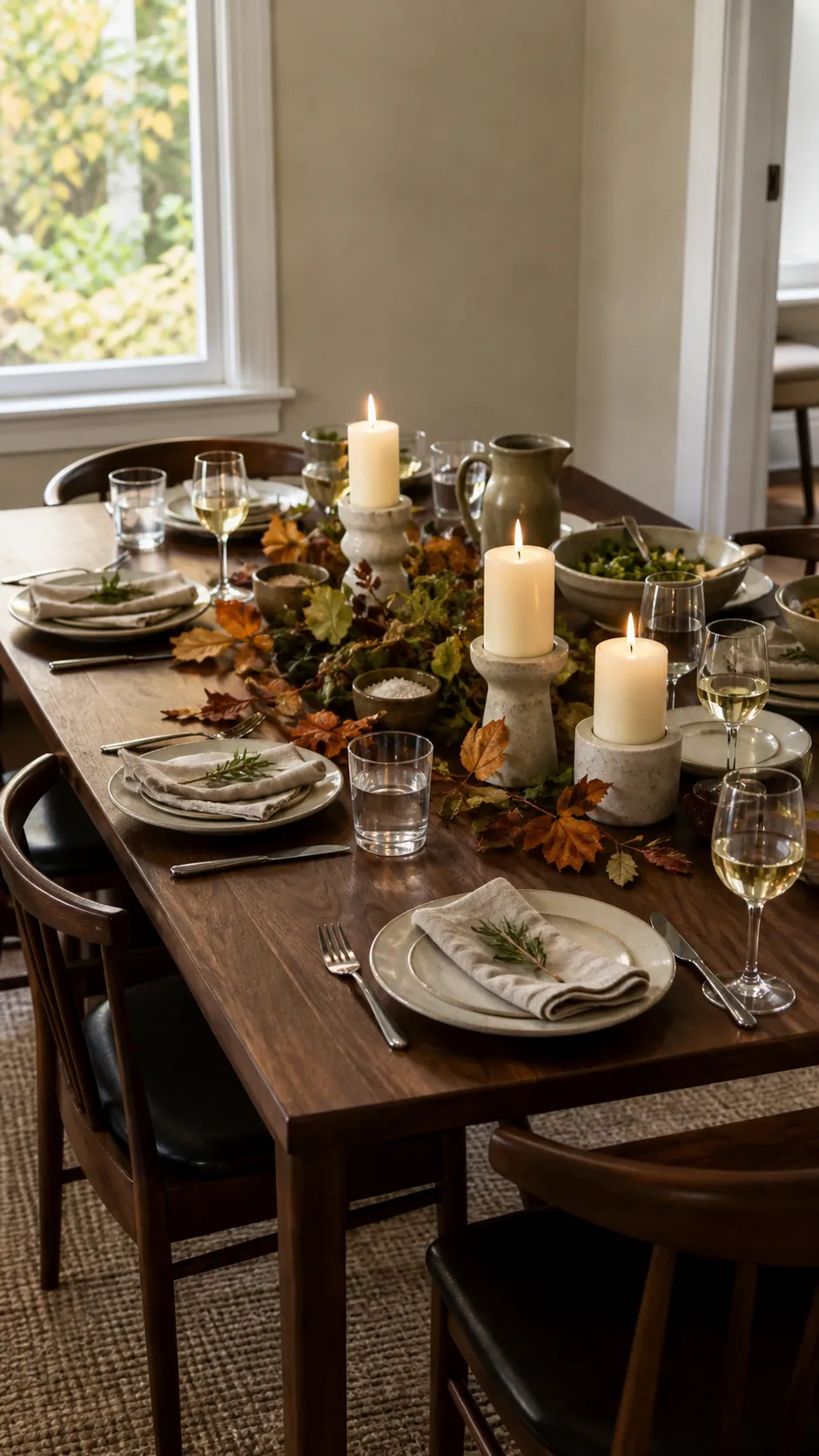
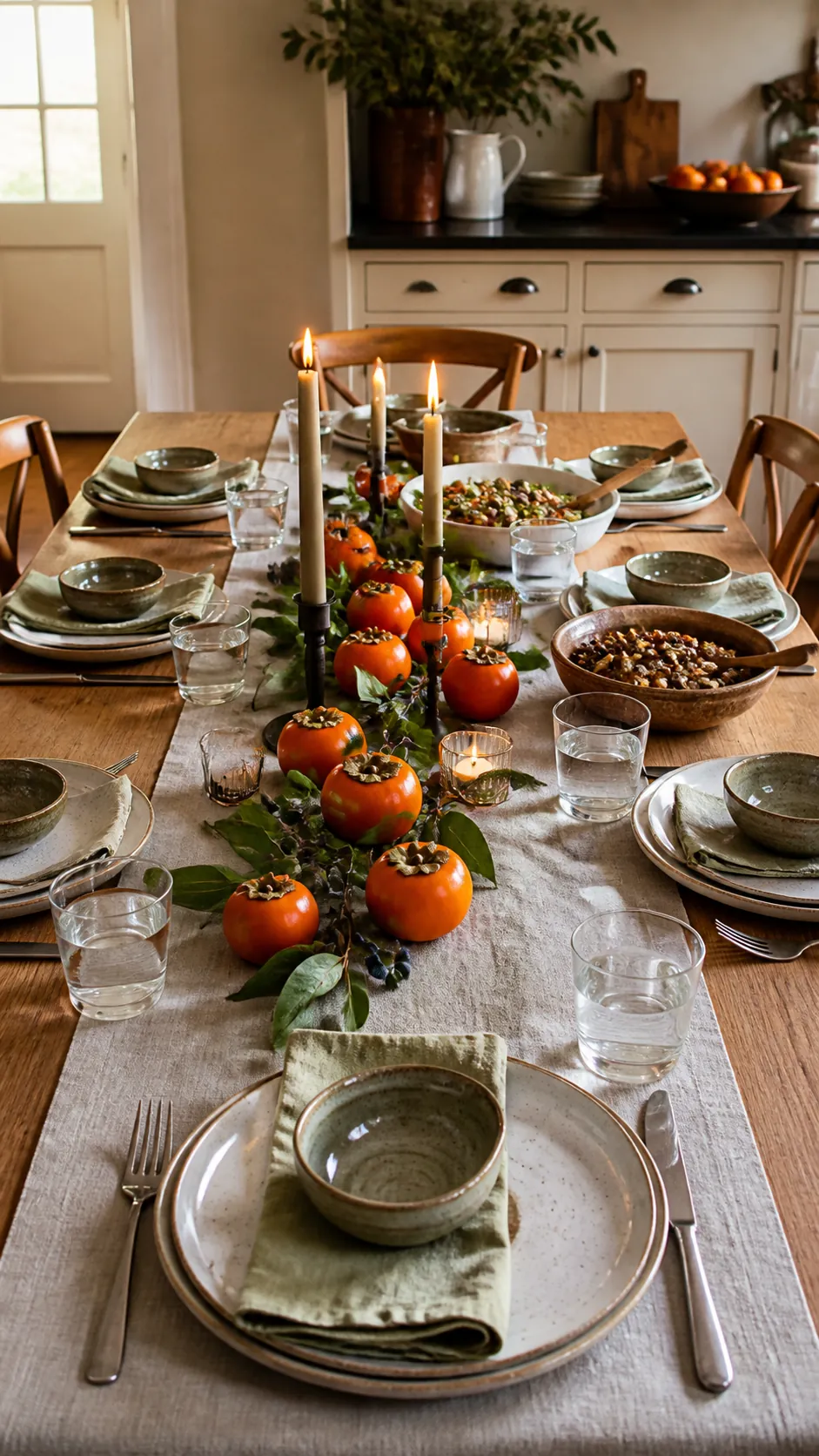
Persimmons on a linen runner
Persimmons bring saturated seasonal color to a plain linen runner. Arrange them in two loose groups and include a few attached leaves for context. The fruit looks abundant without requiring a costly floral centerpiece.
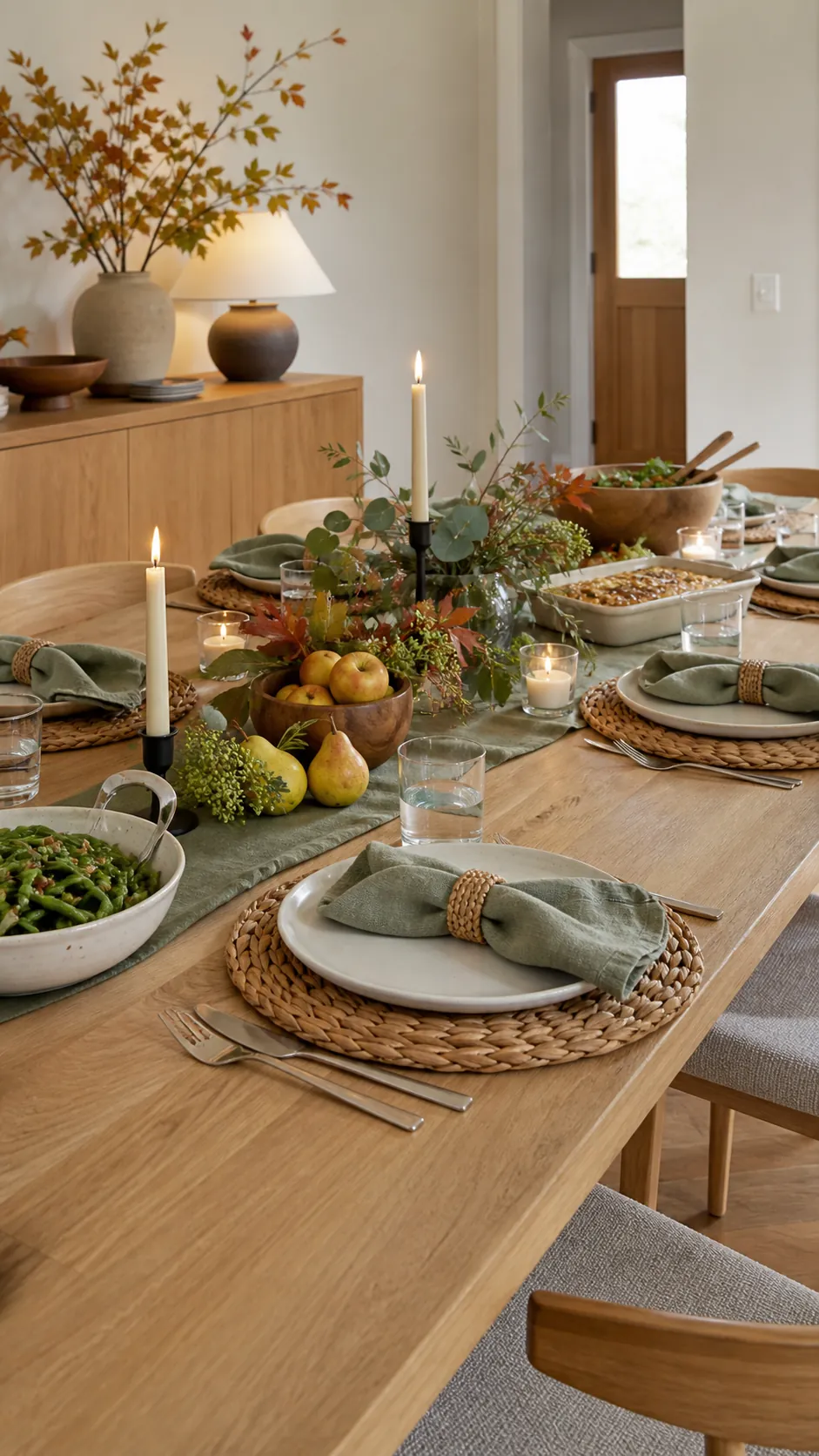
Rattan chargers and sage napkins
Rattan chargers add texture at every setting while sage napkins cool the autumn palette. Keep the center nearly bare with one narrow branch arrangement. This distributes decoration across the table and protects space for family style dishes.
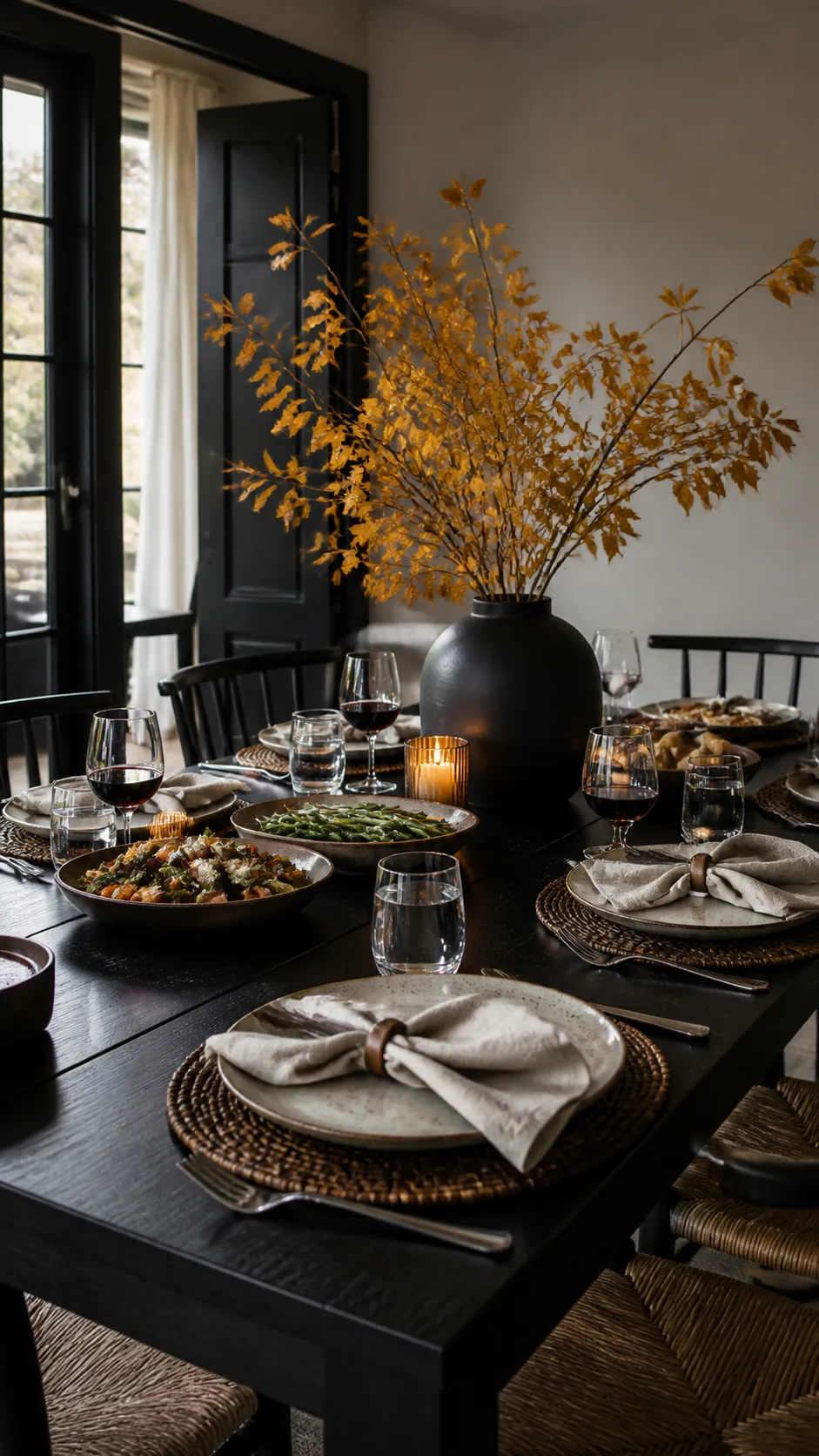
Black vase with golden branches
A matte black vase makes golden branches look bright and sculptural. Choose a vessel with a narrow base and clip the branches so faces remain visible. The high contrast needs little additional decor, which makes the table easier to use.
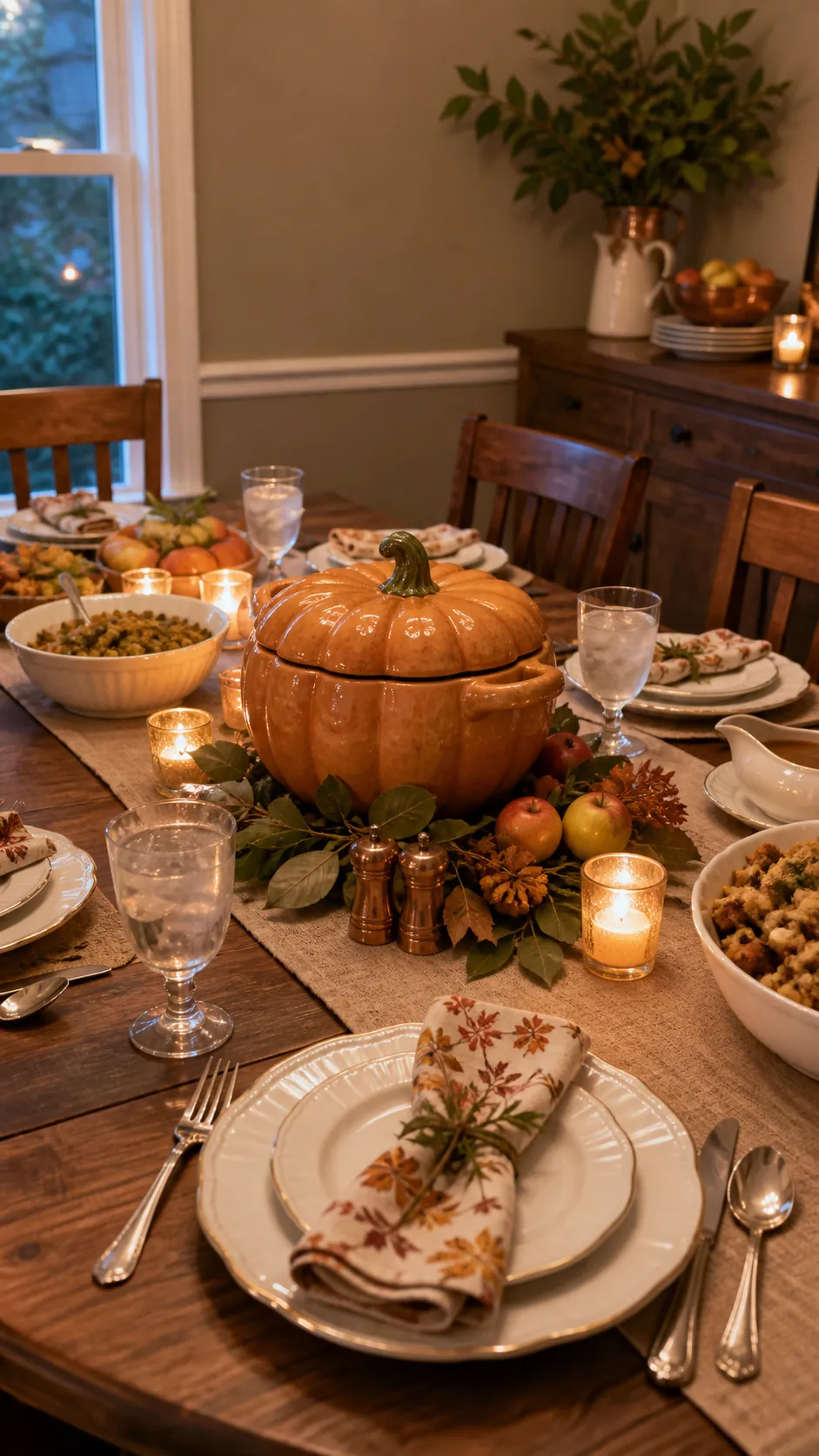
Pumpkin tureen centerpiece
A pumpkin shaped tureen can serve as both centerpiece and dinnerware. Set it on a simple wood board with a folded cloth beneath the lid. When the meal begins, the decorative object becomes useful rather than needing to be removed.
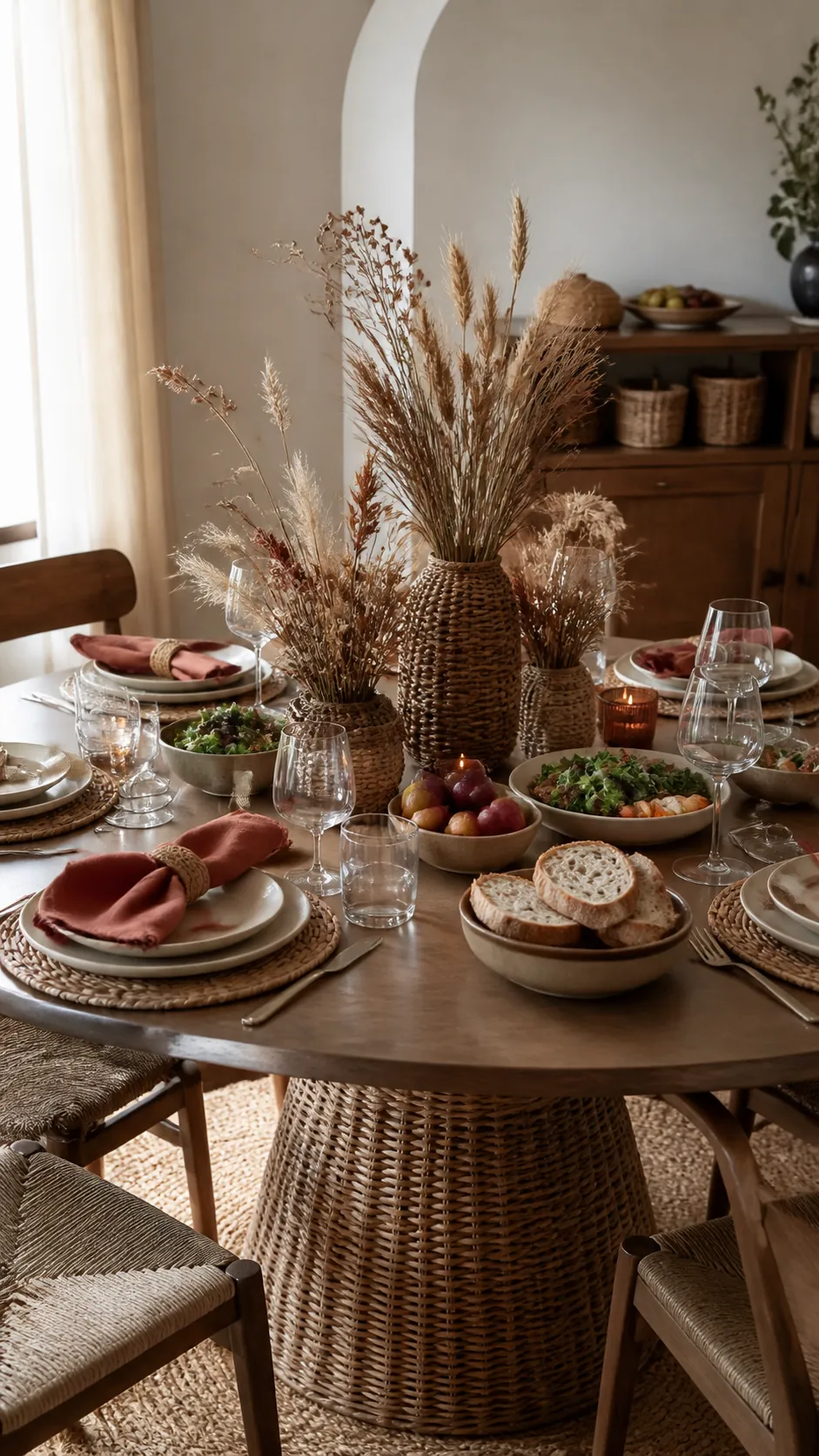
Dried grasses in woven vessels
Short dried grasses in two woven vessels create texture with almost no color. Keep the bundles loose and position them outside the central platter zone. Their quiet repetition complements fall decor ideas for the home kitchens.
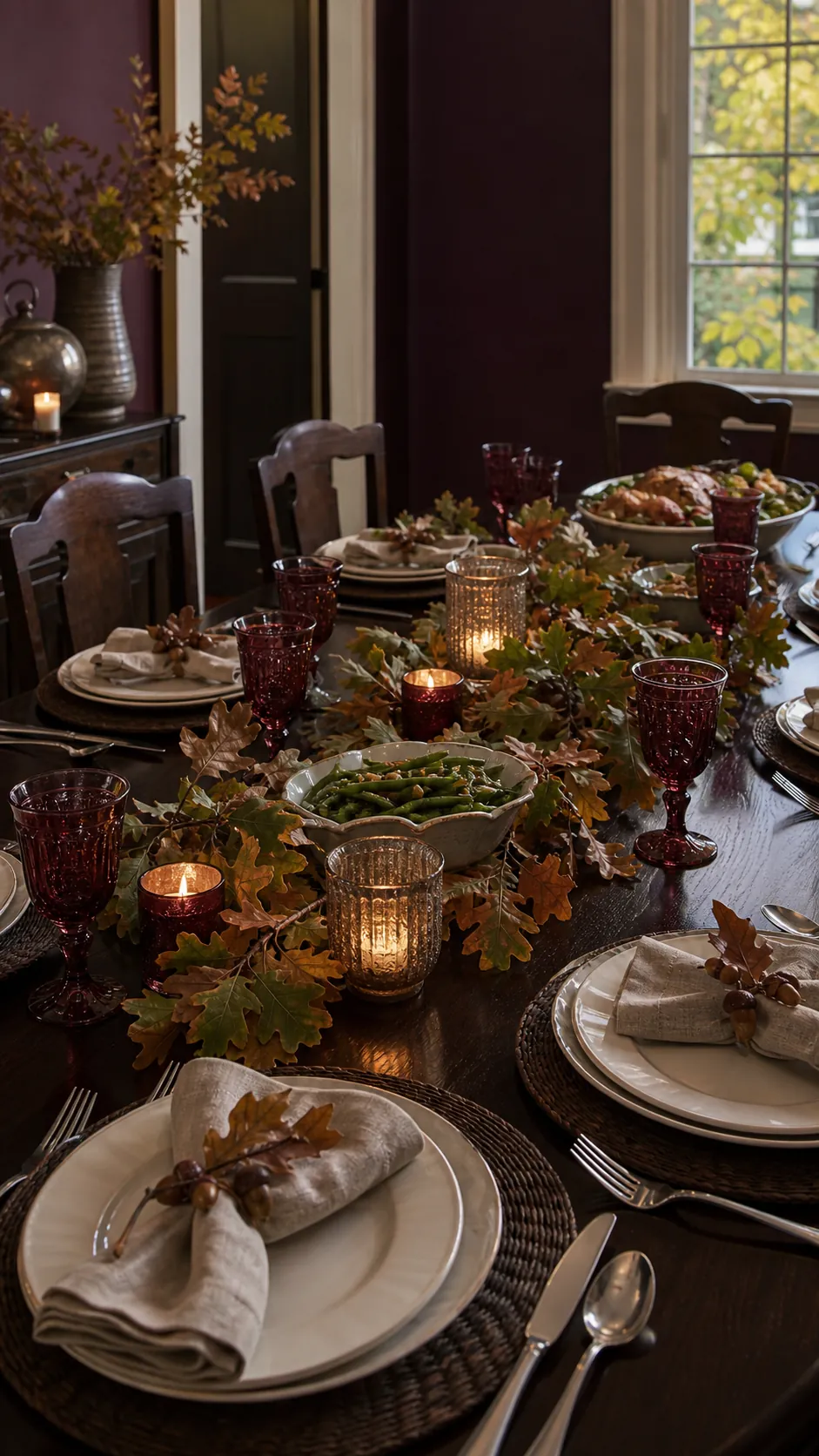
Cranberry glass and oak leaves
Cranberry glass introduces jewel tone color among dry oak leaves. Use a few small vessels rather than one tall centerpiece, then repeat the glass near the ends. Light passing through the color gives the table depth after sunset.
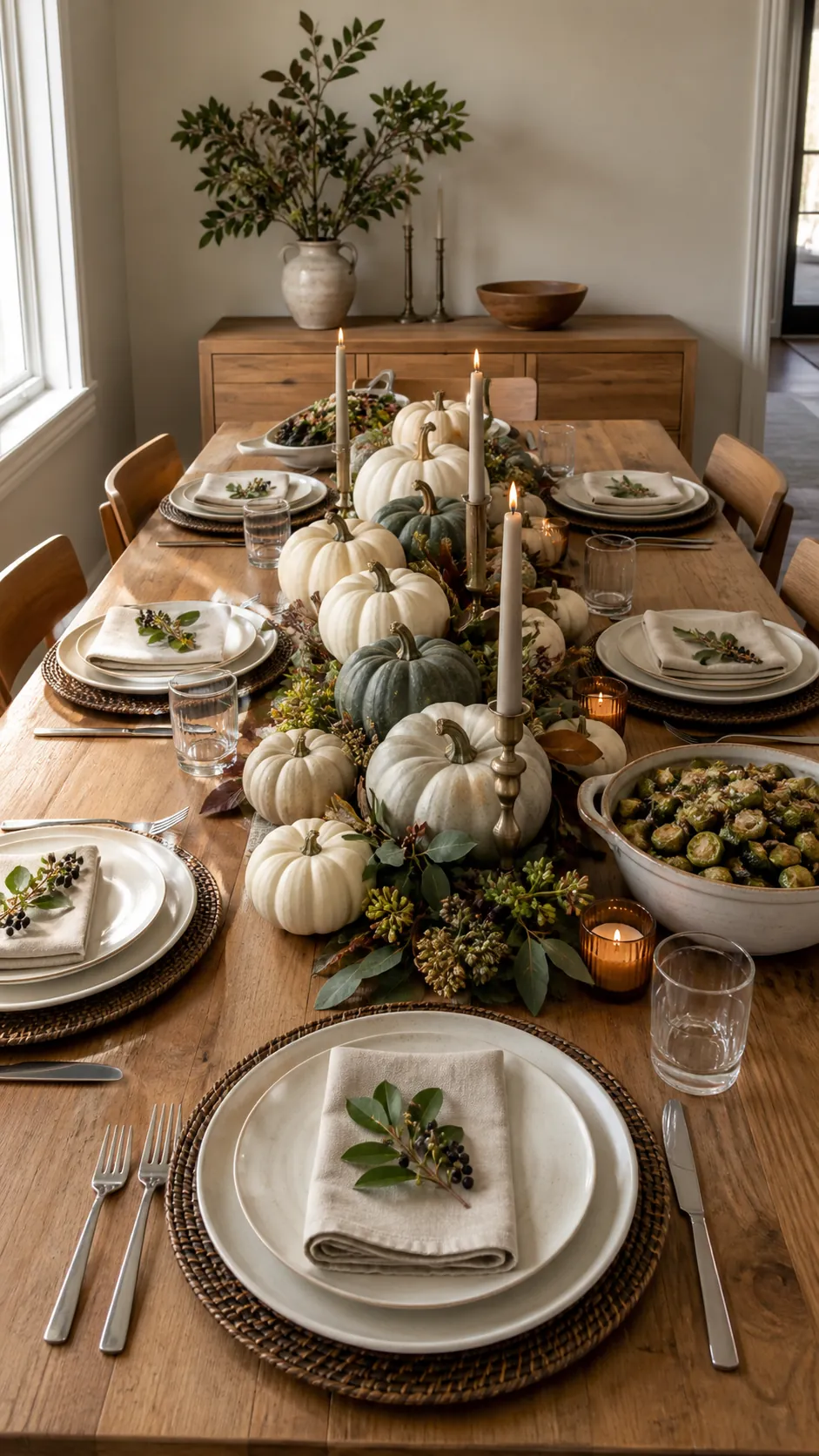
Layered neutral pumpkins
Layer cream, tan, and pale green pumpkins in a shallow central arrangement. Vary size more than color so the group stays calm but not flat. Low layering makes this suitable for a busy meal and an earth tone dining room.
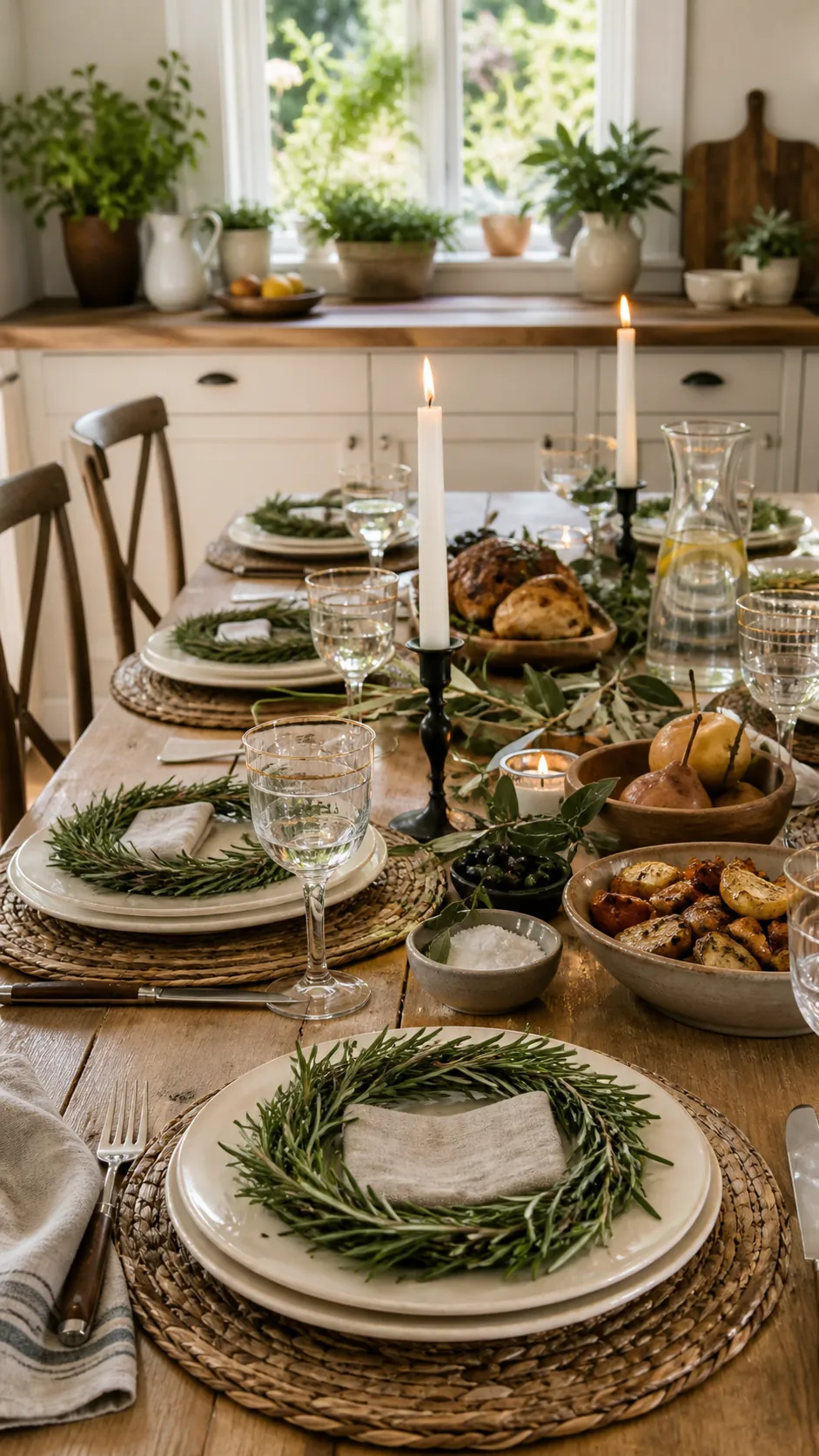
Rosemary wreath place settings
Small rosemary circles can rest on folded napkins as fragrant place details. Tie them with plain cotton thread and keep the herb away from candle flames. Each guest receives a seasonal accent without crowding the shared table.
One sculptural branch on bare wood
One sculptural branch in a stable ceramic vessel can be enough for a beautiful autumn table. Place it off center and preserve most of the bare wood for serving. The final result feels confident because every visible object has a purpose.