
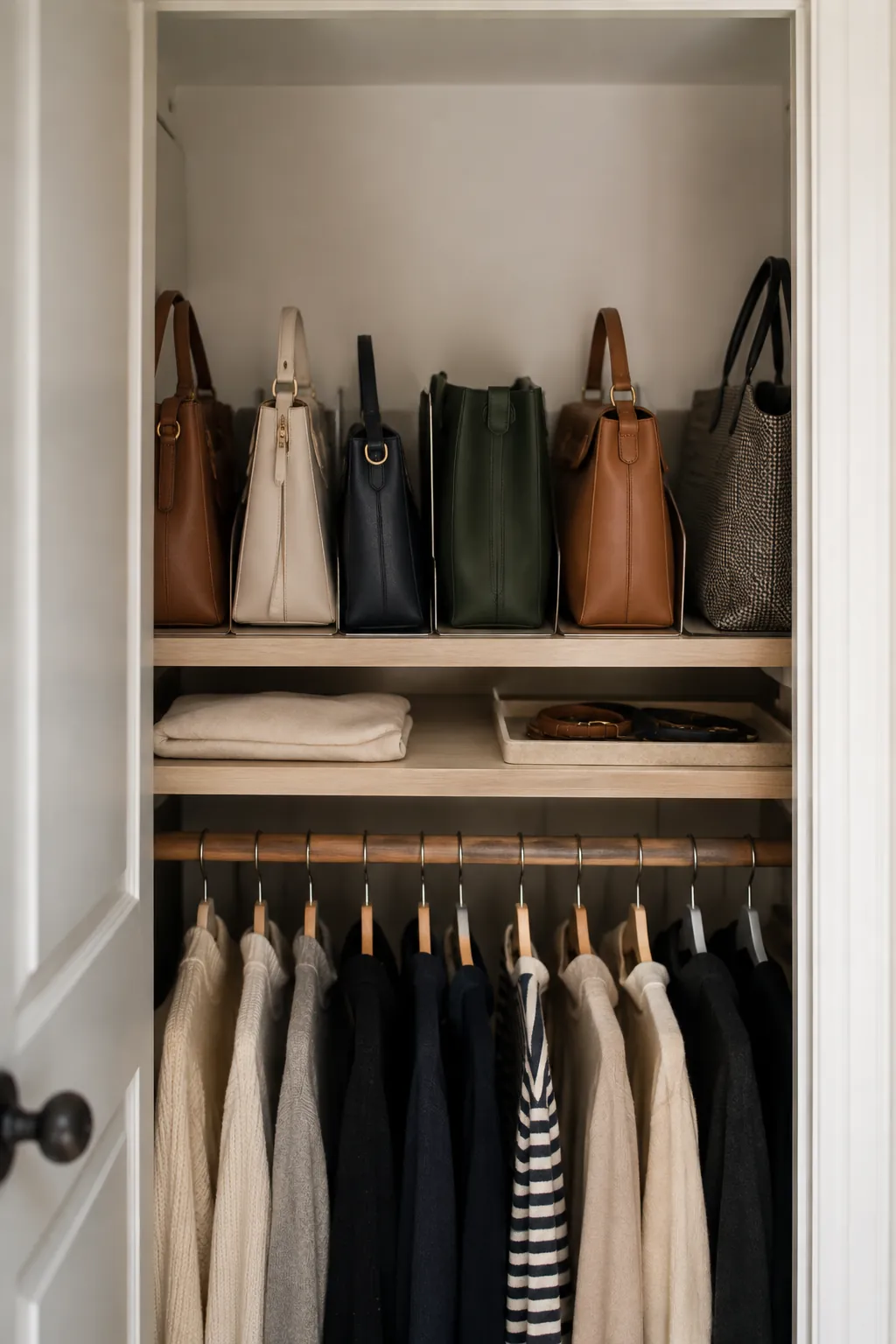
A handbag collection can overwhelm a small closet long before it becomes large. The real challenge is not fitting every bag into the smallest possible volume. It is protecting shape, finish, and hardware while keeping the bags you use visible enough to reach. A compact system works when it separates daily access from longer storage and gives each bag support without sealing away moisture.
Edit the collection before buying organizers
Take every handbag out and group it by actual use: frequent, occasional, sentimental, and ready to leave. Empty receipts, cosmetics, and loose objects, then check linings and pockets while the collection is visible. Bags that no longer suit your routine consume the same shelf width as favorites, so donation or resale is often the best first storage tool. Measure the remaining bags at their natural resting shape before choosing containers.
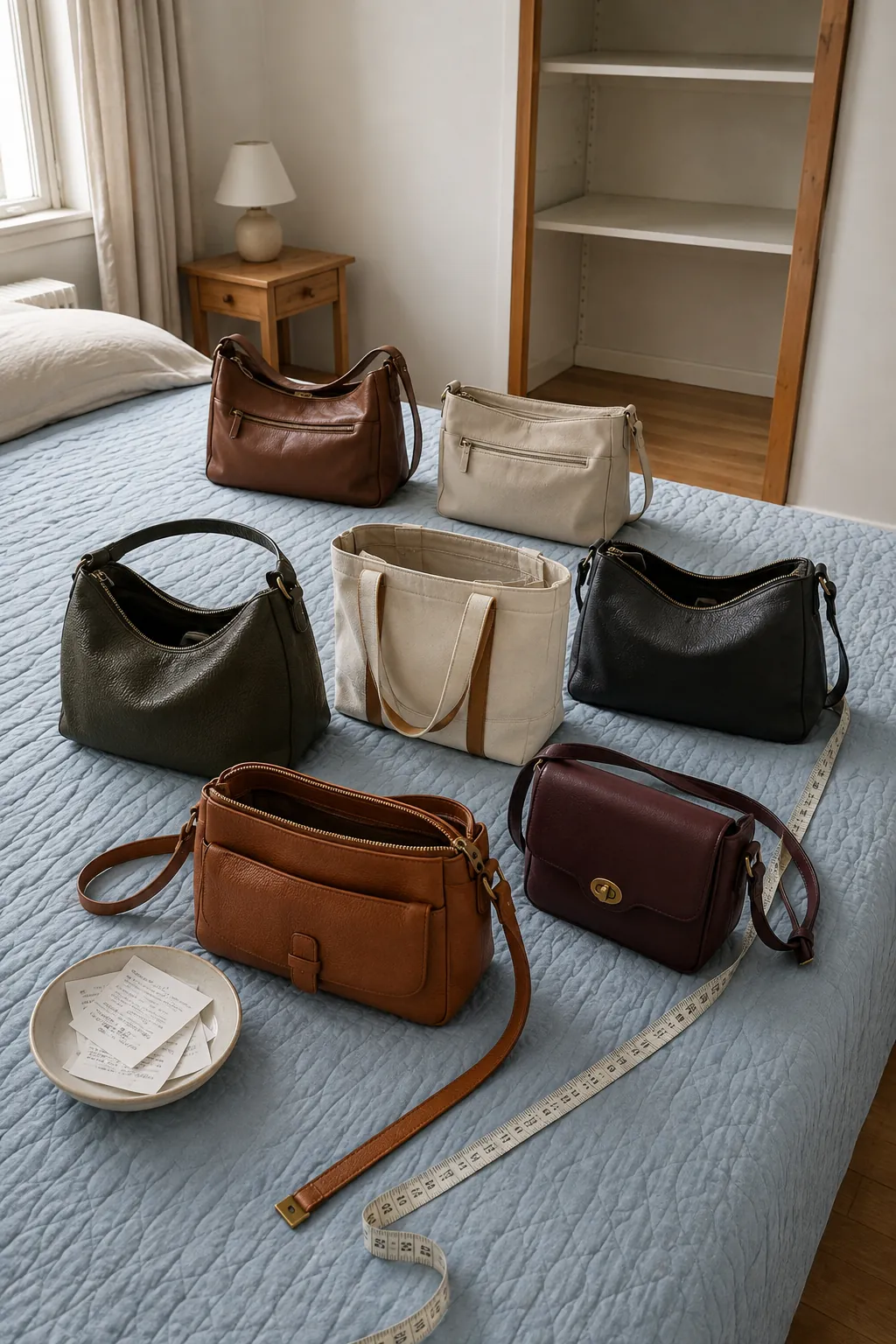
Preserve shape with gentle interior support
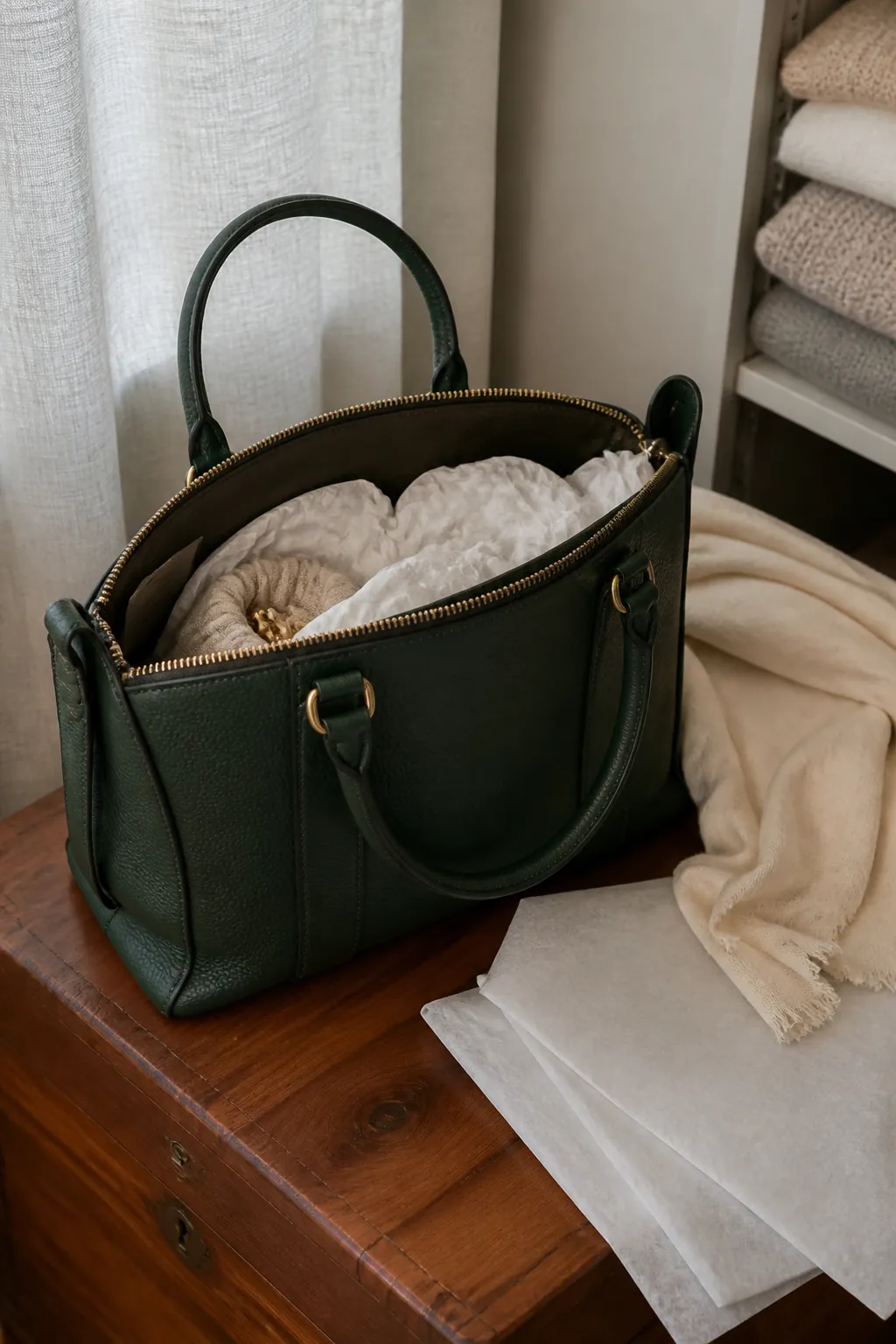
Structured bags should stand upright with enough room that neighboring bags do not press their sides. Fill an empty bag loosely with clean acid free tissue, a washed cotton scarf, or its own removable insert. Avoid newspaper because ink can transfer, and do not overfill until seams bulge. Fasten closures lightly, tuck chains into a soft pouch, and position handles according to their natural curve instead of forcing them flat.
Divide one shelf into stable bays
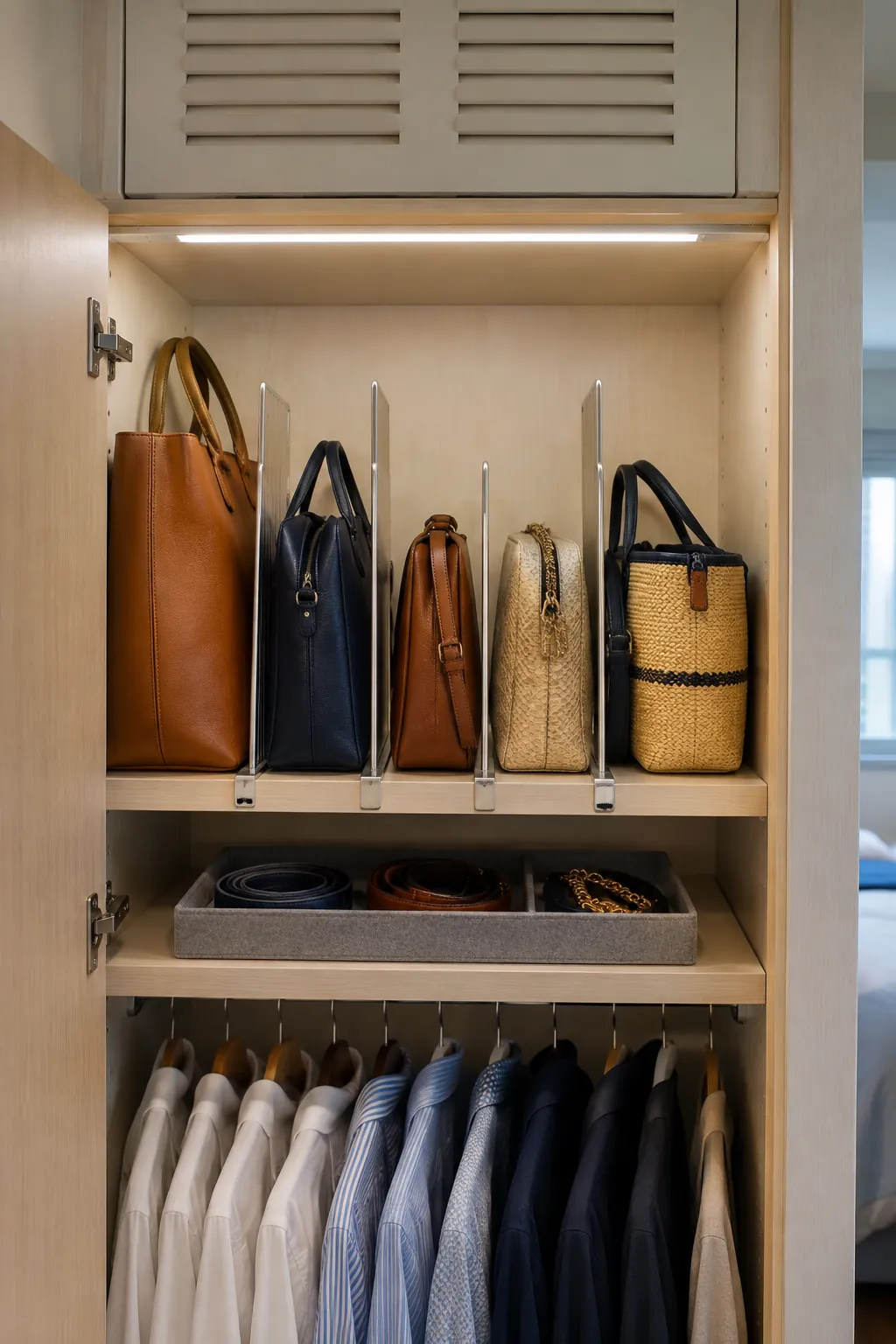
Shelf dividers for bags turn one unstable stack into several narrow standing zones. Adjust each bay to the width of one large bag or two slim bags, leaving a little air around leather and coated canvas. Place heavier totes at the ends where the shelf has support, then keep small crossbody bags in shallow open bins with straps contained. Clear handbag storage can improve visibility, but only if the case is ventilated and protected from direct sun.
Use hanging space only for light bags
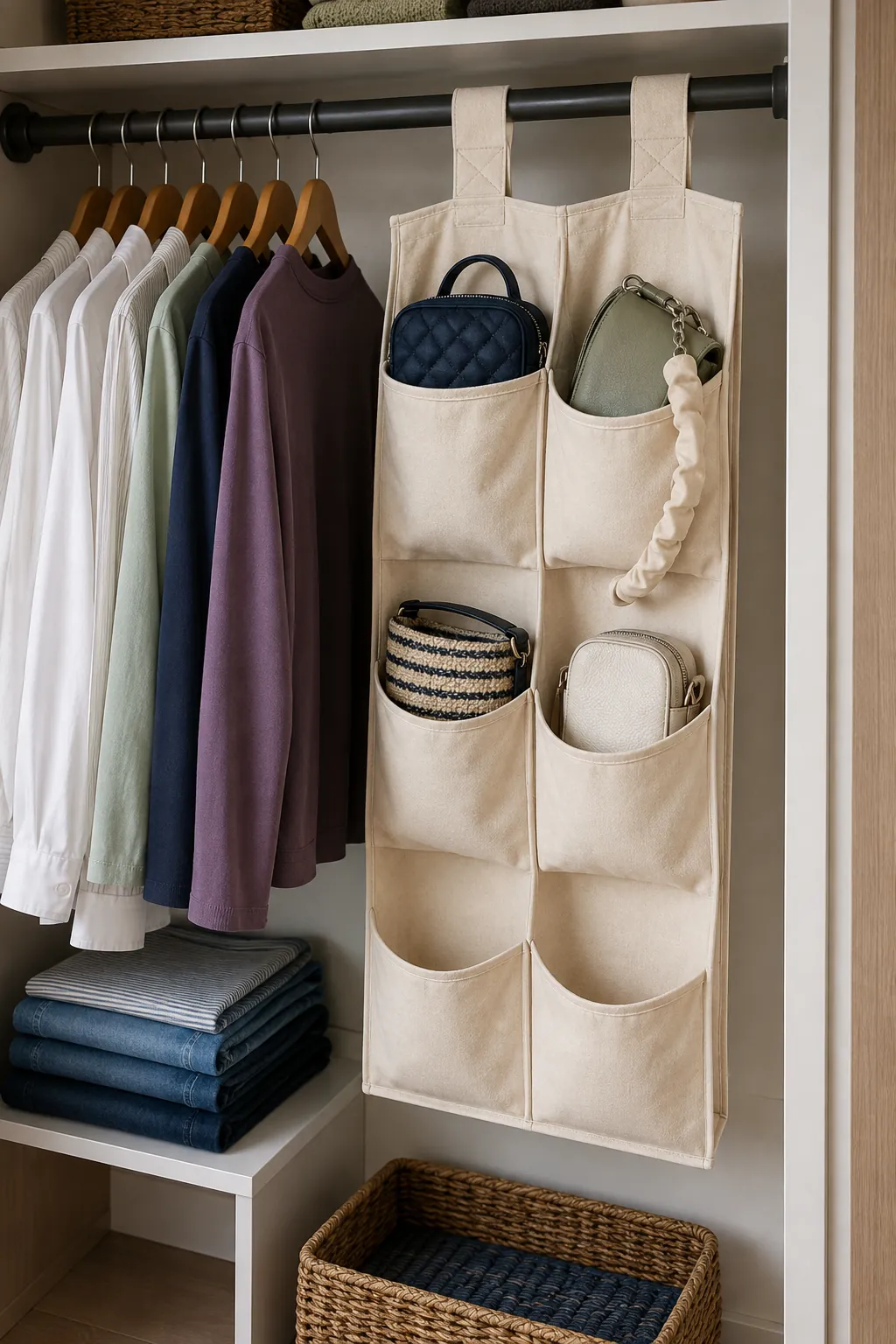
A hanging purse organizer can use the vertical gap beside short garments, provided the rail and organizer are strong enough for the load. Put lightweight fabric and small crossbody bags in individual pockets, with metal chains wrapped so they cannot scratch neighboring finishes. Do not hang a valuable bag from its own handle for months because a narrow hook can create dents and stretch attachments. Leave the bottom pockets empty if they would drag across the closet floor.
Choose wall hooks with care
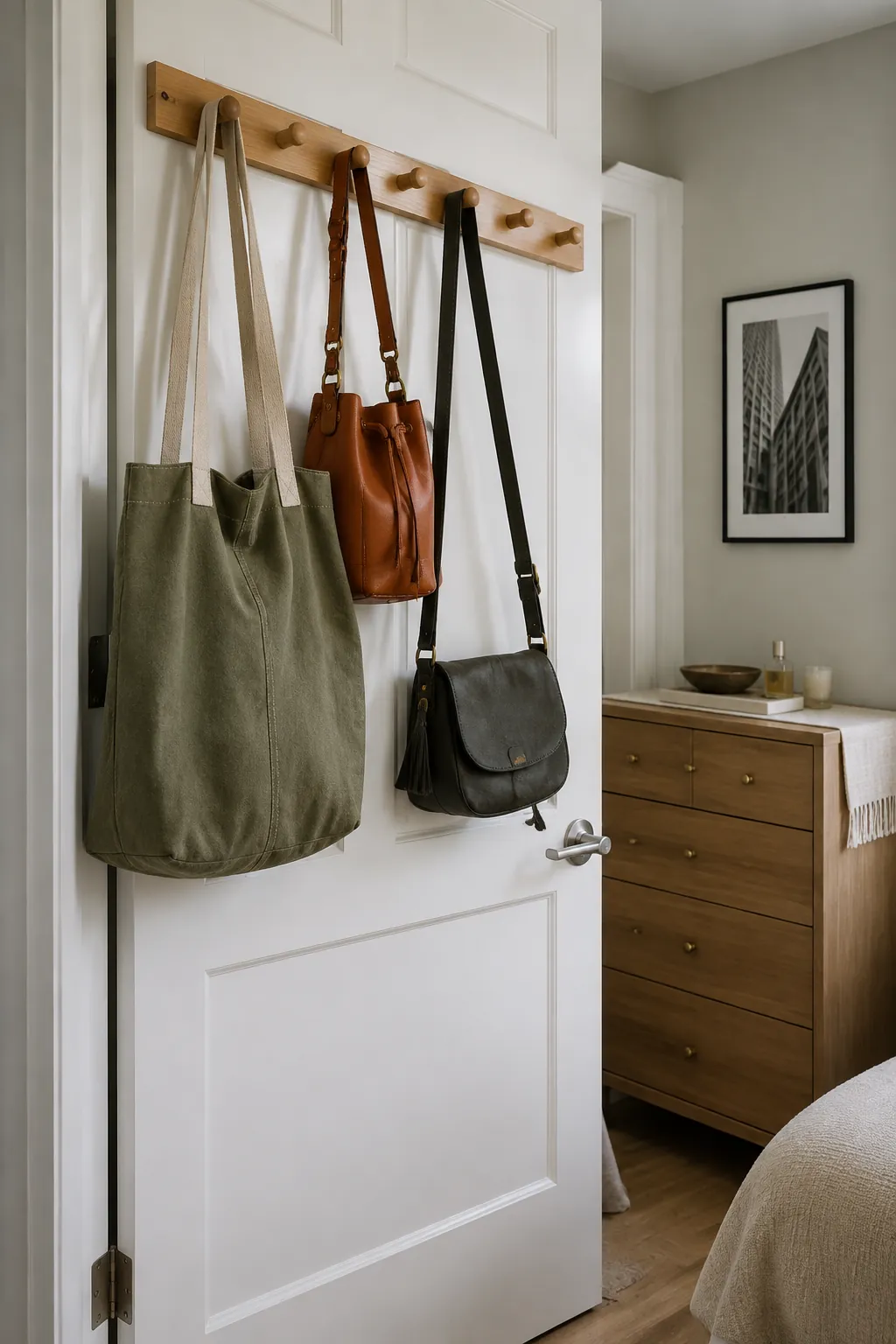
Bag hooks on a wall are useful for the two or three bags currently in rotation, not for long storage of an entire collection. Select broad rounded pegs that spread pressure, mount them into suitable supports, and keep bags away from windows, heaters, and damp exterior walls. A small rail behind a door can preserve floor space if the door still opens fully and hardware cannot strike the bags. Return less used pieces to supported shelf storage after each rotation.
Protect stored bags without sealing in moisture
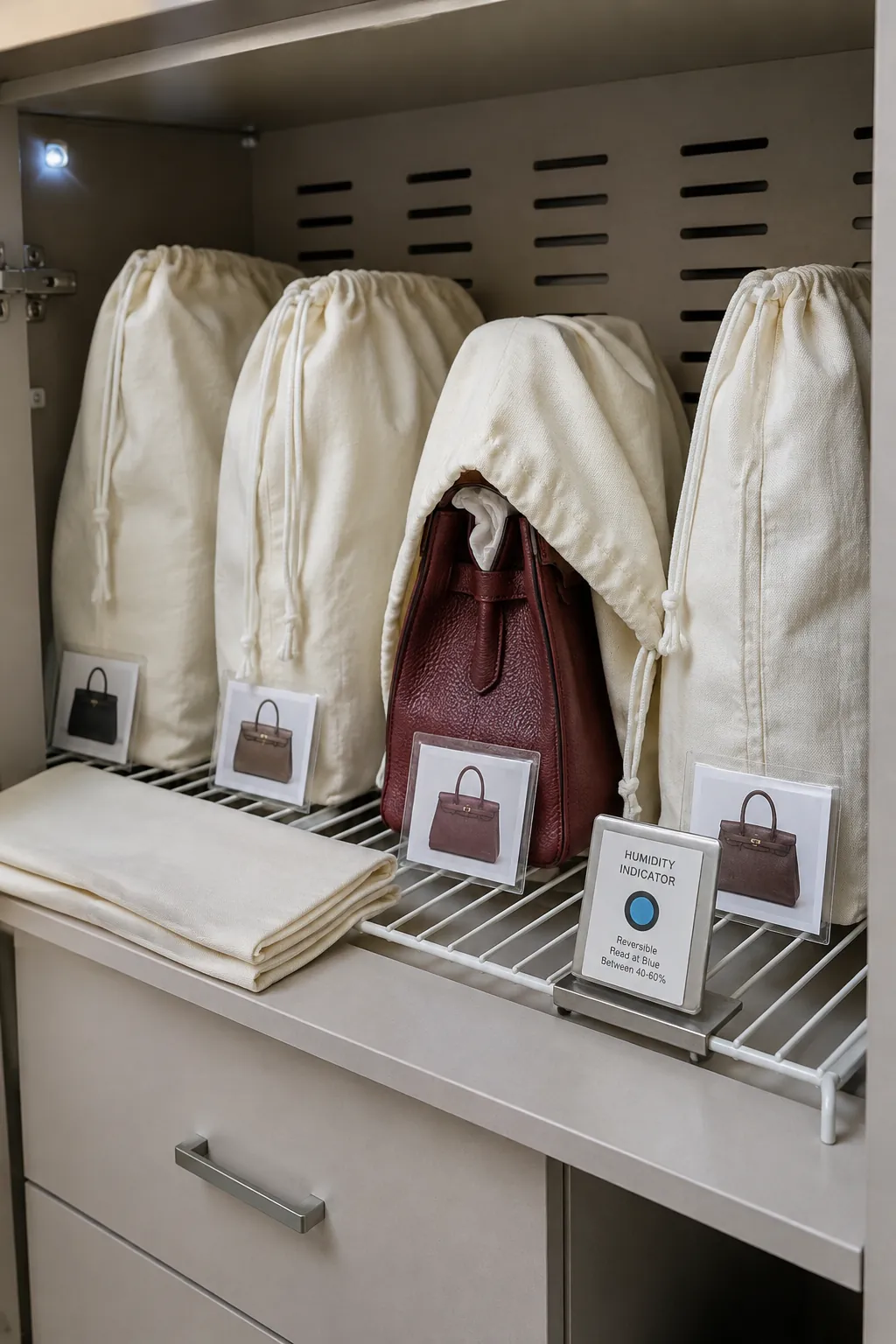
Indexed handbag discussions repeatedly raise the choice between visibility and breathable dust protection, along with concern about mold in closed storage. Clean each bag according to its material, let it dry completely, then use a breathable cotton dust bag or clean pillowcase for longer storage. Avoid airtight plastic around leather, monitor humid closets, and never press a bag against a cold damp wall. A reusable humidity indicator can reveal a problem before odor or spotting appears.
Rotate access without turning storage into a display
Keep only the current few bags in the easiest zone and place occasional pieces one level higher or deeper in the closet. Add a simple photo label to opaque dust bags so you do not need to open each one while choosing. Every few months, remove the bags, air the shelf, inspect corners and hardware, and change the rotation based on the coming season. A good small closet purse storage system earns its space by making care and selection easier, not by showing everything at once.