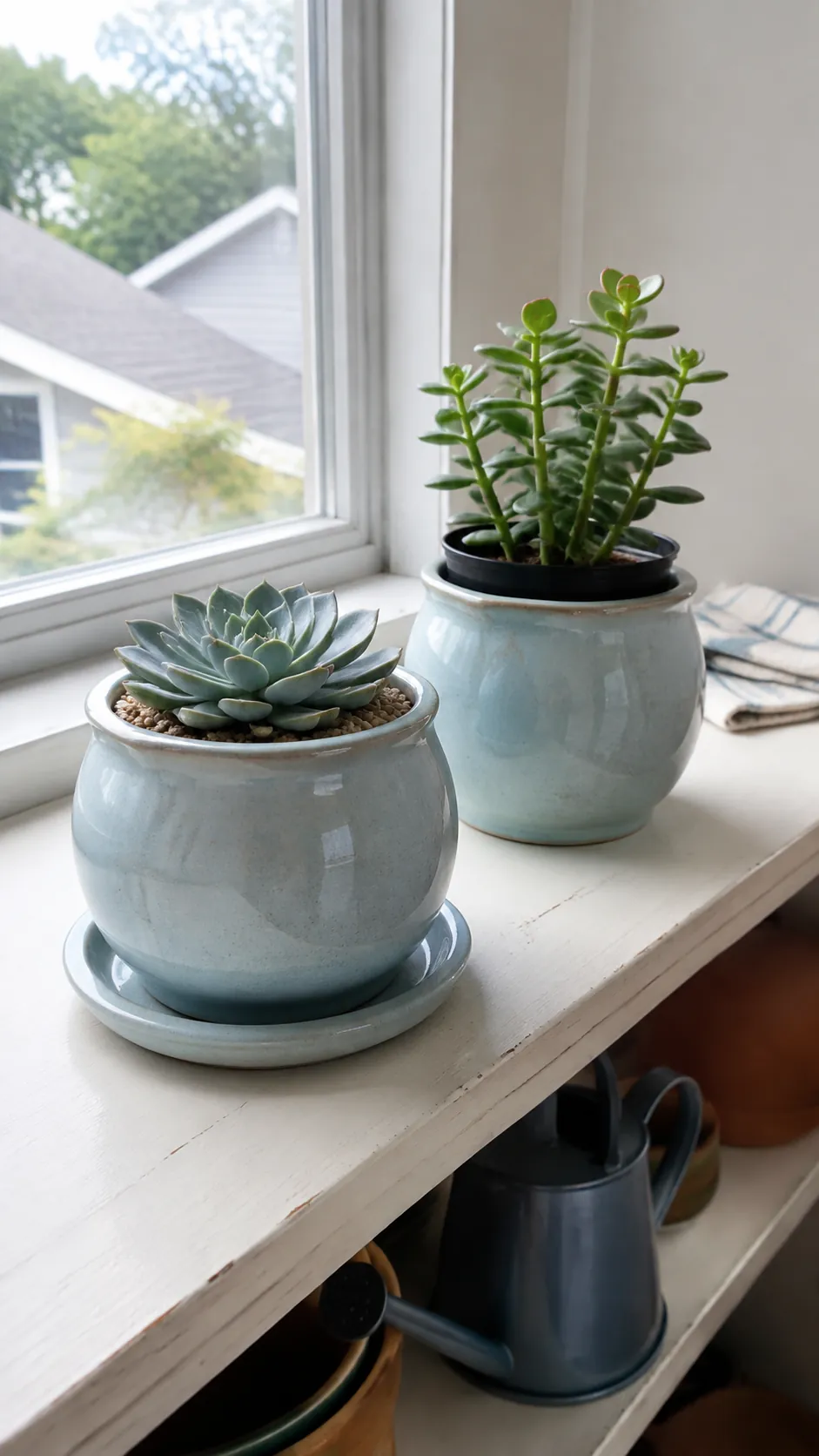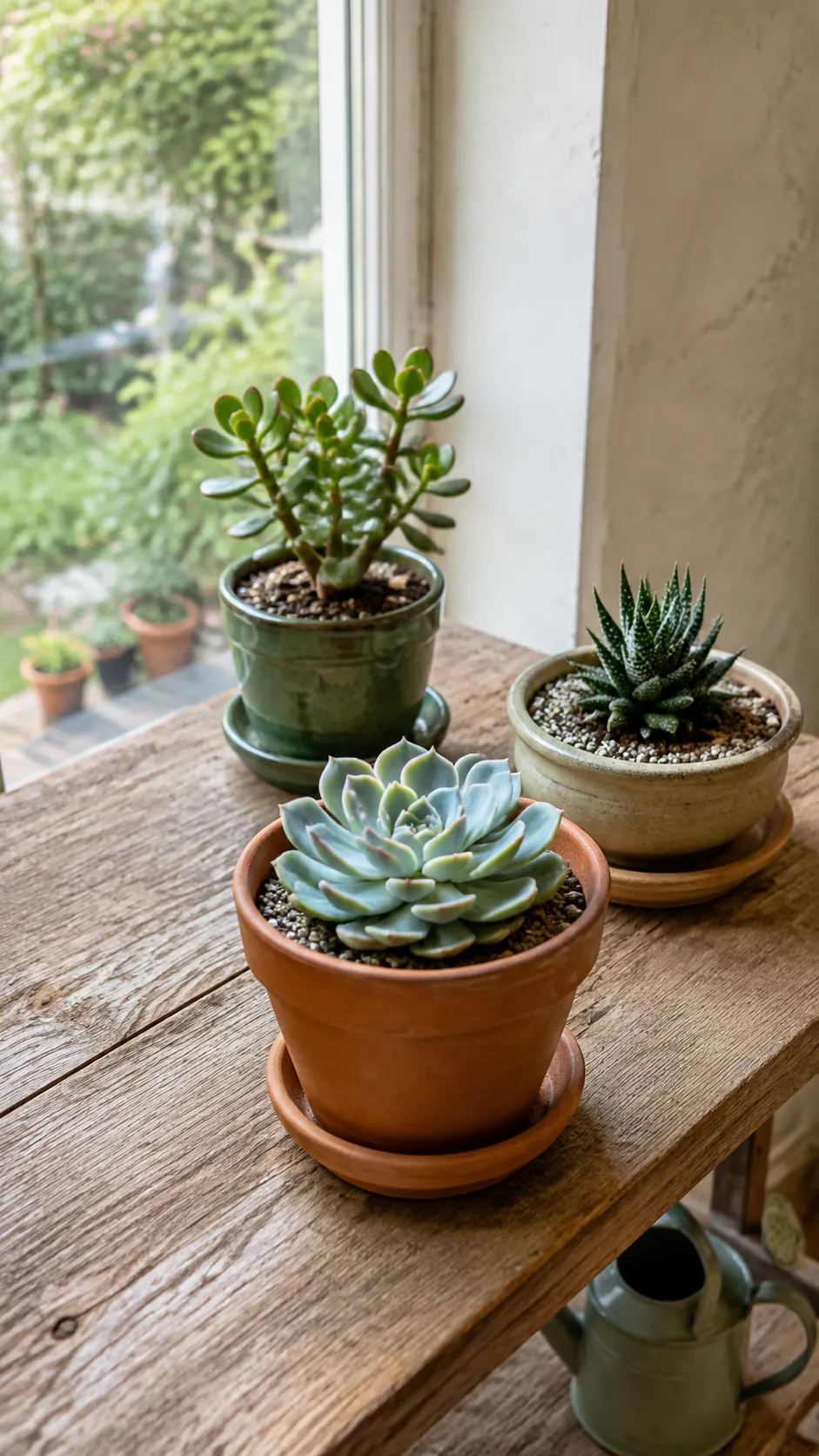
A beautiful planter becomes frustrating when water has nowhere to go. Start with a container that fits the roots and lets you manage runoff, then choose the shape and finish that suit your space. A removable nursery pot can rescue plenty of decorative vessels that were never designed for direct planting.
Classic terracotta for a sunny sill
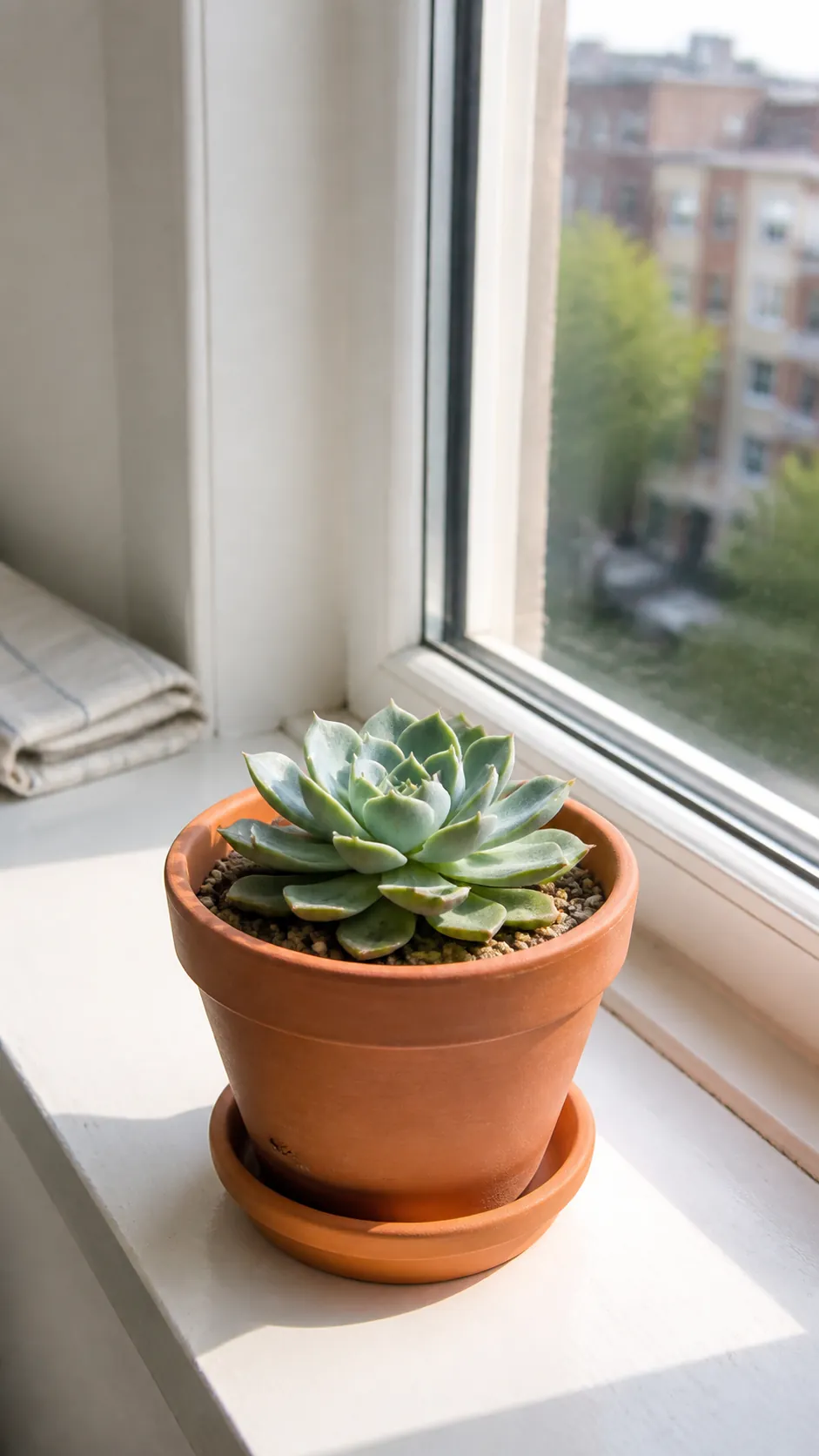
A plain clay pot earns its place when your biggest problem is soil that stays damp. Unglazed terracotta lets moisture escape through the sides, although it cannot compensate for dense potting mix or a blocked hole. Choose a container only modestly wider than the root ball and pair it with a removable saucer. Check the soil before watering instead of treating the calendar as a command.
A glazed cachepot with a removable liner
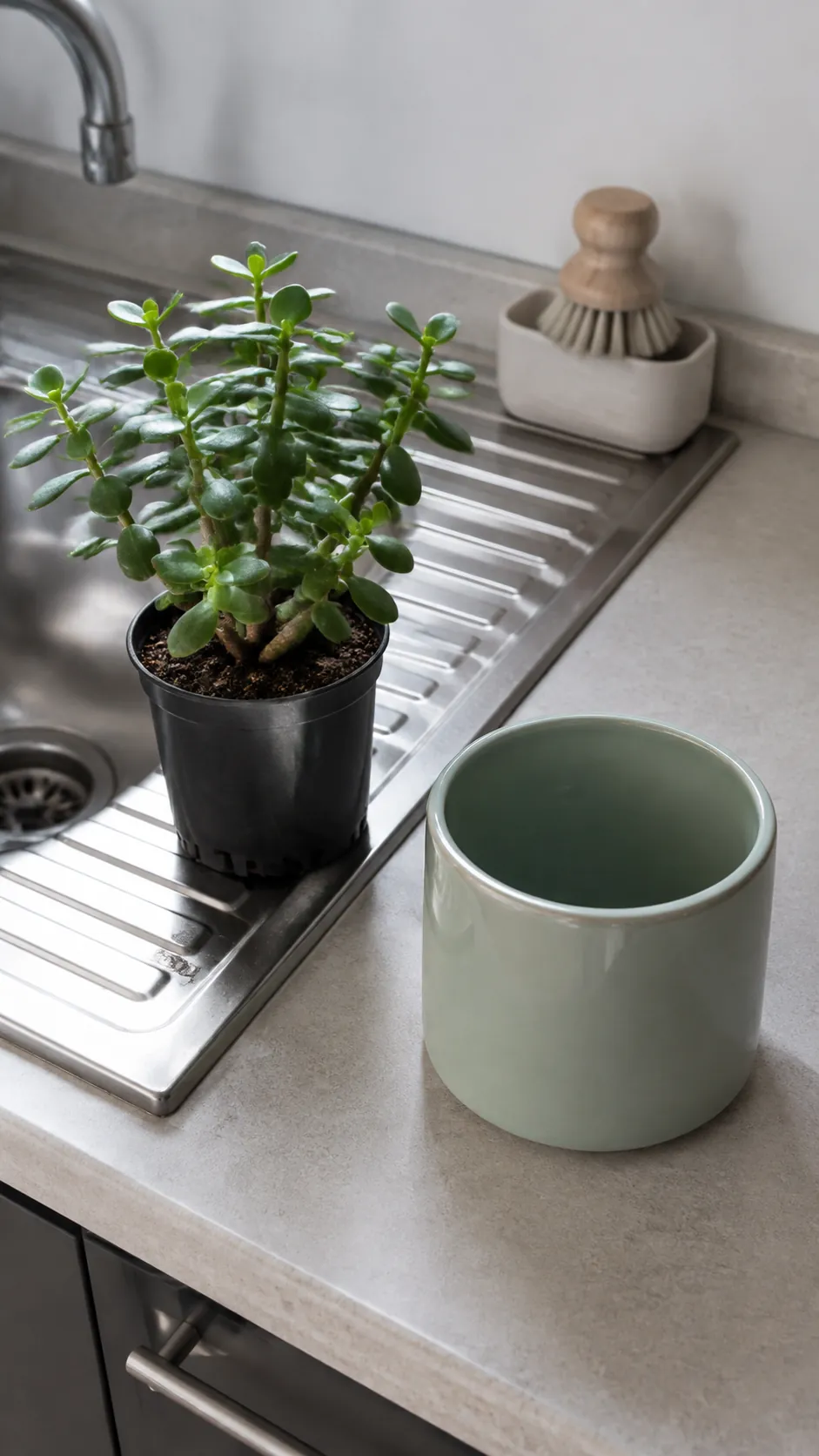
You can keep a glossy decorative vessel without planting directly into it. Set a nursery pot with drainage inside, leaving enough room to lift it out comfortably. Water at the sink, let runoff finish, and return the liner only after emptying the outer pot. This makes attractive succulent container ideas much easier to live with on furniture.
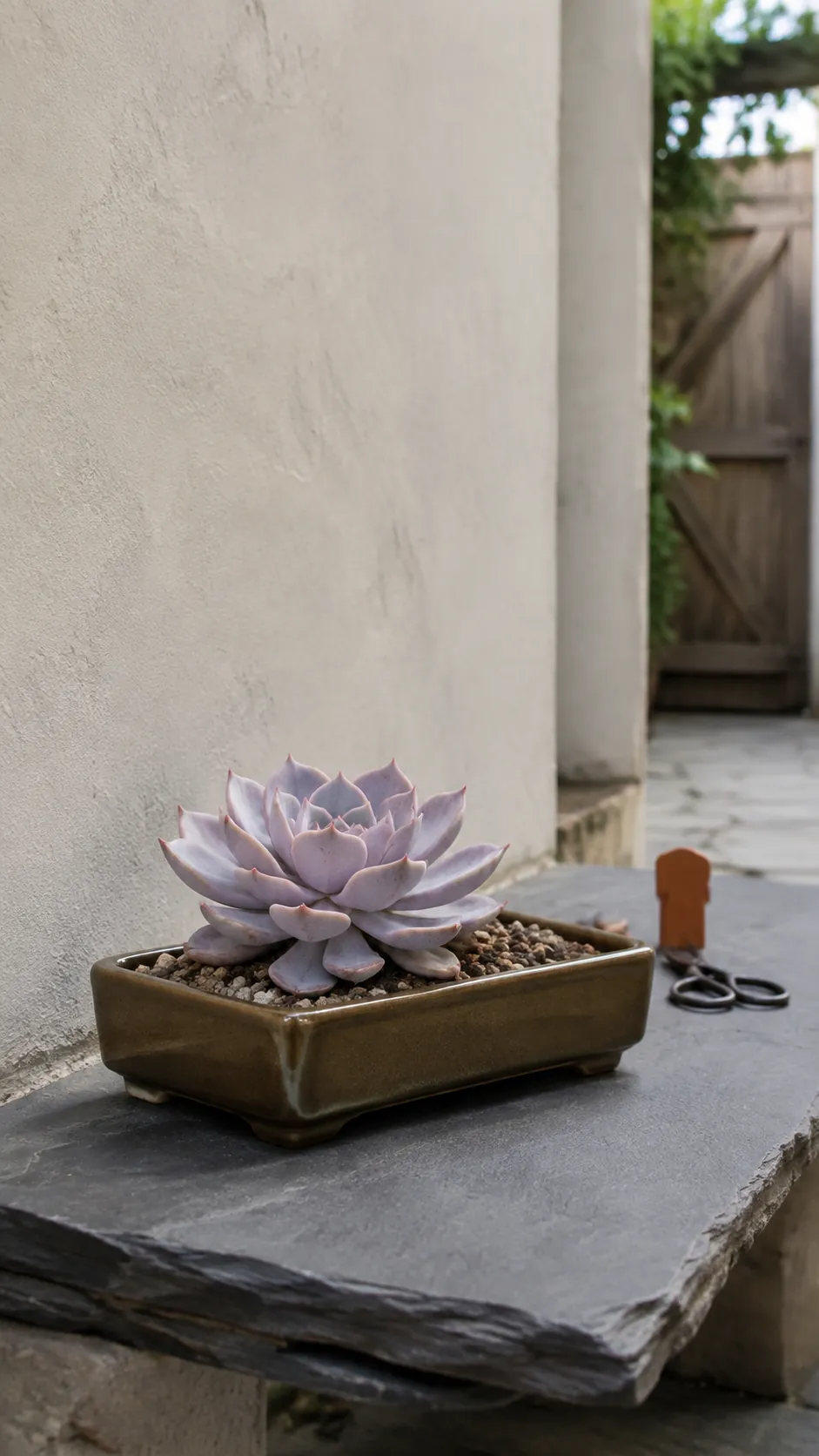
A shallow bonsai pot for a compact rosette
A low rectangular bonsai container gives an echeveria the visual weight of a miniature specimen. Match the depth to its existing roots rather than squeezing a deep root ball into a fashionable dish. Secure small pieces of mesh over the drainage openings so the mix stays put without sealing the exits. Leave a little exposed soil around the rosette so you can check moisture without damaging its powdery leaves.
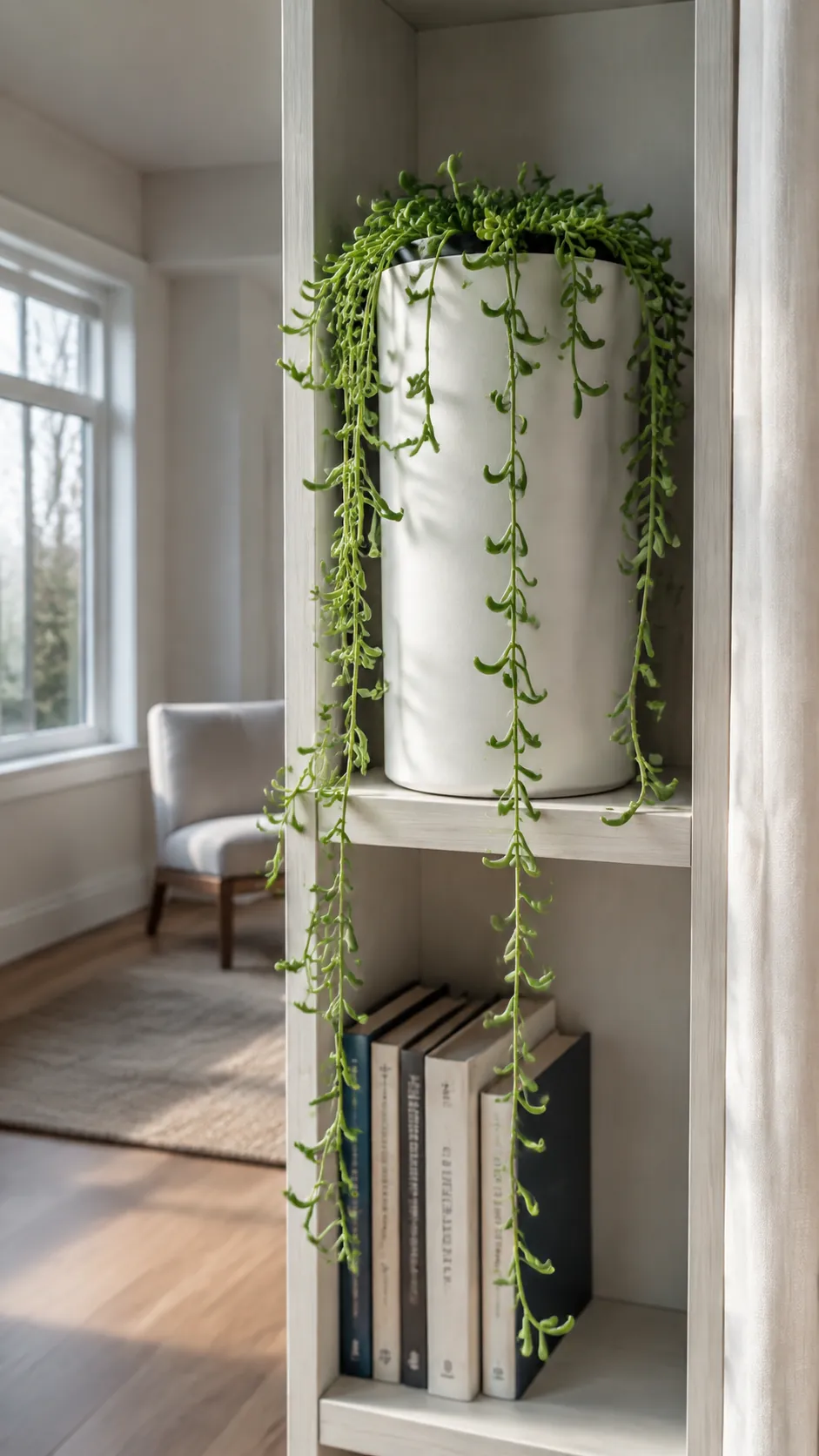
A tall cylinder for a trailing succulent
A string of bananas can make a plain cylinder feel like a living sculpture. Use an elevated position near suitable light so the strands have space to fall without brushing a walkway. A tall decorative shell can hold a smaller removable pot near its rim rather than an unnecessarily deep column of soil. Check that the crown receives light as well as the hanging tips.
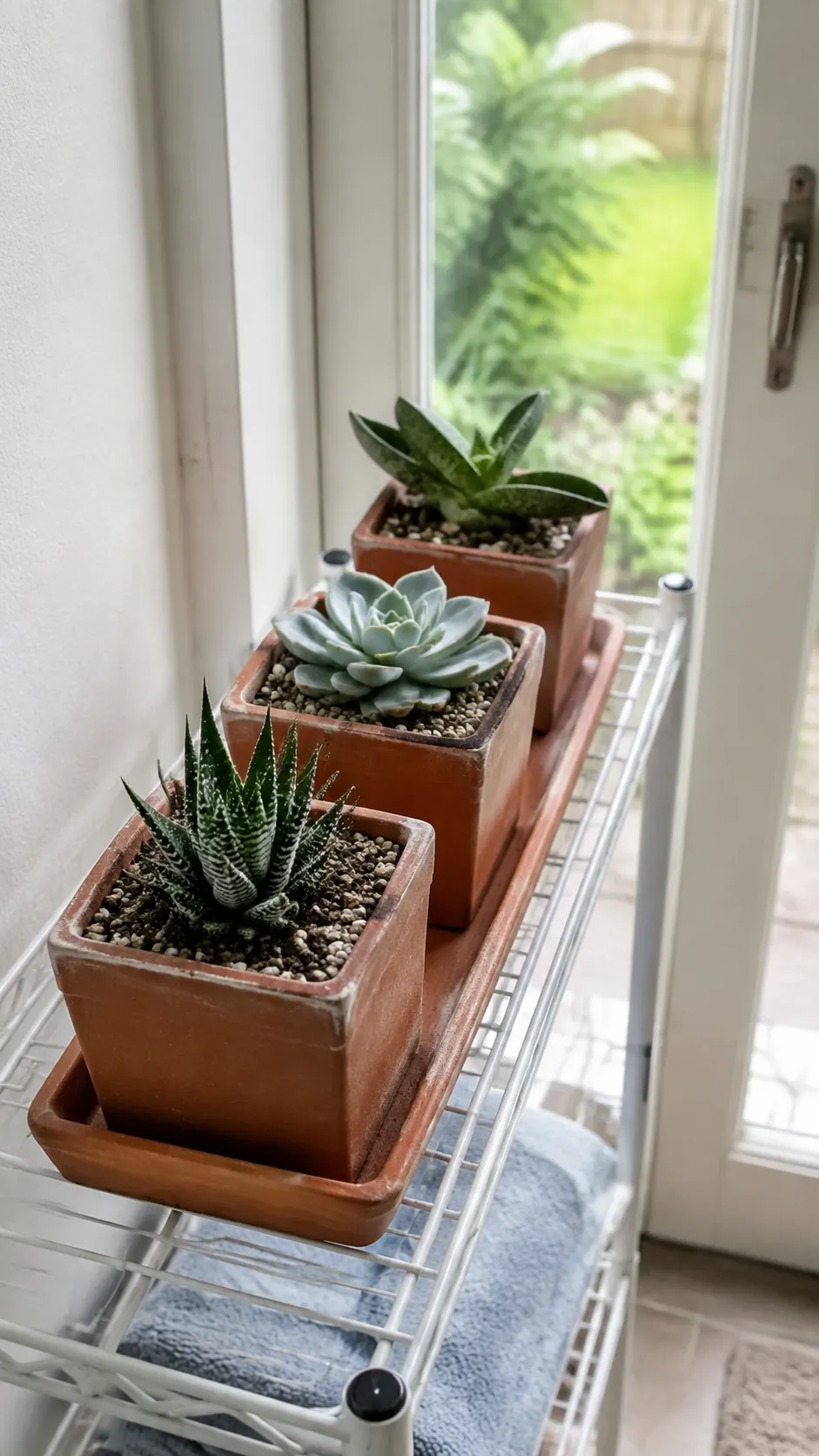
Small square pots for a crowded shelf
Square containers use shelf space efficiently, but plants still need breathing room between their leaves. Keep each succulent in its own pot so you can rotate or water it independently. A slim waterproof tray beneath the collection protects the shelf while making drips visible. Resist filling every gap if neighboring plants begin shading each other.
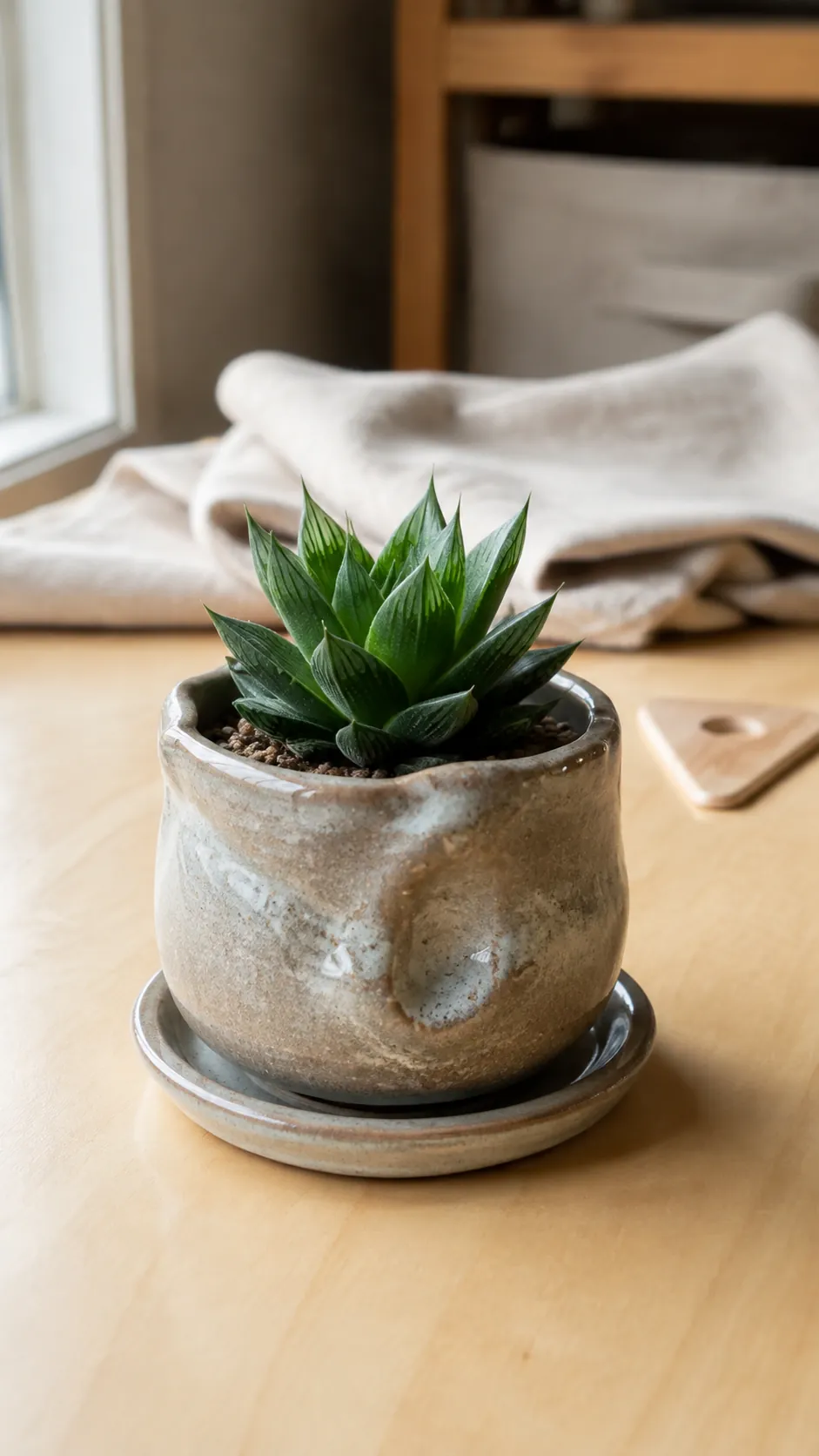
A handmade pinch pot with an uneven rim
Finger marks and a slightly wandering rim give a small planter character without extra decoration. If you are making a DIY succulent planter from clay, choose a fired ceramic body intended for functional planting rather than untreated air dry clay. Form a drainage opening before firing and keep the base stable enough to resist tipping. One compact haworthia lets the handmade surface remain visible.
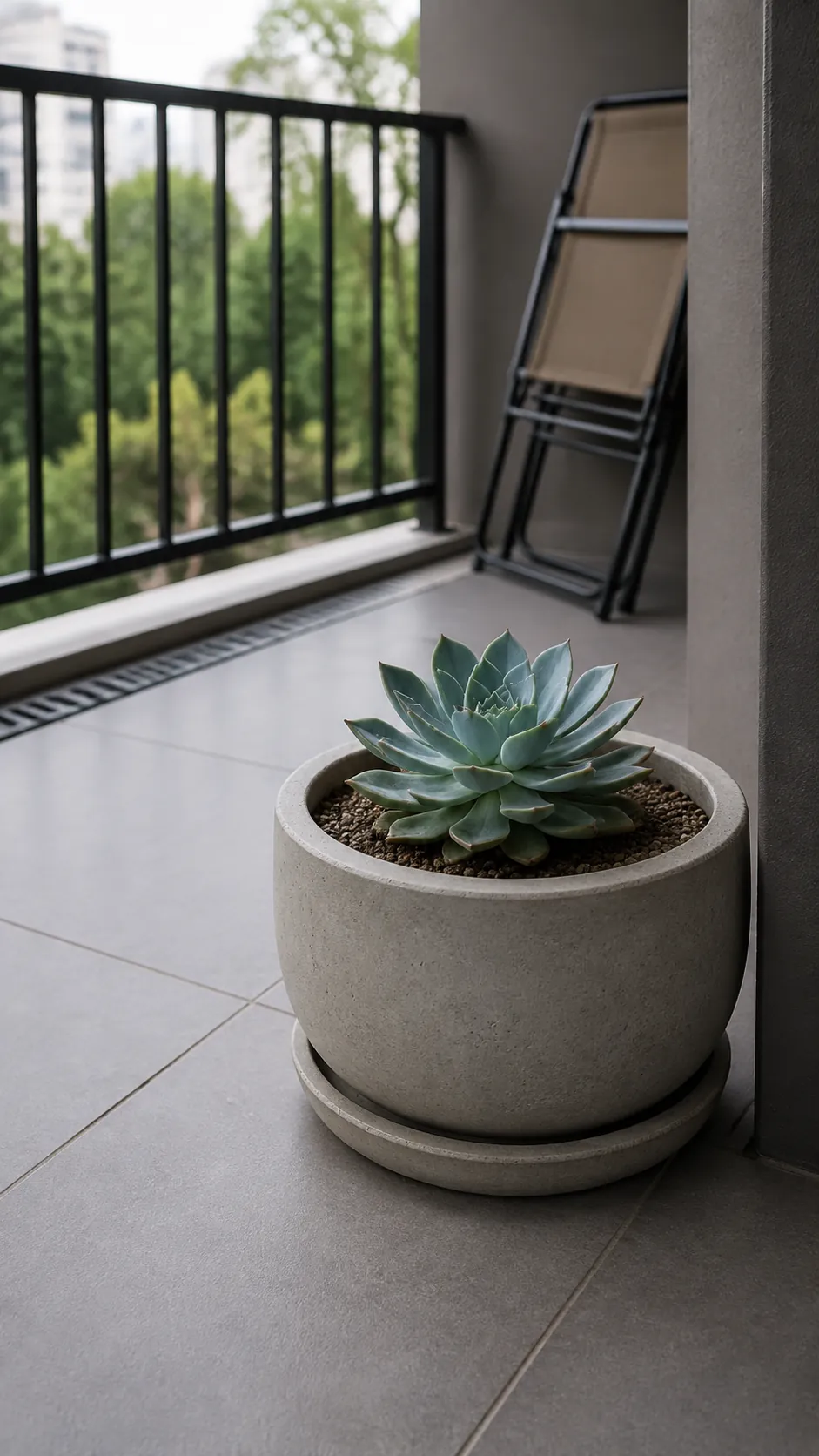
A pale concrete pot for a sheltered balcony
Concrete brings weight to a breezy spot where light plastic planters can topple. Buy a cured planter with an open drain, and check that the balcony surface can safely support its filled weight. The pale body pairs particularly well with a compact blue green succulent. Keep tender species protected from cold weather even when the container itself looks weatherproof.
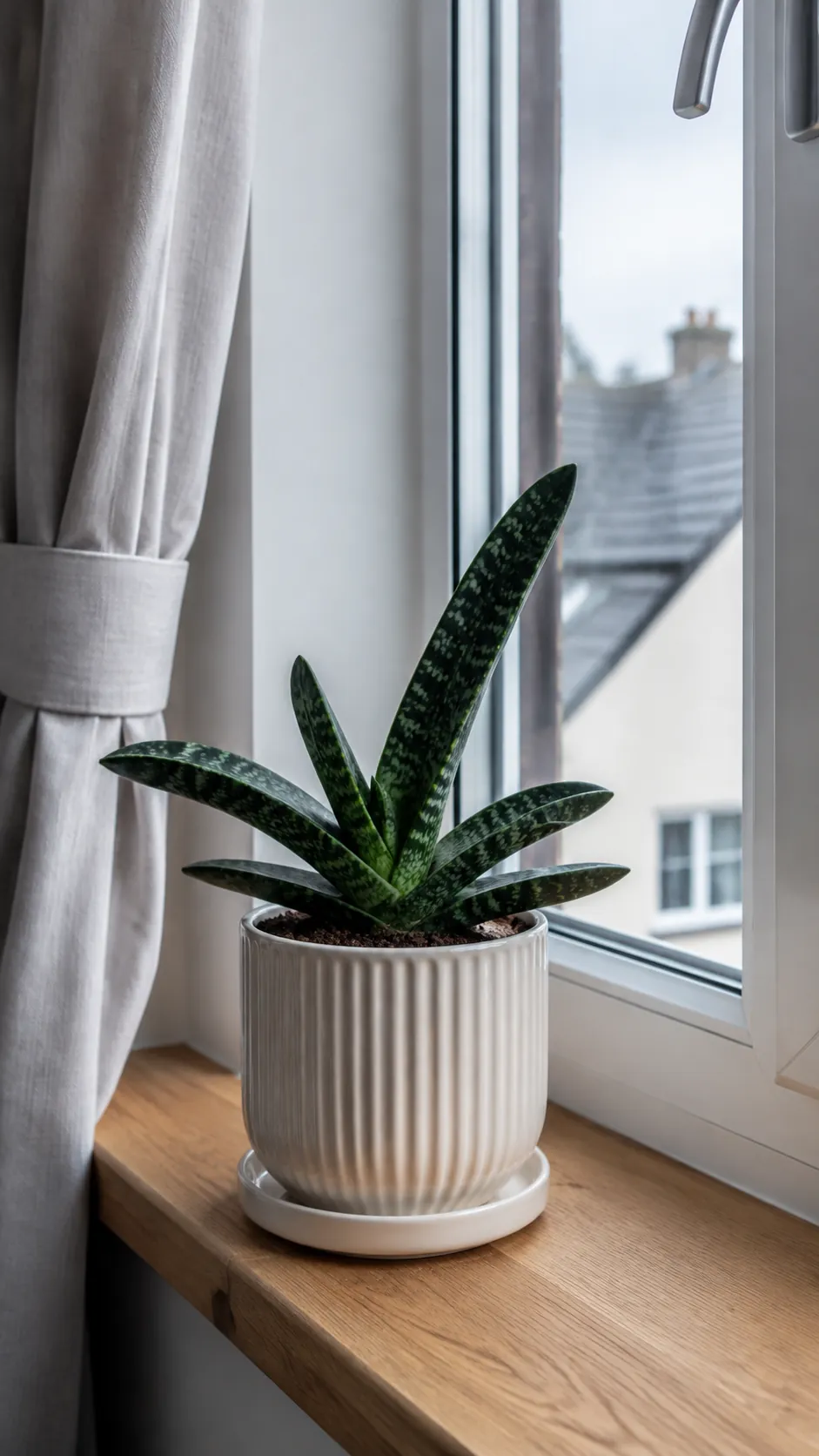
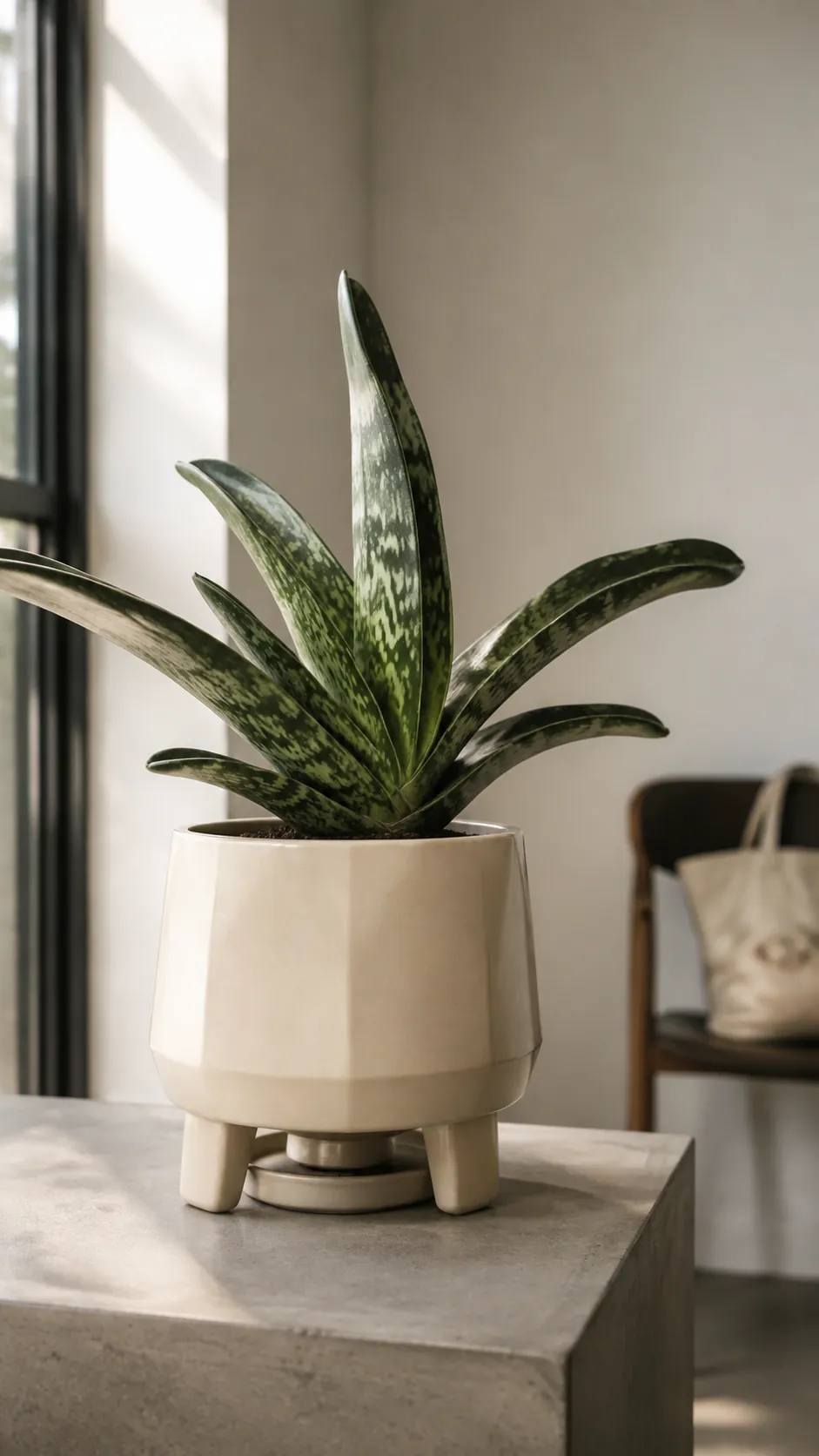
A ribbed ceramic pot beside a bright window
Vertical ribs catch changing daylight and add interest without competing with sculptural leaves. A cream ceramic pot can make a dark green gasteria easier to appreciate from across the room. Choose a size that fits the roots and keep the pot clear of cold glass. Rotate it occasionally if the plant leans persistently toward one side.
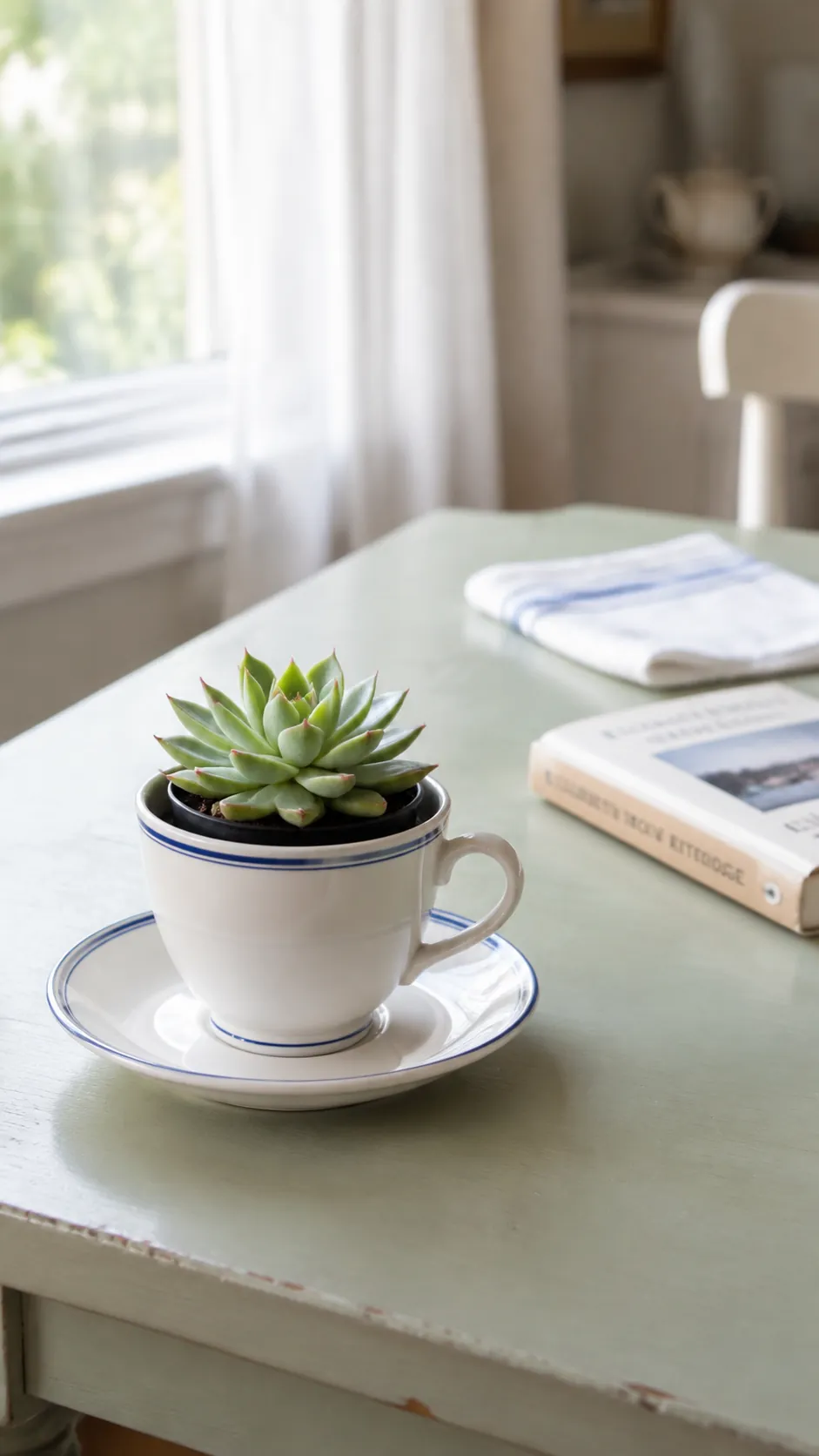
A teacup used as a decorative sleeve
A thrifted teacup makes a charming home for a very small nursery pot. Treat the cup as a sleeve if it lacks drainage, and remove the plant completely for watering. A layer of stones inside does not create an escape route for trapped water. Move the succulent into a larger liner when its roots fill the tiny space rather than preserving the arrangement at the plant's expense.
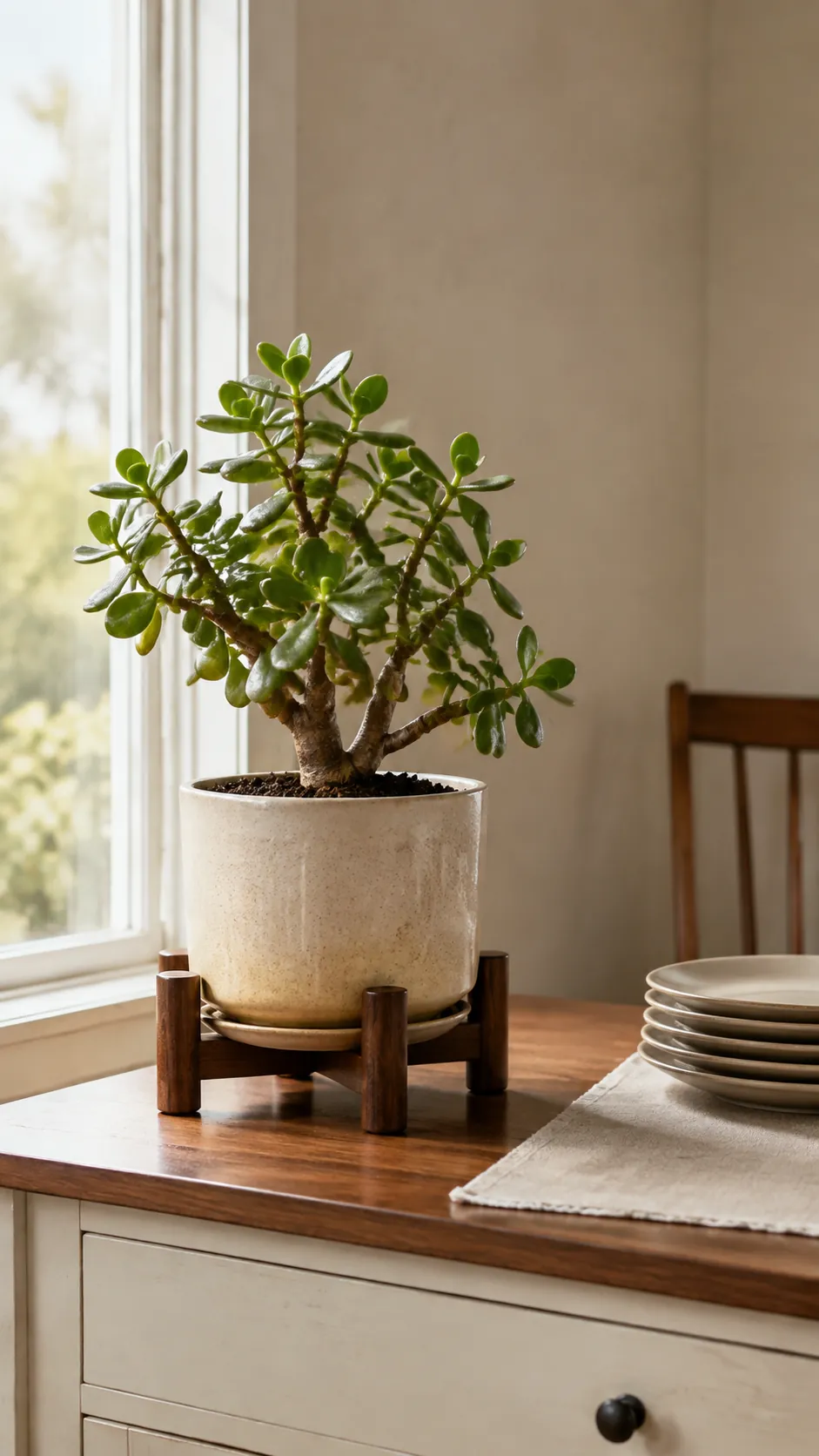
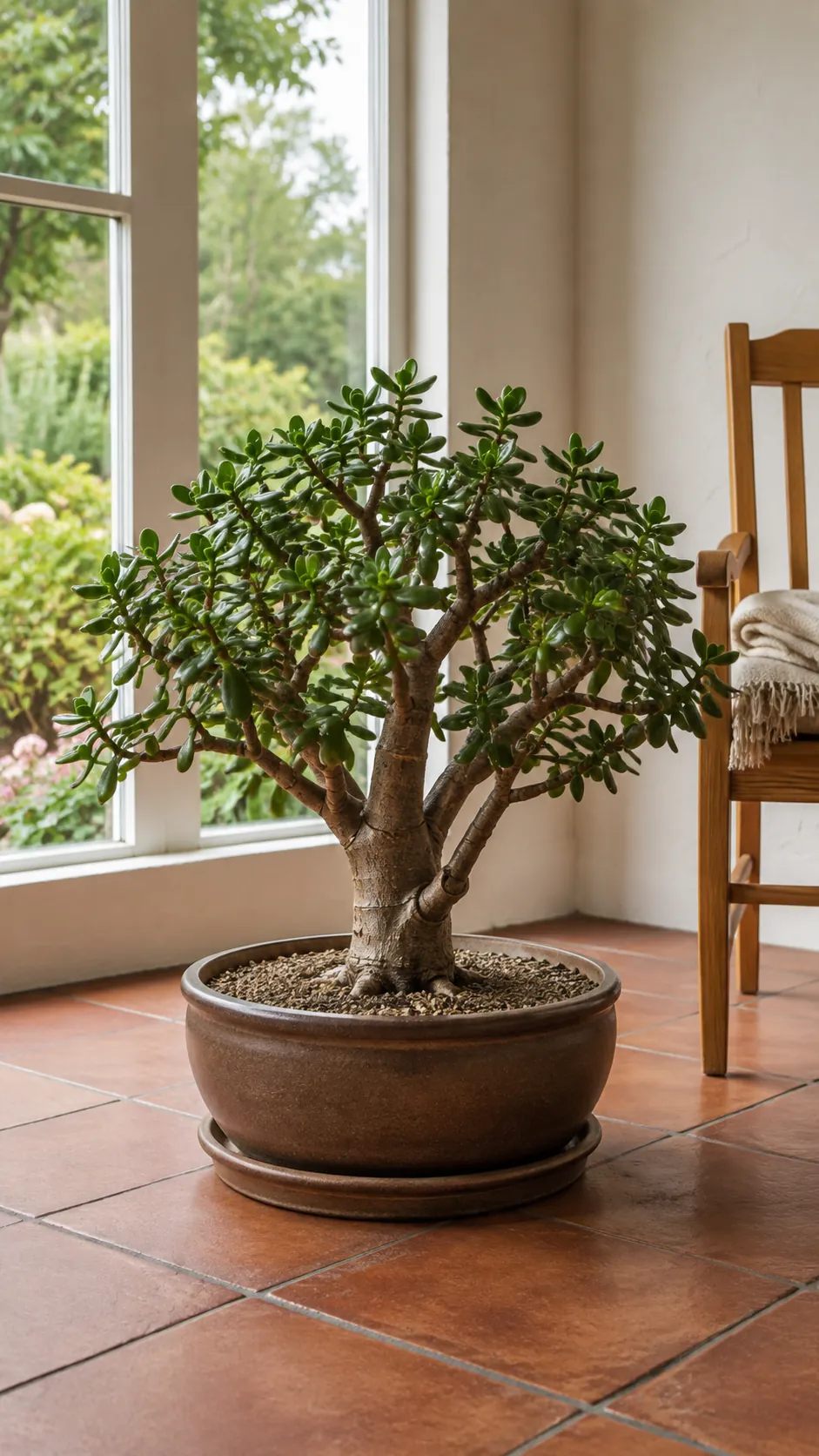
A stoneware pot on a low wooden stand
A small stand lifts a plant into view without requiring a tall planter filled with extra mix. Look for a broad base and a snug cradle that supports the pot without covering its drainage hole. This works well for a jade plant that has a little trunk and an upright canopy. Keep the display away from the edge of a busy surface where a passing bag could catch it.
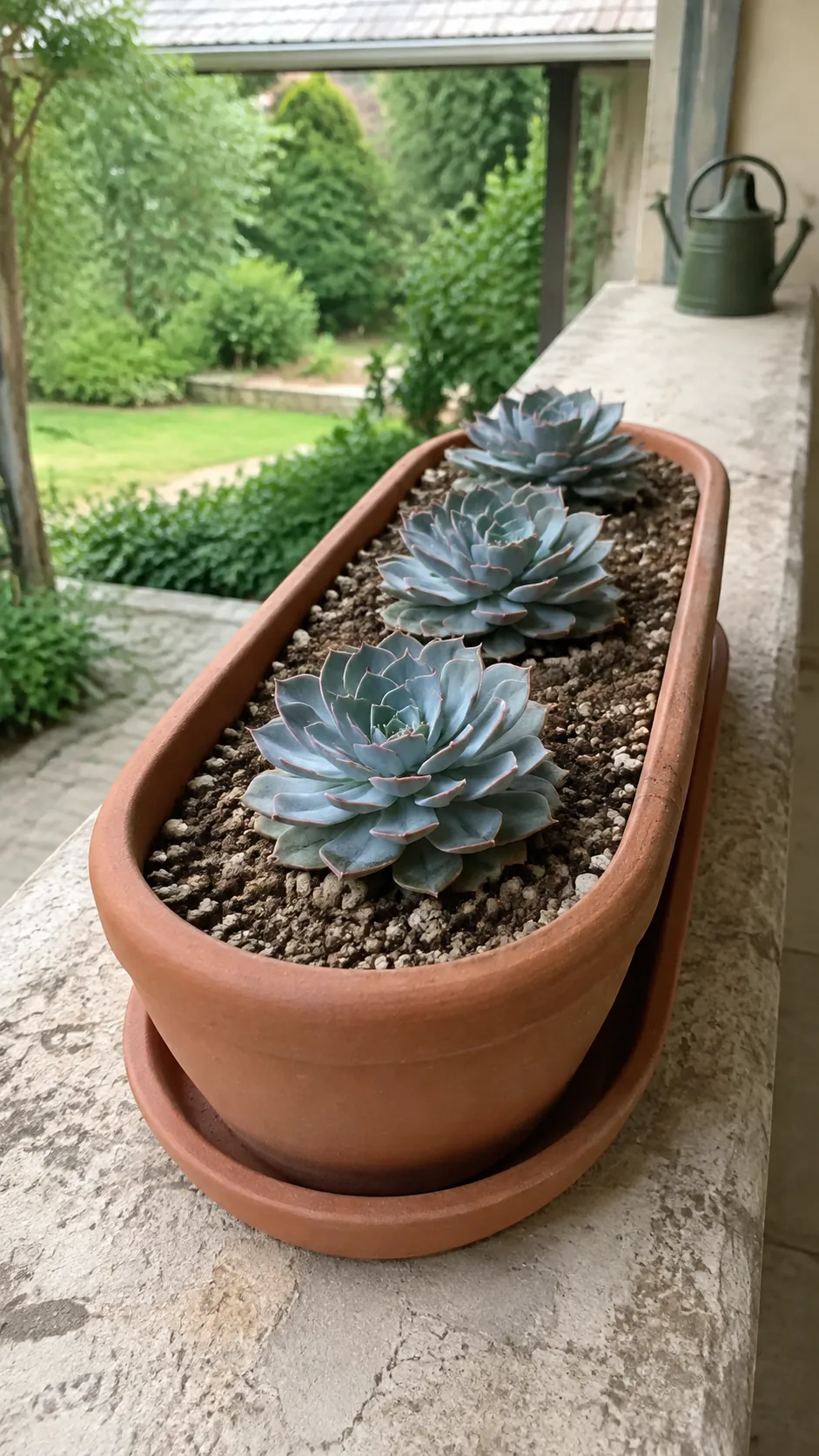
An oval trough with matching rosettes
Repeating the same kind of succulent creates a calmer arrangement than packing unrelated plants together. An oval trough can hold a few compatible rosettes with room for their leaves to expand. Use a container with drainage along its base and avoid burying stems deeper than they were previously growing. If one plant begins declining, separate it promptly rather than adjusting the entire planter around it.
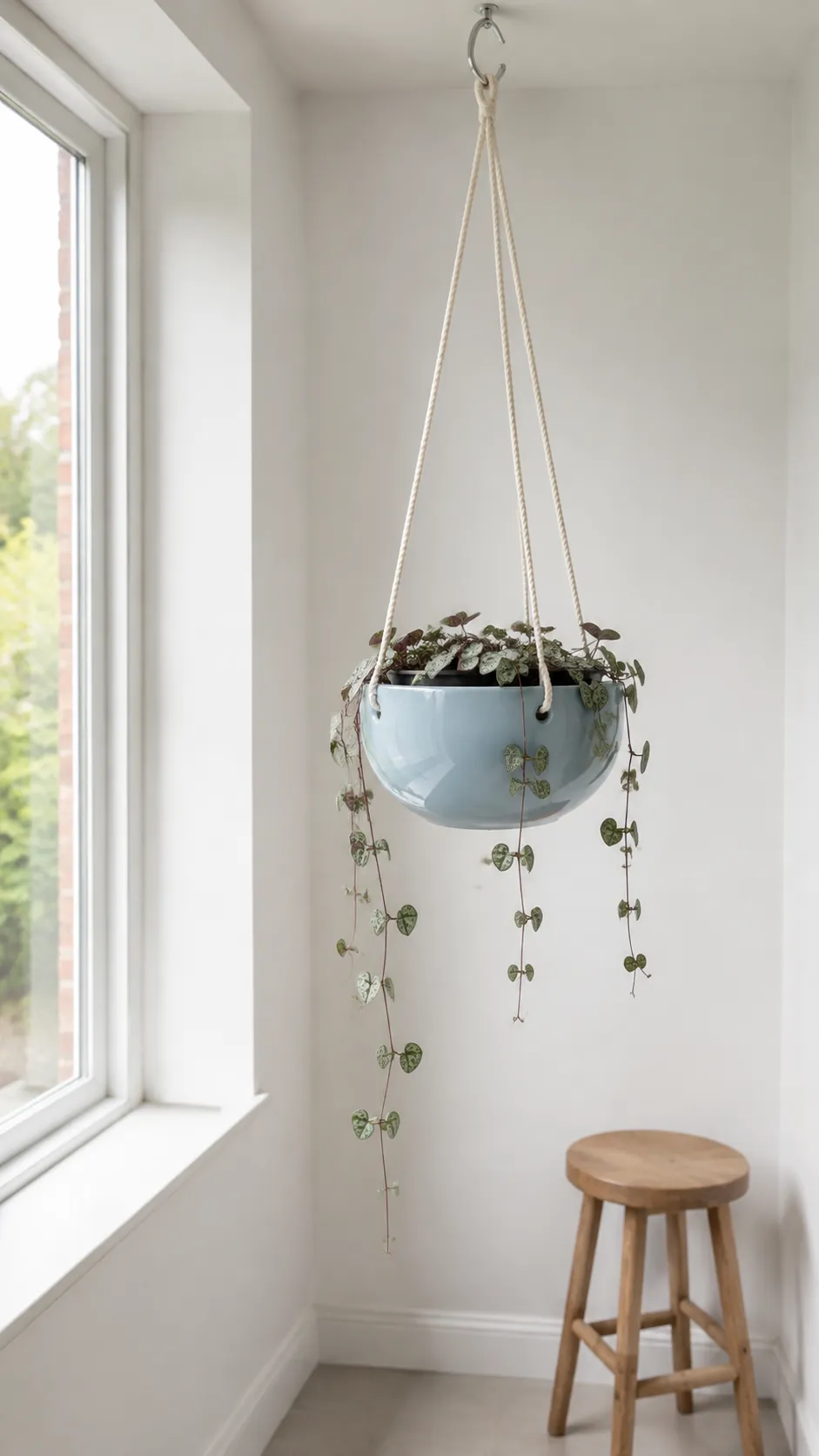
A hanging bowl with an accessible inner pot
A hanging planter frees a sill, but it should not make routine succulent care a balancing act. Choose a bowl that lets you remove its draining insert without untying the hanger. Position the support so water never runs onto electrical equipment or upholstery. A light trailing plant is easier to manage overhead than a heavy mature specimen.
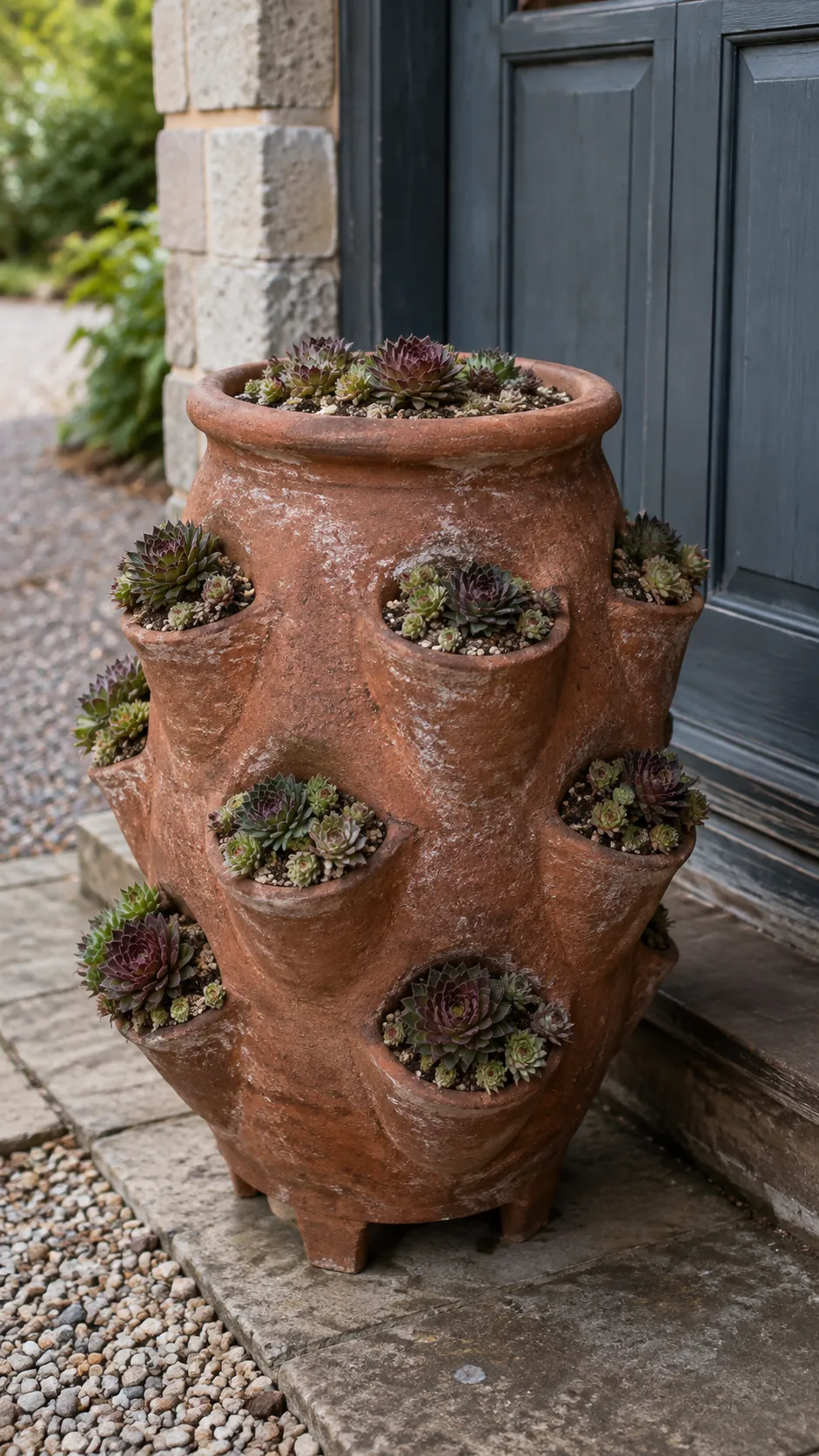
A terracotta strawberry jar for outdoor pockets
The side pockets of a strawberry jar suit a collection of small offsets when the species and climate fit. Hardy sempervivums can be an option outdoors where their local growing requirements are met. Tilt the pockets slightly upward with the natural shape of the vessel and keep each crown above the mix. Because pockets dry at different rates, inspect more than the top opening before deciding to water.
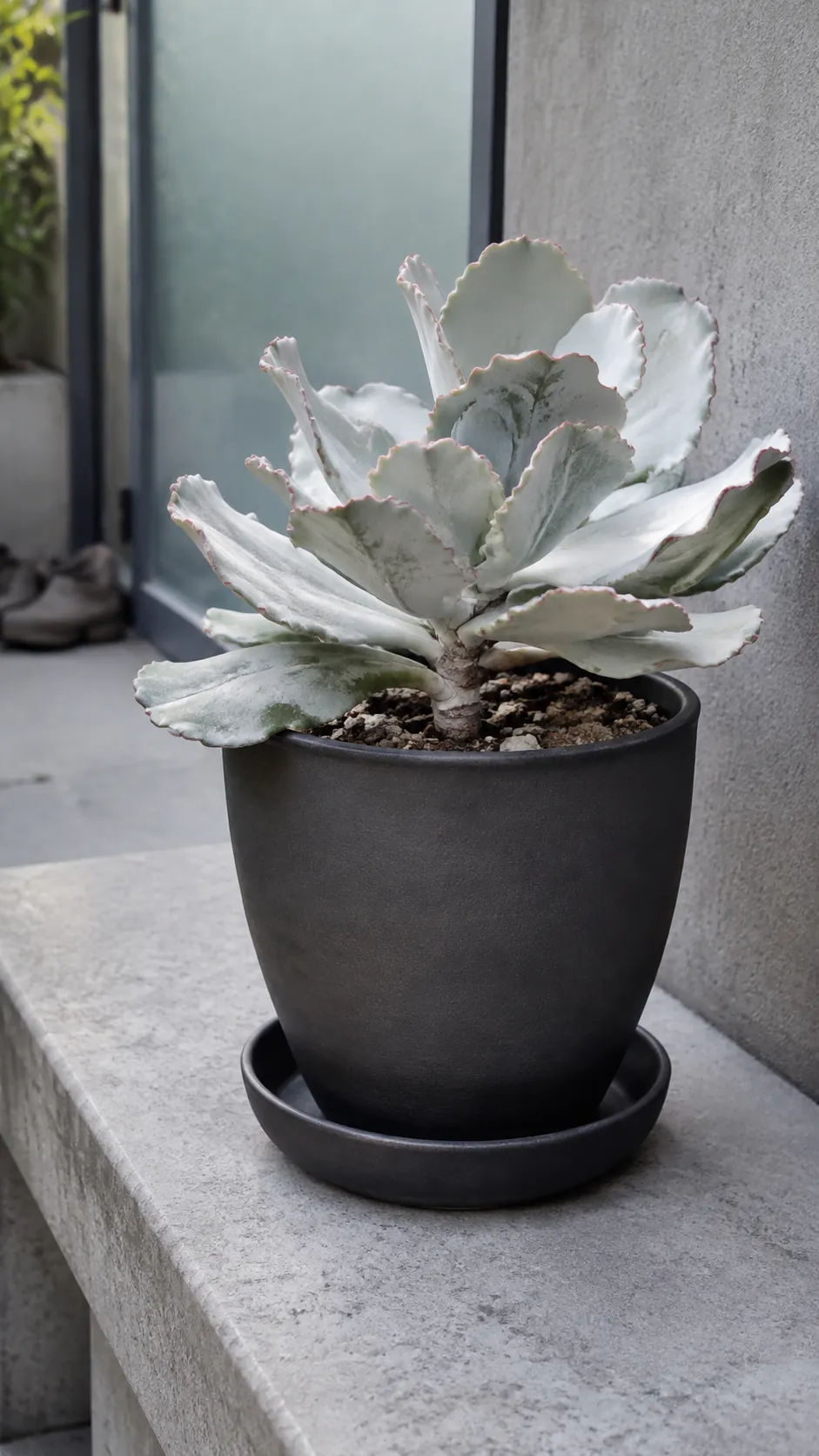
A dark pot for pale architectural leaves
Charcoal ceramic creates a useful contrast behind silvery foliage without adding another bright color. Choose a matte surface if you want the plant's contours to stay dominant in photographs. In strong outdoor sun, a dark pot can heat considerably, so judge the exposure before placing it on a hot patio. A sheltered bright position often shows the contrast while keeping the root zone more manageable.
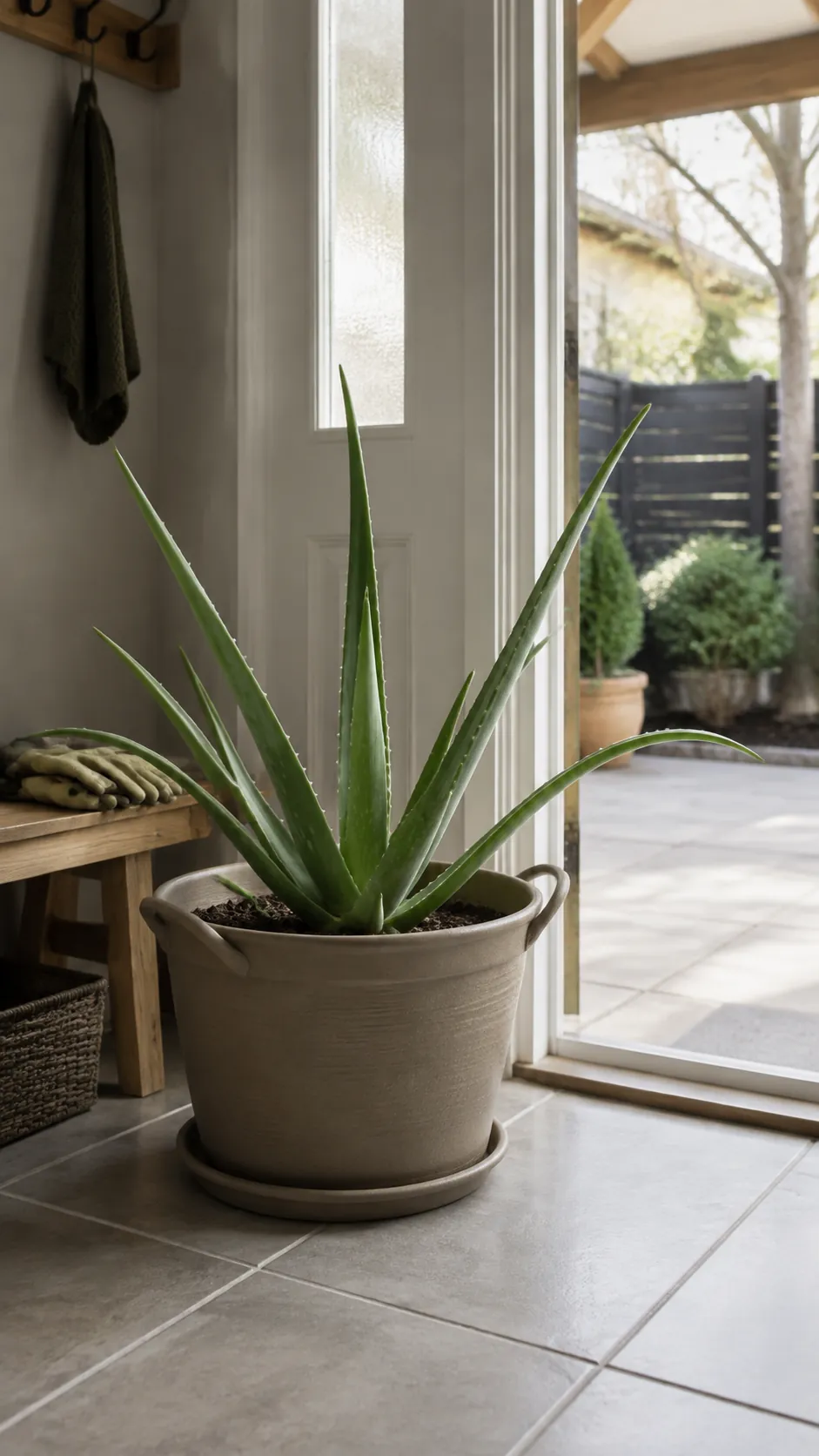
A lightweight resin planter for easy moving
A resin container makes sense when you regularly carry a plant indoors for weather protection. Check that its drainage holes are real openings rather than shallow molded marks. The larger visual volume is useful for an established aloe, but the root ball should still determine the internal size. Use a stable shape and a sheltered site so portability does not turn into a tipping problem.
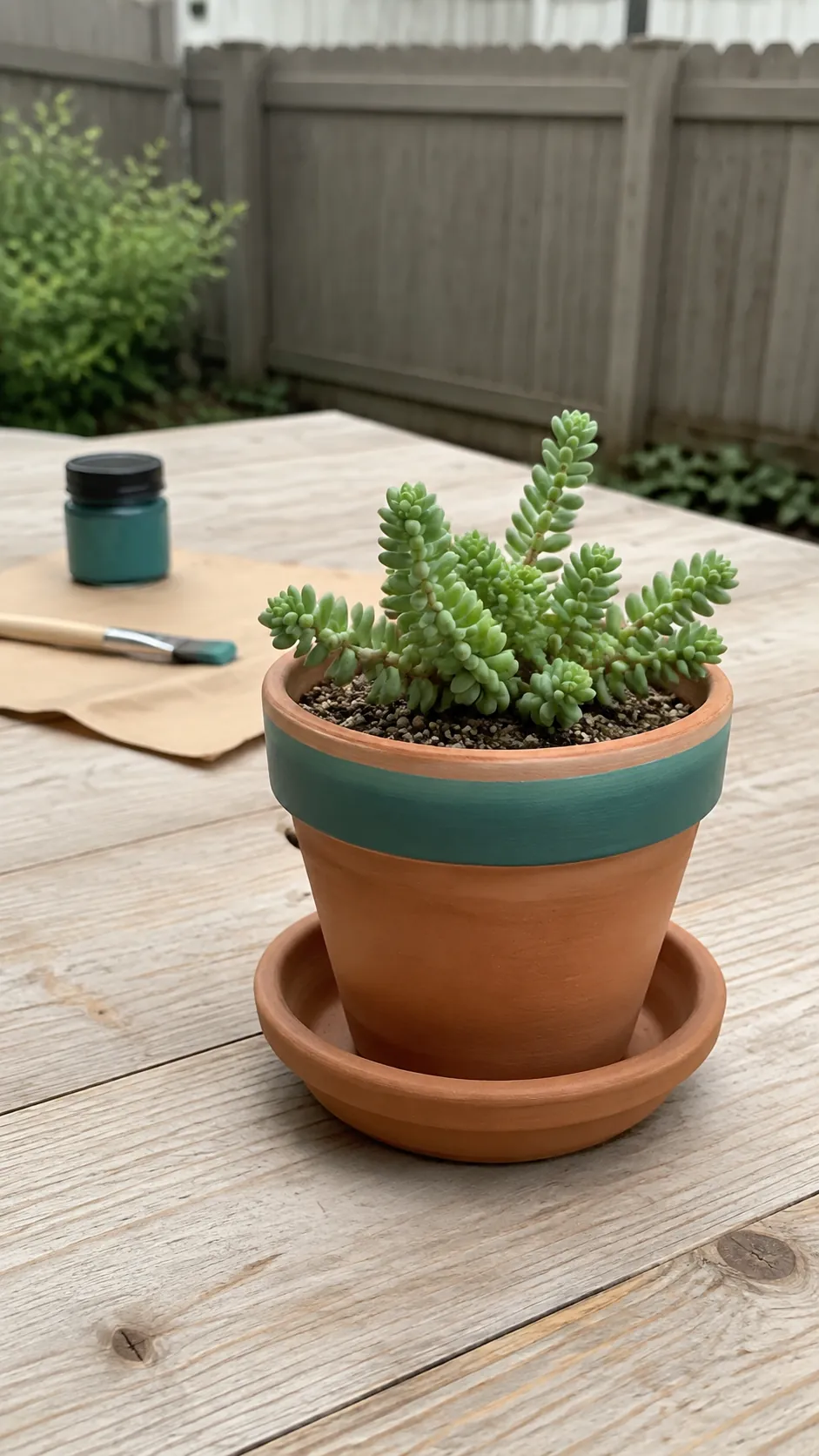
A terracotta pot with a painted outer band
A simple painted stripe gives familiar terracotta pots a personal finish. Keep paint on the exterior and leave the inside, drain, and much of the clay surface untreated. Let the coating cure according to its instructions before bringing the plant back. A narrow band around the shoulder adds color while preserving the material's earthy appearance.
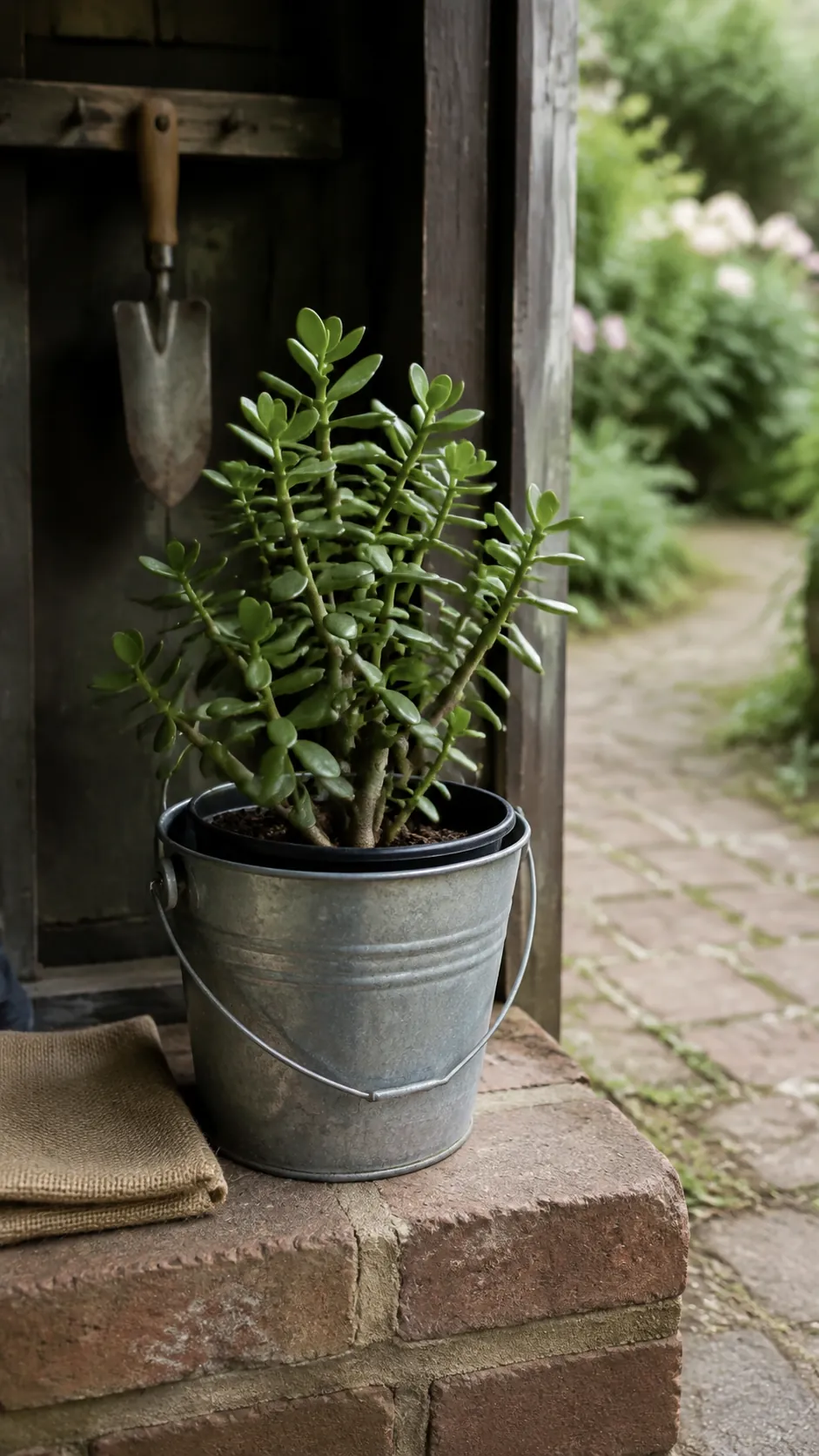
A metal bucket holding a nursery pot
A small galvanized bucket can work as a decorative shell in a sheltered garden corner. Slip a separate draining pot inside and lift it out whenever you water. Metal heats quickly in direct sun, so avoid using the shiny shell as a root oven on exposed paving. Check the interior occasionally because a dry looking exterior can hide collected runoff.
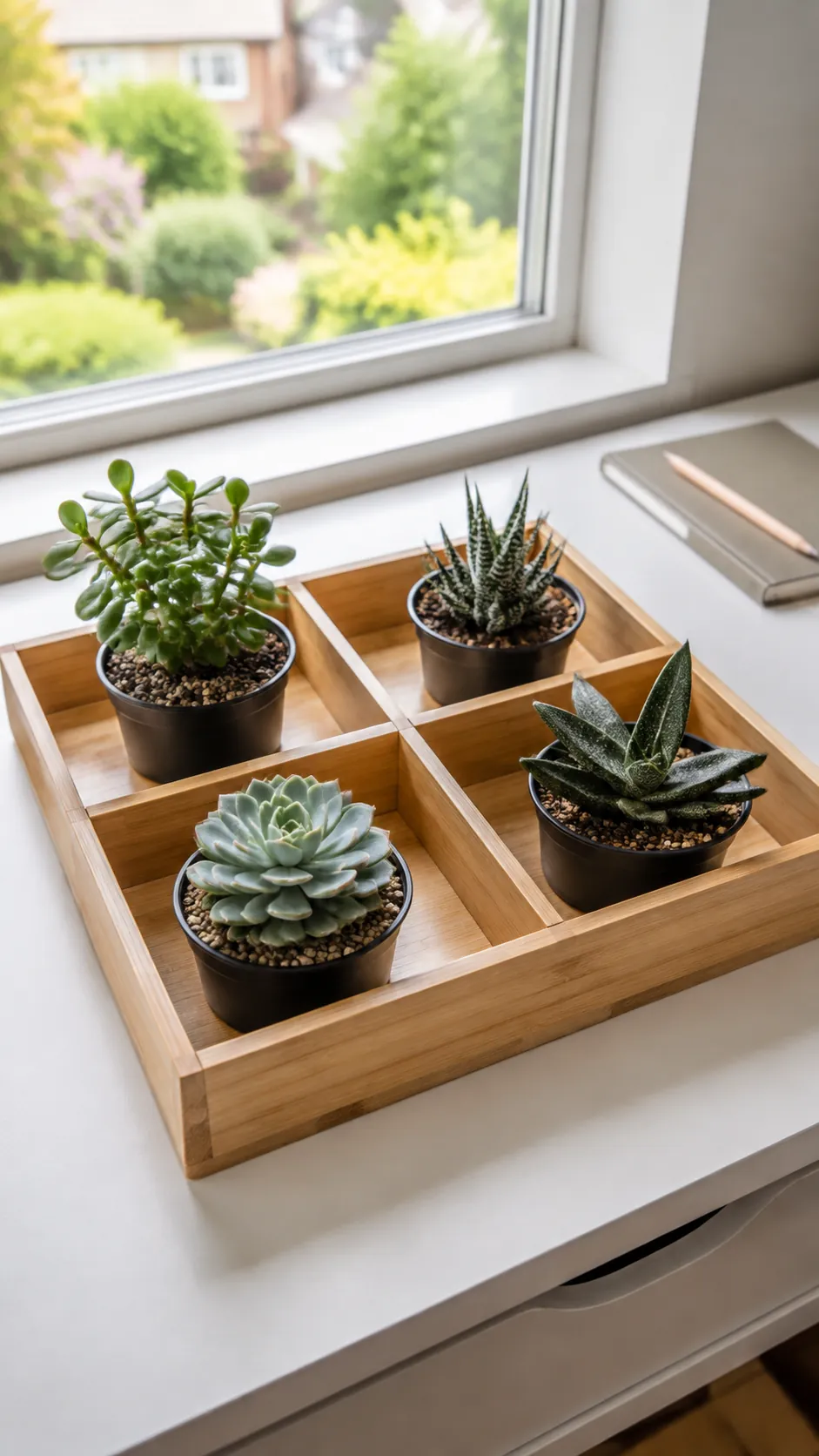
A divided tray for a growing collection
An indoor succulent garden is easier to maintain when its plants remain separable. Arrange individual small pots in a divided tray instead of planting every specimen into one shared container. You can move a thirsty plant to the sink while leaving a dormant neighbor alone. Give the tray enough clearance that you can grasp each pot without handling fragile leaves.
A broad pot for a branching jade
A mature jade can become top heavy long before it needs a huge amount of extra soil. Choose a substantial pot with a broad footprint and enough root space to keep the tree stable. Place it where the canopy has room to expand without pressing against a curtain or wall. When repotting, prioritize balance and an airy mix instead of simply buying the deepest container available.
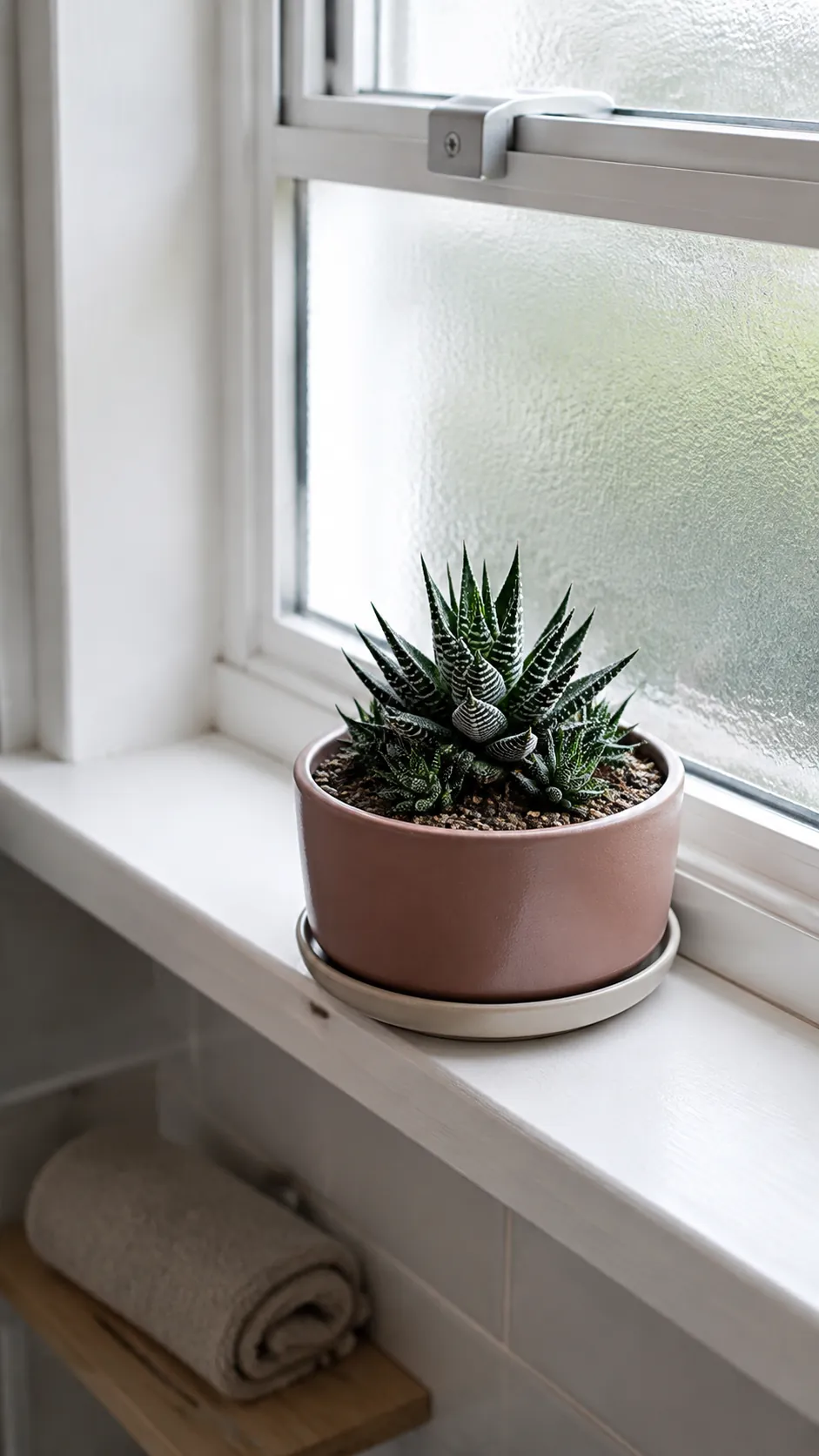
A compact pot for a windowside haworthia
A small haworthia often fits a bright space that would be too gentle for a sun hungry echeveria. Use its actual light requirements to choose the position rather than assuming all succulents want the same exposure. A simple low pot shows off the plant's leaf pattern without surrounding it with ornaments. Keep the soil surface accessible so decorative gravel does not hide persistent moisture.
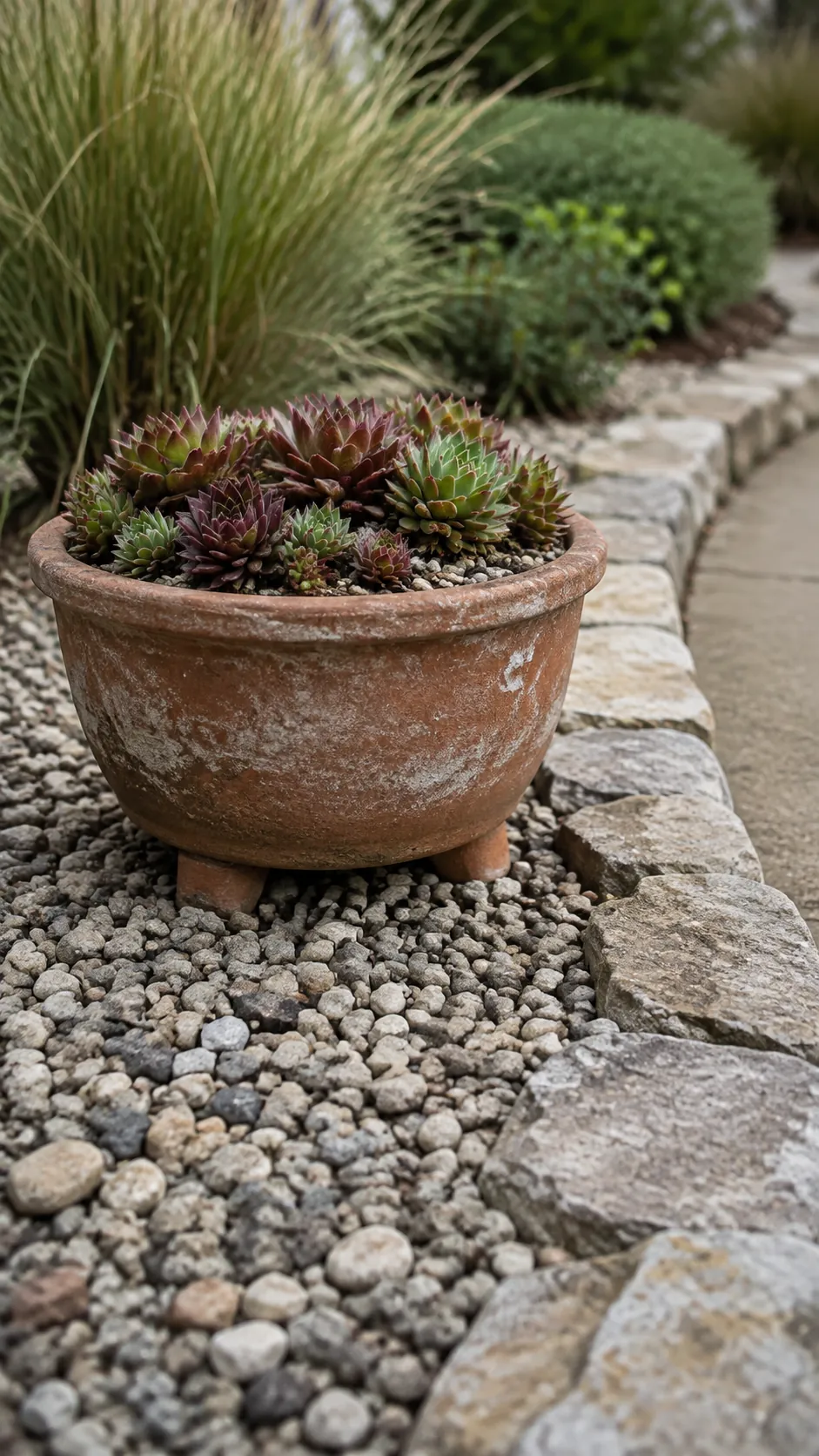
A weathered clay pot in a gravel garden
Weathered terracotta can blend a container into an established gravel bed. Raise the base slightly on discreet feet so the drainage opening is not sealed against compacted ground. Match the plant to your local rain and winter conditions before leaving it outdoors permanently. The worn surface adds garden decor without asking the foliage to compete with a vivid glaze.
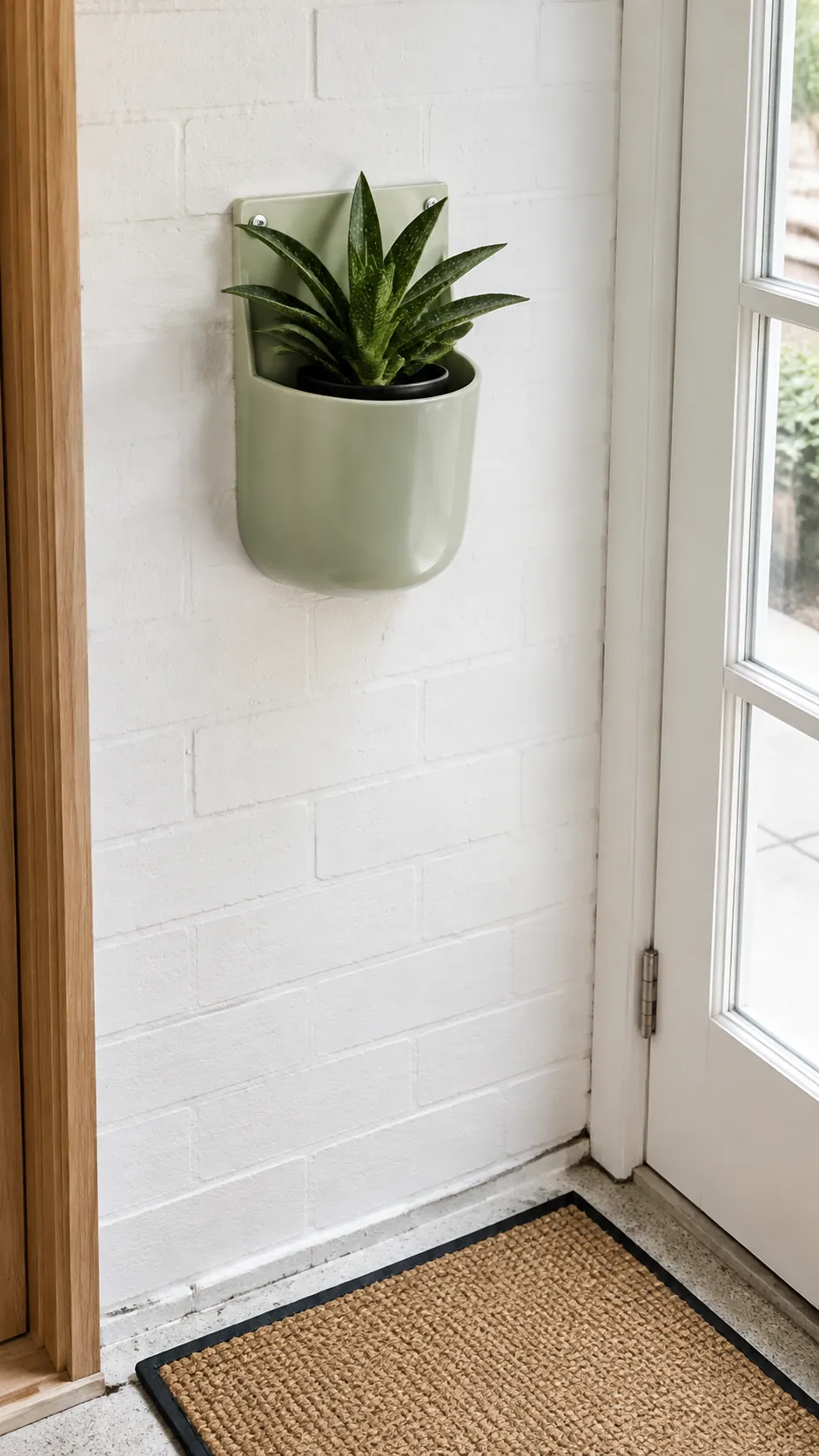
A ceramic wall pocket with a lift out insert
A wall pocket turns a narrow vertical space into a small plant display. Install it with hardware appropriate for the wall and the filled weight, and choose an insert you can remove for watering. Brightness at the mounting point matters more than the attractiveness of the empty wall. Protect the wall from damp contact and avoid placing a living planter where drainage could reach a socket.
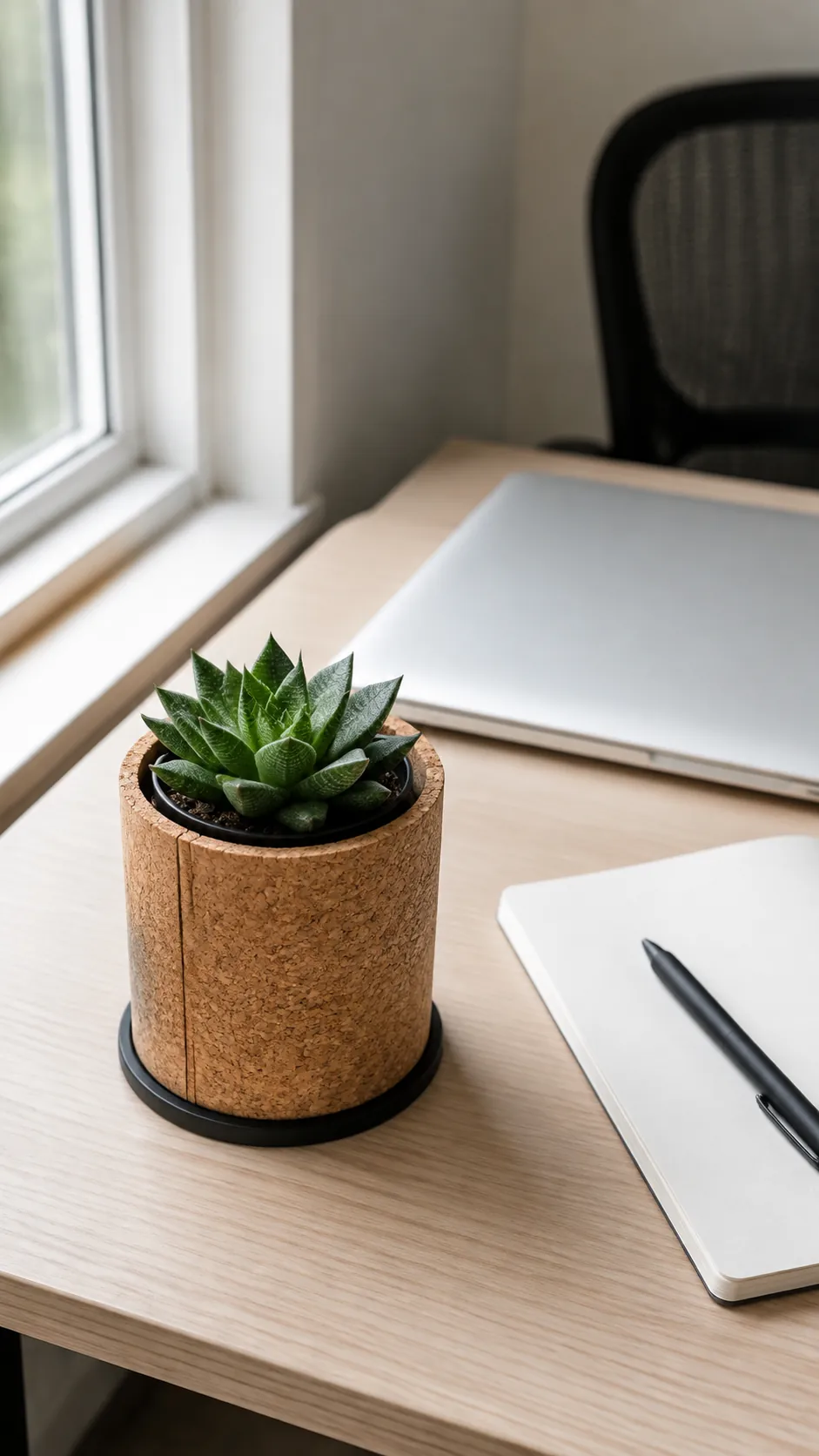
A cork wrapped cachepot for a work desk
A cork sleeve softens the look of a plain pot beside a keyboard. Keep the plant in a separate waterproof shell and removable liner so the cork never becomes the drainage system. Place the display near useful daylight or suitable supplemental lighting rather than deep in the office. Leave space around the base so a hidden spill does not soak papers or equipment.
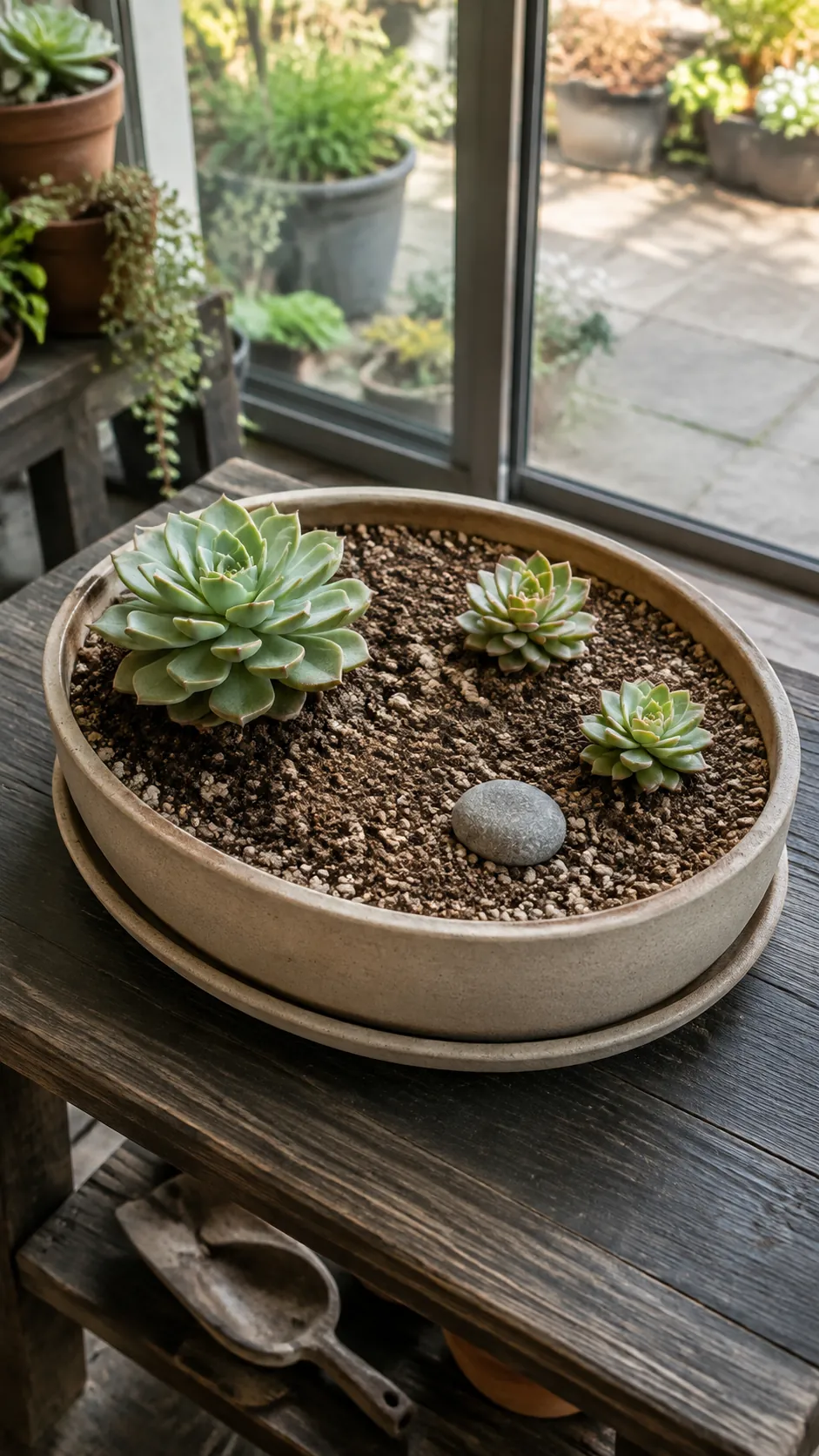
A wide dish for a sparse miniature landscape
A sparse arrangement can look more convincing than a bowl packed edge to edge. Choose a draining dish that accommodates the roots, then leave open areas of mix between a few compatible plants. A small surface stone can suggest scale, but keep heavy stones away from delicate crowns. The empty space also makes growth and watering easier to monitor.
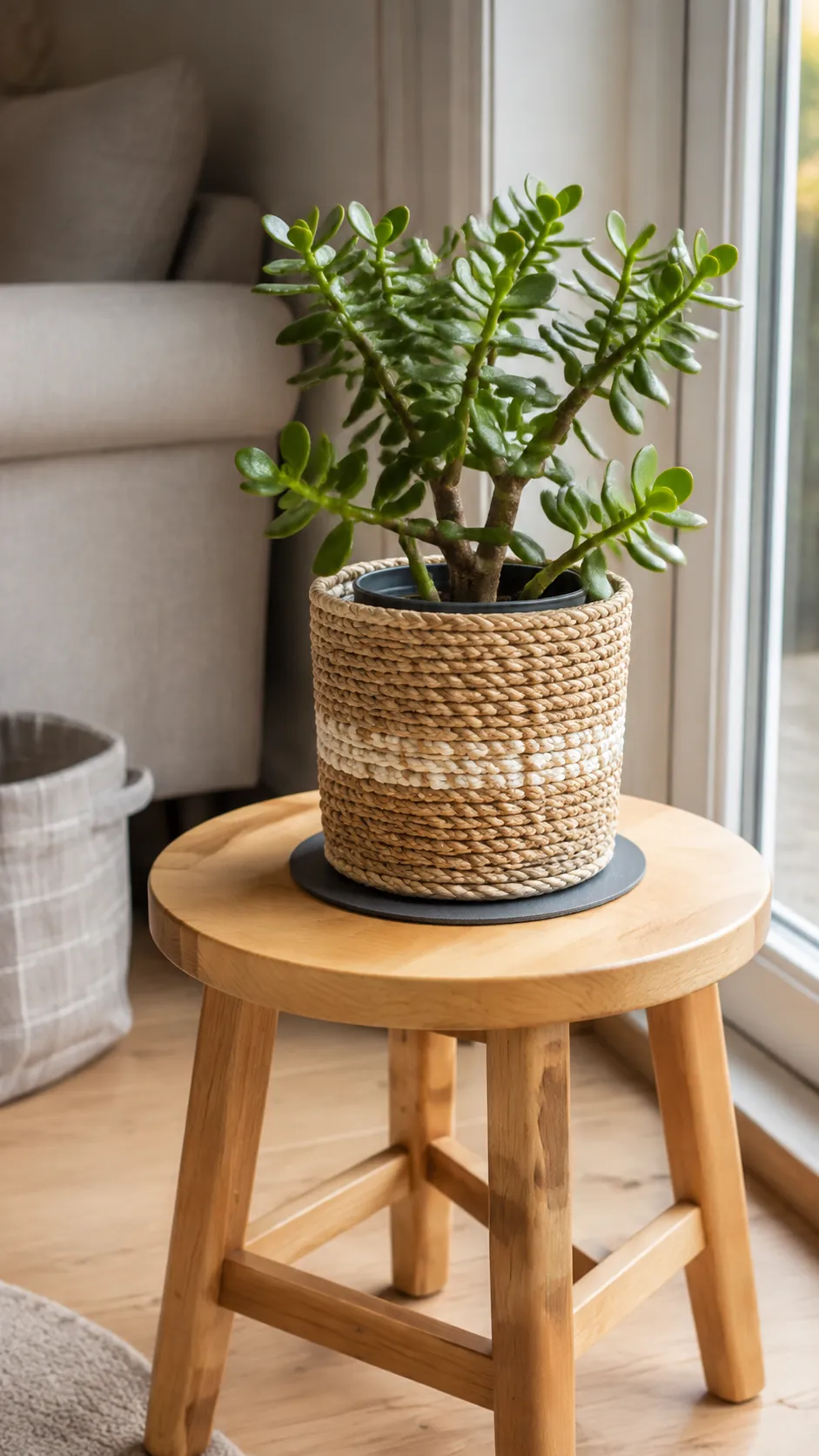
A nursery pot hidden in a woven basket
A basket brings texture to flower pot ideas without needing to touch damp soil. Place a fitted waterproof shell inside it and keep the succulent in a removable draining pot. Take the plant out of both layers for watering so runoff cannot collect invisibly beneath the weave. Choose a basket with a firm base that stays upright when the plant becomes taller.
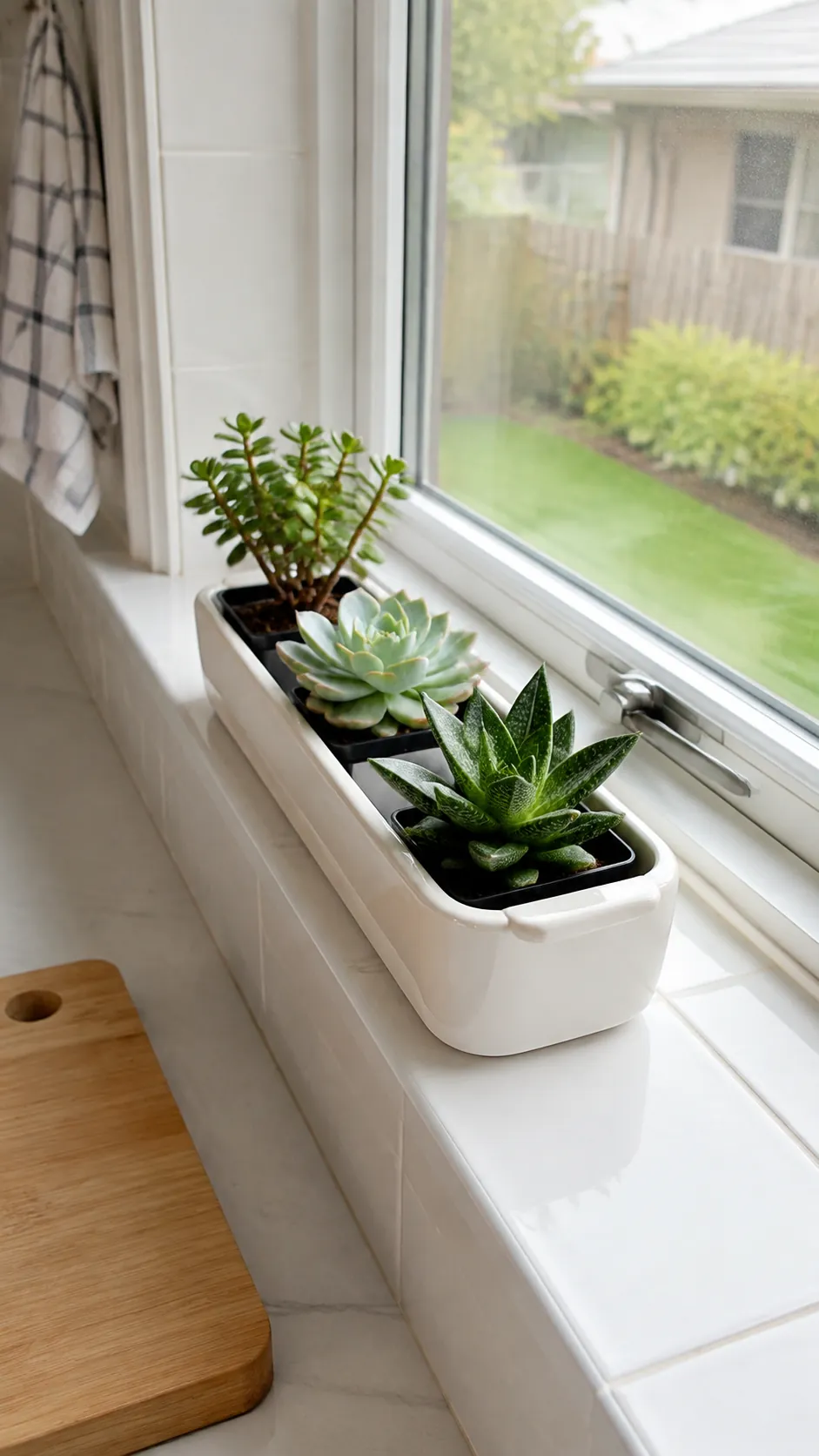
A narrow trough along a kitchen window
A slim trough can make use of a window ledge while leaving the counter available. Separate inserts are especially useful here because they let you remove plants without lifting a long heavy container. Keep foliage away from hot appliances and check that the window actually provides enough light. Wipe away cooking residue when needed without scrubbing the natural powder from sensitive leaves.
A sculptural footed pot for a single specimen
An elevated ceramic body gives one striking succulent the attention usually reserved for a vase. Inspect the feet carefully because a beautiful pot that rocks on the table will become more unstable as the plant grows. Keep a discreet removable saucer beneath the drainage opening. A restrained finish makes unusual leaf geometry the main feature.
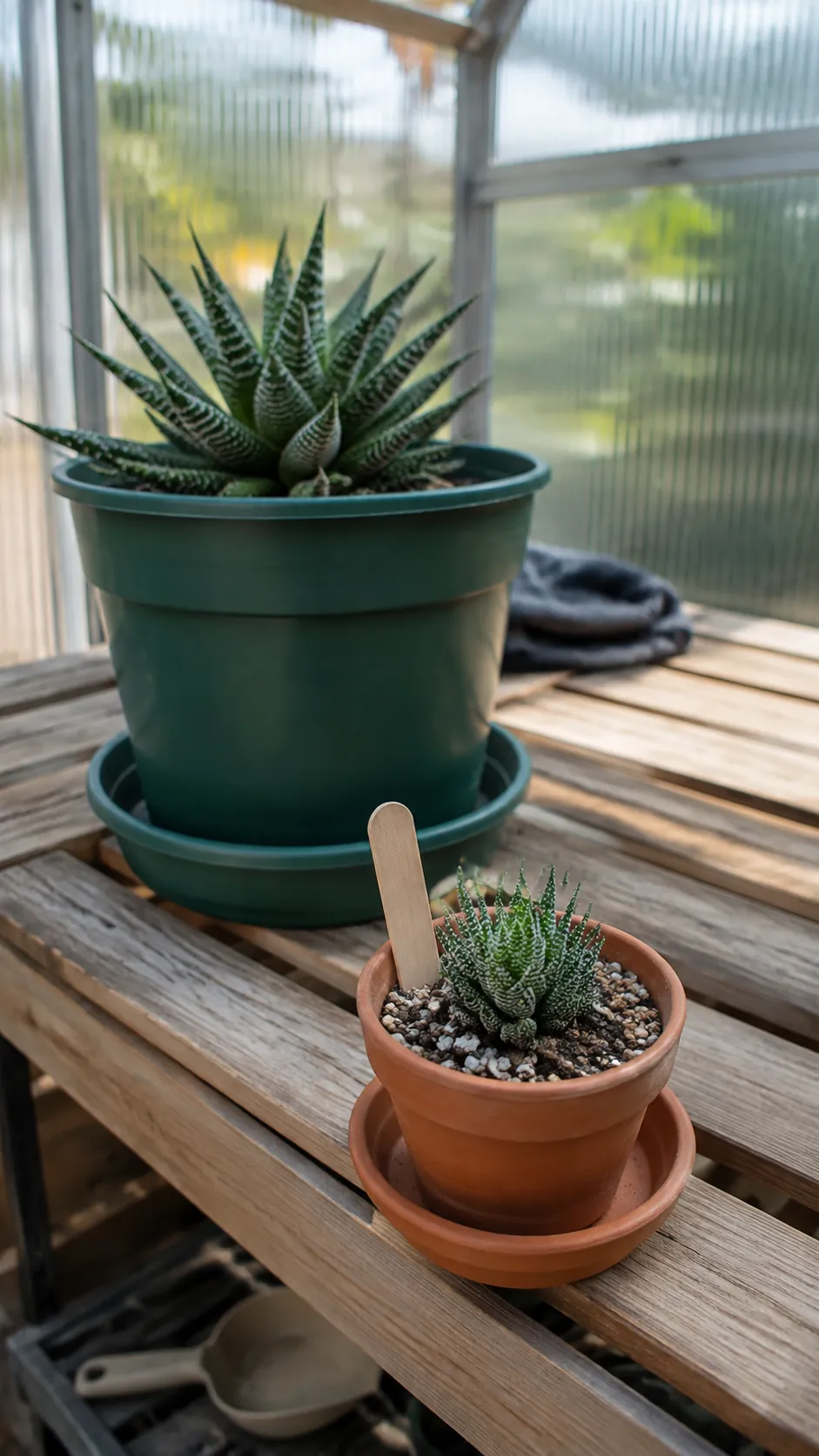
A small propagation pot beside the parent plant
A dedicated pot for offsets makes a collection feel intentional even during its growing phase. Use an appropriately small draining container and a propagation method suited to the particular species. Do not assume every succulent can grow from a detached leaf or needs the same moisture while rooting. Keep the young plant identifiable so its care does not get confused with that of an established neighbor.
A matched pair with different practical roles
Matching planter pots can hide two different setups while keeping a shelf visually calm. One may hold a draining pot directly above a saucer while the other acts as a removable decorative shell. Choose each internal arrangement around its plant's roots and watering needs. Before buying the pair, lift both liners and check where the water will actually go.