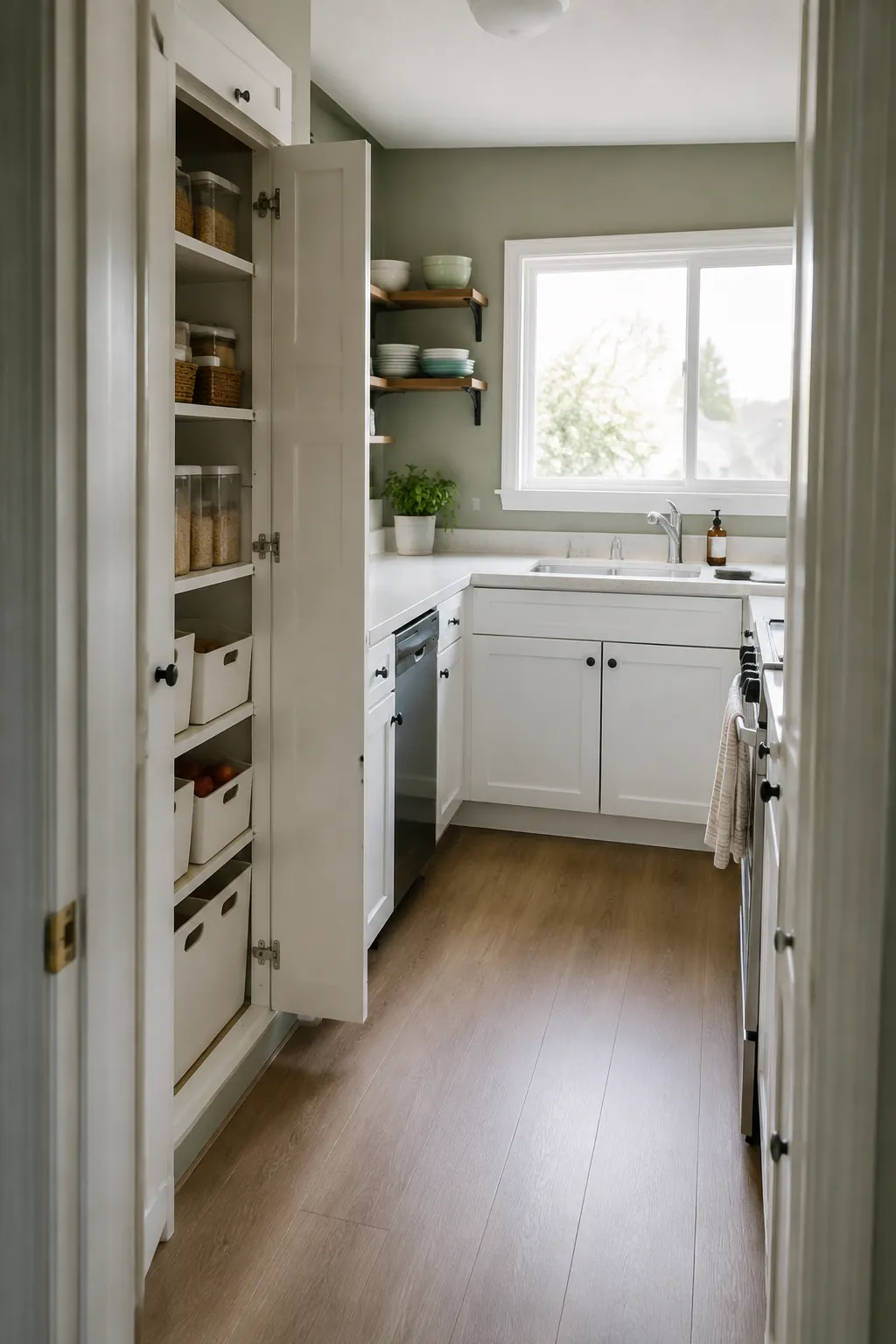
A cabinet can be full and still waste space. If you have to lift three pans to reach one, or move groceries to find dinner ingredients, the problem is partly access. Improve the storage you can reach before adding another cart or shelf to an already narrow room.
Make room for the meals you actually cook
Empty one cabinet at a time and separate daily equipment from occasional serving pieces and unused duplicates. Keep the pan that fits your normal dinner, the bowls you regularly wash, and the tools that have a clear job. Move rarely used entertaining supplies to another suitable cupboard if you have one, rather than letting them displace everyday cooking space.
Measure the cabinet opening, interior width, depth, and usable height before choosing an organizer. Include hinges, pipes, shelf supports, and the space a handle needs to pass through the opening. A container that fits the empty cabinet but cannot be pulled out when full has not solved the problem.
Turn unused shelf height into separate storage levels
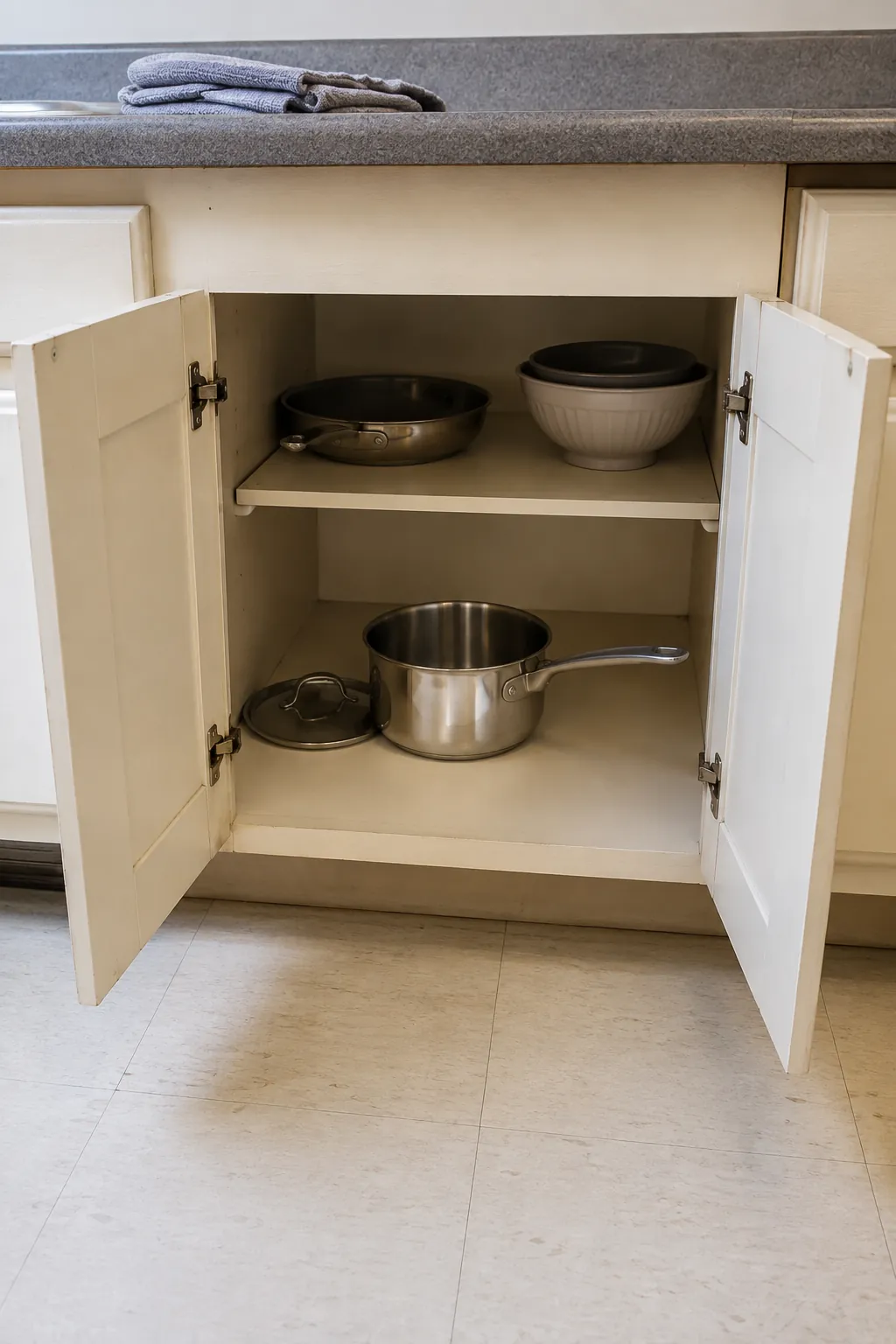
Vertical cabinet storage often starts with moving an adjustable shelf closer to the items beneath it. Where shelves are fixed, a sturdy removable riser can separate cups from plates without building a tall unstable stack. Check the riser’s dimensions and load rating, and make sure you can remove dishes from both levels without catching your hands.
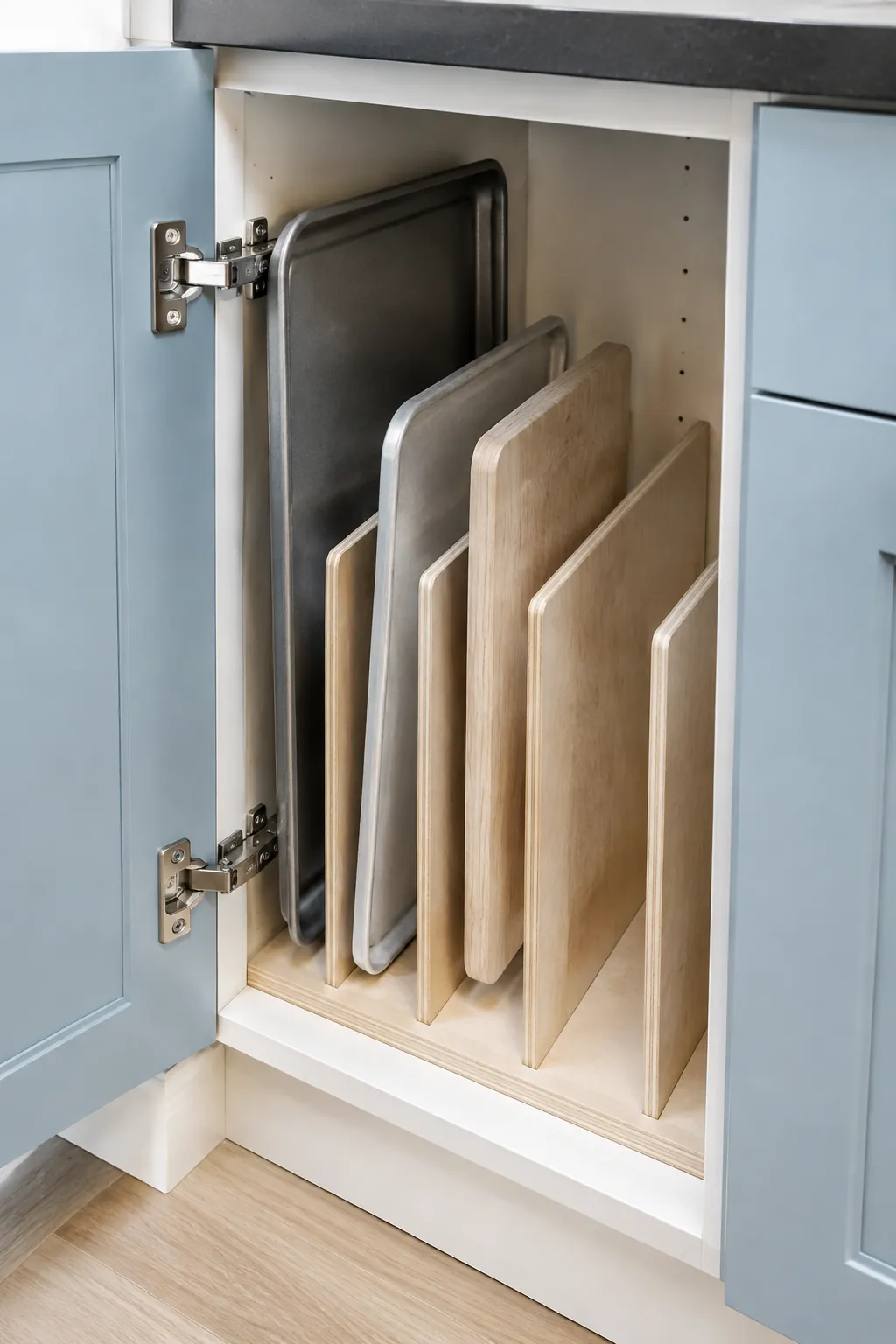
Store baking sheets, trays, and suitable cutting boards upright in a stable divided rack when the cabinet height allows it. Give each piece its own slot so removing a tray does not release the whole group. Keep heavier cookware low and leave enough clearance above it for a comfortable grip.
Bring deep pantry contents forward
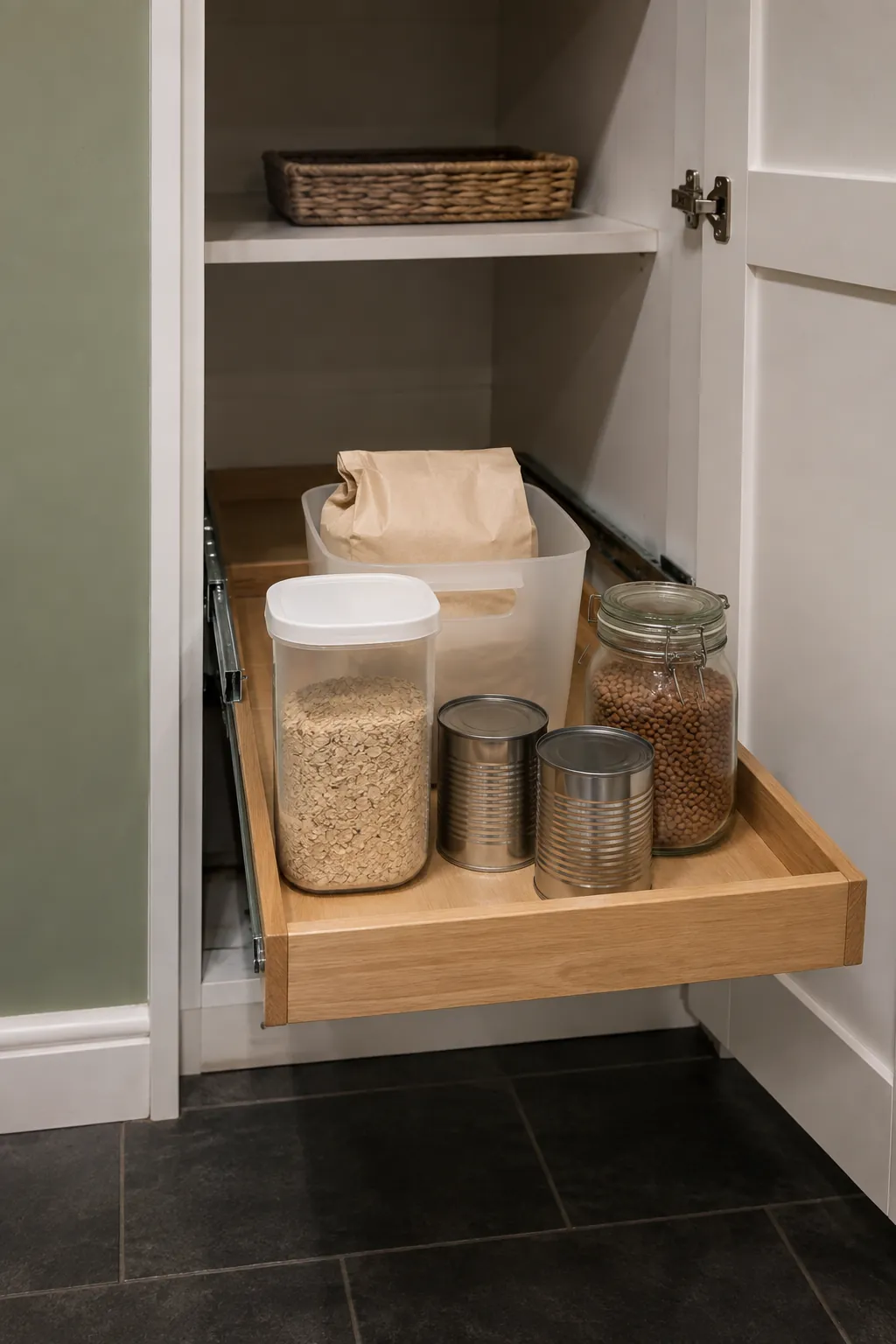
Deep cupboards become easier to use when related ingredients move together in a shallow bin or a suitable sliding shelf. Start with a removable bin if you are renting or testing a layout. Place baking supplies together, keep breakfast items in another group, and leave the front of each container accessible.
Pull out pantry shelves require accurate measurements for the slides, opening, hinges, and full extension path. A fitted mechanism can improve access but also consumes some interior width, so compare its usable space with a simple bin before installing it. For kitchen corner storage, choose a turntable or corner fitting only if it can rotate or extend with your actual containers in place.
You do not have to transfer every food into matching jars. Use suitable sealed containers where they solve a real packaging or freshness problem, retain important dates and cooking instructions, and avoid buying more food than the space can hold. An attractive row of containers is less useful if the leftover packages still need a second shelf.
Use door interiors for light, shallow items
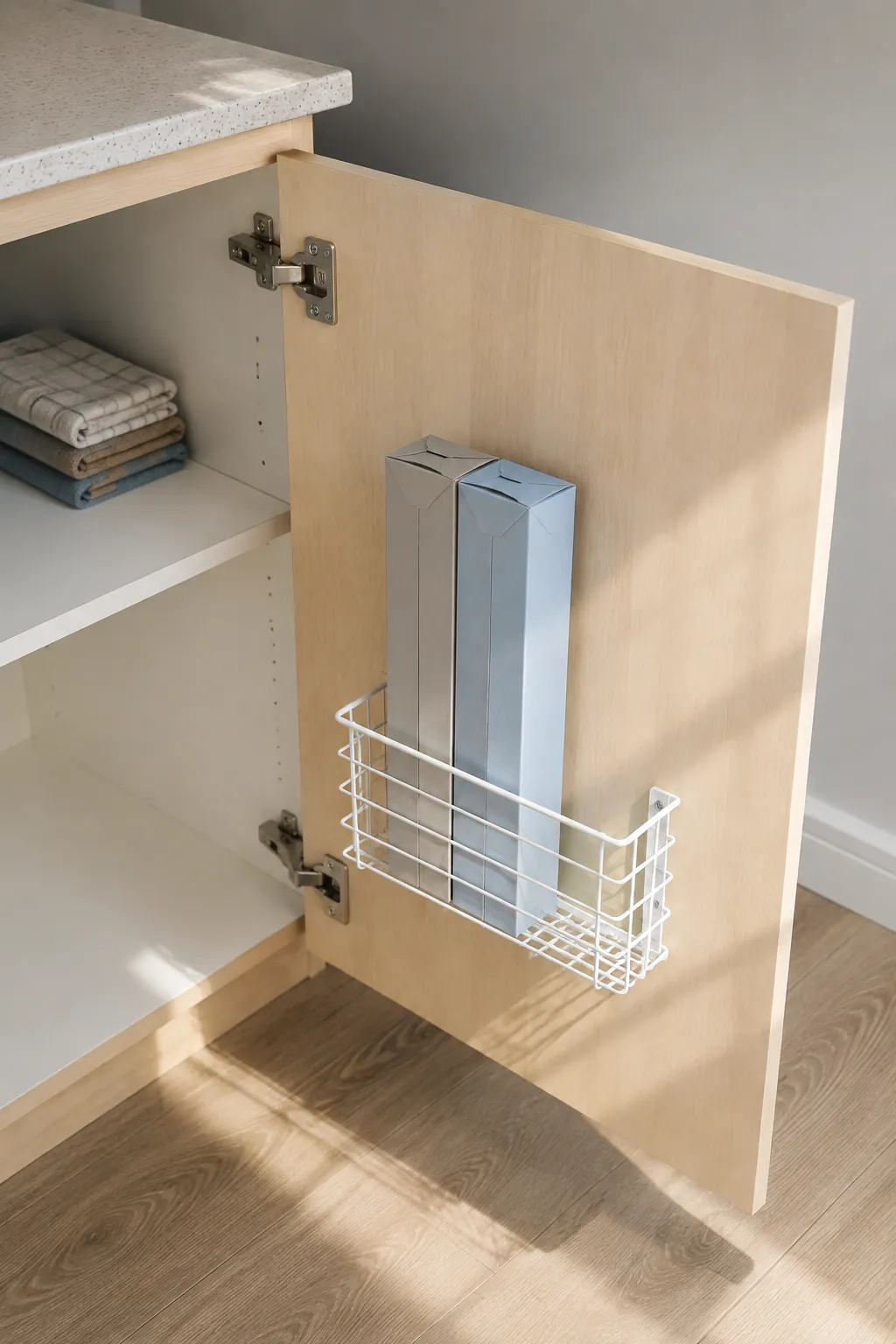
Cabinet door organizers can hold a few lightweight wraps or cleaning cloths if there is genuine clearance inside the closed cabinet. Test the position with the shelf contents in place, including the hinge swing. A deep basket mounted behind a full shelf may stop the door closing even when the empty basket seems to fit.
Follow the organizer’s installation and weight limits, and check that the door material and hinges can handle the added load. In a rental, obtain permission for permanent fixings and verify that removable hooks suit the surface before relying on them. Keep cleaning products separate from food, and use appropriate secured storage where children or pets can reach them.
Add a narrow cart only if the walkway still works
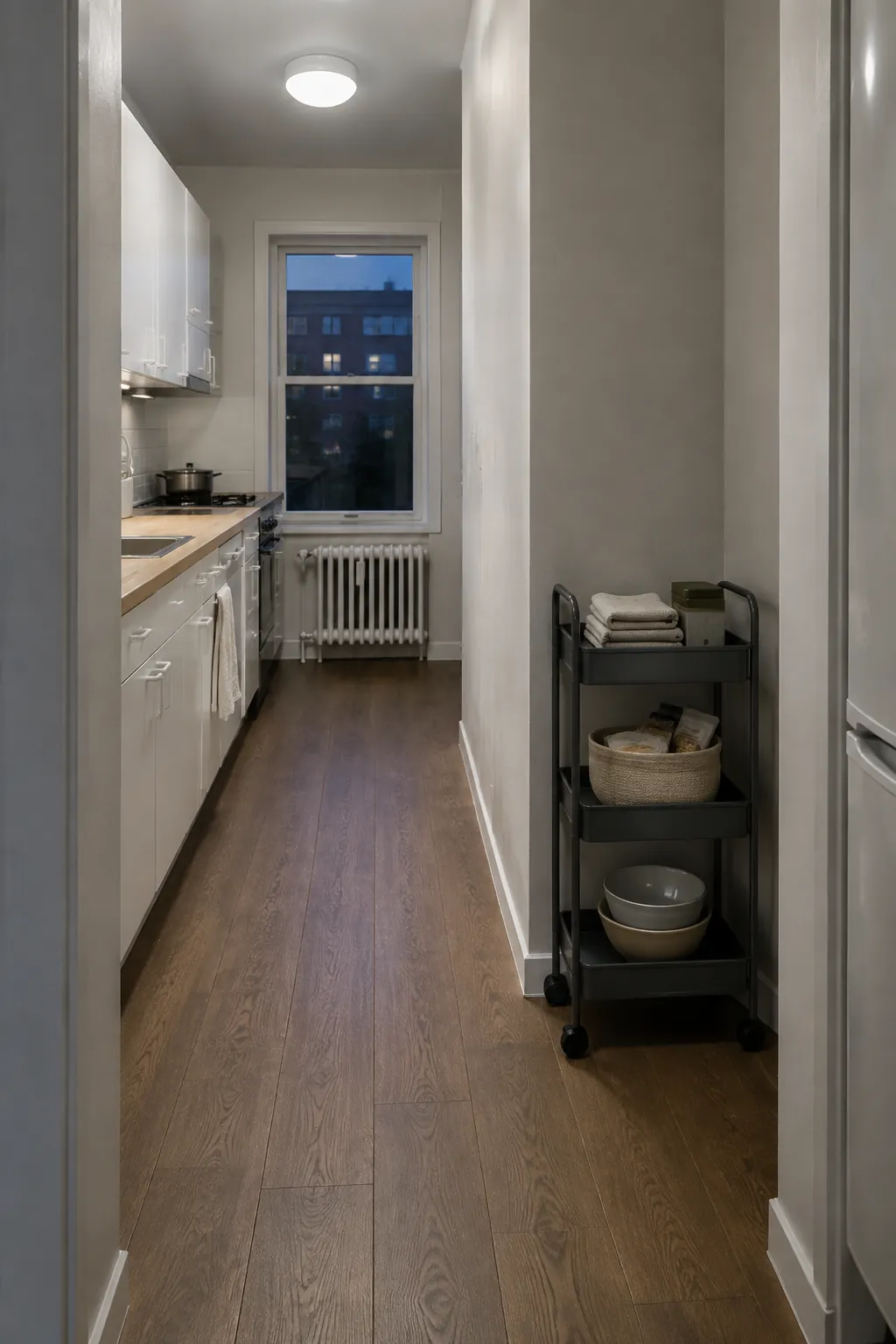
A slim rolling kitchen cart is useful when it has a real parking place outside the main route through the room. Measure the cart with handles and wheels included, then check the refrigerator, oven, dishwasher, and nearby drawers with their doors open. Do not turn an appliance’s required ventilation space into storage.
Keep the cart’s load within its rating, place heavier items on lower shelves, and lock the wheels when appropriate. If a cart forces you to turn sideways or move it every time you open the oven, use the cabinet improvements first. Small kitchen storage ideas should reduce daily movement, not add furniture that needs constant relocation.
Recover sink space without creating a new obstacle
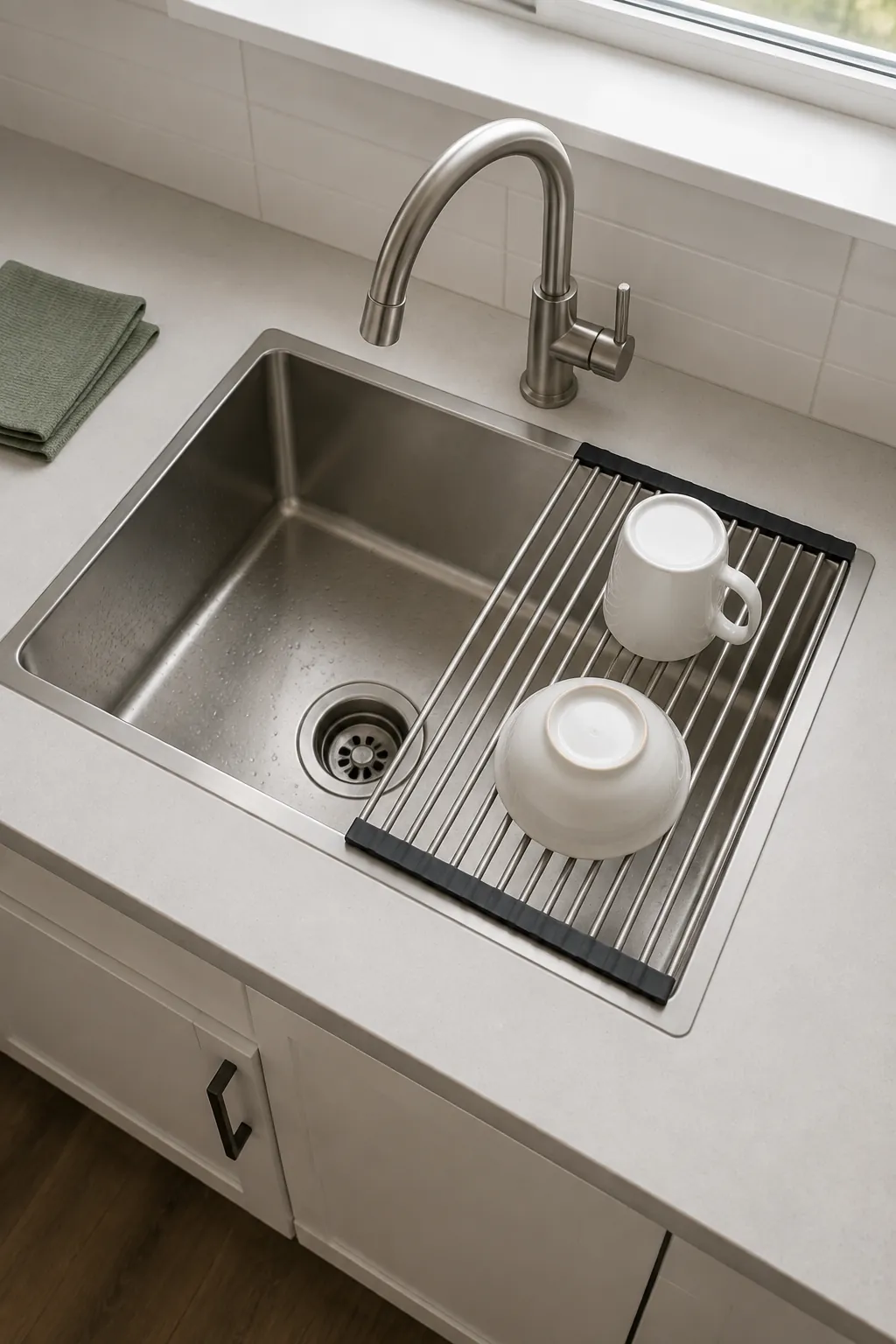
Over sink storage works best when it solves one task, such as letting washed dishes drain without covering the only preparation counter. Choose a rack designed for your sink dimensions, with stable support, suitable weight capacity, and clearance for the faucet and any window. Keep drainage directed into the sink and avoid a tall structure that makes washing a large pot difficult.
Dry and put away the dishes regularly so the rack does not become permanent storage for everything that lacks a home. Review your arrangement after a week of ordinary cooking: the items you cannot return easily need a better location or less crowded storage. The useful measure of success is whether you can prepare a meal and put the kitchen back in order without shifting piles first.