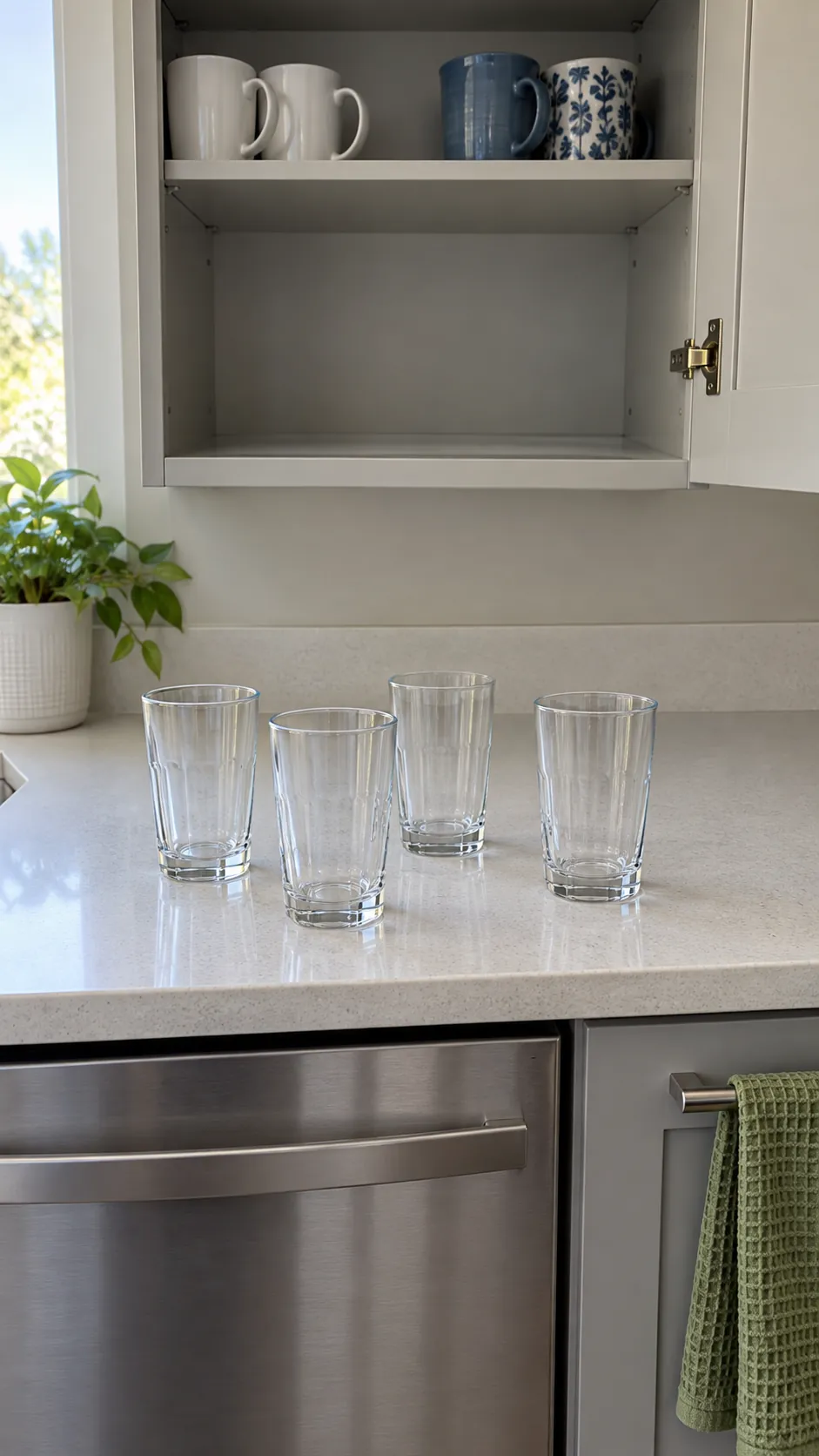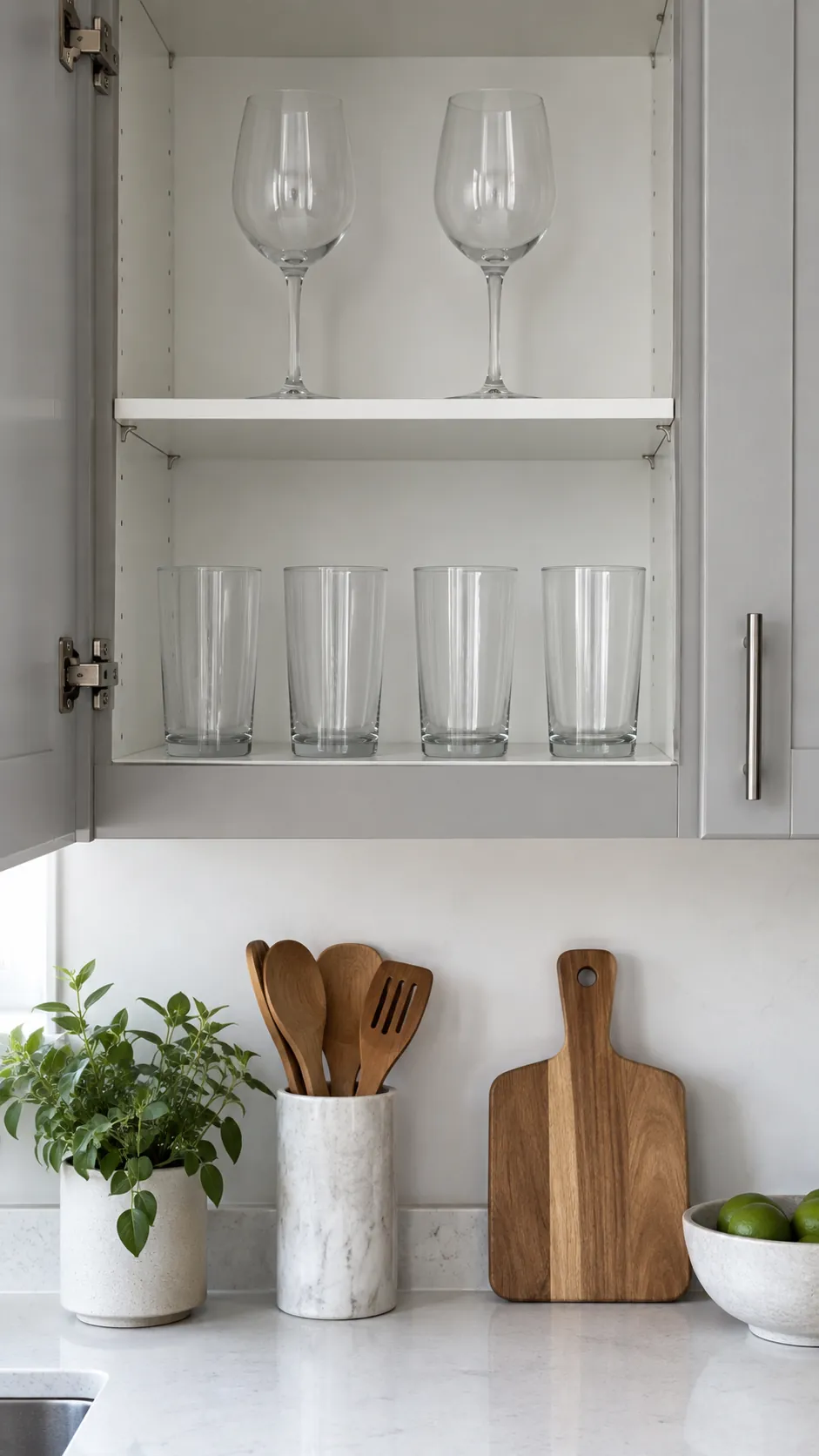
If taking out a water glass makes the wine glasses clink, the cabinet is too tightly packed for daily use. More capacity is not always the answer. Separate the glasses by how often you use them, give each shape enough clearance, and keep a clear path for your hand.
Keep the glasses you reach for together
Empty one cabinet onto a clear, stable surface and sort the contents by use: everyday water glasses, tall drinkware, wine glasses and occasional pieces. Check for chips or cracks as you handle them. Remove damaged drinkware from use and dispose of it according to your local guidance rather than hiding it at the back.
Choose an everyday drinkware zone close to where you get water or unload the dishwasher, provided it is comfortably reachable. Keep the most frequently used glasses toward the front of a lower cabinet shelf. A beautiful arrangement is inconvenient if you have to stretch past delicate stems for a water glass.
Count the glasses that actually circulate through your household and dishwashing routine. Occasional party glassware does not need the same prime space as daily tumblers. Move rarely used pieces to a separate protected cabinet if you have one; do not turn every shelf into a reserve for hypothetical guests.
Set the shelf height around your tallest piece
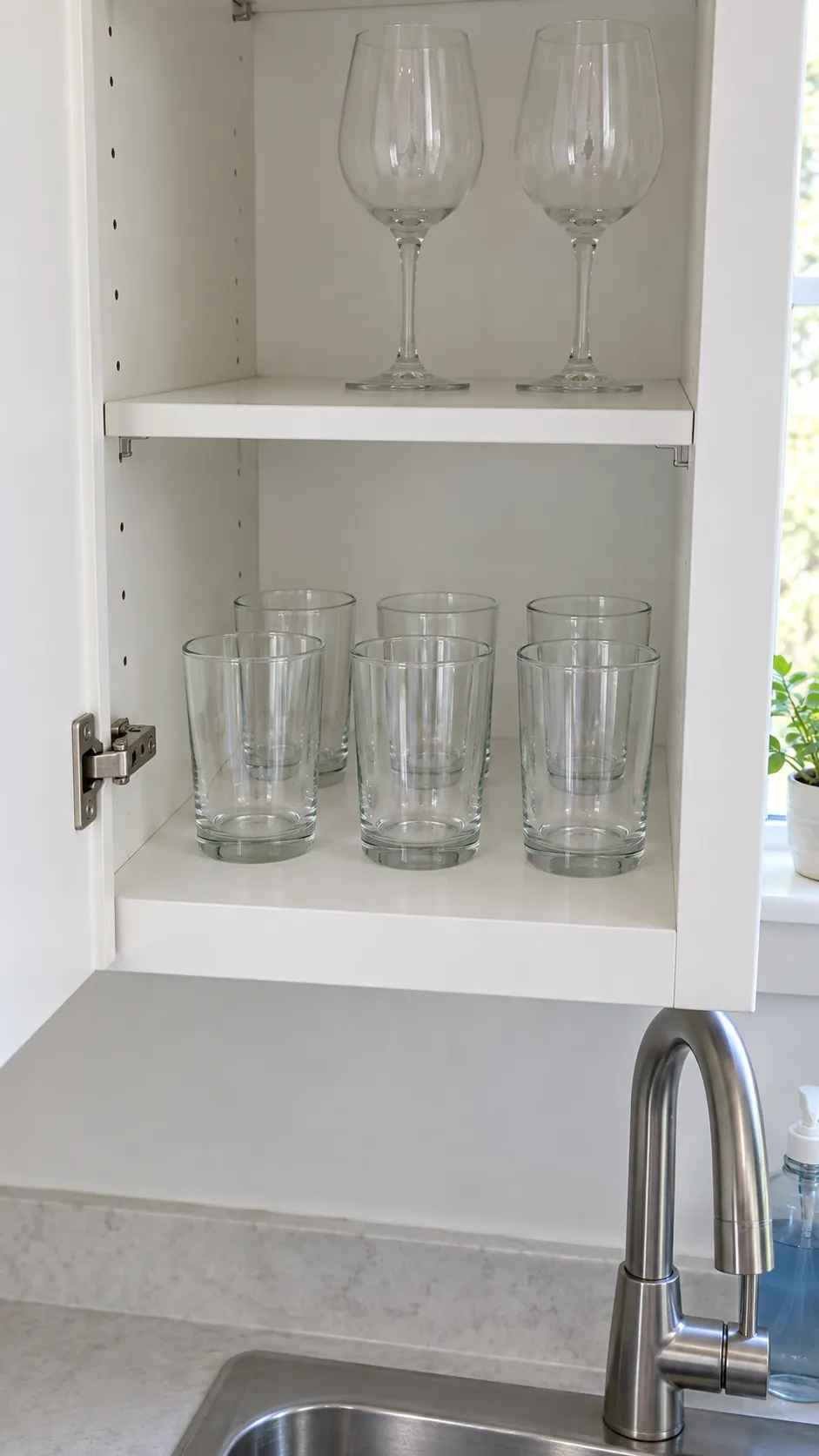
Adjustable cabinet shelves can recover unused space without adding another organizer. Measure the tallest glass assigned to a shelf, then allow enough extra room to lift it and move it out without touching the shelf above. The right gap depends on the glass shape and how you grip it.
Before moving a shelf, unload it fully and check how its supports lock into place. Set all supports at the same height and follow the cabinet manufacturer’s instructions. Do not balance a shelf on mismatched pins or improvised objects.
Give tall tumblers and wine glasses their own taller section if the cabinet layout permits. Short juice glasses can use a lower clearance section. Test one glass at the back as well as one at the front, since the door frame or hinge may limit your hand movement.
When a cabinet has fixed shelves, resist the urge to fill every empty inch immediately. A small gap above a glass can be necessary working space, not waste.
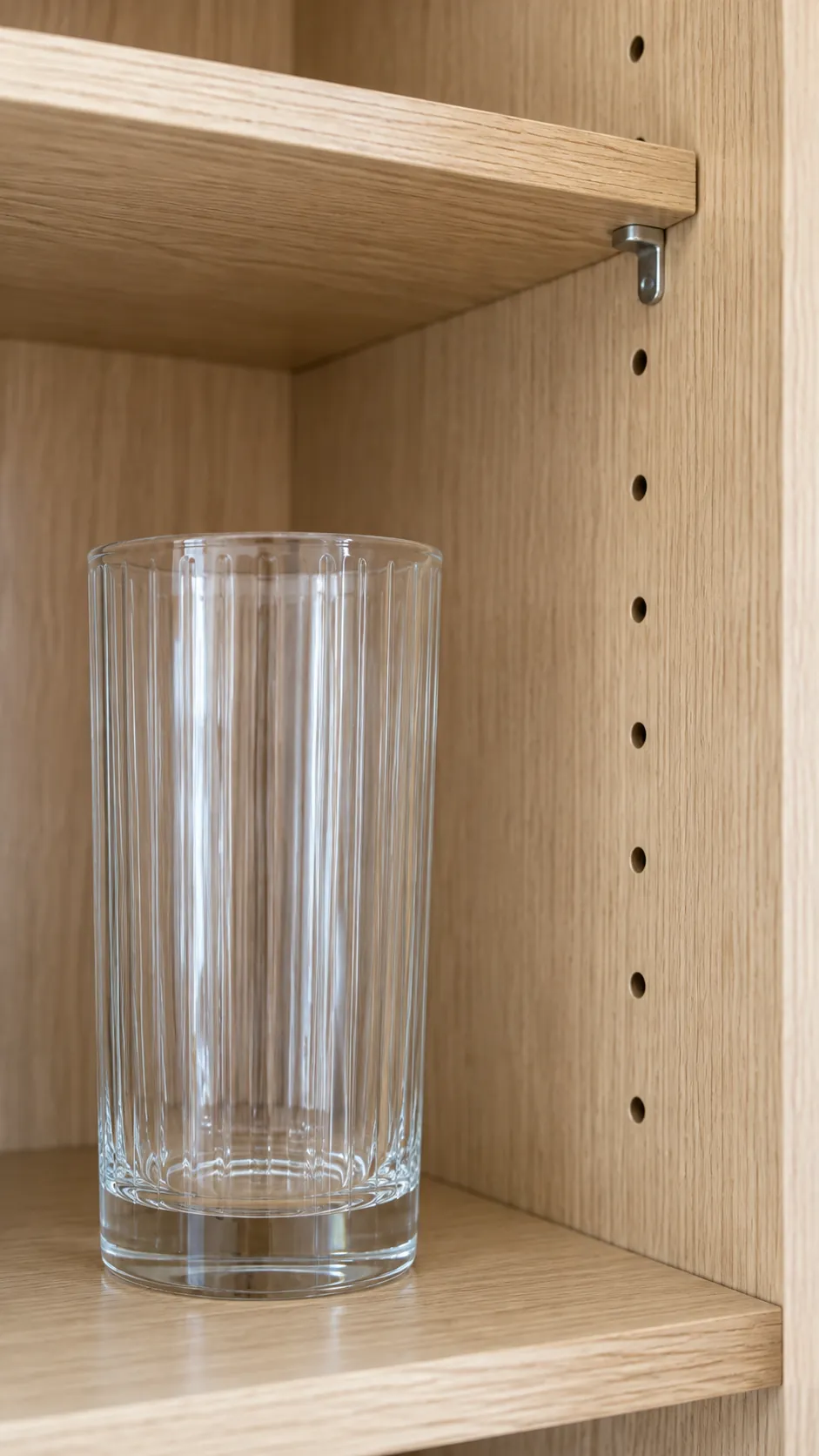
Use a riser only when both levels stay reachable
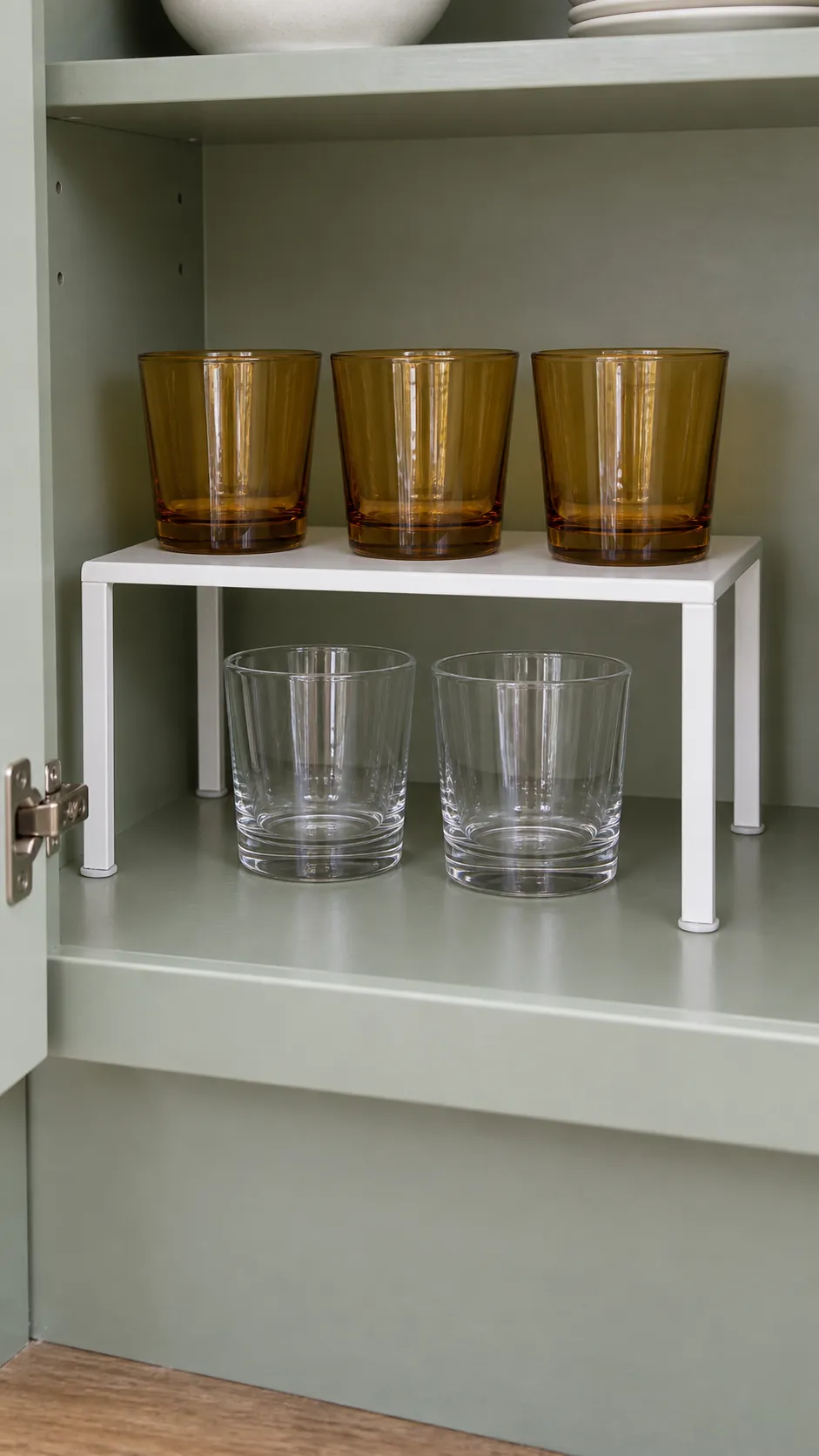
A freestanding kitchen glass organizer or shelf riser can separate short glasses into two accessible levels. Measure the riser’s footprint, its usable top surface, and the clearance beneath it with your actual glassware. Its feet should rest firmly on a level shelf without wobbling.
Choose a product suitable for the load and use described by its maker. A solid stable surface is usually easier to use with narrow glass bases than widely spaced wires. Keep each base fully supported, and leave space between glasses so reaching for one does not knock the next.
If you are considering a stackable glass shelf, stack the organizer only when the manufacturer permits that configuration and provides a secure connection. Do not create a tower of unrelated risers. If the upper level hides the lower glasses or blocks your hand, lowering an adjustable cabinet shelf may work better.
Stack only glassware designed to stack
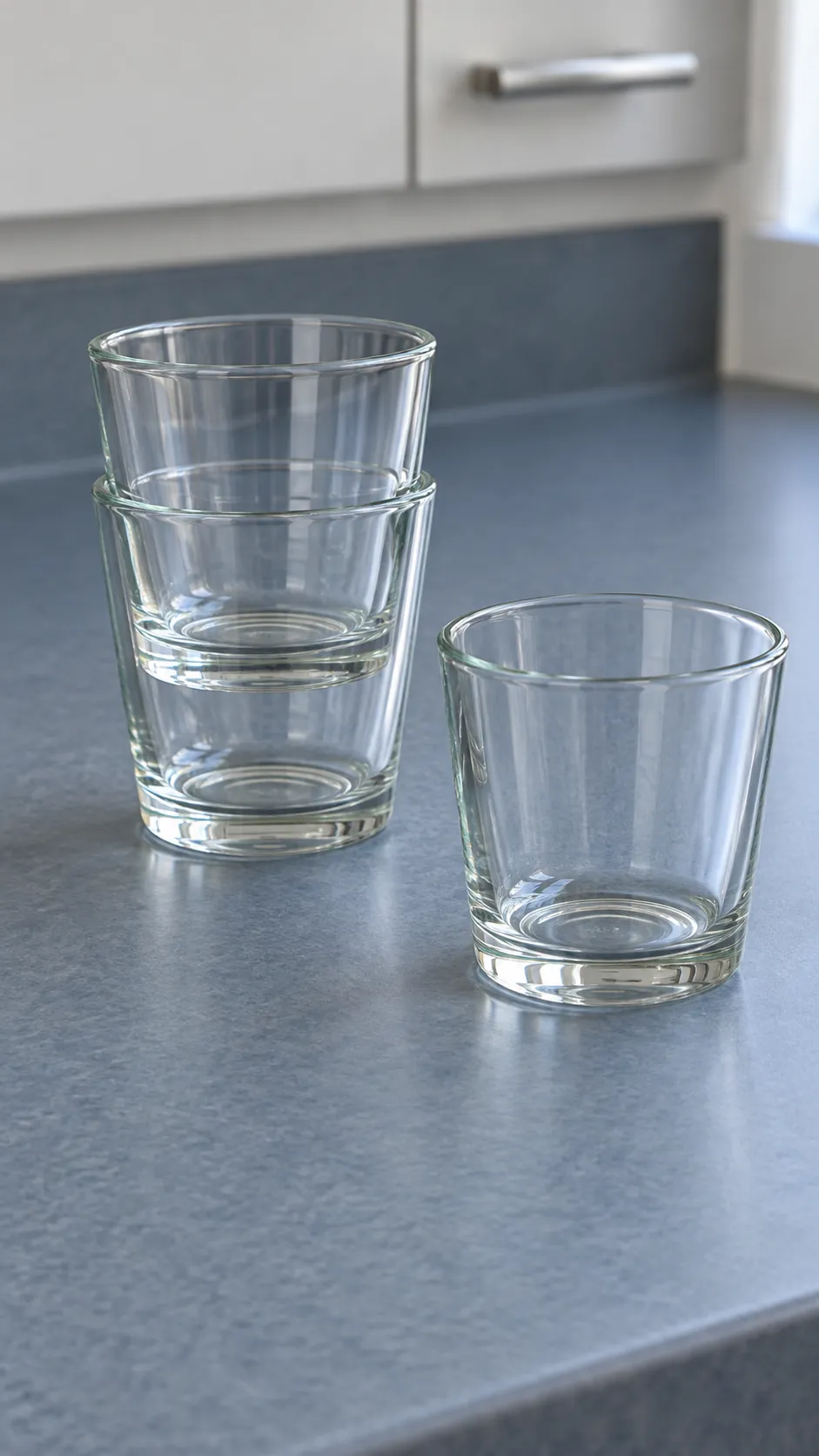
Tumbler storage ideas often show nested glasses, but similar shapes do not prove that glassware is stackable. Use the manufacturer’s guidance for the specific product. Glasses designed for stacking usually have features that keep their surfaces from wedging together under the weight above.
Keep permitted stacks low enough to lift comfortably, with a stable base and clearance above. Let the glasses dry completely before putting them away. Never force two stuck glasses apart by gripping thin rims or applying sudden temperature changes; follow appropriate product guidance.
For ordinary wine glasses, fragile rims or uncertain designs, give each glass its own spot. Alternating glass orientation may fit some shapes closer together, but squeezing them tightly increases contact and makes retrieval harder. Judge the arrangement by whether one glass can leave without disturbing its neighbors, not by how many you can pack into a photograph.
Give stemware a supported route in and out
Wine glass storage needs space for the bowl as well as the base. Standing each glass upright on its base in a clean cabinet is a straightforward option. Keep bowls separated and avoid positioning delicate stems where a large tumbler must pass in front of them.
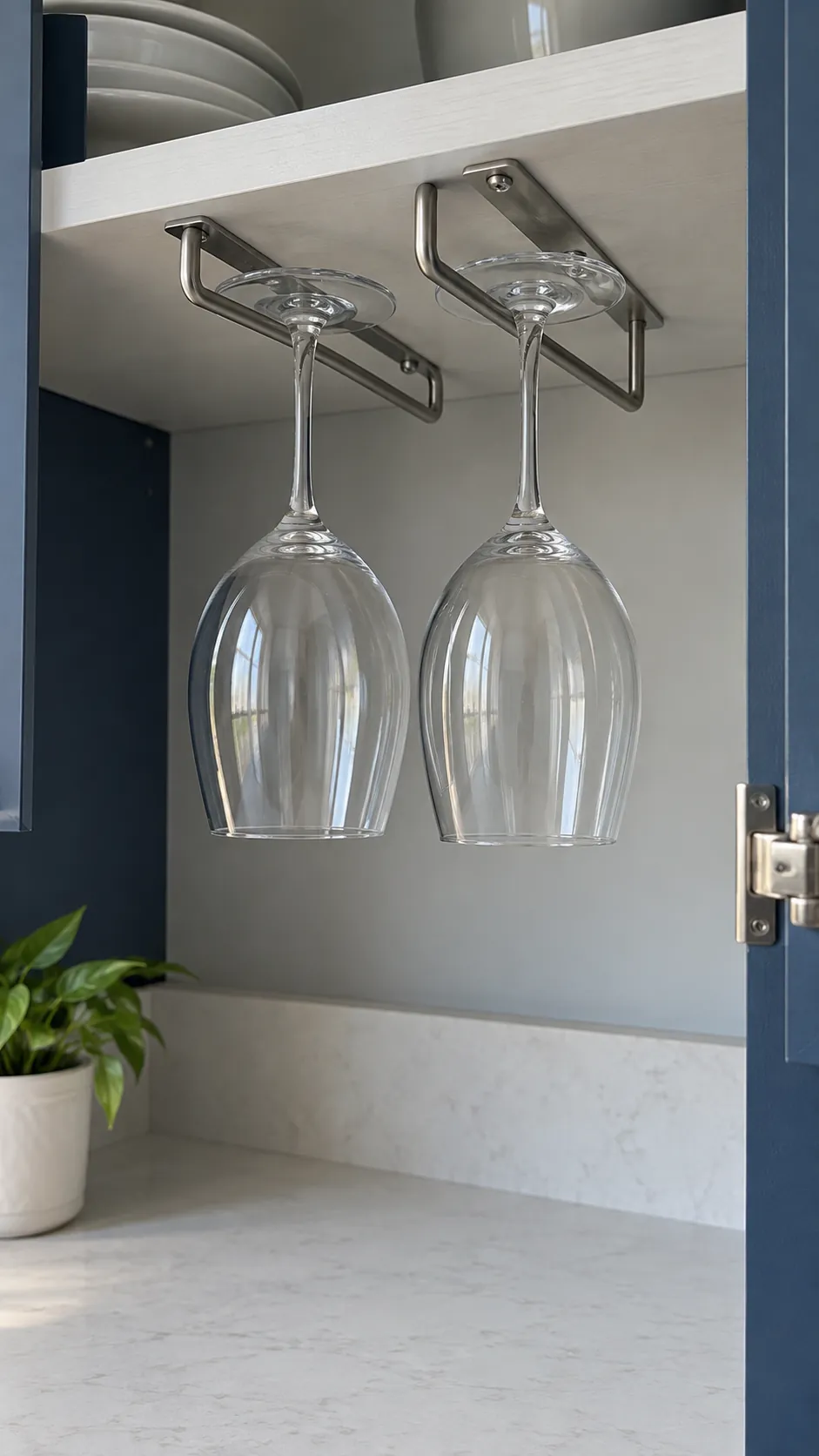
A hanging stemware rack can use space beneath a shelf if it fits the glass bases and stems, supports the intended load, and attaches to suitable cabinet material. Follow the rack’s installation instructions and check that the screws will not penetrate the shelf above. Renters should get permission before permanent mounting.
Test the full sliding motion with one glass before loading the rack. Its base must remain captured by the rails, the bowl must clear neighboring glasses, and the glass must exit without hitting the door or counter. Leave sufficient room below rather than positioning the rack over a busy preparation spot.
For delicate or valuable pieces, choose protection and easy handling over dense storage. If the cabinet is too short for the rack and glasses together, an upright arrangement in another compartment is the better fit.
Make clean, dry returns part of the layout
Put glassware away only when it is clean and fully dry. Keep shelves clean too, and check any liner for trapped moisture or curling edges. If a liner makes a glass wobble or catches its base, replace it with a suitable flat surface or remove it.
Upright storage keeps weight off delicate drinking rims. If the manufacturer permits storing a particular robust glass upside down, use a clean suitable surface and ensure it is fully dry first. Neither orientation compensates for dust, dampness or crowded shelves.
Leave one obvious place for each daily glass after washing. If the cabinet becomes crowded whenever the dishwasher is empty, the arrangement was relying on dirty glasses being elsewhere. Reduce the contents or reassign a shelf until the whole everyday set fits at once.
Try the cabinet during an ordinary meal: take a glass out, return it after washing, and reach for a second type. Any clinking, stretching or rearranging identifies the next small change to make. That is the useful test of glassware cabinet organization.