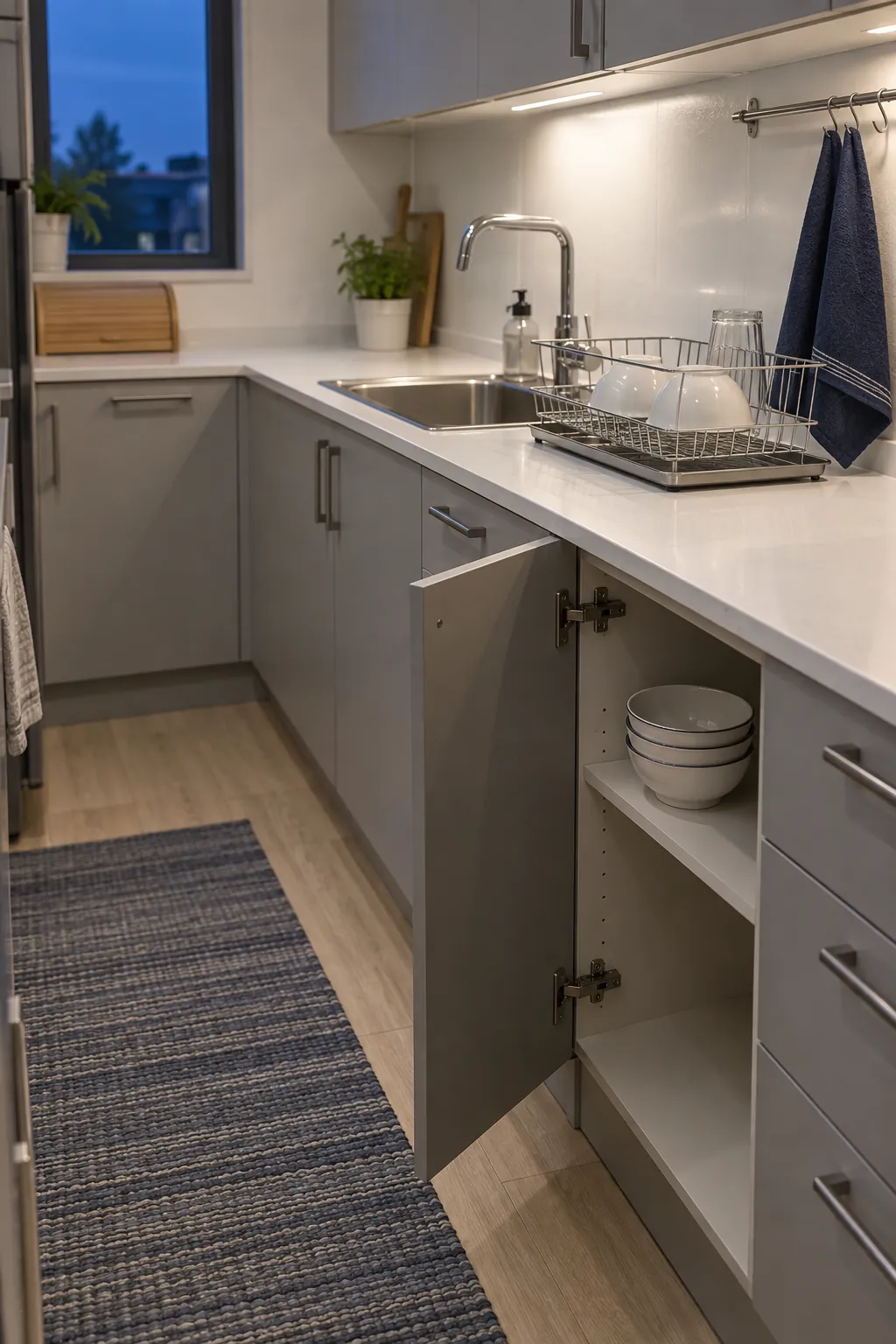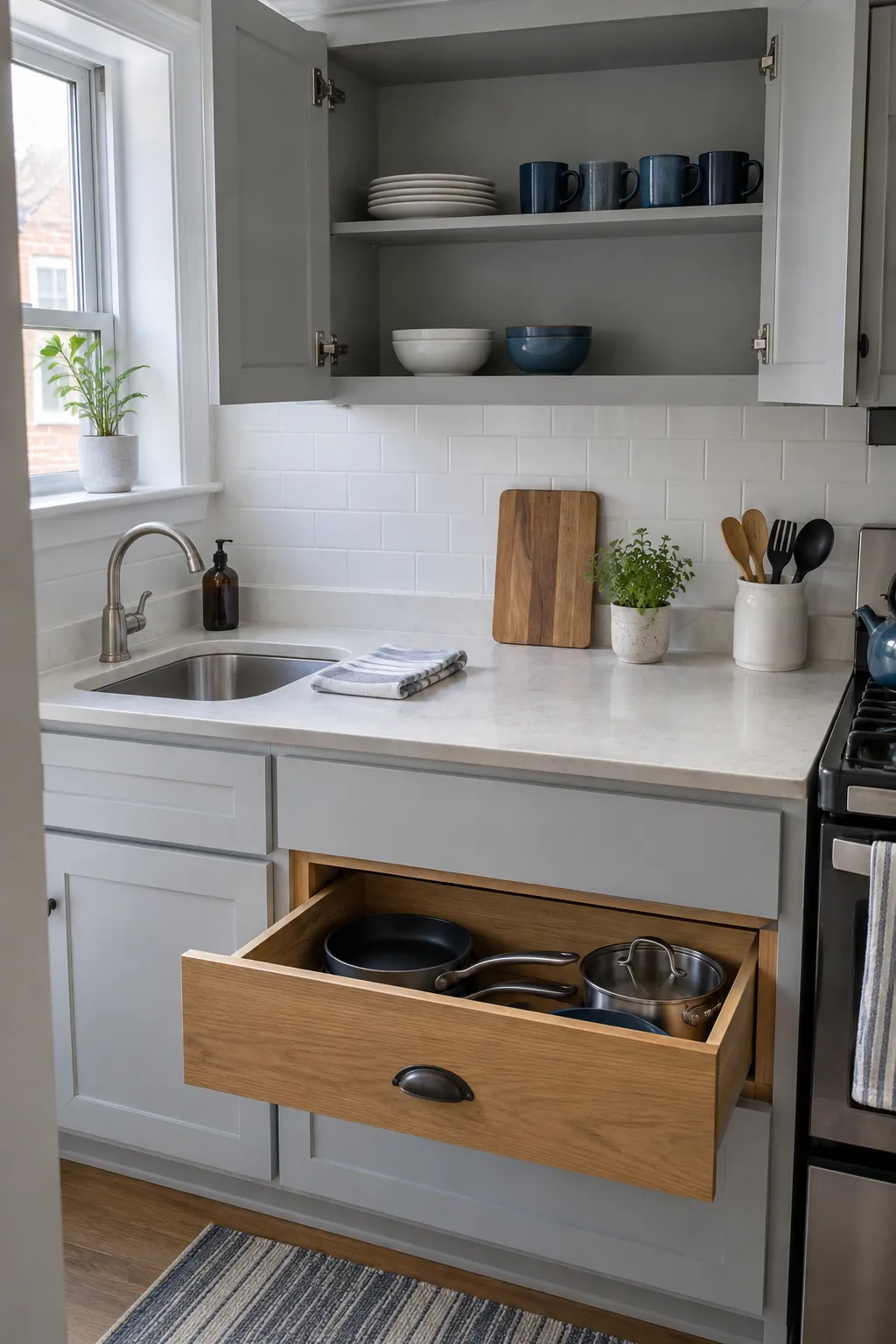
The lid you need is behind a stack of bowls, the good mug is trapped at the back, and putting dishes away feels like solving a puzzle. More storage boxes will not fix those decisions. Start by choosing the objects that support your daily life, then give each one a place you can reach without a small demolition.
Picture a kitchen you can actually finish using
A cupboard can look orderly and still make dinner frustrating. If taking out a saucepan requires moving three appliances, the arrangement is asking too much of you. Before emptying shelves, describe the ordinary evening you want: a clear place to chop, cookware within reach, and enough room to put clean dishes away without rebuilding a stack.
KonMari kitchen organization starts with deciding what you want to keep, rather than finding containers for everything you already own. In the full KonMari sequence, kitchen tools belong to komono, the miscellaneous category that follows clothing, books, and papers. This cabinet reset applies that category based approach to the kitchen; it is not a substitute for the whole home sequence.
Leave the sink usable and set aside a clear sorting surface. If spreading out everything would block dinner, work through a complete manageable subcategory, such as mugs, before beginning cookware. Collect that subcategory from every place it lives so you can see the true total.
Gather by category before choosing what stays
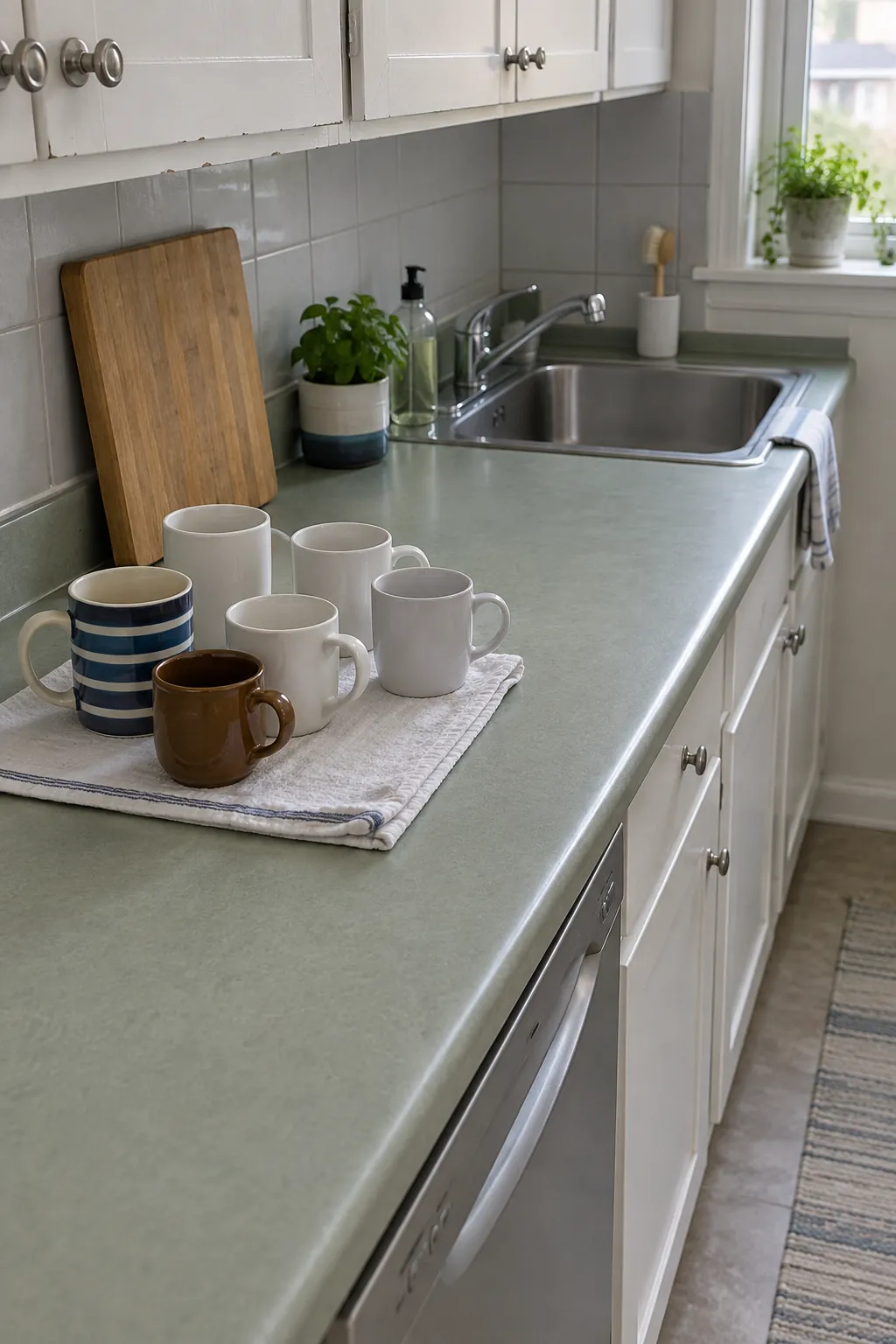
Bring all your mugs together, including the ones beside the kettle and the extras in another cupboard. Then do the same with plates, food containers, cooking tools, cookware, and kitchen linens in separate sessions. Sorting one cupboard at a time can hide duplicates because each location looks reasonable on its own.
Handle each object and consider its place in your actual routines. A plain colander may earn its space through the relief of draining pasta easily; joy does not have to mean decorative delight. Keep the useful tool you depend on even if it is not beautiful, and avoid creating an expensive replacement list in pursuit of a particular look.
For duplicates, compare comfort, condition, capacity, and how often several are genuinely needed together. A household that packs four lunches has different container needs from someone who rarely stores leftovers. Ask other household members before removing shared belongings, and set sentimental kitchen gifts aside for a separate decision if they stall the practical work.
Keep donation items outside the working kitchen and arrange their departure. Discard unsafe or unusable items appropriately rather than passing them along. Return borrowed belongings to their owners. The goal is to make clear decisions, not relocate an undecided pile into another cabinet.
Give everyday dishes the easiest shelf
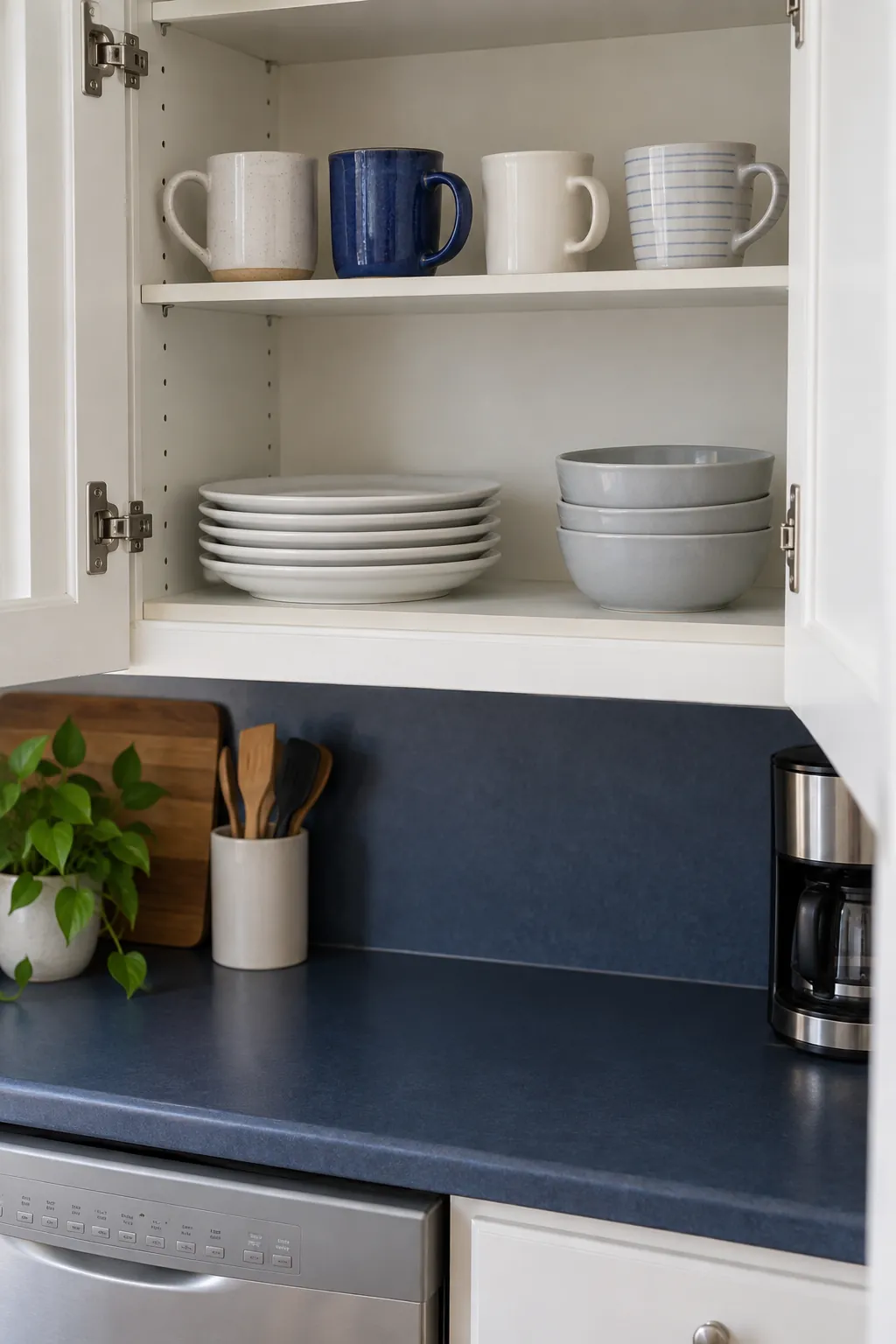
Once you have chosen what stays, place daily dishes where the people using them can comfortably reach. Keep heavy stacks low enough to lift securely, and put occasional serving pieces in less convenient spaces. Category based kitchen storage works best when it also respects the route between washing, preparing, cooking, and serving.
Try a small stack of dinner plates beside breakfast bowls, with mugs near the place you make drinks. Leave clearance above each stack so you can remove a dish without scraping the shelf. Do not force every plate onto a vertical rack if that makes the shelf harder to use; simple kitchen storage should fit the objects and your hands.
Make deep cabinets reveal their contents
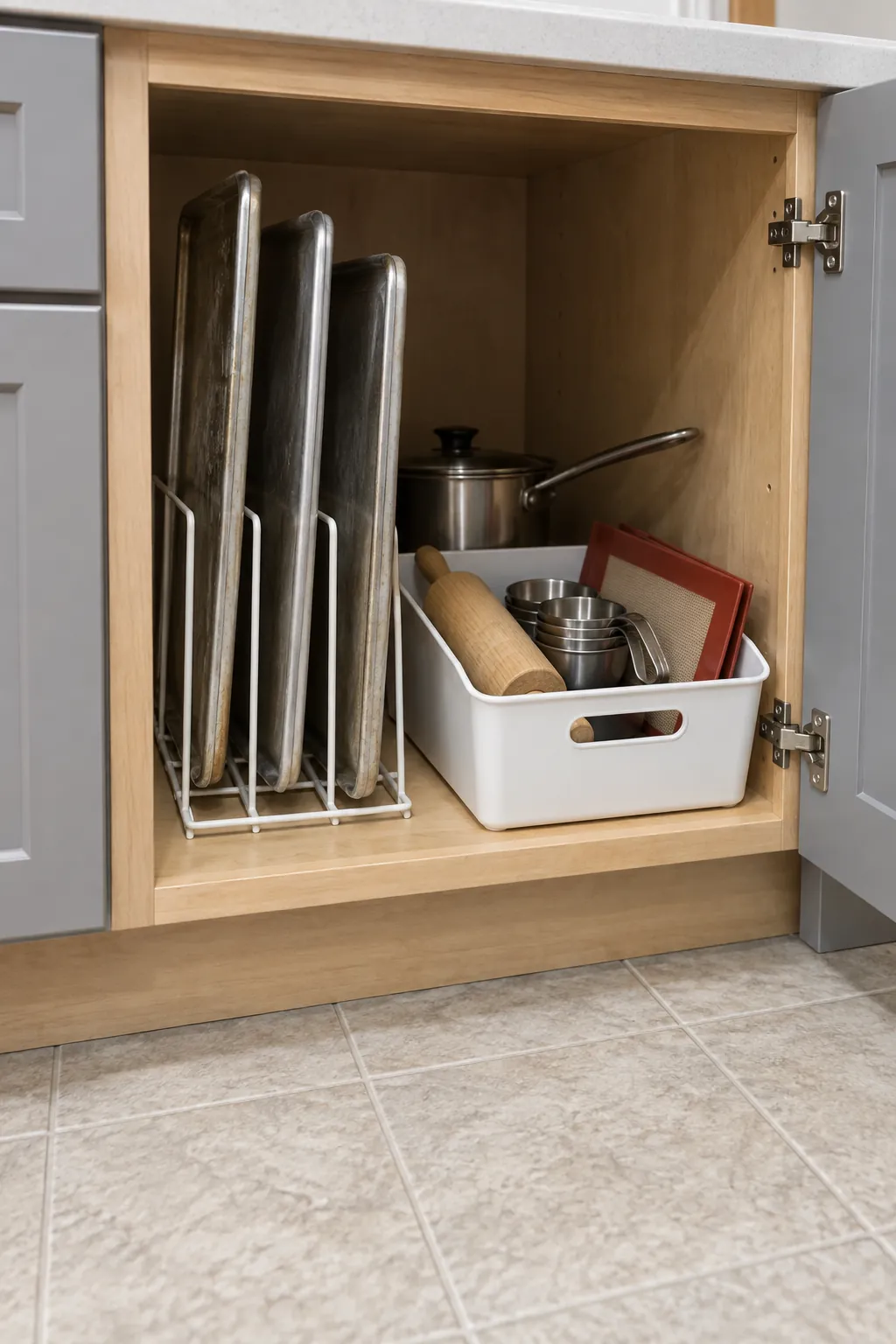
Deep shelves need a retrieval plan, not another hidden layer. A removable shallow bin can bring lightweight baking supplies forward together, while a properly fitted pullout may make a lower cabinet easier to use. Measure the clear opening, hinge intrusion, shelf depth, and available height before buying anything.
Store baking sheets and cutting boards upright in a stable divider if the cabinet provides enough height. Keep pans in short supported stacks, with lids in an accessible adjacent position. Heavy appliances belong on a sturdy surface you can reach safely, and a loaded pullout must stay within its manufacturer’s limits.
Use the back for genuinely occasional items rather than the things you need every morning. If a cabinet still requires unloading several objects to reach one, reduce the layers or change its assignment. A basket helps only when you can lift it comfortably and see what category it contains.
File fold linens and match every container
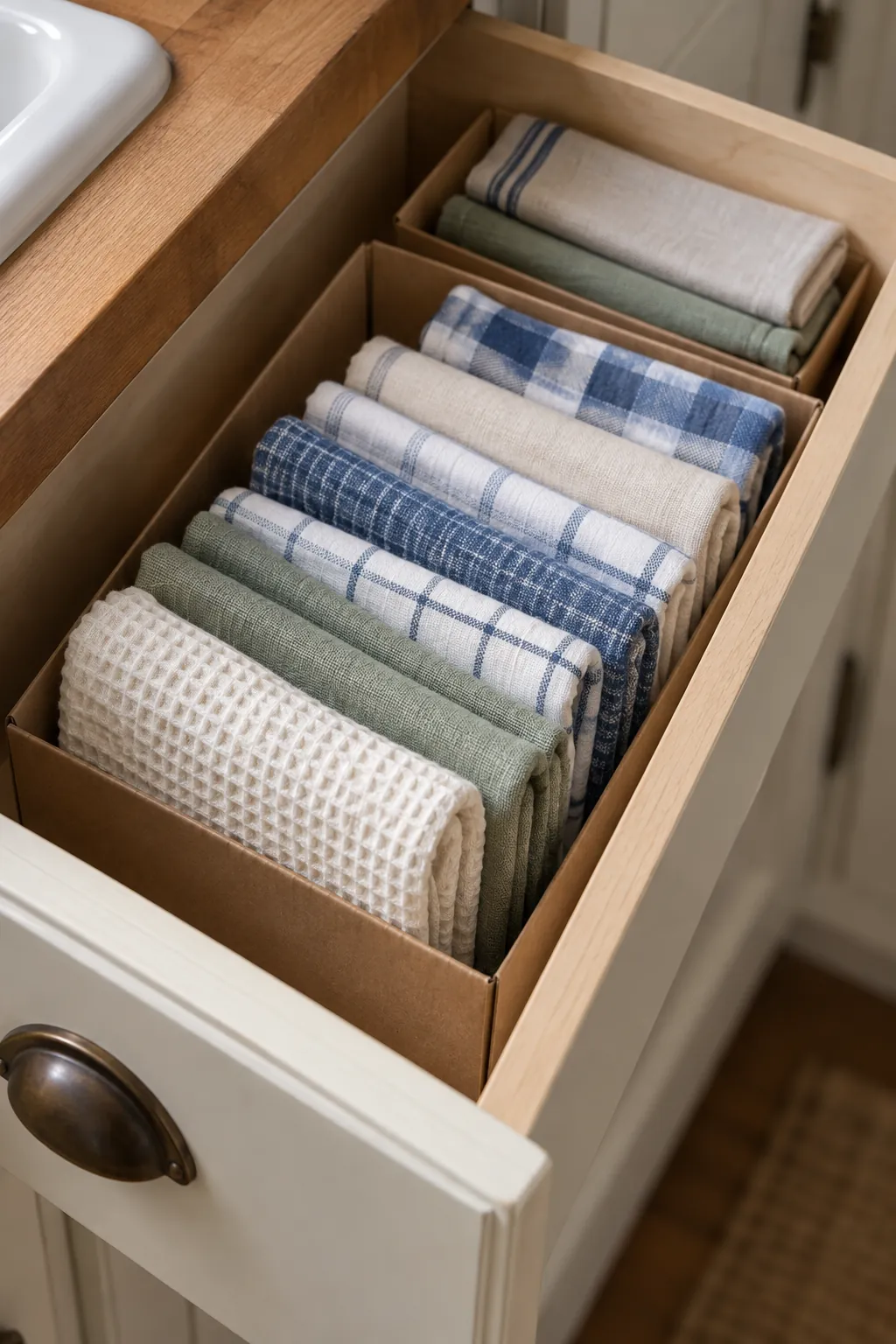
For kitchen towels, fold each clean, completely dry piece into a compact rectangle that can stand on its edge inside a shallow drawer or box. Adjust the fold to the drawer height rather than chasing one exact number of folds. File folding kitchen linens lets you see the choices without disturbing a tall pile.
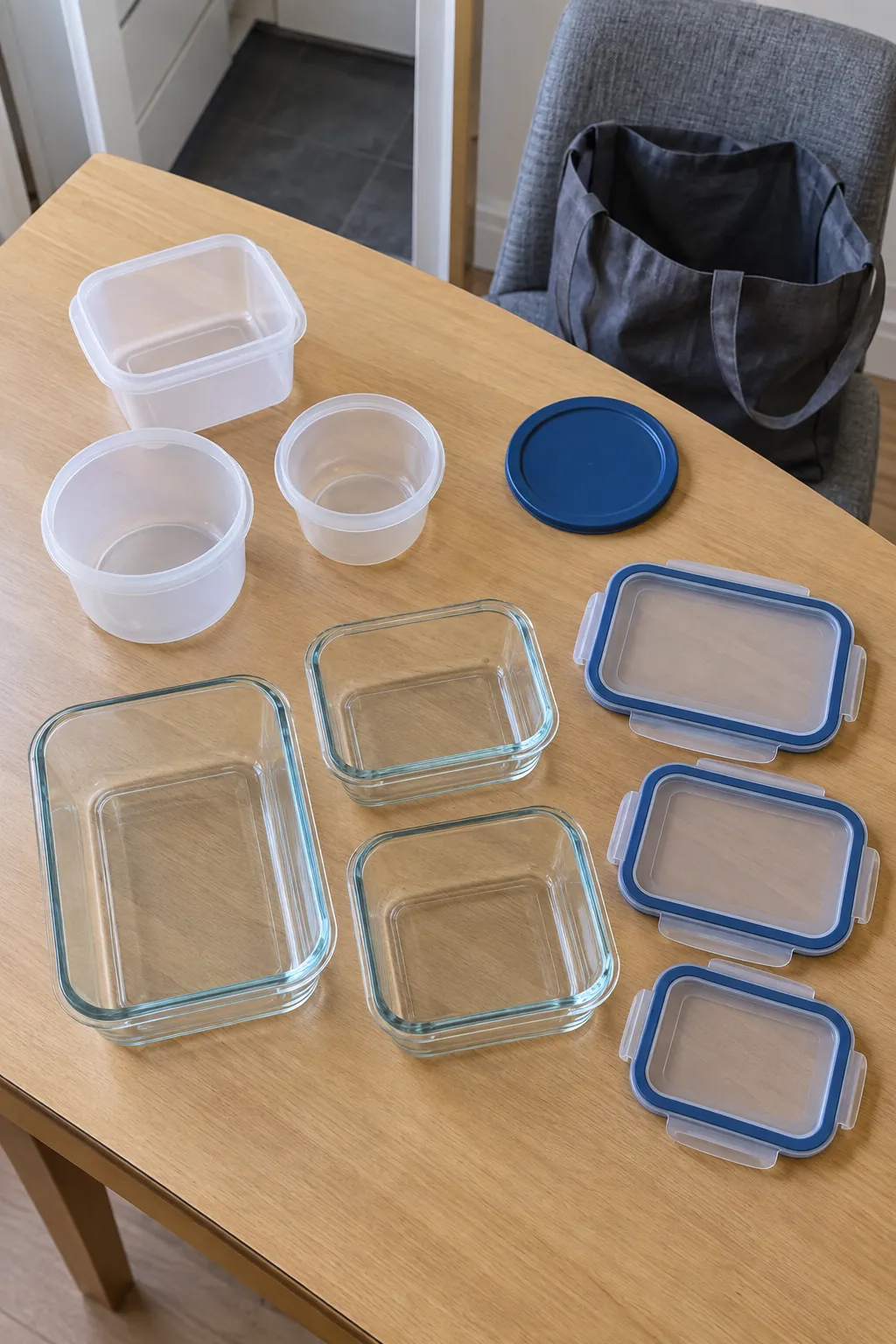
Pair food containers with compatible lids before deciding how to store them. Nest a few matching containers when that saves room, and stand their lids beside them in a small divider. If matching a lid remains a daily puzzle, keep a smaller selection of useful sizes instead of a cabinet full of near matches.
Keep cloths used for cleaning separate from linens used for drying dishes, and store all fabrics away from leaks and dampness. Pantry food deserves its own check for condition and relevant date guidance. Retain labels, allergen information, and cooking instructions when transferring food into another container.
Test the arrangement through one ordinary week
Put the kitchen back into service before buying a full set of organizers. After cooking and unloading dishes, notice where things hesitate: a mug that needs two hands to retrieve, lids that slide down, or a towel box that catches the drawer. Change the specific obstruction instead of starting the whole reset again.
Minimalist cabinet organization has no universal item count. Leave enough space for your real cooking habits, including guests or batch cooking when those are part of your life. Agree on the homes of shared items, then return clean, dry pieces to those places during the normal cleanup.
When a new utensil arrives, decide where it belongs and whether it duplicates something you no longer prefer. The useful test comes after dinner: can you put everything away without shifting a pile first? That is a kitchen cabinet reset you can keep using.