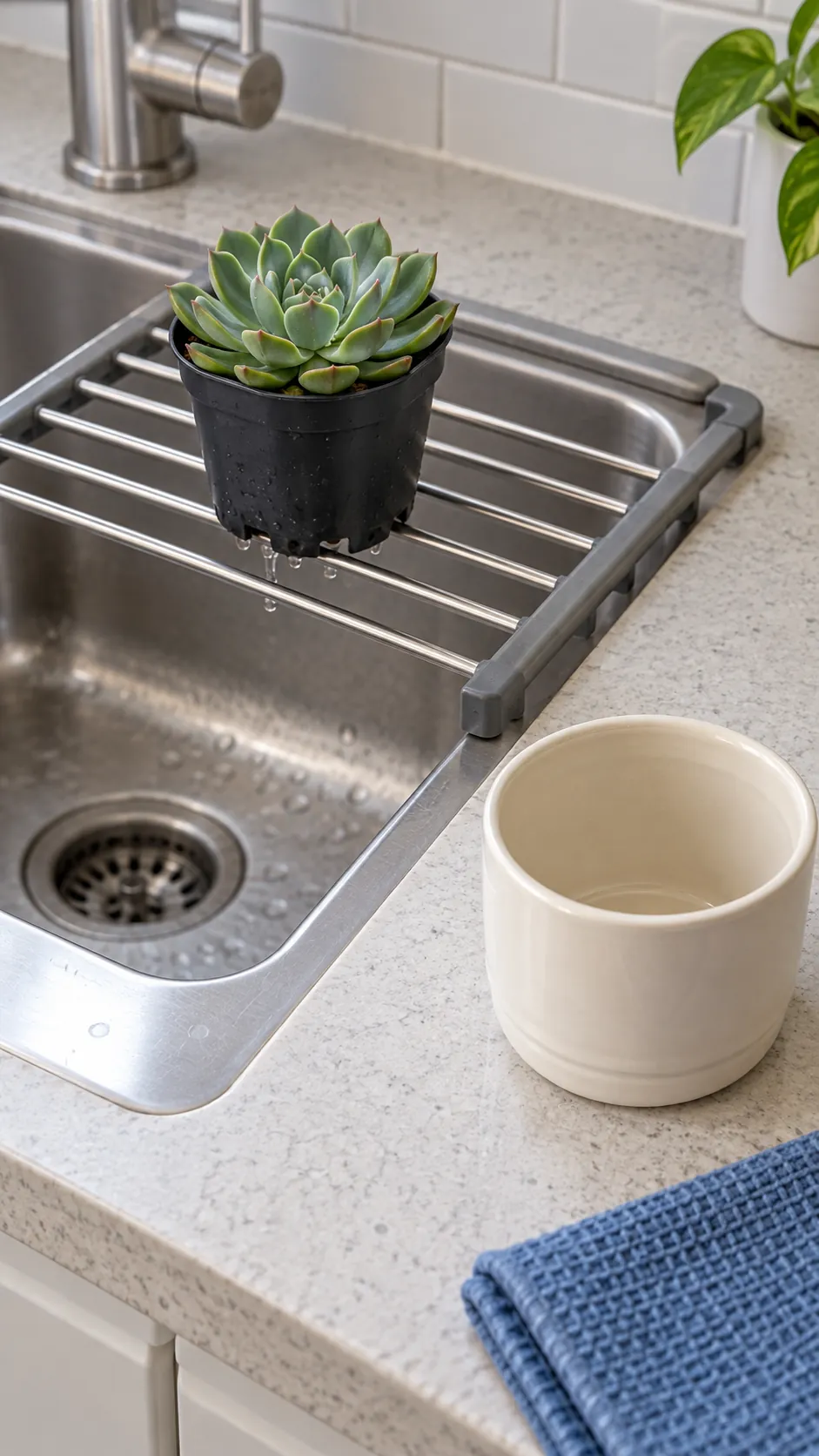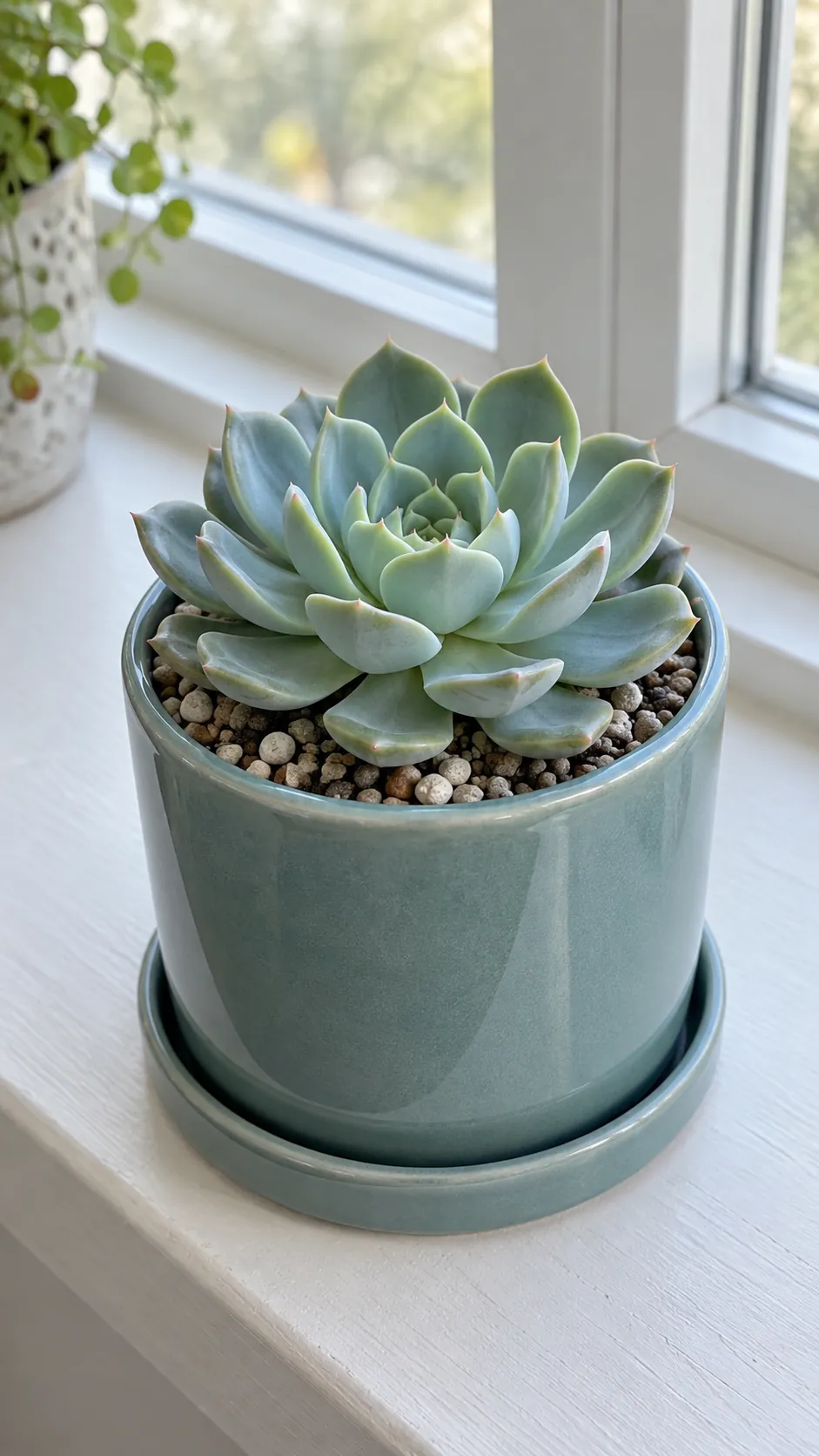
A succulent can look perfect in a glossy pot and still sit in wet soil long after watering. The problem is rarely the ceramic alone. The useful combination is a suitable container, an open drainage route, a potting mix that dries appropriately and enough light for the plant you actually own.
Decide where the water will go
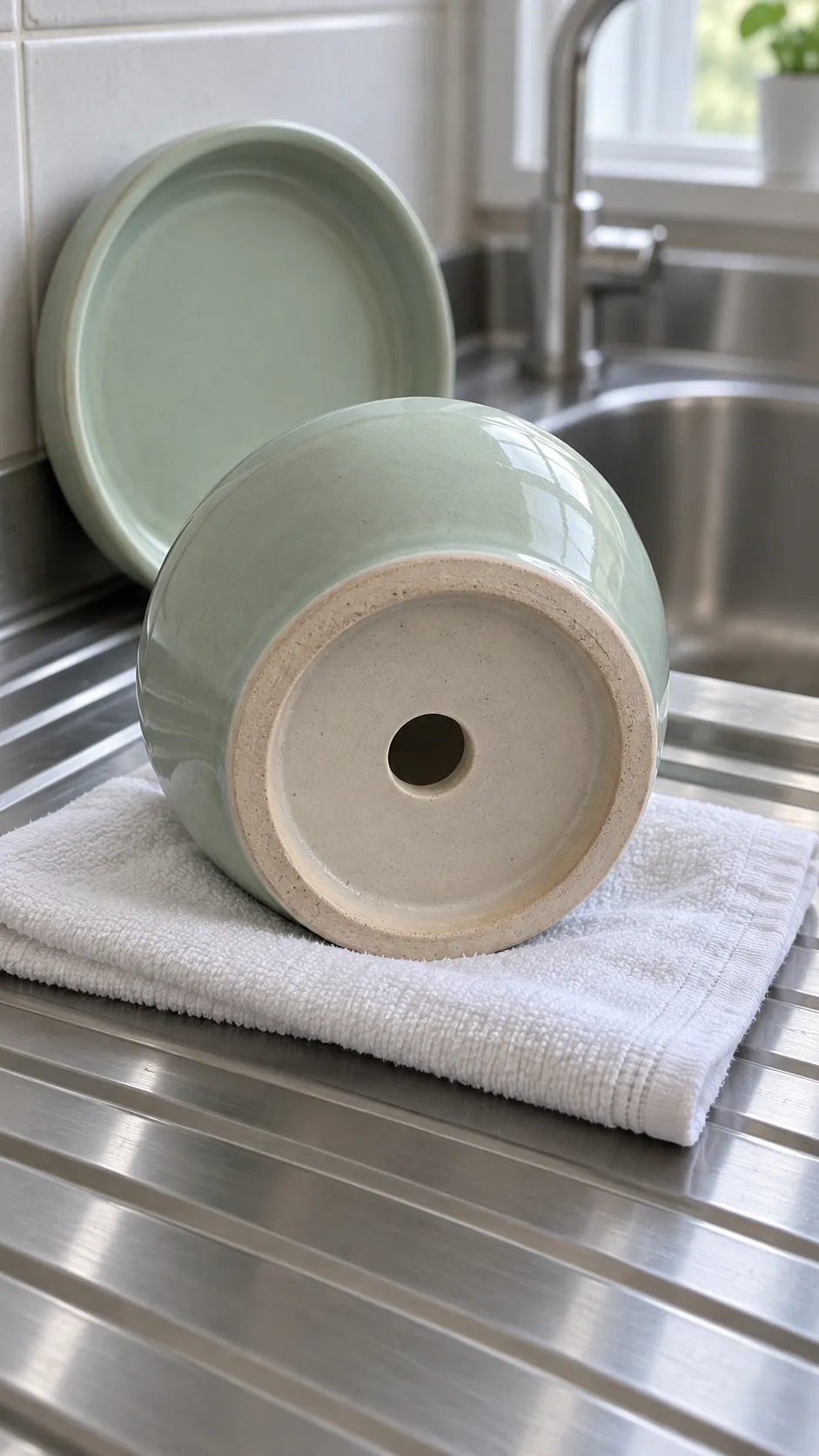
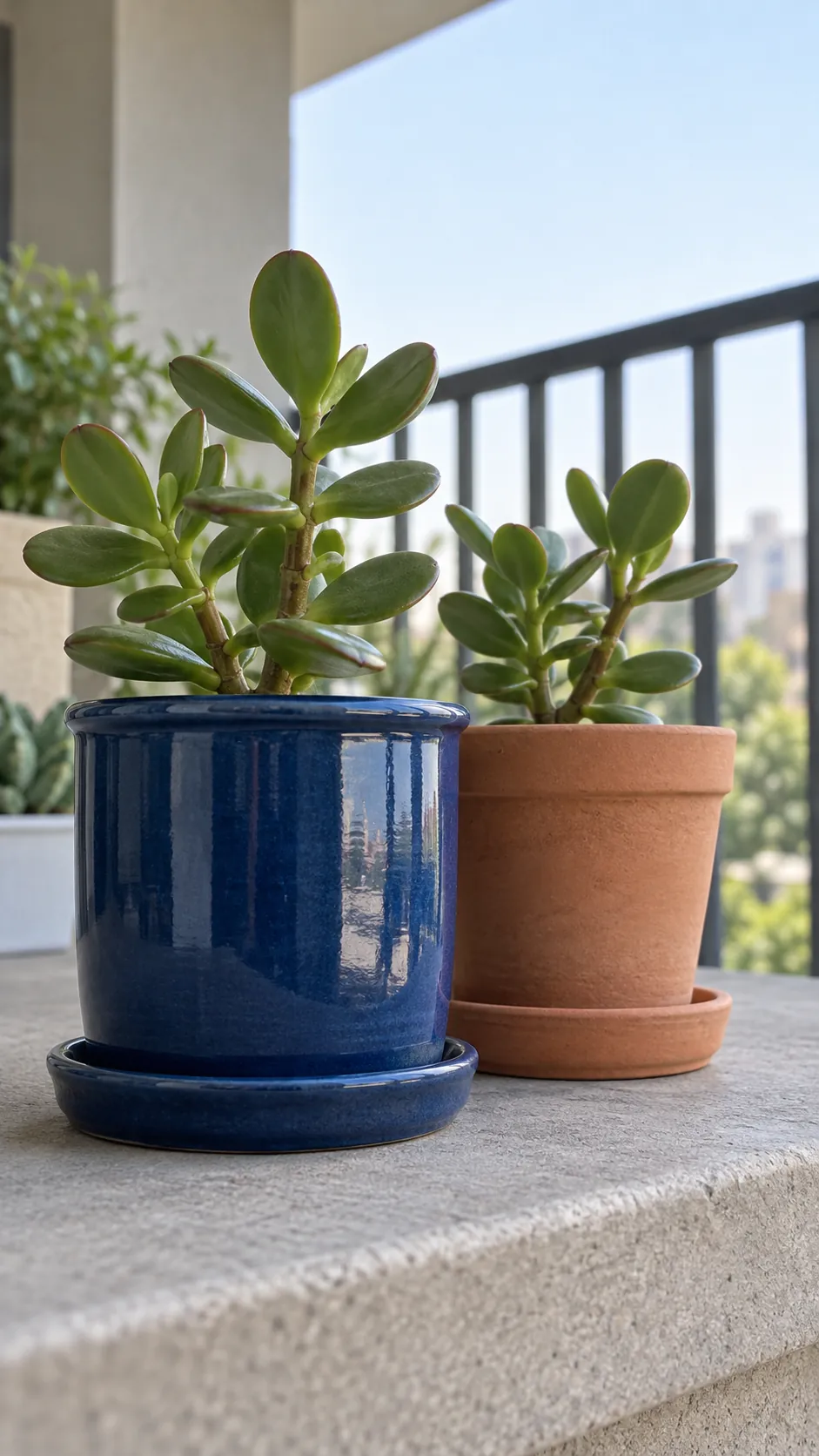
Turn a prospective planter over before judging its color. For direct planting, choose a clear drainage hole and a saucer you can empty easily. A rubber plug is useful for transport or decorative use, but leaving it in place defeats the drainage route when you water a planted container.
A beautiful vessel without a hole can still work as a cachepot. Keep the succulent in a nursery pot with drainage, remove that inner pot to water, let it finish dripping and empty any water left in the outer container before returning it. A layer of pebbles at the bottom does not create an outlet or make a sealed pot drain.
Match the planting space to the roots
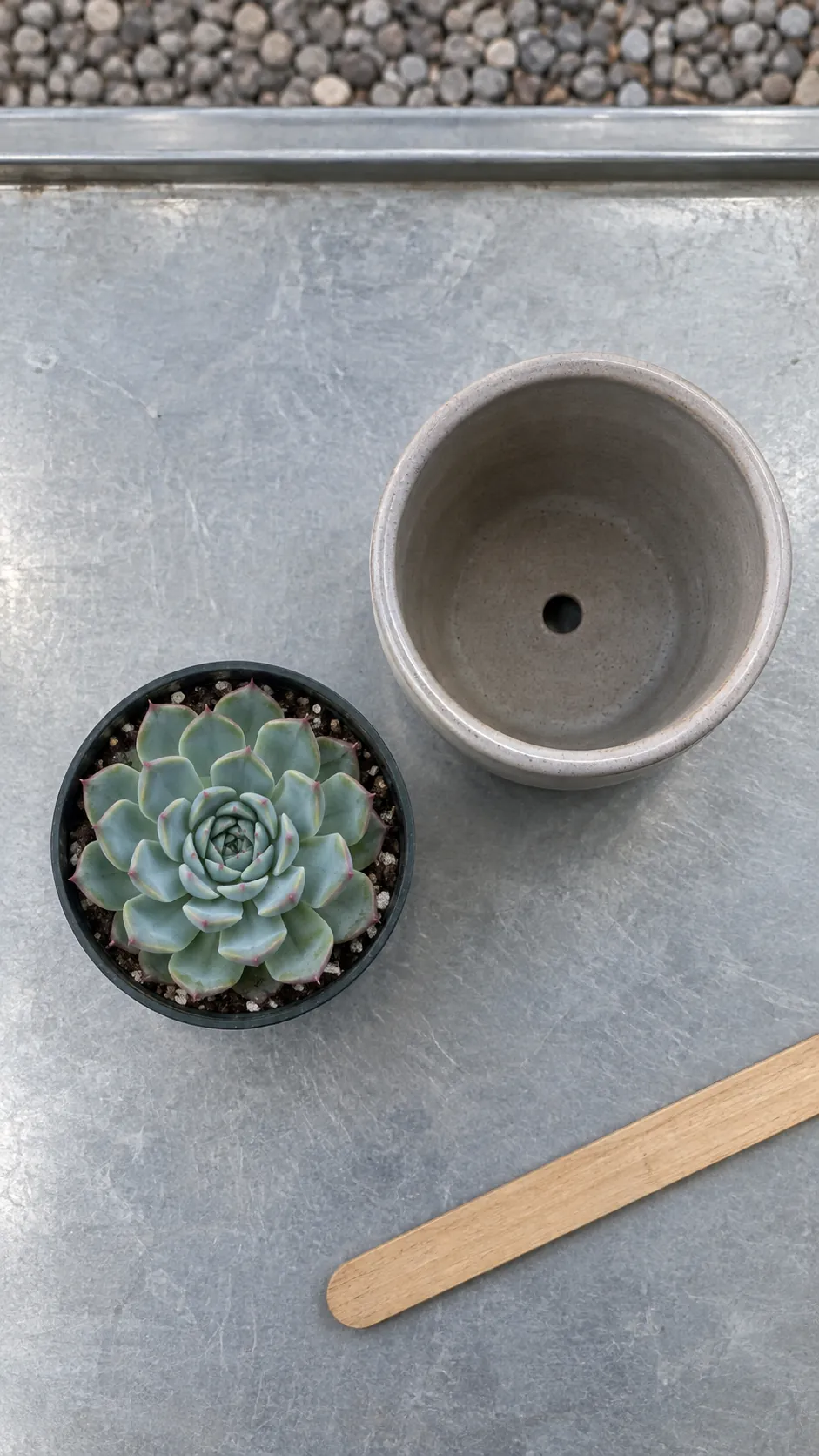
Compare the inside dimensions with the current root ball, not with the widest decorative part of the vessel. Choose a pot that accommodates the roots without folding them into a tight bundle, while avoiding a large volume of unused wet mix around a tiny plant. An established jade and a small echeveria rosette can need very different depths even if their foliage looks similar in width. Shallow succulent bowls are most useful when the chosen plants have compatible root space and care needs. A broad bowl is not automatically easier to manage: it may hold much more mix than a single plant can use. Leave a little space below the rim for watering and enough room around the crown to inspect it.
Treat glaze as one part of the drying equation
Glaze reduces water movement through the coated ceramic surface, so a glazed pot can stay moist longer than a similarly sized porous terracotta pot in the same conditions. That comparison changes with clay body, firing, wall thickness, soil, plant size and weather. A matte finish does not necessarily mean the pot is porous, and a glossy exterior does not tell you whether the inside is glazed.
For a cool room or someone who tends to water too often, a modest pot with dependable drainage offers more margin for error than a deep decorative vessel filled with dense soil. Ask a maker whether handmade pottery plant pots are intended for live planting and whether their finish tolerates repeated wet use. For outdoor placement, also check frost suitability rather than assuming all fired ceramic survives freezing.
Use a mix that stays open around the roots
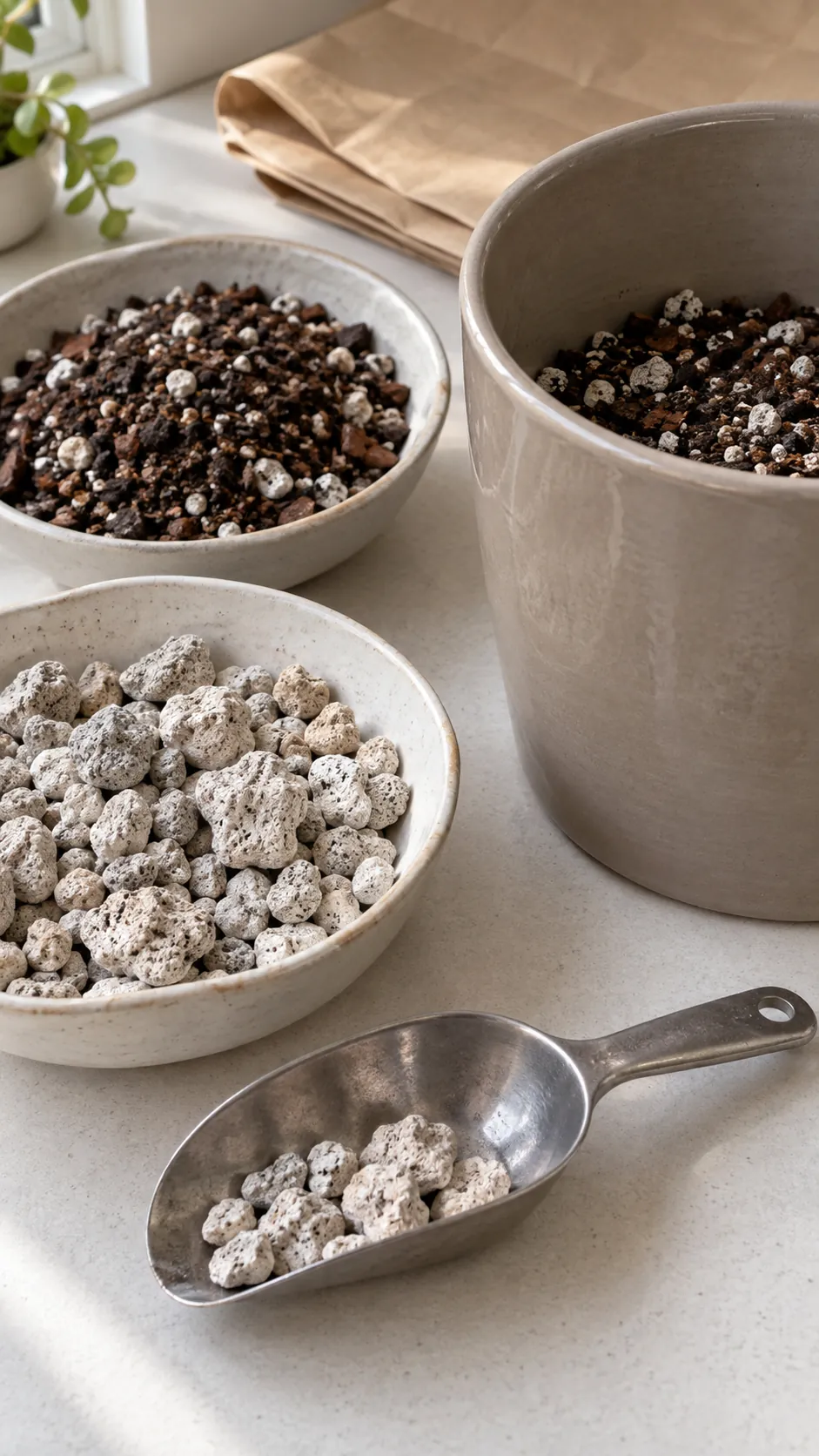
Start with a succulent or cactus mix, then assess how it behaves in your conditions. Some bagged mixes contain enough fine organic material to stay wet longer than you expect indoors. Mineral ingredients such as pumice or perlite can improve structure, but the useful proportion depends on the base mix, pot and climate rather than a universal recipe.
Avoid packing the mix tightly around the roots. Set the plant at an appropriate depth with its crown above the soil, and keep a thick decorative layer from burying lower leaves or hiding persistent moisture. Fine sand can compact and should not be treated as interchangeable with coarse mineral grit.
If you repot after removing rotten roots or making cuts, let damaged tissue dry appropriately before the next watering and follow guidance for that particular succulent. Clean tools and a fresh suitable mix matter more than adding decorative stones. A wet, collapsing plant needs inspection of the roots and stem, not another watering to compensate for its appearance.
Choose the light before the display spot
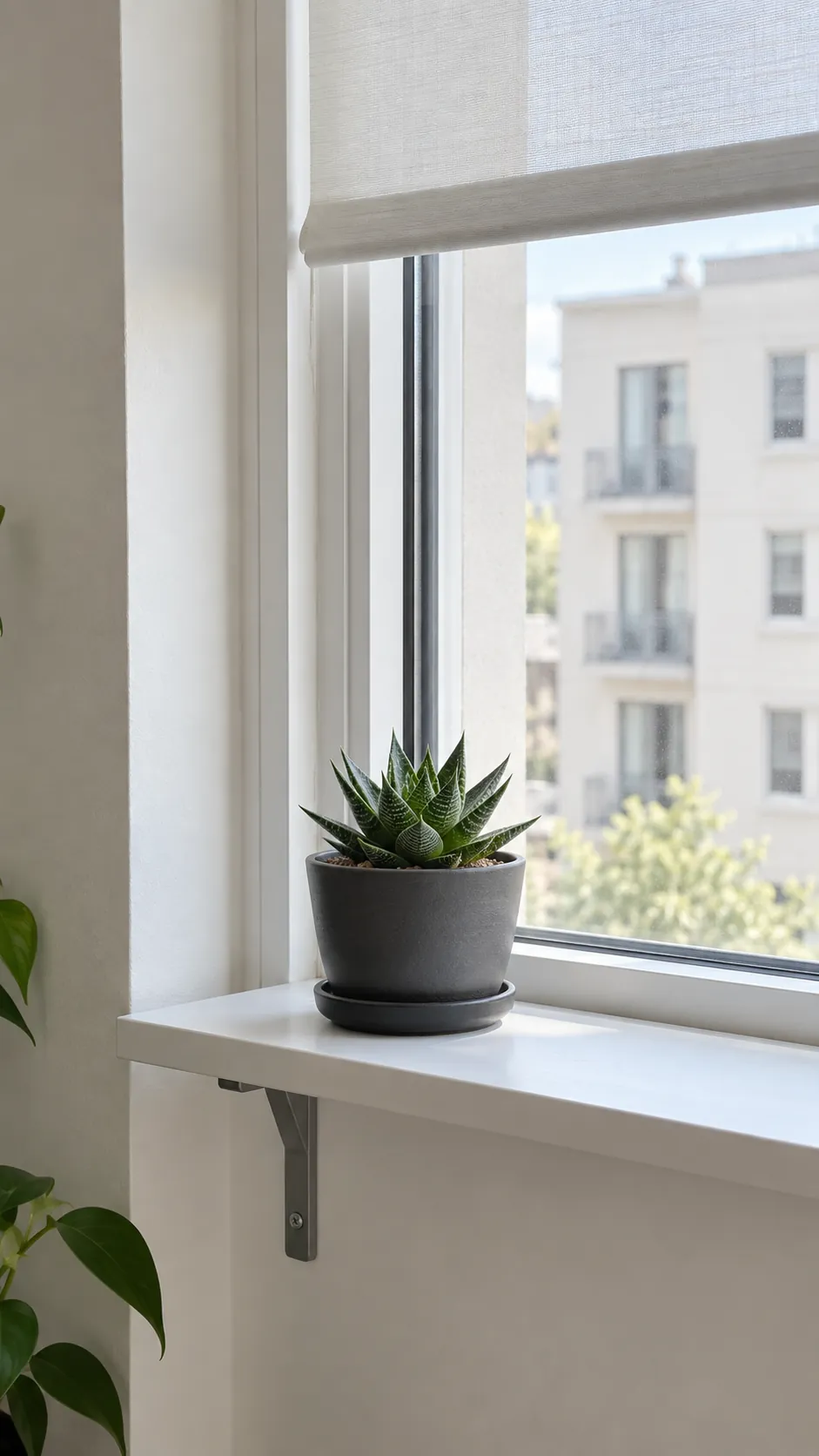
Most familiar desert succulents need bright conditions, but individual species differ. Echeveria commonly needs stronger light than many indoor haworthias, while holiday cacti have different requirements again. Identify the plant instead of assuming every succulent belongs in the same sunny bowl.
A stretched stem with widely spaced new leaves can signal insufficient light. Move a plant toward stronger light gradually, especially after purchase or a period indoors, because abrupt intense sun can scorch foliage. If your preferred shelf is dim, use an appropriate grow light or choose another location rather than expecting a pale ceramic pot to compensate.
Let the plant and mix guide watering
For many common desert succulents, allow the mix to dry appropriately between thorough waterings instead of giving frequent small splashes. Check below the surface where possible and learn how the pot feels when dry compared with after watering. A dry top layer alone can be misleading in a deep glazed vessel.
Water the growing medium, let excess escape freely and empty the saucer. Avoid leaving water caught in a rosette or allowing the pot to stand in runoff. Growth stage, season, warmth and light all change the interval, so a fixed weekly schedule can fail even when the pot and mix are suitable.
Choose your decorative finish after you have a workable routine. Smooth cylinders, softly ribbed pottery and restrained succulent pot painting can all look good without making access difficult. Before buying a ceramic succulent planter, picture yourself lifting it, checking the mix and emptying the tray; the best design makes those ordinary tasks easy.