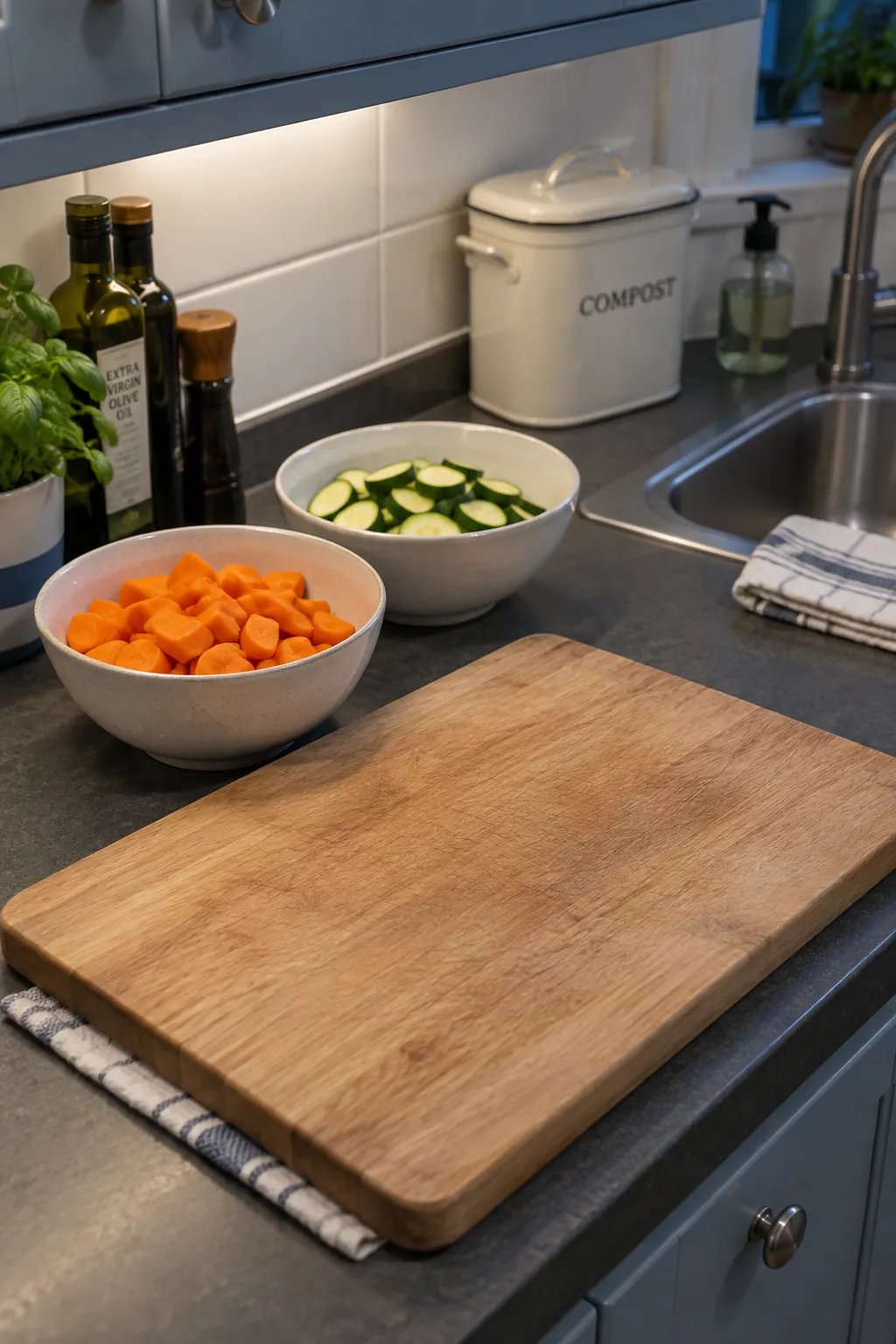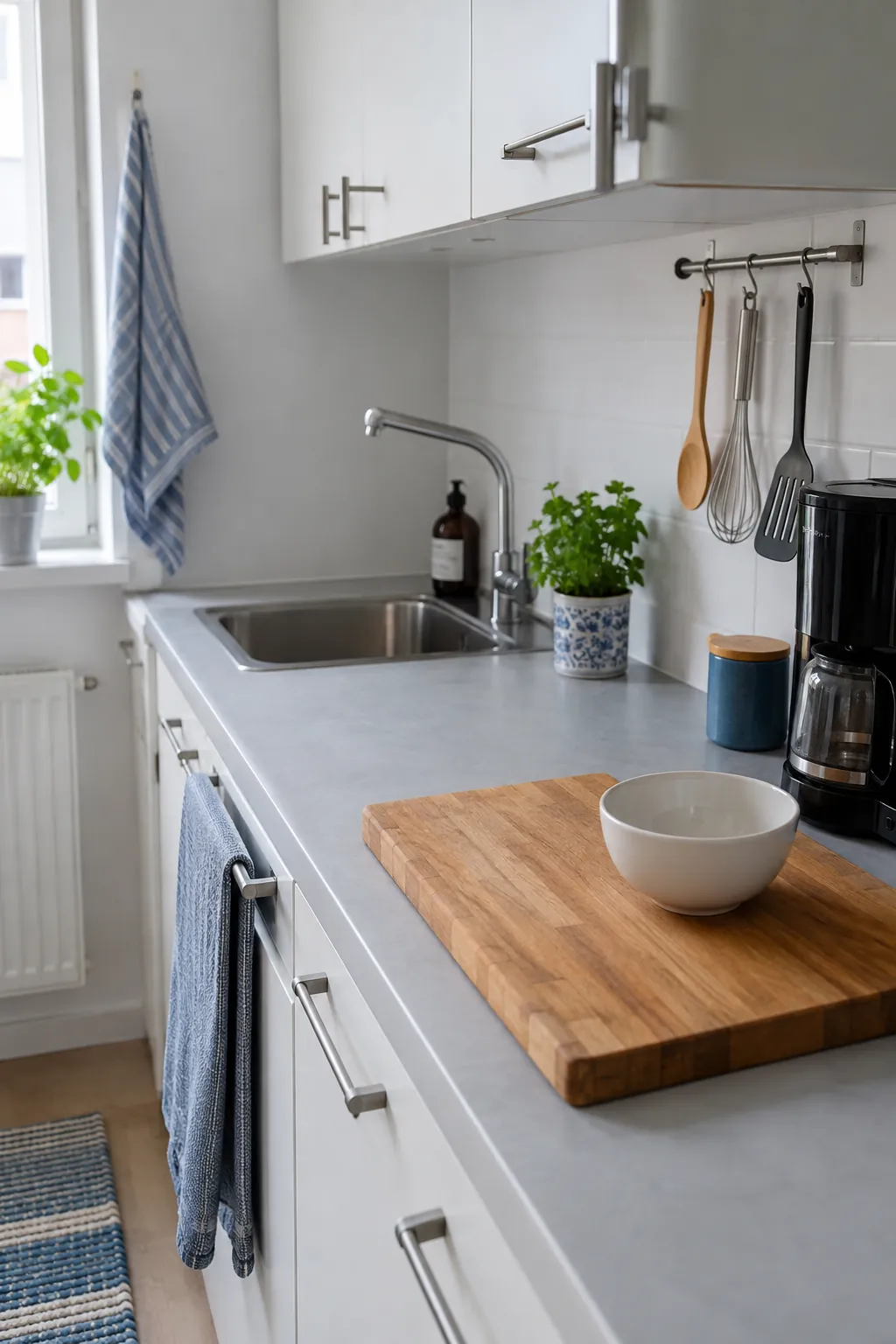
If you have to move the toaster before you can put down a cutting board, dinner starts with rearranging the room. The most useful change is a clear, continuous patch of worktop. Recover that first, then decide whether a temporary surface or better storage will solve the remaining squeeze.
Protect one useful preparation area
Choose the stretch of counter where you can comfortably chop and assemble a meal. Put your usual cutting board there and leave enough space for a bowl beside it. This physical footprint is more useful than a general promise to keep the kitchen tidy.
Remove the items that prevent that setup from fitting. Mail belongs outside the cooking zone, spare bottles can move to suitable storage, and a utensil crock may be replaced by a drawer insert. Countertop decluttering should recover a continuous working area; several tiny gaps between appliances are much less useful.
Keep necessary landing space beside cooking equipment and access to controls clear. Do not make a stove cover part of your daily storage plan. Burners, hot surfaces, and accidental activation turn that apparent extra shelf into a poor place for a cutting board or a basket.
Decide which appliances deserve a permanent spot
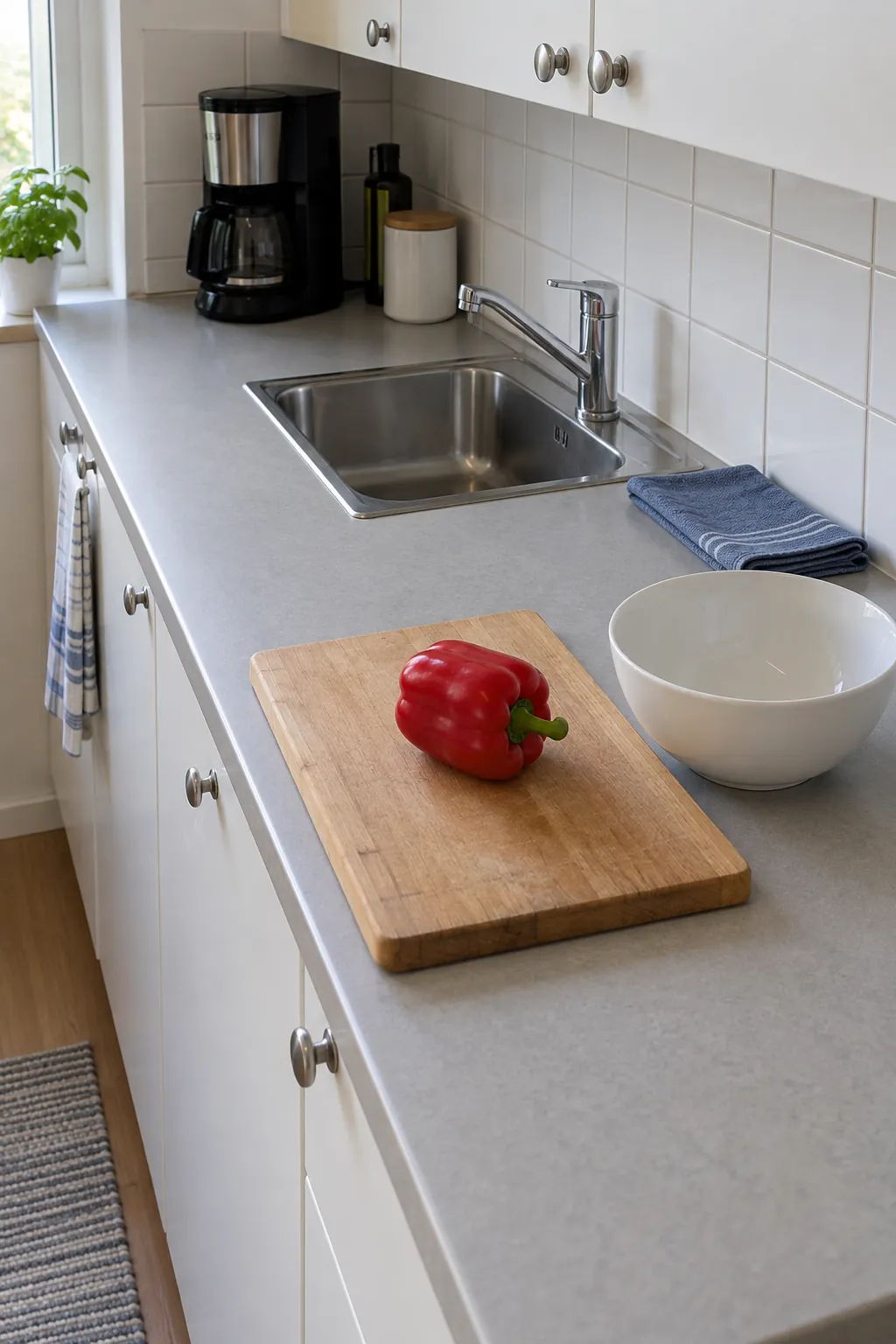
Keep frequently used appliances where their operating instructions allow, and store occasional ones where you can retrieve them safely. A daily coffee maker and a weekly food processor do not necessarily deserve the same counter priority. Consider weight as well as frequency: a heavy appliance you cannot comfortably lift needs a different solution from a light hand mixer.
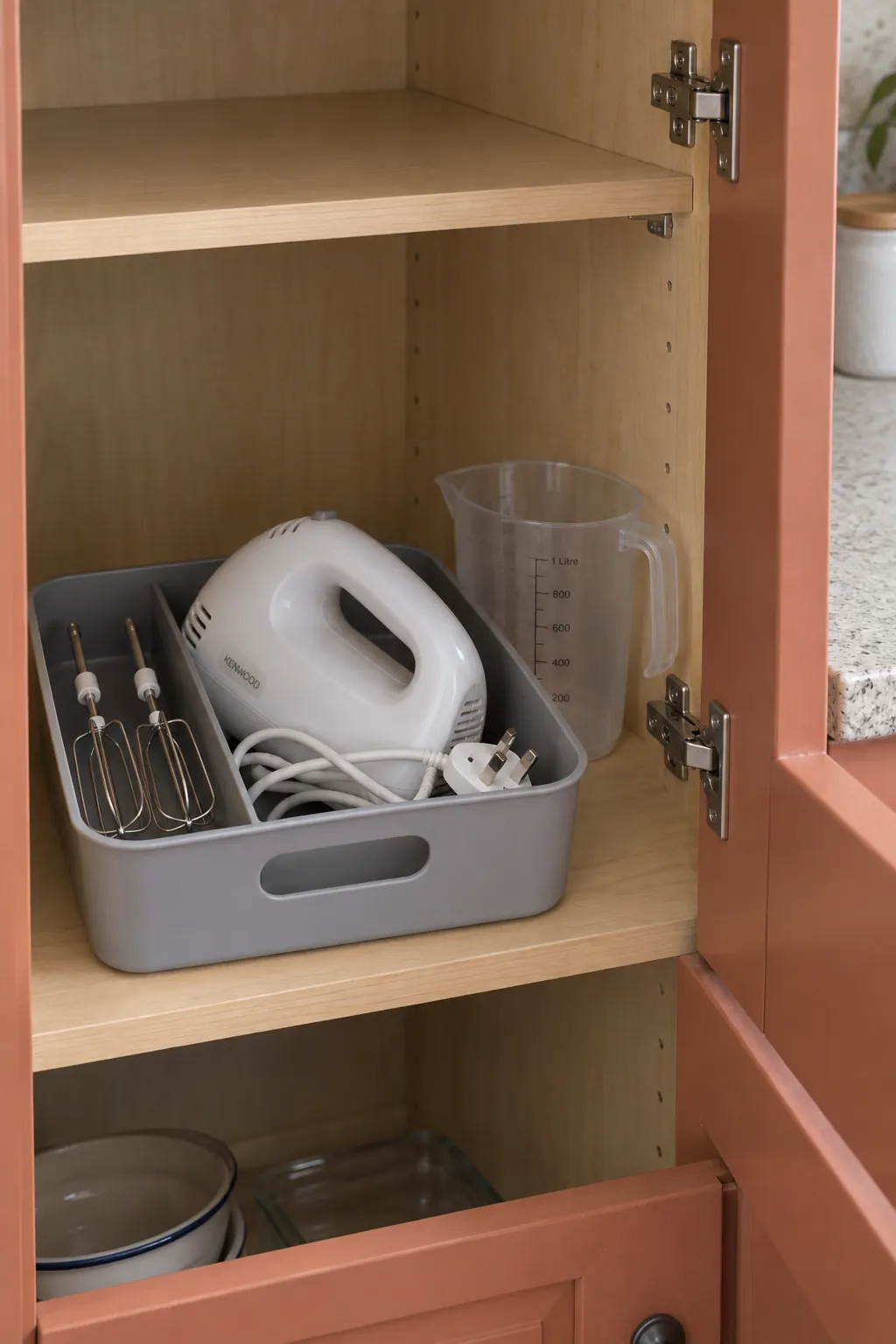
Group accessories with the machine they belong to, so putting it away does not become a search for attachments. Wait until an appliance is cool, clean, and dry before storing it. Avoid stacking unrelated items in front of its storage space, or the appliance will soon remain on the counter again.
Appliance garage ideas can improve visual order, but an enclosure occupying countertop depth does not automatically create more preparation area. Check operating clearances, ventilation, door movement, electrical requirements, and the appliance instructions. Portable cooking appliances generally need a suitable open operating location; do not assume a closed cupboard is safe because an outlet fits inside it.
Borrow sink space only when you can spare it
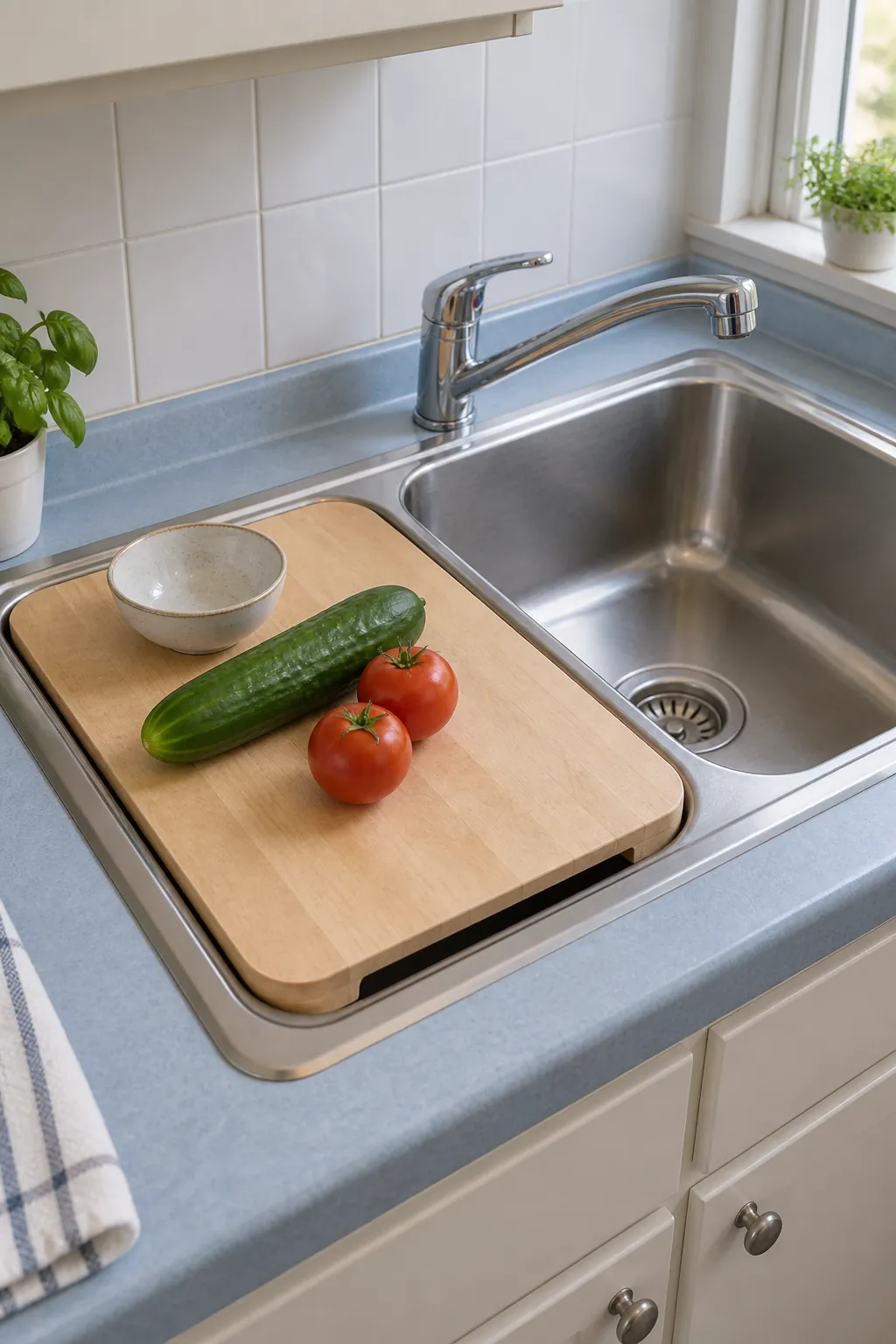
A purpose made over sink cutting board can add a temporary preparation surface when it fits your sink securely. Measure the support points, check for rocking or sliding, and follow the board’s intended use and load limits. An ordinary board balanced across an opening is not an equivalent solution.
Wash produce first, clear the basin, and set the board in place only for the task that needs it. Keep another route to handwashing available, or remove the board when needed. After preparation, wash and dry the board and put it away so the sink returns to its primary job.
A roll up drying rack can likewise free the adjacent counter between washes. It trades access to part of the basin for drying space, so choose it according to how you use the sink. Do not leave the entire wash area permanently covered in dishes and expect meal preparation to become easier.
Move small tools onto suitable vertical storage
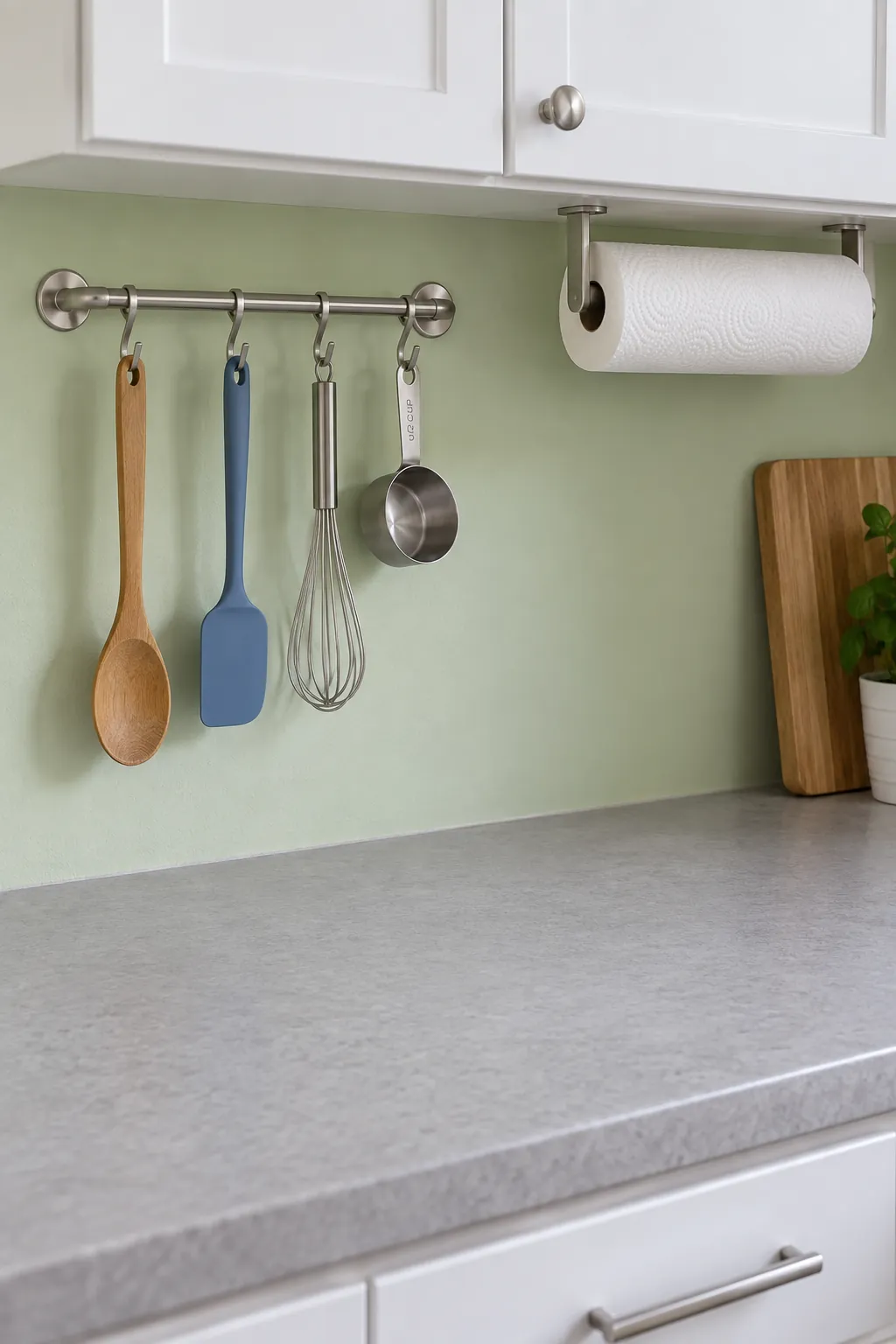
A wall mounted kitchen rail can remove a utensil crock from the counter while keeping a few daily tools visible. Install it into a suitable surface with appropriate fixings, observe its load rating, and check the position for reach and clearance. Keep hanging fabric, tools, and combustible items away from cooking heat.
Under cabinet storage can hold a paper towel roll or another lightweight item without occupying the work surface. Make sure it does not obstruct lighting, outlets, cabinet doors, or appliance clearance. For renters, use only a mounting method permitted by the lease and suited to the surface; adhesive hardware has limits and is not a substitute for secure mounting of heavy objects.
Add a surface that has somewhere to live
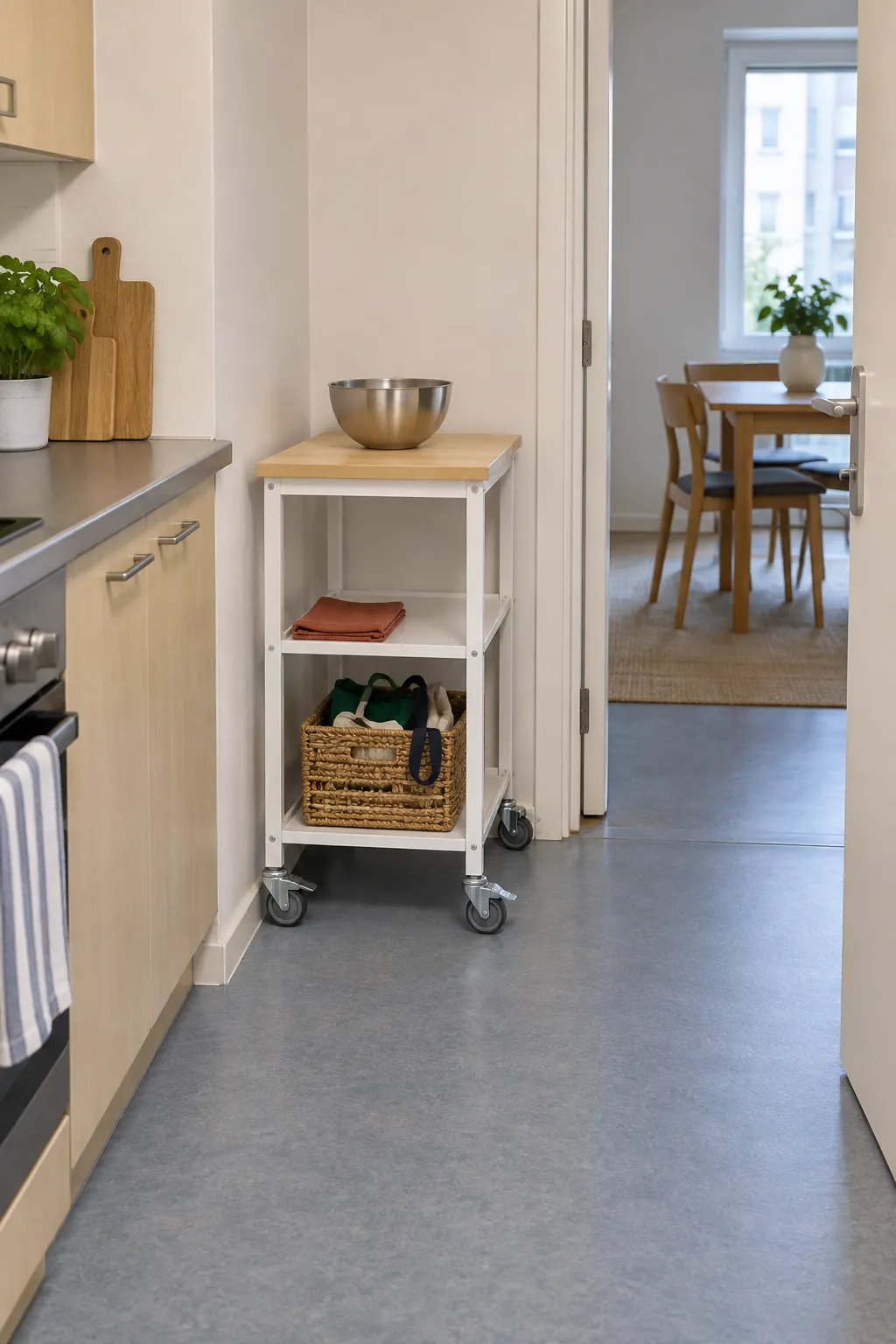
A slim rolling cart helps only if it has a parking place outside the main passage. Measure the cart with handles included and check that nearby doors still open. Lock its casters when using its top, stay within its load rating, and avoid leaning on it as though it were fixed cabinetry.
Use the lower shelf for lightweight supplies or a bowl rather than turning the top into permanent appliance storage. If the cart must be unloaded before every meal, you have added another cluttered surface. A small dining table can also serve as an assembly area after it is cleaned and cleared.
A fold down kitchen counter is an option when wall construction, permission, and circulation allow it. Use rated brackets and suitable anchoring, account for the folded thickness, and check that the deployed surface does not block an exit or necessary walkway. Treat installation as a hardware and building suitability question, not simply a way to attach a board to a wall.
Reset the space between stages of cooking
In a very small kitchen, sequence creates room that storage alone cannot. Wash and chop vegetables, move them into a few appropriately sized bowls, then clear scraps and return ingredients before starting the next stage. You do not need a separate container for every spoonful if that fills the whole work area.
Clean tools as the recipe allows and dry and return them when practical. Maintain food safety: keep raw animal foods separate from ready to eat ingredients, wash hands and contact surfaces appropriately, and refrigerate perishables promptly. More space is useful only if the workflow remains suitable for the food you are preparing.
At the end of a meal, return the preparation area to the footprint you chose at the start. If a particular appliance keeps taking it over, reconsider that appliance’s home or the order of your tasks. Small kitchen counter space works hardest when it is available at the moment you need it.