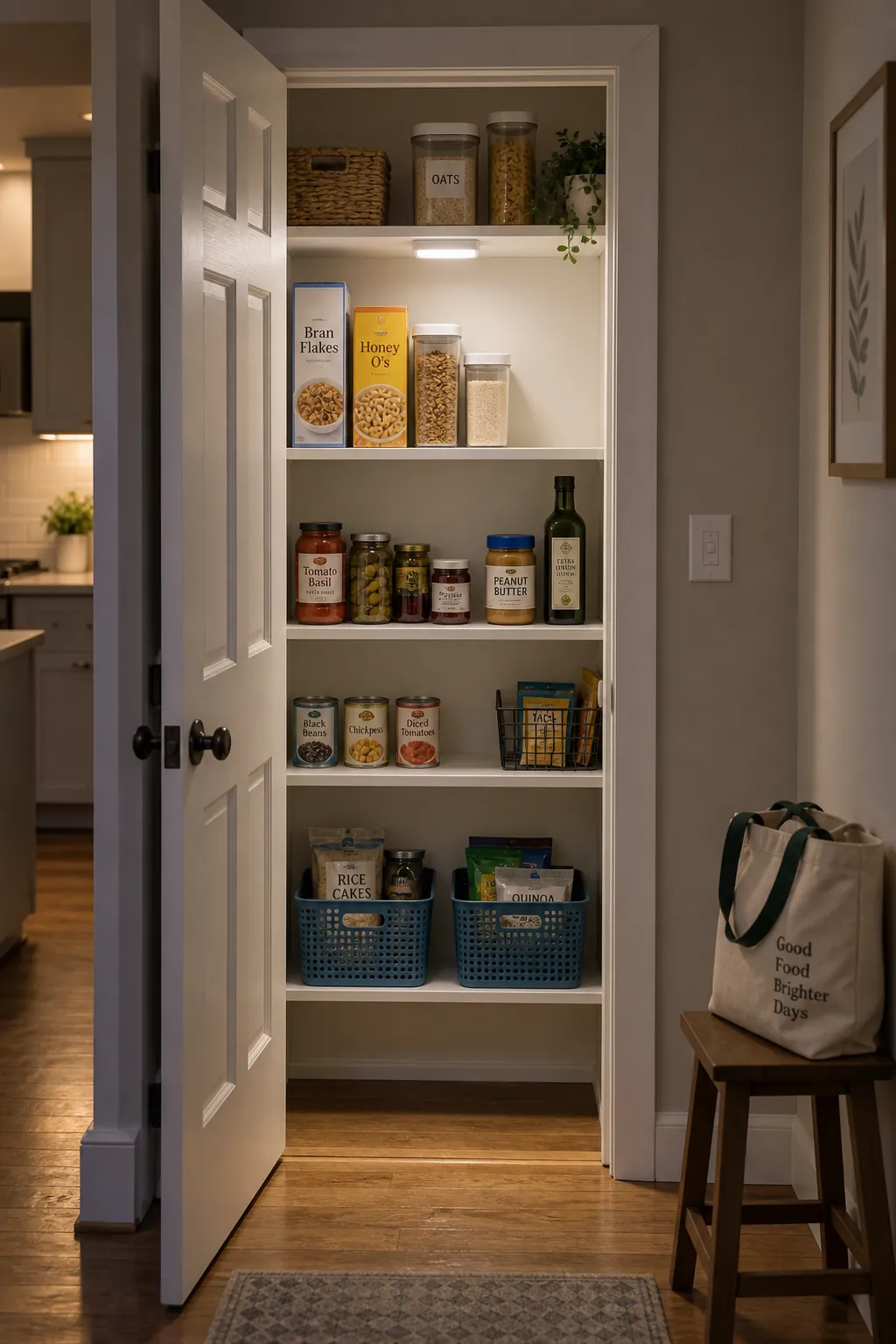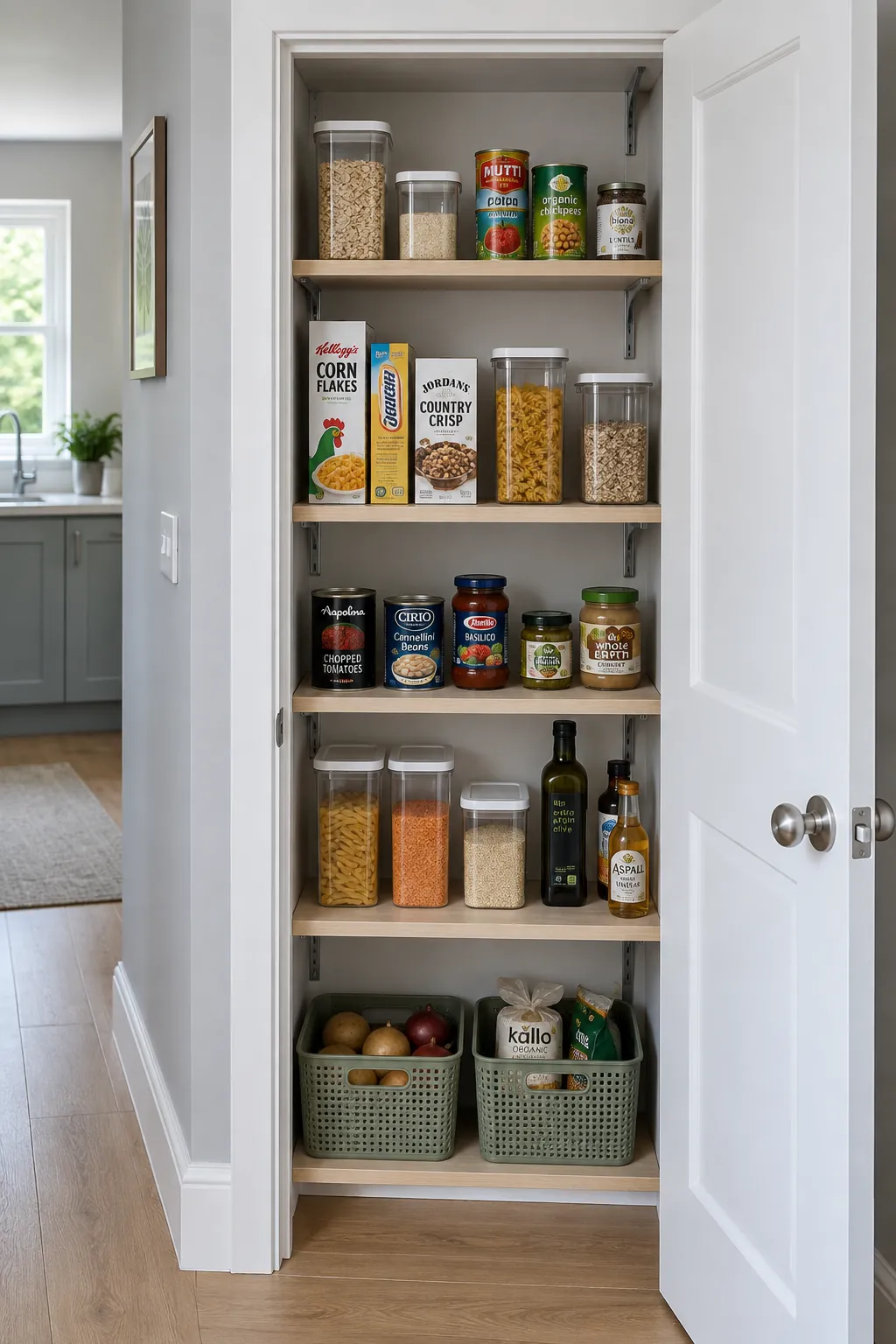
An unused closet can hold plenty of groceries and still be frustrating if the back row disappears behind cereal boxes. Before adding shelves, decide how you will see, lift and replace the food. A little empty space in the right place is often more useful than another deep shelf.
Confirm the closet is suitable for food storage
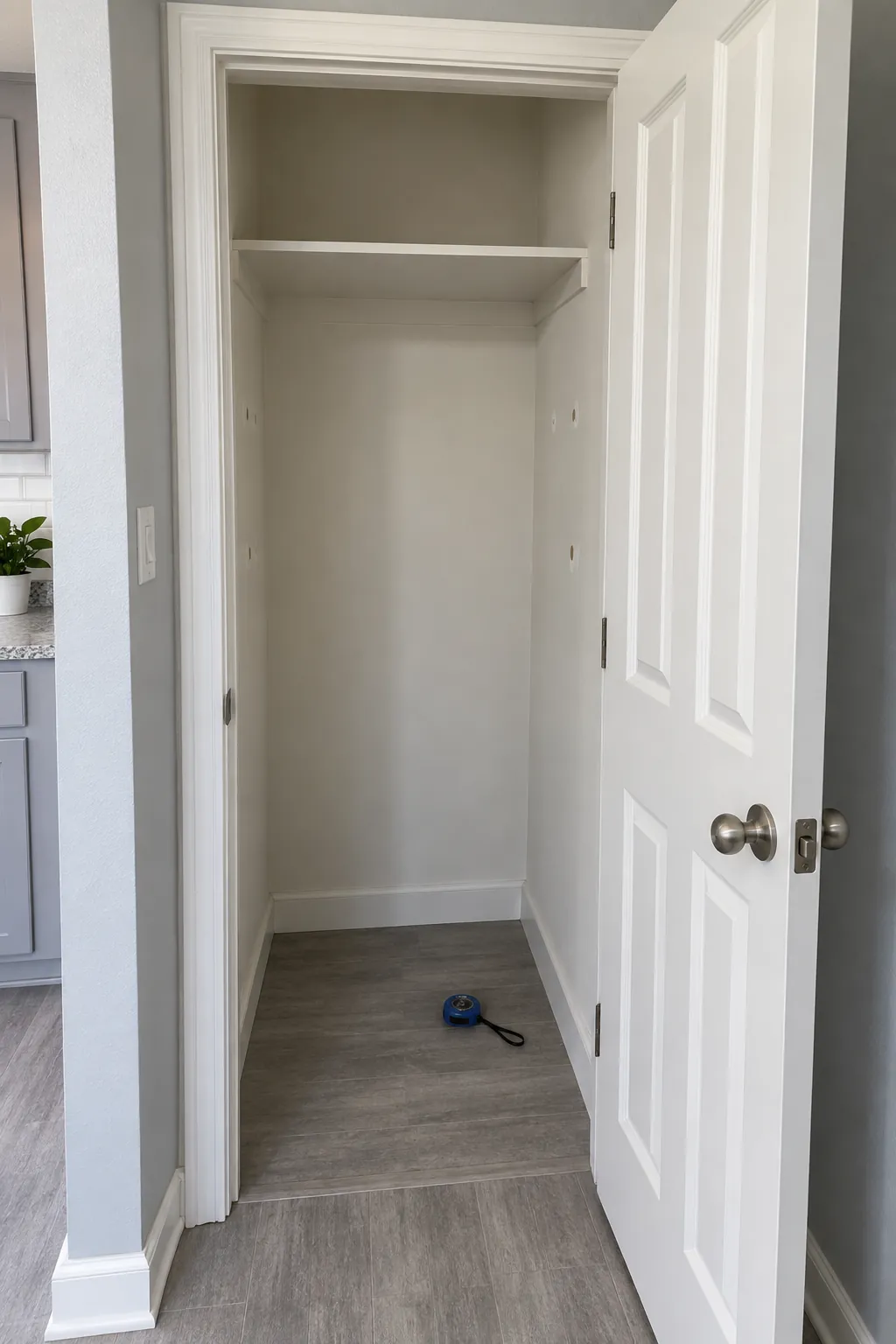
A useful pantry starts with a clean, dry location that stays reasonably cool. Empty the closet and check for leaks, damp patches, pests and persistent odors before covering anything with new shelves. Resolve those problems first, and move household chemicals and cleaning supplies to a separate storage area.
Do not convert a utility closet if food storage would obstruct equipment, ventilation, an electrical panel or required service access. For a former coat closet, find a workable new home for the coats before committing to the conversion. In a rental, confirm what alterations are allowed and retain removable closet fittings if they need to be restored later.
Plan the shelves around what you can reach
Measure the interior width at several heights, the depth, the door opening and the space behind each side of the door frame. A shelf can fit wall to wall while its outer corners remain difficult to reach through a narrow opening. Include hinges and any proposed pantry door storage in your clearance measurements.
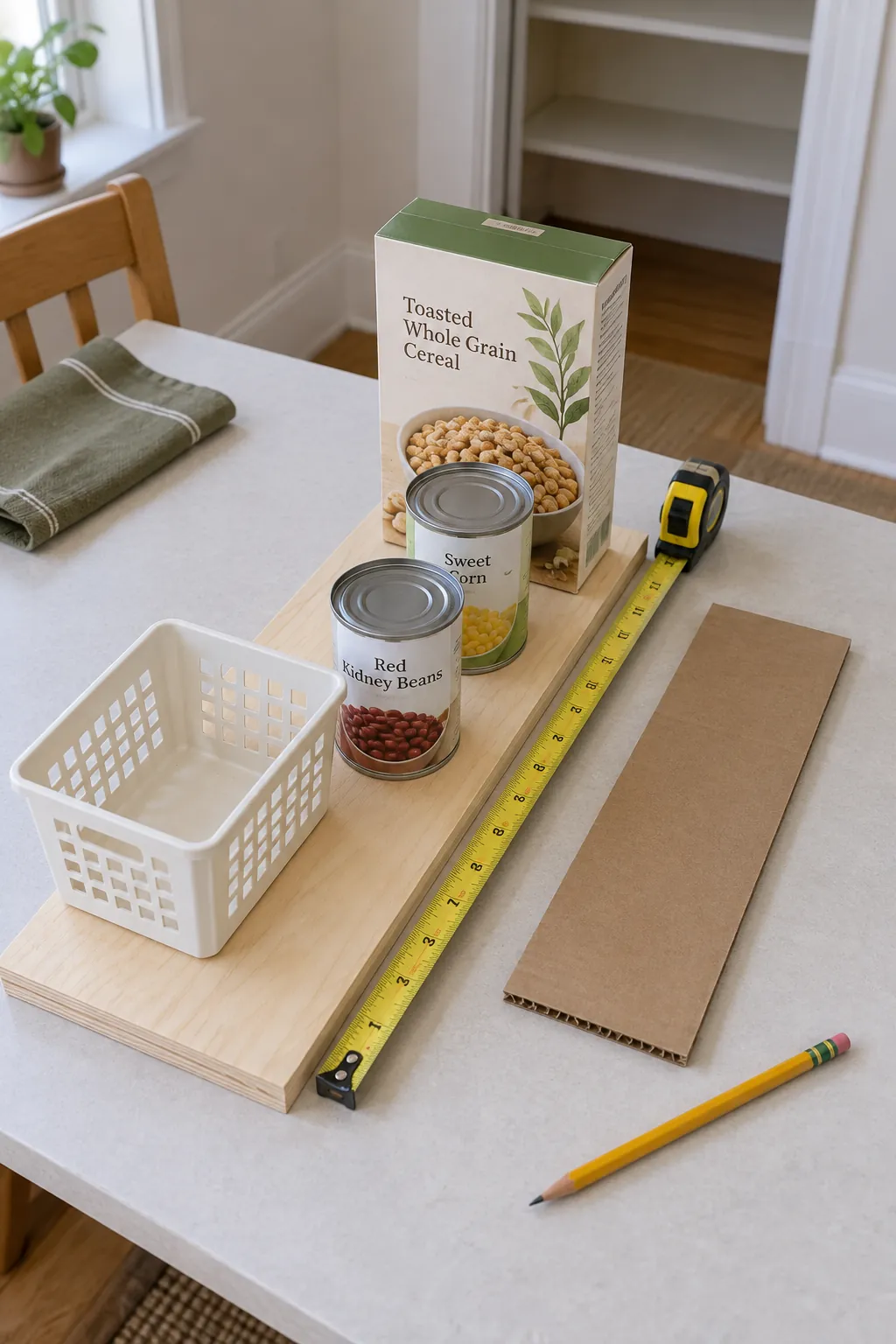
Use a few empty grocery packages to test shelf depth before buying a closet shelving system. Place a can behind a cereal box and try to retrieve it from the doorway. If you have to unload the front row, a shallower shelf or a removable basket may serve you better than a deeper surface.
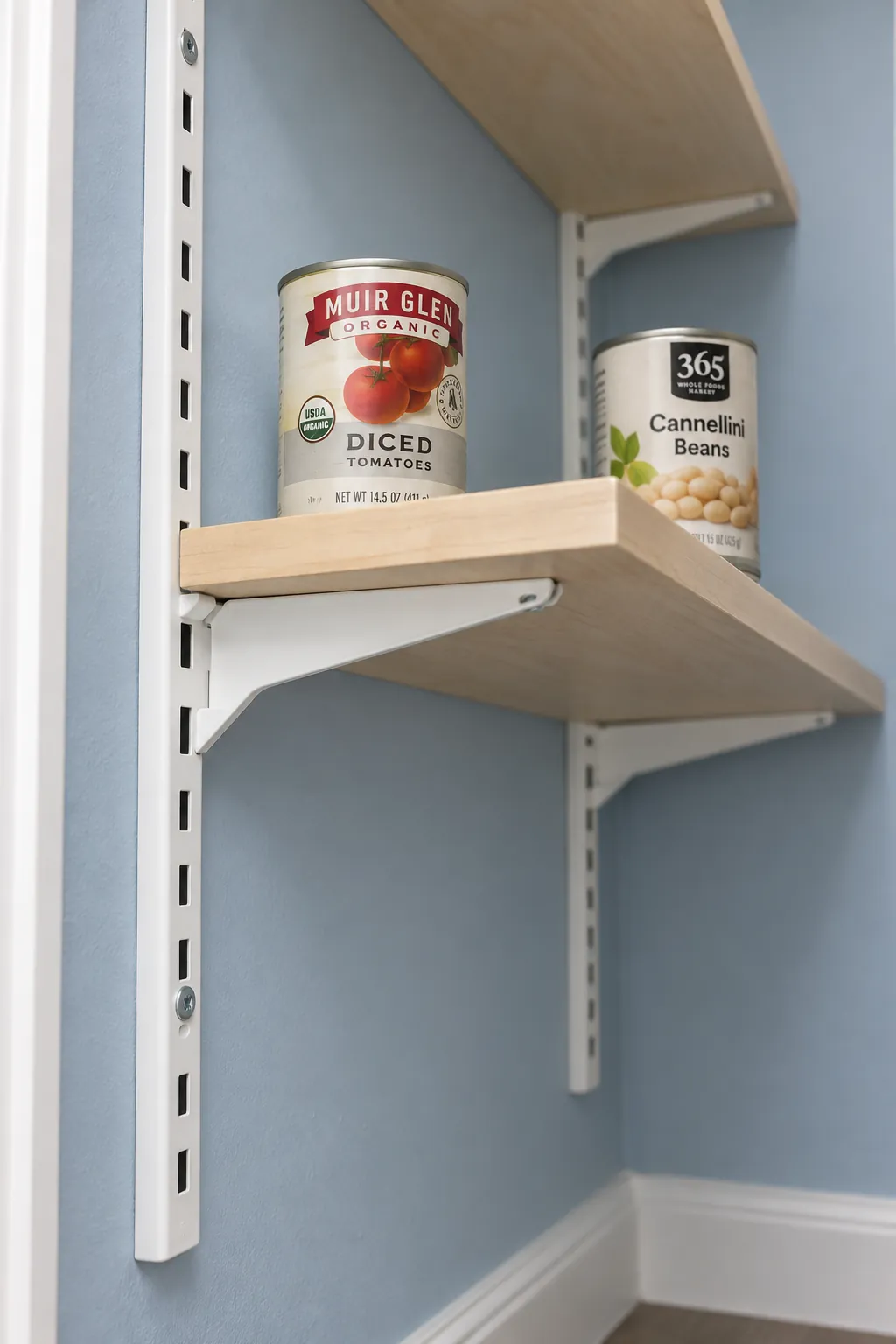
Adjustable pantry shelves let you reserve taller gaps for cereal and oil, with shorter gaps for cans and jars. Leave room above each item for your hand, not just enough room to slide the container in. In a very small closet, one simple bank of shelves can work better than wrapping shelves around every wall and creating inaccessible corners.
Choose supports for the loaded shelves
Canned food, flour and glass jars add up quickly. Choose a shelving system with a stated load rating and install it for your wall construction according to its instructions. The capacity depends on the complete setup, including shelf material, span, brackets, fasteners and the structure carrying them.
A former clothes shelf is not automatically ready for rows of cans. For a custom wood installation, have the shelf span and support arrangement checked rather than copying a board thickness or cleat size from a different closet. Long shelves may need intermediate support even when their ends feel secure.
Finish shelf surfaces so they are smooth and easy to wipe, and let coatings cure as the product directs before bringing food back. If drilling is not suitable, consider a properly rated freestanding unit that fits through the opening, following its stability and anchoring instructions. Never make an unstable unit acceptable by loading its upper shelves more carefully.
Use the door only after checking the closing space
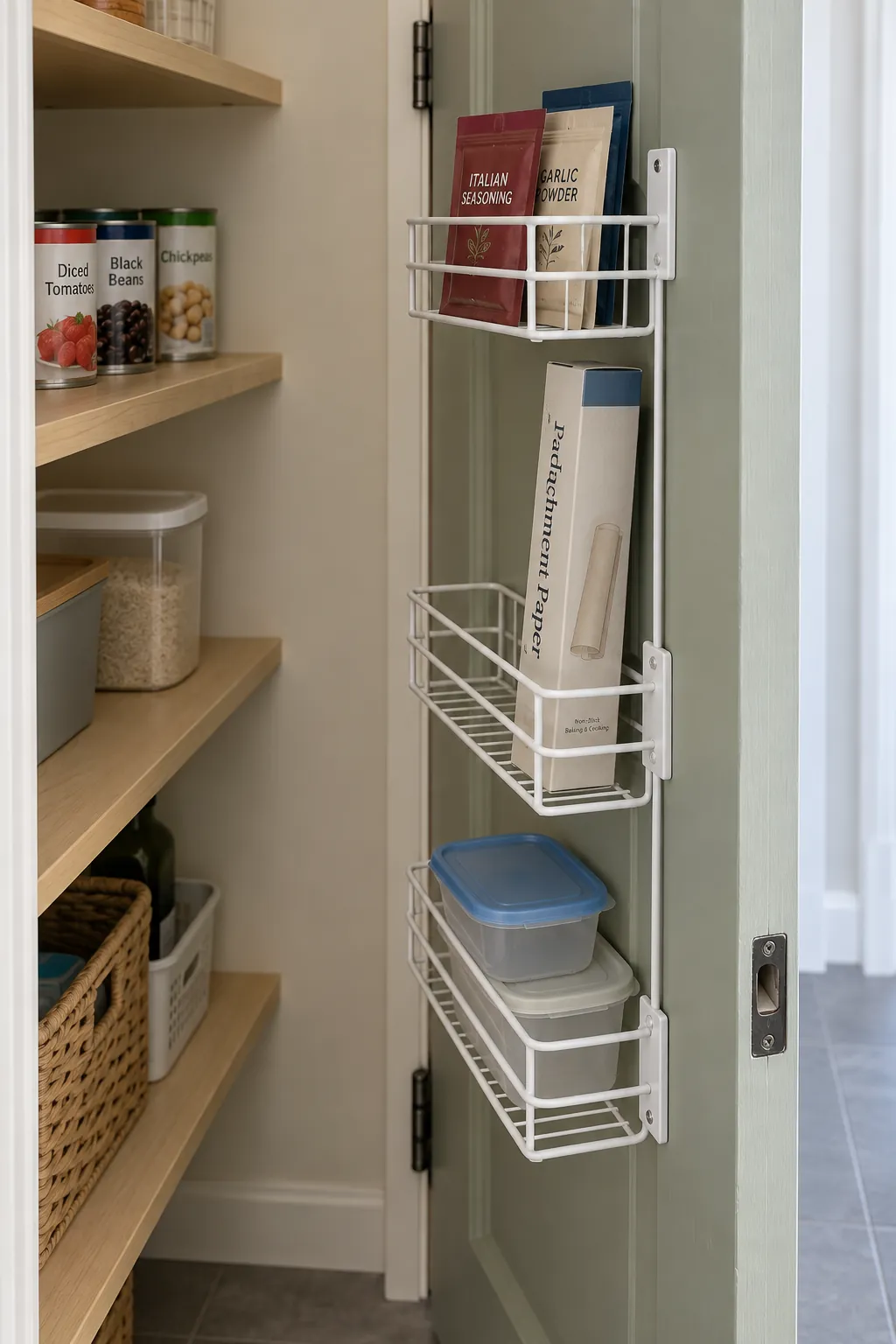
Pantry door storage is useful for light packets, wraps or a few small containers when the door and hardware can support them. Close the door slowly with sample items in the proposed positions before installing a rack. Its baskets need to miss the shelf fronts, hinges and anything projecting from the shelves.
Follow the rack maker’s mounting and weight limits, especially on a hollow door. Hooks that hang over the top must also clear the frame without scraping or preventing the latch from engaging. If the door is narrow or folds into the opening, leaving it bare may preserve better access than adding storage.
Make each shelf easy to scan and reset
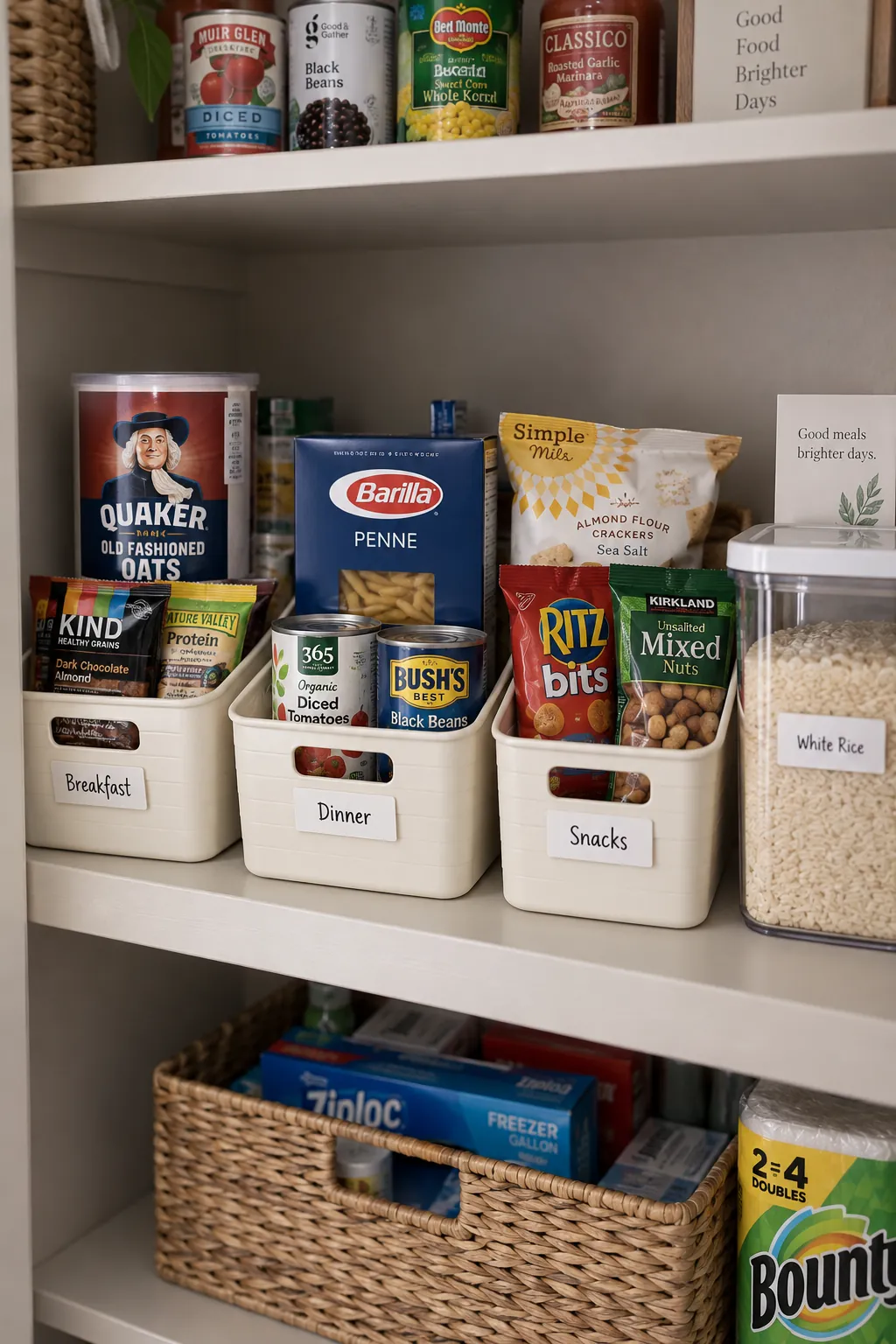
Group foods by how you use them: breakfast, baking, quick dinners and snacks are more useful starting points than arranging everything by package color. Put the everyday group within your comfortable reach, with heavier goods on sturdy lower shelves that you can access safely. Keep the floor clear enough to clean and avoid unstable stacks overhead.
Food storage baskets help corral small packets, but choose ones you can lift when full. A low front makes contents easier to see. Keep one category in each basket and use plain labels where they help other people put things back.
Decant only when it solves a real problem, such as an opened bag that needs a suitable sealed container. Retain the food identity, allergen information, preparation instructions and relevant date or lot details. Place older stock in front and check what is already there before shopping; uniform jars are optional.
Add useful light and test the weekly routine
A compact kitchen pantry needs enough light to read labels at the back. A suitable battery light can be a simple option where there is no fixture, provided it is securely mounted and used according to its instructions. Keep shelves and stored packages clear of lights, and use a qualified electrician if the project needs new permanent wiring.
Load the pantry gradually and check that shelves stay level and supports remain secure. Open the door fully, remove a basket, put away a grocery bag and reach for the heaviest item. These everyday movements reveal problems that an empty closet cannot.
After the first shopping trip, adjust the shelf spacing or move one food group if the layout is awkward. Leave some spare room for changing groceries rather than buying containers to fill every gap. The small pantry makeover is finished when you can see what is there and put the next shop away without rebuilding a shelf.