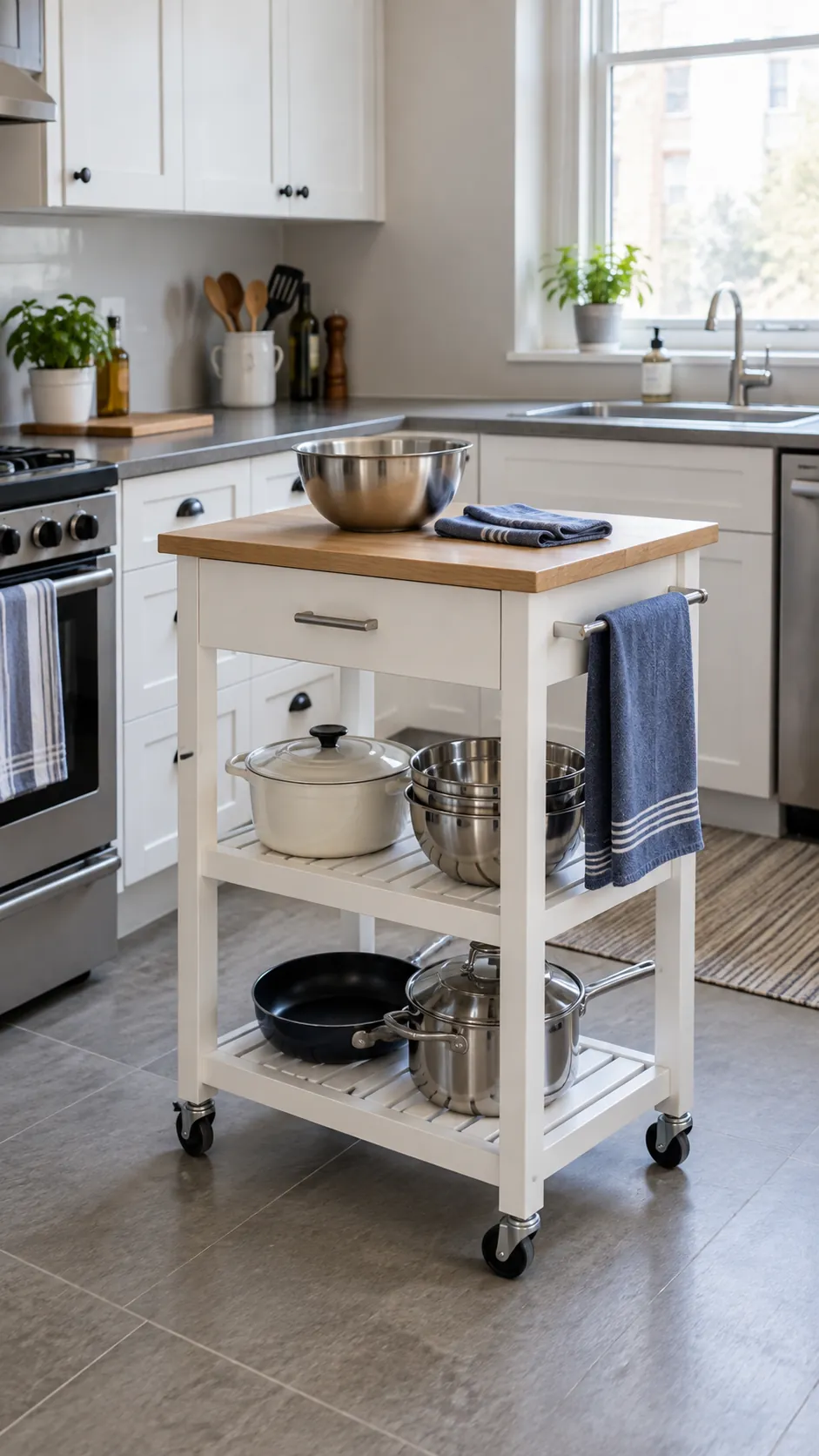
A cart can give you another work surface, or it can become the thing you keep moving to open the dishwasher. The difference starts with choosing one main job and a parking spot before loading the shelves.
Use the top for the task that currently crowds your counter. Put its supplies underneath, keep the heaviest suitable items low, and leave enough room to reach everything without unloading the cart. A rolling kitchen cart works best when it removes a daily obstacle.
Find a parking spot before choosing a setup
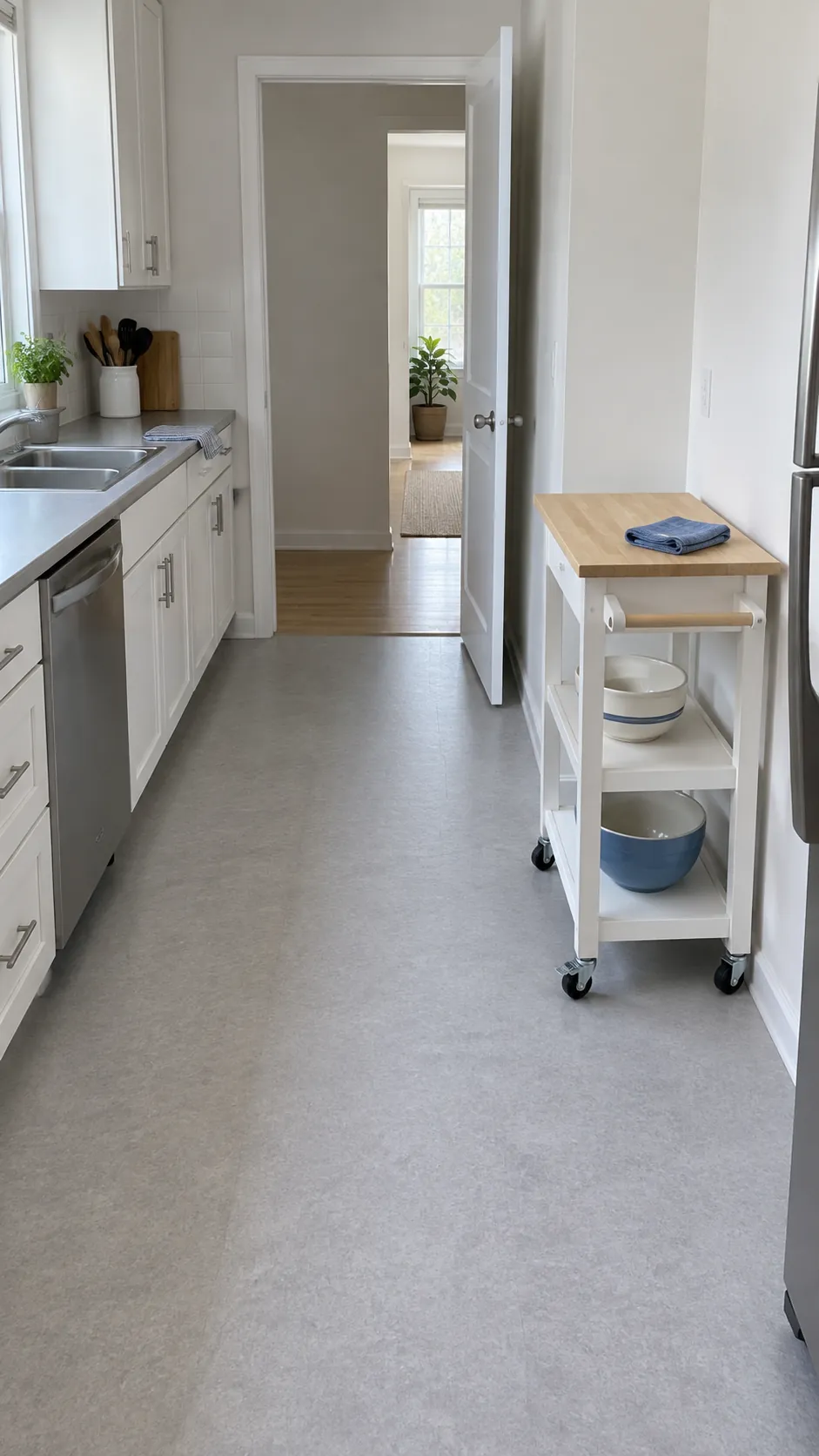
Measure the cart including handles, hooks, and anything that hangs off its sides. Mark that footprint on the floor with removable tape, then open the oven, refrigerator, dishwasher, and nearby drawers. Walk through with a grocery bag to see where your body needs more room than the measurements suggest.
For planning, a kitchen work aisle commonly needs about 42 inches for one cook and 48 inches for more than one, although accessibility needs and local requirements may call for different clearances. An appliance door can still interrupt that space when open. If the cart only fits by blocking an exit or forcing you to squeeze past a hot oven, choose a smaller footprint or park it outside the cooking zone.
A narrow rolling cart can occupy an unused wall edge, while a portable kitchen island needs space around the sides you actually use. Do not buy extra width on the assumption that you will move it for every meal. Test its everyday parking position first.
Turn the top into a dependable prep surface
A kitchen prep cart should feel steady before a knife touches the board. Assemble it according to its instructions, check the fasteners, and engage the wheel locks. Brakes stop rolling but cannot correct a loose frame or an uneven floor. If the surface rocks under ordinary hand pressure, use a stable counter for cutting until the cause is fixed.
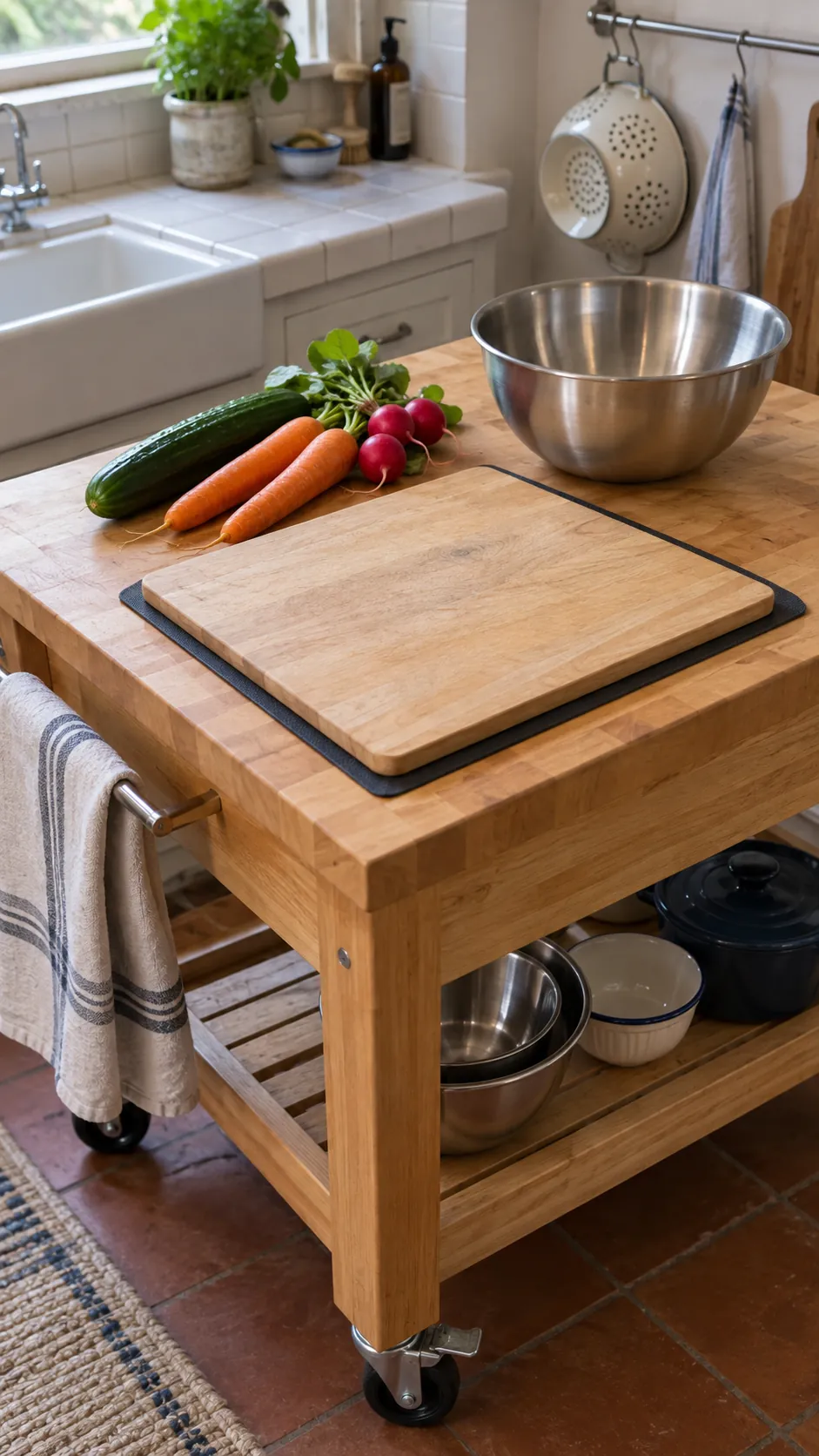
Keep a cutting board on a nonslip mat and reserve room for a mixing bowl or the ingredients you are using. Unless the manufacturer identifies the cart top as suitable for direct food preparation, prepare food on the board. Clean it after each task and keep raw meat preparation separate from ready to eat ingredients.
Store mixing bowls, a colander, and measuring tools directly below. Leave sharp knives in secure storage instead of loose on a shelf. The useful test is whether you can finish one familiar task, such as preparing a salad, without fetching supplies from three different cupboards.
Give each shelf a clear storage job
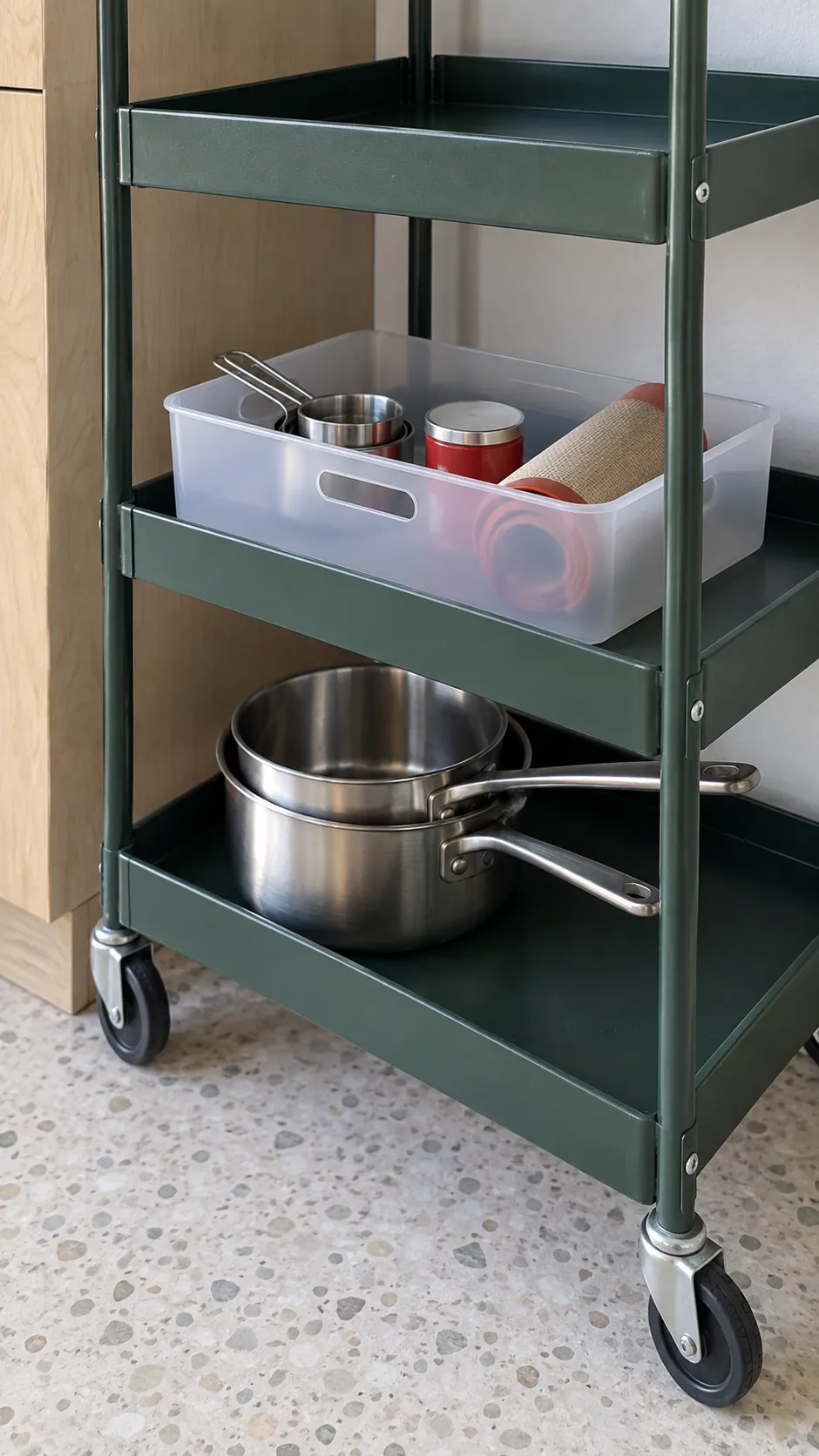
Small kitchen cart storage becomes awkward when every shelf holds a mixture of unrelated things. Put frequently used lightweight tools near the top and stable cookware on the lowest appropriate shelf. Check the total weight limit and each shelf limit separately; the overall rating does not mean one shelf can carry the entire load.
Choose shallow bins that pull out without catching the shelf above. A bin of baking supplies is useful when it holds the measuring cups, baking powder, and reusable liners you reach for together. A deep basket filled with several unrelated categories simply recreates the back of a crowded cabinet.
Leave handles facing the access side and keep objects inside the cart’s footprint. Store dry food in closed containers, away from heat and splash zones. Add only a few side hooks for lightweight tools; dangling bags and heavy pans can catch clothing or unbalance a small cart.
Make a coffee station that stays easy to refill
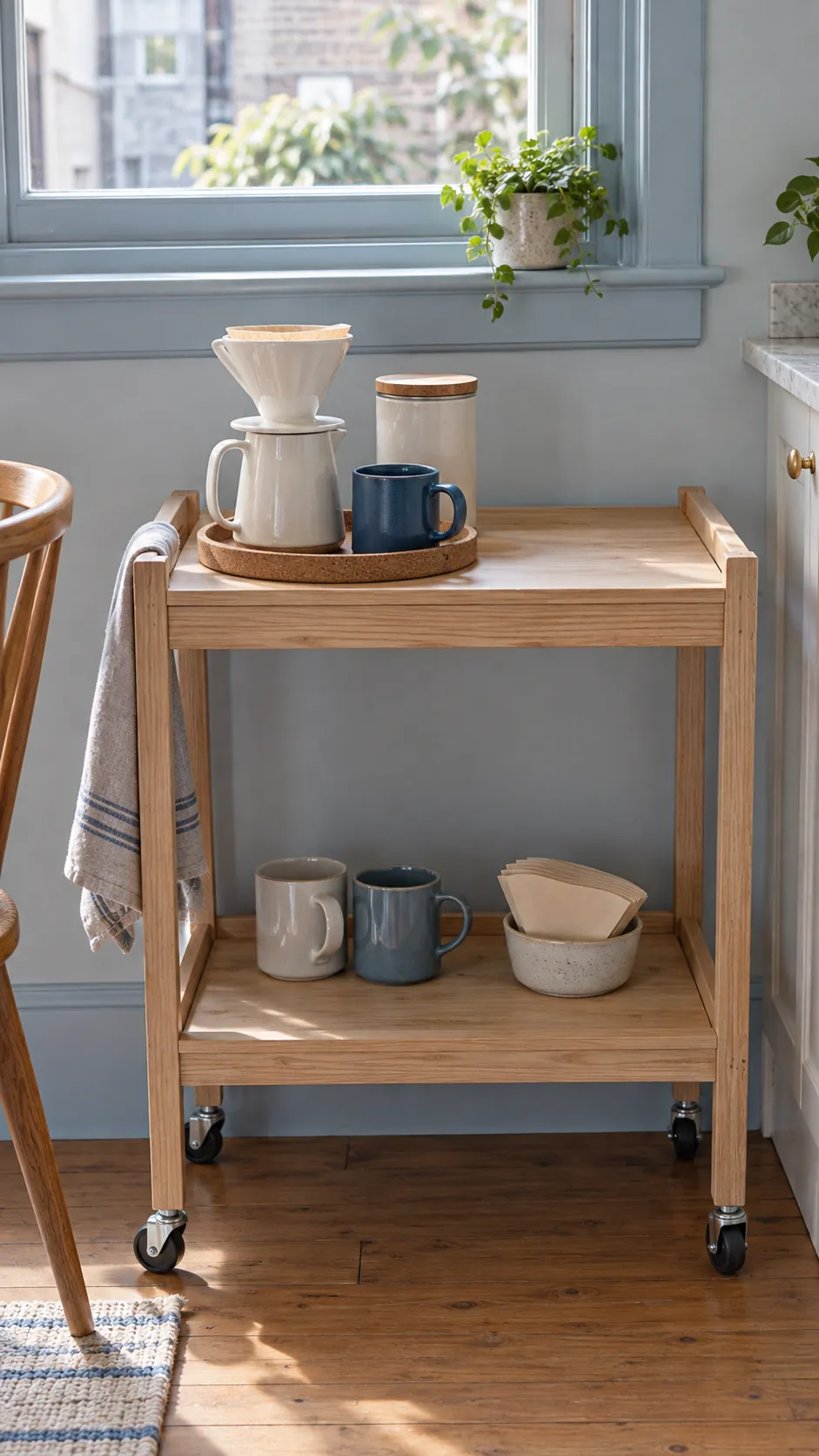
Coffee cart organization starts with the motions of making a drink: reaching beans or tea, filling water, setting down a mug, and emptying used grounds. Place a small tray under loose supplies and leave a clear landing area beside the machine. Keep spare filters and mugs below rather than covering the entire top with accessories.
For an electric coffee maker, park the cart near a suitable outlet with the cord safely clear of traffic, hot surfaces, and water. Follow the appliance instructions for electrical connection and overhead steam clearance. Unplug and let the appliance cool before relocating it; do not roll a working machine across the kitchen.
Check appliance requirements before reclaiming counter space
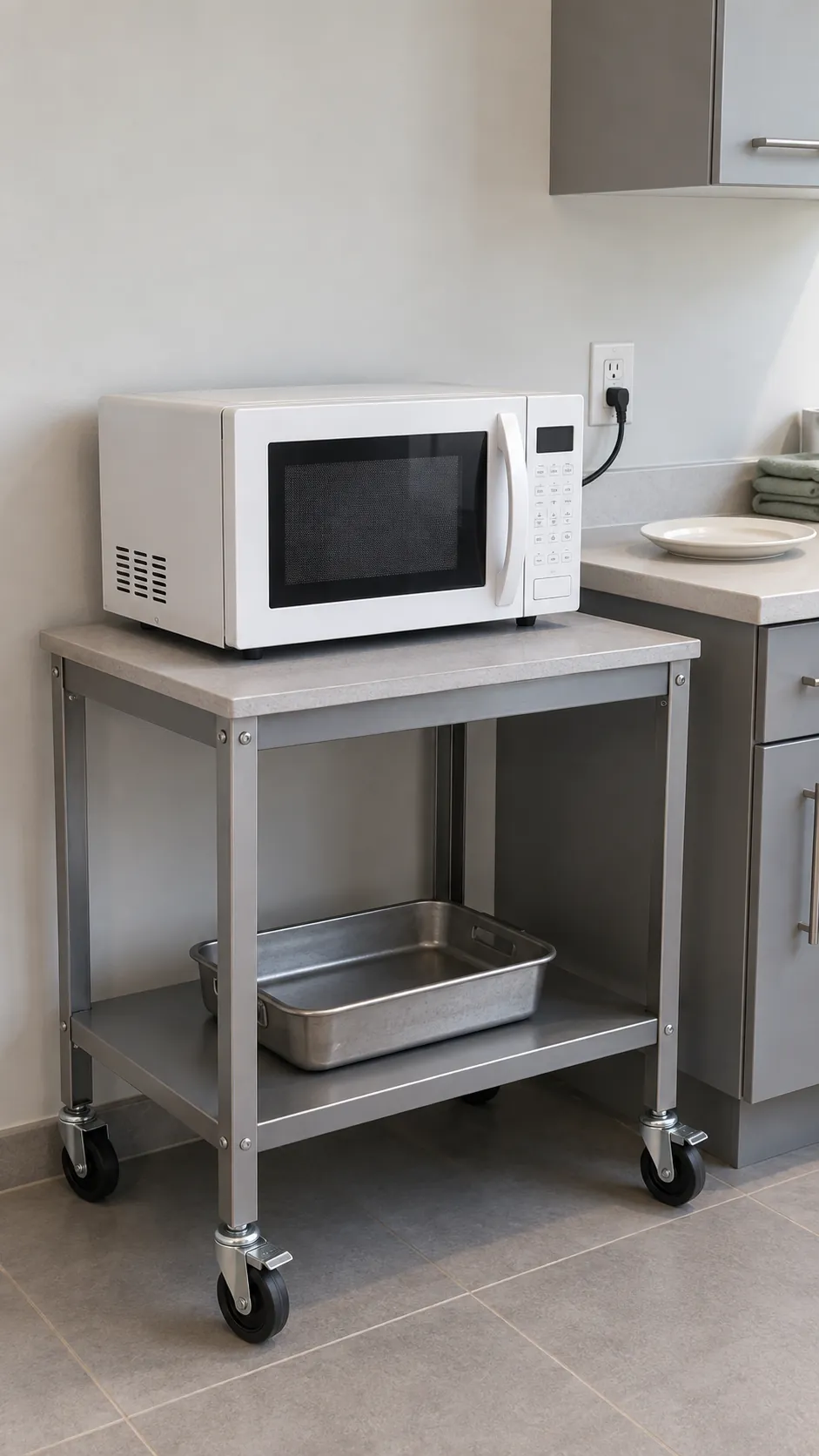
Microwave cart ideas need more scrutiny than a shelf for cereal bowls. Check that the cart supports the appliance’s weight and full base, then follow the microwave manufacturer’s ventilation clearances. A tight enclosure can block vents even when the machine physically fits. The door must open without pulling the cart toward you.
Place the appliance at a height where you can see and safely remove a hot dish. Keep a heat suitable landing surface nearby and follow the electrical instructions rather than improvising with an extension lead. If these conditions cannot be met, store a cool, unplugged appliance on the cart and use it on a suitable fixed surface instead.
A stand mixer adds movement as well as weight. A cart rated for static storage may still shake during mixing, so verify suitability for operation and stop if it moves. You may gain more practical counter space by storing attachments on the cart and leaving the mixer where it can run securely.
Use serving mode without losing the everyday setup
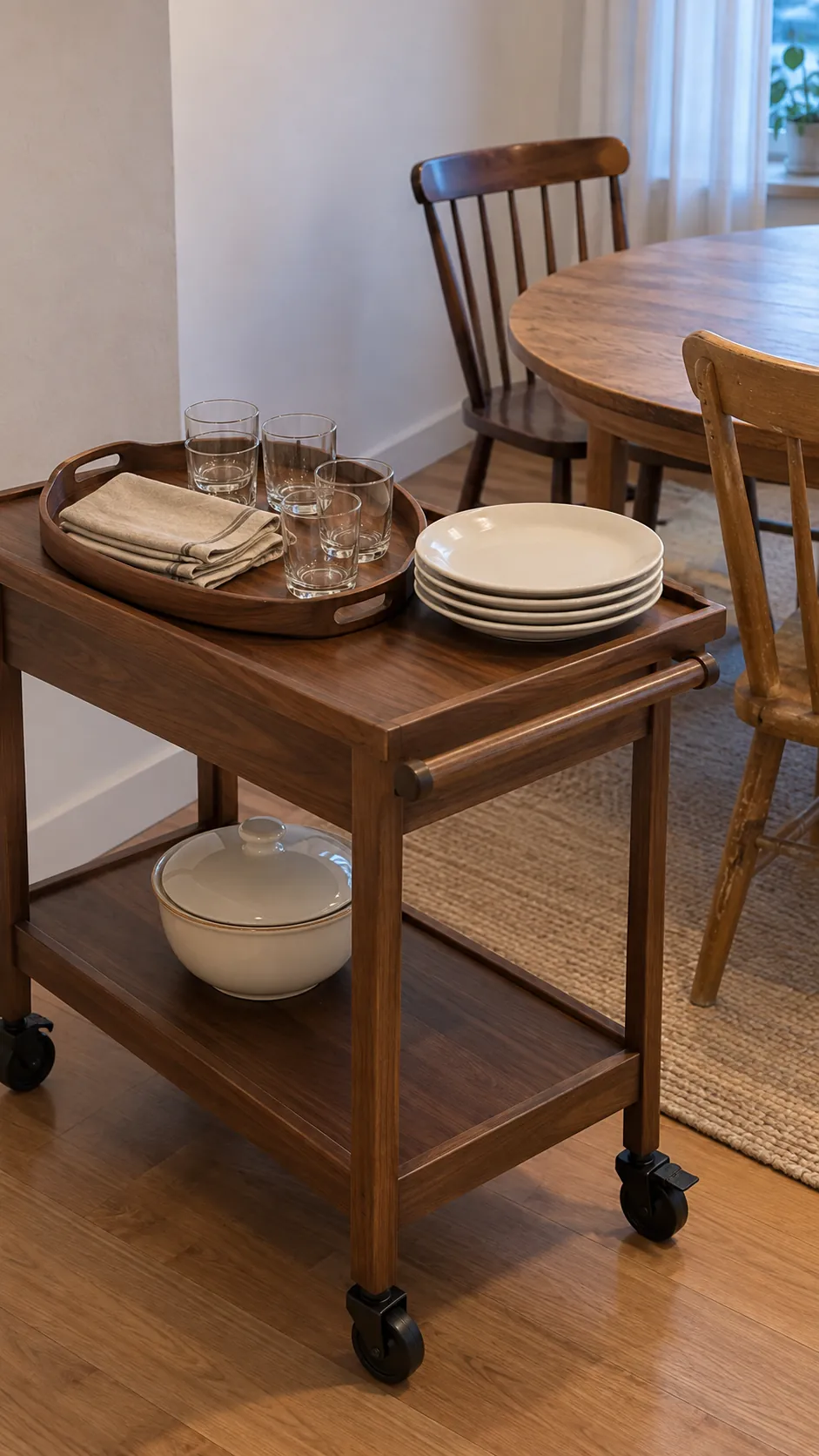
For a meal, a bar cart kitchen station can carry napkins, plates, and drinks to the dining area. Move it slowly with heavier items low and stable, then lock the wheels before serving. Carry very hot dishes separately and keep open drinks or tall glassware off the cart while crossing thresholds.
Use one removable tray for the temporary serving supplies. After the meal, lift that tray away and return the cart to its regular job instead of leaving party items to spread across every shelf.
At the end of the first week, notice what you had to move before you could cook. Anything that repeatedly blocks the work surface needs another home. The cart has earned its floor space when tomorrow’s dinner starts with a clear place to work.