A roomy drawer can still make you dig for a potato masher. Height helps with bulky cookware, but small tools disappear when they share one open box. Organize for the item you need to lift out, rather than trying to fill every inch.
Give each drawer a main category, separate pieces that tangle, and keep stacks short enough to use comfortably. Before buying organizers, check the interior dimensions, the clearance above the contents, and the drawer’s rated load.
Measure the usable space, including the closing clearance
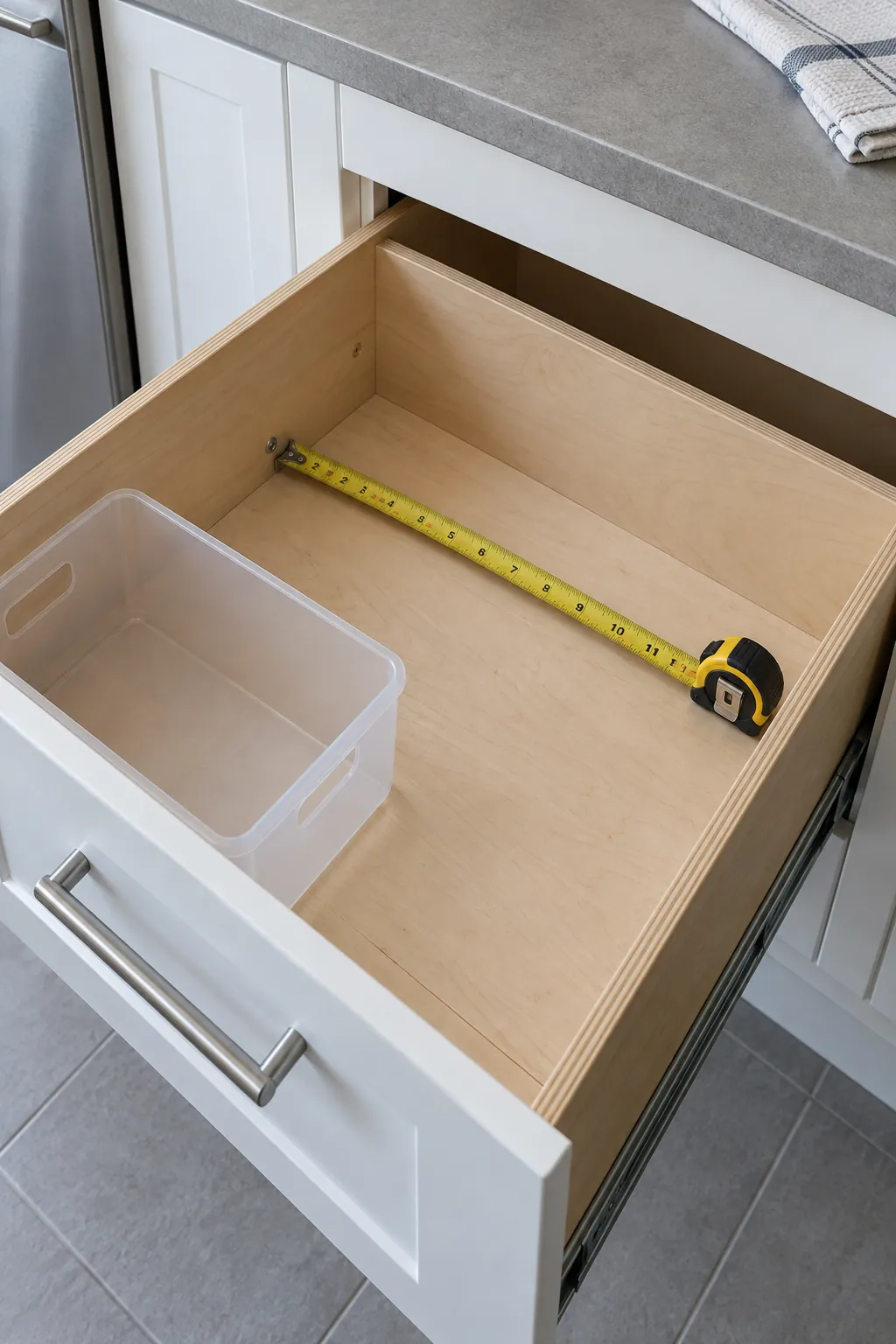
Empty the drawer completely and measure its inside width and front to back depth. Measure usable height from the drawer base to the lowest obstruction above it, which may sit below the visible drawer front. An organizer can fit the box yet still hit the cabinet frame when you close it.
Look at how far the drawer opens. Full extension runners make the back easier to reach, while a drawer that stops short may need less frequently used items at the rear. Check the cabinet or hardware documentation for the load rating instead of judging capacity by the size of the front.
Try the empty organizer in place before adding kitchenware. Include the thickness of any liner in your height calculation, then close the drawer gently. If it rubs or catches, change the setup rather than forcing the runner.
Store everyday pots without a heavy unstacking job
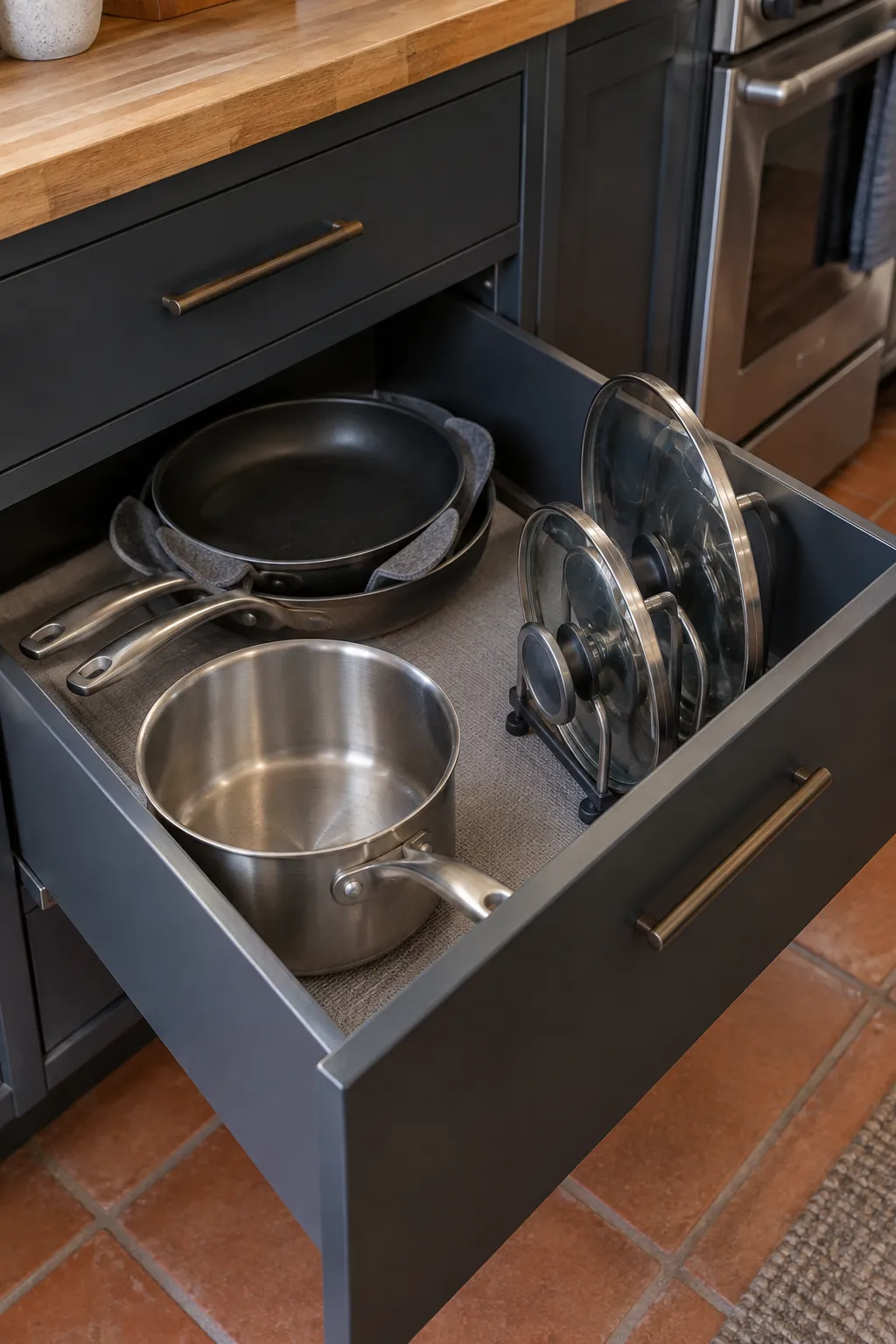
Pots in deep drawers are convenient when you can grip the handles and lift straight up. Place the most used pot in its own footprint if space allows. Nest occasional pieces only as deeply as you can comfortably separate them, using protectors where the cookware manufacturer recommends them.
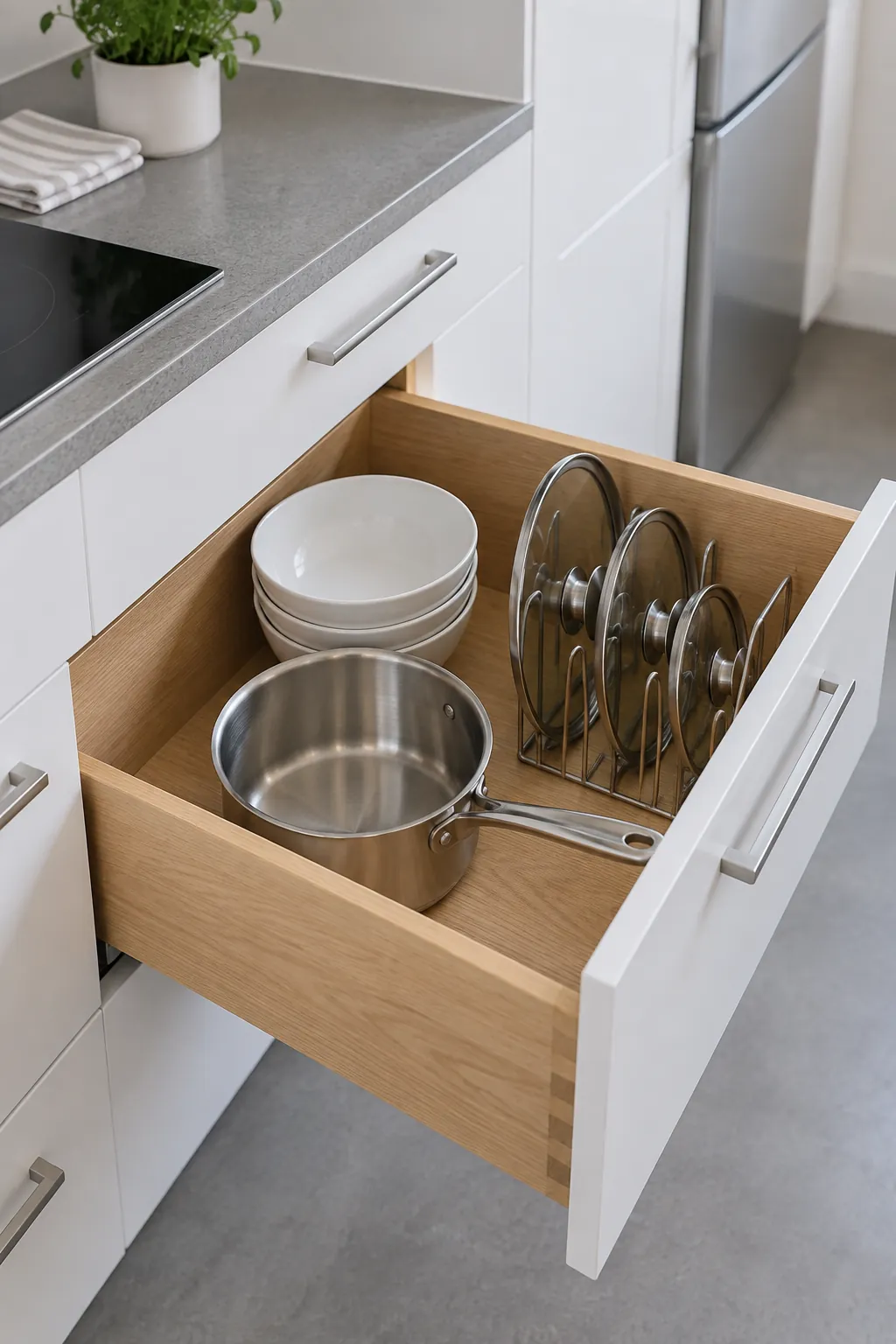
Keep lids in a stable divider beside the pots so the correct lid is visible without lifting a stack. Check the height of every lid handle against the closing clearance. Long saucepan handles should sit within the drawer, away from the back edge and runners.
Heavy cast iron can use up a load allowance quickly. Count the cookware and organizer together, following the manufacturer’s rating convention. A drawer that sags, scrapes, or no longer closes normally needs less load and an inspection, not a harder push.
Keep plates and bowls in small stable groups
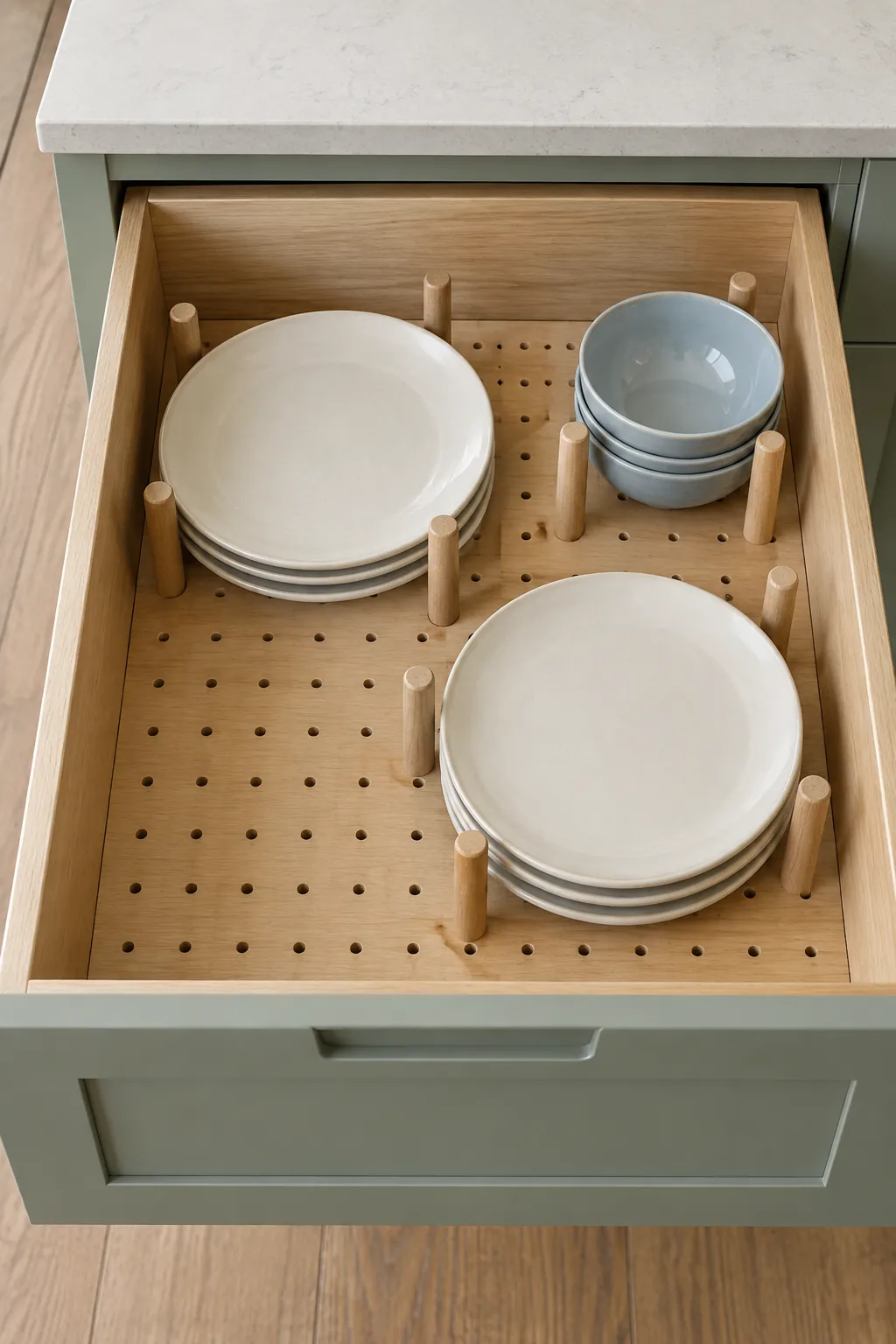
A plate peg drawer uses adjustable posts to stop dish stacks from sliding as the drawer moves. Position pegs close enough to contain each stack but leave room for your fingers. The insert must fit securely, and the pegs must stay below the cabinet opening.
For stacked bowl storage, group matching sizes instead of building a tower of unrelated shapes. Put everyday cereal bowls toward the front and serving bowls behind them if access remains comfortable. A few low stacks are easier to lift from than one tall stack, even when the drawer could hold more.
Check the combined weight of ceramic dishes before filling a wide drawer. Open it smoothly and only one loaded drawer at a time, particularly in a freestanding unit that must be secured according to its instructions. Children’s dishes can go in a reachable drawer when that arrangement is appropriate for your household.
Separate long utensils from the small pieces they bury
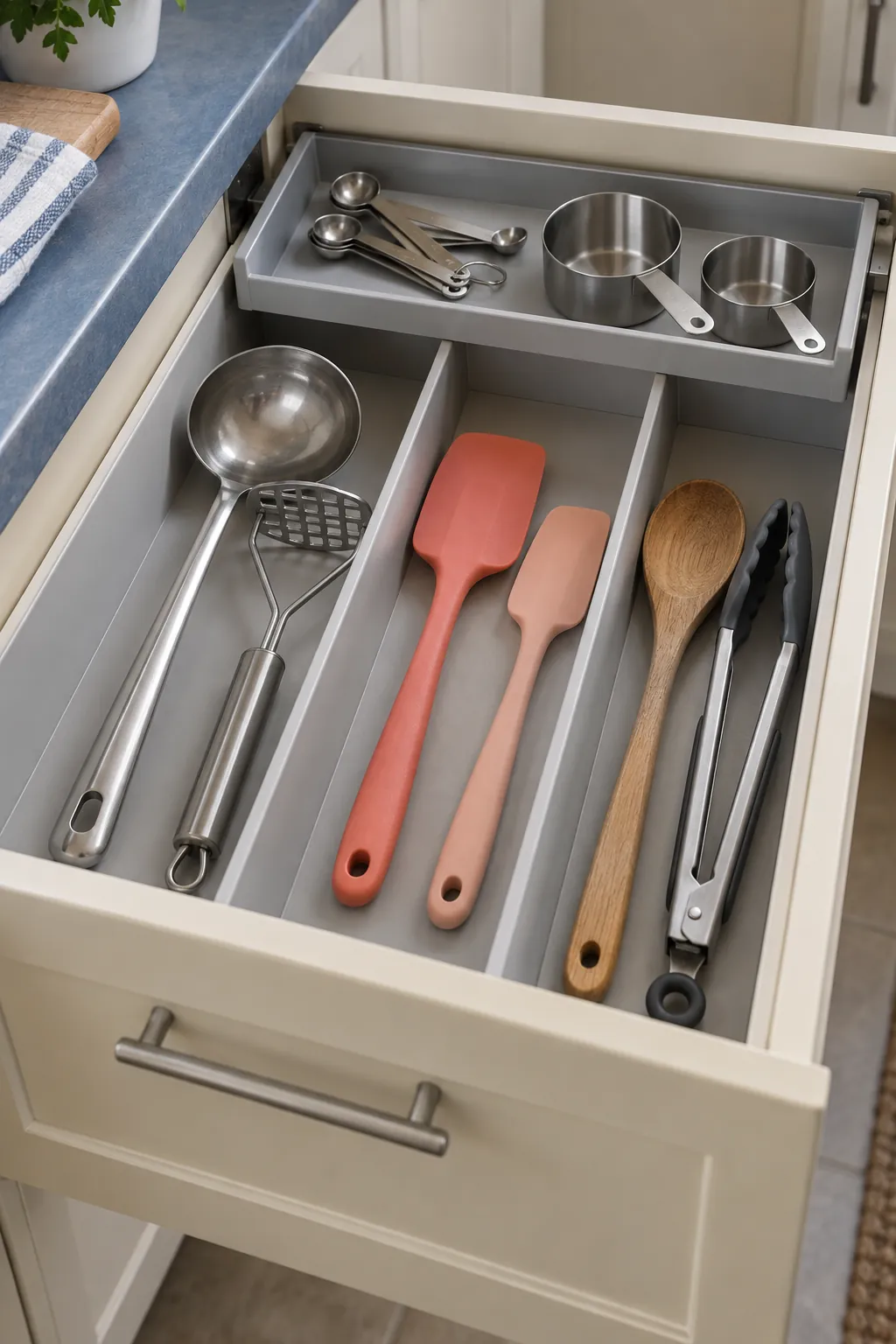
Kitchen utensil zones should follow shape as well as task. Give the ladle and potato masher wider lanes than flat spatulas need. Put short measuring tools in a smaller container so they cannot travel beneath the longer handles.
Kitchen drawer dividers work well when they stay fixed without bowing the drawer sides. Removable bins are a simpler choice if your drawer has an awkward shape. Upright storage only works when the tallest tool clears the cabinet above; otherwise lay the tools flat in separate lanes.
A compatible sliding inner tray can use spare height for lightweight small items, while bulky tools remain below. It needs proper support and enough travel to expose the lower contents. Avoid balancing an ordinary tray on loose containers, which makes every opening a chance for it to shift.
File container lids beside their matching bases
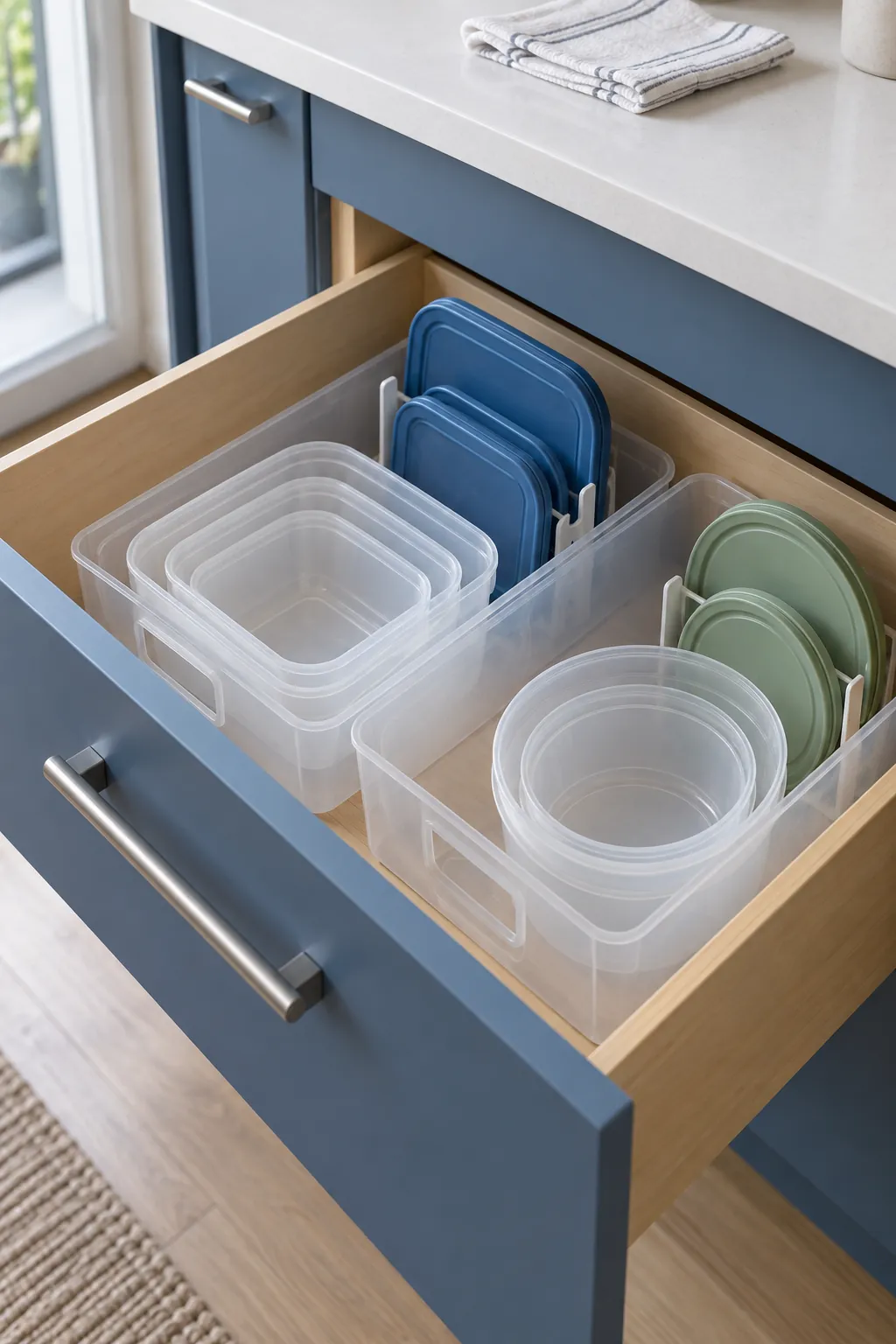
First match every food container with a usable lid and remove pieces you no longer use. Nest compatible bases in short groups, then stand lids upright in a narrow bin or divider next to them. Keeping round and rectangular sets separate makes the match easier to recognize.
A drawer bin system should let you remove one group without disturbing the next. Choose bins with accessible handles and enough space above them to lift out. Return containers only when they are clean and dry; a closed drawer is a poor place to finish air drying. If several different lid designs look almost identical, store each family in its own slot. That small separation is more useful than buying a large organizer that mixes them all together.
Assign the remaining space to a routine you repeat
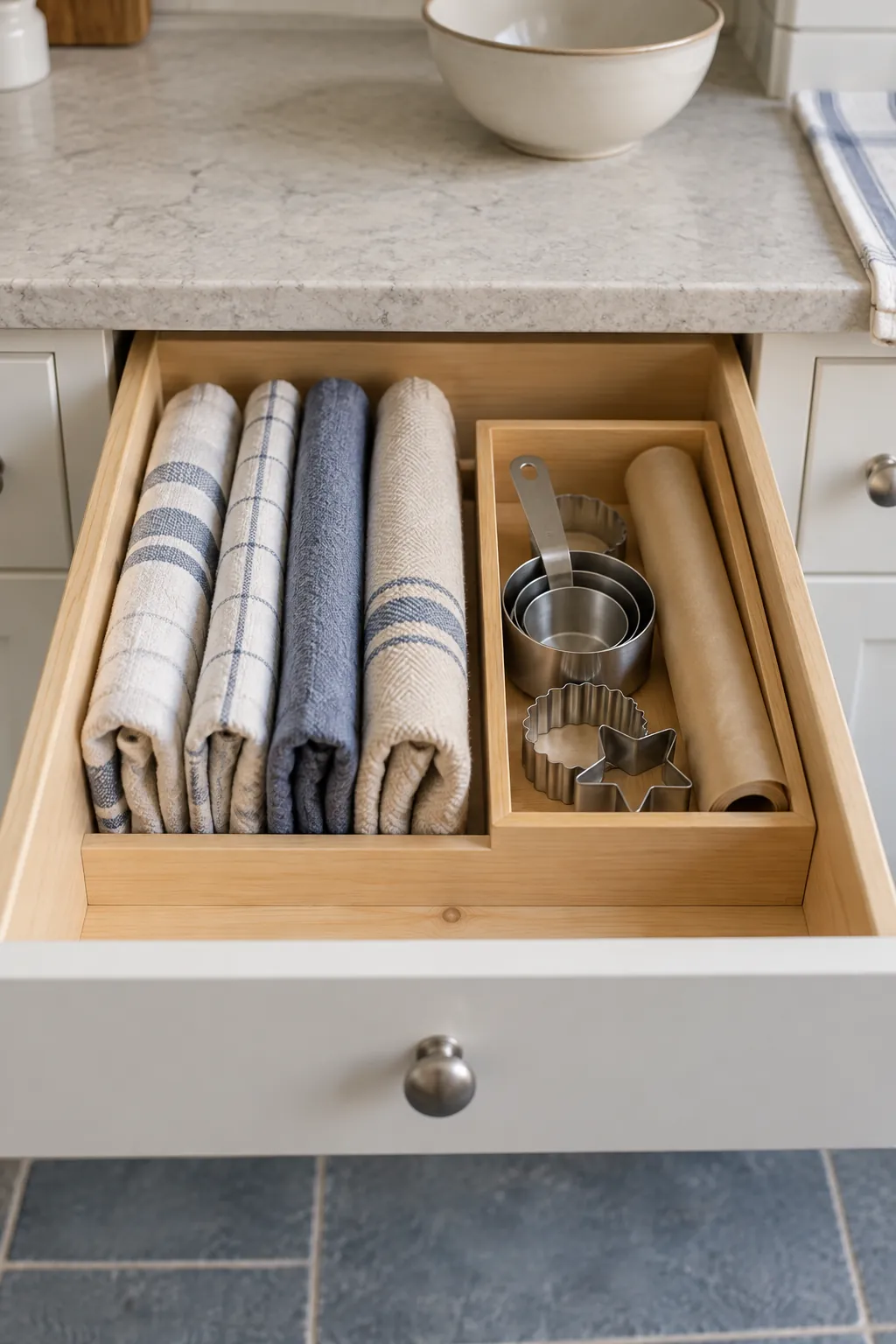
The last available drawer should serve a real routine rather than become storage for everything undecided. A baking drawer might hold measuring tools, parchment, and a few frequently used cutters. A linen drawer can hold folded towels standing on edge so each one is visible.
Test the arrangement during an ordinary week. Notice whether you move a bin just to reach a daily item, or whether a divider leaves an awkward gap that nothing useful fits. Change those friction points before buying another layer of organizers.
Deep drawer organization is working when you can take out the item and put it back with the same simple motion. An empty strip beside the bowls is worth keeping if it gives your fingers room to lift them.