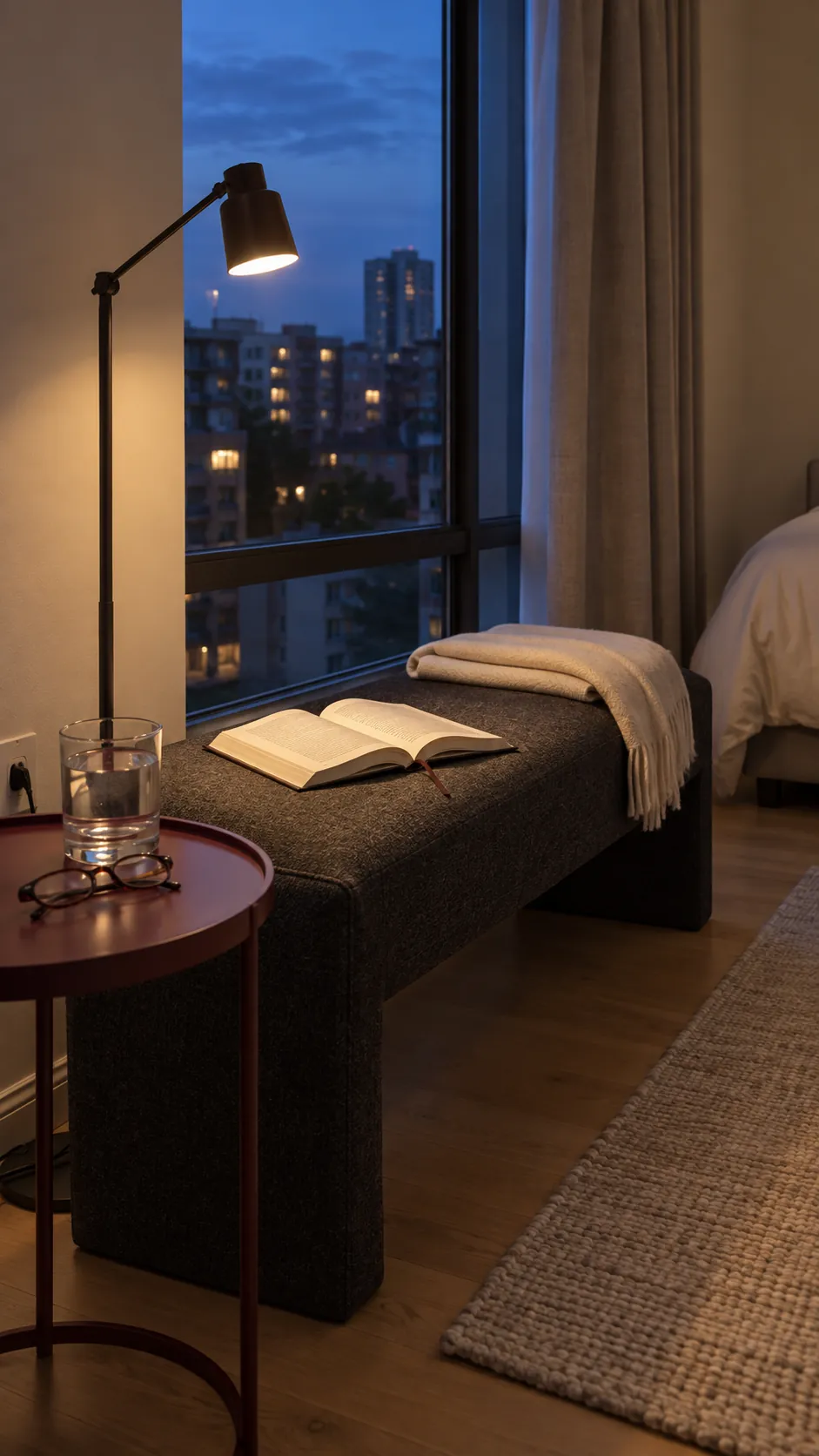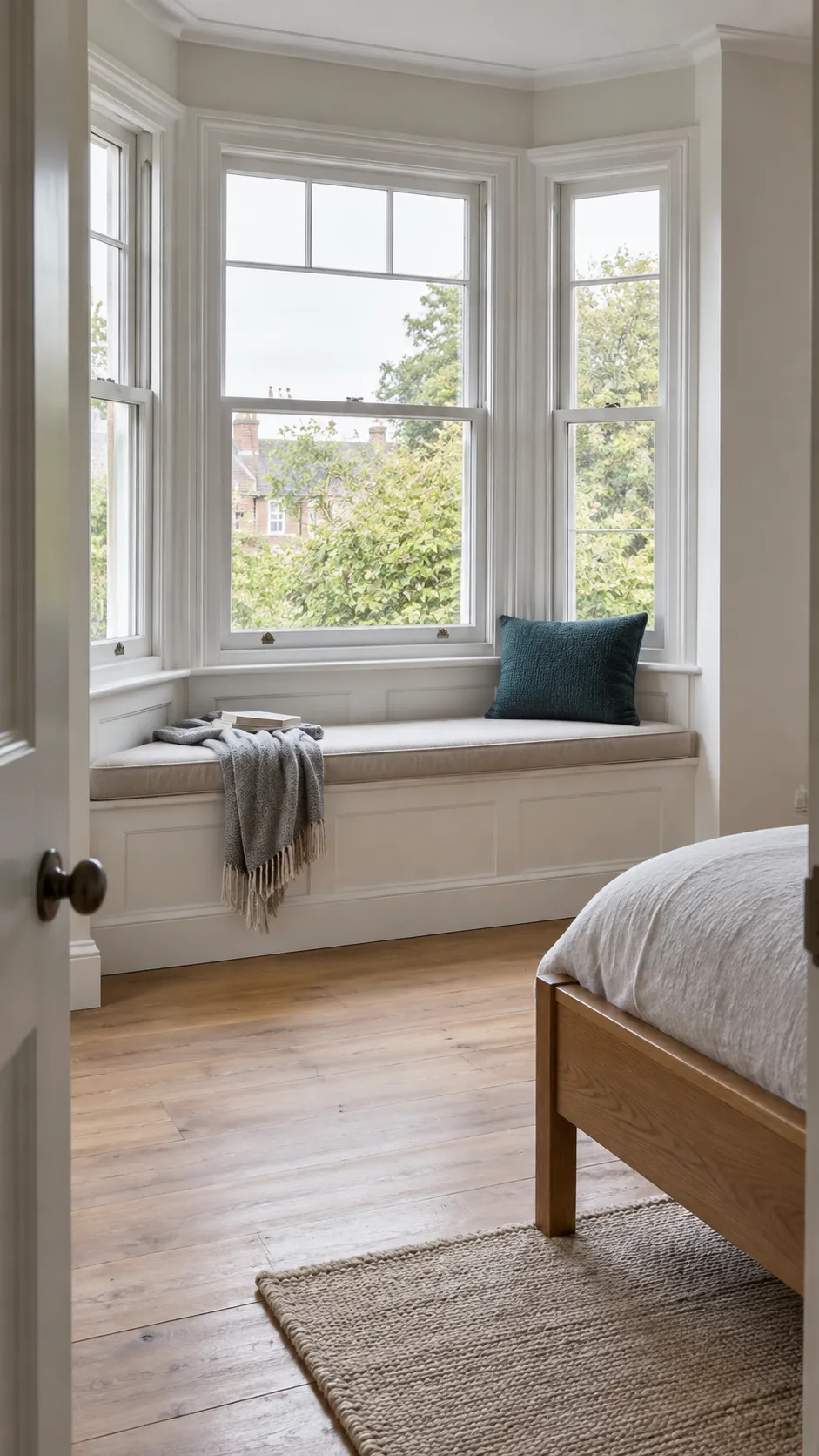
A seat beneath the glass looks inviting until it blocks the wardrobe, leaves your feet dangling, or becomes another place to drop clothes. Before ordering a cushion, decide what this corner should do that your bed cannot. That decision makes the difference between a useful retreat and expensive extra furniture.
Indexed Reddit discussions capture this dilemma clearly: one person describes a recess only 22 inches across beside their bed; another needs a window area to work around a guest room and linen closet. Those are different layout problems, even if both inspiration searches lead to upholstered benches. Start with access and posture, then choose the look.
Give the nook a job before giving it a cushion
A bedroom with a reading nook works best when the seat supports a routine you already want: twenty minutes with a book, putting on socks in daylight, or a quiet place to drink morning tea. Reading calls for back support and a light within reach. Dressing needs somewhere to sit upright, while watching the garden may justify a deeper perch.
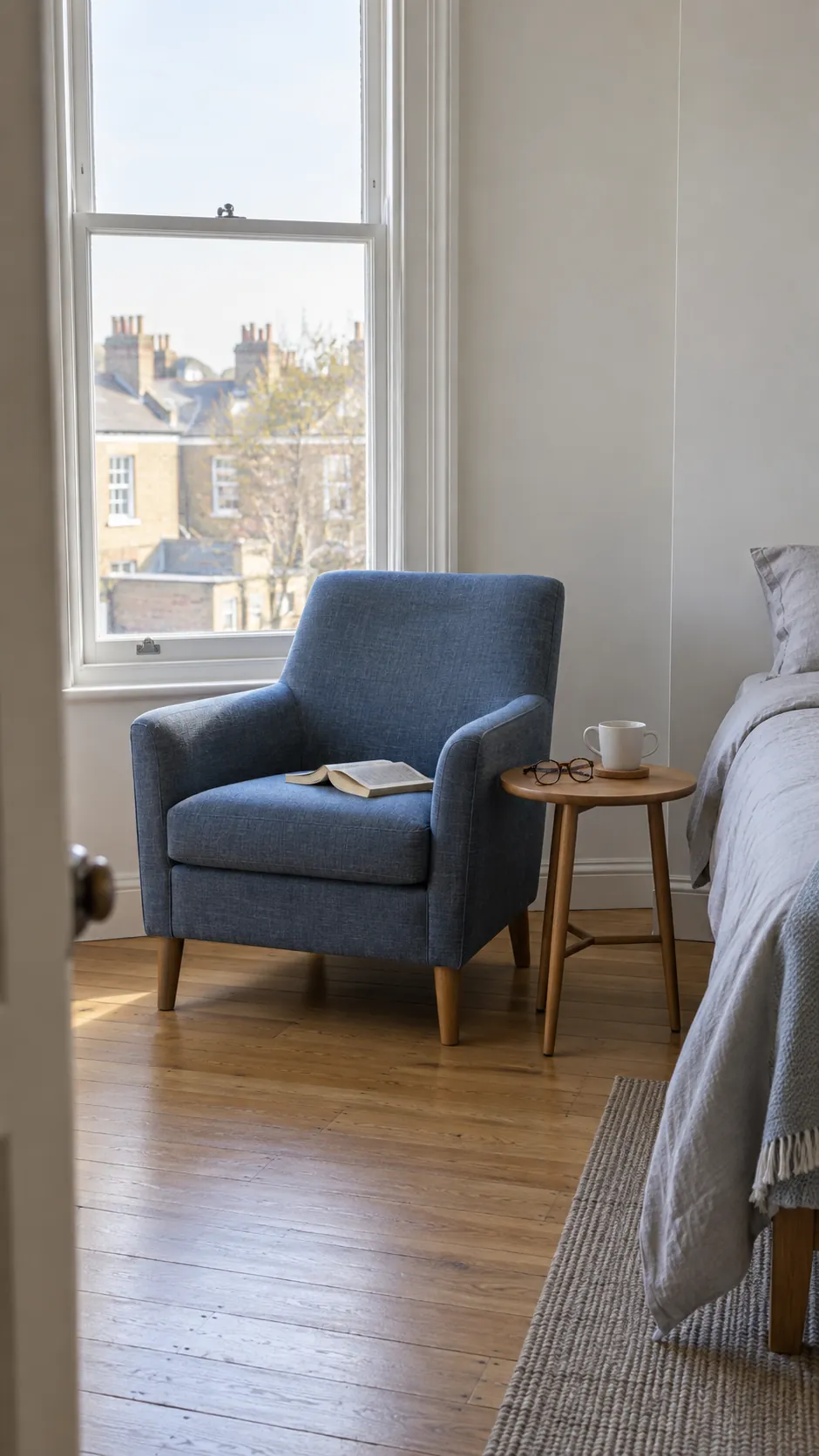
If you already read comfortably in bed, the window area may be more useful as a compact chair with a small table than a second lounging surface. Place an existing chair there for several days. Notice whether you actually choose it and whether the sun feels pleasant at the hour you use it.
Protect the route between the bed and the window
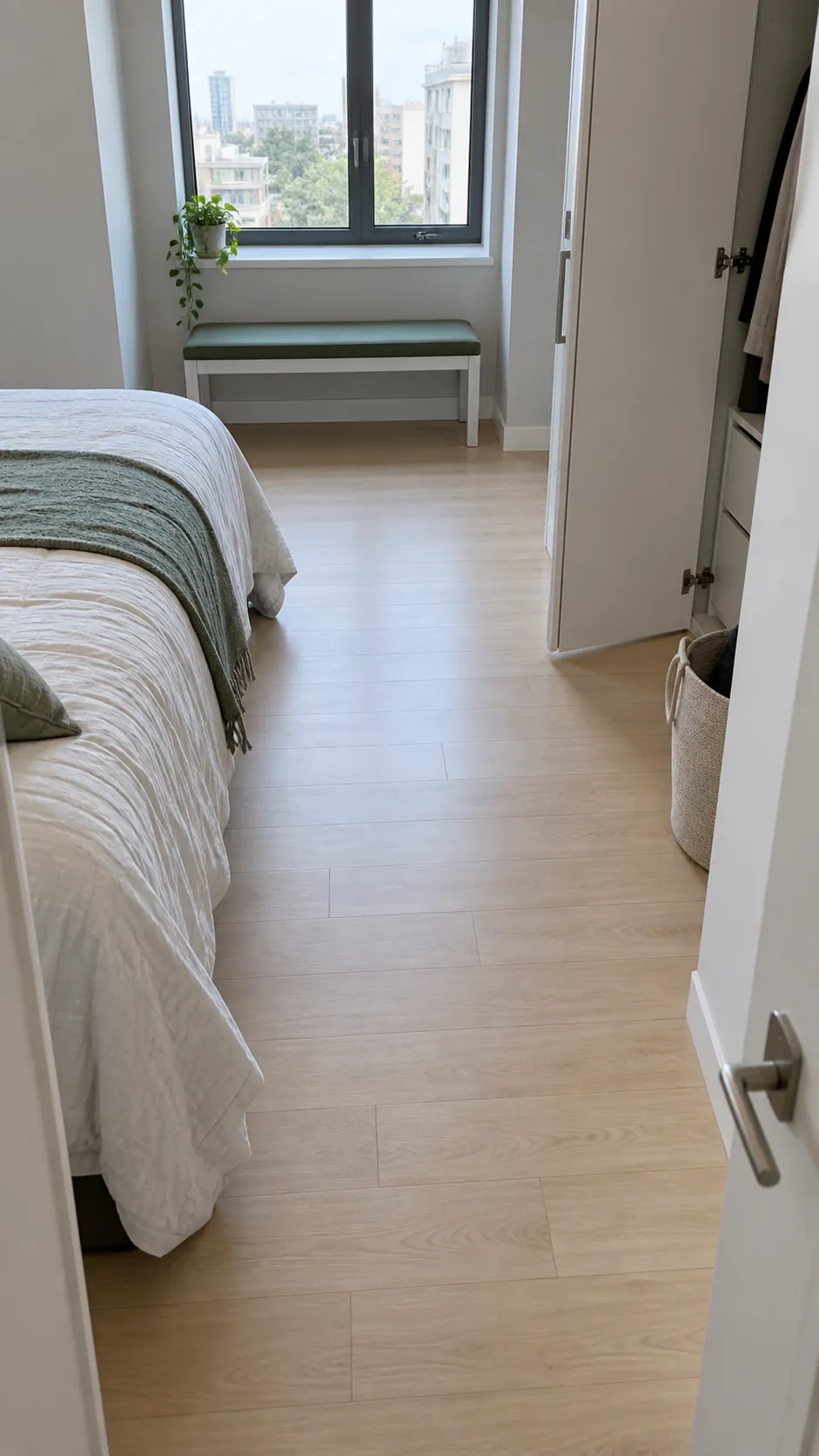
Measure the recess at floor level and again where the seat will sit. Skirting, window trim, and walls that are slightly out of square can change the available width. Mark the proposed furniture footprint with removable tape, then open every nearby drawer and door.
Leave enough passage for your actual movement, including carrying laundry and changing the bed. Around 30 inches can be a useful early planning reference for a walking route, but it is not a universal accessibility or building standard. A route that feels tight during the tape test will feel tighter once cushions and knees project into it. Follow applicable access and egress requirements, and keep the window handle reachable.
For small bedroom ideas, subtract furniture before adding storage. A narrower bedside table may release space, but blocking a wardrobe to gain a bench simply moves the problem. When a recess is too small to sit in comfortably, a freestanding chair angled beside it can borrow the light without forcing your body into the opening.
Match seat depth to the way you sit
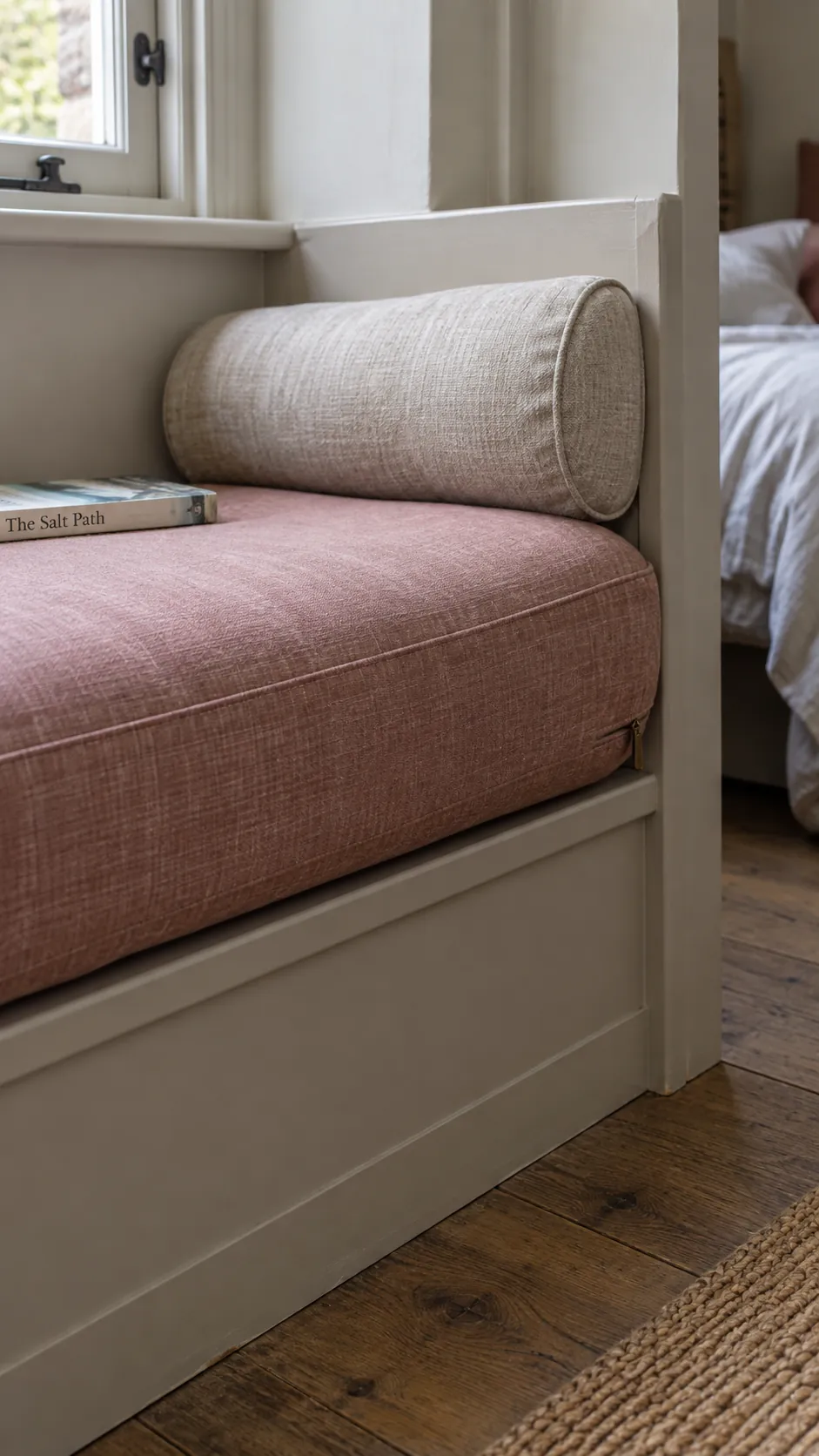
Small window seat ideas often look generous because photographs hide the back cushions. Those cushions consume usable depth. Test the distance from the front edge to the cushion supporting your back, rather than relying only on the outside dimensions of a bench.
As a starting point, many upright seats finish roughly 17 to 19 inches above the floor, including the compressed cushion, with about 18 to 22 inches of usable seat depth. Your height, posture, and mobility matter more than those reference ranges. Your feet should rest comfortably, and the front edge should not press into the backs of your knees.
A lounging seat can be deeper, provided there is a supportive end to lean against. Try a firm seat cushion with one substantial back pillow before buying a collection of small decorative ones. Order foam samples if possible and choose a removable cover, especially when the nook will see snacks, pets, or daily use.
Use removable furniture when permanence adds little
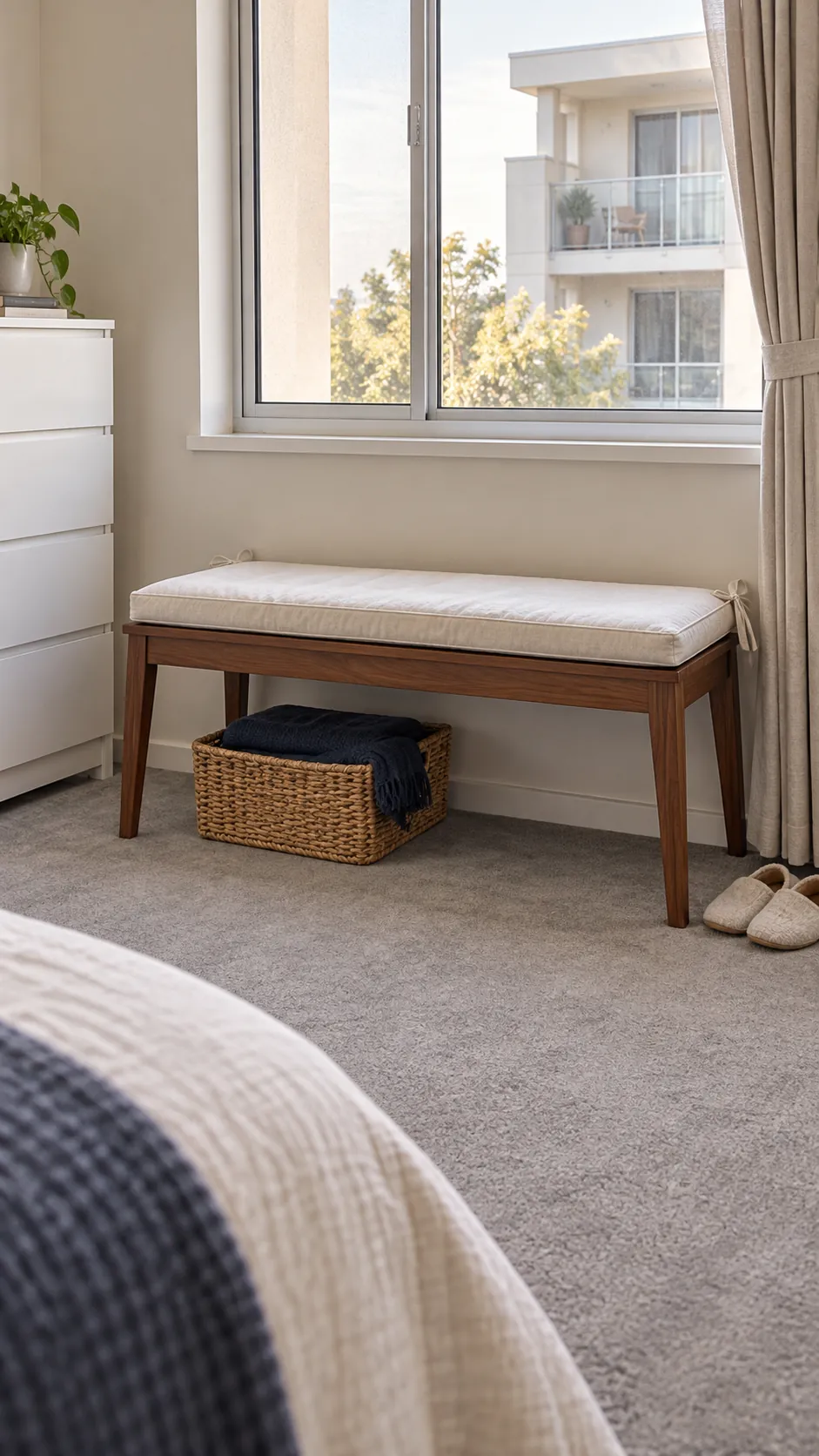
A fitted bench makes sense when an awkward bay needs a precise shape and you plan to stay. For a rental, a seat rated freestanding bench can deliver a cozy window nook without changing the room. Check its load rating and stability; a decorative console or ordinary storage cabinet is not automatically safe to sit on.
Open legs make vacuuming easier and keep the floor visible. A basket underneath can hold a throw, but leave it loose enough to pull out without scraping the wall. If you choose a built in structure, have its support and fastening designed for seated loads and obtain any required permission before installation.
Plan for sunlight, privacy, and cold glass
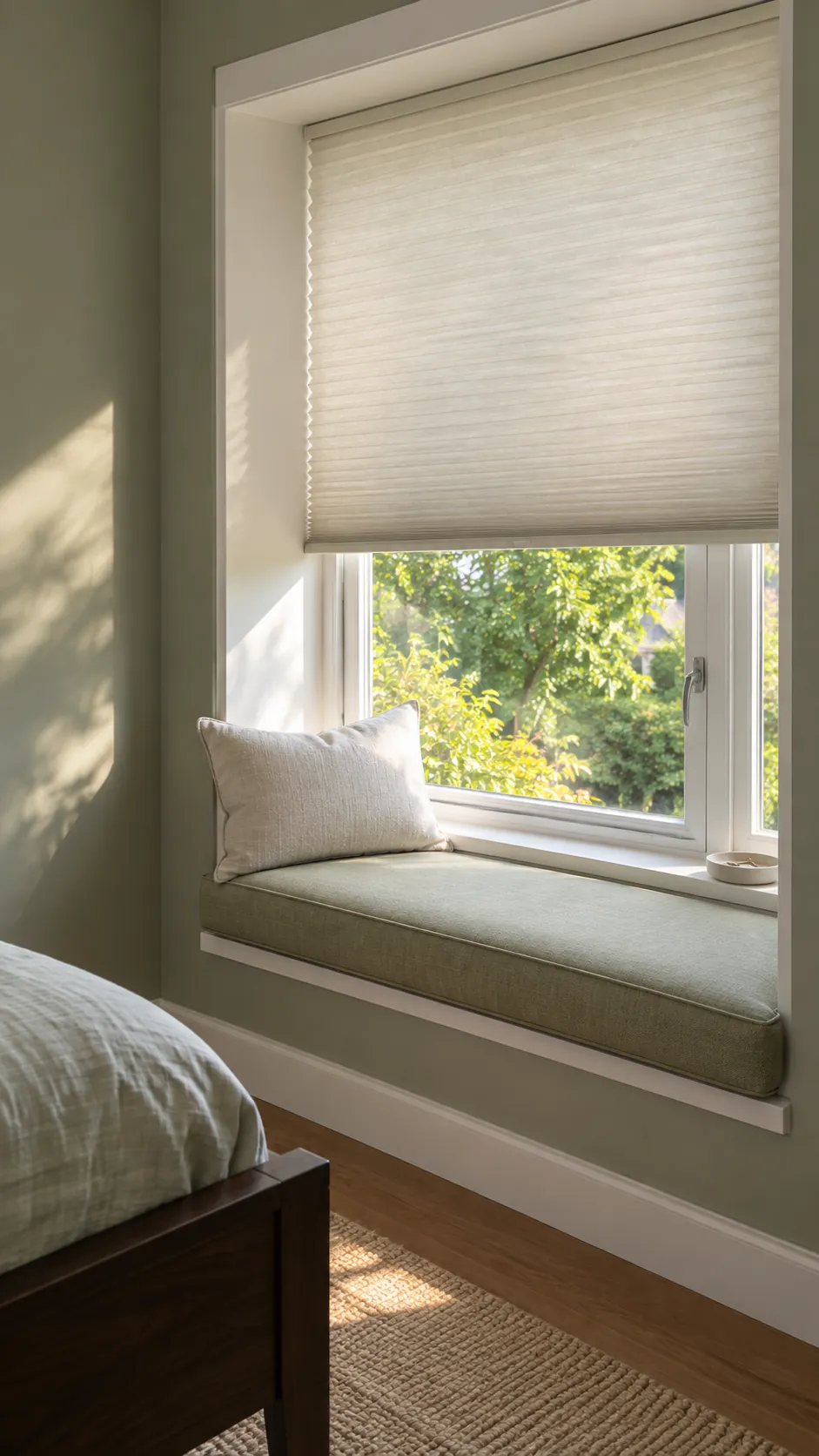
Visit the window in the morning, afternoon, and after dark before choosing fabrics. Strong afternoon sun may demand adjustable shading; a street facing room may need privacy even when the curtains are open. A cordless shade fitted to the opening can leave the seat clear, while curtains need somewhere to stack without swallowing the cushion.
Keep upholstery away from persistent condensation and investigate dampness before enclosing the area. Never build over a heater or air supply without a suitable design that follows the equipment clearances. A cozy nook bedroom should still breathe, and you should be able to clean the glass and operate the window. Where children use the room, treat furniture near windows as a climbing risk and use appropriate window safety measures without compromising required escape routes.
Finish with the things you reach for
Put a small stable surface beside the seat for a cup and glasses. Aim a reading lamp at the page from beside your shoulder so it does not shine straight into your eyes or reflect sharply in the window. Route its cable along the wall, away from the walking path and moving furniture.
Repeat one color from the bedding to connect the corner to the bedroom, then stop decorating long enough to use it. One washable throw and a book you are actually reading do more than a pile of cushions that has to move every evening. After a week, remove anything you keep shifting out of the way. The seat has earned its space when you can sit down without rearranging the room.