Two favorite colors can compete when their brightness, finish and scale all demand the same attention. Start by deciding whether you want a soft, friendly corner or a richer evening mood. Then give each color a job, with one carrying the larger surfaces and the other supplying smaller moments of contrast.
Decide between soft lilac and deep plum
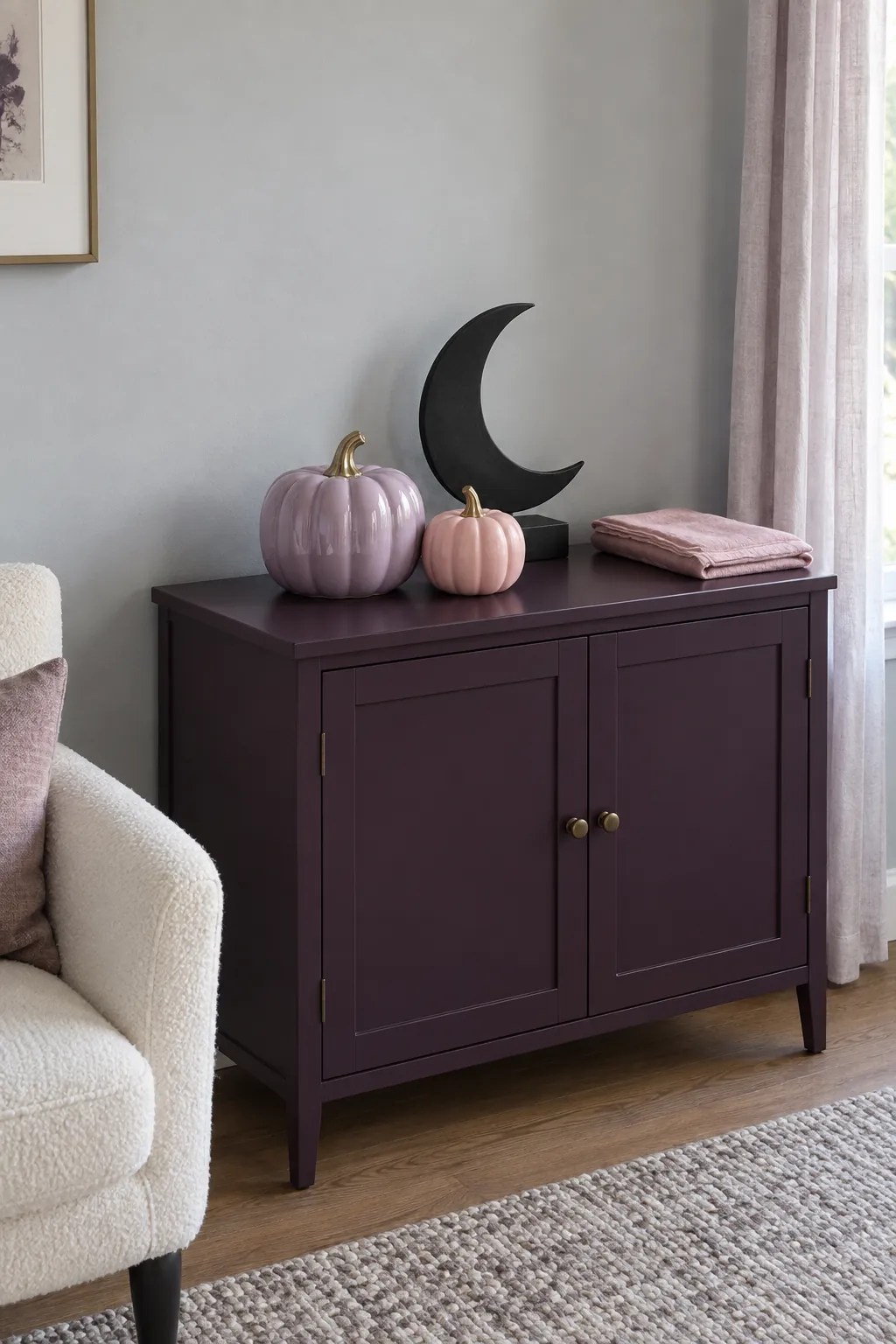
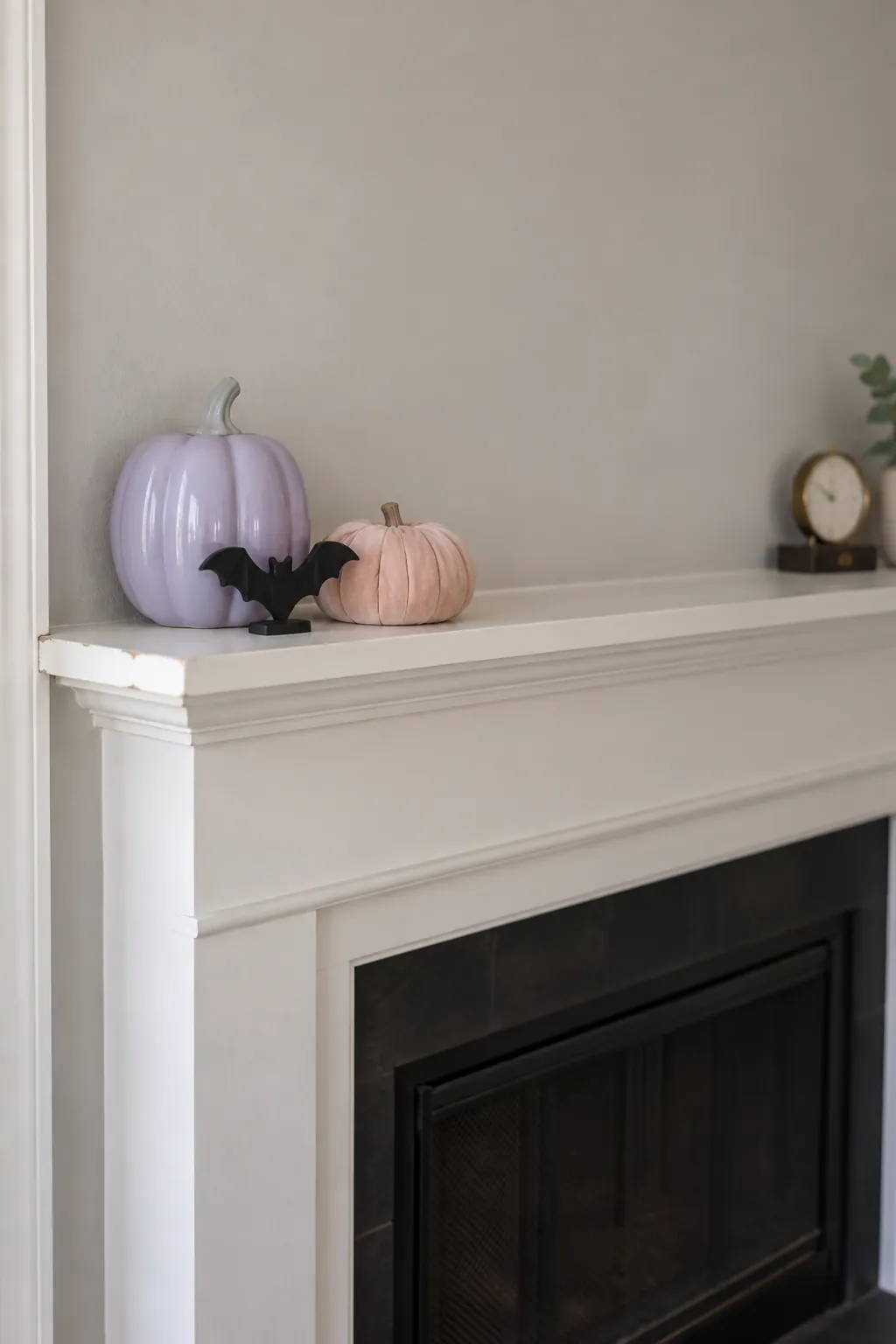
Lilac and blush create a gentle look, especially against white furniture or a pale wall. Deep plum and rose feel richer and need a little more breathing room, particularly in a small space. Choose one purple family for the main objects, then repeat your pink in a smaller accent so the colors feel connected.
Look at the room you already have before choosing the finish. A dark cabinet can supply the depth that a pastel arrangement needs, while a pale mantel may benefit from one black silhouette. You can enjoy a gothic influence without filling every corner or changing permanent cabinetry.
Give painted pumpkins a clear pattern
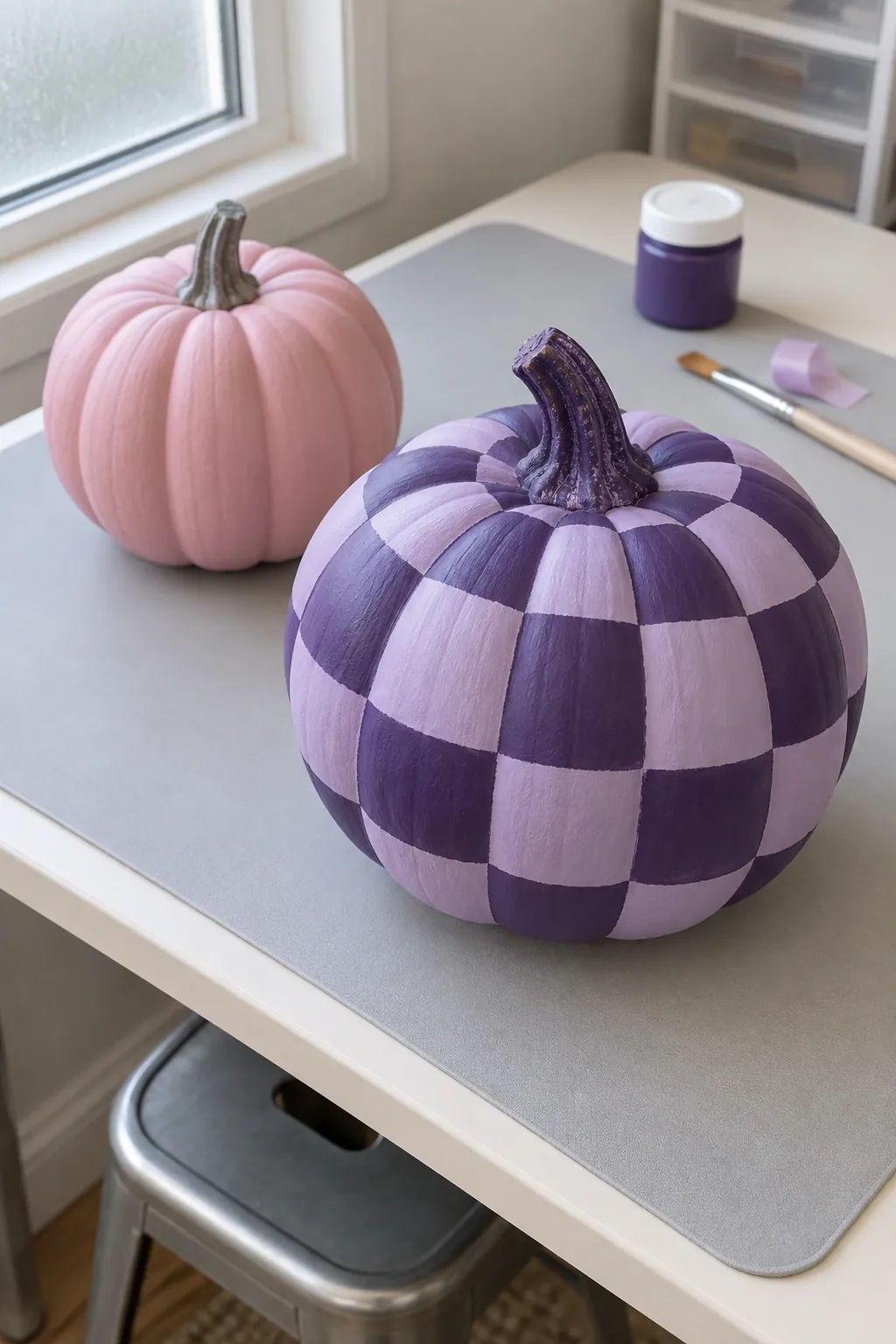
For Purple Pumpkin Painting Ideas, broad checks or alternating ribs are easier to read than tiny intricate details. Paint the base first with a product suited to the pumpkin material, then let it cure before marking the pattern. Use the natural ribs as guides, and accept that a curved pumpkin will not behave like a flat sheet of paper.
Pair a patterned purple pumpkin with a mostly plain pink one. That gives the pattern a quiet neighbor and keeps the display from looking busy. If you prefer a Pink Ghost Pumpkin, use a large white ghost on one side and leave the rest of the surface simple.
Protect your work surface and follow paint instructions for ventilation, drying and storage. Painted faux pumpkins can return next year, while real pumpkins need regular checks for soft spots or decay. Keep either type on a stable dry surface rather than directly against damp fabric.
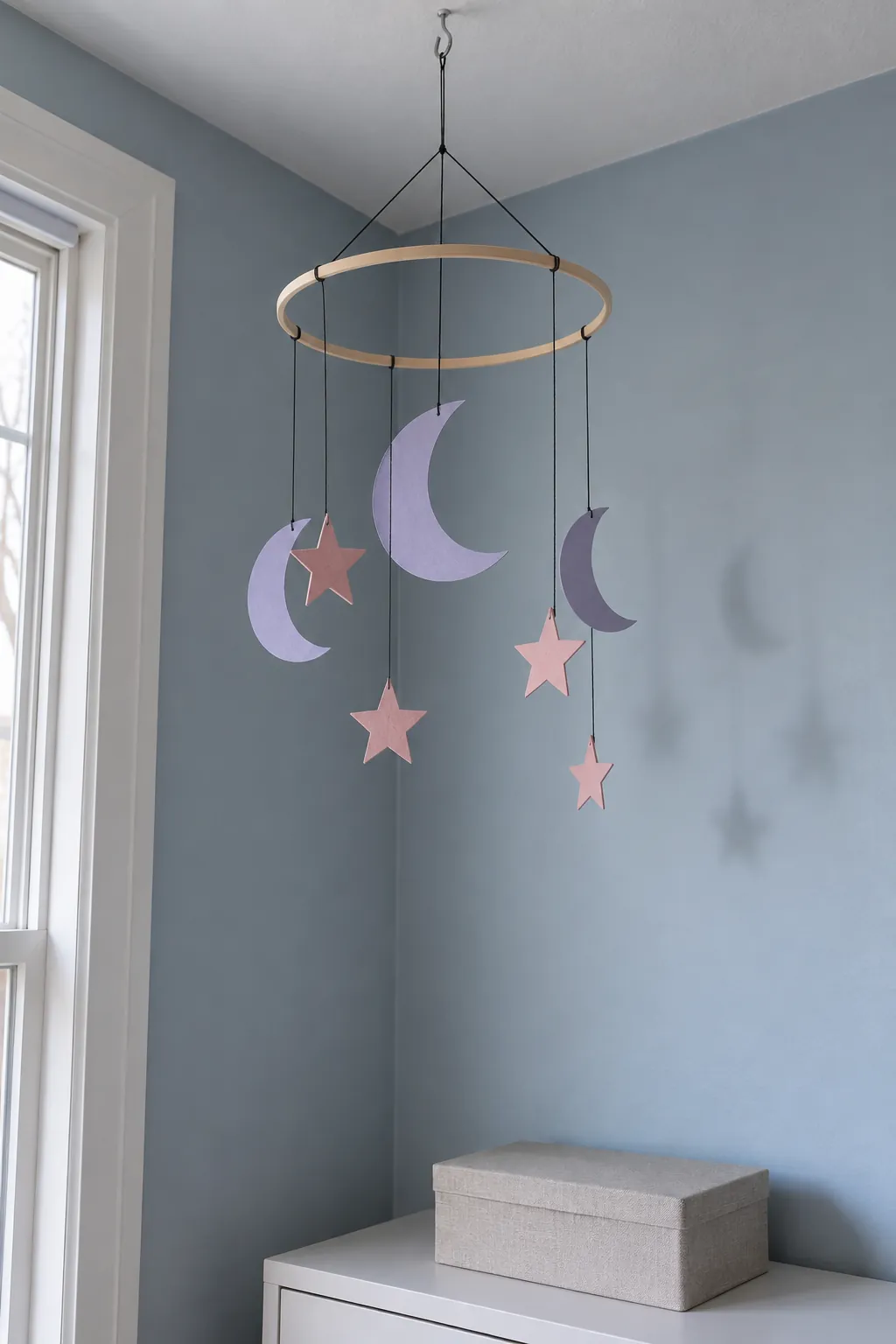
Let a paper moon mobile use the empty corner
A small mobile of lilac crescent moons and pink stars adds movement without taking another shelf. Cut each shape from firm card, hang the pieces at different heights from a lightweight hoop, and balance the hoop before installing it. Use a fixing rated for the surface and load, keep strings out of reach of children and pets, and place the mobile outside walking routes.
Set a table with depth instead of more objects
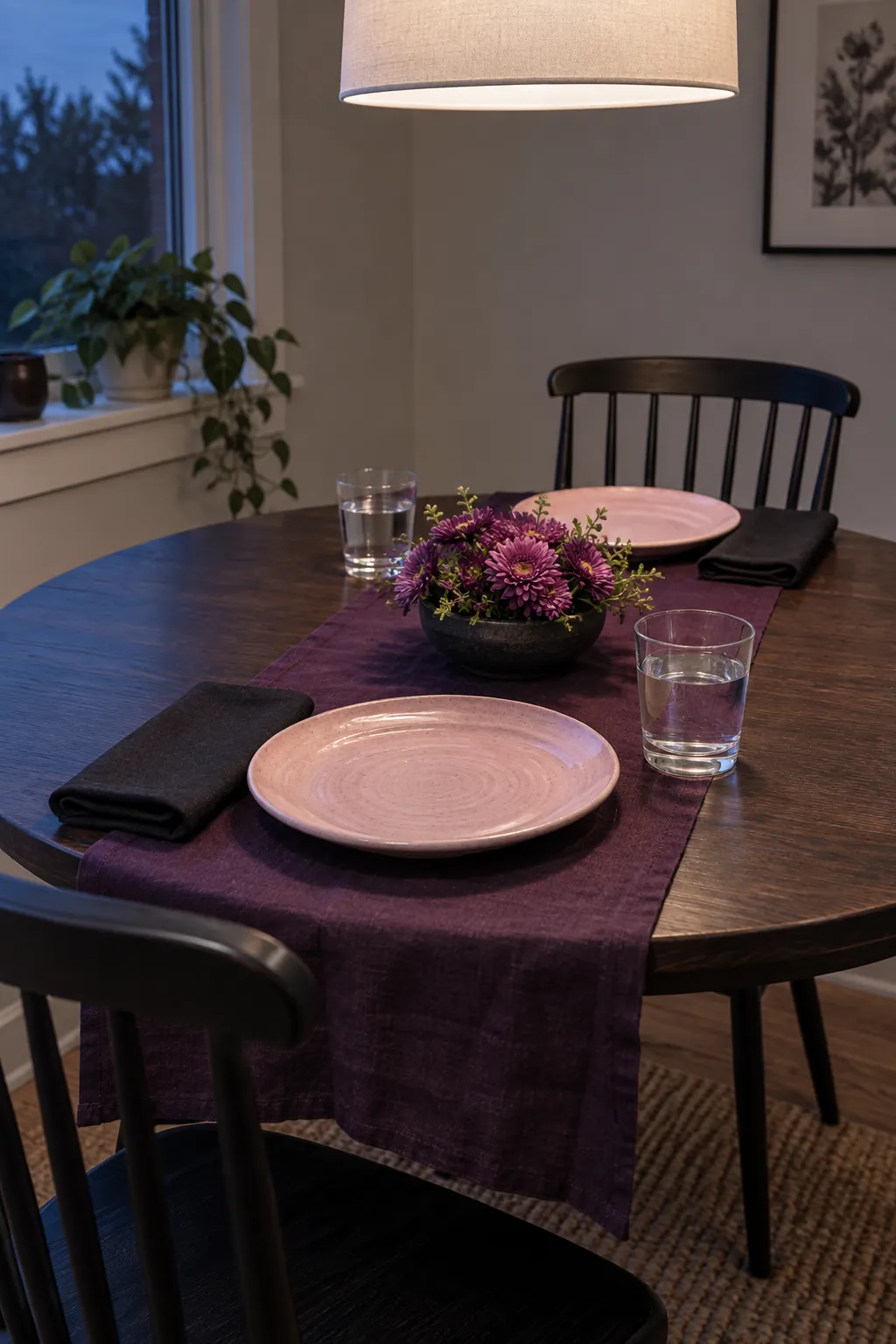
A plum runner gives pale pink plates a strong edge, while clear glasses keep the table from becoming heavy. Use a low arrangement of purple flowers or a few small pink pumpkins as the center, leaving room for shared dishes. The effect comes from the relationship between large color areas, not from scattering tiny decorations everywhere.
For a softer gathering, such as a Halloween baby shower, keep the shapes friendly and the background light. For an evening dinner, deepen the purple and add black napkins without changing the whole setup. Washable textiles and ordinary dishes let you adjust the mood without buying a second table collection.
Try a small patterned panel before changing a wall
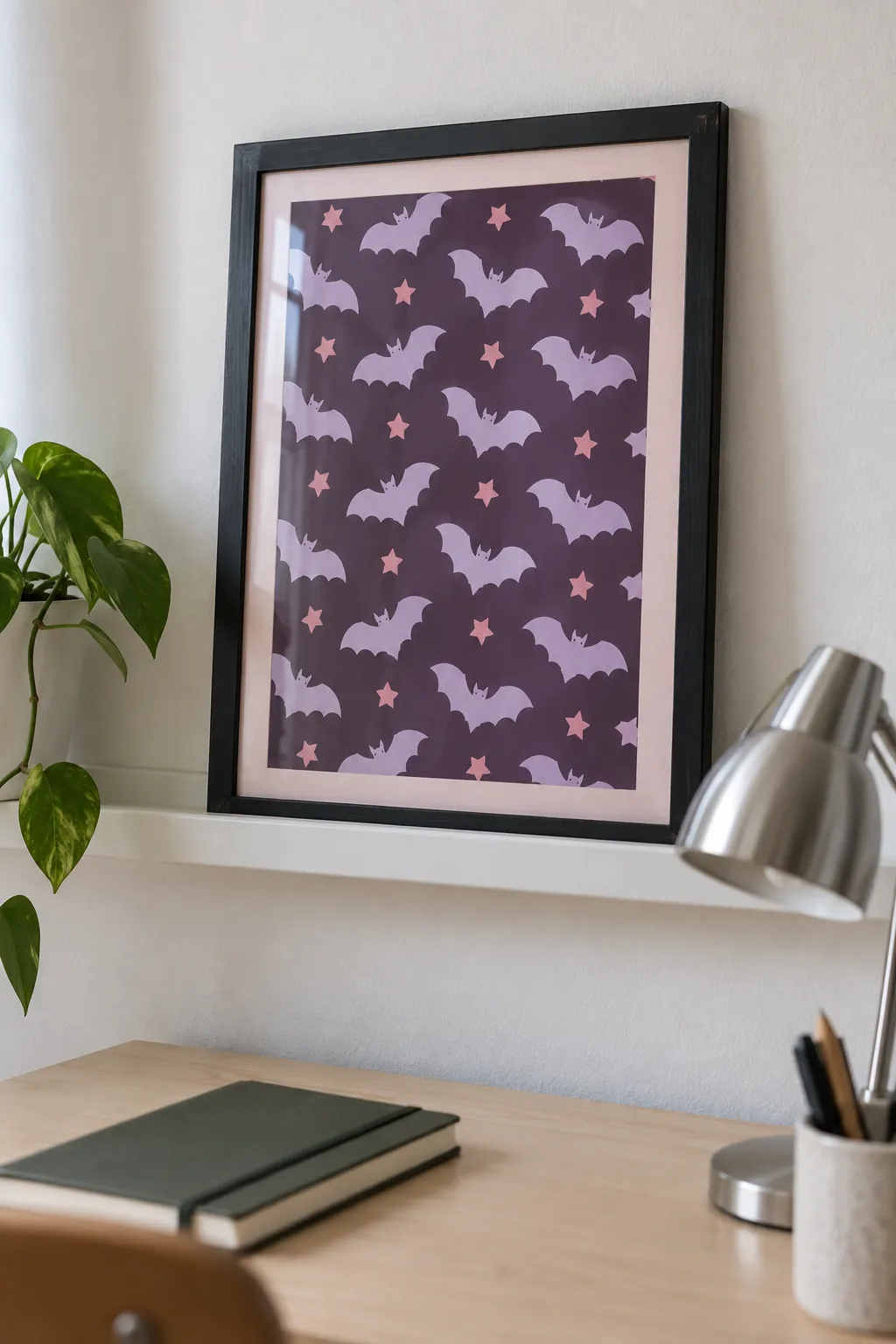
A removable panel can create a Purple Halloween Background when you want more pattern than a garland provides. Mount a piece of paper with a clear lilac bat and pink star repeat inside an existing frame, or wrap it around a lightweight board that can stand securely on a shelf. A framed panel gives the room a deliberate focal point and packs away after the season.
If Purple Halloween Wallpaper inspires you, test the idea at this smaller scale first. Check the pattern beside your furniture in daylight, then look again with the evening lights on. Follow the product instructions for any adhesive, and do not assume a removable label guarantees compatibility with every painted wall.
Finish one small zone and leave room to use it
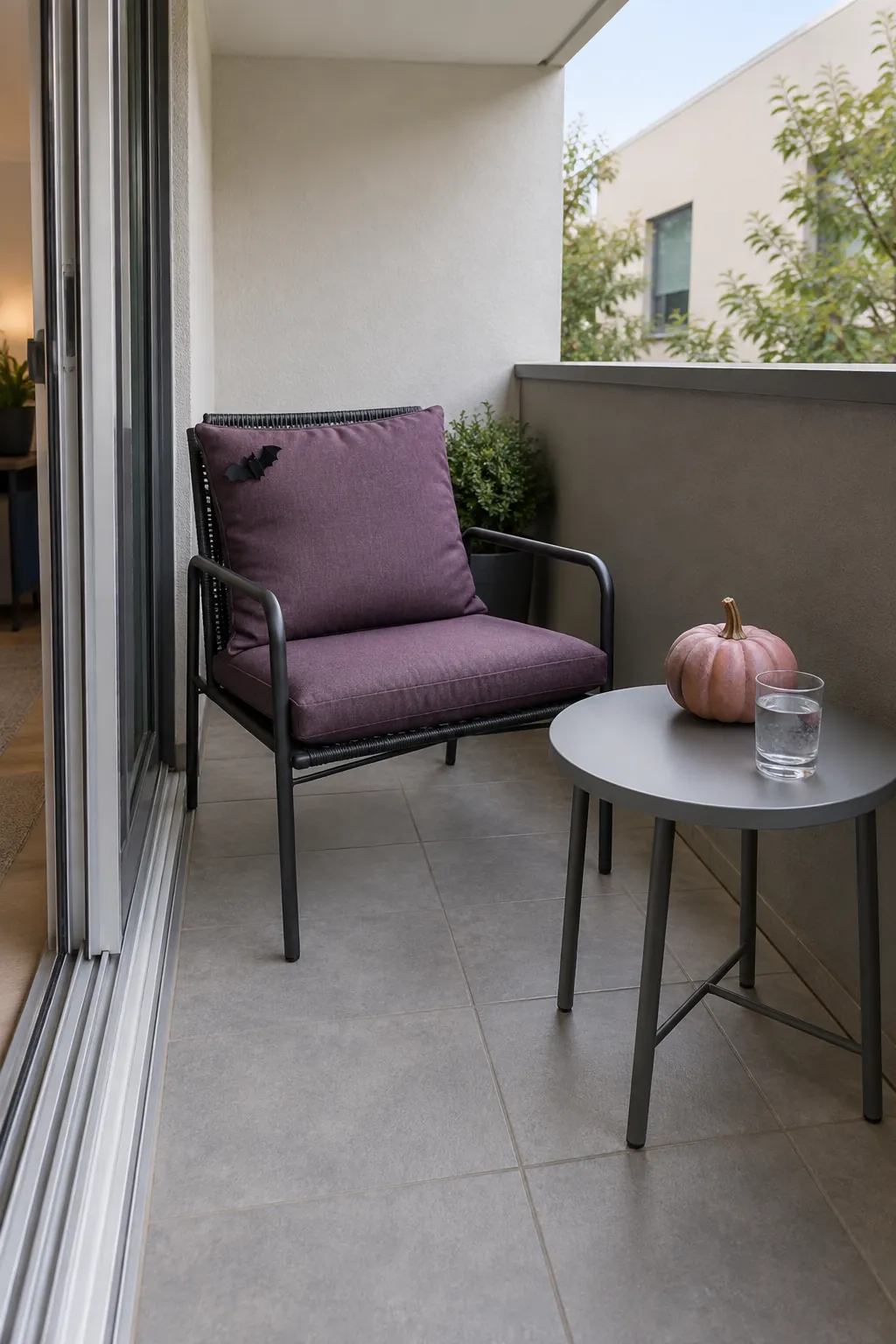
A covered balcony or indoor window corner only needs a pair of coordinated pieces to carry the theme. A purple cushion on a chair and a pink pumpkin on a small table can be enough, with one black bat accent tying them to Halloween. Keep the chair comfortable to sit in and leave the table large enough for a drink.
Bring indoor textiles and craft pieces inside when weather turns, and choose products rated for the conditions if the display will stay outdoors. Avoid blocking doors, railings or narrow access routes with decorations. Step back from your finished corner: if the colors read clearly and the space still works, you have already done enough.